Tag: ohio

  • Trump’s words changed Springfield, Ohio. Its Haitian community is bracing for what’s next.

    Trump’s words changed Springfield, Ohio. Its Haitian community is bracing for what’s next.

    (Emily Scherer for The 19th; Getty Images; AP)

    Originally published by The 19th

    Read Amanda Becker’s Loveland connection in her Bio below.

    by Amanda Becker

    SPRINGFIELD, OHIO — Several minutes into President Donald Trump’s inauguration speech on Monday, as he began talking about immigration, Yvena Jean François dug through a desk drawer for a notebook and pen.

    “We now have a government that cannot manage even a simple crisis at home … it fails to protect our magnificent law-abiding American citizens but provides sanctuary and protection for dangerous criminals, many from prisons and mental institutions that have illegally entered our country from all over the world,” Trump said, repeating a frequent 2024 campaign claim for which he has not offered evidence.

    Jean François jotted down a thought in the notebook on her lap, the words “FUN STUFF” printed on its colorful cover.

    Trump carried on: “I will declare a national emergency at our southern border. All illegal entry will immediately be halted and we will begin the process of returning millions and millions of criminal aliens back to the places from which they came.”

    Jean François wrote some more.

    Once Trump finished speaking, Jean François went over the main takeaways she planned to share on an upcoming episode of the podcast she hosts out of her home studio in Springfield, Ohio, a city of roughly 60,000 residents that became a household name during the 2024 presidential campaign as misinformation and lies spread about its Haitian residents.

    “The illegal people will be first to go in mass deportations,” she said.

    The exact words Trump used were important to Jean François, who is also a member of Springfield’s Haitian community. She heard “dangerous criminals,” “entering illegally,” “prisons and mental institutions” and “criminal aliens” — and she started to relax. “The president said the first people they’re going to put out are the criminal people who already have deportation papers,” she noted. And that, she said, does not describe her or most other Haitians she knows in this southwestern Ohio city between Dayton and Columbus.

    Like Jean François, Springfield’s Haitian migrants were drawn here by the potential for good-paying jobs in a place that had more jobs than workers who were able to do them. Many of these migrants have what’s called Temporary Protected Status, or TPS, which gives them the right to live and work in the United States legally and shields them from deportation for a set period of time. They arrived in Springfield as the country emerged from the worst of the COVID-19 pandemic, from states like Florida and New York, which are home to the largest communities of Haitian Americans in the United States.

    Yvena Jean François sits at her desk in her podcasting studio on Inauguration Day, January 20, 2024, in Springfield, Ohio. She wears a colorful patterned jacket and headphones while seated in front of a microphone and soundboard, with a vibrant studio backdrop featuring the logo of Radio Yvena TV.
    Yvena Jean François sits at her desk in her podcasting studio on Inauguration Day, January 20, 2024, in Springfield, Ohio.
    (Amanda Becker for The 19th)


    Established in 1990, TPS is a temporary status available to immigrants who come from countries facing exceptional circumstances, like environmental disasters, armed conflict and civil war. TPS was approved for Haitians in 2010 after a major earthquake decimated a large swath of the country. The Biden administration extended it last year until February 2026 amid an ongoing gang war that has cut off access to basic necessities like food and clean water for much of the island.

    Haitians are also eligible to ask for humanitarian parole, another temporary legal status available to citizens from certain countries and approved on a case-by-case basis. Some apply for asylum, which, when granted, allows them to remain in the United States indefinitely, become permanent legal residents and, sometimes, citizens. Unlike asylum, neither TPS nor humanitarian parole offers a path to citizenship, so Haitians and other immigrants living in the country under these designations cannot vote.

    The 2020 Census put the population of Springfield at 68 percent White, 18 percent Black and 5 percent Latinx, but by some estimates, Haitians now make up as much as a quarter of the city’s population. Many, like Jean François, have arrived since the census, lured by opportunity. While her twin brother moved to Chicago, she came to Springfield. A photographer and broadcast journalist in Haiti, she found work at an Amazon warehouse and saved up to open her in-home studio; she’ll soon move it to a new, professional space, she said.

    Jean François sees herself as an important part of a revival in this post-industrial, quintessentially American city, where recent Haitian arrivals have opened at least 10 new businesses — restaurants, groceries and a food truck. The creators of “The Simpsons” set the show in a fictional “Springfield” because there are at least 34 states with a Springfield, each of them in some way representative of “Anywhere, USA.” In Springfield, Ohio, the population dwindled for decades as auto and farm equipment manufacturers closed and jobs evaporated. Between 1999 and 2014, the city’s median income dropped 27 percent — more than any other metropolitan area in the country, according to analysis by the nonpartisan Pew Research Center. In 2012, the polling firm Gallup reported that Springfield was the country’s unhappiest city.

    Just over a decade ago, city officials and business leaders launched a campaign to recruit employers in the manufacturing, insurance and health care sectors, to inject new life into a sputtering economy. Soon, they started to see results. Between February 2020 and March 2024, Springfield reported the second-highest employment growth rate in Ohio, behind only the much larger Cincinnati, according to the Federal Reserve Bank of Cleveland. The rapid influx of Haitians, though a boon for employers who needed workers, also brought its own set of problems. Rental homes became harder to find and more expensive, classrooms got crowded and wait times for a doctor or an appointment at the motor vehicles office became longer.

    Then in July, with the 2024 elections underway, JD Vance, then a Republican senator for Ohio vying to be Donald Trump’s running mate, asked Federal Reserve Chair Jerome Powell in a banking panel hearing, “What role do you see illegal immigration driving up housing costs?” Vance continued: “In my conversations with folks in Springfield it’s not just housing.” Springfield Mayor Rob Rue and City Manager Bryan Heck, both fellow Republicans, fanned the flames when they went on the television program Fox & Friends to discuss Biden administration immigration policies. “It’s setting communities like Springfield up to fail,” Heck said, asking for additional federal support. As he spoke, footage played of a chaotic scene from a place thousands of miles away: the U.S.-Mexico border.

    Several days later, Trump picked Vance to join him on the GOP ticket, thrusting Springfield — and its Haitian community — squarely into the glare of an increasingly contentious presidential race and a national debate about who deserves to stay in the country.

    Trump, whose punitive and restrictive immigration stances have fueled his political rise, spread misinformation from social media accounts that said Haitian migrants were eating people’s pets in Springfield. In a high-profile presidential debate, he repeated the claims. Vance did, too, despite city officials saying there was no evidence to back them up. Trump promised to deport Haitian migrants with legal status. During a September news conference, he said, “They’ve destroyed the place.”

    Neo-Nazis and white supremacist groups amplified the lies about pet-eating and descended on Springfield. There were bomb threats. Employers of Haitian workers were harassed. The woman who initially spread the rumor recanted, horrified by what she had wrought. Still, the Trump-Vance ticket kept leaning on the Springfield fable to bolster their immigration stances. “If I have to create stories so that the American media actually pays attention to the suffering of the American people, then that’s what I’m going to do,” Vance told CNN.

    Republican local and state elected officials like Rue and Heck tried to quell the chaos. Ohio Gov. Mike DeWine, who was born in Springfield, implored: “Everybody needs to lower the rhetoric.” Meanwhile, the community rallied behind Haitian businesses and local law enforcement talked about Haitians as more likely to be victims than perpetrators of crime. A previously informal Haitian Community Alliance cemented its status as a legal nonprofit.

    Trump went on to win Clark County, where Springfield is the county seat, with more than 64 percent of the vote.

    In the two months since Trump’s victory, some Haitians have left Springfield, according to interviews with residents and community organizations there. They’ve returned to New York or Florida or moved to larger cities in Ohio like nearby Dayton or Columbus, where they might be less conspicuous — but where they lack the community they created in Springfield. Jean François knows some who tested the waters elsewhere only to return.

    Jean François sees little reason to leave; the same Trump administration immigration policies would apply anywhere else in the country, she said, because, “Florida, New York — you’re still in America.” Her goal is to continue using her podcast to urge fellow Haitians to stay calm, stay in Springfield and “do the best things for this city.”

    “I know Springfield, I love Springfield. Stay, stay here with me,” she told The 19th from her home studio. “Like the president said, ‘Make America Great Again.’ Make Springfield great.”

    Hours later, Trump terminated the humanitarian parole program that Biden launched, one that allowed more than half a million migrants from four countries to remain legally in the United States for a two-year period. One of the countries was Haiti.

  • Memphis man recounts teenage days aiding worker’s strike during King’s last visit to the city

    Memphis man recounts teenage days aiding worker’s strike during King’s last visit to the city

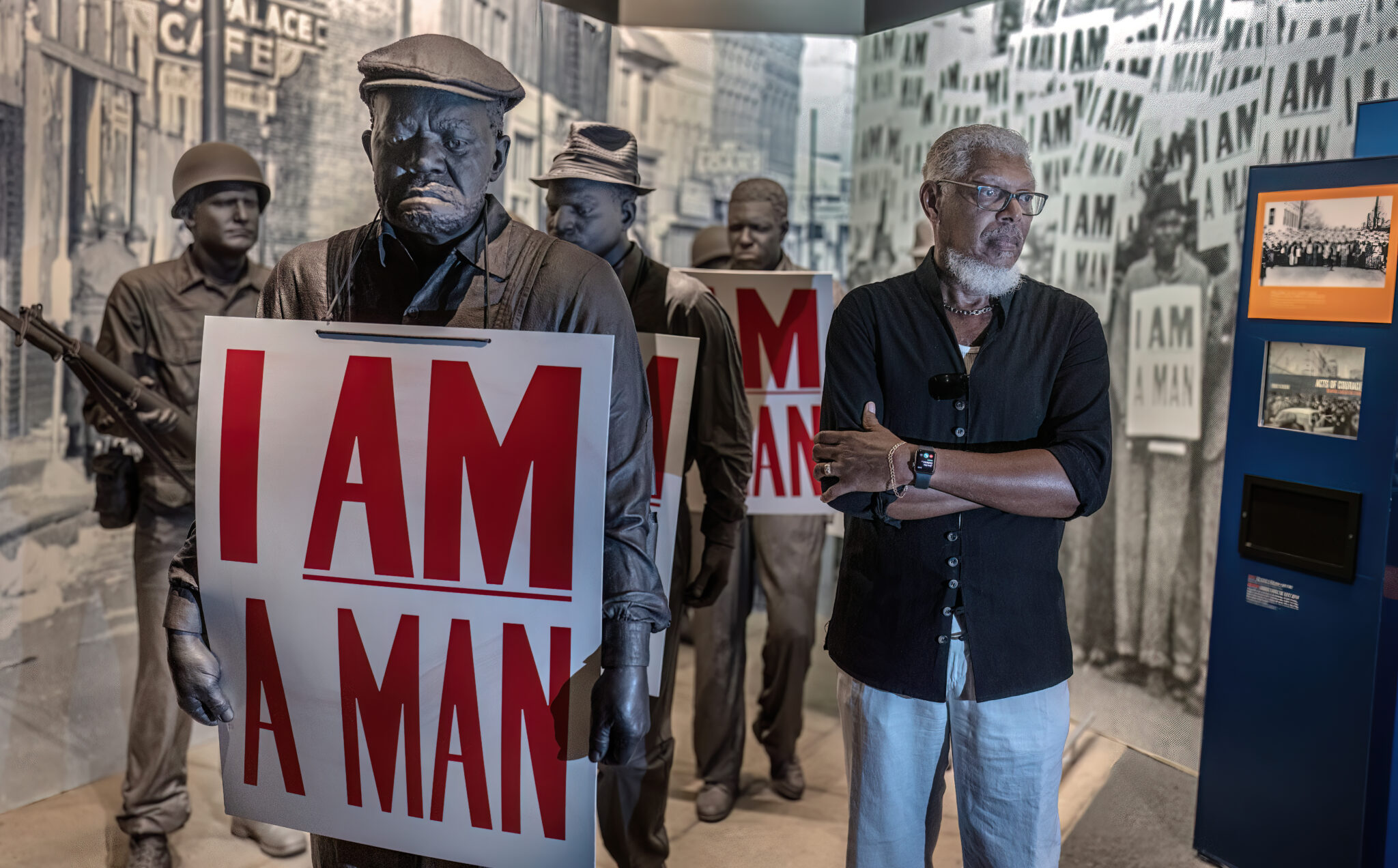
    Joe Calhoun, photographed at the National Civil Rights Museum at the Lorraine Motel in Memphis, Tennessee, needs no reminders of the 1968 sanitation workers strike. He lived it. (Photo by John Partipilo for the Tennessee Lookout) Photograph by John Partipilo/ Tennessee Lookout ©2024

    Joe Calhoun launched his activism during the 1968 Memphis sanitation workers strike, listening to Rev. Martin Luther King Jr. and other leaders in the Civil Rights Movement

    By:  Ohio Capital Journal

    MEMPHIS — At the National Civil Rights Museum at the Lorraine Motel in Memphis one September day, tourists pause solemnly before a group of life-size statues, some crafted in Tennessee National Guard uniforms, others with red and white signs draped around their necks that proclaim, “I Am a Man.”

    The visitors are of all ages. Some of the older people doubtless remember the genesis of the “I Am a Man” slogan — the 1968 Memphis sanitation workers strike in which workers wore the signs to point out their humanity in the face of hazardous working conditions.

    One man stands apart from the whispering guests. Joe Calhoun needs no videos or displays to remind him of the strike depicted in the museum exhibit.

    He lived it.

    Calhoun, now 75, assembled the strikers’ signs as a teen during the three-week period he worked adjacent to Rev. Martin Luther King Jr. during the civil rights icon’s final visit to Memphis before he was assassinated on April 4, 1968.

    “I didn’t understand the scope”

    Calhoun moved with his family to Memphis in 1967.  His father was a U.S. Air Force officer and was stationed overseas until Calhoun was 15. Life in Memphis was a culture shock.

    “I lived in Memphis towards the end of the Jim Crow laws, but the treatment was still the same,” Calhoun said. “There was segregation in stores. Black people could buy clothes but you couldn’t try them on.”

    “It was completely foreign to anything I had experienced,” he said. “I came from a very protected and multicultural environment in the military and living out of  the country. My background didn’t give me what I needed to arm myself.”

    Just months before Calhoun graduated from Melrose High School in Orange Mound, a Black neighborhood on the south side of Memphis, two trash collectors — ​​Echol Cole and Robert Walker — were crushed as they loaded garbage into a malfunctioning truck. The February 1968 incident wasn’t the first time workers had been killed in a similarly gruesome fashion, but Memphis officials still refused to replace the faulty equipment.

    The deaths of Cole and Walker were the last straw for their fellow workers, most of whom were Black and worked for low pay in filthy and dangerous conditions, treated more like animals than humans, they would say while on strike.

    When a call went out for volunteers to assist with the strike, Calhoun saw an opportunity to get involved, assembling the iconic signs with the phrase on them chosen as a statement of the workers’ humanity.

    “The whole civil rights thing was new to me, and I just thought that what was going on was wrong,” Calhoun said. “So when a call went out for high school and college students to help with the strike, I saw an opportunity.”

    Calhoun said his parents were concerned about him traveling from their home to the staging site of the strike at the Clayborn Temple near Beale Street in the heart of downtown Memphis. The city was tense, a curfew was imposed and the National Guard deployed to keep order.

    For three weeks, Calhoun lived in the church attic, listening as King and other national civil rights leaders, like Bayard Rustin, James Bevel, Rev. James Lawson and Stokely Carmichael, planned how to get better conditions and higher pay for the sanitation workers.

    Joe Calhoun stands next to a statue with the words: I Am A Man in Memphis
      Joe Calhoun lived in the attic of the Clayborn Temple in Memphis for three weeks in 1968 while working on the sanitation workers strike. The strike is commemorated with the I Am a Man Plaza at the now vacant church. (Photo by John Partipilo) 
    “I was in a meeting with them. I got coffee and cigarettes for Rev. King and others. I was a runner for them,” Calhoun said. “But I didn’t understand the scope of what was happening. You know when you are young, and your teacher tells you to do something, you do it without thinking about the long-term ramifications of what you are doing.” 

    The 1968 strike wasn’t the first time workers had tried to gain concessions from Memphis. They had been granted a charter for a local union from the American Federation of State, County, and Municipal Employees (AFSCME) in 1964 and also went on strike in 1966 but failed. King’s presence in 1968 drew national attention to the workers’ plight, and it was in Memphis the day before his assassination that he gave his last speech, known as “I’ve Been to the Mountaintop.”.

    Organizers with AFSCME negotiated a deal with Memphis officials to recognize a sanitation workers union, bringing the strike to a close on April 16.

    Feet in the movement

    King was assassinated at the Lorraine Motel. Just as the Civil Rights Movement didn’t die with him, neither did Calhoun cease his activity.

    Shortly after King’s murder, Calhoun traveled to Washington, D.C., to help fulfill King’s plan for a Poor People’s Campaign, living in Resurrection City, the 42-day tent encampment on the National Mall.

    In 1969, as a member of the Memphis Invaders, a group that fused the organizing strategies of the Student Nonviolent Coordinating Committee and the more militant Black Panthers, Calhoun participated in 1969’s Walk Against Fear from Memphis to Little Rock, Arkansas.

    Calhoun had met Invaders leader Lance “Sweet Willie Wine” Watson — he later changed his name to Suhkara A. Yahweh — during the sanitation strike. By the time Watson staged the Walk Against Fear, Calhoun was working for VISTA, a federal anti-poverty program, in Forrest City, Arkansas, Watson’s staging point for the march.

    During the 135-mile walk, Calhoun and other members of the group faced daily threats of violence from white Arkansans, including, he recalled, from members of the University of Arkansas football team packed into a flatbed truck in Hazen.

      Calhoun, left, marched in 1969’s Walk Against Fear with Memphis Invaders leader Lance “Sweet Willie Wine” Watson. (Photo by Ernest Withers, courtesy of Joe Calhoun) 

    Taking a break and finding a new mission

    Around 1970, the Invaders disbanded. Calhoun married in 1974, had children and devoted himself to them and his career as a historian.

    His children grew up and moved away.

    “After they moved to California, I woke up and thought: now what?” Calhoun said. “Over the last 10 or 12 years, I’ve gotten reinvolved.”

    In 2020, after police in Minneapolis killed George Floyd, Calhoun joined a Memphis Black Lives Matters march in protest. He carried a sign that read: “I marched in ‘68. Marching in 2020.” Now, he said, he’s updated the sign.

    “I changed 2020 to 2021, then 2022, and now I’m changing it to 2025.

    “People ask me what is different about marches today and in the ’60s. Seventy percent of the marchers in Black Lives Matter marches were not of color,” Calhoun said. “Marchers were seeing how people in other parts of the country were treated.”

    He has mentored Tennessee state Rep. Justin Pearson, the Memphis Democrat who made national news as one of the Tennessee Three when the Republican-dominated Tennessee House expelled Pearson for leading a gun safety rally on the House floor in 2023.

    These days, Calhoun serves as operations manager for The Withers Collection, a museum just around the corner from the Lorraine Motel that houses the work of Black photojournalist Ernest Withers. He documented the Civil Rights Movement, and the museum features photos of the significant figures in the movement — including Calhoun.

    “Everything I do is for my grandchildren,” he said. “It may be selfish, but I want them to live in a better world.”

    YOU MAKE OUR WORK POSSIBLE.

    GET THE MORNING HEADLINES.

    ____________
    J. Holly McCall
    J. Holly McCall

    Holly McCall is the editor of the Tennessee Lookout. She has been a fixture in Tennessee media and politics for decades. She covered city hall for papers in Columbus, Ohio and Joplin, Missouri before returning to Tennessee with the Nashville Business Journal. She has served as political analyst for WZTV Fox 17 and provided communications consulting for political campaigns at all levels, from city council to presidential. Holly brings a deep wealth of knowledge about Tennessee’s political processes and players and likes nothing better than getting into the weeds of how political deals are made.

    MORE FROM AUTHOR

  • Where are warming centers in Warren County and Hamilton County?

    Where are warming centers in Warren County and Hamilton County?

    News from the Warren County EMA

    The cold temperatures will continue to drop this weekend into next week.
    Use this link to find what warming centers are open, get directions to the warming center closest to you, and find the most recent, up-to-date hours of operations.
    Here is the link to the map of available warming centers in Warren County:
    Use the link to find what warming centers are open, get directions to the warming center closest to you, and find the most recent, up-to-date hours of operations.
    _____________
    (1/17/25) – The National Weather Service has issued an EXTREME COLD WATCH from 1/20/25 1:00AM-1/22/25 10:00AM
    Dangerously Low Temperatures as low at -10 degrees with wind chill readings as low as -25 degrees are possible.
    _____________

    Hamilton County Warming Centers

    • Cincinnati Hamilton County Public Libraries – The Cincinnati Hamilton County Public Libraries are available as warming centers during their operating hours. Please check their current operating hours on their website.
      • Please note ALL Cincinnati Hamilton County Public Libraries are CLOSED on Monday in observance of the Dr. Martin Luther King Jr. Holiday.
    • Select YMCA of Greater Cincinnati locations – Select YMCA of Greater Cincinnati locations are available as warming centers during their normal operating hours. Specific location hours are on their website. Locations include Blue Ash, Campbell County, Clermont Family, Clippard Family, Gamble-Nippert, Highland County, M.E. Lyons, Powel Crosley, Jr., and R.C. Durr.
      • Please note that YMCA’s of Greater Cincinnati ARE OPEN normal hours on Monday during the Dr. Martin Luther King Jr. Holiday.
    • The Salvation Army of Greater Cincinnati locations
      • Cincinnati Ohio Center Hill – 6381 Center Hill Avenue, Cincinnati, OH 45224
        • Sunday, January 19 – 9:00 a.m. – 1:00 p.m.
        • Monday, January 20 – CLOSED
        • Tuesday, January 21 – 9:00 a.m. – 4:00 p.m.
        • Wednesday, January 22 – Friday, January 24 – 9:00 a.m. – 3:00 p.m.
      • Batavia Ohio Corps – 87 N. Market St., Batavia OH 45103
        • Sunday, January 19 – 10:00 a.m. – 1:00 p.m.
        • Monday, January 20 – Tuesday, January 21 – 9:00 a.m. – 4:00 p.m.
      • Northern Kentucky Corps – 1806 Scott Boulevard, Covington, KY 41014
        • Sunday, January 19 – 9:00 a.m. – 1:00 p.m.
        • Monday, January 20 – CLOSED
        • Tuesday, January 21 – 9:00 a.m. – 4:00 p.m.
        • Wednesday, January 22 – Friday, January 24 – 9:00 a.m. – 3:00 p.m.
      • OTR Salvation Army – 131 E. 12th Street, Cincinnati, OH 45202
        • Tuesday, January 21 – Friday, January 24 – 9:00 a.m. – 12:00 p.m. and 1:00 p.m. to 3:30 p.m.
    • Cincinnati Recreation Centers
      • The City of Cincinnati will open the daytime cold weather shelter at the Over-the-Rhine Recreation Center (1715 Republic Street) on Monday, January 20 and Tuesday, January 21
        • The activation includes:
          • Expanded hours both days from 6:15 a.m. – 6:45 p.m.
          • Metro bus transportation to/from the overnight Winter Shelter at 411 Gest St.
          • Breakfast, lunch, dinner, and snacks
          • Behavioral health services, if needed
          • Non-emergent health services, if needed
          • Blankets, hats, and scarves
          • Pet services for people experiencing homelessness with their pets
      • All other Cincinnati Recreation Commission (CRC) Rec Centers will operate as warming centers during normal business hours, on Tuesday, January 21. Other than the daytime cold shelter at the OTR Rec Center, City operations are closed on Monday, January 20, in observance of the Dr. Martin Luther King Jr. Holiday. For further information on the CRC Rec Centers, please visit their website.
  • Governor DeWine Appoints Husted to U.S. Senate

    Governor DeWine Appoints Husted to U.S. Senate

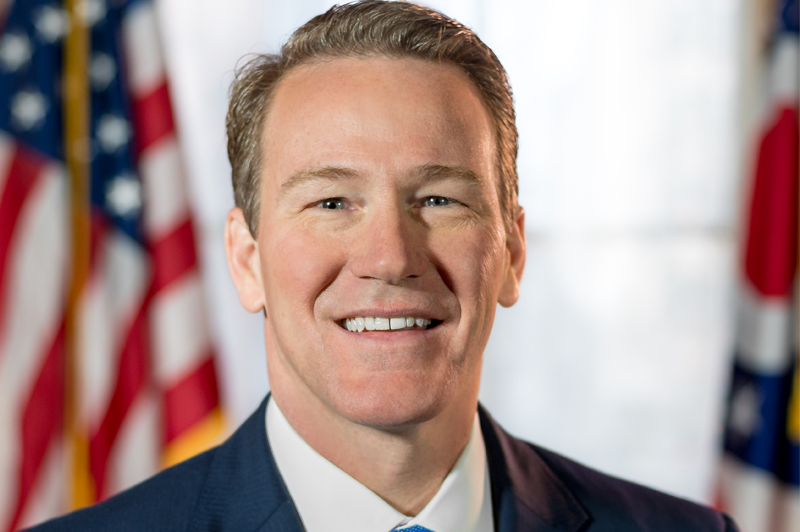
    Columbus, Ohio – Ohio Governor Mike DeWine announced yesterday that he has appointed Lt. Governor Jon Husted to serve as Ohio’s next United States senator.

    LtGov-Jon-HustedHusted will replace JD Vance, who resigned from the Senate last week and will take office as the 50th vice president of the United States on Monday.


    “There were many people who I considered very qualified to serve in the U.S. Senate to represent the State of Ohio, but I came to the conclusion that the best person to serve is a person who has been close to me for the last six years – a person who I work with almost daily –  and that is Lt. Governor Jon Husted,” said Governor DeWine. “I have worked with him, I know he is knowledgeable, I know his heart, I know what he cares about, and I know his skills. All of that tells me he is the right person for the job.”

    “I know Ohio well, and I will fight for Ohio as a U.S. senator,” said Lt. Governor Husted. “I look forward to working with President Trump, Vice President Vance, and the Republican majority who have an America First agenda to fight inflation, stop illegal immigration, and advance conservative values.”

    Prior to serving in the DeWine Administration, Husted served as Ohio secretary of state, speaker of the Ohio House of Representatives, and a member of the Ohio Senate.

    “My time here at the Statehouse has been a true joy, but representing Ohio in the U.S. Senate is an amazing opportunity,” said Lt. Governor Husted. “It is something that an adopted kid who grew up on County Road J in Montpelier, Ohio, could have never imagined.”

    Husted started his life in a foster home before being adopted by his parents, Jim and Judy. He is the oldest of three children and was raised in Northwest Ohio’s Williams County. He graduated from Montpelier High School and earned both his bachelor’s and master’s degrees from the University of Dayton.

    Husted is married to Tina Husted and is the father of three children, Alex, Katie, and Kylie. His first grandchild, Margaret, was born last year to parents Alex and Kathleen.


    MORE: Jon Husted’s Full Biography


    Governor DeWine has not yet selected a candidate to fill the lieutenant governor position. Once selected, the individual must be confirmed by both the Ohio Senate and Ohio House of Representatives.

  • Logo Design Contest for students K-12th grade

    Logo Design Contest for students K-12th grade

    Clermont County, Ohio – Clermont Soil & Water along with the Adams-Clermont Solid Waste District are coordinating the 2025 Spring Litter Clean-up Event with the Logo Design Contest for students K-12th grade.

    For rules and to register for the contest visit www.springlittercleanup.com

    The student with the winning design will receive a $100 cash award and an additional $100 gift given to their school art department or local art program.

    There will also be 13 grade-level awards of $25 each.

    The 2025 Spring Litter Clean-Up will be held on Saturday, April 26th at various locations across Clermont County and within the East Fork Little Miami River watershed. Questions contact Connie Miller at cmiller@clermontcountyohio.gov or (513) 732-7075 Ext 2
  • New Episode: The Queen City Sports Podcast by Chris Ball & Mark Raines

    New Episode: The Queen City Sports Podcast by Chris Ball & Mark Raines

    by Chris Ball

    Loveland, Ohio – The Bearcats got their first conference win on Wednesday night and Mark is here to break down how they did it. The Bearcats’ offensive struggles are still an issue and he and Chris discuss which Bearcat player is the catalyst for turning it all around. It’s also going to be a crucial stretch for Cincinnati in their next run of winnable games, in Mark’s opinion they have to take advantage in order to improve their resume before the NCAA Tournament field is announced in the coming weeks. For his part, it was a rough Thursday night sports-wise for Chris, as the Thunder blew out the Cavaliers and Michigan had an ugly loss on the road to a determined Minesota team. But Mark was able to talk him off of the ledge and the guys discuss how both teams can learn from these losses and how they don’t mean the sky is falling for either team. The guys also touch on the upcoming championship matchup between Ohio State and Notre Dame, and why they feel the game will be closer than most of the pundits are predicting.

    Have a listen and don’t forget to leave your comments and feedback!

    _______________________

    Hey readers… have an opinion about sports? How about a topic you’d like to see written about in Loveland Magazine or a thought about one of our articles?

    Just need to vent and get out your frustration about the Reds, Bengals, or any other sports issues?

    Feel free to share with an email to lovelandmagazinesports@gmail.com!

    We would love to hear from our readers, and we thank you for your support and engagement.

    Also, don’t forget to follow us at The Loveland Sports Desk at the below links:

    For Facebook, click here.

    For X, click here.

    For Instagram, click here


    Christopher Ball is a longtime Loveland resident and an attorney. He graduated from Loveland High School in 2003 and was a member of the football team before going on to become a coach’s assistant at DePauw University in Greencastle, Indiana. He has been following and rooting for the Reds and Bengals since the early 1990s and has been through the many ups and downs that fandom has wrought over the years.

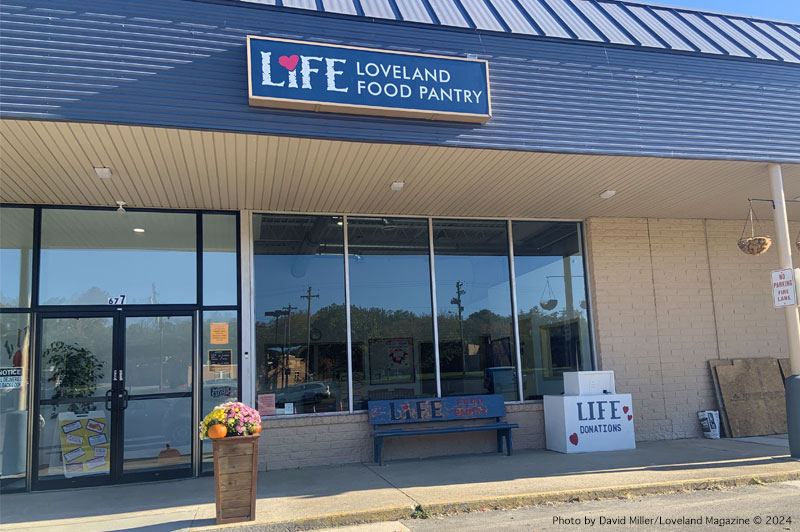
  • How the LIFE Food Pantry was founded

    How the LIFE Food Pantry was founded

    [pdf-embedder url=”https://lovelandmagazine.com/wp-content/uploads/2025/01/The-L.I.F.E-Food-Pantry-founding-1.pdf” title=”The L.I.F.E Food Pantry founding”]

    Follow the Life Food Pantry on FaceBook and on their Website.

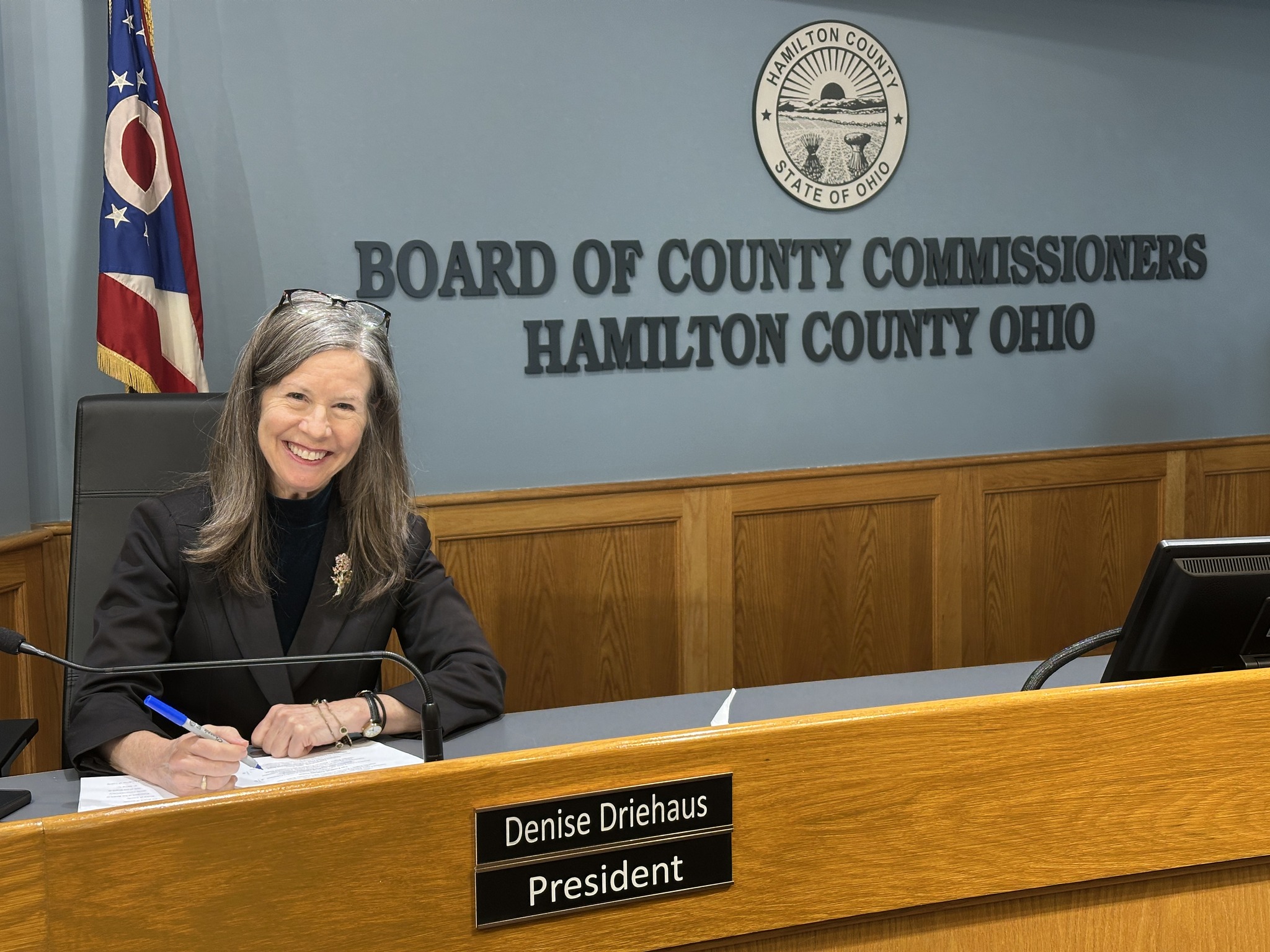
  • Denise Driehaus chosen President of Hamilton County Board of Commissioners for 2025

    Denise Driehaus chosen President of Hamilton County Board of Commissioners for 2025

    Hamilton County Photo

    Hamilton County, Ohio – Hamilton County Commissioners elected Commissioner Denise Driehaus to lead the Board of County Commissioners in 2025. Each year, commissioners select a president during their organizational meeting to chair commission meetings, facilitate organizing weekly staff meetings, and serve as the lead spokesperson at community and media events.

    Hamilton County Commissioners oversee a $1.3 billion budget that encompasses economic development, social services, environmental protection and public safety. Driehaus was first elected to the Board of County Commissioners in 2016 and has spearheaded initiatives such as the Commission on Women and Girls and the Hamilton County Addiction Response Coalition. She has also supported environmental initiatives, including support for bike trails across the county and recycling, solid waste and storm water policies.

    Driehaus serves as a board member on the Portman Center for Policy Solutions that encourage “civility, bipartisanship and finding common ground to achieve policy solutions.”

    Driehaus also holds leadership positions nationally and statewide as Vice Chair of the National Democratic County Officials, Vice President of the County Commissioners Association of Ohio, a facilitator for the National Institute for Civil Discourse, and a Board Member of the Community Learning Center Institute.

    Alicia Reece (Hamilton County Photo)

    Driehaus replaces Commissioner Alicia Reece who spent the last two years as president of the Commission. Reece will continue serving as a member of the Board

    Additionally, during the organization meeting of the Board on Thursday, January 9, Commissioners designated Commissioner Stephanie Summerow Dumas as the Vice President of the board to serve in the President’s absence.

    Stephanie Summerow Dumas (Hamilton County Photo)

    The Board of County Commissioners typically meets in Commission Chambers located on the 6th floor of the Todd B. Portune Center for County Government, 138 East Court Street, Cincinnati OH 45202. View the Commissioners’ calendar here. Commissioners also invite the public to participate in public comment either in person or virtually on Thursdays during regularly scheduled Commission meetings. Commission meetings can be viewed online through the County website, Facebook or Youtube Channel.

    Commission meetings are also televised by the Intercommunity Cable Regulatory Commission and can be found on cable in ICRC communities.

    ______________

    Alicia Reece spent the last two years as president – championing “One Hamilton County” and leading on groundbreaking efforts such as the Cincinnati Black Music Walk of Fame and the 513Relief Bus that helped over 30,000 residents, traveled to 277 locations in 32 zip codes. She also launched the Office of Small Business, Small Business Day, Pitch Night and created a special SBA 504 down payment assistance program to support business owners in purchasing their own commercial property.

    ______________

    Vice President Summerow Dumas created the INSPIRE initiative to support over 50 grassroots organizations that create real positive change for over 23,000 Hamilton County youth. She also founded Beyond Your Imagination to provide positive experiences for over 1,000 foster youth who may have otherwise missed out. Summerow Dumas also led the charge in the County studying tiny homes as a possible solution to the affordable housing issues facing our region. She also was an early outspoken advocate and instrumental in moving the Cincinnati Police Department’s Gun Range away from Lincoln Heights and Woodlawn.

  • Milford School issues plan to reduce busing for next school year

    Milford School issues plan to reduce busing for next school year

    Milford, Ohio – The Milford School District will reduce busing eligibility for students starting next school year.

    Below is the statement the District released making the announcement:

    Bus Transportation Eligibility for the 2025-2026 School Year

    Due to the failure of the Earned Income Tax (EIT) levy, Milford Exempted Village School District (MEVSD) will be reducing all student transportation services to align with Ohio’s state minimum transportation requirements beginning in the 2025-2026 school year. These changes include the following:

    • No transportation will be provided for high school students (grades 9-12).
    • Transportation will only be available for students residing outside a 2-mile driving distance of their assigned school building.

    We understand these changes may present challenges for families, and we appreciate your understanding as we work to responsibly steward our resources.

    Determining Your Child’s Transportation Eligibility

    To determine if your child is eligible for transportation services, please refer to the Bus Eligibility Address Lists linked below. If your home address is listed in the provided PDFs, your child qualifies for state minimum busing.

    If your home address does not appear on any of the provided lists your child will not be eligible for district-provided transportation services for the upcoming school year.

    Important Notes:

    • Addresses are based on driving distance calculations, not walking distance.
    • These eligibility lists are final and were determined based on state transportation guidelines.
    • Eligibility data comes directly from our busing vendor, Petermann Bus, using their advanced routing software to ensure accuracy and compliance with state requirements.
    • Students currently receiving special transportation services through an IEP will continue to have access to those services in the upcoming school year.

    For further questions or clarification, please refer to our Pause on Sister School FAQ for information regarding the pause on sister school transition, pay-to-play cuts, and more.

    Thank you for your understanding and support as we navigate these necessary adjustments.

  • Save the date for these Do It for Jack upcoming events

    Save the date for these Do It for Jack upcoming events

    Loveland, Ohio – Here are some important ways you can help the DoItForJack-The Jack Quehl Foundation in the fight against fentanyl:

    January 31: DoItForJack Night at Moeller High School Basketball Game vs Elder.

    March 13: Women’s series speaking engagement at Fueled Collective… learn more.

    March 15: Leprechaun Chase 5K in Loveland (volunteers needed) *Reach out if you can help.

    May 3-4: Flying Pig Marathon – Buy & wear your DoitforJack shirt, and/or join us for the 5K on 5/3.

    May 10: Food Truck Rally in Loveland (volunteers needed) *Reach out if you can help.

    June 13-15: Jack’s Birthday Celebration Weekend in Loveland (volunteers needed) *Reach out if you can help.

    October: Art Night (date TBD)

    Jack’s Story

    Jack Quehl lost his life to fentanyl poisoning on September 20, 2021. It might seem like just another tragic headline, but to Jack’s family and friends, it’s an earth-shattering loss—and they want it to mean something.

    Jack Quehl was a brilliant, fun-loving, caring son, brother, cousin and friend, and this is his story.

    In the early hours of June 22nd, 1997, a baby boy made the world a little brighter.  His proud parents, Tom and Stephanie, named him John Thomas Quehl, but soon everybody called him Jack.

    Little Jack loved sports and books. Stephanie read to him every night, and every night Jack begged for one more story (Stephanie always gave in). During Jack’s elementary years, Tom and his Uncle Jon coached him in football, soccer, lacrosse and basketball, but ultimately football became Jack’s sport. Jack displayed his passion for football with his wardrobe, wearing a constant mix of college and NFL jerseys until he settled on his two favorite teams: The Arkansas Razorbacks and the Tampa Bay Buccaneers.

    Like everything he did, Jack leaped into high school with both feet. He went to Moeller High School where he played football for 4 years.  He was a member of the National Honor Society and a National Merit Scholar. He even performed in the annual Moeller Improv show with his younger brother Tyler. Jack finished in the top ten of his highly competitive class, and his classmates chose him to give the closing speech at their graduation ceremony.

    In 2016, Jack received a scholarship from the University of South Carolina (USC) and joined the Darla Moore Business School on USC’s main campus.  During Jack’s freshman year, he was chosen for the Darla Moore Study Abroad program.  Over the course of three semesters, Jack traveled the world and spent time in Europe, Asia and South America. Along the way, Jack made lifelong friends everywhere he went and developed an insatiable appetite for travel.

    Jack graduated from USC in May of 2020 and was accepted into the Venture for America (VFA) program, which places graduates into startup businesses to develop the next generation of entrepreneurs. He interviewed with multiple startups and joined a company called HEX, based out of Baltimore.

    Starting work in the middle of the Covid pandemic meant Jack had to spend the first year of his career working remotely from his parents’ home in Ohio, but he handled it with the same grace he did everything else. Jack worked hard, read incessantly, and developed a love of music. (And kept a journal. In Portuguese!) His parents remember a constant flow of deliveries as Jack ordered new books to devour and new vinyl records to enjoy.  All of Jack’s family— Tom, Stephanie and his brothers Eric, Tyler and Adam—recall the fun they had listening to music and goofing around with Jack. They’re forever grateful they were able to have that time with him.

    In August of 2021, Jack was finally able to move to Baltimore to start his adult life.  His family helped him pack up a Uhaul full of clothes, furniture, books and albums.  Jack left his parents a beautiful note, thanking them for all they had done for him.

    The afternoon of Sunday, September 19th, was a bright and sunny day in Ohio. Tom was watching the Bengals game on TV, and Stephanie was volunteering at the local church festival. Their world was about to forever change.

    Jack’s friend Aaron called Stephanie: He and Jack’s roommates had found Jack unresponsive on their apartment’s porch. Stephanie and Tom drove as fast as they could from Ohio to the University of Maryland Medical Center in Baltimore. Jack’s brother Tyler, who was living in Philadelphia, had a shorter trip and rushed to Jack’s side. Tyler called his parents and reassured them Jack was resting comfortably, even though he knew it did not look good.

    Tom and Stephanie arrived around midnight. The doctor told them the words no parent wants to hear— Jack had less than a 1% chance of survival. The medical team had done everything they could for Jack, but it was simply too late. Tom called Jack’s brothers, grandparents, uncles, aunts and cousins so that they all could say goodbye to Jack.

    Jack passed early Monday morning at approximately 6am. It seems that Jack, while having a good time with some friends, had used a recreational drug. What Jack didn’t know was the drug had been cut with fentanyl, a drug that’s up to 50 times more potent than heroin. Jack wasn’t an addict, he wasn’t a habitual drug user, and he never intended to take fentanyl. But he did, and it took his future. The world will never know how Jack Quehl might have changed it.

    Jack’s family was beyond heartbroken, but they decided Jack’s visitation and funeral could only be a celebration of his life. They asked that people wear their favorite sport’s team jersey to the visitation—something they knew would’ve made Jack smile. The line stretched out the door and around the building for hours as family, friends, and neighbors gathered to remember Jack. The day was full of stories, laughter and tears.

    The Rest of Jack’s Story Begins Here.

    Jack was truly loved by so many. His international friends remember his gap-toothed smile and the way he made them laugh. “If you could make Jack laugh, it was truly an honor, because he did it so often for us,” one says. Jack’s brother Tyler says, “Jack was curious about his world and always learning. He would talk to anyone and explore any notion, even if it challenged his views. He continues to inspire me to live openly, authentically, and inquisitively.”

    Jack could be reserved and almost shy, and he was also quirky, funny, goofy, brilliant and thoughtful.  But, above all else, he was beautiful in heart and soul.

    To let Jack’s memory fade would be an injustice to him and to all who knew him, so Jack’s family and friends started the “DOITFORJACK” Jack Quehl Foundation. They want to honor his memory and make sure that no other family loses their Jack.

    May His Memory Inspire Some and Save Others.

    Jack Quehl lost his life to fentanyl poisoning on September 20, 2021. It might seem like just another tragic headline, but to Jack’s family and friends, it’s an earth-shattering loss—and they want it to mean somethin