Tag: ohio

  • Loveland Bike Trail could become part of National Scenic Trail

    Loveland Bike Trail could become part of National Scenic Trail

    National Park Service considering making the The Buckeye Trail (including Loveland Bike Trail) a National Scenic Trail

     

    David Miller is the Editor in Chief of Loveland Magazine

    Loveland, Ohio Loveland certainly, and rightfully so, brags of having the National and State Scenic Little Miami River flowing through our Historic Downtown. Recent and ongoing efforts to protect the integrity of its water quality and shores demonstrate how entirely virtuous these bragging rights are. (Planning and Zoning Commission reverses course on SPD for 12 homes on Riverside Drive)

    Now comes the opportunity to have a National Scenic Trail running, walking, and jogging through our renowned, resort-like community.

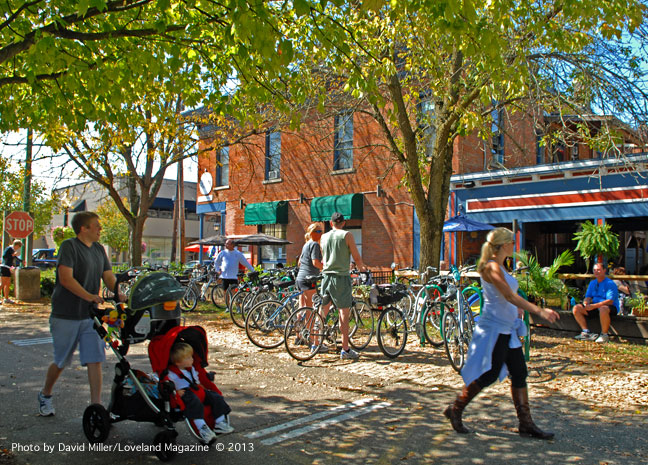
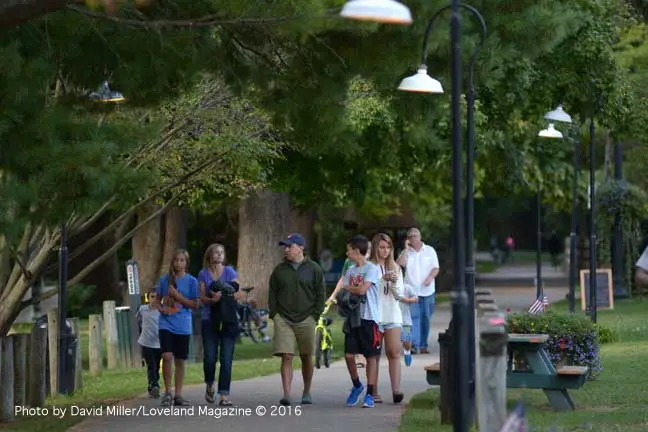
    A a group ride in Historic Downtown at Nisbet Park on the Loveland Bike Trail.

    The National Park Service is conducting a feasability study to determine the status of the Buckeye Trail to become a National Scenic Trail. Community members and stakeholders can share their support for the Buckeye Trail through an opportunity to review the feasibility study process and share feedback regarding the study. You are invited you to review the project and provide input. Visit https://parkplanning.nps.gov/buckeyetrailfs for details and to share comments. The public comment period will be open until February 19th, 2025.

    National Park Service Public Meetings

    The National Park Service is conducting meetings around Ohio the week of January 13‐17 as part of the feasibility study to determine National Scenic Trail status for the Buckeye Trail. There is an additional virtual meeting scheduled for January 23.

    Meeting Information:

    In these public meetings, NPS staff will share information about the study process, including the criteria used to evaluate the trail for inclusion in the National Trails System, and answer questions.

    • Thursday, January 16, 2024 from 4:00 until 7:00 P.M.
      Cincinnati, Ohio – Digital Futures Building
      Level 1 Conference Room, Room 140
      3080 Exploration Avenue
      Cincinnati, Ohio 45206
    • Thursday, January 23, 2025 from 5:30 to 6:30 P.M.
      This will be a Virtual Meeting using Microsoft Teams.
      Login information will be available in a few weeks.

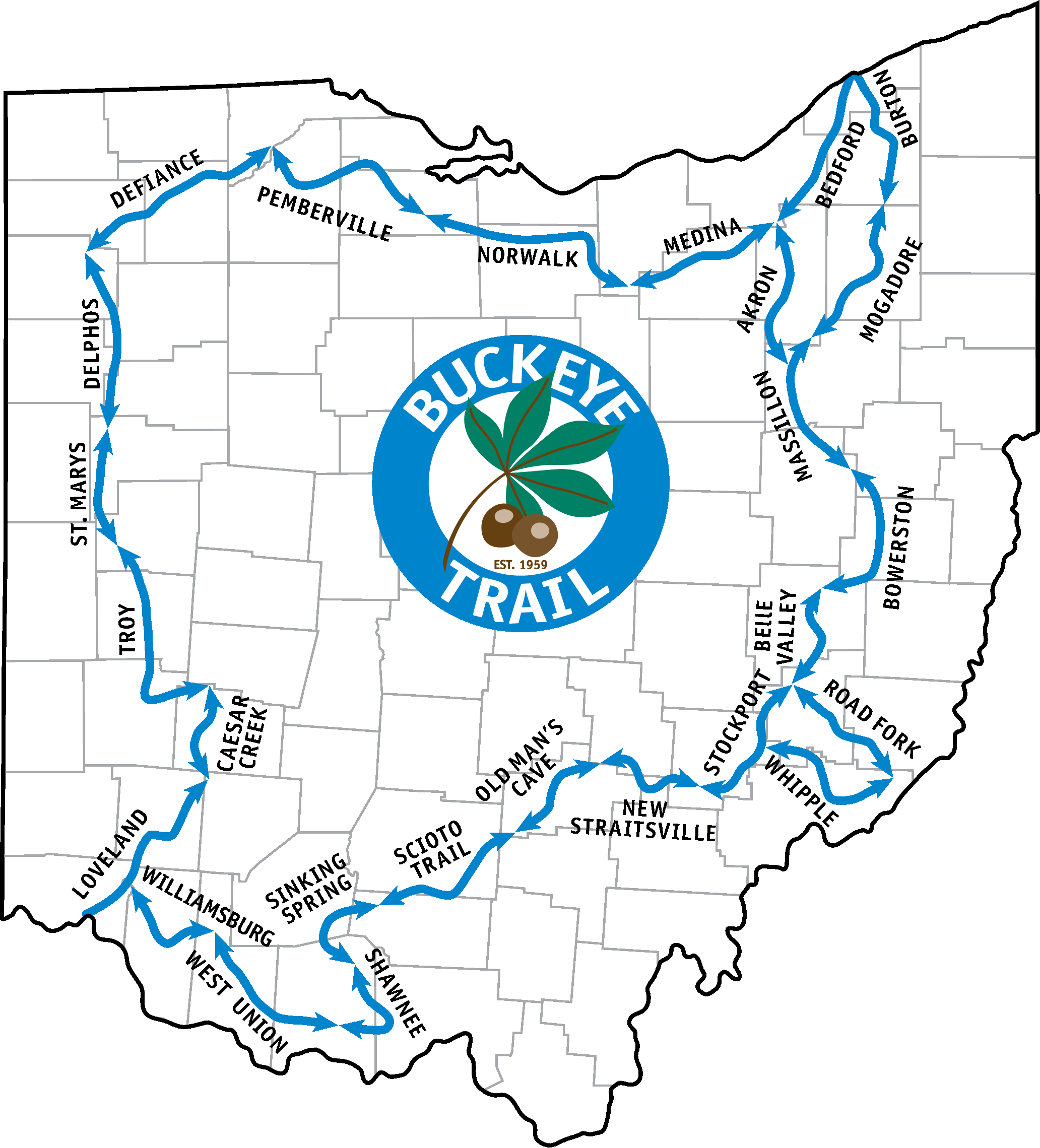
    The 1,454-mile Buckeye Trail, spans Ohio’s diverse landscapes, connecting 47 counties and more than 100 communities.

    The study was approved with bipartisan support Congress 2022. Congress directed the Secretary of the Interior to study the feasibility and suitability of designating the Buckeye Trail as a National Scenic Trail.
    According to the Buckeye Trail Association,National Scenic Trail designation would see the Buckeye Trail join an elite group of 11 existing trails, making the Buckeye Trail the 5th largest in the nation, the only circumferential trail, and the first trail to receive this designation since 2009. This recognition would unlock significant benefits, including increased federal support, enhanced visibility, and expanded opportunities for community and economic development across Ohio.”

    The trail was built from 1959 to 1980 by the Buckeye Trail Association, a non-profit organization that still administers it. More than half of the Buckeye Trail route overlaps the North County National Scenic Trail route as it passes through Ohio.

    The Little Miami State Park, (What Lovelander’s refer to as the Loveland Bike Trail) is a unique recreational asset in the state park system: a trail corridor. This scenic, riverside trail offers numerous recreational pursuits — bicycling, hiking, cross-country skiing, rollerblading, backpacking and horseback riding. The corridor also provides access to boating on the Little Miami River.

    The park contains 50 miles of paved trail from Terrace Park in Hamilton County to Hedges Road in Greene County. The remainder of the trail to Springfield is also paved and operated by Greene County Parks and Trails. (For information on the trail north of Hedges Road, visit gcparkstrails.com or call 937-376-7440.)

    A staging area in Corwin has parking, flush restrooms (seasonally), and picnic tables. Other facilities have been developed along the trail in Oregonia, Morrow, South Lebanon, Fosters, Loveland, Miamiville, and Milford. These trailside stops may include parking, restrooms or portable toilets, benches, picnic tables, restaurants and trail access points. These facilities are wheelchair accessible.

    ____________________
    About the Buckeye Trail
    Since its establishment in 1959, the Buckeye Trail has grown from a 500-mile route into the nation’s largest loop trail, closing the loop in Cuyahoga Valley National Park in 1980. Free and open to all, 1,454 miles of the Buckeye Trail pass through 21 designated Buckeye Trail Towns and landmarks such as Wayne National Forest, Serpent Mound, and Fort Ancient, a UNESCO World Heritage Site. The Buckeye Trail is within 90 minutes of every Ohioan, providing an accessible connection to Ohio’s Great Outdoors and showcasing the state’s scenic and historical diversity. buckeyetrail.org

    About the Buckeye Trail Association
    Established in 1959, the Buckeye Trail Association builds, maintains, preserves, and promotes Ohio’s Buckeye Trail as a sustainable resource connecting people to the state’s scenic and historical diversity. The BTA inspires conservation and outdoor recreation across the state. buckeyetrail.org
  • Elected Officials Guide to Emergency Management – Read the plan every local government should have in place

    Elected Officials Guide to Emergency Management – Read the plan every local government should have in place

    Loveland, Ohio – Emergency management, from mitigation through long-term recovery, must be recognized and supported by all elected officials as a critical government service. They play a crucial role in public safety. Their understanding and support of emergency management is vital to the safety and well-being of the public and our communities.

    Emergency management is a critical government function from mitigation through long-term disaster recovery and preparedness efforts.
    Before a disaster occurs, elected officials are encouraged to meet with their emergency management officials and establish solid relationships, request briefings on state and local preparedness efforts, learn about emergency plans and procedures, and visit emergency operations centers and other critical facilities.

    During times of crisis, elected officials can be a valuable asset to their communities by having a clear understanding of how government responds to emergencies and disasters, what resources are available, what types of assistance can be provided to citizens and local governments, and how much time it may take to deliver the assistance.

    Read the full report:

    [pdf-embedder url=”https://lovelandmagazine.com/wp-content/uploads/2025/01/EMA00807-22.pdf” title=”EMA+0080+7-22″]

  • New 2025 Book Releases

    New 2025 Book Releases

    by Claire Mirkowski-Purdy

    Loveland, Ohio2025 has many great books to offer us this year, all from amazing and beloved authors for readers of all ages. Here are five great books getting released this year:

    Up first, Onyx Storm by Rebecca Yarros is releasing on January 21st. This is the third and final fantasy book in the Empyrean series, finishing up the story for the bestseller Fourth Wing.

    Next up, John Green is releasing another nonfiction novel: Everything is Tuberculosis. On March 18th, you’ll be able to read about Henry, a teenager struggling with tuberculosis, and Green learning how to advocate for the treatable yet impairing disease.

    On March 25th, Suzanne Collins is releasing Sunrise on The Reaping, the newest addition to the beloved Hunger Games series. This book is all about Haymitch and his experience on being called into the fiftieth annual Hunger Games and his journey to become a victor, struggling with grief and heartbreak.

    Tahereh Mafi, the author of the widely beloved YA dystopian Shatter Me Series is releasing another book in the series, Watch Me, on April 15th. This book takes place 10 years after the original Shatter Me Series and is in the POV of James, Adam’s younger brother from the original series.

    On April 22nd, Emily Henry, one of the most currently acclaimed romance authors, is releasing yet another romance novel: Great Big Beautiful Life. In this book, Alice Scott, an aspiring writer, and Hayden Anderson, an award winning author, each write an autobiography for a 20th century tabloid princess, competing to get one of the books published under the princess’s name.

    You can shop at our local bookstore, Bike Trail Books at 113 Karl Brown Way to pick up your favorite releases coming this year..

  • Public school advocates take issue with new Ohio Speaker’s claim that funding model ‘unsustainable’

    Public school advocates take issue with new Ohio Speaker’s claim that funding model ‘unsustainable’

    (Stock photo from Getty Images)

    By:  Ohio Capital Journal

    As Ohio’s 136th General Assembly begins, the newly minted House Speaker has already taken a stand on education, saying spending for the state’s public school funding model is “unsustainable.”

    Priorities (and for that matter, legislative committees) have yet to be formally established, but comments by Speaker Matt Huffman, R-Lima, have already brought criticism from public school advocates across the state.

    Speaking to reporters after the first official meeting of the Ohio House under his leadership, Huffman was asked about the Cupp-Patterson public school funding plan, also called the Fair School Funding Plan by supporters.

    The funding model for state support of public schools has been through most of its six-year phase-in, seeing funding through the last two budget cycles. This year was set to be the last phase-in for the funding, but Huffman said there is no such thing as a “three-generation roll-out” and pointed to his comments when Cupp-Patterson was first considered by the legislature. Back then, he did not support funding the full measure all at once, because he said it would tie down future state legislatures with a funding method they may or may not be able to afford.

    “I don’t think there is a third phase to Cupp-Patterson,” Huffman said this week. “I guess the clearest statement I can say is that I think those increases in spending are unsustainable.”

    The new speaker went on to say the state needs to look at “whether these dollars are being spent wisely in some districts, we know they are in many.”

    Public school advocates have fought for the funding model, a model that focuses on real-time costs from district to district, rather than a blanket amount of state funding for all schools. While the comments from Huffman were criticized by advocates, they didn’t necessarily come as a surprise.

    “It’s certainly disappointing, but it doesn’t change anything for us,” said Scott DiMauro, president of the Ohio Education Association. “Implementing the Fair School Funding Plan is still our top priority.”

    YOU MAKE OUR WORK POSSIBLE.


    Without the funding, public schools will have to reach further into the pockets of taxpayers with levy-increase requests, something that shouldn’t have to happen under a system that constitutionally supports public schools.

    ” If the speaker thinks there isn’t enough education funding to go around, Ohio law is very clear,” Melissa Cropper, president of the Ohio Federation of Teachers, told the Capital Journal. “The legislature must fund public schools and make cuts to the costly and ineffective universal private school vouchers that were put in place by Speaker Huffman (as an Ohio senator) and other legislators,” said Melissa Cropper, president of the Ohio Federation of Teachers.

    Those who support the funding model pointed to the $1 billion that went to scholarship funds including the EdChoice private school voucher program in 2023, which the legislature approved to give Ohio students near-universal eligibility to move to private schools of their choosing if they live in public school districts considered under-performing.

    “If the speaker wants to talk about sustainability, you have to start with those numbers,” DiMauro said.

    Late last year, the legislature also removed provisions of a bill that would have added accountability measures to the private school voucher program, despite education advocates asking that accountability measures for private schools match those of public schools.

    That demand for accountability includes an ongoing lawsuit that seeks to eliminate EdChoice from the state’s educational portfolio. The group Vouchers Hurt Ohio is leading the effort in a court battle that has specifically targeted Huffman for answers on the process of passing legislative measures that support and fund EdChoice.

    Eric Brown, former Ohio Supreme Court chief justice and chair of the steering committee for Vouchers Hurt Ohio, said the group “never trusted that state lawmakers would fully fund public schools.”

    “Instead they are intent on giving refunds and rebates to wealthy families to pay for private schools and forcing homeowners and taxpayers to pay more for their local public schools,” Brown said in a statement. “We believe this system is unsustainable and unconstitutional.”

    DiMauro acknowledged that the Fair School Funding Plan will require inputting the real costs on an ongoing basis to account for inflation, and having the funding method keep up with those costs, but to do so would only be keeping up with what the constitution asks of state leaders, he said.

    “It means finally having a system that will meet the requirements of the constitution and serve the needs of the nearly 90% of students who are in our public schools,” DiMauro said.

    Aaron Churchill, Ohio research director for charter school advocates The Fordham Institute, said the cost of the Cupp-Patterson plan is “something that the legislature is just going to have to grapple with over the longterm.”

    Charter schools in Ohio have “long been underfunded,” Churchill said, and the fact that public school enrollment has seen a decline in recent years shows that public schools “should have less need for funding” but also more focus on putting the funding “where the needs are the greatest.”

    “Our school funding should be driven by enrollment and head counts,” Churchill said. “There’s a lot of money going to our public schools, so the dollars are going even further than they would if our state had a growing student population.”

    The enrollment in public schools has gone down slightly over the past few years, though some experts attribute that to a national decline in birth rates more than participation choices. The National Center for Education Statistics sets projections for enrollment, and estimates Ohio’s public school student enrollment will go down by 7.6% by 2031, a loss of more than 127,000 students.

    The most recent data from the Ohio Department of Education and Workforce showed more than 1.75 million students in public schools, versus 173,156 students in the state’s non-public schools.

    The public school numbers showed a loss of 5,400 students compared to numbers reported by the ODEW in fiscal year 2023. That’s down from 2022 as well, but public schools saw an increase of nearly 18,000 students between 2021 and 2022, according to state data.

    Non-public schools have seen gradual increases since fiscal year 2021, when enrollment was reported at 162,917.

    Still, in the 2022-2023 school year, the ODEW reported 88% of schools in Ohio were traditional public schools, followed by community schools at 9.4% and vocational schools at 2.1%.

    YOU MAKE OUR WORK POSSIBLE.

    _________________
    Susan Tebben
    Susan Tebben

    Susan Tebben is an award-winning journalist with a decade of experience covering Ohio news, including courts and crime, Appalachian social issues, government, education, diversity and culture. She has worked for The Newark Advocate, The Glasgow (KY) Daily Times, The Athens Messenger, and WOUB Public Media. She has also had work featured on National Public Radio.

    Ohio Capital Journal is part of States Newsroom, the nation’s largest state-focused nonprofit news organization.

    MORE FROM AUTHOR

  • Open House for Loveland-Madeira Road Corridor Project

    Open House for Loveland-Madeira Road Corridor Project

    Loveland, Ohio – The City of Loveland, in partnership with the Ohio Department of Transportation, is proposing a roadway improvement project on Loveland Madeira Road from West Loveland Avenue to just past Valley View Lane. Proposed improvements are being funded by a $4.6-million grant through the OKI Regional Council of Governments and include the following:

    • Pedestrian enhancements, including sidewalk installation on the east side of the roadway and a multi-use path on the west side of the roadway.
    • Construction of a roundabout at the intersection of Valley View Lane and Loveland-Madeira Road to add a fourth leg of the intersection to accommodate future property development.
    • Streetscape enhancements, including street trees, lighting, green storm water infrastructure, benches, high-visibility crosswalks, bike racks, and relocation of overhead utilities to underground.
    • Grass-center median installation at various locations to manage traffic movement.

    Permanent and temporary right-of-way will be required in order to complete the proposed work. Construction is scheduled to begin in 2027 and be completed in 2028.

    The City of Loveland is hosting a public meeting on Wednesday, Feb. 12, 2025, from 6-8 p.m. at Loveland City Hall, 120 W Loveland Ave. to ensure the proposed project is viable and successful.

    “The purpose of the meeting is to discuss the project and proposed improvements with the community, answer questions, and gather community input before making final decisions.”

    This is an open house event with no formal presentation. We are asking all those interested to attend and participate in this public meeting, which is being conducted in-person.

    Additional materials will be made available at the public meeting and at LovelandOH.gov. City Hall invites you to review the materials once they are available and submit your questions using the comment form on the website or by email, phone, or mail. Your feedback is welcome at any time but must be received by March 12, 2025, to be formally documented and considered during the preliminary project development phase.

    Individuals who require reasonable accommodation to participate in this meeting should contact Assistant City Manager Chris Wojnicz by February 1, 2025.

    “Public participation is solicited without regard to race, color, sex, age, national origin, or disability.”

    A printout of the exhibits will be provided to any individual having issues accessing the project website or attending the meeting. Send a request using one of the contact methods listed below:

    Mail: City of Loveland, Attention: Chris Wojnicz, 120 W Loveland Avenue, Loveland, Ohio 45140

    Phone: (513) 583-3020

    Email: cwojnicz@lovelandoh.gov

  • Natural Wonderings/Wanderings by Elizabeth (Schickel) Robinson

    Natural Wonderings/Wanderings by Elizabeth (Schickel) Robinson

    “Ohio Summer Night with Owls and Fireflies” © Elizabeth (Schickel) Robinson

    At breakfast recently I asked my husband, do you know when to use the word who and when to use the word whom? He looked at me with just the slightest twinkle and said “well, the Barred Owl says “who” and the Great Horned Owl says “whom?” He continued, “we should be hearing the Great Horned Owls talking to each other soon, and pairs will be on the nest in another month or so.” Though we never got around to the grammar of when to use who and whom, this conversation formed a delightful picture in my mind and stirred a faint longing for spring, not long into winter.


    Another event this time of year in Southwestern Ohio sends me dreaming about spring and gardening. The seed catalogues start arriving in the mail just when we really need them. In more recent years John tends the vegetable gardening and I concentrate on flowers. Hydrangeas have caught my fancy. Last winter, I was seduced by a catalog photo of a hydrangea bush that blooms white and then changes to pink with the name of “Pinky Winky.” When spring came I went hunting at a local garden store. A big, burly guy asked if he could help, and I explained what I was looking for. What did you call that hydrangea again he asked me?  “ Pinky Winky” I replied. Oh, thanks he replied…I just can’t bring myself to say that name!

    I hope my dear Pinky Winky is everything my mind imagines it to be, and I look forward to its beauty this summer. It has taken the place of a Butterfly Bush that I lost to a past year’s hard winter. 

    Currently I am musing on the old fashioned white Snowball hydrangeas. Might a few of these be happy in my garden?  I am easily bewitched by colorful photos of new varieties like Pinky Winky, but long experience with old flower friends reminds me of the enduring charms of tried and true varieties


    My sister lives and gardens next door to me. As we are artistic types, I concur with her affectionate and fun dubbing of gardening as “slow performance art.” Every winter we compose extensive and expensive lists from perusing the seed catalogues. Slowly we pare our musings into something manageable and affordable.

    This is a most pleasant pastime — to wile away winter hours dreaming of the possibilities of our spring and summer gardens!

    Who! – Whom!

    ___________________

    Elizabeth (Schickel) Robinson has always lived in Loveland, married and raised a family here.

    Family, faith, service, community and creativity are most important to her. She is an artist driven to notice and bring beauty to others including creating commissioned works of art for hospitals and churches. She cares about our culture and wants to build opportunities for community and connection to God, each other and creation. She recently retired as a Registered Nurse at Cincinnati Children’s where she was privileged to care for patients and their families. She strives to live with her eyes wide open, seeing the extraordinary in the ordinary in life and nature that surrounds her.

  • New Episode: The Queen City Sports Podcast by Chris Ball & Mark Raines

    New Episode: The Queen City Sports Podcast by Chris Ball & Mark Raines

    by Chris Ball

    Loveland, Ohio – Chris and Mark survived the Snowmageddon to bring you this weeks’ podcast. We discuss how the Bengals season has come to a close and reflect on just how they got here. There were plenty of missed opportunities along the way which really dampened amazing the numbers put up by Joe Burrow, Ja’Marr Chase, and Trey Hendrickson. But at the end of the day the Bengals ended the year on a very nice winning streak. Zac Taylor improved his play calling, and the defense played much better. And while the season may have ended in disappointment, there is plenty to be positive about.

    This offseason is perhaps the most crucial in Bengals’ history, and Chris and Mark delve into the opening moves Cincinnati has made to start that offseason, and how the firing of defensives coordinator Lou Anarumo and other assistant coaches impact the plan for next year. Then, Mark breaks down just what has gone wrong with the Bearcats basketball team and their 0-3 start to conference play, and how they can bounce back with a big game looming against the Kansas Jayhawks at home this Saturday.

    The guys also touch on whether the Michigan Wolverines are legitimate Final Four contenders, and just what the Cleveland Cavaliers’ big win over the Western Conference heavyweights, the Oklahoma City Thunder, might mean for Cleveland’s chances to make it to the NBA Finals.

    Have a listen and don’t forget to leave your comments and feedback!

    _______________________

    Hey readers… have an opinion about sports? How about a topic you’d like to see written about in Loveland Magazine or a thought about one of our articles?

    Just need to vent and get out your frustration about the Reds, Bengals, or any other sports issues?

    Feel free to share with an email to lovelandmagazinesports@gmail.com!

    We would love to hear from our readers, and we thank you for your support and engagement.

    Also, don’t forget to follow us at The Loveland Sports Desk at the below links:

    For Facebook, click here.

    For X, click here.

    For Instagram, click here


    Christopher Ball is a longtime Loveland resident and an attorney. He graduated from Loveland High School in 2003 and was a member of the football team before going on to become a coach’s assistant at DePauw University in Greencastle, Indiana. He has been following and rooting for the Reds and Bengals since the early 1990s and has been through the many ups and downs that fandom has wrought over the years.

  • Planning and Zoning Commission reverses course on SPD for 12 homes on Riverside Drive

    Planning and Zoning Commission reverses course on SPD for 12 homes on Riverside Drive

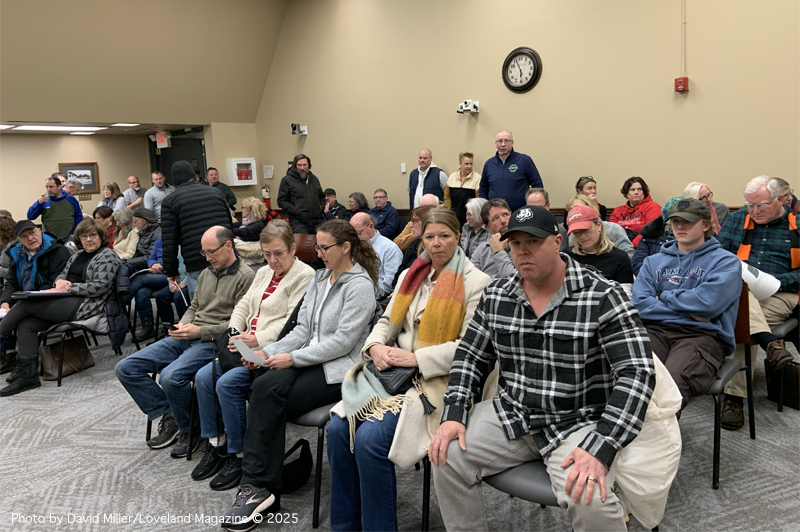
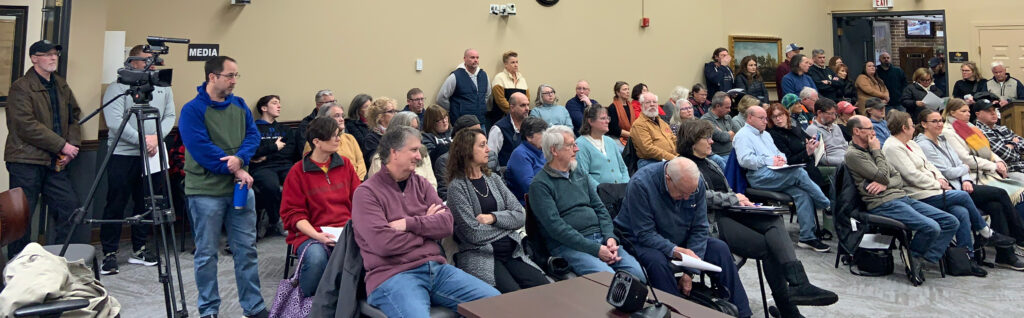
    Loveland, Ohio – Last Tuesday night, our enchanting romance took a significant turn at the Love-Land city hall. Despite the frigid temperatures, 65 individuals gathered to affirm something that should be held in the highest regard and too precious to be tampered with. It was what should be sacrosanct; too important or valuable to be interfered with.

    A full-capacity, standing room only, flowing into the hallway crowd.
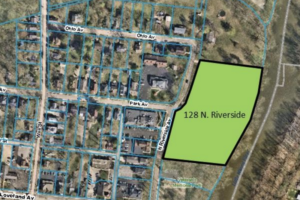
    Not all came with the same sentiment, however the size of the crowd on a night when nary a person wouldn’t have preferred to be somewhere else was telling. What became apparent was that we have something flowing between and through us. How do we protect our eldest, centuries-mature loved one?

    Our water has a memory, and it flows through Loveland because the spiritual H₂O means everything. Destroy its soul? Cannot.  Dirty it and it’s banks we can. Diminish the life within and on its shores, we can. Our State and National Scenic, Little Miami River sends us messages to heed and pass along to generations, but we don’t always listen. Tuesday, we did. Tell your children and grandchildren.

    A bridesmaid with bigamist-many suitors was honored with a renewal of noble, exalted, and sacred vows.

    Some took advantage of their 65 friendly neighbors to bloviate in inflated and empty ways with their superior knowledge and self-aggrandizing wisdom. They went on and on because what they tried to convince needed too many-worded-attempts. Perhaps they were the only ones listening and they needed so many phrases to convince even themselves. The audience listened with a third ear as if they could decipher how in the end the bloviators might end up voting. One heartless resident did the same but in the end had no vote, yet surely went to sleep Tuesday night with dreams of grander of saving the day.

    Thankfully, all others told of their love affair.

    __________________

    BACKGROUND:

    Public hearing set for 12 single family homes being proposed along State and National Scenic Little Miami River


    __________________

    Planning and Zoning Commission reverses course from their December 3 decision

    Near the end of this week’s public hearing to consider whether 12 homes should be built on Riverside Drive in the West Loveland Historic District on the bank of the National and State Scenic Little Miami River, Planning and Zoning Commissioner Rob Weisgerber made a motion to not recommend the zoning map change to City Council. Weisgerber, Andy Bateman and Chairman Mark Redmond agreed with Weisgerber and voted “Yes” David Parker voted “No”. Commission Member Brian O’Neill did not attend the meeting.

    The P&Z recommendation will now be delivered to City Council where there will be another public hearing. Upon completion of the public hearing, City Council may approve or disapprove the recommendation of Planning and Zoning Commission by a simple majority. Council may modify the recommendation of Planning and Zoning Commission by a 3/4 majority vote.

    Video of speeches by the public and the discussion and vote of the Commission coming soon…

  • Symmes Township Gets New Administrator

    Symmes Township Gets New Administrator

    Symmes Township, Ohio – Kimberly Lapensee has resigned as the Township Administrator effective December 31. The Trustees have appointed Bill Pitman to serve as the Township’s new Administrator. Pitman has been employed with Symmes Township for 30 years and served as the Director of Public Works since 2009.

    Will Burns has been promoted as the Director of Public Works by the Trustees. He has been employed with the Service Department for over 25 years.

  • West Loveland Avenue closure postponed indefinitely

    West Loveland Avenue closure postponed indefinitely

    City Hall released this statement today:

    We just received word that this closure/detour is cancelled due to utility relocation. There will be NO CLOSURE of West Loveland Avenue Jan. 14-16.

    BACKGROUND STORY

    Due to weather conditions, this project is being pushed back one week. The new dates for the closure/detour are Jan. 14-16.

    Loveland, Ohio – Construction on the Cherokee Drive Water Main Replacement Project in the Loveland Heights will require a road closure and detour.

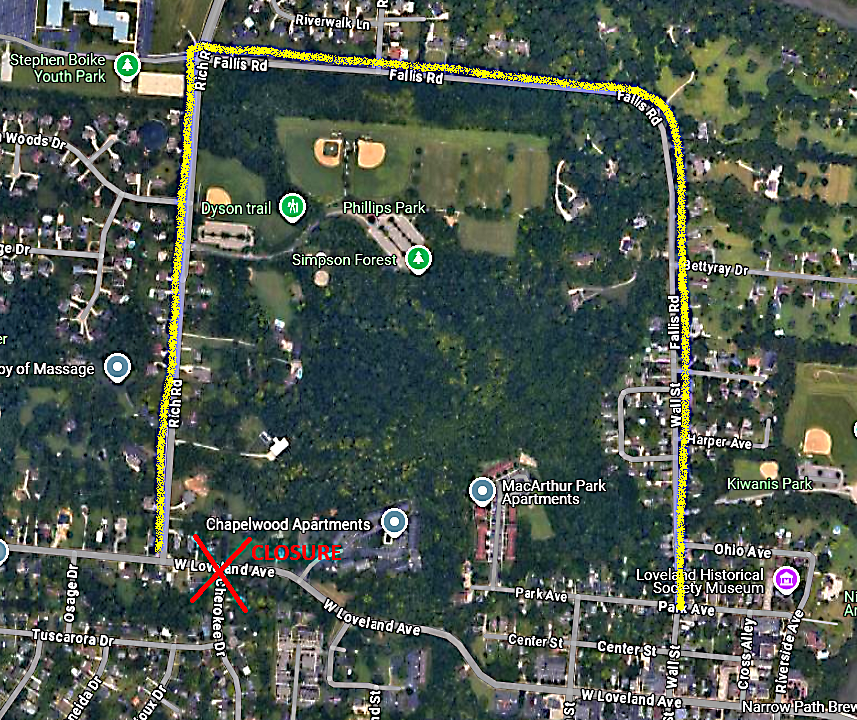
    West Loveland Avenue will be closed at Cherokee Drive to allow crews to connect new water main beneath the road surface. Contractors now plan the three-day road closure daily from 9 AM until 3 PM on Tuesday, January 14th until the 16th.

    The original road closure dates were January 7 through 9.

    Motorists will be instructed to use the following detour routes:

    TO TRAVEL WESTBOUND:

    • West Loveland Avenue to Wall Street to Fallis Road to Rich Road to West Loveland Avenue

    TO TRAVEL EASTBOUND:

    • West Loveland Avenue to Rich Road to Fallis Road to Wall Street to West Loveland Avenue

    According to City Hall, “The Heights area has an aging, undersized, and brittle cast iron water main that is degrading, which makes breaks occur more frequently. In this project, the city is installing more than 2,700 feet of new water main to replace the outdated water lines. Additionally, the project involves replacing valves, modifying the storm sewer to improve drainage, and installing additional fire hydrants.”