Editor’s Note: This story has been corrected to reflect that Lynn Oury is not a lifetime Loveland resident.
Loveland, Ohio – Loveland Valentine Ladies serve the community of Loveland Ohio. They are chosen by community nomination, then picked by a committee from the Little Miami River Chamber Alliance.
Lynn Oury has been selected as the 2025 Loveland Valentine Lady. She is a former teacher at the Loveland Early Childhood Center.
_________
The Valentine Program began in 1972 and has grown over the years to include a variety of Valentine community activities, as well as our nationally-known cachet stamping and postmark program.
Valentine Ladies are women who have distinguished themselves in community, school, or family endeavors. Being nominated for Valentine Lady is quite an honor!
The Valentine Lady is the ambassador for the Chamber’s Valentine Program, and visits area businesses, nursing homes and schools, among her duties as Valentine Lady.
“Enjoy beloved holiday classics performed by an extraordinary ensemble of student, amateur, and professional brass musicians from Greater Cincinnati and Northern Kentucky.”
Loveland, Ohio – Cincinnati’s community Brass Choir will present their annual Christmas concert in conjunction with Loveland High school percussionists. The ensemble will be conducted by Kirby Cain and will feature holiday classics.
Founded in 1994 and sponsored by Mt. Auburn Presbyterian Church, the Brass Fellowship brings together student, amateur and professional brass musicians from the Greater Cincinnati and Northern Kentucky area.
Members of the brass ensemble come from many vocations including music, education systems, and the law, but all share a passion for music. The Brass Fellowship strives to unearth the rich literature of over 400 years of brass choir music and regularly present it to the public at the highest level of musicianship possible.
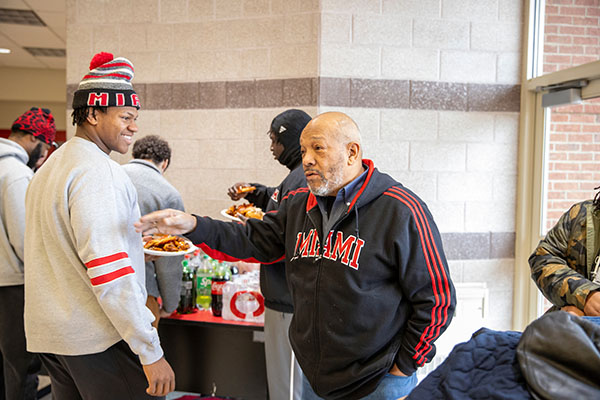
Rodney Coates, right, talks with members of the Miami University football program on Wednesday, Dec. 11, during a luncheon at the Gross Student-Athlete Development Center organized by Coates to celebrate Miami’s bowl berth. The luncheon has become an annual tradition.
Oxford, Ohio/Miami University – As members of the Miami University football team filed into – and later out of – the Gross Student-Athlete Development Center on Wednesday afternoon, many offered handshakes and words of appreciation to Rodney Coates.
The thanks weren’t only for the meal provided, an annual tradition Coates first organized about a decade ago to celebrate when the RedHawks earn a bowl bid, but also for the role Coates plays each year.
Coates, professor of Global and Intercultural Studies, teaches as part of the Summer Bridge Program, which helps many student-athletes prepare for the academic experience.
“It’s above and beyond to feed us for a bowl game, but really more so than that what we appreciate is Dr. Coates’ relationship,” said Chuck Martin, head coach of Miami football. “It’s very unique. He’s helped our kids so many different ways. He really helps our kids get ready for college.
“I couldn’t put a price tag on what he does for our kids.”
A former Miami football player inspired the initial lunch. The player had a long-term spinal injury, and that resonated with Coates.
“I said, ‘We need to celebrate it. Not wait for things to happen,’” Coates said. “Let’s make it something really special where Miami comes together to say thank you for what you’ve done. That’s how it started.”
Coates has taught at Miami since 1990. He received the Distinguished Educator Award from the College of Arts and Science in 2021, as well as the President’s Medal that year.
Coates has worked with the Summer Bridge Program for more than a decade.
“Professor Coates is incredibly supportive of our outstanding student-athletes here at Miami,” Miami President Gregory Crawford said. “He works tirelessly with our student-athletes both in and outside the classroom. His December football luncheon is a cherished tradition, celebrating their success and showing our gratitude for all they contribute to Miami and our community.”
After winning eight games this season and advancing to the Mid-American Conference championship game, the RedHawks will play Colorado State in the Snoop Dogg Arizona Bowl presented by Gin & Juice By Dre and Snoop on Dec. 28 in Tucson, Arizona.
Kickoff is 4:30 PM at Arizona Stadium. The game will be broadcast on The CW Network.
This is the fifth straight bowl appearance for the RedHawks and eighth in the last nine years, which has meant several Coates luncheons for many players.
“As soon as I hear about it, it’s circled on the calendar,” said John Young, a senior offensive lineman.
“It’s a way for all of us at the end of the year to get together for a couple of last meals,” added senior offensive lineman Reid Holskey. “It’s kind of good to have these moments with the guys who are here right now.”
David Sayler, Miami’s director of athletics, called the luncheon “a bonding moment.”
“It’s really nice for the football student-athletes to see deans, the President’s Office, and everybody else who supports it helping provide food for them,” Sayler said. “It’s really a nice gesture and doesn’t go unappreciated by the players.”
Dec. 28 marks the 16th overall bowl appearance for Miami, beginning with the 1948 Sun Bowl (a 13-12 victory over Texas Tech).
The last five years have included stops in the LendingTree Bowl (2020), the Frisco Football Classic (2021), the HomeTown Lenders Bahamas Bowl (2022), and the Avocados from Mexico Cure Bowl (2023).
During that stretch, Martin became Miami’s all-time winningest coach.
“We’ve done this a few times now,” Coates said. “It’s become a tradition amongst them (the team) too.”
Established in 1809, Miami University is located in Oxford, Ohio, with regional campuses in Hamilton and Middletown, a learning center in West Chester, and a European study center in Luxembourg.
Cincinnati, Ohio – Following a November 1 fire that significantly damaged a section of the Interstate 471 Ohio approach to the Daniel Carter Beard Bridge, the Ohio Department of Transportation (ODOT) announced today that it expects to have all lanes reopened in March. FULL NEWS RELEASE
Updated December 10
Interstate 471 is closed in the southbound direction at the Ohio River following a fire under the Ohio approach to the Daniel Carter Beard Bridge, which connects Cincinnati, Ohio and Newport, Kentucky.
At 3:20 a.m., November 1, the Cincinnati Fire Department was called to a fire on Pete Rose Way under the Ohio approach span to the bridge. Upon arrival, firefighters discovered a large outdoor fire at a playground in Sawyer Point Park directly under the approach span. At the height of the fire, smoke and flames were seen billowing around and above I-471.
At this time, the Cincinnati Fire Department has not determined the cause of the fire.
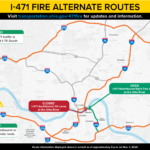
Detours
Right Click to see larger in new tab.
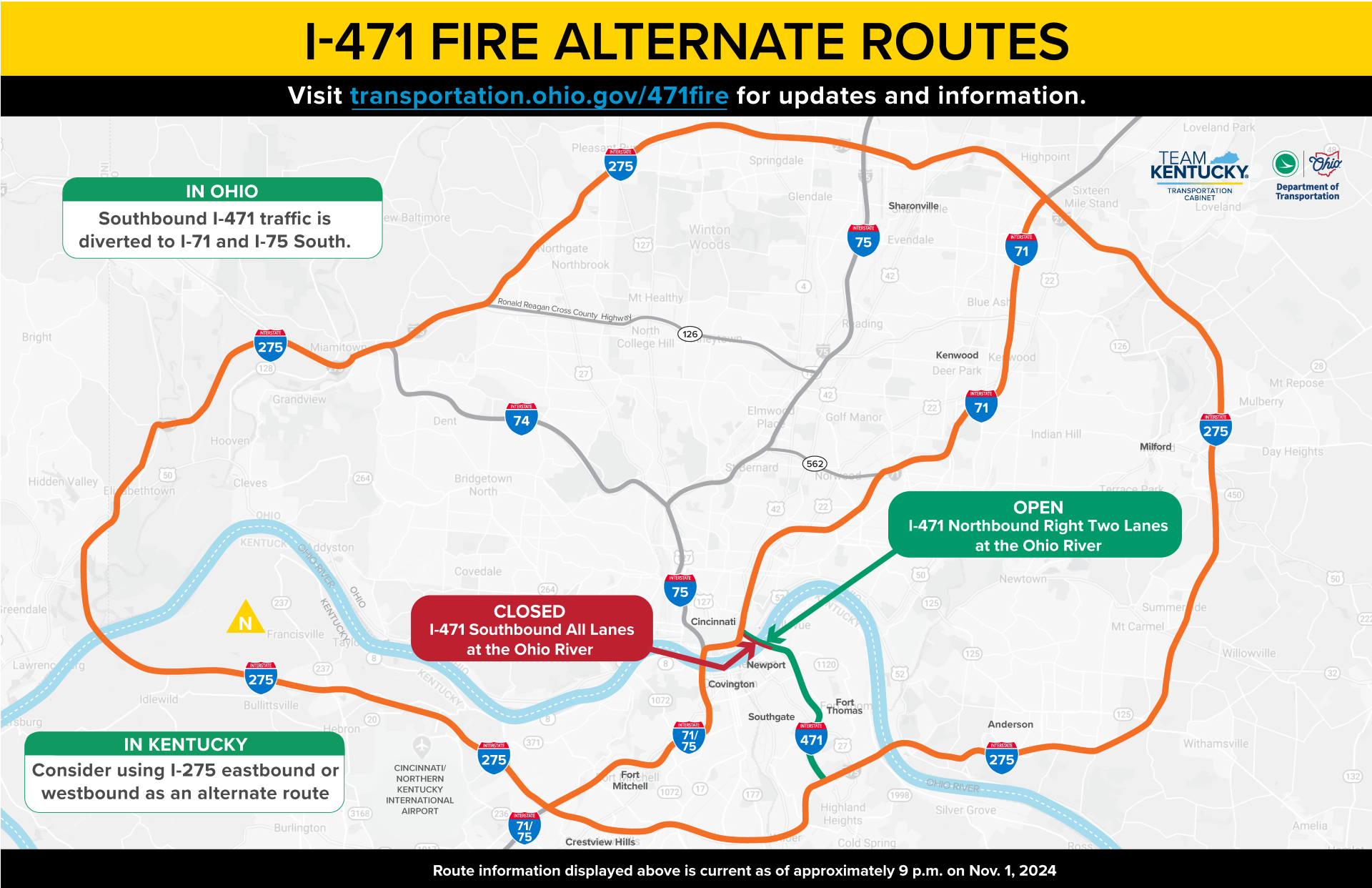
Ohio Traffic Impacts and Detour
Southbound I-471 remains closed at the bridge crossing in Ohio until further notice. ODOT is diverting southbound traffic by way of I-71 and I-75 South. Heavy truck (semi) drivers are encouraged to use I-275 to I-71/75 to avoid delays, and all HAZMAT operators are required to follow the I-275 outerbelt.
In addition, the following restrictions are in place in downtown Cincinnati:
Liberty Street access to I-471 is closed.
5th Street access to I-471 is closed.
U.S. 50 East and West access to I-471 is closed. (U.S. 50 remains open to thru traffic.)
Kentucky Traffic Impacts
A single-lane closure is in effect on I-471 North beginning at the 3.6-mile marker near Memorial Parkway and continuing across the Daniel Carter Beard Bridge.
Sawyer Park Restrictions Click here here for the latest updates to the park and surrounding facilities from Cincinnati Parks.
12/10/24 – 4PM Update
Demolitions Progresses Crews have removed the damaged sections of concrete bridge deck. Now, the attention turns to removing the damaged steel girders. A 550-ton crane has arrived on site from Nashville, Tennessee. There are nine truckloads of parts needed to assemble the crane. It will be used to remove the damaged girders as they are disassembled. Girder removal could begin as early as today. Crews will be watching the weather forecast. If winds are too strong, girder removal will have to be rescheduled.
Components Starting to Arrive
Bronze bearings, custom-fabricated in Brunswick, Ohio, have arrived at Great Lakes Construction’s office in Cincinnati after being expedited by the manufacturer. These will be used to put four of the new custom-fabricated girders on once they arrive from Bowling Green, Kentucky in mid-January.
Northbound I-471 Wall Repair Crews plan to begin pouring concrete to replace a 70’ damaged section of wall on the northbound side this week, weather permitting. All lanes of northbound I-471 are scheduled to reopen by the end of the year.
Shoring Towers Relocated A group of four shoring towers has been moved south from their original location. These will support the remaining girders once the damaged girders are removed. There are a total of ten shoring towers supporting the structure during the next phase of demolition. These towers will remain in place through construction as well.
Opponents of the death penalty are once again urging the Ohio legislature to eliminate the practice in the state.
In a hearing with the Senate Judiciary Committee, advocacy groups and family members of murder victims alike came together to ask for passage of a bill that would abolish the death penalty.
“This is a question of overall public policy; it’s a question of is the system applying the death penalty consistently across a wide range of cases,” said Robert Dunham, director of the Death Penalty Policy Project.
The Death Penalty Policy Project did an analysis of more than three decades of FBI homicide data and law enforcement officers killed in the line of duty, and found that after 50 years and 1,600 executions nationwide, “the public and police are actually safer in states that don’t have the death penalty, or have recently abolished the death penalty, than they are in states that have the death penalty.”
“Moreover, the states that are now most actively carrying out executions are among the least safe for the public and the most dangerous for police,” Dunham told the committee. “They have failed to execute their way into violence prevention.”
Jonathan Mann has the unique perspective of going through the murder of his father in 2017, and asking the state not to use the death penalty to punish his father’s killer. He said he believed in the death penalty before his father’s death, but as his experience continued, he found the process “does not represent family members of murder victims.”
“You are not representing family members of victims adequately, whether they believe in the death penalty or not,” Mann said. “The death penalty is not working. It is not working; you can not say it’s working.”
Bryan Corbett saw one of his family members wrongfully accused of murder, and the reputation and potential of this member of his family was damaged after spending more than six years on death row before being exonerated. Corbett said the conviction was lifted after it was found “junk science,” “hypnotized witnesses,” and other evidence deemed inadmissible was used in the case. That, and two men confessed to the crime after more than a decade.
GET THE MORNING HEADLINES.
As a Christian pastor and a man who has witnessed the flaws in the justice system, Corbett said the state can’t continue to use the death penalty as an option.
“I would simply ask: who among us is qualified to cast that stone,” Corbett said to the committee. “Who among us is qualified to flip that switch and end a life?”
State Rep. Matt Dolan, R-Chagrin Falls, pondered whether it was up to the legislature to decide whether or not the death penalty should be an option, when the state leaves those decisions up to a jury of peers.
“Should this legislature take that away from the individuals or should we look to whether this should be a statewide issue and let Ohioans … make that decision,” Dolan asked Dunham.
Dunham pushed back, saying juries are only deciding cases based on the information at hand, and can’t consider the factors of, for example, withheld evidence or evidence that “the defense had failed to investigate because of poor representation.”
“(Legislators) are the ones who set public policy, so when we look at the death penalty as a policy, I think you are the people who should be making that determination,” Dunham said.
The measure is one of many similar bills that have been introduced in the state over the years, but while the measure has been the subject of much testimony in support of death penalty elimination, the legislature has not shown much support for the issue.
One group stood in opposition to the current bill in last week’s committee hearing. The Ohio Prosecuting Attorneys Association submitted written testimony saying the association “continues to believe that this topic is important enough that the public should be given the opportunity to decide whether or not Ohio continues to have capital punishment.”
Louis Tobin, executive director of the Ohio Prosecuting Attorneys Association cited a study by Claremont McKenna College in response to Gallup and Pew Research Center polls showing support for the repeal of the death penalty and diminishing support for the practice in the United States.
In the Claremont McKenna poll, survey-takers were asked if they supported the death penalty when considering specific crimes, rather than general opposition or support for the death penalty.
“What they found was that support for the death penalty is much more widespread than either Gallup or Pew have reported,” Tobin wrote.
Statistics from the poll cited by Tobin show 10 of the 15 murder types selected as part of the survey — including raping and murdering a child and being a part of a terrorist attack — “garnered at least 60% support.”
The only true measure of support is “a vote of the people,” Tobin concluded.
“If the proponents of Senate Bill 101 believe their own polling and their own argument that there is not majority support for the death penalty, then they should have no problem agreeing to allow the public to vote and to decide on the future of the death penalty in Ohio,” Tobin wrote.
The OPAA executive director has expressed support for a bill that would change the way capital punishment is done in Ohio, which would add nitrogen hypoxia to the list of protocols that can be used. The method asphyxiates a condemned person by replacing the air they breathe, a mixture of mostly nitrogen and oxygen, with pure nitrogen.
With the current General Assembly term expiring at the end of the month, the bill may not have much chance of getting by this time around without a last-minute burst of legislative support. Along with its bipartisan sponsors, Senate Minority Leader Nickie Antonio, D-Lakewood, and state Sen. Steve Huffman, R-Tipp City, the bill only has 10 cosponsors signed on in support.
Any bills that aren’t approved by the end of the month will need to be reintroduced and restart the legislative process in the new year.
YOU MAKE OUR WORK POSSIBLE.
___________
Susan Tebben
Susan Tebben is an award-winning journalist with a decade of experience covering Ohio news, including courts and crime, Appalachian social issues, government, education, diversity and culture. She has worked for The Newark Advocate, The Glasgow (KY) Daily Times, The Athens Messenger, and WOUB Public Media. She has also had work featured on National Public Radio.
Ohio Capital Journal is part of States Newsroom, the nation’s largest state-focused nonprofit news organization.
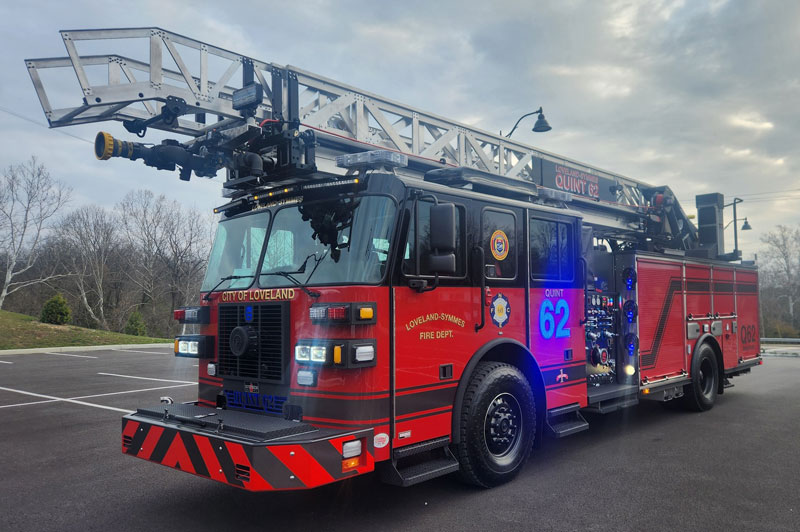
Loveland, Ohio – The Loveland Symmes Fire Department‘s Quint 62 ladder truck has arrived. A Quint, is a quintuple combination pumper, is a fire truck that combines the capabilities of a ladder truck and a fire engine. “Quintuple” refers to the five functions that a quint provides: pump, water tank, fire hose, aerial device, and ground ladders.
The new truck purchase was approved by City Council in November of 2022. The purchase agreement with the Sutphen Corporation was for an anticipated total cost of $1,173,708.
Loveland, Ohio – Celebrate the shortest day of the year with a guided evening hike with The Roaming Naturalist and the Little Miami Conservancy. Hikers will enjoy a peaceful forest walk and say goodbye to the darkness and welcome the return of light with a quiet moment by candlelight. . Pre-registration is required to attend. Save your spot here: https://forms.gle/HcdDE44jqu5fEtfs9
Saturday, December 21
4:30pm – 5:45pm
Little Miami Conservancy
209 Railroad Avenue Loveland, Ohio 45140
*Recommended for adults and families with kids ages 7 & up
If the STORK Act is passed, Ohio would join states such as Georgia, which already allow tax deductions for unborn children, a policy enacted in 2022.By Vanessa Davidson / Broadcast version by Farah Siddiqi reporting for the Kent State NewsLab-Ohio News Connection Collaboration.
__________
Listen to this story:
Ohio Rep. Gary Click (R-Vickery) in August proposed the STORK Act, which would allow expecting families to claim their unborn children as dependents on their income taxes starting the year the child is conceived.
Click says every dollar makes a difference for expecting families.
“You start planning and preparing ahead of time,” he said. “The hospital won’t even let you take them home without a car seat. So, you have to get that car seat, you get a crib, you get a bassinet, you get a pack-and-play, and you get all the little toys for a newborn, and you just stock up before they’re born to get ready for that child.”
However, some raise concern that the proposal could lead toward the recognition of fetal personhood, which could affect abortion rights within Ohio.
Danielle Firsich, director of public policy for Planned Parenthood Advocates of Ohio, said Click’s proposal acts as a continued attempt to attack abortion rights following the passage of Issue 1 in 2023.
Firsich said there have been several other proposals that have tested fences and sought out loopholes to get around state codifications of reproductive rights, including similar bills proposed in Wisconsin, Florida, Kansas and Kentucky.
“We know that this argument – that someone can have tax credits for an unborn child – directly correlates with the concept that if you’re receiving some sort of tax benefit, or tax credit, you are thereby able to be recognized as a person and be granted rights as such,” Firsich said. “This is a movement that has come, largely, especially after the Dobbs decision.”
Given Click’s extensive history of pro-life advocacy – with one of his past proposals declaring fetal personhood from conception – Firsich believes the STORK Act could have possible ulterior motives.
Click denied such claims and called such rhetoric an “extremist attack.”
“This bill recognizes the expenses that parents put out,” said Click. “It doesn’t say anything about the baby… this tax credit has no power to overturn a constitutional amendment.”
Jessie Hill, a law professor at Case Western Reserve University who specializes in reproductive rights in Ohio, believes the proposal will have little impact on abortion rights.
“I just don’t think that this is something that is going to really, in the end, make a big difference in light of Issue 1 still being there,” Hill said. Issue 1 is “part of our constitution, and our constitution is supreme over state law,” she added.
However, Hill believes concerns about the proposal aren’t baseless. She pointed out that it’s not clear whether parents would still be able to receive tax benefits for an unborn child even if the pregnancy isn’t carried to term.
Firsich argues that Click should demonstrate his commitment to Ohio families by expanding paid family leave and offering affordable childcare.
“That would mean real change for pregnant people and for parents in the state of Ohio, not something like this,” Firsich said.
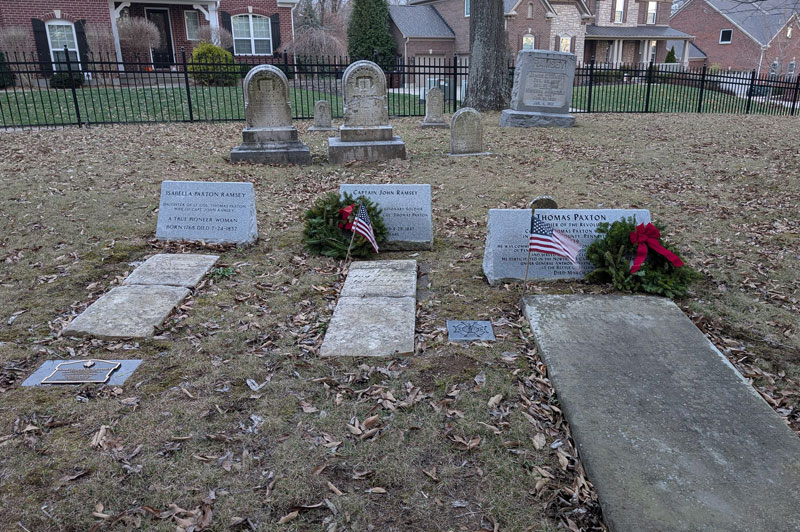
All photos courtesy of the Ramsey-Paxton Cemetery Association
Loveland, Ohio – The Ramsey-Paxton Cemetery Association says, “Thank you Wreaths Across America!”
On Sunday Wreaths Across America they laid wreaths at the Ramsey-Paxton Cemetery in Loveland.
There will be an official ceremony on Saturday December 14 at Noon, at the Maineville Cemetery at 476 E. Foster-Maineville Road. This location is bigger and during the ceremony, they will be recognizing all cemeteries including the Ramsey-Paxton Cemetery.
The Mission of Wreaths Across America is to “Remember the fallen, honor those who serve, and teach the next generation the value of freedom.”
Loveland’s Ramsey-Paxton Cemetery is located at 206 Ramsey Court in the White Pillars subdivision.
_____________
The Ramsey-Paxton Cemetery is a hidden gem locally, state-wide and nationally!
The Ramsey-Paxton Cemetery originated in 1813 with the burial of Lt. Col. Thomas Paxton, a Revolutionary War Soldier, on land that he received for his military service. Paxton’s original land grant was 1,000 acres starting in Warren County and sweeping into Clermont County. Read on…
Loveland, Ohio – Preschool registration is now open for next school year. Families with students who will be 3-5 years old in the fall can register online now through January 13. Space is limited. Find details on our website by following this link.





![[With Photo Album] I-471 Fire repair update from ODOT](https://lovelandmagazine.com/wp-content/uploads/2024/12/bridge-fire.jpg)
 Interstate 471 is closed in the southbound direction at the Ohio River following a fire under the Ohio approach to the Daniel Carter Beard Bridge, which connects Cincinnati, Ohio and Newport, Kentucky.
 Ohio Traffic Impacts and Detour
 12/10/24 – 4PM Update
 Demolitions Progresses
 Components Starting to Arrive
 Northbound I-471 Wall Repair
 Shoring Towers Relocated



























 By Vanessa Davidson / Broadcast version by Farah Siddiqi reporting for the Kent State NewsLab-Ohio News Connection Collaboration.