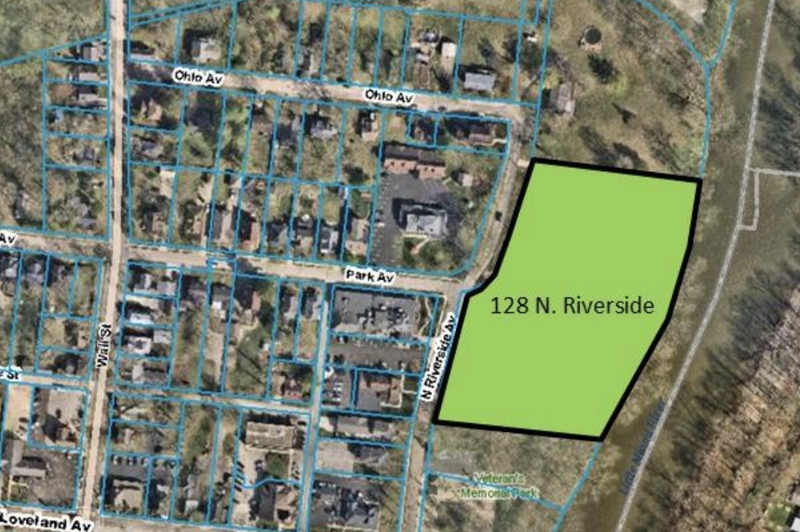
Loveland, Ohio – The agenda for the 6 PM Tuesday, December 3 meeting of the Loveland Planing and Zoning Commission has now been published. The meeting that was cancelled and rescheduled is to consider the proposal to construct 12 single family homes for Riverside Drive in the West Loveland Historic District.
POPULAR CARD GAME CHARACTERS COME TO LIFE IN GRAPHIC NOVEL ‘TACO CAT GOAT CHEESE PIZZA AND THE CASE OF THE MISSING HAT’.
Loveland Author Jenna Schroeder
Loveland, Ohio – The beloved characters of an iconic family card game are now coming to life in a new graphic novel. Youth readers and their parents may now learn more of the characters’ individual backstories in “Taco Cat Goat Cheese Pizza and the Case of the Missing Hat” ($14.99, Dolphin Hat Games, ISBN: 9798219358129), featuring the primary characters of the family game by the same name.
Like the Taco Cat Goat Cheese Pizza game, with sales topping eight million worldwide, the “Case of the Missing Hat” is for children ages seven and older. Written by Jenna Schroeder, the hardcover book features colorful Manga-style illustrations by Yamerpro, aka Mandy E, who was among the initial illustrators for the game. Schroeder and Yamerpro met through Dolphin Hat Games, collaborating on a book project for the first time.
As the longtime communications director for the family-run Dolphin Hat Games, which created and launched Taco Cat Goat Cheese Pizza in 2017, Schroeder explained the inspiration for the new work originated after the card game achieved global popularity. Schroeder also had long-term familiarity with the game characters as her brother, Dave Campbell, created the game, which contributed to Dolphin Hat’s growth into a large family business that opened in 2012.
“After championing these game characters for several years, I began to think about what their shared adventures might resemble and how I could make their world come alive for fans to enjoy,” said Schroeder, “Soon after writing my first children’s book, ‘Are Enchanted Forests Real?,’ the story of ‘Taco Cat Goat Cheese Pizza and the Case of the Missing Hat’ flowed out of me.”
“When I first shared the book concept with Dave, he said he felt strong connections with the personalities created from his characters, and he generously entrusted me with the opportunity to bring them to life,” added Schroeder. “He loved the story, and we both knew it was something that had to be in this world, so we combined our superpowers to create more laughter and smiles on kids’ faces with these funny, happy game heroes.” Schroeder also said that when she would write a scene and how she wanted it to look, Mandy E would amplify it in the best and most comedic ways with her artwork.
“Once Dave greenlit this project, Mandy and I worked together tirelessly and seamlessly for a year to bring it to fruition,” said Schroeder. “Both of us have grown with the characters since their origination, and as I created their personalities and expanded their world, Mandy E was aligned every step of the way.”
Schroeder wrote the book’s cover notes to explain how the fan-favorite characters leaped from cards to the comic-style narrative:
What happens when characters from the infamous card game Taco Cat Goat Cheese Pizza fall out of the game box and go on an epic adventure? You are about to find out! Join Taco Cat Goat Cheese and Pizza as they attempt to crack the case of the missing hat! Dive into a world of silliness, friendship, and laughter as these endearing characters take you on a knee-slapping story in a world all their own. With positive themes and eye-catching artwork, new and old Taco Cat fans alike will not want this incredible adventure to end!
In step with the book’s initial availability via Amazon and the Dolphin Hat website, Schroder will appear with Campbell for book signings and gameplay at a growing list of autumn events/venues including Snakes & Lattes Chicago, as well as Marvin’s Toy Store in Crystal Lake, Ill.
Other book-related events include a reading hosted by the Brookville Library in Dayton, a booth at the Christmas Tree Lighting Festival in Loveland, Ohio, on Dec. 7 and an appearance to be scheduled at Bike Trail Books in Loveland in February.
ABOUT JENNA SCHROEDER
Based in the Cincinnati suburb of Loveland, Ohio, Jenna Schroeder is a writer, mother of four, and the director of communications for Dolphin Hat Games. Additionally, she is the founder of Little Bird Press and her creative projects include the inspiring children’s book “Are Enchanted Forests Real?” Schroeder also contributed to the 2021 book “Peace in the Presence of God: Devotionals for Women with Anxiety” published by Michael Lacey. She earned a bachelor’s degree in interpersonal communications from Bowling Green State University in Bowling Green, Ohio. For more information visit JennaaSchroeder.com or follow her @jennaaschroeder.
ABOUT YAMERPRO (AKA MANDY E)
An Ohio native, Yamerpro aka Mandy E (Mandy Ecenbarger) is a graphic designer, digital illustrator, animation and motion graphics creator and costume designer. She earned a bachelor’s degree in computer art from the University of Saint Francis in Fort Wayne, Ind. For more information visit Yamerpro.com or follow her @yamerpro.
ABOUT DOLPHIN HAT GAMES
Founded in 2012 and based in the Dayton suburb of Clayton, Ohio, Dolphin Hat Games is a family-owned game company focused on creating memorable, fun and easy-to-learn games to capture the imaginations of casual gamers and family members of all ages worldwide. In 2017, they published the bestselling family card game Cat Taco Goat Cheese Pizza, purchased by more than eight million players. For more information visit DolphinHat.com or follow @dolphinhatgames.
Loveland, Ohio – Loveland’s drinking water is contaminated with harmful levels of Forever Chemicals at the highest concentrations in the region. Testing has revealed that Loveland has two “Forever Chemicals” in its drinking water. One, at a level four times higher than what is the enforceable standards of the U.S. Environmental Protection Agency. This is the highest reported level in the Cincinnati area. The US EPA has acknowledged that no levels of PFAS are safe without the risk of negative health impacts.
The City simultaneously told the Clermont County Common Pleas Court and a U.S District Court in South Carolina in June of 2023:
“PFOA and PFOS are toxic and persistent in the environment, do not biodegrade, move readily through soil and water, and pose a significant risk to human health and safety and the environment.”
Loveland Magazine Managing Editor David Miller at last year’s Loveland Frogman Festival
Loveland, Ohio – The 3rd annual Frogman Festival will be held on Saturday, March 1, 2025 from (9:30 AM until 6 PM and Sunday, March 2 from 10 AM until 4 PM at Oasis Conference Center.
There will be over 60 unique vendors selling their art, crafts and merchandise in the large ballroom they will call “The Terrarium”. Speakers will be presenting their research on cryptids, paranormal activity, UFO’s and other unusual topics in a separate room.
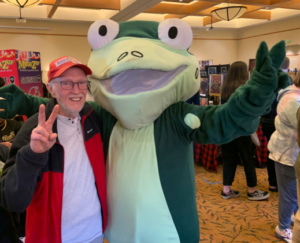
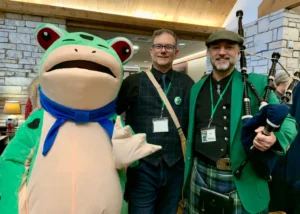
The Loveland Frog, Jeff Craig, and Andy the Pied Piper of Loveland.
At noon each day, the Pied Piper of Loveland will lead a parade of costumed participants that is open to anyone interested.
Wander the Oasis to find face-painting, an intuitive reader, live animals, a puppet show, music and more. Food and drink including beer will be available a la carte.
Visit frogmanfestival.org for more details. Ticket prices online are lower than paying at the door. There are no refunds for tickets purchased. Kids 12 and under are free when accompanied by a paid adult but please order a kids ticket (free) for them.
__________
Read about and watch the videos from last year’s Festival:
Just like last year, we can offer Discounted Rooms for Frogman Attendees. Take advantage of this offer to stay at the closest hotel to the convention center.
If all goes to plan, lawmakers will be asking Ohio voters next May to renew a multibillion-dollar fund that helps get shovels in the ground for local public works projects like roads and sewers. The State Capital Improvement Program has been around since the late 1980s and offers competitive grants and loans for local governments’ capital projects; money for the program comes from bonds backed by the general revenue fund.
The proposal would extend the State Capital Improvement Program for another 10 years by issuing $2.5 billion in new bonds. Voters have renewed the program three times previously in 1995, 2005, and 2014.
The Senate has already passed its version of the joint resolution to place the measure on the ballot. The House Finance Committee held its first hearing for a companion measure this week.
GET THE MORNING HEADLINES.
What the program funds
To get a sense of scale, Ohio Public Works Commission director Linda Bailiff laid out the scope of physical infrastructure the program helps maintain.
“I think it’s over 212,000 lane miles that counties townships and municipalities are responsible for,” she said. “There’s 29,000 bridges, there’s 4,400 public water systems, and 1,000 wastewater systems.”
“And so all of those need attention,” she explained. “Our funds pay for repair, replacement, reconstruction, rehabilitation as well as new (builds) and expansion.”
Since its inception the State Capital Improvement Program has funded 18,860 projects around Ohio.
In the Public Works Commission’s latest report, the agency highlights some of the projects. They range from overhauling a major thoroughfare in Columbus or replacing a bridge in Lorain County to improving sidewalks and curb ramps in the village of Willard.
The Commission also shares a spreadsheet of the 4,000-plus projects the program has supported since 2017. Over that stretch, the program has provided $2.3 billion — $1.5 billion of which came in the form of grants — in support of $5.2 billion-worth of infrastructure improvements around Ohio.
Mahoning County Engineer, and president of the County Engineers Association of Ohio, Patrick Ginnetti was unequivocal in his praise of the program.
“I will say, in my opinion, this is the most successful program the state of Ohio has,” he said.
How it works
Under the program, Ohio is split up by county into 19 districts. The most populous counties are their own districts, and in more sparsely populated regions several counties are lumped together. To get funding, local governments submit proposals within their district which are then scored based on a district-specific set of categories.
“Namely health and safety, the priority needs of that particular district, financial considerations, readiness to proceed, the age and condition of the infrastructure,” Bailiff offered as examples.
Every year district level officials rank their proposals and submit funding recommendations to the Ohio Public Works Commission.
“As long as everything complies with statute,” Bailiff said, “we go ahead and prepare funding agreements that are released about July 1 each year.”
Grant applications can get up to 90% of the project cost covered, so local entities still need to pony up a share of funding. Loans can cover the full project cost, and they’re offered interest free.
Bailiff adds that they’ve got a couple of state-level set aside programs, too. One earmarks $20 million annually for rural villages and townships with a population of less than 5,000. After districts have doled out their award recommendations, they go back through the projects that didn’t get the nod.
“They select up to five projects that did not get funded at the district, that fit that definition of the village or the rural township,” she explained. “And they submit them to the small government administrator to compete on a statewide basis, so they have a second shot at funding.”
The Public Works Commission also has a first come first serve program for emergency work.
How it’s working out
Ginnetti explained his office, like the offices of county engineers around the state, gets its funding from gas taxes.
“With the inception of electric cars, hybrids, CNG vehicles, gas tax has been relatively stagnant,” he said, “so our budgets have been stagnant,”
Ginnetti described the State Capital Improvement Program as a way to “stretch” that budget, and he pointed to his county’s sewer system as an example.
“We’ll utilize the grant funding and also the revolving loan fund to do what is known as sewer re-lining,” he said. “It’s a nondestructive way to give us additional useful life out of our existing gravity sewer.”
“Again, where costs are a certain dollar amount,” he explained, “it helps minimize the impact to our operating budget.”
In the last two years, he said, they’ve paved 25 miles of road, replaced five box culverts and relined 15,000 linear feet of sanitary sewer pipes.
“And it’s a competitive program,” he stressed, “so it’s not like communities are just given a blank check and they say go do what you want.”
Put simply, he described, “good projects get funded; projects that may not be as urgent or as critical do not.”
Ginnetti said his county also got assistance from the emergency funding program after a road subsidence.
“Had the emergency program not been there,” he said, “that would’ve resulted in a road closure — a lengthy road closure — and we probably would’ve had to sacrifice a paving program or several bridges or box culverts to get the road fixed.”
“It’s basically life support,” he added, “for all of the municipalities, townships, county government in Ohio to get work done that we wouldn’t be able to do solely on our operating budget.”
Nick Evans has spent the past seven years reporting for NPR member stations in Florida and Ohio. He got his start in Tallahassee, covering issues like redistricting, same sex marriage and medical marijuana. Since arriving in Columbus in 2018, he has covered everything from city council to football. His work on Ohio politics and local policing have been featured numerous times on NPR.
Ohio Capital Journal is part of States Newsroom, the nation’s largest state-focused nonprofit news organization.
Ohio Gov. Mike DeWine has signed a bill into law banning transgender students from using school bathrooms and locker rooms that match up with their gender identity.
The law requires people at Ohio K-12 schools and universities use the restroom that aligns with their gender assigned at birth. It also bans students from sharing overnight accommodations with people of the opposite sex from their assigned sex at birth at K-12 schools.
This does not prevent a school from having single-occupancy facilities and does not apply to someone helping a person with a disability or a child younger than 10 years old being assisted by a parent, guardian or family member.
The law will take effect 90 days after DeWine signed the bill.
Several transgender Ohioans, allies and educators called on DeWine to veto the bill. The Ohio Capital Journal recently talked to a family who plans on moving out of Ohio because of anti-transgender legislation at the Statehouse.
The bathroom ban (House Bill 183) was added to a bill that revises College Credit Plus (Senate Bill 104) in the eleventh hour of a House Session at the end of June before the lawmakers went on an extended break.
The American Medical Association officially opposes policies preventing transgender individuals from accessing basic human services and public facilities consistent with gender identity.
Slightly more than half of transgender and nonbinary youth in Ohio considered suicide in 2022, according to the Trevor Project.
About a third of LGBTQ+ students were prevented from using the bathroom that aligned with their gender and slightly more than a quarter were stopped from using the locker room that aligned with their gender, according to Ohio’s 2021 state snapshot by GLSEN, which examines the school experiences of LGBTQ middle and high school students.
Ohio Gov. Mike DeWine gives his 2024 State of the State address in the Ohio House chambers at the Ohio Statehouse on Wednesday afternoon. (Pool photo by Barbara J. Perenic, Columbus Dispatch.)
Forty-two percent of transgender and nonbinary students were unable to use the bathroom that aligned with their gender and 36% couldn’t use the locker room that aligned with their gender, according to the Ohio GLSEN report.
Transgender youth who can’t use the bathroom that aligns with their gender are at a greater risk of sexual violence, according to a 2019 study published in the journal Pediatrics.
Florida, Oklahoma, Idaho, and Tennessee’s laws have all been challenged. The U.S. Court of Appeals for the 9th Circuit blocked Idaho’s law last year.
North Carolina made history in 2016 by becoming the first state to ban bathroom access to transgender people. The law was quickly appealed in 2017 and settled in federal court in 2019, but the state ended up losing hundreds of millions of dollars as the NBA All-Star Game and NCAA events were moved out of state.
Megan Henry is a reporter for the Ohio Capital Journal and has spent the past five years reporting in Ohio on various topics including education, healthcare, business and crime. She previously worked at The Columbus Dispatch, part of the USA Today Network.
Ohio Capital Journal is part of States Newsroom, the nation’s largest state-focused nonprofit news organization.
Loveland, Ohio – When the election conversation comes up during the Thanksgiving meal, here is a conversation changer. “Well Uncle Bill, what did you think about the City’s capital improvement budget for next year?”
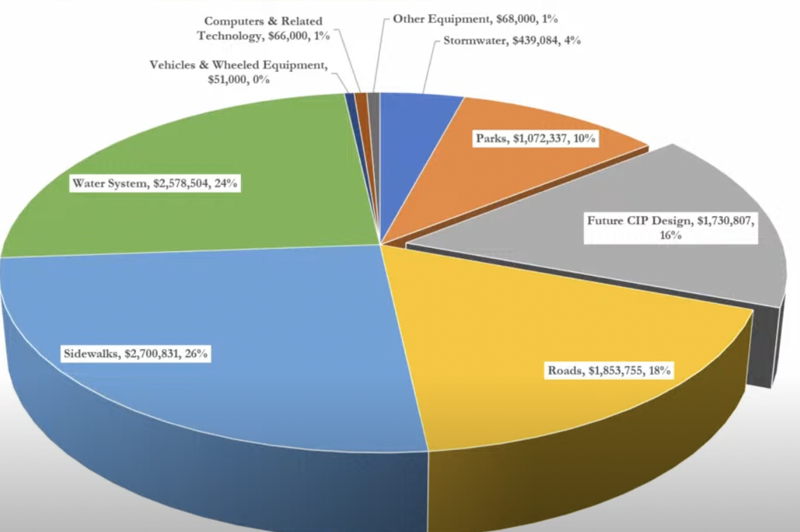
On November 26 City Manager Dave Kennedy, Assistant City Manager Chris Wojnicz, and Kelsey Richards the City Engineer made a presentation to Council on the City’s projected capital improvement plans of $10.5 M.
Kennedy said that almost 40% of the costs will come from “outside” grant sources. Sidewalk improvements are approximately 26% of the plan.
There are plans to build a new 1M amphitheater in Nisbet Park and a walking trail expansion and “Riverside Swings” for almost 68K. Also, a roundabout at Valleyview Lane.
A plan for PFAS (Forever Chemical) removal from Loveland’s Drinking Water is moving forward, but without a component for water softening.
A bipartisan bill that would modernize Ohio’s adoption process unanimously passed the Ohio Senate last week.
House Bill 5 heads back to the Ohio House for concurrence. The House unanimously passed the bill last year and would head to Gov. Mike DeWine’s desk for his signature if the chamber concurs with the changes. The Ohio House’s next scheduled session is Dec. 4.
State Reps. Sharon Ray, R-Wadsworth, and Rachel Baker, D-Cincinnati, introduced the bill last year at the start of the General Assembly and this piece of legislation is personal to both of them. Ray was adopted as a child and Baker has three adopted children.
Ray and Baker worked with probate judges to come up with the bill. The state’s probate judges go through the Ohio Revised Code every few years to try to update various sections, including the adoption laws.
“Most of the changes are fairly minor, but it really will streamline the process for the adoption process in Ohio,” State Sen. Nathan Manning, R-North Ridgeville, said during last week’s Senate session. “It really will help those practitioners and those judges and those families that are going through this process.”
GET THE MORNING HEADLINES.
State Sen. Paula Hicks-Hudson, D-Toledo, said H.B. 5 is vital legislation that is long overdue.
“It is a good bill, and it does, what I think, will really shave off some of the anxiety, some of the problems that folks who are trying to go through that process, and also for children who are not sure about being in limbo for as long as the current processes,” she said.
More than 3,300 Ohio children are waiting to be adopted, according to AdoptUSKids, a national nonprofit that connects foster care children to families.
What’s in the bill?
In addition to modernizing the state’s adoption process, H.B. 5 would offer more consistency from county to county.
For foster-to-adopt situations, Ohio law requires a six month waiting period before an adoption can take place and says time spent in the foster home can be counted towards the waiting period. H.B. 5 would include kinship caregivers in that provision in an effort to speed up the adoption process.
H.B. 5 would allow an adult with a developmental disability to be adopted. Ohio’s law current only allows adults with an intellectual disability to be adopted.
The bill would double financial support for pregnant mothers to cover living expenses, increasing it from $3,000 to $6,000.
Under the bill, a court could reconsider an adoption decree if there is evidence the child is a victim of trafficking.
The bill also touches on foreign adoptions. Ohio law currently permits parents to petition the court to finalize a foreign adoption. H.B. 5 would allow foreign adoption decrees to be automatically finalized if either parent is an Ohio resident and an IR-3 or IH-3 visa has been issued to the child by the U.S. Citizenship and Immigration Services of the U.S. Department of Homeland Security.
Megan Henry is a reporter for the Ohio Capital Journal and has spent the past five years reporting in Ohio on various topics including education, healthcare, business and crime. She previously worked at The Columbus Dispatch, part of the USA Today Network.
Ohio Capital Journal is part of States Newsroom, the nation’s largest state-focused nonprofit news organization.
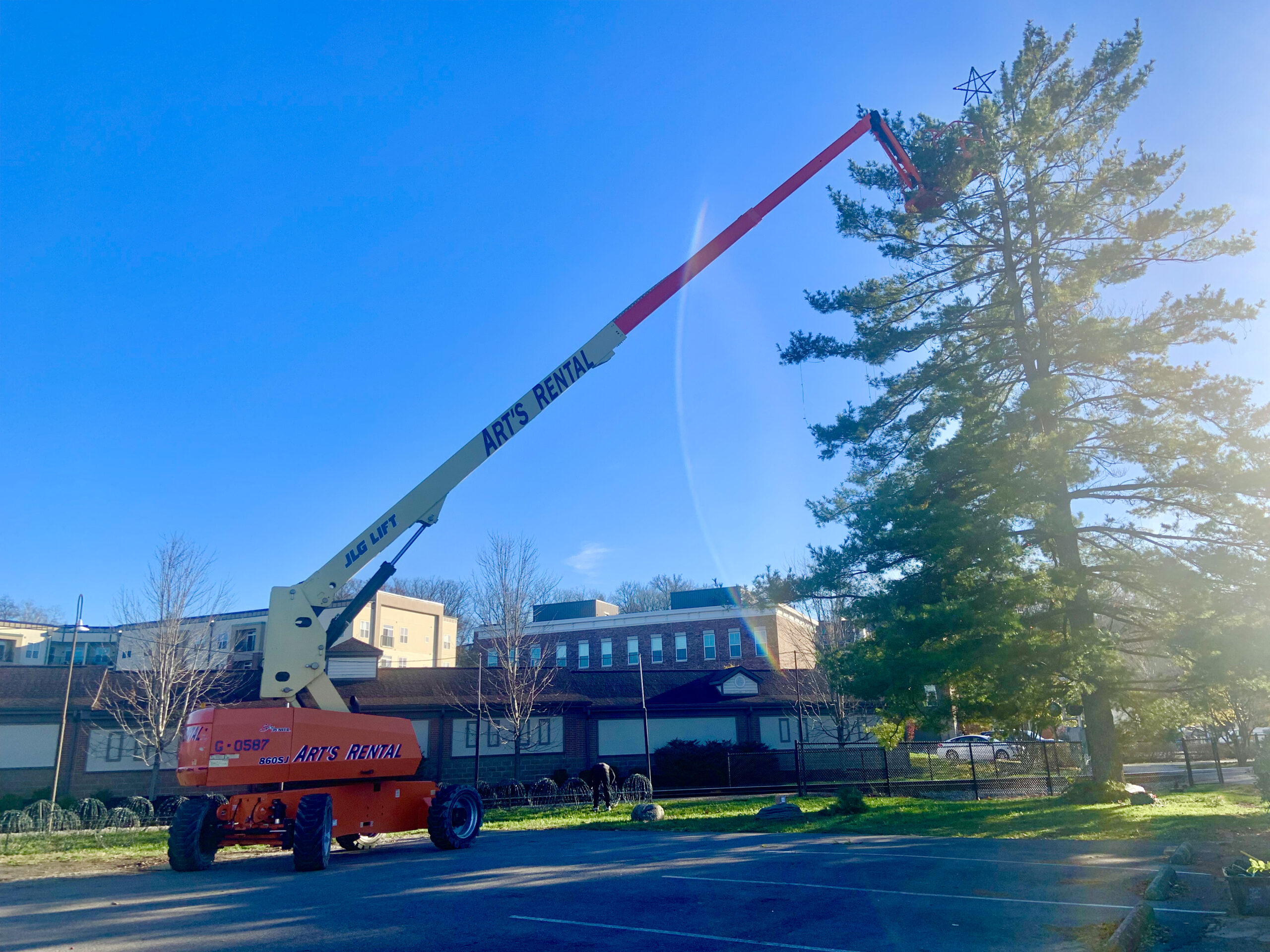
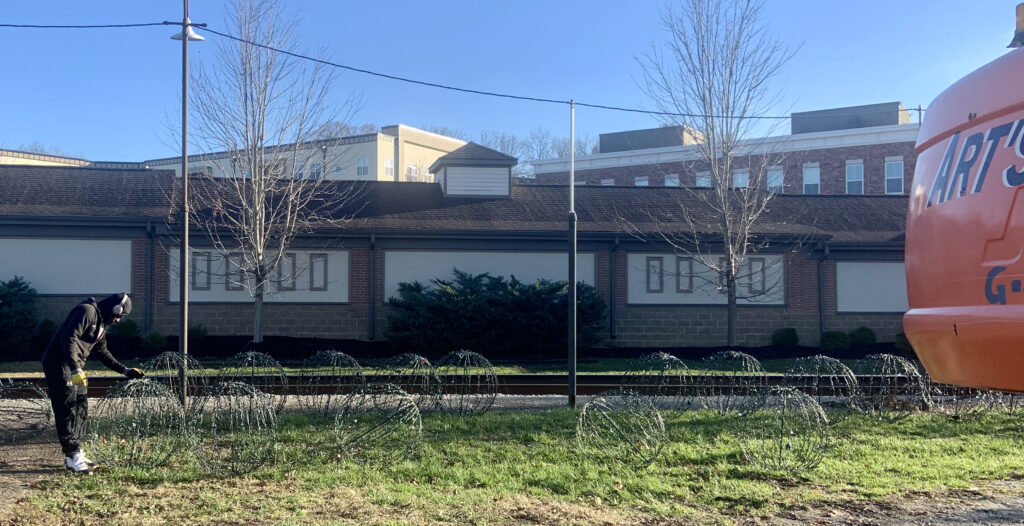
Loveland, Ohio– A pine, standing almost 60 feet tall next to the Loveland Bike Trail is being decorated with approximately 2,500 lights and 250 ornaments for the annual Christmas Tree Lighting Festival in Historic Downtown Loveland.
This is a FREE, family friendly event with holiday activities for all ages.
A holiday themed drone show by Rozzi’s Fireworks will cap off the evening. You and your children and your sweetheart can enjoy 100 drones synced to music.
Saturday, December 7 between 4 and 8 PM
Activities
Entertainment around town featuring a full lineup of stage performers (see below) and the Loveland High School Jazz Band at City Hall
A wide variety of assistance programs are available for eligible Ohioans to help pay their utility bills. Such programs can provide one-time payments, adjust monthly costs or reduce energy use. Many of these programs are administered by the Ohio Department of Development and local energy assistance providers; you can check your eligibility and get started at energyhelp.ohio.gov.




![[TAKE THE POLL] What choice of water filtration have you made to protect from Forever Chemicals in Loveland’s tap water?](https://lovelandmagazine.com/wp-content/uploads/2024/06/mom-making-formula.png)








 City Council CIP Work Session November 26, 2024
 A holiday themed drone show by Rozzi’s Fireworks will cap off the evening. You and your children and your sweetheart can enjoy 100 drones synced to music.