Loveland, Ohio – Last Wednesday, Loveland Magazine partnered with the Little Miami River Chamber Alliance to bring the candidates for a seat on the Loveland School Board together at the Media Center of the Loveland Intermediate School to face voters and their questions. The forum was moderated by former Board President Dr. Judy McClanahan. She was elected to the Loveland Board of Education and subsequently served 12 years on the Board. During this time she served as President of the Board three times.
Candidates, Michele N. Pettit, Ned Portune, and Eileen Washburn were in attendance. Dave Blumberg could not attend because of a previous business commitment. Three will be elected to a 4-year term.
Here is the video of the forum. (Because of technical difficulties Pettit’s opening statement did not record. She repeated her statement for the camera after the forum concluded and that statement is added to the first video.)
Loveland-area resident Alice Culbertson, graduate student in Education at Xavier University, is conducting a research study that asks the following question: “Do Ohio parents believe that humans or computers should grade their children’s written essays on standardized tests?” Below is some general information about the topic of human vs. computerized scoring, followed by a short survey for parents to share their opinions on this issue.
If you are an Ohio parent who has had at least one child take a standardized test in an Ohio school any time during grades 3-12, you are encouraged to complete a short survey to share your opinions on this issue.
Every year, millions of school children in America take state-mandated standardized tests. To manage the cost of such large-scale testing, many of the questions follow a multiple-choice format because computers can score the answers quickly and cost-effectively. Some questions, however, require written essay responses that are graded by humans, a slower and more expensive process. In an effort to reduce the time and cost associated with human scoring, several testing firms are working with technology companies to produce automated essay scoring (AES) software that can score essays as well as humans can.
One of the leading proponents of AES is Mark D. Shermis, Dean and Professor, School of Education, University of Houston–Clear Lake, who has conducted several studies in which computers were shown to score essays with comparable results to human scoring. Les Perelman, research affiliate at the Massachusetts Institute of Technology (MIT), former professor of writing and composition, and a vocal opponent of AES, has also conducted research in which computer scoring proved to be less accurate than human scoring.
Shermis, AES software developers, and testing companies claim that the Artificial Intelligence (AI) has the capability to grade essays correctly and consistently. Perelman and primary, secondary, and post-secondary educators maintain that computers are incapable of evaluating a number of important elements of writing such as logic, tone, organization, and creativity, and should therefore not be used to grade essays.
Pros of Computerized Scoring cited by Shermis and other Proponents of AES
Several studies have shown that computers gave virtually identical scores to those given by humans on the same set of essays.
Computerized scoring can save time and money spent on testing, and test results can be returned to families and schools more quickly.
Humans who score essays are temporary employees who only need a bachelor’s degree in any subject, and the ability to adhere to a rubric (a chart that shows them how to score the essays).
Pros of Human Scoring cited by Perelman and other Opponents of AES
Several studies have shown that computers can be fooled into giving high scores to poorly written essays based solely on the length and key words contained within the essay.
Human scorers are able to evaluate important elements of writing that computers cannot, such as tone, logic, organization, and creativity.
Computers can only score simplistic essays with scores comparable to those given by humans, meaning that test questions would have to be “dumbed down” in order to be accurately scored by a computer.
There is virtually no research documenting how parents feel about the prospect of computers grading their children’s written essays.
The question of whether computers should score essays is a growing area of contention among educators, software firms, and testing companies across the country. Largely absent in this debate, though, is a sector of the population that has a personal stake in standardized testing scoring: the parents of those students who take the tests, whose educational paths may be affected by the scoring outcomes. While research has shown that parents have had differences of opinion as to whether their children benefit from standardized tests in general, there is virtually no research documenting how parents feel about the prospect of computers grading their children’s written essays.
If you are an Ohio parent who has had at least one child take a standardized test in an Ohio school any time during grades 3-12, you are encouraged to complete a short survey to share your opinions on this issue. Simply click the link below to access the survey. Please feel free to share this link with any other Ohio parents. Thank you!
All survey respondents will remain confidential, and the results of this survey are for classroom purposes only and will not be published. Results of the study will be available after January 2, 2018, and may be obtained by emailing a request for results to culbertsona@xavier.edu.
In a recent case, BCI agents assisted an Ohio law enforcement agency in identifying more than 700 victims.
Columbus, Ohio– Ohio Attorney General Mike DeWine announced today that cyber crime agents with the Attorney General’s Ohio Bureau of Criminal Investigation (BCI) now have a new tool to help local law enforcement agencies investigate crimes involving credit card skimmers.
Through the use of new technology, the BCI Cyber Crimes Unit now has the ability to extract data from a majority of credit card skimmers, which criminals use to steal credit card or debit card information from unsuspecting cardholders. The skimmers are often hidden on ATM and gas pump card readers and allow identity thieves to steal card information.
The technology that is now in use at BCI allows agents to pull data from credit card skimmers in a “forensically sound” manner to aid local law enforcement in identifying both the suspects and victims involved.
In a recent case, BCI agents assisted an Ohio law enforcement agency in identifying more than 700 victims of a single skimmer device.
“With just a simple swipe of your credit or debit card, skimmers put your name, card number, and other data into the hands of identity thieves so that they can go on a shopping spree,” said Attorney General DeWine. “Investigations to track down the source of a skimmer can be very complex, but by making this new tool available to local law enforcement, we hope to help authorities identify these cyber criminals before they have the chance to use the card information they’ve stolen.”
Tips to avoid becoming a victim of a credit card skimmer include:
Check for fake overlays, which are devices that identity thieves place over existing ATM/gas pump card readers. Most fake overlays are secured by tape. Try wiggling or pulling on the reader before inserting your card. If the device comes off, it is most likely a skimmer overlay.
Check for damage or foreign objects inside the card reader.
Check for a gas pump security seal. Some gas stations place stickers on gas pumps that will turn void if the inside of the gas pump has been tampered with.
Use a credit card instead of a debit card. If you must use a debit card, run the transaction as credit, if possible.
If a pin code is required to complete the transaction, cover up the pin pad with your other hand. Thieves sometimes place small cameras in card readers to obtain pin code information.
Pay inside at the cashier instead of paying at the pump.
Monitor your credit card and bank accounts regularly.
Law enforcement officers interested in more information on how BCI can assist in skimmer cases can call 855-BCI-OHIO (855-224-6446).
Loveland, Ohio – You can turn in your unused or expired prescription medication on Saturday, October 28, from 10 AM until to 2 PM at Loveland Elementary School, 600 Lebanon Madeira Road, and Loveland Middle School, 801 S. Lebanon Road, with convenient drive-thru drop-offs.
The National Prescription Drug Take Back Day aims to provide a safe, convenient, and anonymous means of disposing of prescription drugs. According to the 2015 National Survey on Drug Use and Health, 6.4 million Americans abused controlled prescription drugs. The study shows that a majority of the abused prescription drugs were obtained from family and friends, often from the home medicine cabinet.
Relaxed atmosphere and friendly service welcomes you back time and time again! Located in the heart of the Historic Loveland District Just outside Cincinnati, Ohio.
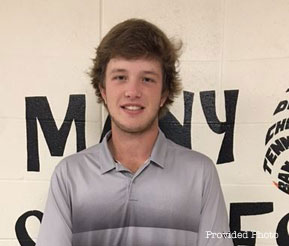
Peter Matuszak honored by being named one of the best of the best academically in the nation
Loveland, Ohio– The Loveland City School District has announced that Loveland High School (LHS) Senior Peter Matuszak was named in the 63rd National Merit Scholarship Program as a Commended Student. Commended Students are named on the basis of a nationally applied Selection Index score.

“This recognition is a testament to the academic ability Peter Matuszak has shown; he is now a scholar who stands among the best of the best in the nation,” said Peggy Johnson, LHS principal. “We are thrilled for him, and sincerely congratulate him on this honor.”
Established in 1955, the National Merit Scholarship Corporation (NMSC) is a not-for-profit organization that operates without government assistance. It was established for the sole purpose of managing the National Merit Scholarship Program. Scholarships are underwritten by NMSC with its own funds and by approximately 420 business organizations and higher education institutions that share the NMSC’s goal of honoring the nation’s scholastic champions and encouraging the pursuit of academic excellence. Students qualify by taking the Preliminary SAT/National Merit Scholarship Qualifying Test.
“It is my belief that the true value of any district cannot be limited to a simple grade on a standardized test.”
By Dr. Amy Crouse,
Our district mission is Preparing Students for Tomorrow, Today; our No. 1 district goal is Tiger academic growth. As such, our educational instructional leaders at every level – teachers in the classroom, principals managing the buildings and administrators specializing in Teaching & Learning at the Board Office – stay focused on measures of our performance. One data point we are equipped with to gauge performance is the annual State Report Card, which the Ohio Department of Education (ODE) released to the public Thursday, September 14.
I want to be clear that – as an educator with 20-plus years of experience serving students – it is my belief that the true value of any district cannot be limited to a simple grade on a standardized test which is what the ODE State Report Card reflects. We are in the business of whole student growth, which encompasses the complete student experience, to include academic, social and emotional development. I invite you to take a look at the way we do business through our Quality Profile Report – it is a complement to the State Report Card scores and will give you a more intimate view of what it means to be a Tiger.
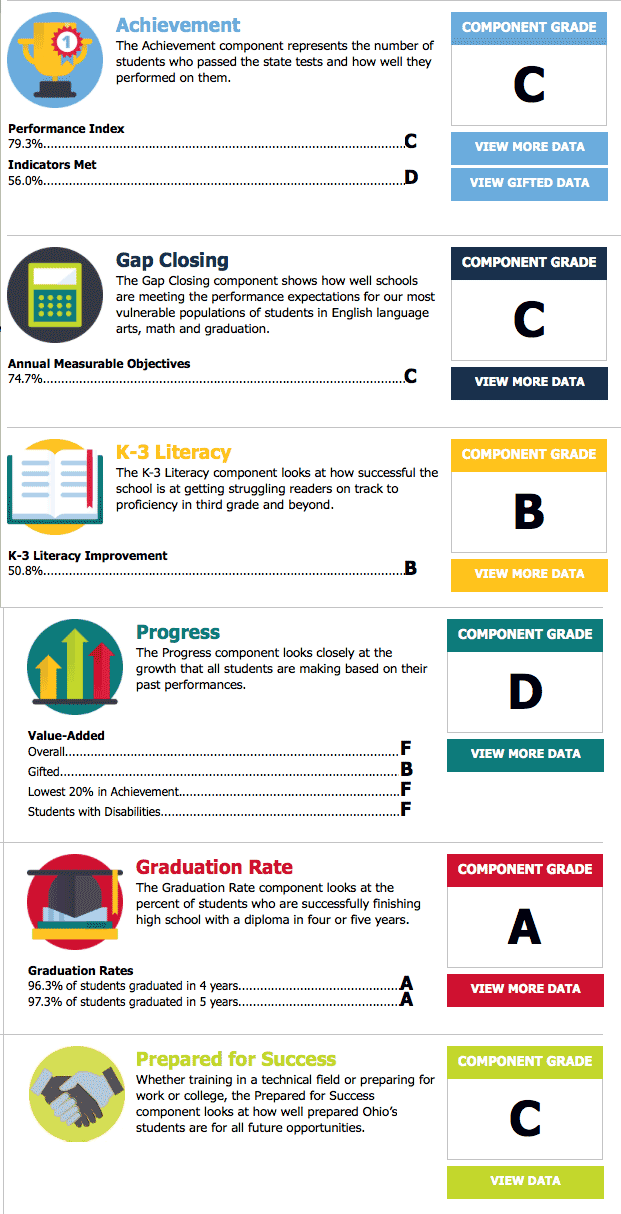
Whether we agree or disagree with our state assessments, I do have a strong belief in accountability, and understand that the State Report Card is one tool of accountability that can be of value. The State Report Card grades districts and schools on six components – Achievement, Progress, Gap Closing, Graduation Rate, K-3 Literacy and Prepared for Success. Districts and schools received an A-F grade on each of the six components and most of the individual measures. While this – on the surface – sounds like a simple pass/fail – the explanations behind those letter-grade measures are much more complex.
In Loveland, we can celebrate a gain in the Gap Closing measure as all of our subgroups showed gains in reading, we made strides in the K-3 Literacy measure, and 20 out of 23 tested areas showed an increase in performance. While we will highlight our successes, we will not ignore the areas the State Report Card highlights as opportunities for growth.
One area we are focused on is our Progress measure
One area we are focused on is our Progress measure, which is an indicator of student growth. Our Board of Education made clear it was of paramount importance that we deliver on the expectation that every Tiger will demonstrate personal academic growth, which is the heart of our Growth goal for this school year. As such, entrenched in our building goals is increased time and focus for teachers to collaborate on: curriculum work planning lessons aligned to the state standards and vertically aligned to increase rigor for students as they progress through the grades; assessment work using student MAP data to meet students where they are and measure their individual growth; and, instruction work to improve student engagement and opportunities for their application of their learning. We feel strongly this focus will move the needle for us on Progress.
We feel strongly this focus will move the needle for us on Progress.
As always, I thank you for supporting our educational mission; I invite you to contact me directly should you have any questions or concerns regarding our State Report Card.
In service to our Tigers,
Dr. Amy Crouse
Dr. Crouse is Interim Superintendent of the Loveland City School District
We are celebrating and proud to be a member of the Ohio News Media Association along with more than 250 Ohio daily and weekly newspapers including, The Columbus Dispatch, Plain Dealer, Cincinnati Enquirer, Akron Beacon Journal, Dayton Daily News, and The Toledo Blade. Loveland Magazine was the first “digital only member”.
Ohio School Report Cards give your community a clear picture of the progress of your district and schools in raising achievement and preparing students for the future. The information measures district and school performance in the areas most critical to success in learning. Ohio School Report Cards data shows educators, school administrators and families where their schools are succeeding as well as areas where they need to improve.
Schools and districts report information for the Ohio School Report Cards on specific marks of performance – called measures – within six broad categories or components. The components are Achievement, Progress, Gap Closing, Graduation Rate, K-3 Literacy and Prepared for Success. The Department gives letter grades on each of the six components and most of the individual measures. This will help give Ohio parents and schools an even more complete snapshot of the quality of education they are providing their children.
Click to read the Report Card for Loveland City School District
2016-2017 Ohio School Report Cards Data Spreadsheets
The spreadsheets below contains all district, school, community school, dropout recovery and prevention school, career tech school and third grade reading guarantee grades.
Volunteer extraordinar, Laurie Gordon, Valentine Lady 2016 is known to many in our community from her efforts to make our community better for all. Whether it is decorating tables for the Greater Loveland Historical Museum’s Herbal Delight’s luncheon, chairing the Loveland Women’s Club Ways and Means Chairman in charge of raising monies for Scholarships, serving as an Elder at the Loveland Presbyterian church, organizing volunteers at Bethesda North hospital or helping clients at both the LIFE food pantry and LIFE Christmas Giving Shoppe, Gordon does it with grace and enthusiasm that made her a natural choice for Valentine Lady!
Painting beautiful wine glasses for charitable events is yet another way that Laurie Gordon supports our community.
If you are unfamiliar with the program, the Valentine Lady is a person who distinguishes herself in community, school, and family endeavors and serves as the official spokesperson of the Little Miami River Chamber Alliance, Valentine Program in the Loveland area. If you are unfamiliar with the Chamber’s Valentine Program, it began 1972 and has grown over the years to include a variety of Valentine community activities, as well as a nationally-known cachet stamping and postmark program. Each year the team of Valentine Ladies hand-stamp Valentines with a unique cachet, which is modeled after a winning card design (selected annually), and then hand-cancelled with a special Loveland, Ohio, postmark. Each year, the Valentine Ladies – in conjunction with the Chamber – re-mail thousands of cards to all 50 states and many foreign countries.
When asked about a favorite memory during her “reign” as Valentine lady, the first quick response was “the children”, their cute responses and the fact that the children wanted to know about Loveland! Reflecting, Gordon stated, to the fact that special friend, Marirose Striver, Valentine Lady 2001, was at The Works when the committee named me Valentine Lady. After another pause, Gordon went on to say that Kathryn Undercoffer, Valentine Lady 2003, had dropped her name tag at the naming of the Valentine Lady event at The Works, Mrs Gordon picked it up and returned it to Undercoffer who invited her in and they sat and talked about the duties of being a Valentine Lady for quite some time.
Painting beautiful wine glasses for charitable events is yet another way that Laurie Gordon supports our community for its betterment and is just one more reason that she was a common-sense choice for Valentine Lady!
I encourage you to begin thinking about a nominee for the Valentine Lady to represent this program for 2018; it’s not too early to start thinking about someone you consider special who resides in the Loveland area (zip code 45140). Send nominations to The Little Miami River Chamber Alliance, 123 S. Second Street, Loveland, OH 45140 or by sending your nomination to meredith@lmrchamberalliance.org.
Accounting Plus–Bingaman Accounting and Tax Service, LLC is a tax preparation, payroll and bookkeeping company locally based in Loveland, OH.
Pocket released their first music video on Tuesday
by David Miller,
Loveland, Ohio – Loveland 2016 graduate Ryan Mangan and his alternative rock band, Pocket, released their second album in August. The Things You Think At Night is available on Apple Music, Spotify and Amazon Music. Mangan self-produced, wrote and performed nearly the entire album. In collaboration with Loveland senior and Loveland Magazine writer, Sam Smith, Pocket released their first music video on Tuesday.
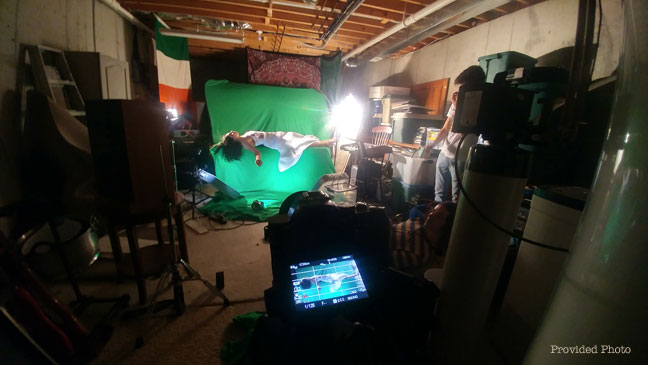
The Delusion music video is a mix of live action, digital and practical VFX and 3d computer renderings. The video tells a story through hands, statues and falling actors.
2017 Loveland graduate, Jacalyn Parsley is featured in the music video Delusion
The video was shot over the course of only two days on a shoestring budget and with almost no crew. The Delusion music video stars 2017 Loveland graduate, Jacalyn Parsley and was produced with help from Loveland High School seniors Ricky Vilar and Stone Taul.
“Delusion is about all the unwanted anxiety that comes when you’re falling for someone. You start to wonder if they like you back, if they feel same. After a while you kind of just get to this point of ‘let’s stop thinking about this stuff, I’m not going to figure it out right now’,” Mangan explained.
Sam Smith is a photographer, videographer and writer for Loveland Magazine and award-winning independent film producer
The video is largely based around looping, long exposure stop-motion sequences created with a device called a Pixelstick. The Pixelstick works by “scanning” across individual pixels of an image in succession and are captured by moving the device laterally in a long exposure. Smith created images and sequences that were loaded onto the tool, and then it was moved laterally hundreds of time, displaying slightly varied frames. This created the illusion of movement and a holographic-like effect that is easier seen than described. Smith said, “Yeah, it was two months of spending most of my free time editing since it was so effects heavy.”
In the studio shooting Delusion
“Honestly I don’t know much about videography, but I had seen some videos that Smith had done before and he’s just flat out amazing with that stuff,” said Mangan. He gave Smith some ideas for what he wanted the video to be like, and then he took it from there and beyond, is how Mangan described the collaboration.
“The video goes past my wildest dreams honestly. Shooting was a lot of fun as well, I’ve never done anything like this before so seeing it come from the start to the end was a very cool process,” Mangan said.
“Shooting the music video was an incredible experience. It was a lot of run-and-gun, shooting from the hip and making things up as we went along,” said Smith who added, “It was a pretty ambitious project for our resources, so we tried to embrace the flaws and go for a little bit of a low-fi look.” Smith said it was his first time doing something like this and he felt that he was able to put a lot of his own style and aesthetic into the piece. “Working with Ryan was wonderful– he gave me a great song and pretty much total creative freedom. I’m really excited to see where his career goes,” Smith explained.
In addition to being a photographer, videographer, and writer for Loveland Magazine, Smith is president of the Loveland High School Film Club, Overture Award recipient and has had work shown at festivals such as NFFTY, AAHSFF, Vidcon and Nashville Film Festival.
The video is available on the Pocket Youtube Channel. Keep up with Mangan’s new releases on Spotify, Apple Music, and Twitter. You can follow Smith’s work on Instagram and Vimeo.
Sample other songs on The Things You Think at Night:
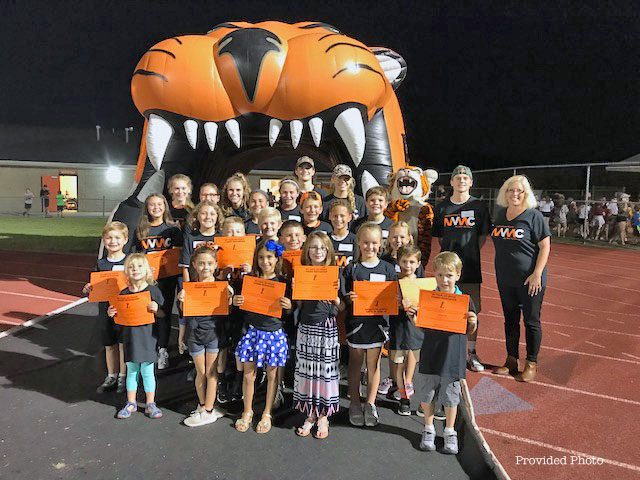
Loveland Interim Superintendent Dr. Amy Crouse with students being recognized for the My Voice, My Choice Award during the September 22 Loveland High School varsity football game.
My Voice, My Choice award presentation takes center stage during football game
Loveland, Ohio – The Loveland City School District congratulated students district-wide who were selected to receive the My Voice, My Choice award during a ceremony at the Loveland High School varsity football game Friday, Sept. 22. Loveland Interim Superintendent Dr. Amy Crouse presented each student a certificate and shirt as part of the ceremony.
“These are students who have demonstrated Tiger Care – which is one of our big three district goals – it’s about developing relationships, showing empathy and taking a leadership role to be an ‘upstander’ for fellow classmates, meaning they stand up for other students when needed,” said Crouse. “The My Voice, My Choice campaign is integral to who we are as Tigers, and we could think of no better place to honor these students than in this public arena with our community as our audience.”
The My Voice, My Choice Campaign is focused on creating a positive school climate for all students. Specifically, the campaign promotes student leadership through standing up for their peers through their words and actions. Please see the list of students who were recognized below, listed by building: