Loveland, Ohio – Clermont County Veterans can receive free transportation to the local VA medical center for appointments.
The Transportation Hotline is 513-732-7471.

News and Events from the Loveland, Ohio Area
Without fear or favor
Since 2004

Loveland, Ohio – Clermont County Veterans can receive free transportation to the local VA medical center for appointments.
The Transportation Hotline is 513-732-7471.
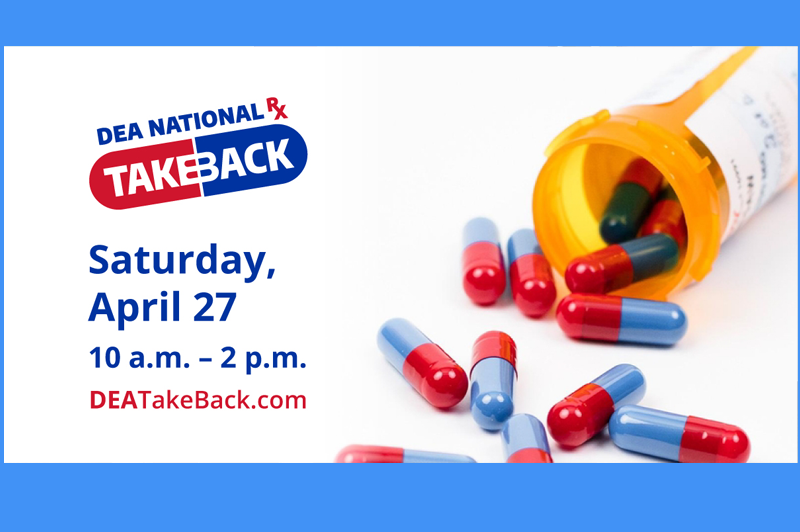
Loveland, Ohio – The Loveland Police Department will participate in the spring National Prescription Drug Take Back Day on Saturday, April 27.
Drop off items the the Loveland Safety Center from 10 AM until – 2 PM
DEA and its partners will collect tablets, capsules, patches, and other solid forms of prescription drugs.
Rid your home of unneeded medications—those that are old, unwanted, or expired—that too often become a gateway to addiction.
Take Back Day offers free and anonymous disposal of unneeded medications at close to 5,000 local drop-off locations nationwide.
Collection sites will not accept syringes, sharps, and illicit drugs. Liquid products, such as cough syrup, should remain sealed in their original container. The cap must be tightly sealed to prevent leakage
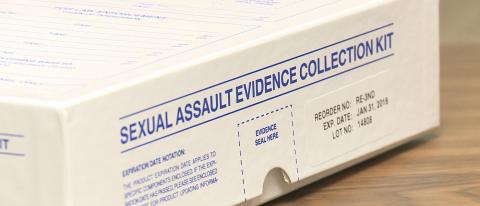
This story mentions rape and sexual assault. If you or someone you know needs help, the National Sexual Assault Hotline is 1-800-656-4673.
Survivors of sexual assault perpetrated by their spouses had a simple request for the Ohio Legislature with regard to a loophole in state law that keeps their spouses from being held accountable.
“Please help us,” Sarah Tucker said.
Tucker said she not only endured rape from her former husband, but also a lack of action by law enforcement because of an exception for married couples within Ohio sex offense laws.
While she was finally able to separate herself from her spouse, Tucker still has not received the justice she demands for herself and for her kids. Her journey out of the situation included mental health treatment and other assistance to deal with the “lasting effects of this trauma.”
“Going through something like this changes a person, changes them to lose faith in the justice system, changes how they see themselves, changes how they face new relationships,” Tucker told the Ohio Senate Judiciary Committee.
The committee heard proponent testimony recently on House Bill 161, which would eliminate spousal exceptions to rape, sexual battery, unlawful sexual conduct with a minor, gross sexual imposition and sexual imposition, according to the language of the bill.
“The spousal exception for rape is distinct from the others because it currently applies only if the spouse lives with the offender,” according to an analysis of the bill by the Legislative Service Commission. “Under the bill, a person could be convicted of rape involving the spouse, regardless of whether the spouse lives with or apart from the offender.”
HB 161 would also allow an individual to testify against their spouse in the prosecution of one of the crimes listed in the bill, and allows testimony “concerning a communication made by one to the other in a case involving any of those offenses, as well as public indecency,” the LSC analysis stated.
Ohio currently stands as one of only 11 states who still holds an exception for marriage in rape and sexual assault cases, according to the bill’s sponsors.
Those who advocate for rape and sexual assault survivors see the bill as necessary closure of loose ends that can leave law enforcement without options, and survivors with even less.
“There can be many obstacles in the path of justice for survivors of sexual violence, but to not even have the option of justice is negligent and re-traumatizing for Ohio survivors,” said Rebecca Peckinpaugh, a licensed social worker and director for Allen County and Putnam County’s Crime Victim Services, and regional director of the Ohio Alliance to End Sexual Violence.
Maria York, policy director for the Ohio Domestic Violence Network said in her 10 years as a victim advocate prior to working for ODVN, intimate partner sexual assault and spousal sex offenses were seen “repeatedly.”
“The law enforcement, the prosecutor’s office, did a fantastic job trying to get justice for victims, but unfortunately the law isn’t there,” York told the Senate committee.
She cited data from the National Institute of Justice, which found 40% to 45% of women in abusive relationships experience sexual assault from a partner.
The need for a resolution is increasing in the state as well, according to Davina Cooper, director of rural services for Women Helping Women, a rape crisis center serving Adams, Brown, Butler, Clermont and Hamilton counties.
“Intimate partner violence is a public health epidemic that impacts the lives of survivors, their children, family members and the community,” Cooper said.
The center saw a 25% increase in “hospital response for sexual assault by a spouse” in 2023, according to Cooper. That number was the highest in WHW’s history, and necessitated an increase in staff for rural programming, she said.
HB 161, which has bipartisan sponsors, has already passed the Ohio House, and approval from the state Senate would take the bill to the governor’s desk for signature.

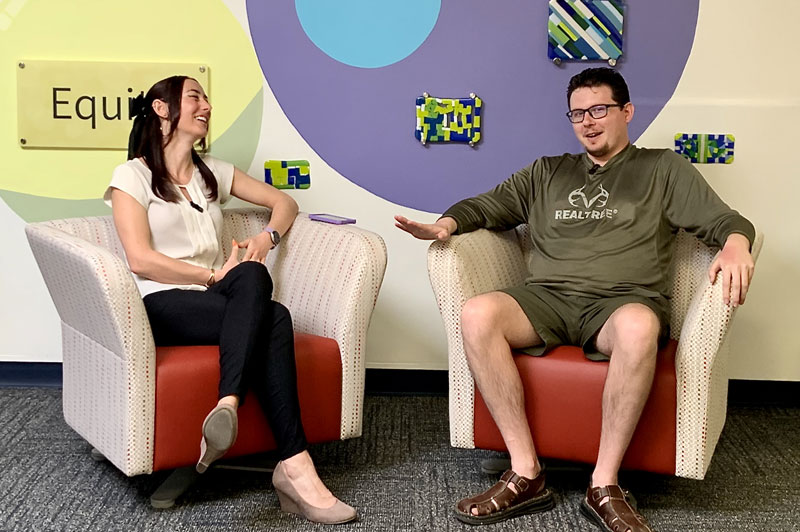
Loveland, Ohio – In celebration of Autism Acceptance Month, LOVELAND MAGAZINE TV was invited to collaborate with the Butler County Board of Developmental Disabilities in filming and producing an interview that Cassie Mattia conducted with Tim Livelsburger.

Loveland, Ohio
The Alcohol Server Knowledge (ASK) program educates people involved in the sale and handling of alcohol on the rules and regulations that govern liquor permits, with emphasis on not over serving patrons and keeping alcohol out of the hands of underage persons.
Upon passing the free training, you will receive a certificate of completion.
The Alcohol Server Knowledge (ASK) program educates people involved in the sale and handling of alcohol on the rules and regulations that govern liquor permits, with emphasis on not over serving patrons and keeping alcohol out of the hands of underage persons.
The Alcohol Server Knowledge (ASK) program is an educational program developed for people involved in the sale and handling of alcohol on the rules and regulations that govern liquor permits in Ohio, with emphasis on knowledge, responsibilities and risks involved. This includes some of the most frequently asked questions regarding Ohio’s laws, rules, and enforcement initiatives.
ASK is completed online. Upon passing the free training, you will receive a certificate of completion.
If you have multiple employees, individuals, or permit locations that need access to OIU’s ASK program to obtain a certificate of completion please share the below link:
Alcohol Server Knowledge Online Course

Loveland, Ohio
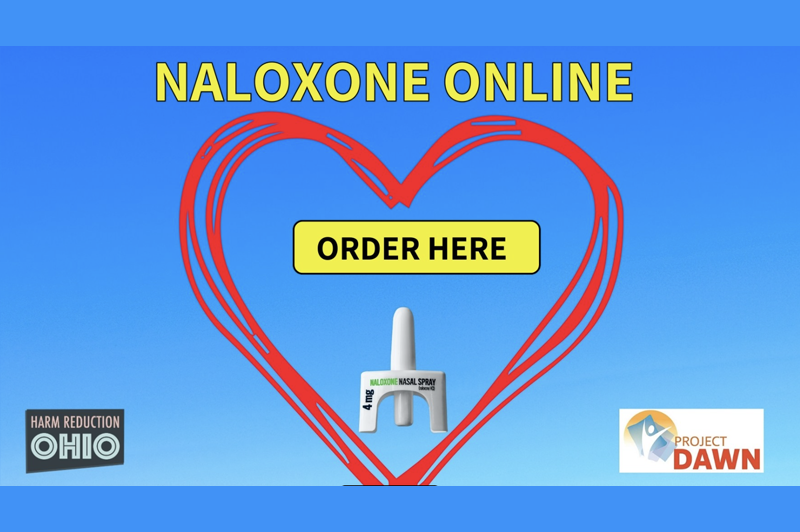
Twenty-thousand Ohio residents died from drug overdoses from 2020 through 2023. Harm Reduction Ohio provides the overdose-reversing drug naloxone to any Ohio residents at no charge. You can order online. We mail orders within 24 hours from our main office in Granville.
This service is made possible by the Ohio Department of Health’s Project DAWN program, using federal State Opioid Response funds approved by Congress.

Ohio Department of Health
What drugs in Ohio may contain fentanyl?
All illicit drugs in Ohio — except marijuana — may contain the opioid fentanyl or a fentanyl analog that can cause a potentially fatal overdose. Half of fentanyl overdoses deaths are caused by mixtures with stimulants (meth, cocaine). High doses of prescription opiates — such as oxycodone, fentanyl, hydrocodone and morphine — may cause overdoses, too.
Who should order at this site?
Ohio residents who may be in a position to reverse an overdose should consider carrying naloxone. This is especially true for family members, friends, co-workers, neighbors and service providers in contact with people who use drugs other than marijuana. People who stimulants and non-opioid drugs (other than cannabis) are at significant risk of fentanyl overdose and should carry naloxone, as should people in contact with people who use drugs.
Can I order fentanyl test strips?
Yes. Please request them in the comment section when ordering naloxone. Fentanyl test strips will be added soon as an option to our online form.
Other questions? Email narcan@harmreductionohio.org
HRO-Naloxone-Nasalv2 from Jumpstart Video on Vimeo.
Harm Reduction Ohio’s partner NEXT Distro of New York City prepared this Xylazine Wound Care Guide, which can be found here and below.
Harm Reduction Ohio published a study January 4, 2024, on xylazine’s frequency in Ohio’s drug supply. That study can be found here. The charts and data from the study is here.
The study found xylazine in 37.3% of fentanyl. Other key findings:
Caring for Xylazine Wounds

Source: National Library of Medicine
The NEXT Distro wound care guide offers this guidance.
[pdf-embedder url=”https://lovelandmagazine.com/wp-content/uploads/2024/04/XylazineWoundCare.pdf”]
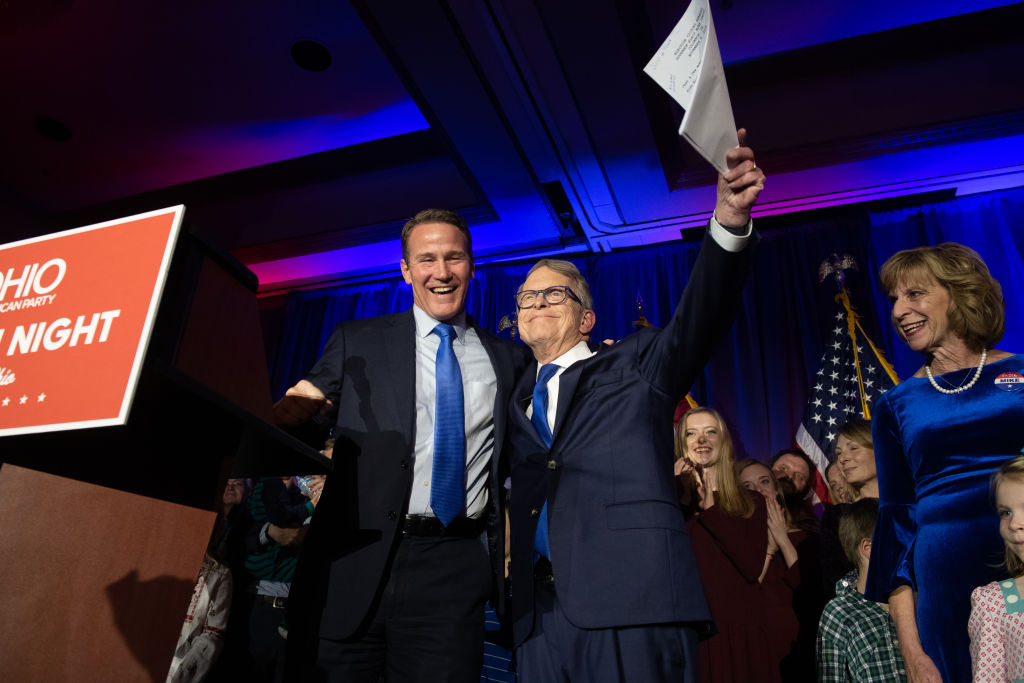
The office of Gov. Mike DeWine has for months been saying that connections between the guy he picked to be the state’s top regulator and a utility at the center of an epic bribery scandal were well known around Capitol Square when DeWine nominated him in January 2019.
If the relationship were common knowledge, it might seem more innocent that some in DeWine’s administration knew the utility had paid the regulator $4.3 million just before the governor nominated him. However, the administration has provided scant evidence that the claim is true — and there’s considerable evidence suggesting it isn’t.
The regulator, Sam Randazzo, died by suicide earlier this month and the utility, Akron-based FirstEnergy, has admitted to its role in a scandal that has sent one public official to prison for 20 years and seen yet another defendant die by suicide.
Meanwhile, DeWine’s lieutenant governor, Jon Husted, won’t talk about a $1 million FirstEnergy contribution to a group supporting him. And DeWine himself hasn’t explained what senior people in his administration with FirstEnergy connections knew about the scheme — in which $61 million in bribes were paid for a $1.3 billion ratepayer bailout.
Among them is Laurel Dawson, who was chief of staff of the incoming DeWine administration at the beginning of 2019. At the same time, her husband, Mike Dawson, was a lobbyist for FirstEnergy.
A few weeks before, on Dec. 18, 2018, Gov.-elect DeWine and Lt. Gov.-elect Jon Husted had dinner at the Columbus Athletic Club with FirstEnergy CEO Chuck Jones and Vice President Micheal Dowling. At the dinner, they discussed whether Randazzo would be acceptable to head up the Public Utilities Commission of Ohio — the agency that was supposed to regulate the executives’ utility, according to a state indictment of Randazzo, Jones, and Dowling that was filed in February.
After the dinner, the FirstEnergy executives drove about a mile to Randazzo’s condo and negotiated a $4.3 million payment to Randazzo, the indictment said. FirstEnergy later said the payment was a bribe in a deferred prosecution agreement with the U.S. Justice Department.
As PUCO chairman, Randazzo helped draft and lobby for the bailout law and did several other lucrative favors for FirstEnergy. His indictment said it capped off a decade-long relationship in which he was a paid “consultant” for FirstEnergy unbeknownst to his law firm or a group of industrial energy users on whose behalf Randazzo was supposed to be negotiating concessions.
The indictment says at least one person in the DeWine administration — Laurel Dawson — knew that Randazzo had gotten a huge payment from FirstEnergy in the weeks before DeWine nominated him to chair the PUCO at the beginning of February 2019.
Randazzo told “the Governor-elect through his incoming Chief of Staff that he had received $4.3 million from FirstEnergy, which he claimed was final payment of a ‘consulting agreement,’” Randazzo’s indictment said.
For her part, Laurel Dawson is cooperating with the state prosecution, but she isn’t commenting publicly.
In the months since the state indictment of Randazzo and the FirstEnergy executives, DeWine Press Secretary Dan Tierney has been saying that Randazzo’s ties to FirstEnergy weren’t news even at the time the governor was considering him in early 2019 to head the PUCO.
In February, he told Cleveland’s News Channel 5, “it was well known that Randazzo was a paid consultant for FirstEnergy.”
Tierney modified that somewhat, telling the Capital Journal earlier this month, “it was well known to our staff that Mr. Randazzo was an energy consultant, and it was well-known to them and many people that Mr. Randazzo was a consultant employed by First Energy.”
However, it appears that Randazzo and FirstEnergy’s top leadership went to great lengths to keep their relationship secret.
Many of the counts Randazzo was charged with have to do with his failure to report income from FirstEnergy on state ethics disclosures while he was PUCO chairman. A bill of particulars accompanying the indictment adds that Randazzo didn’t disclose a 2015 consulting agreement with FirstEnergy to the members of his own law firm, McNees, Wallace and Nurick. Randazzo’s membership agreement in the firm barred barred him from outside employment, the filing said.
Pressed on the matter this week, Tierney said in an email, “Mr. Randazzo testified numerous times at the General Assembly prior to his appointment to the PUCO. In addition, Mr. Randazzo served on the PUCO Nominating Council, which requires ethics disclosures. These were among the reasons Mr. Randazzo’s relationships with utilities and FirstEnergy were well known at the Statehouse and on Capitol Square.”
The Capital Journal obtained Randazzo’s disclosures from the Ohio Ethics Commission for the period he served on the PUCO Nominating Council — 2007 to 2017. “FirstEnergy” doesn’t appear on any of them.
Tierney was informed of that and asked whether DeWine’s office could point to any testimony Randazzo gave to the General Assembly in which he divulged his long, profitable relationship with FirstEnergy. Tierney didn’t answer that question, saying instead, “My understanding is that Mr. Randazzo’s business entities are listed on the ethics form(s), and those business entities not only were well known to be associated with Mr. Randazzo on Capitol Square, but also well known to have First Energy as clients.”
The entity that appears on Randazzo’s ethics disclosures is the Sustainability Funding Alliance of Ohio — a group prosecutors accused Randazzo of using as a shell corporation to skim millions in FirstEnergy money earmarked for his industrial clients. The group’s relationship with FirstEnergy was so secret that the corporation’s top executives feared that a partial disclosure would tank Randazzo’s nomination to the PUCO.
FirstEnergy Solutions — a subsidiary Jones and Dowling desperately wanted ratepayers to bail out — was going through bankruptcy. One of its filings mentioned the Sustainability Funding Alliance, which Randazzo had also listed on his ethics disclosures.
The FirstEnergy executives were in a panic about it and their communications show that the connection between their company and Randazzo’s entity was far from well known.
The DeWine administration is “going to be mad at Sam (and hopefully not us) for not disclosing the financial relationship,” Dowling texted Jones on Jan. 30, 2019, less than a week before DeWine nominated Randazzo. “That’s Sam’s responsibility.”
When the nomination went through anyway, Dowling told Jones, “A bullet grazed temple,” to which the FirstEnergy CEO replied, “Forced DeWine/Husted to perform battlefield triage.”
In his email Monday, Tierney also said, “What media has described as the ‘dossier’ regarding Randazzo’s relationship with First Energy, which is a collection of public domain documents from the time in 2019, shows that much of this was colloquially known on Capitol Square and within the energy advocacy community.”
The “dossier” Tierney referred to was a 198-page document from a former aide warning DeWine about Randazzo’s murky relationships. It was delivered to Laurel Dawson on Jan. 28, 2019 — about a week before her boss nominated Randazzo.
Tierney said the document shows that Randazzo’s ties to FirstEnergy were well known. But the first page of the dossier says something quite different.
“Publicly available documents suggest that PUCO applicant Sam Randazzo has opaque, undisclosed financial ties to FirstEnergy that should be fully examined and made public,” it says. “The enclosed evidence demonstrates that Randazzo personally profits from a secret for-profit entity funded by FirstEnergy Solutions.”
Catherine Turcer, executive director of Common Cause Ohio, said that it’s past time for DeWine, Husted and their staffs to be much more forthcoming about their involvement in the bailout and about what DeWine and Husted did to investigate whether any member of the administration acted improperly.
“It makes sense to be as clear as possible about what actually happened,” she said. “And I don’t just want to hear from the governor. I want to hear from the lieutenant governor.”


A Loveland Magazine File Photo of Pat Furterer
Loveland, Ohio – Rosalynne Patricia “Pat” Furterer, founder of the Loveland Stage Company passed away on Saturday, April 13, 2024, at the age of 90.
Furterer was born in Chester, Pennsylvania and married Fred Furterer on February 13, 1954. Fred Furterer passed away in 2009. The couple lived in Pennsylvania and Michigan before Fred was transferred to Cincinnati in 1977. The couple settled in Pheasant Hills in Loveland.
Pat was a leader in community theater in Battle Creek, Michigan.
In 1979, when Pat realized that there was no community theater in Loveland, she ran an ad in the local paper seeking people who might be interested in starting one and gathered a group of eleven people who were interested in live theater, at her home in the Pheasant Hills subdivision. She continued in many roles with the theater company, as a performer, educator, fundraiser, set designer, Director, and mentor for 50-years.
To honor her legacy as the leader of the volunteer Board of Directors, she was named President Emeritus of the Loveland Stage Company in 2013.
She was the 2002 Loveland Valentine Lady. She was an officer and active member of the Loveland Woman’s Club; and she professionally worked for the Loveland Chamber of Commerce for several years.
 Loveland’s Second Street in front of the theater added the honorary name of PAT FURTERER WAY on its street sign. She was inducted into the Ohio Senior Citizens Hall of Fame in 2022.
Pat won the City of Loveland’s Louis G. Rookwood Award and given a “Key to the City” in 1994. The Loveland Chamber of Commerce, now the Little Miami River Chamber Alliance, began a college scholarship program in her honor.
For her contributions to community theater, Pat won the Art Rouse Award in 2006 from the Association of Community Theaters of Greater Cincinnati (ACT). The Ohio Community Theater Association (OCTA) inducted her into its Hall of Fame in 2015.
Visitation will be on Thursday, April 25 from 3 until 5 PM at the Tufts Schildmeyer Funeral Home, 129 N. Riverside Avenue in Loveland. A services will be held at 5 PM.
The family has asked that in lieu of flowers, donations in Pat’s memory may be made to the Loveland Stage Company, PO Box 312, Loveland, Ohio 45140, or to the Loveland Woman’s Club Scholarship Fund, 119 N. Riverside Avenue, Loveland, OH 45140.
Loveland, Ohio – The Life Food Pantry says their shelves are getting low and they are looking for neighborhood reps, sports teams, congregations, book clubs, businesses, and others to run food drives.
Please consider organizing a food drive and email fooddrives@lifefoodpantry.org to schedule a day and time to drop off donations (due to heavy client traffic it’s important to schedule a drop off).
Need help determining what type of products to ask for? Visit the LIFE website for more information: https://lifefoodpantry.org/host-drives/

Loveland, Ohio – Clean out your filing cabinets and join Infinity Wealth Counsel and their business neighbors Gertz Law and Gina Dubell-Smith’s Designed2Sell Team with eXp Realty.
ERTH systems will be on site to securely destroy your sensitive documents while you enjoy some food and beverage.
This event is free and open to the community, so please invite your friends and neighbors.
Infinity Wealth
433 West Loveland Ave.