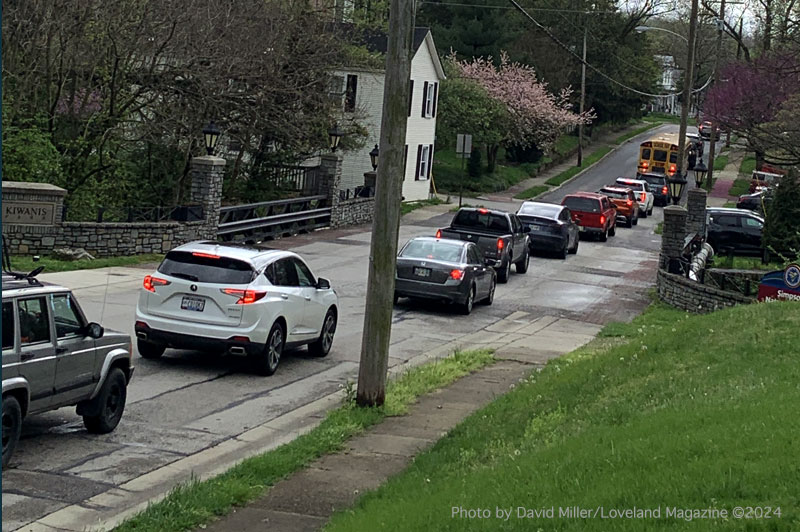
Loveland, Ohio – The photo above of the gridlock was taken on Wall Street near Kiwanis Park in the West Loveland Historic District on Friday afternoon. The traffic was equally backed up on West Loveland Avenue on the hill past the Loveland Dairy Whip, as far as the eye could see.
Sidewalk repair on the Col. Thomas Paxton Bridge on West Loveland Avenue continues and is expected to be finished no later than August 30 according to the latest information provided by City Hall.
On Sunday
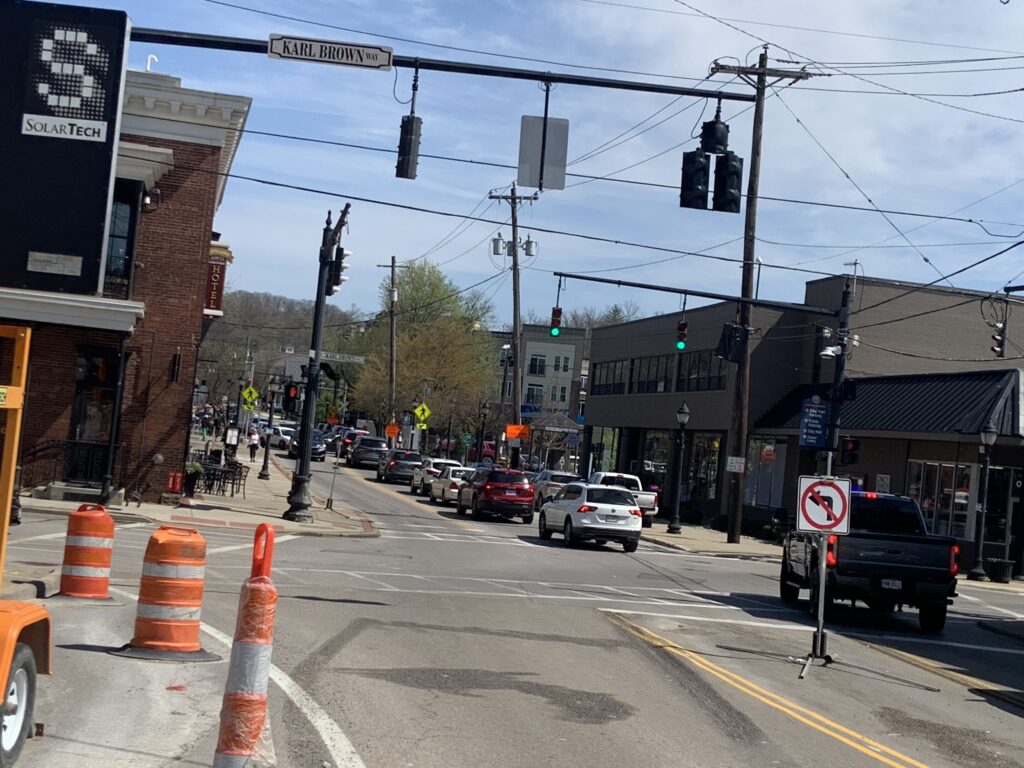
West Loveland Avenue heading East is reduced to one lane as it approaches Historic Downtown and Karl Brown Way. Two dedicated turn lanes have been eliminated and three lanes East were reduced to one at the intersection.
The traffic flow is further strained by the Loveland Bike Trail crossing where any pedestrian or bicycle can stop the flow of traffic. Add to that, is the traffic stops as vehicles attempt a left turn onto Railroad Avenue.
Sweetheart Republican special interests often get everything they ask for in Ohio, while community advocates fighting every day to obtain proven policy solutions that improve the lives of Ohioans get largely ignored. Wealthy families and corporations continue to do phenomenally in the Buckeye State while millions get left behind, or outright attacked.
Back in 2010, Ohio was ranked by Education Week as having the 5th best public school system in the nation. Education Week’s last ranking was in 2021 and put Ohio at No. 20. A recent ranking from U.S. News & World Report puts Ohio education at No. 29. If you break those numbers down, Ohio sits at No. 21 for Pre-K to 12 education, and No. 37 for higher education.
Ohio ranks No. 31 in crime and corrections; No. 37 in economy; No. 42 in natural environment; No. 32 in infrastructure; and No. 29 in health care.
Take heart though, Ohio is sitting on $3.5 billion in the state’s rainy day fund and ranks No. 14 in fiscal responsibility. But don’t go counting those chickens just yet. Gerrymandered Ohio lawmakers want to end state income taxes, which would leave a $13 billion state budget deficit.
They say they could make up the money by raising the sales tax, cutting spending, and letting the economy allegedly “fix itself.” In other words, the rich get richer while everybody else pays a higher percentage of our income for other taxes and fees to make up the difference, and low-income families get their support services cut. This, in a state where 1 in 5 children already suffer food insecurity.
But wait, what’s this? Ohio ranks No. 11 in “opportunity”? What’s that mean? Well, it’s not economic opportunity. For that we rank No. 35. But it is affordable to live in Ohio, so we grabbed a No. 16 ranking for that.
We often hear from our leaders about what a great place Ohio is to do business. Surely we have a top-notch ranking there then, right? No. We rank No. 29 in business environment, No. 34 in growth, and No. 42 in employment.
The national average for renewable energy usage is 12.3%, and Ohio’s is 4.4%. We once had one of the robust commitments to alternative energy in the nation, but, if you’ll recall, that corrupt Ohio House Bill 6 law that DeWine signed same-day that was the product of a $60 million political bribery and money laundering scheme that awarded a $1.3 billion bailout to FirstEnergy and a couple of failing coal-fired plants? It also gutted the state’s renewable energy portfolio.
But hey, buck up, Ohio. We may not be No. 1 in anything. (In fact, we don’t even crack the Top Ten in anything good.) But at the end of the day, at least we can pick up our kids from one of our under-funded public schools or colleges, gather with our over-worked and under-paid family and friends, and get out in the sun to enjoy some pollution.
We could picnic at one of our favorite state parks, and take in the soothing views of a fracking operation.
“We’re No. 34! We’re No. 34!”
_________________
DAVID DEWITT
Ohio Capital Journal Editor-in-Chief and Opinion Columnist David DeWitt has been covering government, politics, and policy in Ohio since 2007, including education, health care, crime and the courts, poverty, state and local government, business, labor, energy, the environment, and social issues. He has worked for the National Journal, The New York Observer, and The Athens NEWS. He holds a bachelor’s degree from Ohio University’s E.W. Scripps School of Journalism and is a board member of the E.W. Scripps Society of Alumni and Friends. He can be found on X @DC_DeWitt
There Are Plenty of Interesting Players To Watch As the Reds’ Season Gets Going
Loveland, Ohio – There was no question that this year, the Reds’ success would hinge upon the progress made by some of its youngest members. Although the average age of the Reds players is 28 years, good for 17th in Major League Baseball, perhaps no other team has asked so much of its newest major-leaguers. With so much pressure and the highest of expectations on their shoulders, it’s going to be important to be patient with the likes of Elly De La Cruz, Andrew Abbott, Hunter Greene, and Christian Encarnacion-Strand. The hope was that additions of veteran players like Jeimer Candelario and Frankie Montas, and the retention of Jonathan India would provide a stable core that might lead this team while its young players fought to adjust.
While the results have been wildly varying across the board, the sample sizes are exceedingly small in terms of the entire big-league season. It’s therefore impossible to draw any lasting conclusion about how various players will perform based on the statistics as they stand now, but it is very interesting to see just who is starting off the season strong and who might be falling behind.
Elly De La Cruz, for example, is one of the most polarizing players on the Reds’ roster and will likely remain so for quite some time. Early on, many fans noted his inability to hit any sort of breaking ball, and his reluctance to swing the bat at all. His inexplicable errors in the field at shortstop didn’t make his critics any quieter. However, it almost seemed to go unnoticed that during the course of this perceived struggles he consistently got on base (albeit not with flashy homeruns) and continued to create chaos on the basepaths. As of the writing of this article he’s been on base in 18 straight games and has a .318 average with 3 home runs and 7 runs batted in. In recent games he’s started hitting for power once again with several home runs and even one inside-the-park that showcased his exceptional speed. Many of De La Cruz’s loudest critics on Twitter and Facebook have suddenly gone very quiet as he’s improved with each week of the season. Elly’s talent and the hype surrounding hm will unquestionably lead to overreaction (both positive and negative) to every play he makes (or doesn’t make), but the most important factor to remember is that he is a young player with immense potential, and who deserves fans’ patience as he works to unlock his full potential.
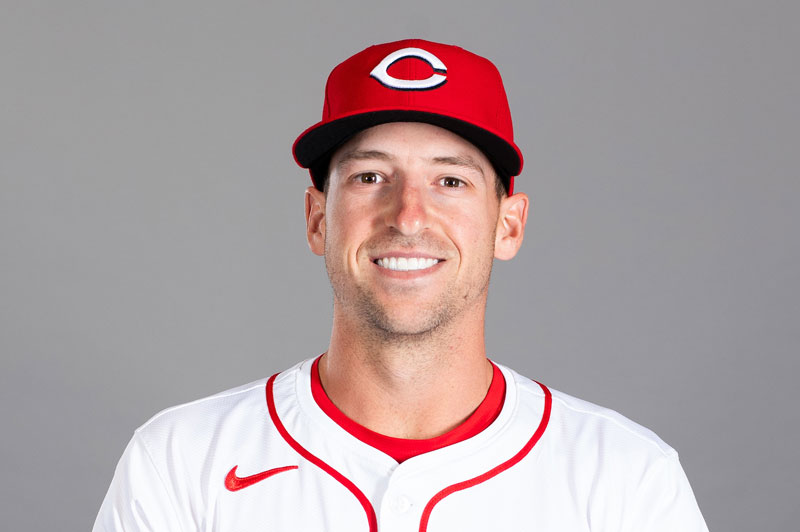
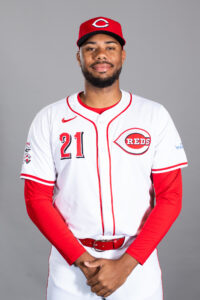
Hunter Green photo by Major League Photo Day
In much the vein, Hunter Greene is a pitcher who faces tremendous expectations after being drafted second overall in 2017. He was awarded a 6 year 53-million-dollar contract in 2023 and while that deal is but a drop in the bucket compared to other marquee pitchers in the league, for a team like the Reds it is still a significant investment that shows how the Reds value Greene as a key part of their rotation going forward. Over his last 33 starts, Greene has pitched 175 innings with a 4.01 ERA and 240 strikeouts. While that is not necessarily “ace” material it is the mark of a solid starter at the major-league level and shows tremendous improvement over the prior seasons Greene has had. Even though he has been pitching for a few years, he is only 24 years old and has much to learn and plenty of time to develop. The pitcher Hunter Greene is now is not necessarily the player he will be in years to come. If he continues to improve as he’s shown so far, he could be a key piece to the Reds’ rotation in the future, despite the occasional rough outing.
On the flip side, Jeimer Candelario has struggled mightily to start the year. He’s batting only .152 through 12 games and has not looked comfortable at any point since signing a 3 year 45 million dollar contract this offseason. While Christian Encarnacion-Strand has also had his difficulties at the plate, he has at least shown some signs of life. Candelario has shown no such flash thus far, and Reds fans are understandably worried. The team will need much more from Jeimer if they are going to contend this year.
Spencer Steer photo by Major League Photo Day
No early season discussion about the Reds would be complete without lauding the play of Spencer Steer. Of all the Reds’ young players, Steer seems to get less consideration than others, but this year he has outperformed them all. He was named the National League Player of the Week recently and is currently batting .372 with 3 home runs and 15 runs batted in. He’s been a consistent MLB leader in WAR and has also proven that he can play left field very well given that it is not necessarily the position where he’s most used to handling. He’s a threat to get a big hit any time he steps up to the plate, and he’s carried the Reds in games where others were underperforming at the dish. There is simply no question that without Steer, the team would be nowhere close to where they are in the standings.
The first few weeks of the Reds’ season has provided plenty of highs, highlights, and frustrating moments. This team is going to have to fight and scrap for every win while the likes of McLain, Friedl, and Marte are unable to play, and that is exactly what the Reds are doing. If players like Candelario can get hot, this team can become even more of a threat to make a big push before they get some of their best players back on the diamond.
Christopher Ball is a longtime Loveland resident and an attorney. He graduated from Loveland High School in 2003 and was a member of the football team before going on to become a coach’s assistant at DePauw University in Greencastle, Indiana. He has been following and rooting for the Reds and Bengals since the early 1990s and has been through the many ups and downs that fandom has wrought over the years.
Take part in the 2024 LIFE Food Pantry Annual Fundraising Campaign, which will raise awareness and donations for LIFE‘s many programs that serve the northeastern suburbs of Cincinnati and the entire 45140 zip code. Keep reading for ways to get involved this year!
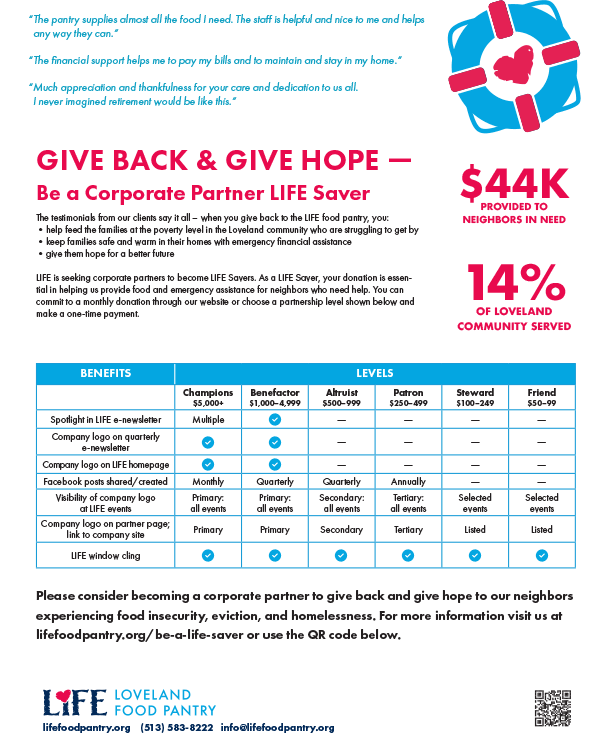
Since 1988, LIFE has provided food and financial assistance to Loveland and surrounding communities. Sadly, the number of our neighbors reliant on LIFE for their food source has doubled in the last four years alone. In fact, we are currently serving 14% of all Loveland residents — including hundreds of seniors and nearly 1,000 children — and our 2024 distributions show the demand is increasing. These neighbors can also experience financial crisis and LIFE was able to provide more than $44,000 in assistance in 2023.
Our services are dependent on the generosity of our wonderful community and there are so many ways you can get involved:
MONETARY SUPPORT A monetary contribution to our annual contribution helps us keep our programs thriving and able to meet the growing demand of our neighbors. Click here to donate online.
FOOD DONATIONS / FOOD DRIVES Help stock our shelves by dropping off food items during our normal business hours or host your own food drive! We can help! Click here or email fooddrives@lifefoodpantry.org to learn more about food drives.
SPREAD THE WORD Tell everyone about LIFE Food Pantry and the work we do for the community. Download and post a BE A LIFE SAVER flyer or spread the word through social media by clicking on these icons:
Loveland, Ohio – The Apex Sock Monkey is “sporting to support” the new Tee he sold to the Loveland High School Drama Department to promote their production of Puffs!
Loveland High School Drama presents Puffs! For 7 years, a certain boy wizard went to a certain Wizard School and conquered evil – but this is not his story. Puffs, or Seven Increasingly Eventful Years at a Certain School of Magic and Magic!
Versions of this story were published by Floodlight, Energy News Network and the Ohio Capital Journal.
A surge in FirstEnergy political spending ahead of the utility’s push to secure a legislative bailout for its nuclear power plants included a $1 million dark money contribution to support the campaign of Ohio Gov. Mike DeWine’s eventual running mate.
The previously unreported gift linked to Lt. Gov. Jon Husted’s 2017 primary bid was revealed as part of a raft of documents obtained under Ohio’s public records law by a coalition of news organizations, including Floodlight, Energy News Network, and the Ohio Capital Journal.
Among the documents are company emails describing behind-the-scenes efforts by Husted to persuade DeWine to support House Bill 6, the utility-backed legislation at the heart of the state’s ongoing $60 million public bribery scandal.
Neither Husted nor DeWine, whose campaign also benefited from a previously reported $1 million in dark money from the utility, has been implicated in the scheme in which eight people, including the state’s former House Speaker Larry Householder, have been indicted.
Two of those charged in the multi-million-dollar scandal surrounding the passage of HB 6 may have taken their own lives, including Sam Randazzo, the former chairman of the Public Utilities Commission of Ohio, who was found dead earlier this week of an apparent suicide.
‘Confidential’ email details campaign gift
One of the documents from the Office of the Ohio Consumers’ Counsel Office is a spreadsheet attached to a January 2020 message labeled “confidential.” It shows $1 million went from FirstEnergy to the conservative group Freedom Frontier in 2017, with “Husted campaign” noted as the reason.
That group backed Husted during his 2017 primary campaign for governor. The group then supported DeWine after Husted dropped out of the race to become his running mate.
Husted was also dubbed the “‘Golden Boy’ for FirstEnergy” by lobbyist Neil Clark, a co-defendant with Householder and others in the federal government’s criminal corruption case. Clark died by suicide in 2021.
In several of the recently released records, Husted is mentioned in the same breath as Householder, the convicted House speaker, and Randazzo, the former PUCO commissioner, by FirstEnergy leadership as they sought to pass and then defend HB 6, the nuclear and coal bailout law at the heart of Ohio’s ongoing corruption scandal.
FirstEnergy records released via public records request show how executives at the power company relied on Ohio Lt. Gov John Husted and convicted former House Speaker Larry Householder to help them pass a $1.3 billion nuclear bailout bill.
Husted has maintained that his support for the 2019 law stemmed from his belief that nuclear energy is an important part of Ohio’s energy portfolio. Parties in HB 6-related shareholder litigation have subpoenaed Husted to answer questions under oath, although a new date needs to be set.
FirstEnergy records released via public records request show how executives at the power company relied on Ohio Lt. Gov John Husted and convicted former House Speaker Larry Householder to help them pass a $1.3 billion nuclear bailout bill.
“The Husted campaign never received this donation and is not affiliated with any of these groups,” said spokesperson Hayley Carducci. By law, candidate campaigns are not supposed to coordinate with groups like Freedom Frontier, which can spend unlimited amounts to support or attack them.
The document and others reflect a major commitment by FirstEnergy to Husted’s political future. Before 2017, the company’s reported political spending to support Husted was less than $25,000 per campaign, according to data from OpenSecrets.
Dark money spending rises sharply
More broadly, the document also indicates a major increase in FirstEnergy’s political spending through nonprofit groups exempt from taxes under Section 501(c)(4) of the Internal Revenue Code. Those, along with privately held corporations, are common structures for dark money organizations — groups that aren’t required by law to disclose the ultimate source of their funding.
The company’s giving to such groups jumped to more than $12 million in 2017, after much lower levels of $200,000 in 2016 and $100,000 in 2015, according to the spreadsheet.
Starting in 2014, FirstEnergy had sought bailouts for noncompetitive coal and nuclear plants. And in late 2016, regulators approved a $456 million consumer surcharge that ultimately was held unlawful. Yet the company claimed it needed more.
The document details once-secret contributions to groups supporting “everyone from the mayor of Akron to President Trump that FirstEnergy made to secure bailouts for its soon-to-be bankrupt coal and nuclear plants and to gain influence on other key issues,” said Dave Anderson, policy and communications manager for the Energy and Policy Institute.
A spreadsheet details dark money expenditures by northeastern power company FirstEnergy as it sought to secure a $1.3 billion bailout for its struggling nuclear power plants. The sheet reveals a previously unreported $1 million donation to benefit the candidacy of Ohio Lt. Gov. Jon Husted.
Anderson added that the spreadsheet also “provides some key new evidence for utility regulators and consumer advocates to use to ensure that every dollar of ratepayer money that FirstEnergy misused to fund its secret political spending is publicly disclosed and refunded, with interest and ideally serious financial penalties.”
At the time, the author of the document that details the donations, Kristina Housley, was executive assistant to FirstEnergy’s Mike Dowling, who is now a defendant in a state criminal case along with former CEO Chuck Jones.
Finding out all the details about the dark money spending behind HB 6 is like peeling back the layers of an onion, said Catherine Turcer, executive director of Common Cause Ohio.
“The reason that transparency matters so much is that money that is spent in the shadows influences elections, and it influences really important policy decisions that impact us every day,” Turcer said. “And we have the right to know what is going on in government and how decisions are being made and who’s attempting to influence those decisions.”
The ‘Golden Boy’ for FirstEnergy
A December 2017 email from former FirstEnergy lobbyist Joel Bailey said Husted was working to get DeWine on board with FirstEnergy’s “issues.” FirstEnergy also supported other pro-DeWine/Husted efforts during the election cycle.
Former FirstEnergy CEO Chuck Jones (top left), former FirstEnergy VP Michael Dowling (top right), former PUCO Chair Sam Randazzo (bottom middle). Graphic by WEWS.
After the election, Husted and DeWine dined with Jones and Dowling on December 18, 2018. Later that night, FirstEnergy agreed to pay $4.3 million to energy lawyer Randazzo, who went on to become DeWine’s first pick for chair of the Public Utilities Commission of Ohio. FirstEnergy later identified Jones and Dowling as the two people responsible for paying alleged bribes.
Husted’s office has been evasive about his recollections, despite Jones noting in texts to Randazzo that the PUCO chair position was discussed in at least general terms. Another text by Jones in 2019 said the DeWine/Husted team was forced “to perform battlefield triage” to secure Randazzo’s nomination after a 198-page dossier provided to DeWine’s staff threatened to derail it.
Evidence from last year’s criminal trial of Householder, the former Ohio House speaker, and lobbyist Matt Borges also included messages between former FirstEnergy executives Jones and Dowling about Husted working behind the scenes to build support for the bill. Among the actions were efforts to extend the bailout period for the company’s former nuclear power plants in Ohio.
Husted long a friend of utilities
Husted had been Ohio’s secretary of state immediately before becoming lieutenant governor. Before that, he served as House speaker in the General Assembly. In that role, he played a pivotal part in securing passage of another major energy bill, Senate Bill 221.
At the time, Husted supported the law’s clean energy standards that were ultimately gutted by HB 6. However, SB 221 set the stage for so-called electric security plans. Those have let FirstEnergy and other utilities avoid full rate cases for more than a decade, while allowing cross-subsidies and adding multiple additional charges to consumers’ bills.
“That bill upset the balance” of energy regulation in Ohio, said Ashley Brown, a former PUCO commissioner. “It was a humongous gift for the utilities.”
Lawmakers repealed HB 6’s $1 billion-plus in subsidies for FirstEnergy’s former nuclear power plants and its recession-proofing provisions in 2021, eight months after the arrests of Householder and others.
Earlier this year, Husted told NBC4 in Columbus the rest of HB 6 “needs to be completely removed.” He did not respond to Energy News Network questions this week about whether that includes both the law’s subsidies for two 1950s-era coal plants and its gutting of Ohio’s renewable energy and energy efficiency standards.
FirstEnergy spokesperson Jennifer Young declined to comment on the company’s 2017 donation to Freedom Frontier due to ongoing litigation. However, she added, “FirstEnergy will post information regarding its support of 501(c)(4) social welfare organizations on the company’s website on a quarterly basis.”
Meanwhile, FirstEnergy still has not disclosed its dark money spending for the years 2018 through 2020. And proposals for reforms that would require such disclosures from all electric utilities remain stalled in the General Assembly.
“It’s incredibly frustrating that Ohioans can be aware that dark money impacted decision-making at the statehouse,” Turcer said, “and yet we still haven’t gotten the legislators to create greater transparency.”
The Energy News Network is a nonprofit news site dedicated to keeping influencers, policymakers and citizens informed of the important changes taking place in the transition to a clean energy system. Floodlight is a nonprofit newsroom that investigates the powerful interests stalling climate action.
This article first appeared on Energy News Network and is republished here under a Creative Commons license.
_____________
MARIO ALEJANDRO ARIZA, FLOODLIGHT
Mario Alejandro Ariza is an investigative reporter and a Dominican immigrant. His byline has appeared in publications like the South Florida Sun Sentinel, The New Republic, and The Atlantic. Mario wrote a book called “Disposable City: Miami’s Future on the Shores of Climate Catastrophe,” which was published by Bold Type Books. His essays have been featured in The Believer and selected for Best American Essays. He lives in South Florida with a cat, a dog, and a sturdy pair of waterproof boots.
Kathi is the author of 25 books and more than 600 articles, and writes often on science and policy issues. In addition to her journalism career, Kathi is an alumna of Harvard Law School and has spent 15 years practicing law. She is a member of the Society of Environmental Journalists and the National Association of Science Writers. Kathi covers the state of Ohio.
Loveland, Ohio – Loveland Early Childhood Center has received a Five-Star Step Up To Quality Award from the State of Ohio.
Step Up To Quality is a five–star quality rating and improvement system administered by the Ohio Department of Education and the Ohio Department of Job and Family Services. SUTQ recognizes and promotes learning and development programs that meet quality program standards that exceed preschool licensing and school age child care licensing health and safety regulations. “The Step Up To Quality program standards are based on national research identifying standards which lead to improved outcomes for children”, according to the Ohio Department of Education and Workforce.
Ohioans could have a chance vote to raise the minimum wage to $15 an hour by 2026.
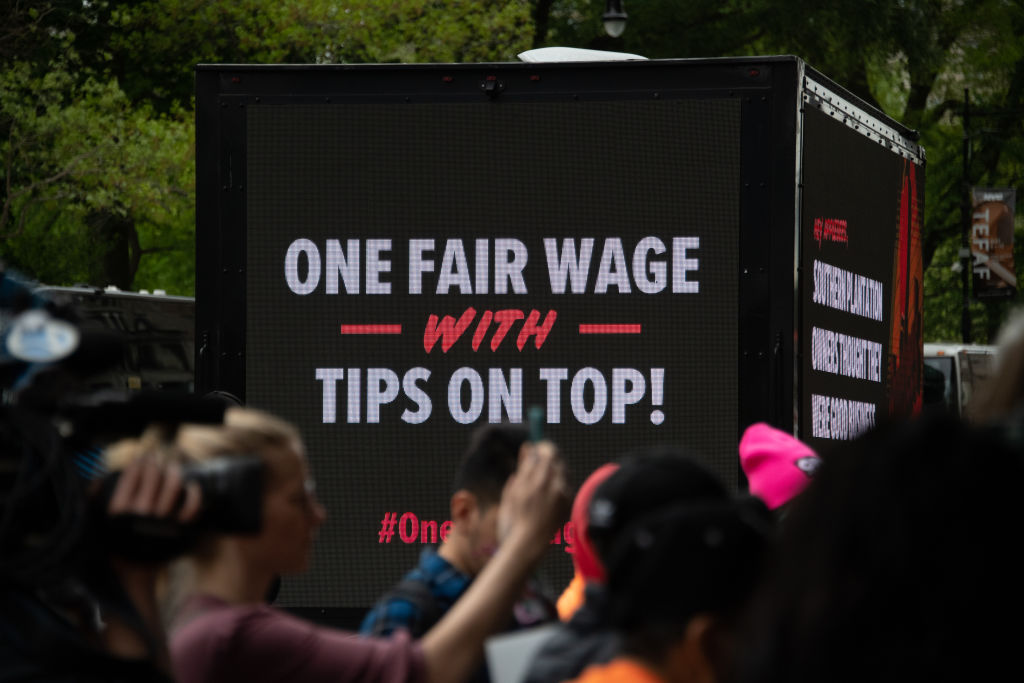
Raise the Wage Ohio is collecting signatures to put a proposed constitutional amendment on this year’s ballot that would raise the minimum wage to $12.75 an hour starting Jan. 1, 2025, and then it would go up to $15 an hour starting on Jan. 1, 2026. It would also get rid of Ohio’s tipped wage.
Ohio’s current minimum wage is $10.45 an hour for non-tipped employees and $5.25 for tipped employees.
“We’re going to be raising wages for 1.4 million Ohioans immediately,” said Mariah Ross, the executive director of One Fair Wage. “Minimum wage will give everyone a bump. It will make it a livable wage.”
They need to collect more than 413,000 signatures by July and they currently have more then 350,000 signatures, she said.
“The basic necessities that will be covered by $15 an hour minimum wage just include very basic things like food, housing, transportation, … child care, health care,” she said. “It’s very basic things.”
Full-workers in Ohio need to earn $19.09 per hour to afford a 2-bedroom apartment, according to the National Low Income Housing Coalition (NLIHC) and the Coalition on Homelessness and Housing in Ohio (COHHIO).
But Ohio’s restaurant industry opposes raising the minimum wage — arguing it would hurt tipped workers.
“(Servers and bartenders) are very concerned that their income would go down as a result of all this,” said John Barker, President & CEO of the Ohio Restaurant & Hospitality Alliance.
Ross disagrees, saying raising the minimum wage will only help tipped workers.
“They’d make more money,” she said. “We’re not trying to take away tips.”
Under the ballot initiative, Ross said restaurants would have until 2029 to pay all their employees the state minimum wage to give them more time to accommodate the change.
“They have approximately four years to adjust their plans and do incremental increases to get whatever the minimum wage will be in 2029,” Ross said. “This is a time to adjust because we’re not here to hurt small businesses. We’re here to help small businesses. … For a restaurant to say that I can’t afford to pay my workers that, that is just unacceptable.”
Many restaurant servers who rely on tips have been harassed, she said.
“When you have to rely on your customers or consumers for your livelihood, you can’t really speak out against this harassment or these injustices,” she said.“Without the workers there would not be a business, so we have both a moral obligation but also an obligation as Ohioans to support our economy and for the long term for the restaurant industry. It’s better to pay livable wages.”
More than 90% of the servers and bartenders the Ohio Restaurant & Hospitality Alliance have talked don’t support raising the minimum wage, Barker said.
An employer in Ohio can pay tipped employees half the starting wage, so tipped employees are guaranteed to receive the full minimum wage, but most earn a lot more through tipping.
The national median income for tipped servers is $27 an hour and Ohio’s income for tipped servers typically ranges from $19 an hour all the way up to $41 an hour, Barker said.
“They’re very concerned about what this would do to them because it defies logic that if all these wages that the restaurants have to pay go up so significantly, the restaurants have to bear that and that has to get passed on to consumers,” he said.
That means consumers would likely see one of two things — higher menu prices or a service charge on their bill that goes back to the restaurant, Barker said.
“We just don’t believe that people are going to tip generously on top of all that because we’ve already seen massive inflation in food,” he said. “It’s going to be difficult to continue to raise prices.”
Food costs have gone up by 25% in the past couple of years while the restaurant industry continues to recover from the pandemic, Barker said.
“It’s such a very difficult time for the industry,” he said.
If this passed, restaurant operators could cut their workforce and reduce employee benefits, according to Ohio Restaurant & Hospitality Alliance.
2006 constitutional amendment
Ohioans passed a citizen initiated constitutional amendment in 2006 that raised the state minimum wage to $6.85 per hour. It has raised the minimum wage each year after that based on the consumer price index.
Ross said this year’s ballot initiative would update the 2006 constitutional amendment.
“The cost of living has outpaced that incremental increase that we got in 2006,” she said.
“Even with these incremental increases, it hasn’t been enough because of the rapid cost of living increases that have been exacerbated by COVID-19, so we need a bump,” Ross said.
Minimum wage in other states
California’s mandatory $20 an hour minimum wage for fast-food workers recently took effect.
Washington D.C. overwhelmingly voted to gradually get rid of the special minimum wage for tipped employees in the 2022 election and it went into effect on Feb. 23, 2023. The tipped wage will be eliminated in D.C. by July 2027.
But full service D.C. restaurants cut 3,700 jobs from May 2023 to January 2024, and a poll of nearly 1,000 D.C.-area adults showed more than half were dining out less because of higher prices and were more reluctant to tip, according to the National Restaurant Association.
Megan Henry is a reporter for the Ohio Capital Journal and has spent the past five years reporting in Ohio on various topics including education, healthcare, business and crime. She previously worked at The Columbus Dispatch, part of the USA Today Network.
Ohio Capital Journal is part of States Newsroom, the nation’s largest state-focused nonprofit news organization.
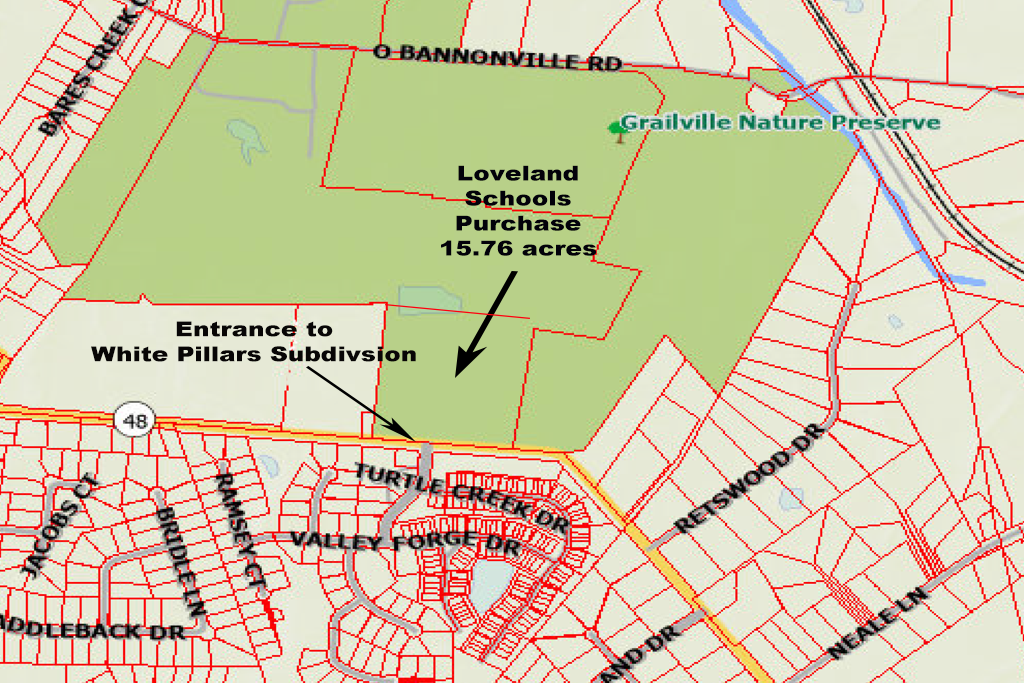
Loveland, Ohio – Here are three maps of the 15.76 acres of land on US-48 near Founders Drive the Loveland City School District voted to purchase from the Cardinal Land Conservancy on March 19. The purchase price is approximately $1.5 million. The property will be purchased using “financing” leveraging the fund balance in the District’s Permanent Improvement.
Loveland, Ohio – Loveland High School Head Women’s Soccer coach Todd Kelly is stepping down.
The Soccer program announced on X, “We say goodbye to a legend and could not be more thankful for the impact Coach Kelly has made on this program and the Loveland soccer community. Retiring after 29 years, he set the standard and gave us so many moments to celebrate. You will be missed, but forever a Tiger!”
Pending Board of Education Approval, Craig Chimiel will lead the Women’s Soccer Program.
Photo Shayne Lyons @Loveland_AsstAD
Kelly has numerous District championships and Eastern Cincinnati Conference titles under his belt.
In 2017, Coach Kelly led the Tigers to a State Div I Championship and were runners-up in 2015.
Follow the link below to the Loveland Magazine story with still photos and video.
Colleen “Jelly” Swift hoists the state champion trophy (Loveland Magazine file photo)


 The traffic flow is further strained by the Loveland Bike Trail crossing where any pedestrian or bicycle can stop the flow of traffic. Add to that, is the traffic stops as vehicles attempt a left turn onto Railroad Avenue.







 HOW TO GET INVOLVED