Tag: ohio

  • FREE Ultimate Wash Today for Veterans at Mike’s

    FREE Ultimate Wash Today for Veterans at Mike’s

    Loveland, Ohio – Stop by any of Mike’s 39 locations for your FREE Ultimate Wash on Veterans Day, November 11. Here is the deal:

    THANK YOU FOR SERVING

    On Veterans Day, November 11, Mike’s honors all Veterans and Active Military with a FREE Ultimate Wash ($22 value).

    It’s just a small way for the Mike’s Carwash family to show our gratitude for your service. Each of you personifies the meaning of FREEDOM!

    Stop by any of Mike’s 39 LOCATIONS for your FREE Ultimate Wash on Veterans Day, November 11.

    All locations are open daily 7-9.

    LOVELAND
    9675 E Kemper Rd.
    Loveland, OH 45140
    FIELDS ERTEL
    4898 Fields Ertel Rd.
    Cincinnati, OH 45249
    MILFORD
    5800 Montclair Blvd
    Milford, OH 45150
  • Local Election Results November 7, 2023

    Local Election Results November 7, 2023

    Loveland, Ohio – Here are the un-official results from the General Election held on November 7, 2023. Loveland School Board and Loveland City Council results are a tabulation from Clermont, Hamilton, and Warren Counties. The School District and the City are within all three counties.

    Most recent update: Wednesday, November 8, 2023 at 5:15 PM

    (100% Precincts Reporting)

    ________________

    Loveland City Council

    (3 to be elected) Vote tally from all counties.

    Kathy Bailey – 2843

    √ Andy Bateman – 2468

    √ Brian Goodyear – 2224

    Deidre Hazelbaker – 1741


    Loveland School Board

    (2 to be elected) Vote tally from all counties.

       Linda J. Cecil – 3776

    √  Christina Jeranek – 6047

    √  Lynn M. Mangan – 6684

    Robert Vanover – 2421

    Ohio ISSUE 1

    A Self-Executing Amendment Relating to Abortion and Other Reproductive Decisions Proposed Constitutional Amendment

    √  YES – 2,186,962 (56.62%)

    NO – 1,675,728 (43.38%)

    Ohio ISSUE 2

    To Commercialize, Regulate, Legalize, and Tax the Adult Use of Cannabis Proposed Law

    √  YES – 2,183,734 (56.97%)

    NO – 1,649,339 (43.03%)

    Statewide results are unofficial until the Secretary of State certifies the results of the election. The official canvass is completed approximately three weeks after the conclusion of the election, and results will be released following the office’s review of the county boards of elections’ official canvass reports.

    Hamilton County Issue 19

    PROPOSED TAX LEVY (RENEWAL) (zoological park services)

    √  For – 190,508 (68.50%)

    Against- 87,600 (31.50%)

    Hamilton County Issue 20

    PROPOSED TAX LEVY (RENEWAL AND INCREASE) HAMILTON COUNTY (Cincinnati and Hamilton County Public Library)

    √  For – 156,797 (56.53%)

    Against – 120,590 (43.47%)

    Warren County Career Center

    √  For – 31,628 (51.68%)

    Against – 29,571 (48.32%)

    Milford Exempted Village School District Tax Levy

    For – 7,955 (42.73 %)

    √  Against – 10,663 (57.27%)

    Clermont County Board of Developmental Disabilities Tax Levy

    √  For – 40,840 (56.48)

    Against – 31,475 (43.52%)

  • Columbia Road – Davis Road – Myrtle Ave. Roundabout Project

    Columbia Road – Davis Road – Myrtle Ave. Roundabout Project

    Deerfield Township, Ohio – The Warren County Engineer’s Office is about to begin the construction of a roundabout at the intersection of Columbia Road, Davis Road, and Myrtle Avenue. The project will also include a “profile” adjustment, drainage improvements, a large culvert replacement, and a sidewalk along Columbia Road in the project area.

    Three homes on the southwest corner of the Columbia Road and Myrtle Avenue intersection will be demolished. The demolition must take place prior to the utility relocation.

    Utility Relocation: December 2023 to Spring 2024

    Right-Of-Way Complete: Spring 2024

    Roundabout Construction: Summer 2024

    The project cost estimate is $2,200,000 and the project construction will be funded by the Warren County Engineer and Deerfield Township.

  • FirstEnergy seeks $1.4 billion more from Ohio ratepayers. Watchdog objects

    FirstEnergy seeks $1.4 billion more from Ohio ratepayers. Watchdog objects

    Getty Images

    BY:  Ohio Capital Journal

    Even as its former top executives await possible criminal charges for gouging ratepayers, Akron-based FirstEnergy is seeking a $1.4 billion rate increase. The state’s consumer watchdog objects, saying the company’s profits are higher than normal and that it should use a more thorough process to prove that it really needs the money.

    The electric utility is seeking the increase as part of its “electric security plan” — a package of investments aimed at improving reliability and efficiency.

    “Our plan will build on the significant enhancements we’ve made to reinforce the grid against progressively stronger storms,” a statement on the FirstEnergy website quotes Patricia Mullin, acting president of FirstEnergy’s Ohio operations, as saying. “We’re committed to making the right investments to ensure a modern, more reliable grid while also keeping electric bills affordable, and we will continue working with interested stakeholders to ensure an open and thorough review of our proposal.”

    However, the state’s consumer watchdog, the Ohio Consumers’ Counsel, is objecting to the proposal on several grounds. For example, OCC contends that FirstEnergy is already highly profitable and shouldn’t need more of the ratepayers money.

    That’s not true, FirstEnergy spokeswoman Lauren Siburkis said in an email.

    “Our most recently disclosed return on equity in Ohio (shared during the third quarter earnings call) shows that to be 6.2%, which is much lower than the recently authorized returns in Ohio of 9.5% to 10%,” she said.

    However, the company, which operates in several states, appears to be doing quite well overall. In its third-quarter financial disclosure, the company reported that so far this year its per share earnings are up 17% over last year.

    OCC, the consumer watchdog, also objects to the mechanism through which FirstEnergy is seeking the rate hike. It’s asking the Public Utilities Commission of Ohio to approve “riders” in a process that isn’t as rigorous as a full “rate case.” That’s when regulators and others scrutinize many aspects of a utility’s operations and its books to ensure they’re not unfairly profiting from the monopolies that regulators grant them.

    FirstEnergy has abused the rider process in the past. As part of a huge bribery and money-laundering scandal, the company in 2019 received a “decoupling rider” that allowed the company to bill customers tens of millions to cover shortfalls in revenue.

    Chuck Jones, then the company’s CEO, boasted to investors that the rider made the company “somewhat recession-proof.” The rider was repealed after FirstEnergy admitted wrongdoing in a deferred prosecution agreement.

    OCC is arguing that going through a full rate case is the best way to prevent mischief and inefficiency.

    “Reliance on an excessive number of trackers, riders and other special regulatory mechanisms decreases a utility’s incentive to manage all aspects of its business in a cost-effective manner,” regulatory auditing expert Greg Meyer said in testimony to the regulatory commission that OCC sent to reporters last week. “FirstEnergy seems to ignore the fact that under its proposed (electric security plan), FirstEnergy’s consumers will be required to pay for energy-efficiency programs, demand-response programs and the multiple riders, in between base rate cases. These charges will add costs to the bills of FirstEnergy’s consumers without a review of all the relevant factors of FirstEnergy’s operations.”

    Asked why FirstEnergy didn’t seek the rate hike as part of a full rate case, Siburkis seemed to say FirstEnergy couldn’t wait six months, when one is scheduled.

    “The settlement we reached in 2021, which received the PUCO’s approval and delivered $306 million in customer benefits, explicitly requires us to submit the rate case in May 2024, no sooner and no later,” she said.

    That settlement was a deferred prosecution agreement in which FirstEnergy ponied up $230 million in fines and said that in addition to other bad acts, Jones and former Vice President Michael Dowling bribed Sam Randazzo — Gov. Mike DeWine’s first appointment to chair the PUCO — $4.3 million in exchange for regulatory and other favors.

    Jones and Dowling were fired and Randazzo resigned. All three men deny wrongdoing, but in court filings, they have acknowledged that federal law enforcement is investigating their conduct.

    Four already have been convicted over their participation in the scandal. Former Ohio House Speaker Larry Householder in June was sentenced to 20 years in federal prison for shepherding the corrupt utility bailout through the legislature. Former state GOP Chairman Matt Borges was sentenced to five years for playing a lesser role, and two others have pleaded guilty and await sentencing.

    For six weeks early this year, federal prosecutors put on a mountain of evidence in a Cincinnati courtroom about how FirstEnergy spent more than $60 million helping Householder bribe and bully through a $1.3 billion utility bailout that benefitted that company far more than any other utility.

    Now it’s asking for almost the same amount without going through the most rigorous regulatory scrutiny. Asked why ratepayers should trust FirstEnergy’s claims, Siburkis said the company has turned the page on its ugly recent past.

    “FirstEnergy has accepted responsibility for its actions related to House Bill 6 and has taken significant steps to put past issues behind us,” she said. “Today, we are a different, stronger company with a sound strategy and focused on a bright future.”


    Marty Schladen
    MARTY SCHLADEN

    Marty Schladen has been a reporter for decades, working in Indiana, Texas and other places before returning to his native Ohio to work at The Columbus Dispatch in 2017. He’s won state and national journalism awards for investigations into utility regulation, public corruption, the environment, prescription drug spending and other matters.

    MORE FROM AUTHOR

  • Ohio lawmakers want to make daylight saving time permanent

    Ohio lawmakers want to make daylight saving time permanent

    Getty Image

    The Ohio House State and Local Government Committee passed a resolution Tuesday that urges Congress to enact the Sunshine Uniformity Act of 2023, which would permanently switch Ohio to Daylight Saving Time.

    BY:  Ohio Capital Journal

    The clocks will fall back this weekend, but Ohio lawmakers are urging Congress to get rid of the time change and make daylight saving time permanent.

    The Ohio House State and Local Government Committee passed a resolution Tuesday that urges Congress to enact the Sunshine Uniformity Act of 2023, which would permanently switch Ohio to daylight saving time.

    House Concurrent Resolution 7, which now goes to the House floor, would not immediately change Ohio clocks. Only federal law could make that change. State Reps. Rodney Creech, R-West Alexandria, and Bob Peterson, R-Sabina introduced the resolution in May.

    “We simply no longer need the biannual tradition of changing our clocks,”  Creech said in his testimony.

    State Reps. Latyna Humprhey, D-Columbus, and Daniel Troy, D-Willowick, voted against the resolution.

    Clocks are set for daylight saving time from March to November. Permanent daylight savings would bump the sunrise and sunset back an hour, leading to darker mornings and lighter nights. The proposed resolution would push the sunrise back until almost 9 a.m. and the sunset until after 6 p.m. on the shortest day of the year.

    Ohioans simply don’t want to change their clocks, he said when speaking to the Ohio House State and Local Government Committee in May.

    “Switching to daylight saving time would increase the hours of sunlight in the evenings year round and could help combat some mental health issues from the darker winter evenings we currently have on standard time,” Creech said. “…When you’ve been at work all day, the last thing you want to do is open that door to go outside and it’s dark out,” Creech said. “It gives a little more daylight at the end of the day.”

    Young students walking to school or waiting for the bus in the morning in the dark is a concern with making daylight saving time permanent. But Peterson addressed that issue in his sponsor testimony and suggested school districts adjust their start times during the winter months.

    Rep. Marilyn John, R-Richland County, said she was one of the first students on the school bus in the morning.

    “It was dark every morning I got on the school bus, so from a safety standpoint I made it all the way through school and we had no issues,” she said.

    Standard Time

    President of Save Standard Time Jay Pea wants to make standard time permanent, what he refers to as God’s time.

    He argues standard time would not improve people’s health and safety, but it would also benefit schoolchildren, farmers and commuters.

    “(Daylight saving time) would deprive morning light needed by farmers, construction workers, and other outdoor laborers,” Pea wrote in his testimony. “It would disrupt worship for those who pray daily at sunrise. It would increase the need for morning heat and evening air conditioning in homes.”

    History of daylight savings

    Daylight saving time started in the United States as a way to save fuel during World War I and a year-round Daylight Saving Time policy was adopted during World War II.

    The Uniform Time Act in 1966 requires the country use daylight saving time, but gives states the option to opt out and remain on standard time year-round. Arizona, Hawaii and five U.S. territories have already adopted permanent standard time.

    The United States previously tried year-round daylight saving time in 1974 as a way to reduce the country’s energy consumption during the energy crisis, but the switch only lasted eight months before going back to standard time in the fall.

    Follow OCJ Reporter Megan Henry on Twitter.


    Megan Henry
    MEGAN HENRY

    Megan Henry is a reporter for the Ohio Capital Journal and has spent the past five years reporting in Ohio on various topics including education, healthcare, business and crime. She previously worked at The Columbus Dispatch, part of the USA Today Network.

    MORE FROM AUTHOR

  • If abortion measure fails, Ohioans on parole and probation could face graver restrictions

    If abortion measure fails, Ohioans on parole and probation could face graver restrictions

    For thousands of people under state supervision who face limits on their freedom to travel, a future without abortion rights could mean a choice “between health care and liberty.”

    BY:  

    When Ohioans go to the polls on Nov. 7 to vote on Issue 1, which would establish a constitutional right to abortion in the state, they will do so having already experienced what severe restrictions on abortion access look like.

    After the Supreme Court removed federal protections for abortion in its Dobbs decision last June, the state’s attorney general immediately petitioned a federal judge to enforce a 2019 law that banned abortion after six weeks. It included an exception for when the mother’s life is at stake but not for instances of rape or incest. The six-week ban remained in effect for nearly three months, until a lawsuit brought by abortion providers led to an indefinite stay of the law. During that 82-day window, the costs associated with abortion care skyrocketed, and people were forced to cross state lines to seek the procedure—including, notoriously, a ten-year-old whose heartbreaking story became embroiled in a national controversy. 

    The Abortion Fund of Ohio jumped into action, helping hundreds of Ohioans seek care elsewhere, in states where they could access abortion. The fund helped reroute them “out of state to be able to get the care that they were entitled to,” recalls Maggie Scotece, a doula and attorney who is currently serving as the organization’s interim executive director. (The organization is part of the coalition supporting Issue 1.)

    But the organization, which helps people fund and access abortions, also received confused calls from, or on behalf of, people who could not travel: minors in group homes or juvenile justice centers, and people on probation and parole.

    Hundreds of thousands of Ohioans have their freedom of movement greatly restricted because they’re under some form of state supervision, and the stakes of Issue 1 may be highest for them.

    According to data collected by the Prison Policy Initiative, Ohio ranks fourth nationally in the share of its population under any form of carceral control (this includes prisons, jails, probation, and parole), behind Idaho, Arkansas, and Georgia—“and that’s largely due to the massive number of people who are on probation,” said Wanda Bertram, a communications strategist at PPI.

    A 2023 PPI report found that, at any time, some 191,000 state residents are on probation, which is an alternative to incarceration that comes with heavy restrictions and surveillance, while around 22,000 more are on parole, a form of post-release supervision that in Ohio is baked into prison sentences. “Probation is handed out like candy here in Hamilton County,” said Sean Vicente, a Hamilton County (Cincinnati) public defender.

    Abortion is currently legal up to 21 weeks and 6 days in Ohio because of the legal dispute over the 2019 law. Meanwhile the campaign to pass Issue 1 and permanently codify abortion rights has raised millions of dollars and gained traction; recent polls have found that between 52 percent and 58 percent of prospective voters supported the measure.

    But Issue 1 has also garnered many opponents, especially among the state’s Republican leadership. If it fails, Scotece predicted that the state supreme court, which has a GOP majority, will “almost certainly” reinstate the six-week ban.

    If that happens, people on probation or parole would face an impossible choice, Vicente said“Do I travel out of state to take care of that health care issue and possibly get locked up? Or do I have an unplanned pregnancy? Do I have an ectopic pregnancy? Do I have a child via rape?”

    “It’s going to put poor people in a really tough spot where they have to truly decide between health care and liberty,” he told Bolts.

    Parole and probation are often conceived of as alternatives to incarceration that can keep more people in their communities. But both systems are so full of delays, requirements, and catch-22s that Vicente says he and his fellow public defenders often fear they are “setting up our clients to fail.”

    “The restrictions that are placed on people—and the ban on traveling out of state, which is common, is one of these—are often so onerous that people say that they would just rather be in prison,” Bertram said.

    At any given time, 39 percent of the people in Ohio’s jails are being detained because they violated the terms of their probation or parole, according to the PPI report. That’s double the national average of 20 percent.

    “I can understand it being that high, because anything can get you [violated],” said Malika Kidd, who helps women navigate reentry as the Program Director for the Lutheran Metropolitan Ministry in Akron and Cleveland“You can be around another person that was in prison and you can get violated, just in the same area with them. Somebody in your family can have a gun with them and you’re around it, you could be violated. If you get a traffic ticket and don’t let them know, you can be violated.”

    Though women are generally proportionally underrepresented within the criminal legal system, they are far more likely to be on probation than under other forms of correctional control, and both parole and probation compliance present special challenges for women. “Women are more likely to be the primary caregivers of children—all of the requirements that supervision imposes that get in the way of childcare are going to fall harder on women,” Bertram said. “That takes a huge amount of time out of your day.” There are fewer reentry programs serving women, who are more likely to be homeless upon their release—another factor that would make it difficult to comply with the often onerous requirements that accompany supervision. “It’s a combination of a lot of stuff that can overwhelm anybody,” said Kidd.

    Kidd is, in many ways, the face of women’s reentry in Ohio, but her experience with parole there illustrates how arbitrary and burdensome the system can be—and how it restricts people’s freedom of movement. In 2001, after police found cocaine in her car on a trip from Chicago to Cleveland, she was sent to prison for drug trafficking. Her son was just three years old; by the time she got out, he was 17.

    As part of her mandatory minimum sentence, Kidd was given a 5-year “post-control release” term. From the beginning, she says, her parole officer seemed biased against her and determined to make her life harder. The woman upped her risk level, calling her a flight risk because she is originally from Illinois, and forced her to wear an ankle bracelet, which tracked her movements and prohibited her from leaving Ohio. Some people on probation cannot even leave their county of residence without permission.

    Moreover, Kidd says her parole officer exacerbated the already toilsome process with delays in processing her requests for permission to travel outside the state. Ironically, some of Kidd’s requests were in order to speak at conferences about the myriad barriers associated with reentry. Her work was understanding about her spending hours at the parole office waiting for approval, she said, but “I’m sure there were plenty of other employers that weren’t as flexible as mine,” which could leave people to choose between potentially losing their job—a violation of parole conditions in itself—or giving up on the travel request.

    If abortion were once again banned in Ohio, people on parole or probation might be forced to choose between lying to the officer or judge assigned to their case about their reasons for travel, going out of state without permission, or being honest. The former two options both carry the risk of violating your supervision terms and being reincarcerated.

    Vicente said he couldn’t fathom any judges signing off on a travel request that involved going out of state to do something that would violate the law if done within state borders.

    He said, “You’re petitioning the court to say, ‘Hey, I know this is against the law here in Ohio, but I need my client to travel up to Michigan to get the care she needs. Judge, are you willing to allow her to travel out of state to break the law that’s currently in effect in Ohio?’ That I doubt any judges would sign off on.”

    “I think there’s gonna be a lot of frenzied and panicked calls, and it’s gonna put us in a tight spot as well,” Vicente added, wondering how his fellow public defenders would begin to advise their clients under such circumstances.

    An unexpected and unwanted pregnancy—and the stress, exhaustion, physical and hormonal changes, and increased number of health check-ups that tend to follow in its wake—could also make it harder to comply with the terms of supervision. “The medical needs are going to take priority over visiting the probation officer, which puts you in further jeopardy,” Vicente said. More people being forced to carry to term a pregnancy that they don’t want and can’t handle could ultimately contribute to the already high percentage of Ohioans jailed for violating the terms of their supervision.

    With polling showing public support for abortion and other reproductive health rights, Ohio Governor Mike DeWine recently proposed to soften Ohio’s six-week ban if it were to come back into effect and to allow some exceptions, for example in the case of rape. But other Republican lawmakers have already resisted such changes.

    Republicans also tried to change the rules of the initiative process in Ohio to undermine this abortion rights measure, which was petitioned onto the ballot by organizers who collected hundreds of thousands of signatures. GOP lawmakers called a special election in August asking voters to raise the threshold to pass a constitutional amendment from a simple majority to 60 percent. That proposal failed by a wide margin in August.

    The GOP’s proposal to change the rules in August was also called Issue 1, which has led to concerns of voter confusion as abortion rights proponents who fought the summer’s Issue 1 are now campaigning for people to approve the new Issue 1.

    If Issue 1 fails, it would add to the existing barriers that preventOhioans from accessing reproductive care.

    Even though abortion is currently legal up to nearly 22 weeks on paper, access is extremely limited in practice, Scotece of the Abortion Fund of Ohio said. While Ohio had more than 40 clinics in the ‘90s, anti-abortion groups have been “incredibly successful” in seeking to close them down, she told Bolts. The state now has just nine clinics concentrated in Ohio’s big cities, only three of which perform abortions up until the legal limit.

    Meanwhile, Scotece stressed that Ohio is already one of the leading states for the criminalization of pregnancy, whether it be arrests and prosecutions for self-managed abortions or the use of narcotics while pregnant. A 2021 study done by researchers at the University of California San Francisco that surveyed people who searched for abortion care via Google showed that intensifying abortion restrictions in the U.S. have led to an increase in self-managed abortions, including by attempting to hurt oneself or ingest drugs and alcohol—which would likely further expose people to criminalization.

    “We already know that folks who are low income, folks that are already under state scrutiny, whether it’s for parole or the family policing system, are more likely to be criminalized for pregnancy and pregnancy outcomes regardless of whether or not that is related to abortion,” Scotece said.

    Codifying the right to abortion and other reproductive care, and creating legal protections for people and organizations that assist others in accessing abortions, won’t solve all of these problems, Scotece added. But it will create a new test that Ohio courts must use when considering the constitutionality of a law that restricts or criminalizes abortion in the state.

    Kidd is not actively campaigning for Issue 1, but told Bolts she supports it. “It’s a woman’s right and I think these good old boys should not decide what a woman should do with her body.”

    This article was originally published in Bolts Magazine.

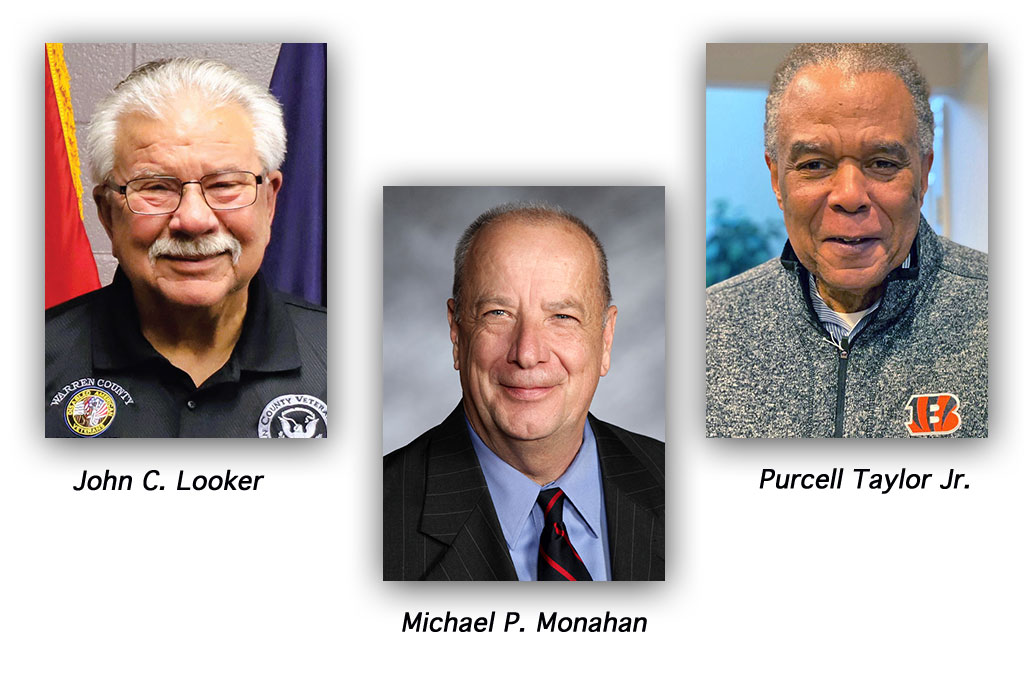
  • Michael P. Monahan, John C. Looker, and Purcell Taylor Jr. will enter Ohio Veterans Hall of Fame

    Michael P. Monahan, John C. Looker, and Purcell Taylor Jr. will enter Ohio Veterans Hall of Fame

    by David Miller

    Loveland, Ohio – The Ohio Veterans Hall of Fame recognizes the post-military efforts of outstanding Ohioans who contribute to their communities.

    The Department has announced the members of the Ohio Veterans Hall of Fame Class of 2023 including veterans from Clermont and Warren Counties.

    Michael P. Monahan, who served in the Army and is from Milford in Clermont County, John C. Looker, who lives in Mason and served in the Army, and Purcell Taylor Jr., who served in the Marine Corps and from Warren County will represent the Class of 2023.

    The members of the Ohio Veterans Hall of Fame are honored in a permanent display at the Vern Riffe Center for Government and the Arts in Columbus. All 20 members of the class will be honored during the annual Induction Ceremony at 10 AM on Nov. 9 at the Fawcett Center for Tomorrow on the campus of The Ohio State University.

    Michael P. Monahan

    Hall of Fame Class of 2023
    Clermont County
    United States Army Veteran

    Mike Monahan served as a Scout Dog Handler for the 46th Scout Dog Platoon in Tay Ninh, Vietnam. His partner’s name was Chico. Chico alerted Mike to a trip wire attached to explosives, saving Mike’s life and the lives of others who were on patrol. Following Vietnam, Mike spent 22 years in construction, working as a pipe fitter, becoming a local leader in the industry. Mike was then led to a different calling after attending a life-changing personal growth seminar. He began volunteering with Life Success Seminars to help others achieve their full potential through many avenues, including personal responsibility, trust, forgiveness and leadership. Mike’s volunteerism led to a career change, where he served 19 years as executive director of Life Success Seminars. Mike currently uses his experience as a personal coach to mentor leaders and business owners. After a trip to Vietnam in 2005, he wrote and published the first of his six books, From the Jungle to the Boardroom, and became No. 1 on the Inc. Magazine Best Sellers list. The return trip from Vietnam gave Mike a peace he had long sought, but he still felt indebted to the partner who saved his life. Mike’s latest book, Chico’s Promise, gave him healing and he created a 501(c)(3) non-profit organization by the same name whose mission is to support selected no-kill shelters by paying adoption fees to save 50,000 dogs to honor Chico’s memory. An accomplished leader, speaker, author and activist, Mike enters the Ohio Veterans Hall of Fame at age 75.

    John C. Looker

    Hall of Fame Class of 2023
    Warren County
    United States Army Veteran

    While John Looker’s dedication to his country was demonstrated by his military service during the Vietnam War, it is his post-military altruism that truly makes him stand out. John has dedicated his life to bettering his nation, his community and the lives of his veteran peers. John has done this through his involvement in a wide variety of committees, advocacy groups and other veteran service organizations, all of which provide insight into his leadership and selflessness. John is an American Legion National Committee Member for Veterans Employment and Education, a position that focuses on improving veterans’ education, employment and economic well-being. John has held many leadership roles in the Commanders Action Network for the Disabled Veterans of America, where his advocacy helped protect the benefits of ill and injured veterans and their families. In addition, John is involved in many other veterans’ advocacy groups including the City of Mason’s Veterans Board of Affairs, where he leads veterans’ activities and programs throughout the Mason community; the Warren County Veterans Court Mentorship program; and the Warren County Suicide Prevention Coalition. John has been instrumental in many community initiatives in Mason, a snapshot of which includes its dedication as a Purple Heart City; developing the Military Banner Program; organizing the POW/MIA Memorial; and orchestrating annual Memorial Day and Veterans Day parades and ceremonies. John’s spirit of generosity and commitment is recognized by his local community, but his efforts impact and extend to others far beyond his city. We recognize John as he enters the Ohio Veterans Hall of Fame at age 75.


    Purcell Taylor Jr.

    Hall of Fame Class of 2023
    Warren County
    United States Marine Corps Veteran

    Purcell Taylor Jr., an enlisted Marine Corps veteran, returned to Cincinnati following his military service in Vietnam, Cuba and Quemoy-Matsu. In the face of adversity, he persisted, and became a lifelong researcher and educator. Purcell has earned prominence as a teacher, counselor, administrator, author and expert forensic psychologist. Throughout his career, he served numerous visiting and adjunct faculty positions in the southwest Ohio region. As a strong leader in his field, Purcell serves as a positive role model for inner city African American youth. Notably, in 1977, Purcell became the first African American at the University of Cincinnati to receive a doctorate degree in school psychology. He has authored or edited 10 books as well as dozens of articles published in professional journals and magazines. Purcell currently serves as Professor Emeritus of Psychology in Forensic Practice at UC. This title is awarded only to faculty members who have demonstrated outstanding service and achievements in teaching, researching and leadership. In addition to his teaching credentials, he has served as an administrator and supervisor in mental health and has served as an expert witness in court hearings, evaluations and trials. Local leaders appointed Purcell to the Cincinnati Human Relations Commission and Hamilton County Task Force for Community Safety. His enduring legacy as founder of the DECLARE Therapy Center, Inc. in Cincinnati treats people suffering from chemical dependency. Among many other community engagements, and professional memberships, he volunteers his time as a peer mentor for the Warren County Veterans Treatment Court. Undeniably worthy of recognition, Purcell enters the Ohio Veterans Hall of Fame at age 82.

    The 20-person class will be honored with medals by Ohio Department of Veterans Services (ODVS) Director Deborah Ashenhurst. Many other distinguished guests, including previously inducted Hall of Famers, will be present.

    Twenty inductees will be honored for their accomplishments and achievements at the 32nd annual Induction Ceremony in November for their post-military service. This class represents 14 Ohio counties and four branches of the U.S. Armed Forces. Ohio Governor Mike DeWine recently approved the entire class and will offer his congratulations during the official ceremony.

    Living members of the class range in age from 56 to 86 and there are three posthumous inductees: Korean War veteran and globally successful entrepreneur Donald Keehan; famed Tuskegee Airman and Brigadier General Charles McGee; and Iraq War veteran Heath Robinson, who is credited as the inspiration for the PACT Act that provides funding and health care access for veterans who are dealing with illness related to toxic exposure.

    The 2023 Ohio Veterans Hall of Fame Inductees are:

    Darrin M. Adams, Army, Shelby
    Michael L. Close, Army, Delaware
    Carolyn L. Destefani, Air Force, Greene
    Terry Johnson, Air Force, Montgomery
    Donald J. Keehan*, Marine Corps, Lorain
    Paul M. Keller, Air Force/Air Force Reserve, Greene
    John C. Looker, Army, Warren
    Lester L. Lyles, Air Force, Montgomery
    Laurel A. Mayer, Air Force, Greene
    Charles E. McGee*, Army Air Corps/Air Force, Cuyahoga
    Timothy E. McMonagle, Army, Cuyahoga
    Michael P. Monahan, Army, Clermont
    Jack L. Patterson, Army, Coshocton
    Heath M. Robinson*, Ohio Army National Guard, Fairfield
    Stephen L. Rosedale, Army, Hamilton
    David L. Scheffler, Army, Fairfield
    Donald P. Scott, Army Reserve, Mahoning
    Purcell Taylor Jr., Marine Corps, Warren
    Bruce K. Thorn, Army, Franklin
    Robert A. Walkup, Navy/Army Reserve, Williams

    Posthumous Award

    “Each year I am awed by the contributions of our nominees to their communities, to the State of Ohio, and to the nation,” said ODVS Director Deborah Ashenhurst. “They represent the powerful difference Ohio’s veterans make to the heart of it all.”

    The Class of 2023 joins 954 Ohio veterans who have been inducted since 1992 and represent all eras, branches of service, and walks of life.

    The Ohio Veterans Hall of Fame was established in 1992 by former Gov. George Voinovich to recognize the post-military achievements of outstanding Ohio veterans. Charter members of the Hall of Fame’s Class of 1992 include the six Ohio veterans who were elected President of the United States as well as Medal of Honor recipients from Ohio. Honorees of the past 31 years include astronauts, entrepreneurs, volunteers, community leaders, safety officers, veteran advocates, and government officials.

    The Ohio Department of Veterans Services, on behalf of and in collaboration with the Ohio Veterans Hall of Fame Executive Committee, administers the Ohio Veterans Hall of Fame. Comprised of 13 veteran volunteers, the Executive Committee members serve as advisors to the Hall of Fame, and their primary purpose is to select up to 20 honorees annually.

  • COMING SOON: Habitat for Humanity ReStore in Loveland

    COMING SOON: Habitat for Humanity ReStore in Loveland

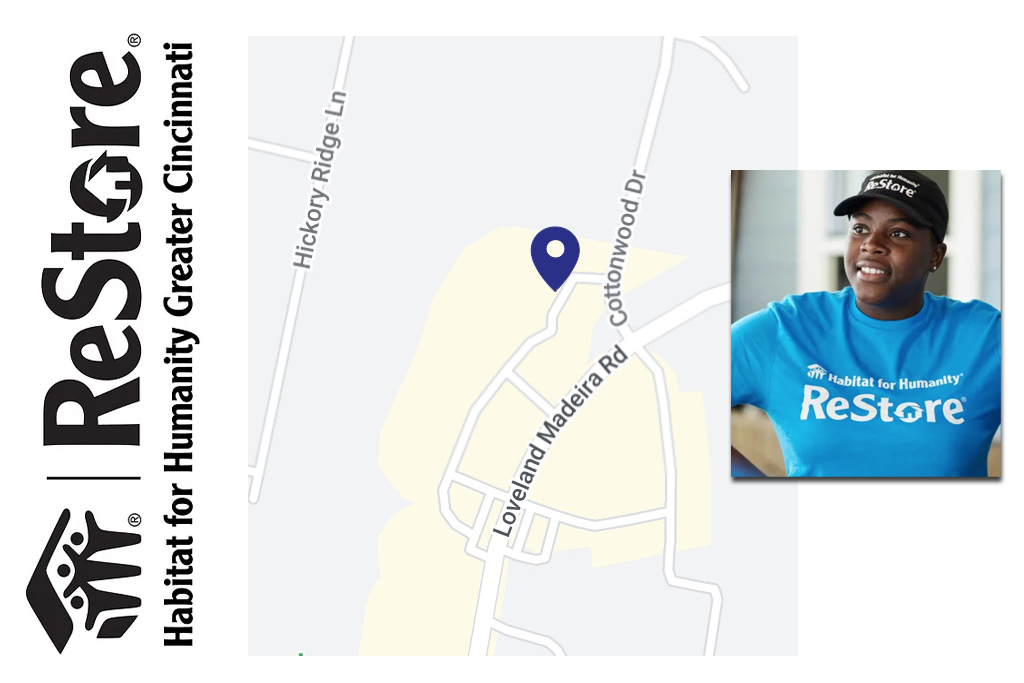
    Loveland, Ohio – Habitat for Humanity Greater Cincinnati has just announced its 6th location will be in Loveland at 10681 Loveland Madeira Road. This is the site of the former Receptions event center. An opening date has not been announced.



    Habitat homebuyers build their home alongside volunteers and purchase their home with an affordable mortgage. The Veteran Repair Program makes critical home repairs and accessibility modifications possible for veterans and military-connected families.

    Rock the Block is a one-day event that supports the home repair and neighborhood beautification goals of the communities where Habitat builds homes. Rock the Block brings together over 300 volunteers to complete about 30 projects with homeowners and community partners including exterior home repairs, trash removal, landscaping, park maintenance, painting, and more

    The Habitat for Humanity ReStores sell new and used household items and building materials. By donating or shopping at the Habitat for Humanity ReStore, you help create affordable homeownership opportunities in our community.

    DONATION PICKUP


  • Virtual Tour of the Art and Decor of The White House

    Virtual Tour of the Art and Decor of The White House

    Loveland, Ohio – Here is the virtual tour of the White House you’ve been hearing about.

    First Lady Jill Biden launched a new virtual tour of the White House. The White House, Google Maps, and Google Arts & Culture have collaborated to create a new virtual tour of the White House using Google Street View technology. It will live on WhiteHouse.gov/VirtualTour, as well as on both Google Maps and the Google Arts & Culture page.

    “Since day one of this Administration, the First Lady has worked to open the doors of the White House wider and wider, using technology and digital platforms to bring the “People’s House” to as many people as possible. Not everyone can make the trip to Washington, DC to tour the White House, so she is bringing the White House to them. We especially hope teachers everywhere can use this in their classrooms as a new interactive tool to educate their students about the White House – both past and present,” said Elizabeth Alexander, Communications Director for the First Lady.

    This is the first Google virtual tour of the White House with available Spanish translation and audio captions for those with disabilities. Audio captions were narrated by White House Social Secretary Carlos Elizondo. The opening video on the virtual tour of the President and the First Lady is the same video that plays at the White House Visitors Center, so those who come for the virtual tour will get the same experience and message as those who come in-person.

    TAKE THE TOUR

    ____________________

    The holiday theme at the White House in 2004 was “A Season of Merriment and Melody” which featured holiday songs that have been favorites for generations of Americans.

    These photos were taken by Loveland Magazine Managing Editor David Miller during a Holiday Open House during the administration of George W. Bush in 2004.

    All photos © DAVID MILLER/Loveland Magazine 2004.


  • LaRose uses state newsletter to promote Senate campaign

    LaRose uses state newsletter to promote Senate campaign

    Loveland, Ohio via Ohio Capital Journal

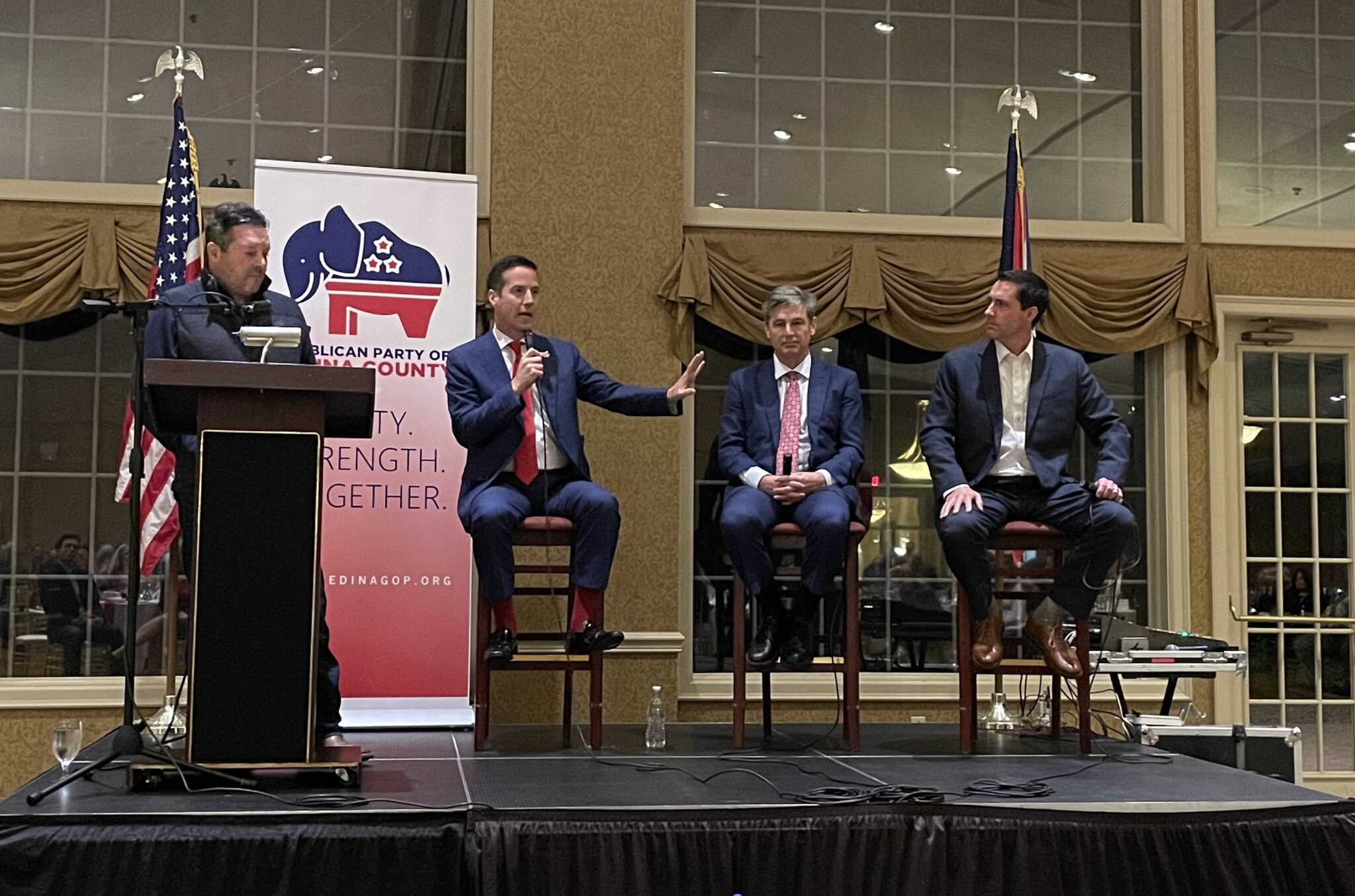
    Left to right, forum moderator, Bloomdaddy from WTAM Radio, Bernie Moreno, Sen. Matt Dolan, R-Chagrin Falls, OH Sec. of State Frank LaRose. (Photo by Nick Evans, Ohio Capital Journal.)

    BY:  

    Frustrated former employees told the press that in their office “everything revolved around” Secretary of State Frank LaRose’s run for U.S. Senate. Now LaRose appears to be using the taxpayer-funded office’s newsletter in that campaign.

    As a state official, LaRose isn’t supposed to use state resources in his political campaigns. And as secretary of state, it’s especially important that he wall off politics from his official duties because LaRose administers elections — including those in which he’s running.

    However, as he seeks the Republican nomination to take on Democratic U.S. Sen. Sherrod Brown next year, LaRose has become an increasingly hard-edged partisan as he seeks the endorsement of former President Donald Trump, who continues to attack the underpinnings of democracy itself.

    In addition to ignoring state Supreme Court orders regarding partisan gerrymandering, LaRose championed a measure in an August special election that would have made it almost impossible for citizen-initiated amendments to make it onto the ballot, much less into the Ohio Constitution. The measure failed badly, but LaRose and his allies tried to force it through ahead of a vote on an amendment protecting abortion rights that takes place a week from tomorrow, and an anti-gerrymandering amendment that is expected to be on the ballot in 2024.

    Substantial ethical questions also have arisen as LaRose juggles his senatorial ambitions with his duty to conduct secure, fair elections in Ohio.

    The Columbus Dispatch earlier this month reported on high staff turnover, with one former staffer telling the paper “Everything (in the secretary of state’s office) revolved around the Senate run.”

    Last month, NBC4 reported that LaRose was moving the secretary of state’s office from its location of 20 years and into a building where he had also registered his campaign with the Federal Election Commission.

    Then earlier this month, the Capital Journal reported that LaRose almost certainly recorded a campaign interview with election denier and conspiracy theorist Steve Bannon from the same building.

    LaRose refuses to answer questions about such activities. But he claims to have no campaign headquarters while he soon will be running his state office from the building where his campaign is registered.

    If LaRose uses people working on state time or uses state offices in his campaign, it could violate a section of Ohio law prohibiting the use of state resources to raise funds for a campaign.

    Paul Nick, executive director of the Ohio Ethics Commission, this week said his agency needs to know more about LaRose’s new office arrangements.

    “The Commission doesn’t pass judgment without first gathering and evaluating all of the facts,” Nick said in an email. “Determining whether a public official’s agency may relocate to the same office building as that official’s campaign headquarters requires deeper inquiry. We would encourage the Secretary of State to contact us for guidance on such questions.”

    Philip Richter, executive director of the Ohio Elections Commission, said his agency would have to be asked in order to look into the matter.

    “The only way for the Commission to take action on the statute is if an affidavit of complaint is filed with the Commission that would start the Commission’s processes on addressing those types of allegations,” Richter said in an email Thursday.  “The Commission cannot simply commence an investigation without the filing of a complaint.”

    Now LaRose appears to have used his office’s newsletter to promote his campaign.

    The Oct. 20 edition of the Secretary of State’s “Week in Review” offers updates about the coming election and it notes that October is Domestic Violence Awareness Month. There are also blurbs about LaRose’s travels and activities during the week.

    But the newsletter also has an “In Case You Missed It” section. It contained the top of an article by The Marietta Times that prominently featured the political message LaRose wants to convey to people who will be voting in the GOP Senate Primary.

    The second paragraph said LaRose “also confirmed his credentials as a conservative Republican who wants to make Sherrod Brown a former U.S. Senator, not the incumbent. Brown has been Ohio’s senior U.S. senator for a dozen years and the only Democratic statewide elected official in Ohio, with the exception of a few nonpartisan judicial races.”

    The newsletter then linked to the full story, which quoted LaRose bashing Brown for allegedly helping to make the country “weaker, poorer and less secure,” and the Biden administration over the economy and border security.

    LaRose’s office didn’t respond to questions about the newsletter.

    The state auditor is responsible for policing misuse of state resources. A spokesman said Thursday that a law regarding politicking in taxpayer-funded newsletters applies only to officials with “political subdivisions” such as counties. The law prohibits them from publishing a newsletter that “supports or opposes the nomination or election of a candidate for public office.”


    Marty Schladen
    MARTY SCHLADEN

    Marty Schladen has been a reporter for decades, working in Indiana, Texas and other places before returning to his native Ohio to work at The Columbus Dispatch in 2017. He’s won state and national journalism awards for investigations into utility regulation, public corruption, the environment, prescription drug spending and other matters.

    MORE FROM AUTHOR