Tag: Roe v. Wade

  • Ohio abortion rights groups merge and set sights for amendment on November ballot

    Ohio abortion rights groups merge and set sights for amendment on November ballot

    Getty Image

    BY: SUSAN TEBBEN – Ohio Capital Journal

    Two groups who had already committed to separate efforts to get reproductive rights in the hands of Ohio voters have now merged and set an end goal: abortion access on the November ballot.

    Ohioans for Reproductive Freedom and Ohio Physicians for Reproductive Rights announced Thursday that they are joining together to “file language with the Ohio Attorney General to place a citizen-initiated constitutional amendment to restore and protect reproductive rights and abortion access on the November 2023 statewide general election ballot.”

    “This grassroots initiative – by and for the people of Ohio – is foundational to ensuring access to abortion and the right to bodily autonomy, not only for ourselves, but for generations to come,” said Kellie Copeland, executive director of Pro-Choice Ohio and member of Ohioans for Reproductive Freedom, said in the announcement.

    The groups said the constitutional amendment will look similar to a Michigan amendment which voters approved in November 2022.

    After the amendment is drafted and reviewed by the state Attorney General and Ohio Ballot Board, the groups plan to circulate petitions to place the issue on the ballot.

    Rumblings of a constitutional amendment have been floating for months now, spurred on by the Dobbs v. Jackson Women’s Health Organization case, in which the U.S. Supreme Court overturned decades old nationwide rights to abortion nationwide in Roe v. Wade.

    Placing the measure on the 2023 ballot was called a “moral imperative” which “offers the best prospects for success,” according to Dr. Lauren Beene, executive director of the OPRR.

    “The lives and health of Ohioans have been at risk since Roe was overturned,” Beene said in a statement. “That is why we must seize the earliest possible opportunity to ensure that doctors and patients, rather than politicians and the government, are empowered to make decisions about pregnancy, contraception and abortion.”

    The move comes as some abortion rights advocates are ramping up legal efforts to protect patients and physicians seeking abortion care or advice, along with a battle involving Ohio’s Attorney General Dave Yost to keep abortion pills from being distributed through the mail or at national pharmacies, and a new study that showed abortion clinics find it more and more difficult to comply with laws on the subject because of bureaucratic discretion.

    The ballot measure might have another issue if in-fighting within the state’s Republican caucus continues. One side of the caucus is promoting the controversial legislation that would raise the threshold to approve constitutional amendments, while House Speaker Jason Stephens didn’t list it as one of the priority bills he and his faction unveiled on Wednesday.

    Republicans on both sides of the aisle have expressed interest in legislative prohibitions to abortion since the downfall of Roe, and both sides are awaiting the resolution of a court case under which a six-week abortion ban is paused indefinitely as appeals go through.


  • Ohio abortion rights advocates prepare for more legal fights

    Ohio abortion rights advocates prepare for more legal fights

    Getty Image

    BY: SUSAN TEBBEN – Ohio Capital Journal


    With the abortion landscape changing in Ohio and around the country, one abortion rights group is building up its legal effort for those seeking or providing abortion care.

    Abortion Fund of Ohio recently announced the launch its Legal Access Program, through a partnership with law firm Friedman, Nemecek, & Long, L.L.C., that will provide free legal assistance and referrals to attorneys “for Ohioans facing criminal and civil penalties for reproductive health care.”

    “We’re building out a network of lawyers who will take on these cases, so that we have more lawyer power,” said Morgan Mitchell, legal access fellow for AFO.

    Mitchell said cases are popping up in the state where confusion and lack of knowledge of where abortion and procedures that could be connected to abortion (like miscarriage, medically called a “spontaneous abortion”) legally stands.

    In one such case, covered by NPR, a woman wondered if the six-week abortion ban was causing doctors to hesitate in treating her heavy bleeding at a Painesville emergency room, bleeding that had already been confirmed to be caused by a miscarriage.

    Currently, abortion is still legal up to 22 weeks in Ohio after a state court blocked a six-week ban indefinitely, but national fights against receiving medication abortion through the mail and a discussion of abortion bans on the federal level have advocates worried that reproductive healthcare may be fought for in the courts rather than medical clinics and hospitals.

    Ohio’s own Attorney General Dave Yost signed onto a letter with more than a dozen other state attorneys general warning CVS and Walgreens against distributing medication to induce abortions through the mail due to various state laws that prohibit it. Ohio’s law, passed in 2022, forbids abortion medication to be provided to patients without a physician present.

    A recent study published in the Journal of Health Politics, Policy and Law, co-authored by researchers from three Ohio universities, said even the regulations that are in effect involve working with state administration, and the bureaucracy has created an system where regulations “have become exceedingly difficult to comply with” for abortion providers.

    Even medical students in the state are left nervous and confused about what restrictions may mean for their education and future career, should they decide to provide reproductive healthcare.

    One group the legal access program is particularly hoping to help is minors who may want to use a legal method to get around needing the consent of their parents to obtain an abortion, a method called judicial bypass.

    According to the Ohio Supreme Court, a minor seeking consent to have an abortion can petition the juvenile court in their county of residence or in a border county, with the help of a court-appointed attorney if they don’t have one.

    A judge then determines if a minor “is sufficiently mature and well enough informed to decide intelligently whether to consent to an abortion or that the abortion is in the best interests of the (minor).”

    Judicial bypass has been on the books since before the fall of Roe v. Wade, but the legal access program is only including that as part of the legal options so that Ohioans know all their legal rights.

    “We’re just trying to let people know this exists, we’re not telling people to have an abortion, or telling their parents they’re bad parents,” Mitchell said.

    With the six-week ban (and other abortion bans that were attempted but not passed by Ohio legislators in previous years) not including any exceptions for rape or incest, and no standards for sex education present in the state, Mitchell said it’s frustrating that a minor has to go to court to prove maturity and intelligence, when some legislators would force them to bear a child, no matter their age.

    “It’s really an attack on bodily autonomy and it’s scary to see it be separated from health care, because this is a decision you’re making for your body,” Mitchell said. “We want to be able to give anyone regardless of age the opportunity to pursue whatever they want with their bodies.”

    The six-week ban pause is being appealed by the state.

  • New doctors want abortion training, struggle under regulations

    New doctors want abortion training, struggle under regulations

    BY: SUSAN TEBBEN – Ohio Capital Journal

    Students and in-training physicians say they are looking to other states for medical abortion education they need to do their jobs and finish their degrees. Medical schools, meanwhile, are doing what they can to link the students with that training.

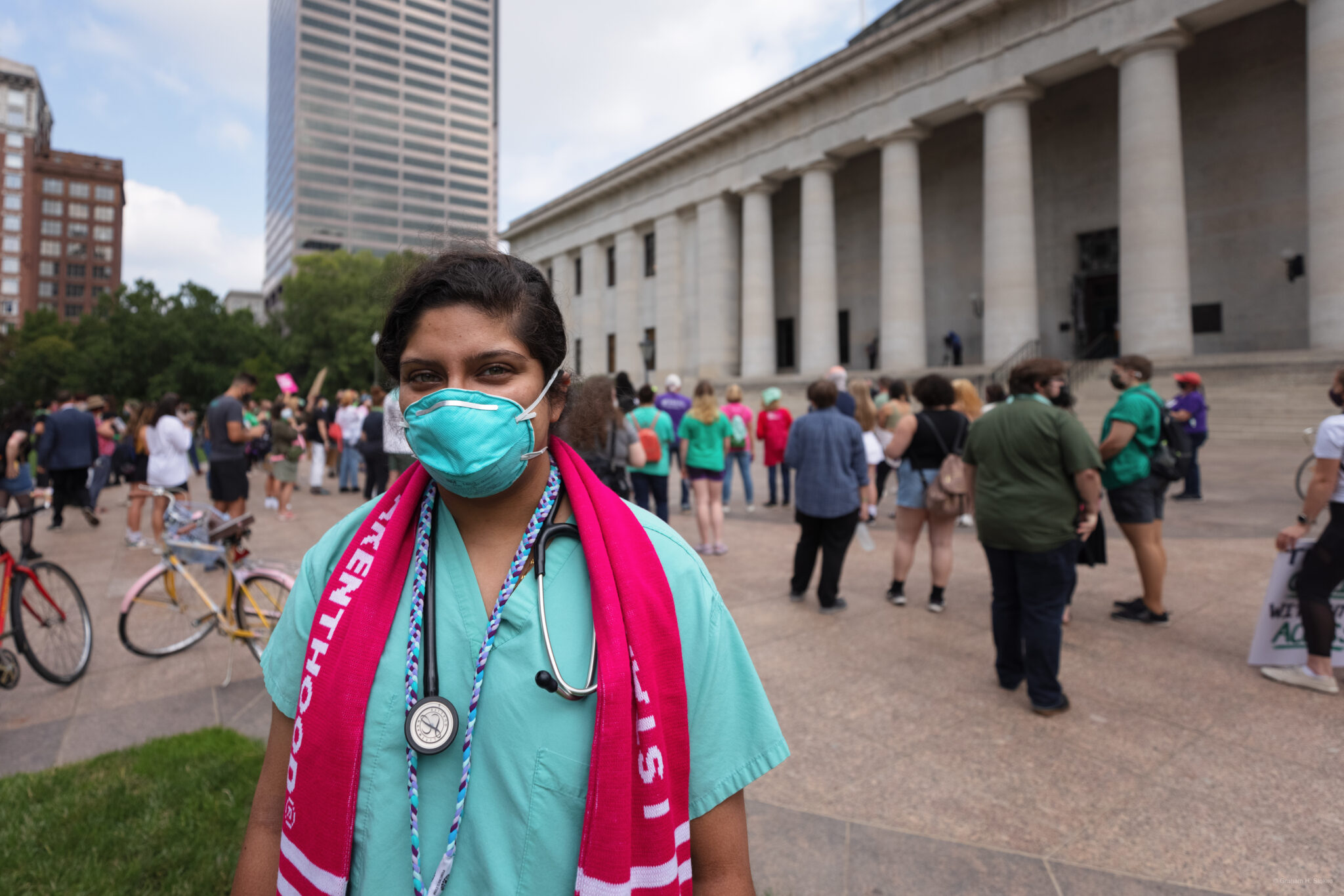
    Shreekari Tadepalli began her final year in medical school at Ohio State thinking of how she would specialize, as most medical student do in their last year.

    “I knew I wanted to provide reproductive health care,” Tadepalli said.

    A Michigan native, she came to Ohio State specifically to go to medical school. She plans to stay, because she wants to fight for her patients as an OB/GYN, and advocate for abortion care as a normal part of medical care.

    “To me, medicine is like the ultimate form of advocacy, and I think physicians should be advocates for care,” Tadepalli told the OCJ.

    When the pandemic hit, Tadepalli headed back home to live with her parents, but she looked for ways to help. She heard a private clinic in Detroit needed staff, and she had the skills she needed to be of service there. While helping staff the clinic, she talked to the OB/GYNs about why they chose their profession, helping bolster her desire to become one herself.

    Tadepalli was upset, though unsurprised, when the U.S. Supreme Court overturned Roe v. Wade, sending the issue of abortion legality back to the states. Hours after the decision was made, she watched Ohio move forward with an abortion ban after six-weeks gestation, which had previously been tied up in court for years.

    “I think there was a certain amount of frustration that we’ve allowed ourselves to get to this point, when every poll says a majority of Americans support (legalized abortion),” Tadepalli said.

    June poll from Suffolk University and the Cincinnati Enquirer showed 53% of Ohio voters supported abortion rights, and the Pew Research Center has consistently shown majorities of Ohioans as supporters of legal abortion.

    In August, the ACLU announced their own survey of Ohio voters, showing an 82% support rate for abortion legality in some form.

    A new set of complications arose for Tadepalli, in that she now had to figure out how to get training in abortion procedures and services after six-weeks, something that’s growing hard to find in a state where one clinic has already announced its closure due to regulations surrounding it.

    “One of the hardest things right now is because so few of these laws are based in medical practice,” Tadepalli said, “it has implications beyond the level of elective abortions.”

     COLUMBUS, OH — AUGUST 31: The Ohio State University College of Medicine Richard L. Meiling Hall, August 31, 2022, on the campus of Ohio State University in Columbus, Ohio. (Photo by Graham Stokes for the Ohio Capital Journal / Republish photo only with original story)

    Ohio State said in a statement to the OCJ that they are working with professional organizations and medical groups as changes to training are reviewed nationwide.

    “We intend to continue offering the full spectrum of training in reproductive care for those residents who do not opt out of the requirement,” Mary Fiorino, spokesperson for the Ohio State University Wexner Medical Center. “In order to ensure we are meeting national accreditation standards on this topic, we are exploring ways for our trainees to do that outside of the state of Ohio.”

    Another of Ohio’s medical schools, Ohio University’s Heritage College of Osteopathic Medicine, also said they are keeping up with recommendations from medical groups and monitoring judicial and legislative changes in the state, but they still plan to train their students.

    “We believe it is important to continue to offer training related to the full spectrum of women’s health care so that students have the knowledge and skills they need to practice medicine and provide the best medical care possible in any community they choose to live and work,” Lisa Forster,  HCOM’s chief communication officer, said in a statement.

    Tadepalli also has residencies to consider, and while she wants to stay in Ohio, she said the questions she’s asking medical schools have changed somewhat.

    “If you’re in a state like Ohio, what is your guarantee that I can be the full physician that I should be?”

    Medical resident Alexandra Stiles is wondering the same thing as she reaches her last year of training before becoming a OB/GYN generalist. 

    A Virginia native who was a first-generation college student, Stiles said she wants to be able to develop medical relationships with her patients, from their first child to any other reproductive needs on down the line.

    That includes abortion care, which she emphasizes means more than just pregnancy termination, but the fetal anomalies that are fatal, or when a pregnant person’s water breaks, meaning the fetus won’t be able to make it to term.

    “People don’t really see that side of things,” Stiles said. “That in putting up that barrier to access, you’re not just preventing a woman from getting an abortion, you’re preventing us from caring for those people.”

    The fact that legislation is being used to regulate medical care, specifically for those that can become pregnant, makes Stiles want to “use my advocacy hat” for her patients, even if it means looking to other states and nonprofits for help.

    She worried recruitment to Ohio’s medical schools will be reduced without the ability to learn certain procedures, which would be a shame because she came to Ohio specifically because of the reputation Ohio State’s medical school had.

    In the future, Stiles hopes those making laws and deciding on the health care landscape in the state defer to the experts, the patients, and the doctors who work with them.

    “I’m not going to NASA and telling them how to fly their astronauts, and NASA wouldn’t come to me and tell me how to perform a hysterectomy,” Stiles said.

    Tadepalli sees politics as a “zero-sum game,” but advocacy for her patients as the way to effect change in their lives.

    “One of the things that helps me stay sane is reminding myself that most Americans are not behind a total ban on all abortions,” Tadepalli said. “I think it reminds me that there is some common ground on such a charged issue.”

    Follow OCJ Reporter Susan Tebben on Twitter.

  • Judge holds off on Ohio abortion ban decision

    Judge holds off on Ohio abortion ban decision

    BY: SUSAN TEBBEN – Ohio Capital Journal

    A Hamilton County judge said he needs more time to decide whether or not to put a pause on a six-week abortion ban in Ohio.

    Judge Christian Jenkins said in a Thursday hearing that he would not issue an opinion because the court still has questions about how the case moves forward.

    “The court would like to investigate the threshold issue of jurisdiction and the effect of the (state) supreme court still not having dismissed the case,” Jenkins said on Thursday.

    Abortion clinics moved the case from the Ohio Supreme Court to the Hamilton County Common Pleas Court because, as they said in court documents, waiting for the state’s highest court to make a decision was allowing “irreparable harm to the clinics and the patients” throughout the state.

    Representatives for the state argued that the jurisdiction remains with the Ohio Supreme Court, since no dismissal order has been issued.

    Temporary restraining orders on laws typically work to stop a law from taking effect, leaving previous standards in place. In this case, the ACLU and Planned Parenthood want to bring back the previous law that banned abortion beyond 22 weeks gestation.

    Attorneys for the state countered the request for a temporary restraining order, saying the six-week abortion ban has been effective law for two months, making it the “status quo” in the state.

    Law challengers are hoping for a quicker resolution in the lower court, starting with Thursday’s hearing on abortion supporters’ request for a temporary restraining order to be put on Senate Bill 23, the 2019 law that banned abortion in Ohio after six weeks gestation.

    “Every day that SB 23 remains in effect, more and more pregnant women are forced either to attempt to travel hundreds of miles out of state to access care, or to continue pregnancies against their will, or to attempt to self-induce abortion outside the medical system, all at risk to the physical, mental and emotional wellbeing,” said Jessie Hill, lead counsel for the ACLU of Ohio, told the judge.

    The clinics are not only challenging the law as a violation of the right to abortion, but also as an equal protection violation, based on the fact that the law only applies to those who can become pregnant.

    The law had been tied up in courts since it was passed by the General Assembly in 2019, and signed by Gov. Mike DeWine. But the U.S. Supreme Court’s ruling in Dobbs v. Jackson this year, overturning the 1970s decision in Roe v. Wade legalizing abortion nationwide, opened the door for the state to implement the law. At the request of state Attorney General Dave Yost, a federal court dissolved the injunction keeping the state law from being enforced just hours after Roe v. Wade was overturned.

    Doctorsmedical studentsabortion rights advocatesreligious leaders and even some of Ohio’s major cities have spoken out about the dangers they say could come from the near-total abortion ban, including unintended consequences that may impact Ohioans in the middle of wanted pregnancies.

    Jenkins said a decision on the temporary restraining order would be released “as quickly as the court is able.”

    Follow OCJ Reporter Susan Tebben on Twitter.

  • Pro-abortion groups seek to bypass supreme court in abortion ban lawsuit

    Pro-abortion groups seek to bypass supreme court in abortion ban lawsuit

    BY: SUSAN TEBBEN – Ohio Capital Journal

    The groups hoping to put a stop to a six-week abortion ban in Ohio say the Ohio Supreme Court’s inaction forced them to move on to a different court.

    In a recent court filing, the ACLU of Ohio and Planned Parenthood asked the state’s highest court to dismiss their case in favor of separate litigation in the Hamilton County Court of Common Pleas.

    The court filing claimed Planned Parenthood has suffered “irreparable harm which has increased to become intolerable” since filing the lawsuit at the end of June, causing a separate lawsuit to request “immediate relief from the ongoing irreparable harm to the clinics and their patients.”

    Jessie Hill, counsel of record representing the ACLU of Ohio and Planned Parenthood, said the move was spurred by not only the overturning of Roe v. Wade by the U.S. Supreme Court, but also the impending closure of Women’s Med Center of Dayton and clinics in surrounding states like Kentucky and Indiana.

    “Ohioans’ access to abortion care is becoming more and more restricted,” Hill told the OCJ. “Since the situation is so dire and the Ohio Supreme Court has not acted, we needed to pursue an alternative path that could lead to quicker relief.”

    The new lawsuit has been filed, with the added support of law firm WilmerHale, challenging the constitutionality of Senate Bill 23, the bill that is called the “Heartbeat Bill” by supporters, because the bill’s ban hinges on the presence of fetal “cardiac activity.”

    Opponents of the law say banning abortion at six weeks could close out options to women before they are aware of the pregnancy and have unintended consequences for other fetal medicine fields, such as in-vitro fertilization and miscarriages. Meanwhile, Ohio doctors are describing scenes of almost unimaginable anguish — and increased risks to women and girls who become pregnant, in the months since the Dobbs decision.

    “Ohioans deserve the information and resources to make the best decisions for themselves and their families,” said Lauren Blauvelt-Copelin, Vice President of Government Affairs and Public Advocacy at Planned Parenthood of Greater Ohio, in a statement announcing the Hamilton County Court case.

    The groups have already asked the court to implement a temporary restraining order, keeping the state from enforcing the law until the court case has been resolved. The Ohio Supreme Court had previously rejected a request to do so in the case in their court.

    The court has not scheduled any hearings on the matter, or made any decisions on the temporary restraining order.

    Follow OCJ Reporter Susan Tebben on Twitter.

  • Jewish congregations mount legal challenges to state abortion bans

    Jewish congregations mount legal challenges to state abortion bans

    Members of the Jewish community have spoken out against abortion bans in Ohio, saying it infringes on their religious freedom. Photo by Morgan Trau, WEWS.

    BY: ARIANA FIGUEROA – Ohio Capital Journal

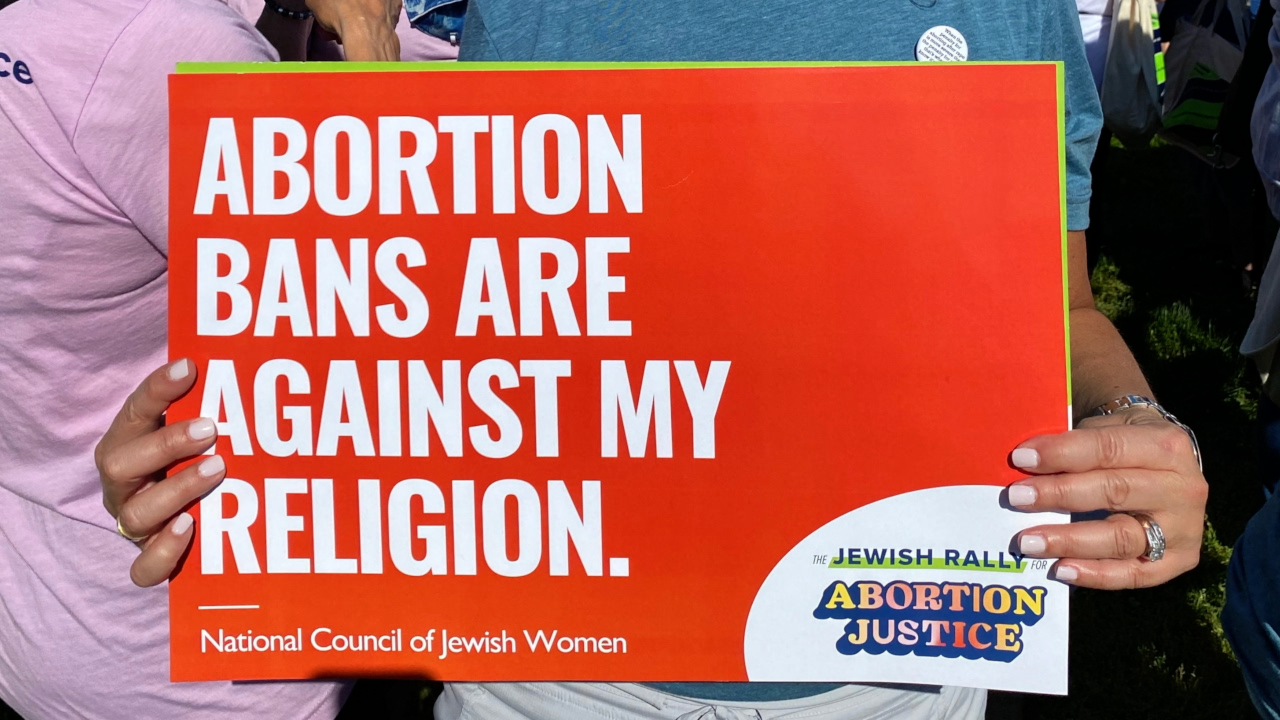
    WASHINGTON — Thousands of years of Jewish scripture make it clear that access to abortion care is a requirement of Jewish law and practice, according to Rabbi Karen Bogard.

    “We preserve life at all costs,” she said in an interview with States Newsroom. “But there is a difference between that which is living, and that which is not yet living.”

    Bogard is a rabbi at Central Reform Congregation in St. Louis, which is in the  progressive tradition of Reform Judaism. She said that whether it’s the Torah — the first five books of the Old Testament in the Hebrew Bible — or the Talmud — the central text of Rabbinic Judaism and the primary source of Jewish religious law and theology — those pieces of Jewish literature “really draw the difference between life and potential life.”

    But with the fall of Roe v. Wade in late June, some members of the Jewish faith as well as other religious groups find their beliefs in deep conflict with state laws that ban or greatly restrict abortion — especially if a pregnant patient’s life is in danger.

    Since the Supreme Court’s Dobbs v. Jackson Women’s Health Organization decision, states now are permitted to craft their own laws regarding abortion, and in Bogard’s home state of Missouri, the procedure is banned.

    “Our congregants are heartbroken,” she said. “It’s really violating to be told what you can and can’t do with your own self.”

    Legal challenges are resulting. The enactment of state laws that ban or restrict access to abortion has already sparked a lawsuit in Florida from a liberal Jewish congregation in the Sunshine State. In Ohio, another liberal Jewish congregation is joining the American Civil Liberties Union in a lawsuit against the state’s six-week abortion ban.

    A coalition of three dozen rabbis also filed a brief on a separate lawsuit in the Buckeye State, where physicians are challenging the new abortion law in the Supreme Court of Ohio.

    Similar lawsuits are anticipated, not only from liberal Jewish congregations, but other religious groups as well.

    There’s currently a lawsuit in the U.S. District Court for the Southern District of Texas Houston Division filed by the Satanic Temple — not to be confused with the Church of Satan — on behalf of a member who argues the state’s abortion ban violates that temple member’s religious beliefs allowing access to an abortion ritual.

    The ritual involves members repeating verses in a mirror to affirm body autonomy and repel any guilt, shame or discomfort that can surface when undergoing an abortion.

    “There’s going to be a wave of religious freedom lawsuits,” Rabbi Daniel Bogard, who’s married to Rabbi Karen Bogard, said. “We’re going to find out if this country really believes in religious freedom, or whether this country believes in the freedom of a small minority to impose its will on the rest of us.”

    But it’s unclear if these religious-based lawsuits challenging state abortion laws can win in court.

    “We’re very much in the wild, wild west of abortion law and religious law,” said Candace Bond-Theriault, the director of racial justice policy and strategy at Columbia Law School’s Center for Gender and Sexuality Law.

    Jewish law

    According to Jewish law, a fetus is not considered a full human being and the biblical foundation for this is found in Exodus 21:22 of the Torah, Rabbi Daniel Bogard said.

    The translation reads: “When men fight, and one of them pushes a pregnant woman and a miscarriage results, but no other damage ensues, the one responsible shall be fined according as the woman’s husband may exact from him, the payment to be based on reckoning. But if other damage ensues, the penalty shall be life for life, eye for eye, tooth for tooth, hand for hand, foot for foot, burn for burn, wound for wound, bruise for bruise.…”

    Rabbi Daniel Bogard said that the Jewish legal interpretation of these passages states that a fetus is not a person, because the miscarriage results in only monetary compensation, rather than the “life for life” punishment.

    There are several other passages in Jewish literature that make the distinction that the life of the person who is pregnant is prioritized.

    “If we’re going to live in a religiously free society, we are each allowed to interpret these verses on our own for our own traditions and a minority in this country can’t impose their conservative white Christian religiosity on the rest of us,” Rabbi Daniel Bogard said.

    The lawsuits challenging abortion laws are predominately filed by congregations that practice Reform Judaism, but Conservative Judaism also supports access to abortion.

    The question of access to abortion gets more restrictive when it comes to Orthodox Judaism, but access to the medical procedure isn’t barred, says Yedida Eisenstat, a fellow at the Center for the Study of Law and Religion at Emory University in Atlanta.

    “Abortion in Judaism absolutely does have a place, and within Jewish law, there absolutely is a place for abortion,” she said. “Judaism is not anti-abortion, like Christianity is, so it absolutely does make sense for Jewish congregations to be saying, ‘Hey, this is a violation of our religious rights.’”

    Eisenstat specializes in Jewish biblical interpretation and also works as an editorial associate at the Posen Library of Jewish Culture and Civilization.

    “Judaism doesn’t have one voice or one opinion or one ruling about everything,” she said, adding that every situation is different and “there’s all this other gray area,” when it comes to theoretical cases in Jewish law pertaining to abortion.

    And interpretations on abortion in Jewish law, or Halacha, vary across American Jewish denominations.

    “We use the theoretical cases to illuminate other cases — just like in American law — so there isn’t one blanket answer for every situation, every situation has its own nuances,” she said. “And again, that’s why this is a decision, a very personal decision, not one that the government should be making.”

    The Rabbinical Assembly, a major institution of Conservative Judaism, condemned the Supreme Court’s ruling in Dobbs.

    “Denying individuals access to the complete spectrum of reproductive healthcare, including contraception, abortion-inducing devices and medications, and abortions, among others, on religious grounds, deprives those who need medical care of their Constitutional right to religious freedom,” the organization said in a statement.

    Orthodox Judaism is typically more aligned with Christian conservative views on religious liberty issues, Eisenstat said, but differs on the belief that life begins at conception.

    Following the Dobbs decision, the Rabbinical Council of America and Agudath Israel, large organizations that represent Orthodox Jewish communities, urged states to consider exceptions to expand abortion access.

    “As the debate over abortion rights enters this new phase, we encourage states to craft policies that will simultaneously express the great value we place on life as well as protecting the rights to abortion when warranted by Jewish law,” the Rabbinical Council of America said in a statement.

    Florida lawsuits

    Rabbi Barry Silver is a self-proclaimed “rabbi-rouser.”

    He’s an attorney, a social activist, a former Democratic legislator in the Florida House of Representative and the leader of the Congregation L’Dor va-Dor, a synagogue practicing progressive Judaism in Palm Beach, Florida.

    Silver, along with three rabbis, a United Church of Christ reverend, a Unitarian Universalist minister, an Episcopal Church priest and a Buddhist lama, each have filed separate lawsuits challenging the state’s 15-week abortion ban that went into effect July 1. Those suits argue that the new abortion law violates Florida’s state constitution, as well as U.S. constitutional protections for freedom of speech and religion.

    The suits also claim the law creates “substantial” burdens on individuals’ ability to practice their faith, and creates a “potential” burden on religious leaders to advise their members. Because of the vagueness of the law, Silver said, rabbis or other religious leaders who counsel their clergy members on abortion could face criminal charges.

    “It criminalizes the practice of Judaism as well as all the other religions that are not aligned with fundamentalist Christianity, which is pretty much everybody,” Silver said of Florida’s new abortion law.

    Silver’s Congregation L’Dor Va-Dor also filed a separate suit in June in state court that argues the 15-week abortion ban violates the right to privacy guaranteed by the Florida state constitution.

    “For Jews, all life is precious and thus the decision to bring new life into the world is not taken lightly or determined by state fiat,” according to the lawsuit. “As such, the act prohibits Jewish women from practicing their faith free of government intrusion and this violates their privacy rights and religious freedom.”

    Silver said he still plans to counsel his congregants who need or are considering abortion care, despite Florida’s new law.

    “We do the right thing and if they want to come after us, they can make our day, we’re not going to stop saying what we need to say. We’re not gonna stop practicing Jewish law,” he said.

    A spokesperson with GOP Gov. Ron DeSantis’ office did not answer questions from States Newsroom about whether the newly passed abortion law prevents Jewish people from practicing their faith.

    “Governor DeSantis is pro-life, and we believe HB 5 will ultimately withstand all legal challenges,” a spokesperson with DeSantis’ office wrote in an email to States Newsroom, referring to the abortion law. “The struggle for life is not over.”

    Congregation L’Dor Va-Dor’s suit claiming Florida’s constitution has an explicit right to privacy is “fairly straightforward, and would generally be unremarkable,” said Caroline Mala Corbin, a law professor at the University of Miami School of Law.

    “Under the existing law, it’s a no-brainer challenge,” Corbin said.

    She added that the Florida Supreme Court has interpreted that language to cover abortion.

    “Except that, like the U.S. Supreme Court, the Florida Supreme Court has taken a sharp turn to the right, so just as you have the U.S. Supreme Court completely remake abortion law, it’s a possibility the Florida Supreme Court will as well,” she said.

    Corbin said the court could rule several ways in the congregation’s case.

    “They might argue, ‘We question your sincerity,’ which would be shocking given how deferential they are to other claims of religious liberty,” she said.

    The court could also rule that the congregation did not prove Florida’s abortion law created a substantial burden, or that even if the law prevents someone from practicing their religion, “the state has a compelling reason for its law, and therefore, the state must prevail,” she said.

    “So the state might respond, even if this does affect your ability to live your religious truth, the state has a compelling interest in saving lives and therefore the state still prevails,” Corbin said.

    Future cases

    Micah Schwartzman, the director of the University of Virginia School of Law’s Karsh Center for Law and Democracy, and the Hardy Cross Dillard professor of law, said lawsuits brought on behalf of a group of people, like the one from Silver’s congregation in Florida, rather than a particular individual, will have more procedural hurdles to prove the group has standing to sue under state and federal law.

    “I’m not terribly confident about these early lawsuits,” Schwartzman said.

    He pointed to the case in Texas, the one by the Satanic Temple, which the religious organization filed in federal court on behalf of one of its members, and said he expects to see similar cases.

    “I think in the future, we’re going to see cases that are brought on behalf of particular individuals who are burdened by abortion restrictions or prohibitions,” he said. “And those types (of cases) will have a stronger chance of surviving the preliminary stages of litigation.”

    Schwartzman said there’s also the question of religious exemptions, particularly in states that have enacted trigger law bans or near total bans on abortion, and whether those laws impose a burden on people trying to practice their religion.

    State abortion laws are going to have some exemptions for abortion, he said, such as in cases of rape and incest and to protect the life and health of the mother.

    “And in those circumstances, courts are going to face the question if these laws have certain secular exceptions, why shouldn’t they also grant exceptions on religious grounds?” he said. “And I think that will be the structure of many challenges that we will see in the future.”

    Elizabeth Sepper, a religious liberty, health law and equality scholar at the University of Texas School of Law, said that over the last couple of decades the Supreme Court has “reduced the establishment clause to rubble,” which under the First Amendment prohibits the government from establishing a religion.

    When Roe v. Wade was initially issued, Congress passed the Hyde Amendment, which prohibits the use of federal funds to cover the cost of abortions, with some limited exceptions.

    Sepper said Congress’ decision to pass a restriction related to abortion in the case of the Hyde Amendment, is an example of “an establishment of religion because when legislators pass abortion bans that say ‘Well, human beings come into life at the moment of conception,’ that’s a doctrine — is a theological stance — that’s rooted in a particular religious faith, and we all know religious faith that is.”

    “I think some large segment of the population on both sides of the abortion issue understands (that) to be the truth, which is that many abortion bans require religious reasoning,” Sepper said.


  • Republicans in Congress shy away from campaigning on national abortion platform

    Republicans in Congress shy away from campaigning on national abortion platform

    BY: JENNIFER SHUTT – Ohio Capital Journal

    WASHINGTON — Republicans, hoping to flip control of Congress in the November elections, appear to have decided against campaigning on a unified abortion platform that would specify exactly what conservatives plan to do if given control of the U.S. House and Senate.

    Yet Republicans in Congress have written dozens of proposals that, if passed, would restrict abortion nationwide. GOP lawmakers this session have introduced more than 153 abortion-related bills that party leaders could point to as evidence of what Republicans would try to pass on the national level if they trounce Democrats at the polls.

    They include legislation that would define life as beginning at the moment of fertilization, prohibit insurance coverage for abortions, and make it a crime punishable to up to five years in prison for doctors who perform abortions after a heartbeat is detected, generally at about six weeks.

    But so far, Republicans have opted against a cohesive national campaign strategy on abortion, following the decision by the U.S. Supreme Court in June to overturn the landmark 1973 Roe v. Wade case. Many Senate Republicans are brushing aside questions about whether they would take up a nationwide abortion bill, citing as a hurdle the Senate filibuster that means bills need 60 votes to advance.

    Republican leaders are leaving it up to each House or Senate candidate to tout their own bills and views while the party wrestles with whether the matter should be left solely to state lawmakers or if Congress has a role to play.

    “It’s one thing that we are debating within the conference,” Iowa Republican Sen. Joni Ernst said of a nationwide abortion bill. “But at the same time, most of us do believe that the Dobbs decision was the right decision, and it’s returning that authority to our state and local governments. That’s our system of federalism.”

    Rep. Cathy McMorris Rodgers, a Washington Republican who has become one of her party’s leading voices on abortion, said during a brief interview the GOP won’t put forward a nationwide abortion policy ahead of the midterms.

    “We’re not in a position to move anything and the U.S. Supreme Court really sent it back to the states,” she said.

    But McMorris Rodgers didn’t rule out Republicans pushing nationwide legislation after the election if they regained control of Congress.

    “Not before the election,” she said, later adding “Well, yeah,” when asked if Republicans would put forward legislation afterward if they won.

    Back to the states

    Some Republicans have repeatedly said their opinion of the ruling on abortion in Dobbs v. Jackson Women’s Health Organization is that it sent the issue back to the states. Others have said it’s a topic for Congress to debate as well.

    The Supreme Court’s decision overturning the constitutional right to an abortion that stood for nearly 50 years said “the authority to regulate abortion is returned to the people and their elected representatives.”

    House GOP Whip Steve Scalise, a Louisiana Republican, said during a press conference in June shortly after the ruling was released that the decision “finally allows states and Congress to” pass new abortion legislation.

    But House GOP Leader Kevin McCarthy, of California, when asked what exactly Republicans would do on abortion, was vague, saying “we will continue to look wherever we can go to save as many lives as possible.”

    McCarthy did mention a bill from Missouri Republican Rep. Ann Wagner, though he didn’t say exactly which of her bills he’d bring up.

    Wagner is the primary sponsor of legislation that would require doctors to provide health care to “any infant born alive after an abortion” or attempted abortion. But she’s also sponsored several other bills related to abortion.

    Congress passed a similar bill, from Ohio GOP Rep. Steve Chabot, two decades ago. The legislation, titled the Born-Alive Infants Protection Act of 2002, passed the House on a voice vote and the Senate by unanimous consent.

    Senate Republicans insist there’s little chance of abortion legislation moving ahead.

    Florida GOP Sen. Rick Scott, chair of the National Republican Senatorial Committee, said he expects every candidate will decide how they want to talk about abortion.

    Fellow Floridian Sen. Marco Rubio, who is in a tight race against Democratic House Rep. Val Demings, said “Republicans will have different views about what restrictions and what the law should be.”

    “There are issues that are relevant to it that we can have a debate on here, but we have a filibuster that would make it impossible to pass a bill into law,” Rubio said.

    Louisiana Republican Sen. John Kennedy, who faces a relatively easy reelection campaign in the deeply red state, agreed with Rubio that any GOP abortion legislation is unlikely to move past the filibuster.

    “There aren’t 60 votes to do anything on the floor of the United States Senate with respect to abortion, pro abortion, anti-abortion, just anything to do with abortion,” Kennedy said.

    “What folks who feel strongly on both sides of the issues need to do now is go back to their states and, not put on a show, but put on the case,” he continued. “They’ve got to convince their state legislatures.”

    Retiring Missouri Sen. Roy Blunt said the issue belongs at the state, not the federal level.

    “I’ve always thought the best place to deal with this was at the state legislative level and that’s what I still think,” Blunt said.

    Senate Minority Leader Mitch McConnell, a Kentucky Republican, has said it’s “possible” that a GOP-controlled Congress could pass a nationwide abortion ban, though he’s sought to downplay the likelihood.

    McConnell said he would absolutely keep the chamber’s legislative filibuster in place, meaning the only way a nationwide abortion bill could get through is with a Republican super majority or some Democratic support.

    “We don’t want to break the Senate and that’s breaking the Senate,” he said of removing the filibuster.

    Referendum on abortion?

    The vastly different views on abortion as well as party leaders’ approach to campaigning on the issue has led Democrats to turn the midterm elections into something of a referendum on abortion.

    “This fall, Roe is on the ballot,” President Joe Biden said the day the Supreme Court released its decision overturning the 1973 Roe v. Wade ruling that established abortion as a constitutional right. “Personal freedoms are on the ballot. The right to privacy, liberty, equality, they’re all on the ballot.”

    Biden added that this November, voters “must elect more senators and representatives who will codify a woman’s right to choose into federal law once again, elect more state leaders to protect this right at the local level.”

    Tying the results of the midterm elections to abortion could be risky for Democrats, especially considering the president’s party almost always loses seats during the midterm elections.

    But the vast majority of Democrats have echoed Biden, telling voters that this November has become about more than who controls the U.S. House and Senate.

    “This is the future that MAGA Republicans clamor for; where women and same-sex couples are branded as second-class citizens,” Senate Majority Leader Chuck Schumer said on the floor. “If they succeed, they’ll take our country down a dark path from which there may be no return.”

    Democrats in Congress have voted on bills showing exactly how the party hopes to ensure patients throughout the country can terminate a pregnancy, or travel freely to states where the procedure remains legal.

    They’ve also brought up bills to ensure the right to same-sex and interracial marriages as well as the right to decide if and how to use contraception.

    Republican leaders, for the moment, don’t plan to say exactly which bills they’d vote on if they regain control of Congress.

    “They’re very nervous,” Virginia Democratic Sen. Tim Kaine told States Newsroom. “And their polling should tell them that, because we’re seeing this as dramatically affecting the polls in a number of our races.”

    Kaine played down the idea that making the midterms something of a referendum on abortion access could be problematic if Republicans regain control of Congress and then say the results show American voters want a nationwide abortion law.

    “Oh, they’re gonna do that anyway. Rock solid guarantee, no matter how the election goes,” Kaine said. “We’re very certain that’s coming and we’re trying to do all we can electorally and otherwise to head that off.”

    While Kaine expects voters will pick representatives based on more than abortion, he does expect the Supreme Court’s decision will drive voter turnout for Democrats.

    “And that’s why my Republican colleagues do not want to be talking about this or create any kind of a party plan that everybody’s supposed to go for,” he said.

    Senate Majority Whip Dick Durbin, an Illinois Democrat, criticized Republicans for not being clear with voters about how they plan to address abortion if given control of Congress.

    “The Republicans, if you’ll notice, have been surprisingly quiet, in my estimation, in reaction to Dobbs,” Durbin said. “I think they understand that these opinions may serve their base, but they don’t serve the party or the electorate at large.”

    Maryland Democratic Sen. Chris Van Hollen said the abortion ruling is one of a number of critical issues that voters will focus on this year, though he added, “it’s not the only issue on the ballot.”

    “I think the Dobbs decision is one of them, reproductive freedom is certainly a part of that. But it will also be a referendum on the kind of government you want, whether you want extremists like the MAGA crowd in the Congress,” Van Hollen said. “And it’s also going to be a debate on what we’re doing that’s within our power to reduce prices, like cutting the costs of prescription drugs.”

    Sen. Bob Casey, a Pennsylvania Democrat, said “most Americans know there’s a fork in the road and there’s basically two choices.”

    151 bills

    So far this Congress, Republicans have introduced 153 bills addressing abortion, with 94 in the House and 59 in the Senate.

    Wagner’s bill has the most co-sponsors with 203 GOP backers.

    Other legislation with broad Republican backing includes a bill from New Jersey Rep. Christopher Smith that would permanently prevent the federal government from spending money on abortions with an exception for rape, incest or the patient’s life. The legislation would also prohibit qualified health plans from including coverage for abortion, according to a summary.

    West Virginia Rep. Alexander Mooney sponsored a bill that would define life as beginning at “the moment of fertilization, cloning, or other moment at which an individual comes into being.” The bill clarifies that “nothing in this Act shall be construed to authorize the prosecution of any woman for the death of her unborn child.”

    And legislation from Pennsylvania Rep. Mike Kelly would make it a crime for health care providers to perform abortions after a heartbeat is detected, typically around six weeks. Doctors who perform the procedure would face up to five years in prison, a fine, or both if convicted.

    The bill creates an exception for a patient whose life is endangered by a physical diagnosis or injury, but not a “psychological or emotional” one.

  • DeWine re-ups anti-abortion lobbyist, COVID skeptic on Ohio Medical Board

    DeWine re-ups anti-abortion lobbyist, COVID skeptic on Ohio Medical Board

    Michael Gonidakis. Photo from the Ohio Medical Board.

    BY: JAKE ZUCKERMAN – Ohio Capital Journal

    Ohio Gov. Mike DeWine plans to re-appoint a longtime anti-abortion lobbyist and COVID-19 skeptic to the Ohio Medical Board, a spokesman said Monday.

    Michael Gonidakis, 48, a lawyer and president of Ohio Right to Life, will serve his third five-year term on the board, which is charged with licensing and disciplining physicians and other health care providers.

    “I’m honored that the governor has confidence in me to serve,” he said in an interview. “I think there’s no greater service than public service, and I encourage everybody to find a board or commission or way to give back to the state of Ohio.”

    Abortion rights advocates have criticized Gonidakis’ appointment in the past, claiming his anti-abortion lobbying intractably clashes with his state responsibilities. More recently, the U.S. Supreme Court’s overturning of Roe v. Wade in June allowed a new abortion restriction in Ohio to take effect that gives enforcement authority to the state medical board.

    Ohio’s new abortion law, enacted hours after Roe’s demise, prohibits the procedure starting at about six weeks after a woman’s last period, with narrow exceptions to save the life of the mother. This exemption requires physicians to document their beliefs in writing regarding a woman’s medical emergency and report it to the Ohio Department of Health. The Ohio Medical Board can revoke or suspend a physician’s license for noncompliance, or order the state attorney general to initiate a case seeking up to a $20,000 fine.

    Gonidakis sits on the medical board as one of three members who “shall represent the interests of consumers,” per state law. At least two of those members “shall not be a member of, or associated with, a health care provider or profession.”

    Besides his anti-abortion advocacy, state lobbying records show Gonidakis has registered to lobby for an array of health care clients before state lawmakers and the executive branch during his time on the board.

    For instance, he has represented eight medical marijuana companies: The Source HoldingsCannaNat TheraputicsCielo ProcessingNorth Coast TherapeuticsOhio ReleafGreenleaf GardensThe Pharm, and Marijuana Policy Group.

    His other health care clients have included WebMD Health Corp., Comprehensive Pain ManagementHealth Compliance Associates, and Proove Biosciences.

    A spokeswoman for the state medical board declined to answer whether Gonidakis is complying with the requirements of the consumer representative board seat, only noting that the governor appoints members of the board.

    Dan Tierney, a DeWine spokesman, said the appointment doesn’t create any conflict.

    “With respect to abortion or marijuana, neither of these have been an issue related to Mr. Gonidakis’ service in his first two terms,” he said. “We trust they will not be an issue in his third term either, as the vast majority, if not almost all, of medical licensure issues are unrelated to abortion or medical marijuana.”

    He added the sentiment applies to Gonidakis’ other lobbying clients’ industries as well.

    Gonidakis said he recuses himself on issues relating to abortion and medical marijuana when they come up before the Medical Board. He said he believes he’s following the statute, given his clients likely don’t qualify as a “health care provider.”

    COVID skeptic

    A review of Gonidakis’ comments on social media about COVID-19 show a pattern of skepticism around lockdowns, masks, closing schools, efficacy of vaccines, and vaccination policies.

    In February of 2021, Gonidakis shared a Fox News article quoting Dr. Anthony Fauci, the federal government’s top infectious disease expert, warning indoor dining is still unsafe after vaccination given high rates of COVID-19 spread at the time.

    “If this is accurate (and I do not believe it is), then there is absolutely no reason to get the vaccine … There is just no justifiable reason whatsoever,” he said.

    Around that same time, he shared an article citing a study suggesting hydroxychloroquine could help COVID-19 patients. The drug grew in popularity following praise from former President Donald Trump, despite multiple, large-scale, double-blind studies finding no benefit in treating COVID-19 and possible risk to patients.

    “Wonder how many Americans had to die because politicians and the media hated Trump so much & just rejected this drug because Trump promoted it???” he said.

    He said in an interview he’s not an “anti-vaxxer” and that he and his family are all vaccinated against COVID-19. He noted the Medical Board doesn’t create policy — it abides by state law. Of his tweets, he said he doesn’t retract any of his comments, but noted they come in his personal capacity and not as a member of the medical board.

    “Any Ohioan can be vaccinated and want to protect the health of their family but also question some of the politicians’ decisions that are being made,” he said. “At the medical board, we license and regulate doctors. We don’t set policy as it relates to pandemics.”

  • Women share personal experiences with abortion; pre-roe life, concerns of Roe overturn

    Women share personal experiences with abortion; pre-roe life, concerns of Roe overturn

    by Olivia Rohling

    According to an analysis by the Guttmacher Institute, close to 1 in 4 women in the U.S. (23.7%) will have an abortion by age 45. Chances are you know and love someone who has had an abortion — you just don’t know it. 

    On Jan. 22, 1973, the Supreme Court of the United States issued a 7-2 decision known as Roe vs. Wade stating that the Fourteenth Amendment of the United States Constitution allows for a “right to privacy,” which in turn protects a woman’s right to have an abortion if she so chooses. However on June 24, 2022, the United States Supreme Court overturned Roe in the case known as Dobbs v. Jackson Women’s Health Organization, which has now allowed the states to restrict and ban abortion access.

    A woman who wishes to go by her first initial “C” was in her late teens prior to the 1973 Roe decision. She recalled hearing rumors of pregnancy in high school when girls would vanish for a semester or two. “We just assumed that if they were pregnant, they had the baby and put it up for adoption. Abortion was illegal, you didn’t talk about it,” C said. In reaction to the recent overturn of Roe, C said, “I don’t want anyone to tell me what books to read let alone what I do with my body, especially a man. Who are these people to tell me what to do with my body? After these babies are born, who is going to care for them, feed them, house them, and educate them? Will the Republican party who are known for cutting social welfare programs? I highly doubt that.” With Roe being overturned, C shared other concerns. “Now that the door is open what’s going to happen to birth control, IUDs, contraception, same-sex marriage, so much that everyone fought for?”

    A woman who wishes to go by the name “Jane Doe” had an abortion in 2007 when she was in her twenties. At the time, she had been with her partner for about seven or eight months. “It wasn’t the most healthy relationship unfortunately. He was very controlling; he was a sex-addict,” Doe said. In early February 2007 Doe was in a car accident. “At the time I didn’t realize that the antibiotics, the muscle relaxers, and the pain killers [I was given] also affected the potency of [my] birth control,” Doe said. Soon after, Doe was pressured by her partner to have sex. “I said ‘no’ multiple times. I’m pretty sure that’s when I conceived,” Doe added.

    In the aftermath, Doe didn’t know she was pregnant and thought the pain and cramping she was experiencing was due to appendicitis. Instead, Doe found out she was 4 weeks pregnant. “I was a young 22-year-old, my life was going in the right direction, and I did not see this man in my life being a part of this—I didn’t want to be tied down to him. I knew if this child was brought into the world, he would eventually have some say in it,” Doe said.

    When Doe was 5 weeks along, she went to Planned Parenthood for an abortion. The current Ohio Heartbeat Bill bans abortions after a heartbeat can be detected, which is at approximately 6 weeks.

    “It’s frustrating,” Doe said. “There are women in my position who will never know that they’re pregnant only at 4 weeks. If it wasn’t for the fact that I literally thought I was having appendicitis, I would never have known I was pregnant,” Doe added. 

    Doe was devastated after seeing the Supreme Court’s decision to overturn Roe vs. Wade. She has a daughter now and is worried for her future. “It’s a human right. This is a very private thing that has happened in my life, nobody else needs to know. It was a decision that was made at that time that I do not regret—I do not feel bad. I know that I did the right thing,” Doe said. “I’m terrified of how many mothers are going to die,” Doe added. 

    Another woman who wishes to go by the name, “Emily Doe” had an abortion when she was a freshman in college over twenty years ago. As a freshman, she and her roommates took a road trip to a neighboring college where she met up with her previous boyfriend. At the time she was taking birth control but thinks she may have missed a dose or two—though she’s not certain. A few weeks later, Doe didn’t feel well and made an appointment with her hometown doctor thinking she had a really bad sinus infection and just needed some antibiotics. At the doctor’s appointment Doe learned she not only had a sinus infection but was also pregnant. “I was a freshman… I couldn’t take care of myself let alone take care of a baby or get married,” Doe said. “I just remember praying, ‘God please forgive me. I hope you understand why I’m doing this,” Doe added. “It was a terrible decision [to make,] but I knew there was no other decision for me and what I wanted for my life and what I wanted to become,” Doe said when talking about her decision to terminate her pregnancy.

    Emily Doe says she is disgusted by the Supreme Court’s decision to overturn Roe . “Especially because I have daughters of my own. It just made me want to do something. It made me want to donate money. It made me want to become active in helping and doing something to further the cause… It’s not about babies, it’s about women’s rights and about women being unequal to men. If it was about babies—when the issue about baby formula [shortages] came up, they would have provided baby formula for those infants [who] needed that,” she said.

    Another woman, by the name of Sarah Doe had an abortion when she was in high school in 1990. She recalls being about 9 or 11 weeks along. “There was no pressure from [my boyfriend,] there was no pressure from any outside sources. I just felt like [abortion] was my only option. I didn’t want to have a baby; I’m 18, I’m in high school, I can’t do this,” Doe said. Doe opted for an abortion rather than adoption. “At barely 18 [years old] I was scared. I think when you’re 18 you think you’re grown up but looking back I realize how grown up I really wasn’t yet. I was just an 18-year-old scared girl who didn’t want a baby,” Doe said. At the time, Doe said she didn’t feel guilty about her decision, but thinks it hit her later in life. “I don’t know if this is connected or not, but I have a lot of anxiety about my son, and I always have this fear that he was going to die [or] something bad was going to happen to him. I have- to this day- horrible nightmares of him dying and a lot of anxiety,”

    “I feel like people are going to [have abortions] regardless, I’d rather keep [them] safe,” Doe said about the overturn of Roe vs. Wade

    In each of these three stories, each woman had a choice to carry out the pregnancy or terminate it. They just so happened to choose the latter. The good news is you can be pro-choice, and your choice can be to continue the pregnancy. The key word is choice; an opportunity to choose. They had options. They weren’t forced one way or another. Each woman made the decision that was best for them. These women are real. They may be “Jane Doe,” “Emily Doe,” or “Sarah Doe,” but these are real stories. These women are mothers, sisters, daughters, and friends. These women are just like every other child-bearing person in the world who just lost the right to make choices about their own body. Being “pro-life” should not mean you are against abortion, it should mean that you love and support life so much, that you choose not to tell someone else how to live their life. If it was really about saving human lives, gun violence wouldn’t be an issue in this country- it wouldn’t even be a polarizing debate. Poverty and unemployment and everything in between wouldn’t be an issue. But it’s not about the sacredness of life, it’s about the incessant need for control. 

  • BROWN, COLLEAGUES INTRODUCE LEGISLATION TO PROTECT WOMEN’S FREEDOM TO TRAVEL TO GET THE HEALTH CARE THEY NEED

    BROWN, COLLEAGUES INTRODUCE LEGISLATION TO PROTECT WOMEN’S FREEDOM TO TRAVEL TO GET THE HEALTH CARE THEY NEED

    Washington D.C. – U.S. Senator Sherrod Brown (D-OH) joined U.S Senators Catherine Cortez Masto (D-NV), Sheldon Whitehouse (D-RI), Patty Murray (D-WA), Kirsten Gillibrand (D-NY), and 29 of their Senate colleagues in introducing the Freedom to Travel for Health Care Act of 2022. This legislation would make it crystal clear that it is illegal for anti-choice states to limit travel for abortion services and would empower the Attorney General and impacted individuals to bring civil action against those who restrict a woman’s right to cross state lines to receive legal reproductive care.

    “Just a few weeks ago, the Supreme Court took us back nearly 50 years and is currently threatening other decisions that undermine our freedom to decide when, whether, and how we have a family,” said Brown. “We’ve already seen how this is putting the health of Ohioans at risk as they are forced to travel around the country to get vital, sometimes lifesaving care. The Senate must pass the Freedom to Travel for Health Care Act to protect Ohio women and girls and the health care professionals who serve them.”

    A press release today from Brown’s office said, “Legislation introduced in Missouri and draft legislation proposed by anti-choice extremists make clear that interstate travel for reproductive health care is under attack. The Freedom to Travel for Health Care Act of 2022 underscores the Constitutional protections for interstate travel and provides redress for women whose rights are violated. The legislation would also protect health care providers from prosecution and lawsuits for serving individuals traveling from other states.”

    On Friday, Brown joined advocates and providers at Trinity Commons in Cleveland for a roundtable discussion on reproductive rights less than three weeks after Roe v. Wade was overturned and Ohio’s six-week abortion ban law went into effect. Brown heard from those caregivers about how he can support them, and Ohioans who can no longer access essential health care in Ohio. In June, Brown joined 33 of his Senate colleagues sent a letter to President Joe Biden urging “bold action” to protect the right to abortion after the conservative wing of the Supreme Court overturned Roe v. Wade. In May, Brown voted in support of the Women’s Health Protection Act (WHPA), which would protect women’s freedom to make their own health care decisions. Brown has supported the legislation since 2013 and joined 47 of his colleagues in the Senate in reintroducing this legislation in 2021.

    In addition to Senators Brown, Cortez Masto, Whitehouse, Murray, and Gillibrand, the legislation is also cosponsored by Senators Dick Durbin (D-IL), Chuck Schumer (D-NY), Richard Blumenthal (D-CT), John Hickenlooper (D-CO), Alex Padilla (D-CA), Maria Cantwell (D-WA), Amy Klobuchar (D-MN), Robert Menendez (D-NJ), Debbie Stabenow (D-MI), Jack Reed (D-RI), Tammy Duckworth (D-IL), Dianne Feinstein (D-CA), Chris Murphy (D-CT), Mazie Hirono (D-HI), Tina Smith (D-MN), Michael Bennet (D-CO), Tammy Baldwin (D-WI), Chris Coons (D-DE), Ed Markey (D-MA), Reverend Raphael Warnock (D-GA), Chris Van Hollen (D-MD), Ron Wyden (D-OR), Tim Kaine (D-VA), Elizabeth Warren (D-MA), Ben Ray Lujan (D-NM), Cory Booker (D-NJ), Jacky Rosen (D-NV), Bernie Sanders (I-VT), and Jon Tester (D-MT).