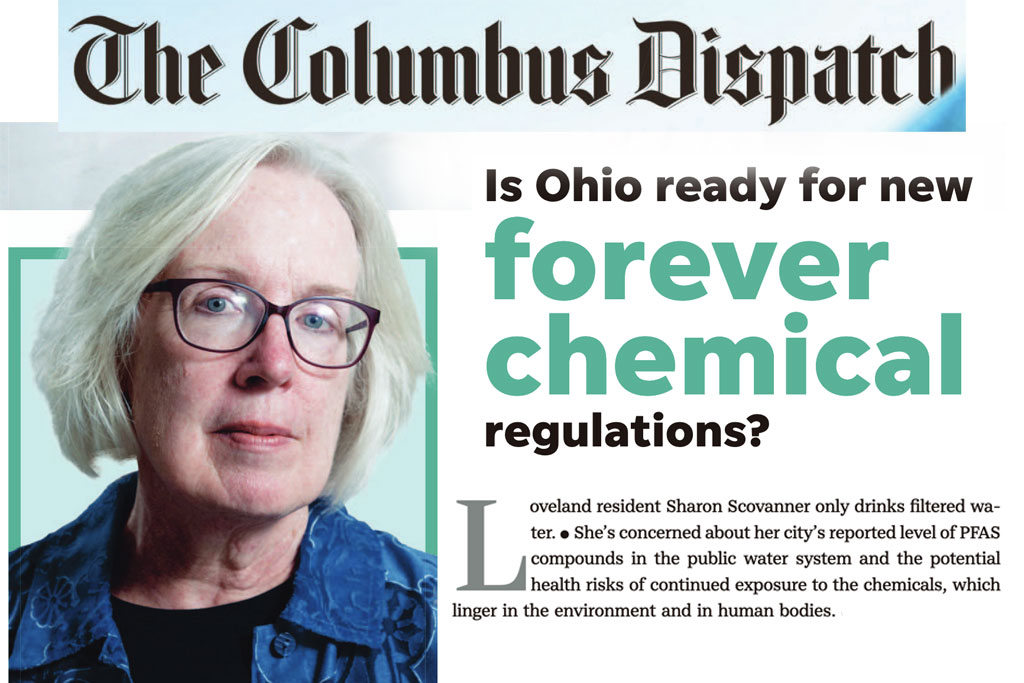
Loveland, Ohio– Sharon Scovanner the local Loveland resident, now regional expert on “Forever Chemicals” contaminating drinking water in Loveland and around the region was featured in the print and eNewspaper of the USA TODAY NETWORK and the Columbus Dispatch on Sunday, August 18.
The story reports that, “Loveland resident Sharon Scovanner only drinks filtered water. She’s concerned about her city’s reported level of PFAS compounds in the public water system and the potential health risks of continued exposure to the chemicals, which linger in the environment and in human bodies. Per- and polyfluoroalkyl substances, abbreviated PFAS, are chemicals first manufactured in the 1940s. They have been linked to certain cancers, fertility issues and other health concerns”
Scovanner said, “Loveland has made claims about the health effects of PFAS in a federal lawsuit that differ from the information the city gives its residents.”
“I just know they didn’t tell us. They are telling us to continue to drink the water, they’re saying it’s safe, and that is not accurate. No official governmental agency that has any credence on this topic would agree with that.” –––Sharon Scovanner
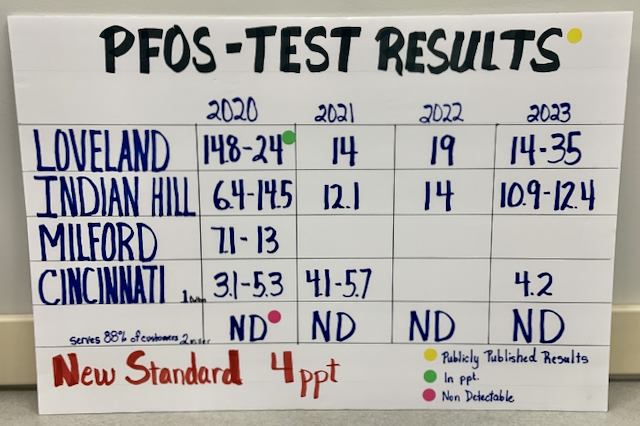
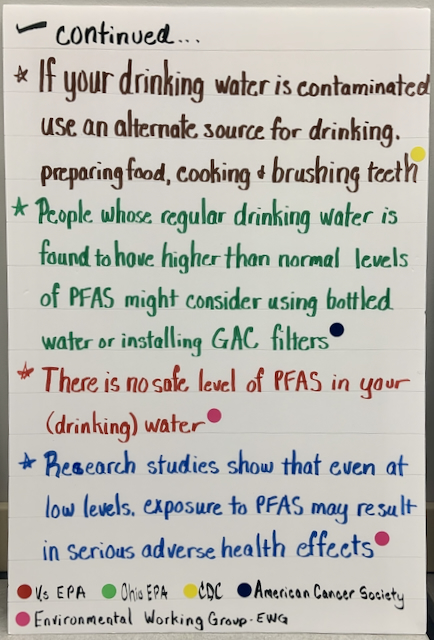
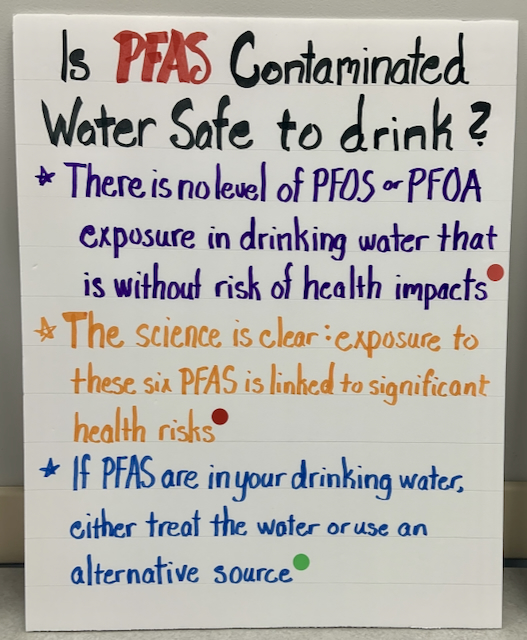
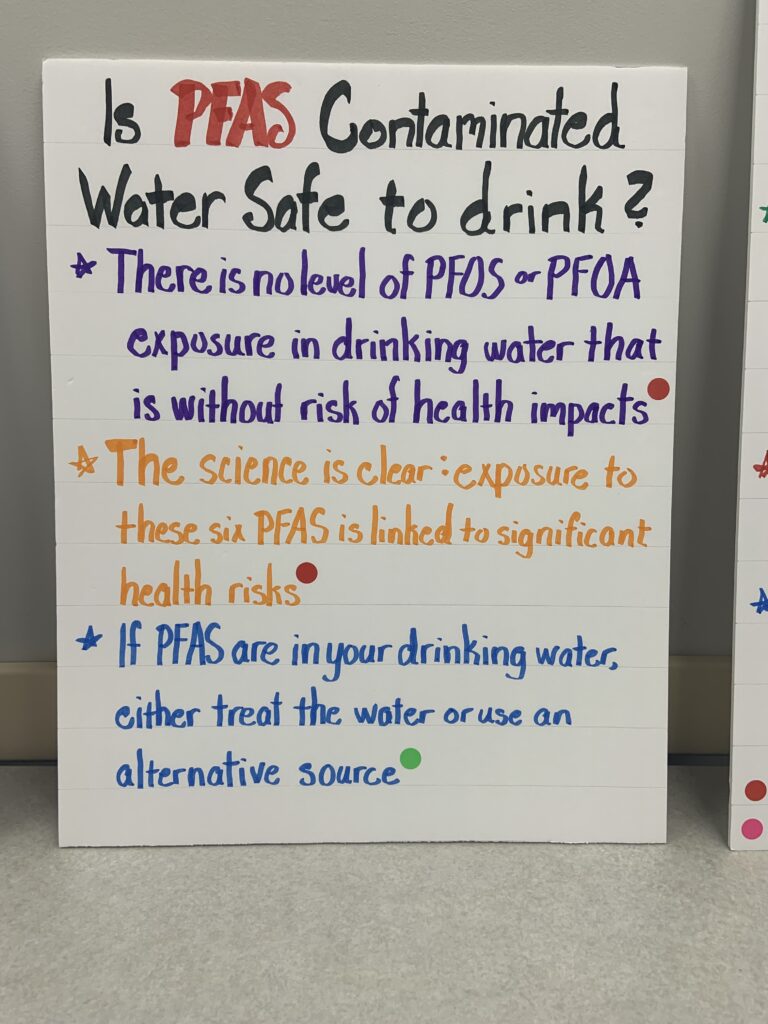
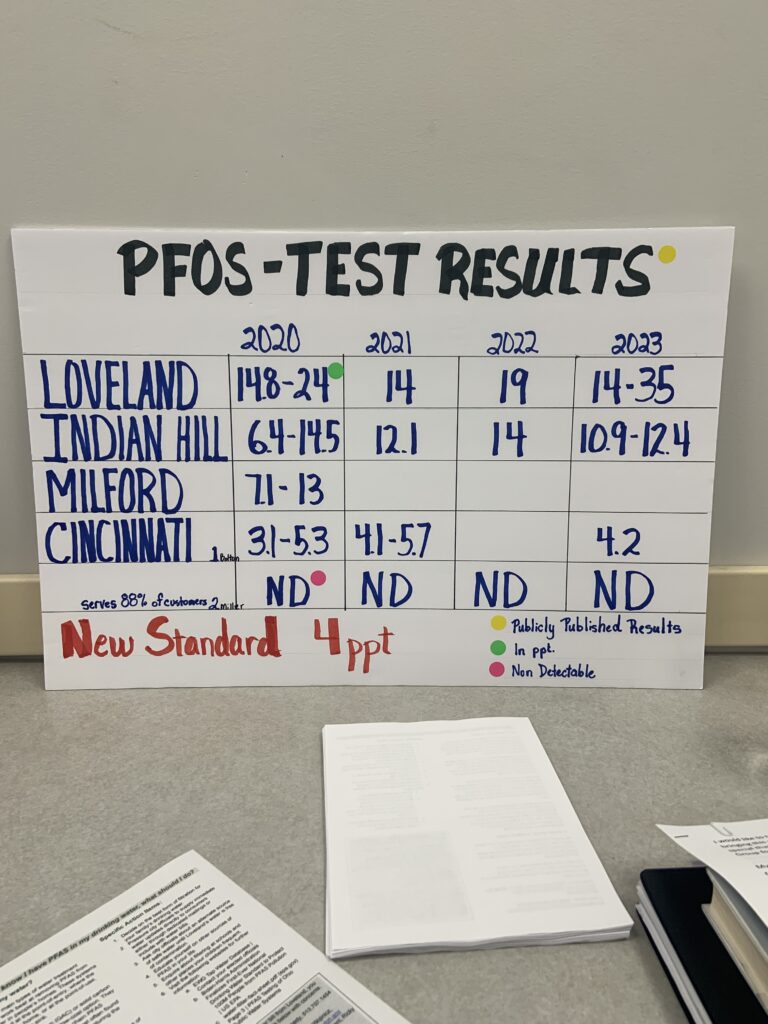
Testing has revealed that Loveland has two “Forever Chemicals” in its drinking water. One, at a level four times higher than what is the enforceable standard of the U.S. Environmental Protection Agency. This is the highest reported level in the area. US EPA has acknowledged that no levels of PFAS are safe without the risk of negative health impacts.
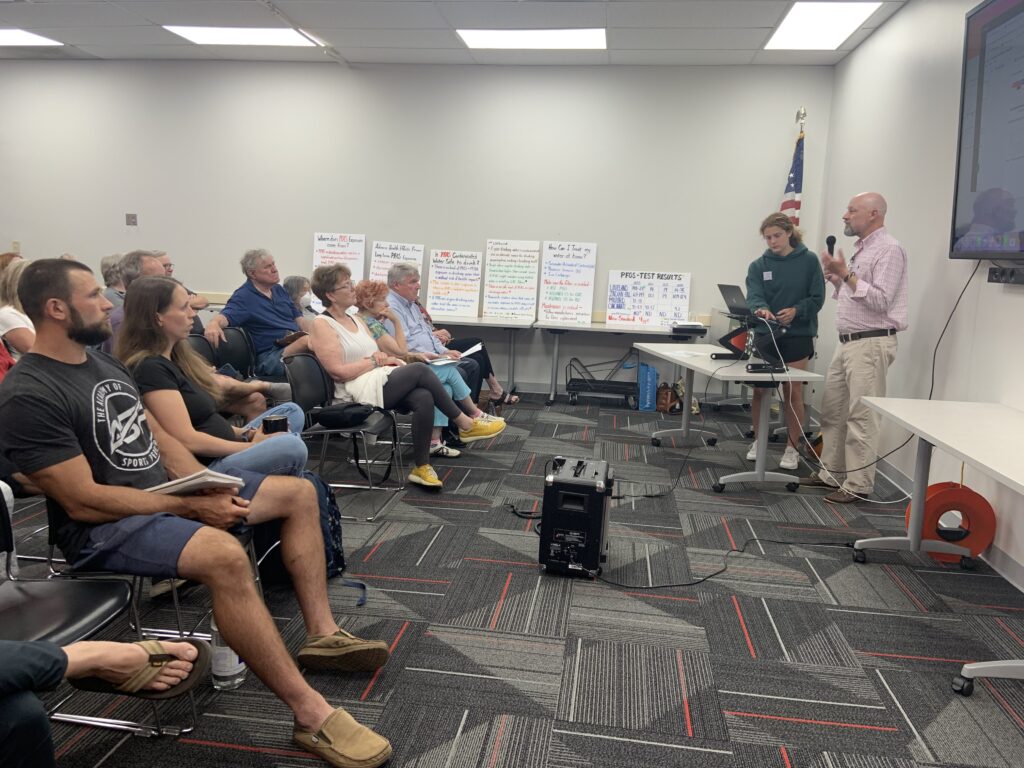
Loveland, Ohio – If you are drinking Loveland water, you will want to watch this re-cast of this info session. Local residents and the Sierra Club shared information on these topics:
Is the Kathy Bailey Administration telling Loveland residents the truth?
History of PFAS in Loveland’s drinking water.
General History of PFAS.
New USEPA regulations for PFAS.
Negative health outcomes resulting from PFAS.
How to protect your family.
Hazardous chemicals, known collectively as “forever chemicals” or PFAS (per-and polyfluoroalkyl substances), were created in the mid-20th century by chemical companies and were used in multiple industries.
Forever Chemicals are in Loveland’s drinking water at the highest tested levels in the Cincinnati region. Drinking water contaminated with Forever Chemicals has been causing negative health outcomes for consumers for decades, yet the Kathy Bailey Administration maintains that Loveland’s tap water is “safe”.
There are no credible sources saying drinking water that contains Forever Chemicals is safe for human consumption. Scientists came to this emphatic determination decades ago.
This presentation is shown in it’s entirety except portions where there is significant delays while the Sierra Club attempted to connect to their on-line, live feed or other Sierra Club technology issues.
Here is the link to the Environmental Working Group that is mentioned several times as a resource for buying home water filtration systems.
David Miller is the Managing Editor of Loveland Magazine
by David Miller
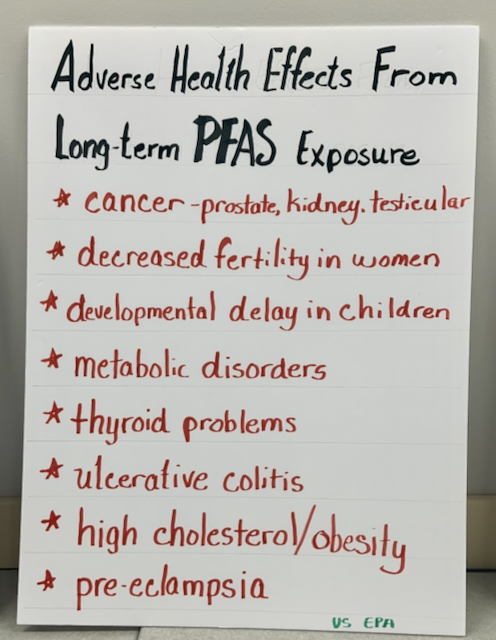
Loveland, Ohio– Today, April 10, the United States Environmental Protection Agency (USEPA) issued the first-ever national, legally enforceable drinking water standard to protect communities from exposure to harmful per-and polyfluoroalkyl substances (PFAS), also known as “forever chemicals.” Exposure to PFAS has been linked to deadly cancers, impacts to the liver and heart, and immune and developmental damage to infants and children. The final rule will reduce PFAS exposure for approximately 100 million people, prevent thousands of deaths, and reduce tens of thousands of serious illnesses.
PFAS are synthetic man-made chemicals.
As reported by Loveland Magazine last December, Loveland’s drinking water is contaminated with some of the highest in the Cincinnati area of forever chemicals.
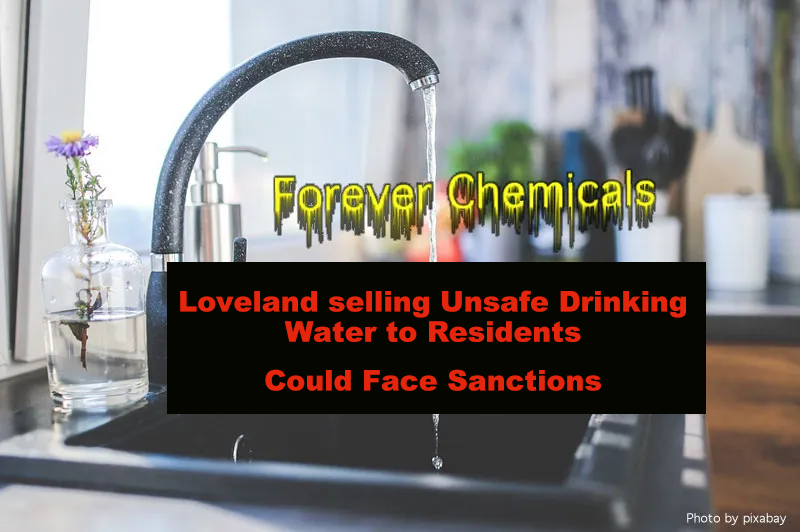
Now that the new rules are in effect, enforceable, and mandated, Loveland could face sanctions if they do not comply.
Forever chemicals get their name because they bioaccumulate. This means the toxic chemicals become concentrated inside the human body as time goes by. Because Forever Chemicals have a long “half-life” and if the chemicals are continuously ingested it’s a one-step forward, two-steps-back scenario.
Public records obtained by Loveland Magazine reveal that Loveland officials were informed by the Ohio EPA about its contaminated drinking water in 2020 and should have known the danger of the “Forever Chemicals” in the tap water they were selling, but remained mostly silent or downplayed the danger to the public. They have offered no immediate solution to residents such as financial help for filtering household tap water or offering safe bottled water to residents, businesses, or schools.
In November of 2023 City Council passed a resolution to engage a consulting company to explore the cost to determine the extent of the problem and recommend solutions. City Hall is awaiting the report.
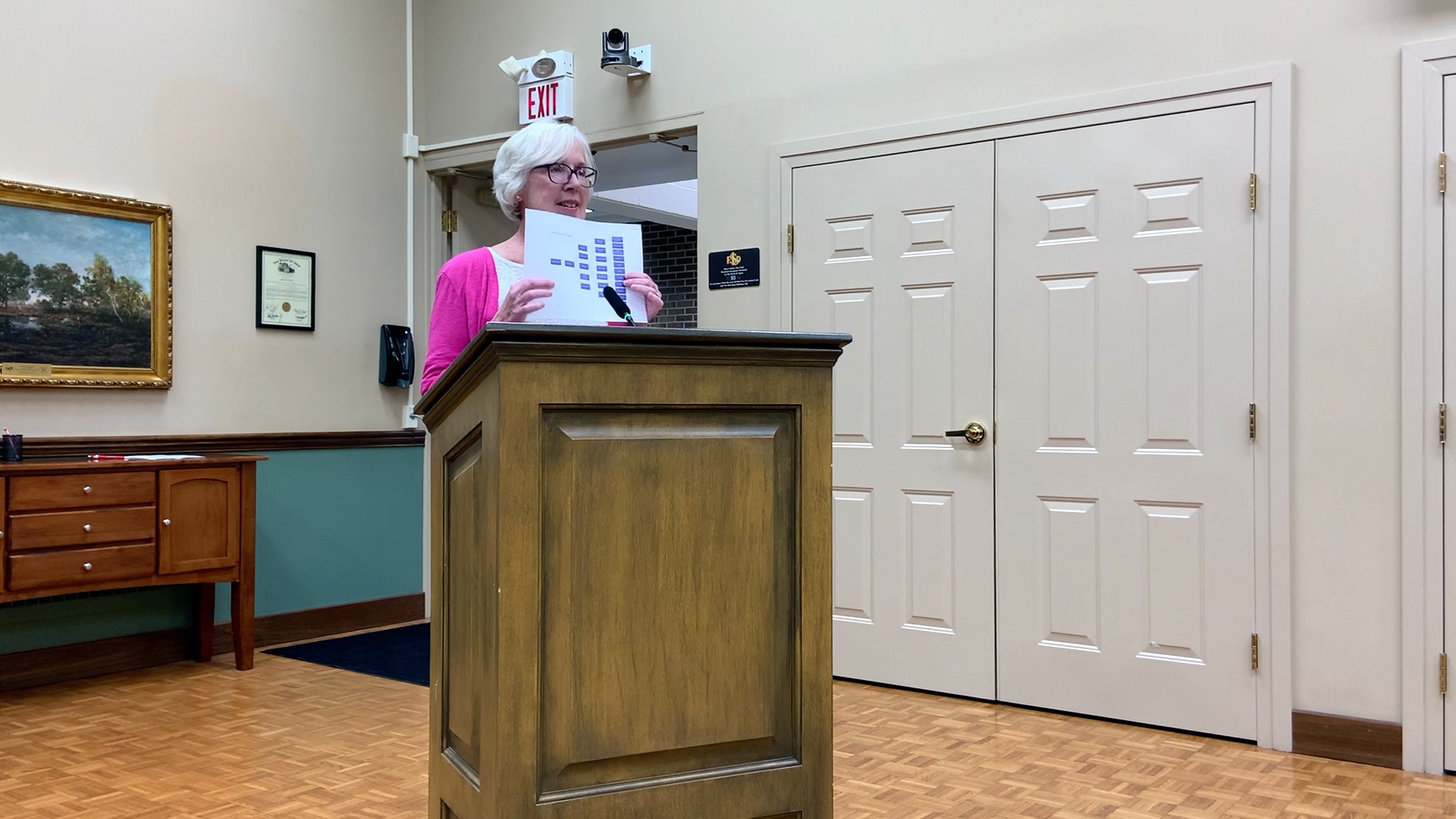
Loveland resident Sharon Scovanner has been researching this issue extensively, collecting public records from City Hall and the Ohio EPA and is assisting the Miami Group of the Sierra Club in organizing a public information session. According to Scovanner, this session will provide additional information to local residents so they understand the problem and provide actions they can personally take to protect their own drinking water.
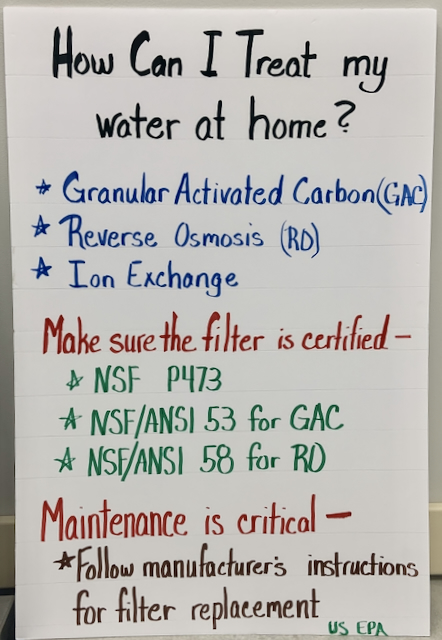
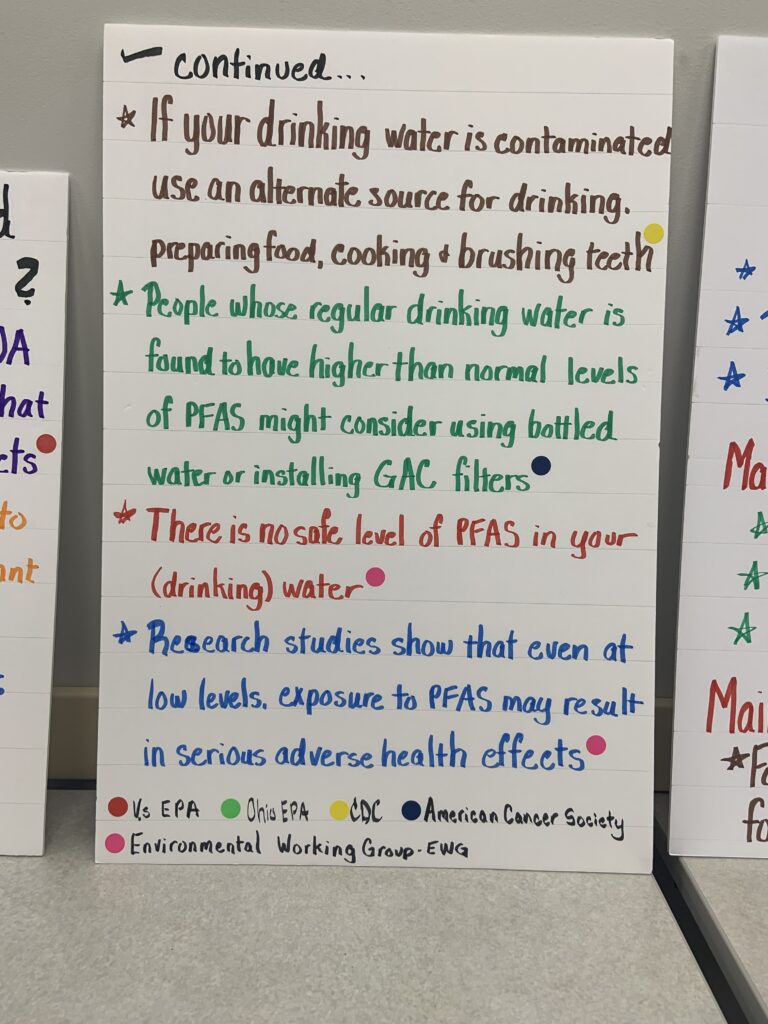
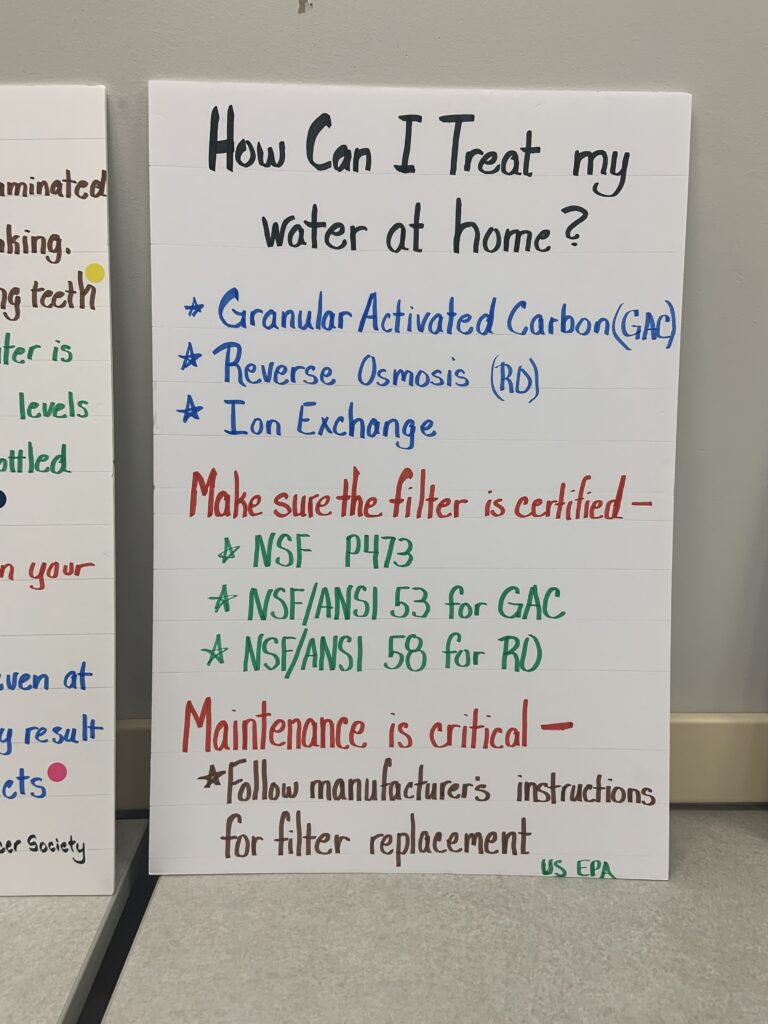
Scovanner told Loveland Magazine this morning, “This new enforceable rule is a positive step forward in protecting people’s health. US EPA has acknowledged that no levels of PFAS are safe without the risk of negative health impacts. Until the rule is completely codified (cities will have 5 years to comply), individuals and businesses should take necessary steps to filter their drinking water. Reverse osmosis and carbon filtration are two known treatments for PFAS removal.”
“Cities such as Loveland with elevated PFAS levels should provide thorough and transparent information about PFAS and mitigation measures to all their water customers,” Scovanner added.
Sally Dannemiller the Chair of the Executive Committee of the Miami Group Sierra Club told Loveland Magazine this morning, “The Miami Group Sierra Club welcomes the US EPA’s long overdue decision to regulate the most common PFAS forever chemicals. It bears repeating that testing of Ohio’s public water systems more than four years ago uncovered some 1,500 instances of PFAS, including many communities in close proximity to the Little Miami River.”
Dannemiller added, “This action will prompt the Ohio EPA and local governments to take a more aggressive approach to protecting our rivers and streams as well as public water systems from hazardous effects of forever chemicals. The Sierra Club will be working to make sure our elected officials take appropriate action.”
Just yesterday, City Hall said on their FaceBook page, “The city is working with an engineering firm to address PFAS. Our water system meets all current Ohio EPA and federal water quality requirements. The Ohio EPA has not set a maximum contaminant level for PFAS. Currently the federal and Ohio EPA does not have any standards for PFAS. We anticipate they will in the future, so that is why we proactively started working with an engineer to figure out ways to remove PFAS.”
To diminish public concern the City also posted, “PFAS levels are measured on a part per trillion (ppt) ratio, which is equivalent to one drop of water per trillion gallons. For comparison, one part per trillion is equal to one drop of ink in 20 Olympic-sized swimming pools.”
However, the federal agency says that there is no level of forever chemicals in drinking water that is safe for human consumption and that do not have adverse health impacts.
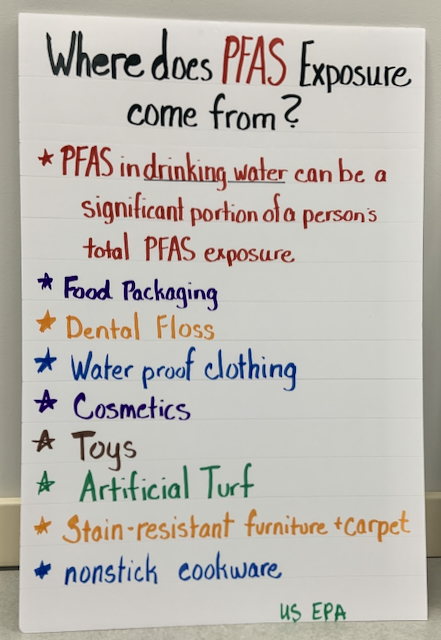
PFAS exposure through drinking water can be reduced by treating the water using reverse osmosis or certified carbon filtration units, or by using an alternative source of water that is not contaminated.
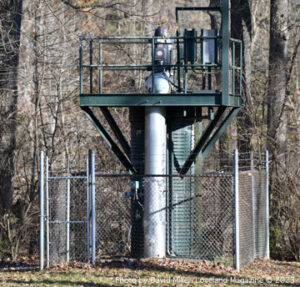
Loveland’s water wells are located on the East side of Bodly Park at the end of 10692 Bettyray Drive on the bank of the Little Miami River. 9Photo by Loveland Magazine)
Loveland’s water wells are located on the East side of Bodly Park at the end of 10692 Bettyray Drive on the bank of the Little Miami River. The source of the underground water is rainfall and other discharges onto the surrounding land and hillsides, and the Little Miami River. There are approximately 900 homeowners outside the Loveland City limits who also drink water from the Loveland wells. A small number of Loveland residents in Warren County receive water from the Western Water Company. There are approximately 13,000 residents of the City.
Some people may be more vulnerable to contaminants in drinking water than the general population. Immunocompromised persons such as persons with cancer undergoing chemo therapy, persons who have undergone organ transplants, people with HIV/AIDS or other immune system disorders, some elderly, and infants can be particularly at risk from infections. These people should seek advice about drinking water from their health care providers. (*3)
In December in response to Loveland Magazine’s story, City Hall released this statement:
[pdf-embedder url=”https://lovelandmagazine.com/wp-content/uploads/2024/04/Loveland-Water-PFAS-122123.pdf” title=”Loveland Water PFAS 122123″]
USEPA said that they are is taking a “signature step” to protect public health by establishing legally enforceable levels for several PFAS known to occur individually and as mixtures in drinking water. This rule sets limits for PFAS: PFOA, PFOS, PFNA, PFHxS, and HFPO-DA (also known as “GenX Chemicals”). The rule also sets a limit for mixtures of any two or more of four PFAS: PFNA, PFHxS, PFBS, and “GenX chemicals.” By reducing exposure to PFAS, this final rule will prevent thousands of premature deaths, tens of thousands of serious illnesses, including certain cancers and liver and heart impacts in adults, and immune and developmental impacts to infants and children.
As of today, Loveland will have three years to complete their initial monitoring for these chemicals and must inform the public of the level of PFAS measured in their drinking water. Where PFAS is found at levels that exceed these new standards, Loveland must implement solutions to reduce PFAS in their drinking water within five years.
“For decades, the American people have been exposed to the family of incredibly toxic ‘forever chemicals’ known as PFAS with no protection from their government. Those chemicals now contaminate virtually all Americans from birth. That’s because for generations, PFAS chemicals slid off of every federal environmental law like a fried egg off a Teflon pan,” said Environmental Working Group President and Co-Founder Ken Cook after the announcement was made.
CBS News said this morning, “The EPA estimates that of the 66,000 public water utility systems impacted by the standard, 6% to 10% may need to act to comply with the regulations.”
________
For More information read what the Ohio EPA says about forever chemicals:
What are the health effects of exposure to PFAS?
It is important to keep in mind that exposure to PFAS does not always mean a person will have health effects. Whether or not a person gets sick from exposure to PFAS depends on how long a person was exposed (duration), how often they were exposed (frequency), and how much PFAS they were exposed to (dose). Personal factors like age, lifestyle, and other illnesses may also determine whether or not a person gets sick from exposure to PFAS.
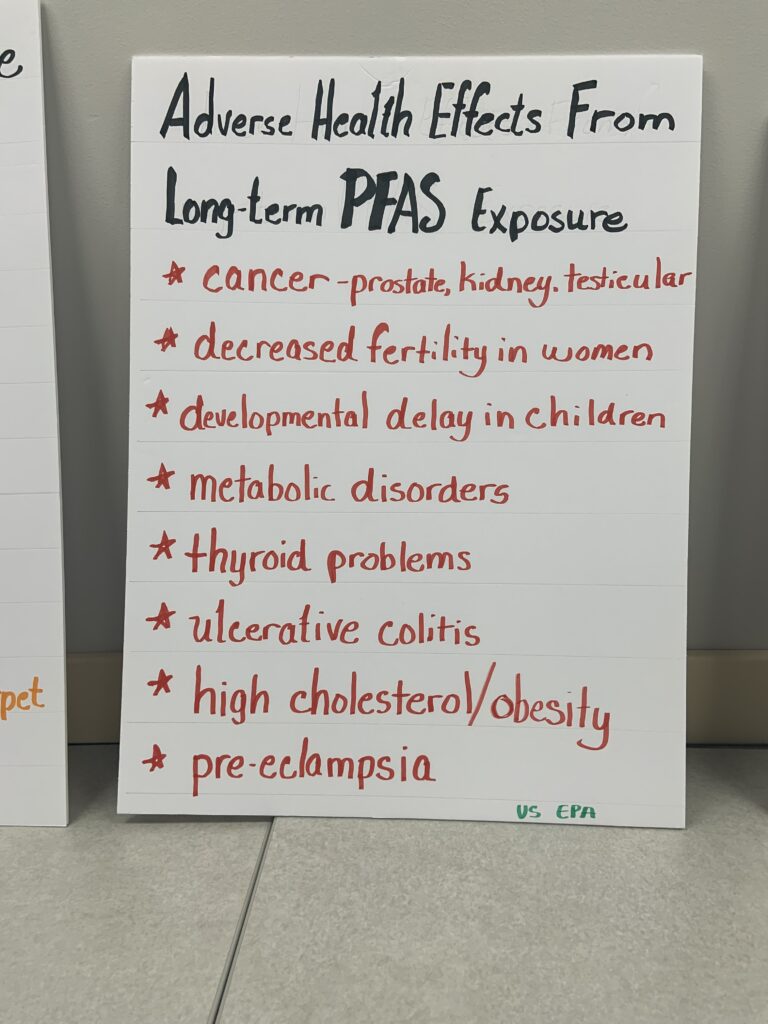
There are many chemicals in the PFAS family, and they may cause different health effects if you are exposed to them. The health effects of PFOS, PFOA, PFHxS, and PFNA have been more widely studied than other chemicals in the PFAS family. Some, but not all, studies in humans with PFAS exposure have shown that certain PFAS may: Affect growth, learning, and behavior of infants and children; Lower a woman’s chance of getting pregnant; Interfere with the body’s natural hormones; Increase cholesterol levels; Affect the immune system; or Increase the risk of certain cancers.
Scientists are still learning about the health effects of exposures to mixtures of PFAS. For the most part, laboratory animals exposed to high doses of one or more PFAS have shown changes in liver, thyroid, and pancreatic function, as well as some changes in hormone levels. Because animals and humans process these chemicals differently, more research will help scientists fully understand how PFAS affect human health.
Pregnant and nursing women
Pregnant and nursing women may be more at risk than the general population to the health effects of PFAS. Pregnant and nursing women may want to consider treating their water source if they know or suspect it is contaminated with PFAS. They may also consider using an alternate source of water for drinking, making ice, preparing food, and brushing teeth.
Women who are planning to become pregnant may wish to take steps to reduce their exposure to PFAS. PFAS take a long time to leave the human body, and chemicals like PFOA, PFOS, and PFHxS can build up in a woman’s body if she is exposed for a long time. When she is pregnant, her fetus is then exposed to the chemicals that have built up inside her body. Research suggests that fetuses and babies are more vulnerable to exposure to PFAS than adults.
Breastfeeding provides many health benefits for mother and baby. Research has shown that babies who are breastfed are at less risk of ear and respiratory infections, asthma, obesity, and sudden infant death syndrome (SIDS). Mothers who breastfeed are at less risk of high blood pressure, type 2 diabetes, and ovarian and breast cancer. Although PFAS can be passed from a mother to her child through breastmilk, the benefits of breastfeeding are far greater than any risks. ODH recommends that women currently breastfeeding continue to do so even if they have been exposed to PFAS. For information about breastfeeding, see the Ohio Department of Health Breastfeeding webpage or the Agency for Toxic Substances and Disease Registry (ATSDR) PFAS and Breastfeeding webpage.
Babies who are bottle-fed may also be at greater risk from drinking PFAS than adults because they drink more in proportion to their body weight. If your baby is bottle fed using a powdered or liquid formula, be sure the water mixed with the formula comes from a safe alternate source, such as a public or private water supply that has been tested for PFAS chemicals. This will reduce your baby’s exposure to PFAS. If your usual drinking water source is contaminated with PFAS, treat the water or use a safe alternate source for mixing formula or preparing food. Information about treating water for PFAS can be found by going to the main Ohio PFAS in Drinking Water page, clicking the “Private Drinking Water” tab, and expanding the “Home Treatment Options” menu.
Please consult with your healthcare provider or your child’s pediatrician with any PFAS exposure concerns.
Children
Children have different exposure circumstances that make them especially sensitive to environmental contaminants, like PFAS. Understanding these differences is key for evaluating potential for environmental hazards from pollutants.
Children consume more of certain foods and water relative to body weight than adults. That means the same glass of water with the same PFAS concentration level results in greater exposure to a child versus an adult, even though they are drinking the same amount. Children also do not excrete chemicals as easily as adults, because the enzymes in their bodies that break down contaminants are still developing. That increases the chances for contaminants such as PFAS to interfere with a child’s growth and development.
In addition, young children tend to play close to the ground and come into contact with contaminated soil outdoors. To ensure the protection of children and other sensitive populations, the Ohio PFAS Action Levels are set to protect the most sensitive populations, thereby protecting the health of all populations in Ohio.
Household Pets
Since many household pets are smaller than people, they also consume more of certain foods and water relative to their body weight than people. That means that the same bowl of water with the same PFAS concentration results in greater exposure to household pets, even though they may be drinking the same amount. As a precaution, if you have elevated levels of PFAS in your water, you should consider using alternative water for your household pets.[/learn_more]
Home Treatment Options
Water treatment in a home to reduce levels of PFAS can be:
At the point of entry (POE) where treatment all of the water entering the household plumbing system occurs, or;
At the point of use (POU) which is often at the kitchen sink or primary source of water for drinking or cooking (potentially also including a water line to the refrigerator if it has a plumbed in water line).
Either type of water treatment has pros and cons that should be considered before selecting the best treatment option for a home. The type of treatment system chosen should consider the volume of water that will be used in the home, the number and location of sites where water is consumed in the home, and the type of PFAS chemical identified in the laboratory result.
If water for drinking, cooking and making ice is primarily obtained from the kitchen sink, then the installation of a treatment unit below the sink or on the sink faucet is an option. If drinking water and ice are obtained from the refrigerator, then it is important to consider treating the water line to the refrigerator also.
If drinking water is obtained from multiple locations in a home, then a point of entry, or whole house treatment system may be preferred.
If possible, it is important to choose a treatment system that has been tested and certified to remove the PFAS present in the water based on data provided from the public water system provider or from a laboratory analysis.
Certified Water Treatment Products to Remove PFOA and PFOS
Currently, certified products are only for point of use (POU) treatment, which means they are products designed to treat the water at only one or two locations, usually at the kitchen sink and possibly the refrigerator if it has water connected. Certified products are either granular activated carbon (GAC) filtration or reverse osmosis (RO) treatment systems. It should be noted that some of the products certified to treat water at the point of use are counter-top products or pour through (like a pitcher filter that you fill from the tap yourself as needed).
NSF International and the Water Quality Association are independent third-party testing agencies that currently test and certify products to remove the specific PFAS PFOA and PFOS.
Look for products identified as certified to NSF International’s Standard P473. The NSF International consumer information team can also be contacted at info@nsf.org or 1-800-673-8010 for assistance in finding a certified product.
Products tested and certified by the Water Quality Association can be found here: https://www.wqa.org/find-products#/.
NSF Standard P473 was retired in March of 2019 when the testing protocol was incorporated into existing water treatment standards, so new products certifications are tested to meet either NSF/ANSI Standard 53: Drinking Water Treatment Units – Health Effects for the reduction of PFOA and PFOS with granular activated carbon filtration systems or to NSF/ANSI Standard 58 Reverse Osmosis Drinking Water Treatment Systems for the reduction of PFOA and PFOS with reverse osmosis systems. There is currently not a standard for certification of other types of treatment systems.
Treatment System Products to Remove other PFAS
There are currently no certified standards for removing PFAS other than PFOA and PFOS, however, consideration of the type of PFAS chemical can inform the selection of the best water treatment system. PFOA and PFOS are longer chain PFAS than other chemicals in the PFAS family. Longer chain chemicals are larger which makes it easier for a filter or membrane to trap them. Shorter chain PFAS are harder to remove with granular activated carbon treatment alone. Though there is no product certification standard at this time, research has shown that reverse osmosis treatment systems can effectively remove a wide range of PFAS, including the shorter chain chemicals in the PFAS family.
Considerations for point of use (POU) granular activated carbon (GAC) treatment:
• Physical filter cartridge traps contaminant(s) which is then removed and disposed of at the end of its rated lifecycle.
• Filter must be replaced on a regular schedule (identified by the manufacturer).
• Generally, granular activated carbon filters provide more water flow than a reverse osmosis system.
• May not effectively treat shorter chain PFAS if present in addition to the longer chain PFOA and/or PFOS.
Considerations for point of use (POU) reverse osmosis (RO) treatment:
Typically requires pre-filtration to be installed to remove any sediment and small particles as well to maximize the life and effectiveness of the membrane.
Large volumes of water are wasted in the treatment process. Typically, for every 10 gallons sent into the treatment unit, 7-8 gallons are sent down the drain as waste, and 2-3 gallons of treated water are produced.
Membranes must be replaced on a regular schedule (identified by the manufacturer) in addition to any pre-filtration cartridges.
Research has shown it to effectively reduce shorter chain PFAS in addition to the longer chain PFOA and/or PFOS.
Point of Entry Water Treatment
Point of entry water treatment is where all the water entering the home is treated for the removal of PFAS. Though there are not currently any products certified to treat all water that enters a home (also called point of entry or POE treatment) for removing any of the PFAS family of chemicals, research has shown that a point of entry granular activated carbon treatment can be effective if properly designed.
These systems are commonly referred to as a lead-lag granular activated carbon system. This system consists of two flow through vessels filled with granular activated carbon with a water sample faucet installed between the two vessels (after the lead vessel, before the lag vessel). Water samples are collected periodically and analyzed for PFAS to monitor the lifespan of the first carbon vessel. When the first vessel starts to lose its ability to remove PFAS, it is removed, the second carbon vessel which was in the lag position is moved to the lead carbon vessel position and new granular activated carbon media is placed into the other vessel, and it is moved to the lag position. This design relies on the lag vessel to provide protection for the water consumer in case the lead vessel is no longer able to trap the PFAS before periodic sample collection identifies that the lead carbon vessel is no longer able to perform effective PFAS removal.
The installation of a point of entry water treatment system to treat water received from a public water system may require a local plumbing permit. Please check with the local building or health department to determine if a plumbing permit is needed.
The installation of a point of entry water treatment system to treat water received from a private water system (water well, spring, pond, rainwater cistern or hauled water storage tank) will require an installation permit form the local health district. These treatment systems may only be installed by a private water systems contractor registered by the Ohio Department of Health. These contractors are bonded and the list of registered contractors may be found at: https://odh.ohio.gov/wps/portal/gov/odh/know-our-programs/private-water-systems-program/info-for-homeowners/.
Please be an informed consumer and request complete information on the components that will be installed, product certification as applicable, the maintenance requirements and cost, and appropriate disposal of the treatment media.
Please note that testing a water sample for PFAS at a lab certified to perform analysis of drinking water by U.S. EPA Standard Method 537.1 varies by private lab but is estimated to cost approximately $400 per sample. Water samples should be collected and analyzed prior to the selection of an installed treatment unit to help size and select the appropriate treatment device. After the treatment device is installed, water samples should be periodically analyzed to ensure the treatment unit is working properly. Initial and on-going sampling will add to the cost of the installation of treatment systems. Countertop or pitcher type devices will not require routine sampling but media should be replaced in accordance with the manufacturer’s recommendations. U.S. EPA cost estimates for different types of treatment types are below:
Treatment Type
Approximate Initial Cost of Equipment
Approximate Media Replacement Cost
NSF P473 certified Point of Use Granular Activated Carbon (GAC)
$100 -$1200
$200 – $300 each year
NSF P473 certified Point of Use Reverse Osmosis (RO)
$400 – $700
$200 each year
Non-certified Lead-Lag Point of Entry Granular Activated Carbon (GAC)
$1,200
$2000 each 3-5 years (depending on periodic testing results*)
Testing your blood for PFAS
While a PFAS blood test measures how much of specific PFAS are in a person’s body at the time of the test, there are limitations.
A PFAS blood test cannot:
• Tell you where or how you were exposed to PFAS found in your body;
• Tell you what, if any, health problems might occur or have occurred because of PFAS in your body; or
• Be used by your doctor to guide treatment decisions.
Measuring a person’s exposure to PFAS and monitoring potential impacts on human health is best addressed through consultation with a physician. ODH has and will continue to provide information and recommendations to healthcare providers to help providers and patients make informed decisions about what PFAS exposure might mean for an individual’s health. There is no recommendation from ODH or the Centers for Disease Control and Prevention (CDC) that clinicians should test patients for PFAS. Please consult your healthcare provider if you have concerns regarding PFAS exposure.
PFAS Testing for Individuals
ODH does not generally recommend testing your blood for PFAS. Physicians will not be able to treat a specific health issue using the result from this test. Please consult your healthcare provider if you have concerns regarding PFAS exposure.
A blood test for PFAS can tell you what your levels are at the time the blood was drawn, but not whether levels in your body are safe or unsafe.
Most people in the U.S. have measurable amounts of PFAS in their body because PFAS are commonly used in commercial and industrial products.
The PFAS blood test is not a clinical test and cannot tell you whether your health has been or will be affected.
Many health issues associated with PFAS, such as increased cholesterol and decreased thyroid hormone levels, commonly occur in the population as a whole – even when not associated with high levels of PFAS in the blood.
These health issues can be caused by many factors, and there is no way to know or predict if PFAS exposure has or will cause your health problem.
If you have specific health concerns, please consult your doctor for the best treatment choices for you.
It is complicated to get a PFAS blood test.
It is not a routine clinical test, so you would need to contact a private lab directly to arrange the test and it is unlikely that insurance would cover the cost.
There are hundreds of PFAS around us. Labs can only test for a small number of PFAS in blood.
Laboratories that Offer PFAS Testing
ODH is aware of three private laboratories that offer PFAS testing in blood. ODH does not recommend specific labs and does not know specifics regarding the different tests they offer. The cost for PFAS blood testing is in the $500-800 range, not including fees that a clinic might charge for drawing and shipping the blood.
You can compare your levels to those in groups of people nationwide. The National Biomonitoring Program by the U.S. Centers for Disease Control and Prevention (CDC) tests a very large group of people for PFAS and other chemicals and tells us about average exposures in the U.S. population. These studies can be used to compare your blood test result to what is known about levels in people throughout the country.
David Miller is the Managing Editor of Loveland Magazine
Cardinal Land Conservancy Secures Future of Historic Grailville Site
Threat of development leads to protection in perpetuity
by David Miller
Loveland/Miami Township, Ohio – In sending a press release with this good news for the Loveland and Miami Township residents who worked so tirelessly preserving 89 acres of land at Grailville “in perpetuity”, Andy Dickerson with the Cardinal Land Conservancy said, “David, we’re getting ready to send this out, but I wanted to send it to you first. We just found out this morning… good news!”
____________________
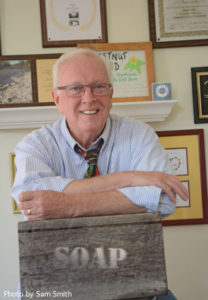
Andy Dickerson
After a yearlong effort in collaboration with The Grail and the Grail Land Preservation Group, Cardinal Land Conservancy has received favorable confirmation from the Natural Resources Assistance Council District 10 that its application is being recommended for funding to the Ohio Public Works Commission.
The $4.897 million grant through the Clean Ohio Green Space Conservation Program will allow Cardinal to purchase 89 acres of the historic Grailville site in Loveland. Once used for spiritual growth, education, farming, and retreats, this property became a target for development in recent years due to its desirable location. Outspoken community members and former members of The Grail partnered with Cardinal to protect its scenic natural areas, historic buildings, and spiritual legacy.
For over 70 years, Grailville served as a retreat center and organic farm for The Grail, an international women’s organization focused on spirituality, ecology, and social justice. The property includes woodlands, wetlands, and productive farmland. Its historic buildings date from the 1830s and are listed on the National Register of Historic Places.
The House of Joy at Grailville
The grant is the largest in Cardinal Land Conservancy’s 8-year history. It adds to the over 8,500 acres the land trust has already protected in Southwest Ohio. Cardinal holds and monitors 57 easements on private properties and the titles to 11 nature preserves to ensure the land is protected from development and maintained in a largely natural condition. Cardinal is based in Milford however hopes to relocate its offices to the House of Joy on the Grailville site.
Sharon Scovanner (Loveland Magazine file photo)
Loveland resident Sharon Scovanner with the Grail Land Preservation Group told Loveland Magazine yesterday, “Today was a big day. It looks like the funding is coming through which is just amazing. It feels amazing what we have been able to accomplish in these eighteen months.”
“The protection of this new nature preserve in Loveland will be a huge benefit for the community as Cardinal Land Conservancy will protect it in perpetuity, said Dickerson in the early news release to Loveland Magazine.
Cardinal will need to raise additional funds to restore select buildings on site for public and private use and eventually open the property as a public nature preserve. Dickerson says that restoration efforts will begin as early as possible. Cardinal also hopes to work with healthcare professionals to utilize this preserve as a place where they can meet patients and “prescribe” nature as a treatment for certain mental and physical health problems.
This LOVELAND MAGAZINE TV video is from an August public hearing before the Clermont County Commission in which members of the Grail Land Preservation Group and the Grail advocated Commission support for securing the grant.
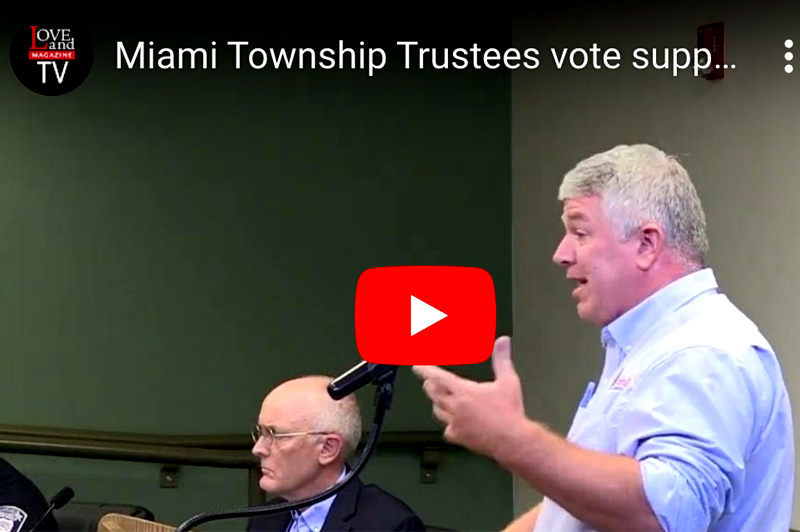
In this LOVELAND MAGAZINE TV video, Andy Dickerson explained the details of the grant and what he was asking the Miami Township Trustees to do.
About Cardinal Land Conservancy:
Cardinal Land Conservancy is a nationally accredited land trust serving 7 counties in Southwest Ohio. Its mission is to preserve waterways, native habitat, farmland, and open space in Southwest Ohio by working with individuals, families, and communities. For more information, visit www.cardinallandconservancy.org.
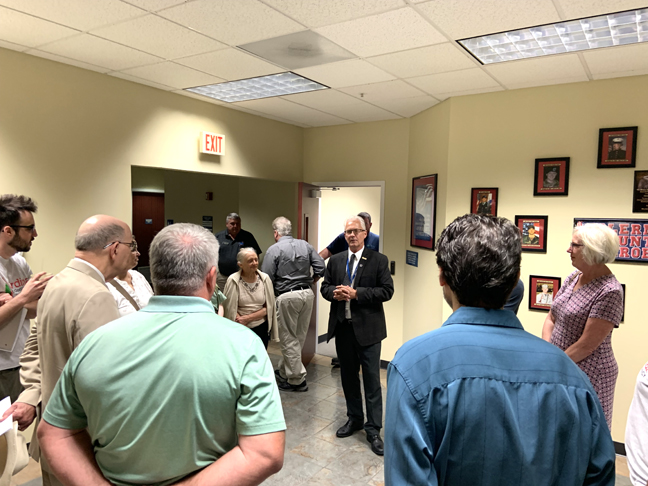
After the meeting, Commissioner David Painter came to the hallway where Grailville supporters and Cardinal Land Conservancy workers had gathered and congratulated them for their efforts. (Photo by David Miller)
David Miller is the Managing Editor of Loveland Magazine
by David Miller
Batavia, Ohio – On Wednesday, Clermont County Commissioners Bonnie Batchler, Claire Corcoran, and David Painter voted their unanimous support for the Cardinal Land Conservancy seeking a grant from the State of Ohio’s Clean Ohio Conservation Fund that would be used to purchase 89 acres of Grailville land.
Both the City of Loveland and Miami Township have previously voted their unanimous support for the grant application. Cardinal needed an affirmative resolution from all three governing bodies that have jurisdiction over land use at Grailville.
Sharon Scovanner a leader with the grassroots, Grail Land Preservation Group told Loveland Magazine today, “Members of the community were pleased with the unanimous vote by the Clermont County Commissioners yesterday. This vote brings us one step closer to preserving 89 acres of Grail land in perpetuity.”
Another member of the group and also a Grail Member, Elizabeth Murphy sent this statement:
“For over 70 years the women of The Grail have tended this Grailville land. We have had the privilege and the pleasure of protecting and caring for this small piece of God’s Creation, and of sharing its peace and natural beauty with others. It is important to The Grail that the future of this land be in keeping with these values. We believe that Cardinal Land Conservancy will be an excellent steward of this property going forward, and it has been very good working with them to make this happen. We are grateful that all three government bodies – Loveland City Council, Miami Township Trustees, and the Clermont County Board of Commissioners have supported us. We look forward to having Cardinal as an active neighbor to our remaining Grailville property.”
Scovanner added, “Cardinal Land Conservancy will now be submitting an application for Clean Ohio funding. A decision should happen later this year. The partnership between The Grail, Cardinal, and the community has been instrumental in getting us to this point.”
There will be no direct local tax dollars used for the purchase.
The below LOVELAND MAGAZINE TV video is when Cardinal Land Conservancy’s Andy Dickerson spoke to the Commision on Wednesday, August 17 about Grailville and how they intend to use the grant funds if their request is approved.
The below LOVELAND MAGAZINE video is from Wednesday, August 17 when local residents made the trek to the Clermont County Commission meeting to urge support for a grant application to secure funding to preserve Grailvile acreage as permanent green space.
Clean Ohio Program
The Clean Ohio Green Space Conservation Program is dedicated to environmental conservation including acquisition of green space and the protection and enhancement of river and stream corridors. Grant recipients agree to maintain the properties in perpetuity so that they can be enjoyed and cherished for generations to come.
CLEAN OHIO FUND
DESCRIPTION
• The Clean Ohio Fund is a $400 million state bond initiative first approved by Ohio voters in 2000. It was overwhelmingly renewed in all 88 counties in 2008 with strong bipartisan support from the executive and legislative leadership.
• A public-private partnership, Clean Ohio restores, protects and connects Ohio’s natural and urban places by preserving open space and farmland, improving outdoor recreation, and cleaning up brownfields to encourage redevelopment and revitalize communities.
Four separate Clean Ohio programs run a competitive selection process so that Ohioans benefit from the very best projects:
– Clean Ohio Revitalization Fund: supports cleanup of brownfields for redevelopment; only public entities may apply.
– Clean Ohio Agricultural Easement Purchase Program: preserves farmland; local sponsors such as non-profit land trusts and soil and water conservation districts submit an application on the landowner’s behalf.
– Clean Ohio Open Space Conservation Program: preserves and restores open spaces, sensitive ecological areas and stream corridors; non-profit entities and local parks are eligible but not state agencies.
– Clean Ohio Trails Fund: improves outdoor recreational trail opportunities; any public subdivision or non-profit entity in Ohio may apply.
ACCOMPLISHMENTS
All 88 Ohio counties have received funding and benefited from the Clean Ohio Fund. This critical state investment has:
Cleaned up nearly 400 abandoned, polluted sites.
Preserved over 26,000 acres of natural areas.
Protected over 39,748 acres of family farms.
Created over 216 miles of multi-purpose, recreational trails.
Leveraged additional investments to create a total economic impact of approximately $2.6 billion in public and private investments to date.
BENEFITS
• Helps catalyze economic activity in Ohio by creating new jobs and retaining existing ones in construction, goods, services, recreation, eco-tourism and high-tech industries.
• Helps secure our agricultural base, Ohio’s number one industry, by helping to preserve working family farms.
• Helps keep Ohioans’ drinking water safe.
• Protects Lake Erie and rivers and streams by creating natural buffers to keep them clean.
• Cleans and redevelops polluted abandoned industrial properties, protecting neighborhoods and spurring redevelopment.
• Protects natural areas and develops miles of multi-use trails for public access.
• Generates new tax revenues for schools and communities with redevelopment project spin-offs across Ohio.
• Leverages additional investments to create a total economic impact of approximately $2.6 billion to date.
• Does not raise taxes – each $25 million in Clean Ohio Fund bonds requires $2.3 million in annual debt service.
• Helps keep Ohio environmentally sound, economically viable, and poised for the future.
David Miller is the Managing Editor of Loveland Magazine
by David Miller
Miami Township and Loveland, Ohio – “The members of the Grail Land Preservation Group in attendance were excited by the unanimous support of the Miami Township Trustees. The opportunity for open green space to be protected in perpetuity has been a desire for many group members,” said Loveland resident Sharon Scovanner.
The quest to get formal support from three government jurisdictions moved to step two last evening when the Miami Township Board of Trustees voted unanimously to give their stamp of approval. Andy Dickerinson with The Cardinal Land Conservancy, based in Miami Township, appeared at the township meeting to explain the proposal and answer any questions. His appearance was probably unnecessary as both Ken Tracy and Mary Makley Wolff, as well as Township Administrator Jeff Wright spoke enthusiastically about the Grailville land remaining greenspace.
The Cardinal Land Conservancy and many Loveland and Miami Township residents are asking local governments to lend their support to a plan that could save 89 acres at Grailville as dedicated green space in perpetuity. Dickerson, on behalf of the Conservancy, is requesting votes of support for a grant application that would be submitted to the Clean Ohio Conservation Fund, to purchase 89 acres of the Grail property.
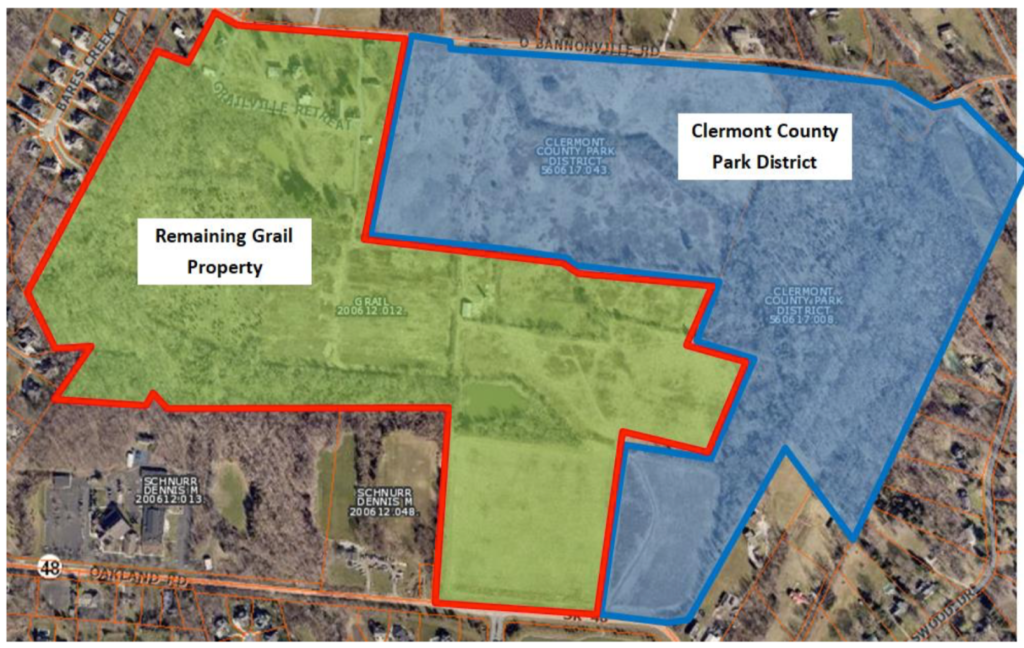
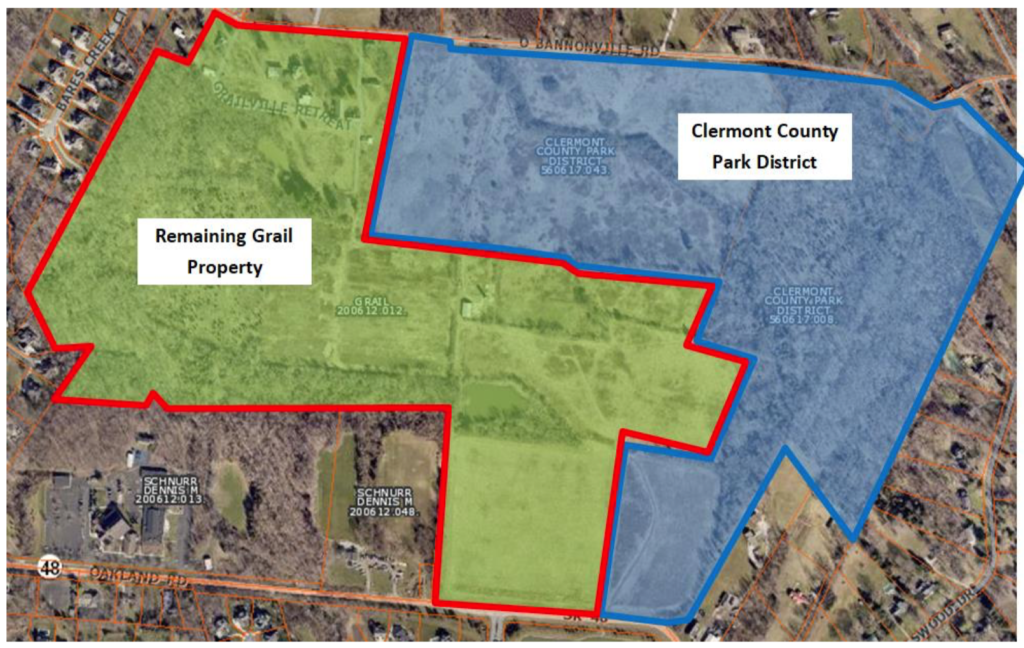
This is the site where Drees Homes was denied the zoning change they requested in 2022 after local residents filled Planning and Zoning chambers to urge that the site be protected. The Kentucky home builder had requested the land become a Special Planning District which could have allowed 209 homes on the site. The same parcel is also where the Loveland City School District proposed building a campus until the funding they wanted was denied by voters in 2019. The site is bounded by O’Bannonville Road and State Route 48 (Oakland Road).
After the re-zoning Drees requested was denied, local Grail members and other local residents coalesced to find the solution. The Grailville Land Preservation Group worked together to stop the zoning change Drees wanted.
If the grant application is successful, the 89 acres of land would be deeded as dedicated green space in perpetuity. The proposed purchase by the conservancy would be adjacent to the 100-acre Clermont County Park District property, which was also acquired from the Grail using Clean Ohio funding.
Scovanner added, “It has always been our hope that the land will be preserved to respect not only the legacy of the Grail and their members past and present, but to also be a gift to future generations. We appreciate our partnership with Cardinal and look forward to garnering support from the Clermont County Commissioners as the next step in the process.”
In this LOVELAND MAGAZINE TV video, Andy Dickerson explains the details of the grant and what he was asking the Miami Township Trustees to do.
The request must still go before Miami Township and Clermont County leaders
David Miller is the Managing Editor of Loveland Magazine
by David Miller
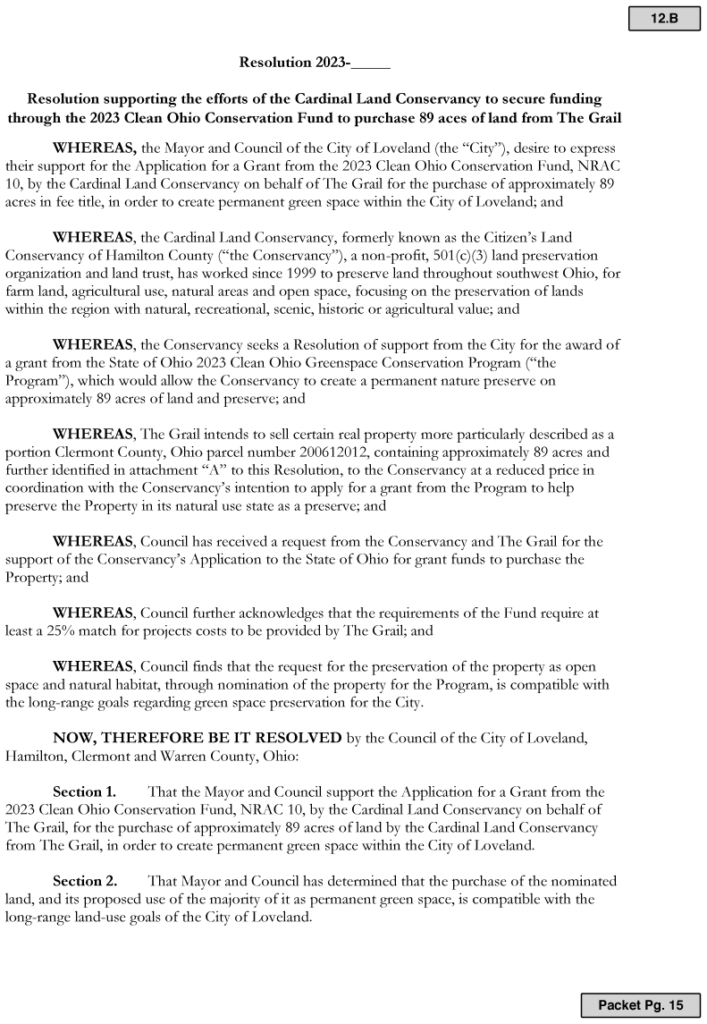
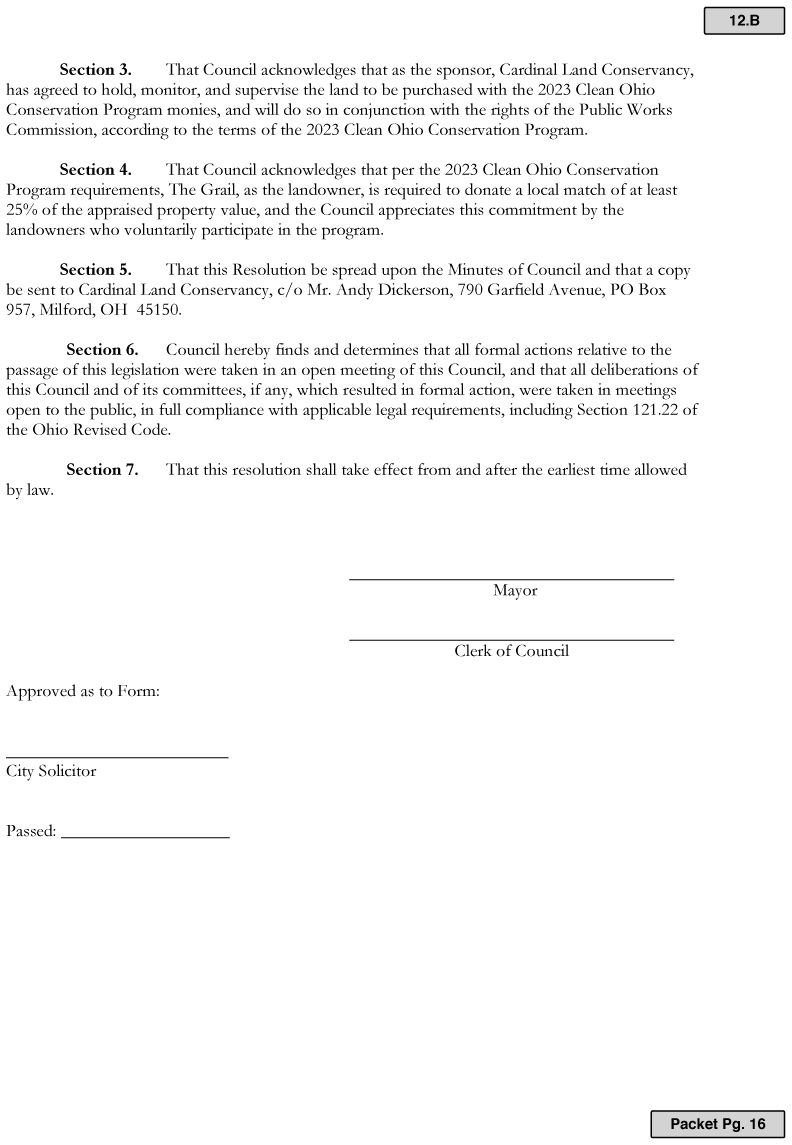
Loveland, Ohio – On Tuesday the Loveland City Council approved a request by the Cardinal Land Conservancy to put their mark of support on a plan that could save 89 acres at Grailville as dedicated green space in perpetuity. Andy Dickerson, on behalf of the Conservancy, appeared at the meeting requesting a vote of support for a grant application that would be submitted to the Clean Ohio Conservation Fund, for funding the purchase of the 89 acres of Grail property that is within the city’s corporation boundaries.
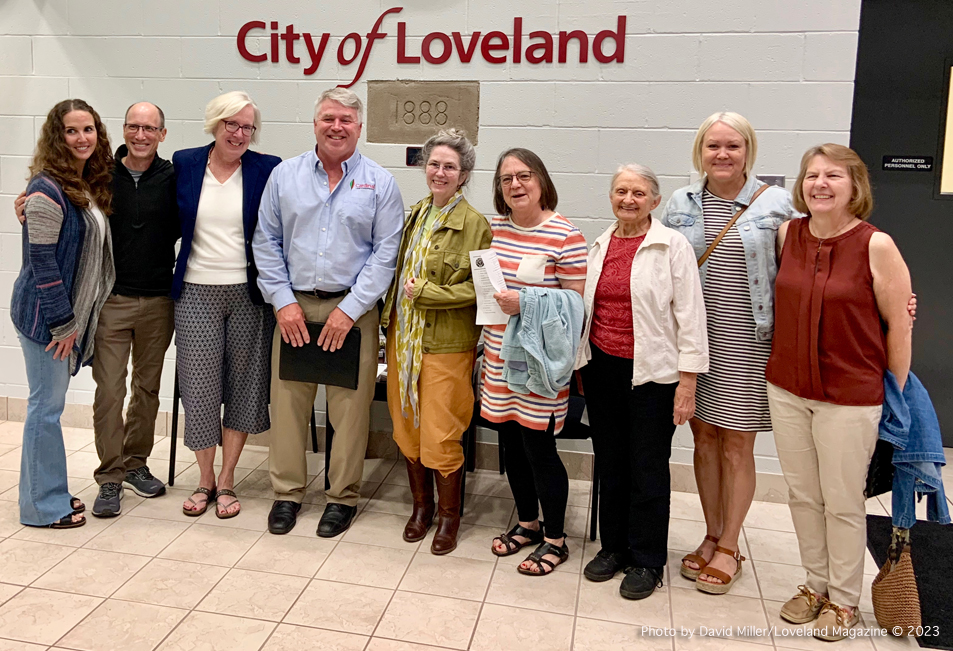
After their successful effort to convince Loveland Council to support the plan they worked on for a year, some members of the Grailville Land Preservation Group posed for a photo. Laurie Kiley, Kevin Kiley, Sharon Scovanner, Andy Dickerson, Elizabeth Murphy, Elizabeth Robinson, Mary Lu Lageman, Jamie Smith, and Loretta Rokey.
After Council unanimously approved the request Dickerson expressed caution because the Conservancy will still need the support of the Miami Township Trustees and the Clermont County Commissioners.
This is the site where Drees Homes was denied the zoning change they requested in 2022 after local residents filled Planning and Zoning chambers to urge that the site be protected. The Kentucky home builder had requested the land become a Special Planning District which could have allowed 209 homes on the site. The same parcel is also where the Loveland City School District proposed building a campus until the funding they wanted was denied by voters in 2019. The site is bounded by O’Bannonville Road and State Route 48 (Oakland Road).
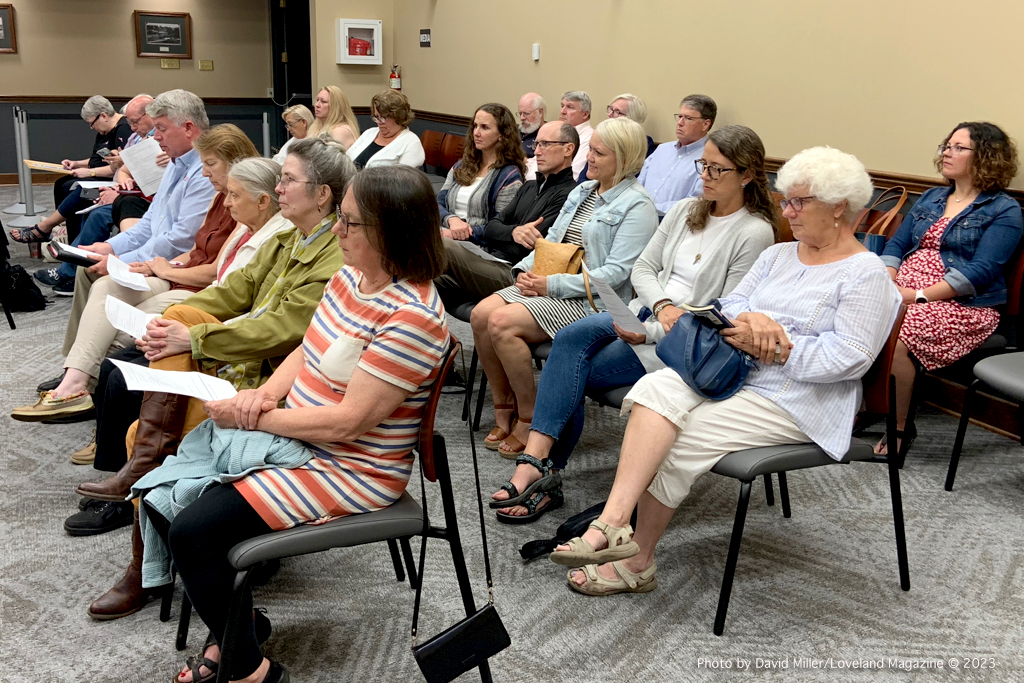
After the re-zoning Drees requested was denied, local Grail members and other local residents coalesced to find the solution that was presented to City Council on Tuesday. Many of them sat in council chambers to hear the presentation.
The Grailville Land Preservation Group worked together to stop the zoning change for Drees. Four members of the conservation subcommittee of the larger group consisted of Lauren Enda, Kevin Kiley, Jamie Smith, and Sharon Scovanner.
Sharon Scovanner told Loveland Magazine today, “I want to make it clear that both the big group and our subcommittee were very important to our success. This was a case of many members of the community coming together with the goal of preserving the land. We are grateful that ‘corporate’ Grail agreed to provide a 25% match for the grant and to the local Grail women, several of who worked alongside us wanted to find a solution. Of course, we have been honored to partner with Cardinal to help facilitate an agreement that is good for the Grail and the community.”
If the grant application is successful, the 89 acres of land would be deeded as dedicated green space in perpetuity. The proposed purchase by the conservancy would be adjacent to the 100-acre Clermont County Park District property, which was also acquired from the Grail using Clean Ohio funding.
In this first LOVELAND MAGAZINE TV video, Andy Dickerson explains the details of the grant and what he was asking the Council to do.
In this second LOVELAND MAGAZINE TV video, Council members ask questions and vote on the resolution of support.
In this third LOVELAND MAGAZINE TV video, residents and Grail members spoke with cautious optimism about the first public step they made in announcing the plan they had worked toward since Drees first proposed building 209 homes on the site.
About Cardinal Land Conservancy
Their address is 790 Garfield Avenue in Milford.
Cardinal Land Conservancy is a private, nonprofit, 501c3 tax-exempt conservation organization, incorporated in September 1999 under the laws of the state of Ohio. Cardinal is a member of the Land Trust Alliance (LTA), a national organization, and Coalition of Ohio Land Trusts (COLT). Cardinal earned LTA accreditation in 2019 and uses LTA’s “Land Trust Standards and Practices” to guide our work as we grow. This accreditation confirms that Cardinal practices sound finances, ethical conduct, responsible governance, and lasting stewardship.
Cardinal Land Conservancy, formerly known as the Citizen’s Land Conservancy of Hamilton County (“the Conservancy”), is a non-profit, 501(c)(3) land preservation organization and land trust. Cardinal holds the title to 11 nature preserves.
Cardinal Land Conservancy is a land conservancy in Southwest Ohio whose mission is to preserve natural habitats, waterways, agricultural lands, and open space in Southwest Ohio.
We protect and restore natural lands with significant habitats that support native wildlife and create scenic vistas for public enjoyment, as well as agricultural lands suitable for the production of food, timber, or other cultivated or natural products. Cardinal acquires conservation interests in real properties which it then monitors and stewards in perpetuity. These include conservation easements, fee simple title, and other conservation interests which are acquired through donations and purchases guided by, and executed through, Cardinal. Once obtained, Cardinal monitors and otherwise stewards the properties and interests through regular oversight, periodic assessment and, if needed, protective action and legal defense. Our service area includes the Southwestern Ohio counties: Adams, Brown, Clermont, Clinton, Hamilton, Highland, and Warren.
Rinsky Woods Nature Preserve
Clermont County
There are few woods like this in the world. Those woods that exist are found only in Southwest Ohio and Southeast Indiana. Rinksy Woods is the second largest woods of this kind in the world. In fact, it has been designated as an Ohio Natural Landmark by the Ohio Department of Natural Resources. These wet flat woods are adjacent to Stonelick State Park, adding to an admirable stretch of greenspace in the area. Details & Trail Map
Todd’s Fork Nature Preserve
Clinton County
Native prairies give way to a 100+ acre woods on this preserve, which also includes the Todd’s Fork of the Little Miami River. Cardinal has several stewardship projects ongoing here including maintenance of the prairie. Maintenance includes prescribed burning which is meant to discourage unwanted invasive plants on an annual basis. Details & Trail Map
Kope Hollow Nature Preserve
Brown County
In Southeast Brown County, the Kope formation (a bedrock formation unique to Southern Ohio and Indiana) runs through incredibly diverse woods. A recent native plant survey listed over 100 native species. This property is also graced with five waterfalls that contribute to Roup’s Run. This water flows into the Ohio River just beyond the bounds of the property. Details & Trail Map
Bortz Family Nature Preserve
Hamilton County
This 119-acre preserve offers respite in deep and cool woods along with views of the wide Ohio and of the Little Miami’s emerald shores. This land appeals to both humans and wildlife because of its diversity. The Ohio Department of Natural Resources determined that this land is likely the home of the endangered Indiana Bat and several endangered species of mussels. Overlooking the confluence of these two great rivers is an American Bald Eagle nest, atop a towering cottonwood tree. Our eagles can be viewed by our Eagle Camera from January to June! Details & Trail Map
Read about the other nature preserve of the Cardinal Land Conservancy.
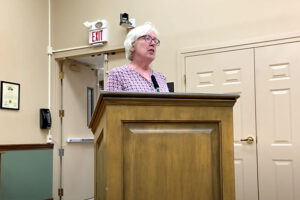
Loveland, Ohio – Resident Sharon Scovanner went to the council meeting on Tuesday, November 23, and addressed concerns about how Mayor Kathy Bailey represents an exchange between the Mayor and resident Dave Stanton and about the Mayor’s use of discretion limiting free speech at council meetings. Scovanner also said that the Mayor has used the Chief of Police to intimidate the press during meetings.
Loveland, Ohio – Resident Sharon Scovanner went to the council meeting on Tuesday, November 9, and addressed concerns about the 1st Amendment and how Loveland Mayor Kathy Bailey runs Council meetings. Presented, are excerpts of Scovanner’s speech.
Loveland, Ohio – Sharon Scovanner went through the legal channels to be permitted to speak for 10-minutes at Tuesday night’s City Council meeting. Even though she followed the rules, Mayor Kathy Bailey refused Scovanner’s request to be “Placed on the Agenda”.
She wanted to speak about the annexation into the City of the Graville property.
“WOW! If Mayor Bailey doesn’t want to hear from the citizens of Loveland maybe being mayor of Loveland is not for her.” – Sharon Scovanner
Not being deterred, Scovanner went to the meeting and signed up for “open forum” which would allow her 5-minutes to speak.
As soon as the 5-minutes was over, Scovanner was interrupted mid-sentence by Bailey and told that her speaking time was over. Scovanner immediately left the podium.
You can watch Scovanner speaking last night in the LOVELAND MAGAZINE TV video below and also read her entire statement to see what she was not allowed to say.
Also below is a post-meeting LOVELAND MAGAZINE TV interview with Scovanner being asked how she felt the meeting went and Mayor Bailey’s response to the accusation of suppressing free speech.
City council

I’ve spoken with numerous members of council recently including Mr. Oury, Mr. Bateman, (at my house) Mr. Blair, and Mr. Butler (at the committee appreciation dinner) about some really important issues recently.  There has been debate and at times we have agreed to disagree.  Disagreement is not a negative, but a way to understand each other’s point of view.  I have also had productive meetings and discussions with Dave Kennedy, Tom Smith and Mark Medlar.  The best results are always when there is dialogue, each person defending their positions.  That’s how democracy works, when it is working well.  Governing bodies succeed when there is open sharing of facts, discussion, deliberation and at times, compromise.

A couple of weeks ago all the city council candidates were invited to attend a meet the Candidate forum after our neighborhood’s annual HOA meeting.  Mr. Butler, Hart, Phelps and Ms. Lukens attended.   At our meeting there was spirited debate about the development of Blossom Hill, annexation of the Grail property, the proposed parking garage, all of which significantly impact TRAFFIC congestion in DT Loveland.  Mr. Phelps and Hart took a lot of tough questions, as the residents were concerned about the disproportionate detrimental effect each of these developments would have on the residents of Warren County.  Hopefully they heard the collective and heartfelt voices of the residents.  Mr. Phelps stayed after the meeting and talked further about these issues which was most appreciated.  He suggested that I add my name to the agenda of the next city council meeting for further discussion.  I attempted to do so.

Rule 19 of the Loveland City Council rules (five-day rule) states “Any person, group or delegation wishing to be placed on the agenda to appear before council shall direct a letter to the clerk of council so it is received by the clerk no later than 12 noon on the Thursday preceding the regularly scheduled Tuesday council meeting,….

Rule 19 was followed, despite this, On Friday, I received an email from Misty, the clerk of council.  It read, “Sharon, Mayor Bailey has DECLINED your request to be placed on the October 26 agenda and suggested that you speak during open forum.”  WOW!  If Mayor Bailey doesn’t want to hear from the citizens of Loveland maybe being mayor of Loveland is not for her.

According to rule 19, the mayor has no authority what so ever to deny a request to appear on the agenda.  Just because the mayor does not like what a citizen has to say, does not give her the right to try to silence them.

If you look at the organizational chart of the city, one and only one group is at the top, it isn’t the mayor, the city council, businesses or developers.  It’s the citizens.

Allowing active participation of the citizenry should be the goal of any functioning democracy and should be insisted upon by all who are in positions of power.

In 2017, a group known as Loveland Community Heartbeat, lead by Neal Oury (our community advocate, as per his political sign) initiated a recall of Mayor Mark Fitzgerald.  The grounds for removal were as follows.

1. Conducting city operations and meetings in a manner which prohibits full participations by all council members, resident involvement and transparency and

2. Willfully and flagrantly exercising authority and power without the consent of the resident electorate or city council

2017 was a dark time for the city of Loveland and Mayor Bailey is returning us to those same dark days.  Over the past few months Mayor Bailey has prohibited full participation by all council members and resident involvement by

1. denying my request to be on the agenda to limit my time for speaking, after I was invited by Mr. Phelps to be placed on the agenda.

2. telling another Resident he could not speak (Dave Stanton), only to be admonished by the Law Director because she overreached her authority.

3. voting in favor of taking a sitting Council Member off the agenda to limit his speech.

4. denying a sitting Council member’s request to be on the agenda to limit his speech.

5.  trying to limit members of the press from access to meetings and taking pictures.

6. showing favoritism to one member of council by allowing him more times to speak, while denying that same right to others council members.

7. Earlier this year, she voted to change council rules to limit the time any one topic could be spoken about by residents in one meeting to 20 minutes.

So, if an issue comes up that brings 100 people to open forum only 4 people can speak?  Council has an obligation to listen to all the residents who take the time to prepare and come to speak to council, regardless how long it takes; its what you were elected to do.

These are only the things that I know of, who knows who else has been denied the right to speak?   This is all very alarming and needs to stop.

Suppression of speech undermines the very core of any democracy.

The recent actions of Mayor Bailey serve as a wakeup call for the citizens of Loveland, members of council and to those who spoke so loudly against Mark Fitzgerald 4 years ago.

We can and must do better.

I welcome your questions and comments


![[WATCH NOW] “Forever Chemicals” in Loveland drinking water public meeting](https://lovelandmagazine.com/wp-content/uploads/2024/06/pfas-meeting-feature.jpg)
![[EXCLUSIVE FIRST RELEASE] Grailville land acquisition grant awarded to Cardinal Land Conservancy](https://lovelandmagazine.com/wp-content/uploads/2022/04/Greater-Vision-Grailville.jpg)



 About Cardinal Land Conservancy

![[Video] Sharon Scovanner on Mayor Baily limiting speech at council meetings and using Chief of Police to intimidate Press](https://lovelandmagazine.com/wp-content/uploads/2021/11/ss3.jpg)
![[Video] Sharon Scovanner on right to speak at council meetings and freedom of the press](https://lovelandmagazine.com/wp-content/uploads/2021/11/sharon-s.jpg)