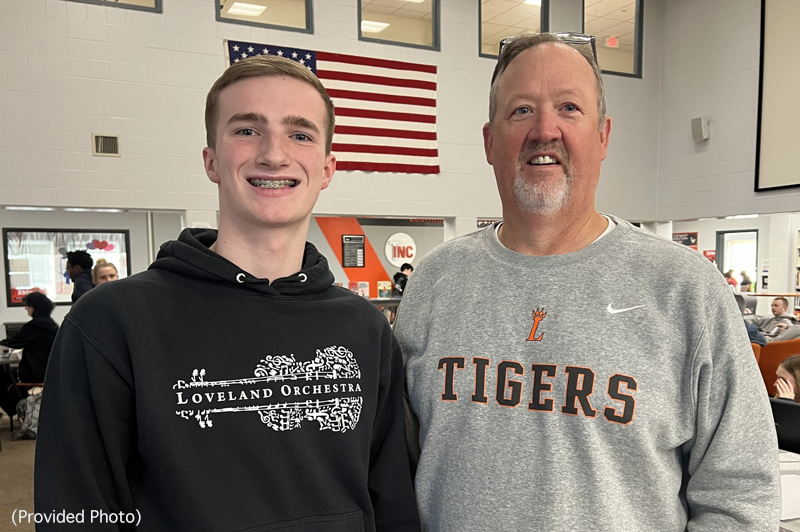
Loveland, Ohio – Loveland High School Junior Connor Burns, has been selected for the first-ever Ohio Suicide Prevention Foundation Youth Advisory Council. He’ll meet with leaders from around the state to shape suicide prevention efforts in Ohio.
Ohio Suicide Prevention Foundation
The Ohio Suicide Prevention Foundation is a non-profit organization that works tirelessly to prevent one of our most preventable causes of death: suicide. Our work includes reducing the stigma of suicide, promoting evidence-based prevention strategies, and raising awareness about suicide’s relationship to mental illness and substance use disorders, and other factors that contribute to suicide.
Our community-based programs and best-practice resources are specifically designed to improve mental health across the state. Thanks to a combination of education, training, and support, we’re helping all of Ohio’s communities reduce the risk of suicide and lessen its effects on family, friends, and neighbors.
Theteam is available to connect you to programs, services, and resources. For more information, call 614-429-1528 or email support@ohiospf.org. Learn more…
Loveland, Ohio – “Don’t be afraid to put yourself first sometimes and get the help you need if it’s needed,” mental health advocate, Elly Steinbrunner said when asked what encouraging message, she wanted to send to those struggling with their mental health.
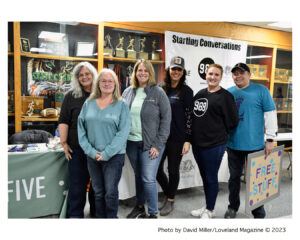
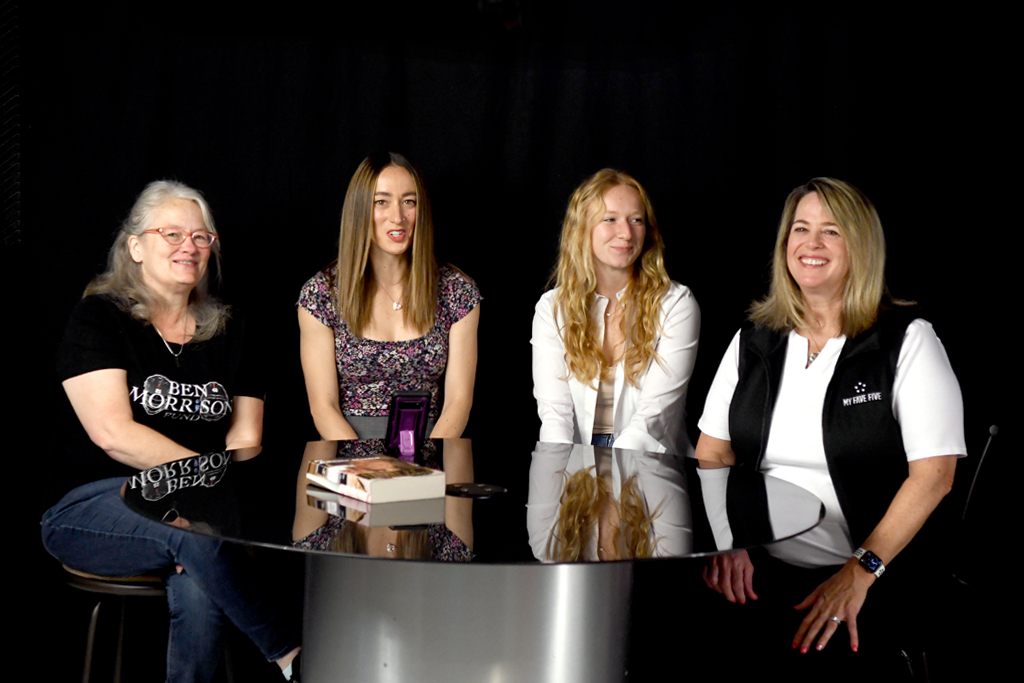
On my latest episode of “Table of Discussions” I invited Gina Marek, creator of the Fave Five App, Tori Morrison, who started a non-profit called the Ben Morrison Memorial Fund, and Elly Steinbrunner, a former member of the Loveland Hope Squad to my table to talk about Mental Health Awareness Month.
During the episode, Gina and Tori talk about how losing their sons to suicide encouraged them to advocate and educate those in the community about mental health. In this Loveland Magazine TV interview, both Gina and Tori offers advice about suicide prevention, eliminating the stigma of depression, and mental illness. Since the conception of the Fave Five app and the Ben Morrison Memorial Fund, Gina and Tori have been able to provide a wealth of information for parents, caregivers, and peers.
Elly, who recently graduated from Loveland High School, shared her perspective on why mental health struggles are climbing so rapidly among her generation and how being a member of the Loveland High School Hope Squad allowed her to not only help so many young people, but also educate her peers about mental health.
Join me, Gina Marek, Tori Morrison, and Elly Steinbrunner as we talk about Mental Health Awareness on my latest episode of “Table of Discussions! Watch as these three impactful women offer life-saving tips to those families and youth struggling with the mental health crisis.
“It’s totally free, no-nonsense, and took less than three minutes to start adding my trusted friends who I would want to contact if I needed help. The people in my life who I would trust with my life,” Loveland Magazine Managing Editor David Miller said after downloading Gina Marek’s My Fave Five app to his iPhone.The Ben Morrison Fund
The Ben Morrison Memorial Fund is committed to providing scholarships to graduating seniors from Loveland High School. We are dedicated to erasing the stigma of mental health struggles, opening conversations, and offering lifelines to help save lives of young people in crisis.
The Ben Morrison Memorial Fund is at 501(c)(3) non-profit organization. Fed id 86-2896878.
The HOPE Squad program is a school-based peer support team that partners with local mental health agencies. Peers select students who are trustworthy and caring individuals to join the Hope Squad. Squad members are trained to watch for at-risk students, provide friendship, identify suicide-warning signs, and seek help from adults.
HOPE Squad members are NOT taught to act as counselors but are educated on recognizing suicide warning signs and how to properly and respectfully report concerns to an adult. Once invited to be a HOPE Squad member, students must get a permission form signed by their parents and go through training.
Goal:
Hope Squads seek to reduce self-destructive behavior and youth suicide by training, building, and creating change in schools and communities.
Objectives:
Train:
Hope Squads will train students and staff in schools to recognize suicide-warning signs and act upon those warnings to break the code of silence.
Hope Squads will train students and staff to identify adolescents with undetected, untreated, or emerging mental disorders.
Build:
Hope Squads will build positive relationships among peers and faculty in schools to facilitate acceptance for students seeking help.
Hope Squads will build strong relationships with local mental health agencies and communities while educating students, parents, and school staff about available community mental health resources.
Change:
Hope Squads will work to change the school culture regarding suicide by reducing stigmas about suicide and mental health.
Hope Squads will work to change community perceptions of mental health by creating awareness about suicide and the tools available to prevent suicide.
Columnist Cassie Mattia is a resident of Historic Downtown Loveland and the Public Relations Coordinator at Butler County Board of DD. Cassie was awarded the Little Miami River Chamber Alliance 2021 Young Business Professional of the Year. She is the President and Publisher of Loveland Magazine.
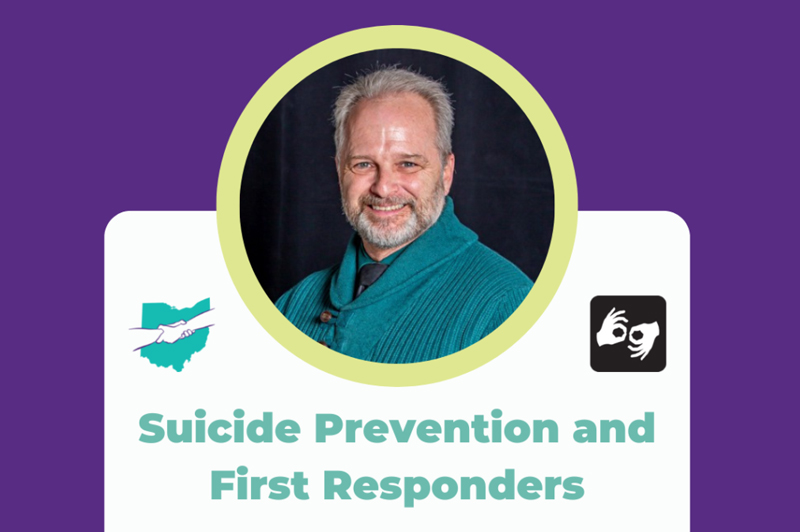
First responders, including paramedics, EMTs, firefighters, and police officers, are at special risk for suicide due to their exposure to trauma as well as other factors that are matter-of-course for this work.
Join Steven M. Click, Director of the Ohio Office of First Responder Wellness in the Ohio Department of Public Safety, to learn why it can be difficult to engage first responders in suicide prevention efforts, tips to bypass barriers, and upcoming opportunities to support first responder suicide prevention activities in your community.
American Sign Language interpretation will be available for the live and recorded presentation.
Learning objectives: After participating in this webinar, attendees will be able to
Explain why first responders are uniquely vulnerable to suicide,
Recognize protective factors that reduce the likelihood of first responders dying by suicide,
Identify strategies for engaging first responders in effective suicide prevention activities.
Registration is free for OSPF members and $25 for non-members. Continuing education will be provided for prevention, addiction counseling, social work, marriage and family counseling, and psychologists.
The Ohio School Safety Center is excited to release this year’s summit agenda. The schedule is packed with experts across the various school safety disciplines including physical security, emergency management, mental health, school climate, suicide prevention, cyber safety, transportation, and threat assessment. View the agenda here.
Register Your Team Now The 2022 Ohio School Safety Summit is free and open to the public, but requires registration to ensure adequate space is available. We recommend bringing your team to the summit and dividing up the presentations you attend so you can share what you have learned after. Visit the below link to register today! REGISTER NOW
Parking Parking is available at several lots next to the convention center. You can view an interactive map and find pricing on the Downtown Columbus website. Accommodations Several room blocks have been made at nearby hotels and a list of additional hotels are also available on the website. Reserve your room in advance to avoid increasing rates. Find out more information here
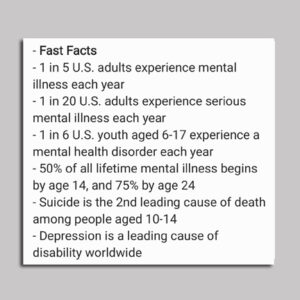
According to the National Alliance on Mental Illness, suicide is the second leading cause of death among people aged 10-34. September is Suicide Prevention and Awareness Month, and it is imperative to have conversations about mental illness and mental health. In this week’s episode, we discuss suicide prevention with Dr. Courtney Cinko, a child and adolescent psychiatrist at Cincinnati Children’s. Our conversation includes who is at risk for suicide, red flags parents should look for, how to have a conversation about suicide, resources, and so much more.
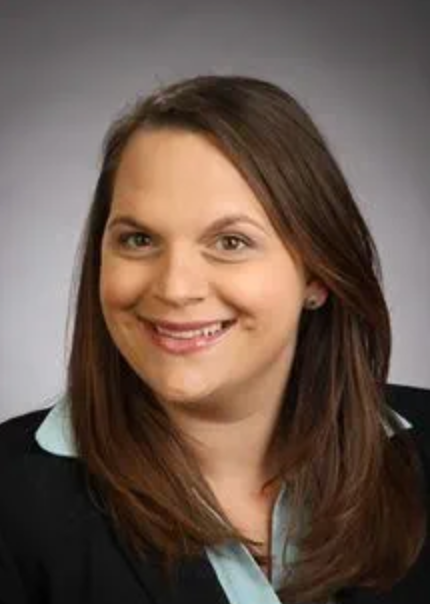
Wolff, a Miami Township trustee, for the past six years has served as director of the Coalition for a Drug Free Clermont County.
“I’m proud of the work we are doing building the coalition in Clermont County, including getting funding for years 1-5 and now 6-10,” Wolff said. “And now I’m looking forward to helping build a robust statewide suicide prevention coalition.”
Wolff sees parallels between her work for the drug free coalition and the suicide prevention foundation.
“We want to make sure our communities are responding as best as they can, now that we are in the COVID-19 era,” Wolff said. “It’s such a rough time for people with the isolation associated with the pandemic.” Strong communities have strong community-level prevention activities and policies happening everywhere.
For example, Wolff said teens are getting shamed if they test positive and cause a whole team to quarantine. They can find themselves under attack on social media.
“We know social media is both good and bad,” Wolff said. “It provides connection, but cyber-bullying and too much screen time make a problem worse.”
Her main focus at first in the new job includes: Seeking grants for capacity building and furthering a partnership with the Voinovich School at Ohio University and Ohio Mental Health and Addiction Services to build an understanding of how to build a coalition. She will assist OU and local staff in building an advocacy group among coalitions to see if policy or law changes need amending so more people may be helped.
With assistance, 30 partners across the state had developed the first Statewide suicide prevention plan. The plan focuses on prevention, intervention, and “postvention.”
Postvention involves helping survivors or family members who lost someone.
“We’re really good immediately after a tragedy,” Wolff said. “It’s the weeks and months later when people have stopped bringing the casseroles and the survivor or family member has to grapple with this alone that provides the biggest challenges.”
The plan identified three key groups with the strongest need: veterans, older male adults, and youth.
“But we want to build a network inclusive of everybody,” Wolff said “I’m really looking forward to it. It builds off of work have done with the drug prevention coalition. We all need to be prevention people: Faith community, law enforcement, educators…. We’ve got to share the message of being healthy and safe.”
For those interested in helping locally with either the Coalition for a Drug Free Clermont County or the Clermont County Suicide Prevention Coalition contact Lee Ann Watson, associate director of the Clermont County Mental Health and Recovery Board at 732-5200.


 Ohio Suicide Prevention Foundation



 Loveland Hope Squad
 Call or text the