Tag: Susan Tebben

  • Abortion rights groups ask Ohio Supreme Court to order full amendment text for November ballots

    Abortion rights groups ask Ohio Supreme Court to order full amendment text for November ballots

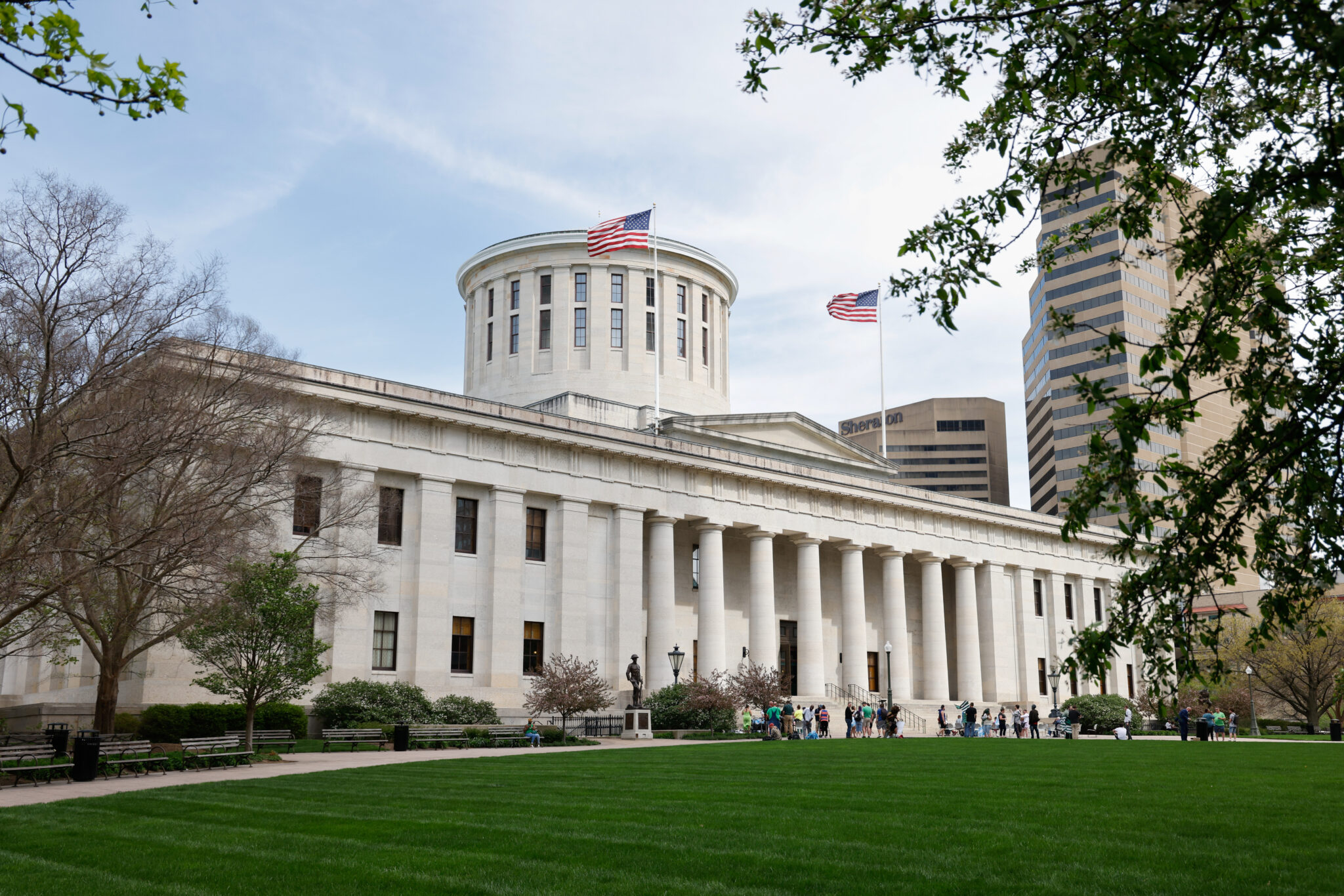
    “Gavel,” a sculpture by Andrew F. Scott, outside the Supreme Court of Ohio. Credit: Sam Howzit/Creative Commons.

    BY:  Ohio Capital Journal

    In the fight against Ohio Ballot Board language that reproductive rights groups say is deceptive, an attorney has asked the Ohio Supreme Court to order the full text of the proposed amendment to be used on November ballots.

    The Ohio Ballot Board approved language last month for voters to see on their ballots that took out specific details of the amendment, such as protections for miscarriage care and contraception.

    The language was ostensibly meant to summarize Issue 1, a proposed amendment that would add abortion and reproductive rights into the state constitution, but those who created the proposed amendment say the summary approved by the ballot board in a 3-2 vote misleads voters and adds biased terms like “unborn child” instead of the medically accurate term “fetus.”

    In a filing this week, attorney Don McTigue asked the Ohio Supreme Court to send the Ohio Ballot Board back to the drawing board, specifically to “prescribe that the amendment’s full text be used as the ballot language.”

    “The Ballot Board’s prescribed language misleads the voters about ‘what they are being asked to vote on’ and engages in improper ‘persuasive argument … against’ the Amendment,” McTigue wrote, citing previous Ohio Supreme Court languages.

    The summary language has various defects, according to the abortion rights groups, including misleading voters about “what right the amendment would create,” what restrictions the amendment would create, “whether and to what degree” the proposal would continue a pregnancy, a physician’s discretion regarding fetal viability, and “how the amendment would limit state regulation.”

    “Each of these defects violates the constitution and laws of the state of Ohio, and cannot survive under this court’s precedents,” McTigue wrote.

    Along with the alleged defects, the brief says the ballot board’s summary changes language enough to alter the meaning of the amendment and give false information to voters.

    The summary language states that the amendment would “always allow an unborn child to be aborted at any stage of pregnancy, regardless of viability if, in the treating physician’s determination, the abortion is necessary to protect the pregnant woman’s life or health.”

    “To the contrary, if the amendment were adopted, such an abortion would not be allowed insofar as the pregnant patient objected to it,” McTigue wrote. “In that case, the pregnant person would have an individual right to decide to continue [their] own pregnancy.”

    He also argued that the majority that voted for the summary language included two people who have been working against the measure. One of which, state Sen. Theresa Gavarone, took time during the board meeting in which the summary language was considered, to call the amendment “dangerous” and commit to campaigning against the measure.

    “Gavarone attacked the substance of the amendment itself as ‘an abomination,’ and asserted that the amendment entailed an ‘assault on parental rights,” the court filing noted.

    Ohio Secretary of State Frank LaRose, who leads the ballot board, has also been a vocal opponent of the proposed amendment, posting on social media with anti-abortion groups, and working on a failed constitutional amendment to raise the threshold to approve amendments specifically to block the abortion rights measure.

    “This context, together with the ballot language’s length and many defects, makes clear that the board majority’s personal opposition to the amendment infected the ballot board’s exercise of authority,” McTigue told the court.

    The Ohio Attorney General’s Office, who represents the ballot board in legal proceedings, denied wrongdoing by the board in response to the lawsuit.

    Susan Tebben
    SUSAN TEBBEN

    Susan Tebben is an award-winning journalist with a decade of experience covering Ohio news, including courts and crime, Appalachian social issues, government, education, diversity and culture. She has worked for The Newark Advocate, The Glasgow (KY) Daily Times, The Athens Messenger, and WOUB Public Media. She has also had work featured on National Public Radio.

    MORE FROM AUTHOR

  • Abortion amendment ballot language submitted, Ballot Board set to meet Thursday

    Abortion amendment ballot language submitted, Ballot Board set to meet Thursday

    Abortion rights groups request full text on November ballots

    BY:  Ohio Capital Journal

    Gearing up for an Ohio Ballot Board meeting where constitutional amendment language regarding reproductive health will be considered, groups pushing for the measure want to see the entire text of the amendment on November ballots.

    In a letter received by the Ohio Secretary of State on Monday, attorney Donald McTigue represented petitioners for the constitutional amendment in asking the board to use full text of the proposed amendment or a condensed version, so that voters can read the entire thing on their ballots in the general election this year.

    “By using the full text, voters will see for themselves the language they are being asked to approve and can make a free and independent decision on this fundamental question,” McTigue wrote.

    The abortion rights groups also argued that, in using the full text, “there can be no dispute about whether legal standards have been satisfied or whether the condensed text misleads, deceives or defrauds voters,” according to the letter.

    The ballot measure’s title, as submitted by the groups for approval by the ballot board, is “To Establish the Right to Reproductive Freedom with Protections for Health and Safety.”

    Because of the rejection of Issue 1 earlier this month at the polls, which would have raised the threshold to approve a constitutional amendment, a simple majority is needed to pass the measure.

    In the language of the amendment, it specifies that “every individual has a right to make and carry out one’s own reproductive decisions, including but not limited to” contraception, fertility treatments, pregnancy, miscarriage care and abortion.

    It prohibits the state from doing anything to “directly or indirectly burden, penalize, prohibit, interfere with or discriminate against” the exercise of the rights in the amendment, or those who assist in the exercise of the rights.

    The amendment makes exceptions in terms of abortion, in which it would be “prohibited after fetal viability.”

    “But in no case may such an abortion be prohibited if in the professional judgment of the pregnant patient’s treating physician it is necessary to protect the pregnant patient’s life or health,” the amendment states.

    “Any attempt to alter wording away from the text of the amendment should be seen for what it is: an attempt to confuse and mislead voters,” said Lauren Blauvelt, of Ohioans United for Reproductive Rights, in a statement announcing the submission of the ballot language.

    Opposition groups have claimed the amendment would impact parental rights and allow “late-term abortion,” neither of which are included in the language submitted to the ballot board. “Late-term abortion” is not considered a legitimate medical term.

    Two different lawsuits attempting to keep the amendment from going before voters have been rejected by the Ohio Supreme Court.

    Most recently, a former state legislator and a Catholic Ohio resident asked that the measure be blocked because it was unclear what laws it sought to change. A separate previous lawsuit argued the Ohio Ballot Board abused its power by improperly considering, and thus moving the ballot measure forward so that signatures could be collected in support of it.

    That signature collection amounted to nearly 500,000 valid Ohio voter signatures, which allowed the measure to head to the ballot.

    Another abortion-related lawsuit is still in the process of making it through the state’s highest court. That lawsuit was filed by Ohio Attorney General Dave Yost, challenging a Hamilton County court’s right to pause a six-week abortion ban implemented almost immediately after the Dobbs decision overturned Roe v. Wade.

    That law was passed in 2019, but has since been entangled in court cases. It bans abortion after six weeks gestation and was in place for several months following the Dobbs decision before being halted by the courts.

    The Ohio Ballot Board is scheduled to consider and vote on the language on Thursday, where they will also consider language regarding a proposed statute for recreational marijuana.


    Susan Tebben
    SUSAN TEBBEN

    Susan Tebben is an award-winning journalist with a decade of experience covering Ohio news, including courts and crime, Appalachian social issues, government, education, diversity and culture. She has worked for The Newark Advocate, The Glasgow (KY) Daily Times, The Athens Messenger, and WOUB Public Media. She has also had work featured on National Public Radio.

    MORE FROM AUTHOR

    ___________________
    [pdf-embedder url=”https://lovelandmagazine.com/wp-content/uploads/2023/08/The-Right-to-Reproductive-Freedom-with-Protections-for-Health-and-Safety.pdf”]
  • Ohio abortion rights amendment a go for November ballot

    Ohio abortion rights amendment a go for November ballot

    495,938 valid signatures certified to bring proposal to Ohio voters

    BY:  Ohio Capital Journal

    An abortion rights amendment proposed for the Ohio Constitution was certified on Tuesday to go forward for consideration by voters in November as nearly 500,000 signatures in support were verified by the Secretary of State’s office.

    In a letter to the campaign that collected signatures to put the ballot measure to Ohioans this year, Secretary of State Frank LaRose said 495,938 valid signatures were recorded, and a total of 55 counties fulfilled the percentage requirements for verification.

    “Therefore, in the absence of judicial direction to the contrary, I will direct the boards of election to place the proposed amendment on the November 7, 2023, general election ballot,” LaRose wrote.

    When advocates turned their boxes of signatures in to the secretary of state’s office on the July 5 deadline, they reported more than 700,000 signatures were submitted to be verified statewide.

    Despite the lower number, the final tally is well above Ohio’s legal requirements to put an amendment proposal on the ballot.

    Based on current law, abortion rights advocates needed to collect 413,487 signatures in 44 of 88 counties, a number based on election results from the last governor’s race.

    Ohioans United for Reproductive Rights (OURR), a coalition of groups supporting the the codification of abortion rights in the state constitution, celebrated the news, but also set their sights on another hurdle at the ballot: Issue 1, hitting voters next month in the August 8 primary.

    Issue 1 would make it harder for Ohio voters to amend the constitution by raising the threshold from a simple majority to 60%. If passed, Issue 1 would require the abortion ballot measure to meet that threshold.

    It would also require proposals made after January 1, 2024, to meet signature requirements in all 88 counties instead of the current requirement of 44 counties.

    “Now that the petition drive is complete, we’re eager to continue the campaign to enshrine those rights in Ohio’s constitution and ensure that Ohioans will never again be subject to draconian reproductive health care policies imposed by extremists,” wrote Lauren Blauvelt and Dr. Lauren Beene, executive committee members for the OURR, in a statement.

    “This is a major step for Ohio, but it’s bigger than just one state,” said Kimberly Inez McGuire, executive director for Unite for Reproductive and Gender Equity. “This is about reversing the tide of abortion bans and securing a better future for us all.”

    GOP leaders including LaRose have admitted Issue 1 supporters are motivated by their desire to stop the abortion rights amendment.

    The campaign standing in opposition to the abortion amendment, Protect Women Ohio, and anti-abortion lobby Ohio Right to Life, decried the new development, pushing ahead with their efforts to block the amendment from passage.

    Peter Range, CEO of Ohio Right to Life, called the amendment “anti-life,” and said it is “even more imperative that every pro-life Ohioan votes yes on Issue 1 this August to ensure that our constitution, our preborn and our families are protected,” according to a statement sent by the group.

    Protect Women Ohio said they have spent “an initial” $8 million on TV, radio and digital ads in support of Issue 1, and against the November abortion amendment.

    With the amendment now allowed to go to the ballot, the Ohio Ballot Board chaired by LaRose will draft the language voters will read about the measure on their ballots.

    Recent polls show 57.6% of Ohioans support the abortion rights amendment, while 32.4% oppose it and 10% are undecided. On the Aug. 8 Issue 1 effort to change the threshold for passage of amendments from 50% to 60%, another recent poll showed 57.2% of Ohioans oppose Issue 1, while 26% support it, and 17% are undecided.


    Susan Tebben
    SUSAN TEBBEN

    Susan Tebben is an award-winning journalist with a decade of experience covering Ohio news, including courts and crime, Appalachian social issues, government, education, diversity and culture. She has worked for The Newark Advocate, The Glasgow (KY) Daily Times, The Athens Messenger, and WOUB Public Media. She has also had work featured on National Public Radio.

    MORE FROM AUTHOR

    ____________________

    Related Loveland Magazine Interview:

  • State Board of Education of Ohio discusses changes coming with budget approval

    State Board of Education of Ohio discusses changes coming with budget approval

    BY:  Ohio Capital Journal

    In their first meeting since the state budget was approved with sweeping changes to Ohio’s State Board of Education, the group discussed the impacts it will face.

    “This is going to be another chapter here and I want to be as proactive and on top of this chapter as I can, and as we can,” said Paul LaRue, president of the board.

    Among the billions of dollars and hundreds of things approved by Gov. Mike DeWine last week were the provisions previously contained in Senate Bill 1, which transfer most of the powers away from the board and into the executive branch.

    The changes would rename the department overseeing the board to the Ohio Department of Education and Workforce and create a cabinet-level position that would direct the department. Two deputy directors would also be a part of the new department, one for primary and secondary education and another for workforce.

    “The board needs to be thinking about in the upcoming months, about what these things look like,” said Chris Woolard, interim superintendent of public instruction.

    Woolard’s job will change as well, though he will remain the secretary of the board and serve as the board’s “executive officer,” conducting policy and administrative functions of the board and staff of the board, according to Tony Palmer, chief legal counsel for the ODE.

    “Most of the responsibilities that are currently with the superintendent are transferred under the budget bill to the director of the Department of Education and Workforce,” Palmer told the board.

    As for the board, it will retain powers related to educator licensure, discipline, teacher evaluation systems, and appointment of the superintendent. They can also make recommendations to the DEW directors regarding priorities for education, according to Palmer.

    Several board members wrote to DeWine prior to his signing of the budget to ask him to remove the SB 1 provisions, calling the changing of the roles a “power grab.”

    At this week’s board of ed meetings, members continued to criticize the move, questioning the enforcement measures to make sure the new oversight is the right move and truly improves the state of student test scores and education in general.

    “What we kept hearing was that they needed to get rid of the state board because somebody was not being held accountable, but they never defined what that meant,” said board member Antoinette Miranda. “I’m just wondering if (the DEW directors) are going to get fired when the scores come back the same.”

    Miranda’s fellow board member Diana Fessler claimed Pearson Education, a company who creates student assessment tests, would help with the change “by changing the test questions, and they can change the scores and the cutoff scores besides.”

    “I think the kids are going to be doing amazingly well in no time at all,” Fessler said. “But it’ll be a lie from the pit of hell.”

    Jessica Voltolini, chief of staff for the ODE, said officials are still reviewing all of the provisions of the budget and the changeover, working on a 180-day timeline: 90 days preparing before the October effective date of the bill, and the 90 days following, when implementation of all of the changes will be made.

    But Voltolini said the “very high-level overview” the department has taken so far hasn’t shown any additional level of accountability for the directors, other than that they would need to confirmed by the Ohio Senate.

    Teresa Fedor, one of the most recently elected board members and a former state senator, accused the governor of going against a constitutional amendment passed in 1953, in which voters moved the ODE into its own department.

    “Not some of it, all of it,” Fedor said. “And (DeWine) is breaking the constitutional intent and message right now, so we need to have clarification on how decisions are going to be made by this group.”

    The board may face further changes if just-introduced legislation makes its way through the General Assembly. Former board member, now state Rep. Sarah Fowler Arthur, R-Ashtabula, introduced a measure this month that would eliminate governor-appointed positions on the board and reduce the group to 15 elected-only positions.

    That measure will be assigned to a committee for consideration before it can move for a full vote of the House and Senate.


    Susan Tebben
    SUSAN TEBBEN

    Susan Tebben is an award-winning journalist with a decade of experience covering Ohio news, including courts and crime, Appalachian social issues, government, education, diversity and culture. She has worked for The Newark Advocate, The Glasgow (KY) Daily Times, The Athens Messenger, and WOUB Public Media. She has also had work featured on National Public Radio.

    MORE FROM AUTHOR

  • Ohio abortion rights supporters submit signatures, gunning for November ballot

    Ohio abortion rights supporters submit signatures, gunning for November ballot

    BY:  Ohio Capital Journal

    Two trucks loaded with more than 400 boxes rolled into the Ohio Secretary of State’s Office Wednesday. In those boxes were 710,000 signatures abortions rights advocates say prove they have the support they need to bring a ballot measure asking voters to put abortion care in the Ohio Constitution.

    “Those (402) boxes are filled with hope, and love, and freedom of bodily autonomy … of being able to say ‘we decide what happens to us,’” said Kellie Copeland, executive director of Pro-Choice Ohio.

    In the last 12 weeks, advocates from groups including Ohioans for Reproductive Freedom and Ohio Physicians for Reproductive Rights have gone to farmer’s markets, held drive-through signing events, and reached across the state to collect the nearly 414,000 signatures required of them to place a measure on an Ohio voting ballot. Signature-gatherers collect far more than that minimum in an attempt to make sure enough signatures are correct and valid to meet the threshold.

     COLUMBUS, Ohio — JULY 05: Field staffer for Ohioans United for Reproductive Rights, Carlos Ortiz unloads the first of 402 boxes of petitions with over 700,000 signatures being delivered to Ohio Secretary of State Frank LaRose, July 5, 2023, at the loading dock of the Office of the Ohio Secretary of State, downtown Columbus, Ohio. (Photo by Graham Stokes for Ohio Capital Journal. Republish photo only with original article.) 

    Bill Wood was one of many collecting signatures, and he said he was overwhelmed by the support he saw the past three months.

    “What amazed me is that even late in this process, there were people who were coming up to us and saying, ‘I have been looking forward to signing this, thank you for being here,’” Wood said. “The number of thank-you’s and compliments and wonderful support that we got from people at every stage was amazing.”

    As part of the Westerville Progressive Alliance, he said he has participated in many signature drives and campaigns over the years.

    “I will tell you when we brought this to our people, we have never seen an outpouring of interest and commitment like we’ve seen this year,” Wood said.

    He said the Westerville group alone collected 9,000 signatures.

    The measure would allow abortion in the state via an amendment to the Ohio Constitution, that states “every individual has a right to make and carry out one’s own reproductive decisions, including but not limited to decisions on contraception, fertility treatment, continuing one’s own pregnancy, miscarriage care and abortion.”

    “Ultimately, this is about giving my patients, our patients, our friends, our families, their power back,” said Dr. Marcela Azevedo, co-founder of OPRR.

    If approved, the amendment would bar the state from doing anything to “directly or indirectly burden, penalize, prohibit, interfere with, or discriminate against either an individual’s voluntary exercise of this right or a person or entity that assists an individual exercising this right, unless the state demonstrates that it is using the least restrictive means to advance the individual’s health in accordance with widely accepted and evidence-based standards of care,” according to the ballot language certified by the Ohio Ballot Board.

    Abortion can, however, be prohibited “after fetal viability,” defined in the proposed amendment as “the point in pregnancy when, in the professional judgment of the pregnant patient’s treating physician, the fetus has a significant likelihood of survival outside the uterus with reasonable measures.”

    Pro-abortion rights groups say signatures were collected in every Ohio county, something that may come in handy with another constitutional amendment, Issue 1, on the ballot in August that would require 60% of Ohio voters to approve of a measure, and require signatures to come from all 88 counties, rather than just the 44 of 88 required in current law.

    Now, the Secretary of State’s Office will have until July 25 to verify the signatures and determine whether the measure has enough valid Ohio voter support to move forward.

    If the number falls short of the required amount, advocates have 10 days to file a supplementary petition with more signatures, which must be from registered Ohio voters who didn’t sign the previous petition.

    The groups working to get the measure on the ballot estimate the campaign to do it may cost approximately $35 million.

    A spokesperson for Secretary of State Frank LaRose did not respond to requests for comment.


    Susan Tebben
    SUSAN TEBBEN

    Susan Tebben is an award-winning journalist with a decade of experience covering Ohio news, including courts and crime, Appalachian social issues, government, education, diversity and culture. She has worked for The Newark Advocate, The Glasgow (KY) Daily Times, The Athens Messenger, and WOUB Public Media. She has also had work featured on National Public Radio.

    MORE FROM AUTHOR

  • Ohio’s congressional redistricting case moves back to state supreme court

    Ohio’s congressional redistricting case moves back to state supreme court

    BY:  Ohio Capital Journal

    In an expected move, the U.S. Supreme Court on Friday sent back an Ohio congressional redistricting appeal for reconsideration by the state’s highest court.

    Following its decision in Moore v. Harper, in which a majority of the court rejected the concept of the independent state legislature theory, the court entered a short order regarding the Ohio case, directing the state supreme court to reconsider the case “in light of Moore v. Harper.”

    The Moore v. Harper decision essentially rejected all of the arguments attorneys for Huffman and GOP leadership made for legislative authority over district maps.

    Using a very old and often rejected legal theory, arguments were made in the North Carolina case that a state legislature holds power over the administration of elections, therefore rise above the scrutiny of the judicial system when setting voting districts.

    SCOTUS Chief Justice John Roberts said the Elections Clause of the U.S. Constitution “does not insulate state legislatures” from judicial review.

    But the Ohio case, listed under the lead parties Senate President Matt Huffman and district map challenger Meryl Neiman, is headed back to a state supreme court with a new chief justice, one who led the dissent in each of the court’s rejections of congressional (and, for that matter, statehouse) redistricting maps, leading to the appeal sent to the U.S. Supreme Court.

    Chief Justice Sharon Kennedy would have upheld the very first map presented to the court nearly two years ago, and every map thereafter.

    Freda Levenson, legal director for the ACLU of Ohio said Friday that if Moore v. Harper is applied correctly by the Ohio Supreme Court, the court would uphold its previous decision, rejecting the current congressional maps.

    “What SCOTUS said in Moore was that legislatures must follow their state constitutions — consistent with what the Ohio Supreme Court already decided,” Levenson said.

    Before the court made either decision regarding redistricting, Huffman told reporters it “may simply be that we have the same congressional districts for the 2024 race as the one we have now.”

    Regarding the SCOTUS decision, Huffman released a statement on Friday praising the court’s move, and saying the appeal “clearly recognized serious constitutional concerns with the narrow majority opinions rendered under the former Chief Justice.

    “We are reviewing the U.S. Supreme Court’s message to determine the path forward,” Huffman said in a statement.

    The Ohio Redistricting Commission would need to be reconvened by Gov. Mike DeWine, but a spokesperson for the governor suggested that won’t happen until after the state budget is finalized.

    Also of note is DeWine’s son, Pat DeWine, who is a sitting justice on the supreme court. Pat DeWine has recused himself from previous cases in which the court considered contempt proceedings on ORC members (including DeWine) for missing redistricting deadlines, but has not recused himself from general redistricting lawsuits coming before the state supreme court.


    Susan Tebben
    SUSAN TEBBEN

    Susan Tebben is an award-winning journalist with a decade of experience covering Ohio news, including courts and crime, Appalachian social issues, government, education, diversity and culture. She has worked for The Newark Advocate, The Glasgow (KY) Daily Times, The Athens Messenger, and WOUB Public Media. She has also had work featured on National Public Radio.

    MORE FROM AUTHOR

  • Ohio Capital Journal wins seven Society of Professional Journalists awards

    Ohio Capital Journal wins seven Society of Professional Journalists awards

     States Newsroom photo


    “Congratulation to Loveland Magazine’s invaluable news source that reports from the Ohio Capital for you.” – David and Cassie

    Commentary by David DeWitt

    In the “Ohio’s Best Journalism Contest” from the Society of Professional Journalists, the Ohio Capital Journal won seven awards, including five first place finishes and two in second place. The contest covered stories and editorial from 2022.

    In digital media categories, OCJ Senior Reporter Marty Schladen won first place for best news story; OCJ/WEWS Reporter Morgan Trau won first place for best government/political reporting and first place for best education issues reporting; OCJ Editor David DeWitt won first place for best editorial writing; OCJ Editor David DeWitt and Columnist Marilou Johanek won first place for best overall commentary/opinion blog section; and OCJ Reporter Susan Tebben won second place for best government/political reporting and second place for best education issues reporting.

    We are incredibly honored and grateful for this recognition from our fellow journalists. We are also humbled by and grateful for all of the support we receive from our readers and Ohioans across the state.

    Below we will share the award-winning entries.

    If you’d like to support our work, please follow us on Facebook and Twitter, share our free newsletter subscription with family and friends, and consider making a tax-deductible donation.

    Best News Story – Marty Schladen – First Place

    Ohio docs say new abortion law has them working against oaths to do no harm

    Affidavits: More pregnant minors who were raped denied Ohio abortions

    While in effect, Ohio’s abortion ban led to chaos, suffering, and worse health care, doctor says

    Best Editorial/Criticism Writing – David DeWitt – First Place

    Ohio redistricting charade continues as GOP again passes more clearly rigged maps

    Campaign finance and pay-to-play corruption is also destroying the American Republic

    In 1912, Ohio voters asserted their democratic authority. Now Ohio Republicans want to rip it away

    Best Overall Commentary/Opinion blog (news organization) – David DeWitt and Marilou Johanek – First Place

    In 1912, Ohio voters asserted their democratic authority. Now Ohio Republicans want to rip it away

    Ohio Republicans’ attempted erasure of a 10-year-old rape victim is incredibly sick and disturbed

    Extremist Ohio legislators created the law forcing child rape victims to give birth

    Best Education Issues Reporting – Morgan Trau – First Place

    Comments about the Holocaust from representative sponsoring ‘divisive concepts’ bill raise concerns

    GOP passes bill aiming to root out ‘suspected’ transgender female athletes with genital inspection

    Former OSU professor begs for job back after ‘manic episode,’ university refuses

    Best Government/Political Reporting – Morgan Trau – First Place

    Comments about the Holocaust from representative sponsoring ‘divisive concepts’ bill raise concerns

    Ohio lawmaker who wrote bill requiring gun training for teachers owns gun training business

    Ohio Rep. behind bill limiting transgender care had never spoken to community

    Best Education Issues Reporting – Susan Tebben – Second Place

    Ohio governor, education groups at odds over board of ed district deadlines

    No changes planned for state board of education districts, despite redistricting changes

    Resolution condemning LGBTQ anti-discrimination language passed by Ohio’s state Board of Education

    Best News Story – Susan Tebben – Second Place

    Ohio Republicans abandon independent mapmakers to pass slightly modified GOP maps

    Deja Vu: Republicans use simple majority to pass 4-year maps

    Redistricting commission punts again, defies court order


    David DeWitt
    DAVID DEWITT

    OCJ Editor-in-Chief and Columnist David DeWitt has been covering government, politics, and policy in Ohio since 2007, including education, health care, crime and courts, poverty, state and local government, business, labor, energy, environment, and social issues. He has worked for the National Journal, The New York Observer, The Athens NEWS, and Plunderbund.com. He holds a bachelor’s degree from Ohio University’s E.W. Scripps School of Journalism and is a board member of the E.W. Scripps Society of Alumni and Friends. He can be found on Twitter @DC_DeWitt

    MORE FROM AUTHOR

  • Voter deadlines approaching for Ohio’s August special election

    Voter deadlines approaching for Ohio’s August special election

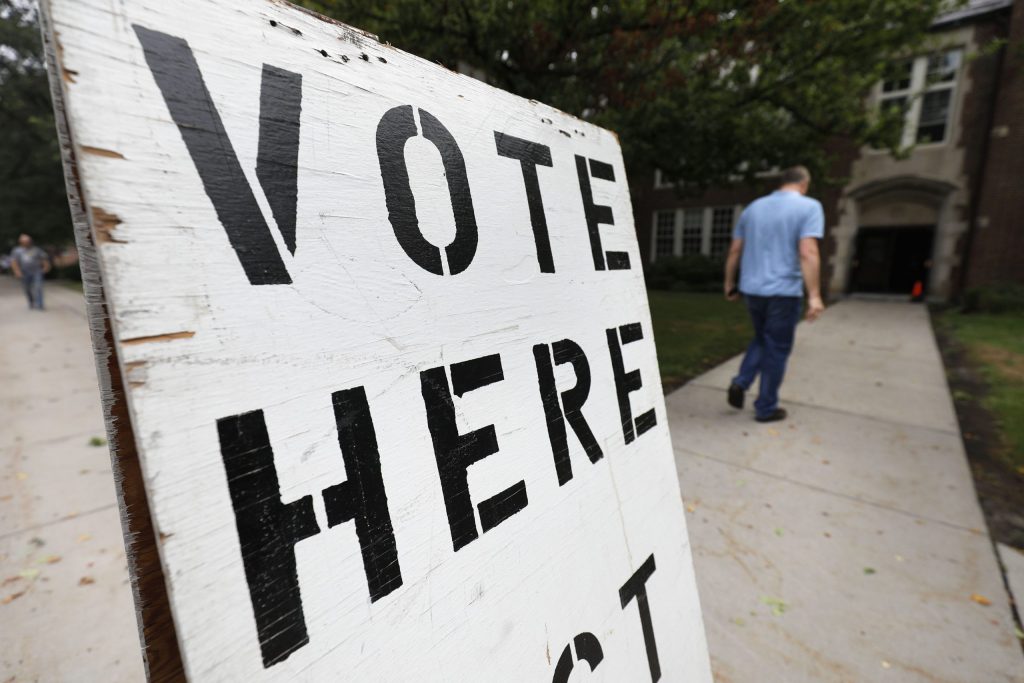
    People enter a voting precinct to vote in the Michigan primary election at Trombly School Aug. 7, 2018 in Grosse Pointe Park, Michigan. (Photo by Bill Pugliano/Getty Images)

    BY:  Ohio Capital Journal

    Deadlines are coming up quick for Ohio voters participating in the Aug. 8 special election over State Issue 1, which seeks to make it harder for voters to amend the Ohio Constitution by raising the threshold from 50% to 60%, and increases the number of counties ballot signatures for citizen initiatives must be collected, from 44 to 88.

    Here are some important dates to keep in mind:

    • July 10: Voter registration deadline for the Aug. 8 primary
    • July 11: First day of early in-person voting
    • July 15: Certification for independent candidates
    • Aug. 1: Absentee ballot applications must be turned in
    • Aug. 8: Polls are open from 6:30 a.m. to 7:30 p.m., and absentee ballots are due by close of polls.

    If State Issue 1 passes, its provisions making it harder for voters to bring forward and pass proposed amendments would impact future ballot initiatives, including some that are already in the works, such as the abortion ballot measure, set to go before voters in November, along with initiatives to change marijuana regulation and minimum wage.

    Republicans who are in support of Issue 1, including Ohio’s elections chief Secretary of State Frank LaRose, have pointed to the abortion proposal as a main reason they’d like to see the voter threshold amendment pass in August, as it would cause significant challenges for the amendment, for which signature gathering has been well under way.

    Critics of Issue 1 have said the measure would roll back more that 112 years of Ohio majority voter powers and give even more power to an already gerrymandered GOP supermajority legislature.

    Issue 1 had to get through a few challenges of its own to get to the ballot, with the Ohio Supreme Court giving it the official go ahead just last week, after a lawsuit sought the court’s intervention. This was because Ohio lawmakers passed a law in December outlawing August elections before brining back this August election in defiance of the new law.

    The Ohio Supreme Court in a split decision sided with Republican lawmakers, after the court asked that the Ohio Ballot Board rewrite some of the language in the ballot measure, including the title and explanations of the term “electors.”

    The ballot board, led by LaRose, did just that on June 14, though the changes were approved on partisan lines.


    Susan Tebben
    SUSAN TEBBEN

    Susan Tebben is an award-winning journalist with a decade of experience covering Ohio news, including courts and crime, Appalachian social issues, government, education, diversity and culture. She has worked for The Newark Advocate, The Glasgow (KY) Daily Times, The Athens Messenger, and WOUB Public Media. She has also had work featured on National Public Radio.

    MORE FROM AUTHOR

  • Ohio redistricting slated for later this summer, maps in September, Senate president predicts

    Ohio redistricting slated for later this summer, maps in September, Senate president predicts

    Redistricting ahead with budget cycle’s end, Alabama decision could have impacts

    BY:  Ohio Capital Journal

    Once the Ohio two-year budget cycle is finished by June 30, Ohio Senate President Matt Huffman expects work to begin again on redistricting for Statehouse maps, with September as a likely date for them, he told reporters recently.

    Both Ohio’s U.S. Congressional district maps and Statehouse maps were declared unconstitutional gerrymanders multiple times by a bipartisan majority of the former Ohio Supreme Court, but voters were nevertheless forced to vote under them in 2022 after Republicans on the Ohio Redistricting Commission ran out the clock and appealed to a federal court.

    With swing vote former Ohio Supreme Court Republican Chief Justice Maureen O’Connor forced to retired due to age, Republicans added partisan labels to the 2022 Ohio Supreme Court races and won a majority of justices. Gov. Mike DeWine then appointed a family friend to an open seats after Justice Sharon Kennedy was elected chief justice.

    The new right-wing 4-3 majority on the court is not expected by analysts to have a swing vote on the issue of gerrymandering going forward. O’Connor has called for further anti-gerrymandering reform by Ohio voters, which had passed such reform in 2015 and 2018 with more than 70% of the vote. That system left politicians in charge of the process, however. O’Connor has since called for an independent commission.

    Ohio Republicans have also brought a case to the U.S. Supreme Court over the congressional district maps, seeking the court to declare under a theory called “independent state legislature doctrine” that the Ohio General Assembly has total control over the maps and the Ohio Supreme Court does not have jurisdiction.

    Because the high court has yet to decide whether or not it will review the case, Huffman told reporters last week that the congressional maps could stay the same for the 2024 election.

    “(The congressional map’s) a little bit more uncertain, it may simply be that we have the same congressional districts for the 2024 race as the one we have now,” Huffman said.

    As for the Statehouse maps, it’s up to the governor to call the Ohio Redistricting Commission back into session, Huffman said. The commission is made up of a majority of Republican leaders, including the governor, Auditor of State Keith Faber and Secretary of State Frank LaRose, as well as a Republican and Democrat from each chamber of the state legislature.

    Huffman – who was on the commission until he and then-House Speaker Bob Cupp removed themselves, saying they were needed for other legislative duties – sees a mid-September date as a likely end date for the Statehouse district discussion.

    “The plan in my head…is that we would start in earnest after June 30, have hearings and all of the other negotiations and things that are to be done and to try to have a map by mid-September,” Huffman said.

    He said he doesn’t know “how much all the districts will change” in the General Assembly maps, but action will be needed on them.

    One change that could come into play for the Statehouse maps has to do with a recent U.S. Supreme Court decision in an Alabama redistricting case.

    In the case, the court upheld a lower court decision that the state had likely violated the Voting Rights Act with a congressional map that had one majority Black district.

    Amid redistricting deliberations in Ohio, a staffer who helped draw some of the earliest maps in the process said he was directed to ignore racial data in drawing state districts.

    A lawsuit was filed by two Youngstown residents accusing redistricting officials of racial discrimination. The lawsuit did not see further action as maps were redrawn several times, and a federal court ordered the commission to redraw maps after they were used for the 2022 election.

    Though the Alabama decision was considered a general win for the Voting Rights Act, it’s not clear how much change it will make in Ohio.

    “It may prompt the legislature or the commission to approach the redraw differently, but I don’t see anything in the lawsuit that necessitates that change,” said Yurij Rudensky, senior counsel for the Democracy Program at the Brennan Center for Justice.

    The Alabama decision upheld existing Voting Rights Act language that bars states from ignoring demographics.

    “If it is such that the conditions on the ground could lock out voters of color from being able to participate in the process … there has to be an eye to how voters of different races are being grouped together,” Rudensky said.

    Rudensky is also counsel in a lawsuit between the Ohio Organizing Collaborative and the ORC challenging district maps in the state.

    A spokesperson for Ohio House Speaker Jason Stephens did not respond to requests for comment on the status of the redistricting process.

    Asked whether Gov. Mike DeWine had a plan when it came to redistricting post-budget cycle, a spokesperson said “it is accurate we are focused on the biennial budget due June 30th, as is the General Assembly.”


    Susan Tebben
    SUSAN TEBBEN

    Susan Tebben is an award-winning journalist with a decade of experience covering Ohio news, including courts and crime, Appalachian social issues, government, education, diversity and culture. She has worked for The Newark Advocate, The Glasgow (KY) Daily Times, The Athens Messenger, and WOUB Public Media. She has also had work featured on National Public Radio.

    MORE FROM AUTHOR

  • Groups fighting hunger in Ohio disappointed by Senate budget draft

    Groups fighting hunger in Ohio disappointed by Senate budget draft

    BY:  OHIO CAPITAL JOURNAL

    Those on the ground trying to eradicate hunger in Ohio say the new budget proposal from the state Senate would only exacerbate the problem.

    After finding out that many of Ohio’s foodbank clients are forced to choose between paying for food and things like utilities and medicine, the Ohio Association of Foodbanks urged the state legislature to include increased funding to the Ohio Food Program and Agricultural Clearance Program (OFPACP), along with hopes that the federal government would make positive changes to the Supplemental Nutrition Assistance Program.

    “Clearly (the study’s) findings had the reverse impact on the Senate Republicans,” OAF executive director Lisa Hamler-Fugitt, told the OCJ. “If enacted, (the Senate’s budget proposal) will make hunger, insecurity, and poverty worse than it is now.”

    The Ohio Senate’s version of the budget, headed to the chamber’s finance committee, would reduce the OFPACP funding and added a request for the Department of Medicaid to establish work reporting requirements for Medicaid.

    The House version of House Bill 33, the official title of the budget bill, included $15 million per year for the next two years to the food and agricultural clearance program, and created free-lunch eligibility for any student who qualified for the reduced lunch program as well.

    Neither of those are included in the Senate version.

    “Eliminating increased funding to help workers, families, older adults, disabled Ohioans and marginalized people put food on the table, when the state of Ohio has incredible resources at its disposal, is cruel and short-sighted,” the OAF said in a statement.

    The Hunger Network in Ohio disparaged the GOP version of the budget for cutting funding not only to the hunger efforts, but also to K-12 education and free and reduced lunches in schools.

    “We cannot continue to balance our budget on the backs of hardworking and hungry Ohioans,” said Nick Bates, director of the network. “This proposal will leave Ohioans hungry, our schools under-resourced, and families without the resources to get ahead.”

    According to Hamler-Fugitt, the association of foodbanks provided take-home groceries to more than 3 million state residents in the last quarter, over 30% more than the same time last year.

    In the research study by the OAF, two in three Ohio households who come to the foodbanks have had to cut the size of meals or skip meals due to a lack of money, which could be attributed to rising food costs and a reduction in SNAP monies boosted during the pandemic.

    The association study also found that only 5% of SNAP participants’ benefits lasted a full month since the end of the pandemic-expanded program, which stopped in March.

    Ending the program resulted in a monthly loss of about $90 per person on average, according to the OAF.

    The Senate Finance Committee will hold hearings on the budget and conduct a floor vote on the bill. The deadline for passage is the end of June.


    Susan Tebben
    SUSAN TEBBEN

    Susan Tebben is an award-winning journalist with a decade of experience covering Ohio news, including courts and crime, Appalachian social issues, government, education, diversity and culture. She has worked for The Newark Advocate, The Glasgow (KY) Daily Times, The Athens Messenger, and WOUB Public Media. She has also had work featured on National Public Radio.

    MORE FROM AUTHOR