Tag: Susan Tebben

  • Ohio legislative leaders brush off concerns over Alabama IVF ruling’s impacts

    Ohio legislative leaders brush off concerns over Alabama IVF ruling’s impacts

    The Ohio Statehouse, Columbus, Ohio. (Photo by Graham Stokes for the Ohio Capital Journal. Republish photo only with original story.)

    BY:  Ohio Capital Journal

    After an Alabama Supreme Court decision that ruled frozen embryos housed outside of a human body were still considered children, states across the country are debating the implications of such a decision.

    Ohio legislative leaders are saying bills that would ban IVF are not being considered, but one lawmaker who has introduced a “personhood” bill in the past says it’s still “great policy” that’s being blocked by politics.

    National groups have said the Alabama decision will have impacts on the work that embryologists do, with the Society of Reproductive Biologists and Technologists saying the state’s supreme court ruling “stands in stark contrast to scientific understanding and the experiences of individuals navigating fertility treatments.”

    The concept of “fetal personhood” is not a new one for Ohio. Long before the Alabama decision threw into question the concept of in-vitro fertilization treatments in that state, legislators in the Buckeye state were considering a bill that would consider life’s beginning at conception, a theory conservatives and pro-life politicians have long pushed.

    Ohio House Bill 704 was introduced in 2022 by state Rep. Gary Click, R-Vickery, who claimed “one class of people has erroneously been denied their constitutional rights: the unborn.”

    “From the moment of fertilization, that zygote, embryo or whichever depersonalizing term you choose to use is not merely a potential human but rather (a) human with potential,” Click said in a statement announcing the legislation.

    The bill died as the General Assembly’s two-year session ended, but the fact that the idea was broached is still being brought up by Democrats and pro-choice groups around the state.

    Click himself didn’t rule out the idea of reintroducing his personhood legislation, saying in a Feb. 23 tweet that reintroducing it has “not been my plan at the moment.”

    “But plans do change,” the tweet went on.


    The legislator — who was also the creator of a successful bill that bans gender-affirming care for transgender minors, a controversial bill that succeeded with a veto-override in January — also told the Statehouse News Bureau in February that while he supported IVF if all embryos are used, he considered his personhood bill “great policy” blocked by politics.

    Since Click’s bill was introduced (and subsequently foiled by time limits), however, 57% of Ohio voters passed November’s Issue 1, which not only enshrined abortion rights into the Ohio Constitution, but also listed “fertility treatment” as one of the rights Ohio individuals have to “make and carry out one’s own reproductive decisions,” according to the amendment.

    IVF patients represented a group of people who spoke out in favor of Issue 1 as a protection against unnecessary regulation and uncertainty in the IVF process.

    But Republican legislators in particular have not seen this development as the roadblock to reproductive rights legislation one might expect, as policymakers at the Statehouse have continued to push anti-abortion legislation and bills that target the rights now protected under the state constitution.

    The state’s legal representatives are also still pushing against a lawsuit that seeks to eliminate a six-week abortion ban that became law in 2019 (and has been tied up in court ever since).

    Still, Ohio’s legislative leaders have said the Alabama decision has yet to spur any policy in the state at this point.

     Left, Ohio House Speaker Jason Stephens. Right, Ohio Senate President Matt Huffman. (Photos by Graham Stokes for the Ohio Capital Journal. Republish only with original article.) 

    House Speaker Jason Stephens, R-Kitts Hill, said the chamber is “monitoring any potential ramifications the Alabama decision may have in Ohio,” but also said, from his perspective, “IVF provides hope and is 100% pro-family.”

    “We look forward to advancing our values and continuing our pro-life legislative agenda,” Stephens told the OCJ in a statement.

    Senate President Matt Huffman said he has not heard of any legislation and there hasn’t been “any discussion by any member of my caucus or anybody else as far as in the state of Ohio as far as I know.”

    “We seem to be in this national culture that if some court in Alabama or some other state says something that we all should be reacting to it,” Huffman said.

    The senate leader acknowledged that “we have a constitutional amendment that affects some of this.”

    “But you know, with other things going on right now, it’s just not a discussion that’s taking place,” he said.

    A spokesperson for Gov. Mike DeWine said his office would “continue to monitor any bills in this policy area,” but they were not aware of any at the moment.

    DeWine’s office did not respond to questions as to whether or not the governor supported the consideration of frozen embryos as children.

    Megan Henry contributed to this story.

    _____________

    Susan Tebben
    SUSAN TEBBEN

    Susan Tebben is an award-winning journalist with a decade of experience covering Ohio news, including courts and crime, Appalachian social issues, government, education, diversity and culture. She has worked for The Newark Advocate, The Glasgow (KY) Daily Times, The Athens Messenger, and WOUB Public Media. She has also had work featured on National Public Radio.

    MORE FROM AUTHOR

  • Ohio moms, new group, push for federal child care support

    Ohio moms, new group, push for federal child care support

    (Photo by Jemal Countess/Getty Images for Community Change)

     Ohio Capital Journal

    Meaghan Robbins doesn’t like when her husband, a member of the Army National Guard, is deployed for long stints. But with a toddler in need of child care, she can’t argue with the extra money.

    “When he comes home and goes back to being a first responder, that changes,” the Marysville resident said.

    Robbins doesn’t want to saddle her police officer husband with the overtime that would be necessary to keep her from working while also affording child care.

    The cost of child care for the family, set to go up to $350 a month from the current $300 monthly, means two incomes are a must. But so, too, is the care and education their daughter receives.

    “The things that she has been able to do or express because of lessons learned (at the daycare), I can’t provide that,” Robbins told the OCJ.

    Addy Cary, mom to two young kids, had a family member to take care of her youngest until she was about eight months old. But once child care became necessary when they lived in Columbus, the religiously-affiliated daycare they found to meet their needs cost about the same as the family’s mortgage – more than $1,000 a month.

    “And that was considered really cheap when I talked to other people about it,” Cary said.

    Cary and her family moved to her hometown of Wooster to be closer to family, and the problem then became availability of care. So while she and her husband always wanted to have a family and considered it an important step in their lives, they realized they’d have to make unexpected decisions on how to care for their family.

    “How are we going to get by when the cost of everything is going up so much, and we’re stuck just trying to think about how we’re going to pay for child care,” Cary and her family pondered.

    Robbins works in HR and has a steady job at a family-oriented company now, but when she was laid off from a previous job, finding a job that paid enough to keep her youngest child in a quality learning environment while also allowing her the flexibility to take care of the child when she was home was a struggle she hadn’t anticipated before becoming a mother.

    “If it works pay wise, it doesn’t work hours wise,” Robbins said. “If it works hours wise, it definitely doesn’t work pay wise.”

    In the years before she had the job she currently has, she started working at her daughter’s daycare to partially offset the costs.

    “I was pretty much working for free,” she said.

    Campaign for Childcare

    The frustration that came from wanting a quality education for their children but struggling with the ever-rising costs of it led Robbins and Cary to join a new effort, the Campaign for Childcare, putting pressure on federal leadership to support families and stem the flood of overwhelming costs families pay just to take care of children.

    “I think it is very glossed over because having children, you’re seen as ‘you made this decision, now it’s all on you,’” Robbins said. “If we can make sure that people have access to daycare that is affordable, that is safe, we all get more out of it.”

    The Campaign for Childcare identifies as a grassroots organization seeking to advocate for “large scale change in our childcare system to expand capacity, quality, accessibility and affordability of childcare nationwide,” according to their website.

     Children at day care. (Getty Images) 

    CFC field organizer Katie Holler, who is also a Steubenville mom, said the group is looking into targeted spending on the federal level for child care, but it also hopes to bring the issue to the forefront as voters head to the polls this March and November in Ohio.

    “We hope it’s a talking point everywhere, and I think it’s just a matter of voters knowing they can ask candidates about child care and feel confident in talking to the candidates,” Holler said.

    According to Holler, local members of the group have already reached out to Ohio’s U.S. Sen. J.D. Vance to urge him to support supplemental funding for child care.

    The national campaign also listed Ohio Rep. Dave Joyce as the target of campaign messaging, hoping to get congressional lawmakers on board with a request from President Joe Biden in late 2023 to use $16 billion in “domestic emergency spending” as part of the 2024 budget for “child care stabilization.”

    Priorities

    For Robbins, helping families get the quality child care they need not only helps them, but brings about a more prepared workforce (current and future) and allows potential parents to feel more confident that they could bring a child into the country.

    “The United States is not built for parents, at least it’s not built for you to be a successful parent,” she said. “We’re not at that place where we support parents.”

    In Ohio, 40% of residents live in what’s considered a “child care desert,” according to think tank Policy Matters Ohio. That lack of facilities to keep up with area population combines with the fact that the child care workforce is falling, with a decrease of almost 36% between 2017 and 2022, Policy Matters researchers found.

    As families face their own tightened budgets to make child care a possibility, Cary thinks the priorities of the country should be the same as any ordinary family’s.

    “It seems like in a country that has the kind of budget that we do, it really seems like this would be a blip in the grand scheme of things,” Cary said.

    That funding should extend not only to the families who need child care, but to those who provide it, the moms said.

    Robbins saw firsthand the work that goes into providing child care, and the lack of support received from the workers who do it.

    “I see teachers feeling forgotten, I see them dealing with attendance policies when they get sick,” Robbins said. “I see the struggle of not being able to afford health insurance or care for their own son or daughter.”

    Pushing on the idea that the fight for child care should influence Ohioans at the polls, Cary said if society wants to continue to improve, the place to start is in early education of children, and quality sources of that education.

    “We have to think of ourselves as a society when we go to the polls, not just ourselves,” Cary said. “I think if you care about families, you need to show it.”


    Susan Tebben
    SUSAN TEBBEN

    Susan Tebben is an award-winning journalist with a decade of experience covering Ohio news, including courts and crime, Appalachian social issues, government, education, diversity and culture. She has worked for The Newark Advocate, The Glasgow (KY) Daily Times, The Athens Messenger, and WOUB Public Media. She has also had work featured on National Public Radio.

    MORE FROM AUTHOR

  • Ohio Congresswoman, Dem caucus use Ohio miscarriage case to push against pregnancy criminalization

    Ohio Congresswoman, Dem caucus use Ohio miscarriage case to push against pregnancy criminalization

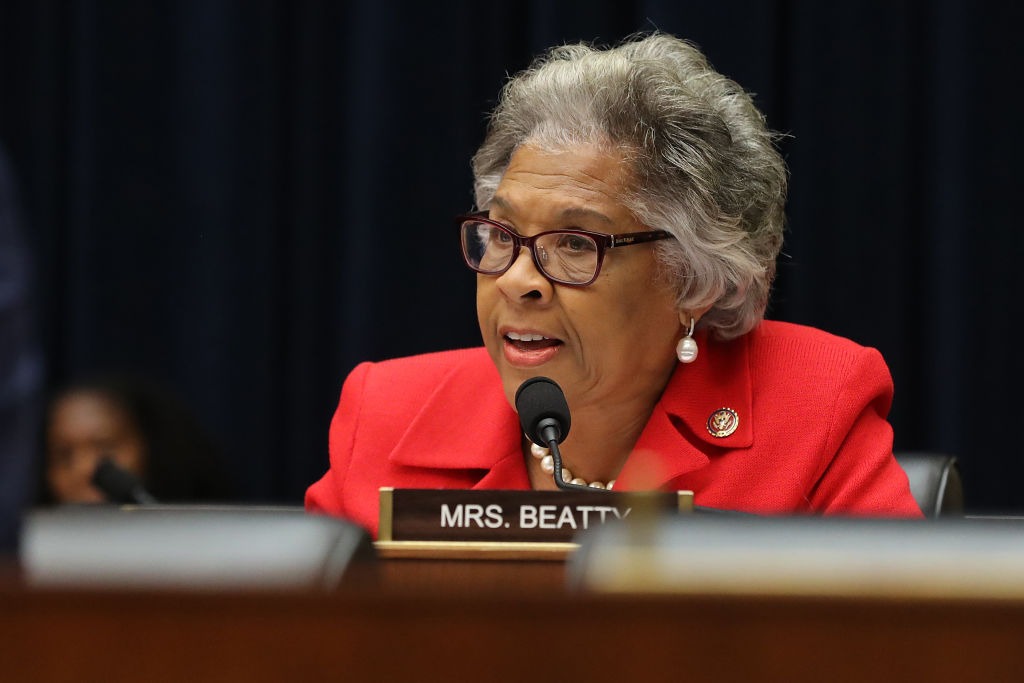
    Ohio U.S. Rep. Joyce Beatty. Photo by Chip Somodevilla/Getty Images.

    BY:  Ohio Capital Journal

    Referencing the recent case of an Ohio woman who faced charges after her miscarriage, Ohio Democratic U.S. Rep. Joyce Beatty joined with other congressional Democrats to urge the Biden administration to push further against “pregnancy criminalization.”

    The Democratic Women’s Caucus, led by its White House liaison, Beatty, sent a letter last week to President Joe Biden, Attorney General Merrick B. Garland and U.S. Health and Human Services Secretary Xavier Bacerra, asking that federal leaders “provide all legal and medical support available within your respective authorities to prevent the criminalization of pregnancies and pregnancy outcomes.”

    “One alarming example of this was the case of Brittany Watts, an Ohio woman who was unjustly charged with a crime related to her miscarriage,” the letter stated. “While a grand jury refused to move the case forward, irreparable harm has already been done and we must ensure this never happens to anyone again.”

    Watts’ case received local and national coverage, including coverage of the outrage after she was charged with abuse of a corpse in Trumbull County. She was charged after prosecutors said she improperly disposed of the remains of her miscarriage, despite the fact that she’d sought medical treatment for the unviable pregnancy.

    The Democratic Caucus said in their letter to the Biden administration that Watts’ experience “is all too common for Black women, who disproportionately experience adverse pregnancy outcomes due to inadequate health care, and disproportionately experience disrespect, abuse and punitive responses when they seek pregnancy-related care.”

    On a press call about the letter, Beatty said it was important for her and her colleagues to “continue to make sure that we don’t continue to have Brittany stories.”

    “It’s not an Ohio issue, it’s an issue that goes across the wonderful America that we live in,” Beatty said.

    Beatty was joined by fellow U.S. Rep. Teresa Leger Fernandez of New Mexico, who said she has experienced miscarriage and life-threatening pregnancy complications, and said what happened to Watts was “a direct result of the Dobbs decision,” which overturned Roe v. Wade and abortion legalization nationwide.

    She said the landscape and politicization of reproductive health in America has also led to pregnancy decisions sometimes being in the hands of the justice system, not the health system.

    “Women need help, not handcuffs,” Leger Fernandez said.

    Two decades of study

    The legal reproductive rights advocacy group If/When/How released a report in 2023 analyzed court records and media reporting from 2000 to 2020 “in which someone was criminally investigated or arrested for allegedly self-managing their own abortion or helping someone else do so.”

    “Some of the reasons for self-managing that emerged included affordability of self-managed care versus clinical care; the belief that someone was too far along in their pregnancy for clinical care in their state; the inaccessibility of clinical care due to abortion policy restrictions in the individual’s home state; the distance to a clinic; and the pregnant person’s experience with interpersonal violence or trauma,” the study stated.

    The group found 61 people who were criminally investigated or arrested on allegations related to their pregnancy, but the research is “likely still an undercount,” they said.

    “Case data requested was not received from all jurisdictions and offices,” the study stated, and not all court cases are reported by media.

    Ohio was one of the 26 states in which a case was found — a 2002 case in which the study said a woman attempted to terminate her pregnancy through “self injury,” but didn’t cause harm to the fetus. The case was eventually dismissed, but the study used the case as an example of dismissals as “a recognized win” but one where “the process to get to that point still subjects people to harmful criminal system consequences.”

    “Decades of stigma and legal restrictions on abortion have fueled an aura of illegality that now surrounds self-managed abortion and seeking abortion in general, turning it into something seen as suspicious or deserving of punitive state action,” researchers stated in the study.

    One of the authors of the study, If/When/How senior counsel and legal director Farah Diaz-Tello, was with Beatty and Leger Fernandez during their press call, saying it is becoming “increasingly dangerous to be pregnant in the United States.”

    “What happened (in the Watts case) was that what was essentially a health care matter was turned into a criminal justice matter,” Diaz-Tello said.

    Moving forward

    The congressional Democrats want to see federal agencies investigate “any prosecutions of people with pregnancy-related conditions as unlawful under federal statutes that prohibit discrimination by law enforcement on the basis of sex, including on the basis of pregnancy.”

    They also want to see stronger oversight on violations of the Health Insurance Portability and Accountability Act (HIPAA) and enforcement of an anti-discrimination provision in the Affordable Care Act that bars federally-funded health care entities “whose personnel improperly report to law enforcement when patients miscarry, terminate a pregnancy or seek other pregnancy-related care,” according to the Democrat letter.

    Beatty said the fact that voters strongly passed the abortion rights constitutional amendment in November and staunchly rebuffed attempts by Republican leadership to change the approval percentage for constitutional changes in an August vote shows Ohioans “have beat the odds,” and are looking for change, despite gerrymandered voting districts that lean Republican.

    “Ohio is on the upswing because of the people in this community, in this state,” Beatty said. “They are tired of getting their rights taken away.”

    She said she and her federal counterparts have been working with the state legislature, but the primary way to change is still increasing voter turnout and education.

    “People have to do one of two things, in my opinion,” she said. “They have to be excited or they have to get mad.”


    Susan Tebben
    SUSAN TEBBEN

    Susan Tebben is an award-winning journalist with a decade of experience covering Ohio news, including courts and crime, Appalachian social issues, government, education, diversity and culture. She has worked for The Newark Advocate, The Glasgow (KY) Daily Times, The Athens Messenger, and WOUB Public Media. She has also had work featured on National Public Radio.

    MORE FROM AUTHOR

  • Child care costs continue to rise as Ohio’s children face ‘pervasive’ risks

    Child care costs continue to rise as Ohio’s children face ‘pervasive’ risks

    Getty Images.

    BY:  Ohio Capital Journal

    Ohio children advocates continue to express concern for the increasing cost of child care, trouble staffing child care providers, low pay for those workers, and pervasive adverse childhood experiences that could be alleviated by early childhood programs.

    Child care costs have been a hot topic, especially with the expiration of pandemic-era aid this past fall, including the expanded child care tax credit that advocates and politicians alike say should be instituted permanently.

    A new report from Care.com showed that 47% of parents in the U.S. are spending up to $18,000 per year on child care expenses, while 1 in 5 households shell out $36,000 annually on care for their children.

    The 2024 Cost of Care Report  surveyed 2,000 parents of children aged 14 and younger on their household income and yearly spending on child care after the “child care cliff,” which is Care.com’s term for the end of funding for child care programs received during the pandemic, amounting to $24 billion nationwide. That funding ended in September 2023.

    In terms of future impact from the end of funding, 79% of the those surveyed in the study expected to be impacted, with 54% “steeling themselves to spend $600 or more per month on child care, which totals more than $7,000 in additional care costs for 2024,” according to the study.

    The First Five Years Fund, which analyzes child care and welfare data, said the cost of child care in the U.S. is currently five times higher than the national average of basic utilities, more than double the average cost of rent and nearly $12,000 higher than the average cost to attend a public four-year state university.

    “Child care is one of the largest expenses most families with young children face,” said First Five Years Fund executive director Sarah Rittling, in a release on the data. “As a nation, we simply lack enough affordable, quality child care options for families.”

    Staffing

    Not only is the cost of child care a concern, but the ability to staff child care facilities is also on advocates minds. In Ohio, the amount of child care workers in the state dropped nearly 36% from 2017 to 2022, according to Kathryn Poe, researcher for think tank Policy Matters Ohio.

    The lack of workers, plus the fact that almost 40% of Ohioans live in a “child care desert” — meaning the number of child care facilities in a particular area doesn’t match the population needs — creates an environment that doesn’t allow for proper care for children, according to Poe, writing as part of a forum on child care for Crain’s Cleveland Business..

    The state could get a start on improving the landscape by increasing reimbursement rates for child care workers, Policy Matters recommended.

    “The median hourly wage for child care workers is just $13.15, too little to afford child care — or much else — for their own kids,” Poe wrote. “Raising reimbursement rates could help address this issue, but only if the increase comes with the requirement that funds primarily be used to raise worker pay, cover benefits and improve working conditions.”

    Improving child care can only have positive impacts on child outcomes, according to health researchers.

    The Health Policy Institute of Ohio has ongoing studies on “adverse childhood experiences” (ACEs) in the state: events like violence, abuse, and instability that can cause trauma to children. HPIO has called exposure to ACEs “a pervasive problem in Ohio and across the nation,” with their research showing that more than two-thirds of Ohioans have been exposed to an ACE.

    In HPIO’s newest brief, released this month, early childhood education programs and economic supports for families were among the 12 “key strategies” to prevent ACEs in the state.

    Ohio House Democrats introduced a “Thriving Families Tax Credit” in October 2023, which aims to provide a tax credit to families who are being hit with the “child care cliff” stemming from the loss of COVID-19 aid.

    The bill would credit families $1,000 per year per child for children 0 to 5, and $500 per year for each child aged 6 to 17.

    The bill was referred to the House Committee on Ways and Means on Oct. 10, but has yet to see action since then.

    Attempting to boost child care funding on the federal level, the Biden administration asked Congress in November to approve additional funding specifically for child care, acknowledging the lack of American Rescue Plan (ARP) funds.

    “As ARP funds dry up, the sector urgently needs more support as parents are at serious risk of paying more or losing access to care altogether,” the White House said in a press release at the time.

    Biden has asked for $16 billion in supplemental funding “to sustain the child care sector.”

    That would amount to an estimated $565 million directed to Ohio child care, impacting more than 6,000 workers in the field and more than 400,000 children in the state, according to White House estimates.

    U.S. House Democrats further pushed for the measure in December, joining with coalitions of child care workers to ask Congress to move forward with the request.

    The Senate Appropriations Committee held a hearing on the funding request, but as yet, no decision has been reported.

    An expansion of the federal child care tax credit might be on the way, however, as the U.S. House may vote on a bill that includes a child care tax credit, though the bill’s other parts reportedly could create roadblocks.


    Susan Tebben
    SUSAN TEBBEN

    Susan Tebben is an award-winning journalist with a decade of experience covering Ohio news, including courts and crime, Appalachian social issues, government, education, diversity and culture. She has worked for The Newark Advocate, The Glasgow (KY) Daily Times, The Athens Messenger, and WOUB Public Media. She has also had work featured on National Public Radio.

    MORE FROM AUTHOR

  • Ohio governor, state agency lays out suicide prevention plan

    Ohio governor, state agency lays out suicide prevention plan

    JANUARY 31: Ohio Gov. Mike DeWine during the State of the State Address, Jan. 31, 2023, in the House Chamber at the Statehouse in Columbus, Ohio. (Photo by Graham Stokes for Ohio Capital Journal. Republish photo only with original story.)

    Plan mentions high risk to LGBTQ community impacted by gender-affirming care rules, HB 68

    BY:  Ohio Capital Journal

    Ohio Gov. Mike DeWine announced a two-year plan for suicide prevention, including with it statistics many advocates cited in opposing anti-trans legislation passed by lawmakers, and administrative rules the governor proposed.

    The 2024-2026 Suicide Prevention Plan “aims to promote life-saving strategies statewide,” according to an announcement by the governor’s office. The plan was developed in partnership between the RecoveryOhio initiative and the Ohio Suicide Prevention Foundation, “incorporating input from more than 30 private and public organizations,” according to the governor’s office statement.

    The plan’s main goals are centered around public awareness, data gathering, expansion of health care access and support for those with family members who have died by suicide.

    Tony Coder, executive director of the Ohio Suicide Prevention Foundation, wrote in an introduction to the prevention plan that suicide in the state “is at a crisis level, and it will take a statewide effort to reduce the rate of loss.”

    “We need policymakers to create common sense legislation that will improve our behavioral health care system,” Coder wrote. “…We need all hands on deck to end suicide.”

    The groups listed as most affected by suicide in Ohio include rural and Appalachian Ohioans, Ohioans with disabilities, veterans, males, young adults, and LGBTQ+ Ohioans.

    “Nationally, 1 in 5 transgender and nonbinary youth reported attempting suicide in the past year in 2022,” the report stated, also noting that lesbian, gay and bisexual youth are 4.8 times more likely “to consider suicide” and 4.3 times more likely to attempt it than their heterosexual peers.

    The report comes as transgender rights advocates and parents alike say new legislation by the Ohio General Assembly and administrative rules proposed by the governor could cause even more suicide risk to transgender youth, a group already at major risk of suicide, according to studies and medical data.

    One 2023 national study from The Trevor Project found 41% of LGBTQ+ youth surveyed have “seriously considered attempting suicide in the past year,” and that “anti-LGBTQ victimization” contributes to raise rates of suicide risk.

    House Bill 68 bans gender-affirming care for minors in Ohio, a measure that was supported by the Republican supermajority in the Ohio House and Senate, but was vetoed by DeWine.

    The support from the legislature came despite hours of testimony, hundreds of submissions opposing the bill, public protests at chamber votes, and support for gender-affirming care from major medical organizations across the country.

    DeWine’s veto was overridden by the House earlier this month, and by the Senate just last week, allowing the measure to go through, though it may face legal challenges in the near future.

    Even as DeWine vetoed HB 68, he introduced an emergency rule on Jan. 5 prohibiting health care facilities and other medical facilities from “performing gender surgeries on minors,” despite the fact that Ohio children’s hospitals say they haven’t been doing so, even before the rule or legislation was created.

    Two other rules have been proposed, one of which would establish a process through the Ohio Department of Mental Health and Addiction Services to diagnose and treat a “gender-related condition,” but only provide “gender transition services,” not surgical services, according to the draft language.

    A mental health evaluation and counseling would be required for at least six months before diagnosis or any treatment. That evaluation was criticized in public comment submitted regarding the draft language, in which Kathryn Poe, budget and health researcher for Policy Matters Ohio, said definitions in the draft rule “set a dangerous precedent for an organization concerned with the mental health of Ohioans, especially given th elevated risk for transgender Ohioans.”

    The second proposed rule would direct the Ohio Department of Health to report data on gender care to the General Assembly and the public every six months, while also creating “quality standards for those hospitals and ambulatory surgical facilities that wish to treat gender-related conditions.”

    In the new suicide prevention plan for 2024-2026, goals specifically targeted toward LGBTQ+ youth include offering “learning opportunities to grow knowledge skills for specific evidence-based practices, policies and services to impact high-risk populations, including Black and LGBTQ+ youth and young adults.”

    Included in proposed “action steps” to reduce suicide for LGBTQ+ is the creation of “workforce learning opportunities related to stress and risk factors of LGBTQ+ youth,” building “opportunities for affirming spaces and supportive relationships with trusted adults” and promoting anti-bullying policies in schools.

    The report also cites The Trevor Project as a resource for “evidence-informed strategies” to be used in the state for improved suicide prevention outcomes.

    The creator of HB 68, state Rep. Gary Click, called the Trevor Project an “advocacy group” in November as part of a committee meeting on the bill, claiming statistics on transgender mental health reported by the group were “a political statement” that was “designed to intimidate people like me from carrying legislation which would help protect young people.”

    “I totally reject that my bill causes people harm,” Click said at the time.

    Since passage of the bill and veto override, more than 100 families with transgender members have said they plan to leave the state as a result of the bill.


    Susan Tebben
    SUSAN TEBBEN

    Susan Tebben is an award-winning journalist with a decade of experience covering Ohio news, including courts and crime, Appalachian social issues, government, education, diversity and culture. She has worked for The Newark Advocate, The Glasgow (KY) Daily Times, The Athens Messenger, and WOUB Public Media. She has also had work featured on National Public Radio.

    MORE FROM AUTHOR

  • Ohio business leaders support redistricting reform amendment

    Ohio business leaders support redistricting reform amendment

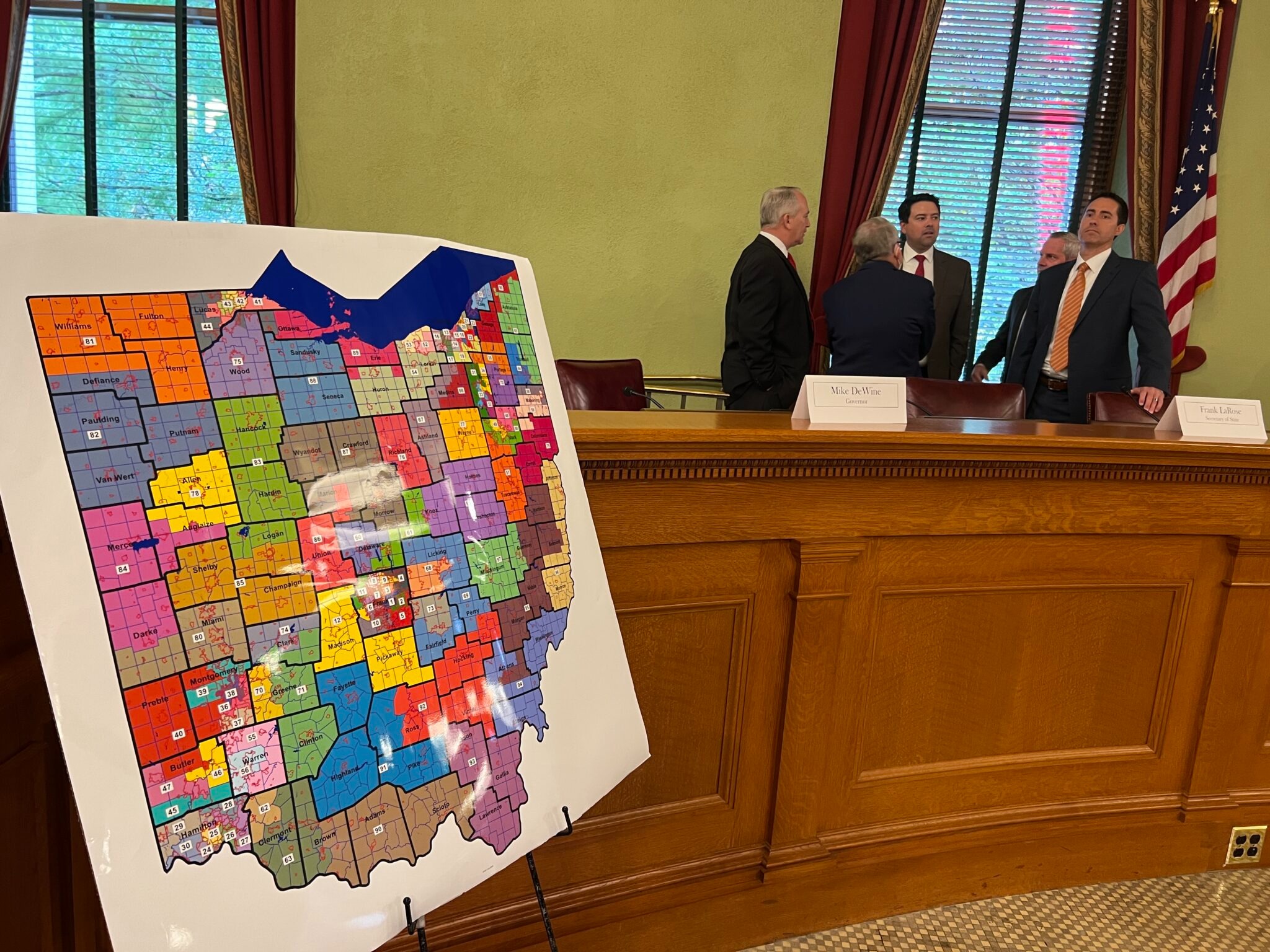
    The Republican members of the Ohio Redistricting Commission talk before a 2023 public hearing on Statehouse district maps. (Photo by Susan Tebben, Ohio Capital Journal.)

    BY:  Ohio Capital Journal

    Business leaders from Ohio are standing in support of a proposed constitutional amendment that would change the way redistricting occurs in the state by removing politicians from the process in favor of a citizen commission.

    “One crucial aspect of ensuring a robust representative democracy are legislative districts that ensure fair representation of the voting population,” an open letter from 67 Ohio business leaders stated. “The sad reality in Ohio is that political leaders of both parties have abused the system.”

    The letter was released via the Leadership Now Project, a national group of business leaders, and organized by a senior advisor to the project, Ohio Business Roundtable co-founder Richard Stoff.

    “Extreme gerrymandering reflects poorly on this great state of ours,” Stoff said in a statement announcing the letter, in conjunction with Citizens Not Politicians, the group leading the effort to get redistricting reform on the ballot.

    Citizens Not Policians is working to get a proposed constitutional amendment on the November 2024 ballot that would eliminate the Ohio Redistricting Commission as it stands now, made up of seven elected officials including the Ohio governor, secretary of state, and auditor, as well as one Republican and one Democratic lawmaker from both the Ohio House and Ohio Senate.

    Instead, if the amendment is approved by voters, a 15-member commission made up of public citizens would be empaneled to choose Ohio Statehouse and U.S. congressional voting districts.

    Over the last two years, the ORC has received staunch criticism for its process, with the adoption of six Statehouse district maps and two congressional maps, all but one of which (the most recent Statehouse maps) were rejected by the Ohio Supreme Court as unconstitutional and unduly partisan.

    The maps came about with behind-the-scenes map drawing that ignored racial demographics, rejected the work of taxpayer-funded independent map-drawers brought in at the behest of the state supreme court, and with redistricting commissioners refusing to go back to the drawing board as ordered by the court, based on legislative leaders’ interpretation of the law and their authority on redistricting.

    The newest constitutional amendment on redistricting would “empower a truly independent citizen-led process to draw congressional and state legislative maps,” according to the letter.

    “Building on successful best practices from other states, the Ohio proposal would ban gerrymandering, prohibit consideration of individual incumbents or candidates when drawing maps, and ensure an open and transparent redistricting process with extensive and meaningful public input,” the business leaders wrote.

    As of Wednesday, individuals who signed the letter included former CEOs and leaders from the banking, energy, insurance, retail, small business and academic worlds. Recognizable names like Dr. Amy Acton, Jeni Britton, and Yvette McGee Brown appear alongside Doug Ulman of Pelotonia, former Procter & Gamble chair and CEO John Pepper, and Robert Schottenstein, chairman and CEO of M/I Homes.

    Citizens Not Politicians and supporters of the proposed amendment are currently collecting signatures to bring the measure to the ballot box. The deadline to collect signatures for the 2024 General Election ballot is July 3.


    Susan Tebben
    SUSAN TEBBEN

    Susan Tebben is an award-winning journalist with a decade of experience covering Ohio news, including courts and crime, Appalachian social issues, government, education, diversity and culture. She has worked for The Newark Advocate, The Glasgow (KY) Daily Times, The Athens Messenger, and WOUB Public Media. She has also had work featured on National Public Radio.

    MORE FROM AUTHOR

  • Ohio Supreme Court: State Highway Patrol expenses to protect governor not public record

    Ohio Supreme Court: State Highway Patrol expenses to protect governor not public record

    Ohio Gov. Mike DeWine during the State of the State Address, Jan. 31, 2023, in the House Chamber at the Statehouse in Columbus, Ohio. (Photo by Graham Stokes for Ohio Capital Journal. Republish photo only with original story.)

    BY:  Ohio Capital Journal

    Responding to a media request to obtain the amount taxpayers paid for the governor’s security detail at 2022’s Super Bowl, the Ohio Supreme Court ruled in a 4-3 decision that the information is not for public review.

    The Cincinnati Enquirer requested the information through a public records request in February 2022, but were rebuffed by the Ohio Department of Public Safety and the governor’s office, which said releasing the information would compromise future security for Gov. Mike DeWine.

    The request asked for “travel and expenses for troopers and/or staff attending the 2022 Super Bowl in Los Angeles, CA, with Gov. DeWine” and expenses for overtime pay, air travel, hotel and vehicle rental costs.

    The denial led to a lawsuit, thus ending up in the hands of the Ohio Supreme Court.

    To the state’s highest court, the Enquirer’s attorneys argued expenses from the Super Bowl trip don’t contain “information directly used for protecting or maintaining the security of a public office against attack, interference or sabotage,” contradicting arguments by the state attorneys, who said the documents were “security records.”

    Ohio’s Attorney General’s Office, who represents the governor in lawsuits, said records related to DeWine’s security detail “necessarily contain information (the Ohio State Highway Patrol) directly uses for protecting and maintaining the governor’s security against attack, interference or sabotage.”

    That, according to the AG’s office, includes not only the number of officers, the timeline of their travel, and the security detail’s “patterns and protocols,” but also choice of hotel and rental car vendors.

    Even though the information is from a trip that had already occurred, lawyers for the governor said the information “may inform how the governor travels on future out-of-state trips, and because this information exposes security protocols OSHP and the Governor’s (Executive Protection Unit) follow on a regular basis, it is precisely the sort of information a potential aggressor would necessarily exploit in launching an attack on the governor at a vulnerable moment.”

    “DPS properly withheld the records because they are security records … and thus not ‘public records’ – to ensure the safety of Governor DeWine and that of the state employees who protect them,” state attorneys said in court documents.

    The state’s highest court agreed with state attorneys in a 4-3 decision, ruling on Tuesday that the records are “exempt from disclosure when public office presents evidence showing that information in requested records is directly used for protecting and maintaining public office’s safety.”

    The high court majority pointed to statements from a state Highway Patrol captain, a patrol staff lieutenant and a former Secret Service and Indiana State Police officer, all of whom said details like those requested by the Enquirer “can be used to plan an attack” and are considered “law enforcement sensitive.”

    “And the evidence also reflects that the (Ohio Department of Public Safety) will rely on information contained in the security detail records for the Super Bowl trip in formulating future security plans for the governor’s office,” the majority wrote. “Accordingly, we hold that the department met its burden to show that the requested records are exempt from public disclosure as security records under (Ohio Revised Code).”

    Justice Michael Donnelly disagreed with the majority opinion, spelling out the meaning of “security record” in Ohio law, and saying “the records sought in this case do not fit clearly and squarely into any those categories, as they must in order to be exempt from disclosure.”

    “In this case, there is no evidence – or reason to believe – that the department uses its expense records for anything related to protecting or maintaining security; there is evidence only that such records could be misused by someone else,” Donnelly wrote in a dissent joined by Justice Melody Stewart and Justice Jennifer Brunner.

    Justice Pat DeWine, the governor’s son, recused himself from the case, but did not give a reason as to why in a letter filed with the court. The OCJ reached out to the justice’s office asking for a reason, but had not received a response as of Tuesday afternoon.

    It was reported that the governor and First Lady Fran DeWine took multiple unspecified family members to the Super Bowl with them, at their own expense.


    Susan Tebben
    SUSAN TEBBEN

    Susan Tebben is an award-winning journalist with a decade of experience covering Ohio news, including courts and crime, Appalachian social issues, government, education, diversity and culture. She has worked for The Newark Advocate, The Glasgow (KY) Daily Times, The Athens Messenger, and WOUB Public Media. She has also had work featured on National Public Radio.

    MORE FROM AUTHOR

  • The fight to feed children in Ohio continues

    The fight to feed children in Ohio continues

    Students getting their l lunch at a primary school. Photo by Amanda Mills/Centers for Disease Control and Prevention.

    BY:  Ohio Capital Journal

    The most recent state budget made changes to allow more students to be fed at no cost, but the battle to quell child hunger is still ongoing in Ohio.

    The budget bill passed last year provided more than $4 million in funding to allow any students qualified for reduced-price of free breakfast and lunch can get the meals at no cost for the 2023-2024 school year.

    It’s not quite the universal meals that school nutrition directors had asked for when budget talks began, but the final budget’s school meal provisions are progress in the right direction, child and education advocates in the state concluded.

    The programs that are still attempting to help stem the flow of student hunger are seeing the struggles that inflation has on the cost of food, and Katherine Ungar, senior policy associate with the Children’s Defense Fund of Ohio, said the stigma of the income-based school food programs is still a barrier.

    “It’s creating these categories that can create that stigma,” said Ungar.

    Ohio has taken strides to help in the future by pledging to use federal dollars to establish a summer program that will give low-income families with child of school-aged children “grocery-buying benefits” while schools are closed, according to the USDA, who estimates more than 29 million children nationally could benefit.

    “During the summer months, we estimate almost 1 million kids … lose access to meals,” Ungar said.

    CDF-Ohio researched the whole-child impacts of categories like housing, health care and food insecurity. In fiscal year, 2023, the group’s  annual data profiles showed an increase in the state’s students who were eligible for reduced-price or free school meals and considered “economically disadvantaged.”

    The number of kids qualifying for the no-cost or low-cost lunches, for which any student in a household with up to 185% of the federal poverty line is eligible, when from 46.6% in the 2021-22 school year to nearly 50% in the 2022-23 school year.

    This new summer benefit will be eligible to about 837,000 Ohio children, according to Ungar, and the economic impact of the benefit could bring $150 million into local economies.

    The Summer Electronic Benefit Transfer Program (EBT) gives eligible families who apply pre-loaded cards with $40 per child per month. The EBT program works in conjunction with Supplemental Nutrition Assistance Program (SNAP) benefits, Women, Infants and Children (WIC) funds and other nutrition assistance efforts.

    But the program can only be used if eligible families apply. Children who are certified as eligible for free or reduced-price meals at school would be eligible for the Summer EBT as well, but still have to apply through the same process as the free-or-reduced-lunch application.

    “We know there are families who qualify but have not completed the application form,” Ungar said. “Some families may not think they’re eligible, but it’s important that anyone who could be eligible applies, so that those benefits can get to the people who need them.”

    A similar program was available during the COVID-19 pandemic, and the USDA found that the program decreased “children’s food hardship” by 33%, and took between 2.7 and 3.9 million out of hunger across the country.

    According to research by the Center for Community Solutions, the pandemic EBT program brought Ohio children an estimated $2.2 billion in nutrition assistance between Spring 2020 to Summer 2023, the end of the pandemic program.


    Susan Tebben
    SUSAN TEBBEN

    Susan Tebben is an award-winning journalist with a decade of experience covering Ohio news, including courts and crime, Appalachian social issues, government, education, diversity and culture. She has worked for The Newark Advocate, The Glasgow (KY) Daily Times, The Athens Messenger, and WOUB Public Media. She has also had work featured on National Public Radio.

    MORE FROM AUTHOR

  • Ohio superintendent says state board of education may not make payroll by summer

    Ohio superintendent says state board of education may not make payroll by summer

    The Ohio Department of Education and Workforce in Columbus, Ohio. (Photo by Graham Stokes for Ohio Capital Journal. Republish photo only with original story.)

    Newest superintendent’s goal target responsibilities of the board, rebuilding of relationships

    BY:  – JANUARY 12, 2024 – Ohio Capital Journal

    Pointing directly to changes made in the Ohio legislature’s most recent budget, Ohio’s new superintendent of public instruction said the State Board of Education is facing real funding issues.

    “What we face, in terms of a budget deficit right now, is a clear and present danger for our ability to do the roles that we’ve been assigned to do,” Superintendent Paul Craft told the board at his first monthly meeting, a mere six days into his tenure.

    The deficit was spelled out as part of an introduction of goals the superintendent has as he begins his job, and as the job and the role of the state board changes under the new Department of Education and Workforce. As superintendent, Craft also serves as secretary for the board.

    To stem the funding issues, which Craft said amount to a shortfall of about $2 million for a $10 million total budget in the next fiscal year, he and board members will need to work with legislative partners “pretty quickly.”

    “As we get into that June timeframe, we’ll probably not be able to make payroll,” Craft told the board. “That’s worrisome.”

    He added that staffing issues could only get worse as the year goes on, and the board will continue its struggle to maintain current staff.

    “There’s not a chance to cut our way through this and still do the educational licensure and educational professionalism functions with which we’ve been tasked,” he said.

    Board member Meryl Johnson asked Craft directly if the budget bill, House Bill 33, “left us without enough funding to do our job.”

    “Yeah,” Craft responded. “And again, that will happen from time to time. The governor had a good patch in (the budget) that would have gotten us through at least, I would say, three years. That was in the House version and it disappeared in the Senate version.”

    To Johnson, the lack of adequate funding the board is seeing indicates state leaders who supported the changes that eliminated state board roles and authorities “want to put us out of business.”

    Craft’s other proposed goals include building or rebuilding relationships between the state board and other “educational stakeholders” in an effort “to get as many interactions as we can around educational discussions … so that we continue to be viewed as a key component to the educational infrastructure in this state.”

    “So those roles that we are given, we need to make sure we’re doing those in such a way that our districts and our other educational stakeholders say ‘they’ve got their stuff together, they’re doing what we need to support our staff and students throughout the state of Ohio,’” Craft said.

    The superintendent also pledged to finish his dissertation, which he said was interrupted by the pandemic and its impact on educational data he studied. But board member John Hagan said that goal could stand to be back-burnered.

    “As far as your continuing education, I would hope that that’s the lowest priority on your list, because I think you’ve got a lot to do here and probably won’t have a lot of spare time,” Hagan said.

    One of the many other things on the superintendent’s list is a proposal by the Ohio Department of Administrative Services to move the state board to an office within the Ohio Department of Agriculture, located in Reynoldsburg.

    While the cost of housing the board downtown versus moving to the A.B. Graham Building is only marginally different, according to Craft, the losses are more professional than financial.

    “I think the loss we would get in terms of no longer being co-located with the other educational stakeholders in the state of Ohio, I can’t support from an operational perspective what the Department of Administrative Services would like to do with the team,” Craft said.

    The superintendent said the board would probably need intervention from “some other state actors” to push back against the proposed move, along with the leveraging of relationships from the board members as well.

    There was agreement among the members that the move did not seem necessary, nor were they in favor of it. The opposition brought on a resolution asking the director of the state DAS to appear in person before the board and explain the move.

    “I see no rationale that makes any sense to move out there,” said member Walt Davis. “For us to be located out there is the Gulag, frankly, and I’m strenuously opposed to it.”

    The state board’s next monthly meeting is scheduled for Feb. 12.


    Susan Tebben
    SUSAN TEBBEN

    Susan Tebben is an award-winning journalist with a decade of experience covering Ohio news, including courts and crime, Appalachian social issues, government, education, diversity and culture. She has worked for The Newark Advocate, The Glasgow (KY) Daily Times, The Athens Messenger, and WOUB Public Media. She has also had work featured on National Public Radio.

    MORE FROM AUTHOR

  • Ohio public education supporters look to 2024, lawsuit to hold private voucher system accountable

    Ohio public education supporters look to 2024, lawsuit to hold private voucher system accountable

    Getty Images

    BY:  Ohio Capital Journal

    While marijuana legislation and other bills still sit on the horizon in the second year of this term’s General Assembly, education policy can always be counted on to be a part of the discussion. 2024 should be no different.

    Ohio’s private school voucher program has been a source of strong debate among legislators and education advocates of all kinds since the 1990s, when the program began as a way to allow lower-income students to access private schools, proposed as an effort to improve education outcomes in poor-performing public school districts.

    But as public school advocates still hope to see full funding of the Fair School Funding Plan for districts across the state, they saw eye-popping increases in private school funding through vouchers that worry them almost as much as the foot-dragging that they believe has occurred when talking of public school funding.

    “You should be funding the public schools,” said Stephen Dyer, former state representative and former chair of the Ohio House Primary and Secondary Education subcommittee for the House Finance Committee. “If you want to fund the private schools, fund the private schools, but there’s no reason you can’t do both.”

    Private school voucher expansion by the numbers

    The Ohio Department of Education reported 23,272 participants in the voucher expansion for the 2023 fiscal year, up from the 20,702 reported in 2022 and even more from the year prior, when 17,155 students participated in the state-subsidized program.

    In 2021, 85% of the voucher expansion participants were below 200% of the federal poverty line, and 93% of 2022 participants were below 250% of the poverty line.

    In 2023, language on the ODE data changed to “low-income qualified” to “not low-income qualified,” removing the breakdown of federal poverty percentages. In this year’s report, 67% of participants were “low-income qualified” and 32% were “not low-income qualified.”

    With the most recent state budget, passed this summer, a GOP-led effort to expand eligibility for private school vouchers led to a ballooning of the poverty level allowed for the voucher program to 450% of the poverty line, or a household income of $135,000 or less for a family of four.

    Those receiving a scholarship can move to a private school with $6,165 in state funding for K-8 students, and $8,407 for high schoolers.

    Families with incomes above the $135,000 threshold can still be eligible for at least 10% of the maximum scholarship, even with a higher income, Senate President Matt Huffman’s office said when the budget was passed.

    Public school advocates took issue with the expansion, saying the Fair School Funding Plan, seeking to support public school districts based on their individual needs, should be the focus, considering the vast majority of students in Ohio attend traditional public schools.

    ‘A perversion of the idea behind a voucher’

    Since the most recent voucher participation numbers were released, Dyer did his own analysis of the voucher program, finding “a very different goal” compared to when it began.

    “It’s now going to wealthier, white families to subsidize the decisions they’d already made to send their kids to private schools,” Dyer told the OCJ.

    In an analysis he posted to his blog, Dyer said ODE data showed nearly nine in 10 new applications to the voucher expansion went to white students, and more new vouchers for high schoolers went to families making more than $150,000 annually than went to families making less.

    Dyer also makes an argument that has been made before by those opposing the voucher expansion: increasing private school voucher program causes “resegregation” in the public schools, with the number of white students who are leaving for private schools, vouchers in hand.

    “It’s frankly a perversion of the idea behind a voucher, which was sold as allowing poor students, students of color, students who haven’t traditionally had access to private schools, to have access,” Dyer said in an OCJ interview.

    The most recent data on Ohio’s EdChoice voucher expansion showed 66.4% of participants are white, with the Black population of voucher recipients coming in at 15%, the second highest number reported.

    In 2022, 65.9% of expansion vouchers went to white students, up from 64.1% in 2021.

    A vast majority – 9 in 10 – vouchers come from just 31 school districts, according to Dyer.

    “Those districts’ racial makeup is, on average, 21% white,” he writes in his analysis. “Yet 46% of EdChoice voucher recipients are white – more than double the percentage of white students than attend the 31 public school districts where nine in 10 voucher students would otherwise attend.”

    At the very least as the voucher program continues in Ohio, Dyer hopes a plan to audit the program is forthcoming for the billions of dollars spent to subsidize it. He pointed to an audit of the defunct Electronic Classroom of Tomorrow (ECOT), which exposed false enrollment numbers and led to court battles to claw back more than $60 million in state funding from the online charter school.

    “It’s all of our dollars, so we have a right to say what happens with all of our dollars, and we certainly have a right to audit where our dollars are going,” Dyer said.

    The lawsuit

    With a Republican supermajority in both chambers of the legislature, support of private school vouchers and “school choice” seems assured at least for the foreseeable future, so public school advocates are looking to other avenues to make change.

    Another court battle is still simmering in the Franklin County Court of Common Pleas, a lawsuit that seeks to tamp down on the voucher program in favor of the constitutional obligations the legislature has to properly fund public schools.

    The lawsuit was filed in Jan. 2022, accusing the state of Ohio of improperly and unequally funding private schools, specifically targeting the growth of the voucher program as a drain on public school resources.

    “The legislature has only moved to further expand private school vouchers in Ohio,” the leading group in the lawsuit, Vouchers Hurt Ohio, wrote in a recent statement on the program. “We do not stand a chance of changing their minds or direction so we are forced to sue to get a fair hearing in a court of law where the Ohio Constitution is respected and means something.”

    Amidst the nearly two years the case has been ongoing, time extensions have been granted and Ohio Senate President Matt Huffman has asked to be excused from a deposition due to “legislative privilege,” also arguing the testimony sought from Huffman “is neither legally relevant nor necessary.”

    Franklin County Judge Jaiza Page has not ruled on Huffman’s subpoena, but allowed subpoenas for 42 “non-party private schools” in Ohio as part of the case, selected, according to the lawsuit filers “as a representative sample based on their location, demographics, percent of EdChoice students enrolled and total EdChoice funds received.”

    Parties standing against the public school advocates in the case said the passage of the state budget, including an increase in funding for the Fair School Funding Plan along with the voucher expansion should allow for the dismissal of their complaints on funding of public schools.

    “And while plaintiffs presumably still take issue with the new, amendment program, that does not change the fact that their current complaint challenges legislation that ‘is no longer the operative legislation governing EdChoice,” attorneys arguing for dismissal stated.

    A deadline for documents and evidence in the case was Nov. 30, and the court has requested “expert reports” from both sides by Feb. 23 of next year, with a trial date set for Nov. 4, 2024.


    Susan Tebben
    SUSAN TEBBEN

    Susan Tebben is an award-winning journalist with a decade of experience covering Ohio news, including courts and crime, Appalachian social issues, government, education, diversity and culture. She has worked for The Newark Advocate, The Glasgow (KY) Daily Times, The Athens Messenger, and WOUB Public Media. She has also had work featured on National Public Radio.

    MORE FROM AUTHOR