Year: 2024

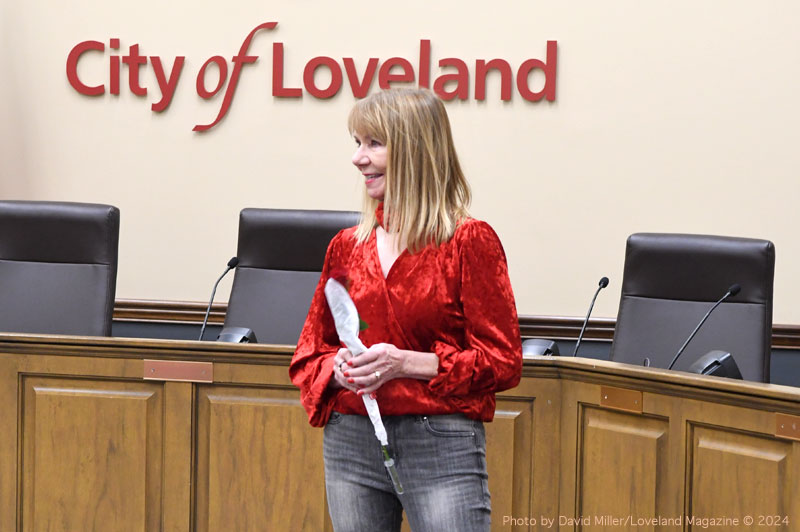
  • Interview with Becky Giver the 2024 Loveland Ohio Valentine Lady

    Interview with Becky Giver the 2024 Loveland Ohio Valentine Lady

    by David Miller

    Loveland, Ohio – Saturday morning the Little Miami River Chamber Alliance gathered a standing-room crowd at City Hall to introduce Becky Giver as the next Loveland Valentine Lady and unveil the 2024 Valentine card designed by artist Lauren Connolly.

    Before the ceremony started, Becky talked to me about how it felt when she was surprised and told of her selection and what are her plans during her reign.

    You can view Connolly’s winning design as the cover photo on the Loveland Magazine homepage.

    Kay Bolin, the 2018 Valentine Lady nominated Giver. Here is the letter she wrote to the selection committee:

    Becky Giver, a woman who flies “under the radar” while constantly doing her good and caring deeds in our community. Since Becky has retired, or I should say semi-retired, she has been able to put all that energy into our community.

    In addition to being a continued patron for Loveland’s restaurants and businesses, she doesn’t stop there, as she knows it takes work as well as fun to keep a community growing.

    Loveland is so lucky to have several non- profit organizations that need good people who are willing to work and not be afraid to get their hands dirty. And speaking of getting your hands dirty, Becky has been involved with the:

    City of Loveland Beautification Committee – She has been one of several members who have helped beautify our community. Today she continues to work on some special projects with “Love our Land.” It is so cool to watch Loveland’s renewed interest in planning and planting with the focus on pollinator beds throughout our community.

    Becky doesn’t stop with planting; in fact, you have possibly seen her & her husband, Gary, walking on 48 carrying a bag and picking up trash to help once again keep our community beautiful and clean. They have been part of this Adopt a Block program for years.

    Becky is also on the board for Loveland Legacy Foundationa 501(c) (3) non-profit charitable organization, with the purpose of improving the community of Loveland, with a common purpose of the betterment of Loveland, now and in the future.

    Another not-for-profit organization she is involved with is Loveland Stage Company, as House Manager and ad sales. Like everything she does, she goes far beyond the requirements to ensure comfort and a pleasant experience for the patrons.

    Becky has been a volunteer for years and recently has been appointed to be on the Board of Directors for the Loveland Historical Museum, whose mission is to enrich lives and connect our community through diverse arts and history experiences.”

    She has also just finished a very productive term as President of the Loveland Woman’s Club, and now serves as Advisor for the next 2-year term.

    In her spare time Becky & Gary take care of the bird feeders at the Loveland Nature Preserve

    In summary Becky cares about our community and its people, she helps make a better community for all of us and the future generations. Her compassion is contagious, she will make a fun-loving and productive addition to our Valentine Lady sisterhood. Becky, we are thrilled to have you.

    Respectfully submitted by Kay Bolin, 2018 Valentine Lady

  • Ricky Mulvey and Jason Moser discuss 2024 Economic Forecasts

    Ricky Mulvey and Jason Moser discuss 2024 Economic Forecasts

    Ricky Mulvey is a former reporter, talking head, and on-air personality for Loveland Magazine

    Institutional investors make headlines with sweeping predictions about the economy, but there’s not much of a consequence if they’re wrong.

    Ricky Mulvey and Jason Moser discuss:
     – Apple resuming watch sales, and long battle against Masimo.
     – Why it’s difficult to make accurate economic predictions.
     – Understanding a business’s valuation and its story.
     – A stock and an ETF we plan on holding through 2024.

    Plus, Robert Brokamp and Alison Southwick provide some tips to be more productive in the new year.

    LISTEN NOW…


  • BREAKING: Valentine Lady Kick-off moves indoors

    BREAKING: Valentine Lady Kick-off moves indoors

    LOVELAND CITY HALL at 120 West Loveland Avenue

    Loveland, Ohio – Because of a prediction of inclement weather, the Loveland Valentine Lady event for Saturday, Jan 6 at 11 AM will be inside at LOVELAND CITY HALL at 120 West Loveland Avenue.

    The 2024 Loveland Valentine Program kicks off in the Downtown Historic District. The 2024 Valentine lady, Becky Giver will be introduced as well as the unveiling of the original winning Valentine’s card artwork, by a local artist. The 2024 Valentine’s card will be available for purchase.


  • Ohio families with transgender children relieved DeWine vetoed HB 68, worry about potential override

    Ohio families with transgender children relieved DeWine vetoed HB 68, worry about potential override

    A transgender Pride flag is covered with the words “Hands Off Trans Youth.” (Photo by Greg LaRose/Louisiana Illuminator/States Newsroom)

    The Ohio House will be in session next Wednesday and the Senate’s next scheduled session is Jan. 24.

    BY:  Ohio Capital Journal

    The Burkle family huddled together to watch last week’s press conference where Ohio Gov. Mike DeWine vetoed a controversial bill that would have banned gender-affirming care for transgender youth.

    “It was a brief sigh of relief,” mom Alicia Burkle said. “We were crying and hugging.”

    Their 10-year-old daughter Astrid has socially transitioned, but has not yet started puberty blockers.

    Ohio House Bill 68 would prevent transgender athletes from playing women’s sports and would ban transgender youth from accessing gender-affirming care, including puberty blockers and hormone therapy. DeWine said during last week’s press conference his focus was on the health care component of the bill.

    The Burkles figured they had a couple of weeks before the lawmakers returned from winter break, but the Ohio House announced they will have session next Wednesday, Jan. 10. The Ohio Senate’s next schedule session is Jan. 24.

    “It’s just so hurtful and it’s exhausting,” Burkle said.

    The Ohio Capital Journal talked to three families with transgender children who were relieved DeWine vetoed HB 68, but are now concerned the legislature could override his veto.

    “We do know that this was a math problem also and that the veto was not necessarily the end,” said Nick Zingarelli, the father of a transgender teenager.

    A three-fifths vote of the members of the House and Senate is necessary to override the governor’s veto — meaning 60 representatives and 20 senators.

    HB 68 passed in December with 24 votes in the Senate and 62 votes in the House. State Sen. Nathan Manning was the lone Republican senator to vote against the bill in December. Republican state Reps. Jamie Callender and Brett Hillyer voted against the bill when it originally passed the House with 64 votes in June.

    Ohio House Speaker Jason Stephens, R-Kitts Hill, said last week he was disappointed in DeWine’s veto.

    “We will certainly discuss as a caucus and take the appropriate next steps,” Stephens said in a statement.

    Burkle family

    When the Ohio House and Senate passed HB 68 on Dec. 13, the Burkles launched into action mode by asking their doctor what next steps they can take as well as emailing and calling DeWine. Astrid even sent DeWine some handwritten letters.

    “We really didn’t get to truly enjoy the holiday because we were just so anxious about what was going to happen,” Alicia Burkle said.

    Astrid is not currently on puberty blockers and wouldn’t be covered under the grandfather clause that would allow doctors who already started treatment on patients to continue.

    “We don’t know that she would be (on puberty blockers) before the bill were to take effect, if it were to pass,” Alicia Burkle said.

    DeWine said he would pursue administrative rules banning gender-affirming surgery on minors, collecting data, and combating clinics that might pop up to try to perform ideologically-driven care. No Ohio children’s hospital currently performs gender-affirming surgery on those under 18.

    “Those are all really reasonable concessions,” Burkle said.

    The Cleveland-area family doesn’t want to move out-of-state, and hopes it doesn’t get to that point.

    “It’s certainly one of the options that we’re keeping open if that’s what we’re forced to do,” Burkle said.

    The Scagliones

    While Kat Scaglione was impressed with DeWine’s veto, she said it feels like sitting in limbo waiting to see what happens next.

    “What if this override happens?” she asked. “It feels like we’ve almost backpedaled and we’re back to where we started.”

    She has a 14-year-old transgender daughter, a 13-year-old cisgender son, and a 10-year-old transgender daughter.

    Amity, 14, is past the point of being able to get puberty blockers and is waiting on hormone treatment.

    “I am supposed to be worrying about the next test I have to study for,” Amity said. “Not whether my rights are going to disappear. …  It’s very scary to have that thought looming over your head, like all the time.”

    Kat said waiting on the governor’s decision overshadowed the holiday season.

    “My kids were sitting there writing Christmas lists and writing letters to send to the governor and to the representatives,” she said. “It didn’t feel like much of a holiday this year.”

    Zingarelli family

    The Zingarelli family celebrated DeWine’s veto.

    “It was we’re going to take the next few days just to savor this victory, because it was a huge victory,” father Nick Zingarelli said.

    His 14-year-old daughter is treated by Cincinnati Children’s Hospital Medical Center, so she would be able to continue receiving care under the grandfather clause but he wants to make sure all Ohio kids would have access to this kind of care.

    He hopes DeWine’s veto will give other Republican lawmakers pause.

    “I would hope that they would listen to the elected leader from their own party, and then consider that and say, ‘Am I on the wrong side of this issue?’ … We’re not gonna roll over on this battle. If they win in the legislature, we will see them in court,” he said.

    Follow OCJ Reporter Megan Henry on X.

    ___________

    Megan Henry
    MEGAN HENRY

    Megan Henry is a reporter for the Ohio Capital Journal and has spent the past five years reporting in Ohio on various topics including education, healthcare, business and crime. She previously worked at The Columbus Dispatch, part of the USA Today Network.

    MORE FROM AUTHOR

  • State of the Region Update 2024

    State of the Region Update 2024

    Promoted Post

    Join us for State of the Region Update 2024!

    February 1

    11:30 AM

    Lunch Included!

    Join us for the State of the Region 2024 Address! Hear from city and township leaders: David Kennedy (Loveland City Manager), Steve Kelly (Miami Township Interim Administrator), and Kim Lapensee (Symmes Township Administrator) on their 2024 plans.

    Learn more about your community, economic development plans and stay informed for the upcoming year!

    Reserve your Seat!


  • Public Health Alert:  Overdose Activity in Hamilton County

    Public Health Alert: Overdose Activity in Hamilton County

    A Press Release from Hamilton County Public Health:

    Ongoing surveillance of daily overdose incidents since December 31 has indicated some abnormal changes in overdose related activity. Historical trends suggest a potential surge in fentanyl presence within the drug supply. On Sunday, December 31, 2023, both overdose emergency department (ED) visits and 911 dispatches saw an increase, with 11 overdoses recorded for each metric. Subsequently, on Tuesday, January 2, 2024, overdose ED visits rose again to 12, and the Hamilton County Coroner’s Office reported three suspected overdose deaths January 2nd, pending toxicology review and confirmation.

    This alert is being issued collaboratively by local public health partners and the Hamilton County Addiction Response Coalition to enhance community awareness.

    • Even if you are a recreational drug user, you are at risk for overdose and death.
    • Narcan is available, accessible, and is not limited to injection drug users.
    • FENTANYL MAY BE IN YOUR DRUG SUPPLY! Drugs such as cocaine, crack cocaine and methamphetamine likely contain fentanyl, the drug that can cause overdose and death. A high supply of fentanyl puts all users at risk. WE HAVE SEEN MULTIPLE DEATHS IN PEOPLE USING DRUGS OTHER THAN OPIOIDS.
    • If you need Narcan, safe injection supplies, or fentanyl testing strips, please call 513-316-7725 or visit: https://www.flowcode.com/page/harmreduction
    • If you or someone you know overdoses, you should still call 911 – even if you administer Narcan.  In Ohio, you can call 911 free from fear that you will be punished or prosecuted for getting someone the help they need when they need it.
    • In situations involving multiple individuals using drugs, make sure someone is available to administer Narcan.
    • Treatment is open and available. If you need help, please call 513-281-7880.

    We want to ensure that people know that help is available, Narcan is accessible, and safe injection supplies are available.

    By disseminating this alert, we seek to prompt service providers and first responders to adjust response capacity and implement essential protective measures promptly.

    • Having available and using necessary personal protective equipment; and
    • Be ready to administer multiple doses of Narcan, as needed.

    Your attention to this matter is critical in safeguarding the well-being of our community members.

  • Free admission to Cincinnati Holocaust & Humanity Center

    Free admission to Cincinnati Holocaust & Humanity Center

    Award-winning museum will be free to the public through end of January

    Cincinnati Holocaust Museum to Offer Free Admission in Response to Unprecedented Rise in Holocaust Denial, Antisemitic Incidents

    In an effort to address the “unprecedented” rise in Holocaust denial and antisemitism, the Nancy & David Wolf Holocaust & Humanity Center will waive museum ticket costs for general admission through the end of January.

    The public can visit the Nancy & David Wolf Holocaust & Humanity Center’s award-winning museum at historic Union Terminal for free through January 31.

    In a statement, the Center announced:

    In the wake of the October 7 attack on Israeli citizens and the resulting conflict between Hamas and Israel, antisemitic incidents in the U.S. reached the highest number of incidents during any two-month period since the ADL (the Anti-Defamation League) began tracking in 1979, according to preliminary data released in December. Recent polling data from The Economist also showed that one in five Americans believe the Holocaust is a myth.

    “Dehumanizing rhetoric and framing have created a climate where it’s easy to lose track of our own humanity, as well as the humanity of others,” said Jackie Congedo, Chief Community Engagement & External Affairs Officer. “At the Holocaust & Humanity Center, lessons from history illuminate a pathway forward by warning of the dangers of hate and inspiring us to be upstanders by embracing our shared humanity. As we prepare to observe International Holocaust Remembrance Day on January 27, what better way to commemorate this history and rededicate ourselves to the work of humanity than by taking a morning or afternoon to visit — free of charge. Our team is ready to answer your questions, and we encourage you to engage with this history and be inspired to leverage your unique strengths to be an upstander.”

    Visitors can experience Dimensions in Testimony – the artificial intelligence exhibit available in only nine other museums in the world. Using specialized recording and display technologies and next-generation natural language processing, Dimensions in Testimony allows visitors to ask two-dimensional displays of Holocaust survivors questions and receive responses in real time.

    “We stand here today on the shoulders of the resilient and courageous people who arrived in this very building as Jewish refugees from World War II – the survivors of Nazi brutality who founded this museum. Having witnessed one of the darkest chapters of human history, they understood personally and painfully the dangers of unchecked hatred, of normalized antisemitism and of dehumanization. They built this organization because they wanted to ensure what happened to them never happens again,” Congedo said. “The current moment demands that we act. And the first step is to make sure we and those we care about are educated—so we can recognize the echoes of history and stand up to all forms of antisemitism and hatred today.”

    Visitors can learn about the complexities and history of antisemitism in a newly added kiosk within the Origins exhibit of the museum.

    “Throughout history, antisemitic libels and conspiracies have often led to disastrous outcomes for Jews: expulsion, deadly riots, and, of course, the Holocaust. One walk through this museum and you will see firsthand how these lies have played out across contexts and throughout time with devastating consequences,” said Congressman Greg Landsman. “We must push back, every time, and I know with absolute certainty that Holocaust museums and education, here and elsewhere, are more important than ever.”

    Regular ticketing fees apply for all other museums within Union Terminal. The Nancy & David Wolf Holocaust & Humanity Center is open Thursdays through Mondays, 10 a.m. to 5 p.m. For more information about visiting the Nancy & David Wolf Holocaust & Humanity, visit https://www.holocaustandhumanity.org/plan-your-visit/

    _______________________

    ABOUT THE NANCY & DAVID WOLF HOLOCAUST & HUMANITY CENTER

    The Nancy & David Wolf Holocaust & Humanity Center exists to ensure the lessons of the Holocaust inspire action today. Located at Cincinnati’s historic Union Terminal, HHC impacts more than 2.5 million people every year through digital and in-person events, museum tours, educational experiences, social media, and virtual content. From Australia to India, individuals from more than 25 countries and 30 states engage with our mission. For more information, visit WWW.HOLOCAUSTANDHUMANITY.ORG.

  • Overall respiratory illness activity in Ohio is “HIGH”

    Overall respiratory illness activity in Ohio is “HIGH”

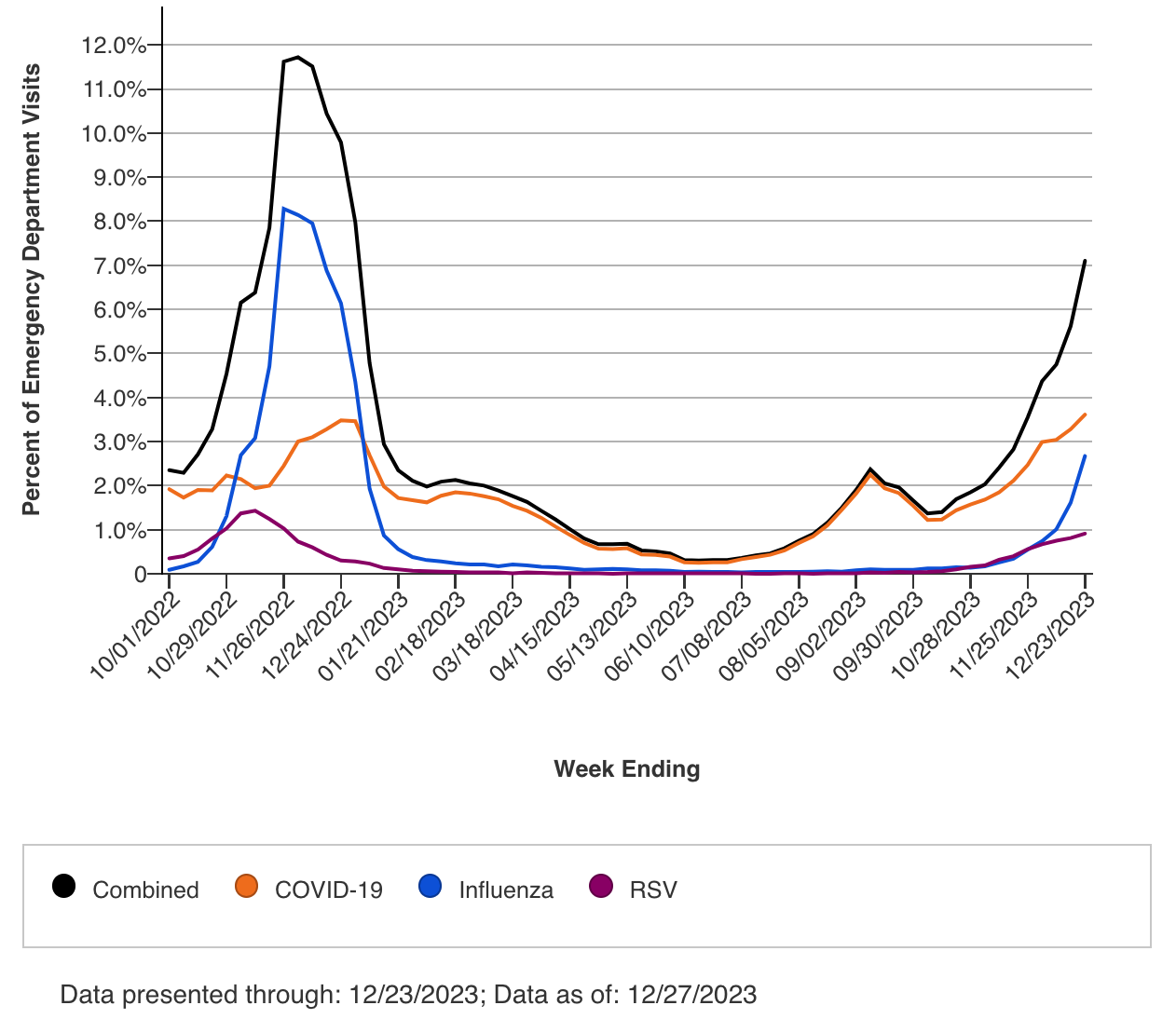
    Based on healthcare visits for fever and cough or sore throat, the Center for Disease Control and Prevention (CDC) reports high overall respiratory illness activity in Ohio.

    The CDC advises: “It is important to take the time now to get your recommended vaccinations to reduce your risk of serious illness. You can also protect yourself with preventive actions and seek medical advice if you have symptoms.”

    Illness trends in Ohio based on visits to emergency departments:

    Flu INCREASING
    RSV INCREASING
    COVID-19 INCREASING

    OHIO

    Medium COVID-19 hospitalization levels in Clermont, Hamilton County, Warren Counties in Ohio based on inpatient admissions for COVID-19:
    • If you are at high risk of getting very sick, wear a high-quality mask or respirator (e.g., N95) when indoors in public.
    • If you have household or social contact with someone at high risk for getting very sick, consider self-testing to detect infection before contact, and consider wearing a high-quality mask when indoors with them.

    More ways to protect yourself and others

    Stay up to date with vaccines

    • Everyone 6 months and older should get a yearly flu vaccine and a current COVID-19 vaccine. Find a vaccine at Vaccines.gov.
    • CDC recommends that all infants receive protection from one of these tools to protect them from getting very sick with RSV.
    • Adults 60 years and older also may receive one dose of RSV vaccine and should talk with their healthcare provider about whether RSV vaccination is right for them.
    Seek testing and possible treatment if you get sick

    Improve airflow and ventilation

    • Options include bringing in as much fresh air as possible, filtering the air, using a portable air cleaner, turning on exhaust fans, or choosing outdoor options.
    Practice good hand hygiene and cover your coughs and sneezes
    Stay home when you are sick and avoid others who are sick
    Masks can help reduce the amount of germs you breathe in, and can also help protect others if you are sick. Their effectiveness against different viruses varies.


  • Ohio public education supporters look to 2024, lawsuit to hold private voucher system accountable

    Ohio public education supporters look to 2024, lawsuit to hold private voucher system accountable

    Getty Images

    BY:  Ohio Capital Journal

    While marijuana legislation and other bills still sit on the horizon in the second year of this term’s General Assembly, education policy can always be counted on to be a part of the discussion. 2024 should be no different.

    Ohio’s private school voucher program has been a source of strong debate among legislators and education advocates of all kinds since the 1990s, when the program began as a way to allow lower-income students to access private schools, proposed as an effort to improve education outcomes in poor-performing public school districts.

    But as public school advocates still hope to see full funding of the Fair School Funding Plan for districts across the state, they saw eye-popping increases in private school funding through vouchers that worry them almost as much as the foot-dragging that they believe has occurred when talking of public school funding.

    “You should be funding the public schools,” said Stephen Dyer, former state representative and former chair of the Ohio House Primary and Secondary Education subcommittee for the House Finance Committee. “If you want to fund the private schools, fund the private schools, but there’s no reason you can’t do both.”

    Private school voucher expansion by the numbers

    The Ohio Department of Education reported 23,272 participants in the voucher expansion for the 2023 fiscal year, up from the 20,702 reported in 2022 and even more from the year prior, when 17,155 students participated in the state-subsidized program.

    In 2021, 85% of the voucher expansion participants were below 200% of the federal poverty line, and 93% of 2022 participants were below 250% of the poverty line.

    In 2023, language on the ODE data changed to “low-income qualified” to “not low-income qualified,” removing the breakdown of federal poverty percentages. In this year’s report, 67% of participants were “low-income qualified” and 32% were “not low-income qualified.”

    With the most recent state budget, passed this summer, a GOP-led effort to expand eligibility for private school vouchers led to a ballooning of the poverty level allowed for the voucher program to 450% of the poverty line, or a household income of $135,000 or less for a family of four.

    Those receiving a scholarship can move to a private school with $6,165 in state funding for K-8 students, and $8,407 for high schoolers.

    Families with incomes above the $135,000 threshold can still be eligible for at least 10% of the maximum scholarship, even with a higher income, Senate President Matt Huffman’s office said when the budget was passed.

    Public school advocates took issue with the expansion, saying the Fair School Funding Plan, seeking to support public school districts based on their individual needs, should be the focus, considering the vast majority of students in Ohio attend traditional public schools.

    ‘A perversion of the idea behind a voucher’

    Since the most recent voucher participation numbers were released, Dyer did his own analysis of the voucher program, finding “a very different goal” compared to when it began.

    “It’s now going to wealthier, white families to subsidize the decisions they’d already made to send their kids to private schools,” Dyer told the OCJ.

    In an analysis he posted to his blog, Dyer said ODE data showed nearly nine in 10 new applications to the voucher expansion went to white students, and more new vouchers for high schoolers went to families making more than $150,000 annually than went to families making less.

    Dyer also makes an argument that has been made before by those opposing the voucher expansion: increasing private school voucher program causes “resegregation” in the public schools, with the number of white students who are leaving for private schools, vouchers in hand.

    “It’s frankly a perversion of the idea behind a voucher, which was sold as allowing poor students, students of color, students who haven’t traditionally had access to private schools, to have access,” Dyer said in an OCJ interview.

    The most recent data on Ohio’s EdChoice voucher expansion showed 66.4% of participants are white, with the Black population of voucher recipients coming in at 15%, the second highest number reported.

    In 2022, 65.9% of expansion vouchers went to white students, up from 64.1% in 2021.

    A vast majority – 9 in 10 – vouchers come from just 31 school districts, according to Dyer.

    “Those districts’ racial makeup is, on average, 21% white,” he writes in his analysis. “Yet 46% of EdChoice voucher recipients are white – more than double the percentage of white students than attend the 31 public school districts where nine in 10 voucher students would otherwise attend.”

    At the very least as the voucher program continues in Ohio, Dyer hopes a plan to audit the program is forthcoming for the billions of dollars spent to subsidize it. He pointed to an audit of the defunct Electronic Classroom of Tomorrow (ECOT), which exposed false enrollment numbers and led to court battles to claw back more than $60 million in state funding from the online charter school.

    “It’s all of our dollars, so we have a right to say what happens with all of our dollars, and we certainly have a right to audit where our dollars are going,” Dyer said.

    The lawsuit

    With a Republican supermajority in both chambers of the legislature, support of private school vouchers and “school choice” seems assured at least for the foreseeable future, so public school advocates are looking to other avenues to make change.

    Another court battle is still simmering in the Franklin County Court of Common Pleas, a lawsuit that seeks to tamp down on the voucher program in favor of the constitutional obligations the legislature has to properly fund public schools.

    The lawsuit was filed in Jan. 2022, accusing the state of Ohio of improperly and unequally funding private schools, specifically targeting the growth of the voucher program as a drain on public school resources.

    “The legislature has only moved to further expand private school vouchers in Ohio,” the leading group in the lawsuit, Vouchers Hurt Ohio, wrote in a recent statement on the program. “We do not stand a chance of changing their minds or direction so we are forced to sue to get a fair hearing in a court of law where the Ohio Constitution is respected and means something.”

    Amidst the nearly two years the case has been ongoing, time extensions have been granted and Ohio Senate President Matt Huffman has asked to be excused from a deposition due to “legislative privilege,” also arguing the testimony sought from Huffman “is neither legally relevant nor necessary.”

    Franklin County Judge Jaiza Page has not ruled on Huffman’s subpoena, but allowed subpoenas for 42 “non-party private schools” in Ohio as part of the case, selected, according to the lawsuit filers “as a representative sample based on their location, demographics, percent of EdChoice students enrolled and total EdChoice funds received.”

    Parties standing against the public school advocates in the case said the passage of the state budget, including an increase in funding for the Fair School Funding Plan along with the voucher expansion should allow for the dismissal of their complaints on funding of public schools.

    “And while plaintiffs presumably still take issue with the new, amendment program, that does not change the fact that their current complaint challenges legislation that ‘is no longer the operative legislation governing EdChoice,” attorneys arguing for dismissal stated.

    A deadline for documents and evidence in the case was Nov. 30, and the court has requested “expert reports” from both sides by Feb. 23 of next year, with a trial date set for Nov. 4, 2024.


    Susan Tebben
    SUSAN TEBBEN

    Susan Tebben is an award-winning journalist with a decade of experience covering Ohio news, including courts and crime, Appalachian social issues, government, education, diversity and culture. She has worked for The Newark Advocate, The Glasgow (KY) Daily Times, The Athens Messenger, and WOUB Public Media. She has also had work featured on National Public Radio.

    MORE FROM AUTHOR

  • In CINCINNATI: 5 Things We Learned About Alzheimer’s in 2023

    In CINCINNATI: 5 Things We Learned About Alzheimer’s in 2023

    Cincinnati, Ohio – 2024—2023 was a landmark year for Alzheimer’s disease research, including advancements in treatment, risk factors and diagnosis of Alzheimer’s and other dementias. In this new era of Alzheimer’s treatments, here are five significant discoveries from this year:

    1. There are now three newly approved treatments for Alzheimer’s, with a fourth on the way.

    In July 2023, the U.S. Food and Drug Administration (FDA) granted traditional approval for Leqembi for treatment of mild cognitive impairment due to Alzheimer’s and mild Alzheimer’s dementia. This treatment, while not a cure, slows cognitive decline and can give people with early Alzheimer’s more time to maintain their independence.

    The FDA granted accelerated approval to Aduhelm for the same purpose in June 2021. At the Alzheimer’s Association International Conference (AAIC) in July 2023, Eli Lilly reported positive results for a third treatment — donanemab — in that same population. The company expects FDA action by the end of 2023.

    In May, the FDA approved brexpiprazole for agitation in people with Alzheimer’s disease. This is the first FDA-approved treatment for Alzheimer’s-related agitation, which is experienced by about 45% of Alzheimer’s patients. According to research published in May 2023, there are more than 140 therapies being tested that target multiple aspects of Alzheimer’s.

    1. Hearing aids could slow cognitive decline for at-risk older adults. 

    In the largest clinical trial to investigate whether a hearing loss treatment intervention can reduce risk of cognitive decline, researchers found that older adults with hearing loss, who were at higher risk of cognitive decline, cut their cognitive decline in half by using hearing aids for three years.

    1. Blood tests for Alzheimer’s are coming soon, and could improve diagnosis and treatment.

    Blood tests show promise for improving, and possibly even redefining, future Alzheimer’s diagnosis. Advancements reported for the first time at AAIC 2023 demonstrate the simplicity and value to doctors of blood-based biomarkers for Alzheimer’s.

    Blood tests are already being implemented in Alzheimer’s drug trials for further proof of their effectiveness. And they are incorporated into proposed new diagnostic and staging criteria for the disease. Blood tests — once verified, and approved by the FDA — would offer a noninvasive and cost-effective option in identifying blood-based markers for the disease.

    1. First-ever U.S. county-level Alzheimer’s prevalence estimates. 

    The first-ever county-level estimates of the prevalence of people with Alzheimer’s dementia — in all 3,142 United States counties — were reported at AAIC 2023. For counties with a population of 10,000 or more people 65 or older, researchers estimated the highest Alzheimer’s prevalence rates in Ohio.

    The researchers identified certain characteristics that may explain the higher prevalence in these counties, including older average age and higher percentages of Black and Hispanic residents.

    According to the Alzheimer’s Association, these stats can help public health officials determine the burden on the health care system, and better pinpoint areas of high risk and high need — for example, for culturally-sensitive health support and caregiver training services.

    1. Chronic constipation is associated with poor cognitive function. 

    Approximately 16% of the world’s population struggles with constipation. That prevalence is even higher among older adults. This year, researchers reported that less frequent bowel movements were associated with significantly worse cognitive function.

    Compared to those with bowel movements once daily, people with bowel movements every three days or more had worse memory and thinking equal to three additional years of cognitive aging. These results stress the importance of clinicians discussing gut health, especially constipation, with their older patients, including how to prevent constipation.

    There are 220,000 Ohioans 65 and older living with Alzheimer’s disease, according to the Alzheimer’s Association 2023 Alzheimer’s Disease Facts and Figures. That number is expected to hit 250,000 by 2025. A total of 493,000 Ohio caregivers provide 736 million hours of unpaid care each year.

    Those concerned about themselves or a loved one can contact the Alzheimer’s Association Greater Cincinnati Chapter at 513.721.4284 to schedule a care consultation and be connected to local resources.

    To learn more about Alzheimer’s or other related dementia, or to access free tools and resources, visit alz.org or call the Alzheimer’s Association 24/7 Helpline at 800.272.3900.

    ____________________

    Alzheimer’s Disease Facts and Figures, an annual report released by the Alzheimer’s Association, reveals the burden of Alzheimer’s and dementia on individuals, caregivers, government and the nation’s health care system.

    The accompanying special report, The Patient Journey in an Era of New Treatments, examines the importance of conversations about memory at the earliest point of concern, as well as a knowledgeable, accessible care team to diagnose, monitor disease progression and treat when appropriate. This is especially true now, in an era when treatments that change the underlying biology of Alzheimer’s are available.