Month: April 2025

  • Chamber-backed tax reform group urges Ohio lawmakers stamp out ‘unvoted’ increases that impact school districts, others

    Chamber-backed tax reform group urges Ohio lawmakers stamp out ‘unvoted’ increases that impact school districts, others

    (iStock / Getty Images Plus)

    By:  Ohio Capital Journal

    Ohio lawmakers seem committed to delivering property tax relief in the current session, but they’re still zeroing in on their approach. They’ve introduced at least seven measures tweaking the homestead exemption — for disabled vets, military spouses, the elderly — and a handful more changing how counties calculate what homeowners owe.

    Most notably, however, House lawmakers have proposed an automatic rollback in the state budget that triggers if a school district carries over any more than 30% of their operating revenue.

    An organization backed by realtors, county auditors, and the Ohio Chamber of Commerce is wading into that debate. The Ohio Taxpayer Protection Coalition is urging lawmakers to avoid “unvoted” property tax increases.

    “Our point isn’t to take away revenue from school districts,” coalition chair and former state tax commissioner Tom Zaino explained. “Our point is to reduce the rate of increase of revenue without a vote of school district residents.”

    House Bill 920

    Zaino argued that state lawmakers need to revisit a measure passed in the 1970s meant to insulate homeowners from rising home values. Property taxes are calculated in mills — one mill is one thousandth of a dollar, or one tenth of a percent.

    In every county, taxing authorities like local governments, schools, and parks, can levy a total of 10 mills that will grow as home values increase. Any share beyond those 10 mills has to get approval from voters. Meanwhile, to receive state funding, school districts must levy at least 20 mills, or 2% of assessed property value.

    House Bill 920 placed a check on those voted levies to ensure rising home prices don’t result in a taxing authority raising extra money. In effect, if your home value goes up, that slice of your property tax rate would decrease to keep your tax bill steady.

    “What’s happened, though, over the last 50 years,” Zaino said, “is that these protections have been eroded by many changes made by the General Assembly, which has effectively created loopholes.”

    The tax reductions in HB 920 apply to most levies beyond a school district’s 20 mill floor. So, school districts have been resourceful and looked to other sources of funding like emergency levies or local income taxes. That way they can meet immediate funding needs and still benefit from rising property values.

    Zaino argued that amounts to an increase in taxes that voters didn’t approve, and lawmakers should prevent that strategy. To that end, the Ohio Taxpayer Protection Coalition is supporting legislation that would recalculate the 20 mill floor to include those other funding sources.

    Bailey Williams, from the liberal think tank Policy Matters Ohio argued Zaino’s coalition is blowing the problem out of proportion. “While property values across the state have seen significant growth coming out of the pandemic,” he argued, “property tax revenues have only grown at a fraction of that rate.”

    Making the changes Zaino wants “will harm schools, put more levies on the ballot, and will not fix the fact residential taxpayers are overburdened,” Williams argued.

    School districts’ view

    School leaders argue the problem isn’t just districts making clever use of the system. As property values rise, HB 920 will reduce a homeowner’s rate — but there’s a hard stop at 20 mills. That means if property values rise high enough, the reductions stop working.

    Paul Imhoff from the Buckeye Association of School Administrators told lawmakers in 2019, there were 168 districts at the 20 mill floor. By 2023, that figure had ballooned to 409.

    “Eighty-nine percent of the new floor districts went through reappraisal or update in 2023,” he explained, “which indicates that the driving force in 20 mill floor districts clearly is rising property values.”

    He warned adding new levies to the calculation to generate more reductions won’t help homeowners in the 203 districts that don’t have those extra levies. In the end the bill would “force the affected school districts to either cut essential services or place more levies on the ballot in response, or both,” he argued.

    In a written statement, Jennifer Hogue from the Ohio School Boards Association explained the group supports “thoughtful, targeted property tax relief that helps those most in need without undermining the essential funding public schools rely on.” She argued any property tax discussion relies on a “clear recognition of the vital role local taxes play” in funding public schools.

    “While we are open to reform, we cannot support measures that limit local control or compromise a district’s ability to meet the needs of their students,” Hogue added. “Any changes must protect the stability and predictability of school funding.”

    A different proposal would allow revenue increases from rising property values, but they wouldn’t be able to exceed the general inflation rate over the past three years. In his testimony, Imhoff noted his organization is still reviewing the bill.

    Zaino allowed that it would be an improvement and address some of the school funding concerns. Still, he grumbled districts “can’t rely on unvoted tax increases,” and insisted lawmakers shouldn’t give up on closing the loopholes districts have been taking advantage of for years. “There’s not any one bill that is the silver bullet here,” he said.

    Other legislation

    Zaino offered a tempered response to the various homestead and other property tax exemptions lawmakers have proposed. Those changes are relatively easy to understand and offer immediate relief, but that targeted approach usually winds up shifting the tax burden to others.

    “Somebody’s paying for this, Zaino said, “so it’s not like taxpayers are completely saving on that.”

    Williams argued instead of rejiggering the property tax calculation or providing new exemptions, lawmakers should employ a circuit breaker, like the one proposed by state Sen. Louis Blessing, R-Colerain Twp. That approach makes tax reductions based on a share of the homeowner’s income rather than the amount of funding a school district is expecting.

    Williams explained one group regularly cited for property tax exemptions is seniors.

    “There are some seniors who do not need property tax relief,” he said. “The best way to tell is by how much of their income is consumed by property taxes, not looking at their age. The circuit breaker is targeted enough to get those seniors who need the most help, while asking those who can afford it to pay their fair share.”

    As for the budget proposal capping school district carryover balances, Zaino said they’re still considering their position. He noted it might encourage districts to allocate that funding or just spend it down to avoid the reduction.

    Follow Ohio Capital Journal Reporter Nick Evans on X or on Bluesky.


    Nick Evans
    Nick Evans

    Nick Evans has spent the past seven years reporting for NPR member stations in Florida and Ohio. He got his start in Tallahassee, covering issues like redistricting, same sex marriage and medical marijuana. Since arriving in Columbus in 2018, he has covered everything from city council to football. His work on Ohio politics and local policing have been featured numerous times on NPR.

    Ohio Capital Journal is part of States Newsroom, the nation’s largest state-focused nonprofit news organization.

    MORE FROM AUTHOR

  • Ohio House budget would eliminate independent campaign finance oversight

    Ohio House budget would eliminate independent campaign finance oversight

    Rep. Brian Stewart, R-Ashville, testifying in the Ohio House. (Photo by Nick Evans, Ohio Capital Journal.)

    ____________________

    In particular, Stewart and state Rep. Jean Schmidt, R-Loveland, complained about cases dragging on. Schmidt, like Stewart, has been on the receiving end of a multi-year OEC case.

    ____________________

    Lawmakers argue the Ohio Election Commission has outlived its usefulness and the Secretary of State or county boards of elections should handle campaign finance violations

    By:  Ohio Capital Journal

    The Ohio House’s version of the budget would eliminate the independent group charged with enforcing state campaign finance laws. With the Ohio Election Commission gone, those duties would fall to the Secretary of State and county boards of elections. Lawmakers slipped the provision into the 5,000-plus page bill as part of a wide-ranging amendment the day before the vote.

    But lawmakers’ frustrations with the commission became apparent months ago.

    At a February hearing, state Rep. Brian Stewart, R-Ashville, expressed “grave concerns” about the commission and said its process is “substantially broken.”

    “I’m getting texts and calls here from other members saying, this is the time to make some reforms,” he said at the time, “and I hope we do that as part of this process.”

    Stewart’s irritation stems in part from his own case before the commission, which took roughly three years to resolve. The commission determined he made no violation; the challenger is appealing that decision.

    Even critics of the House plan acknowledge the commission’s shortcomings. But they contend such drastic changes belong in a standalone bill with plenty of opportunity for public testimony.

     Ohio state Rep. Brian Stewart, R-Ashville, discussing the House budget. (Photo by Nick Evans, Ohio Capital Journal.) 

    Lawmakers’ complaints

    GET THE MORNING HEADLINES.


    With a current annual budget of about $642,000, the Ohio Elections Commission is a rounding error in a budget spending more than $44.5 billion General Revenue Fund dollars a year. The governor’s spending proposal pushed its annual budget north of $800,000. At that February hearing, OEC Executive Director Phil Richter showed up to explain how the extra funding would cover a new filing system and an additional employee to take over when he retires.

    Instead, lawmakers lit into the commission.

    In particular, Stewart and state Rep. Jean Schmidt, R-Loveland, complained about cases dragging on.

    “There are multiple committees over the last several years,” Schmidt said, “who have been required to attend hearings, and the decisions go into a year, two years, delay, delay, delay, before a decision is rendered. Sir, that costs people time. It also costs people money.”

     State Rep. Jean Schmidt, R-Loveland. (Photo from the Ohio House website.) 

    Schmidt, like Stewart, has been on the receiving end of a multi-year OEC case.

    In an interview, Stewart argued lawmakers have been raising concerns about the commission for years. He pointed to a 2014 U.S. Supreme Court ruling invalidating an Ohio law against false campaign statements. That decision eliminated an entire class of OEC complaints, he argued, “but of course, (the) government never sort of adjusted and kind of right-sized the operation.”

    Stewart also brushed off concerns about lawmakers who have faced OEC complaints leading the effort to eliminate the agency.

    “The best people in the position to reform an agency,” he argued, “are those who have spent years being drug through the mud and seeing how completely inefficient it is.”

    More important, Stewart stressed, lawmakers aren’t changing campaign finance law — they’re looking for better enforcement.

    “Everything that’s legal is still legal,” he said. “Everything that’s illegal is still illegal, and you will still have all the same appeal rights that you do today to take your matter to court.”

    Traffic cops

    Chris Hicks hates a liar. Talking with him for 10 minutes and it’s obvious his skin crawls seeing powerful people get away with it. He’s unabashedly conservative but has no problem going after members of his own party if they’re breaking the law. He’s filed numerous complaints with OEC, including the ones against Stewart and Schmidt.

    In Hicks’ telling, it started with a different candidate named Allen Freeman. In 2020, he was one of several candidates backed by then-House Speaker Larry Householder. Freeman blanketed Cincinnati airwaves with ads, which struck Hicks as weird — the vast majority of that audience wasn’t in his district, and he reported spending only about $15,000.

    Hicks found Federal Communications Commission reports of more than $100,000 in ad buys on Freeman’s behalf, paid for by Householder-aligned groups. The OEC eventually fined Freeman $50,000, but his campaign wound up burning through its cash to pay for his defense.

    Hicks explained the Freeman case was just a starting point for him. “Some of these invoices had a bunch of other candidates on them,” he said. Since then, he’s driven back and forth more than a dozen times from his home outside Cincinnati to OEC hearings in Columbus, pursuing various campaign finance cases.

    “I have no love for the OEC at all, as you can tell,” he said. “But everything about what’s happening right now is demonstrative of how f-ed up things in Ohio are.”

    He complained about lawmakers “dumping” the changes into the budget to evade public hearings and can’t believe Democrats aren’t making a bigger issue of it.

    Hicks thinks maybe it’s got to get worse before it gets better.

    “The funny part is, if it stays in there, it’s probably better than the OEC,” he said. “Because it’s going to create absolute chaos — absolute chaos.”

     Catherine Turcer with Common Cause Ohio March 22, 2023, at the Statehouse in Columbus, Ohio. (Photo by Graham Stokes for Ohio Capital Journal) 

    Putting the process in the hands of county boards, whose members are often local party leaders, or a state hearing officer, hand-selected by the Secretary of State, will remove any semblance of neutrality, he contended.

    Catherine Turcer, who heads up the government watchdog group Common Cause Ohio, has her own frustrations with the OEC, but she’s decidedly against the burn-it-all-down approach. She agrees the process takes too long and the results can be lackluster, but she argued lawmakers abolishing the commission is the wrong answer.

    “As opposed to thinking about how they could create greater transparency,” she said, “and how they could make an elections commission that would be functional and strong and robust, they’re thinking about eliminating it.”

    Turcer criticized lawmakers for scrapping the commission as part of the budget, rather than in a standalone bill. And she rejected Stewart’s suggestion that nothing’s lost in handing off the commission’s responsibilities.

    “That doesn’t take care of making sure that these, you know, traffic cops, essentially, that they’re as independent as possible,” she argued. “I think the problem is, by eliminating it, you’re essentially setting up a system of cronyism.”

    The stakes

    Phil Richter understands the complaints about his agency and said he’s open to working on improvements. But he insists the foundational idea — an independent body overseeing campaign finance — was a good one.

    “For the state of Ohio to take this step, and step away from an independent, bipartisan organization reviewing these kinds of matters, I think that, to me, would be a black mark on the state,” he said.

    With oversight in the purview of partisan actors, he warned, any decision will be open to claims of partisanship. Beyond the optics, Richter argued devolving decisions to county boards could be a mess. He described explaining the House proposal to a former member recently who interrupted, “wait a minute, that means there could be 88 different versions and 88 different interpretations of the statutes.” Richter added there’s a conflict of interest in asking the same body to audit campaign filings and judge cases, too.

    “Again,” he said, “that’s why this commission was created — was to separate those instances.”

    None of those concerns make an impact on Stewart.

    “You have seven folks who don’t even have to be lawyers, playing judge and trying to hear cases over a period of years,” he said. “That’s a silly system.”

    Follow Ohio Capital Journal Reporter Nick Evans on X or on Bluesky.

    Nick Evans
    Nick Evans

    Nick Evans has spent the past seven years reporting for NPR member stations in Florida and Ohio. He got his start in Tallahassee, covering issues like redistricting, same sex marriage and medical marijuana. Since arriving in Columbus in 2018, he has covered everything from city council to football. His work on Ohio politics and local policing have been featured numerous times on NPR.

    Ohio Capital Journal is part of States Newsroom, the nation’s largest state-focused nonprofit news organization.

    MORE FROM AUTHOR

  • [WATCH] Board of Zoning Appeals rejects John Hill’s request to build 3-story townhome development

    [WATCH] Board of Zoning Appeals rejects John Hill’s request to build 3-story townhome development

    Loveland, Ohio – On March 5, a six-unit, 3-story townhome development proposed by local builder John Hill Construction, to be located at 200 Railroad Avenue within the Historic Preservation District Boundaries, was determined to be “inappropriate” for the neighborhood. The proposed townhomes were to be adjacent to existing cottage-style homes and Nisbet Park on the Loveland Bike Trail in Historic Downtown Loveland. The proposed project encompasses two vacant parcels consisting of .229 acres.

    The Historic Preservation and Planning Commission (HPPC) voted unanimously to reject Hill’s proposal.

    John Hill then appealed the denial to the Board of Zoning Appeals (BZA). The case was heard on Monday, April 21, and the three-member board upheld the HPPC decision that the proposal was not appropriate for Historic Downtown.

    Despite the City not notifying the HPPC that their decision had been appealed and thus not being in attendance to defend their position, the Board of Zoning Appeals upheld the rejection of the Hill proposal.

    BACKGROUND: The Historic Preservation and Planning Commission voted unanimously to reject Hill’s proposal. (3-story townhome development proposed for historic district deemed not “appropriate”)
    In these LOVELAND MAGAZINE TV videos you can watch the open forum testimony, John Hill’s testimony, and the deliberation of the BZA.


  • U.S. Education Department to restart defaulted student loan collections

    U.S. Education Department to restart defaulted student loan collections

    side the U.S. Department of Education headquarters in Washington, D.C., on April 2, 2025. (Photo by Shauneen Miranda/States Newsroom)

    By:  Ohio Capital Journal

    WASHINGTON — The U.S. Department of Education said Monday that it will resume collections May 5 for defaulted federal student loans.

    After pausing during the early weeks of the COVID-19 pandemic, the agency has not collected on defaulted loans in over five years. More than 5 million borrowers sit in default on their federal student loans, and just 38% of borrowers are current on their payments, the department said.

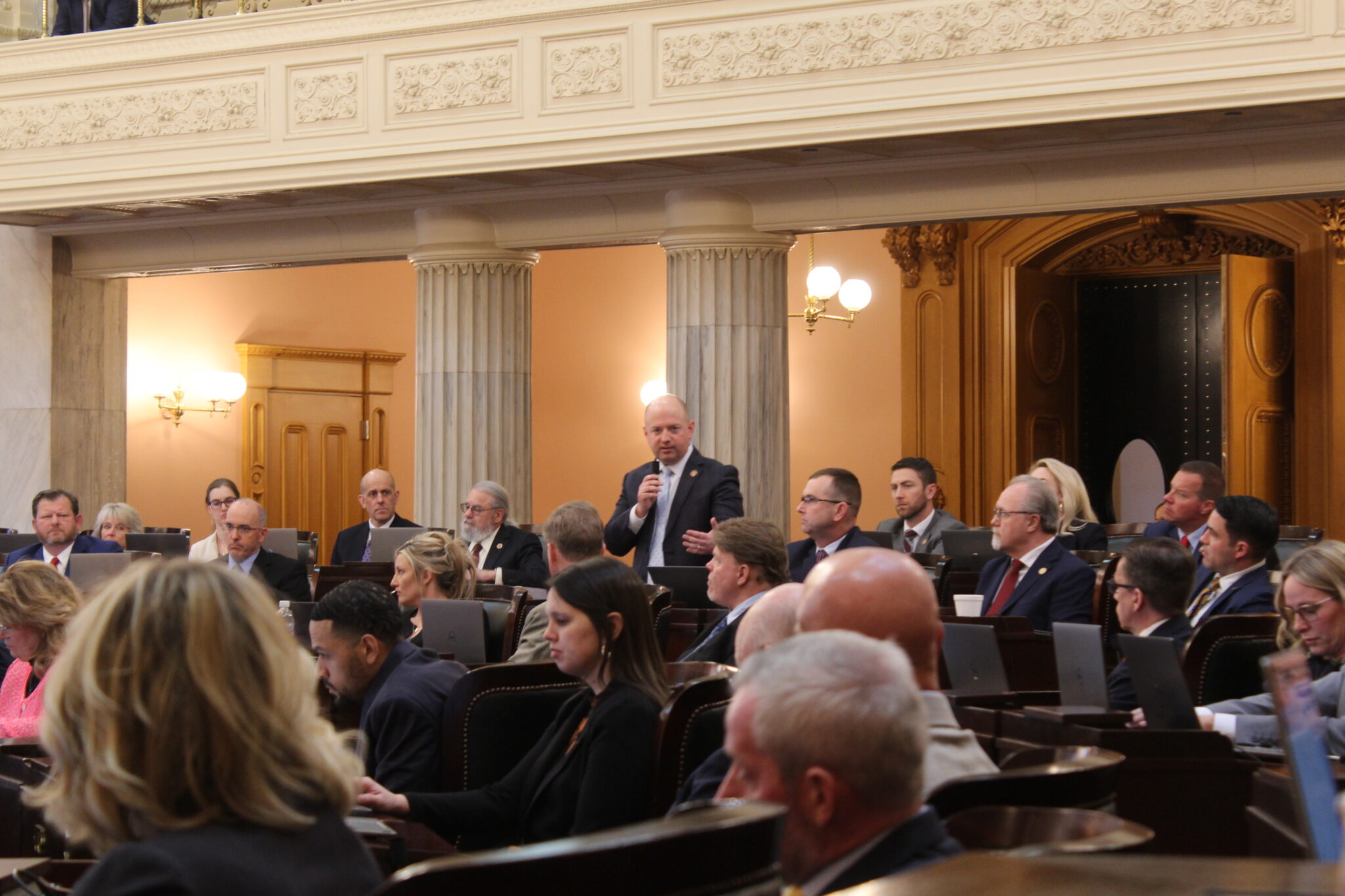
    “American taxpayers will no longer be forced to serve as collateral for irresponsible student loan policies,” U.S. Secretary of Education Linda McMahon said in a statement Monday.

    During last year’s presidential campaign, President Donald Trump criticized his predecessor and successor, President Joe Biden, for his efforts to erase student debt. McMahon resumed that line of attack Monday, blaming Biden’s administration for unreasonably raising borrowers’ expectations of forgiveness.

    “The Biden Administration misled borrowers: the executive branch does not have the constitutional authority to wipe debt away, nor do the loan balances simply disappear. Hundreds of billions have already been transferred to taxpayers,” McMahon said.

    She added that “going forward, the Department of Education, in conjunction with the Department of Treasury, will shepherd the student loan program responsibly and according to the law, which means helping borrowers return to repayment — both for the sake of their own financial health and our nation’s economic outlook.”

    The department said the Office of Federal Student Aid will restart the Treasury Offset Program, which the U.S. Treasury Department administers, on May 5.

    The Education Department statement said all borrowers who are in default will get emails over the next two weeks “making them aware of these developments and urging them to contact the Default Resolution Group to make a monthly payment, enroll in an income-driven repayment plan, or sign up for loan rehabilitation.”

    The department said the Office of Federal Student Aid will “send required notices beginning administrative wage garnishment” later this summer.

    More than 42.7 million borrowers owe more than $1.6 trillion in student debt, according to the department.

    The administration claims that “instead of protecting responsible taxpayers, the Biden-Harris Administration put them on the hook for irresponsible lending, pushing the federal student loan portfolio toward a fiscal cliff.”

    ____________

    Shauneen Miranda
    Shauneen Miranda

    Shauneen Miranda is a reporter for States Newsroom’s Washington bureau. An alumna of the University of Maryland, she previously covered breaking news for Axios.

    Ohio Capital Journal is part of States Newsroom, the nation’s largest state-focused nonprofit news organization.

    MORE FROM AUTHOR

  • Ohio public health one of the worst funded in the country, faces further cuts in state budget

    Ohio public health one of the worst funded in the country, faces further cuts in state budget

    (Mario Tama/Getty Images)

    By:  Ohio Capital Journal

    A new analysis of state public health systems shows Ohio’s has some of the worst funding support in the nation, and that funding could go down even more in the newest state budget.

    Using 2021 data from the State Health Access Data Assistance Center, the Health Policy Institute of Ohio found that the state spent $24 per person on public health, “far less than most other states.”

    “Overall, Ohio’s investment in public health is lower than many other states at both the state and local levels,” the institute stated.

    According to the data, only 12 states are worse than Ohio for state public health funding, with the worst being Missouri, at $6.54 per person in 2021. The highest ranked was the District of Columbia, at $370.56 in per-capita spending that year.

     Source: Health Policy Institute of Ohio 

    Public health involves everything from vaccine awareness and health education to food and water safety.

    While health outcomes are influenced by clinical care like primary care check-ups, health behaviors and the social, economic, and physical environment make up a bigger part of the health outcome influences, according to policy briefs by the institute.

    “Public health workers focus on stopping health problems before they start,” the HPIO stated in a recent policy brief. “For example, public health workers prevent injuries and deaths by providing parents with information about how to correctly install infant car seats, distributing drug overdose reversal medication and raising awareness of senior fall prevention programs.”

    Other public health roles include nurses at school-based health centers, restaurant inspectors, public assistance program nutritionists, epidemiologists who look at health trends like infant mortality, and workers who conduct home visits as part of the Help Me Grow program.

    That program, along with infant vitality programs are portions of the state budget that may see cuts, even as public health advocates ask the state to support the sector more than it already does.

    In the Ohio House’s version of the state budget, $22.5 million would be cut from the Help Me Grow program in fiscal year 2027, representing a 26% reduction. Infant vitality programs would see cuts of more than $2 million each in 2026 and 2027, a nearly 10% cut. The programs, both housed under the Ohio Department of Children and Youth, are still awaiting final numbers, as the Ohio Senate takes up its budget discussions. A final draft will then be developed by both chambers, before it’s sent to the governor by July 1.

    GET THE MORNING HEADLINES.


    The House version of the budget leaves local health department support unchanged, with that support set at the same $2.379 million the line item received in 2024 and this year. State funding for infectious disease prevention and control within the Ohio Department of Health will also receive relatively the same amount of funding as it received in 2024, though the House version drops the budget slightly from the estimated 2025 funding. The 2025 estimate by the state has funding at $5.2 million, and the House set funding for 2026 and 2027 at $4.9 million per year.

    In Ohio, 2023 annual financial reports from the Ohio Department of Health and the Association of Ohio Health Commissioners showed 72% of local health department revenue comes from the local level, including local government funds, public health levies in some areas and fees. Federal funding distributed by the state makes up 16% of the revenue, 6% is from other state sources, and 5% comes from direct federal funding to local departments. Local health departments only receive 1% of their revenue via state subsidy, according to the data.

     Source: Health Policy Institute of Ohio

    The Health Policy Institute’s review of 2024 Ohio Department of Health data shows it receives half of its revenue from federal sources, 31% from the state and 19% came from the federal response to the COVID-19 pandemic.

    With $979 million in state fiscal year 2024, the state used that revenue almost equally across three topics: disease prevention, implementation of the federal Women, Infant and Children (WIC) program, and services related to COVID-19 and other infectious diseases, according to an HPIO policy brief on public health basics. These three topics each took 22% to 23% in ODH expenditures.

    Another 11% went to family and community health services, 6% went to maternal and infant vitality, 5% to administrative services, 4% to “quality assurance” for long-term care facilities, 4% for public health preparedness information and 2% for “other family and community health services” passed through local health districts.

    Public health initiatives yield an average return on investment of $14 for every dollar spent, through improved health outcomes, reduced health care costs and increased productivity, according to the institute’s public health analysis.

    Among other policy recommendations, the instituted urged continued or even increased support for the federal Public Health Infrastructure Grant would be important to “strengthen the public health workforce, foundational capabilities and data systems through the end of 2027.”

    The public health sector has faced struggles like high turnover, high burnout rates in existing employees and a lack of adequate pay.

    “Consistent delivery of these services across the state depends upon an adequate public health workforce,” the HPIO stated.


    Susan Tebben
    Susan Tebben

    Susan Tebben is an award-winning journalist with a decade of experience covering Ohio news, including courts and crime, Appalachian social issues, government, education, diversity and culture. She has worked for The Newark Advocate, The Glasgow (KY) Daily Times, The Athens Messenger, and WOUB Public Media. She has also had work featured on National Public Radio.

    Ohio Capital Journal is part of States Newsroom, the nation’s largest state-focused nonprofit news organization.

    MORE FROM AUTHOR

  • Thousands show up again on Saturday to protest Trump in Ohio

    Thousands show up again on Saturday to protest Trump in Ohio

    Protesters dressed as characters in “The Handmaid’s Tale,” a dystopian novel about life under a totalitarian regime. They were protesting President Donald Trump at the Ohio Capitol on April 19. (Photo by Marty Schladen, Ohio Capital Journal.)

    By: Ohio Capital Journal

    A larger-than-expected crowd went to the Ohio capitol on Saturday to protest President Donald Trump and the many controversial actions of his young administration. It was one of at least 47 across Ohio and more than 700 across the United States.

    Columbus police said that the crowd appeared to approach 3,000. That was smaller than the roughly 5,000 who turned out on April 5, when millions protested nationwide. But with the Easter holiday and fewer sponsoring organizations, smaller crowds were expected on Saturday.

    Large crowds also gathered in Cincinnatirainy Akron, and other cities across the Buckeye State. They were sponsored by the group 50501.

     Photo by Marty Schladen, Ohio Capital Journal. 

    Organizers chose April 19 to protest in part for its symbolic value. On that day in 1775, the first battles of the Revolutionary War were fought in Lexington and Concord, Mass.

    Playing off of that theme, many carried signs Saturday denouncing Trump and accusing him of trying to be a king.

    Trump has been raising such concerns in several ways. They include by trying to gut the independent federal antitrust watchdog, and by empowering the world’s richest man to fire tens of thousands from the Social Security and Veterans administrations, the National Park Service, and numerous other agencies.

    But perhaps more concerning is that his administration has been invoking a law not used in 80 years, accusing some migrants of membership in gangs, and deporting them to a notorious Salvadorean prison. He has defied court orders — including one to bring back a man whom the administration admitted was deported in error.

    The U.S. Supreme Court early Saturday morning ordered a temporary halt to the deportations. So the stage seems to be setting for a confrontation between the judiciary — which has no army to enforce its orders — and an executive who sometimes has been disinclined to heed them.

    That was on the minds of many at the Columbus protest. Chuck Ardo of Lancaster said that his family migrated to the United States from Slovakia when he was a child, and that his parents survived the Holocaust.

    “Fascism is something I’ve always been aware of,” he said. “Due process and the Constitution, that’s what matters. I don’t know if these people are deportable or not. But they all deserve due process and that’s what’s missing here. They’ve labeled them ‘terrorists,’ but on what grounds? What proof have they shown?”

    Sen. Chris Van Hollen, D-Md., last week visited the wrongly deported man, Kilmar Armando Abrego Garcia, at the Salvadorean prison. He said that if Trump has evidence that Abrego Garcia is in a gang, he needs to present it court — not just claim it on social media.

    For Ardo, Trump’s actions have a disturbing historical echo.

    “Donald Trump is doing many of the things Hitler did as he rose to power,” he said. “Hitler attacked the courts. He attacked the universities. I’m not accusing anybody of being a Nazi here, but while history doesn’t repeat itself, it rhymes.”

    Debbie Wood of Powell said the president has been acting like a king in other ways as well.

    “Trump did not win in a landslide,” she said. “More people voted for someone else than for him. He does not have a mandate. Even the people who voted for him did not vote to ruin the VA. They didn’t vote to fire people who do cancer research. They didn’t vote to take food out of the mouths of hungry people. Ruining the national parks. Nobody voted for any of that stuff.”

    She added, “People are getting more and more angry. He’s sending people away to concentration camps without due process. Ignoring court orders. Who does that? We would be in jail.”

     Photo by Marty Schladen, Ohio Capital Journal. 

    Gary Bennett of St. Clairsville stood at the base of a monument to former President William McKinley holding a sign that mocked Trump and slammed him for gutting the staff at the National Park Service. He said that’s just one problem among many he has with the new administration.

    “We could make signs every day of the week and there would still be signs to make,” he said. “Me and my wife just retired, and we don’t want him to take away our Social Security. That’s just one thing.”

    Chris Glass of Delaware said she’s also upset about many things Trump is doing, and that protesting helps.

    “There is something very nice about the camaraderie,” she said. “It’s a sense that people do care. I think we represent the country better than our current government does.”

    Last updated 5:03 a.m., Apr. 21, 2025


    Marty Schladen
    Marty Schladen

    Marty Schladen has been a reporter for decades, working in Indiana, Texas and other places before returning to his native Ohio to work at The Columbus Dispatch in 2017. He’s won state and national journalism awards for investigations into utility regulation, public corruption, the environment, prescription drug spending and other matters.

    Ohio Capital Journal is part of States Newsroom, the nation’s largest state-focused nonprofit news organization.

    MORE FROM AUTHOR

  • West Loveland Avenue to close for water main replacement

    West Loveland Avenue to close for water main replacement

    UPDATE: City just released this:

    Detour will utilize Wall Street to Fallis Road to Rich Road.

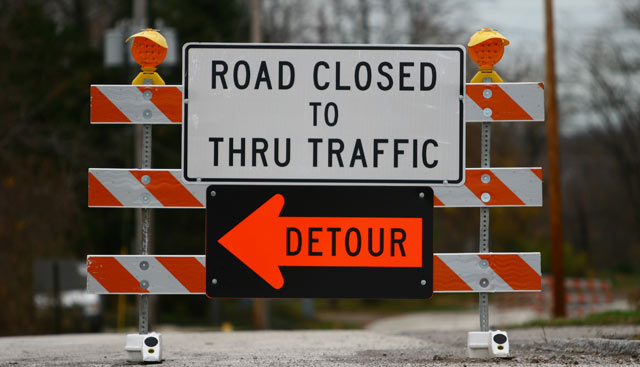
    Loveland, Ohio – The Loveland Police Department has announced on FaceBook that West Loveland Avenue will be closed daily at Cherokee Drive between 8:30 AM and 2:30 PM from April 23 until April 25. They said that weather may affect the project dates.

    The City will be replacing the water main in the Loveland Heights neighborhood. A new public water main will be installed where currently only a private main exists.

    No detour route has been provided.
  • Purple Up! Day in Loveland Schools honored students with close family member serving in military

    Purple Up! Day in Loveland Schools honored students with close family member serving in military

    Loveland, Ohio – April is the Month of the Military Child and Loveland City Schools honored students who have a close family member serving in the armed forces by wearing purple on Tuesday, April 15, for Purple Up! Day.

    The Ohio Department of Education and Workforce announced that Loveland Middle and High Schools received Purple Star designations as members of the Purple Star Class of 2025. Purple Star schools show a significant commitment to serving students and families connected to our nation’s armed forces.

    Loveland Middle and High Schools first earned their Purple Star Award in 2024.

    Logo for Purple Star AwardThe Purple Star Award recognizes schools that show a major commitment to students and families connected to our nation’s military. Schools that earn the award will receive a special Purple Star recognition to display.


    A school will be honored with the Purple Star Award if it completes all the required activities, plus one optional activity. The Purple Star Advisory Board helps decide a school’s eligibility for the award.

    Photos by Loveland Schools


  • [TONIGHT] Agenda and details of BZA hearing on six-unit, 3-story townhome

    [TONIGHT] Agenda and details of BZA hearing on six-unit, 3-story townhome

    A six-unit, 3-story townhome that is proposed by local builder John Hill Construction

    Loveland, Ohio – On March 5, a six-unit, 3-story townhome development proposed by local builder John Hill Construction, to be located at 200 Railroad Avenue within the Historic Preservation District Boundaries, was determined to be “inappropriate” for the neighborhood. The proposed townhomes were to be adjacent to existing cottage-style homes and Nisbet Park on the Loveland Bike Trail in Historic Downtown Loveland. The proposed project encompasses two vacant parcels consisting of .229 acres.

    The Historic Preservation and Planning Commission voted unanimously, to reject Hill’s proposal. (3-story townhome development proposed for historic district deemed not “appropriate”)

    The developer has now appealed the denial, to the Board of Zoning Appeals. The case will be heard tonight at City Hall at 5:30 PM.

    In the below agenda for tonight’s meeting you can read the details of the development proposal and the reasons John Hill believes the planning commission erred in ruling his request to build the townhomes was “inappropriate” for the neighborhood.

    FOR BACKGROUND:

    3-story townhome development proposed for historic district deemed not “appropriate”

    [pdf-embedder url=”https://lovelandmagazine.com/wp-content/uploads/2025/04/Agenda-Monday-April-21-2025.pdf” title=”Agenda – Monday, April 21, 2025″]

  • Loveland native Ricky Mulvey appears On CNN as “Finance Expert” on trade war uncertainty

    Loveland native Ricky Mulvey appears On CNN as “Finance Expert” on trade war uncertainty

    David Miller is the Editor in Chief of Loveland Magazine

    OPINION

    by David Miller

    Ricky Mulvey was an Intern and talking head at Loveland Magazine, starting when he was in middle school until he graduated from Loveland High School. Of his amazing accomplishments while with Loveland Magazine was in 2012 when he reported during President Barak Obama’s campaign rally in Cincinnati’s Eden Park and when then Vice-President Joe Biden held a reelection campaign rally at Milford High School.

    In 2024 Ricky was in New York City to receive a Signal Award for best money and finance podcast.

    Ricky is currently a host and senior producer for Motley Fool Money, a daily podcast for stock investors. Weekday episodes offer a long-term perspective on business news with The Motley Fool’s investment analysts. Weekend shows are a mix of investing classes and longer-form interviews. The show is hosted by Dylan Lewis, Ricky, and Mary Long. In 2024, Ricky shared the “Listener’s Choice” 2024 Signal Award for best money and finance podcast.

    In a 2023 podcast, Ricky interviewed Walter Isaacson to talk about the force that is Elon Musk. Ricky interviewed Pixar co-Founder Ed Catmull about AI and storytelling in 2024.

    Ricky lives in Denver with his wife, Samantha Weiss Mulvey. They were married this past January.

    I was always so proud of how far Ricky has come, and now he is in the “Situation Room” with Pamela Brown, influencing the nation and world! His hard work and dedication to professionalism have paid off.

    Ricky appeared on the CNN broadcast on April 18 along with Jean Chatzky the CEO of HerMoney.com.

    Here is Ricky’s appearance on CNN:

    Motley Fool Money is a daily podcast for stock investors. Weekday episodes offer a long-term perspective on business news with The Motley Fool’s investment analysts. Weekend shows are a mix of investing classes and longer-form interviews.

    _____________________

    Ricky Mulvey’s post-game interview at Canton Fawcett Stadium with Loveland High School defensive back Jeff Prifti after his the Loveland Tigers captured the State Div. II Title on December 6, 2013.