Month: April 2025

  • Another wave of Trump protests planned in Ohio and across the country today

    Another wave of Trump protests planned in Ohio and across the country today

    The “Hands Off” protest April 5, 2025 at the Ohio Statehouse in downtown Columbus. (Photo by David DeWitt, Ohio Capital Journal.)

    Stand Up OxfordCincinnati National Day of Action: Rally ‘Heard Round the World • Wilmington National Day of Action: Rally Heard ‘Round the World • Middleton National Day of Action: Rally Heard ‘Round the World,

    By:  Ohio Capital Journal

    At least 47 protests of President Donald Trump and his administration are planned in Ohio for on Saturday. They’ll be part of more than 600 events planned nationwide.

    The group 50501 is organizing the effort after joining dozens of others in sponsoring massive “Hands Off!” rallies across the country on April 5. It says its mission is to “fight to uphold the Constitution and end executive overreach.”

    Since his inauguration, Trump has raised numerous concerns in that regard. He’s ignored court orders, tried to gut the independent federal antitrust watchdog, empowered the world’s richest man to fire tens of thousands from the Social Security and Veterans administrations, the Park Service, and numerous other agencies.

    Trump also is trying to unilaterally alter the status of hundreds of thousands of migrants who are legally in the country and force them back to hazardous homelands such as Afghanistan and Haiti. In addition, Trump is trying to use the government to attack law firms that have sued him and his enemies, and go after a state attorney general who successfully sued him in 2023.

    Melissa Portala, a leader of Toledo Persist, said that it’s vital for people to exercise their right to protest to protect all their other democratic rights.

    GET THE MORNING HEADLINES.


    “We need people to stand up and show the rest of the public that people are speaking out,” she said. “If they don’t see that, then they feel helpless, and a lot of people do feel helpless until they see other people speaking out… Public protest is the only way that people have to be visible. This is how we can have our voices heard.”

    On April 5, millions turned out across the country to protest the actions of Trump and his administration — including tens of thousands across Ohio. In Toledo alone, between 3,000 and 4,000 showed up, according to the estimates of organizers who used clickers, Portala said.

    “We started on one side of a bridge,” she said. “It took 45 minutes to walk across it, the crowd was so big.”

    Portala said she expected smaller crowds this time around for several reasons.

    The group 50501 is the sole national organizer, while dozens of groups were behind the April 5 protests. This one was called with less lead time for local organizers to plan and get the word out. And this Saturday’s protests fall the day before Easter, when many have longstanding family obligations, Portala said.

    Details about the 47 Ohio protests can be found here. A national listing can be found here.

    Portala said she expects participation in such events to grow in the coming months.

    “I think the population is waking up and saying, ‘Oh my goodness, we’re in some deep trouble here, we need to actually take some action,’” she said.


    Marty Schladen
    Marty Schladen

    Marty Schladen has been a reporter for decades, working in Indiana, Texas and other places before returning to his native Ohio to work at The Columbus Dispatch in 2017. He’s won state and national journalism awards for investigations into utility regulation, public corruption, the environment, prescription drug spending and other matters.

    Ohio Capital Journal is part of States Newsroom, the nation’s largest state-focused nonprofit news organization.

    MORE FROM AUTHOR

  • [WATCH] Loveland Schools State Budget Town Hall

    [WATCH] Loveland Schools State Budget Town Hall

    Loveland, Ohio – This LOVELAND MAGAZINE TV video is of the Loveland Schools State Budget Town Hall that was held at the media center of the Loveland Middle School on Wednesday evening. The state budget that will determine spending for the next two years in Ohio is making its way through the Ohio General Assembly. Governor Mike DeWine’s budget proposal could cut funding for the Loveland City School District and many other public schools. The District says that their five-year forecast is that the district could receive $2.5 million less in state funding.

    Since the Ohio House has already passed their proposed spending bill, attention is now focused on what the Senate will propose, and thus the District has now amended  their lobbying priorities and what they are asking the public to do that might influence the State House decisions. You can read their amended lobbying priorities HERE.

    The District is asking the Loveland community to continue reaching out to state lawmakers. They say, “It’s important lawmakers and Governor DeWine receive messages from as many people in our community as possible, and that they receive repeated messages throughout the budget process from now until the budget bill is signed at the end of June.”

    Loveland’s Lobbying Priorities:

    • Protect the “Guarantee” – if the guarantee were to be eliminated, Loveland would suffer a catastrophic loss of $25 million in state funding over the next four years. The governor’s suggested reductions in the guarantee will mean a loss of about $2.5 million.
    • Ensure state funding keeps pace with inflation – Inflation is projected at 2.3% and we are requesting that state funding increase at or near the same rate during the two-year budget. Failure to increase state funding in line with inflation shifts more of the burden for public education to local taxpayers.
    • Remove the cash balance provision – Limits on carry-over balances will have unintended consequences for school districts and create more confusion for local taxpayers. We request that the state study the issue and consider separate legislation regarding cash balances.

    [pdf-embedder url=”https://lovelandmagazine.com/wp-content/uploads/2025/04/LovelandLobbyingFlyer.pdf”]

  • Watch: State of Hamilton County 2025 by County Commission President Denise Driehaus

    Watch: State of Hamilton County 2025 by County Commission President Denise Driehaus

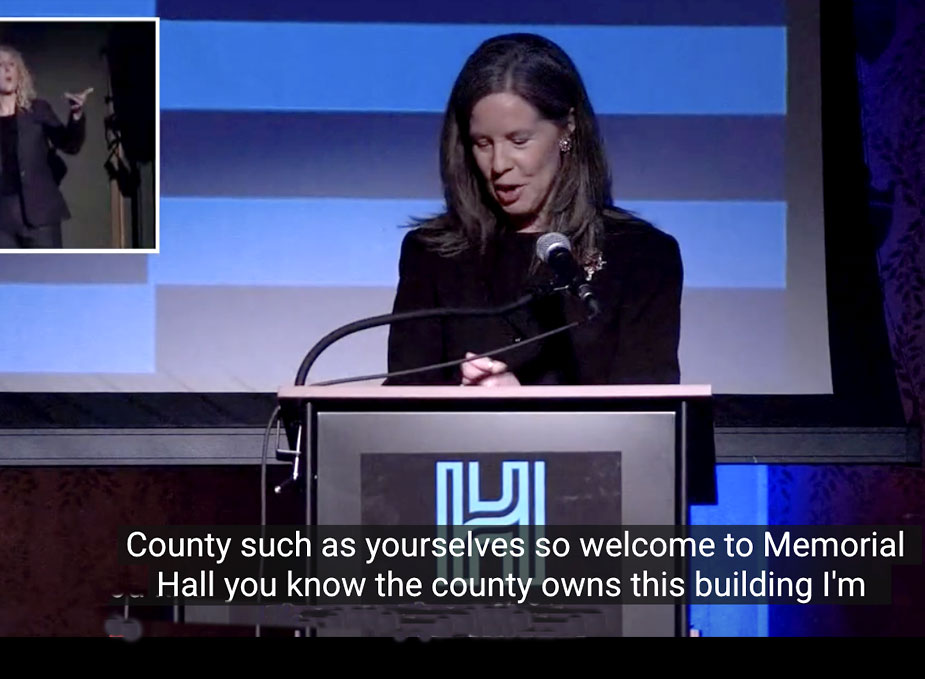
    Hamilton County, Ohio – Watch the State of the County 2025 given by Hamilton County Commission President Denise Driehaus on Wednesday, February 26, 2025 at Memorial Hall.

  • Ohio House budget would cut all elected members of the State Board of Education, limit board to five

    Ohio House budget would cut all elected members of the State Board of Education, limit board to five

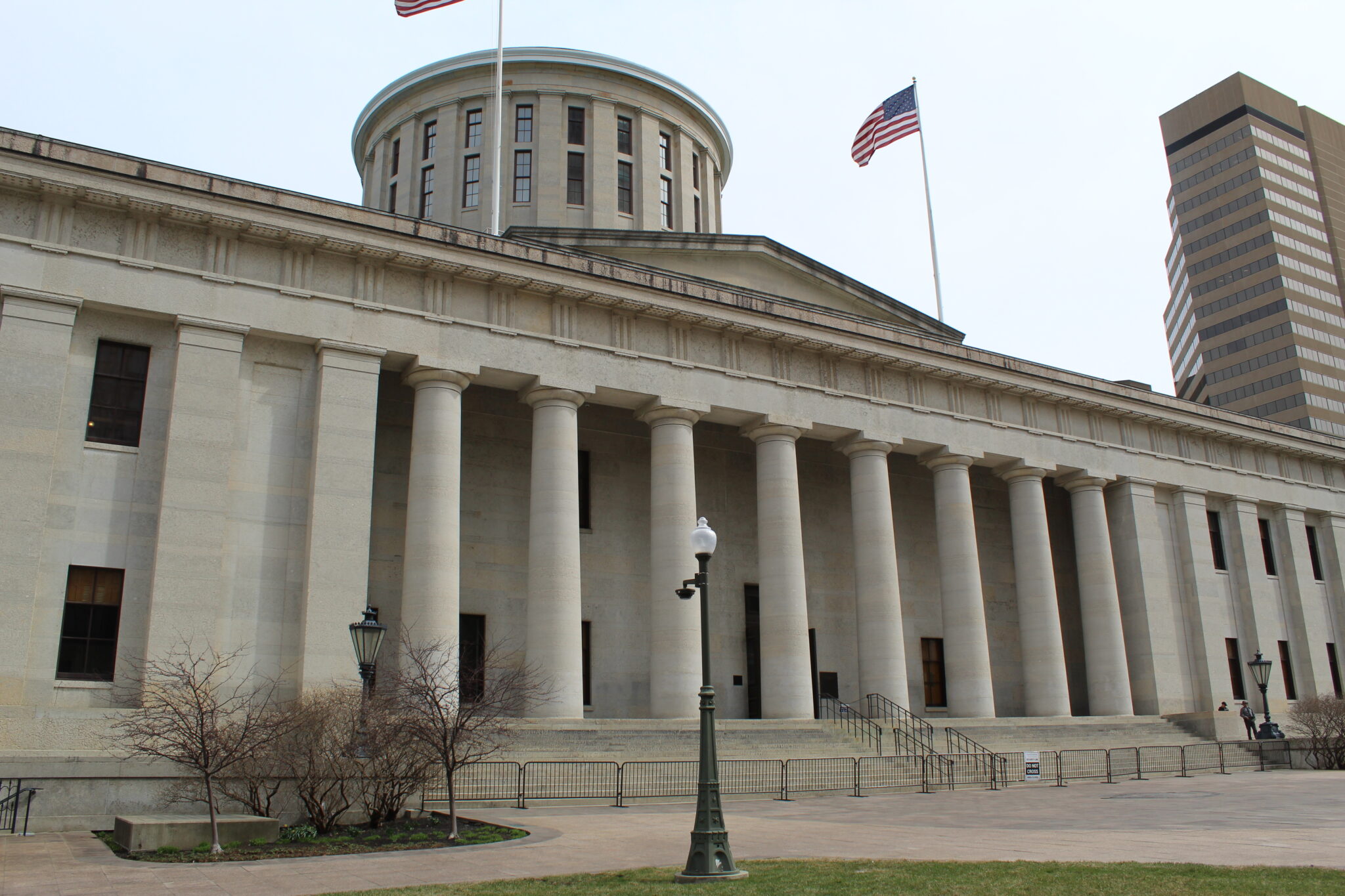
    The Ohio Statehouse. (Photo by David DeWitt, Ohio Capital Journal.)

    By:  Ohio Capital Journal

    A provision in the version of the two-year state budget passed by Ohio House Republicans would eliminate elected members from the State Board of Education. This comes after the last budget stripped the board of most of its power.

    The budget passed by the House last week would reduce the board membership from 11 elected members and eight governor-appointed members to five, all appointed by the governor.

    When the terms of the current elected board members expire or the positions become vacant in another way, the seats would be eliminated. Three of the governor-appointed spots would also.

    The House budget also changes the requirements for appointed board members to require “at least one member to represent each of a rural, suburban, and urban school district, a community school and a chartered nonpublic school.”

    According to budget documents, the reduction would save Ohio about $50,000. Board members received an average of $3,500 in compensation in 2024, according to state data.

    The budget is now in the hands of the Senate.

    The House changes come along with a proposal that public education advocates say would cut public school funding and eliminate the Fair School Funding model that has been in place for the last four years. The existing model calls for $666 million, but the House budget would cut that by roughly two-thirds, to $226 million.

    The board’s budget could be coming from a separate fund, rather than its own licensure fund on which it’s been relying since the last budget cycle limited their power within the state education system.

    With the establishment of the Ohio Department of Education and Workforce two years ago, the board’s powers were largely stripped away and what powers remained were centered on teacher licensure and territorial disputes. It was strongly opposed by board members and members of  the public.

    The last two years have been a financial struggle after the change to the teacher licensure fund as well. Superintendent of Public Instruction Paul Craft came to legislators with funding requests, telling lawmakers and the board that the uncertainty of the teacher licensure fund could harm the board’s bottom line, when staffing and expense cuts had been exhausted.

    GET THE MORNING HEADLINES.


    The fund’s revenue surges at certain points of the year, when teachers get or renew their licenses. The rest of the year, the board has to live on the funds provided by the state.

    With the start of a new budget cycle, Craft asked for additional state support to help with the costs of annual background checks for school staff. He also asked to eliminate the video assessment portion of the Ohio Teacher Residency Program to save more than $1 million.

    The House’s budget eliminates the teacher licensure fund, with the board’s operating expenses paid from the Occupational Licensing and Regulatory Fund. The fund already exists to pay into assistance funds for nursing education, certified public accountant education and veterinary student debt.

    A Legislative Service Commission analysis of the budget changes noted that the moving to the occupational licensing fund “may provide greater financial stability” for the board, because that fund “serves as a shared operating fund for many occupational licensing and regulatory boards and commissions.” They are supported by license fees, fines, penalties and “other assessments” put in the fund by those boards and commissions.

    The House also added $2 million from the General Revenue Fund in each fiscal year for the educator background check service, called the Retained Applicant Fingerprint Database (or Rapback).

    While a spokesperson for the board of education said it was “premature” to comment on the reduction in board members at this point, he said the House changes to the funding, along with the elimination of the video teacher assessment, could mean good things for the board.

    “We were actually very happy with the financial side of things,” said board spokesman Alex Goodman.

    Appropriations based on the House draft would give the board $16.3 million in fiscal year 2026, and $16.8 million in fiscal year 2027.

    A spokesperson for the House majority caucus did not comment specifically on the elimination of elected officials in the budget, but said the funding changes “reflect the recent restructuring of the board’s responsibility for licensing and conduct of educators.”

    “Aligning with the funding of nearly all other licensing boards, this shift addresses the long-standing status of the state board as somewhat of an outlier,” said Olivia Wile, caucus press secretary. “It promotes consistency across the system and is expected to be advantageous over time, potentially reducing the pressure for increased licensing fees in the future.”

    Goodman said board leaders are already preparing to testify to the Senate the budget process moves to that chamber over the next month.


    Susan Tebben
    Susan Tebben

    Susan Tebben is an award-winning journalist with a decade of experience covering Ohio news, including courts and crime, Appalachian social issues, government, education, diversity and culture. She has worked for The Newark Advocate, The Glasgow (KY) Daily Times, The Athens Messenger, and WOUB Public Media. She has also had work featured on National Public Radio.

    Ohio Capital Journal is part of States Newsroom, the nation’s largest state-focused nonprofit news organization.

    MORE FROM AUTHOR

  • ‘Founding documents’ act could put the Ten Commandments in Ohio classrooms

    ‘Founding documents’ act could put the Ten Commandments in Ohio classrooms

     (Photo by Morgan Trau, WEWS.)

    By:  Ohio Capital Journal

    A measure moving through the Ohio Senate would direct public schools to display historical documents like the Declaration of Independence or the Bill of Rights. It also includes the Ten Commandments, a religious document. The measure is one example in a wave of state legislation attempting to roll back a bright line separating religious displays from public school classrooms.

    The proposals take their cue from a bill in Louisiana requiring the display of the Ten Commandments. Five school districts challenged that law. A district court judge blocked it from taking effect, but only in those districts. The case is currently before the U.S. 5th Circuit Court of Appeals.

    In 1980, the U.S. Supreme Court overturned a Ten Commandments law in Kentucky. But following a 2022 decision in favor of a high school football coach who regularly prayed with players at games, religious organizations sense an opening.

    Stateline report earlier this year found legislation modeled on Louisiana’s bill in 15 states. That list doesn’t include Ohio’s measure.

    What it does

    The sponsor, Sen. Terry Johnson, R-McDermott, contends the bill will expose students to documents that have “served as the backbone of our legal and moral traditions as a people.” Schools can also set up monuments inscribed with one of the documents on the list.

    An amendment, adopted last week, directs classrooms to display at least four of the approved documents for all classes from 4th grade to 12th.

    The lineup includes what you’d expect. In addition to the Declaration and the Bill of Rights the Constitution is an option. But several others, while significant, are a bit of a stretch for a grade school classroom. Schools could display the Articles of Confederation or the Northwest Ordinance. They could go back even further to the Mayflower Compact or Magna Carta.

    “Simply put,” Johnson argued, “This legislation intends to reintroduce disciplined historic principles — those same principles upon which our Founding Fathers drew inspiration and put to writing — back to the classroom.”

    Classes could also display the United States or Ohio motto. Both were established in the 1950s more than a century after the last Founding Father died.

    Support and pushback

    For all Johnson’s insistence on legal traditions and historic principles, his supporters give the game away. Among those urging lawmakers to pass the bill, there are no historians or legal scholars, no societies dedicated to the founding or to teaching young people.

    Instead, there are just three groups, all of them Christian organizations, backing the effort: The Family Research Council, Christian Business Partnership, and Ohio Christian Alliance.

    Last week Ohio Christian Alliance President Chris Long testified that the displays offer “a complement” to existing social studies curriculum. “Students remember better when they have visual aids,” he said.

    Democrats on the committee asked whether they should leave decisions about displays to the teachers actually leading classes. Sen. Kent Smith, D-Euclid, drew comparison to the Christian Alliance’s longstanding offer to provide state lawmakers with a framed copy of the Ten Commandments.

    “Do you think that might be the way to go in this case?” he asked, suggesting school districts should have the same choice.

    Sen. Catherine Ingram, D-Cincinnati, zeroed in on a provision setting a July 1, 2026 deadline, but only for displays stemming from donations. Although Republicans on the panel didn’t offer a straight answer, it appears the deadline would apply to all displays. The measure requires districts to determine the overall cost and then accept either donated funds or donated displays to meet the requirements.

    The measure received much harsher criticism at an earlier hearing. Gary Daniels, chief lobbyist for the ACLU of Ohio, rejected arguments that the Ten Commandments are one choice among many, or fundamental the country’s founding. The organizations supporting the bill will start lobbying districts if the bill passes, he argued, and commandments about worship, respecting parents or prohibiting adultery have nothing to do with the founding of the United States.

    In short, he said, the bill is “a plainly obvious attempt to impose explicit religious beliefs and practices on young, captive audiences in our public schools.”

    Follow Ohio Capital Journal Reporter Nick Evans on X or on Bluesky.

    YOU MAKE OUR WORK POSSIBLE.

    _______________
    Nick Evans
    Nick Evans

    Nick Evans has spent the past seven years reporting for NPR member stations in Florida and Ohio. He got his start in Tallahassee, covering issues like redistricting, same sex marriage and medical marijuana. Since arriving in Columbus in 2018, he has covered everything from city council to football. His work on Ohio politics and local policing have been featured numerous times on NPR.

    Ohio Capital Journal is part of States Newsroom, the nation’s largest state-focused nonprofit news organization.

    MORE FROM AUTHOR

  • Miami University is committed to achieving carbon neutrality at Oxford campus by 2040

    Miami University is committed to achieving carbon neutrality at Oxford campus by 2040

    Artist rendering of the main entrance to the Sharon and Graham Mitchell Sustainability Park. The park, to be located over the Western Geothermal Field, will have a grand entrance off of State Route 73 and another entrance off of Western Drive.

  • Symmes Township and Loveland offering hazardous household waste collection

    Symmes Township and Loveland offering hazardous household waste collection

    Symmes Township, Ohio – The Township, in collaboration with the City of Loveland, will host a hazardous household waste collection event on June 7th at Home of the Brave Park, 11605 Lebanon Road, from 8 until 10 AM.

    Ammunition, explosives, E-waste (computers, monitors, etc.), asbestos material, medical/biological waste and medicine will not be accepted.

    Proof of residency will be required. For more information, contact the Symmes Township office at (513)683-6644.

  • Junior Police Academy

    Junior Police Academy

    Loveland, Ohio – Teens can now sign up now for the Junior Police Academy sponsored by the Loveland, Goshen Township, Milford, and Miami Township police departments.

    When: May 27 – May 29, 2025, 9am to 3pm
    Where: Milford Mulberry Elementary School
    Who: Students ages 13-16 (Space is limited)
    For Information Contact:
    SRO Larry Mehn
    SRO J. Steinkoenig
  • Federal funding cuts would significantly affect local nonprofits, survey shows

    Federal funding cuts would significantly affect local nonprofits, survey shows

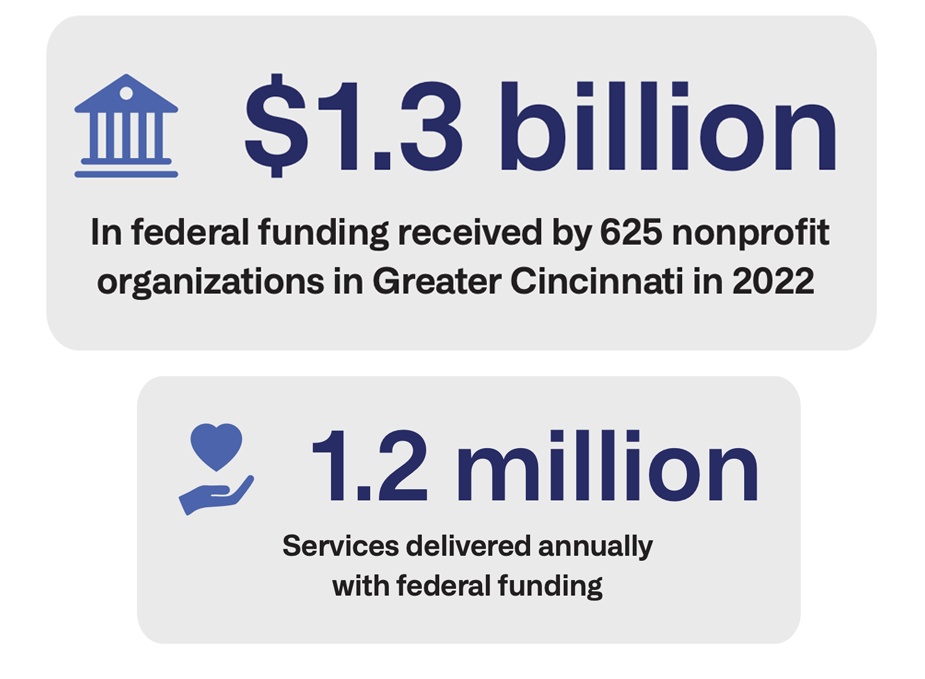
    Cincinnati, OhioRecent executive orders and administrative memos have increased the focus on federal grants and contracts. A study exploring the impact such cuts would have on individuals and families in Greater Cincinnati found that most nonprofits receive at least 25% or more of their operating budgets from the federal government. Two-thirds of nonprofits indicated they’d face difficult choices regarding service reductions or closures within six months of federal funding disruption. One organization reported it would be forced to close immediately. 

    United Way partnered with local funders, including Greater Cincinnati Foundation and Interact for Health, to survey 109 organizations in our region during three weeks in February. The survey sought to identify the scope of services supported locally by federal funding and how organizations might manage a federal funding freeze.  

    Many organizations said they would pursue private and corporate foundation funding to bridge the gap if faced with these cuts. Federal funding accounts for more than $1 trillion in support for state and local programs. These programs provide services ranging from essential needs and housing to youth education and workforce development. Private philanthropy cannot make up the difference.  

    “Organizations like United Way provide grants to local nonprofits because we believe in the work they are doing to make a positive impact across our region,” said Moira Weir, President and CEO of United Way of Greater Cincinnati. “While our contributions can be crucial, federal funding often constitutes a significant portion, or even the bulk of, a nonprofit’s budget.”  

    Federal funding supports state and local operations by design. This policy approach ensures that federal resources provide meaningful support. Local organizations are equipped to respond effectively to communities’ evolving needs, making nonprofits vital for stability. 

    “Nonprofits aren’t just recipients of federal funding,” said Weir. “They play an important role in the community and help the federal government fulfill its obligations to citizens. 

    “Without this funding, many of our friends and neighbors could lose access to basic needs or support systems that can put them on a path to a better future.”  

    [pdf-embedder url=”https://lovelandmagazine.com/wp-content/uploads/2025/04/UWGC_Federal-Funding-Impact-Assessment_1pgr.pdf”]
    About United Way of Greater Cincinnati 
    We empower everyone in our region to achieve economic well-being so our entire community can thrive – now and in the future. Founded in 1915, UWGC is one of the region’s largest nonprofit organizations. It is committed to working alongside policymakers, community partners and donors to promote educational success, financial empowerment and housing security. Learn more about UWGC’s work across nine counties in Ohio, Kentucky and Indiana at UWGC.org. #UnitedWeThrive
  • Attend the Loveland Schools State Budget Town Hall Meeting

    Attend the Loveland Schools State Budget Town Hall Meeting

    Gemini AI Image

    Loveland, Ohio – The state budget that will determine spending for the next two years is making its way through the Ohio General Assembly. Governor Mike DeWine’s budget proposal would cut funding for Loveland schools and many other public school districts.

    If DeWine’s budget is approved, the Loveland City School District’s five-year forecast predicts that our district would receive $2.5 million less in state funding.

    In response to the community asking district leadership to find solutions to these funding challenges, they have launched a page on their website at lovelandschools.org/lobby. There, you will find three requests to make to state lawmakers:

    • Protect the “Guarantee”
    • Fully Implement the Fair School Funding Plan
    • Increase the State Share Minimum to 20%

    The district says that if these requests are implemented at the statehouse, it would prevent funding cuts for the Loveland City School District and build a foundation for a better funding system for the future.

    The district is asking our community to share these requests with state lawmakers. On this page, you will find contact information for Ohio lawmakers including the Governor, so you can email, call, or send letters.

    The town hall meeting is on Wednesday, April 16, at 6 PM at the Loveland Middle School, where you will receive more information about the funding request and updates on the state budget process.