WASHINGTON — The U.S. Capitol Police chief testified Tuesday that President Donald Trump’s decision to pardon people convicted of assaulting police officers on Jan. 6, 2021, had negative repercussions on morale within the department and for police across the country.
“I think there was an impact, not only to the Capitol Police, but an impact nationwide when you see folks that are pardoned — and I’m really referring to the ones that were convicted of assaulting police officers,” J. Thomas Manger said during a hearing on the department’s budget request.
“I think that’s what bothered most cops and it did certainly have an impact on the USCP,” Manger added. “We’ve got so much change that officers are experiencing over the last four years, so I’m trying to keep them focused on moving forward. But it certainly did have a negative impact. For cops all over this country, you wonder when you put your life on the line every day, and does it matter?”
On Trump’s first day in office, he pardoned nearly 1,500 people who were convicted of crimes related to attacking the U.S. Capitol on Jan. 6, 2021, while members of Congress moved through the process to certify President Joe Biden’s win of the Electoral College vote.
Many of those people went to the Capitol after attending a rally near the White House where Trump repeated false claims about winning the 2020 presidential election, despite numerous failed court cases and no evidence of widespread voter fraud.
Manger testified during the House Appropriations Legislative Branch Subcommittee hearing that the department has made numerous improvements since the attacks, but that its nearly $1 billion budget request is necessary to hire more officers and continue updating equipment.
“I recognize that there are other police departments of a similar size whose budget is not as large as ours. But we’re not an ordinary law enforcement agency,” Manger said. “The USCP is unlike any traditional police department. In fact, our mission incorporates elements similar to the FBI, U.S. Secret Service and the federal protective service.”
Manger said that in the four years since the Jan. 6 attack, USCP has made substantial changes to how it operates and that many of its “mission requirements simply did not exist four years ago.”
_____________
Jennifer Shutt
Jennifer covers the nation’s capital as a senior reporter for States Newsroom. Her coverage areas include congressional policy, politics and legal challenges with a focus on health care, unemployment, housing and aid to families.
Ohio Capital Journal is part of States Newsroom, the nation’s largest state-focused nonprofit news organization.
From changes to Medicaid to cuts to pediatric cancer research, the Ohio House budget proposal concerns many who have championed child wellbeing and improvement on issues where Ohio struggles — like infant mortality — as important budget priorities.
“It just felt like they had taken a hacksaw to some of these line-items without real consideration to what they did,” said Kathryn Poe, budget and health researcher for the think tank Policy Matters Ohio.
Poe said it seems as though state legislators are taking cues from the federal government are trying to drastically cut spending, but that don’t improve the state in the process.
“These cuts at the federal level also feel really haphazard,” Poe said. “But the state doesn’t have the amount of money or time or influence to make these sort of haphazard cuts.”
Specifically, Poe sees the elimination of Ohio’s Medicaid expansion as a significant change that will create struggles for low-wage workers who count on Medicaid for their health insurance, and who will be prevented from planning for the future without the ability to count on proper health insurance.
As Poe put it, “what do you do when 700,000 people lose their insurance overnight?”
The House’s version of the budget absorbed a proposal by Gov. Mike DeWine in his executive budget that creates a trigger effect, eliminating Group VIII, or the Medicaid expansion eligibility group, “if the federal government sets the federal medical assistance percentage below (its current level of) 90%,” according to budget documents.
The federal medical assistance percentage (or FMAP) refers to the amount of federal funding the state receives for Medicaid, based on a state’s per capita income.
GET THE MORNING HEADLINES.
The expansion group is made up of Ohioans ages 19 to 64 who have household incomes of less than 138% of the federal poverty line and aren’t eligible in other Medicaid categories. According to the Health Policy Institute of Ohio, the Medicaid expansion “has been a major contributor to Ohio’s uninsured rate dropping by half from 14% in 2010 to 7% in 2022.”
The group said the expansion has also improved access to care, with data showing a 31% decrease in Ohioans who went without care due to cost from 2013 to 2023.
According to the state, the expansion population caseload is projected to be 779,000 Ohioans in fiscal year 2026, and 772,000 in 2027. That would account for more than $13.5 billion in expenditures over the two fiscal years.
Without the expansion, workers under the program would be less likely to have insurance, partly because many workers earning less than 138% of the federal poverty line are working jobs where they aren’t given enough hours to receive medical benefits, such as entry-level retail jobs or customer service.
Citing data from the U.S. Bureau of Labor Statistics, the Health Policy Institute of Ohio said even workers in the skilled trades like electricians and medical assistants could lose benefits, considering the federal poverty level of 138% for a family of three represents an annual income of $36,777.
“It would be a devastating economic loss,” Poe said. “The answers (for Ohioans who would lose the coverage) are everything from going to the emergency room, to not getting care, to letting that pain in your abdomen go on so long that you have to go to the emergency room anyway.”
The budget proposal comes amid attempts by DeWine and the state to apply work requirements to that particular group of Medicaid participants.
Not only will it create expensive health decisions, but the ripple effects will extend to the ability to afford groceries or have reliable transportation, according to Poe.
Those effects would trickle all the way down to Ohio’s children as well, according to advocates. Groundwork Ohio criticized a House measure that would end a requirement that the Medicaid department “seek approval to provide continuous Medicaid enrollment for Medicaid-eligible children from birth through age three
Budget documents say the change could create “possible service cost savings.”
Groundwork called on the legislature to take back the changes, saying nearly 48% of all Ohio children under the age of 6 “depend on Medicaid for health coverage.”
“The program covers about half of all births in the state and thousands of Ohio women rely on Medicaid to ensure a healthy pregnancy and support postpartum recovery,” according to an analysis of budgetary proposals in the House draft.
The organization also criticized a provision of the budget that would limit Medicaid coverage for doulas, leaving the coverage for only the six counties with the highest infant mortality rates.
The House plan also cuts pediatric cancer research by $5 million and eliminates lead abatement programs within the Ohio Department of Health. Groundwork Ohio noted the lead abatement program as part of their analysis of the budget plan, saying Ohio has “nearly double the national rate of children with elevated blood lead levels.”
“Even small amounts of lead exposure in early childhood can harm the brain, delaying growth and development, and may cause learning, behavior, speech and other health problems,” the group stated.
Advocates have already been publicly critical of the House plan to slash public education funding and drop a child tax credit proposed by DeWine in his budget plan. But adding the Medicaid changes, along with reducing funding in the areas of child development and a $1.5 million cut to “infant vitality” programming just make things worse, advocates say.
“The House’s proposal represents a step backward at a time when we can least afford it,” said Lynanne Gutierrez, president and CEO of Groundwork Ohio, in a statement. “We urge lawmakers to fully restore these investments and prioritize Ohio’s future.”
Susan Tebben
Susan Tebben is an award-winning journalist with a decade of experience covering Ohio news, including courts and crime, Appalachian social issues, government, education, diversity and culture. She has worked for The Newark Advocate, The Glasgow (KY) Daily Times, The Athens Messenger, and WOUB Public Media. She has also had work featured on National Public Radio.
Ohio Capital Journal is part of States Newsroom, the nation’s largest state-focused nonprofit news organization.
Loveland, Ohio – A Loveland mother of four teenagers visited the LIFE Food Pantry a few weeks ago. She had been a regular client but stopped visiting after securing a job. Unfortunately, an injury left her unable to work, forcing her to rely on minimal child support. She hopes to return to work soon, but your support made it possible for her to count on LIFE Food Pantry to help feed her family and support them in getting through a very difficult situation.
Think you need a big bank account to make a big difference? Nope! In fact, you don’t even have to be an adult. Some of our most active donors are kids.
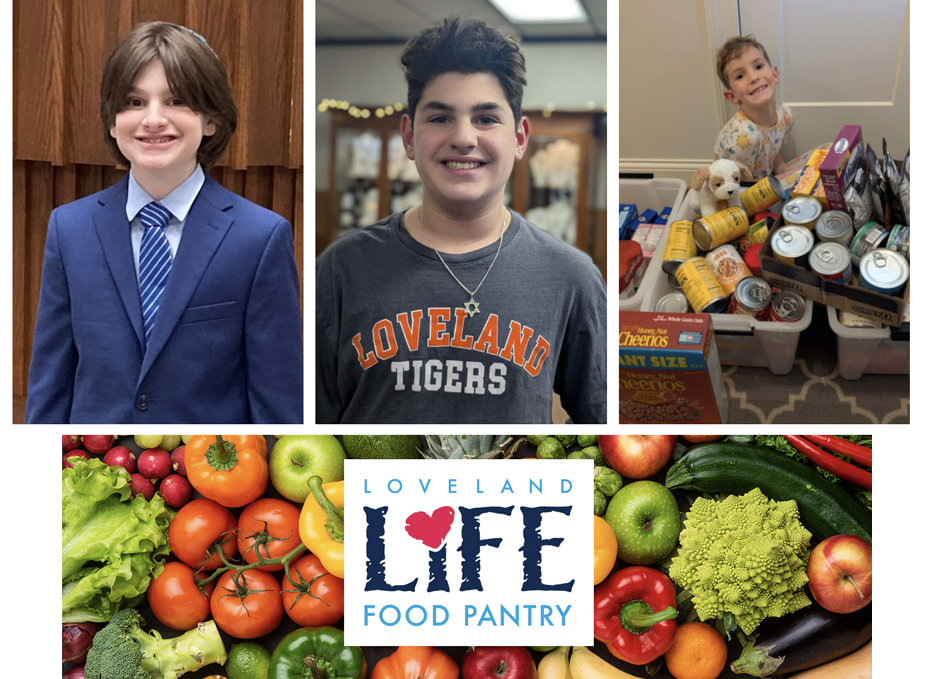
During the past month, two young men celebrating their Bar Mitzvahs commemorated their rites of passage by earning money to purchase in-demand items to fill our shelves. Thank you, Peyton and Levi!
Enzo, who celebrated his seventh birthday in March, requested that friends and family gift him nonperishable food items instead of presents. He is pictured with his haul, all of which he gave to LIFE.
These selfless kids are proof that our youngest community members are making a big impact.
Help Us Stock Our Shelves
Disinfectant wipes, all-purpose cleaners, dish soap, sponges, and laundry detergent are always in high demand.
LIFE Food Pantry is looking for personal shoppers to support clients, donation drivers to pickup food donations, and volunteers to sort and stock donations.
Educational Organizations/Non-Profits Reminded to Submit Financial Literacy Grant Applications by April 30
Each year, the Division’s Financial Literacy Grant Program awards up to $50,000 in funds to educational organizations throughout Ohio in support of initiatives aimed at improving financial literacy. Eligible organizations, such as nonprofits, community colleges and state institutions, are encouraged to submit program proposals that aim to equip individuals with the knowledge and skills they need to become financially independent. Programs may be conducted virtually or in person and should be tailored to community needs.
The deadline to apply for the Financial Literacy Grant is Wednesday, April 30. For more information, visit com.ohio.gov/FinancialLiteracy.
April marks Financial Literacy Month, which is a perfect time for individuals of all ages to assess their financial knowledge, establish realistic budgets, and ensure they are staying on track toward achieving their financial goals. In recognition of this month, the Ohio Department of CommerceDivision of Financial Institutions is sharing tips to help Ohioans better manage their budgets, while highlighting available funding to support youth financial education programs across the state.
“Financial Literacy Month is all about helping to equip people with the information, tools and resources they need to effectively manage their financial circumstances,” Division Superintendent Kevin Allard said. “From setting realistic budgets to managing unexpected expenses, education is key to making informed decisions. Additionally, the Financial Literacy Grant Program is a great opportunity to connect organizations of all sizes who are dedicated to educating young Ohioans with key funding that can make a real and meaningful difference throughout these individuals’ lives.”
Recent statistics highlight the growing importance of financial education. According to the Consumer Financial Protection Bureau, approximately 36% of consumers described being “just getting by” with their finances in 2024. In addition, 43% of families reported they had difficulty paying expenses, which marked an increase from 38% in 2023. Generation Z, in particular, struggles with financial literacy, answering only 37% of financial literacy index questions correctly in 2024.
To help individuals make financial progress, the Division offers the following simple, yet effective tips that can be tailored to individual needs and circumstances:
Determine Your Income: Refer to your net income, not gross income, to create a realistic and achievable plan.
Track Your Spending: Identify what you’re currently spending your money on so you can find areas for improvement.
Set Financial Goals: Focus on specific objectives such as building an emergency fund or paying off debt.
Adjust as Needed: Be flexible and adapt your budgeting to life changes or unexpected challenges.
Automate Savings: By making savings automatic, you can simplify the process and ensure consistency.
Building smart and easy financial habits is relevant at any age. The Financial Literacy Grant Program is an important part of that process through its funding of initiatives that enhance financial education for young Ohioans that provide the tools necessary to achieve financial independence.
Cincinnati, Ohio – Cincinnati’s premiere screening of the new documentary film Quest for Beauty: the Life and Art of William Schickel will be at the Cincinnati Art Museum’s Fath Auditorium on Thursday, May 1 at 6 PM.
William Schickel, spiritual artist and liturgical architect was a renown artist from Loveland, Ohio. He combined his skills as a sculptor, architectural designer, furniture designer, and stained glass artist.
______
The Grailville Oratory (Photo by Williams Schickel Gallery
Schickel established a design studio in Loveland in 1948. One of his earliest works was the 1962 conversion of a 1813 barn in Loveland into the Grailville Oratory. He died of complications from pneumonia at the age of 89 on July 14, 2009.
Loveland, Ohio – You are invited to join Loveland High School students as they work to remove invasive trees on their campus on Saturday, April 12 from 9 AM until 1 PM. Helping will provide volunteer hours for students and hours toward Loveland Athletic Boosters credits for family members if needed.
This April, we invite you to join us in celebrating Autism Acceptance Month with a meaningful video featuring Connor Miller and Kevin L. Miller, the Director of Opportunities for Ohioans with Disabilities (OOD) and Connor’s dad.
In this video, Connor shares his journey with autism and how it has shaped his life. As we celebrate this special month, discover the importance of understanding, supporting, and embracing differences.
They also discuss the Communication Disability Law, which provides a way for individuals with communication disabilities to voluntarily enroll in a database that alerts law enforcement during traffic stops. They explain how this option fosters safety, promotes understanding, and empowers individuals like Connor to navigate the world with greater confidence.
Tune in to learn how this law is making a real difference in Ohio…
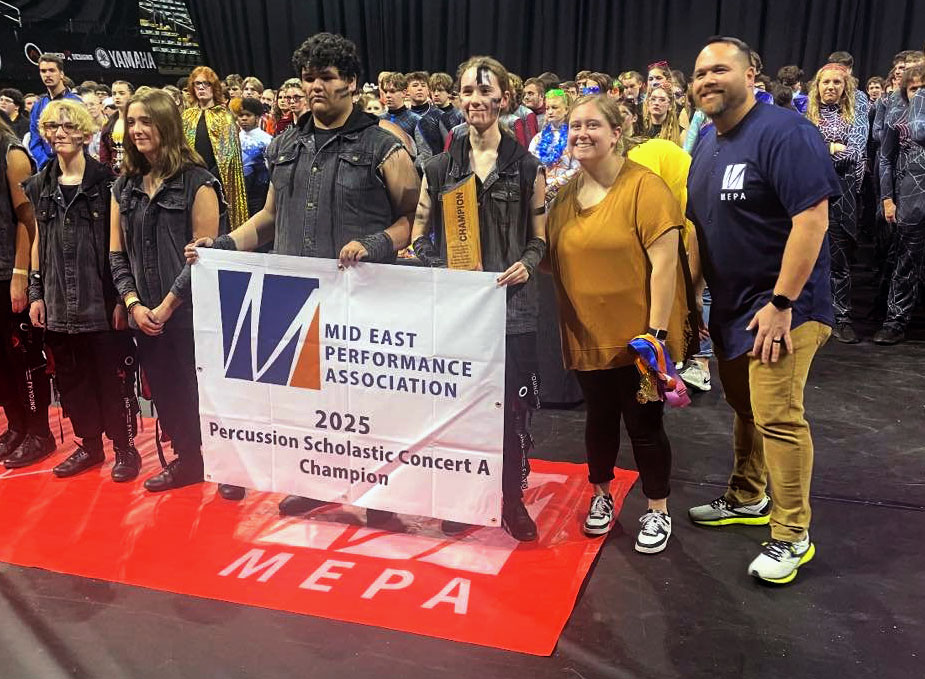
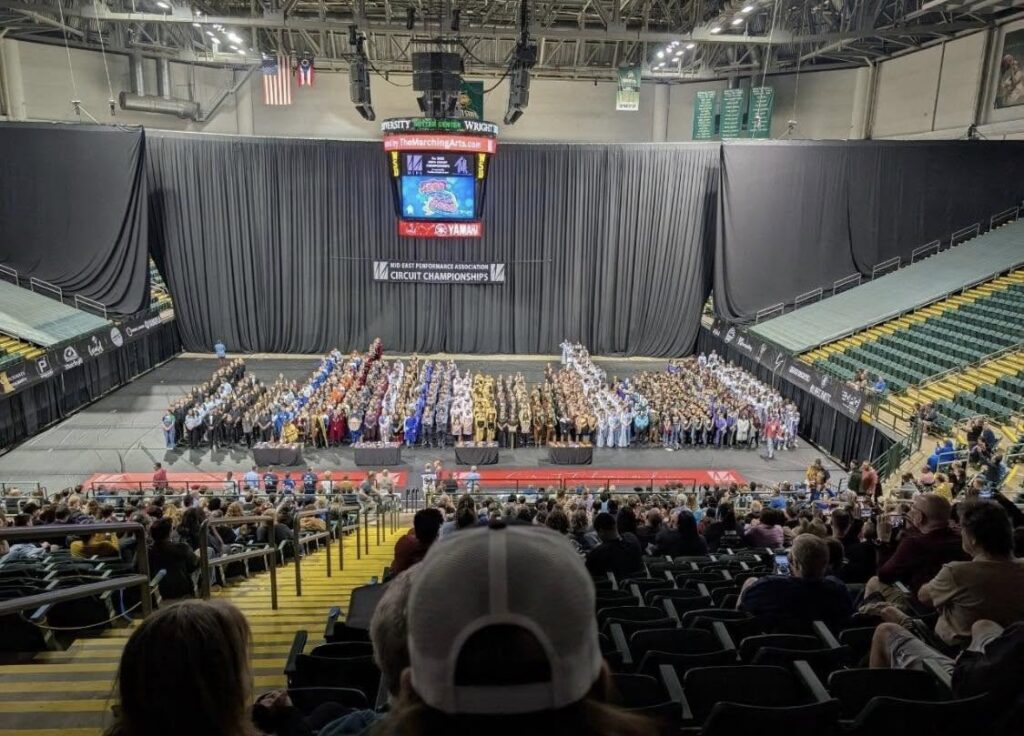
Loveland, Ohio – The Loveland High School Indoor Percussion “stole the show” at the Mid East Performance Association Finals on March 30 at Wright State University and became first place champions at the highly competitive “Scholastic A” level.
More than 1,000 turned out to protest outside a Columbus Tesla dealership. They’re angered by the deep cuts Elon Musk and President Donald Trump are attempting to make. (Photo by Marty Schladen, Ohio Capital Journal.)
Fifty-five protests are planned throughout Ohio for this weekend, and more were being added as of mid-morning on Friday, an organizer said. They’re part of more than 1,000 protests of the Trump administration slated for all 50 states and Washington, D.C.
_______________
__________________
Organizers have posted an interactive map of where they’re planned.
A map of protests of the Trump administration planned for Ohio on April 5 and 6. (Image provided by HandsOff 2025.)
Those sponsoring this weekend’s rallies include dozens of advocacy organizations, including the AFL-CIO, Americans for Financial Reform, Common Cause, the Consumer Federation of America, Indivisible, and Planned Parenthood.
A website for the demonstrations explains their goal.
“Donald Trump and Elon Musk believe this country belongs to them,” it says. “They’re taking everything they can get their hands on, and daring the world to stop them. On Saturday, April 5th, we’re taking to the streets nationwide to fight back with a clear message: Hands Off!”
It adds, “A core principle of Hands Off! is a commitment to nonviolent action. We expect all participants to de-escalate any potential confrontations with those who disagree with our values, and to act lawfully at these events.”
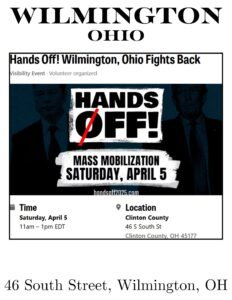
In Ohio at least, protests are planned for Saturday and Sunday. One is slated for noon on Saturday on the Western Plaza of the Ohio Statehouse in Columbus. Others are planned for Cleveland, Cincinnati, Dayton, Akron, and Toledo, in addition to smaller cities and towns such as Portsmouth, Marietta, Sandusky, and others.
Mia Lewis of Common Cause Ohio provided a Facebook page listing the events that are being planned for the Buckeye State. It continues to be updated, she said.
“For many people, this will be the first protest they have attended,” Lewis said in an email. “They are coming out not to tear anything down, but to stand up for the Constitution, for the rule of law, for our democracy. Enough is enough!”
She added that a broad swath of Ohioans are expected.
“The folks planning to attend range from the elderly — I’ve had many questions about accessible parking — to young families bringing their children. Yes, WE THE PEOPLE are showing up to say enough is enough! Hands off our government and our democracy.”
YOU MAKE OUR WORK POSSIBLE.
GET THE MORNING HEADLINES.
_____________
Marty Schladen
Marty Schladen has been a reporter for decades, working in Indiana, Texas and other places before returning to his native Ohio to work at The Columbus Dispatch in 2017. He’s won state and national journalism awards for investigations into utility regulation, public corruption, the environment, prescription drug spending and other matters.
Ohio Capital Journal is part of States Newsroom, the nation’s largest state-focused nonprofit news organization.
Karen Waple was born December 21, 1939 and passed away on March 22, 2025.
Dr. Charles “Chuck” Waple was born September 25, 1934 and passed away on March 24, 2025.
The Waples were loving parents of Jeffrey (Susie) Waple and John (Sara) Waple. Proud grandparents of Emily, Nate (Taylor), Matthew, Andrew (Grace), Brandon, and Natalie.
Chuck and Karen dedicated their lives to public education.
Chuck was a public-school superintendent with Loveland School District and Wyoming City School District. He was a realtor with Sibcy Cline for over 10 years and volunteered with several organizations.
Karen taught Kindergarten with the Mason City Schools for 30+ years and then subbed in the Loveland City Schools for 20 years. She was extremely dedicated to her grandchildren and volunteered for Crayons to Computers and LIFE Food Pantry.
They were both active members for over 50 years with Prince of Peace Lutheran Church, Loveland.
They were lifelong Buckeyes, enjoyed trips to Hilton Head, and loved gathering with family during the holidays.
Karen was born December 21, 1939 and passed away on March 22, 2025.
Chuck was born September 25, 1934 and passed away on March 24, 2025.
Family and friends will be received from 10:30 AM – 12:30 PM on Friday, April 11 at Prince of Peace Lutheran Church, 101 South Lebanon Rd, Loveland, OH 45140, where a Celebration of Life will be held at 12:30 PM. A Luncheon will immediately follow the Celebration of Life.
In lieu of flowers, donations in memory of Chuck & Karen may be directed to Loveland Schools Foundation, 757 S. Lebanon Road, Loveland, OH 45140.






 Think you need a big bank account to make a big difference? Nope! In fact, you don’t even have to be an adult. Some of our most active donors are kids.

 Cincinnati, Ohio – Cincinnati’s premiere screening of the new documentary film Quest for Beauty: the Life and Art of William Schickel will be at the