Author: Contributed

  • Music business students develop Gen Z marketing campaigns for Loveland record label

    Music business students develop Gen Z marketing campaigns for Loveland record label

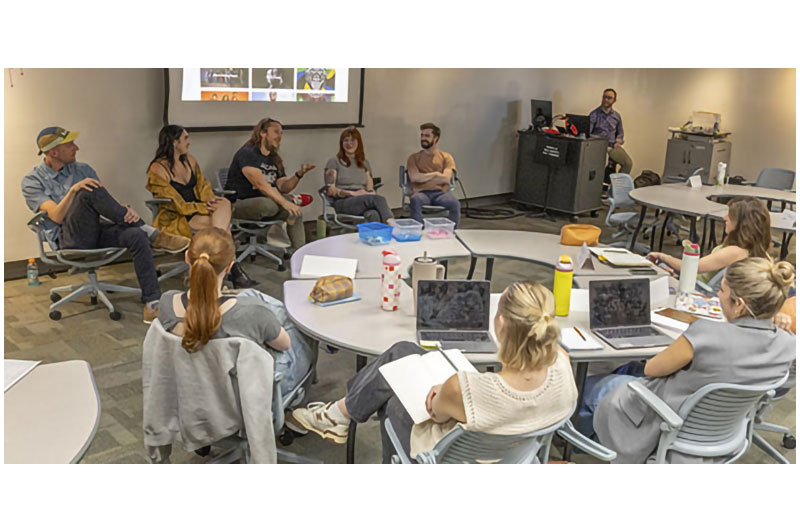
    Members of Colemine Records meet with Miami University students. Miami students in Intro to Music Business and Record Labels and Music Publishing Operations classes learn the ins and outs of the music industry while working directly with label executives.

    Students across two classes collaborated with Colemine Records to create research-based marketing strategies for the label’s upcoming album release


    Loveland, Ohio – What does it take to launch a successful album? A lot of talent, even more luck, and the right team of in-the-know marketers, like the students in Miami’s music business courses.

    Across two classes – Intro to Music Business and Record Labels and Music Publishing Operations – students in Willie Caldwell’s lectures learn the ins and outs of the music industry while working directly with label executives.

    The collaboration began when Caldwell, an adjunct instructor in Arts Management and Arts Entrepreneurship, was researching the regional music scene to learn more about the local music venues and record labels. Terry Cole’s name stood out in his search.

    Cole is the founder of Colemine Records, which is housed above the label’s shop, Plaid Room Records in Historic Downtown Loveland, Ohio. As the story goes, he cooked up the idea for Colemine Records in 2007 and drew the logo on the back of a Subway napkin right here in Oxford – while he was a graduate student at Miami.

    Together, Colemine executives and Caldwell workshopped a collaboration. Cole visited one of Caldwell’s classes to guest lecture on the industry, which Caldwell said was very well received by his student, but they had sights on a bigger partnership.

    “They were interested in better understanding Gen Z’s new music discovery habits,” Caldwell said. “So what if we target the Miami student population? How do they discover new music? Where’s it coming from? What are their listening habits?”

    Caldwell and his class generated a survey that was sent out campus-wide before students left for spring break. They received over 300 responses in just two weeks’ time and ended up with a solid pool of data for further research.
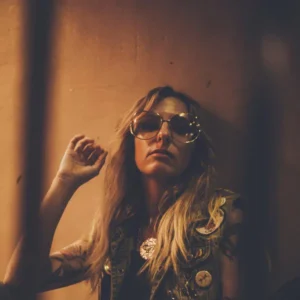
    Kendra Morris

    With that baseline, the class could use the data to inform their next stage in the Colemine Records collaboration. The students were charged with creating an artist release campaign that would engage Gen Z listeners for the launch of artist Kendra Morris’ upcoming album.

    The students had the opportunity to interview Morris to learn more about her and her artistic style, and then they combined that information with the survey results to build out their projects.

    “It’s just a really cool opportunity where we were able to connect with the largest independent label out of Southwest Ohio and get access to a signed artist that is underneath them,” Caldwell said. “(Students) got to put their creativity to work and actually come up with some campaign ideas for her release.”

    The entire collaboration culminated in a visit from the Colemine Records executive team, which led a panel for music industry questions. As part of their final exam for the class, the student groups set their campaign pitches to Colemine Records.

    Morris and Colemine Records executives latched on to student-generated ideas circling around social media livestream and broadcasting features that would help promote Morris’ upcoming release.

    “We absolutely loved this collaboration and continue to explore possibilities for future engagements between the Arts Management and Arts Entrepreneurship program and Colemine Records,” Caldwell said.

    For Ian Dilenschneider, this collaboration was one of his last hurdles to graduate with a degree in Music Technology – one he’s glad he got to be involved with.

    “As a graduating senior hoping to go into the music industry – especially the indie scene – it was immensely helpful to have this opportunity,” Dilenschneider said. “The chance to talk to the label felt like I was taking my first steps as a professional artist.”

    Terry Cole

    Working with Colemine Records executives on this project pushed the course beyond the norm of textbook work, according to senior music technology major Isa Riddle. She said she was truly inspired by the executives when they spoke to her class.

    “I couldn’t be more grateful for the opportunity,” Riddle said. “As someone who wants to pursue a career in the music industry, all of the work we’ve done has helped me build confidence in myself to start enacting some of my plans!”

    With the success of the project, the Arts Management and Arts Entrepreneurship program plans to continue working with Colemine Records in the fall and will be introducing a new course, Live Music and Touring, alongside Intro to Music Business and Record Labels and Music Publishing Operations.


  • Recent actions by the Trump Administration and Congress have raised broad concerns about the future of Cincinnati Public Radio

    Recent actions by the Trump Administration and Congress have raised broad concerns about the future of Cincinnati Public Radio

    by Cincinnati Public Radio’s President & CEO, Richard Eiswerth

    Richard Eiswerth

    Dear Loveland Friend,

    Thank you for your support of Cincinnati Public Radio, and for listening every day to WVXU, WMUB and/or WGUC!

    As you know better than most, Cincinnati Public Radio is more than just three radio stations—it’s a trusted source of local news, a hub for meaningful conversations, and a vital part of the southwest Ohio’s civic and cultural landscape. Every day, WVXU journalists deliver fact-based reporting and programming that keep you informed and connected. And every week, WGUC hosts present the finest in classical music and keep you up-to-date on Greater Cincinnati’s arts and culture scene.

    Through initiatives such as our fact-checking partnership, in-depth election coverage and voters’ guides, broadcasts of the Cincinnati Symphony, Opera and May Festival, and community engagement events, we provide news and information that provide entertainment, education, enrichment, and foster critical thinking and informed decision-making.

    However, recent actions by the Administration and Congress have raised broad concerns about the future of public media:

    • Grants from the Corporation for Public Broadcasting (CPB) that support essential services and reporting are at risk.
    • The Federal Communications Commission has launched an investigation into NPR’s and PBS’s sponsorship messaging.
    • The CEOs of NPR and PBS have been requested to appear before Congress.
    • NPR has been ordered to vacate its Pentagon workspace.

    Since its establishment in 1967, CPB has been a crucial funding source for public radio and television stations nationwide. Although CPB support represents only 0.0076% of the federal budget, it is a lifeline for smaller stations, accounting for up to 50% of their revenue.

    In addition, defunding CPB would have devastating consequences, particularly for tribal, rural, Spanish-language and religious nonprofit stations that provide critical news, emergency alerts and cultural programming. Public radio reaches 99 percent of the American population with free over-the-air and online programming and connects communities with national, state, and local news and information, as well as emergency alerts and warnings.

    At Cincinnati Public Radio, CPB funding accounts for about 5% of our annual budget. Losing this support would place a strain on our operations and diminish our ability to deliver the in-depth journalism and programming you rely on. But CPB’s impact goes beyond direct funding—it also provides indirect support that offsets the costs of our reporting, broadcasting and publishing efforts.

    For example, The Ohio Newsroom, our statewide partnership among public radio stations that brings news stories from parts of the state that would otherwise go unreported and ignored, would not have been possible without grants funded through CPB. The Ohio Newsroom builds upon the partnership of public radio stations in Ohio to increase and enhance high-quality, in-depth, fact-driven journalism to serve the public on radio, digital, and video platforms. It increases reporting from all regions of Ohio featuring a wide range of diverse voices.

    At Cincinnati Public Radio, our mission is clear: to provide accurate, fact-based journalism, and the best in fine arts entertainment — not to push an agenda. And ongoing federal support is critical to fulfilling that mission, especially at a time when other reliable sources of news and information continue to decline.

    Now, more than ever, public media needs your voice. We encourage you to join the Protect My Public Media campaign and advocate for the essential role that public media like Cincinnati Public Radio play in our communities. Together, we can ensure that independent local media continues to thrive.

    How You Can Take Action

    1. Visit the Website – Go to protectmypublicmedia.org to send a message to your congressional representatives.
    2. Send Your Message – Follow the prompts on the website to submit your support for public media.
    3. Check Your Email – Look for a confirmation email from your representative’s office.
    4. Reply with a Personal Note – Respond to the confirmation email with your own message about what public media and WFAE mean to you.

    Want to go a step further? Forward this message to a friend or share your support on social media. Express how WFAE impacts you and the community to highlight the importance of preserving free, fact-based news and diverse programming.

    Thank you for your support and listenership. We are proud to be your public radio station and remain committed to serving our community with integrity and transparency.

    Stay Tuned!

  • Skunk Love

    Skunk Love

    Wallace Keck, Public domain, via Wikimedia Commons

    by Julie Watson

    If you’ve been noticing a foul odor in the air recently, you’re not alone. Unpleasant as it may be there is a natural cause for your nose to be offended. In Ohio, February is breeding season for skunks.

    During this time of year, male skunks will visit several females, and each female may mate with multiple males. A litter of 2-10 kits are typically born furless and blind between April and June. At around six weeks old the young ones are weaned and will accompany their mother on hunts. The young will go their own away at about a year of age when they are mature and ready to breed on their own.

    Although there are several species of skunk throughout the world, only one, the striped skunk (Mephitis mephitis) is native to Ohio. Striped skunks are about the size of a house cat and are easily recognized by their black bodies marked with a white ‘cap’ and two white stripes running down the length of their back. However, there are color variations that exist including, all black, cream, cinnamon, and albino.

    Skunks have five slightly webbed toes on each foot and their front toes are equipped with long, curved claws that allow them to dig. When the ground is soft, they dig for grubs, roots and insects. They also dig dens.

    Claws aren’t the only tool that skunks are equipped with. They have sharp teeth, although skunk bites are rare. They also have thick fur that protects them from stings. But the most infamous tool at a skunk’s disposal is its musk. Although there are other mammals that have musk glands, skunks are the only ones that can project their musk into a spray. Skunks have good aim and can hit their target from about 15 feet away. The musk is oily which makes it persistent and very pungent. Besides the strong odor, a direct hit to the eyes can cause temporary blindness.

    Because a skunk’s anal glands carry only a small amount of musk, spraying is used as a last resort. At the first sign of danger, a skunk will hold up it’s tail as a warning flag. Even if its aggressor is color blind, the black and white contrast is an effective attention getter. Skunks will flee when possible. If either of these tactics don’t work, a threatened skunk will stomp its front feet as another warning. When all else fails, a skunk’s last and most effective line of defense is to spray.

    Great Horned Owl (Wikipedia Creative Commons)

    Most animals learn to leave them alone after an encounter. However, skunks do have natural predators. The most common skunk predator here in Ohio is the great horned owl. Fishers, which are making a comeback in the Buckeye State are also effective skunk predators.

    Skunks are omnivorous meaning they eat both plants and animals. They often eat pests that are harmful to gardens and crops. They will dig up and consume underground yellow jacket nests as well.

    Here are some fun, skunk facts:

    • Because of its staying power, skunk musk was once used in making perfume
    • Striped skunks are found in all 88 Ohio counties
    • Skunks are not true hibernators but may stay in their winter dens for long periods
    • Skunk tracks resemble bear tracks only much smaller
    • Skunks can spray when they are only 1 month old
    • Skunks are very adaptable and can live in several different habitats from farms to urban neighborhoods
    • Skunks make a variety of sounds including chirps, growls, grunts, and squeals
    • Skunks are excellent swimmers
    • Striped skunks are not great climbers, unlike their cousins, spotted skunks who climb trees to raid nests
    • In Ohio it is illegal to release a captured skunk onto another property
    • It is legal in Ohio to own a domesticated skunk as a pet. However, additional permits may be required, and they demand a lot of attention and time.

  • GUEST EDITORIAL: Banning TikTok enables online censorship

    GUEST EDITORIAL: Banning TikTok enables online censorship

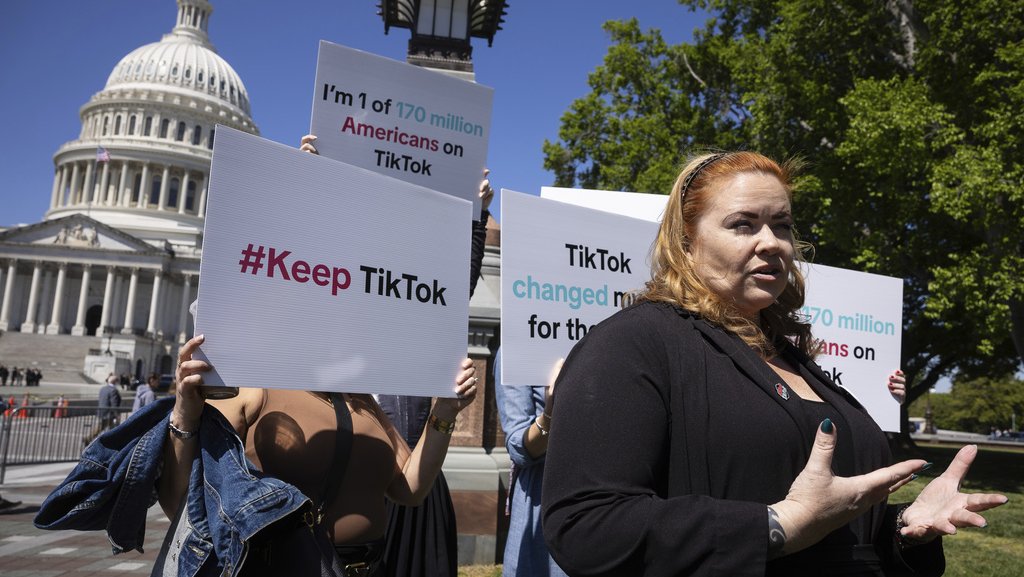
    Content creators demonstrate in front of the U.S Capitol in 2024 in opposition to proposed legislation banning TikTok. Francis Chung/POLITICO via AP Images

    From the Freedom of the Press Foundation

    The Supreme Court yesterday upheld the federal law passed last year to ban TikTok, accepting the government’s arguments that national security threats posed by the foreign ownership of TikTok’s parent company justify the ban.

  • Ceasefire and hostage deal brings hope for Israel

    Ceasefire and hostage deal brings hope for Israel

    Map by Ecrusized, influenced by user Rr016. – Own work, Israeli military presence in Gaza Strip citing Institute for the Study of War & Critical Threats Project (wikipedia.org)

    Below is a statement issued this evening by the Jewish Federation of Cincinnati and the Jewish Community Relations Council:

    Today’s announcement of a ceasefire and hostage deal between Israel and Hamas marks a pivotal step forward in addressing one of the most prolonged and devastating conflicts of our time.

    This agreement underscores the importance of leadership, collaboration, and unwavering commitment to human dignity and security. But there is more work to be done. We must ensure that all hostages, both living and deceased, are brought home to Israel, allowing families to begin healing, while we continue to advocate for a future of peace, safety, and dignity for all.

    Jewish Federations welcome news of a deal to release dozens of hostages, create a framework for releasing all the hostages, and allow Israel a path forward to protect the safety and security of its citizens.

    Every day for over 15 months, our community has held the hostages in our hearts, wept for their plight, prayed for their safe return, and mourned for those who we lost.

    We’ve held close our Israeli brothers and sisters who have suffered, been displaced, fought in reserves, struggled to keep their businesses afloat, and worked to keep their families and communities alive.

    We thank President Biden and President-elect Trump, for their unprecedented coordination to bring both sides together to get a deal done.

    There is much work to be done and significant uncertainty ahead, but we are hopeful that the first phase of this agreement will pave the way for the remaining hostages to be reunited with their family, for hostilities to end, and for an era of security and rebuilding for both Israel and her neighbors.

    About the Jewish Federation of Cincinnati

    The Jewish Federation of Cincinnati envisions an exceptional Cincinnati Jewish community and, through the community-wide strategic plan Cincinnati 2030, brings diverse groups together to build it. We raise money and use a volunteer-driven, transparent process to distribute it to the local, national, and global programs that need it most. We connect our community agencies with the leaders and expertise they need to thrive. And we work to protect Jewish security by educating the community and advocating for Israel. We do all of this to help people in need, create an engaged community, assure our Jewish future, and support the Jewish people in Cincinnati, in Israel, and throughout the world. For more information, please visit jewishcincinnati.org

    About the Jewish Community Relations Council

    The Jewish Community Relations Council (JCRC) is the non-partisan public affairs arm of the Jewish Federation of Cincinnati. Its mission is to protect Jewish security, recognizing that Jewish security depends on a just society for all. To achieve this mission, it advocates for the local Jewish community through Israel education; fighting antisemitism, discrimination, and racism; and building understanding with other ethnic, religious, and civic organizations. For more information, please visit jewishcincinnati.org/jcrc

    Learn more at jewishcincinnati.org.

  • Natural Wonderings/Wanderings by Elizabeth (Schickel) Robinson

    Natural Wonderings/Wanderings by Elizabeth (Schickel) Robinson

    “Ohio Summer Night with Owls and Fireflies” © Elizabeth (Schickel) Robinson

    At breakfast recently I asked my husband, do you know when to use the word who and when to use the word whom? He looked at me with just the slightest twinkle and said “well, the Barred Owl says “who” and the Great Horned Owl says “whom?” He continued, “we should be hearing the Great Horned Owls talking to each other soon, and pairs will be on the nest in another month or so.” Though we never got around to the grammar of when to use who and whom, this conversation formed a delightful picture in my mind and stirred a faint longing for spring, not long into winter.


    Another event this time of year in Southwestern Ohio sends me dreaming about spring and gardening. The seed catalogues start arriving in the mail just when we really need them. In more recent years John tends the vegetable gardening and I concentrate on flowers. Hydrangeas have caught my fancy. Last winter, I was seduced by a catalog photo of a hydrangea bush that blooms white and then changes to pink with the name of “Pinky Winky.” When spring came I went hunting at a local garden store. A big, burly guy asked if he could help, and I explained what I was looking for. What did you call that hydrangea again he asked me?  “ Pinky Winky” I replied. Oh, thanks he replied…I just can’t bring myself to say that name!

    I hope my dear Pinky Winky is everything my mind imagines it to be, and I look forward to its beauty this summer. It has taken the place of a Butterfly Bush that I lost to a past year’s hard winter. 

    Currently I am musing on the old fashioned white Snowball hydrangeas. Might a few of these be happy in my garden?  I am easily bewitched by colorful photos of new varieties like Pinky Winky, but long experience with old flower friends reminds me of the enduring charms of tried and true varieties


    My sister lives and gardens next door to me. As we are artistic types, I concur with her affectionate and fun dubbing of gardening as “slow performance art.” Every winter we compose extensive and expensive lists from perusing the seed catalogues. Slowly we pare our musings into something manageable and affordable.

    This is a most pleasant pastime — to wile away winter hours dreaming of the possibilities of our spring and summer gardens!

    Who! – Whom!

    ___________________

    Elizabeth (Schickel) Robinson has always lived in Loveland, married and raised a family here.

    Family, faith, service, community and creativity are most important to her. She is an artist driven to notice and bring beauty to others including creating commissioned works of art for hospitals and churches. She cares about our culture and wants to build opportunities for community and connection to God, each other and creation. She recently retired as a Registered Nurse at Cincinnati Children’s where she was privileged to care for patients and their families. She strives to live with her eyes wide open, seeing the extraordinary in the ordinary in life and nature that surrounds her.

  • DOITFORJACK Foundation is thrilled

    DOITFORJACK Foundation is thrilled

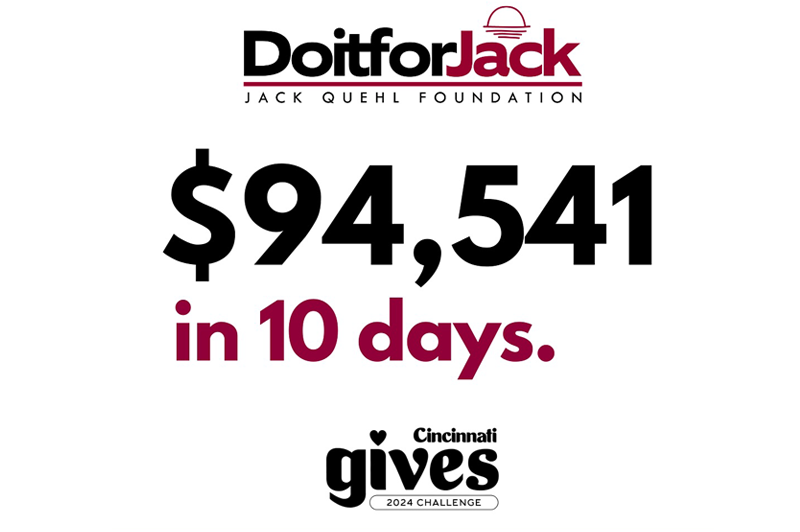
    Thanks to the outpouring of generosity from our incredible community, the DOITFORJACK Foundation is thrilled to announce that we claimed the #1 spot in the Cincinnati Gives Challenge, raising an extraordinary $94,541! This achievement is a testament to the power of collective action and the deep compassion of our supporters.

    These funds will allow us to grow and enhance our educational initiatives, including developing a comprehensive fentanyl awareness tool kit for educators and parents. Additionally, this support will enable us to expand our mission by:

    • Promoting awareness beyond Cincinnati to reach even more communities.- Expanding and enhancing media presence to reach a wider audience and more age groups.- Collaborating with local nonprofit experts to assist with grant writing and foundation expansion.
    • Continuing to share Jack’s story in schools, businesses, and with the media to inspire meaningful change and save lives.
    • Collaborating with local counties to provide Narcan to local businesses to prevent fatal overdoses.

    “This incredible generosity means we can continue fighting the fentanyl crisis on multiple fronts,” said founder Stephanie Quehl from DOITFORJACK. “From prevention to education, your support is helping us turn our vision for 2025 into reality. Together, we’re creating a safer future where no family has to experience the loss of their Jack.”

    The DOITFORJACK Foundation extends its deepest gratitude to everyone who donated, shared, and supported the campaign. Your belief in our mission fuels our determination to make a difference.

    For more information about the foundation’s initiatives or to stay updated on upcoming programs, visit DOITFORJACK.org. Together, we’re saving lives and building a legacy of hope.

  • Assault on DEI: Critics use simplistic terms to attack the programs, but they are key to uprooting workplace bias

    Assault on DEI: Critics use simplistic terms to attack the programs, but they are key to uprooting workplace bias

    FG Trade Latin/Gerry Images

    by The Conversation
    (Written by M. Cristina Alcalde, Vice President for Transformative and Inclusive Excellence at Miami University)

    ________________

    Prominent politicians have recently increased their attacks on workplace programs that promote diversity, equity and inclusion, or DEI. They claim that initiatives that seek to be inclusive are divisive and lack merit.

    President-elect Donald Trump has vowed to ban DEI from federal offices. And Vice President-elect JD Vance, an Ohio senator, in June 2024 introduced the “Dismantle DEI Act” to eliminate all DEI programs from the federal government. He argued, in part, that DEI “breeds hatred and racial division.”

    DEI critics are increasingly using the term “diversity hire” as an insult. As a scholar focused on gender and exclusion, I recognize that these attacks are often rooted in anti-Black racism.

    For example, despite Kamala Harris’ achievements as vice president and California attorney general, some Republicans targeted her as a “DEI hire” during her recent presidential run. And after the Francis Scott Key bridge collapse in Baltimore in March 2024, Utah State Representative Phil Lyman blamed Wes Moore, Maryland’s first Black governor, for prioritizing DEI over security.

    The DEI backlash has hit corporate America, too. Companies like spirits-maker Brown-Forman and the farm equipment manufacturer John Deere have reversed the DEI commitments they made following the 2020 murder of George Floyd by a white police officer.

    I believe all these attacks, both political and corporate, promote a distorted and incomplete story about DEI.

    The empirical evidence is clear

    There is no one-size-fits-all approach to advancing DEI initiatives. The common goal is to create spaces within an institution where everyone feels valued and respected and can thrive.

    2020 Gallup poll found that 24% of Black and Latino employees have experienced discrimination at work, compared with 15% of white employees.

    DEI efforts to identify and solve such issues include surveys, employee interviews and comparing practices across different organizations. They also entail assessments of systems, policies and research, and developing initiatives to address areas that need improvement.

    Employee and student surveys, for example, can measure the sense of belonging within an organization and help leaders identify areas in need of improvement.

    Evidence suggests that successfully implementing DEI is central to professional and societal well-being and success in a multicultural society.

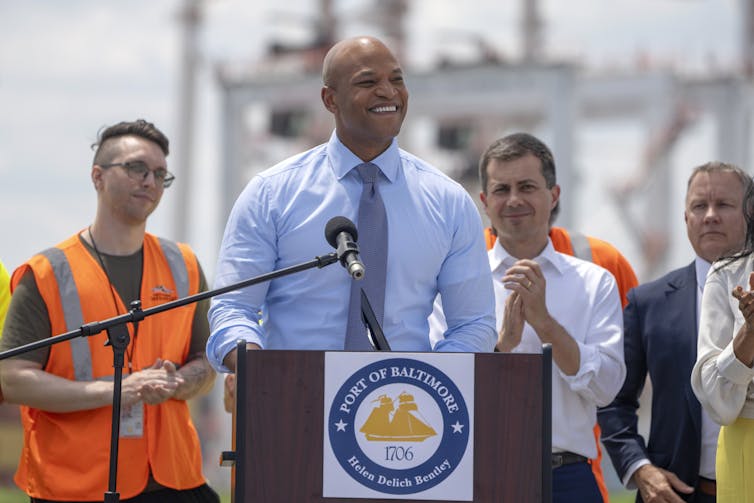
    Maryland Governor Wes Moore speaks outdoors in front of a lectern.
    After the Francis Scott Key bridge collapse in Baltimore in March 2024, a Republican lawmaker from Utah blamed Maryland Gov. Wes Moore, center, for prioritizing diversity over security. AP Photo/Mark Schiefelbein


    Recent research by the author Melinda Epler, for example, shows a clear connection between employees’ sense of safety, belonging and satisfaction and how much their employer prioritizes DEI. Scientists also find that diversity is key to creative, productive and efficient scientific teams.

    And other research indicates that employees are more innovative and work harder when teams are made up of people with different experiences. This is why many employers value employees who can solve problems while working with people who have diverse backgrounds in terms of race, gender, religion, age and other factors.

    The outcome can be lucrative for companies: On U.S. and global executive staffs, studies show, efforts to improve DEI result in increased profits. Companies with at least one woman on their board, for example, financially outperform those with only men on their boards.

    Diversity standards

    Despite the many ways leaders of an organization can work to cultivate an inclusive and respectful culture, DEI critics tend to portray this work in simplistic terms.

    For example, two Stanford University academics misrepresented DEI efforts recently. In an August 2024 op-ed in The New York Times, they presented DEI as mainly consisting of one-time trainings that divide groups into oppressors and the oppressed.

    Narrowly defining DEI in such simplistic ways ignores the bridge-building involved in DEI efforts and makes it easier to repeat the single story that DEI has failed.

    In her 2009 TED Talk on the danger of the “single story,” novelist Chimamanda Adichie said single stories, or narratives that only present one perspective, are based on stereotypes and incomplete information. They result in false assumptions and generalizations.

    “To create a single story is to show a people as one thing, as only one thing, over and over again,” Adichie said. “And that is what they become.”

    Adichie’s warnings about the single story sheds light on the effects of attacks on DEI. Reducing DEI to simplistic “us vs. them” approaches or to a focus on “oppressor vs. oppressed” misses much of the work.

    Yet the more societal problems Republicans in power blame DEI for – from racism to inflation – the more believable the story of DEI failure becomes. The absence of quick, easy solutions for historical racial and socioeconomic inequities are presented as further proof of DEI’s failure.

    Teaching a fuller story

    DEI is not easy to do well. But as a DEI practitioner and scholar, I find working to create inclusive spaces through curiosity, learning and dialogue can be transformative.

    The more institutions do to support welcoming, supportive spaces – where people’s differences are respected – the healthier and more successful everyone is as individuals and organizations.

    In 2022, my team in the Office of Transformational and Inclusive Excellence developed a Religious Observances and Inclusive Scheduling calendar. We did so to recognize religious pluralism in our university community.

    A group of people form a circle with their clenched fists.
    Research shows that employees are more innovative and work harder when teams are made up of people with different experiences. FG Trade Latin/Gerry Images


    We followed up with educational posters in 2023. The next year, we launched an educational video series featuring students discussing their religious practices. We partnered with the university’s communications office and athletics office to create and show these videos at university athletic events, such as football and basketball games.

    In January 2024, the office I lead at Miami University partnered with several other departments to launch what we called a Constructive Dialogue Initiative. The goal of this new project is to provide all students with concrete skills and opportunities to communicate across social and cultural differences and to decrease polarization. Students first engage with short online modules from the Constructive Dialogue Institute. They then apply strategies learned online to facilitate in-person, peer-to-peer dialogues.

    Our pilot program showed very positive results. Among the nearly 100 student leaders who participated, 78% felt less polarized.

    This work is important for universities, where research shows retention and graduation rates are tied to students’ sense of belonging.

    Collaboration and communication across differences are central to successful DEI efforts.

    This is why we launched the DEI in Leadership Certificate in 2022. That same year, the project won an international Telly Award, which recognizes excellence in video.

    Those who have participated in the certificate have included leaders and employees in the health, legal, human resources, criminal justice and nonprofit sectors across the U.S.

    The narrow, single story of DEI failure promoted by critics makes it very difficult to recognize the value of these efforts.

    Simplistic single stories can be appealing. They do not reflect reality, though. The fuller story presents a much more useful way to advance shared goals — as a society that is deserving of systems in which everyone can be included and valued.

  • Loveland native supports U.S. Navy Osprey squadron

    Loveland native supports U.S. Navy Osprey squadron

    Photo by Mass Communication Specialist 2nd Class Isaiah Williams

    By Mass Communication Specialist 2nd Class Tristan Cookson, Navy Office of Community Outreach

    SAN DIEGO – Petty Officer 2nd Class Madison Fields, a native of Loveland, Ohio, serves the U.S. Navy assigned to Fleet Logistics Multi-Mission Squadron (VRM) 30.

    Fields graduated from Blanchester High School in 2020.

    Fields joined the Navy three years ago. Today, Fields serves as an aviation machinist’s mate.

    “I joined the Navy because I wanted to learn what the world had to offer outside of where I grew up,” said Fields. “I also wanted to grow as an individual and learn what I could offer this country with the potential I had.”

    The skills and values needed to succeed in the Navy are similar to those found in Loveland.

    “Going from the small town I grew up in to joining the Navy and traveling the country really changed my perspective of America,” said Fields. “It showed me all kinds of different cultures and people who grew up so differently than I did. Learning that all of these people coming from multiple backgrounds all had the common goal of joining the Navy taught me that anyone can be a family and unite for a common cause.”

    According to Navy officials, members of VRM-30 fly and maintain the CMV-22B Osprey, a vertical takeoff and landing tilt-rotor aircraft. VRM aircraft have increased operational range, faster cargo loading and unloading, increased survivability and enhanced communications compared to the C-2A Greyhound.

    With 90% of global commerce traveling by sea and access to the internet relying on the security of undersea fiber optic cables, Navy officials continue to emphasize that the prosperity of the United States is directly linked to recruiting and retaining talented people from across the rich fabric of America.

    Fields serves a Navy that operates forward, around the world and around the clock, promoting the nation’s prosperity and security.

    “We will earn and reinforce the trust and confidence of the American people every day,” said Adm. Lisa Franchetti, chief of naval operations. “Together we will deliver the Navy the nation needs.”

    Fields has many opportunities to achieve accomplishments during military service.

    “I am most proud of advancing to petty officer second class as fast as I have and being able to hold a position in my work center that allows me to grow as a leader and train junior sailors,” said Fields. “I love shaping the future for younger sailors and having a small impact on who they will become.”

    Fields can take pride in serving America through military service.

    “Serving in the Navy means being a role model to my siblings and cousins,” said Fields. “As the oldest sibling and the oldest of the cousins, I have always known I wanted to do something impactful with my life to make them all see that you can make a difference in this world, and the Navy has definitely done that.”

    Fields is grateful to others for helping make a Navy career possible.

    “I would like to thank my mom, Kelly Fields, who has been a single parent of three kids while also being very accomplished in her job,” added Fields. “She has shown me that I can do anything I set my mind to and has supported me with anything I have ever wanted to do in life. I like to always say ‘a superhero raised me,’ and she is my superhero. I hope to make her proud.”

    Fields continues to work toward their goals outside of the service.

    “I am currently working on obtaining my nationally certified pharmacy technician license,” said Fields. “I am taking advantage of being in California where it is one of the few places that it is possible to earn that.”

  • Trailside Provisions; a little “pop” of Loveland paradise!

    Trailside Provisions; a little “pop” of Loveland paradise!

    Sean Behling
    Sean Behling

    by Sean Behling

    Loveland, Ohio – Loveland is known for many unique and authentic experiences! People from all over Cincinnati come down to the “Sweetheart of Ohio” just to experience the local delicacies Loveland has to offer. One shop located right off the Loveland Bike Trail specializes in all things homemade and local, encompassing what Loveland is really all about. 

    Introducing Trailside Provisions; a little pop of Loveland paradise!

    Trailside Provisions is a family-owned store that specializes in homemade treats and features local vendors’ handcrafted products. Trailside opened in Loveland two and a half years ago, in a more expansive location after operating in Mason for 13 years. Owner Vickie Larcomb has an extensive background in the food industry, as she grew up in her family’s butcher shop. 

    “I’ve always been in the food business. I was a caterer and grew up in my family’s butcher shop. We were just looking for something that there wasn’t. There was not a popcorn shop, nor was there a chocolate shop in Mason, so that’s where we started and we just kept getting bigger.”

    After working in the food business for such a long time, Larcomb wanted a shop of her own. She said, “Instead of running around catering for others and planning events, doing everybody else’s stuff, I wanted my own place.”

    After looking for a market in Mason that didn’t exist, she settled upon owning a shop that sold popcorn and sweets, opening Main Street Sweets and Popcorn in 2006. Though it was tough to start her business in Mason, she kept adapting and growing further and further. After 13 successful years, Main Street Sweets and Popcorn closed in Mason, reopening as Trailside Provisions in a larger building here in Loveland.

    “You know, whenever you start, not everything works, and we had to make changes and adjustments as we went along, so it made it easier when we made the change from Mason to Loveland because we already had 13 years behind us in this business,” said Larcomb.

    Unfortunately, the COVID-19 pandemic started flaring up after Trailside Provisions had only been in business for two months. However, Larcomb managed to keep the business running using an online order system through Facebook. Larcomb established “pickup days” outside of the storefront, which carried Trailside through until its full reopening in late May of 2020.

    Larcomb said, “The pandemic hit us a little differently because we had only been open 2 months before it hit. So we were open for 2 months and then closed down. But, Loveland being Loveland, we did Facebook business.”

    When I arrived at Trailside Provisions, Larcomb was hands-deep in chocolate preparing treats for the Easter season, which only enticed me more about what the local shop had to offer. Trailside Provisions is most well known for its delicious selection of chocolate treats, and scrumptious array of gourmet popcorn. Their most popular popcorn is the caramel corn, which Larcomb makes fresh and serves warm every day. Luckily I got the opportunity to personally try Trailside’s caramel corn, and I found it to be a delectable combination of sweet and salty.

    Trailside Provisions is also known for its locally sourced products. The shop carries Wolf’s Honey Bee Farm honey from Goshen, Thomas Ireland Smith Farm maple syrup from Morrow, La Crema Coffee Company coffee from West Chester, and The Jam and Jelly Lady jams and jellies from Lebanon just to name a few.

    “When you start with one local product, they talk to you about somebody else that they know. It’s sort of like a network”, said Larcomb.

    To my surprise, Trailside Provisions not only sells local businesses’ products, but they also sell small businesses’ products from all over the country.

    “What other things we buy we try and buy from small businesses, women-owned businesses, and family-owned businesses from across the country. So we’ve got stuff from the East Coast, West Coast, North and South,” said Larcomb.

    On top of supporting small businesses from all over the country, Trailside Provisions also plays a part in many community events. Whenever there is a City or Chamber of Commerce event or fundraiser, you can be sure that Trailside Provisions will participate. On top of that, they also help with other events as well, such as giving out samples and holding giveaways at events to lend a helping hand to the people running them.

    Larcomb is always trying to find new products to add to her shelves, scouring food shows looking for great new products to sell. Not only is she always searching for new local products, but she’s always coming up with new and interesting popcorn recipes to line their shelves as well. Soon, they’re planning to roll out a seasonal assorted mix of glazed popcorn to celebrate Easter.

    “So I went to a food show in January, found new things and they’re starting to come in now. We found a few new things that will go with what we have here, and we’ll just keep adding to it as long as I’ve got room,” said Larcomb.

    Trailside Provisions is located at 120 Karl Brown Way, Loveland, OH 45140, and is open from 10 AM until 6 PM on Tuesdays, Wednesdays, Thursdays, and Saturdays, 10 AM until noon on Fridays, and noon until 5 PM on Sundays. 

    If you’re craving some delectable local treats, head on down to the Loveland Bike Trail to taste and see what Trailside Provisions has in store for you.