Author: Contributed

  • This is not simply a desire of two parents; it’s an objective recommendation of healthcare professionals

    This is not simply a desire of two parents; it’s an objective recommendation of healthcare professionals

    The letter below was sent to the Principal of St. Columban School today. A similar letter was sent to Superintendent Broadwater and the Loveland School Board yesterday.

    Matt and Stefanie Laufersweiler have students enrolled in both school systems.

    Dear Mrs. Muchmore,

    I’m writing to urge you as you review plans for safely opening St. Columban School this year to not let the wants of parents steer you away from the objective guidance of healthcare professionals when putting measures in place to protect the health of our children. There are many who have expressed vocally their desire to return to school “unmasked” out of a desire to return to life as it was pre-COVID. However desirable this may seem, it does not consider the fact that case numbers are increasing and all counties in the area are now considered to be at the highest category for level of spread (https://www.cincinnati.com/…/covid-19-ohio…/5505300001/ ). In addition, with the Delta variant in particular, an increasing number of those infected are children (https://www.usatoday.com/…/covid-vaccines…/5532551001/ ) which has resulted in schools in other states having to move to remote learning very early in the school year due to COVID-19 outbreaks.

    Last year St. Columban did an excellent job ensuring that spread in school was minimal by enforcing masking and distancing policies following the guidelines of healthcare professionals before vaccines were available. As you consider and pray over the best way to open school this year, we ask that you keep in mind the current spread and the recommendations of healthcare professionals.

    To this point, the Ohio Department of Health released revised recommendations for schools K-12 on July 27th, and in doing so reference the current statistics and the effectiveness of measures used last school year to keep the children safe while ensuring they continue to get a quality education.

    Encouragement of vaccination for those eligible is also important; however, many children that will be in the school are not eligible for vaccination at this time. The key factor to help protect those children is universal masking while indoors, until those kids have the opportunity to be vaccinated and the spread of COVID-19 is back under control.

    It is also important to note that masking as a “personal choice” is ineffective in that the reason masks are effective is that they help to contain the spread from those who are unknowingly infected, preventing the aerosolization of the virus – they do little to help protect the individual wearer from already aerosolized virus (An evidence review of face masks against COVID-19 https://www.pnas.org/content/118/4/e2014564118 “Because many respiratory particles become smaller due to evaporation, we recommend increasing focus on a previously overlooked aspect of mask usage: mask wearing by infectious people (“source control”) with benefits at the population level, rather than only mask wearing by susceptible people, such as health care workers, with focus on individual outcomes.”).

    This is not simply a desire of a parent; it is the objective recommendation of healthcare professionals to protect the health of our children and ensure that they can remain in school and involved in the extracurricular activities that they love. It is the responsibility of the school and the community to help keep our kids safe, even if it means the measures required to do so are not always popular.

    Sincerely,

    Matt and Stefanie Laufersweiler

  • A Diversity Story: by Leah Marcus

    A Diversity Story: by Leah Marcus

    “When we speak we are afraid our words will not be heard nor welcomed, but when we are silent we are still afraid. So is it better to speak?” – Audre Lorde

    I am in sixth grade. My hands, gripping the edge of my desk in a quiet rage. Knuckles white. I. Hate. It. Here. My skin crawls. There isn’t a place in the world I want to exist. Everyone listens to me say this. But no one hears me. I am ignored.

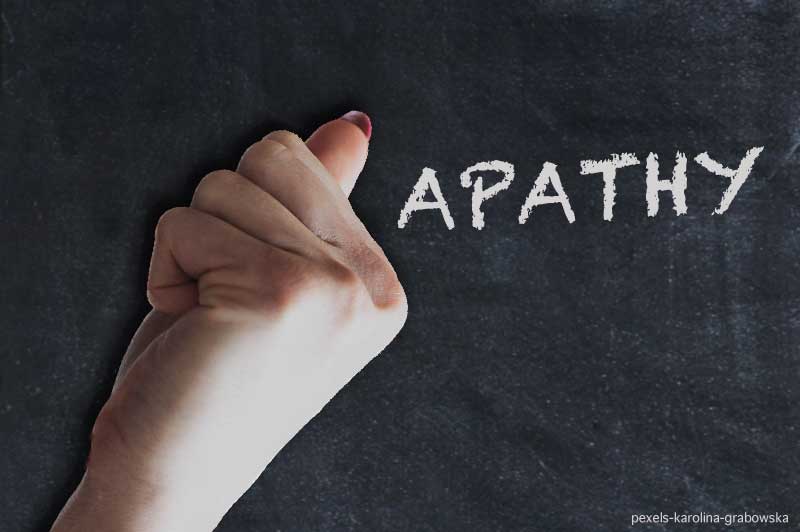
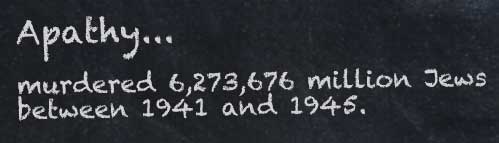
    Mrs. S. wrote the word “Apathy” on the board. 

    “That feeling. That word, murdered 11 million people. 6 million Jews. 1.5 million Jewish Children. Look at it.”

    We stare for a minute. Silent.

    I hear a soft laugh. Is that my snicker? Another. Uncomfortable shifting in desk chairs. Whoever it was, Brandon has the loudest giggle, and he receives the teacher’s corrective glare.

    She darkens the room and pulls down the screen. A slide of a naked, emaciated, woman, dead appears. My eyes glance over at the word. Apathy.

    The next slide. A gas chamber. Dead bodies slumped over each other. 

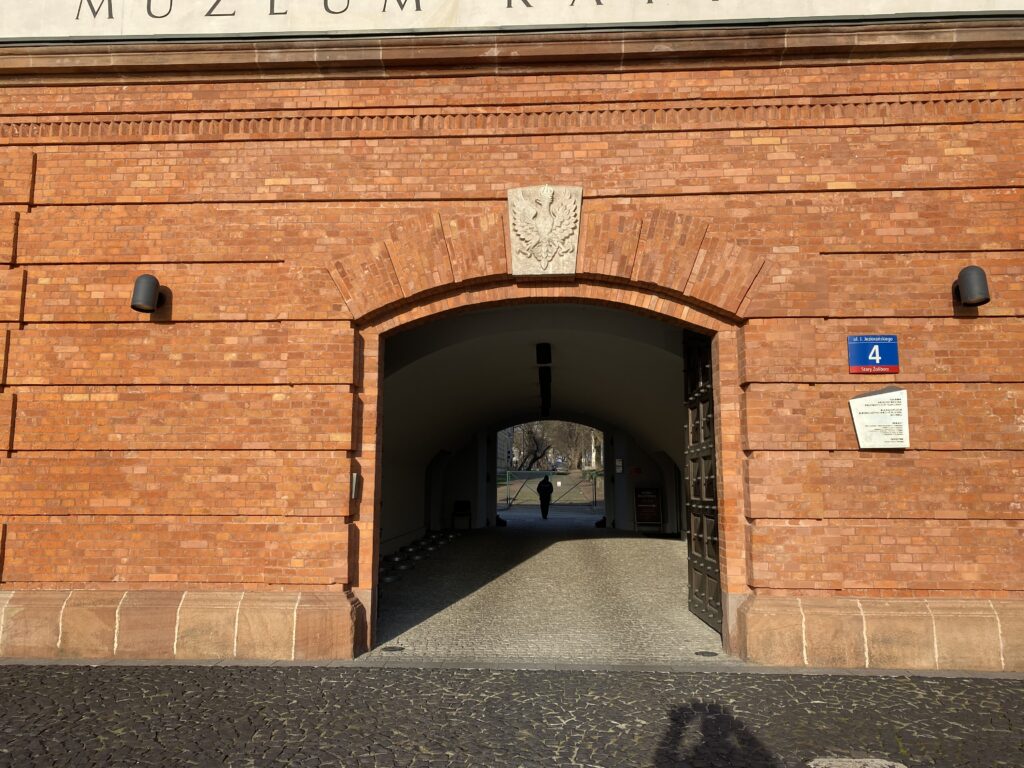
    Next, the entrance to Birkenau. 

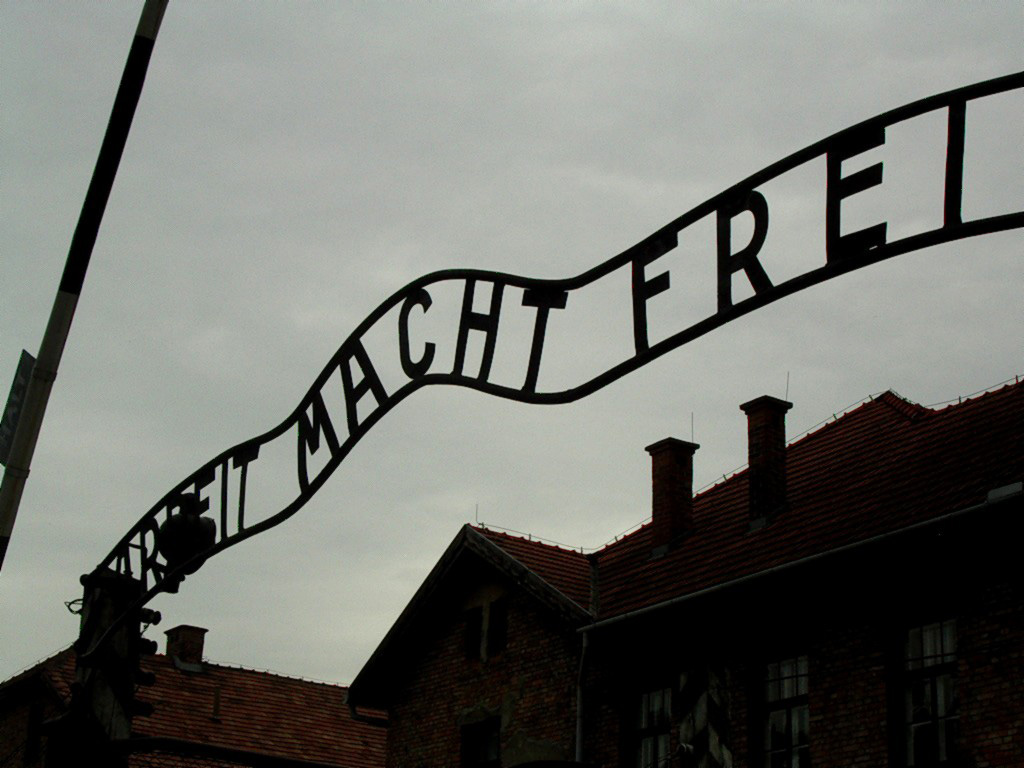
    Next, Auschwitz. “Arbeit Macht Frei” Apathy. 

    The deceitful message at the entrance to Auschwitz- translated means “Work sets you free”.

    Another slide. 

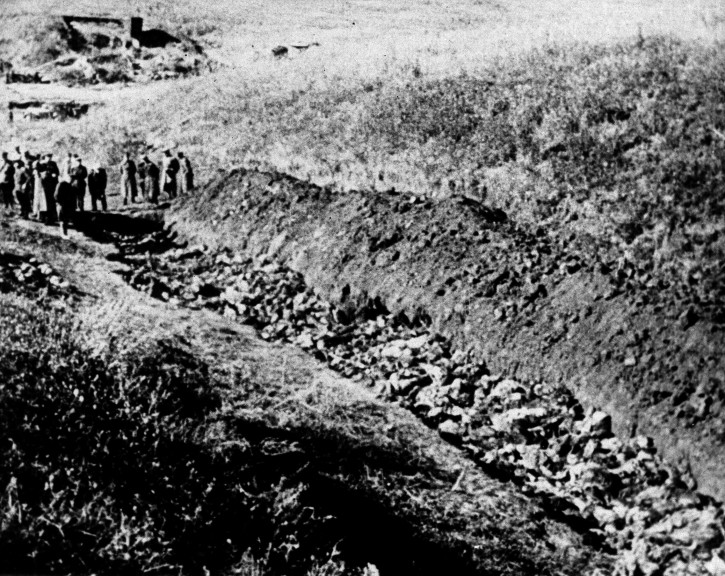
    “This is Babi Yar”. Mrs. S. delivers the information with a cold, flat, statement. The class gasps. All of us. Collectively. Gasping at the sight – a photograph of a mass grave holding the dead and starved bodies of 33,771 Jews, murdered over 2 days. Marci looks down at her paper and reads the quote that was to accompany the slide, number 18, “There is no gravestone that stands on Babi Yar; Only coarse earth heaped roughly on the gash.” One of the boys groans, “Ugh…Gash.”

    Apathy.

    I silently rode home with my father. I will never look at my Grandmother the same. “What did she see in Germany?” 

    Apathy. 

    I visited Majdanek, Sobibor, Auschwitz, Treblinka, Birkenau when I was 17. I am numb, the feeling of existing nowhere. I think I have died, but I am only numb. Every day, I want to die. Instead I am numb. Now I can survive.

    And I promise to share these words, as I stand under the gallows of Auschwitz:

    “Never shall I forget that night, the first night in camp which has turned my life into one long night, seven times cursed and seven times sealed. Never shall I forget that smoke. Never shall I forget the little faces of the children, whose bodies I saw turned into wreaths of smoke beneath a silent blue sky.

    Never shall I forget those flames which consumed my faith forever.

    Never shall I forget that nocturnal silence which deprived me, for all eternity, of the desire to live. Never shall I forget those moments which murdered my God and my soul, and turned my dreams to dust. Never shall I forget these things, even if I am consigned to live as long as God Himself. Never.” (Elie Wiesel)

    “It doesn’t feel right.”

    “Let it go.”

    “Ok, I’ll move on.”

    That conversation has dominated my life for 34 years. Apathy. I define it. My stomach rumbles every day, I never feel good. I sit with my husband at dinner and watch the news. This isn’t how it is supposed to be. All that I have seen and heard. I am numb and dead inside, as I was in Majdenak choking on the stench on rotten leather shoes. Trophies saved by Nazis to commemorate 80,000 murders. 

    “Never Again. What does that mean?”

    He stares back at me. My question emerges from my apathetic silence.

    This image has an empty alt attribute; its file name is never-again-1-1.jpg

    “When we say never again, doesn’t that mean we’re supposed to do something? What does `never again’ mean to you?”

    He quietly speaks of his dreams for peace. Eradicating poverty. Housing for the poor. Healthcare. College. Employment. 

    “What about you?”

    “I can’t live here anymore. Not the way it is. When I said never again, I meant I would stop a train carrying cattle cars of Jews with my body, with my strength, with my power. I don’t have power. I don’t want to live that way anymore. I don’t want to live here anymore.”

    “Like Loveland? You don’t want to live in Loveland anymore?”

    “No. I can’t live in the world as it is anymore. I have to change it. It’s unbearable.” I cry. I can’t stop. I feel the quiet rage of my youth. But my hands lie flat on the table, my knuckles pink. I don’t think I can exist here. I look to my husband and children. But they exist here.

    I pick up books and learn. I register voters. I learn how to organize large groups of people to fight for a common cause, not because of politics, but because it aligns with their self-interests. I learn about my privilege. I learn about systemic racism. I make so many mistakes. I am corrected aggressively. Kindly. Ignored. I cry. I laugh. I am successful. I learn as I go. Things change. 

    One day, I press play. My daughter is watching over my shoulder. We watch George Floyd die. She has closed her eyes. I restart the video.

    “Open them. Open your eyes. We have to see.”

    I think, “There is no gravestone that stands on Babi Yar; Only coarse earth heaped roughly on the gash.”

    We exist in a world like this – coarse earth heaped roughly on the gash. I don’t want this world to exist as long as I live in it.

    We hug at the end of the video.

    When my husband finishes work, I greet him by stating simply, “Never Again.”

    He knows what it means.

    I step in front of the train and put my hand up. 

    With a short meeting and trusted friends, the Loveland  Diversity Advisory Board is formed.

    John comments only occasionally, but when he does, I put the “mature administrator” hat on immediately and respond with a question, “Help me understand…” or “I’m not sure I am following what you mean…could you say more about that?” Inevitably, John replies with a co-opted statement about the thread and relates it back to Critical Race Theory or Reparations, or School Funding and School Policy. Clearly, he is looking to push buttons and searching for a “gotcha moment”.

    I don’t want this world to exist as long as I live in it. My stomach rumbles. Looking down, I see that my hands are clutching the edge of my desk. My knuckles are white. 

    He writes, “Critical Race theory has no place in American Schools. The tenets of Critical Race Theory are based in the destructive ideal of inherent racism and will teach our children to judge and self segregate based solely on skin color….It promotes the dismantling of American Society thru (sic) Marxist anti American rhetoric.”

    It takes my breath away to see it in writing. “Marxist anti-American Rhetoric”. In the rambling online blogs of the Poway Synagogue shooter, references to Jews and their control of the media, the banks, and his description of hatred for Jews and their role in “cultural Marxism”. This phrase has repeatedly created a rationale for violence against leftists, against Jewish people, and against anyone associated with either. 

    My alarm is sounded. Bully. Microassault. Dog Whistle.  “There is no gravestone that stands on Babi Yar; Only coarse earth heaped roughly on the gash.” Apathy murdered 6,273,676 million Jews between 1941 and 1945.  

    Never Again.

    I step in front of the train.

    Stop.

    You’re either driving the train. Or you’re stopping it.

    The more people that stand in front of this train, the faster it will stop.

    We must always take sides. Neutrality helps the oppressor, never the victim. Silence encourages the tormentor, never the tormented. –Elie Wiesel Z”L, Buna, Buchenwald, Auschwitz Survivor (1928 – 2016)


    This Guest Column by Leah Marcus is presented by Loveland Magazine in collaboration with the Loveland Diversity Advisory Board. Contact them if you’ve a story to share.


  • Taking Lessons From Our Past: The Story of Everett and The Importance of DEI

    Taking Lessons From Our Past: The Story of Everett and The Importance of DEI

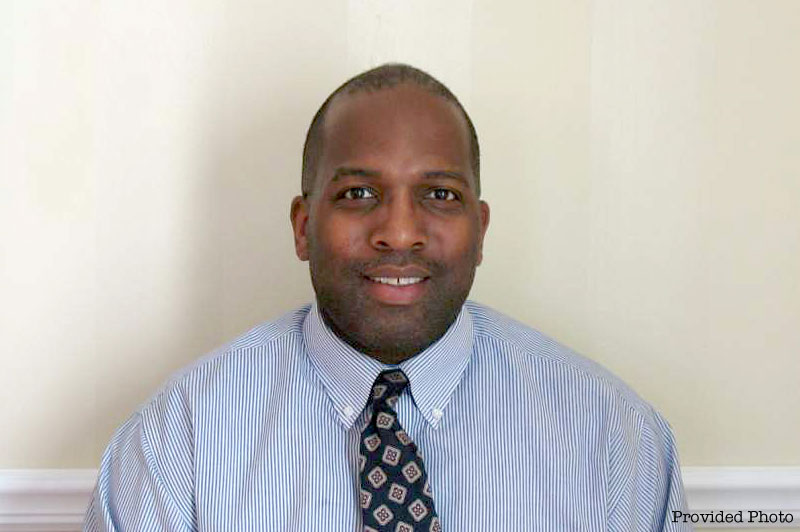
    John Coburn is a Loveland Resident, a lifelong educator, and a founding member of the Loveland Diversity Advisory Board.

    by John Coburn

     In 1954 my father-in-law Everett enlisted in the US. Army stationed in Alaska. The base was a rugged area far removed from big cities like Anchorage, Fairbanks, or his hometown of St. Louis. Everett quickly found himself the odd man out; it became clear the men in the company were not accepting of Black folks. Fortunately, he was blessed with the gift of gab, enabling him to hold his own without fear of repercussion. 

    Everett met a young man in his platoon named Ken. Ken, being Jewish and from New York, also struggled with the new environment and described Alaska as “living in a foreign land.” Friendly and outgoing, Everett became like a brother to Ken. Eventually the two forged a friendship with Ken dubbing his new pal “Duke.” While Ken and Duke were an unlikely duo–it seemed incredulous that a Jewish man and a Black man could become friends and work together– the truth was Everett knew no strangers, and he never left anyone behind.

    Everett’s strong sense of family instilled in him the importance of acceptance toward all people, regardless of their differences. As such, he helped Ken fit in with the rest of the company by reinforcing to Ken that he was special. By helping Ken to develop a sense of self-worth and demonstrating that he was a crucial member of the team, Duke enabled  Ken to develop a sense of belonging. That was a favor Ken never forgot and after the tour in Alaska ended, Everett and Ken remained lifelong friends. Over the next 60 years, they continued to stay in touch via yearly phone calls. When Everett died in 2020, Ken remembered his friend’s kindness, stating he would never have made it out of basic training without his friend Duke.

    By the 1970s, Everett was named the first Black employee at the St. Louis Corvette plant,  working in security for General Motors. (Technically, he was the second Black employee, but GM didn’t know this; Everett’s cousin Bob who got him the job was the first, but Bob passed as white.) 

    The interview process was brutal and Everett was openly mocked for having taken college courses at the local business school. While cruel and demeaning, unfortunately the interview was only a small glimpse of what was to come. 

    GM was a toxic workplace during those days and fellow workers desperately tried to get Everett fired or intimidate him into quitting by placing nooses and tools in his locker.  If you possessed company materials, you were subject to disciplinary action so those would be planted as well. Employees would drive to his home and sit in front of his house during the day, Everett recognizing the cars because of his position in security. He would come home after work crying tears of frustration. This pernicious behavior was against everything he believed and stood for. He’d initially believed his vivacious personality coupled with his gift of unconditional acceptance and love for others would help him navigate life’s challenges. He was starting to think it would not. Fortunately, his wife supported and encouraged him to continue to push forward. Eventually, Everett was the first black foreman at GM, receiving Quality awards for the work.

    In the years since, I’ve taken Everett’s experiences to heart and they’ve shaped the way I live and the way I approach my career as an educator. At one point, I accepted a job in the city next to my hometown as an assistant principal. The principal was indifferent to the idea of Diversity, Equity, and Inclusion and its impact on the school environment. It was obvious: both the school environment and the surrounding community were incredibly toxic. Students that were deemed different were overly disciplined and behind academically. It was clear no one felt a sense of belonging or importance, not the students in the school or the members of the community surrounding it. And with no leader to inspire these feelings, things would only continue to get worse. 

    With the help of another teacher, I instituted plans to help students academically. I continued my work with students and parents providing social-emotional support while addressing underlying social-emotional needs. I started an ACT Prep program to help improve the students’ college acceptance.

    In the spring, the community experienced a mass shooting that killed local government officials and police officers because of a community conflict. Those students that felt a sense of belonging began to seek social and emotional support. Despite the community upheaval, many students followed the academic plan and graduated with their classmates. The community has started to heal, and many community members have made it their mission to speak up and be more inclusive of others in their community.

    I share these stories about my father-in-law’s and my experiences to illustrate that everyone wants to belong. The need for belonging is an innate sense of the human condition. If we cannot develop relationships and feel a sense of acceptance, we become isolated, withdrawn, and want to quit. A feeling of belonging, and having people around you who foster that feeling, is an essential component to success. 

    That said, because of Covid-19 and social injustice, many students don’t have that sense of belonging. They may feel excluded at school or in society in general. This, as we’ve seen, is neither conducive to a healthy self-esteem or academic success. The question is, how can we help our students feel like they belong? 

    Taking inspiration from Everett, as I have done, has been instrumental. We can ask ourselves: 

    As teachers, are we accepting of students and not hypercritical? Everett welcomed all people. He did not put people down, and he was not overly judgmental. No matter what others said, he never judged anyone. 

    As educators, do we allow students the opportunity to restart?  Everett always gave everyone a fresh start. Once his nephew forged his signature on a document, and he received free service on his car. Everett forgave him. 

    Are we empathetic toward students? Everett displayed grace toward people even when people were unkind to him. 

     Finally, is our climate and culture inclusive, accepting, and inviting? It was not until the final years of working at GM that Everett felt a sense of belonging. Toward the end of life, Everett developed dementia. He recalled the names of most of his family and not much else. However, he remembered in detail his experiences at GM.

    Though it has only recently been given a formal title, Diversity, Equity, and Inclusion is a concept that has always been important. And while there will always be outliers like Everett who persevere despite the odds, there are far more Kens, who need the camaraderie and encouragement of others to succeed. As educators, caregivers, and members of the community, we are uniquely poised to provide this encouragement and well-crafted DEI programming is the most impactful way to do it. It need not be a political or divisive issue–the fact is that when everyone feels they belong, everyone wins.

    Regardless, I’ll continue to advocate for DEI not only because I’ve seen that it works, but also because I know that Everett wouldn’t have wanted it any other way. 

    This Guest Column by John Coburn is presented by Loveland Magazine in collaboration with the Loveland Diversity Advisory Board. Contact them if you’ve a story to share.

  • Looking for a Fun Summer Art Camp?

    Looking for a Fun Summer Art Camp?

    Advertisement

    The Loveland “All About Art” Summer Art Camp, which is sponsored by the Loveland Elementary PTA, has been holding art camps every summer since 2005, serving Loveland area school children in Kindergarten through 8th grade. Several talented certified art educators with years of classroom teaching experience have helped run this camp over the last 15 years. Art projects and art adventures center on a new theme each year. Our theme this summer is “Spaced Out” and will be taught by art teachers, Jennifer Drydyk, Aly Mardin, and Kim Richardson.

    This year’s camp will be held during the weeks of June 14th and June 21st.

    Our art camp is a great way for young artists to extend their artistic learning into the summer months by enjoying visually enriching adventures and experiences as they explore the many intriguing aspects of art through sculpture, painting, drawing, mixed-media, printmaking, video, marbling, and so much more!  

    This year only-we are opening up art camp to 9th graders. These students were part of last year’s 8th grade class who missed out on their last year of eligibility when camp was canceled due to Covid.

    Although the camp is sponsored by the Loveland Elementary PTA, the camp is available for all children regardless of the child’s school district. However, Loveland City School children will have priority registration. Covid safety protocols will be followed during art camp. Students and instructors will be required to wear face masks, socially distance, and use proper hand washing.

    To learn more about this exciting art camp opportunity and download a registration form, go to www.lovelandschools.org and click on “Flyersor go to www.lovelandelementarypta.org and click on “Classes & Camps”. If you have any questions, please email Jennifer Drydyk at jdrydyk@mac.com

  • Part II: There weren’t enough napkins to clean up the tears when my Loveland school-children were called N——s!

    Part II: There weren’t enough napkins to clean up the tears when my Loveland school-children were called N——s!

    A true story by a Loveland resident presented by Loveland Magazine in collaboration with the Loveland Diversity Advisory Board. Contact them if you’ve a story to share.

    The family in this story has chosen to remain anonymous for fear of retaliation against their children.

    You may want to read Part I first or re-read it to remember the story we are telling.

    Part I of II

    As the years passed our family had more brushes with racism and the talks my husband and I had with our sons became, both by choice and necessity, more regular. As they grew from children into tweens and teens, we had to remind them that in the eyes of others they were no longer perceived to be cute, unthreatening little boys. For a Black child, that shift in perception can be the difference between life and death. While their Caucasian friends were in the habit of wearing the hoods of their sweatshirts over their heads when walking around town, their dad and I recognized the danger inherent in this scenario for boys of color. And that was just the beginning. Every news story became another talk we had to have. 

    Still, despite the increasing frequency of our family talks and growing awareness of society’s bigotry, one can never quite be prepared when racism rears its ugly head. 

    She wanted to go to the park. My daughter, only five, was not yet included in these family conversations. The innocence my sons were cruelly stripped of that final day of school was still intact in her, as evidenced by her bright eyes, sweet giggles, and the ambient toothy grin she had for everyone she met. Like so many moms that day, I tied her soft brown curls in a ponytail, gave her breakfast and got her dressed before setting out for our walk to the park, just around the corner from our house. It was an unremarkable walk, one we’d taken a thousand times. 

    Upon arrival we encountered several boys. They appeared to be aged 12 or 13, and like so many boys their age they were roughhousing, laughing, and hollering. I half-smiled and shook my head remembering how boys that age could be, before turning my attention back to my little girl. 

    The rowdiness didn’t bother us, but I winced as one spewed a series of obscenities, hoping my daughter’s attention was focused on the playground and not the words her young ears were hearing. A quick glance around showed no parents or elder siblings in attendance and so apparently, as tween boys are apt to do, they were in relishing their temporary emancipation, saying things they knew better than to say. 

    They’ll stop this behavior now that I’m here. Kids don’t act like this in front of adults, I deduced. I’ll just keep her on the far side of the park where she’s less likely to hear them.

    “ Mommy!” I was jerked back into reality by my daughter’s excitement. “Can you help me get up there?” she asked, motioning to the play structure.

    I had done it a thousand times. I’d fit my hands around her waist, giving her a boost. I’d watch as her small hands smoothly and confidently scaled the rungs. But before I could lift her I heard a mocking shout coming from the direction of the boys. 

    “Why are YOU calling HER that? She’s not YOUR mom,” he chortled. 

    Now is the part of the story where I let you, the reader, know that I am, in fact, Caucasian. My husband is Black and, thus, our childrens’ richly hued complexions do not match mine. And while there has been more than one instance where children (and the occasional adult) are curious about how one pale-skinned mother comes to have three darker-skinned children, the tone in this boy’s voice told me this was not childhood confusion. 

    This was antagonistic. 

    This was unmistakable cruelty.

    My daughter let go of the play structure, whipping her head around to face me. Loose curls softly grazed her cheek. We locked eyes. On her face was an eerily familiar expression. It was one I’d seen years earlier and in many nightmares since. It was the same look my sons had given me on the last day of school.

    That last day of school.  

    “Have a good summer, you N——s!”

    The feeling came rushing back, the unadulterated terror where my stomach flips, my heart drops, my breath quickens, and I can feel the color draining from my face. 

    Oh, not again. 

    “Mommy?” my daughter looked at me, baffled.

    “Stop calling her your mom!” The boy scoffed. “She can’t be your mom. She’s white!” The boy sneered at us, before glancing at his buddies with a snicker and a smile, seeking approval for what he must have thought were his superior skills of observation. One of his friends joined in on the cackling. The other stood silently, head down. 

    The old adage of “sticks and stones” isn’t always accurate. One look at my daughter’s collapsed expression told me these words, while not breaking her proverbial bones, threatened to break her spirit. 

     “Don’t you talk to my daughter that way,” I snapped. “I am her mother.”

    “Mom–”

    “She’s not your mom! SHE”S NOT YOUR MOM! She’s white!”

    Laughter. Jeers. 

    I walked toward the boys slowly, the soft earth yielding beneath my sandaled feet. 

    Imagine, for a moment, you are standing in my shoes.

    What do you do in a situation like this? Do you unleash your wrath on someone else’s kids? Do you completely lose your composure in front of your daughter who is already visibly shaken? Or do you ignore such a blatant and dangerous transgression? And where did these kids learn this behavior anyway? Why would they think this sort of racially-charged rhetoric is acceptable? What emboldened them, still children, to speak this way around me, an adult? And of all places for this to happen, why did it have to be on a playground, a place of childhood innocence? A magical place meant to foster youthful wonder and unbridled imagination?

    The questions rang in my ears while a whirlwind of emotions bubbled to the surface. Though seemingly intertwined, my feelings were in direct juxtaposition with each other. I felt sorrow, but also anger. Despair, but also rage.

    “You know,” I began, measuring my words carefully, “I wish your moms were here so they could see how you’re behaving.” 

    I didn’t know what else to say. I still don’t. Would you? 

    I took my daughter’s small hand and led her out of the park, back to our house, back to the embrace of the four walls that felt comforting and familiar. The sun swelled in the sky, casting shadows as it fought to rise above the clouds. 

    As we walked, my daughter begged insistently for answers. 

    “Mommy, why are those boys saying you’re not my mommy?” The loose brown curls now stuck to her face, plastered in place by tears. “You are my mommy, right? You’re my mommy?”

    Explaining a nuanced topic like racism to my school-aged sons felt like too soon and even then I felt guilty somehow. Like I hadn’t broached the subject enough and had somehow failed them. But my daughter was five. How do I explain this situation to a five year-old? And why should I have to? I resented those boys. I resented the situation. I resented everything that put me in the position of having to reassure a five year-old little girl that I am her mother, to explain why she and I look different, and to address how that will be an issue for her in the future.

    If I have learned anything from the events involving my children it’s that everyone, regardless of the color of their skin, needs to be having conversations about race with their families. These talks, whether organic and casual in nature or full-fledged sitdown discussions, must happen regularly. Not only that, but the topic needs to be addressed in a manner that honors and celebrates our differences while still acknowledging our similarities. And because so much of racism is learned behavior, modeling acceptable treatment of others can’t start and end when the conversations do. It isn’t the sole responsibility of families of color to teach their kids about prejudice and racism; Eradicating hatred is a group effort that has to include everyone to be successful. 

    I have replayed that day in my mind a thousand times.

    Fortunately, in the years since, my daughter’s memory of the incident has somewhat faded. I’m thankful that she doesn’t have to carry that burden around anymore, a veritable boulder on her tiny back. 

    But I carry it everyday. 

    I carry it when I see the news.

    I carry it when I think of my own school experience. The cruel taunts of classmates calling me a “N—-rlover” leave me wondering what onslaught the teen years have in store for my own children.

    I carry it when I see comments on social media that assert prejudice does not exist in Loveland, or does not exist in Loveland today, or does not exist with “my child.” 

    I carry it when I’m sitting on my porch watching my daughter play and from a yard within earshot I hear someone commenting on the election. Well I hope all those dumb Black people are happy now that they got what they wanted.

    Racism is here, in Loveland, whether we want to admit it or not. It’s here today and everyday, and it’s all around us whether we want to admit it to others or to ourselves. 

    But what gives me hope is that once we acknowledge the issue, we can unburden ourselves of this unnecessary weight. By taking that first step, we can commit to doing better. We can do what is needed to learn and to grow, and we can do that learning and growing together. I hope that by sharing my family’s experiences others will be empowered to take that first step.


    In Part I of this Diversity Story, we see that the trouble was only beginning. 

    Read Part I


    Read our first installment of a true story by a Loveland resident presented by Loveland Magazine in collaboration with the Loveland Diversity Advisory Board

    I felt the tears welling behind my eyes and willed them…


    For more information on talking to your kids about race and racism:

    Teaching and talking to kids

    Its never too early talk children about race

    Parenting/talking to your kids about racism

    For engaging story times on diversity (including race) for young learners, join the Loveland Diversity Advisory Board and the Cincinnati Hamilton County Library the 2nd Monday of every month for Bedtime Book Talks.

    Support for those feeling fearful, vulnerable, or uncomfortable upon reading these accounts:

    https://brenebrown.com/podcast/brene-with-aiko-bethea-on-inclusivity-at-work-the-heart-of-hard-conversations/

  • Utility and fossil fuel influence in Ohio goes beyond passage of bailout

    Utility and fossil fuel influence in Ohio goes beyond passage of bailout

    Dark money loopholes remain, while people linked to utilities and fossil fuels hold public office or enjoy ongoing access to government officials.

    by Kathiann M. Kowalski

    Dark money loopholes remain in Ohio law, despite last month’s surgical repeal of part of the law at the heart of a $60 million corruption scandal. Meanwhile, more evidence has emerged in recent months, detailing the flow of money by groups engaged in the House Bill 6 scandal and showing close ties between current and former utility lobbyists and Gov. Mike DeWine, as well as various lawmakers.

    “We need to learn from our mistakes,” said Catherine Turcer, executive director of Common Cause Ohio, a group that advocates for more transparency and accountability in politics. She noted that the House Bill 6 case is just the latest in a line of corruption scandals that have rocked state politics in the past two decades.

    A federal complaint released last July alleged an unlawful conspiracy to elect lawmakers who would favor Rep. Larry Householder as House speaker, secure passage of House Bill 6 and defend it against a referendum. A court filing by FirstEnergy in March admits that millions of dollars went from one of its subsidiaries either directly or indirectly to Generation Now, the primary dark money group at the center of the alleged scheme, or to other entities alleged to have played roles. Some funds were paid at the direction of FirstEnergy Solutions, the document claims.

    In addition to promptly repealing the whole law, legislators should have pursued action to prevent such a situation from happening again, Turcer said. Instead, “there was not any indication in place during the summer of a path of how to make sure we don’t create a space for misdeeds.”

    Efforts by FirstEnergy and others to make political contributions through dark money organizations — 501(c)(4) nonprofits and some political for-profits that are not required to disclose their donors — have touched numerous entities with connections throughout the Ohio government, according to data from various sources.

    The Accountability Project is a national database that collects records of federal campaign contributions, grants from nonprofits, expenditures by political action committees and more. The database also identifies shared addresses and other links among individuals and organizations.

    Among other things, the database reveals that Generation Now’s address shown on a 2017 corporate filing was the same as that for co-defendant Jeff Longstreth and his business JPL & Associates. JPL & Associates was shown as the president and secretary on an October 2019 IRS filing by Generation Now.

    The Accountability Project information also indicates that in 2018 Generation Now and JPL & Associates did business at a Capitol Square office tower. The same suite address was used at various times that same year for Friends of Larry Householder, the Committee to Elect Bill Roemer, Harris for Ohio and  Barhorst for Ohio.

    In earlier years the same suite address had been used by the Coalition for Growth and Opportunity, which received money from an American Electric Power-funded group. The office suite is unoccupied now, but at some earlier point the suite also had been the office address for a bespoke tailoring business. (The company moved out of the space years ago, Eye on Ohio and the Energy News Network learned.)

    Nonetheless, utilities and fossil fuel interests seek to continue to tailor Ohio energy policies to their benefit. Among other things, most candidates elected in 2018 whose campaigns got money from the alleged HB 6 scheme were reelected in 2020. Their incumbent statuses would have given them a bump, according to David Anderson, policy and communications director for the Energy and Policy Institute. Federal filings indicate substantial additional spending for the last election cycle as well, he added.

    FirstEnergy and its political action committee reported more than $1.1 million in campaign donations for 2019 and 2020, primarily to Republicans, the National Institute on Money in Politics reports. Nearly half a million of that went to candidates in Ohio.

    Those reported amounts don’t include spending by any dark money groups the company or other energy companies with utilities in Ohio might have donated to. The Growth & Opportunity political action committee had spent money in early 2020 to influence several Ohio primaries, Anderson noted.

    Close ties

    DeWine signed HB 6 into law within hours of its passage in July 2019. Even after HB 6 passed, close ties have remained between utilities and fossil fuel interests, on the one hand, and leadership in Ohio’s legislative and executive branches.

    Since the federal complaint was released last July 21, DeWine has stood by Dan McCarthy, whom he appointed as his director of legislative affairs in early 2019. As a lobbyist at the Success Group in Columbus, McCarthy had long been active in state politics and has contributed to a variety of campaigns, as data from the Accountability Project shows.

    McCarthy was a registered lobbyist representing FirstEnergy in 2017 and 2018, when the events alleged in the HB 6 conspiracy began, according to data from the Ohio Lobbying Activity Center. He also was president of Partners for Progress, the FirstEnergy-funded “Energy Pass-Through” organization that allegedly funneled millions of dollars into efforts to pass and preserve HB 6.

    The bio released by DeWine’s office when he appointed McCarthy in 2019 shows that he had previously managed several political campaigns in addition to working for the Success Group. McCarthy resigned from Partners for Progress before assuming his current government position. 

    His former Success Group colleague McKenzie Davis was a director for Partners for Progress through at least 2019, according to a November 2020 IRS filing by the group. The report also shows R. Scott Davis as president and secretary, and lawyer Michael Van Buren at Calfee, Halter & Griswold in Cleveland as treasurer. 

    The IRS filing showed that $13 million went from Partners for Progress to Generation Now in 2019, plus additional amounts to other organizations for “political campaign intervention,” lobbying and “educating the public about utility options.” Funds from two of those dark money groups supported DeWine’s campaign, as well as an unsuccessful campaign by his daughter Alice DeWine, the Cincinnati Enquirer has reported.

    Other lawyers at Van Buren’s firm represented FirstEnergy in cases before the Public Utilities Commission of Ohio, including one begun after news of the HB 6 scandal broke, for the purpose of determining if funds from FirstEnergy’s utility ratepayers were spent on HB 6 activities. Attorneys from Jones Day are now counsel in some of those cases.

    “It looks a bit different when the lawyers who defend you work for the firm that was part of that political spending,” Anderson said. Van Buren and a colleague did not respond to an inquiry about the reason for the change.

    On call

    FirstEnergy was not the only utility with ongoing links to the governor’s office. An October 2019 email recently released by Common Cause Ohio last month shows that the DeWine-Husted campaign held a weekly finance call, even though they’re not up for reelection until next year. The call list included multiple people with ties to utilities and fossil fuels, including FirstEnergy lobbyist Josh Rubin of the CJR Group, Duke Energy Business Services lobbyist Chip Gerhardt of Government Strategies Group, and Ohio Coal Association lobbyist Richard Hillis of Governmental Policy Group. The Governmental Policy Group’s address has been used by several political action committees throughout the years, Accountability Project data show.

    Also on the DeWine-Husted finance call list was J.B. Hadden, who has been president of Empowering Ohio’s Economy, one of the dark money groups that had also paid money to Generation Now. As of last summer, American Electric Power had contributed a total of $8.7 million to Empowering Ohio’s Economy since 2015, including $700,000 in 2019, according to company spokesperson Scott Blake. “We will continue to legally and ethically advocate on behalf of our customers and our company,” Blake said.

    AEP’s vice president for external affairs, Tom Froehle, also has been a board member of Empowering Ohio’s Economy, dating back to 2016, Blake confirmed.

    Froehle and AEP Director of Government Affairs Maria Haberman met with Householder in February 2020, after HB 6 was law but before the scandal broke last summer, Anderson noted. Householder’s calendar didn’t indicate what the meeting was about.

    As for Empowering Ohio’s Economy, its 2019 tax filing showed more than half a million dollars going to Generation Now. Donations to several other organizations included a $25,000 contribution to the Ohio Governor’s Residence & Office Fund, which is yet another dark money group. It has spent nearly $200,000 on meetings at the residence “to promote better and more efficient government.”

    Another $2 million went from Empowering Ohio’s Economy to another dark money group, Open Road Path, in 2019 “to promote economic and business development within Ohio.” Hadden did not respond to a request for additional information for this article.

    Regulatory connections

    Anne Vogel, former managing director of AEP’s government affairs office, became DeWine’s assistant director for energy and natural resources starting in March 2019. By July, HB 6 was passed. 

    In December 2020, Vogel became a finalist to replace Sam Randazzo as chair of the Public Utilities Commission of Ohio. Randazzo resigned the day after a FirstEnergy government filing stated that the company had paid $4 million in early 2019 to an entity apparently linked to Randazzo. After criticisms surfaced about last December’s list of PUCO nominees, DeWine ultimately asked for additional names and appointed Jenifer French to the post.

    The PUCO nominating council likewise has connections to utilities and fossil fuel interests. Chair Michael Koren was a registered lobbyist for FirstEnergy through 2019. He chaired the committee that nominated Randazzo for the PUCO in 2019. Ohio Lobbying Activity Center data shows Koren also has been a lobbyist for Columbia Gas and Boich Companies, which made its fortune in the coal industry.

    Randazzo’s calendar for the time he was PUCO chair shows multiple meetings with people from utility companies or their parent corporations, as well as with coal fleet lobbyist Michelle Bloodworth

    “I am unaware of any meeting in which a commissioner held a discussion of pending proceedings,” said PUCO spokesperson Matt Schilling, noting that meetings otherwise “could have been regarding any number of general energy or commercial transportation matters relative [to] the delivery of adequate, safe and reliable utility service.”

    Nonetheless, the Energy and Policy Institute’s Anderson said, the absence of detailed notations in the calendar presents “definitely a lot of potential conflicts.”

    Accountability Project data also shows that AEP’s Froehle, Randazzo and Scott Elisar, the PUCO’s current legislative and policy director, all had worked at the same law firm, McNees, Wallace & Nurick. The firm has long represented Industrial Energy Users-Ohio, which has pushed for limiting clean energy standards, and whose members have long enjoyed favorable rates from utilities.

    Still ahead

    Dark money loopholes made the alleged HB 6 scheme possible. “Dark money is a breeding ground for corruption,” former U.S. attorney David DeVillers said when the indictment was filed last July. The federal investigation continues, although the pandemic delayed some grand jury proceedings, he told the Ohio Consumers’ Counsel Governing Board on March 16. In-person meetings of the grand jury have recently resumed, he noted.

    “[For] a lot of these cases that have been on the back burner, you can expect to see a lot more indictments coming,” DeVillers said.

    This year, House Bill 13 aims to address some dark money issues. A hearing will be held in the coming week, so there’s at least some potential for lawmakers to take action this session. But so far, Turcer said, “it’s just that they have completely dragged their feet.”

    __________________________________

    This story is part of a collaborative journalism project produced by the Energy News Network and Eye on Ohio, the Ohio Center for Investigative Journalism. Funding is provided by the Cleveland Foundation, the George Gund Foundation, and the Accountability Project at American University’s Investigative Reporting Workshop.

    This article first appeared on Eye on Ohio and is republished here under a Creative Commons license.


    This article provided by Eye on Ohio, the nonprofit, nonpartisan Ohio Center for Journalism in partnership with the nonprofit Energy News Network. Please join our free mailing list or the mailing list for the Energy New Network as this helps us provide more public service reporting.


  • There weren’t enough napkins to clean up the tears when my Loveland school-children were called N——s!

    There weren’t enough napkins to clean up the tears when my Loveland school-children were called N——s!

    A true story by a Loveland resident presented by Loveland Magazine in collaboration with the Loveland Diversity Advisory Board. Contact them if you’ve a story to share.

    The family in this story has chosen to remain anonymous for fear of retaliation against their children.

    Part I of 2

    We arrived at school bright and early, just as my sons had requested. It was their last day of 2nd and 4th grade and the anticipation they felt for the occasion was palpable. The dew collected on the toes of their sneakers as they ran to line up, the unmistakable scent of spring perfuming the air. It would be the kind of summer children dream about, with lazy mornings, afternoon trips to the park, and visits to the local Whippy Dip where the cones melted and dripped down their small arms onto the picnic tables. We never got enough napkins. It was going to be the kind of summer they’d look back on years from now with a hint of nostalgia, remembering the carefree innocence of childhood. 

    The school day went by without a hitch; games were played, awards were dispersed, maybe there was a hint of sorrow from the teachers as they retreated back to their now-empty classrooms. But on the faces of my sons and their friends after the final bell had rung, I saw nothing but pure elation. As they played on the front lawn of the school, one last farewell before loading them up, a car slowed to a cruise on Loveland-Madeira. It was all decked out, congratulatory chalk paint on the windows; apparently the driver and his passengers were recently graduated seniors.

    The passenger leaned out of his open window as the car passed my sons and me. 

    “Have a good summer,” he shouted. My sons smiled back, visibly excited a ‘cool’ older kid was acknowledging them.

    But his sentence didn’t end there. 

    I wish his sentence had ended there. 

    “Have a good summer, you N——s!

     My heart dropped. I felt as though I’d been punched in the stomach. And then instinct kicked in.

    “Get in the car, boys,” I frantically stammered.

    “But mom–what did he say?”

    “I said GET IN THE CAR. NOW.” 

    “What did he call us mom? Why did he say that?” 

    I met the puzzled gaze of my younger son who had no idea what had just transpired. 

    My older son looked equally befuddled. This wasn’t the first time he’d encountered that vile term. He knew what it meant. The confusion on his face told me he just hadn’t heard the slur over all the commotion. 

    And here I was, flushed, sweating, and doing everything I could to keep from melting into a puddle of tears in front of them.

    There weren’t enough napkins to clean up the mess.

    With a single word, our perfect day was shattered.

    I tried to see the car’s plate number, but they’d sped away too quickly. I called the school to report the transgression, but, being the last day of school, I never heard back. I met with a police officer, but unfortunately his hands were tied; with what little information we had there was no feasible way to determine the identity of the culprits. As a last ditch effort, I tried doing my own reconnaissance work on a local moms’ group page on social media where my post was promptly removed after group members began chastising me. This isn’t the place for this, I was scolded. Well, where was the place? In the midst of a travesty, I’d turned to my community and in turn I was brushed off and chided.

    That night, instead of eating ice cream that dribbled down their chins and staying up past bedtime, my sons, my husband, and I had to have “the talk.” This is the talk that all parents of Black children, boys in particular, dread. We’d had conversations before but this time they’d been called out. This time it was personal. 

    We had to explain what they were called. What it meant. Where it originated. We had to explain that not everyone saw them as an equal. That prejudice exists.That stereotypes, to some people, are the stuff of truth. We had to sit down, the first night of summer, at the end of what began as a day full of promise, to explain racism to our elementary school-aged children. We had to explain that there are people who hate them for no reason other than the color of their skin. We had to explain that sometimes, inexplicably, people will respond differently to things they do, even if those things are exactly the same as those their Caucasian friends are doing. We had to explain injustice, an intrinsically unfriendly concept, in the most child-friendly way possible. 

    We were determined not to let racism win. This would not ruin our summer; it would not ruin our family. And ultimately, we have triumphed. This event and others like them, as upsetting, maddening and sorrowful as they are, have only served as teachable moments and life lessons. We turn the negativity into chances to fortify our familial bond and bolster our pride. 

    But make no mistake, there have been tears. There have been lots of tears. 

    And there are never enough tissues.

    With this horrifying experience behind them, this family hoped the worst was over.

    In Part II of this Diversity Story, we see that the trouble was only beginning. 

    Stay tuned for Part 2


    Read our first installment of a true story by a Loveland resident presented by Loveland Magazine in collaboration with the Loveland Diversity Advisory Board

    I felt the tears welling behind my eyes and willed them…


    For more information on talking to your kids about race and racism:

    Teaching and talking to kids

    Its never too early talk children about race

    Parenting/talking to your kids about racism

    For engaging story times on diversity (including race) for young learners, join the Loveland Diversity Advisory Board and the Cincinnati Hamilton County Library the 2nd Monday of every month for Bedtime Book Talks.

    Support for those feeling fearful, vulnerable, or uncomfortable upon reading these accounts:

    https://brenebrown.com/podcast/brene-with-aiko-bethea-on-inclusivity-at-work-the-heart-of-hard-conversations/
  • Loveland High School Bands in Public Concert:

    Loveland High School Bands in Public Concert:

    by Olivia Smith

    Loveland, Ohio – On Thursday, April 29th, the Loveland High School Jazz Lab Band and Jazz Orchestra will be performing at the Narrow Path Brewing Company in Historic Downtown Loveland starting at 7 PM.

    On Tuesday, May 4th, the Loveland High School Concert and Symphonic bands, along with the Wind Ensemble will be performing in the Nisbet Park Amphitheater starting at 6 PM.

    The Jazz bands will be playing a wide variety of tunes, such as the theme from “Family Guy” and a Stevie Wonder Medley. You all can enjoy Narrow Path’s wide variety of beers while listening to fun music and supporting the Loveland music program. 

    The High School’s concert bands have a fun variety of tunes as well, including the one and only theme song from “Star Wars”. They will have interim superintendent Bradley Neavin guest conduct a piece as well.

    These two outdoor, COVID-19 friendly events are a great way for all of you to support the wonderful music program in Loveland, and see what they do.

    The music program in the Loveland City Schools wants to bring the music to the public instead of bringing the public to the music.

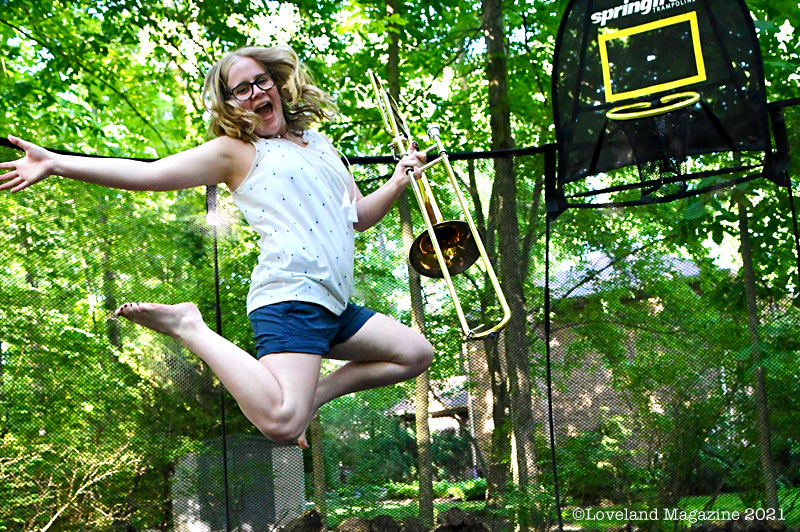
    I am involved in both the Jazz Orchestra and the Wind Ensemble at the High School, and it is so important for everyone involved in the bands to be able to share our hard work with everyone. Each and every person involved in the music program at Loveland loves music and loves making music. So getting to do these concerts is a really great opportunity. 

    I asked Bea Aldrich, a graduating senior, what her favorite part of the music program at Loveland is and she said she loves how “there are so many different opportunities for extracurriculars that anyone can find something they enjoy”.

    The program is just a really great outlet for so many people. That’s why it is important that we have the public’s support. With your support, we can keep doing what we love.

    So, if you want to have a fun time listening to some fantastic music, come support us on April 29th and May 4th!


  • Do you know: The man who used his wife’s fortune to fund the freedom of over 1,400 slaves.

    Do you know: The man who used his wife’s fortune to fund the freedom of over 1,400 slaves.

    by Barbara Kyles

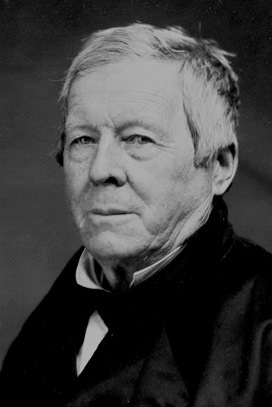
    Do you know that Thomas Garrett unabashedly gave life to his abolitionist ideals?

    Please read more about Garrett at Black Then…

    And read even more about this leader of abolitionism at Wikipedia, the free encyclopedia…

    Thomas Garrett ambrotype c1850 from Wikipedia

  • Do you know: DAVID RUGGLES, AN AGGRESSIVE ABOLITIONIST  WOULD FORCE HIS WAY INTO HOMES

    Do you know: DAVID RUGGLES, AN AGGRESSIVE ABOLITIONIST WOULD FORCE HIS WAY INTO HOMES

    by Barbara Kyles

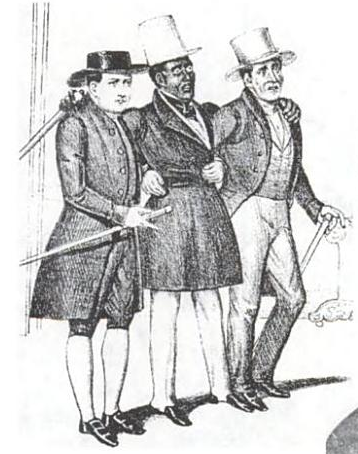
    Do you know that David Ruggles was an aggressive abolitionist who would force his way into homes to inform slaves that they were free?

    He also did his part by first opening a bookshop that was burned to the ground.

    Portrait of David Ruggles (center) with Isaac T. Hopper (left) and Barney Corse (right) confronting John P. Darg in 1838 (Artist unknown)

    Read more about Ruggles at Black Then – Discovering our history…