

Author: Contributed

  • Did you know: Whites used to pay to throw balls at blacks at the circus

    Did you know: Whites used to pay to throw balls at blacks at the circus

    by Barbara Kyles

    Do you know?

    Below is a question posed in an exhibit at the Jim Crow Museum of racist artifacts in Big Rapids, Michigan.

    Question

    Somebody told me that whites used to pay to throw balls at blacks at the circus. Is this true?
    –Stephanie S. – Columbia, Missouri

    Answer

    African Dodger Ball

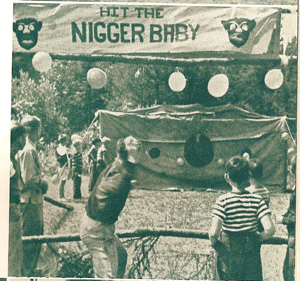
    At the end, thirty feet or so from the counter that closed the entrance, a grinning Negro face bobbed and grimaced through a hole in the back curtain painted to represent a jungle river. The Negro’s head came right out of the spread terrific jaws of a crocodile. “Hit the nigger in the head, get a good ten cent seegar,” the barker said. “Three balls for a dime, folks. Try your skill and accuracy. Hit the nigger baby on the head get a handsome cane and pennant” (Stegner, 1957, p. 47).
    The exhibit goes on to explain:

    This was a common chant at numerous carnivals, fairs, and circuses across the United States throughout the late 19th century until the mid 1940s, as Americans took part in one of their favorite pastimes, “African Dodger.” 

    The African Dodger, also known as “Hit the Nigger Baby” or “Hit the Coon” was as commonplace in local fairs, carnivals, and circuses as Ferris wheels and roller coasters are today.

    Please read and learn more about Americans and one of their favorite pastimes, “African Dodger and the complexities of relationships during the Jim Crow era

    Take a look and welcome to Black history…
  • Take a look: Who is responsible for the incandescent version of the light bulb we still use today?

    Take a look: Who is responsible for the incandescent version of the light bulb we still use today?

    by Barbara Kyles

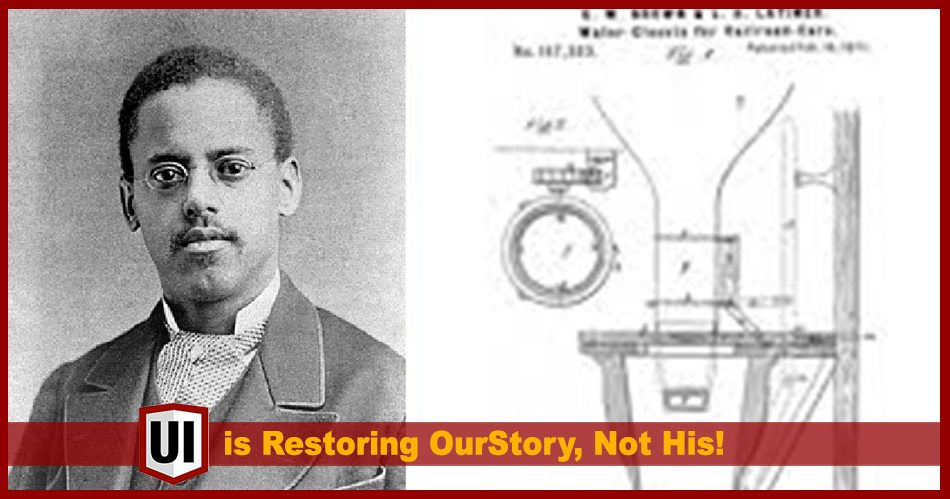
    Do you know that when you turn your lights on, you can thank DLewis Latimer who is responsible for the incandescent version of the light bulb we still use today?

    Lewis Latimer was the child of, slaves, a sailor in the Civil War and an Assistant to Alexander Graham Bell., 

    We are still using the patented design today.

    Please read and learn more about DLewis Latimer…

    Take a look and welcome to Black history…
  • Take a look: At who designed the modern tapered ironing board

    Take a look: At who designed the modern tapered ironing board

    by Barbara Kyles

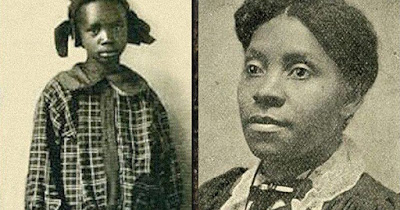
    Do you know, Sarah Boon who was born into slavery designed the modern tapered ironing board and was one of the first Black Americans to be issued a patent? Her design is still used today.

    https://www.facebook.com/TOSOBH/posts/1708744689304549

    Read and learn more about Sara Boone…

    Take a look and welcome to Black history…
  • Take a look: Sarah Rector was just 11 years old when she became the richest girl in America

    Take a look: Sarah Rector was just 11 years old when she became the richest girl in America

    by Barbara Kyles

    Do you know, “Sarah Rector was born in 1902 in Taft, Oklahoma. She came from very humble beginnings, but later became the wealthiest Black girl in the country at the young age of 11. Her family were African American members of the Muscogee Creek Nation in Indian Territory.”

    Read and learn more about Sara…

    Take a look and welcome to Black history…

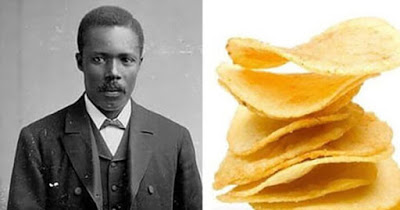
  • Take a look: The Potato Chip Was Invented by a Black Man Named George Crum

    Take a look: The Potato Chip Was Invented by a Black Man Named George Crum

    by Barbara Kyles

    Do you know that “There are a few stories about the invention of the potato chip, but the most reliable ones all center around George Crum, a famous Black chef in the 19th century who served the wealthiest Americans and eventually opened his own wildly successful restaurant.”

    Read and learn more about the humble beginnings of Mr. Crumb…

    Take a look and welcome to Black history…

  • Take a look: The magazine that helped 1920s children navigate racism

    Take a look: The magazine that helped 1920s children navigate racism

    by Barbara Kyles

    Do you know that “One day in late 1919, a young boy in Philadelphia named Franklin Lewis wrote a letter to a magazine editor at 2 West 13th Street, in New York City.”

    He wrote:

    My mother says you are going to have a magazine about colored boys and girls, and I am very glad. So I am writing to ask you if you will please put in your paper some of the things which colored boys can work at when they grow up. I don’t want to be a doctor, or anything like that. I think I’d like to plan houses for men to build. But one day, down on Broad Street, I was watching some men building houses and I said to a boy there, “When I grow up, I am going to draw a lot of houses like that and have men build them.” The boy was a white boy, and he looked at me and laughed and said, “Colored boys don’t draw houses.”

    Why don’t they, Mr. Editor?

    My mother says you will explain all this to me in your magazine and will tell me where to learn how to draw a house, for that is what I certainly mean to do. I hope I haven’t made you tired, so no more from your friend.

    “The letter would appear the following year in The Brownies’ Book, a new monthly magazine for Black children. Nothing like it had ever existed before. Created and edited by W. E. B. Du Bois—the sociologist better known for his early civil-rights leadership than his work for kids—it aimed to present a new vision of Black American childhood.”

    Read and learn more…

    I share with you this story from Inheritance,” a project about American history and Black life..

    Take a look and welcome to Black history…

  • Take a look: At the Harlem Renaissance

    Take a look: At the Harlem Renaissance

    by Barbara Kyles

    Do you know that the #HarlemRenaissance was an intellectual and cultural revival of African American music, dance, art, fashion, literature, theater and politics centered in Harlem, Manhattan, New York City, spanning the 1920s and 1930s. Also known as: New Negro Movement.

    I share with you this story from Historical African American Images.

    Take a look and welcome to Black history…

    https://www.facebook.com/permalink.php?story_fbid=119025793465904&id=106201718081645
  • Take a look: At Samuel Scottron

    Take a look: At Samuel Scottron

    by Barbara Kyles

    Do you know that Samuel Scottron was a inventor of the curtain rod and the dual adjustable mirror?

    I share with you this story from Black History Mini Docs.

    Take a look and welcome to Black history…

    https://www.facebook.com/BlackHistoryMiniDocs/posts/4371748936184962
  • Take a look: Who taught Jack Daniel how to make whiskey?

    Take a look: Who taught Jack Daniel how to make whiskey?

    by Barbara Kyles

    Do you know that the Tennessee distillery acknowledges that its official history didn’t tell the whole story of its origins?

    The company now says it didn’t learn distilling from Dan Call, but from a man named Nearis Green, one of Call’s slaves.

    I share with you this story from CLAY RISEN the Seattle Times and The New York Times

    Take a look and welcome to Black history…

    https://www.facebook.com/seattletimes/posts/10154189056411215
  • Gregory (Greg) Vann Smith June 29, 1965 – January 27, 2021

    Gregory (Greg) Vann Smith June 29, 1965 – January 27, 2021

    “Greg loved to play golf and was damn good at it! But he always made you comfortable to play with him.” – Sonia Smith

    Gregory (Greg) Vann Smith, most recently of Ocean Springs, Mississippi, but a long-time resident of Loveland, Ohio, passed away after a brief illness on Jan. 27.

    He was born on June 29, 1965, in Des Moines, Iowa.

    Greg is survived by his wife Sonia, whom he considered his beloved and devoted best friend; sons Zachary Smith of Cincinnati, Ohio, and Camerin (Trisha) Smith of Carrollton, Texas, and many longtime friends and extended family.

    He was preceded in death by his brother Rob, his mother Pat, and his father Dean.

    He spent most of his career traveling as a Sales Executive working for Nestle, Gourmet Foods International, and Rutherford & Meyer.

    Greg loved to have fun, no matter the situation. He loved a spirited debate and had an uncanny ability to always make people laugh–and he enjoyed doing so. He would go out of his way to cheer someone up. His memory, love for his family, corny jokes, and wacky sense of humor will be cherished by all who had the privilege of knowing and loving him.

    His wishes were to be cremated and due to COVID restrictions, there will be no immediate services.

    Please keep his family in your thoughts and prayers as they learn to navigate life without him.