

To the Loveland Community,

We cannot thank you enough for your continued generosity. The Ben Morrison Memorial Fund at LCNB Bank has exceeded our expectations.  We will be able to give a scholarship in Ben’s name for many years to come.

I personally have felt all of your love and prayers. They continue to help me get through each and every day.

Again, thank you to all of you!

Tori, Donnie, Ashlei and Kevin and Chelsei
Author: Contributed
-

“We cannot thank you enough.”
-

I felt the tears welling behind my eyes and willed them not to escape
“There is value in having no child feel rejected and invisible in their own school. If I can help it, none of them will.“
A story by a Loveland resident presented by Loveland Magazine in collaboration with the Loveland Diversity Advisory Board
A sharp pain startled me. Something had pelted my head. Whatever it was ricocheted to the floor with a hollow plink. I rubbed the back of my skull and looked around trying to determine what had hit me. As I did, I took another sharp blow, this time to the cheek, followed again by a distinct plinking sound. The next shot hit my shoulder. Then my neck. Finally one of the projectiles flew past my face and I was able to identify what was being hurled toward me.
It was a penny.
I looked in the direction from which the projectiles originated and saw a lunch table of my fifth grade peers laughing, trying to look inconspicuous in the conspicuous way guilty ten year-olds have a tendency to do.
“Did she pick them up?” one whispered.
“Shhhhh! She’s looking over here,” the other said, waving his hand in the universal sign to keep it down.
More giggles.

x
I sheepishly rubbed my cheek, which by now was smarting and red. I looked down at the floor where several pennies lay in a telltale scatter at my feet.
Another sharp pain.
“Pick up the pennies, Jew,” someone from the table jeered, just loud enough for me to hear.
I felt the tears welling behind my eyes and willed them not to escape. No one would see me cry. Despite my best intentions, a tear leaked out, betraying me as it rolled down my injured cheek. Its saltiness stung against the broken skin.

x
The perpetrators weren’t the school’s “bad” kids. They weren’t the “troublemakers.” They weren’t the kids who wadded up the stiff brown paper towels, wet them, and threw them up on the bathroom ceiling where they’d stick and harden like cement.
These were the kids who raised their hands to read aloud from the social studies textbook when the teacher asked for volunteers.They attended PSR at the church down the street from my house where a giant tree sprouted pink blossoms each spring before dropping her petals in a sudden heap. These were the kids who, if I’d told a teacher, would elicit the response of ‘Well now that doesn’t sound like them. I’m sure they meant nothing by it. Have you tried ignoring it?’
x
The lone tear fell onto the lunch table, a solitary puddle on the faux wood facade. Pennies? What does that even mean? I pondered this question silently, focusing intently on the fallen tear to prevent more from spilling out. I felt ashamed and embarrassed. I never mentioned it again.
This was the first time it happened, but it wouldn’t be the last.
At ten years old, I didn’t understand the deeply anti-Semitic implications of these kids’ actions. As an adult, I know they picked up on these stereotypes somewhere. I feel confident that the hateful message was learned outside of school, however subtly transmitted. Maybe slips of the tongue by their parents. Maybe from the innuendos presented in the news channel their family watched. Maybe from friends whose families held biases. But what about what they learned–or didn’t learn–while they were in school? What was the message there?
There was nary a mention of Jewish people in my elementary school. Despite a small population of Jewish students, the curriculum had settled into a comfortable rhythm they saw no need to update. I remember clearly how each year my teachers were startled when they learned that I didn’t have a Christmas tree.
“What do you mean?” my second grade teacher asked incredulously. “Everyone has a Christmas tree,” And so it went.

x
I accepted my lot early. I dutifully completed my “Letter to Santa” assignments each December prior to “Christmas Break” where I’d take home the ornament I had to make for my non-existent tree. In the spring, I mustered up fake gusto to color oil pastel Easter egg cut-outs. I completed the multiplication worksheets asking how much tinsel Jane needs to trim her Christmas tree and conducted the science experiments on decorating Easter eggs with various substances, bright red beet juice staining my hands for days.
The message coming from the school was clear: one specific religion was the universal norm. Obviously, I was different. That made me a target.
I share this with you to illustrate that representation matters. While some may disagree, they are likely the ones who have never been in a situation where they were the “other.”
Representation doesn’t mean anyone has to alter their own convictions or feel put on the defensive. It doesn’t mean one side is right and the other is wrong, that there’s a hidden agenda, or that any one lifestyle is being attacked.
What it does do is allow students to learn that the world is full of people whose beliefs, values, and opinions differ from their own. It means the students who aren’t part of the status quo feel a sense of belonging. At its best, it fosters mutual understanding and civility. Representation neither promotes one lifestyle, race, or religion, nor detracts from another. All representation does is to allow students to see that there are different ways of being and that there is validity in who we ALL are.

x
While I cannot change my school experience, we owe it to our own kids the opportunity to explore diversity through equal and prominent representation. If you’re a minority, there is value in seeing someone like yourself; if you’re in the majority, there is value in seeing that there’s an actual living, feeling human being behind the label. Most importantly, there is value in having no child feel rejected and invisible in their own school. If I can help it, none of them will.

-
Rental and utility assistance program helps residents move forward
A story provided by Clermont County
Clermont County residents can apply by emailing Support@CCCSI.org or by going to www.CCCSI.org .
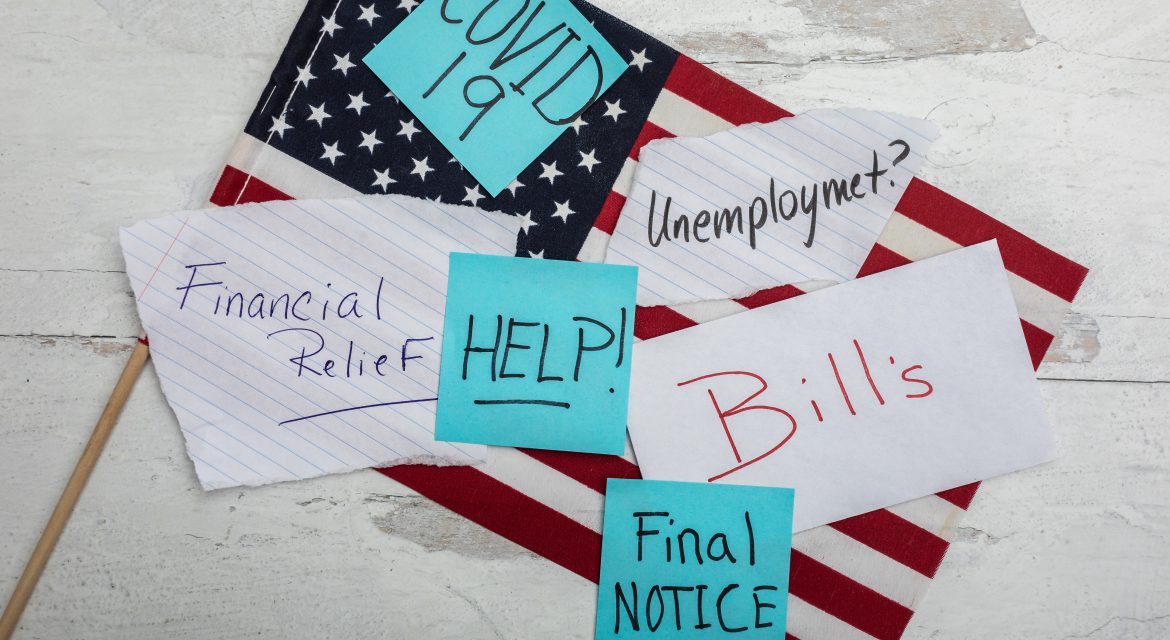
Clermont County residents who have fallen behind on rent and utility payments (except telephone, cable and Internet) due to the pandemic can get financial help through a new program. Last month, the Board of County Commissioners approved a Clermont County Job and Family Services’ contact with Clermont County Community Services to administer the Emergency Rental Assistance Fund. Clermont County received $6.1 million in federal COVID-19 relief funds for renters through the Consolidated Appropriations Act of 2021. Eligible renter households may receive up to 12 months of past-due payment assistance with direct payments made to the landlords and utility providers. Landlords may apply on behalf of the renter with their consent. Funding expires on Dec. 31.
Here, a landlord shares its experience with the program:
Q: Where are Thomaston Woods and Thomaston Meadows located in Clermont County? How many people live there? Ages?
A: Thomaston Woods is located at 1460 Thomaston Drive in Amelia, Ohio off of Amelia-Olive Branch Road. Thomaston Woods is an affordable living community created by the St. Thomas Housing Corporation and is managed by Episcopal Retirement Services. We offer numerous programs, services and activities that empower residents to not only have a greater quality of life now, but also to help them achieve their larger goals in the future.
We have 100 apartments at Thomaston Woods with over 300 residents ranging from newborns to 80+ and everyone in-between. We pride ourselves with being a welcoming community where families support each other.
We also are fortunate to have Thomaston Meadows which houses 13 residents, ages 62 and older for older adults with limited income. The Meadows opened in 2005.
Q: How has the emergency rental and utility assistance program helped Thomaston Meadows?
A: The emergency rental and utility assistance program allows our families to move forward with dignity and integrity. No one was prepared for COVID-19 and what damage it would create. The emergency rental and utility assistance programs have kept families solvent instead of being evicted or becoming homeless. Not only did our residents lose jobs through permanent or temporary layoffs, but a number of our residents became caregivers for family members. With loss of income, the emergency assistance program kept families together while giving the adult residents time to get back on their feet.
We can’t tell you how many times we had families say to us, “I’m used to helping others. I’m not used to asking for help.” Many of the families, who received the grant, were residents who were always timely with their rent payments throughout the years. COVID-19 threw a huge curveball and residents were caught off guard with losing their jobs, being in quarantine, testing “positive” for COVID-19 and or being their children’s teacher.
All of the grant recipients were grateful for this opportunity. This program allowed our residents to stay in their homes and avoid eviction. The money has also allowed them to focus on other important expenses such as car repairs or daily living needs. Some of our residents have returned to work, or have new jobs that give them flexibility.
Q: How many residents benefit from the program – and how? (Please give some examples)
A: Eleven families have been approved and two are waiting for approval. The majority are single or single kinship mothers with children.
The world doesn’t stop when COVID-19 happened. One family stepped-in to provide caregiving services for a much beloved, elderly family member when paid caregivers stopped coming to her home. She was someone in the last stages of her life, and the possible caregivers were concerned with giving her or catching COVID-19. The family member left her job out of love and was able to provide support until the end of this family member’s life.
Several of the families receiving the grant are “kinship,” parents. They are raising other children in addition to their own children. Some are housing their grandchildren and even great-grandchildren. They are not receiving financial assistance for these other members and are used to working to support their family. These families were especially hit hard during COVID-19.
A number of the residents had hours drastically cut, because their business heavily relied on professionals going to their offices. When work became virtual, their services were not required. Not only does this assistance help these residents stay in their apartments, but it also gives them time to decide if they need to move out of their current jobs and into something that could provide more opportunities.
Q: How has COVID affected Thomaston Woods and its residents?
A: COVID-19 has impacted many of our Thomaston Woods individuals and families in an unsuspecting way. Like other Ohioans and US citizens, they were not prepared when shutdowns happened in March 2020. Some residents were permanently laid off from their jobs while others had substantial time eliminated from their work weeks. Others were forced to self-quarantine because a co-worker tested positive for COVID-19. Some were put on indefinite layoffs. There was high uncertainty if they would have a job when companies re-opened. All of these factors resulted in loss of income. Unemployment often took weeks to months for our residents to receive. Consequently, our families were struggling even more to pay their rent, utilities, and daily living expenses.
Many of our families have children. When the schools closed, a number of the parents were forced to take off of work to supervise, support, and assist their children during the virtual school day. Parents were thrown into a role of being their children’s teachers. Parents realized that they needed to budget for breakfast and lunches. Although this is something that many of us might take for granted, meals can make a huge impact on a budget.
Q: How did you hear about the program?
A: Our community manager received the information through Clermont County Job and Family Services. We immediately communicated to our Thomaston Woods families through a group email. We also placed flyers on the residents’ home for several weeks and posted the information in public places and our Community Message Board. Because there was a lot of information that the residents needed to provide, we encouraged families to privately meet with us. In turn, we worked closely with the Clermont County Support Services staff to make sure that families had the required information to qualify. Sometimes it took days and weeks to have everything in place.
When a new program opened up in 2021, LeAnn Townes communicated this information to us. Everyone with this program has been very instrumental with processing the grant money.
Q: Anything else you would like to add?
A: The staff at Clermont County Support Services has been incredibly kind, communicative, and helpful in getting grants though. Their paperwork and requests can be overwhelming. Even so, they are exceptional with their follow-up and making sure that they have what they need from our residents. The staff is very respectful to our Thomaston residents and staff alike. It has been a pleasure working with them.
On the resident side, each resident has worked very hard to get in the information that they need. At first, many residents were a little embarrassed. What this program has taught us all is that are times when we might need help. It’s OK to accept help when times get tough. We truly believe that the residents, who qualified for rental assistance, will pay it forward. Some already have.
-

Do you know Josephine Garis Cochrane from Ashtabula invented first commercially successful automatic dishwasher
by Barbara Kyles
Do you know that Cochrane exhibited her invention at the 1893 World’s Columbian Exposition in Chicago? She won the highest prize for “best mechanical construction, durability, and adaptation to its line of work”.
-

You can buy handmade cards made by special needs students at LHS
by Emily Hicks
For the past several years, students with special needs at Loveland High School have designed hand-made blank greeting cards to gain valuable work experience. We use the money made from the profit of the sales to buy supplies for the room, activities, and often celebrations.
Students design, create, package, and sell these handmade cards to the community and staff members of Loveland. This year we were unable to attend our biggest sales event, The Loveland Craft Fair, due to the pandemic.
The profits from this fair help fund our classrooms and give our students the opportunity to practice social and life skills during outings in our community.
We are looking for new ways to get our craft and our students’ experiences out there.
The community will be able to meet some of our talented students and purchase these amazing cards this Spring at the Loveland Farmers Market. We will have cards available for cash purchase for $2.00 per pack of 4. You can choose from a variety of cards including, happy birthday, thank you, thinking of you, get well soon, tiger paw, and many more.
They are also available for cash purchase through this sign-up Order Form .
We look forward to seeing you again in our community!
-

Do you know: Cornrows were used to help slaves escape slavery?
by Barbara Kyles
Do you know?
Jonathan Ellis reports that slaves used cornrows to transfer information and create maps to the north. Since slaves were not allowed to read or write they had to pass information through cornrows.
Take a look and welcome to Black history…
-

Small Towns Get Ready to Fight Big Oil Over Air Quality in Central Valley
Loveland Magazine is one of the 400 news outlets worldwide, with a combined audience of over 2 billion people “Covering Climate Now”, a global journalism initiative committed to bringing more and better coverage to the defining story of our time.
The initiative, was co-founded by The Nation and Columbia Journalism Review
Mihaela Manova is “Covering Climate Now” in Loveland, Ohio as an editor for Loveland Magazine

In today’s Covering Climate Now story, Ingrid Lobet for Capital & Main writes about the current fight in preservation of the air quality in Central Valley.
According to their website, “Capital & Main is an award-winning journalism nonprofit that reports from California on the most pressing economic, environmental and social issues of our time.” Permission for republishing from the Covering Climate Now newsletter.
Published on
By Ingrid Lobet in Capital & Main
Oil and gas producers could find themselves increasingly on the defensive in California now that two communities near the heart of the state’s largest concentration of oilfields have won inclusion under its community air protection law on Thursday.
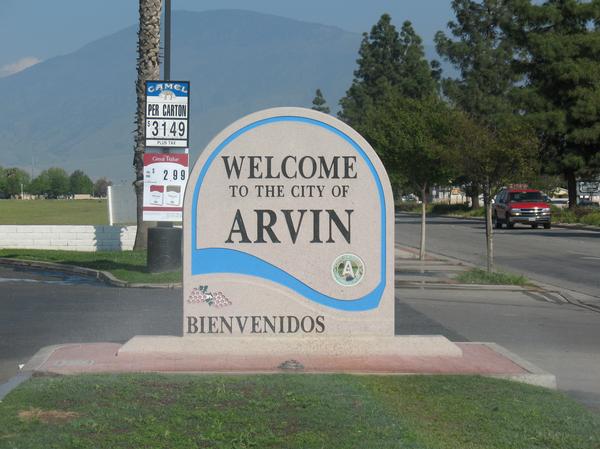
Residents of Arvin and unincorporated Lamont, both in rural Kern County, have been organizing for three years with the goal of gaining status under Assembly Bill 617, a law intended to force California’s regional air pollution districts and Air Resources Board to share power with communities and reckon with their priorities. All members of the Board save one voted for the inclusion of Arvin and Lamont after hours of public testimony Thursday night.
The prospect of having a voice in the environmental protection of her community is gratifying to Estela Escoto, president of the Committee for a Better Arvin. “We have a lot of respiratory illness,” she said in Spanish. “I’m really pleased, especially for all those who are sick with cancer.”
Arvin and Lamont suffer some of the worst air pollution in a state that routinely tops the list nationally for smog and soot, elevating their candidacy for the special designation above more than 200 other communities in the state. The pollution comes from oil and gas wells, refineries, agriculture, heavily trafficked highways and cities upwind.
“Oil will be a top priority,” said Byanka Santoyo, a community steering committee member, organizer with the Center on Race, Poverty & the Environment and resident of Arvin. She estimates she has attended more than 100 meetings held for neighboring communities who are two years ahead in the process. Santoyo recently took a meeting outside and panned her phone across the horizon to show officials the mountain landscape she loves, but often cannot see due to the smog.
“This is huge. If the Legislature and Air Resources Board are serious, then we are going to tackle the issue of oil and gas. But exactly how?”
— Juan Flores, Central Valley community organizer
The process for setting community priorities can be grueling, with long hours in night meetings after work. But leaders with the Committee for a Better Arvin and Comité Progreso de Lamont and other groups have been putting in those hours so they can learn how best to use the law when their own turn comes. “We have people ready to work in Arvin and Lamont,” Santoyo said.The fact that a community in the heart of California’s oil country will have a say in how money is spent to address pollution is significant. “This is huge,” said Juan Flores, who has been organizing in the Central Valley for eight years on climate, oil and gas. “That is where the community gets excited. If the Legislature and Air Resources Board are serious, then we are going to tackle the issue of oil and gas. But exactly how? Are we going to get setbacks of no less than 2,500 feet, or does it mean we are going to shut them all down? What exactly is it going to look like?”
Flores is referring to an effort to put greater physical distance between residents and oil and gas wells. This setback issue is playing out statewide, and Arvin has already been at it for years. Oil wells can leak carcinogenic chemicals like benzene, and some wells are powered by internal combustion engines that give off exhaust.
The Committee for a Better Arvin was originally focused on clean water, pesticides and manure. But in 2014, it shifted to oil and gas after people were sickened by a leaking pipeline. The group has fought the oil industry several times since.
* * *
The California Independent Petroleum Association says it is not an adversary in these communities. Sabrina Lockhart, vice president for communications, said companies pay millions of dollars in fees each year that are reinvested in programs that advance California’s priorities for clean air and greenhouse gas emissions reductions. “Other AB 617 community monitoring programs in oil and natural gas bearing areas have shown no adverse impacts as a result of responsible production, proving that California’s strictest on the planet environmental protections are working,” she said in a statement.
Oil in Kern County goes back 150 years, if you count the kerosene and asphalt that preceded the gushers. It is the center of California production, accounting for 70% to 80%. But production has been falling for years, and money for local government with it. Declining assessed value of oil properties means that where oil companies contributed 33% of all property taxes in 2010, that fell to 16% in 2019.
Central Valley residents expect Kern County to push back against oil industry regulation. When Shafter residents proposed a 2,500 foot distance between people and wells, the county opposed it.
Despite the production declines, oil companies remain the largest contributors to Kern County discretionary spending, according to the assessor’s office. Chevron was its highest taxpayer in 2019, with $64 million paid on assessed value of $5.6 billion on oil land.Now the county is lurching into the energy transition. A 2018 article in the Bakersfield Californian called Kern the Wind Turbine Capital of the World. The county website says it is “quickly becoming the renewable energy center for California.”
But Valley residents expect the county to push back against regulation of the oil industry. When residents of Shafter advocated for the 2,500 foot distance between people and wells, the county submitted a letter opposing it. The county is currently engaged in a fight over a blanket permit it granted to drill up to 70,000 more wells.
Arvin and Lamont will not be the first communities located near oil facilities to gain negotiating power under AB 617. Richmond in the Bay Area is a refinery community. And the Wilmington-Carson-West Long Beach area is close to four refineries plus still active oil wells. That community negotiated a 50% reduction in volatile organic compounds — a type of pollution — in 10 years. Residents of Shafter raised concerns about the issue of air pollution from oil production and related processing, but much of their time was spent in a lengthy fight at several levels of government over whether the law protected them from pesticides, which were also a community priority.
“The entire month of January all you see is smoke” from burning vineyard and orchard waste, says Jesus Alonso, who grieves that he often can’t take his son outside.
If the aim of AB 617 is to give residents a seat at the table, across from them at that table will be employees of the San Joaquin Valley Air Pollution Control District. They will spend many dozens of hours in meetings together. Jaime Holt, chief of communications for the district, said her agency backs the addition of Arvin and Lamont, “assuming there are resources to support the programs,” as there have been for the three other communities under its jurisdiction — Shafter, Stockton and South Central Fresno. The air agency has received $12 million per community to initially implement the law, plus $35 million to carry out the air pollution actions the community decides on.Arvin and Lamont are beset by other kinds of air pollution as well, which might even surpass fossil fuel production and refining among the communities’ priorities. The towns are surrounded by agricultural fields, increasingly almonds. Growers use special machines that grab the trunks of the almond trees at harvest time and sharply vibrate them, sending up clouds of ash, soot and dust — whatever has fallen from the Valley’s blurred sky over the last year.
Then there is the burning. “The entire month of January all you see is smoke,” Jesus Alonso, a lifelong resident of Lamont said. It grieves him that he often can’t take his son outside, describing a persistent, nauseating stench from the refinery nearby. “What I am most excited about is that our children in the community will be able to spend more time outside without increasing their risk of lung or cardiovascular issues.”
This story has been updated to reflect the results of Thursday’s Air Resources Board meeting.
Copyright 2021 Capital & Main
-
Take a look: Cincinnati’s Black Brigade
by Barbara Kyles
Do you know about the Cincinnati’s Black Brigade?
The Voice of Black Cincinnati writes:
A local judge, William Martin Dickson, visited the various regiments’ camps and removed the black men who had been seized. Organizing the men along military lines and christening them the Black Brigade.
Take a look and welcome to Black history…
-
Take a look: “Cincinnati Cobra”
by Barbara Kyles
Do you know about the “Cincinnati Cobra”?
Ezzard Charles (1921-1975) was Cincinnati’s only World Heavyweight Boxing Champion.
Take a look and welcome to Black history…
“Total Fighter,” is a narrative, nonfiction podcast about Ezzard Charles, Cincinnati’s heavyweight champion, and hosted by Loveland native Ricky Mulvey. The podcast shines a new light on the underrated Cincinnati Cobra; the “greatest light-heavyweight of all time”. The series follows Charles to his match against Joe Louis, and the characters who followed him– his family and the mafia.
“Total Fighter” features interviews and stories from Buddy LaRosa, founder of LaRosa’s Pizza, William Dettloff, author of “Ezzard Charles: a Boxing Life,” Frank Wettencamp, one of Ezz’s high school classmates, and more. This show explores his complex character; why the name “Ezzard Charles” became an insult by Frank Sinatra and an inspiration to the composer George Russell.
Mulvey found archived sound bites of some announcers that will take you ringside.
You can listen to episode one below.
Total Fighter available wherever you listen to podcasts.
-
Did you know this about Black History?
by Barbara Kyles
Do you know this about the Bombing of the 16th Street Baptist Church in 1963?
Deana Wright tells us, “Sarah was in the bathroom with Addie Mae when the bomb exploded in the 16th Street Baptist Church, in Birmingham, Alabama on that Sunday in 1963. She lost her right eye and was hospitalized for two months after the bombing, forcing her to miss her sister’s funeral. 56 years later she is still paying doctor bills, resulting from her eye injury.”
Take a look and welcome to Black history…