Sadness In Ukraine by David P Carroll

My heart aches today
And it's just war and
Sadness all day and
Nobody knows it's painful
But me oh yes me
And sadness in our eye's
As our little children cry
All through the cold dark lonely
Night and snow is falling tonight
And a bitter chill in the air and the
And the worst pain is yet to come
And I want to cry tonight but
I'm holding my baby so tight
And there's no longer any more
Tears to roll down my sad
Lonely old face and
I'm in a horrible blown up
Place and it's just war and
Destruction disaster and hate
And I've sat and cried and I'm
Holding my baby so tight as my
Loved ones died tonight
And Lord Jesus Christ
I want to break
Free and move on
But sadness lives on
And we are drowning in a
River of blood and we
Can’t catch our breath
And a lonely tear rolls down
My baby's face
We are already dead
In this blown up sad lonely place.
Author: Contributed
-

Sadness In Ukraine: a poem by David P Carroll
-
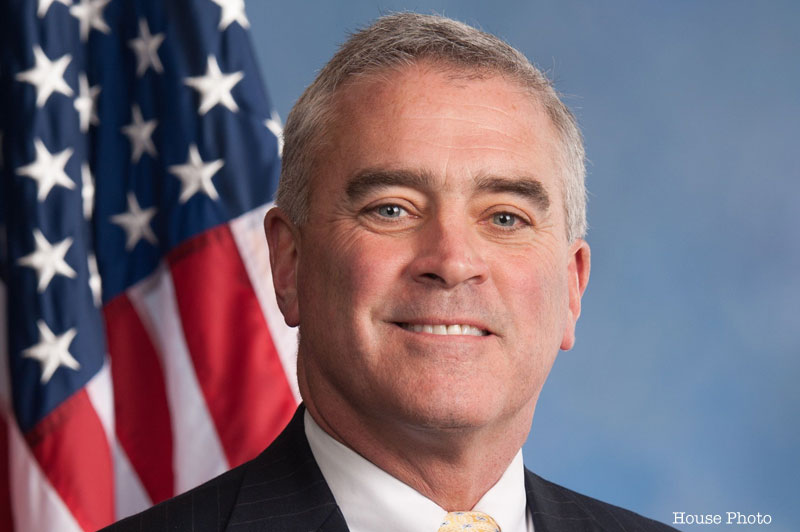
Brad Wenstrup on Humanitarian Aid to Ukraine
Dear Friends,
As the unprovoked Russian invasion of Ukraine continues to target and kill innocent Ukrainian civilians, the United States must continue to act to help the Ukrainian people defend themselves and their nation’s sovereignty and freedom itself. Congress recently approved funding for humanitarian and military aid for Ukraine, and we are working with our NATO Allies and international partners to impose severe costs on Russian President Putin and his government, as well as distribute much-needed humanitarian aid, weapons, and assets to the Ukrainian military. The work is not done.
As the fighting continues, many Ukrainians still in Ukraine are trapped in bomb shelters, basements, and subways where they have limited access to food, water, and medicine, among other necessary supplies.
Previous agreements between Russia and Ukraine to guarantee humanitarian aid delivery into Ukraine have so far proven to be unreliable, as Russian shelling continues to destroy roads and endanger transportation routes. Additionally, U.S. intelligence warns that the Ukrainian capital of Kyiv could run out of food and water in the coming days.
Recently, I joined my colleagues on both sides of the aisle to urge President Joe Biden and his administration organize an international humanitarian aid airlift to quickly deliver urgently needed non-military supplies, such as food, water, and medicine, to the Ukrainian people. CLICK HERE to read the full letter.
Along with providing military assets, the U.S. and our Allies can act to save more lives in Ukraine without without endangering Americans. While Russia has stepped up the brutality of their war against Ukraine with deadly attacks against civilian infrastructure – including a maternity hospital, members of the press, and thousands of innocent civilians, the U.S. and our allies must provide humanitarian aid.
-

Kasie West’s Sunkissed is a Summer Must-Read!
by Mahi Sheth
Summer is coming up quickly meaning it’s time to start planning your reading list! For those who enjoy reading a great novel while laying in the sun, I’ve got the perfect Young Adult (YA) romance novel by Kasie West to keep you company.
Sunkissed is a contemporary romance novel about a girl named Avery. Avery, who has just started summer vacation, comes across a whole slew of problems unexpectedly! From dealing with a betrayal from a best friend to two months with no wifi to having a crush on a mysterious, frustratingly charming guy named Brooks who happens to be off-limits, Avery’s entire life gets turned upside down. When Brooks offers Avery a chance at finding out what she wants and who she wants to be, she finds that falling in love isn’t so bad after all.
In the novel, West manages to capture both the problems teens face and the reaction one would feel after being betrayed by a best friend. Sunkissed is a coming-of-age novel that I would highly recommend to anyone who enjoys reading about young teens finding their place in the world, guys who have a talent for music, and those with a passion for love!
If you think Sunkissed sounds interesting, here are a few similar novels by Kasie West and other authors:
The Upside Of Falling by Alex Light
Seventeen-year-old book-lover, Becca believes in true love and fairytales while Brett, the captain of the football team, just wants to get through high school without a girlfriend distracting him. When Becca gets caught in a lie, Brett helps her out. A fake relationship should be easy, right? That’s until Becca and Brett’s true feelings come into play! (Cover provided by Amazon)
Maybe This Time by Kasie West
A small-town girl named Sophie wants to go to the big apple to pursue her dream of being a fashion designer. While Sophie is working hard to earn money in Rockside for college, she meets an arrogant rich boy who happens to be staying in there for an entire year. Fireworks explode when these two are together! Can Sophie and Andrew play nice after attending several Rockside events together? (Cover provided by Goodreads)
The Distance Between Us by Kasie West
Cayman and Xander, who have no inclination of what their future holds, are from different sides of the track. In order to figure out what they want to do, they decide to designate every Saturday as “career day.” As Cayman and Xander become closer, Cayman wonders if they can be together even though they are from different worlds. Will money trump true love? (Cover provided by Goodreads)
ABOUT THE KASIE WEST
Kasie West lives in Central California with her husband and four kids. She graduated from Fresno State University with a BA degree in Elementary Education. West has published several YA novels taking home an award for Best Novel for one of her YA novels, Pivot Point, in 2013.
-
Why Arcade Fire’s “The Suburbs” is all That and a Bag of Chips!
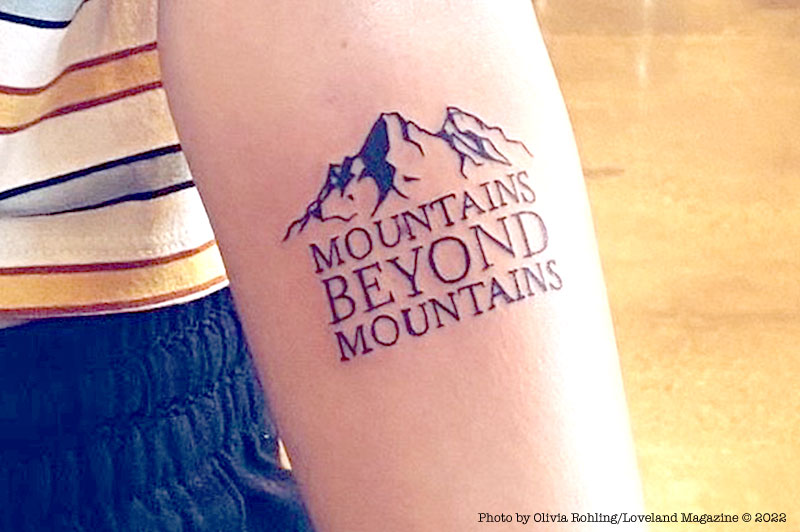
The tattoo on my left forearm is inspired by the 15th song on the album, “Sprawl II (Mountains Beyond Mountains).”
Olivia Rohling by Olivia Rohling
We all have a favorite album. You know the one I’m talking about. It’s that one album that you can listen to for days on end and never get sick of it. For me, that album is Arcade Fire’s The Suburbs.
This is the third album released by the Canadian Indie-rock band, following Funeral (2004) and Neon Bible (2007). Arcade Fire is made up of husband-and-wife duo Win Butler and Régine Chassagne, Win’s younger brother, William Butler, Richard Reed Parry, Tim Kingsbury, and Jeremy Gara.
The Suburbs speaks to what it’s like growing up living in suburbia, and how comforting yet isolating that feeling can be.
“Will and I were born in a really small town in Northern California, kind of near the Nevada border,” Win Butler said in an NPR interview, “Like you know maybe 50 people on the side of a mountain. We moved to the suburbs of Houston when we were young.”

Arcade Fire’s The Suburbs is the third album released by the Canadian Indie-rock band, following Funeral (2004) and Neon Bible (2007.) Image courtesy of The Alternative. The album begins with the song, “The Suburbs,” which talks all about suburban living. Key lyrics such as, “In the suburbs, I learned to drive,” and “But in my dreams, we’re still screaming and running through the yard,” allow the listener a chance to feel what it’s like to live a “suburban” lifestyle. Not to mention the ending of “The Suburbs” blends seamlessly into the beginning of the next song, “Ready to Start” which is just plain awesome sauce! The song is sure to give your eardrums butterflies!
Many songs on the album seem to purposely blend into one another. “Empty Room” blends into “City with No Children,” “Half Light I” blends into “Half Light II (No Celebration),” “Month of May” blends into “Wasted Hours,” and “We Used to Wait” blends into “Sprawl I (Flatland).” Talk about satisfying! The album is so well done that you won’t get sick of listening to all 5,316 minutes of it over and over again like I continue to do to this day (thanks, Spotify Wrapped)!
“Sprawl II (Mountains Beyond Mountains)” is my personal favorite song on the album. My proof of loving the song is located right on my left arm where I have a tattoo that says, “Mountains Beyond Mountains.” The song really is just that good! Arcade Fire’s Régine Chassagne is Haitian, so the band strategically used the term “Mountains Beyond Mountains” because it comes from a Haitian proverb that means “beyond mountains, there are more mountains.” I look at the Haitian term on my arm and it always gives me the feeling that opportunities are inexhaustible and when you surmount one great obstacle in your life you merely gain a clearer view of the next one.
In “Sprawl ll,” Régine sings “Sometimes I wonder if the world’s so small, can we ever get away from the Sprawl?” This lyric goes back to the theme of growing up in suburban sprawl and wondering if there is more to life than suburbia.
If you would like to not only listen but feel the meaning of “Sprawl ll (Mountains Beyond Mountains)” you can listen to the band’s 2011 Coachella performance of this song below. Disclaimer: every time I watch this performance it brings me tears!
The Suburbs by Arcade Fire puts suburban living into music form and does so in a way that will make you want to get up and dance! That, my friends, is why this album really is all that and a bag of chips.
My top three favorites songs from The Suburbs:
- “Sprawl II (Mountains Beyond Mountains)”
- “Deep Blue”
- “Modern Man”
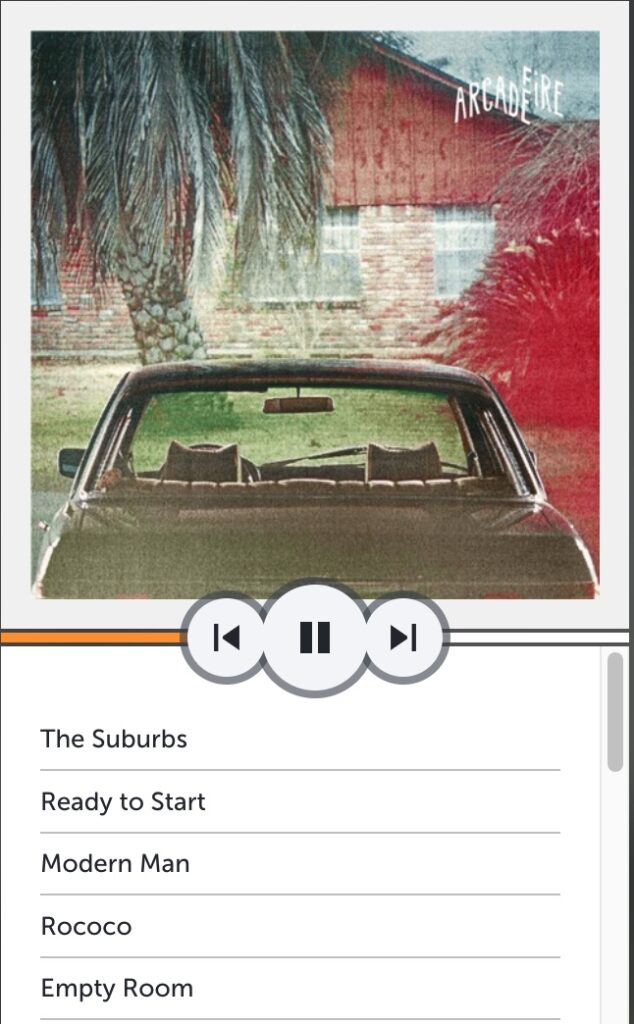
Click this image to hear samples of my three favorite songs on the album. -
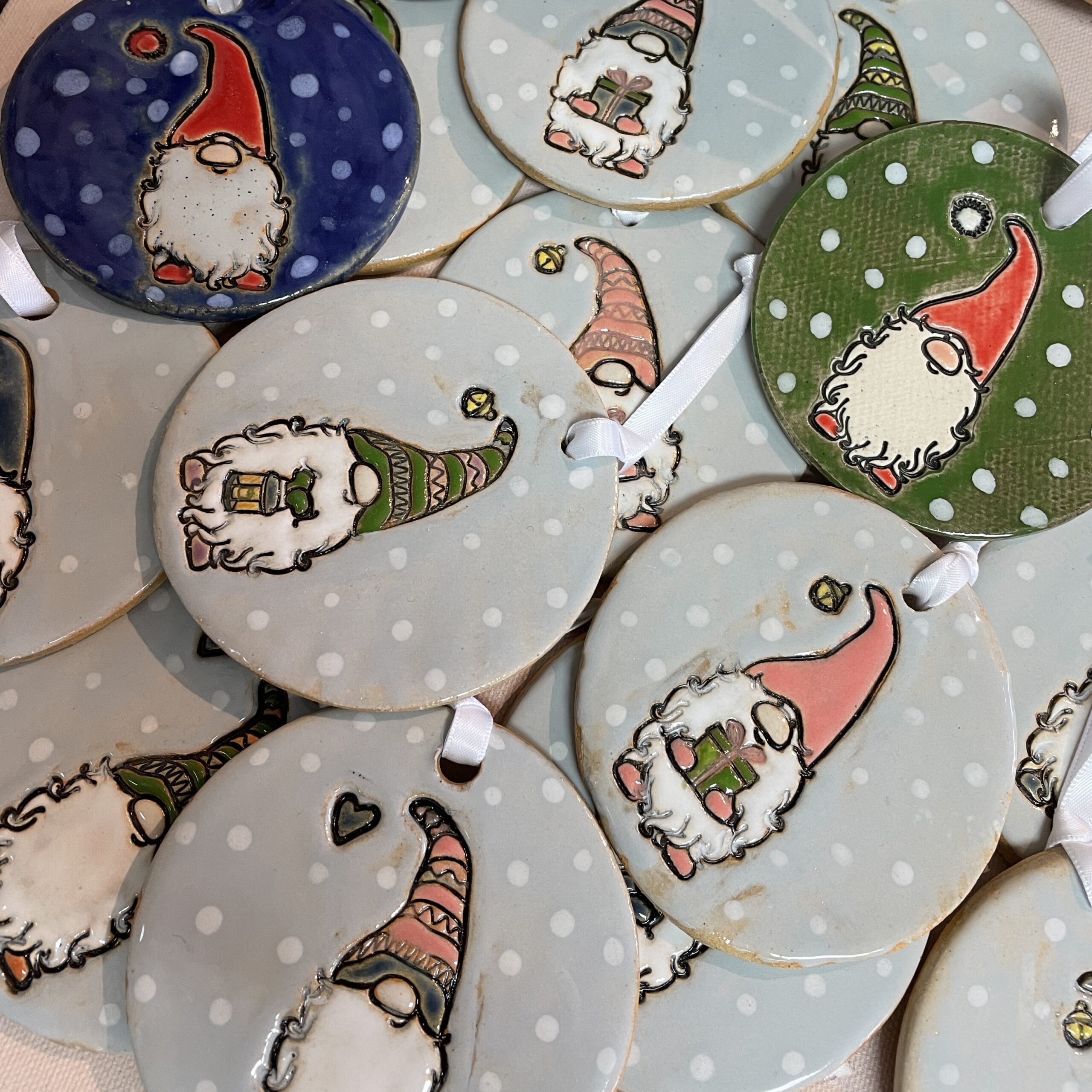
Whistle Stop Clay Works is participating in Christmas in Loveland
Promoted Post
Loveland, Ohio – Whistle Stop Clay Works (WSCW) is participating in Christmas in Loveland happening Saturday, December 18 from 4 until 8 PM in Loveland, Ohio. The event, which draws thousands of residents, highlights the giving spirit of local businesses all over Loveland.
Whistle Stop Clay Works will be giving away 400 undecorated “gnome” ornaments to children who stop by the studio at 119 Harrison Avenue. The clay ornaments can be taken home and decorated with paints, markers, and glitter.
“Christmas in Loveland is an opportunity for our studio to show appreciation to the people of Loveland for the support we have received from the community. We will also be having a raffle and giving away pottery to two lucky winners, ” says Tim O’Grady, studio co-owner.
The WSCW studio will also be selling artist decorated gnome ornaments for ten dollars with 100% of the purchase price benefiting the League of Animal Welfare. “We are excited to partner with the League of Animal Welfare this year. They are an invaluable advocate for homeless animals and have been operating for over 70 years,” says studio manager Bonnie McNett. Additional information about this non-profit can be found at: https://www.lfaw.org.
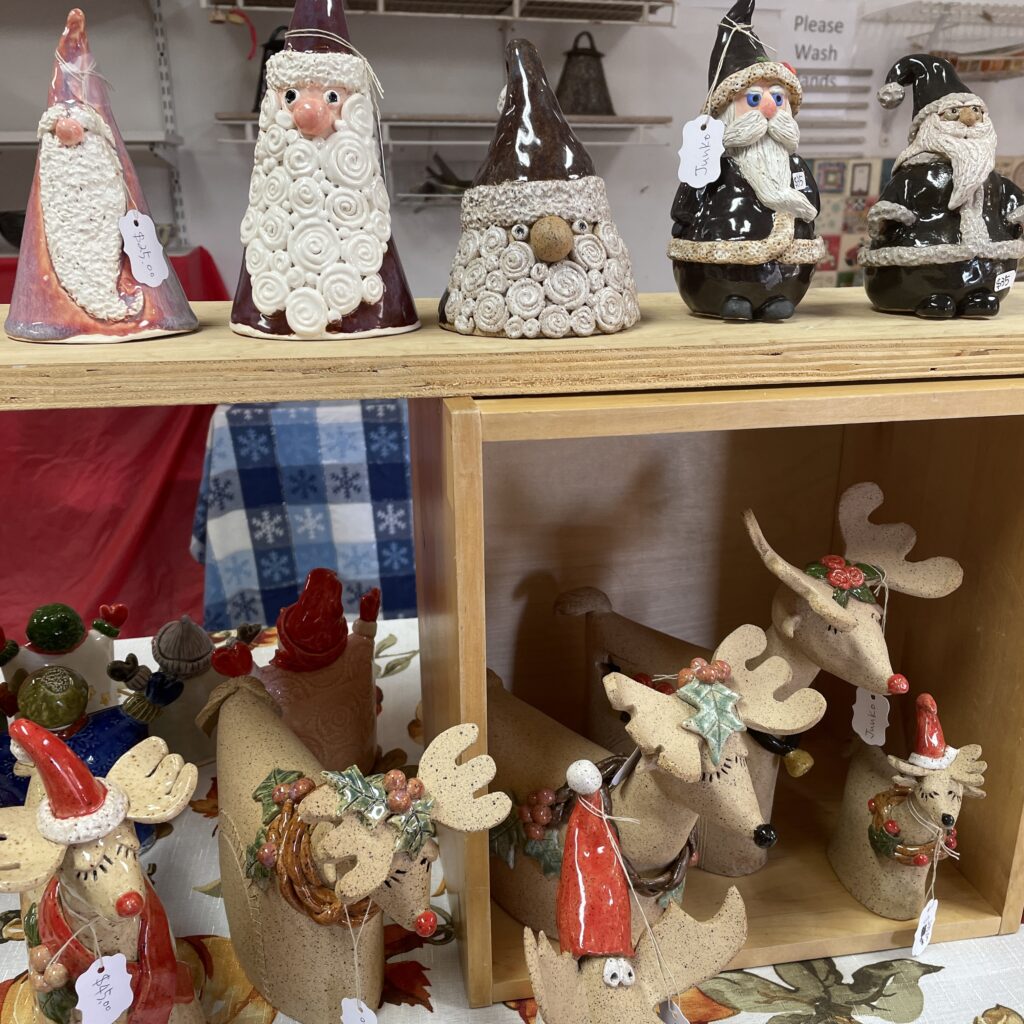
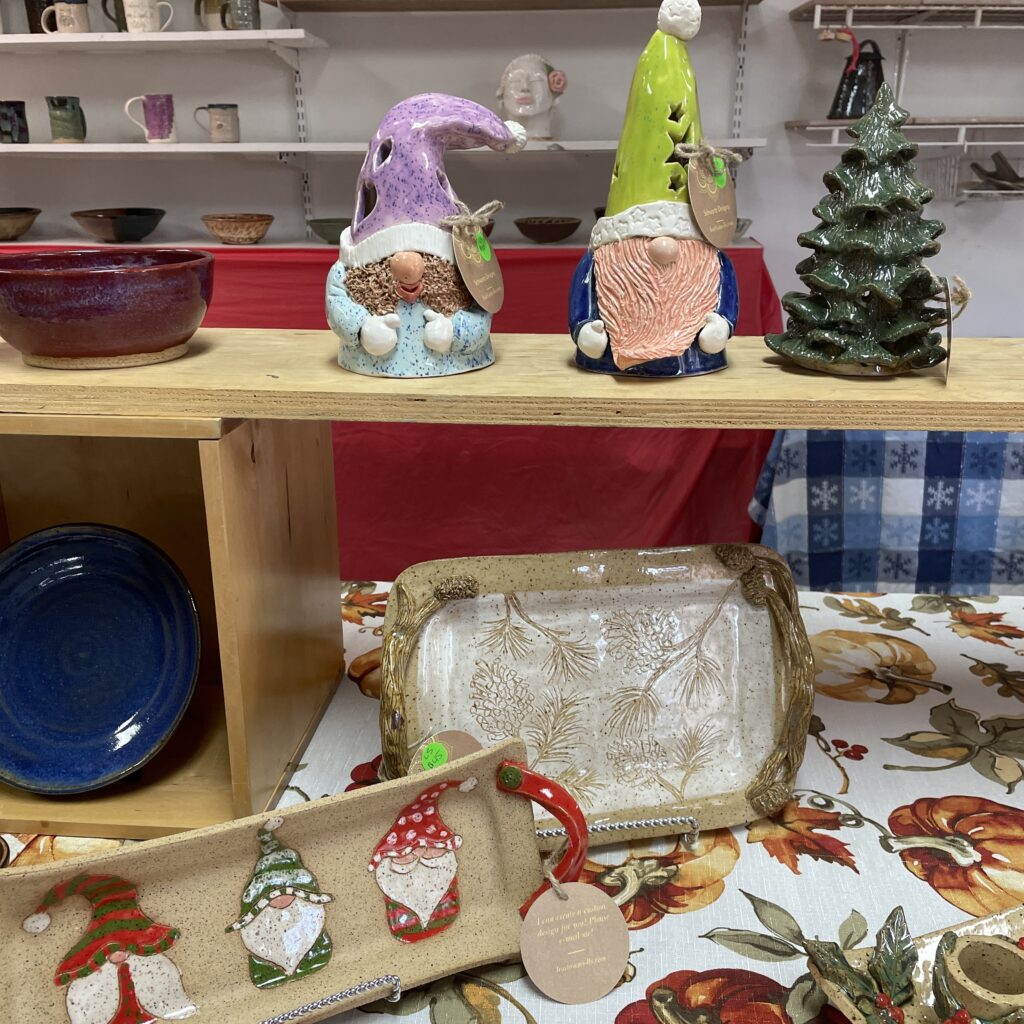
In addition, the studio will have a special sale for those shopping on this festive evening. The gallery will be stocked with mugs, serving and soup bowls, platters and plates, chip & dip servers, sculptures, wall hangings, whimsical fairy houses and holiday decor and ornaments. Christmas in Loveland is happening Saturday, December 18 from 4 until 8 PM.
WSCW is located at 119 Harrison Avenue, in historic downtown Loveland, Ohio. Parking is free. Additional information can be found at https://lovelandmagazine.com/christmas-in-loveland-is-december-18/ or by calling the studio at (513) 683-2529.
-
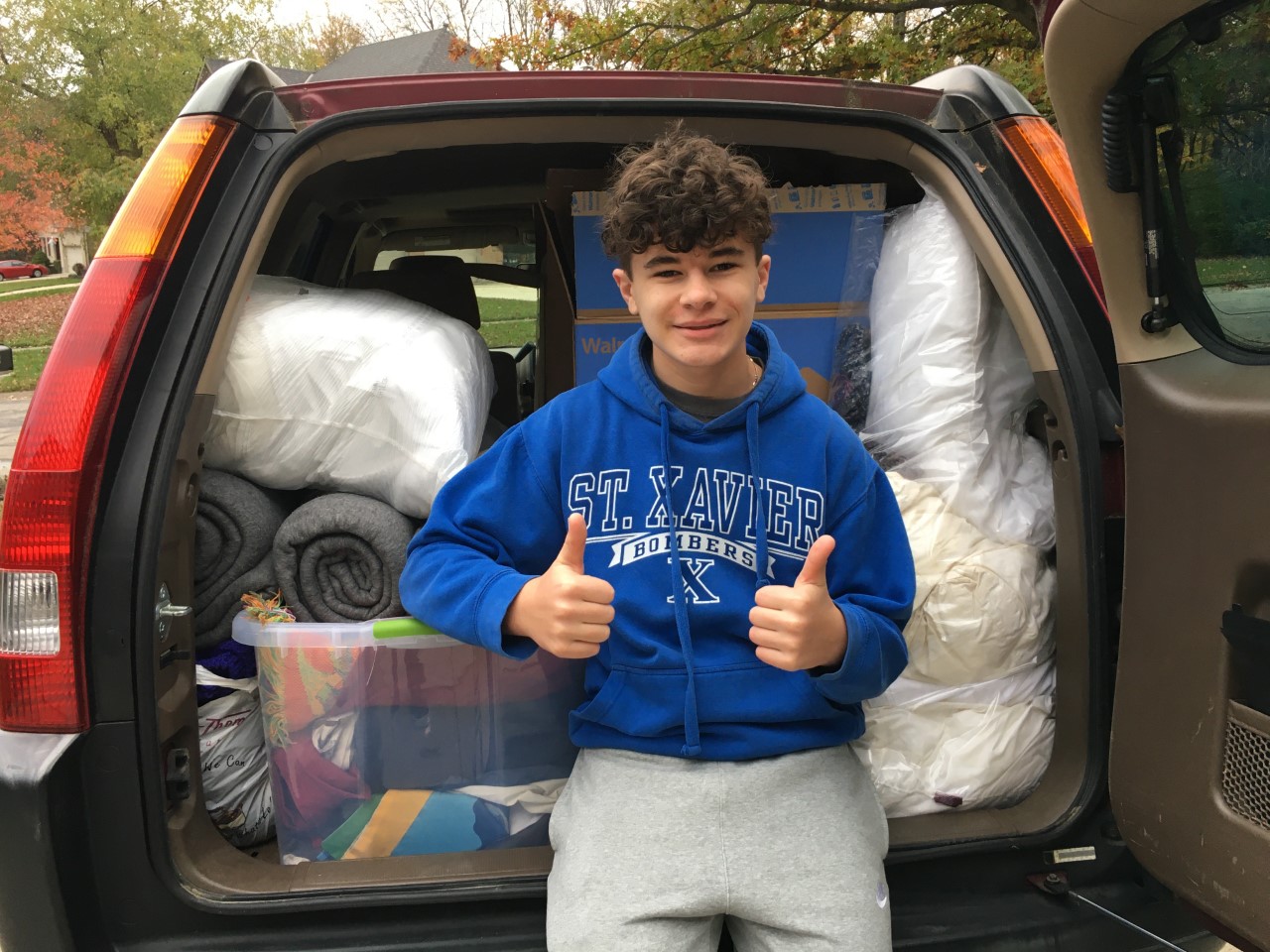
Loveland teen launches blanket drive for Cincinnati’s homeless at age 12, raises $11,000 and distributes 1100 Blankets over 5 Years
Loveland, Ohio – At just 12 years old, Gianpaolo Scheve launched his own organization to raise money to purchase blankets for Greater Cincinnati’s homeless as well as collect used blankets. Now 17, Cincerely Blankets is rounding out its 5th year and endeavors to raise $5,000 and donate more than 500 blankets this year alone.
Scheve started Cincerely Blankets in 2017 after hearing that a homeless man froze to death at a bus stop. He jumped into action right away to prevent this from happening to anyone else. In its inaugural year, Cincerely Blankets raised $1,000 to purchase more than 100 blankets. He distributed them to the 3rd Street Homeless Encampment, through Maslow’s Army Sunday Outreach program and to shelters in the downtown Cincinnati area.Now in its 5th year, Scheve’s organization has raised more than $11,000 and donated 1100 blankets to those experiencing homeless in the Cincinnati area. His mission remains the same: Collect new or gently used blankets or collect contributions to buy new blankets and distribute them directly to the homeless. He continues to raise funds through his neighborhood, church and company blanket drives as well as social media campaigns. He distributes blankets to shelters and half-way houses like Shelterhouse, City Gospel Mission and St. Francis-St. Joseph’s Catholic Worker Home; to organizations like Excel Development who provide housing to the homeless who are chronically mentally ill; to homeless encampments; and through Maslow’s Army outreach.
The community can find more information and donate at CincerelyBlankets.com or through the Cincerely Blanket Facebook page.
Scheve is a junior at St. Xavier High School and aspires to major in Industrial Design in college. He resides in Loveland, Ohio with his parents and sister. -
Economists pan stadium construction as economic development
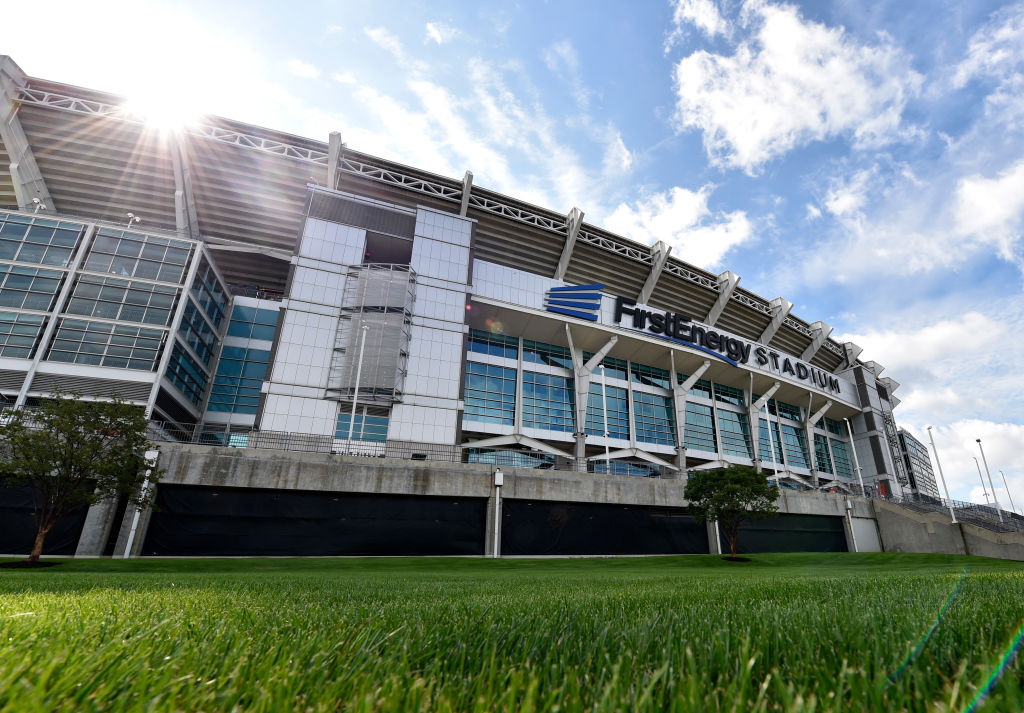
Most major American cities have likely been through some version of this: A sports team is promising to come or threatening to leave and the key is construction of a new stadium. And while the teams’ owners usually are millionaires or even billionaires, they demand big subsidies from taxpayers to complete the project.
When skeptics ask what public purpose is served by plowing public money into these cavernous edifices, the response almost always is that it will be good for the local economy.
That’s false, a panel of Ohio economists surveyed on the matter overwhelmingly responded last week. In fact, just two of 23 respondents said the economic benefits of publicly funded stadium projects outweigh the costs, according to the survey, which was conducted by Scioto Analysis.
“Sports is a business,” Baldwin Wallace University economist Kay E. Strong, wrote in the comment section accompanying the survey. “Stadiums are the ‘factory.’ Businesses operated for profit should be self-supporting.”
Ohio is no stranger to this debate.
Paul Brown Stadium, home of the Cincinnati Bengals, opened in 2000. By 2011, with the U.S. economy creeping out of the Great Recession, local governments across the country were looking at cutbacks like layoffs as tax revenues remained low and federal stimulus funds were running out.
Hamilton County faced a $30 million shortfall and stadium costs were soaking up 16.4% of the budget. The Wall Street Journal called it “one of the worst professional sports deals ever struck by a local government.”
Columbus also has seen stadium controversies. Under threat that the Major League Soccer team the Columbus Crew would decamp for Austin, Texas, the city government proposed to help build a new stadium downtown.
Reporting by The Columbus Dispatch showed that the city dramatically underrepresented the cost to taxpayers for work related to the soccer stadium and that government authorities were providing little oversight of how the funds were spent.
In any case, the $300 million project will sit idle much more than it’s in use.
According to its 2021 schedule, the Crew played just 17 home games this season. With the Columbus Clippers scheduled to play 72 home games next season and the Blue Jackets scheduled to play just 28 in the current one, it’s easy to see why the Arena District so often seems empty.
In terms of money, publicly funded stadiums don’t pay for themselves, said economist Robert Gitter of Ohio Wesleyan University.
“In general, they are a losing proposition for the city in economic terms,” he wrote. “As to whether it is money well spent for something the citizens want, that is another story but there is not a net dollars and cents benefit.”
But economist David Brasington of the University of Cincinnati said stadiums can bring less tangible benefits.
“It’s national advertising for a city and promotes social cohesion,” he commented.
But Kevin Egan of the University of Toledo pointed out that if a city’s residents didn’t spend their entertainment dollars at sports stadiums, they’d spend them somewhere else nearby — and he said there are more economically useful ways to spend tax dollars.
“Local economic impact is tiny since if (there is) no stadium/team citizens spend elsewhere,” he wrote in his comments. “More important is that there is MUCH better use of taxpayer dollars to subsidize education, walking paths, expanded public parks, better transportation infrastructure; all local things that actually boost local productivity.”
-

Journalism in middle America got communities through the pandemic
Stock photo from Getty Images.
EDITOR’S NOTE:
We are pleased people are now researching the Pandemic and how local newspapers survived. Some didn’t. Loveland Magazine did survive, and it was pure everyday persistence, sacrifice, and a dedication to staying alive (literally), and as a local Newspaper. We were early declared “Essential Workers” however that declaration did not provide us anything as the designation was quickly ignored at every level of government when they dolled out relief dollars and the help they could have provided. We stood in line with everyone else at the chance to apply for PPE funds, etc., and at times we were at the back of the lines for eligibility. We were still standing when our own City bought new high-tech water fountains with the COVID relief funds they received. Much of what you read here though is how we did it. What this story misses is an incredible effort it took for local papers in smaller communities to find accurate specific COVID 19 data in a hometown like ours that is in three counties with each county reporting in different formats and on different days of the week.
By William Thomas Mari, Louisiana State University
News of the pandemic’s devastating effect on journalism was conveyed by headlines across the nation telling of newsroom closures, layoffs and furloughs.
Journalism was in trouble in 2020. In fact, it had been in trouble for a while.
But how did so many local news organizations – especially newspapers – manage to survive the pandemic? Weeklies beefed up their daily online news coverage, business models were blown up and existing rationales for why journalism matters became more than theoretical to rural journalists.
Their determination to survive and serve as a public health lifeline for their communities fueled an oral history project that my colleague Teri Finnemanand I conducted, interviewing 28 journalists across seven states in the middle of the country. We learned how locally owned and family-owned newspapers made it through COVID-19.
“There’ve been times that we’ve had to reach out to mayors and different cities and communities across the state … to make sure that … they knew that [journalists] were deemed essential workers,” said Ashley Wimberley, executive director of the Arkansas Press Association. That label exempted news workers from stay-at-home orders and designated them as critically needed by their communities.
There were no easy answers. Not in Louisiana, where I teach journalism at Lousiana State University. Not anywhere.
Telling the history
Oral history grabs the first impressions of history for those living now, looking back at what just happened. It helps people understand the present and how to move forward, out of a crisis. But it also records events for scholars and citizens in the future.
“Always remember that when you’re putting those stories in your newspaper, that you are printing your community’s history,” Amy Johnson, the publisher of the Springview Herald in Nebraska, told us.
Benny Polacca of the Osage News in Oklahoma told us something similar: He encouraged journalists covering some future pandemic to “do your due diligence in order to come to some type of understanding, some type of argument, some type of focus, if you were going to be reporting or researching the time of COVID-19.”
Often, it’s journalism on the coasts that gets the attention of researchers. The New York Times, The Washington Post, the Los Angeles Times – these big news organizations are written about constantly.
By talking to journalists in North Dakota, South Dakota, Nebraska, Kansas, Oklahoma, Arkansas and Louisiana, our project pushed back against this tendency to ignore the middle of the nation and its important journalism. As a kind of new essential worker, journalists found themselves in charge of explaining complicated guidance from state and local officials about COVID-19, how schools would work and where to get help.
“I hope that, through this, that our role as journalism, they [the public] realize how important it is that the information we put out, you know, how it affects them every day,” Johnson said.
Kansas Press Association Executive Director Emily Bradbury had a message for these journalists who were working for news organizations increasingly threatened with being shut down: “I want them to know that in the midst of an emergency, in the midst of what can seem like a hopeless situation, when they look at their financials, that what they’re doing is important. And what they’re doing matters, and that no one else can do what they do, and they look out for their communities like no one else.”
Emily Bradbury, Kansas Press Association Executive Director, tells reporters that ‘what they’re doing is important. And what they’re doing matters…and they look out for their communities like no one else.’ Will Mari and Teri Finneman, Author provided photo. Loans, side hustles and deals
Reporters and editors found new ways of paying the bills. That meant accepting government subsidies in the form of Paycheck Protection Program loans. It meant, for some, going door to door and asking readers to subscribe, or keep subscribing. It meant consolidating newspapers, putting out more online editions, or taking pay cuts.
“People just don’t understand. It costs a lot of money and time to do this, and I just wish we – there was more value or people appreciate it or understood the value and the cost of really providing this service,” said Bonita Gooch, the publisher of The Community Voice, a Black newspaper based in Wichita, Kansas.
Some publishers took on side hustles to bring in revenue, creating ad copy for local business or doing marketing work.
At The Kingfisher Times & Free Press in Oklahoma, for example, Christine Reid, the paper’s editor, created ads for a local vocational-technical school. “I’ve also tried to use that as an avenue to … generate more ads for the newspaper,” Reid said.
Some papers worked out advertising deals with local businesses as consumers shopped more locally.
Local publishers did whatever it took to stay afloat. As some of our initial findings have shown, that showed both opportunity and hesitancy about change.
“We’re gonna have to rely less on advertising revenue and more on subscription revenue, and so we’ve got to make sure we’re offering a unique product that they want to pay for,” said Letti Lister, the president and publisher of the Black Hills Pioneer in Spearfish, South Dakota.
We saw tentative signs of hope, as journalists got financial and moral support from their readers during a fraught election. “If anything, it’s rallied the troops, if you will, in our community because they trust us, they know that we’re going to report the news in a timely manner and keep the public up to date,” said Amy Wobbema, publisher of the New Rockford Transcript in North Dakota. Arguably most coverage was calm and steady.
But there was still hesitancy over what newspapers had to do to adapt. Some journalists are uncomfortable with receiving government funding and would rather rely on community support.
As South Dakota Newspaper Association Executive Director Dave Bordewyk put it: “Sort of, ‘Look, contribute to our newspaper … because if you value that importance of local news and journalism, then we need your support beyond just subscribing to the newspaper or advertising, which has gone away.’”
Ultimately, the pandemic showed that more research needs to be done on journalism in rural areas – we managed to talk to only a fraction of the total number of small-town journalists and publishers. Other scholars have already learned that local journalism helps reduce violent partisanship and reinforces institutions. To be clear, scholars have defined violent partisanship as the willingness to resort to physical altercations to resolve disputes – good local journalism channels that energy toward peaceful, democratic ends. Other scholars have found that institutions like local courts and governments get increased legitimacy as a result of local news. More sustained scholarly attention will likely turn up other benefits that the public isn’t yet aware of.
“That’s what we hope. What I hope comes out of this is that readers can understand that, and can … have a renewed value on what that [local] publication has done for their community during this pandemic,” Bradbury told us.
William Thomas Mari, Assistant Professor of Media law and Media History, Louisiana State University
This article is republished from The Conversation under a Creative Commons license. Read the original article.
-

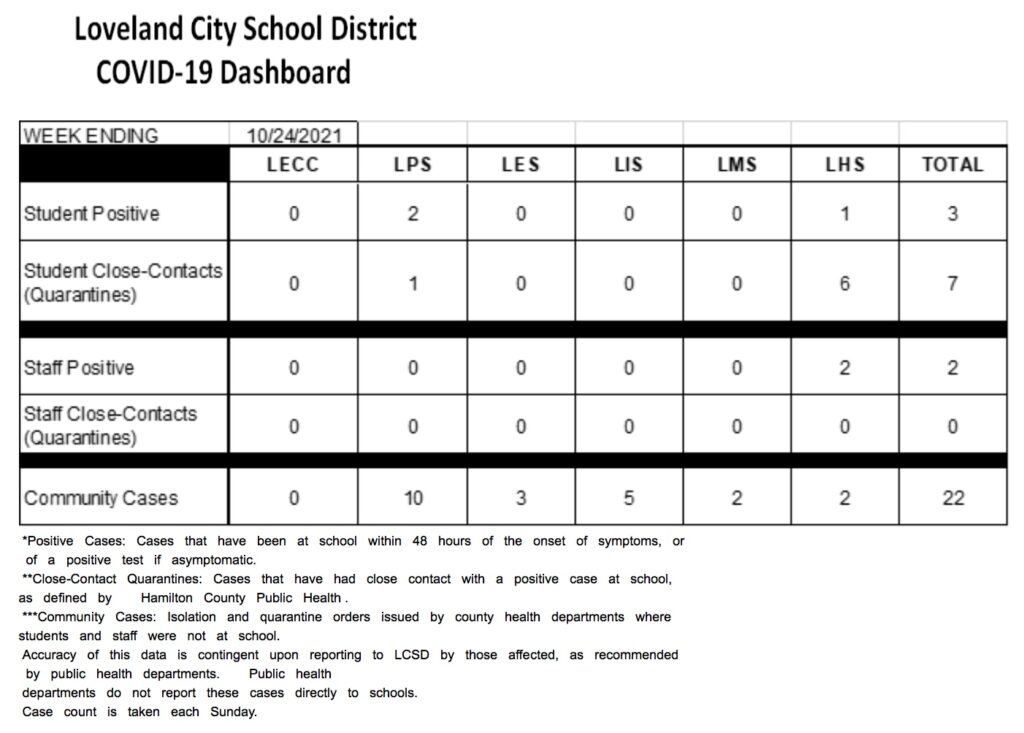
Loveland School Covid 19 Dashboard for November 21, 2021
Loveland, Ohio – At the beginning of each week, the Loveland City School District releases their latest Covid 19 Dashboard.
NOTE: On November 1st the District District implemented new Close Contact guidelines…


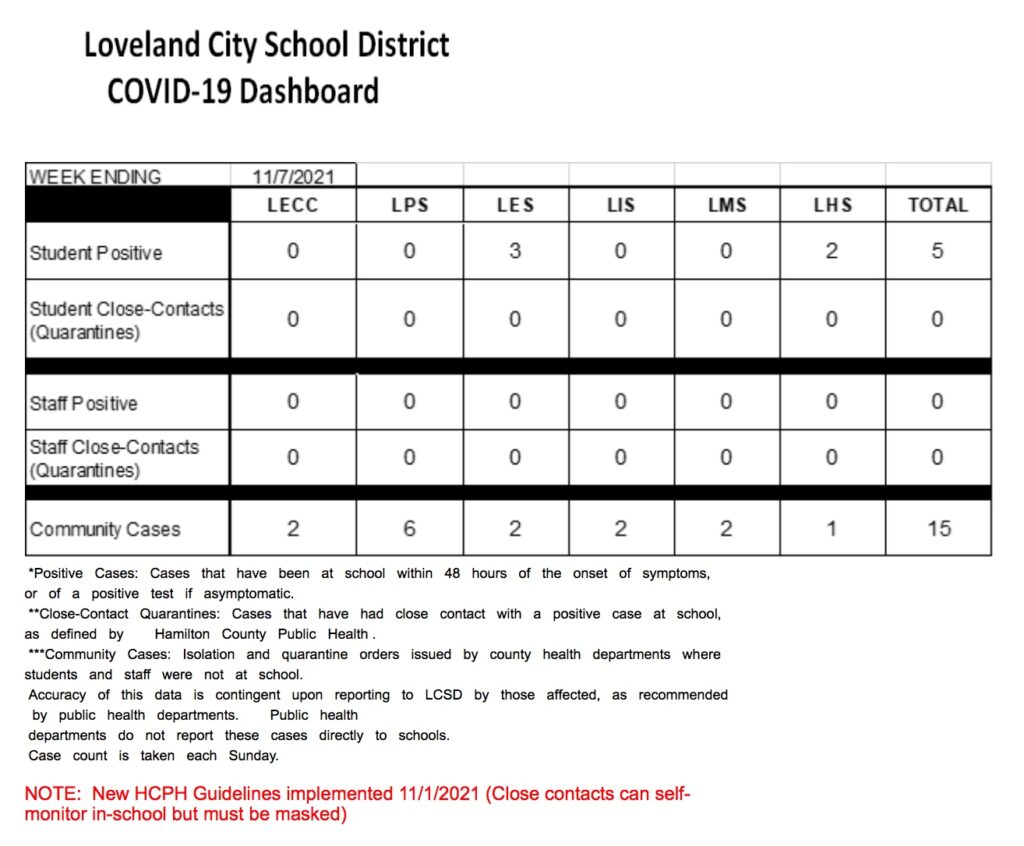



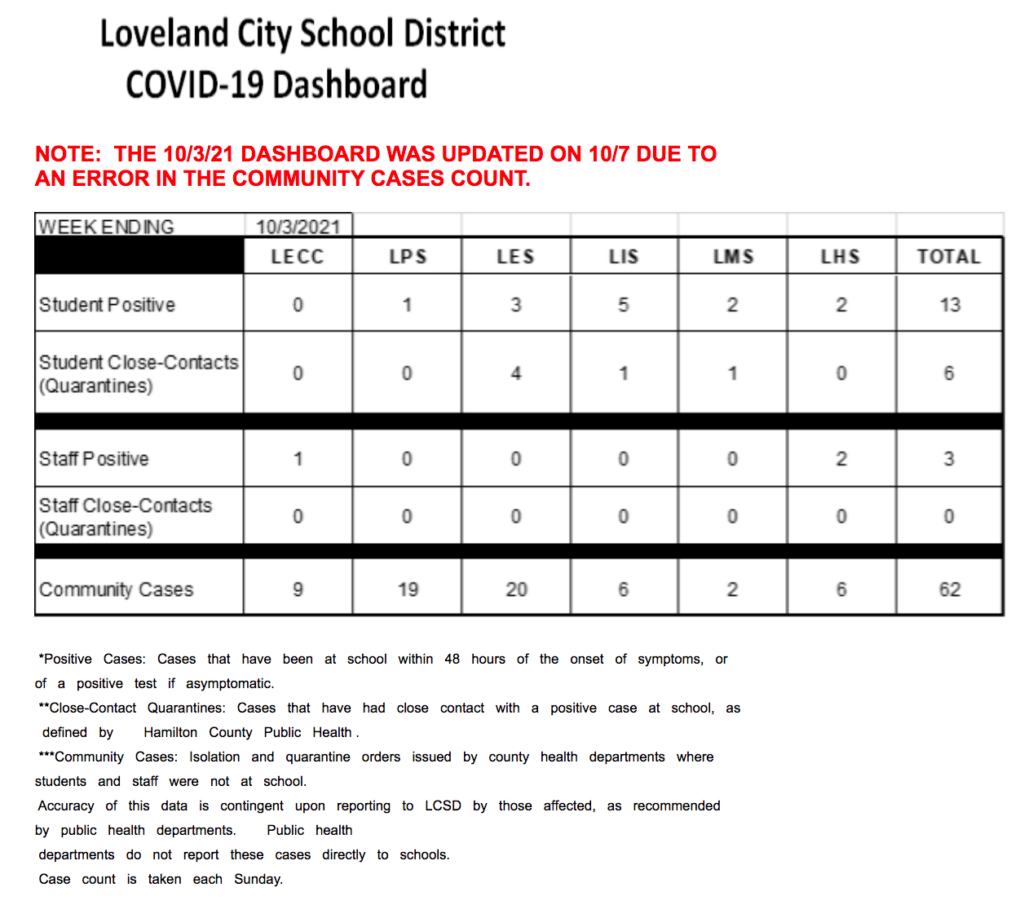
Note the correction to the 10/3/ report and that community cases increased from 51 to 62.




-
CHCA’s Theatre Department’s Annie
by Tammy Rosenfeldt
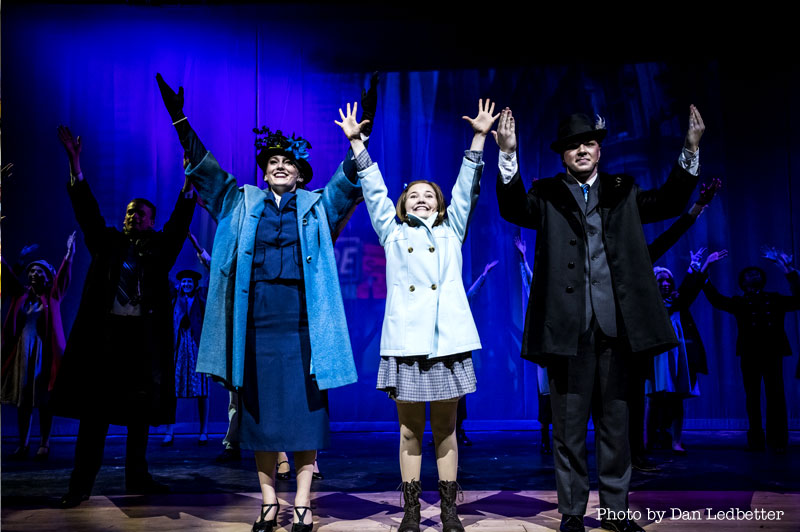
Sycamore Township, Ohio – Cincinnati Hills Christian Academy’s Upper School Theatre Department presented Annie September 24th – 26th at CHCA’s Lindner Theater. This unforgettable story was directed by CHCA’s Director of Theatre, Susan Jung, Technical Direction by Jim Jung, Choreographed by Maria Huey and Susan Jung, and Stage Management by CHCA sophomore Jacob Kaesemeyer.
Based on the popular comic strip, Annie tells the extraordinary story of a little orphan who is determined to find the parents who abandoned her years ago on the doorstop of a New York City orphanage run by the cruel, embittered Miss Hannigan. With the help of the other girls in the orphanage, Annie escapes to the wondrous world of Depression era NYC. Her adventures lead her to billionaire Oliver Warbucks, his secretary, Grace Farrell, and a faithful mutt named Sandy.
For those familiar with the story, rather than simply experiencing the same songs and lines they have heard before, they found themselves unexpectedly filled with emotion thanks to the talent among this cast. Most moving was the chemistry between Annie (played by the ever-delightful sophomore Natalie Hudepohl) and “Daddy” Warbucks (portrayed by talented senior Jackson Rebhun). Their performances together left the audience mesmerized and moved. From Hudepohl’s emotional scene of finding out the truth about her parents, to Rebhun’s solo “Why Should I Change a Thing?”, complete with their adorable “I Don’t Need Anything but You” duet, their family dynamic was perfect.
Senior Grace Goodwin beautifully and flawlessly portrayed Grace Farrell with a strong maturity and her amazing voice. Stealing every scene she was in, senior Bella Randle brought the memorable character of Miss Hannigan to life with charisma and her incredible voice. Her sidekicks, Rooster and Lily St. Regis, played by the charismatic senior Colin Swayze and talented sophomore Abby Fancett, delivered remarkable performances bringing extra comic relief to the story.
A most memorable scene included President Roosevelt and his Cabinet members. Roosevelt (played by sophomore Tobi Aina) and his staff (junior James Doyle, freshman Wyatt Elma, freshman Ryan Eppert, senior Henry Heimlich, and junior Abby Rosenfeldt) delivered a rousing reprise of “Tomorrow,” complete with fantastic harmony.
The orphans were a delight in every scene of which they were a part. Setting the background of the era with their song “Hard Knock Life” and joyfully singing “Never Fully Dressed”, the girls’ singing talents and choreography were wonderful highlights to the show.
The show included several talented students representing grades 7-12, many of them filling in multiple roles on stage and off. From the youngest of students to the seniors – each played an integral part of the show’s success.
And a bonus… an audience favorite was Sandy, played by dogs Cielo and Mia. Both dogs performed well, warming hearts with obedience and attention to Annie.
Director Susan Jung traditionally shares her thoughts of each show she produces in the playbill. An excerpt from this one is as follows:
Set in the Depression Era, this story still feels familiar: two very different worlds, people struggling to make ends meet, anger and division… but in this story, we follow a very special orphan who chooses to believe in hope.
I had to call on my inner Annie a lot this past year. It seemed (and still does) like our world is crumbling under the weight of politics, war, social media feuds, heroes fallen from grace, sickness, and death. There were days when I didn’t think the sun was ever going to come out. Maybe you feel like that now. And when I was in the low places, I clung to a promise. The orphan Annie sings a song called “Maybe” where she wonders about the possibilities of her parents coming back to get her and love her. I feel so very blessed to not have to wonder. My Father never left me, and I do not have to doubt His love for me. It is this promise that lifts the weight of the world from my heart and plants me firmly back in a place of hope.
This show is about two worlds, but what I hope you see is that there is a common theme. Warbucks may have all the money in the world, but he knows he’s missing something. Annie may have nothing, but she knows she’s missing something. And what are they both missing? Love. Love is the thing that conquers both worlds, that brings together an unlikely pair, that heals hearts that have either been wounded or hardened. Love is the light that makes tomorrow possible.
CHCA’s Fine Arts Director Mona Summers shared of the show, “It was amazing to have larger audiences for Annie this weekend after last year’s mandated low attendee numbers. I know the cast enjoyed the energy of having more people in the audience.
The cast did a superb job of telling the beloved story of Annie. There were so many standout performances from our seasoned seniors and our underclassmen, which came together to give everyone who saw the show a wonderful theatre experience. Thank you to our outstanding directors, cast, Student Production Team, volunteers, and Fine Arts team members for a great season opener!”
After a year of limited seating, senior Rebhun summed up the emotions felt among the entire cast with this statement: “After the first show with a full crowd and the applause that followed, I was without words, and I felt happiness that I haven’t felt in more than two years. It was in that moment when I remembered why I do theater.”
Bravo to the entire cast, student production team, and directors!
The show is one of seven theatrical productions at Cincinnati Hills Christian Academy this year. Mark your calendars now to attend 101 Dalmatians KIDS (October 22-23), It’s a Wonderful Life (November 19-21), Moana JR. (January 14-16), 42nd Street (March 11-13), Academy Night Live (April 22-23), and The One Act (May 10).