Author: Guest Column

  • Simply put, I know Colette Boyko as a kind, loving, and good person

    Simply put, I know Colette Boyko as a kind, loving, and good person

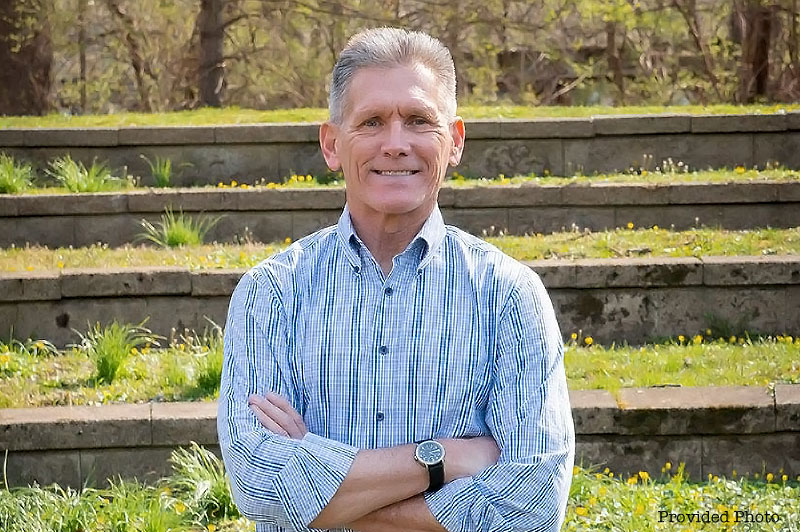
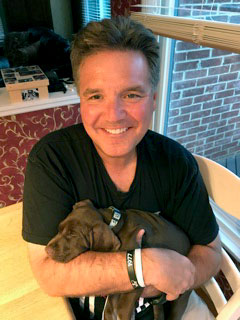
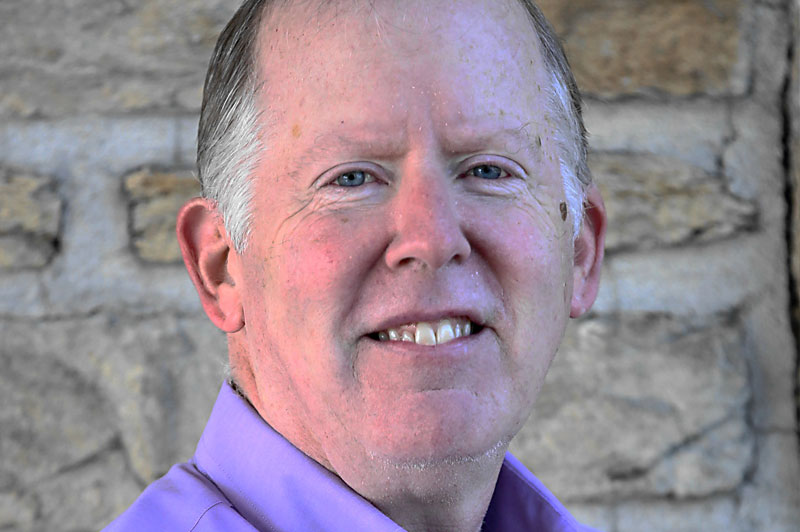
    by Jeff Wagner

    Hello Loveland!  I love you and always have. I don’t usually get involved in politics because I don’t enjoy it.  I’m fine reactively engaging in political discussions when I don’t have a choice though. I’m truly moderate. I’ve voted for Democrats and Republicans in recent years. I have an extremely loving family that politically, in my opinion, is a great reflection of this still great country’s freedom. We disagree on politics, but still respect and love each other. I make suggestions to my now-adult children, who had the luxury of attending Loveland Schools in their recurring Glory Days. I suggest that they engage in politics only if it brings them joy, or if they are running candidates. Why? Because nothing matters but your vote. And because I’m not changing anyone else’s vote – and they’re not changing mine. 

    Regarding Loveland Schools, they have seen better days. But in my opinion, there are also better days ahead!  Almost always are. The ebb and the flow. Big mistakes have been made though and residents are upset. Loveland needs to re-earn their trust. Hence, the bounce back will need to be gradual. 

    Meanwhile, people are more emotional than ever in their lives. Not just in Loveland, but everywhere. Passion can be productive or counterproductive. And when it reveals itself in the form of ire, it’s almost always counterproductive. It’s usually most detrimental and hurtful when things get personal, and/or, far worse in this day of social media, public. Sadly today, that’s usually why we employ social media though. To hurt someone badly.

    So, what’s my point?  Believe it or not, it’s to remind my fellow students what we all learned in one of the places we are “discussing.” Kindergarten. The Golden Rule is a philosophy for leading one’s life that suggests that other people should be treated fairly and with respect. Essentially, people act for the good of others, because they would like to be treated the same way. Too sappy these days? Not if you enjoyed reading it again for the first time in a long time like I did. I needed the reminder, too.

    I recently learned my awesome next-door neighbor, Colette Boyko, who is courageously running for Loveland School Board, was publicly accused of some pretty nasty things. Simply put, this was an absolute calling for me to defend Colette publicly.  

    Colette Boyko may be the most inclusive person I know, especially when it comes to kids. She does not judge people by their skin color or any identity they may have. Here’s why I know this to be true: Her “adopted” son, Anthony, who grew up next-door to us, is African American. And he’s a spectacular kid! Anthony is spectacular because of Colette and her loving family. 

    Colette met Anthony in 1994 when she lived in an apartment in Walnut Hills. Anthony and many other children regularly visited Colette’s door asking to take out her garbage for $1. Over a three-year period, Colette befriended the kids, playing games with them, baking them cookies, and becoming friends with their families. They came to know Colette as “Coco,” and Anthony’s nickname was “Scooter.” 

    Anthony’s mom had personal issues she was never able to overcome. So, Anthony would seek solace from the only parental presence who could provide it: Coco. And Colette has done so ever since. 

    When he was young, Colette picked Anthony up from work several times a week. She even took him to Disney. She helped him get recommended for a Boys Hope program.  Anthony’s mom also assisted in getting Anthony into the program and he was accepted. 

    Boys Hope gave Anthony a place to live during the week with great structure, healthy meals, and a catholic school education from middle school through high school. Colette took Anthony under her wing on weekends, holidays, and summer breaks.  He also spent time with his mom and siblings. 

    When Colette met her husband, Matt, he also accepted Anthony into his life. When they were married, Anthony was in their wedding. When they moved next-door to my family and Anthony started high school, I became friends with Anthony, and we often played basketball together on my court. Anthony remained active in Boys Hope and continued to stay with the Boyko’s on weekends and holidays. 

    The week Colette and Matt had their first child, Sky, they threw Anthony a 16th birthday party and made a room for him at their home. They helped him get a job and transported him to and from it. They helped get Anthony through college and made sure he had a good start including a car and supporting family. Colette’s children consider Anthony a brother.  Anthony now works in Ohio. And he loves his “adopted” mom, Coco, and family, the Boyko’s. I love the Boyko’s too, just like I love Loveland.

    Simply put, I know Colette Boyko as a kind, loving and good person who at her very core treats people fairly and with respect. Colette wants the very best for Loveland Schools and our community.  She knows the bounce back in Loveland needs to be restrained but that it also requires a lot of work and a solid plan we can all support to get the pendulum heading back in the right direction: Our recurring Glory Days!

    And although I don’t know the other candidates, I fervently support treating them, and ALL people, per the principles of The Golden Rule. After all, … we learned that in Kindergarten. 

    GO TIGERS! 

    Respectfully, Jeff Wagner
  • A Good Sign for Loveland Schools: A Robust Election Season

    A Good Sign for Loveland Schools: A Robust Election Season

    By Elliot Grossman, Candidate for Loveland City School Board

    The races for the Loveland School Board have strengthened my faith in democracy. For at least two decades, most candidates for the school board had run without challengers. That means the community didn’t have much of a choice of candidates. It also meant there was minimal discussion about the issues facing the school district.

    This year, there are nine candidates for four seats. The exchanges of ideas among the candidates and voters have been robust. That shows people care deeply about the school district.

    Once the winners have been announced, the community’s focus will shift to helping the school district move forward. Better times are ahead for the Loveland Schools, our community and our children.

    My campaign is about hope, optimism and restoring trust. This is a great school district. It’s a big reason my wife and I moved to the Loveland area. 

    But it’s gotten off track with some poor decisions by leaders. The problem is that those poor decisions have led to damaged relationships with the community

    Now, the district’s number one goal needs to be restoring trust. Without trust, the community won’t provide enough resources to the district. Without enough resources, the students will not get the education they deserve.

    How do we restore trust? I have a plan:

    • First, the district needs to embark on a thorough and formal listening process — seeking out voices from throughout the community — to learn what type of school district the community wants. What are the community’s priorities for the district? For a decade, a Butler County school district has held what they call Community Conversations. They’re led by a neutral facilitator. We need to do that here. Communication needs to be a two-way process. Systems need to be set up to listen to parents, students, staff and the community on an ongoing basis. These conversations are about building a partnership with the community. 
    • Second, after we’re sure we’ve sought out voices from throughout the community, we need to do a scientific survey to gauge voter sentiment before putting another levy on the ballot. We shouldn’t guess about whether a levy would pass. That could do even more damage if it fails.

    ​I’m a strong supporter of public schools. I attended public schools from kindergarten through 12th grade. I believe public schools are a great equalizer. They give children from all walks of life opportunities. I’ve given a big part of my career and civic life to supporting public schools. I have a daughter in the Loveland Schools. So I want the schools to thrive. But I’m not going to make decisions with just the students in mind. I will always make decisions with the best interests of the students and the taxpayers in mind.

    How can I be so sure that we can turn things around? I’ve seen this situation before. Professionally, I’ve provided communication and community engagement services to school districts. In fact, I’m the only candidate who has provided professional communication and community engagement services to school districts.

    I’ve attended hundreds of meetings of school boards and local governments in various communities as a news reporter and consultant to school districts for several decades. Additionally, I’ve attended meetings of the Loveland School Board as a parent, taxpayer and now candidate. I’ve learned what works and doesn’t work in school districts. I will bring those insights and ideas to the Loveland School Board. 

    A school district in western Hamilton county had failed two consecutive levies. I spent a year helping that district with communication and community engagement. With great leadership by a new superintendent, they passed a levy and just a few months ago they opened new schools. But again, I’m not saying we need new schools here. That’s up to the community.  

    Here’s another example about why we should have hope and optimism. This example shows the importance of setting priorities with our school district budget at a time when the district’s funds are stretched so thin.

    For the first time this fall, the Loveland Schools are offering full-day kindergarten to all families who want it for their children. Significantly, the district expanded its kindergarten spots without additional salary costs. After a retirement, district leaders moved a teaching position to the Loveland Early Childhood Center as enrollment numbers changed in the upper grades. It’s all a matter of setting priorities with limited funds.

    I know what needs to be done to move the district forward. I have the experience, the determination and the ability to listen to unite the community.

    I hope you’ll vote for me.


  • Tim Butler: “I humbly ask for your support for the next four years on City Council.”

    Tim Butler: “I humbly ask for your support for the next four years on City Council.”

    by Tim Butler

    Four years ago, you trusted me with your vote to City Council. Now I humbly ask for your support for the next four years on City Council. With over 32 years of living in and raising our family in Loveland, I have a strong commitment to speak for our citizens. Our family is invested in the success of Loveland. We started a successful track and cross-country program which launched the running careers of hundreds of Loveland’s boys and girls. Our family has invested its time, financial resources, and energy in the creation and operation of Mile 42 Coffee in downtown Loveland. Our roots are firmly planted in Loveland. 

    We have a great city. Our downtown is vibrant and unique with its access to the bike path and the Little Miami River. We have a strong community spirit. We have successful local businesses. With our growth comes inherent challenges. 

    We are at a point where the decisions made by your City Council will affect the character, look, and feel of Loveland for future generations. Here are a few key areas where Council’s decisions will impact Loveland going forward: 

    • The first is zoning and development. Our Council has approved the rezoning demands of developers which increased the density of development and will contribute to further congestion. I listened to your fellow citizens and voted against this rezoning. Council will face similar zoning and development questions over the next four years. 
    • Second is how we manage traffic and parking downtown. Our Council is considering a multi-million dollar parking garage and we do not know whether it is even financially sustainable. The location of the garage will cause overcrowding in the busiest part of our downtown. There are other options we can explore before we change the landscape of downtown for the next 30 years with a garage which may not even solve the problem. I have consistently asked Council to explore these options and explain to our citizens the financial impact of the garage and the availability of alternatives. 
    • The third is ensuring we fully involve our citizens as we make these and other decisions, including annexation of new property into the city. Unfortunately, our Council has not been fully transparent in this decision-making process. 

    As I talk to our fellow citizens, I hear concerns about the direction of our city and some of the decisions made by our City Council. How much development is too much? Are we spending your taxpayer dollars on pet projects? Are we sufficiently planning for the next generation of Loveland’s families so they can enjoy the kind of childhood our own children were fortunate enough to have? 

    Let’s take a breath and engage in thoughtful, analytical growth. Let’s seek out the opinions and gauge the wishes of our citizens. Let’s spend our tax dollars wisely. Let’s think and talk about what is best for the city of Loveland for the next ten to twenty years, so future generations will continue to think of Loveland as a wonderful place to live, work, and raise their families. 

    I ask for your support for reelection to Loveland’s City Council. If you trust me with your vote, I pledge to continue to serve as your voice on Council. Together, we can plan and build the best Loveland for the present and for our future. 


    Meet the candidate nights


    Candidate List and Voter Information

  • What’s With All the Mulch at the Post Office?

    What’s With All the Mulch at the Post Office?

    by Cindy Kessler

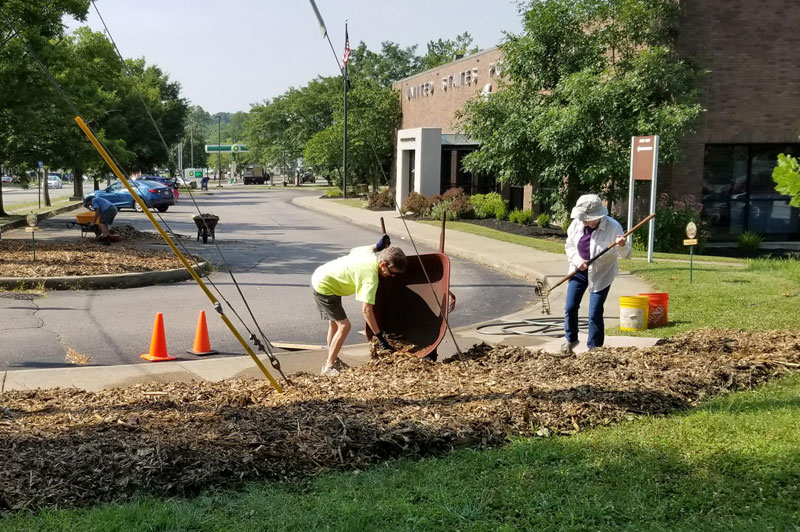
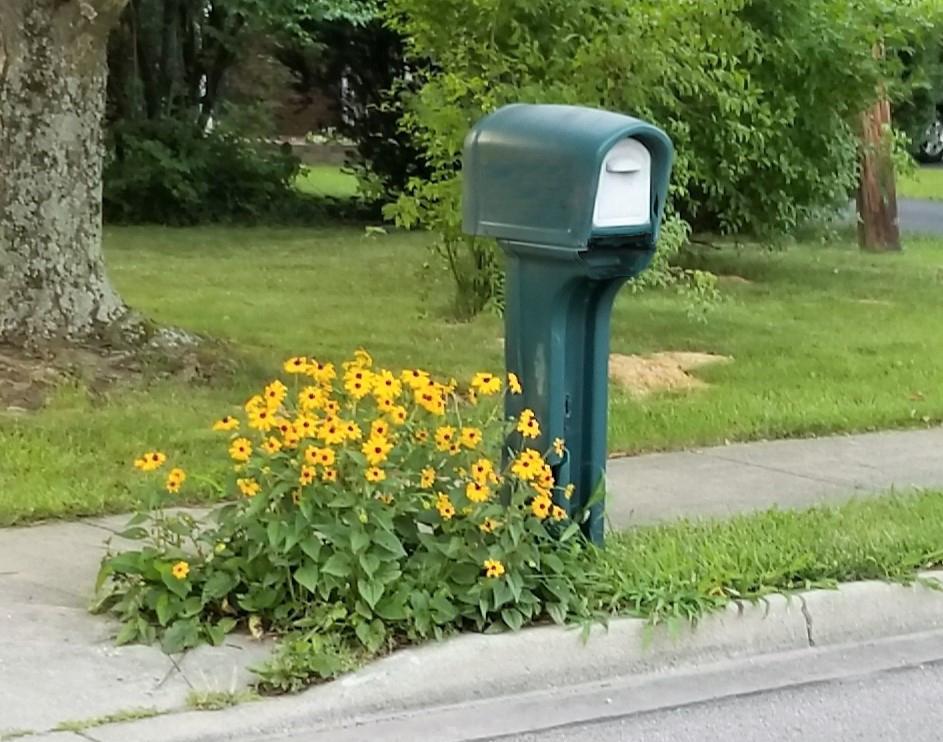
    We’re laying the groundwork for pollinator gardens!  Next spring these mulched areas will be planted with native flower seedlings that will benefit pollinators and beautify the community. 

    In 2017, the U.S. Postal Service recognized the beauty and importance of pollinators with their Protect Pollinators stamps. Now, with the help of volunteers, the Loveland Post Office is putting that concept into action by turning swaths of grass, with their constant need for mowing, into flower gardens and reforested meadow areas. 

    Natural areas provide many benefits over mowed grass. The Loveland Post Office will see lower labor and fuel costs, while also reducing their carbon footprint. The gardens will provide food and habitat for pollinators (to whom we owe our very existence). And the community gets to enjoy the beauty of colorful flowers every time they drive past the Post Office. Now that’s an all-round Win-Win!


    Small pollinator gardens provide much-needed habitat islands.

    Did you know that insects pollinate 80% of the world’s plants, including 90 different food crops?  One out of every 3 or 4 bites of food we eat is pollinated by an assortment of bees, beetles, moths, wasps, and butterflies. WOW — These small creatures, so often taken for granted, are vitally important to human survival!  Unfortunately, many pollinators are threatened for a variety of reasons: habitat loss, fragmented habitat (with huge gaps between habitat ‘islands’), non-native plants that fail to serve pollinator needs, and (worst of all) the use of pesticides and herbicides on our lawns and landscapes. Pollinators need our help, and the Loveland Post Office is stepping up-to-the-plate.  

    What about those “Naturalized Area” signs you see?  They identify areas where young trees and shrubs will be planted this fall. Initially, those areas will resemble meadows, but once the plants mature they will become a natural woodland. Trees are crucial for pollinator survival because they bloom so early in the spring, long before summer flowers ‘break bud’. Have you ever noticed reddish clusters on the bare branches of a maple tree in early spring? Those are tiny flowers that are buzzing with bees — if only you could get close enough to see them. 

    Small pollinator gardens provide much-needed habitat islands.

    This pollinator garden project is a unique collaboration between the Post Office, community volunteers, and Loveland High School Transition Program students. Community volunteers are currently prepping the garden beds by spreading a thick layer of mulch over cardboard, to eliminate the grass without using herbicides. Seeds are being gathered from locally grown, native flowers, to ensure those seeds are pesticide-free. (Did you know commercially available seeds are often coated with pesticides that can make their way into the nectar which can sicken, or even kill, pollinators?) The high school students will grow the flowers from the seeds being collected now, and the flower seedlings will be planted at the Post Office next spring. This terrific partnership is a wonderful example of Loveland’s abundant community spirit!    

    Small pollinator gardens provide much-needed habitat islands.

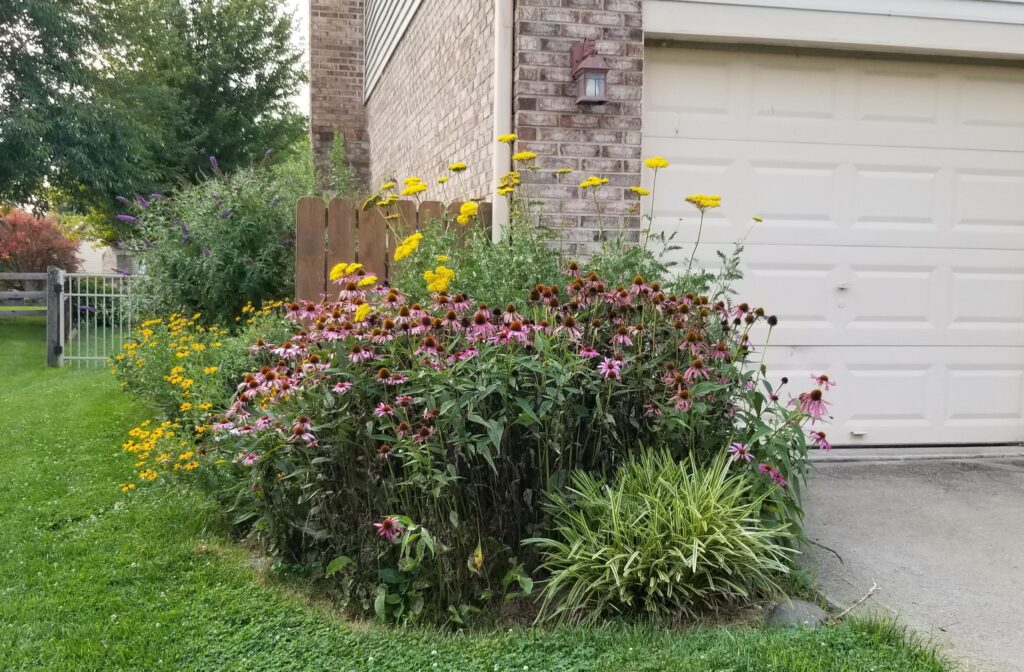
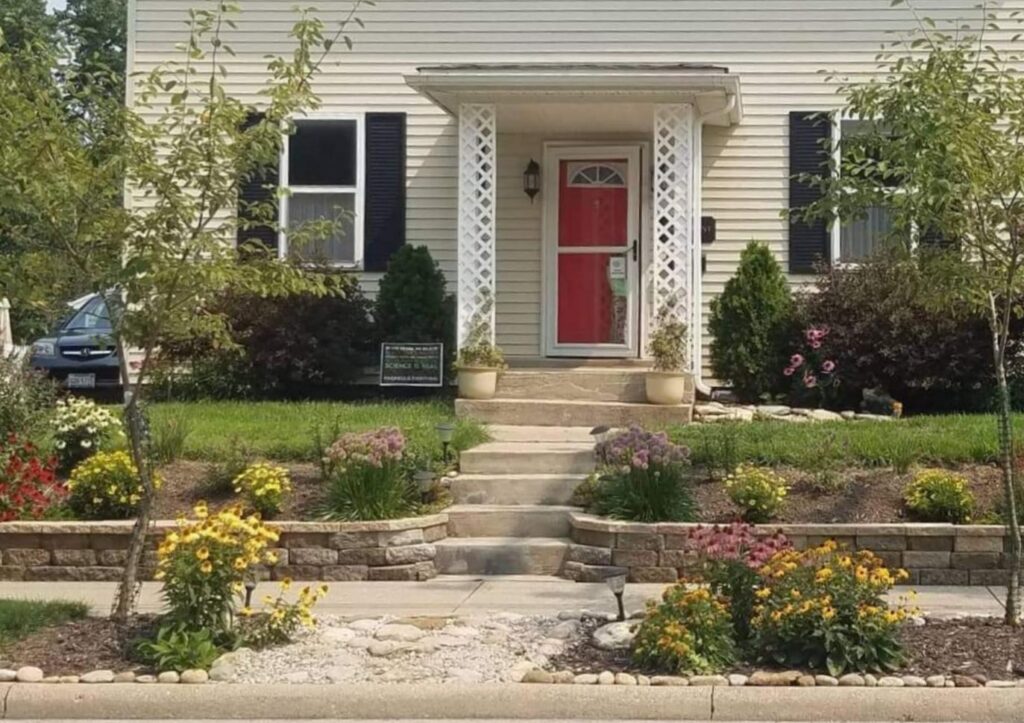
    The Post Office gardens and naturalized areas will provide a much-needed pollinator habitat, but to survive and thrive pollinators require many such ‘habitat islands’ scattered widely across a community. So, why not create your own pollinator garden?  Whether large or small, every garden has a huge impact on the well-being of our pollinators. Just be sure to buy native plants that are organically grown, avoid the use of pesticides and herbicides, and include a few old logs, or attractive pieces of driftwood, for nesting purposes (yes, bees need nesting places, too). 

    If you have any questions, comments, or want to get involved, send an email to Cindy Kessler at ckessler@fuse.net.

    Happy (Pollinator) Gardening!

  • Stephanie Goodwin: “A small number of politically motivated and poorly informed individuals are trying to drive a wedge in our community.”

    Stephanie Goodwin: “A small number of politically motivated and poorly informed individuals are trying to drive a wedge in our community.”

    Stephanie Goodwin is a resident of the Loveland School District and LCSD Parent

    by Stephanie Goodwin

    Imagine a parent comes to the school board and says they are upset about the curriculum because their child feels uncomfortable taking algebra. Taking algebra upsets their child, making them feel singled out, awkward, or embarrassed when they don’t understand a concept, or when they must discuss it publicly.  Indeed, they argue, teaching algebra is divisive because it highlights who is good at math and who is not, instead of teaching that all students are the same. The parent wants the board to remove algebra from the curriculum. 

    I suspect that many of you are laughing and thinking “That’s ridiculous, parents don’t get to dictate the curriculum. We pay experts to make those decisions.” Or “That would never happen.”

    But that is exactly what is happening right now when it comes to discussions of diversity, equity, and inclusion in our schools. A small number of politically motivated and poorly informed individuals are trying to drive a wedge in our community by arguing that even talking about the value of diversity, the importance of equity, and the necessity of inclusion is harmful and divisive. Teaching these values is not harmful to our children. Indeed, scientific studies of educational outcomes demonstrate that diversity increases innovation, that equity promotes short- and long-term student success, and that promoting inclusion by valuing difference – not just “tolerating” it –improves student mental health, wellbeing, and academic achievement for all students. When we teach our children to embrace difference, to listen empathically, and to practice humility, we prepare them to enter an adult world that will not shield them from their own discomfort around these issues.

    Regardless of our own political or religious beliefs, we all likely agree that every student, teacher, and staff member in our district is deserving of respect and belonging in our schools. Creating a culture of respect and belonging cannot be achieved by avoiding difficult topics like diversity, equity, and inclusion. It demands modeling for our children the empathy, cultural humility, and acceptance that will serve them throughout their lives by teaching them how to navigate and understand these issues. Education should be about knowing, not avoiding, truth. DEI is only divisive if we feel threatened by knowing the truth. 

    Any candidate who does not recognize the importance of DEI values in shaping our students’ success will not earn my vote.

  • Candidate version of J.D. Vance using same dog whistles he once derided as a ‘moral disaster’

    Candidate version of J.D. Vance using same dog whistles he once derided as a ‘moral disaster’

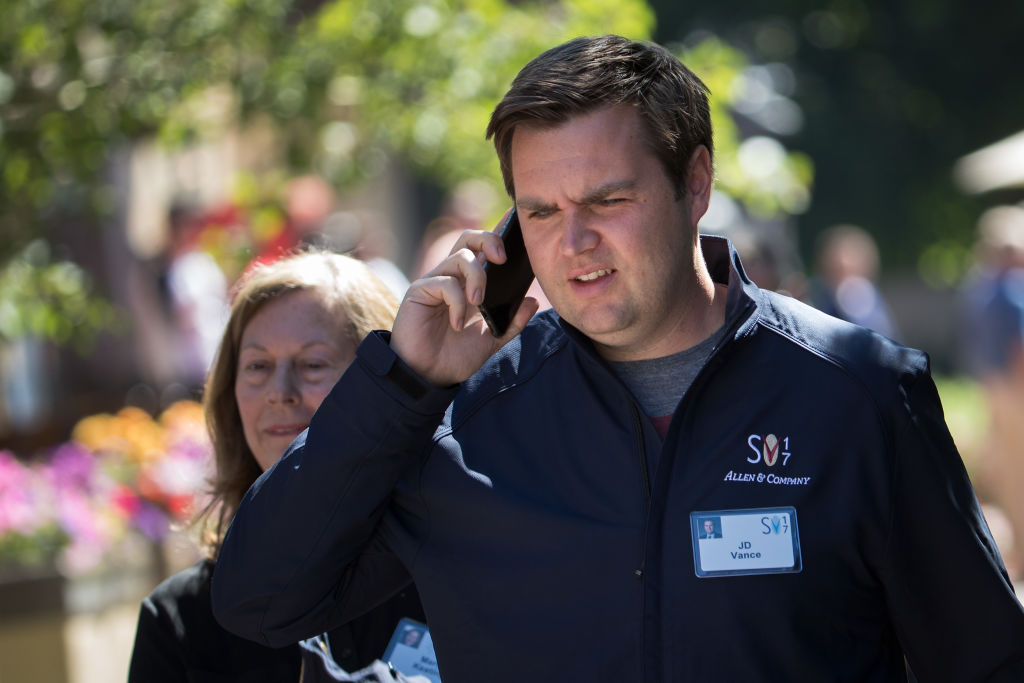
    JD Vance, venture capitalist and author of ‘Hillbilly Elegy,” in 2017. (Photo by Drew Angerer/Getty Images).

    COMMENTARY

    MARILOU JOHANEK and Ohio Capital Journal

    The last time I spoke with J.D. Vance, he was living the good life as an elite West Coast venture capitalist in Silicon Valley. He was a baby-faced investor from southern Ohio who was basking in the unexpected sensation of his newly published bestseller. Everybody had to get their hands on his memoir for what it might explain about the inexplicable presidential appeal of a former reality TV star. Vance’s book about his self-described hillbilly roots promised insights into why a dirt-poor, down on its luck demographic was swooning over a billionaire celebrity who wouldn’t be caught dead in Appalachia.

    At the time I wrote for a newspaper in a blue-collar Ohio town whose glory days as a manufacturing mecca — like Vance’s hollowed-out hometown near Cincy — were long gone. So, I invited the author to connect with an Ohio audience that might relate to his story. He called from his office in San Francisco, and we spoke for over an hour. Recently, I went back to look at the transcript of that conversation to make sure it was the same Vance who now wants to be Ohio’s next U.S. Senator. 

    The senatorial candidate looks and sounds like the J.D. Vance I interviewed, save for the full Midwestern beard he’s sporting, but something’s very different. The Vance appearing — on any FOX show that will have him — is passing himself off as a fawning Trump acolyte and far right culture warrior. Who the heck is that guy and what did he do with the thoughtful conservative I questioned who castigated another charlatan for pulling off a similar con to become president?

    The 37-year-old moved back to Ohio, bought a sprawling million-dollar estate in a tony neighborhood in the Queen City and decided to boost his profile with a vain bid for national office. To that end, however, the 2021 version of Vance has sidled up to the infamous Mar-a-Lago insurrectionist, hobnobbed with big money donors on the coasts and rebranded himself as an alt-right grievance peddler. This character jumped right into the smarmy attack mode of the extreme right, owning the “degenerate liberals,” deriding the “party of childless people,” (what??) disparaging desperate immigrants as “dirty” drug traffickers threatening to overrun Ohio, dismissing critical race theory as “crap” parents don’t want in their schools, defending a white supremacist banned from Twitter for inciting violence and, of course, discounting life-saving measures during a surging pandemic as nefarious “efforts to control our lives.” 

    Candidate Vance opined that: “Obesity is a far more serious public health crisis than Covid,” and sardonically asked, “Should we mandate that no one be allow to eat fried chicken?” He parroted the insanity of right-wing Republicans that COVID “is not the only bad thing” and “people don’t trust (life-saving) vaccines because our public health authorities are understood, reasonably, to be political hacks who don’t know what they’re doing.” Besides, he added, brushing over 600,000 dead Americans, “what about basic bodily liberty?”

    Seriously, who is this guy and why is he embracing the ugly scorch and burn tactics of the fearmongers and scapegoaters that 2016 Vance denounced as divisive and dangerous? Back then he told me, “Trump voters can be encouraged to look at their fellow countrymen as fellow citizens and that’s good. Or they can be made to think of them as scapegoats for all their problems and [that’s] the reason I am so against Donald Trump.” He [Trump] is pulling “a significant portion of the white working class” into a “more racist direction,” concluded Vance.

    “He’s changing the political conversation in a way that makes it less likely for people to think of Black folks and Mexicans as countrymen” and instead “think of those people” as the ones to blame for everything that’s wrong in white America. “Racism is definitely a part of the Trump phenomenon,” said Vance. “The David Dukes of the world…[are] absolutely a part of the Trump movement. And I think to his great discredit, Trump hasn’t disavowed these people as strongly as he should. I really believe that Trump bears a lot of blame… we are seeing an unprecedented level of racial resentment and racialized rhetoric in this [2016] election.” 

    But Candidate Vance is blowing the same dog whistles he once disavowed from a candidate he derided as a “moral disaster.” Trump’s personal conduct alone, Vance said, “would have been so offensive to my [Appalachian] grandmother that she would have hated it… there’s no way she would have voted for him.” Vance confided he was disappointed in religious leaders “who have made a lot of apologies for Trump’s behavior…if Barack Obama, who by all accounts is an incredible family man, if he had fathered five children from three women…there would be a lot of religious conservatives all over him…”

    “I don’t think it’s totally out of bounds to say we should hold our presidents up to a certain moral standard…and it’s just astonishing to me that we haven’t done the same thing for Donald Trump,” Vance told me. That was before Trump was elected and the serial corruption, deceit, dishonor and damage commenced. Before his first impeachment for trying to rig the 2020 election in exchange for foreign aid and his second impeachment for inciting an insurrection against his own government to steal an election he lost.

    It was also before J.D. Vance pulled a 180 on his former self. The young writer I talked to over four years ago was different. He was authentic, unafraid to chastise his community for its “lack of agency” and “a feeling that you have little control over your life and a willingness to blame everyone but yourself.” It was personal for Vance, whose mother was in the same rut. “I don’t blame Mom for the way she lived her life. I don’t blame her for the addiction. I don’t blame her for the way she sometimes treated me and my sister. What I would blame Mom for is if she stopped trying.”

    That J.D. Vance was nothing like the Ohio Senate candidate blaming everyone else today. That actor is degrading all the people MAGA supporters love to hate — from rich educated elitists (like himself) to the mainstream media, Brown immigrants and Black Lives Matter protestors. So, which J.D. Vance is the real deal, and which one is running a clumsy con as a faux extremist to pursue an open Senate seat in Ohio? 

    You know. Ohio voters can spot the phony a mile away.  

  • A Perspective on the Mask Mandate Debate in Loveland Schools

    A Perspective on the Mask Mandate Debate in Loveland Schools

    Loveland Magazine received this Guest Column from the parent of Loveland school students who asked us not to reveal their identity.

    By: Anonymous Parent of Loveland Students

    The start of a new school year has sparked a debate in the Loveland community that is arguably more divisive than the 2020 presidential election. We are nearly a year and a half into the outbreak of Covid-19 and parents, public health agencies, and school officials are divided on whether or not masks should be mandated in our schools. On one side you have those concerned about the desire to protect the physical health of citizens and minimize the spread of Covid-19. On the other are those concerned about the educational, social, and mental health effects universal masking has on students. We all want what is best for our children, individually and collectively. Both sides should find this common ground while showing empathy for the opposing view. I don’t think that is in question. The real question is at what point are we taking unnecessary measures that are hurting our children out of an overabundance of caution?

    Last school year our state government and the Ohio Department of Health used their powers to enforce universal mask mandates in schools and other locations. These were highly controversial decisions causing state legislative action. Here we are at the start of another school year and these agencies responsible for assessing and enforcing mandates are not able to do so. If our expert public health officials are not making the decisions to enact universal mask mandates then there is no reasonable expectation that a local school board can effectively make decisions to mandate the behavior of families and students regarding their health. A mandate for public health purposes should not be coming from our local school board. In the absence of state and health department mandates, these decisions are best made by each family with the guidance of their healthcare providers.

    Parents and guardians are tasked with the decision of whether or not to send their children to school in masks. We are pulled between a desire to protect citizens from Covid-19 and to protect our children from the negative educational, social, and mental health issues related to universal masking. Generally speaking, children are spared from the severe consequences of Covid-19. According to some of the most comprehensive studies to date, children are at an extremely slim risk of dying of Covid-19. In fact, children are more likely to die of homicides or drownings, and I don’t see anyone shutting down their pools. The mortality rate among children is actually lower than that from the flu and the risk of severe disease or hospitalization is about the same.

    So, I’ll ask again, at what point are we taking unnecessary measures that are hurting our children out of an overabundance of caution? That is ultimately what is in question. We are left with a debate between physical health and causing educational, social, and mental harm. To the best of my knowledge, there have not been any Loveland student deaths related to Covid-19, however, we undoubtedly have many students suffering educationally and from social and mental health issues related to universal masking in their learning environment. This cannot be ignored any longer. At some point, our community must realize that mask mandates imposed on our children can have a greater impact on public health than Covid-19 itself.

  • We’re asking one simple thing (parents like me) but you, you’re asking for my world

    We’re asking one simple thing (parents like me) but you, you’re asking for my world

    Loveland Magazine received this Guest Column from the parent of a Loveland school student who asked us not to reveal their identity and to go one further step, besides sharing the sentiment of her writing – to help protect all of the “health compromised children” that need to attend school next week.


    Most of you don’t know what it’s like to have a medically fragile child. Most of you never will. 
    
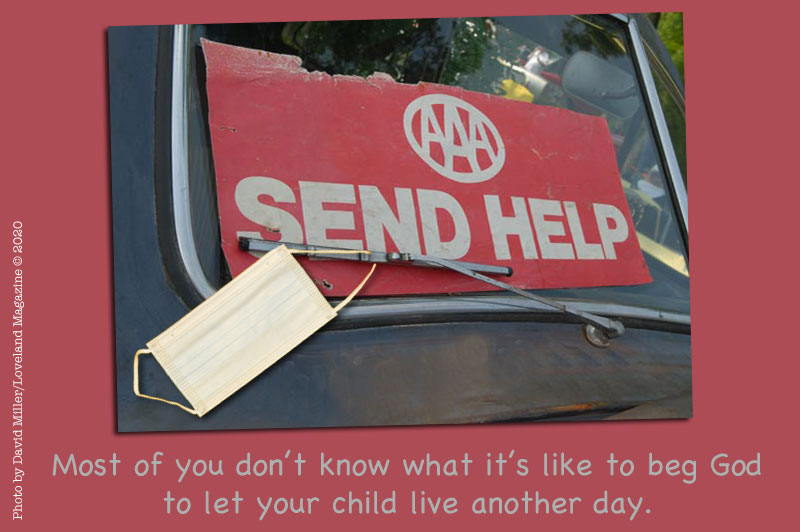
    Most of you don’t know what it’s like to beg God to let your child live another day... thankfully, most of you never will.
    
    Most of you do not know what the scene of life-saving measures on your child looks like - and thank God, most of you never will.
    
    But unfortunately, for some of us parents - we do know all of these moments and they never leave us. They are forever ingrained in our memory - you can see, smell, hear and taste these moments. 
    
    Always. 
    
    Forever.
    
    I’ve come to realize that most of you don’t realize what you're asking of parents like me - with young, medically fragile children. 
    
    You can’t possibly realize what you’re asking... because I cannot wrap my head around it - if you do realize what you're asking of me - how can I possibly wrap my head around the fact that I’ve been surrounding myself with so many people that would dare have such an ask.
    
    So many fake promises like “I’m here! It takes a village”.
    
    I sit back and think-shame on you. HOW DARE YOU. But then I remind myself, there is no way they realize their “ask”. I won’t call you selfish - because there is no way you really understand what you’re asking - and if you do, then it’s a step beyond selfish- it’s evil... and may God help you.
    
    We are asking one simple thing, parents like me — but you, you’re asking for my world.
    
    We ask just one simple thing - but you, you are asking for us to choose risk.
    
    We are asking for one thing - a very simple thing, indeed. 
    
    But you... you are asking something far too big- something far outside of our reach.
    
    We are asking you for one simple thing... a mask. Please, we ask - it’s just a mask...
    
    But you, oh YOU... you cannot possibly realize it, can you?! You think you’re asking for choice... you think you have this right... but what you don’t realize, you can’t possibly realize — is that you’re asking me to risk my child’s life. You’re asking me to not put up a fight. 
    
    You’re asking me to risk the very depth of my being - my reason for living - you are asking me to sacrifice all that we’ve done - and asking us to risk our children’s health... and all we ask of you is one SIMPLE thing... please mask up, to help protect the children. Send your child to school with a mask... you may save a life.
    
    If you’re reading this and getting angry, still not getting our message, then it may be time to take a long look in the mirror and start asking yourself some hard questions.
    
    Please stop demanding we risk our children’s life. 
    
    Our ask is simple.
    
    And your ask, well it’s inconceivable.
    
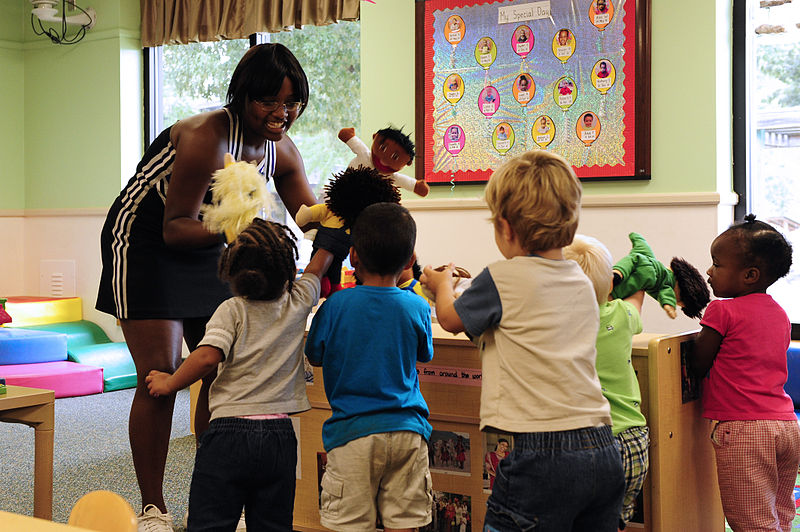
  • How can we do higher quality early childhood programs in Ohio?

    How can we do higher quality early childhood programs in Ohio?

    Photo courtesy Wikimedia Commons.

    Commentary by By Rob Moore and Ohio Capital Journal

    One provision in the Ohio Senate’s new $75 million budget passed last week that has garnered plenty of attention has to do with Step Up to Quality, the state’s system for promoting quality in early childhood programs in Ohio.

    The Senate budget removes the Step Up to Quality child care standards mandate, allowing child care providers to continue to get more money for meeting higher quality standards but not stopping payments for programs that don’t meet standards.

    The Columbus Dispatch reports that the Step Up to Quality mandate removal is a step to reduce costs for the state, which Senate President Matt Huffman’s staff estimates will cost the state an additional $640 million by 2024.

    The strange thing is that Step Up to Quality is currently savingthe state money — but not in the way you would think. The same Columbus Dispatch article quotes Allen County Job and Family Services Director Joe Patton. He says the number of child care providers taking public funds has dropped from 60 to 17 in the past decade, something he attributes to the mandate to participate in Step Up to Quality.

    This means that the requirements in Step Up to Quality could be leading providers to stop taking public funds so they don’t have to deal with these requirements.

    The evidence that we have suggests quality in early childhood education matters. We’ve seen positive examples of the impact of early childhood like the Perry Preschool Project and the Abecedarian Project. We’ve also seen the negative impact of expanding child care without quality controls in Quebec, leading to higher aggression and illness and lower motor and social skills among children and worse parenting relationships and health among parents.

    That being said, the evidence for the effectiveness of programs like Step Up to Quality are mixed.

    2019 evaluation of New Mexico’s “Step Up to Quality” equivalent conducted by the New Mexico Legislative Finance Committee found no evidence child care assistance led to improved educational outcomes. It did find that family income and child well-being improved among providers that participated in the program, but the specific ranking didn’t have any bearing on these outcomes.

    What this means is that, while it helped families to be a “one-star” program, they couldn’t find any difference between “one-star” and “five-star” programs. These programs, at least in this case, were likely measuring and requiring the wrong things.

    So what can we do better? One option is to focus more on outcomes than outputs. The New Mexico study above recommends creating evaluation plans for child care based on “measures of child health and social-emotional development, family economic improvement, and parental employment.”

    Another option is to put the state in charge of assessment of quality the same way it is in charge of assessing health conditions. Having early childhood assessors who go on-site to assess conditions would reduce reporting costs borne by providers and could tie assessment to widely-used measures like the Early Childhood Environment Rating Scale.

    While we have good reason to believe early childhood education can grow the economy, reduce poverty, and improve lives, we still have a lot to learn about how to best foster it from a public policy standpoint. This is a system that will likely endure some substantial tweaking in the coming decade.

  • 100 years after the Tulsa Race Massacre, lessons from my grandfather

    100 years after the Tulsa Race Massacre, lessons from my grandfather

    A Guest Column by Gregory B. Fairchild

    When Viola Fletcher, 107, appeared before Congress in May 2021, she called for the nationto officially acknowledge the Tulsa race riot of 1921.

    I know that place and year well. As is the case with Fletcher – who is one of the last living survivors of the massacre, which took place when she was 7 – the terror of the Tulsa race riot is something that has been with me for almost as long as I can remember. My grandfather, Robert Fairchild, told the story nearly a quarter-century ago to several newspapers.

    Here’s how The Washington Post recounted his story in 1996:

    “At 92 years old, Robert Fairchild is losing his hearing, but he can still make out the distant shouts of angry white men firing guns late into the night 75 years ago. His eyes are not what they used to be, but he has no trouble seeing the dense, gray smoke swallowing his neighbors’ houses as he walked home from a graduation rehearsal, a frightened boy of 17.

    His has since been a life of middle-class comfort, a good job working for the city, a warm family life. But he has never forgotten his mother’s anguish in 1921 as she fled toward the railroad tracks to escape the mobs and fires tearing through the vibrant Black neighborhood of Greenwood in north Tulsa.”

    His has since been a life of middle-class comfort, a good job working for the city, a warm family life. But he has never forgotten his mother’s anguish in 1921 as she fled toward the railroad tracks to escape the mobs and fires tearing through the vibrant Black neighborhood of Greenwood in north Tulsa.”

    “There was just nothing left,” Fairchild told the newspaper.

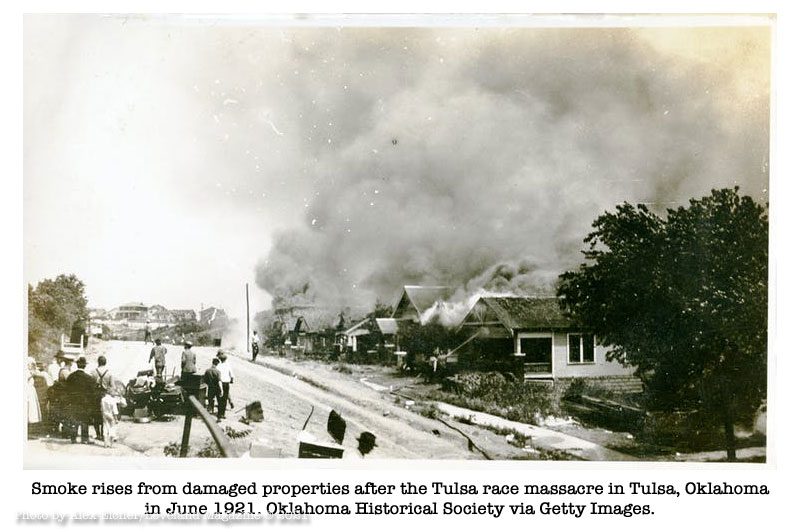
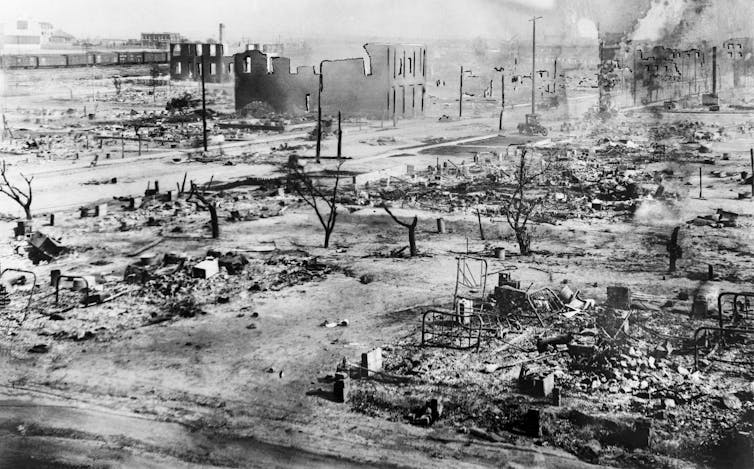
    The Washington Post article said the Tulsa race riots of 1921 were among the “worst race riots in the nation’s history.” It reported: “The death toll during the 12-hour rampage is still in dispute, but estimates have put it as high as 250. More than 1,000 businesses and homes were burned to the ground, scores of Black families were herded into cattle pens at the fairgrounds, and one of the largest and most prosperous Black communities in the United States was turned to ashes.”

    During the Tulsa race riots in 1921, Black businesses and homes in the Greenwood District in Tulsa, Oklahoma, were destroyed at the hands of white residents. Bettmann Archive/Getty Images.

    Riots began after a white mob attempted to lynch a teenager falsely accused of assaulting a white woman. Black residents came to his defense, some armed. The groups traded shots, and mob violence followed. My family eventually returned to a decimated street. Miraculously their home on Latimer Avenue was spared.

    Disturbing history

    Hearing about these experiences at the family table was troubling enough. Reading a newspaper account of your ancestors’ fleeing for their lives is a surreal pain. There’s recognition of your family’s terror, and relief in knowing your family survived what “60 Minutes” once called “one of the worst race massacres in American history.”

    In spite of my grandfather’s witness, this same event didn’t merit inclusion in any of my assigned history texts, either in high school or college. On the occasions I’ve mentioned this history to my colleagues, they’ve been astonished.

    In 1996, at the 75th anniversary of the massacre, the city of Tulsa finally acknowledged what had happened. Community leaders from different backgrounds publicly recognized the devastation wrought by the riots. They gathered in a church that had been torched in the riot and since rebuilt. My grandfather told The New York Times then that he was “extremely pleased that Tulsa has taken this occasion seriously.”

    “A mistake has been made,” he told the paper, “and this is a way to really look at it, then look toward the future and try to make sure it never happens again.”

    That it took so long for the city to acknowledge what took place shows how selective society can be when it comes to which historical events it chooses to remember – and which ones to overlook. The history that society colludes to avoid publicly is necessarily remembered privately.

    Economically vibrant

    Even with massive destruction, the area of North Tulsa, known as Greenwood, became known for its economic vitality. On the blocks surrounding the corner of Archer Street and Greenwood Avenue in the 1930s, a thriving business district flourished with retail shops, entertainment venues and high-end services. One of these businesses was the Oklahoma Eagle, a Black-owned newspaper. As a teenager in the early 1940s, my father had his first job delivering the paper.

    Without knowing the history, it would be a surprise to the casual observer that years earlier everything in this neighborhood had been razed to the ground. The Black Wall Street Memorial, a black marble monolith, sits outside the Greenwood Cultural Center. The memorial is dedicated to the entrepreneurs and pioneers who made Greenwood Avenue what it was both before and after it was destroyed in the 1921 riot.

    Although I grew up on military bases across the world, I would visit Greenwood many times over the years. As I grew into my teenage years in the 1970s, I recognized that the former vibrant community was beginning to decline. Some of this was due to the destructive effects of urban renewal and displacement. As with many other Black communities across the country, parts of Greenwood were razed to make way for highways.

    Some of the decline was due to the exit of financial institutions, including banks. This contributed to a decrease in opportunities to build wealth, including savings and investment products, loans for homes and businesses, and funding to help build health clinics and affordable housing.

    And at least some was due to the diminished loyalty of residents to Black-owned businesses and institutions. During the civil rights movement, downtown Tulsa businesses began to allow Black people into their doors as customers. As a result, Black residents spent less money in their community.

    Historical lessons

    At the end of my father’s military career in the 1970s, he became a community development banker in Virginia. His work involved bringing together institutions – investors, financial institutions, philanthropists, local governments – to develop innovative development solutions for areas like Greenwood. For me, there are lessons in the experiences of three generations – my grandfather’s, father’s and mine – that influence my scholarly work today.

    On the one hand, I study how years after the end of legal segregation Americans remain racially separate in our neighborhoods, schools and workplaces and at alarmingly high levels. My research has shown how segregation depresses economic and social outcomes. In short, segregation creates closed markets that stunt economic activity, especially in the Black community.

    On the other hand, I focus on solutions. One avenue of work involves examining the business models of Community Development Financial Institutions, or CDFIs, and Minority Depository Institutions, or MDIs. These are financial institutions that are committed to economic development – banks, credit unions, loan funds, equity funds – that operate in low- and moderate-income neighborhoods. They offer what was sorely needed in North Tulsa, and many other neighborhoods across the nation – locally attuned financial institutions that understand the unique challenges families and businesses face in minority communities.

    Righting historical wrongs

    There are interventions we can take, locally and nationally, that recognize centuries of financial and social constraint. Initiatives like the 2020 decision by the Small Business Administration and U.S. Treasury to allocate US$10 billion to lenders that focus funds on disadvantaged areas are a start. These types of programs are needed even when there aren’t full-scale economic and social crises are taking place, like the COVID-19 epidemic or protesters in the street. Years of institutional barriers and racial wealth gaps cannot be redressed unless there’s a recognition that capital matters.

    The 1921 Tulsa race riot began on May 31, only weeks before the annual celebration of Juneteenth, which is observed on June 19. As communities across the country begin recognizing Juneteenth and leading corporations move to celebrate it, it’s important to remember the story behind Juneteenth – slaves weren’t informed that they were emancipated.

    After the celebrations, there’s hard work ahead. From my grandfather’s memory of the riot’s devastation to my own work addressing low-income communities’ economic challenges, I have come to see that change requires harnessing economic, governmental and nonprofit solutions that recognize and speak openly about the significant residential, educational and workplace racial segregation that still exists in the United States today.

    This is an updated version of an article originally published on May 21, 2020.

    Gregory B. Fairchild, Associate Professor of Business Administration, University of Virginia

    This article is republished from The Conversation under a Creative Commons license. Read the original article.