Author: Guest Column

  • Join the Moving Assembly for the Loveland High School Senior Class of 2021

    Join the Moving Assembly for the Loveland High School Senior Class of 2021

    Hello Loveland Magazine Readers, 

    In these unprecedented times, all of our normal traditions have changed and High School Seniors have been impacted from many of the traditions that we all remember and cherish. 

    Last year, parents from Loveland High School organized and implemented a moving assembly for the students and community to celebrate together. 

    With a a lot of excitement and a tremendous turn out last year, we are happy to hold the 2021 Loveland HS Senior Class Moving Assembly Friday May 21st beginning at 7 PM.

    We’d like to invite you to learn more about this event and join us to honor the graduating seniors by giving them something to remember during this unprecedented time.

    Details:

    • Friday May 21st at 7PM
    • This is designed for your family to drive your senior thru Loveland’s select neighborhoods and have the community celebrate, say goodbye, and wish them luck in their next chapter. 
    • This is a “moving assembly” as there are no parade permits being given out due to social distancing.  
    • Obey all traffic laws, including stop lights, signs, yielding, etc

    Agenda 

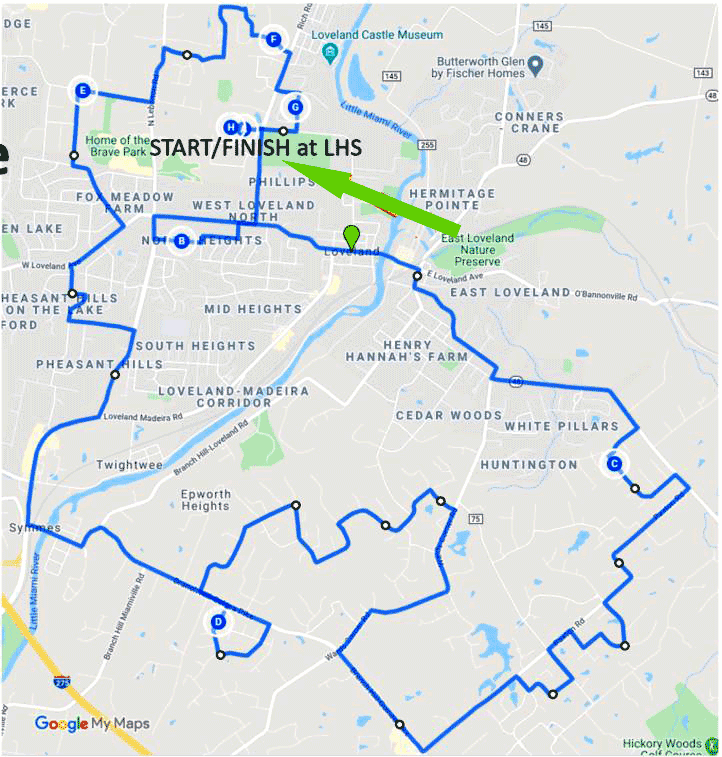
    • Meet at LHS 6:30 – 1st car will leave the south exit at 7 PM 
    • Will be thru downtown Loveland around 7:15
    • Route takes 52 minutes to drive and minimizes main roads and left hand turns while incorporating as many neighborhoods with 2 entrances/exits. (see image below) 

    Hope you can consider joining us and help celebrate the Class of 2021.

    Sincerely,

    Josh DeWitt

    Contacts: 

  • Bowling tournament will buy Autism Sensory Kits

    Bowling tournament will buy Autism Sensory Kits

    Dear Loveland Magazine Readers

    I am Travis Ellen, Lieutenant with Goshen Township Fire & EMS and member of Goshen Professional Firefighters Union Local IAFF 3932.

    On Wednesday May 12th we are hosting a bowling tournament in partnership with the Autism Society of Greater Cincinnati and AutismRocks Cincinnati at Eastgate Lanes.

    Bowling begins a 5 PM and last until close.

    Our goal this year is to raise enough money to purchase and place Autism Sensory Kits on every Medic Unit and Fire Engine in Clermont County.

    This plans to be a big event as we have so many local businesses and residents donating their time and money. We are currently at approximately 125 bowlers plus more volunteers. We will be having a silent auction, 50/50 raffles along with door prizes and more. DJ Parker along with his dad from AutismRocks and the Ken Anderson Alliance will be our live DJ. Please check out AutismRocks Cincinnati Facebook page for our flyer and more information about these amazing organizations.

    We would love to have you or your local fire station come out and be a part of this event and help us raise not only awareness, but preparedness for our most wonderful/beautiful people with autism.

    Thank you in advance for your participation,  

    Lieutenant Travis Ellen

    Goshen Township Fire & EMS 6576 Oakland Rd Loveland, OH 45140 Travis.ellen@goshen-oh.gov (513)207-6927 Cell

  • LIFE Food Pantry excited to be open to clients doing “Choice Pantry” shopping

    LIFE Food Pantry excited to be open to clients doing “Choice Pantry” shopping

    Dear Loveland Magazine Readers,

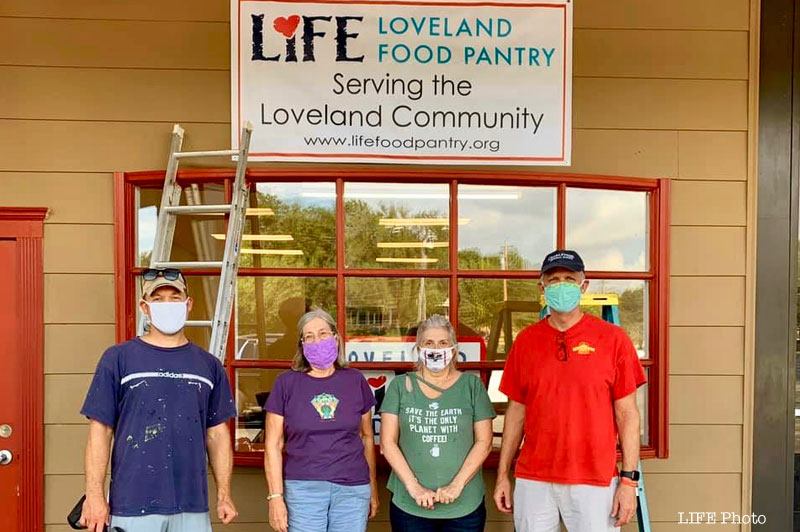
    The LIFE Food Pantry is so excited to be open to clients doing Choice Pantry shopping instead of curbside pickup!  Clients will bring their own bags and make their selections with a personal shopper—fresh produce, dairy, bakery items and meats are available along with shelf stable canned and packaged items such as pasta and sauce, soup, rice and so much more.  LIFE also offers household and personal care items. 

    In addition, LIFE has changed their service from every 28 days to every 14, so clients can come twice a month, making the most of the fresh items.

    LIFE is located at 541 Loveland Madeira Rd. in the Shopper’s Haven Plaza, serving all of the 45140 ZIP code area.  Hours are Tuesday through Saturday 10 AM until noon as well as Tuesday/Thursday 4 PM until 6:30 PM. 

    Please email lifefoodpantry@yahoo.com or call 513-583-8222 for additional information or questions.  And remember—we are having our annual Feed the Hungry campaign currently—just a small monthly recurring donation helps so many in need!

    Sincerely,

    Linda Bergholz, Director

  • Covid ‘doesn’t discriminate by age’: Serious cases on the rise in younger adults

    Covid ‘doesn’t discriminate by age’: Serious cases on the rise in younger adults

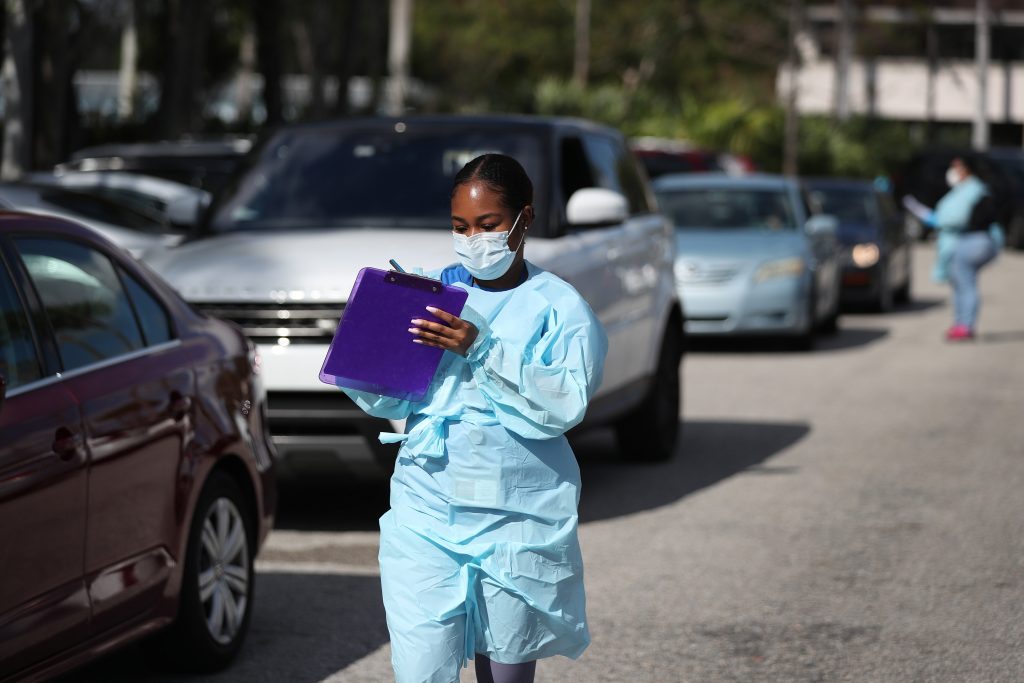
    Photo of drive-through COVID-19 screening by Joe Raedle/Getty Images.

    Guest Column By Will Stone, Kaiser Health News

    After spending much of the past year tending to elderly patients, doctors are seeing a clear demographic shift: young and middle-aged adults make up a growing share of the patients in covid-19 hospital wards.

    It’s both a sign of the country’s success in protecting the elderly through vaccination and an urgent reminder that younger generations will pay a heavy price if the outbreak is allowed to simmer in communities across the country.

    “We’re now seeing people in their 30s, 40s and 50s — young people who are really sick,” said Dr. Vishnu Chundi, a specialist in infectious diseases and chair of the Chicago Medical Society’s covid-19 task force. “Most of them make it, but some do not. … I just lost a 32-year-old with two children, so it’s heartbreaking.”

    Nationally, adults under 50 now account for the most hospitalized covid patients in the country — about 36% of all hospital admissions. Those ages 50 to 64 account for the second-highest number of hospitalizations, or about 31%. Meanwhile, hospitalizations among adults 65 and older have fallen significantly.

    About 32% of the U.S. population is now fully vaccinated, but the vast majority are people older than 65 — a group that was prioritized in the initial phase of the vaccine rollout.

    Although new infections are gradually declining nationwide, some regions have contended with a resurgence of the coronavirus in recent months — what some have called a “fourth wave” — propelled by the B.1.1.7 variant, first identified in the United Kingdom, which is estimated to be somewhere between 40% and 70% more contagious.

    As many states ditch pandemic precautions, this more virulent strain still has ample room to spread among the younger population, which remains broadly susceptible to the disease.

    The emergence of more dangerous strains of the virus in the U.S. — including variants first discovered in South Africa and Brazil — has made the vaccination effort all the more urgent.

    “We are in a whole different ballgame,” said Judith Malmgren, an epidemiologist at the University of Washington.

    Rising infections among young adults create a “reservoir of disease” that eventually “spills over into the rest of society” — one that has yet to reach herd immunity — and portends a broader surge in cases, she said.

    Fortunately, the chance of dying of covid remains very small for people under 50, but this age group can become seriously ill or experience long-term symptoms after the initial infection. People with underlying conditions such as obesity and heart disease are also more likely to become seriously ill.

    “B.1.1.7 doesn’t discriminate by age, and when it comes to young people, our messaging on this is still too soft,” Malmgren said.

    Hospitals Filled With Younger, Sicker People

    Across the country, the influx of younger patients with covid has startled clinicians who describe hospital beds filled with patients, many of whom appear sicker than what was seen during previous waves of the pandemic.

    “A lot of them are requiring ICU care,” said Dr. Michelle Barron, head of infection prevention and control at UCHealth, one of Colorado’s large hospital systems, as compared with earlier in the pandemic.

    The median age of covid patients at UCHealth hospitals has dropped by more than 10 years in the past few weeks, from 59 down to about 48 years old, Barron said.

    “I think we will continue to see that, especially if there’s not a lot of vaccine uptake in these groups,” she said.

    While most hospitals are far from the onslaught of illness seen during the winter, the explosion of cases in Michigan underscores the potential fallout of loosening restrictions when a large share of adults are not yet vaccinated.

    There’s strong evidence that all three vaccines being used in the U.S. provide good protection against the U.K. variant.

    One study suggests that the B.1.1.7 variant doesn’t lead to more severe illness, as was previously thought. However, patients infected with the variant appear more likely to have more of the virus in their bodies than those with the previously dominant strain, which may help explain why it spreads more easily.

    “We think that this may be causing more of these hospitalizations in younger people,” said Dr. Rachael Lee at the University of Alabama-Birmingham hospital.

    Lee’s hospital also has observed an uptick in younger patients. As in other Southern states, Alabama has a low rate of vaccine uptake.

    But even in Washington state, where much of the population is opting to get the vaccine, hospitalizations have been rising steadily since early March, especially among young people. In the Seattle area, more people in their 20s are now being hospitalized for covid than people in their 70s, according to Dr. Jeff Duchin, public health chief officer for Seattle and King County.

    “We don’t yet have enough younger adults vaccinated to counteract the increased ease with which the variants spread,” said Duchin at a recent press briefing.

    Nationwide, about 32% of people in their 40s are fully vaccinated, compared with 27% of people in their 30s. That share drops to about 18% for 18- to 29-year-olds.

    “I’m hopeful that the death curve is not going to rise as fast, but it is putting a strain on the health system,” said Dr. Nathaniel Schlicher, an emergency physician and president of the Washington State Medical Association.

    Schlicher, also in his late 30s, recalls with horror two of his recent patients — close to his age and previously healthy — who were admitted with new-onset heart failure caused by covid.

    “I’ve seen that up close and that’s what scares the hell out of me,” he said.

    “I understand young people feeling invincible, but what I would just tell them is — don’t be afraid of dying, be afraid of heart failure, lung damage and not being able to do the things that you love to do.”

    Will Younger Adults Get Vaccinated?

    Doctors and public health experts hope that the troubling spike in hospitalizations among the younger demographic will be temporary — one that vaccines will soon counteract. It was only on April 19 that all adults became eligible for a covid vaccine, although they were available in some states much sooner.

    But some concerning national polls indicate a sizable portion of teens and adults in their 20s and 30s don’t necessarily have plans to get vaccinated.

    “We just need to make it super easy — not inconvenient in any way,” said Malmgren, the Washington epidemiologist. “We have to put our minds to it and think a little differently.”

    This story is part of a partnership that includes NPR and KHN.

    Subscribe to KHN’s free Morning Briefing.

  • Transgender athlete bills don’t solve any pressing issue. They’re just bullying

    Transgender athlete bills don’t solve any pressing issue. They’re just bullying

    Getty Image

    Commentary by David C. DeWitt and Ohio Capital Journal

    Two bills are working their way through the Ohio General Assembly that do not solve any pressing issues in high school athletics; they simply target and needlessly victimize five Ohio children in a cynical attempt to score cheap political points.

    I’m referring to Ohio House Bill 61 and Senate Bill 132, which would ban transgender girls from joining female teams in high school and college athletics. They are sponsored by state Rep. Jena Powell, R-Arcanum, and state Sen. Kristina Roegner, R-Hudson.

    As OCJ has reported, out of about 400,000 Ohio high school athletes competing this year, five transgender girls opted to follow their gender identity and compete in women’s sports. Four transgender girls obtained approval in 2019-2020, two in 2018-2019, and none were approved between 2015 and 2017, according to the Ohio High School Athletic Association (OSHAA).

    OSHAA Director of Compliance Kristin Ronai (LinkedIn photo)

    OSHAA already has a policy regarding transgender athlete eligibility, and it seems to be working fine as OSHAA Director of Compliance Kristin Ronai told OCJ, “I personally, and the rest of our office, have not received one complaint about transgender athlete participation in the state of Ohio.”

    There’s no evidence of transgender girls taking scholarship opportunities away from anyone, she added, saying OSHAA’s policy for this exceedingly small population was crafted by experts, and no real problem exists for the legislation to solve.

    In North Carolina, Republican House Speaker Tim Moore killed a similar bill, telling the Associated Press it simply isn’t needed as there has been no verifiable problem with transgender women playing sports.

    Meanwhile, an expert who helped the NCAA establish its policy for transgender participation in 2011 and also advised the International Olympic Committee on the issue told NPR recently these bills are discriminatory when school sports are supposed to be about inclusivity, team-building and personal well-being, and they have no basis in science.

    “We know that men have, on average, an advantage in performance in athletics of about 10% to 12% over women, which the sports authorities have attributed to differences in levels of a male hormone called testosterone. But the question is whether there is in real life, during actual competitions, an advantage of performance linked to this male hormone and whether trans athletes are systematically winning all competitions. The answer to this latter question, are trans athletes winning everything, is simple — that’s not the case. And higher levels of the male hormone testosterone are associated with better performance only in a very small number of athletic disciplines: 400 meters, 800 meters, hammer throw, pole vault — and it certainly does not explain the whole 10% difference,” said Dr. Eric Vilain.

    “And lastly, I would say that every sport requires different talents and anatomies for success. So I think we should focus on celebrating this diversity, rather than focusing on relative notions of fairness. For example, the body of a marathon runner is extremely different from the body of a shot put champion, and a trans woman athlete may have some advantage on the basketball field because of her height, but would be at a disadvantage in gymnastics. So it’s complicated.”

    So why are Ohio Republicans and their colleagues in roughly 35 state legislatures around the country pursuing these bills?

    Well, it’s about the only LGBTQ+ issue remaining that polls well for them — and by “well” I mean it still polls in favor of the discrimination that they support. Complicated issues require thoughtfulness. Cultural hate-baiting does not.

    Back in 2004, Republicans were cynically wedging voters by using public opposition back then to same-sex marriage, driving voter turnout and banning it that year in 11 states including Ohio. The public in 2004 was opposed to same-sex marriage with 55% supporting changing the U.S. Constitution to ban it. Now support for same-sex marriage is at an all-time-high 70%.

    So if it’s no longer politically popular to promote discrimination against the LGBTQ+ community at-large, what is? Targeting transgender athletes and, really, targeting transgender people in general.

    The saddest thing about this to me is that transgender people — especially transgender people of color — have been leading the activist charge toward equality for the entire community since the beginning, literally throwing the first bricks at the Stonewall riots. And since the beginning, they’ve been the most victimized. Now they remain the most targeted and victimized, and they deserve allyship and support as much or more than ever.

    Given the polls and their own words, I have no doubt many of these Republican politicians are earnest in their support for discriminating against transgender people, but they also know it’s good politics for them. Perhaps they believe this is an actual issue that needs addressed. Perhaps. But the facts do not bear that out, and if they did an honest evaluation of the situation based on facts, expert testimony and science instead of political calculations and polling they would know that.

    So it remains that our Republican supermajority state legislature is spending its days crafting legislation to needlessly attack five children.

    These proposals victimize and attempt to villainize in the public mind an already vulnerable minority not to solve any real issue but for cynical political point-scoring. In essence, these politicians are saying that exploiting outrage politics is more important than acknowledging transgender people’s basic humanity and the harmful consequences of needlessly promoting discrimination against them.

    Driving public policy with this intentional wedge issue at the expense of children is at the least highly unethical and at worst horribly immoral. It’s bullying, and it encourages more bullying.

  • We need more than thoughts and prayers from our lawmakers in response to these tragedies

    We need more than thoughts and prayers from our lawmakers in response to these tragedies

    Dear Loveland Area Residents,

    we’re still learning the details of the deadly mass shooting at the FedEx facility in Indianapolis, Indiana. Eight people were shot and killed, and several others were wounded. We mourn for the victims and the survivors, and our hearts are with their loved ones and all those impacted by yet another mass shooting in the U.S.

    In the last several weeks, our country has witnessed multiple acts of gun violence. In Chicago, a police officer shot and killed 13-year-old Adam Toledo. In Brooklyn Center, Minnesota, a police officer shot and killed 20-year-old Daunte Wright. In Charlotte, North Carolina, two trans women were shot and killed in hotel rooms. In Knoxville, Tennessee, multiple students from Austin-East High School have been fatally shot in recent weeks. And in mass shootings in Boulder, Colorado; Baltimore County, Maryland; Orange, California; Allen, Texas; Rock Hill, South Carolina; and Atlanta, Georgia, multiple people were shot and killed in each location.

    In addition to each of these tragic shootings, so many others occur and never make headlines. The tragedy in Indianapolis is at least the 251st mass shooting since January 2009.1 And every day in the U.S. on average, more than 100 people are killed with guns, and more than 230 are wounded—the majority of which do not take place during mass shootings.

    We need more than thoughts and prayers from our lawmakers in response to these tragedies. We don’t have to live like this. Take action today to help end America’s gun violence crisis.

    The U.S. Senate needs to listen to the will of the American public and pass background check legislation now; it would be their first major gun safety law in 25 years. And at every level of government, lawmakers must prioritize gun safety and work to end gun violence in all of its forms. In the last year, Indiana’s weak gun laws and the pandemic have exacerbated gun violence, with multiple cities—including Indianapolis—seeing elevated numbers of gun homicides in 2020.

    The news of the mass shooting in Indianapolis comes at a time when we’re already thinking about the history of gun violence in America: Today marks 14 years since the mass shooting at Virginia Tech, which left 32 people shot and killed, and 17 others wounded. For all of the victims and survivors of gun violence across the country, we must honor their lives with action.

    Thank you for being a part of this movement, and thank you for everything you do to help end our country’s gun violence crisis.

    Contribute To End Gun Violence

    Sincerely,

    Everytown and Moms Demand Action

  • Ohio Republicans go full Calhoun on nullification. Never go full Calhoun

    Ohio Republicans go full Calhoun on nullification. Never go full Calhoun

    Commentary by David C. DeWitt from Ohio Capital Journal


    Ohio Republicans in the state legislature have apparently decided to go full Calhoun with a proposed bill attempting to nullify not only any federal gun laws they don’t like but also any court rulings related to gun laws with which they disagree.

    They do not possess the power to do this under the U.S. Constitution, the Ohio Constitution, or precedent set by the U.S. Supreme Court, the highest court in the land that some Ohio Republicans seemingly believe they have the power to flout. Again, they do not.

    As they’ve spent much of the COVID-19 pandemic wailing ignorantly in misunderstanding about the separation of powers in the Constitution and the checks and balances among government branches, they’ve turned most recently to proposing and passing laws defying these elemental aspects of American civics.

    Take first Ohio Senate Bill 22, which bestowed upon the state legislature veto authority over executive branch emergency and public health orders by concurrent resolution. Statehouse Republicans declared this was a response to the executive branch allegedly overstepping its authority — the authority the legislative branch itself gave the executive branch through law more than a hundred years ago — and their solution was to overstep their own authority.

    You see, the Ohio Constitution requires the General Assembly to actually pass law to exercise the power of law, not resolution. Laws must be signed by a governor, or a governor’s veto overridden by the legislature, in order to be enacted. This is an intentionally cumbersome process. A resolution requires neither. So simply ignoring the Ohio Constitution relieves them of this constitutional burden. The non-partisan Legislative Services Commission warned Republicans of the unconstitutionality of their proposal, and they ignored the LSC too.

    This middle finger in the face of the Ohio Constitution was even shepherded through the Ohio House by current speaker and former Ohio Supreme Court Justice Bob Cupp, who should definitely know better.

    Why did they do this? They do have the authority to rewrite law if they so wish. They could rewrite Ohio Revised Code and override the governor’s veto in doing so just as well. But apparently ignoring constitutionality was easier. This middle finger in the face of the Ohio Constitution was even shepherded through the Ohio House by current speaker and former Ohio Supreme Court Justice Bob Cupp, who should definitely know better.

    Now comes House Bill 62 that seeks to declare any federal law, executive order, administrative action, or court ruling to be “null, void, and of no effect in this state” if it infringes upon the Second Amendment. This attempt by a state legislature to overrule federal law and courts is called nullification, and as a concept, it has never once been upheld in federal court in American history. Its most ignominious test came when the state of South Carolina attempted to nullify federal tariff law in 1832-33, led by slaver and slavery advocate John C. Calhoun.

    Courts at the state and federal level, including the U.S. Supreme Court, repeatedly have declared that under the Supremacy Clause of the U.S. Constitution, federal law is superior to state law, and that under Article III of the U.S. Constitution, the federal judiciary has the final power to interpret the Constitution. Ohio even lost its own fight over nullification in a battle against the Bank of the United States in 1824.

    But Ohio Statehouse Republicans’ self-contradictory views of home rule and local control appear to be based exclusively on their own political whims and no discernable standards or principles for the exercise of self-government.

    Plastic bags? According to the General Assembly, local government has no right to home rule or local control in regulating them. Nor, say Ohio Republicans, can locals decide against allowing the fossil fuel industry to run amok in their communities, injecting waste into their land while these fracking wells provide zero economic benefit to the area affected. But sustainable energy is a severe threat to home rule, the foulest tyranny, according to the Ohio General Assembly and its blissful lack of self-awareness.

    And how can we forget the gun issue itself? Ohio Statehouse Republicans appear to believe that the state can trump federal laws relating to guns and ignore any and all courts, but Ohio cities have stepped high above their station indeed for attempting to regulate guns themselves without the General Assembly’s approval.

    Power for me and not for thee appears to be Statehouse Republicans’ only real governmental operating ethos.

    Power for me and not for thee appears to be Statehouse Republicans’ only real governmental operating ethos.

    While the self-contradictions on the roles of levels of government show a political agenda with no consistent civic principles behind it, the real failure here is to take any sort of thoughtful long-view. I can only imagine their caterwauling if Statehouse Republicans were the victims of this kind of power grab instead of the perpetrators. I don’t even have to imagine it. Former Ohio Gov. John Kasich ate Statehouse Republicans’ lunch by using executive power to expand Medicaid in Ohio under the Affordable Care Act against their wishes.

    But let’s say Ohio Republicans don’t manage a permanent supermajority in the Statehouse, and that some day, perhaps decades from now, a Democratic General Assembly declares itself above the authority of the courts to decide issues of religious freedom, or abortion rights, or LGBTQ rights, or gun rights. Do you think Ohio Republicans would humbly accept the consequences of the path they’ve endorsed and chosen, or do you think they’d play the shameless hypocrite and contradict themselves entirely? I know my bet.

    It’s hard to take people seriously who do not take themselves nor the basics of American civics seriously.

    Due to extreme gerrymandering and the extremist and corrupt politics it breeds, however, Ohioans will be forced to continue to endure for some time longer a General Assembly that sees a radical faction of one political party and high-dollar donor special interests as their only true constituencies.

    The rest of us and our pesky constitutions, judicial precedents, rule of law, checks and balances, and separation of powers be damned.

  • I’m a climate scientist – here’s three key things I have learned over a year of COVID/ Covering Climate Now

    I’m a climate scientist – here’s three key things I have learned over a year of COVID/ Covering Climate Now

    Loveland Magazine is one of the 400 news outlets worldwide, with a combined audience of over 2 billion people “Covering Climate Now”, a global journalism initiative committed to bringing more and better coverage to the defining story of our time.

    The initiative, was co-founded by The Nation and Columbia Journalism Review

    Mihaela Manova is “Covering Climate Now” in Loveland, Ohio as an editor for Loveland Magazine

    Today’s article is written by Piers Forster for The Conversation. Forster talks about climate from a scientific point of view, summarizing the key points of his findings during COVID-19. According to the website, “The Conversation is a nonprofit, independent news organization dedicated to unlocking the knowledge of experts for the public good.” Permission to repost: Covering Climate Now.


    The planet had already warmed by around 1.2℃ since pre-industrial times when the World Health Organization officially declared a pandemic on March 11 2020. This began a sudden and unprecedented drop in human activity, as much of the world went into lockdown and factories stopped operating, cars kept their engines off and planes were grounded. 

    There have been many monumental changes since then, but for those of us who work as climate scientists this period has also brought some entirely new and sometimes unexpected insights.

    Here are three things we have learned:

    1. Climate science can operate in real time

    The pandemic made us think on our feet about how to get around some of the difficulties of monitoring greenhouse gas emissions, and CO₂ in particular, in real time. When many lockdowns were beginning in March 2020, the next comprehensive Global Carbon Budget setting out the year’s emissions trends was not due until the end of the year. So climate scientists set about looking for other data that might indicate how CO₂ was changing.

    We used information on lockdown as a mirror for global emissions. In other words, if we knew what the emissions were from various economic sectors or countries pre-pandemic, and we knew by how much activity had fallen, we could assume that their emissions had fallen by the same amount.

    By May 2020, a landmark study combined government lockdown policies and activity data from around the world to predict a 7% fall in CO₂ emissions by the end of the year, a figure later confirmed by the Global Carbon Project. This was soon followed by research by my own team, which used Google and Apple mobility data to reflect changes in ten different pollutants, while a third study again tracked CO₂ emissions using data on fossil fuel combustion and cement production.

    The latest Google mobility data shows that although daily activity hasn’t yet returned to pre-pandemic levels, it has recovered to some extent. This is reflected in our latest emissions estimate, which shows, following a limited bounce back after the first lockdown, a fairly steady growth in global emissions during the second half of 2020. This was followed by a second and smaller dip representing the second wave in late 2020/early 2021.

    Meanwhile, as the pandemic progressed, the Carbon Monitorproject established methods for tracking CO₂ emissions in close to real time, giving us a valuable new way to do this kind of science.

    2. No dramatic effect on climate change

    In both the short and long term, the pandemic will have less effect on efforts to tackle climate change than many people had hoped. 

    Despite the clear and quiet skies, research I was involved in found that lockdown actually had a slight warming effect in spring 2020: as industry ground to a halt, air pollution dropped and so did the ability of aerosols, tiny particles produced by the burning of fossil fuels, to cool the planet by reflecting sunlight away from the Earth. The impact on global temperatures was short-lived and very small (just 0.03°C), but it was still bigger than anything caused by lockdown-related changes in ozone, CO₂ or aviation.

    Looking further ahead to 2030, simple climate models have estimated that global temperatures will only be around 0.01°C lower as a result of COVID-19 than if countries followed the emissions pledges they already had in place at the height of the pandemic. These findings were later backed up by more complex model simulations.

    3. This isn’t a plan for climate action

    The temporary halt to normal life we have now seen with successive lockdowns is not only not enough to stop climate change, it is also not sustainable: like climate change, COVID-19 has hit the most vulnerable the hardest. We need to find ways to reduce emissions without the economic and social impacts of lockdowns, and find solutions that also promote health, welfare and equity. Widespread climate ambition and action by individuals, institutions and businesses is still vital, but it must be underpinned and supported by structural economic change.

    Colleagues and I have estimated that investing just 1.2% of global GDP in economic recovery packages could mean the difference between keeping global temperature rise below 1.5°C, and a future where we are facing much more severe impacts – and higher costs. 

    Unfortunately, green investment is not being made at anything like the level needed. However, many more investments will be made over the next few months. It’s essential that strong climate action is integrated into future investments. The stakes may seem high, but the potential rewards are far higher.

  • [Urgent Message] Everytown for Gun Safety and Moms Demand Action

    [Urgent Message] Everytown for Gun Safety and Moms Demand Action

    Dear Loveland Area Families,

    As families in Atlanta and countless other communities are still grieving after recent tragic shootings, we’re learning the details of the heartbreaking mass shooting in which at least ten people were shot and killed at a supermarket in Boulder, Colorado.

    We need more than thoughts and prayers from our elected leaders to end gun violence in our communities. That’s why we’re demanding action, and we want you to join us.

    Right now, no matter where you live, there are many ways you can take action with Everytown for Gun Safety and our local Moms Demand Action volunteer chapters in all 50 states and D.C.Take action now and join the movement to end gun violence.

    We’ll be in touch with more ways you can take action soon. Thank you for being with us.

  • Honoring Black history and fighting for the future of education in Ohio

    Honoring Black history and fighting for the future of education in Ohio

    A Guest Column by Melissa Cropper and Ohio Capital Journal

    On Feb. 1, as Black History Month began in Ohio’s classrooms and virtual classrooms, Gov. Mike DeWine unveiled his proposed budget for the next two years, which continues the education funding policies that systematically underfund public schools that educate Black students and even shift some of that funding away toward unaccountable, for-profit private schools. 

    Black History Month is an important time for our nation’s educators to focus their curriculum around the contributions that African Americans have made in government, industry, art, science, literature, and every field of human endeavor. However, we do a disservice to our students if we don’t also teach about the harder, more painful history of slavery, segregation, disenfranchisement, and racist violence, and if we do not weave it into our everyday curriculum as deeply as it is woven into the fabric of our country.

    Even then, we are not telling the full story if we teach about these topics as relics of the past, as dark chapters of our country’s past that have ended. Racist structures in our society didn’t cease to exist when the Thirteenth, Fourteenth and Fifteenth Amendments were ratified following the Civil War, or after Brown vs. the Board of Education desegregated schools, or after the 1964 Civil Rights Act, or even after Barack Obama’s historic election. 

    Each of those events has been an important step along the way, but as we are reminded all too often, the vestiges of white supremacy live on in our current institutions. We see it in the over-policing and incarceration of Black, brown, and immigrant communities, we see it in our city neighborhoods that were shaped by redlining, and we see it in Ohio’s school funding system. 

    When we teach Black history, educators can make the connections about how the racial injustices of the past have turned into the systemic racial disparities of the present, and how we can demolish the underpinnings of injustice. There is no better place to start than with our broken school funding policies which underfund and segregate schools with large populations of Black students.

    In Ohio, we underfund schools in Black communities with a school funding formula that was found unconstitutional by the Ohio Supreme Court more than 20 years ago because it relied so heavily on local property taxes that it denied an equitable and adequate education to students in low-income areas. 

    We segregate schools in Black communities with voucher and charter policies that divert students and drain funding from local public schools. Often cloaked in the language of racial justice, vouchers and charter schools have the opposite effect when put into practice. The NAACP has often opposed these policies because they “divert much needed funding for public education to private or charter schools, thereby further dismantling the viability of the public education system and limiting the number of children who would be afforded the opportunity of an adequate and effective education.”

    This vicious cycle of underfunding schools in communities of color, and then punishing them for not being able to meet their students’ needs by underfunding them further, must end. We must stop pitting parents and communities against one another, and instead renew our commitment for high quality public schools for all Ohio students. 

    Last year, the Ohio House passed the Fair School Funding Plan with an overwhelming bipartisan majority, yet the Senate refused to take the issue up. The Plan would have put Ohio on a six-year path toward equitable funding of public schools in Ohio, and would have immediately ended punitive and harmful deductions for vouchers and charter schools from local public school funds. 

    This would ensure that public school districts receive money only for the students who are enrolled to attend but without the added penalty of deducting money due to students opting for private or charter schools. These changes would strengthen schools in Ohio’s cities and in our rural areas, giving students from all backgrounds increased opportunities. Despite the Fair School Funding Plan receiving an 84-8 vote in the House, the Ohio Senate allowed the bill to die without even receiving a vote. 

    DeWine had the opportunity to take the hard work and bipartisan agreement for this new school funding formula and insert it as a framework into his budget proposal. Instead, his proposal continues the status quo which is actively undermining our ability to provide an equitable education.  

    As educators, we can not teach Black History without also being activists in our own realm, fighting for an education system that gives every child, no matter their race or where they live, equal access to a high quality, free public education.