Author: Loveland Magazine

  • [Just Announced] Appointments for the COVID-19 vaccine available in Hamilton County

    [Just Announced] Appointments for the COVID-19 vaccine available in Hamilton County

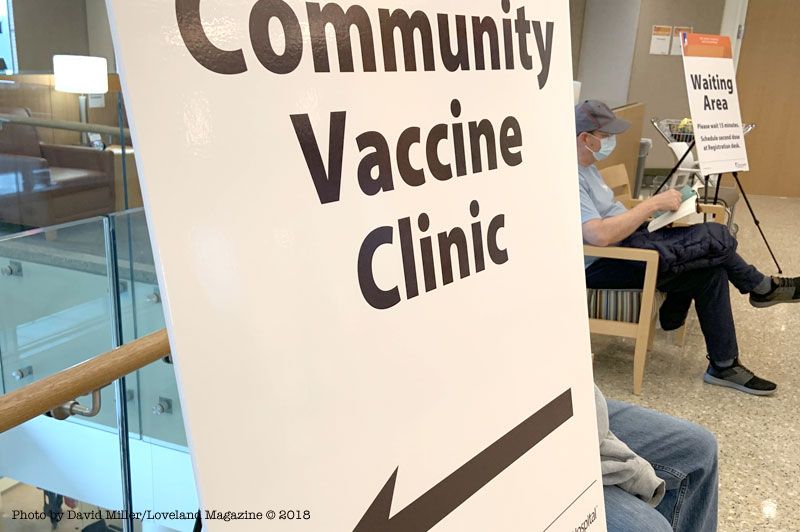
    Hamilton County, Ohio – Hamilton County Public Health has announced today that appointments are available for the COVID-19 vaccine this week. See below for location and appointment scheduling details (appointments are required – walk-ins will NOT be accepted).

    Scheduling is done through ArmorVax. Appointments can be accessed through the ArmorVax App (available in the Google Play or Apple App store) OR the links provided under each location.

    If you have an ArmorVax account – skip to the log-in step (you DO NOT need to create a new account!). If you do not have an ArmorVax account, create a new patient account (instructions below).

    Creating a new patient account. PDF step by step instructions for creating an account on the ArmorVax website Each person over the age of 18 needs to have their own account and personal email address. Minors need to be added as a family member under a parent or legal guardian account (parent or guardian will need to create their account first). Once you fill in your information you will be emailed a one-time password (to the email address you created the account with). Make sure to check your junk or spam folder.

    Click the link and log-in with your email and the one-time password (or log in with the ArmorVax app if you’re planning on using the app codes). Every time you log in you will need to request a new one-time password.

    On the map, click the location of the clinic in your community (The location will be named the same as the event location) If no appointments are listed for that location, none are available (the website and app may say “all appointments are already scheduled.”). If appointments at the locations are full but there are other clinics available, ArmorVax will reroute you to a public map that shows clinics hosted by other providers. Eligibility for those appointments may vary and is determined by other providers.

    SCHEDULE FOR APRIL 6TH:

    Delhi Senior Center Address: 647 Neeb Rd, Cincinnati, OH 45233 When: April 6th, 2021 (appointments required) Vaccine: Pfizer # of appointments available: 75 Schedule with web browser: https://armorvax-app.azurewebsites.net/Home/Invitation?code=8KU-J3C Schedule via ArmorVax app: Use code 8KU-J3C

    Woodlawn Community Center Address: 10050 Woodlawn Blvd, Cincinnati, OH 45215 When: April 6th, 2021 (appointments required) Vaccine: Pfizer # of appointments available: 100 Schedule with web browser: https://armorvax-app.azurewebsites.net/Home/Invitation?code=ID7-REF Schedule via ArmorVax App: Use code IDF-REF   SCHEDULE FOR APRIL 7TH

    Lifespring Church Address: 1373 W Galbraith Rd, Cincinnati, OH 45231 When: April 7th, 2021 (appointments required) Vaccine: Pfizer # of appointments available: 133 Schedule with web browser: https://armorvax-app.azurewebsites.net/Home/Invitation?code=G79-Y1G Schedule via ArmorVax App: Use code G79-Y1G
  • U.S. Department of Housing and Urban Development awarded $1 million to People Working Cooperatively

    U.S. Department of Housing and Urban Development awarded $1 million to People Working Cooperatively

    Hamilton, Ohio – The U.S. Department of Housing and Urban Development (HUD) today awarded $5 million in demonstration grants to five local government and non-profit organizations across the nation to help households with young children or seniors promote energy efficiency and healthy housing. The City of Toledo and People Working Cooperatively, Inc in Cincinnati each were awarded $1 million to promote healthy housing.

    The funding announced today promotes the coordinated delivery of services by local HUD-funded Lead Hazard Reduction and Weatherization Assistance Programs funded by the U.S. Department of Energy (DOE). This model will provide additional benefits to low-income households in the form of lower energy costs and a reduction in residential health and safety hazards.  Read a complete project-by-project summary of the programs awarded grants today.

     “These grants will allow local programs to explore different strategies to increase the supply of safe and energy-efficient housing for low-income households,” said HUD Secretary Marcia Fudge. “These services are expected to both improve resident health and reduce emissions of greenhouse gases.”

     “Both of the programs supported through these grants target services to similar populations and housing. Coordinating services enhances the benefits to households and can reduce program costs by achieving greater efficiencies compared to the usual independent provision of program services,” said Matt Ammon, Director of the Office of Lead Hazard Control and Healthy Homes. “We know that substandard housing contributes to injury and illness, which is entirely preventable.”

     HUD’s Office of Lead Hazard Control and Healthy Homes promotes state and local efforts to eliminate dangerous lead-paint and other housing-related health and safety hazards from lower income homes, stimulate private sector investment in lead hazard control, support cutting-edge research on methods for assessing and controlling housing-related health and safety hazards, and educate the public about the dangers of hazards in the home.

    People Working Cooperatively (PWC) will partner with the City of Cincinnati and the Hamilton County Health Department to demonstrate the cost savings and impact of integrating services from the Home Weatherization Assistance Program (HWAP) and Lead Hazard Control (LHC) programs.  PWC will conduct the HWAP services and Cincinnati and the Hamilton County Health Department will execute their LHC programs. PWC will partner with Cincinnati Children’s Hospital and the U. of Cincinnati for health-based referrals. The project will develop common enrollment applications, common assessment tools and cross-train staff and technicians to provide coordinated LHC, HWAP and other Healthy Homes services to minimum of 50 households. Contact Person/Authorizing Official: Jeffrey Pitts; pittsj@pwchomerepairs.org.

    Go to this link to find out more about People Working Cooperatively and see if you qualify for their services or have skills that will help them with their mission.

    Saving Homes. Restoring Pride. 

    For more than 45 years, PWC has been strengthening our communities by providing critical home repairs, energy conservation, and accessibility modification services in an effort to help residents remain independent and healthy in their homes. PWC proudly performs more than 8,000 services for eligible homeowners each year, whose typical income is just $14,000 a year. Often, these individuals face challenges due to illness, disability, job loss, or other circumstances.

    PWC is supported by a robust group of more than 110 licensed, professionally trained staff members and administrative personnel. In addition, PWC boasts a dedicated corps of 3,500-plus volunteers making it one of the largest volunteer corps in the region. Together, PWC volunteers and skilled staff are in more than 4,500 homes annually assisting nearly 9,000 individuals in southwestern Ohio, northern Kentucky, and southeast Indiana.

  • Pfizer vaccine may soon be offered to high schools in Ohio

    Pfizer vaccine may soon be offered to high schools in Ohio

    Governor DeWine announced that he has asked Ohio’s local health departments and vaccine providers that are offering the Pfizer vaccine to coordinate with local high schools to offer vaccinations to high school students who are 16 or older. Pfizer is the only vaccine that is currently approved for children as young as 16. 

    Today’s announcement follows last week’s announcement that vaccination clinics will be offered at all higher education campuses in the coming weeks. 

    “As with our colleges, by taking vaccines to schools, we’ll increase the percentage of people in this age group who choose to get vaccinated,” said Governor DeWine.

  • Planned Parenthood sues Ohio over telemedicine abortion law

    Planned Parenthood sues Ohio over telemedicine abortion law

    By Susan Tebben and Ohio Capital Journal

    The national and state chapters of Planned Parenthood sued the state of Ohio Thursday over a law set to go into effect in mid-April that prohibits abortion services conducted through telemedicine.

    The lawsuit regards Senate Bill 260, signed into law in January and banning an available telehealth option for what’s called a medication abortion. In a medication abortion, a two-pill regimen is given to a patient, as opposed to removing a fetus or fetal tissue surgically.

    The telemedicine abortion law prohibits physicians from conducting abortions or providing abortion-inducing drugs to a pregnant person without the physical presence of a physician. Violating the law could result in a fourth-degree felony charge for the physician.

    Currently, abortion in Ohio is legal up to 22 weeks gestation.

    Ohio currently requires at least two visits to a health center before an abortion can take place, once for an ultrasound and discussion with a physician about the procedure, and another at least 24 hours later for the actual abortion.

    With medication abortion, the second visit does not have to occur at one of Planned Parenthood’s ambulatory surgical clinics, but can instead happen at one of the health centers that may be closer to the patient, staffed with a nurse practitioner, midwife or advanced practice registered nurse on site, according to the clinics.

    “Once at a health center services as a telemedicine medication abortion site, a patient is connected by videoconference with a physician located in Cincinnati, or in East Columbus, or Bedford Heights,” the lawsuit states.

    The medicine is ingested “under observation by the physician,” and a health center staff member is present in person.

    According to Planned Parenthood, the telehealth option helps, as it does in other medical fields, with medical care that could be limited in certain communities.

    “Ohio is one of the most medically underserved states in the country, a problem particularly felt by Black communities, people of color, as well as the LGBTQ+ community in our state,” said Iris Harvey, president and CEO of Planned Parenthood of Greater Ohio, in a statement. “Telemedicine is key tool to address those disparities.”

    The suit, filed in Hamilton County Court of Common Pleas because of the Planned Parenthood Southwest Ohio Region listed as a party, claims the law “irrationally prohibits abortion providers from using telemedicine to provide medication abortion to Ohioans.”

    “SB 260 carries felony criminal penalties and draconian civil and professional sanctions for abortion providers who violate it,” the suit states.

    The suit was filed against the Ohio Department of Health, ODH director Stephanie McCloud, the State Medical Board of Ohio, along with prosecutors of Hamilton County, Franklin County and Cuyahoga County, all of which have Planned Parenthood clinic locations.

    The system of clinics is asking the court to prevent local prosecutors and state agencies from enforcing the law because it “blatantly violates the Ohio Constitution’s guarantees of substantive due process, equal protection and free choice in health care,” according to court documents.

    The suit even claims abortion access would be cut off completely in Butler, Mahoning and Richland counties, which would go against current Ohio law allowing abortions for pregnancies up to 22 weeks.

    The clinics also noted state officials’ praise of telemedicine in other types of medicine. The state has also passed legislation to lessen telemedicine regulations as they were attempting to ban the use of it in abortion services.

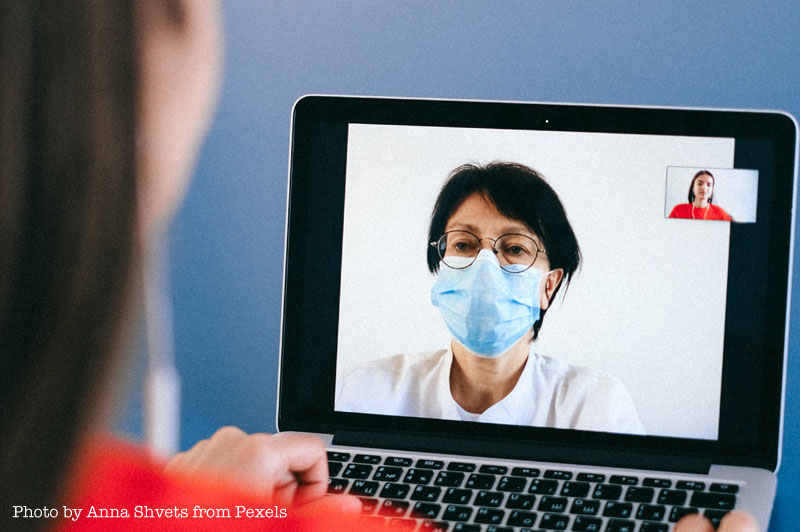
    Telemedicine has become a hot topic amid the pandemic, as use of the services for everything from primary care to dentistry increased during stay-at-home orders and precaution protocols.

    The lawsuit cited the federal Centers for Medicare and Medicaid Services, which called telemedicine “a cost-effective alternative” to traditional medical care.

  • Proposals call for expanded passenger rail service in Ohio

    Proposals call for expanded passenger rail service in Ohio

    Biden administration, Amtrak proposing new passenger rail connecting Ohio’s “Three-C” cities

    By Tyler Buchanan and Ohio Capital Journal

    The possibility of expanded passenger rail service in Ohio has some residents brainstorming how it might impact their lives.

    A Columbus resident imagines being able to take a train to Chicago, a place they haven’t been “in ages.” A baseball fan from Dayton thinks he’d be able to attend games at Cleveland’s Progressive Field more often. A bicyclist considers the possibility of riding cross-state to another city then taking the train back.

    These opportunities would still be years away from taking shape. The Biden administration wants to get the ball rolling on this idea as part of a $2 trillion infrastructure and jobs proposal made public on Wednesday.

    The sweeping plan calls for making a variety of improvements to America’s transportation grid. The administration also wants improvements made to drinking water systems; high-speed broadband for all Americans; and rehabbing projects for millions of homes, commercial buildings, schools, hospitals, child care facilities, and federal buildings.

    President Biden, a longtime Amtrak rider and supporter, wants to invest tens of billions of dollars to build new train routes throughout the country. His plan separately calls for more than $100 billion in spending toward repairing and modernizing other public transit systems.

    In order to pay for this infrastructure package, Biden wants to raise the corporate tax rate and prevent companies from writing off expenses accrued from offshoring jobs.

    President Biden is proposing a major investment toward expanding passenger rail service throughout the United States. Here is a proposed map for expanded service from Amtrak.

    Amtrak has publicized its own “Vision to Grow Rail Service Across America” map with a goal of building new routes to unserved cities within the next 15 years.

    Most notably for Ohioans is a proposal to build new Amtrak routes connecting Cincinnati, Columbus and Cleveland. The initial concept is to have three round trips per day, with stations in other communities placed along the route (such as Dayton).

    Amtrak currently operates several routes which travel along the north and south edges of the state and its growth plan calls for increasing service along these routes. Additional routes connecting the Ohio’s largest cities would be a significant development, transit advocates and local officials believe.

    “This is bold,” said Stu Nicholson, executive director of the transportation advocacy group All Aboard Ohio. “This is a huge, bold move in terms of both infrastructure overall and transportation in particular.”

    It has been 40 years since Ohio last saw passenger trains on the “Three-C Corridor.” Bringing it back, Nicholson said, will have major tourism and economic ramifications for the state.

    “Three trains a day doesn’t seem like a lot, but it’s three trains more than we have now,” Nicholson added.

    City councils in Cincinnati, Columbus, Cleveland, Dayton and elsewhere have all passed resolutions in recent months supporting Amtrak rail expansion.

    How Ohioans think they might benefit from expanded rail service

    A zoomed-in look at Amtrak’s proposed service map impacting Ohio. Dark blue lines indicate existing services, while light blue and yellow lines indicate new or enhanced rail service.

    The Ohio Capital Journal sought input from Ohioans on these proposals and asked on social media what they might use expanded passenger rail for.

    Andrew Gutierrez, a resident of Cincinnati, said it would help with seeing family members during the holiday season.

    “It would definitely make travel less stressful seeing in-laws in Cleveland, especially during the winter,” Gutierrez responded. “Maybe not quicker, but it’s at least an option.”

    Leslie Hughes also said she would utilize passenger rail to travel from Franklin County to other states to see relatives.

    “As a newly retired person, visiting family by train in nearby states would give me great hope for enjoying my later years,” she said.

    Here is a selection of other responses:

    https://twitter.com/WindingDot/status/1377627351157252101?ref_src=twsrc%5Etfw%7Ctwcamp%5Etweetembed%7Ctwterm%5E1377627351157252101%7Ctwgr%5E%7Ctwcon%5Es1_c10&ref_url=https%3A%2F%2Fohiocapitaljournal.com%2F2021%2F04%2F02%2Fproposals-call-for-expanded-passenger-rail-service-in-ohio%2F

    Ohio transit funding

    These infrastructure proposals come as Gov. Mike DeWine signed the two-year, $8.3 billion Ohio transportation budget into law on Wednesday. The governor had originally suggested massive cuts to state funding for public transportation, but lawmakers restored the funding to pre-pandemic levels.

    DeWine acknowledged Thursday that “we certainly have infrastructure needs” in Ohio, but said he hadn’t given a full look to Biden’s proposals.

    Unlike highways, public transportation has no dedicated revenue stream within the state budget, meaning this investment is dependent on lawmakers’ decision-making every two years when a new transportation budget is approved.

    As reported, the funding approved in this budget helps benefit the many urban and rural transit systems throughout Ohio. They will also receive federal relief funding approved by Congress that is meant to recoup losses sustained during the pandemic. 

    The Ohio Department of Transportation’s 2015 Transit Needs Study outlined that a vastly larger investment into public transit is necessary to fully improve and maintain the state’s transit offerings.

    A recent state infrastructure report card from the American Society of Civil Engineers graded Ohio’s infrastructure as being a C-, with the “ Transit” category receiving a D grade.

  • After financing xenophobic campaign, FirstEnergy deplores anti-Asian bigotry

    After financing xenophobic campaign, FirstEnergy deplores anti-Asian bigotry

    By Marty Schladen and Ohio Capital Journal

    There has been a terrifying surge in violence against Asians over the past year, prompting one Ohio company to take a stand on an issue it was arguably on the other side of in 2019.

    Meanwhile, Ohio’s lieutenant governor is digging in over comments he made last week. (Ohio Lt. Gov. bashes China on coronavirus, won’t address Trump)

    There has been a drumbeat of random violence against Asians throughout the coronavirus pandemic. 

    Earlier this month, a man went on a shooting rampage in the Atlanta area, killing eight. Six of those victims were Asian women. Then on Monday, sickening surveillance footage showed a man in New York kicking a 65-year-old Asian woman in the stomach and then twice kicking her in the head and saying “you don’t belong here.

    The attacks are part of an alarming trend. Nearly 3,800 instances of anti-Asian hate — most of them verbal — were reported to Stop AAPI Hate over the past year. The organization said many more unreported incidents have undoubtedly taken place.

    Researchers have linked the increase in anti-Asian hate to former President Donald Trump’s rhetoric regarding the coronavirus. He repeatedly referred to it as the “China virus” and the “Kung flu.”

    Last Friday, one Ohio company condemned violence against Asians.

    “FirstEnergy condemns the rise in violence across the country and stands firm in our support of the Asian-American community — which includes many of our employees, customers, suppliers and stakeholders,” the company said in a tweet.

    As Dave Anderson of the Energy and Policy institute flagged over the weekend, that’s a far cry from the tone of FirstEnergy-financed advertising during the 2019 fight over House Bill 6 — a $1.3 billion energy bailout that morphed into one of the biggest corruption scandals in Ohio history.

    After Gov. Mike DeWine signed the bailout law, FirstEnergy and related interests funded a furious fight to stop a citizen initiative to repeal it. Much of the campaign consisted of bogus claims that the repeal effort was really a Chinese conspiracy to take over Ohio’s power grid. Some of the rhetoric in the million-dollar campaign might even have surpassed Trump’s.

    “They took our manufacturing jobs,” one spot ominously opens. “They shuttered our factories. Now they’re coming for our energy jobs. The Chinese government is quietly invading our electric grid.”

    As the ad makes these assertions, it flashes video of Chinese President Xi Jinping at a Communist Party function.

    In another ad meant to scare Ohioans from signing the petition to repeal the bailout, the FirstEnergy-funded effort again falsely linked bailout opponents to China.

    “Warning!” it said. “Don’t give your personal information to the Chinese government. Don’t sign their petition allowing China control over Ohio.” 

    Asked about the contrast between the stance FirstEnergy took last week and the advertising campaign it helped fund in 2019, a spokeswoman said that the company is under new management.

    “FirstEnergy’s new leadership team is fully committed to diversity and inclusion and condemning violence and discrimination against Asian Americans,” the spokeswoman, Jennifer Young, said in an email. “We stand behind our statement and will continue to support and foster a workplace and world where all races, ethnicities and other targeted groups are valued and respected.”

    Indeed, in October the company fired CEO Chuck Jones and other top executives after an internal investigation found that the company had made a $4 million payment to DeWine’s appointee to Ohio’s utility regulator just before the HB 6 fight heated up. 

    As FirstEnergy works to move past the rhetoric of 2019, Ohio’s lieutenant governor is digging in on rhetoric from last week.

    On Friday, as FirstEnergy was denouncing anti-Asian violence, Lt. Gov. Jon Husted tweeted a story about Robert Redfield, former director of the U.S. Centers for Disease Control and Prevention. Without providing evidence, Redfield claimed that the coronavirus had escaped from a laboratory in Wuhan, China — a claim the World Health Organization called “extremely unlikely.”

    Despite that information being in the Axios story, Husted tweeted the story with the question, “So it appears it was the Wuhan Virus after all?

    Ohio Sen. Tina Maharath, D-Columbus, is the daughter of Laotian refugees. She told the Associated Press that Husted’s comments echoed Trump’s and only aggravated anti-Asian sentiment.

    Husted denied that.

    “I was just pointing out that this is an international crisis, in my opinion, that the Chinese government is responsible for and I wanted an independent investigation,” he told the AP. “So I wasn’t trying to accomplish anything that the political left or political right thinks that I might have from that tweet other than to draw attention to the issue.”

    In an article in the prestigious journal Nature Medicine, virologist Angela L. Rasmussen said that the “virus probably evolved in a bat host until an unknown spillover event into humans occurred.”

    She called claims that the pandemic started with a laboratory accident or intentional engineering “outright ridiculous conspiracy theories.”

    As for placing blame for the pandemic on government responses, there seems to be plenty of that to go around. 

    Deborah Birx, Trump’s coronavirus response coordinator, last weekend suggested to CNN that Trump’s bungled response to the pandemic may have cost hundreds of thousands of lives. A Trump supporter, Husted has avoided criticizing Trump’s coronavirus response.

  • Increase in COVID 19 cases and variant spread

    Increase in COVID 19 cases and variant spread

    “We can win this race as long as we don’t falter; as long as we press on with consistent masking and vaccination.” – Dr. Bruce Vanderhoff, chief medical officer at the Ohio Department of Health

    Loveland, Ohio – For the past two Thursdays, Ohio’s statewide average was just under 150 cases per 100,000 population. The two-week case rate has now risen to 167.1 cases per 100,000. New cases had been relatively flat through the month of March, but cases are beginning to increase once again, which demonstrates the necessity that Ohioans choose to be vaccinated. To date, nearly 30 percent of Ohioans have received at least one dose of vaccine. 

    According to Dr. Bruce Vanderhoff, chief medical officer at the Ohio Department of Health, variant activity continues to rise, closely mirroring what is occurring in the rest of the nation. Michigan is currently experiencing an increase in cases that is more than 3.5 times what Ohio is seeing, and according to the Centers for Disease Control and Prevention (CDC), this increase appears to be driven substantially by variants. Most of Ohio’s rising case numbers and variant cases are happening in the area of the state bordering Michigan. 

    “Ohio remains in a race against a virus that is now more contagious and right back on our heels,” said Dr. Vanderhoff. “We can win this race as long as we don’t falter; as long as we press on with consistent masking and vaccination, especially in light of this week’s important and encouraging research out of the CDC confirming that the vaccines are powerful protection against COVID-19 and its variants.”

    Governor DeWine announced today that as Ohio continues to receive increases in its vaccine allotment, the state will allot more doses to areas that are seeing case spikes or increases in vaccine demand.

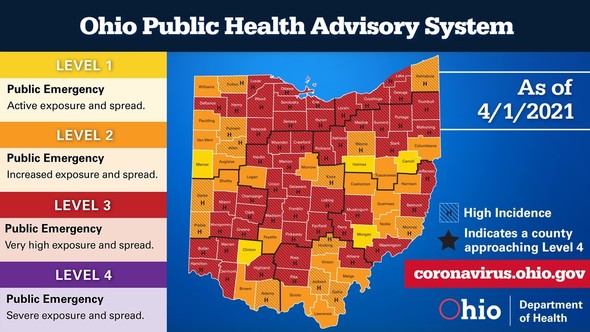
    OHIO PUBLIC HEALTH ADVISORY SYSTEM

    New health data compiled by the Ohio Department of Health shows case increases in 56 counties over the past week, however, because there are not yet significant increases in healthcare utilization at the county level, most counties stayed at the same level this week.

    Level changes include:

    • Van Wert County moved from yellow to orange.
    • Auglaize, Paulding and Scioto moved from red to orange. 
    • Carroll, Mercer, and Morgan counties moved from orange to yellow. 
    • Clinton County dropped from red to yellow.

    CASE DATA/VACCINE INFORMATION

    In-depth COVID-19 data for Ohio: coronavirus.ohio.gov. 

    Ohio’s central scheduling system: gettheshot.coronavirus.ohio.gov

    Ohio mass vaccination information: coronavirus.ohio.gov/massvaccinationclinics

    All vaccine providers: vaccine.coronavirus.ohio.gov

    More vaccine information: coronavirus.ohio.gov/vaccine

    Video of today’s full update, including versions with foreign language translation, can be viewed on the Ohio Channel’s YouTube page. 

    For more information on Ohio’s response to COVID-19, visit coronavirus.ohio.gov or call 1-833-4-ASK-ODH.

  • Coronavirus cases in Ohio, neighboring states might be inching back up

    Coronavirus cases in Ohio, neighboring states might be inching back up

    By Marty Schladen and Ohio Capital Journal

    After a disastrous January, coronavirus cases in Ohio steadily marched downward. Then in recent weeks, they hit a plateau. Now, even as greater numbers of Ohioans get vaccinated, case numbers might be inching back up.

    Ohio might be part of a disturbing national trend.

    The Johns Hopkins University Coronavirus Resource Center published a set of graphs titled, “America is reopening. But have we flattened the curve?” They map shows trends for each state and color codes them — red for states with increasing case numbers and blue for states where numbers are dropping. How deeply shaded they are indicates how quickly cases are dropping or falling in a state.

    The red in Ohio’s graph is so light that it barely amounts to a blush. More disturbing, is that every neighboring state but one is a deeper shade. Kentucky is a very light shade of blue.

    The trend extends across the country. The U.S. Centers for Disease Control and Prevention last week said that the seven-day average of coronavirus cases nationally was up 7% over a week earlier.

    That prompted CDC Director Rochelle Walensky on Monday to say she felt a sense of “impending doom.” 

    “Now is one of those times when I have to share the truth and I have to hope and trust you will listen,” Walensky said, according to the Charlotte Observer. “Right now I’m scared.” 

    Those comments prompted President Joe Biden to call on governors in states that had ended their mask mandates to reinstate them.

    “People are letting up on precautions, which is a very bad thing,” Biden said, according to the New York Times.  “We are giving up hard-fought, hard-won gains.”

    The recent rise in cases is probably driven by several factors.

    States like Texas have lifted mask mandates and indoor capacity limits. Not only does that take away tools to limit the spread of the virus, it could send a message that the pandemic is over and precautions are no longer needed.

    Ohio’s mask and other orders remain in place. And Gov. Mike DeWine rarely misses an opportunity to urge the public to take precautions against the virus.

    But as the weather is warming and vaccines are becoming increasingly available, people might be letting their guard down. For example, about half the clientele was unmasked on Saturday at a crowded Columbus convenience store near the softball fields at Lou Berliner Park.

    Also, several new variants of the virus are spreading more rapidly than their predecessors. As they crowd out earlier versions of the virus, the spread — and mutations into even more dangerous variants — could accelerate further, experts have said.

    The CDC on Sunday said that the number of cases of the “UK variant” — B.1.1.7 — had jumped 115% in Ohio over a week earlier, the Cincinnati Enquirer reported.

    Also potentially hampering Ohio’s fight to squelch the disease is that the state will soon have plenty of vaccine, but millions of unvaccinated Ohioans.

    Such “vaccine reluctance” stems from several sources. 

    Some members of minority groups might distrust the health system after a history of abuse or neglect, meanwhile racial inequities in health care access still impede care. Some people have bought into the myth that vaccines cause autism. Still others might not be able to conveniently find one.

    There is also a political dimension. 

    After a year of former President Donald Trump making false statements about the coronavirus, an NPR-PBS-Marist poll conducted earlier this month found that almost half of Republican men said they had no intention of getting vaccinated.

    While other former presidents came together earlier this month to boost the vaccine effort, Trump skipped the event. Trump and his wife, Melania, quietly were vaccinated before they left the White House in January.

    It appears that many Ohioans are skipping the shot for one reason or another.

    Cohorts of older Ohioans who have been eligible for the vaccine for more than a month appear to show the trend. They approach about 70% getting at least a first dose and then the increase slows to a crawl.

    The most vaccinated group of Ohioans by age is now those 70-74, of whom 72% have received at least a first dose.

  • [VIDEO] Paxton’s Grill: “Yes, we’re hiring.”

    [VIDEO] Paxton’s Grill: “Yes, we’re hiring.”

    Loveland, Ohio – Paxton’s Grill in Historic Downtown has immediate job openings that will help prepare the restaurant for the many springtime patrons they expect to have with warm weather approaching.

    In this LOVELAND MAGAZINE TV interview, co-owner, Ralph Dunnigan tells reporter Cassie Mattia about the positions they hope to fill soon. Dunnigan also tells her which positions and the type of atmosphere he and his staff strive to create for new hires.


    WATCH THIS RECENT VIDEO TO LEARN MORE ABOUT PAXTON’S GRILL…

    Cassie the Food Guru Visits Loveland’s Paxton’s Grill!

  • Loveland District provides superintendent search update

    Loveland District provides superintendent search update

    A news Release from the Loveland City School District:


    Thank you to our Tiger families, staff, and community for your help in recent days during the superintendent search. Your participation in the surveys, ThoughtExchanges, and focus groups has been a big help in guiding the process. Your input has been key to creating a candidate profile and will continue to play a vital role in identifying potential candidates and selecting the next Superintendent for Loveland City Schools. 

    We want to let you know what will be happening in the weeks ahead. Advertising for candidates will begin soon, and during the month of April, our search firm will help narrow down the candidate list to those who meet our Ideal Candidate Profile. 

    In early May, the Board and our Community Advisory Group (CAG) will review an anonymous list of potential candidates, evaluate them and determine which should be asked to interview.

    The Board will conduct public interviews of candidates in early May. Interviews of Finalists will take place with the Board and the Community Advisory Group a few days later. The final board approval and contract signing are targeted for the end of May. 

    We know that parent, student, staff, and community involvement is key to finding the right candidate and we are committed to keeping you involved and informed.