Hamilton County, Ohio – The Hamilton County Recycling and Solid Waste District is offering area residents discounted Compost Bins and Rain Barrels for a one-day-only Spring 2021 Sale. The online store will be open to place your order through May 3.
Please note: All orders must be picked up on Saturday, May 15, between the hours of 9 AM and 1 PM in the parking lot of the Madisonville Fifth Third Bank. Pick-up will be a limited contact “drive-through” event. Walk-up sales not offered – online purchases only.
Would you like to qualify to receive a $10.00 off coupon for a compost bin? By attending one of our virtual backyard compost seminars, you will be eligible for even deeper discounts. Seats are limited – reserve your spot today!
Please note: You must attend the seminar prior to placing your order – the coupon is not retroactive.
COMMONLY ASKED QUESTIONS:
Q: Will it be safe to pick up my order in light of current COVID-19 conditions? A: Staff or volunteers will approach your vehicle and check you in for pick up while you remain in your vehicle. Staff and volunteers will then bring your materials to put in your car. Please make sure that your back seat and trunk are clear of clutter.
Q: Will a composter fit in my car? A: The composters come in 2 sections that each measure 16″ x 33″, allowing us to fit as many as 5 composters or rain barrels in a 4-door car.
Q. Can I drive up to purchase a bin or materials the day of the sale if I didn’t order anything? A. No. This sale is on-line only sales. Other sales are not being offered to maintain social distancing.
Clermont County, Ohio – Weather permitting, according to a news release from Clermont County, on Wednesday, April 14, at noon, the All Hazard Outdoor Weather Sirens will be activated for testing and monitoring.
During the monthly testing of the Clermont County All Hazards Outdoor Warning Sirens on April 7, the system did not perform properly. The sirens activated throughout the county with the exception of the sirens in Batavia Township. The system activated the county sirens two additional times, but still no activation of the Batavia sirens.
The system has been inspected and tested in the offline function with no issue being discovered according to the news release. “The Batavia sites were inspected and found no issue at the siren sites. To fully vet the siren activation, system equipment must now be monitored during a live activation to ensure that all systems components are functional.”
Clermont County said that we are now entering the severe weather season and with good weather and more activities occurring outdoors they do not want to wait until the first Wednesday of the month to retest the All Hazards Outdoor Siren System.
Remember the All Hazard Outdoor Weather Sirens are for notification of tornado warning or confirmed tornado sighting moving into the area. The sirens are for outdoor notification only. Do not rely on them as a source of notification indoors. Your smart phone with a weather app or a weather band radio are more reliable sources for indoor notifications. When an activation occurs, turn to your local news for information. Do not call 9-1-1 or the Communications Center as this could overwhelm the phone systems and prevent emergency calls from being received.
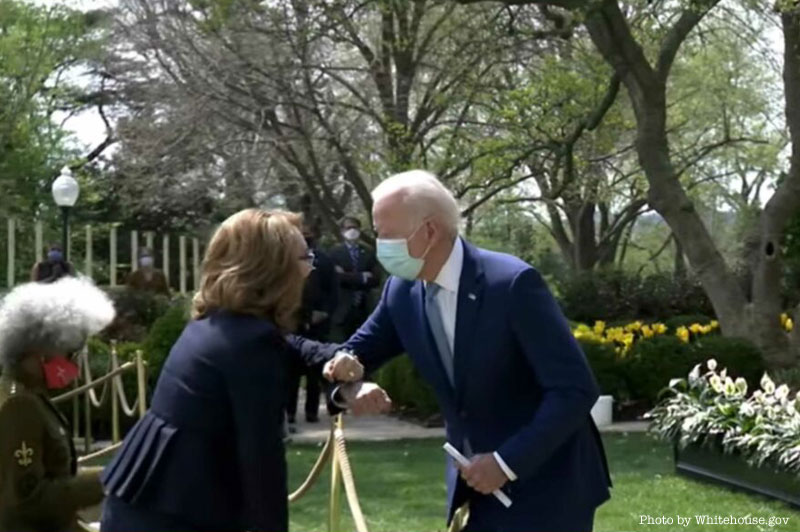
Washington D.C. – President Joe Biden on Thursday reiterated his call on Congress to pass stalled gun legislation reform but also outlined executive action he’s taking on several gun control measures, following deadly mass shootings last month in Colorado and Georgia.
“Gun violence in this country is an epidemic and it’s an international embarrassment,” Biden said in remarks in the Rose Garden outside the White House.
In attendance were gun control advocates, lawmakers and relatives of victims of gun violence, including Fred Guttenberg, whose daughter was killed in the February 2018 mass shooting at Marjory Stoneman Douglas High School in Parkland, Fla.
Biden said he had met many of the friends and family members in the audience and knows they have had to “bury a piece of their soul deep in the earth” due to gun violence.
“Last night, as I was coming to the Oval Office, I got the word that, in South Carolina, a physician with his wife, two grandchildren, and a person working at his house was gunned down— all five,” Biden said. “So many of the people sitting here today know that well, unfortunately. You know, they know what it’s like when the seconds change your life forever.”
The Associated Press reported that the suspect in the South Carolina murders was a former NFL football player later found dead with a self-inflicted gunshot wound to the head.
Biden urged the Senate to ban assault rifles, which are weapons typically used in mass shootings.
The president also wants Congress to require background checks for guns bought at gun shows, close loopholes in gun laws and reauthorize the Violence Against Women Act—a law that protects people from domestic and sexual violence that passed the U.S. House in March. It lapsed in 2018.
Movement on gun control legislation has been uphill in the Senate, even after mass shootings like those in Colorado, Georgia and Florida.
But Senate Majority Leader Chuck Schumer, a New York Democrat, said in a statement that he plans to soon bring legislation to the Senate floor, along with quickly confirming the president’s nominee to lead the Bureau of Alcohol, Tobacco, Firearms and Explosives, Michigan native and gun violence prevention advocate David Chipman.
“While the president’s executive actions are critical, they are not a substitute for meaningful legislation to address the gun violence epidemic,” Schumer said.
More than 11,000 people this year have died due to gun violence, according to Gun Violence Archive, a nonpartisan group that documents gun deaths in the U.S.
U.S. Attorney General Merrick Garland confirmed those numbers, adding that the Justice Department is already in the process of carrying out several executive ordersdirected by Biden.
The Justice Department, within 60 days, will publish model “red flag” legislation for states, which will allow law enforcement or family members to petition courts to temporarily remove any firearms from an individual who either poses a risk to themselves or others. Currently, 19 states and the District of Columbia have “red flag” laws.
The department will also release a report on firearm trafficking. The last report was conducted in 2000.
The Biden administration will also direct the DOJ to issue a proposed rule within 30 days that will stop the proliferation of “ghost guns,” which are homemade guns that lack a serial number, making them difficult for law enforcement to trace.
And the administration said DOJ will issue a proposed rule that would “make clear when a device marketed as a stabilizing brace effectively turns a pistol into a short-barreled rifle subject to the requirements of the National Firearms Act,” an administration fact sheet said.
Among the lawmakers in attendance at the Rose Garden was Rep. Lucy McBath, a Georgia Democrat who ran for Congress after her 17-year-old son, Jordan Davis, was killed in a Florida gas station.
“This gun violence is unacceptable, it is unconscionable, and we must do better,” McBath said in a statement. “A majority of Americans support common-sense measures to help stop this violence, and today, I am truly proud to stand with the President as he fights for future generations, for survivors, and for mothers like me.”
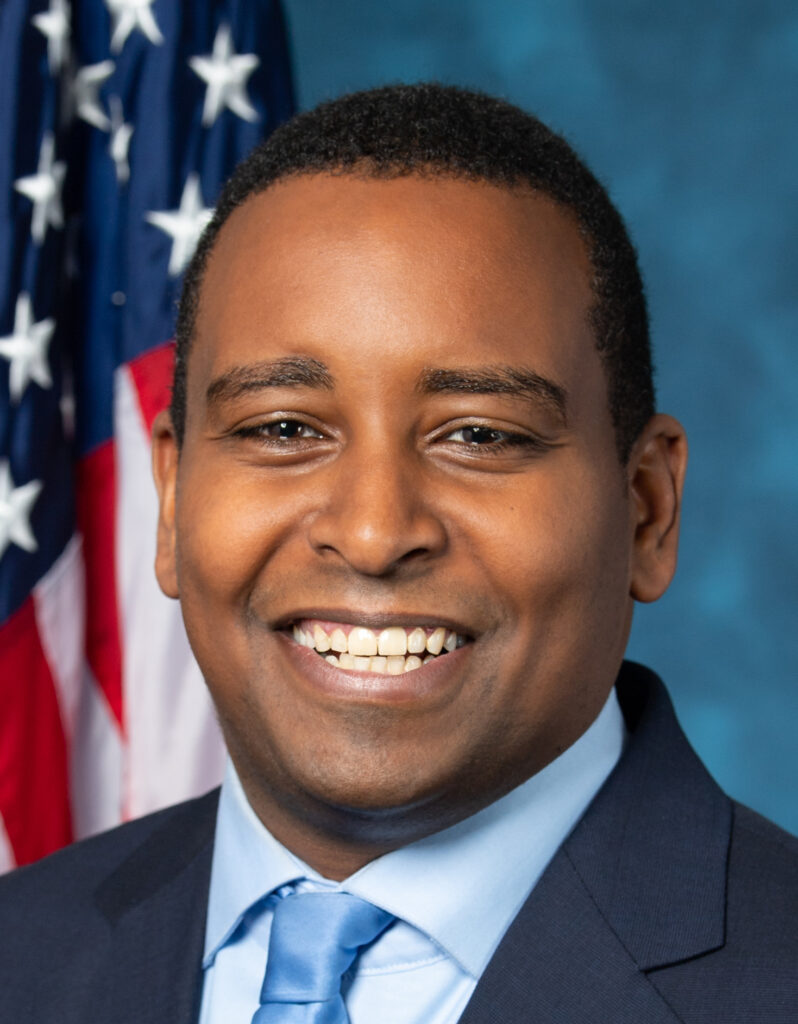
Rep. Joe Neguse (D-Colo.), who represents the congressional district where at least 10 people were killed in March at a King Soopers supermarket in Boulder, was also expected to be in attendance. That mass shooting followed another earlier in March that left six Asian American women dead in Atlanta, as well as two other people.
Rep. Joe Neguse (D-Colo.) photo wikimedia.org
“Every day in this country, 316 people are shot. Every single day. A hundred and six of them die every day,” Biden said. “Our flag was still flying at half-staff for the victims of the horrific murder of eight primarily Asian American people in Georgia when 10 more lives were taken in a mass murder in Colorado.
“You probably didn’t hear it, but between those two incidents, less than one week apart, there were more than 850 additional shootings—850—that took the lives of more than 250 people, and left 500—500—injured. This is an epidemic, for God’s sake. And it has to stop.”
Former Rep. Gabby Giffords (D-Ariz.), who in 2011 was shot in the head by a gunman while at a constituent event in Tucson and now leads a gun violence prevention advocacy group, was also present for Biden’s remarks. Six people died in that shooting, along with one member of her staff, Gabe Zimmerman.
Biden acknowledged that it’s difficult to have a conversation around guns, but stressed that most of his executive orders and gun legislation reform could be bipartisan.
“The idea that we have so many people dying every single day of gun violence is a blemish on our character as a nation,” Biden said.
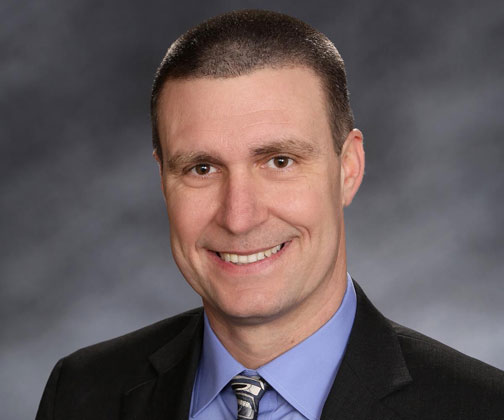
Sen. Pat Toomey, a Pennsylvania Republican, has teamed up with Sen. Joe Manchin, a conservative Democrat from West Virginia, to sponsor legislation on gun background checks. The senators have advocated for background checks on all commercial sales of guns, but have also pushed for exemptions for known buyers, such as family and friends.
In a statement Toomey said he and his staff were reviewing the executive orders from the Biden administration.
“Lasting progress though is made through the legislative process,” he said. “If done in a manner that respects the rights of law-abiding citizens, I believe there is an opportunity to strengthen our background check system so that we are better able to keep guns away from those who have no legal right to them.”
A Grinnell College national poll conducted in March found that 81 percent of Americans said the right to bear and keep arms is very or somewhat important to them personally. That included 99 percent of Donald Trump voters and 95 percent of Republicans, compared to 62 percent of Biden voters and 63 percent of Democrats, the results from the poll at the liberal arts college in Grinnell, Iowa, said.
Investment is a Part of the Housing Trust Fund and Will Help Create and Preserve Affordable Housing for Ohioans
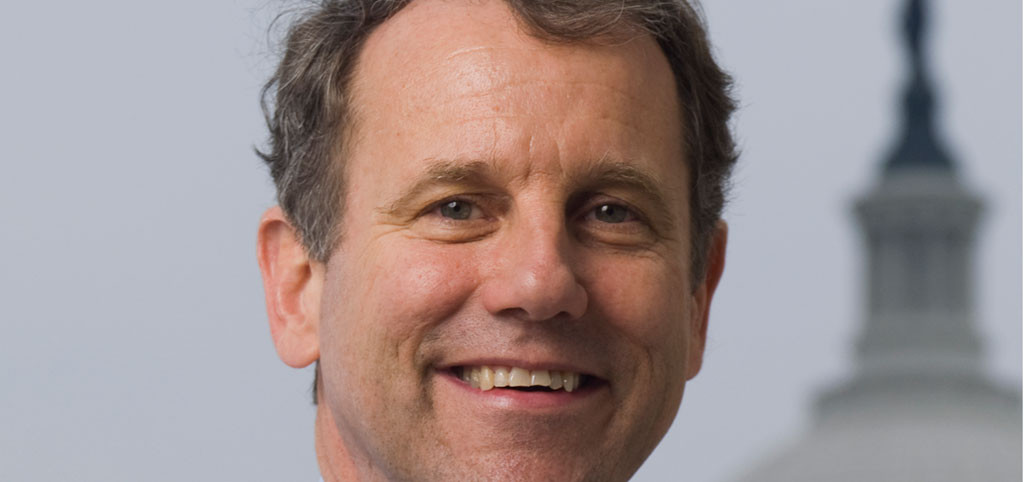
Washington, D.C. – Today, U.S. Sen. Sherrod Brown (D-OH) – Chairman of the U.S. Senate Committee on Banking, Housing, and Urban Affairs – announced that the U.S. Department of Housing and Urban Development (HUD) has awarded Ohio $21,186,076 through the national Housing Trust Fund to help create and preserve safe, affordable housing for low-income households and families experiencing homelessness.
U.S. Sen. Sherrod Brown (D-OH) (provided photo)
“Even before the pandemic, one in four renters in Ohio were paying over half of their incomes on housing, leaving many to choose between buying groceries or paying rent,” said Brown. “This Housing Trust Fund grant will provide over $21 million to create and preserve affordable housing for Ohioans, and give more families a stable foundation for accessing healthcare, jobs, and educational opportunities.”
Ohio’s affordable housing providers can use the funds from this investment for property acquisition, site improvements and development hard costs, demolition, relocation assistance, financing costs, and operating cost assistance for rental housing. The funds will be allocated by the Ohio Housing Finance Agency.
Brown has been a longtime supporter of the Housing Trust Fund, which was created by the Housing and Economic Recovery Act of 2008 and is funded by contributions from Government Sponsored Enterprises (GSEs) Fannie Mae and Freddie Mac. However, after its creation, the Housing Trust Fund was not consistently funded as intended, but, in December 2014, at Brown’s request, the Federal Housing Finance Agency (FHFA) directed Fannie Mae and Freddie Mac to begin regular contributions.
And in 2019, following inexplicable delays in the release of these funds by the Trump Administration’s acting GSE regulator, Brown demanded that the Administration quickly disburse the funds so they can be used to create and preserve affordable housing.
Despite an accelerating vaccination effort, COVID-19 is on an upswing in Ohio.
There are currently 1,140 Ohioans in the hospital with COVID-19, compared to 839 on March 21.
Similarly, in mid-March, about 1,400 Ohioans were contracting COVID-19 per day on average. By the end of the month, the figure hit 1,700, according to data from the Ohio Department of Health.
The seven-day average test positivity rate — portion of diagnostic tests on a given day with positive results — reached 4.3% Tuesday compared to 3% in early March.
None of these indicators are anywhere near their winter peaks. However, their ticking upward comes despite efforts to slow the coronavirus’ spread through three COVID-19 vaccines authorized for use.
About 3.77 million Ohioans are vaccine-started as of Tuesday, according to ODH data. Roughly 2.2 million of them are fully immunized.
Variants of the new coronavirus that first emerged in late 2019 are likely fueling the spread.
All three ‘variants of concern’ monitored by the CDC (B.1.1.7; B.1.351; and P.1) have now been detected in Ohio, according to agency data. Two of the variants are about 50% more transmissible than the original strain, according to the CDC.
Since March 2020, nearly 19,000 Ohioans have died from COVID-19. More than 1 million have been infected.
Loveland, Ohio – Police officer Anthony Pecord was put on administrative leave on January 25 after he was notified by Police Chief Sean Rahe that the City had begun a “formal investigation” on on the same day related to a claim of sexual assault that occurred on January 24. Pecord was ordered not to conduct City business or enter City property. He remained on “paid status” with benefits. Pecord was ordered not to communicate to other City employees or access emails, City accounts, or other City services.
Loveland Police Chief Sean Rahe (City of Loveland Photo)
The City retained the services of attorney Patricia Pryor to conduct an investigation.
On February 25, Rahe issued a statement to the press that said, “A police officer was placed on administrative leave as soon as allegations involving him related to off-duty conduct were reported to the City. Once notified of the allegations, the City immediately retained an outside investigator.” Rahe said that as the matter progressed, the City requested and received the officer’s resignation.
Pecord was subsequently indicted by a Hamilton County Grand Jury on March 15 on 16 counts; 8 counts of Rape, and 8 counts of Sexual Battery, for an incident that occurred on January 24, 2021. If convicted on all charges, he would have faced the possibility of 88 years in prison.
In the original complaint filed by Hamilton County detective Jack Losekamp, Pecord was charged with raping the victim while the victim was unconscious and unable to consent due to intoxication. Losekamp said that the victim was surreptitiously given an intoxicant, a first-degree felony. The complaint alleged there was forensic evidence on Pecord’s cell phone that he committed the crime. Pecord was booked into the Hamilton County Justice Center.
At the time, Hamilton County Prosecutor Joseph Deters commented, “We take all cases of sexual assault seriously. But when acts like this are committed by someone in a position of power and public trust, it is especially sickening.” Deters also said that once this behavior was reported, the City of Loveland and the Loveland Police Department “cooperated fully” with the investigation.
Hamilton County Prosecutor Joseph Deters
As a result of a plea agreement, Pecord has now been convicted of three counts of Gross Sexual Imposition and has been sentenced to 4 years in prison. Pecord will also be required to register as a Tier I sex offender for a period of 15 years. Gross Sexual Imposition is a fourth-degree felony.
Deters said in a press release after the trial, “Thanks to Sheriff Deputy Jack Losekamp’s work, the photographic evidence of this crime was discovered, despite Pecord’s attempts to destroy it. Without the efforts of Detective Jack Losekamp and Assistant Prosecutor Christina Dattilo, we could not have pursued this case and Pecord would still be free.”
Deters also made a statement about why Pecord’s plea of guilty on the lesser charges was accepted. “We are especially sensitive to the victim’s wishes in sexual assault cases. As a result of this plea, we were able to provide justice to this victim while allowing the victim to close this chapter of his life and begin the healing process,” Deters said in the press release.”
Chief Rahe said in his original release to the press, “Our focus and concern has been, and continues to be, for the safety and well-being of the injured party.”
“We are concerned that more victims may be out there, and ask anyone who may have been victimized by Pecord to contact the Hamilton County Sheriff’s Detective Losekamp at 513-595-7484,” said Deters.
Deters concluded his statement by saying, “What is absolutely clear is Pecord should never, and will never, work in law enforcement again.”
Hamilton County, Ohio – Ohio Governor Mike DeWine today announced the appointment of Bertha Garcia Helmick to the Hamilton County Municipal Court. Garcia Helmick, of Cincinnati, will assume office on April 9, 2021, and will be replacing Judge Alan C. Triggs, who was elected to a different bench.
Garcia Helmick will need to run for election in November 2021 to complete the unexpired term ending January 2, 2024.
Appointed in March 2020, Garcia Helmick is the first woman of Hispanic descent to serve as Magistrate of the Hamilton County Probate Court.
Sitting in its Mental Heart Court, she has handled nearly 1,000 hearings and motions for hearings over the last year.
As a private practicing attorney since 1995, she has represented individuals facing involuntary commitment and focused on various subject areas, including collaborative family law, domestic relations and juvenile law, and estate planning.
The Hamilton County GOP Judicial Screening Committee submitted Judge Garcia Helmick, along with two others, to the Governor earlier this year for a possible appointment to fill a judicial vacancy.
Alex M. Triantafilou, the Chairman of the Hamilton County GOP said In a statement released this morning, “Bertha Garcia Helmickis no stranger to the Hamilton County GOP and I am thrilled to see her ascend to this important community position. I know Judge Garcia Helmick as I have appeared in front of her many times and she is a person of high character, deep intellect, and great integrity. Judge Garcia Helmickmade history as the first woman of Hispanic descent to serve as a Magistrate in the Hamilton County Probate Court. She will continue breaking down barriers as our newest judge.”
Garcia Helmick is a member of the Ohio State Bar Association, as well as the Cincinnati Bar Associations, where she serves on the Domestic Relations Committee and Domestic Relations Seminar Committee. Garcia Helmick is also a member of Potter Stewart Inn of Court.
Outside of the law profession, Garcia Helmick is an active performing artist. She has long been involved in the Cincinnati opera scene, performing in hundreds of concerts and having served on the Cincinnati Opera Association Board of Directors Advisory Panel.
In 1999, Garcia Helmick was honored as a Distinguished Hispanic Ohioan by The Ohio Commission on Hispanic/Latino Affairs. Garcia Helmick is a current member of the Hispanic Chamber of Commerce of Greater Cincinnati.
Garcia Helmick holds a Juris Doctor from University of Cincinnati College of Law. She earned a Bachelor of Music from University of Cincinnati College Conservatory of Music and an Associate of Arts from Columbia College in Missouri.
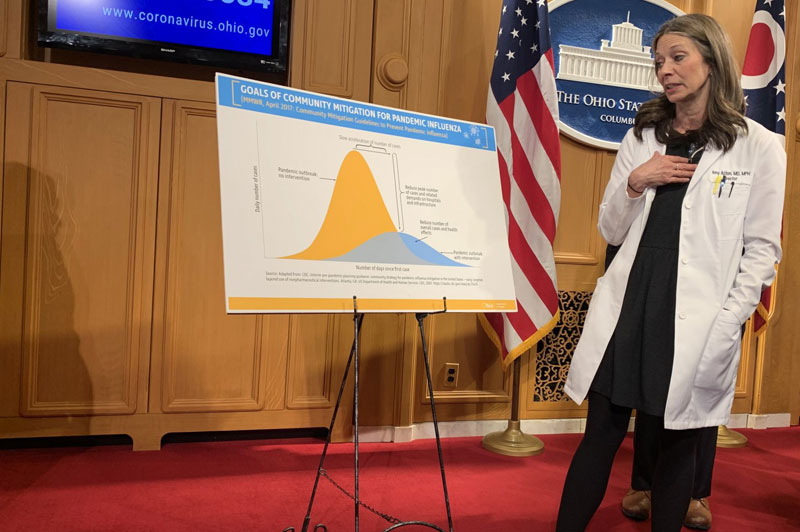
Dr. Amy Acton, the former state health director who led Ohio’s pandemic response in its early months, announced Tuesday she will not enter the race to fill Republican Rob Portman’s seat in the U.S. Senate.
Acton was considered to be a potential leading candidate for the Democratic Party primary.
In a provided statement, Acton called it a “tremendous honor” to be considered for the race, but ultimately decided against committing t o a campaign.
“While I am not entering the race for U.S. Senate, I recognize there is a genuine longing for a fresh approach to leadership that is honest, collaborative, and empowering,” Acton wrote.
Acton was a little-known member of Gov. Mike DeWine’s cabinet until being thrust into the spotlight as the novel coronavirus spread throughout the country early last year.
She became a regular presence alongside DeWine at the daily coronavirus press conferences, using her experience as a former public health professor to clearly — and sometimes cleverly — describe the new virus to the general public.
Among the many health orders signed by Acton in those initial weeks were the shutdown of school buildings (Ohio was the first state in the U.S. to do so) and the postponement of the March primary election.
Acton was lauded throughout the state and in many national publications for taking aggressive steps to mitigate the spread of COVID-19. A Facebook fan club page grew to more than 100,000 members and Acton was even depicted on a bobblehead.
Within weeks, though, Acton begun facing an onslaught of criticism from those who argued the continued shutdown of certain businesses were devastating Ohio workers and owners.
A state senator posted to Facebook he would not let Acton, who is Jewish, turn Ohio into Nazi Germany. Another lawmaker repeatedly referred to her as a “dictator” and a “globalist.” Protestors gathered at Acton’s house on numerous occasions, with some bringing weapons and one man carrying an anti-Semitic sign.
Acton announced her sudden resignation as state health director in June. She stayed on for a few months as a paid, behind-the-scenes advisor to the governor on health issues.
By August, she was out of state government entirely. Acton returned to the Columbus Foundation, where she had worked previously before becoming state health director. She has rarely appeared in public or given interviews about the pandemic since then.
Portman surprised many by announcing in January he would not seek reelection to the U.S. Senate next year.
Acton was quickly viewed as a possible Democratic contender for the seat. Within weeks, she confirmed plans to step down from the Columbus Foundation in order to consider joining the race.
The 314 Action Fund, a political action committee dedicated to supporting scientists as political candidates, planned to spend millions of dollars backing an Acton campaign. The group commissioned a poll which found that two-thirds of Ohio Democrats viewed Acton favorably. Respondents gave her a slight edge over U.S. Rep. Tim Ryan, D-Niles, who is reported to be planning a run for the seat.
In the end, Acton decided against embarking on a career in elected politics. In the statement, she described there being a new hope felt in Ohio as the state emerges from a deadly pandemic that has killed more than 18,700 residents to date.
“The opportunity for repairing and reimagining is at hand: a rebirth for ourselves, our relationships, and for the institutions of our civil society,” Acton wrote. “What happens next isn’t the sole province of our elected officials. It is up to all of us. We must co-create an Ohio that ensures the enduring cultural values of kindness and justice for all.”
Republicans campaigning to replace Portman so far include former state party chair Jane Timken, former state treasurer Josh Mandel and entrepreneur Bernie Moreno.
A number of other Ohio politicians are believed to be eyeing the seat, including U.S. Rep. Steve Stivers, R-Upper Arlington; state Sen. Matt Dolan, R-Chagrin Falls; Republican author and venture capitalist J.D. Vance; and House Minority Leader Emilia Strong Sykes, D-Akron.
Columbus, Ohio – As state lawmakers work on Ohio’s budget for fiscal years 2022 and 2023, there’s a grassroots call for the budget to reflect policies that protect and care for all Ohioans and communities.
The Ohio Organizing Collaborative and Policy Matters Ohio unveiled their “People’s Budget” on Tuesday, which the groups say will ensure the government is working for its people. (You can read the People’s Budget below)
Portage County Treasurer Brad Cromes joined the release, saying budgets are moral documents and should reflect that.
“For too long, we have been saying that the financial wellness of a very few is more important than the financial wellness of everybody in the state,” he said, “and that’s got to change if we’re ever going to start moving our state forward.”
The People’s Budget features seven demands: quality education, safe communities, economic dignity, care for caregivers, stability for families, a working health-care system, and a category known as “Funding Our Lives.” It’s an alternative to Gov. Mike DeWine’s budget proposal released in February.
Tia Ferguson shared her struggles working as a substitute teacher in Columbus without paid leave. After giving birth to a stillborn son, Ferguson said she had to return to work before she was emotionally ready. She contended that with economic stability, other aspects of life will fall into place.
“If your child care is funded, that’s a worry that you don’t have,” she said. “So, you can make sure that you’re taking the time to go back to school and get your education, so you can further your career. But if you don’t have that foundational piece set, then all the other aspects don’t even come into play.”
State Rep. Stephanie Howse, D-Cleveland, said a “people’s budget” is about paying attention and being flexible enough to make adjustments when people really need them. She said she thinks state leaders should take the lead in addressing the discrimination faced by people of color in education, health care, housing, and more.
“Declaring racism as a public health crisis is needed more now than any time, ever,” she said. “We could be on the forefront of what it really looks like to lift up racial equity and social justice.”
Specific provisions of the People’s Budget include tax code reforms, increased funding for education, and investments in housing, anti-hunger programs, and maternal health.
This story was produced in association with Media in the Public Interest and funded in part by the George Gund Foundation.
A budget that cares for all of us
The future of Ohio depends on a fair, equitable, and people-centered budget that cares for all of us — no exceptions.
We Ohioans believe in taking care of one other, no matter our skin color, our ability, or how much money we have. But for nearly two decades, our elected officials have passed a state budget that does not meet our needs or provide us with opportunities to thrive.
Instead, the wealthy few and corporations have hoarded wealth, lining their pockets at the expense of our schools, hospitals, and child care centers. That is why we are demanding a People’s Budget.
Our Seven Demands
1. Quality Education
For all Ohio students to thrive and pursue their dreams, regardless of how much money they have or what they look like.OUR DEMANDS
2. Safe Communities
For Ohio to be a place of freedom and justice for all, where our families can be whole and safe.OUR DEMANDS
3. Economic Dignity
For all Ohioans to have a home to make memories, see a doctor when we are sick, and put food on the table.OUR DEMANDS
4. Care for Caregivers
An Ohio that respects and lifts up BIPOC women and the people who care for our families.OUR DEMANDS
5. Stability For Our Families
For every Ohioan regardless of color or income to be cared for if and when they fall on hard times.OUR DEMANDS
6. A Working Health Care System
For all Ohioans to receive the very best care and see a doctor when we are sick, no exceptions.OUR DEMANDS
7. Funding Our Lives
An Ohio where everyone has the opportunity for a better life, no matter what we look like or how much money we have.OUR DEMANDS
Tell our elected state leaders why you support The People’s Budget
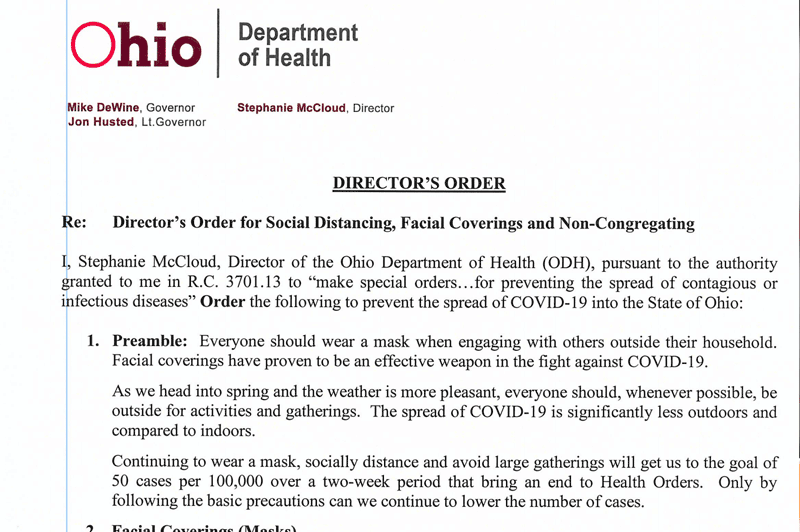
Governor DeWine announced today that the Ohio Department of Health has issued a “simplified” health order that “streamlines” previous orders into a single order that underscores the most important tenants of infection prevention.
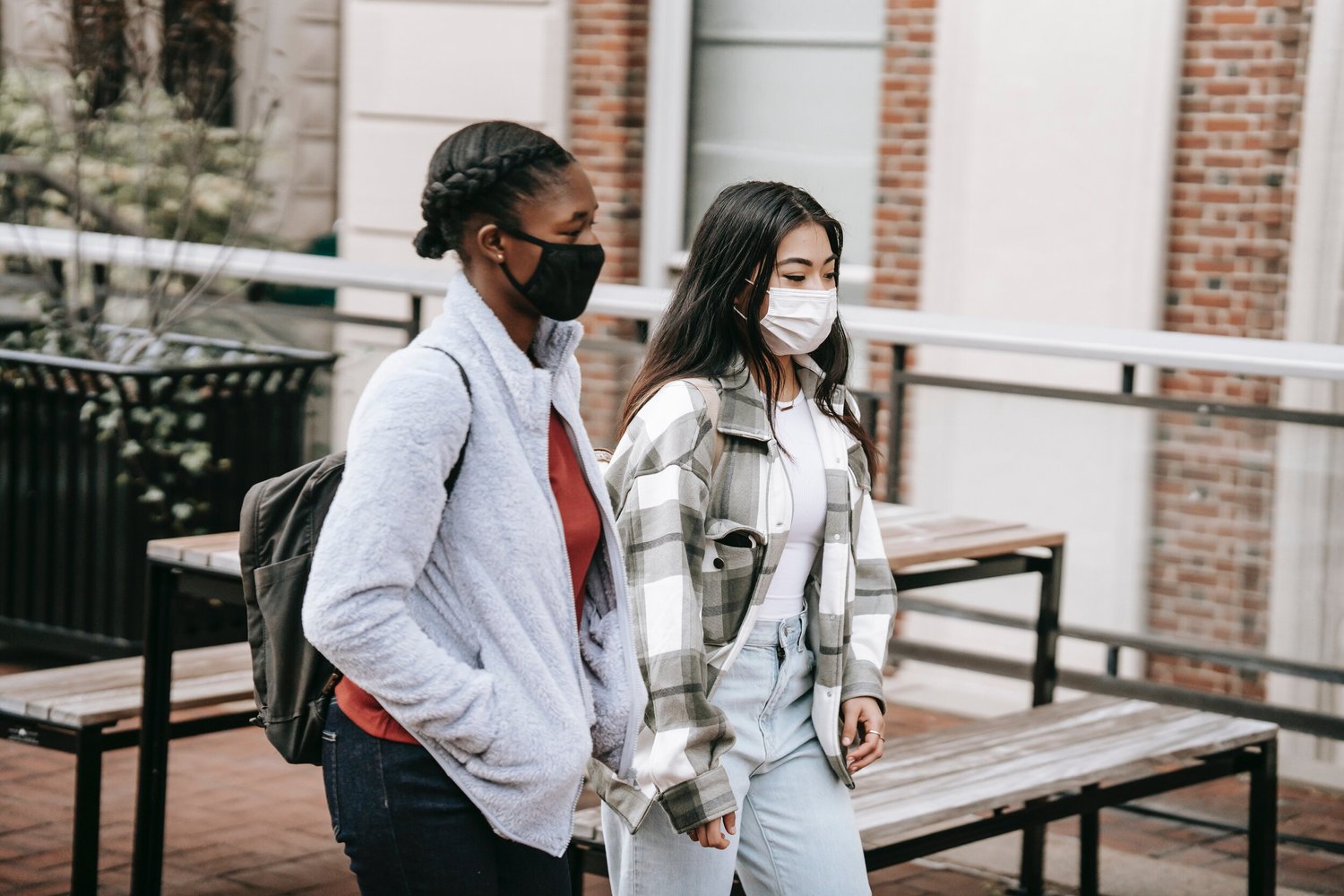
“Our understanding of this virus and how it spreads is much more advanced than it was when we first learned about coronavirus in early 2020,” said Governor DeWine. “As we move to begin a new chapter in our fight against the pandemic, where more and more Ohioans are being vaccinated, this new order will focus on our best defense measures against COVID-19, such as wearing a mask, social distancing, limiting large gatherings, being outside, and practicing good hand hygiene.”