

https://www.facebook.com/LIFEFoodPantry/posts/3936325103112818
Author: Loveland Magazine
-
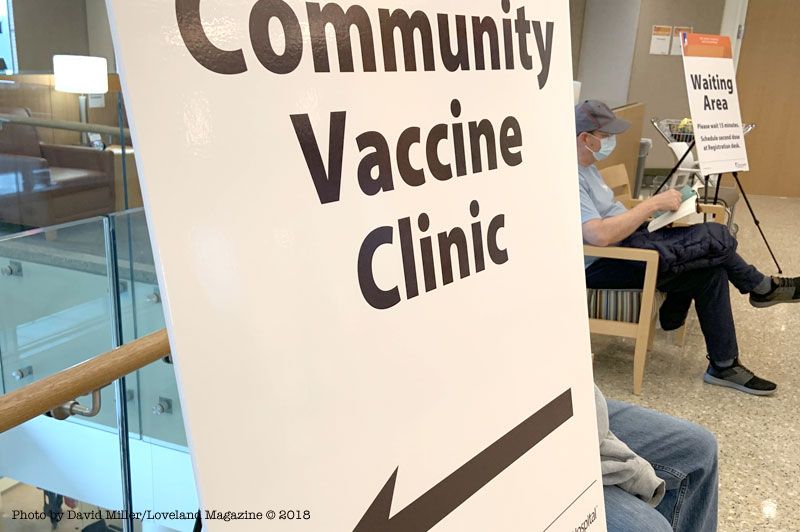
As in other states, Ohio might be running out of people who want shots
By Marty Schladen and Ohio Capital Journal
Some county health departments in Ohio are again telling state officials this week not to send them any more coronavirus vaccines. That’s because they haven’t been able to use up the supplies they already have.
It might be part of a national phenomenon. The news organization Axios reported this week on a paper by the Kaiser Family Foundation saying that based on its polling, just over 60% of Americans say they’ll get a vaccine.
“We estimate that across the U.S. as a whole we will likely reach a tipping point on vaccine enthusiasm in the next two to four weeks,” the paper said. “Once this happens, efforts to encourage vaccination will become much harder, presenting a challenge to reaching the levels of herd immunity that are expected to be needed.”
The paper conceded that the percentage of people willing to get a shot has crept up over time, so “61% may be a floor, not a ceiling.”
Even so, it portends a struggle to get to the 70% threshold that epidemiologists say is necessary to achieve “herd immunity,” the point at which the virus starts to find it difficult to find new hosts so it can keep spreading and evolving.
That’s an issue in Ohio.
Everyone 16 and older has been eligible to get a shot since the beginning of the month. But as of Wednesday just 38% of the state’s population had received a first dose of the vaccine and just 28% had completed it.
Further complicating the problem is that a fast-spreading variant that has ravaged Michigan has been spreading into Ohio, affecting the state’s northern counties first.
The presence of that variant and other factors have put the unvaccinated in more peril now than at any other time in the pandemic, Robert M. Wachter, chairman of the department of medicine at the University of California at San Francisco, wrote Monday in a column in the Washington Post.
Because more people — especially the elderly — have been vaccinated, case numbers, hospitalizations and deaths are far down from their winter peaks. But the numbers that health officials are counting now are affecting a smaller slice of the population: those who haven’t been vaccinated, and particularly those who haven’t survived an infection, Wachter wrote.
“The problem is that the aggregate numbers — even if they show down-trending test positivity rates, hospitalizations and deaths — may be masking an important duality,” Wachter wrote. “The situation may be getting enormously better in the growing vaccinated population, while at the same time growing somewhat worse in the unvaccinated group.”
Bruce Vanderhoff, medical director for the Ohio Department of Health, was asked Wednesday about younger Ohioans who might not think they’re particularly at risk if they don’t get vaccinated.

Bruce Vanderhoff, medical director for the Ohio Department of Health Doctors around the country report more covid hospitalizations and complicationsamong young people, partly as a result of the increasing dominance of the B.1.1.7 variant. Yet just 27% of Ohioans 20 to 29 have received at least a first dose of the vaccine.
Vanderhoff said the risk extends beyond the individual.
“People who don’t get the vaccine are not only putting themselves at risk, they’re putting others at risk as well,” he said. “We’re doing a disservice to the people we care about.”
Gov. Mike DeWine said health officials are doing everything they can think of to make it easier to get a shot, including expanding walk-up vaccination centers, taking shots into neighborhoods and workplaces and offering vaccines to family physicians.
He’s also trying to convince people that they have a responsibility to family and community.
“You can’t be sure everybody you come in contact with has been vaccinated,” DeWine said. “We’re not in this separately. This is not a decision that people make and only they live with the consequences.”
-

LGBTQ+ couples can adopt, but GOP rejects updating Ohio law to note that
A LGBTQ+ rights demonstration Photo by Susan J. Demas, Michigan Advance.
By Tyler Buchanan and Ohio Capital Journal
Although it is legal in Ohio for LGBTQ+ couples to adopt, some GOP legislators want the state law to only acknowledge the adoption rights of heterosexual couples.
A dispute over a single line in the 2,057-page state budget bill — passed by the Ohio House of Representatives on Wednesday — has some civil rights advocates frustrated as they continue urging the enactment of an anti-discrimination law in this state.
Married LGBTQ+ couples have been allowed to adopt children in Ohio since the U.S. Supreme Court’s 2015 Obergefell v. Hodges ruling legalized same-sex marriage across the country.
Ohio’s adoption law, last updated in 1996, states that “a husband and wife together” may adopt so long as one of them is an adult.

State Rep. Scott Oelslager, R-North Canton, leads the House Finance Committee. As part of his comprehensive budget plan, Gov. Mike DeWine proposed to update the language to instead read that any “legally married couple” can adopt.
Republican lawmakers rejected that change and opted to keep the “husband and wife” language in place.
House Finance Chairman Scott Oelslager said doing so carries no legal weight and that LGBTQ+ couples retain their right to adopt children.
“It’s a semantic issue. It does not prevent adoptions (for) same-sex couples,” the North Canton Republican said. “It’s just simply a semantic definition so to speak, or semantic statement that was in the code.
“It was just something some of our members wanted and part of my job as Finance Chairman, and the Speaker’s job, is to listen to our membership … our members feel strongly about it and that’s why we kept it in,” Oelslager continued.
Oelslager was asked by reporters on Thursday to identify the Republican lawmakers who requested the state adoption law keep its “husband and wife” wording. He declined to name them.
Later on Thursday, the Ohio Capital Journal obtained the budget amendment requests. Two Republican state representatives in particular asked that budget drafters strike the “legally married couple” reference and reinsert “husband and wife” — Reps. Reggie Stoltzfus, R-Paris Twp., and Derek Merrin, R-Monclova.
Both EqualityOhio and the ACLU of Ohio oppose this decision from the House Republicans.
“To uphold ‘husband and wife’ language in the budget plan is not only inaccurate, it’s also antiquated and exclusionary,” ACLU of Ohio executive director J. Bennett Guess said in a provided statement.

Seen is an original draft of the budget considered by the Ohio House of Representatives. Gov. Mike DeWine proposed changing the adoption eligibility language to read “legally married couple,” but GOP Reps. Reggie Stoltzfus and Derek Merrin requested the decades-old “husband and wife” language remain in state law. Guess said it is “essential that inclusive, equality-based definitions” be reflected in state law.
Dominic Detwiler, the public policy strategist for EqualityOhio, too said the organization would like to see the language updated.
More broadly, Detwiler said EqualityOhio is focused on the enactment of the Ohio Fairness Act — proposed legislation that would prohibit discrimination on the basis of sexual orientation or gender identity. The bill would protect LGBTQ+ Ohioans from housing and job discrimination.
Lawmakers have worked toward passing this anti-discrimination legislation for two decades, though advocates are encouraged by the bill’s prospects this time around.
That’s partially due to the bipartisan support it has received in what is now the 10th attempt, as both the House and Senate versions are sponsored by a Republican and Democratic legislator. Every other Democrat in the Ohio General Assembly has signed on as a cosponsor, while three Republicans have done so.
“The momentum is building and I think everybody understands that protecting people from discrimination isn’t really a partisan issue,” Detwiler said.
There has yet to be a committee hearing on the Ohio Fairness Act, which is endorsed by the Ohio Chamber of Commerce and other organizations.
Oelslager said Thursday that besides those supporting the legislation, there are also groups in Ohio that “push back very hard” against prohibiting LGBTQ+ discrimination.
“That’s the balance that we have to, the legislature would have to address here,” he said, adding there is not just “one side” to this issue. “Both sides are very sincere in their efforts.”
-

Sign-up for Loveland High School Summer Camps Now
Advertisement
Loveland High School Summer Camps
Loveland Summer Sports Camps Philosophy
The emphasis of Loveland’s camps will be learning the fundamentals of each sport and having fun. We believe that in order to reach your full potential as a future Tiger you must have a solid foundation of fundamentals. Campers will be given a variety of individual methods of practicing that will enable all to practice at home on their own. We hope you first and foremost have an enjoyable experience. Go Tigers!
Please register all campers for the grade they will be entering for the 2021-2022 school year (Spring Camps will be for the 2020-2021 year).Please Pre-register for all camps!Walk-up registration is available if there is space available.Camps are rain or shine.
EVENT DATES COST Baseball Summer Camp I 05/31/2021 – 06/02/2021 $90.00 REGISTER Girls Softball Camp 06/01/2021 – 06/03/2021 $45.00 REGISTER Boys & Girls Track Camp 06/01/2021 – 06/04/2021 $55.00 REGISTER Boys Basketball Camp 06/07/2021 – 06/10/2021 See Prices REGISTER Boys Lacrosse Camp 06/07/2021 – 07/09/2021 $80.00 REGISTER Football | K – 2nd 06/13/2021 $25.00 REGISTER Baseball Summer Camp II 06/14/2021 – 06/16/2021 $90.00 REGISTER Girls Basketball Camp 06/14/2021 – 06/17/2021 See Prices REGISTER Football | 3rd – 6th 06/14/2021 – 06/15/2021 $50.00 REGISTER Boys & Girls Soccer Camp 06/14/2021 – 06/18/2021 See Prices REGISTER Boys Tennis Camp 06/14/2021 – 06/16/2021 $50.00 REGISTER Football | 7th – 8th 06/16/2021 – 06/18/2021 $75.00 REGISTER Girls Lacrosse Camp 06/21/2021 – 06/24/2021 $80.00 REGISTER Girls Tennis Camp 06/21/2021 – 06/23/2021 $50.00 REGISTER Boys Volleyball Camp 06/21/2021 – 06/23/2021 $75.00 REGISTER Girls Volleyball Camp 06/21/2021 – 06/24/2021 See Prices REGISTER Baseball Summer Camp III 06/28/2021 – 06/30/2021 $90.00 REGISTER Baseball Summer Camp IV 07/12/2021 – 07/14/2021 $90.00 REGISTER Football | 9th – 12th 07/19/2021 – 07/22/2021 $50.00 REGISTER Cheerleading: Lil’ Cheer 08/02/2021 – 08/06/2021 $40.00 REGISTER * Discounts may apply.
Please visit www.lovelandtigers.org to find out more information about Varsity Athletic Programs offered at Loveland High School.
Please visit www.lovelandathleticboosters.com to find out more information about our Athletic Boosters.
All camps are sponsored by Loveland Athletic Boosters

-

“Potential Candidate Report” report for next Loveland School superintendent
Loveland, Ohio – Here is the latest up-date from the Loveland City School District concerning the search for a new superintendent:
The latest timeline for the superintendent search was discussed during the Board of Education meeting on Tuesday, April 20
CFES, the search firm assisting the process, is expected to deliver an anonymous “Potential Candidate Report” to the Board and the Community Advisory Group (CAG) today. This will allow members to review and evaluate the candidates ahead of a Special Meeting of the Board on May 3. During this meeting, the Board will determine which candidates to invite for interviews. Interviews are scheduled to take place during a Special Meeting of the Board on Monday, May 10, and if needed, Tuesday, May 11. Much of the process that unfolds during these Special Meetings will take place in Executive Session.
A Virtual Community Event with the finalists is scheduled for Tuesday, May 18. A final selection will follow during a Special Board Meeting on Wednesday, May 19 with the signing of a contract and announcement of the new Superintendent expected to take place before the end of May.
Thank you to our Loveland City Schools community for being involved with this process. We will keep you informed as the next steps are taken.
-

Ohio House passes state budget; here’s what to know
Step closer toward a constitutional school funding model
By Tyler Buchanan and Ohio Capital Journal
Loveland, Ohio – Ohio took a step closer toward a constitutional school funding model with the passage Wednesday of a two-year operating budget in the Ohio House of Representatives, a sweeping bill that also proposes an across-the-board income tax cut, a broadband internet expansion plan and more spending to aid businesses struggling from the pandemic.
The House passed a two-year, $74.4 billion budget for Fiscal Years 2022 and 2023 by a vote of 70 to 27.
Democrats took issue with certain portions of the budget, but its education funding reforms helped lead a dozen of them to ultimately join the Republican majority in approving the bill.
The budget now heads to the Ohio Senate, which will negotiate its own version over the coming months. Members of both legislative chambers will eventually hash out disagreements before a final version is sent to Gov. Mike DeWine for approval this summer.
“We are investing in Ohio’s priorities and Ohio’s future,” said Rep. Scott Oeslager, R-North Canton, who serves as the House budget chairman as he has for several previous budget cycles.
Oeslager said the ongoing pandemic has presented a wide array of challenges for Ohio, and the ongoing needs associated with the crisis are evident. He complimented House members for crafting a “balanced, responsible and truly meaningful” budget.
This budget does not include any federal spending from the American Rescue Plan. Speaker Bob Cupp, R-Lima, said Ohio has not yet received this relief funding and a forthcoming committee would determine how best to spend it.
Here are budget highlights as approved by the Ohio House of Representatives.
Education funding model overhaul

Amesville Elementary in the Federal Hocking School District. Photo from district website. Lawmakers approved a new education funding model in the House budget passed on Wednesday. It has been more than 24 years since the DeRolph v. State decision was handed down by the Ohio Supreme Court, which ruled Ohio’s state funding model does not provide an equal opportunity for all students to learn and is therefore unconstitutional.
Lawmakers were tasked with determining a more equitable, constitutional funding model — something they have failed to accomplish in the decades since.
Cupp has led a renewed push to reform the funding system in recent years and said after Wednesday’s vote he was glad this budget achieves that goal.
The House-approved budget includes a nearly $2 billion increase in school funding, with most districts expected to receive more funding over the next six years. (A spreadsheet showing the funding estimates for each individual district in Ohio was published by The Columbus Dispatch.)
The Loveland City School District may receive $941,996 additional State tax dollars according to the Columbus Dispatch.
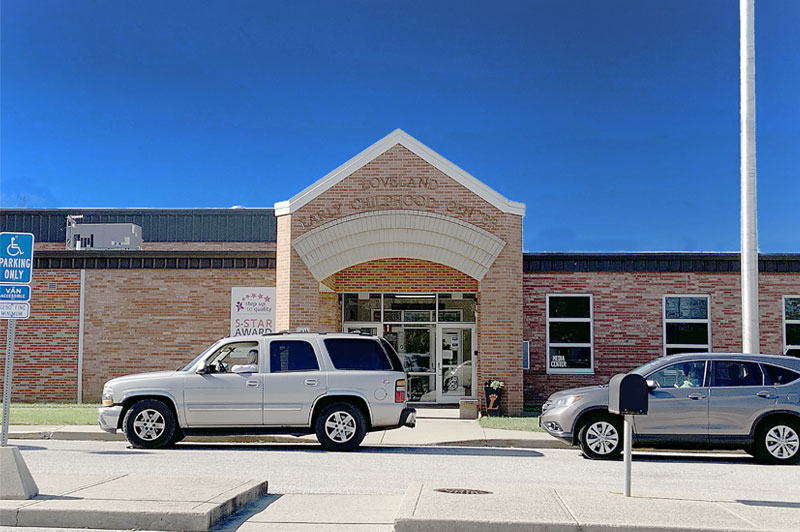
The Loveland Early Childhood Center in Loveland, Ohio (Photo by David Miller/Loveland Magazine © 2020) Cupp said he did not want to speculate on potential disagreements the Senate may have with this funding plan, but hoped there would be more productive conversations between members of the two chambers on this subject.
“We think they will agree that it is a very good plan going forward,” he said.
Detailed Ohio Capital Journal reporting on the education reforms included in this budget is forthcoming.
More spending for COVID-19 relief, and vacating penalties for public health violations
The budget includes relief spending to benefit a variety of Ohio businesses.
Millions of dollars would go toward helping entertainment venues, bars, restaurants and hotels. Additionally, there is a “New Business Relief Grant” program to specifically help those businesses that opened after Jan. 1, 2020.
Republicans also inserted a budget provision that would vacate all public health violations incurred by Ohio businesses since March 2020.

A number of Ohio bars, including several on the island village of Put-In-Bay, were cited in 2020 for violating COVID-19 health orders. The House budget would expunge these violations and repay any fines levied against businesses. Photo from the Ohio Investigative Unit. Businesses that have faced penalties for violating public health orders, such as not enforcing mask and distancing mandates, would have their violation records expunged. Any disciplinary actions currently in progress would be halted.
The state would be forced to repay any fines levied and reinstate licenses revoked. The Legislative Service Commission (LSC) estimates this would amount to $100,000 in fines repaid to health order offenders.
This provision mirrors a separate bill introduced by Republicans earlier this year.
Cupp defended this provision by saying Ohio businesses failed to abide by public health orders because the virus was an “unknown” phenomenon in 2020.
“The restrictions were new, they were different, and a lot of businesses sort of got caught up in this administrative web. As we work our way out of the pandemic, we think it’s important to take another look at (the violations) and to give them some sort of the benefit of the doubt…,” Cupp said.
Tax cuts
Another main portion of the bill involves income tax cuts and deductions.
There is a 2% personal income tax cut for all earners, which LSC estimates would save taxpayers around $380 million in the coming two years.
“Once more, the wealthy and big businesses will fare far better than working families under this budget,” said Rep. Michael Skindell, D-Lakewood, who unsuccessfully proposed taking out the tax cut and diverting it to other priorities.
He cited data from the Institute on Taxation & Economic Policy, which was promoted by the think tank Policy Matters Ohio, which shows the tax cut would primarily benefit the richest Ohioans.
Those earning under $40,000 per year would receive virtually no benefit from this tax cut, the study found. Ohioans earning between $40,000-61,000 per year would see their taxes cut by an average of $7 over the course of an entire year.
The top 1% of Ohio earners, those making more than $490,000 per year, would comparatively see their taxes cut by an average of $612 each year.
Skindell said the tax cut shows a “huge disparity and continues the tax shift in this state.”
Separately, the House budget institutes an income tax deduction on capital gains earnings for Ohio-based “venture capital operating companies.” Such investors could deduct all of their earnings from investments in Ohio businesses and 50% of earnings from investments in businesses elsewhere.
LSC estimated this provision may cost the state tens of millions of dollars per year in income tax revenue lost.
Broadband internet expansion

The House budget includes $190 million in funding toward new broadband internet expansion projects. (Photo by Leonardo Fernandez Viloria/Getty Images). Ohio lawmakers have worked toward a bipartisan effort this year of expanding broadband internet access in the state.
With several bills already progressing toward that end, lawmakers opted to include the proposed “Ohio Residential Broadband Expansion Grant Program” in this budget.
The budget allocates $190 million over the next two years toward grants to pay for new broadband expansion infrastructure projects.
Other pieces of the budget
Here are some other noteworthy provisions from the budget bill:
- The governor had proposed changing antiquated language in Ohio law to clearly state all couples can adopt children (LGBTQ couples are legally allowed to in Ohio). The governor suggested changing the phrase “husband and wife” to read “legally married couple,” but Republican lawmakers took out this change to leave the original language in place.
- The budget allocates millions of dollars for firefighting equipment and training, along with millions more for a law enforcement training program.
- The budget provides $25,000 to Ohio domestic violence groups to give clients travel vouchers, gas cards and ridesharing credits.
- Millions of dollars will go toward the Foundation for Appalachian Ohio, as well as money for workforce development around the state and in Appalachian communities.
- The budget includes greater investments for maternal/infant health programs.
The budget does not include several major proposals from the governor, including gun safety reforms and a $50 million public relations campaign for Ohio.
-

This is an emergency Earth Day alert for the general public
BACKGROUND
White House BRIEFING ROOM
President Biden Invites 40 World Leaders to Leaders Summit on Climate
Today, President Biden invited 40 world leaders to the Leaders Summit on Climate he will host on April 22 and 23. The virtual Leaders Summit will be live streamed for public viewing.
President Biden took action his first day in office to return the United States to the Paris Agreement. Days later, on January 27, he announced that he would soon convene a leaders summit to galvanize efforts by the major economies to tackle the climate crisis.
The Leaders Summit on Climate will underscore the urgency – and the economic benefits – of stronger climate action. It will be a key milestone on the road to the United Nations Climate Change Conference (COP26) this November in Glasgow.
Watch the “Live Feed”
In recent years, scientists have underscored the need to limit planetary warming to 1.5 degrees Celsius in order to stave off the worst impacts of climate change. A key goal of both the Leaders Summit and COP26 will be to catalyze efforts that keep that 1.5-degree goal within reach. The Summit will also highlight examples of how enhanced climate ambition will create good paying jobs, advance innovative technologies, and help vulnerable countries adapt to climate impacts.
By the time of the Summit, the United States will announce an ambitious 2030 emissions target as its new Nationally Determined Contribution under the Paris Agreement. In his invitation, the President urged leaders to use the Summit as an opportunity to outline how their countries also will contribute to stronger climate ambition.The Summit will reconvene the U.S.-led Major Economies Forum on Energy and Climate, which brings together 17 countries responsible for approximately 80 percent of global emissions and global GDP. The President also invited the heads of other countries that are demonstrating strong climate leadership, are especially vulnerable to climate impacts, or are charting innovative pathways to a net-zero economy. A small number of business and civil society leaders will also participate in the Summit.
Key themes of the Summit will include:
- Galvanizing efforts by the world’s major economies to reduce emissions during this critical decade to keep a limit to warming of 1.5 degree Celsius within reach.
- Mobilizing public and private sector finance to drive the net-zero transition and to help vulnerable countries cope with climate impacts.
- The economic benefits of climate action, with a strong emphasis on job creation, and the importance of ensuring all communities and workers benefit from the transition to a new clean energy economy.
- Spurring transformational technologies that can help reduce emissions and adapt to climate change, while also creating enormous new economic opportunities and building the industries of the future.
- Showcasing subnational and non-state actors that are committed to green recovery and an equitable vision for limiting warming to 1.5 degree Celsius, and are working closely with national governments to advance ambition and resilience.
- Discussing opportunities to strengthen capacity to protect lives and livelihoods from the impacts of climate change, address the global security challenges posed by climate change and the impact on readiness, and address the role of nature-based solutions in achieving net zero by 2050 goals.
Further details on the Summit agenda, additional participants, media access, and public viewing will be provided in the coming weeks.
The President invited the following leaders to participate in the Summit:
- Prime Minister Gaston Browne, Antigua and Barbuda
- President Alberto Fernandez, Argentina
- Prime Minister Scott Morrison, Australia
- Prime Minister Sheikh Hasina, Bangladesh
- Prime Minister Lotay Tshering, Bhutan
- President Jair Bolsonaro, Brazil
- Prime Minister Justin Trudeau, Canada
- President Sebastián Piñera, Chile
- President Xi Jinping, People’s Republic of China
- President Iván Duque Márquez, Colombia
- President Félix Tshisekedi, Democratic Republic of the Congo
- Prime Minister Mette Frederiksen, Denmark
- President Ursula von der Leyen, European Commission
- President Charles Michel, European Council
- President Emmanuel Macron, France
- President Ali Bongo Ondimba, Gabon
- Chancellor Angela Merkel, Germany
- Prime Minister Narendra Modi, India
- President Joko Widodo, Indonesia
- Prime Minister Benjamin Netanyahu, Israel
- Prime Minister Mario Draghi, Italy
- Prime Minister Andrew Holness, Jamaica
- Prime Minister Yoshihide Suga, Japan
- President Uhuru Kenyatta, Kenya
- President David Kabua, Republic of the Marshall Islands
- President Andrés Manuel López Obrador, Mexico
- Prime Minister Jacinda Ardern, New Zealand
- President Muhammadu Buhari, Nigeria
- Prime Minister Erna Solberg, Norway
- President Andrzej Duda, Poland
- President Moon Jae-in, Republic of Korea
- President Vladimir Putin, The Russian Federation
- King Salman bin Abdulaziz Al Saud, Kingdom of Saudi Arabia
- Prime Minister Lee Hsien Loong, Singapore
- President Matamela Cyril Ramaphosa, South Africa
- Prime Minister Pedro Sánchez, Spain
- President Recep Tayyip Erdoğan, Turkey
- President Sheikh Khalifa bin Zayed Al Nahyan, United Arab Emirates
- Prime Minister Boris Johnson, United Kingdom
- President Nguyễn Phú Trọng, Vietnam
###
-
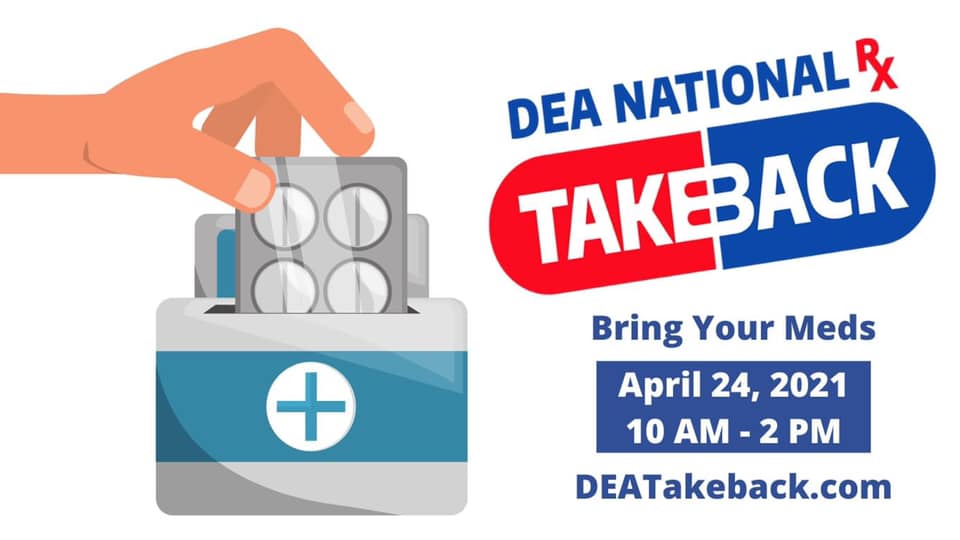
DEA/Loveland Police “Drug TakeBack Day is Saturday
Loveland, Ohio – The Loveland Police Department is hosting the National DEA Takeback Day again this year.

There is a permanent drop-off location inside the Loveland Safety Service Center at 126 S. Lebanon Road. This Saturday, April 24th from 10 AM until 2 PM at the Loveland Safety Center lobby @ 126 S Lebanon Rd, you can bring in your old, unused pills, tablets and capsules.
If you can’t make it on Saturday, LPD has a permanent medication collection box that is in their lobby, accessible during weekday normal business hours.
The items that are not accepted in Saturday’s Take Back or anytime in the secured deposit box:
• LIQUIDS
• SYRINGES/NEEDLES/TESTING STRIPS
• INHALERS
• LOTIONS
• OINTMENTS
You can contact www.Rumpke.com for information on sharps disposals.
WHY?
The National Prescription Drug Take Back Day addresses a crucial public safety and public health issue. According to the 2019 National Survey on Drug Use and Health, 9.7 million people misused prescription pain relievers, 4.9 million people misused prescription stimulants, and 5.9 million people misused prescription tranquilizers or sedatives in 2019. The survey also showed that a majority of misused prescription drugs were obtained from family and friends, often from the home medicine cabinet.
Locate Another Collection Site Near You

-

Loveland High brings to stage “The Theory of Relativity”
Loveland, Ohio – Theatre returns to the Loveland High School stage on Wednesday, April 21, with The Theory of Relativity. The musical runs through Saturday, April 21.
The Theory of Relativity is based on a book by Brian Hill. The music and lyrics by Neil Bartram, are about students in a college physics class who have more personal problems to solve than those in the textbook. The question is, “Why are numbers more reliable than people, or what happens to old friendships as experience changes those people.” How do young people handle the self-realizations presented by being on their own for the first time?
According to a release by the school district, “The musical is funny, poignant, and contemporary as many of us have spent too much time in our heads during this last year. Come join the fun to laugh and see ourselves reflected on stage, and maybe even shed a tear.”
Per COVID protocol, the audience size is limited so it is recommended to buy tickets online. If there are seats still available, tickets will be sold at the door but there is no guarantee that will happen. The school advises.”We advise a PG rating as college students ponder a lot of adult ideas.”
-

Superintendent search update
Loveland, Ohio – Here is the most recent update on the search for the next Loveland City Schools Superintendent:
Our search consultants, CFES, are in the process of assembling interested potential candidates for our next Superintendent. We have also continued to work through the details of upcoming steps with CFES as outlined below:
– CFES will provide anonymous, detailed information on a set of potential candidates meeting our Ideal Candidate Profile. They will not screen out anyone who has expressed interest in applying for our position and all individuals who are interested in being considered will be presented to the Community Advisory Group and the Board (again, anonymously) for evaluation. The Board will subsequently determine the list of Candidates for interview with advice from the Community Advisory Group.
– Next, The Community Advisory Group, and separately the Board, will conduct non-public individual interviews with each Candidate. From these interviews, the Board with Community Advisory Group input, will select 1-3 Finalists.
– The selected Finalists will be available for virtual public introductions and interactions. Community feedback will be collected and supplied to both the Community Advisory Group and the Board.
– Finally, the Board will determine (again with advice from the Community Advisory Group) a selected Candidate and proceed with job offer & contract negotiations.
We intend to share progress on a regular basis and will look for ongoing broad community feedback through the Community Advisory Group and public sessions of the Board and the Finalists’ Virtual introductions session. Understandably, other elements of the process may be confidential and conducted in ‘Executive Sessions’ as appropriate.