Author: Loveland Magazine

  • Ohio Child Support launches app to help customers with cases

    Ohio Child Support launches app to help customers with cases

    Ohio Child Support customers may manage their child support cases from their cell phones. The Ohio Child Support Mobile Application is now available on the App Store and Google Play. With the app, you may:
    • View Case and payment information
    • Make child support payments
    • Send safe/secure messages to the county Child Support Enforcement Agency
    You must register at the Ohio Child Support Customer Service Portal to utilize the new Mobile App: http://jfs.ohio.gov/Ocs/index.stm. For problem resolution registering with the portal, call 1-800-686-1556. (Note: 38 percent of customers have already registered with the portal.)
    To download the app:
    1. Go to the App Store or Google Play
    2. Search for Ohio Child Support
    3. Tap the icon
    4. Download app
    5. Register or Login
  • Nestlé Purina PetCare plans to build new factory in Clermont County

    Nestlé Purina PetCare plans to build new factory in Clermont County

    Clermont County, Ohio – Nestlé Purina PetCare has announced a $550 million investment to build a new factory in Williamsburg Township, Ohio, to meet increasing demand for its pet foods.

    The Williamsburg Township location will join Purina’s network of 21 existing manufacturing locations across the United States and be the company’s first new factory built from the ground up since 1975.  This expansion is part of a broader growth plan for Purina and marks the second new factory Purina has announced in 2020 after the company revealed plans in late September to convert a former brewery into a new pet food factory in Eden, North Carolina.

    These jobs will be approximately 32-minutes from downtown Loveland.

    Preliminary plans call for Purina to invest $550 million to build its new factory in southwest Ohio and produce dry dog and cat food brands, including Purina Pro Plan, Purina ONE and Dog Chow.

    The 1.2 million-square-foot facility will sit in Williamsburg Township’s South Afton Industrial Park. Purina plans to employ more than 300 people at its new factory location by 2024. Many of the jobs will include professional staff, production operators, technical staff and engineers.

    Construction will begin this fall, and the factory is expected to be operational in 2023.

    “Clermont County is an excellent location for Purina’s newest factory thanks to the region’s distribution opportunities, a workforce with great potential and strong community values,” said Nolan Terry, Vice President, Manufacturing, Purina. “We have a unique opportunity to bring all of our best technical and innovative manufacturing thinking under one roof as we construct this facility from the ground up.”

    According to a press release issued by the company, the facility will be Purina’s most technologically advanced pet food factory, utilizing robotics and innovative digital tools and featuring a training center to promote learning and development.

    The release also said that Purina is committed to making pet care products in an environmentally responsible manner.

    Purina’s new operations will be designed with sustainability at the forefront, including a commitment to send zero waste for disposal, and production processes designed to recover and reuse heat and water. Purina also is striving to make the facility 100 percent powered by renewable electricity in the shortest practical timeframe, while supporting the company’s ambition for zero environmental impact in company operations by 2030.

    The Ohio Development Services Agency approved a Job Creation Tax Credit to support the project.

    “Governments don’t create jobs, businesses do,” said David Painter, President of Clermont County Board of Commissioners. “Commissioners invested in South Afton Industrial Park to provide the infrastructure and space where private business could create jobs for our residents.”

    Painter continued by saying, “Williamsburg local school district will receive negotiated payments in lieu of taxes for coming decades. Clermont County will recoup its initial investment in South Afton. This is a win for Clermont County government, the Williamsburg area, Nestlé Purina and the residents of Clermont County.”

    Overall, Nestlé employs 3,300 people across the state of Ohio, with operations in Solon, Marysville, Cleveland, Brecksville and Zanesville, spanning Nestlé USA, Nestlé Professional, Nestlé Foodservice and Nestlé Purina operations.

    To view and apply for positions at Purina’s newest factory visit purinajobs.com/WilliamsburgTownship.

    To receive alerts and updates on new available positions, visit purinajobs.com/OH.

    Key Facts for Nestlé Purina:

    Total investment in this facility: an estimated $550 million

    Total investment across the U.S. in the last five years: $1.5 billion

    Total square footage of Williamsburg Township facility: 1.2 million

    Expected number of employees: 300 by 2024

  • Domestic violence survivors fear for their lives, but still want to vote

    Domestic violence survivors fear for their lives, but still want to vote

    By Susan Tebben

    When trying to get away from a violent abuser and keep food on the table, the next election is usually isn’t a priority.

    For survivors of domestic violence, keeping their identities and locations a secret is vital for their own livelihood. Survivors don’t always think to grab a driver’s license or their latest utility bill when they’re leaving an abusive situation.

    When identification is needed at a polling place and voter registration is public, those who have been abused are hesitant to exercise that particular right.

    When identification is needed at a polling place and voter registration is public, those who have been abused are hesitant to exercise that particular right.

    “This is one of those barriers to voting that most people don’t think about,” said Audrey Starr, of the YWCA Dayton, which runs the only domestic violence shelters in Montgomery and Preble counties.

    Montgomery County ranks third in the state for domestic violence-related law enforcement calls, according to the YWCA. While calls to their 24/7 crisis hotline are down from last year, Starr said the likelihood that callers’ situations end in death or serious injury has tripled.

    The most recent domestic violence report released by the Ohio Bureau of Criminal Identification and Investigation is from 2018. It showed a total of 65,845 “reported victims” of domestic violence, 20.6% (13,566 people) of those being live-in partners, and 13.23% (8,714) were wives.

    On top of feeling unsafe going to the polls or providing identifying information, some survivors believe elections don’t bring them the change they need.

    “I think many of the people we work with often do not feel that either party has their interests at heart,” said Kelly Cooke

    “I think many of the people we work with often do not feel that either party has their interests at heart,” said Kelly Cooke, executive director of the Southeast Ohio domestic violence agency My Sister’s Place. “They have experienced a great deal of disappointment with our elected officials, who they see as ignoring their needs.”

    Ohio’s domestic violence programs are funded through competitive federal grants and a small portion of county marriage and divorce license fees, according to the Ohio Domestic Violence Network.

    In the last Ohio General Assembly, domestic violence received its first ever line-item in the state budget, for a total of $1 million a year for all state programming.

    In the last Ohio General Assembly, domestic violence received its first ever line-item in the state budget, for a total of $1 million a year for all state programming. Surrounding states have devoted more money to the cause, with West Virginia allocating $2.5 million from the general fund and Indiana providing $5 million. Kentucky gives $6.7 million and Pennsylvania funds the programs with $15.63 million from government funds, according to ODVN data.

    “Our programs have relied on federal grant funding for so long that the Ohio legislature has gotten away with not funding our programs,” said Micaela Deming, policy director and staff attorney for the Ohio Domestic Violence Network.

    Safe At Home program

    One thing the state has joined other states in doing is creating the Safe At Home program, a confidentiality program run through the Secretary of State’s office.

    Through the program, survivors of domestic violence, stalking, human trafficking, rape or sexual battery can get a substitute Post Office box address designated through the Secretary of State’s office to shield an actual residence from public records.

    Private entities aren’t required to accept the substitute address, but state governmental entities should, according to the Secretary of State’s office.

    The state program was created through an Ohio House bill, and a more recent bill wants to expand the legislation. Currently, the Safe at Home program doesn’t address confidentiality needed when a survivor owns or is purchasing a home, or the use of the substitute address in child support or custody proceedings.

    House Bill 429 seeks to address those issues. It was passed in the House in June, and is awaiting consideration by the Senate Local Government, Public Safety and Veterans Affairs Committee.

    Voting safely

    Even with the potential risks, advocates and shelter coordinators say this year has been a little different. More clients and shelter residents have been asking how they can vote.

    The YWCA in Dayton has worked to educate survivors on their rights and the empowerment that can come from voting in a safe way. The Dayton facility works to make transportation available for those that need or want it to get to the polls.

    “We know that when people commit to voting and look at ‘what does that look like for me’ … walking through those steps and writing down the plan makes them much more likely that they’ll go through with it,” Starr said.

    Agencies that break down voting into plans and simple steps just as they do getting employment, education or permanent housing, are able to make the task less overwhelming, Starr said.


    Susan Tebben

    Susan Tebben is an award-winning journalist with a decade of experience covering Ohio news, including courts and crime, Appalachian social issues, government, education, diversity and culture. She has worked for The Newark Advocate, The Glasgow Daily Times, The Athens Messenger, and WOUB Public Media. She has also had work featured on National Public Radio.

  • COVID-19 up-date for Loveland’s 3 counties

    COVID-19 up-date for Loveland’s 3 counties

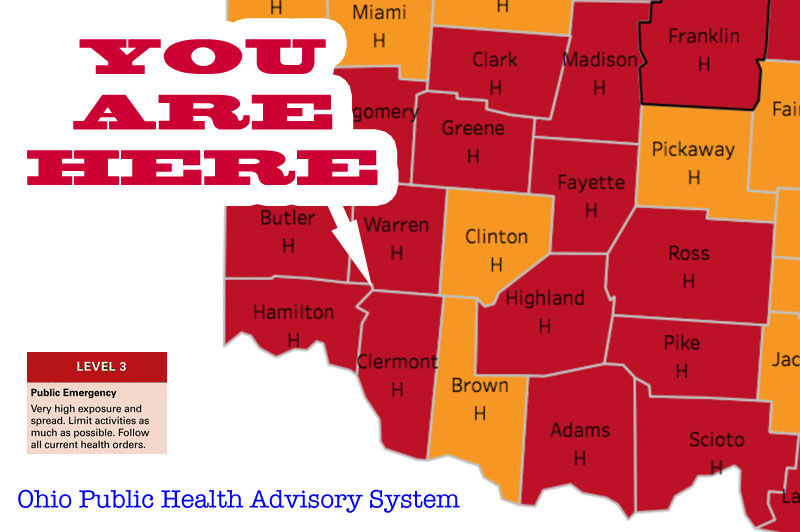
    Loveland, Ohio –  Although Hamilton County is no longer listed on Ohio’s watch list to turn PURPLE, there are still serious concerns about spread of the coronavirus new health data compiled by the Ohio Department of Health reveals.

    Clermont County is now a RED County.

    Hamilton County remains RED.

    Warren County remains RED.

    Level 3 (RED) on the Risk Level Indicator means there has been a public emergency declared and there is very high level of spread and exposure in the county.

    The Ohio Department of Health guidance in a RED county is to:

    • Conduct a daily health/symptom self-evaluation and stay at home if symptomatic.

    • Maintain social distancing of at least 6 feet from non-household members.

    • Wear face coverings in public, especially when social distancing is difficult to maintain.

    • Increase caution when interacting with others not practicing social distancing or wearing face covers.

    • Avoid traveling to high-risk areas.

    • Follow good hygiene standards, including:

    Wash hands frequently with soap and water for at least 20 seconds.

    Use hand sanitizer frequently.

    Avoid touching your face.

    Cover coughs or sneezes (e.g., into a tissue, or elbow).

    Symptom self-evaluation monitoring.

    • Avoid contact with anyone who is considered high-risk.

    • High-risk individuals should take extra care to follow precautions.

    • Decrease in-person interactions outside household.

    • Seek medical care as needed, but limit or avoid unnecessary visits to hospitals, nursing homes, and residential care facilities to see others as much as possible.

    • Decrease in-person interactions with others
    • Consider necessary travel only
    • Limit attending gatherings of any number

    Forty-three Ohio counties currently have a very high risk of exposure and spread (Red Level 3), up from 38 counties last week. This represents the highest number of Red Level 3 counties since the launch of the advisory system in July. As of today, 78 percent of Ohioans are living in a Red Level 3 county. Less than 1 percent of Ohioans live in a Yellow Level 1 county.

    “The virus is raging throughout the state, and there is no place to hide,” said Governor DeWine today. “We must face this virus head-on with the tools that we know can beat this virus back: masks, social distancing, washing hands frequently, and good ventilation when inside.”

    DeWine announced today that Ohio has now hit a record number of cases reported in a single 24-hour period. Between yesterday and today, health officials have reported a total of 3,590 new positive coronavirus cases in Ohio which is more than 700 cases more than the previous high number of cases reported last Saturday. A total of 194 new hospitalizations were also reported in the past 24 hours, the third-highest number of hospitalizations reported in a single day so far.

    Meanwhile, the Loveland School District reported today that they were notified that two more Loveland High School students have tested positive for COVID-19. One student was last at school on Thursday, 10/22/20, and the other on Monday, 10/26/20. (Also read: COVID-19 Positive Cases in Loveland Schools)

    Loveland PK-8 grades are in the “Full Capacity” mode of attendance for students not enrolled in the remote academy. Loveland High School remains in a blended mode of attendance for students not enrolled in the remote academy.

    COVID-19 Case Rates Per County as of Oct. 28, 2020


    County

    Color

    Cases Per 100 K

    Case Count

    Population

    Clermont
    RED (H)
    219.9

    454

    206,428

    Hamilton
    RED (H)
    261.4

    2,137

    817,473

    Warren
    RED (H)
    303.5

    712

    234,602

    “H” indicates there is “High Incidence”
    The 14-day period used for this table covers data from Oct. 14 to Oct. 27. The data were pulled on Oct. 28 and exclude incarcerated individuals.
    Source: Ohio Disease Reporting System (ODRS). Population from 2019, U.S. Census Bureau.

    –

    There are currently 96 Clermont County cases in the 45140, 45147, and 45150 Zip Code areas. Forty have died in Clermont County and there are 340 current active cases.

    Hamilton County is reporting that there have been 320 cases in the 45140 Zip Code. There are currently 177 cases in the county and 235 deaths recorded. The 7-day average for new cases is 177.

    In Warren county there are currently 295 hospitalizations and 642 new cases in the last 14 days. Sixty-six have died and 3 have died in the last 14 days. There is an average of 72 new cases per day in the county. No zip code level data is available for Warren County.

    (While the city of Loveland lies partially in Clermont County, the city’s public health services are contracted with Hamilton County Public Health. So, if a resident lives in the city of Loveland and tests positive for COVID-19, that case would be counted in Hamilton County Public Health’s statistics, not Clermont County’s.)

    Per CDC

    Among adults the risk for severe illness from COVID-19 increases with age, with older adults at highest risk. People of any age with the following conditions are at increased risk of severe illness: chronic kidney disease; chronic obstructive pulmonary disease; weakened immune system from solid organ transplant; obesity (body mass index of 30 or higher); serious heart conditions such as heart failure, coronary artery disease, or cardiomyopathies; Sickle cell disease; and Type 2 diabetes mellitus.

    Children who are medically complex, who have neurologic, genetic, metabolic conditions, or who have congenital heart disease are at higher risk for severe illness from COVID-19 than other children.

    People who need to take extra precautions include racial and ethnic minority groups; people experiencing homelessness; women who are pregnant or breastfeeding; people with disabilities; and people with developmental and behavioral disorders.

    More information is available at https://www.cdc.gov/coronavirus/2019-ncov/need-extra-precautions/index.html.

  • Lovelanders and their trees: Iris Wilson with her Pin Oak Tree

    Lovelanders and their trees: Iris Wilson with her Pin Oak Tree

    By Joe Timmerman

    “When we try to pick out anything by itself, we find it hitched to everything else in the Universe,” John Muir, a transcendentalist, wrote of nature’s connectedness in his 1911 book, My First Summer in the Sierra.

    In 1997, Nature journal published ecologist Suzanne Simard’s Ph.D. theses, describing newfound proof of how plants within communities can be interconnected through an underground system, called a mycorrhizal network, to interact with each other.

    This is Part 3 of a series Loveland resident and Ohio University student, Joe Timmermanwrote for The Post in Athens, Ohio. The Post is an award-winning, student-run media outlet that publishes online daily and also prints a weekly tabloid. They cover local and Ohio University news, sports, Athens life, entertainment and everything in between. The series is re-published here in Loveland Magazine with permission of The Post and Loveland High School graduate, Joe Timmerman a frequent contributor to Loveland Magazine.
    “All trees all over the world, including paper birch and Douglas fir, form a symbiotic association with below-ground fungi … They compete with each other, but our work shows that they also cooperate with each other by sending nutrients and carbon back and forth through mycorrhizal networks,” Simard said in an interview with Yale Environment 360.

    In this sense, trees communicate with one another on a deeper level than what is seen in the overstory and the understory of a forest.

    From mothers and fathers sharing memories of trees they have grown to love with their kids to a lifelong woodworker who discovered a new relationship with wood as time went by, people are connecting with nature in new and old ways, as COVID-19 has brought a global feeling of social disconnection. People and their trees alike have a story to be told.

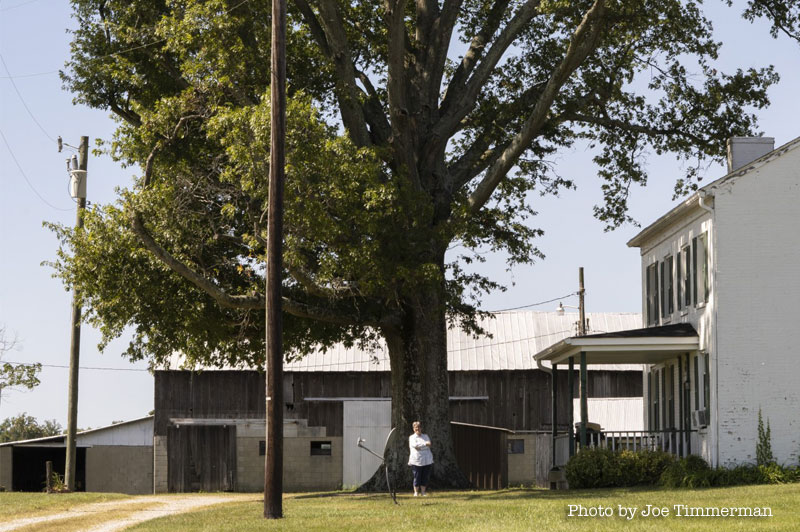
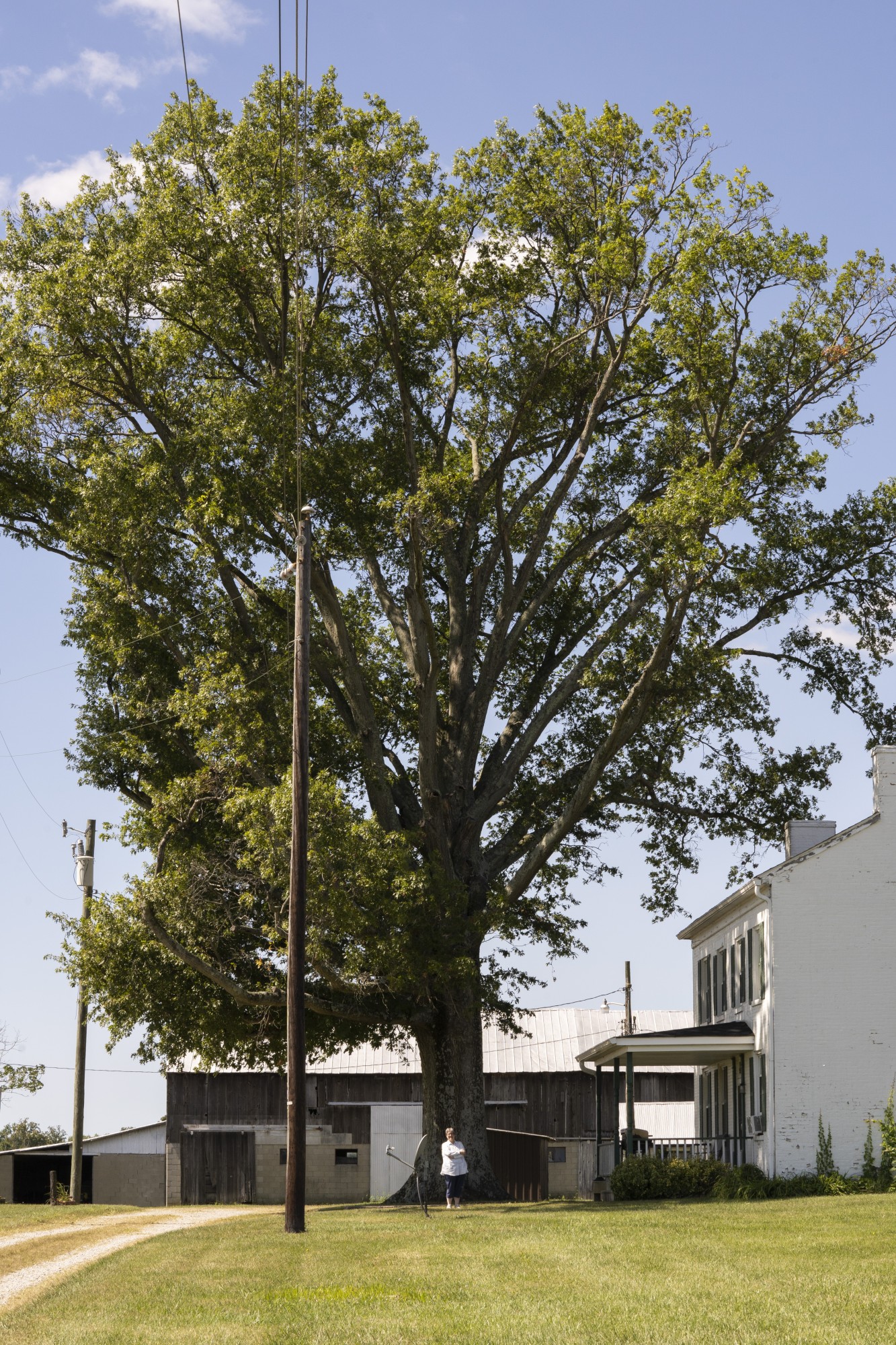
    Iris Wilson, 65, of Hamilton Township, Ohio, with her Pin Oak Tree on Friday, Sept. 18, 2020.
    Iris Wilson, 65, of Hamilton Township, Ohio, with her Pin Oak Tree on Friday, Sept. 18, 2020.

    Iris Wilson of Hamilton Township, Ohio, with her pin oak tree. Wilson takes care of her dad, who still lives in this farmhouse.

    “My dad, who grew up across the road, was good friends with the people who lived here,” Wilson said. “They had five boys that worked on the farm here before going to war. They would cut down dead trees in the forest behind this house like crazy. One day, they came back with a little sapling and planted it here by the house on their sister’s birthday. She’s been gone for a little while now. She would have been over 100, so this tree has been here a long time. It has little tiny acorns. There seems to be a squirrel that lives in it year-round. It really provides a lot of shade for the house in the hot months. When we’ve had ice storms, the limbs, even though they’re way up high, touch the ground. I was sure it was going to ruin the tree, but it didn’t. We started doing limb maintenance on the tree about three years ago, in hopes of giving it a little more life.”


    Read Part 2

    Read Part 1:

    Lovelanders Pat, Norah Jane, and Becky Hill connect with their trees…


  • Ohio’s draft COVID-19 immunization plan

    Ohio’s draft COVID-19 immunization plan

    Here are the highlights of Ohio’s draft COVID-19 immunization plan. You can read the complete draft: ODH Draft COVID-19 Plan

    The final plan must be submitted to the CDC by November 1st.

    Under the draft, Ohio would implement a 4-phase approach to distributing the COVID-19 vaccine once its available.

    A summary of the phases are as follows:

    Phase 1 – High-risk healthcare workers, first responders, seniors living in congregate settings (i.e. nursing homes)

    Phase 2 – Public health workers, teachers and school employees, homeless individuals, prison workers and inmates, persons with mental health in group homes or institutions, and individuals with a medical condition putting them at greater risk of mortality due to COVID-19

    Phase 3 – Students, young adults, children, and individuals in high risk occupations

    Phase 4 – Universal availability

  • New AARP Dashboard Reveals Ohio’s Efforts to Protect Nursing Home Residents During Coronavirus Pandemic Still Fall Short

    New AARP Dashboard Reveals Ohio’s Efforts to Protect Nursing Home Residents During Coronavirus Pandemic Still Fall Short

    Recently Reported Shortages in PPE and Staffing are Worrisome as Ohio’s Percentage of COVID-19 Deaths in Nursing Homes Exceeds National Average

    Columbus, Ohio – AARP’s Ohio state director, Holly Holtzen, said today that a new AARP dashboard reveals concerning trends in three critical areas linked to how Ohio’s nursing homes are handling the coronavirus pandemic, all of which could provide state officials with insights on how to do better.

    “Early on our state took notable steps to curb the virus in our nursing homes. But no state is doing enough to stem the loss of life,” said Holtzen. “As Ohio’s nursing homes resume in-person visitation amidst a surge in reported infections and Governor DeWine’s announcement of a new all-time high for the number of COVID-19 related hospitalizations, this data can shine a light on the areas and issues contributing to the heartbreaking situation in our nursing homes.”

    “The fact that nursing home residents account for nearly half of Ohio’s COVID-19 deaths is beyond alarming,” said Holtzen. “To still have PPE shortages in Ohio’s nursing homes eight long months into this crisis is inexcusable.”

    Using data from the Centers for Medicare & Medicaid Services— which is self-reported by nursing homes—the AARP Public Policy Institute, in collaboration with the Scripps Gerontology Center at Miami University in Ohio, created the AARP Nursing Home COVID-19 Dashboard to provide four-week snapshots of the virus’ infiltration into nursing homes and impact on nursing home residents and staff. Notably, the first release of the dashboard on October 14 reveals that nursing homes in every state reported shortages of Personal Protective Equipment (PPE), ranging from 8 percent of facilities in the best-performing states, to 60 percent in the lowest-performing state. The dashboard also compared state and national data on COVID-19 cases and deaths, staff cases and staffing shortages.

    By their own reports, more than 33 percent of Ohio nursing homes reported having less than a week’s worth of PPE on hand over the four week period ending Sept. 20, compared to about 28 percent nationwide.  Some 35 percent of Ohio nursing homes also reported staffing shortages in direct care workers during this period, compared to the national average of 29 percent.

    The share of Ohio’s COVID-19 deaths occurring in nursing homes is nearly twice the national average during the four-week reporting period.

    The share of Ohio’s COVID-19 deaths occurring in nursing homes is nearly twice the national average during the four-week reporting period. In Ohio, nearly two of every four reported COVID-19 deaths occurred in a nursing home, even though nursing home residents represent less than one percent of the state’s population.

    Holtzen also noted that more than half of all Ohio nursing homes have had at least one COVID-19 infection since January.

    “The fact that nursing home residents account for nearly half of Ohio’s COVID-19 deaths is beyond alarming,” said Holtzen. “To still have PPE shortages in Ohio’s nursing homes eight long months into this crisis is inexcusable.”

    Holtzen renewed AARP Ohio’s call forstepping up efforts to provide all long-term care facilities with adequate supplies of PPE, ensuring proper staffing levels, as well as increased frequency of mandatory and prioritized access to COVID-19 testing and testing results for residents, staff, vendors and visitors in elder-care facilities.

  • COVID-19 Positive Cases in Loveland Schools

    COVID-19 Positive Cases in Loveland Schools

    Loveland, Ohio – The Loveland School District sends notification when positive COVID 19 cases are reported to District officials. They only release quarantine numbers on Fridays.

    In the evening of Wednesday, 10/21/20, the district was notified that one student at Loveland High School tested positive for COVID-19. This student was last present at school on Saturday, 10/17/20.

    On Thursday, 10/22/20, the district was notified that one student at Loveland High School tested positive for COVID-19. This student was last present at school on Monday, 10/19/20.

    On Thursday, 10/22/20, the district was notified that one student at Loveland Middle School tested positive for COVID-19. This student was last present at school on Tuesday, 10/20/20.

    On Friday, 10/23/20, the district was notified that one student at Loveland High School tested positive for COVID-19. This student was last present at school on Tuesday, 10/20/20.

    On Friday, 10/23/20, the district was notified that one non-teaching staff member at Loveland High School tested positive for COVID-19. This staff member was last present at school on Tuesday, 10/20/20.

    On the evening of Friday 10/23/20, the district was notified that one student at Loveland High School tested positive for COVID-19. This student was last present at school on Monday, 10/19/20.

    On Tuesday, 10/27/20, the district was notified that one student at Loveland High School tested positive for COVID-19. This student was last present at school on Thursday, 10/22/20.

    On Wednesday 10/28/20, the district was notified that one student at Loveland Middle School tested positive for COVID-19. This student was last present at school on Tuesday, 10/27/20.

    On Wednesday, 10/28/20, the district was notified that two students at Loveland High School tested positive for COVID-19. One student was last at school on Wednesday, 10/21/20, and the other on Thursday, 10/22/20.

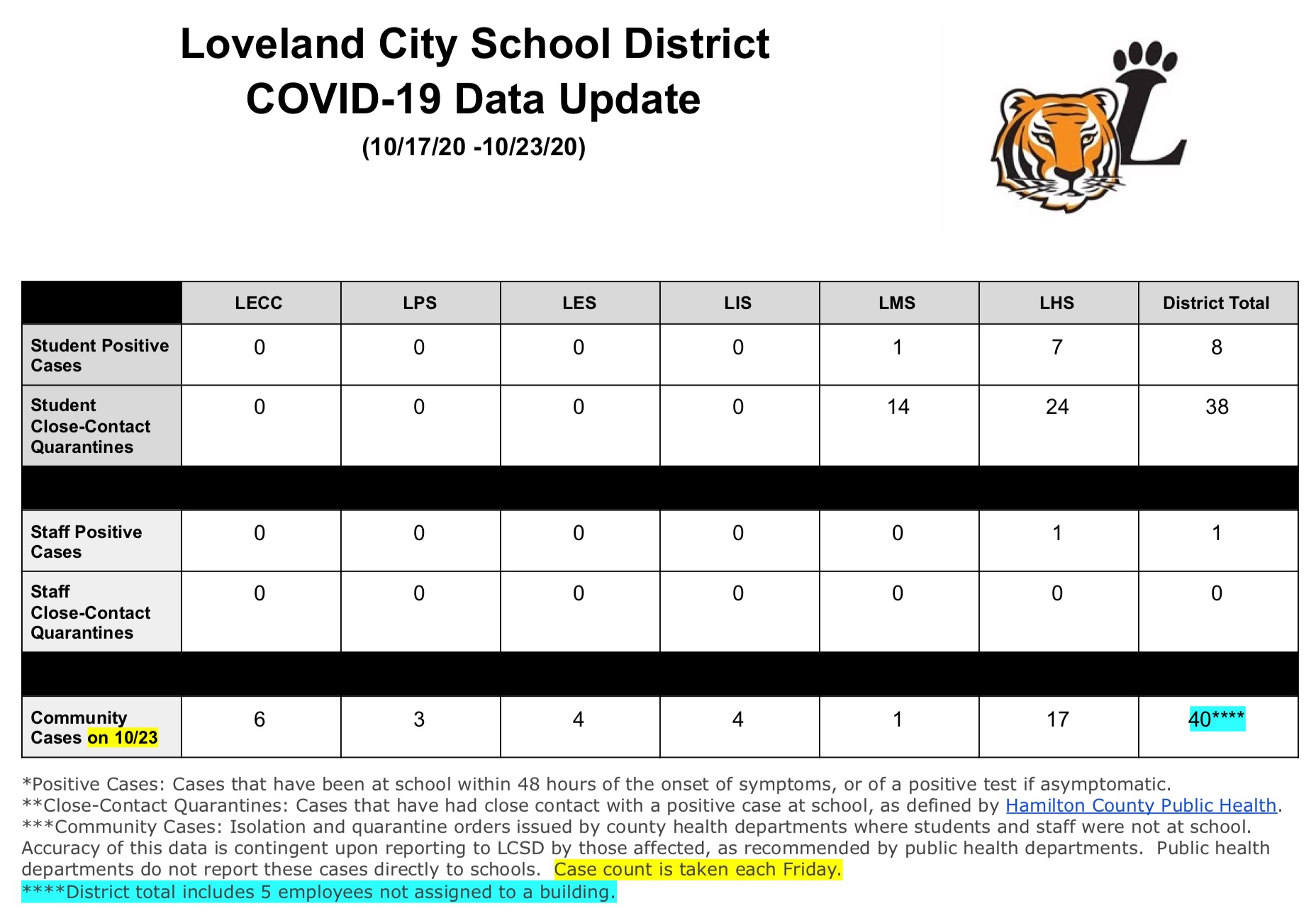
    Below is the last COVID 19 Dashboard published by the District. It was published on Friday, October 23. The District will not release another Dashboard until this Friday afternoon. (Right Click to open in a new tab to see a larger view)

  • Ohio coronavirus spike continues to alarm

    Ohio coronavirus spike continues to alarm

    Heading into Election Day, Ohio appears to be in the midst of a sharp, broadly based spike in coronavirus cases with no end in sight, Gov. Mike DeWine said Tuesday.

    Marty Schladen

    Marty Schladen has been a reporter for decades, working in Indiana, Texas and other places before returning to his native Ohio to work at The Columbus Dispatch in 2017. He’s won state and national journalism awards for investigations into utility regulation, public corruption, the environment, prescription drug spending and other matters.

    Continuing a trend, the 2,509 new cases reported from the previous 24 hours were a 27% increase over the 21-day average and the 198 new hospitalizations represented a 69% increase over the three-week average for that metric.

    And as it is elsewhere in the United States, the virus is spreading into rural corners of Ohio that previously had been spared.

    “Right now, 92.8% of Ohioans are living in a county that is high incidence and/or has very high exposure and spread,” DeWine’s office said in a tweet. 

    Adding to the alarm, the “positivity rate,” or the percentage of tests turning out to be positive for coronavirus, is nearing 6%. That’s about double what it was in late September. 

    Given the fact that Ohio continues to increase the number of tests that are administered, the higher rate indicates that people are spreading the disease to one another at a pace that is snowballing.

    “We have no indication that we’ve plateaued out at all,” DeWine said during his Tuesday coronavirus press conference.

    He said he found the situation so alarming that he was calling on medical, government, education and other leaders in each of the state’s 88 counties to work together on strategies to arrest the spread of the disease as cold, wet weather drives Ohioans indoors.

    DeWine also had an appeal relating to Halloween and football parties and Thanksgiving gatherings.

    “Please reconsider hosting gatherings of any size,” he said.

    The dire statements brought the kinds of questions the governor has often faced since he started holding coronavirus briefings back in March. 

    One was whether he would reimpose orders closing businesses not deemed to be essential. Lt. Gov. Jon Husted said one reason such a move might be unnecessary is that much of the spread happening now in Ohio doesn’t seem to be occurring inside businesses.

    DeWine also started to rule out the possibility of another shutdown but then seemed to think better of being too definite.

    “We just can’t shut down twice, or we certainly don’t want to do it twice,” he said. 

    Then, after describing what could happen if the spread of the disease is unchecked, DeWine said things could get so bad that “we will one way or the other be shut down.”

    DeWine also faced more questions about statements and actions concerning the pandemic by President Donald Trump and his staff.

    One was a proposal to allow uncontrolled spread among populations without other health risks in an attempt to achieve “herd immunity.” If successful, it would mean that such a large chunk of the population would be immune to the virus that it would have a hard time spreading.

    The idea has been endorsed by Scott Atlas, a doctor who doesn’t specialize in infectious diseases, but was placed on the White House coronavirus team after Trump saw him on Fox News.

    The argument has been widely discredited, with renowned epidemiologist Michael Osterholm calling Atlas’s arguments “the most amazing combination of pixie dust and pseudoscience I’ve ever seen.”

    DeWine echoed that on Tuesday, saying, “There’s no reputable scientist I’m aware of anywhere in the world” who thinks herd immunity can be achieved without a vaccine anytime soon.

    DeWine was also asked why he greeted Trump at the airport Saturday. Trump was on his way to Circleville for a rally where people crowded together and at which Trump said the coronavirus is being overhyped by the media.

    DeWine at first seemed to distance himself from Trump, saying he was merely respecting the dignity of Trump’s office. But then…

    “Please understand exactly what it was. It was the governor of Ohio greeting the president of the United States,” DeWine said. “Again, I’ve also endorsed him and I continue to endorse him.”

  • “Pandemic Preparedness and Planning” reports for Loveland Intermediate School

    “Pandemic Preparedness and Planning” reports for Loveland Intermediate School

    Loveland, Ohio – Here are the “Pandemic Preparedness and Planning” reports for the Loveland Intermediate School that were obtained through a public records request to the District.

    Loveland Magazine asked the Superintendent to provide Loveland Magazine with the report “Pandemic Preparedness and Planning” that LJB Inc. prepared for the District. LJB was awarded a contract in July for $66,250 for “Pandemic Preparedness and Planning” services. The report was prepared under the previous CDC definition of “close contact”.

    Here is what was prepared for the Loveland Middle School

    FINAL R0119763A LIS

    DRAFT Deliverable R0119763A LIS

    0119763A LIS Cafeteria

    LIS General Classroom Room Controls-Procedures

    LIS Art Room Controls-Procedures

    LIS Boys Restroom Room Controls-Procedures

    LIS Girls Restroom Room Controls-Procedures

    LIS Cafeteria Room Controls-Procedures

    LIS Gym Room Controls-Procedures

    LIS Visit Summary and Photo Reference