Rendering of a new firehouse for Historic Downtown
Loveland, Ohio – The City recently promoted a glimpse of what a new fire station will look like that will be built in Historic Downtown. A new Station 63 will be located one block East of the current station.
The current Station 63 firehouse at the intersection of East Loveland Avenue and State Route 48 will be relocated to 220 East Loveland Avenue adjacent to The Trails at East Loveland senior apartment community.
In making the announcement, Loveland-Symmes Fire Department fire Chief Otto Huber said, “I would like to thank the citizens’ working group who helped evaluate the new location. The station will provide much needed safety upgrades for our firefighters and will help us provide service to the community for decades to come.”
The new station will be one-third larger and have two road entry points. One from from O’Bannon Avenue and one from East Loveland Avenue, and features more lot space to maneuver equipment according to City Hall.
The Current Fire Station in Historic Downtown on East Loveland Avenue and State Route 48.
At more than 10,000 square feet, the station will feature two pull-through apparatus bays, one back-in bay, training rooms, ample storage for fire and EMS equipment, full living quarters, office space, and public restrooms. The building will be one story with garage door heights of 14 feet.
The City says that it did not financially, make sense to renovate the existing firehouse and that multiple safety upgrades were needed. “For instance, today’s code would require an elevator to be installed — a huge expense for a building lacking other needed modern amenities. The current station has no pull-through bays, and its intersection location poses challenges.”
“There were many reasons to rebuild the station, but the key reason came back to response time. Having pull-through bays and more access points dramatically can improve crews’ response,” explained Assistant City Manager Cory Wright.
Refunds for unlawful utility charges are a top priority for Maureen Willis, the veteran litigator who became Ohio’s new consumers’ counsel this month.
The Office of the Ohio Consumers’ Counsel is a state-funded agency that represents ratepayer interests in gas and electric utility cases, including matters relating to House Bill 6, the 2019 law at the heart of Ohio’s nuclear and coal bailout scandal. The office also works for legislative reform to promote competition, eliminate subsidies and protect energy affordability for vulnerable groups.
Ohio Consumers’ Counsel Maureen Willis.
The Energy News Network spoke with Willis about her agenda as Ohio’s official advocate for residential ratepayers.
Why are refunds from utilities a big issue?
“If consumers are charged and there’s a decision by the court or even a federal agency that the charges were unlawful or unreasonable, we think they should get the refund all the way back to when they paid it,” Willis said.
Instead, a majority on the Ohio Supreme Court has held that a 1957 case against “retroactive rulemaking” forbids refunds of charges, called riders. That’s the case even if the court holds the charges are otherwise unlawful or unreasonable and even if the riders were not part of a full ratemaking case.
So, even though the Ohio consumers’ counsel has helped consumers avoid $433 million in charges since 2009, they’re still out $1.5 billion in refunds. That makes the wins something of a “hollow victory, because you’re not getting that money back,” Willis said. “But we will continue to fight.”
What is OCC’s position on renewable energy in Ohio?
“We want to advocate for consumers to get energy at the least cost,” Willis said, noting the agency generally considers itself agnostic on the source of electricity. Nonetheless, “renewables are becoming more and more economic, and that certainly is something that we take into account in the mix,” Willis said.
A 2023 report by Energy Innovation Policy & Technology found that 99% of U.S. coal plants are more costly to keep running than replacing them with new solar, wind or energy storage.
Yet HB 6 and regulatory rulings before it require Ohio ratepayers to subsidize costs for two 1950s-era coal plants. OCC continues to contest those charges.
“To the extent that there are subsidies built into the rate and those subsidies are attached to monopoly rates, it creates a problem” by undermining the market, Willis said. “In Ohio, we do rely on the competitive market to bring consumers lower prices and greater innovation.”
Ohio’s law and rules on utility energy efficiency programs have changed over the past decade. What is OCC’s current position on energy efficiency?
“From our perspective, energy efficiency is a good thing,” Willis said, noting that it can help reduce people’s utility bills. Ten years ago, Ohio law required utilities to meet an energy efficiency standard. Back then, OCC was among parties pushing regulators to require FirstEnergy to bid that energy efficiency into a capacity market auction, which lowered costs to consumers. But in 2019, HB 6 gutted Ohio’s energy efficiency standard.
Now, though, consumers can get energy efficiency products and services from competitive suppliers, Willis said. So, “we would say that the utility really has no business to be in the energy efficiency business anymore.” OCC also objects to “shared savings,” which it views as extra profits for utilities.
A bipartisan bill to let utilities run voluntary energy efficiency programs is pending in the General Assembly. Supporters say utility-run programs can make savings simpler for consumers and can produce benefits for all ratepayers by reducing system-wide demand.
What is OCC’s position on ratemaking reform?
OCC has “always battled” electric security plans, or ESPs, Willis said. “We believe they are crony capitalism.”
A traditional ratemaking case requires utilities to show all their projected costs and revenues, based upon actual data from a representative test year. ESP cases don’t require that detailed scrutiny. They allow utilities to raise rates for isolated issues, without presenting those charges in the context of all of a company’s financial activities. And utilities can reject any change regulators might try to make to a plan — effectively giving them unequal, outsized bargaining power, Willis said.
Along those lines, OCC supports Senate Bill 143, which would get rid of ESPs and strengthen corporate separation between utilities and their affiliates.
OCC opposes Senate Bill 102, which would require periodic rate cases but still allow multiple riders. And the bill would let utilities use projections instead of actual data from test years in full ratemaking cases. Challengers also would have fewer opportunities to conduct pre-hearing discovery from utilities and others.
Discovery procedures are “truth-finding tools,” Willis explained. “To the extent you put limits on those, you’re saying, ‘We don’t really want you to get to the truth; you’re just going to have to accept what the utility has filed.’”
Four HB 6-related cases remain frozen at the PUCO, while FirstEnergy seeks more rider money through another ESP. What’s OCC’s position on that?
“It’s really an unfair situation where we’re stayed when it comes to protecting consumers,” Willis said. “But when it comes to charging consumers rate increases, there’s no stay on those.”
A Sept. 22 filing by OCC asked the PUCO to lift the stay in the four HB 6-linked cases. An Oct. 2 filing by FirstEnergy opposed ending the stay but did not address the argument that it’s unfair to continue the stay while the company has a separate case seeking more money from ratepayers.
What is OCC working on at the federal level?
OCC filed a complaint with federal regulators last month, asking them to review utilities’ “supplemental” transmission projects. As things stand, neither the Federal Energy Regulatory Commission nor the grid operator PJM reviews charges for those projects before utilities ask state regulators to let them pass along the costs to ratepayers. Nor does the PUCO scrutinize the charges, Willis said.
Since 2017, Ohio utilities have added more than $6 billion for “supplemental” projects to their local transmission plans in Ohio, according to the complaint. By filing its complaint, OCC hopes “that someone starts looking at these projects for need, cost-effectiveness and prudence,” Willis said.
OCC is also concerned about the pending transfer of the Energy Harbor (formerly FirstEnergy Services) nuclear plants to Vistra for one of that company’s subsidiaries to run. “We want to make sure that the competitive market is protected,” Willis said.
Where does grid modernization fit in OCC’s agenda?
While the grid needs to be updated, Willis doesn’t want it done through “gold-plating.” Generally speaking, that involves adding pricey equipment that’s not really necessary. The added spending increases the base on which a utility earns a return on investment.
Instead, Willis wants regulators to scrutinize any grid modernization plan carefully: “Is it really needed? And who is benefitting? Is it really to the benefit of residential consumers?” she asks.
What special concerns come into play for consumers with low incomes?
“Payment assistance is something we’re always going to be looking at,” along with the prices charged to low-income customers, disconnection data and more, Willis said. “Part of our advocacy must certainly be to protect the at-risk consumers.”
This article first appeared on Energy News Network and is republished here under a Creative Commons license.
__________________
KATHIANN M. KOWALSKI, ENERGY NEWS NETWORK
Kathi is the author of 25 books and more than 600 articles, and writes often on science and policy issues. In addition to her journalism career, Kathi is an alumna of Harvard Law School and has spent 15 years practicing law. She is a member of the Society of Environmental Journalists and the National Association of Science Writers. Kathi covers the state of Ohio.
This is via the Butler County Board of Developmental Disabilities:
Wednesday, November 15 at 6:00 p.m.
“Cincinnati Shakespeare Company is excited to offer a sensory-friendly performance of A Midsummer Night’s Dream at The Otto M. Budig Theater located at,1195 Elm St, Cincinnati, OH 45202. This special performance is uniquely adapted for individuals with autism and/or those with developmental and/or sensory differences to enjoy with their families. Tickets are $14 per person. Only a limited number of tickets will be sold!”
Loveland, Ohio – The Loveland Police Department wants to make Halloween a special day for children and adults with special needs.
If you reside within the City of Loveland or Hamilton Township and have a loved one living with a disability or special needs, you can request an officer to visit. The “Candy Police” will deliver a special treat on Oct. 31 between 5-8 PM.
If you’d like to sign up, please contact Lieutenant Mike Szpak at (513) 707-6116 or mszpak@lovelandoh.gov by Oct. 29. You will need to provide your loved one’s name, address, and phone number.
If you would like to donate candy or treats, please contact Lt. Szpak.
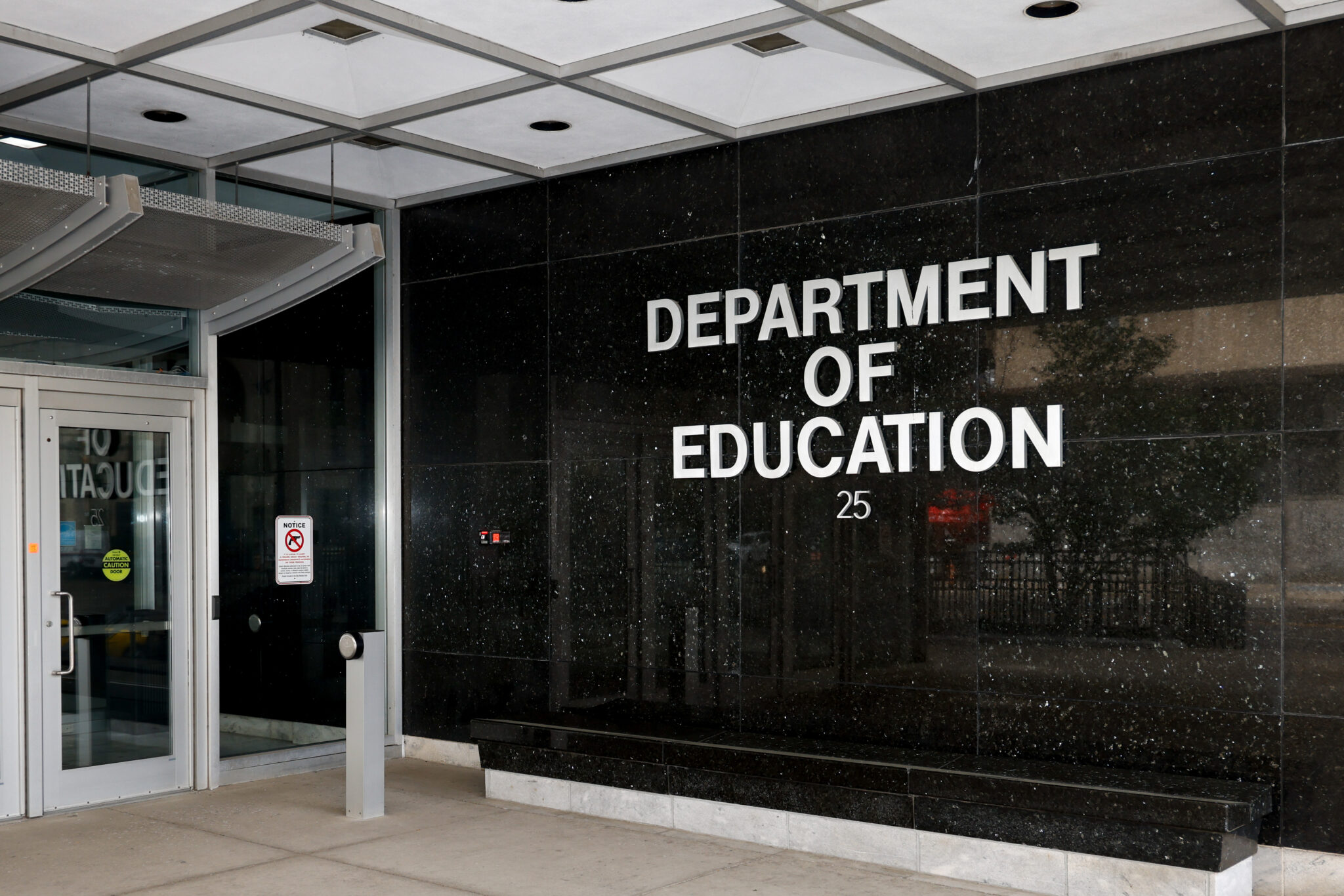
The Ohio Department of Education becomes the Ohio Department of Education and Workforce, which creates a cabinet-level director position and puts the department under the governor’s office.
Retired Franklin County Common Pleas Court Judge Richard Frye denied a preliminary injunction request to stop the transfer of power of K-12 education from the state school board to the governor’s office on Friday, the last day the temporary restraining order was in effect.
“I am thrilled that the restraining order has been dissolved and we can focus on the important work of moving forward to help our kids be better prepared for life after high school, whether choosing additional training, beginning a career, or heading to college,” DeWine said in a statement Friday.
Under the state’s two-year budget, the Ohio Department of Education becomes the Ohio Department of Education and Workforce, which creates a cabinet-level director position and puts the department under the governor’s office.
Jessica Voltolini will be the interim director of the Department of Education and Workforce starting Monday, DeWine said.
“She will lead the department as we resume our search for the director and deputy director positions,” he said.
Voltolini most recently served as the Ohio Department of Education’s chief of staff and she was one of two candidates former interim superintendent of public instruction Dr. Stephanie Siddens recommended to fill her role when she left the department earlier this year. The state board of education picked Chris Woolard as the interim state superintendent.
The new law also reduces the State Board of Education’s power to teacher disciplinary and licensure cases and territory disputes. The state board of education no longer has various administrative powers or control over curriculum standards.
Seven members of the Ohio State Board of Education originally filed a lawsuit against Ohio Gov. Mike DeWine on Sept. 19 in an attempt to block these changes from taking place. Judge Karen Held Phipps issued the temporary restraining order Sept. 21, which was eventually extended until Oct. 20.
“The temporary order we won to stop Gov. DeWine’s education takeover from going into effect was dissolved and an interim order was issued,” Democracy Forward, the plaintiff’s legal counsel, said Friday afternoon in a statement. “We await a final decision on our request to block the law while the case proceeds, and we are confident that democracy and the Ohio Constitution will ultimately prevail.”
Lawsuit
On Oct. 1, the lawsuit was amended and State Board of Education members Christina Collins and Michelle Newman, former Toledo Public School Board President Stephanie Eichenberg and the Toledo Public School Board were named the plaintiffs in the case.
Collins, Newman and Eichenberg all have children attending Ohio public schools. The plaintiffs were represented by Democracy Forward and Ulmer & Berne LLP.
Franklin County Magistrate Jennifer Hunt held an all-day preliminary injunction hearing on Oct. 2 and the judge’s temporary restraining order continued, but DeWine held a press conference later that day saying he was going to continue with the changes anyway.
The plaintiffs asked the judge for clarification of the restraining order and the temporary restraining order was extended until Oct. 20.
Chief Counsel and Ethics Officer for the Ohio Attorney General Bridget Coontz, who was representing the original state school board members, was disqualified from being involved in the lawsuit after she sent an Oct. 3 email with legal advice to the counsel for defendants, Julie Pfeiffer, the section chief at the Ohio Attorney General’s Office.
Ohio State Board of Education
Since Ohio voters passed a constitutional amendment in 1953 to create the State Board of Education, the plaintiffs argued these changes in the state budget were unconstitutional.
Hunt, however, disagreed.
“The Legislature has complete authority to grant, or remove, the respective powers and duties of the State Board and the Superintendent, and the State Board has no constitutional right to retain all the powers transferred under the Challenged Provisions,” she wrote in her decision.
The Ohio State Board of Education is currently made up of 19 members — 11 elected and eight appointed by DeWine.
State Superintendent Search
The search firm tasked with identifying superintendent candidates paused their search because of “the recent lawsuit and other events that surround the Board’s current situation,” President of Ray & Associates Michael Collins wrote in an Oct. 9 letter obtained by the Ohio Capital Journal.
“Plaintiffs failed to prove by clear and convincing evidence that they will suffer any of their claimed injuries if injunctive relief is denied,” Hunt wrote in her decision. “Defendants argue that an injunction will cause confusion, unrest and chaos for Ohio’s educational system.”
Megan Henry is a reporter for the Ohio Capital Journal and has spent the past five years reporting in Ohio on various topics including education, healthcare, business and crime. She previously worked at The Columbus Dispatch, part of the USA Today Network.
A lawsuit is trying to prevent a new law from changing how Ohio students learn how to read.
Reading Recovery Council of North America, located in Worthington, filed a lawsuit on Oct. 3 in the Franklin County Court of Common Pleas to block the science of reading from being implemented in schools across the state.
The science of reading is based on decades of research that shows how the human brain learns to read and incorporates phonemic awareness, phonics, fluency, vocabulary, and comprehension.
Reading Recovery Council of North America’s reading intervention programs would be banned under the new law.
The association has seen a decline in Ohio school district memberships since the state budget was signed into law and a major portion of its operating revenue comes from annual membership fees paid by Ohio members, according to the lawsuit.
“The unconstitutional, improper and unlawful teaching, instructional and educational policy directives of the Ohio Legislature … directly and significantly impact RRCNA’s mission and outreach,” wrote David Yeagley, an attorney with Ulmer & Berne that filed the lawsuit.
DeWine’s press secretary Dan Tierney said the governor is disappointed this lawsuit has been filed.
“I truly believe there’s nothing more important than the science of reading, and making sure that every single child in the state of Ohio, as they are learning to read, has the benefit of the science,” DeWine said at a March 23 event. He has visited several schools to learn about how the science of reading method has been implemented in lessons.
State budget
A chunk of the state’s two-year operating budget goes towards implementing the science of reading — $86 million for educator professional development, $64 million for curriculum and instructional materials, and $18 million for literacy coaches.
DeWine, who first began advocating for the science of reading during his state of the state address back in January, signed the state budget in July. He originally put the science of reading in his proposed state budget and it remained, with some tweaks, as it went through the budget process.
“If permitted to take effect, it will allow the General Assembly to disguise a policy-based law in a must-pass appropriations bill,” the lawsuit said. “The literacy curriculum statute intrudes on classroom teaching and learning programs, models, methodologies and materials.”
The lawsuit argues the General Assembly is trying to set education policy and curriculum, infringing on the Ohio State Board of Education’s authority to oversee the Ohio education system.
Three-cueing
The budget bans teachers from using the “three-cueing approach” in lessons unless a district or a school receives a waiver from the education department or a student has an individualized education program that specifically includes the “three-cueing approach.”
However, the lawsuit argues the budget fails to clearly articulate “a clear standard for assessing what teaching models or methods might be categorized under the “three-cueing” approach.”
The budget defines the “three-cueing approach” as any model of teaching students to read based on meaning, structure and syntax, and visual cues. The three-cueing method encourages children to read words by asking three questions: Does it make sense? Does it sound right? Does it look right?
Reading recovery is “often referred to or perceived as a “three-cueing” approach, and therefore is targeted as being anti-science of reading,” according to the lawsuit. “There are no recognized or established teaching, instructional or educational approaches that strictly and exclusively fall within either the “science of reading” or the “three-cueing approach.”
This is the second education lawsuit filed against DeWine that relates back to the budget bill. Seven members of the Ohio State Board of Education filed a lawsuit against DeWine on Sept. 19 to block the transfer of power over Ohio K-12 education from the board to the governor’s office.
On Sept. 21,Franklin County Judge Karen Held Phipps issued a temporary restraining order that currently remains in place and is set to expire on Friday.
The lawsuit is trying to prevent the Ohio Department of Education from transitioning to the Ohio Department of Education and Workforce, which would create a cabinet-level director position and puts the department under the governor’s office. These changes would also limit the State Board of Education’s power to teacher disciplinary and licensure cases and territory disputes.
Megan Henry is a reporter for the Ohio Capital Journal and has spent the past five years reporting in Ohio on various topics including education, healthcare, business and crime. She previously worked at The Columbus Dispatch, part of the USA Today Network.
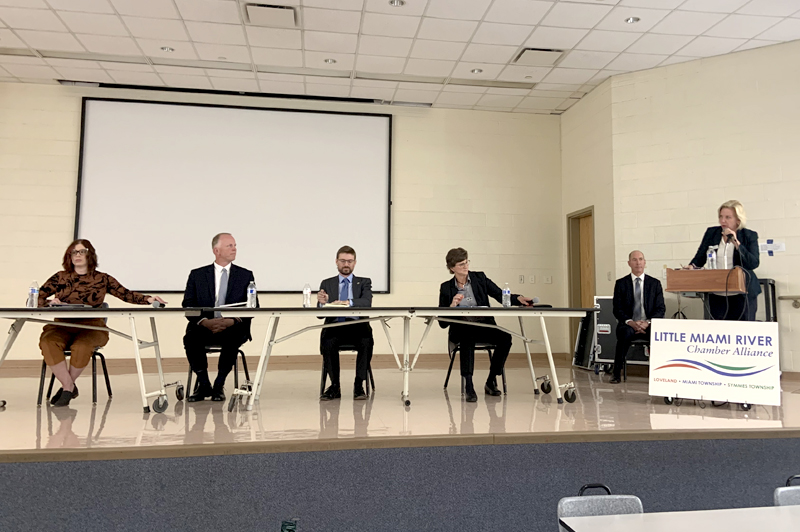
Loveland, Ohio – The Little Miami River Chamber Alliance held public forums this week for candidates for city council and school board. Both events were live-streamed on the Chamber’s Facebook page and can still be viewed.
Watch City Council CandidatesWatch School Board Candidates
Loveland, Ohio – Original artwork may be submitted by any Little Miami River Chamber Alliance Member, resident of the Loveland School District, or those who work in the Loveland area.
The winning art will be made into the annual Loveland Valentine Card and engraved on the granite wall at Sweetheart Lane Historic Downton along the Loveland Bike Trail. Your card will be mailed all over the world with a special postmark by the Loveland Valentine Ladies.
Artwork must reflect or incorporate the theme: “Love is . . . .” and must also include, or provide space for the phrase, “There is nothing in this world so sweet as love.” One-color, two-color, and full-color entries are acceptable.
Artwork must be flat (two-dimensional) and fit proportionately within a 5″ by 3-¾” card, the size of the printed Valentine’s Day cards.
The submission deadline is November 17. All entries must be submitted in person to the Little Miami River Chamber Alliance at 514 West Loveland Avenue, or by mail, postmarked by the deadline to the Little Miami River Chamber, 514 W. Loveland Avenue, Loveland, OH 45140.
If you would like one sent to you, please call the Little Miami River Chamber Alliance at 513-683-1544.
The winner will receive design credit on the back of the 2024 Valentine’s Day cards, recognition at the Valentine Kick-off, other local recognition, media recognition, and two complimentary invitations to the Little Miami River Chamber Alliance Annual Valentine Breakfast.
The enduring mantra of candidates and campaigners is self-evident to the point of banality. But buried in that simple formula are questions about how exactly to drive engagement and who specifically needs additional encouragement.
On the eve of an election with two hot button statewide issues topping the ballot, Innovation Ohio Education Fund has released a report digging into the 2.7 million voters sitting out of Ohio’s elections. The report details demographics for voters who are eligible but not registered as well as those who are registered but inactive.
Report data
Innovation Ohio’s study relies on data from the U.S. Census, the Ohio Secretary of State and the commercial voter database Catalist. Researchers started with Ohio’s universe of potential voters — the citizen voting age population, or CVAP — and compared it those who actually showed up between 2018 and 2022. Then they split those who didn’t cast ballots into two camps: unregistered and inactive.
In all, 2 million eligible Ohioans remain unregistered. Another 700,000 are on the rolls but have missed the past three federal elections.
“They’re in danger of being purged, right?” Innovation Ohio President and CEO Desiree Tims explained.
As part of its annual voter list maintenance procedures, Ohio’s secretary of state identifies any voters who have not participated in the past four years. County boards first send a postcard warning voters about the impending cancellation. If the voter doesn’t respond, or take a handful of other actions, election officials remove their name from the rolls.
“So, we know that if we don’t remind people there’s an election, you have to vote, you have to participate, then they will be purged,” Tims described. “And then when they want to vote, they’ll show up at the polls, and then they won’t have an opportunity to participate and let their voice be heard.”
There are notable similarities among the unregistered and inactive voters — unsurprisingly the biggest share of both show up in and around urban centers. But there are also notable demographic differences. Compared to the CVAP, unregistered voters tend to be older; inactive voters tend to be younger with a greater share of Black voters.
Who are the inactives?
About 86% of Ohio’s registered voters are white, with Black and Latino voters accounting for 11% and 2% respectively. But among the inactives, Black voters account for nearly twice that many. Tims explained roughly 1 in 5 inactive voters are Black.
When it comes to age, Ohio’s CVAP splits cleanly right around age 50, with half of voters falling below and half above. But at 64% of the total, younger Ohioans represent a bigger share of inactive voters. A slight majority of the subset are female, and in terms of geographic distribution, they tend to cluster around college campuses.
Who are the unregistered voters?
The voters who are eligible but unregistered reflects the Ohio’s CVAP closely when it comes to race and geography. Similar to the overall voting population, 82% of unregistered voters are white and 11% are Black. Their geographic distribution follows the statewide pattern as well, with large shares near the three Cs and nearby suburban counties.
Men are over-represented in the unregistered population. Among registered voters, men account for 47% of the total; among unregistered voters they represent 57% of the population.
Where the unregistered population stands out, however, is age. While a large majority of inactive voters are younger than 50, 70% of the unregistered population are older.
Takeaways
Tims argued the report demonstrates organizers need more than one approach when it comes to voter outreach. She contends the challenge isn’t crafting different messages, it’s figuring out ways to get them across.
“I think the biggest opportunity is that we have to meet people where they are, they aren’t going to come to us,” she said.
“Policy wonks and experts and politicians, the people who are engaged, tend to watch the news, they read newspapers, they are online,” she added. “But a lot of the people that we miss are in different spaces. And so what we have to do is reach out to them to meet them where they are in order to engage them in the process.”
The electoral opportunities could be significant. About a quarter million votes separated the top two candidates in last year’s U.S. Senate race. The report demonstrates there are more than ten times that many potential voters sitting on the sidelines. The authors note Black unregistered and inactive voters alone easily exceed that margin of victory.
Answering why voters aren’t engaging in the process falls outside the bounds of the report, but Tims offered a few possibilities. She noted the COVID-19 pandemic happened right in the middle of their dataset. Ditto a contentious redistricting process. Meanwhile, especially at a national level, some politicians are trying to drag their parties to greater extremes.
“I’m sure that has also served a role in turning off people who said ‘I don’t want to get involved in the disputes,’” Tims said.
She argued all of those political currents make participation more stressful, and Ohio’s lawmakers have only added to the burden by imposing strict new photo ID requirements and cutting back early and absentee voting options.
“I think all of that probably culminates to stress,” she said. “And when people are thinking about feeding their families and making their bills, I think this extra layer of stress probably deters them away from participating.”
At the same time, Ohio has pulled out of ERIC, the multi-state compact that shares voter information to maintain accurate rolls. One of the requirements of ERIC membership is for state elections officials to actively encourage unregistered voters to participate. Tims said dropping those efforts aren’t going to increase engagement.
State lawmakers are also considering proposals that would close Ohio’s primary elections by requiring voters to affirmatively choose a party. Tims wouldn’t commit Innovation Ohio to a formal position on the idea. She expressed doubts, though, that it would lead to more participation.
Nick Evans has spent the past seven years reporting for NPR member stations in Florida and Ohio. He got his start in Tallahassee, covering issues like redistricting, same sex marriage and medical marijuana. Since arriving in Columbus in 2018, he has covered everything from city council to football. His work on Ohio politics and local policing have been featured numerous times on NPR.
Welcome Stadium Renderings by Dayton Public Schools
The Ohio High School Athletic Association has announced that the 2024 track and field state tournament will be held at Welcome Stadium in Dayton. The track at Jesse Owens Memorial Stadium at Ohio State University will be removed in May and replaced with a new track that will take several months to complete.
Welcome Stadium hosted the OHSAA track and field state tournament from 1999-2003 after the track was removed from Ohio Stadium in Columbus. Dayton Public Schools recently completed a $34 million renovation project at Welcome Stadium that included a new track, football field, press box, concourse and locker rooms.
Welcome Stadium Renderings by Dayton Public Schools
The track and field state tournament will return to Jesse Owens Memorial Stadium in 2025 and 2026 to complete the current three-year contract. Jesse Owens Memorial Stadium has hosted the state tournament since 2004, with the exceptions of 2020, when the season was cancelled due to the COVID-19 pandemic, and 2021, when each division was held at a high school in central Ohio.
“We are excited and honored to be hosting the 2024 State Track Tournament at Welcome Stadium,” said Dayton Public Schools Interim Superintendent Dr. David Lawrence. “The district and community have invested a lot into the stadium renovation project, and it is rewarding to now be hosting a state tournament as a result of those efforts. As a former participant in the state track meet and avid fan of track and field, it brings great joy to host the meet in our newly renovated and state-of-the-art facility.”
The track and field state tournament is scheduled for May 31 and June 1, 2024.
“We are very impressed with the renovations at Welcome Stadium,” said Doug Ute, OHSAA Executive Director. “It’s great to see what Dayton Public Schools has done to the facility and they were very excited right away when we called. We are fortunate that the timing of these construction projects lined up so that Welcome Stadium was ready to host before Jesse Owens Memorial Stadium was unavailable.”
“We, at Ohio State, are moving forward with a complete track replacement at Jesse Owens Memorial Stadium,” said Mike Penner, Executive Associate Athletics Director for Internal Operations. “Construction will take place from May to September 2024. Unfortunately, we will not be able to host the 2024 State Track Meet, but we look forward to hosting again in 2025 and beyond.”
More information including event schedules, meet management details, etc. will be shared at a later date.