Author: Loveland Magazine

  • Ohio Issue 1: Attacks on parental rights do not appear in amendment

    Ohio Issue 1: Attacks on parental rights do not appear in amendment

    BY:  – Ohio Capital Journal

    Editor’s Note: This article is part of a series looking at the language of Ohio Issue 1 and the reproductive rights it would impact. The full language of the amendment can be found here.

    __________

    The topic of parental rights does not appear in Ohio Issue 1 on the ballot Nov. 7.

    There is no mention of denying any rights to parents in the process of enshrining reproductive rights like abortion, contraception, miscarriage care and infertility treatment into the Ohio Constitution.

    “I don’t think Issue 1 would affect parent’s rights at all,” said Tracy Thomas, the Seiberling Chair for Constitutional Law and director of the University of Akron’s Center for Constitutional Law.

    Having studied reproductive rights cases in Ohio and nationwide, including the Dobbs case that overturned Roe v. Wade, Thomas said historically, “parental rights have consistently been retained.”

    “I would expect that those (rights) can all stay consistent,” Thomas told the Capital Journal.

    Ohio Attorney General Dave Yost also acknowledged that previous abortion rights court cases have upheld parental consent in a legal analysis of Issue 1 he released in early October.

    Yost went on to say “the amendment does not specifically address parental consent.”

    But, Yost argued, that consent “would certainly be challenged on the basis that Issue 1 gives abortion rights to any pregnant ‘individual,’ not just to a ‘woman.’”

    The term “individual” is currently used 36 times in the Ohio Constitution, including in the definition of “health care system,” the eligibility of officeholders, and clauses on temporary housing and corporate property.

    Only one use of the word “individual” is connected to a gender specifier: the constitutional language on marriage status “only one man and one woman” can be in a marriage “valid or recognized by this state,” and “relationships of unmarried individuals” can not hold the same legal status.

     COLUMBUS, Ohio — OCTOBER 06: Sister Amor of the Bridgettine Sisters of Columbus holds a sign on High Street during the Ohio March for Life against November’s Issue 1 reproductive rights amendment, October 6, 2023, outside the Statehouse in Columbus, Ohio. (Photo by Graham Stokes for Ohio Capital Journal. Republish photo only with original article.) 

    Still, Religious lobbies and anti-abortion rights groups that oppose the amendment have used that message as one of their primary arguments against the measure since the effort to get it on the ballot began.

    In a new ad for the Issue 1 opposition group Protect Women Ohio, a coalition including Ohio Right to Life and other anti-abortion rights groups, Gov. Mike DeWine and First Lady Fran DeWine feature as leaders against the measure.

    Fran DeWine is shown in the ad saying Issue 1 “would deny parents the right to be involved when their daughter is making the most important decision of her life.”

    Gov. DeWine admits in the ad that Ohioans “are divided on the issue of abortion,” but calls Issue 1 “not right for Ohio.”

    The Catholic Conference of Ohio pointed to the first line of the proposed amendment and the word “individual,” saying the use of the word would allow anyone under age 18 to “have an abortion, or make any reproductive decision without their parents’ consent or notification.”

    State Sen. Kristina Roegner, R-Hudson, the sponsor of the six-week abortion ban law that is currently on hold as court cases determine its fate, co-sponsored a resolution in the Ohio Senate on Oct. 11 officially standing against Issue 1.

    In opposing Issue 1, she said the measure was “extreme, nefarious” and would “harm women and take away parental rights.”

    The resolution passed with the GOP majority unanimously approving it. The seven Democratic senators all voted against the measure.

    The resolution itself proclaims “parents are the ultimate arbiter of what is best for their children.”

    In one paragraph of the resolution, sponsors Roegner and state Sen. Michele Reynolds, R-Canal Winchester, write that Issue 1 “will eliminate many, if not all, state laws regarding abortion,” including “parental notification requirements.”

    In the next paragraph, the resolution states Issue 1 “may” eliminate parental rights.

    Senate Minority Leader Nickie Antonio, D-Lakewood, pushed back against the resolution by bringing up a decade-old legal process present in Ohio called “judicial bypass.”

    Judicial bypass, as it stands now, has been around since 2012 in the state, after then-Gov. John Kasich signed a law that prohibits forcing a minor to have an abortion, but leaves in place a legal way for minors to petition juvenile court to bypass parental consent.

    The Ohio Supreme Court explained the process in Rule 23 of a 2015 amendment to its “rules of superintendence,” an internal operations document for all Ohio courts.

    The legal method uses the court system to allow underage individuals to make decisions for themselves where parental consent would typically be necessary, such as in cases of abuse.

    “If the court finds by clear and convincing evidence that the minor is sufficiently mature and well enough informed to decide intelligently whether to have an abortion, the court shall grant the petition and permit the minor to consent to the abortion,” the law states.


    Read Part 1 and 2…


    Susan Tebben
    SUSAN TEBBEN

    Susan Tebben is an award-winning journalist with a decade of experience covering Ohio news, including courts and crime, Appalachian social issues, government, education, diversity and culture. She has worked for The Newark Advocate, The Glasgow (KY) Daily Times, The Athens Messenger, and WOUB Public Media. She has also had work featured on National Public Radio.

    MORE FROM AUTHOR

  • Two measures further expanding gun rights moving in Ohio Statehouse

    Two measures further expanding gun rights moving in Ohio Statehouse

    BY:  -Ohio Capital Journal

    A pair of gun bills backed by Ohio Sen. Terry Johnson, R-McDermott, are quietly making their way through committees. Both proposals are prospective in nature — seeking not so much to change existing policy, but to anticipate and forestall potential changes in the future.

    For nearly a decade in the state House and Senate, Johnson has been a consistent voice pushing for more expansive gun rights in Ohio. He was the driving force behind last year’s sweeping concealed carry changes allowing most adults to carry without a permit. Before that he sponsored several stand your ground measures.

    His current bills are a bit more technical but respond to perceived threats among gun rights activists. The first prohibits local governments from requiring liability insurance for gun owners; the second relates to a new merchant code for gun and ammunition retailers.

    Liability insurance

    New Jersey and the city of San Jose, California approved legislation last year requiring gun owners get liability insurance and/or pay an annual fee. Both laws are the subject of ongoing federal court challenges. And, importantly, neither San Jose nor New Jersey are part of Ohio.

    Still, Johnson wants to head off any local jurisdictions that might try to replicate those provisions. To this point, no municipality is actively considering firearm liability insurance requirements.

    His bill, which has already passed the state Senate and is working its way through a House committee, adds “without being required to have firearm liability insurance” to the Ohio statute preempting local gun regulations. It includes similar prohibitions for imposing a fee on gun owners, and extends the same protections to knives.

    No one showed up to speak in a committee hearing Wednesday, but two groups representing local leaders submitted testimony in opposition. Kent Scarrett, who leads the Ohio Municipal League, argued the legislation would exceeds state’s constitutional authority.

    “Regardless of one’s position on guns or knives, this legislation prevents a municipality from enacting the wishes of their local voters on this important matter related to the safety of the community,” he wrote. “Furthermore, it would allow for civil actions against Ohio’s cities and villages, opening them up to frivolous legal challenges and costly expenses.”

    The Ohio Mayors Alliance took a slightly different tack. Like the OML, it argued lawmakers should reject the legislation because it would violate Ohio’s home rule authority. The alliance was quick to add no municipality is considering the provisions the bill outlaws. But, perhaps seeing the writing on the wall, the organization pitched lawmakers on an addition if they insist on passing the bill.

    “We urge you, should you choose to advance this bill against our recommendation,” the alliance wrote, “to add an amendment to the bill that will give cities the permissive authority to impose reasonable safe storage laws for firearms.”

    Merchant codes

    Johnson’s other proposal got its first hearing Tuesday. Most Ohioans have probably never heard of the organization whose actions served as the impetus for the bill. The International Organization for Standardization is nonprofit based in Geneva that publishes guidelines to keep industries on the same page across different countries.

    One of their recent changes gives gun and ammunition retailers their own merchant code. Whenever you swipe a credit or debit card, a batch of the information flows back to your financial institution. Part of that is a four-digit code identifying what kind of business you’re paying. Until the most recent revisions, most gun retailers were listed as sporting goods stores or general retailers.

    Gun control advocates contend being able to distinguish gun sellers from other stores might help payment processors identify suspicious transactions and tip off authorities. Notably, credit card companies or banks wouldn’t be able to identify what a cardholder purchased — just where they purchased it.

    Johnson called that “financial discrimination.” He explained his bill “prohibit(s) a financial institution from requiring the use of a firearms code, declining a lawful transaction involving a firearms retailer, based solely on whether or not the transaction is assigned a firearms code or disclosing financial records.”

    But it goes a step further to address long standing fears of government surveillance.

    “It also prohibits,” Johnson said, “any government entity from keeping a list or registry of firearms or firearms owners.”

    In a letter earlier this year 14 U.S. Senate Democrats urged the Treasury Department of the U.S. Attorney General to publish guidance for financial institutions to implement the new code. They argued transaction data could potentially reduce gun trafficking and straw purchases. It would also make it easier to identify when someone is making purchases at multiple stores to avoid required reporting.

    But like Johnson’s liability insurance bill, the legislation’s prohibitions may be unnecessary. After Republican pushback, the three biggest credit card companies announced they were putting implementation of the new codes on hold.


    Follow OCJ Reporter Nick Evans on Twitter.

    Nick Evans
    NICK EVANS

    Nick Evans has spent the past seven years reporting for NPR member stations in Florida and Ohio. He got his start in Tallahassee, covering issues like redistricting, same sex marriage and medical marijuana. Since arriving in Columbus in 2018, he has covered everything from city council to football. His work on Ohio politics and local policing have been featured numerous times on NPR.

    MORE FROM AUTHOR

  • Mark your calendars for this week’s important candidate forums

    Mark your calendars for this week’s important candidate forums

    Loveland, Ohio – Mark your calendars for this week’s important candidate forums that will be held in the cafeteria of the Loveland Middle School. at 7 PM each night.

    Each night, the forum will be livecast on the Facebook page of the sponsor, the Little Miami River Chamber Alliance.

    Want to submit questions ahead of time?

    School Board Forum Question Submissions: https://form.jotform.com/232538821744056
    City Council Question Submissions: https://form.jotform.com/232538376286062
  • Ohio Ballot Board approves anti-gerrymandering amendment. Proposal to go forward

    Ohio Ballot Board approves anti-gerrymandering amendment. Proposal to go forward

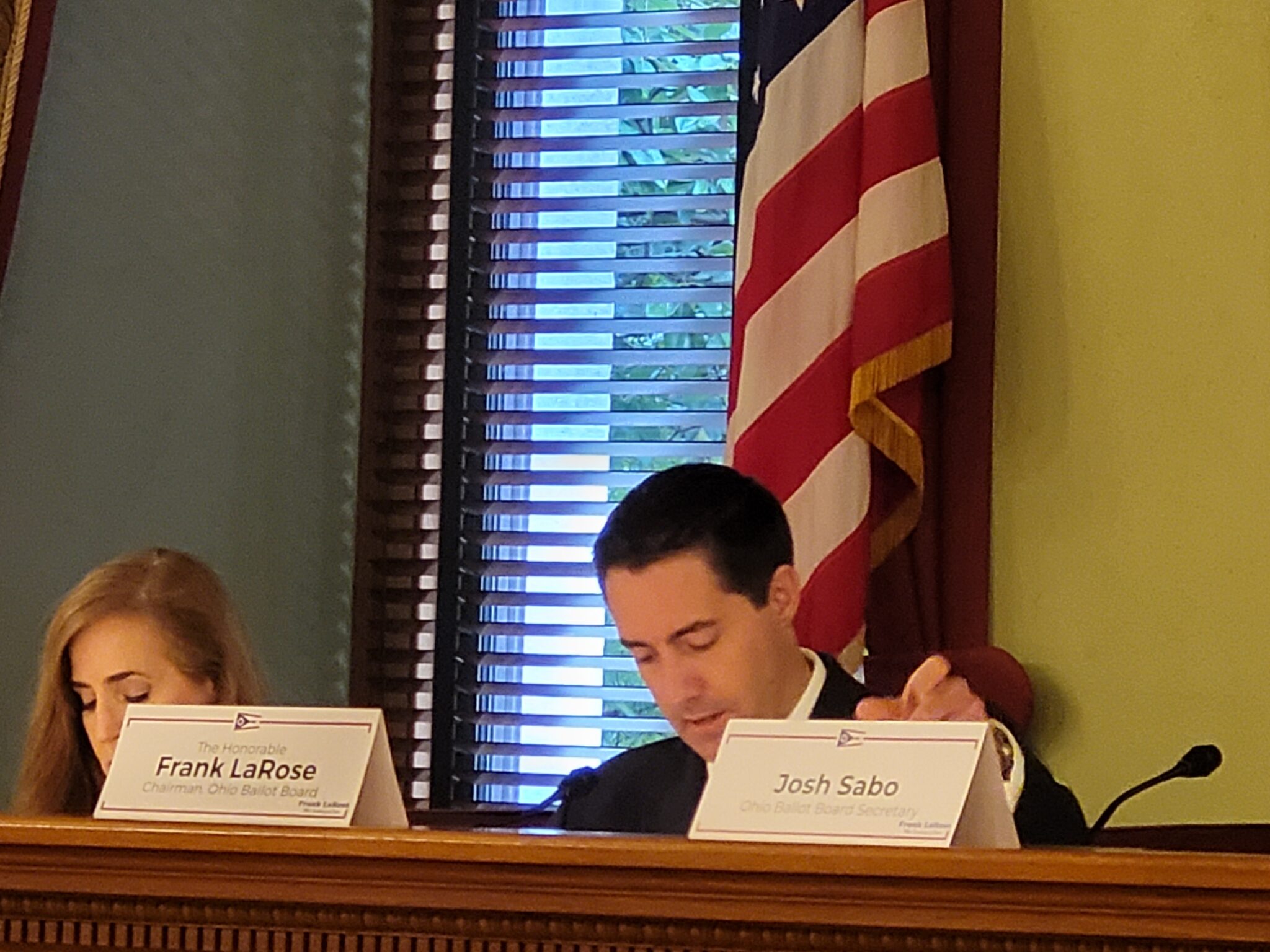
    Ohio Secretary of State Frank LaRose and the rest of the Ohio Ballot Board approve the language of a proposed anti-gerrymandering amendment that is likely to appear on the ballot next year. (Photo by Marty Schladen, Ohio Capital Journal.)

    Signature gathering can proceed

    BY:  – Ohio Capital Journal

    Activists who hope to pass an anti-gerrymandering amendment to the Ohio Constitution can now begin gathering the nearly half-million signatures on the need to get the measure on the November 2024 ballot after the amendment was approved as a single issue by the Ohio Ballot Board Thursday.

    Without much ceremony, the board unanimously agreed that the proposed amendment pertains to a single subject, which is required under Ohio law.

    The timing of the approval is significant because early voting on two other measures that are on this year’s ballot started yesterday (Thursday.) Voting has begun on Issue 1, a constitutional amendment protecting abortion rights, and Issue 2, a voter-initiated statute legalizing recreational marijuana. The general election for those measures is Nov. 7.

    Activists trying to get the anti-gerrymandering amendment on next year’s ballot have to gather about 415,000 verified signatures of registered voters. And because of a relatively high rate of rejections in previous efforts, they want to gather hundreds of thousands more than that.

    They say that having the summary language approved now enables them to do their work at county boards of election, where registered voters are gathering to cast ballots on this year’s abortion and marijuana measures. Petition circulators will also be able to work voter-rich environments near polling places on Election Day.

    The approval comes in the nick of time for the activists. Attorney General Dave Yost twice rejected the summary language for the petitions as not adequately reflecting the proposed amendment itself before approving it on its third attempt.

    Ohio is regarded as one of the most extremely gerrymandered states in the country. While Donald Trump carried the state with less than 54% of the vote in 2020, Republicans control 68% of seats in the state House, 78% in the state Senate and 66% of the state’s seats in the U.S. House of Representatives.

    That’s despite the fact that in 2015 and 2018, amendments to curb extreme partisan gerrymandering in the legislature and Congress both passed with more than 70% of the vote.

    After the 2020 Census, the Republican-dominated Redistricting Commission created by those amendments seven times ignored rulings by a bipartisan majority of the Ohio Supreme Court. The rulings said the districts the commission had drawn violated the anti-gerrymandering provisions of those same amendments.

    So now Ohio’s lawmakers are representing districts that the state’s highest court has ruled unconstitutional.

    Former Chief Justice Maureen O’Connor, a Republican, voted with the court’s three Democrats in ruling that the districts were unconstitutional, but she was forced to retire last year because of her age.

    Now she’s working with anti-gerrymandering activists to try to get the latest proposed amendment on next year’s ballot. It attempts to eliminate power grabs when district lines are drawn by creating an independent commission to draw them. That’s in contrast to the current one, which is composed entirely of elected officials.

    Ohio Secretary of State Frank LaRose voted with the other Republicans on the Redistricting Commission in support of the current, unconstitutional maps. In his role as head of the Ballot Board, on Thursday he voted to approve the latest proposed anti-gerrymandering amendment. But he emphasized that it was only a vote on whether its language regarded a single subject.

    “I will remind you again that we are not here today to debate the merits of the proposal, but only whether it constitutes a single proposed amendment to the Ohio Constitution,” he said.

    But Sen. Paula Hicks-Hudson, D-Toledo, commented on the merits, anyway.

    “I’d like to recognize and support the citizens of Ohio who have moved to create a fair opportunity… for their districts to be drawn to reflect all the things Ohioans believe are important and to have a government that is responsive to the citizens of the state of Ohio,” she said.

    After that, LaRose again emphasized that the vote wasn’t on the merits of the proposed anti-gerrymandering amendment.


    Marty Schladen
    MARTY SCHLADEN

    Marty Schladen has been a reporter for decades, working in Indiana, Texas and other places before returning to his native Ohio to work at The Columbus Dispatch in 2017. He’s won state and national journalism awards for investigations into utility regulation, public corruption, the environment, prescription drug spending and other matters.

    MORE FROM AUTHOR

  • Access to expensive fertility treatment in Ohio varies but the Issue 1 amendment seeks to protect it

    Access to expensive fertility treatment in Ohio varies but the Issue 1 amendment seeks to protect it

    BY:  – Ohio Capital Journal

    Editor’s Note: This article is part of a series looking at the language of Ohio Issue 1 and the reproductive rights it would impact. The full language of the amendment can be found here.

    When Roe v. Wade was overturned in June 2022, the physicians at Ohio Reproductive Medicine took to their website, hoping to reassure patients that their care would still be available.

    “It is truly hard to fathom that in 2022, our reproductive freedom, a fundamental human right, is now at risk,” the statement on the website read.

    Though the Columbus business said it strongly opposed the overturning of Roe as a whole, the focus of their statement was on those undergoing or considering fertility treatments.

    “We ardently stand alongside our current and past patients — as well as anyone who wishes to build a family in the future with the help of fertility treatments,” according to the statement.

    The effects that repealing nationwide abortion access would have on fertility treatments like in-vitro fertilization (IVF) weren’t clearly spelled out by the U.S. Supreme Court in its Dobbs decision, but physicians have worried about what various bans mean when it comes to fertilized embryos and the definition of the start of life.

    A hard-fought battle

    Infertility can happen for 10% to 15% of couples, according to the American Society for Reproductive Medicine, and CDC data found 1 in 5 women in the U.S. couldn’t get pregnant after a year of trying.

    For those who have insurance and/or can afford fertility treatments, the process is long, arduous, and often involves disappointment along the way if an implanted embryo fails to turn into a pregnancy, or becomes a medical complication.

    Ohioans have expressed worry that they won’t be able to utilize fertility treatments in the same way if abortion is banned in the state, whether that be at six-weeks under current law (though that law is held up in court and not currently being enforced), or if other regulations fall into place keeping physicians from treating life-threatening ectopic pregnancies or miscarriages, which are considered “spontaneous abortions” by the medical community.

    After the Dobbs v. Jackson Women’s Health Organization ruling from the U.S. Supreme Court overturning nationwide abortion rights, the fears regarding fertility treatments came closer to home, as state Rep. Gary Click, R-Vickery, introduced a bill that would have considered the start of “personhood” to be the moment of conception.

    That, physicians said, could include fertilized embryos sitting in cryogenic chambers at their facilities.

    The “life begins at conception” message has been used by anti-abortion groups nationwide for many years, though the medical community does not universally agree on the beginning of life, or if there’s one certain point when cardiac activity begins in a fetus.

    At a rally one year ago to support anti-abortion causes, state Rep. Jena Powell, R-Arcanum, spoke of ways to “abolish abortion” in the state, making the claim that the “science is crystal clear” that “life begins at conception.”

    Powell urged support for the “personhood” bill.

    “The shackles are no longer holding us back as state legislators, and we can and we must be a voice for the unborn child in Ohio,” Powell said at the time.

    The cost of access

    Fertility treatments and the freezing of embryos has become a common practice, but that doesn’t mean it’s available to everyone, because it’s a costly endeavor with complicated insurance regulations.

    The Center for Reproductive Rights says barriers to access include “limited information, restrictive laws and policies, stigma, high costs and more.”

    “Issues surrounding assisted reproduction implicate core human rights — including the rights to health, sexual and reproductive health, decision making about reproductive life (such as if and when to have children), benefit from scientific progress, equality and non-discrimination and informed consent,” the center said in a statement.

    The center’s research on infertility and IVF access in the United States showed that in 2020, clinical infertility impacted about 12% of women ages 15-44, but only 24% of people in the U.S. seeking care for infertility could access it.

    “The limited number of private insurance markets and public programs covering infertility services, combined with high out-of-pocket expenses, result in significant economic barriers to needed infertility treatment,” the CRR stated in the report.

    Self-pay packages at the University Hospitals Fertility Center in Northeast Ohio, for example, price IVF, including lab work and one embryo transfer at $12,775.

    An egg donor package runs $14,030 for self-pay patients, and a surrogate (also called a “gestational carrier”) is priced at more than $15,000.

    Ohio law mandates that private health insurance cover basic services, including “medically necessary” services that could fall under fertility treatment. The Ohio Revised Code includes “infertility services” under “preventative health care services.”

    Though this could include the diagnosis of infertility and treatment of reproductive system problems, other services involved in the process may not be included.

    “Many procedures fall into a gray zone, including IVF, which leaves much interpretation and denial of claims,” according to Ohio Reproductive Medicine.

    In 2021, Ohio added “reproductive health services” into the Ohio Administrative Code, allowing Medicaid-eligible individuals access to “pregnancy prevention services,” including “contraceptive management,” pregnancy testing and “fertility awareness.”

    What is not covered under Medicaid is infertility treatment, including IVF, “assisted reproductive technologies,” artificial insemination, or surgery to “promote or restore fertility.”

    Ohio is not alone in keeping Medicaid recipients out of the fertility treatment landscape, as very few states nationally extend those services through Medicaid.


    Read Part 1:


    Susan Tebben
    SUSAN TEBBEN

    Susan Tebben is an award-winning journalist with a decade of experience covering Ohio news, including courts and crime, Appalachian social issues, government, education, diversity and culture. She has worked for The Newark Advocate, The Glasgow (KY) Daily Times, The Athens Messenger, and WOUB Public Media. She has also had work featured on National Public Radio.

    MORE FROM AUTHOR

  • ID R Kids for Safety

    ID R Kids for Safety

    There is no minimum age for an Ohio ID card. According to the Ohio Bureau of Motor Vehicles, obtaining an ID card for your child has many advantages, including that it may assist police if a child is reported missing. You may apply for an Ohio ID card for your child through the Ohio Bureau of Motor Vehicles.

    You may also apply for an Ohio ID card for your child at any deputy registrar location.

    • Ohio ID cards are used for identification purposes only.
    • Ohio photo ID cards for children may assist police if a child is reported missing.

    What do you need to bring?

    You must provide proof of your child’s:

    • Full legal name
    • Date of birth
    • Social Security number (if ever assigned)
    • Legal presence
    • Ohio residency

    Any child under age 18 must be accompanied by a parent or guardian with an Ohio driver license or ID card. If the parent or guardian does not have an Ohio driver license or ID card, then they must also provide proof of:

    • Full legal name
    • Date of birth
    • Social Security number (if assigned)
    • Legal presence
    • Ohio residency

    Go to our Acceptable Documents page for a full list of identity documents and links to use our interactive process to assist you with what to bring to a deputy registrar agency.

    How much does an Ohio ID cost?

    $10.00

    The bureau says, “Don’t forget to include a listing for your child’s Next of Kin in connection with his or her state ID. It will help police get in touch with parents or guardians.”
  • Ohio Issue 1’s reproductive rights amendment and protection of access to contraception

    Ohio Issue 1’s reproductive rights amendment and protection of access to contraception

    Getty Image

    BY:  – Ohio Capital Journal

    Editor’s Note: This article is part of a series looking at the language of Ohio Issue 1 and the reproductive rights it would impact. The full language of the amendment can be found here.

    In the Nov. 7 general election, Ohioans will decide whether or not to approve Issue 1, a constitutional amendment for reproductive rights.

    While the language of the amendment focuses primarily on abortion, it also lists other rights that would be cemented into the state constitution, including miscarriage care, fertility treatments, contraception, and the right to continue one’s own pregnancy. Today we will look at how and why the proposed amendment seeks to protect access to contraception.

    The use of contraception is not illegal in Ohio, and though it’s commonly called “birth control,” the medications are also used for other conditions, like ovarian cysts, polycystic ovary syndrome and endometriosis symptoms.

    Push to ‘reconsider’ contraception case

    Contraception has long been a target of debate, with fears of further regulations increasing after U.S. Supreme Court Justice Clarence Thomas brought up Griswold v. Connecticut during his concurrence to Dobbs v. Jackson Women’s Health, the 2022 decision that overturned the half-century of abortion legalization given in Roe v. Wade.

    The ruling in Griswold overturned a Connecticut law from the 1800s that banned the use of “any drug, medical device or other instrument in furthering contraception,” particularly in marriages. The question at the heart of the Griswold case: “Does the Constitution protect the right to marital privacy against state restrictions on a couple’s ability to be counseled in the use of contraceptives?”

    The court found that the right to privacy held in the Bill of Rights prohibited states from banning contraception for married couples.

    However, in agreeing with the Dobbs decision, Thomas said the nation’s highest court should also “reconsider” cases such as Griswold, with new reflection on the 14th Amendment.

    “After overruling these demonstrably erroneous decisions, the question would remain whether other constitutional provisions guarantee the myriad rights that our substantive due process cases have generated,” Thomas wrote in his 2022 concurrence.

    A congressional effort that was put forth in July 2022 to codify birth control access passed the U.S. House. The effort had unanimous Democratic support, but only had the support of one Ohio GOP representative, former Rep. Anthony Gonzalez.

    The effort was blocked by the U.S. Senate that same month.

    There is federal law that requires health insurance coverage for prescription female contraceptives, but federal law also allows for a refusal clause “that allows churches, associations of churches, religiously affiliated elementary and secondary schools and, potentially, some religious charities and universities to refuse,” according to an analysis by the Guttmacher Institute.

    The institute’s analysis also showed that, as of September 2023, Ohio’s only state-level regulation is an insurance coverage requirement for extended supplies of contraception.

    “The state’s law allows pharmacists to dispense the full amount of a prescription at one time, including contraception, but there is no requirement that health insurance plans cover the cost of accessing a year’s worth of contraceptives at one time,” the Guttmacher research stated.

    Medicaid recipients are allowed access to “pregnancy prevention services” under the Ohio Administrative Code, including “contraceptive management,” along with “fertility awareness, natural family planning (the use of fertility awareness to track ovulation), and risk factor reduction,” according to the code.

    In an August debate on the previous Issue 1, Secretary of State Frank LaRose joined Ohio Right to Life leader Mike Gonidakis in calling claims that contraception regulations could be on the table in the state “fear-mongering,” saying “no reasonable person is talking about banning the use of contraceptives.”

    Back in 2022, state Rep. Jean Schmidt, R-Loveland, who introduced a bill that, if passed, would have banned all abortions in Ohio without exceptions for rape or incest, said she would “listen to both sides of that debate” over whether to ban contraceptions during a July 2022 radio interview.

    Sex ed

    Researchers and advocacy groups say abstinence-only education and anti-abortion politics have already had their impact in the state, and the need to keep contraception at the forefront continues.

    Even in his analysis of Issue 1, Ohio Attorney General Dave Yost spoke of access to contraception (and other rights listed in the proposed amendment), saying those topics “are harder to assess because Ohio does not have specific statutes addressing minors’ access to these medical treatments or products.”

    When Roe v. Wade — the landmark U.S. Supreme Court case that legalized abortion nationwide — was overturned in 2022, Ohio groups immediately feared the already inconsistent sex education standards in the state would take a hit as well.

    State law requires Ohio schools to emphasize abstinence, but does not require them to include lessons on consent, sexual orientation, or gender identity, according to a review by the Sexuality Information and Education Council of the United States (SIECUS).

    In fact, Ohio House GOP members introduced a bill in 2022 that would ban the use of sexual orientation and gender identity as a topic in Ohio schools. State Rep. Mike Loychik, R-Bazetta, the bill’s co-sponsor, said at the time that the bill would “ensure that sexual orientation and gender ideology are not taught in kindergarten through third grade.”

    But bills like House Bill 616 could also “impact age-appropriate sex education,” according to SEICUS, which said those and other policies pushing abstinence-only or no education at all to certain ages can result in district-by-district decisions on sex education.

    “Local control over sex education presents unique challenges that have resulted in glaring disparities in the quality of sex education that students receive,” SEICUS said in an Ohio analysis.

    The March 2023 research used CDC data from the 2019-2020 school year that showed only 38.3% of Ohio’s schools required a course on methods of contraception other than condoms in grades 6, 7 or 8, whereas 82.5% taught high schoolers about methods other than condoms.

    According to the CDC data, only 37% of Ohio schools grades 6 through 12 require more than one health education course.

    The impact of a lack of standardized sex education could have longterm effects, advocates suggest, particularly in the area of unintended pregnancies.

    The U.S. Department of Health and Human Services encourages the use of contraception in its “Healthy People 2030” objective, to help with pregnancy planning and prevention of unintended pregnancies.

    “Nearly half of pregnancies in the United States are unintended, and unintended pregnancy is linked to many negative outcomes for both women and infants,” the federal agency stated on its Healthy People 2030 website.

    Though they acknowledge that teen pregnancy has gone down in the U.S., they cite data that shows “close to 200,000 babies are born to teen mothers every year in the United States.”

    “Adolescents are at especially high risk for unintended pregnancy,” HHS stated.

    This article clarifies the vote of Ohio’s U.S. Representatives on the federal birth control bill.


    Susan Tebben
    SUSAN TEBBEN

    Susan Tebben is an award-winning journalist with a decade of experience covering Ohio news, including courts and crime, Appalachian social issues, government, education, diversity and culture. She has worked for The Newark Advocate, The Glasgow (KY) Daily Times, The Athens Messenger, and WOUB Public Media. She has also had work featured on National Public Radio.

    MORE FROM AUTHOR

  • ‘Legacy of neglect’ showcased in Ohio schools report

    ‘Legacy of neglect’ showcased in Ohio schools report

    Stock image from Pixabay.

    BY:  – Ohio Capital Journal

    A report from an Ohio think tank examined the new budget changes and private school voucher impacts on public schools over the last year.

    Research from Policy Matters Ohio said divestments from public schools at the state level “hurt public school students everywhere – especially those in rural counties.”

    Furthering study of the impact the COVID-19 pandemic had on education, Policy Matters’ Tanisha Pruitt and Cassie Mohr said those pandemic effects combined with “Ohio’s legacy of inadequate, inequitable funding” have “weakened the role school plays as a foundational public institution.”

    Ohio was ranked 21st in a U.S. News & World Report on K-12 education and 46th in an EdWeek ranking of equitable distribution of education funding, both of which were cited as part of the 2023 report.

    “Ohio’s students deserve a world-class education, including safe and well-resourced schools that are staffed by teachers who are well trained and fairly paid,” Pruitt and Mohr wrote.

    The new report also confirmed what advocates have repeatedly noted over the years that the public school funding model has been debated — that the vast majority of Ohio students are enrolled in public schools.

    Of the nearly 2 million students enrolled in K-12 education in Ohio, 88.6% are in public schools, and 8.8% are in private schools, while 2.7% are home-schooled.

    Private school vouchers saw a significant change in Ohio’s most recent two-year budget this summer, when legislators opened the state-paid subsidies to 450% of the federal poverty level, nearly universal eligibility.

    But also included in the budget was another phase-in of the Fair School Funding Plan, a six-year effort to dive into the real cost of funding public school students, and fund the schools on an individual basis based on their needs.

    “When fully implemented, the six-year FSFP will correct the over-reliance on local property taxes, eliminate funding caps on districts, and base funding on per-pupil cost estimates that more accurately reflect what it takes to educate a diverse student population,” the report stated.

    Policy Matters’ report focused largely on public schools, where they found a student population that is “somewhat more racially diverse than the state overall” with a makeup that is 16.4% Black versus the 13.3% population in the state overall, and serving a large population of more than 800,000 who are considered economically disadvantaged.

    Pruitt and Mohr remained skeptical of the ultimate success of the FSFP, however, as legislators have “only incrementally moved funding through the formula.”

    “If legislators follow through on their promise to fully realize the FSFP by 2026, they will be helping every public school in the state to be equitably funded, and helping ensure that we live in a state where every child has what they need to succeed in school and after graduation,” the report stated.

    Senate President Matt Huffman has commented in the past that he wouldn’t support funding more than two years at a time, to avoid saddling future General Assemblies with budget items with which they may not agree.

    Teachers

     Source: Policy Matters Ohio 

    The constraints of COVID had their effect on teachers as well, but even outside of the pandemic education methods, educators still face pressures, according to the 2023 report.

    “Teachers recently have experienced a rash of targeted political campaigns to stoke division by denying the identities of trans and nonbinary students, as well as censoring what teachers are allowed to teach in the classroom,” Pruitt and Mohr wrote.

    Beyond that, compensation levels have not kept up over the years, with the Ohio Department of Education showing an average annual salary of $69,130 for an Ohio teacher in the 2022-2023 school year. That amounts to a decrease of more than 6% from the 2018-2019 school year, according to the new Policy Matters research.

    “These factors contribute to one of the most significant problems facing Ohio schools today: too many have too few teachers to give our kids the education they deserve,” according to Pruitt and Mohr.

    The state has also seen a dip in newly licensed teachers as well, with more than 9,000 teachers leaving their jobs in 2021, but only 5,388 earning a new license.

    “Recruitment declines can be attributed to low pay, poor working conditions and other economic factors,” researchers found. New teachers are paid less, and face mounting student loans on top of a salary that is often less than fellow graduates in other professions, they said.

    But licensure was addressed in the budget, with a clause allowing substitutes to have one-year temporary substitute teaching license which could increase the number of subs, and some members of the military could obtain a “military educator license.”

    “While these changes have the potential to boost our educators workforce, they weaken teacher training requirements, which could negatively affect the quality of classroom education, especially in high-poverty schools that already grapple with recruiting and retaining highly qualified educators,” Policy Matters researchers argued.

    The state needs to improve the recruitment methods, according to the report. It could use models like the one pursued by Cincinnati Public Schools superintendent Iranetta Wright, who pledged to recruit more teachers who matched the demographics of her school, but also keep teachers from being saddled with debt by increasing funding for grant programs and teacher residency programs.

    State testing

    For the teachers who are in schools, state testing can be a significant part of the school year, and despite their best efforts, inequities can shine through in even the standardized assessments for subjects like math and reading.

    A 2022 National Assessment of Educational Progress showed fourth and eighth graders in the state “were not statistically different from the national average,” according to Pruitt and Mohr, and Ohio was ranked 21st in a U.S. News & World Report ranking on pre-K-12 education.

    “However, these statewide metrics can mask a high degree of variability among districts, schools and student populations, with predictable disparities,” Policy Matters stated in their 2023 report.

    Disparities among English Language Arts and math scores, for example, don’t have a single cause, researchers found, but “inequities in school funding track closely with gaps in academic achievement.”

     Source: Policy Matters Ohio 

    An analysis of test scores and categories from the Ohio Department of Education showed disparities among student races, but also showed a universal trend that economically disadvantaged students “are more likely to live in school districts with concentrations of poverty – including in rural and Appalachian counties – where property-value-based school funding shortchanges them,” the researchers found.

    In terms of kindergarten readiness, COVID had a negative impact, and in the 2022-23 school year, Ohio’s kindergarten-bound students showed the lowest rate of readiness since 2014, when the state began using a Kindergarten Readiness Assessment.

    “A dropoff in kindergarten readiness was likely inevitable after COVID; Ohio needs to make significant investments in early childhood education to begin recovery,” Pruitt and Mohr said in their analysis.

    The researchers criticized legislative priorities like restructuring the Ohio Department of Education, something that is now being fought over in court. But other curricular level efforts, like one to change the social studies lessons in schools and another that would bar teachers from teaching “any oral or written instruction, presentation, image or description of sexual concepts or gender ideology,” don’t fall under improvements, according to Pruitt and Mohr’s analysis.

    The recommendations they do hope will be implemented include the full implementation of the Fair School Funding Plan, elimination of the private school vouchers at universal eligibility levels, better pay for teachers and the creation of a “pathway to becoming an educator” that helps recruit teachers of diverse backgrounds.

    “More funding should be dedicated to attracting new educators, especially from underrepresented populations, while ensuring the teachers coming out of these programs are fully qualified and prepared to give our kids the best education possible,” the researchers concluded.


    Susan Tebben
    SUSAN TEBBEN

    Susan Tebben is an award-winning journalist with a decade of experience covering Ohio news, including courts and crime, Appalachian social issues, government, education, diversity and culture. She has worked for The Newark Advocate, The Glasgow (KY) Daily Times, The Athens Messenger, and WOUB Public Media. She has also had work featured on National Public Radio.

    MORE FROM AUTHOR

  • New Safer Ohio School Tip Line smartphone app

    New Safer Ohio School Tip Line smartphone app

    Additional upgrades to the Safer Ohio School Tip Line include more flexibility for schools and law enforcement to increase the number of staff members who receive immediate tips.

    Ohio Governor Mike DeWine today announced several enhancements to the state’s free Safer Ohio School Tip Line (1-844-SAFEROH) that will make it easier for Ohioans to report school safety concerns.

    In addition to calling and texting the tip line, Ohioans anywhere in the state can now report school safety information through a new smartphone app and online web form.

    “Not everyone wants to make a phone call or send a text – some are more likely to report concerns by sending a message through an app or website,” said Governor DeWine. “We’re making these upgrades so that it’s as simple as possible for all Ohioans to quickly and anonymously report any potential school safety threats in a manner that makes them comfortable.”

    The new Safer Ohio School Tip Line smartphone app, available both on iOS and Android devices, and the online web form include pre-populated prompts to help users quickly upload information.

    The tip line will also be newly staffed by crisis response professionals who are trained to help individuals contemplating self-harm.

    “Intelligence analysts previously manned the tip line, but we felt that it was important to staff the call center with individuals experienced in helping those with immediate mental health needs,” said Emily Torok, OSSC Executive Director. “Now, instead of referring those who need urgent help to other sources of support, crisis response professionals with the Safer Ohio School Tip Line can immediately provide intervention support and notify first responders to conduct a wellness check.”

    Additional upgrades to the Safer Ohio School Tip Line include more flexibility for schools and law enforcement to increase the number of staff members who receive immediate tips. The call center, which is staffed by multilingual team members fluent in Spanish, French, Portuguese, Russian, German, and Arabic, is now also equipped with telephonic language translation for additional languages including Chinese, Japanese, Pennsylvania Dutch, Somali, Twi, and Vietnamese.

    School students, staff, parents, and community members associated with any school in Ohio are encouraged to report any school safety concerns to the tip line including, but not limited to:

    • Bullying incidents;
    • Withdrawn student behaviors;
    • Verbal or written threats observed toward students, faculty, or schools;
    • Hazing;
    • Weapons/suspicious devices on or near school grounds;
    • Gang-related activities;
    • Unusual/suspicious behavior of students or staff;
    • Self-harm or suicidal sentiments;

    Those who report tips can choose to remain anonymous.

    October 2023 marks the second annual Ohio School Safety Month. This year’s theme is “Relationships for Safety,” which recognizes the impact that positive relationships between school staff and students play in maintaining a safe learning environment.

    Governor DeWine developed the Ohio School Safety Center within the Ohio Department of Public Safety to be a comprehensive, statewide office focused exclusively on enhancing the safety of Ohio schools. In addition to maintaining and promoting the Safer Ohio School Tip Line, the center assists schools and first responders in preventing, preparing for, and responding to threats and acts of violence including self-harm. Staff also proactively scans social media and websites to identify threats against schools.

  • Pharmacies file antitrust suit against massive drug middleman

    Pharmacies file antitrust suit against massive drug middleman

    A CVS store. Photo by Lynne Terry, Oregon Capital Chronicle, States Newsroom.

    BY:  – Ohio Capital Journal

    A class-action suit has been filed in federal court on behalf of community pharmacies claiming that health giant CVS has used its dominance as a drug middleman to force pharmacies to pay large, after-the-fact fees in Medicare transactions.

    The suit was filed last week in Seattle on behalf of Osterhaus Pharmacy, which until last year did business in Maquoketa, a small town in eastern Iowa. The lawyers representing the pharmacy say they also represent other, “similarly situated” pharmacies.

    It’s the latest antitrust action against CVS and two other dominant middlemen — Express Scripts and OptumRx — which are known as pharmacy benefit managers. The Federal Trade Commission last year opened an investigation into all three companies, and Ohio Attorney General Dave Yost in March sued Express Scripts, alleging violations of the state’s antitrust law.

    Pharmacy benefit managers, or PBMs, occupy a pivotal position in the drug-supply chain.

    Each of the big three is part of a corporation that also owns a major health insurer. CVS owns Aetna, UnitedHealth owns OptumRx and Express Scripts and Cigna are part of the same corporation.

    The PBMs represent those and other insurers when it comes to filling prescriptions for people covered by the insurers. Among their functions, they create lists of drugs that are covered by the plans, create networks of pharmacies and they determine how much to reimburse those businesses for the medicines they dispense.

    The suit filed in Seattle argues that under the Medicare Part D program — which covers prescriptions for the elderly — CVS is forcing pharmacies to join its networks and agree to a system of arbitrary clawbacks long after CVS Caremark initially reconciles claims.

    The company is able to do so because it and the other two large PBMs are estimated to control 80% of that marketplace, the suit says. In other words, pharmacies have to sign contracts on CVS’s terms or give up the business of millions of insured patients.

    And in addition to its heft as a PBM, CVS is “vertically integrated.” It owns the largest retail pharmacy chain, a large mail-order pharmacy operation and a top-10 insurer. The lawsuit filed last week said CVS is able to control too many sides of prescription transactions.

    “This vertical consolidation has served CVS Caremark well,” it said. “It now controls not just the pricing of drugs, not just the selection of the drugs covered by Part D Plans, and not just the selection of pharmacies in each Part D network; CVS Caremark also controls access to at least a third of the Medicare beneficiaries enrolled in PBM-affiliated Plans. Pharmacies must accept the increasingly anti-competitive pricing and contract terms set forth by CVS Caremark or face exclusion from its Part D network.”

    For its part, CVS said the claims are false.

    “We believe the allegations are without merit and intend to defend ourselves vigorously,” spokesman Phillip Blando said in an email Monday.

    The suit alleges that some CVS fees in the Medicare Part D program violate the Sherman Antitrust Act of 1890 — which is aimed at keeping companies from using market dominance to suppress competition.

    That body of law has strong ties to Ohio. The Sherman Act was sponsored by an Ohio senator, John Sherman, and signed by an Ohio (and Indiana) president, Benjamin Harrison.

    The Buckeye State also has long had its own antitrust law, which the suit filed in Seattle last week referenced as it quoted from Yost’s suit against Express Scripts.

    “PBMs are modern gangsters… ” the Ohio suit says. “They were designed to protect and negotiate on behalf of employers and consumers after Big Pharma was criticized for overpricing medications, but instead they have absolutely destroyed transparency, scheming in the shadows to control drug prices on all sides of the market.”

    The latest suit specifically targets direct-and-indirect remuneration, or DIR, fees charged by CVS in its Part D program.

    Those are performance-based fees pharmacies have to pay if they want to be in the CVS network. The suit says CVS’s use of them has grown dramatically and increasingly rapidly over the past 13 years.

    “From 2010 to 2020, pharmacy DIR fees increased by more than 100,000%—that is, they grew more than 1,000 times larger,” the suit said. “In 2021, DIR fees increased an additional 33% from 2020 levels to $12.6 billion.”

    The suit says that all network pharmacies must pay minimum DIR fees, but they can be forced to pay much more because of factors pharmacies can’t control.

    “For example, CVS Caremark penalizes an Independent Pharmacy on adherence if a patient discontinues fulfilling her prescriptions at the pharmacy, regardless of circumstances,” the suit says. “The cause may be that the patient spends winters in a different part of the country and fills her prescriptions there, or the patient was told by the physician to discontinue using a drug, or the patient died, or the manufacturer has discontinued manufacturing the drug. CVS Caremark could assess performance so that Independent Pharmacies are not penalized for these events, none of which is within pharmacy control or actually measures pharmacy performance, but it has chosen not to do so.”


    Marty Schladen
    MARTY SCHLADEN

    Marty Schladen has been a reporter for decades, working in Indiana, Texas and other places before returning to his native Ohio to work at The Columbus Dispatch in 2017. He’s won state and national journalism awards for investigations into utility regulation, public corruption, the environment, prescription drug spending and other matters.

    MORE FROM AUTHOR