


Check out the 2023 Fall Color Forecast for the Buckeye State and discover the science from the Ohio Division of Forestry’s David Parrott with the Ohio Division of Forestry.
Author: Loveland Magazine
-

Loveland Bike Trail’s O’Bannon Creek bridge closes for repair on October 1
Loveland, Ohio – The Loveland Bike Trail pedestrian bridge over O’Bannon Creek in Historic Downtown is scheduled to close next Sunday, October 1 through May 2024.
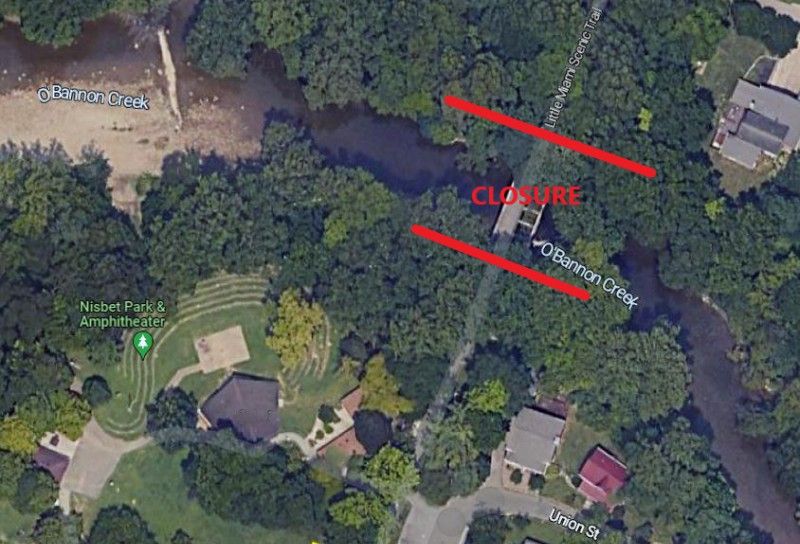 The bridge, just north of Nisbet Park, will be replaced by the Ohio Department of Natural Resources. There is no designated detour, but the trail will remain open both south and north of the closing.
 -
Franklin County judge orders temporary restraining order to stop overhaul of Ohio K-12 education
Seven members of the Ohio State Board of Education filed a lawsuit to stop the transfer of power from the Board to the governor’s office.
A Franklin County judge has issued a temporary restraining order to block lawmakers’ attempts to overhaul Ohio’s K-12 education system.
Seven members of the Ohio State Board of Education filed a lawsuit against Ohio Gov. Mike DeWine Tuesday in the Franklin County Court of Common Pleas to stop the transfer of power from the Board to the governor’s office.
Christina Collins, Teresa Fedor, Kathleen Hofmann, Tom Jackson, Meryl Johnson, Antoinette Miranda, and Michelle Newman filed the lawsuit. They are being represented by Democracy Forward and Ulmer & Berne LLP.
Franklin County Judge Karen Held Phipps issued the temporary restraining order Thursday and will now go to a preliminary injunction hearing on Oct. 2, a day before the changes are scheduled to take effect.
“Creating a new cabinet-level agency is not a silver bullet and does not magically solve problems,” House Minority Leader Allison Russo, D-Upper Arlington, said in a statement. “Board members are elected on a non-partisan basis and because of that, expertise and experience in education is a big factor of who gets elected. With a governor appointee, there’s little doubt we’ll see an increase in partisan decision-making.”
What’s in the lawsuit?
The state’s operating budget, signed into law by DeWine, would rename the Ohio Department of Education to the Ohio Department of Education and Workforce. It would create a cabinet-level director position, put the department under the governor’s office and limit the State Board of Education’s power to teacher disciplinary and licensure cases and territory disputes.
“If unchecked by this Court, the system Ohio’s citizens mandated for governing education in Ohio will be rendered virtually powerless,” the lawsuit reads. “The bill strips the Board’s democratically elected members of their core and constitutionally intended duties and responsibilities for the oversight and governance of Ohio’s public education system.”
The plaintiffs are asking the court to grant a temporary, preliminary and permanent relief to stop the changes from going into effect, remove this piece of legislation from the state budget and strike it void.
The Ohio State Board of Education is currently made up of 19 members — 11 elected and eight appointed by Gov. DeWine.
Under the changes, the plaintiffs fear parents and students won’t be able to voice “their support for or opposition to developments in education policy.”
Democratic Senators Nickie J. Antonio, Catherine Ingram, Vernon Sykes, and Paula Hicks-Hudson all support the lawsuit.
“This lawsuit is an opportunity to restore the voice of all Ohioans through protecting the duties and powers of their state board of education members,” Antonio said in a statement.
Senate Bill 1
These changes to the Ohio Department of Education and State Board of Education started out as Senate Bill 1, which Sen. Bill Reineke, R-Tiffin, introduced in January.
The Ohio Senate voted along party lines to pass SB 1 in March — which sent it to the Ohio House, but it stayed in committee. The Senate added SB 1 to the state budget in June, which DeWine signed into law in July.
“In fear that the Senate Bill 1 power grab would not pass on its own merits, the Majority chose to circumvent the process by including it in the biannual budget, violating the single subject rule,” Hicks-Hudson said in a statement. “In doing so, they also chose to disenfranchise duly elected representatives to the Board of Education.”
These seven board members previously wrote a letter to DeWine the day he received the budget and asked him to veto the “power grab” of changing the the state board’s roles.
Constitutional violations
The plaintiffs in the lawsuit argue these changes to the State Board of Education and ODE violate the state constitution.
“When SB 1 could not pass as standalone legislation, the Education Takeover Rider was attached to HB 33 at the eleventh hour to ensure that the rider became law nonetheless,” the lawsuit reads. “This practice — known as logrolling — is prohibited by … the Ohio Constitution.”
Phipps said “the Court finds it necessary to address only” the logrolling argument, according to court documents.
Ohio voters passed a constitutional amendment in 1953 that created a State Board of Education with the power to appoint a Superintendent of Public Instruction.
The Ohio Constitution also has the three-reading rule, which means a bill should be considered by each house on three different days.
“The Education Takeover Rider was not considered by each house of Ohio’s General Assembly on three different days,” the lawsuit says.
Follow OCJ Reporter Megan Henry on Twitter.

MEGAN HENRY
-

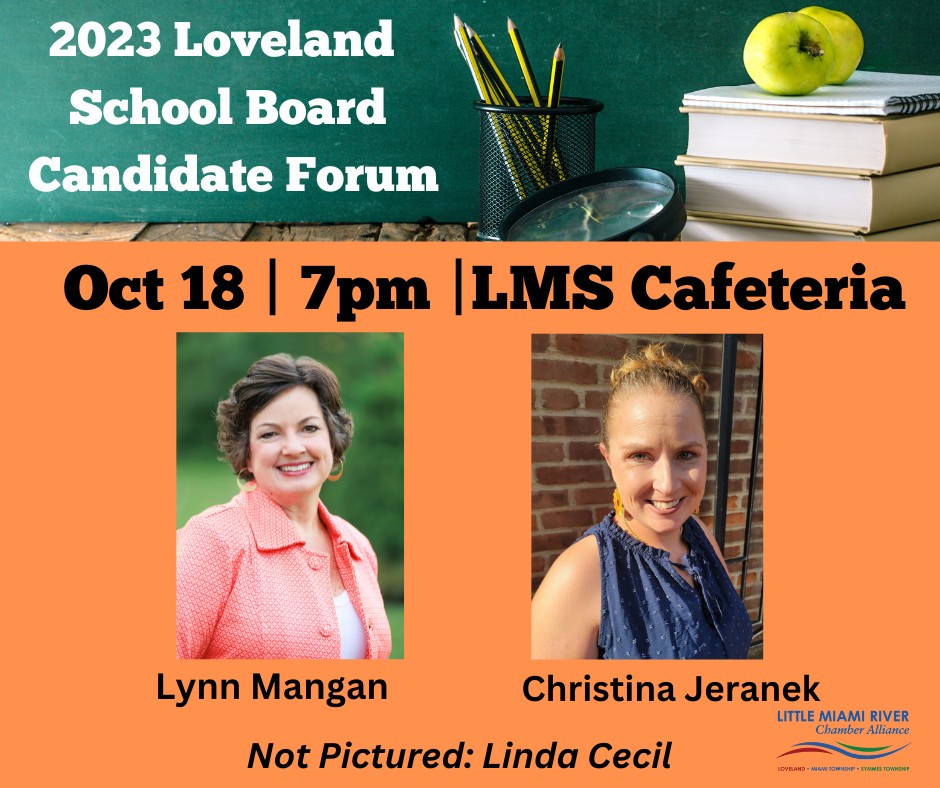
Candidate forums October 18th and 19th
Loveland, Ohio – Save these dates for the upcoming Candidate Forums. These forums will be for the Loveland School Board (10/18) and the Loveland City Council (10/19). Both are at 7 PM in the Loveland Middle School cafeteria.
The forums will be presented by the Little Miami River Chamber Alliance.
Voters will be able to submit questions (each candidate will have an opportunity to answer in a 2-minute time frame. There is no guarantee all questions will be asked. Questions will be addressed to the entire candidate pool, not directed toward one individual.
The intent of these forums is to provide the community the opportunity to ask questions and make an informed choice when voting.

-
A ‘disaster’ nears: Millions of federal workers’ paychecks would be on hold in a shutdown
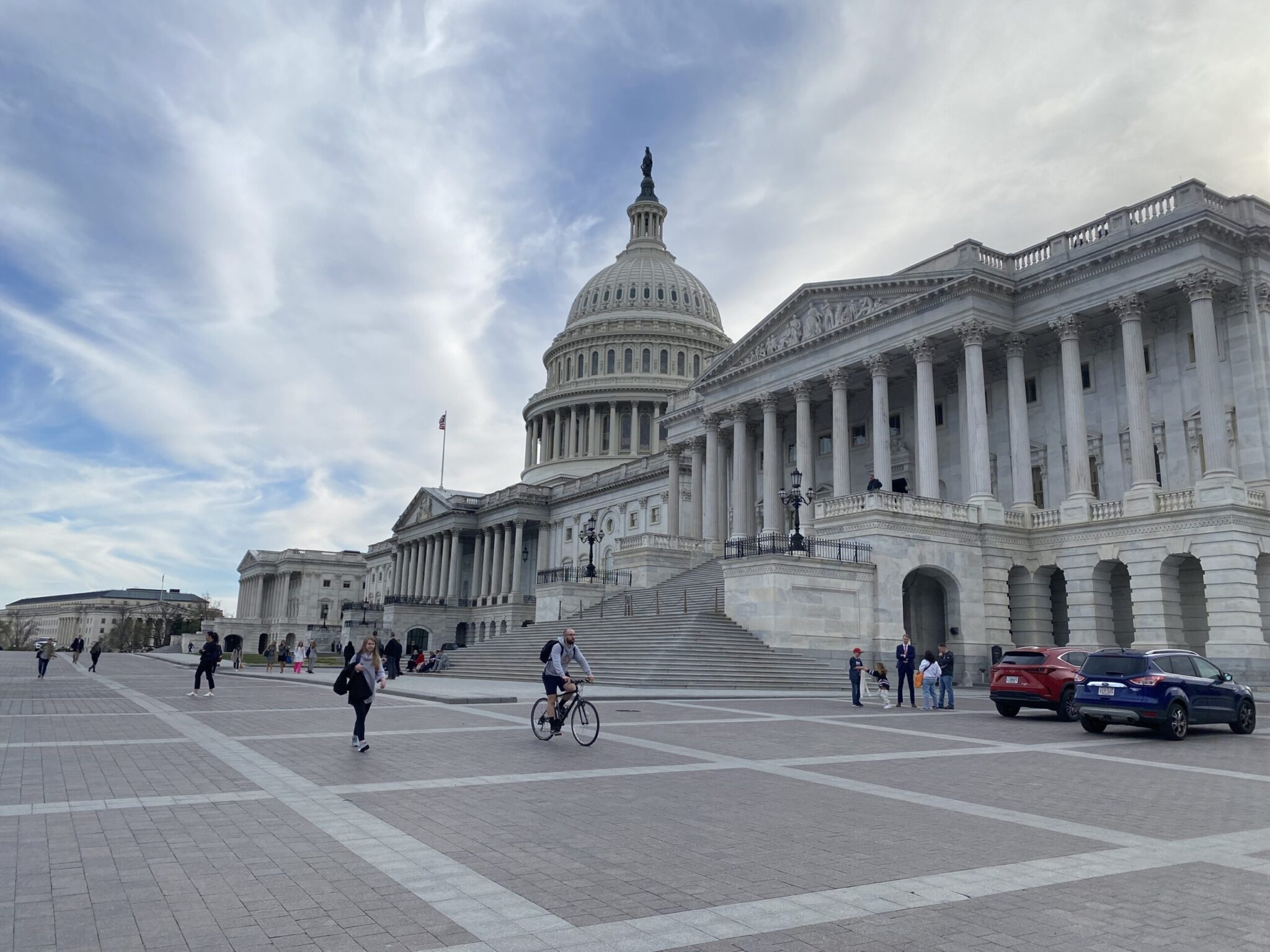
U.S. Capitol (Photo by Jennifer Shutt/States Newsroom.)
WASHINGTON — More than 3.5 million federal employees and military personnel — many in the Washington, D.C., area but also scattered across the states and around the globe — are bracing for another partial government shutdown, as U.S. House Republicans struggle to produce a short-term plan to fund the government past the end of the month.
Most of the workers will be furloughed and go without paychecks in a shutdown. Some will have to work without pay because of the nature of their jobs, like members of the military, law enforcement officers, air traffic controllers and TSA officers. Those federal employees would get back pay once the shutdown ends under a law enacted in January 2019.
Lawmakers would not be personally affected — members of Congress would continue to get paid, as well as President Joe Biden and federal judges, though the judicial branch could see its funding run low.
In the D.C. area, Virginia is home to an estimated 140,000 civilian federal workers, who for some unknown period would go without pay and would be forced to draw on savings or other assistance, according to a federal employee database. Maryland has an estimated 139,000 civilian employees.
The economic impact could be broad, because the funding lapse this year would hit much harder than the 35-day partial government shutdown that took place during the Trump administration and reduced GDP by billions of dollars. This time, a partial shutdown would affect more than 1.4 million uniformed members of the military and 1 million additional civilian federal employees at the Pentagon, Department of Health and Human Services and several other agencies, as well as congressional staff.
Speaker Kevin McCarthy, a California Republican, has repeatedly warned his own members against forcing a funding lapse, saying it won’t help the party to achieve its goals.
But that hasn’t stopped especially conservative Republicans from halting work on full-year spending measures and opposing the short-term stopgap bill that’s needed to give lawmakers more time to work out a deal.
American Federation of Government Employees National President Everett Kelley said in a written statement that a “government shutdown would be a disaster for the American people and the federal employees who keep our government running.”
“Shutdowns hurt local communities across the country, deny Americans access to government services, and do significant damage to the overall economy,” Kelley said.
Congress, Kelley said, “needs to do its job and pass a continuing resolution to keep the government funded at current levels while continuing to negotiate a final budget. Nothing less is acceptable.”
AFGE represents more than 750,000 federal and D.C. government employees.
Here’s a look at why the federal government might shut down by Oct. 1, what agencies are impacted and what isn’t affected.
Why would the government have to shut down?
Congress is supposed to pass 12 government funding bills each year before the start of the new fiscal year on Oct. 1, but lawmakers haven’t completed all of their bills on time since 1996.
Instead, every year the House and Senate pass at least one stopgap spending bill, or continuing resolution. This keeps funding levels and policy mostly flat for a few weeks or a couple of months, giving the Appropriations committees more time to work out bipartisan bills and for leaders to hold floor votes.
Congress sometimes has to pass several short-term funding bills lasting for months, or even the entire fiscal year, if agreements on new, full-year spending bills can’t be negotiated.
If Congress doesn’t approve all dozen full-year government funding bills, or pass a short-term stopgap bill, by midnight on Sept. 30, then a funding lapse begins and government departments begin implementing a partial shutdown.
What happens during a shutdown?
Federal civilian employees are broadly categorized as either “excepted” or “non-excepted.” During a partial government shutdown, excepted federal workers continue to work without pay while everyone else is furloughed — which means they are on an enforced vacation and their pay is on hold until the government resumes operations.
Employees that deal with “the safety of human life or the protection of property” often work without pay until Congress approves some sort of spending measure.
What federal departments and agencies are involved?
Any federal department or agency without a full-year appropriations bill would need to implement its shutdown plans if Congress doesn’t approve a spending bill before Oct. 1.
Congress has yet to pass any of its dozen annual funding bills for fiscal 2024, so all of the departments and agencies funded through the annual appropriations process would be impacted.
That includes the departments of Agriculture, Commerce, Defense, Education, Energy, Health and Human Services, Homeland Security, Housing and Urban Development, Interior, Justice, Labor, State, Transportation, Treasury and Veterans Affairs.
Smaller federal agencies would also be affected, including the Environmental Protection Agency, Food and Drug Administration, NASA and the Smithsonian Institution, among dozens of others.
The entire legislative branch, including the U.S. House, U.S. Senate, the Capitol Police, the Congressional Budget Office, Government Accountability Office and the Library of Congress, among others, would be partially shut down.
Each department and agency has its own guidance for implementing a partial government shutdown, which is posted on the Office of Management and Budget’s website.
What federal operations escape?
Spending on mandatory programs like Medicare, Medicaid and Social Security does not go through the annual appropriations process, so those three programs are mostly exempt from the impact.
How many federal employees would be furloughed?
The federal government employed just under 2.2 million civilian employees earlier this year, according to its database. There are another 1.4 million members of the U.S. military, according to numbers from the Office of Management and Budget. The Legislative Branch employs more than 31,000 employees and the judicial branch has about 33,000 employees.
About 745,000 of the civilian employees work for the Department of Defense, with another 449,000 at the Veterans Affairs Department. The Department of Homeland Security — which houses Customs and Border Protection, Immigration and Customs Enforcement, and the Federal Emergency Management Agency — employs more than 216,000 federal employees.
A state-by-state breakdown of where civilian federal employees work shows that the nation’s capital has the most federal employees, with 161,000 working in the District of Columbia.
California has the second-highest population of civilian federal employees with 142,000. Texas holds nearly 123,000.
More than 636,000 federal employees are veterans.
Federal employees will get back pay after the shutdown ends, though that hasn’t extended to federal contractors.
Does anyone get paid during a partial government shutdown?
Yes. The president, members of Congress and judges.
Article II, Section 1 of the Constitution “forbids the salary of the President to be reduced while he or she is in office, thus effectively guaranteeing the President of compensation regardless of any shutdown action,” according to the Congressional Research Service.
Members of Congress would receive pay for several reasons, including that they have a permanent appropriation for their salaries, a section of the Constitution addressing lawmakers’ pay and the 27th Amendment, according to the Congressional Research Service.
Article I, Section 6 of the Constitution says that U.S. lawmakers “shall receive a Compensation for their Services, to be ascertained by Law, and paid out of the Treasury of the United States.”
And the 27th Amendment notes that “No law, varying the compensation for the services of the Senators and Representatives, shall take effect, until an election of Representatives shall have intervened.”
Judges and the judiciary would “likely be able to continue to operate for a limited time using funds derived from court filings and other fees and from no-year appropriations,” according to a report from CRS.
How many funding lapses have there been?
Congress has failed to fund the government three times since 2000.
In 2013, there was a 16-day shutdown amid calls from several hardline Republicans, including Texas Sen. Ted Cruz, to defund the Affordable Care Act, or Obamacare.
While none of the 12 full-year government funding bills were law when that shutdown began, it didn’t fully impact the Pentagon.
Just before the funding lapse began, Congress passed a bill to provide pay for troops, Defense Department civilian employees and certain contractors working for either the Defense Department or the Homeland Security Department, according to the Congressional Research Service.
There were two funding lapses during the Trump administration, one of which was relatively short and one that lasted for 35 days.
The 35-day partial government shutdown began after five of the dozen annual spending bills became law, reducing the number of federal employees and operations impacted.
The Departments of Defense, Education, Energy, Health and Human Services, Labor and Veterans Affairs weren’t affected. Congress also wasn’t impacted, having passed its own funding bill.
What is the economic impact of a partial government shutdown?
Federal employees were furloughed for a total of 6.6 million days during the 2013 partial government shutdown, bringing the total “lost productivity” to about $2 billion, according to an analysis from the White House budget office.
The 2019 partial government shutdown reduced real gross domestic product by $3 billion during the fourth quarter of 2018 and by $8 billion during the first quarter of 2019, according to analysis from the nonpartisan Congressional Budget Office.
That shutdown, CBO said in its report, “dampened economic activity mainly because of the loss of furloughed federal workers’ contribution to GDP, the delay in federal spending on goods and services, and the reduction in aggregate demand (which thereby dampened private-sector activity).”
What’s the Biden administration saying?
The White House released a memo Wednesday rebuking House Republicans for approaching the end of the fiscal year without a bipartisan plan to fund the government.
The administration said it’s clear that “if extreme House Republicans fail to ram through their radical agenda, they plan to take their frustration out on the American people by forcing a government shutdown that would undermine our economy and national security, create needless uncertainty for families and businesses, and have damaging consequences across the country.”
The memo says a funding lapse could affect dozens of federal programs, including eliminating some spaces in Head Start, slowing down new loans at the Small Business Administration and forcing the FDA to “delay food safety inspections for a wide variety of products all across the country.”
The Occupational Safety and Health Administration, or OSHA, could have to reduce the number of inspections, “denying workers a key protection against safety risk, and Americans who are owed back pay for their hard work would face delays due to the majority of Department of Labor investigations being suspended.”
Air travel could also be impacted since TSA employees and air traffic controllers would be working without pay, the White House memo says.
“These consequences are real and avoidable — but only if House Republicans stop playing political games with peoples’ lives and catering to the ideological demands of their most extreme, far-right members,” the White House memo says. “It’s time for House Republicans to abide by the bipartisan budget agreement that a majority of them voted for, keep the government open, and address other urgent needs for the American people.”

JENNIFER SHUTT
-

Learn about how you can join the American Climate Corps
President Biden has announced a new initiative to train young people in “high-demand skills for jobs in the clean energy economy.”
The American Climate Corps will put a new generation of Americans to work conserving our lands and waters, bolstering community resilience, advancing environmental justice, deploying clean energy, implementing energy efficient technologies, and tackling climate change. American Climate Corps members will gain the skills necessary to access good-paying jobs that are aligned with high-quality employment opportunities after they complete their paid training or service program.
Sign Up to learn about how you can join the American Climate Corps.
-

Beginning Monday every U.S. household can again order free COVID-19 rapid tests
Getty Image
Beginning Monday, September 25, every U.S. household can again place an order to receive four more free COVID-19 rapid tests delivered directly to their home.
Go to COVID.gov on Monday to order the free tests.
Before You Throw Out “Expired” Tests: Check to see if your COVID-19 tests’ expiration dates have been extended.
15,000+ Free Testing Sites
No-cost antigen and PCR COVID-19 tests are available to everyone in the U.S., including the uninsured, at more than 15,000 sites nationwide.
-

NARCAN (Naloxone) available to Hamilton County (OH) residents at NO CHARGE
Hamilton County Public Health, through the NARCAN® Distribution Collaborative (NDC), is making NARCAN® (Naloxone) available to Hamilton County (OH) residents at NO CHARGE. We are also distributing NARCAN® in the Hamilton County Public Health Clinic by appointment. The Hamilton County Public Health Clinic is located at 184 E. McMillan St. Cincinnati, OH 45219. If you would like to make an appointment for a NARCAN® training or would like more information on NARCAN® distribution, please contact NDC staff at 513-309-1522 or narcan@hamilton-co.org.
NARCAN® by Mail
HCPH is now offering free mail order NARCAN® to Hamilton County (OH) residents. To obtain a kit through the mail please click this link. If you live outside Hamilton County (OH), visit your local health department to find out where you can find NARCAN® in your area.
Project DAWN
Project DAWN – Deaths Avoided With Naloxone — is a community-based overdose education and naloxone distribution program. Project DAWN participants receive training on:
- Recognizing the signs and symptoms of overdose
- Distinguishing between different types of overdose
- Performing rescue breathing
- Calling emergency medical services
- Administering intranasal Naloxone
For more information on Project DAWN, click here: https://www.odh.ohio.gov
-
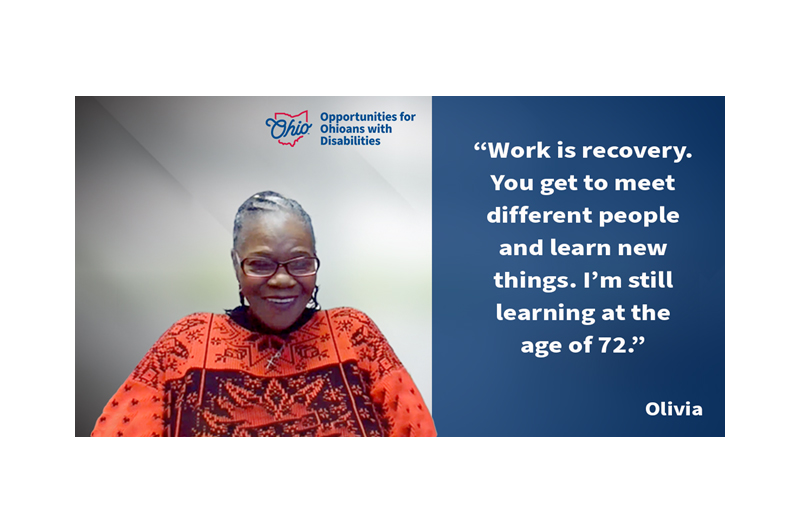
Ageless Tenacity: Olivia’s Path to Employment
Meet Olivia, a resilient and determined woman whose unwavering spirit and strength inspire those around her. In the face of significant health challenges and the devasting loss of her beloved mother, Olivia refused to let adversity define her. Instead, she embraced her grief and health struggles as catalysts for growth, propelling her to reclaim her life and career.
After getting treatment for her depression, Olivia was eager to get back to work and sought out assistance from CommQuest Services, Inc. in 2010. She met with Phillip Paschal, an Employment Specialist at CommQuest Services, Inc. Together they worked on preparing to get Olivia back to work.
Throughout the years, Olivia worked at various jobs despite blindness in one eye, diabetes, and throat cancer. Her jobs included cleaning, working in fast food, and holding a position at a retirement village. When her mother passed away, Olivia became depressed and was temporarily unable to work.
In 2017, Olivia had quadruple bypass surgery and was unable to work. However, throughout her recovery, she continued to work with Phillip. Eventually, Phillip connected Olivia with Christine Crine, who was a Vocational Rehabilitation Counselor with Opportunities for Ohioans with Disabilities (OOD). Christine helped Olivia find a job at Coastal Pets Products in January 2020. However, Olivia became ill with COVID and was hospitalized for five weeks. Costal Pets Products held her job for her, but Olivia decided to resign due to a long recovery period, including a stay in a nursing home and outpatient physical therapy.
Through all her struggles, Olivia was determined to go back to work. “Olivia never gave up,” said Phillip. “She is a great client and great to work with. She has a great sense of humor that makes time pass quickly on the job,” he added.
In October 2022, Olivia began working with Erika Salewsky, OOD Senior Vocational Rehabilitation Counselor. Olivia was hired as a pizza prep at Little Caesars Pizza in North Canton, Ohio a few months later, working three days a week. Phillip helped Olivia become acclimated to the job. Erika provided bus passes to help Olivia get back and forth to work.
“Olivia is very reliable,” said Jermain Davenport, Manager at Little Caesars Pizza. “She outworks the younger people.”
Olivia said, “Work is recovery. You get to meet different people and learn new things.” “I’m still learning at the age of 72,” she added.
“It has been my pleasure to work with Olivia,” said Erika. “She is a very motivated woman, and her outlook on life is nothing short of inspiring. While she has had her past struggles, we can all learn from her sense of humor and optimism toward the future.”
If you or someone you know has a disability and would like to work, visit OODWorks.com or call 800-282-4536.
-
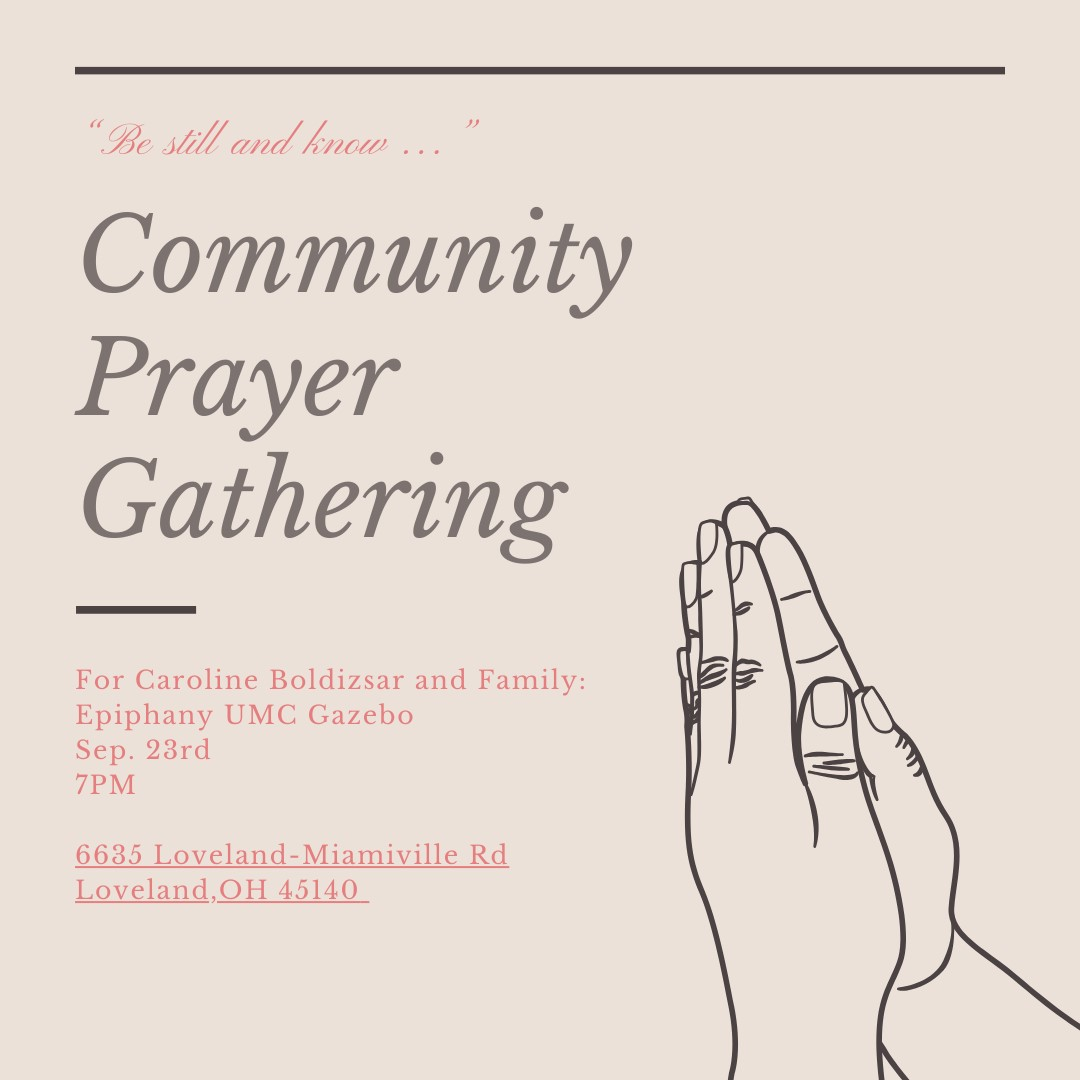
Community Prayer Gathering on Saturday for Caroline Boldizsar and family
Miami Township, Ohio – Laurie Brinkman the Administrative Assistant at Epiphany United Methodist Church writes:
In moments like these, it is hard to know what to do or how to be the church. Right now is a reminder that prayer and community are powerful. While we discern what other steps we can take to assist the Boldizsar family, please join us in this simple yet impactful step of community prayer!
We will meet this coming Saturday, September 23rd at the Epiphany UMC gazebo at 7 PM. We will sing and pray together and we will also reflect.
If you are asking what you can do — Start here, and join us for community prayer.
For updates or questions about how you can give to the Boldizsar family, please contact info@epiphanyumc.org.
Please mail any gift cards or well wishes to:
Epiphany UMC
6635 Loveland-Miamiville Rd
Loveland, OH 45140