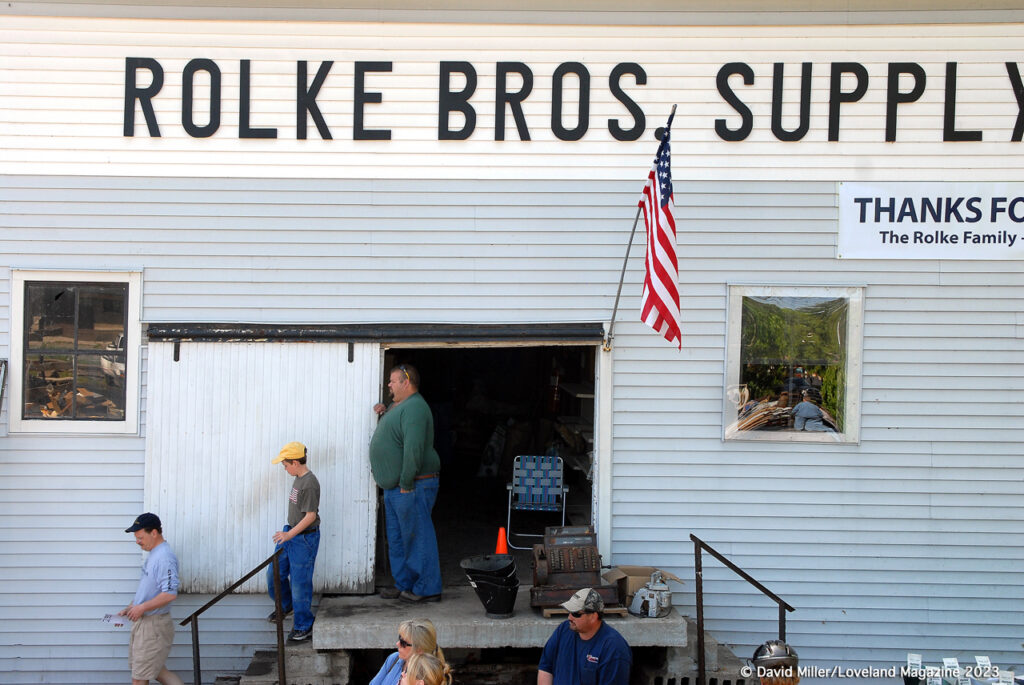
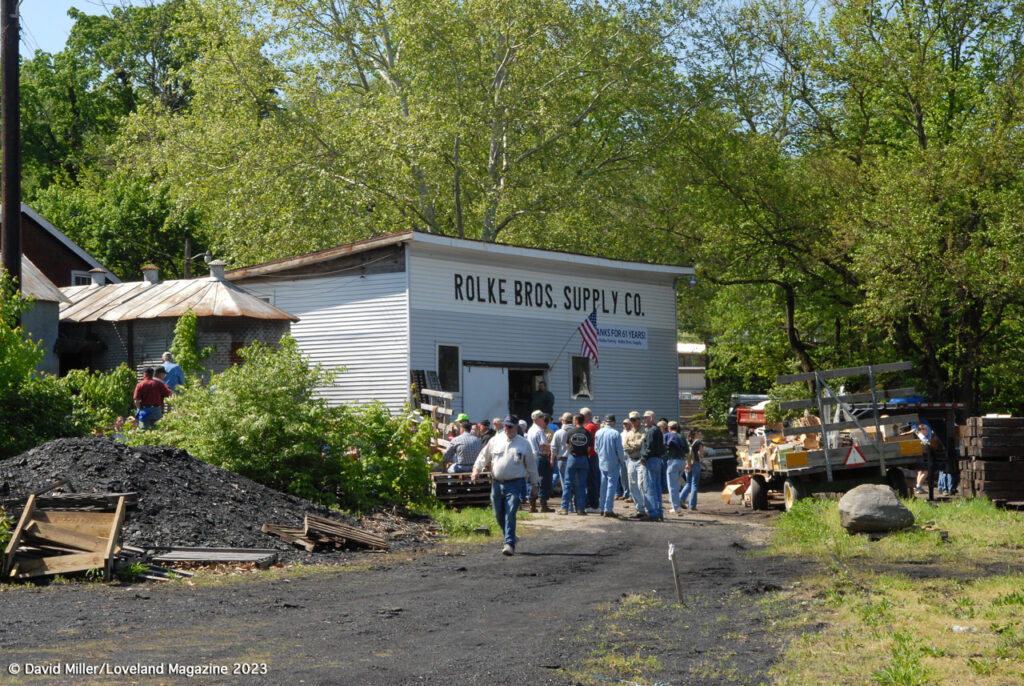
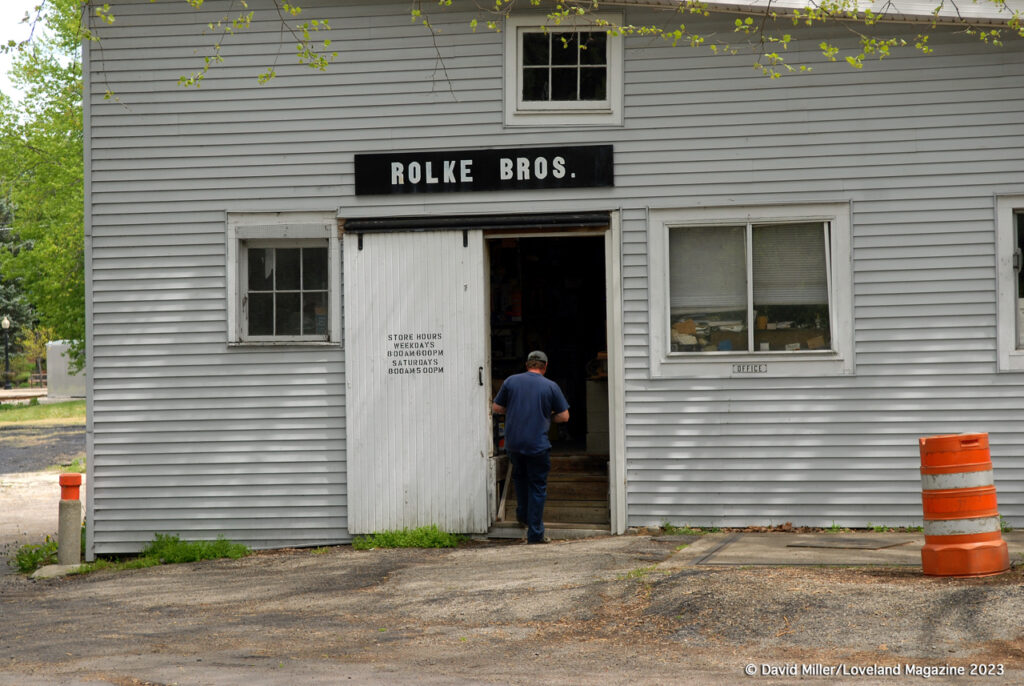
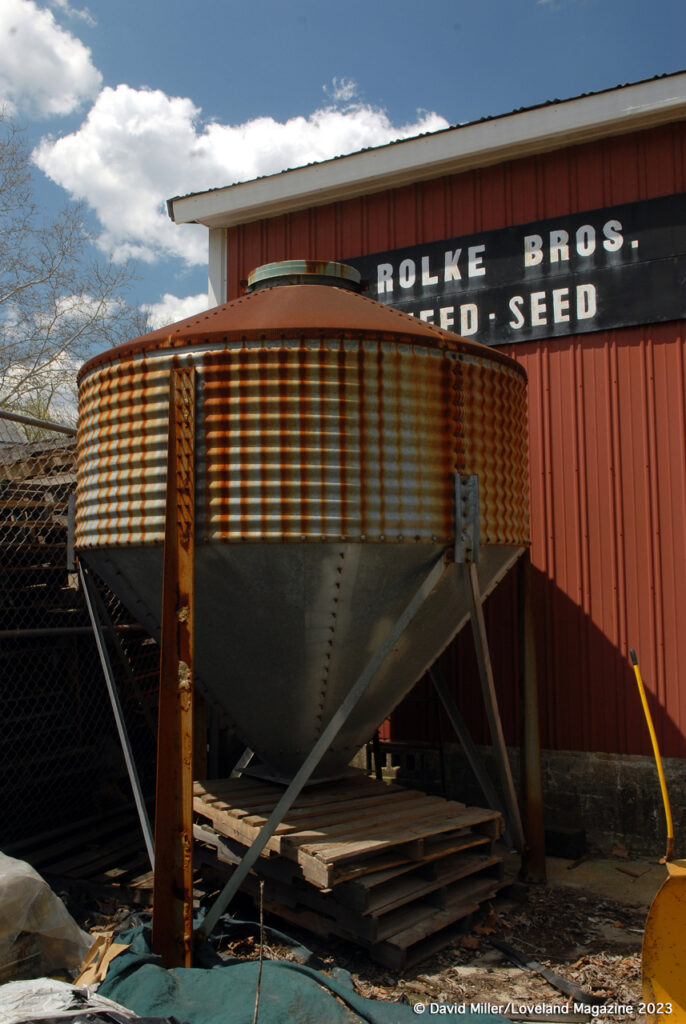
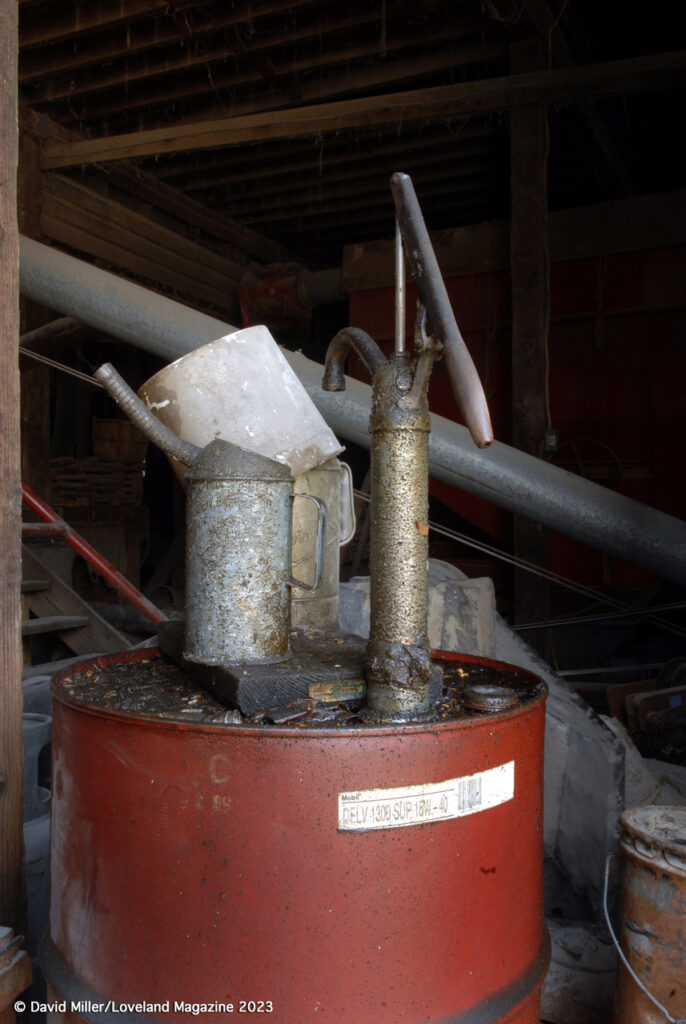
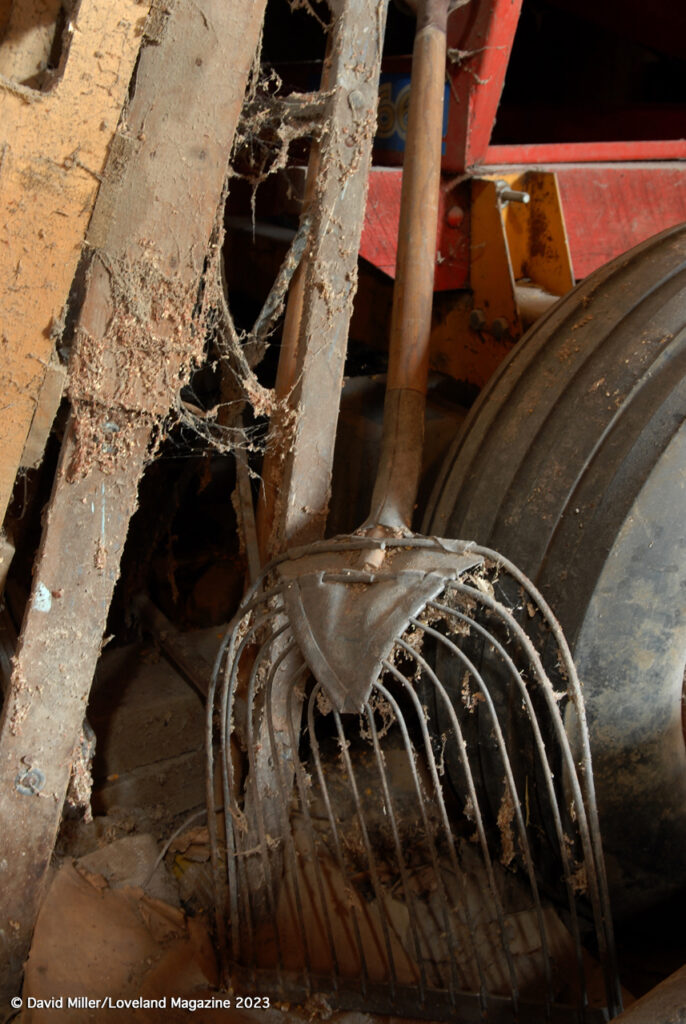
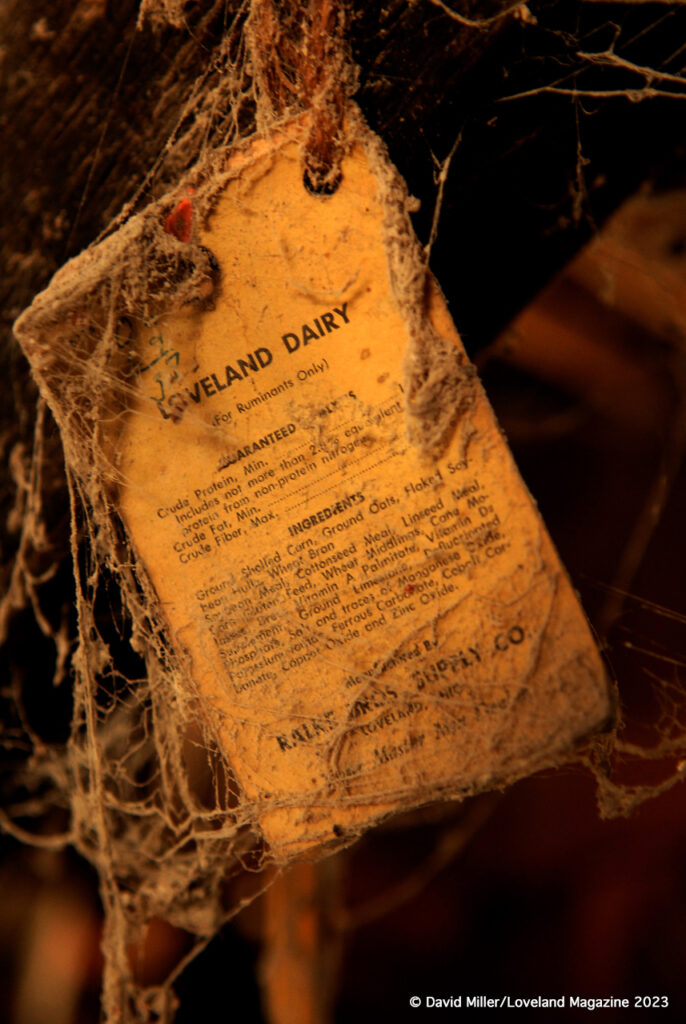
Loveland, Ohio – Ron Rolke owned Rolke Bros Supply Co. in Historic Downtown Loveland for 31 years.
Ronald Carl Rolke, was the beloved husband of Barbara Rolke, devoted father of David Rolke, Russell (Lisa Rogers) Rolke, Christopher (Stephanie) Rolke , Cheryl (Jeff) Taylor, and Dennis Browning, loving grandfather of Ethan Rolke, Kaitlyn Rolke, Andrew Browning, Donald Browning, Meredith (Jason) Wakeland, Megan (David) Taylor-Tucker, Brittney Taylor, and Nicholas Browning, Great-grandfather to Raymond and Andrew Wakeland, Wesley, Jackson, Tanner Tucker, and Hunter Duty. Dear brother of Gene (Donna) Rolke.
Ronald graduated from Loveland High School in 1960, went on to study at Morehead University, and proudly served in the United States Airforce.
Ronald passed away on July 30, 2023 at the age of 81. Family will receive friends at the Bethel-Murdoch Presbyterian Church on Sunday, September 3rd from 2 PM until time of services beginning at 3 PM. In lieu of flowers, memorial donations may be made to the Alzheimer’s Association.
____________
A note from Managing Editor David Miller:
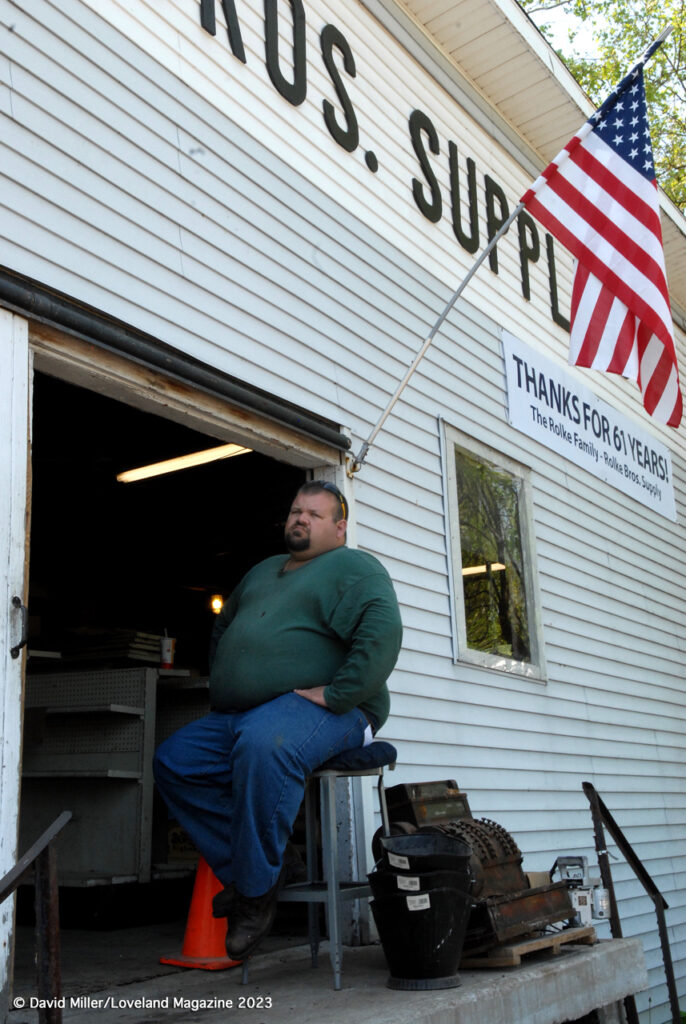
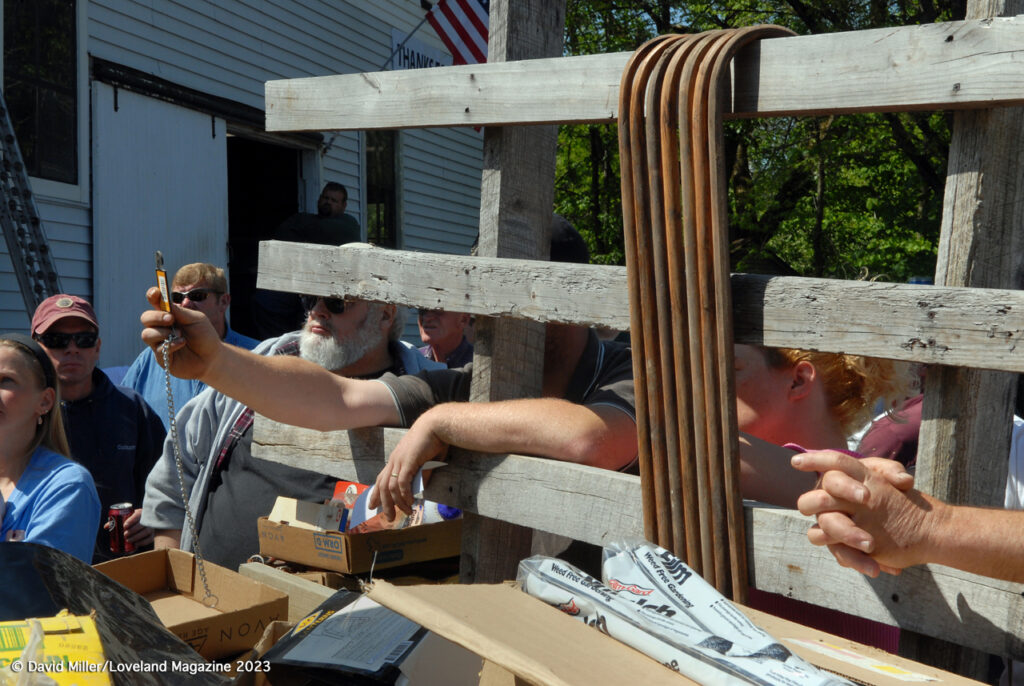
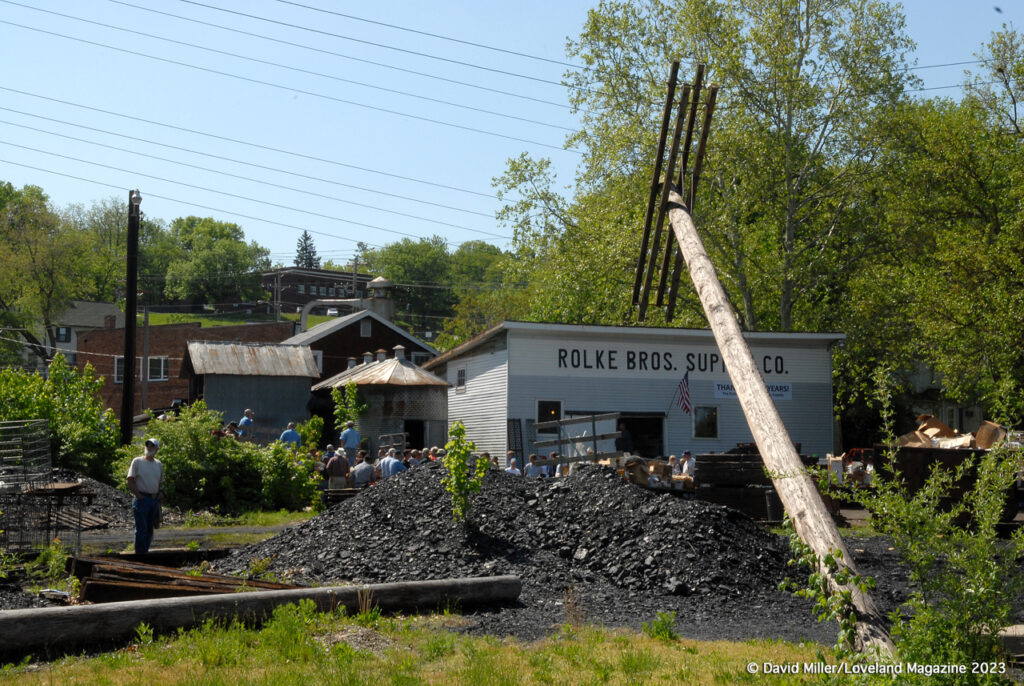
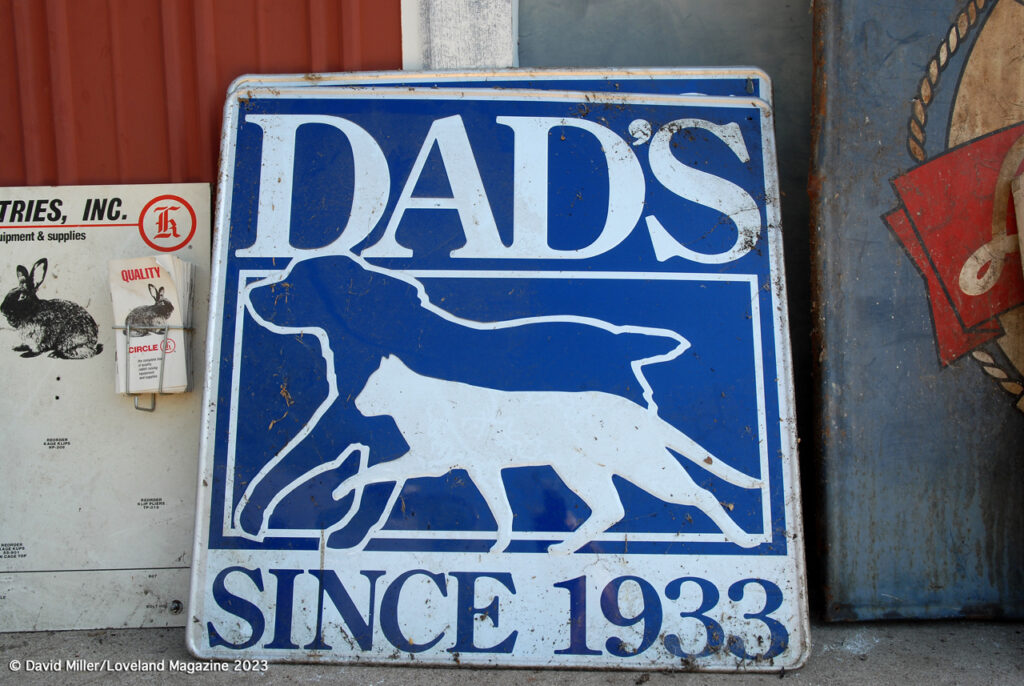
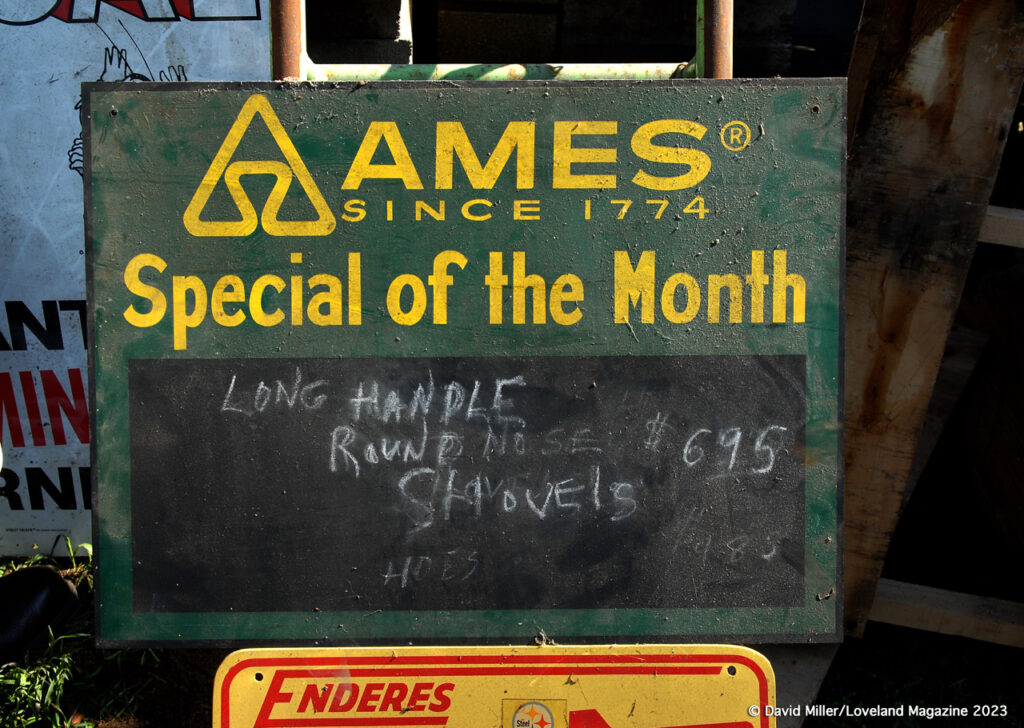
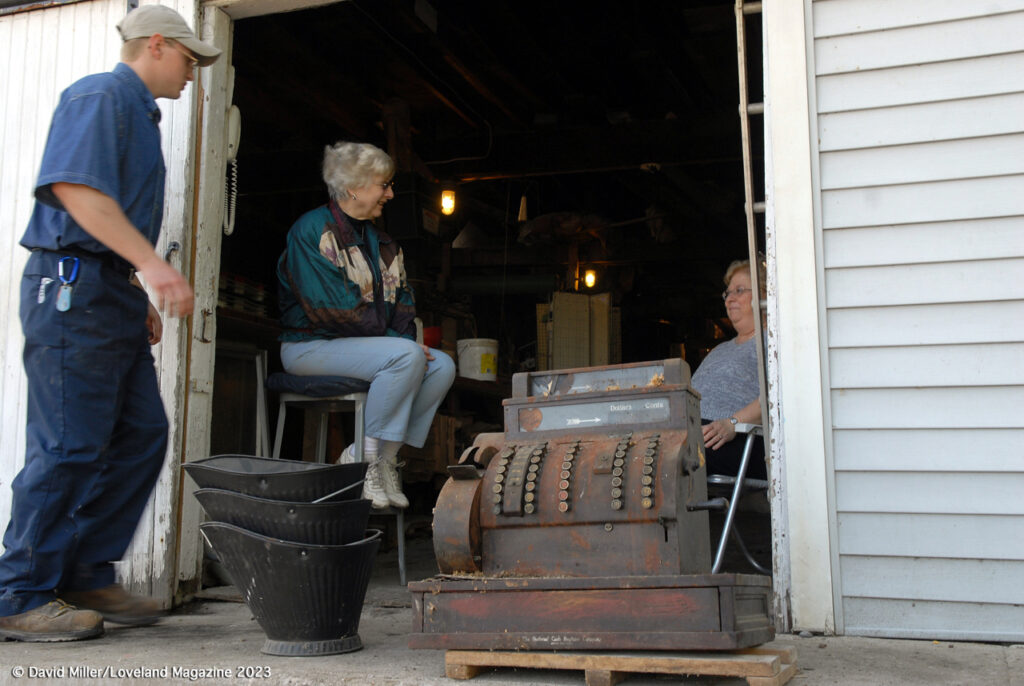
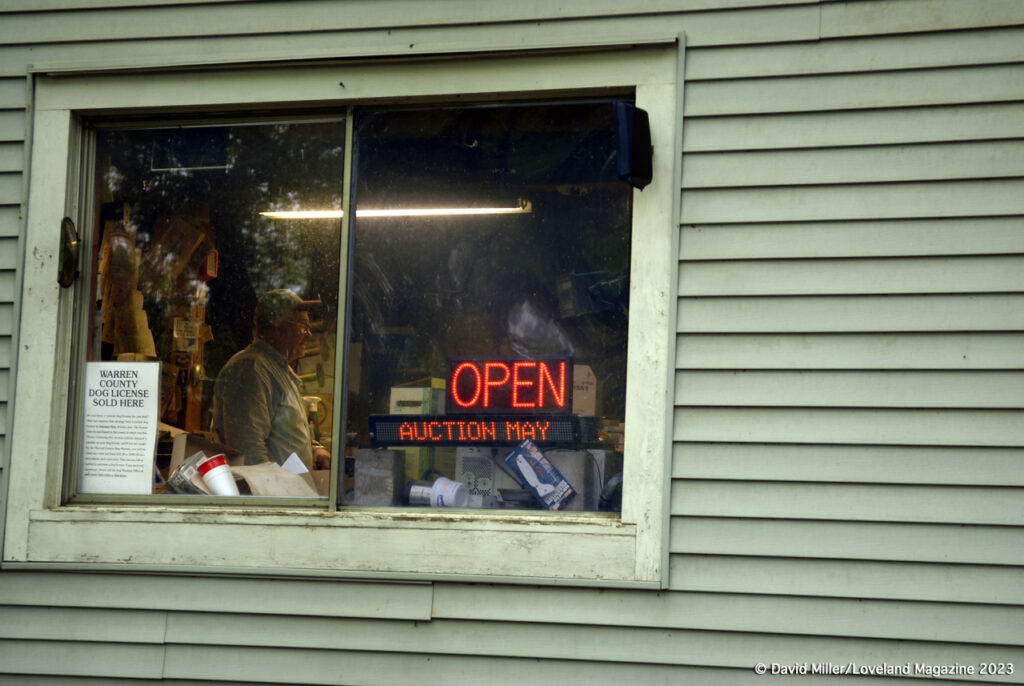
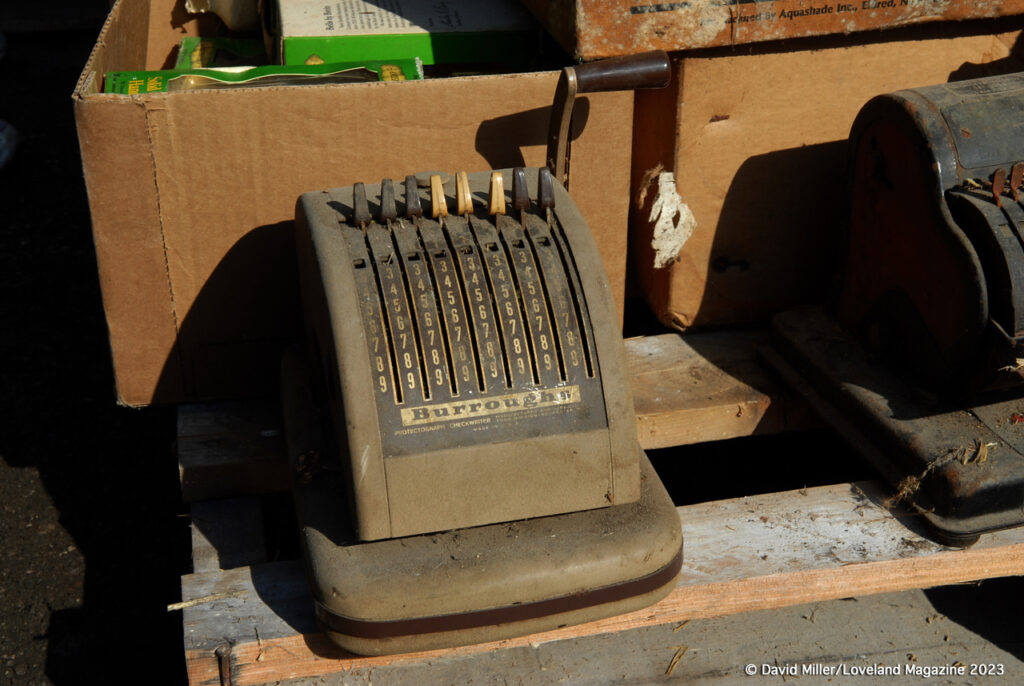
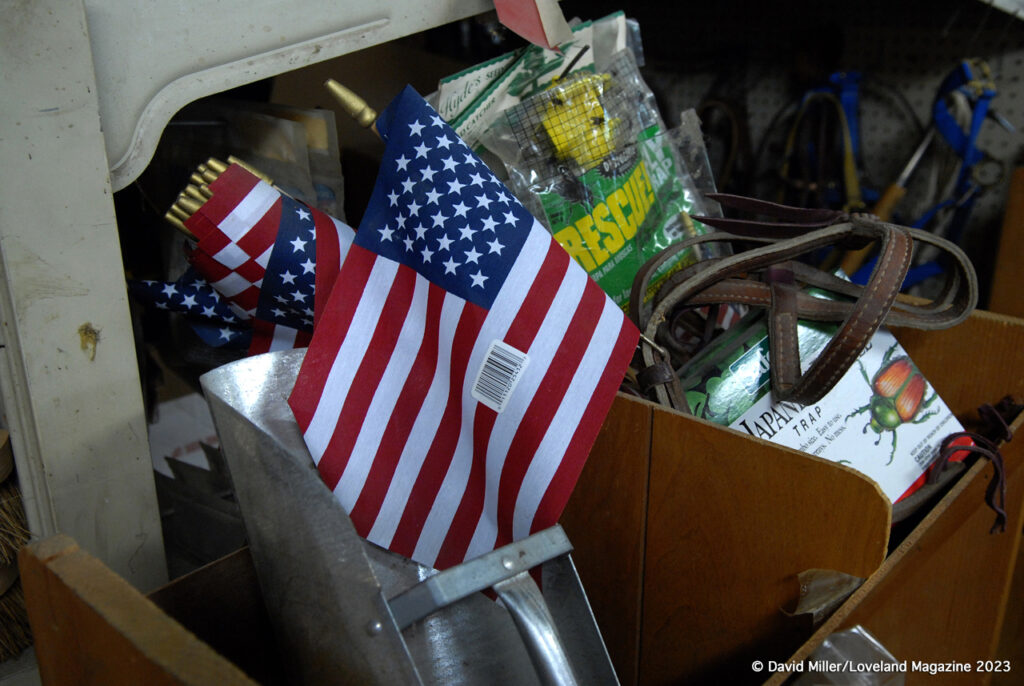
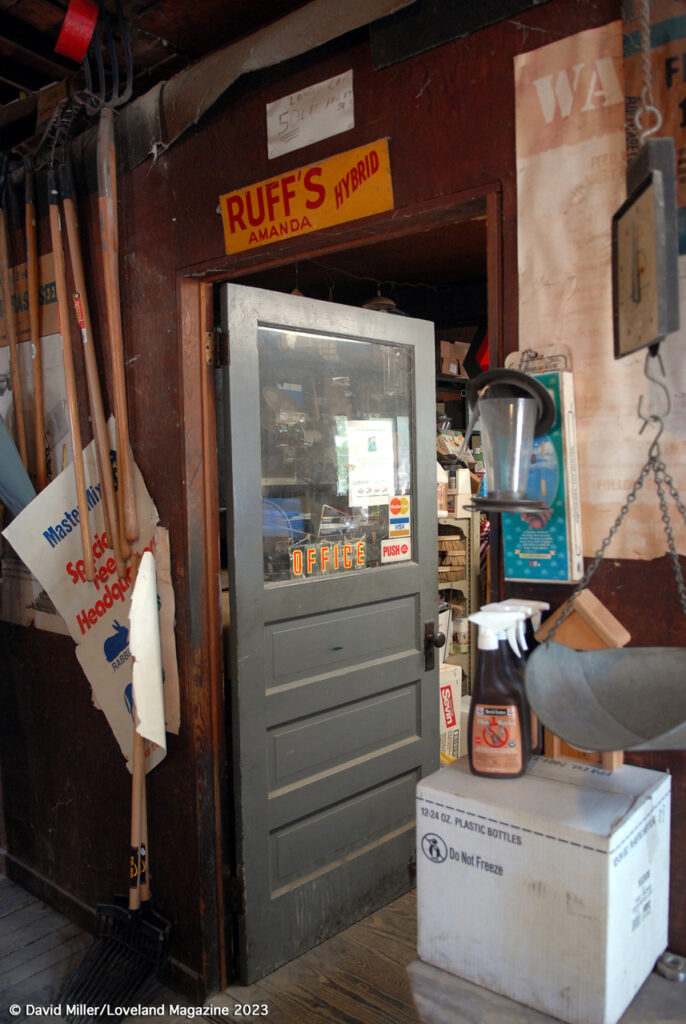
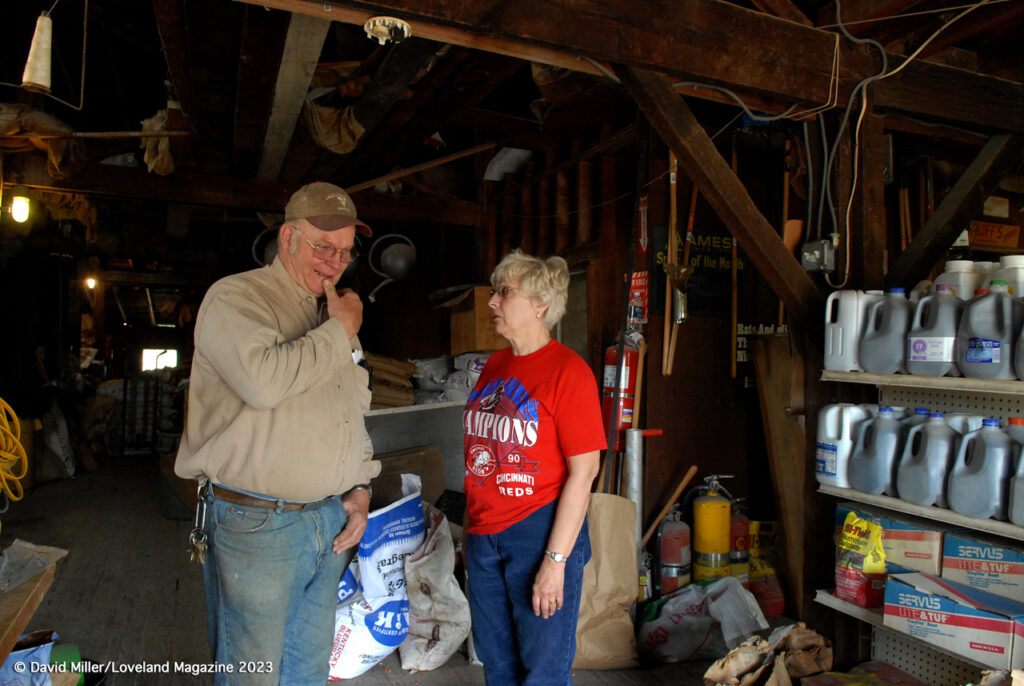
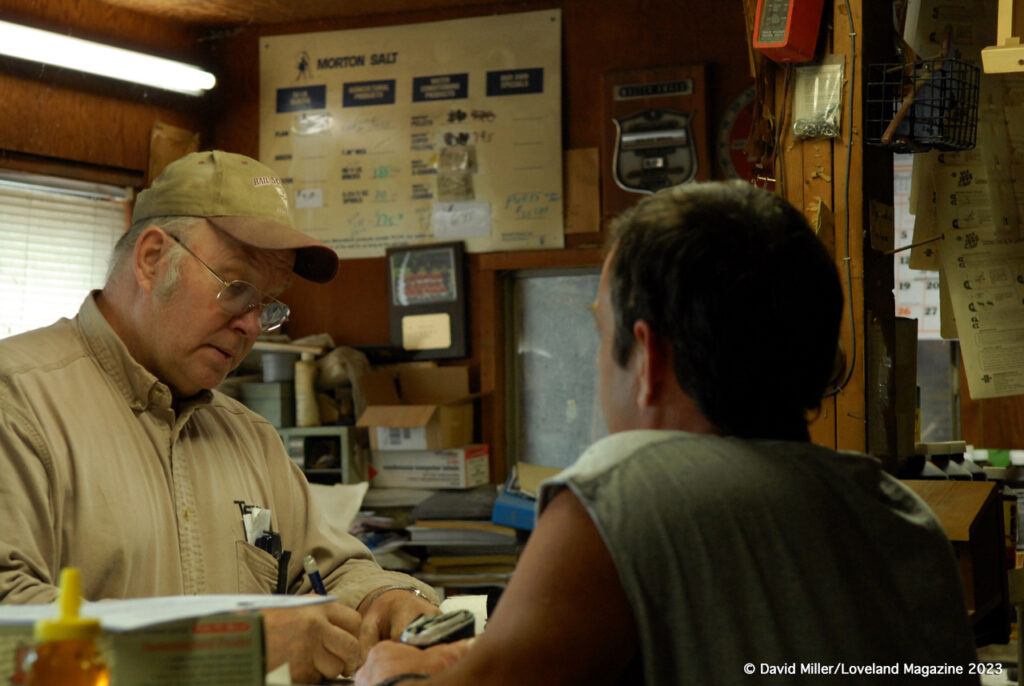
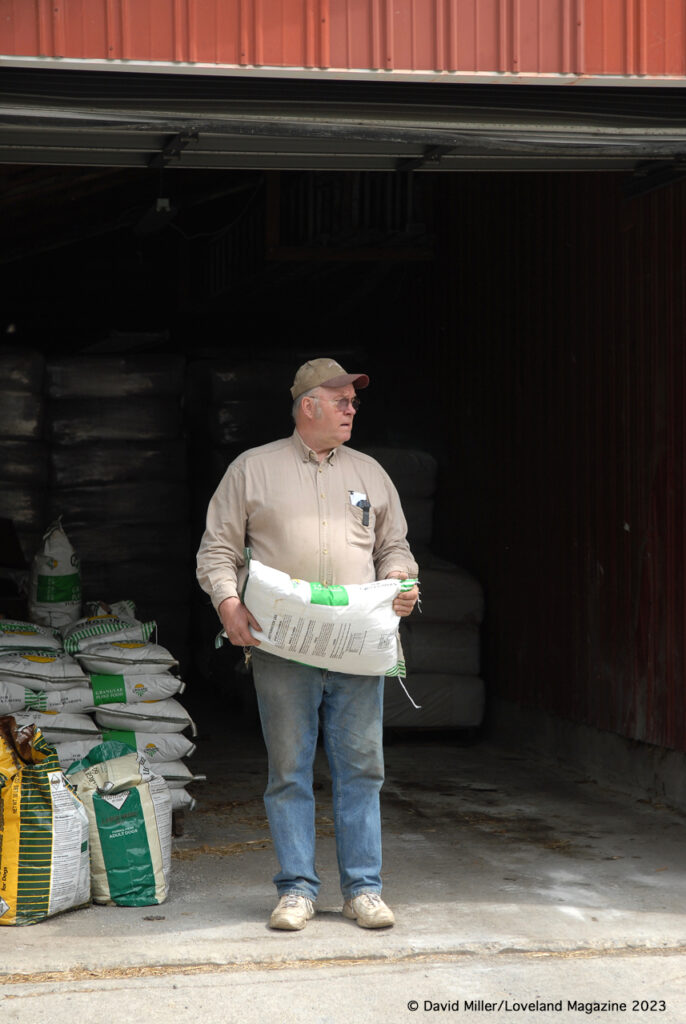
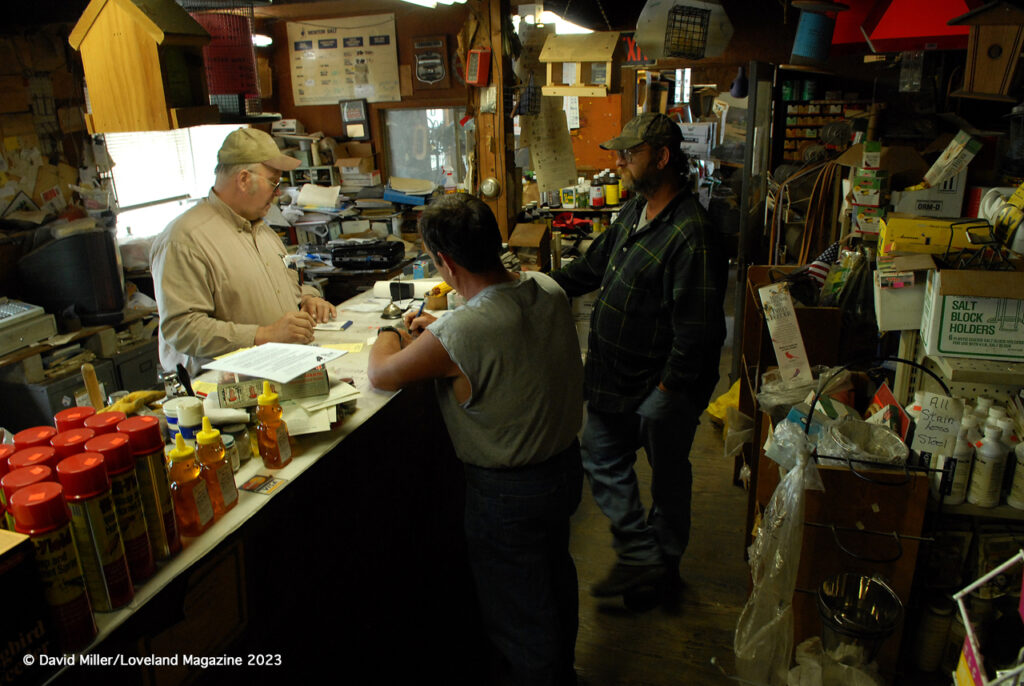
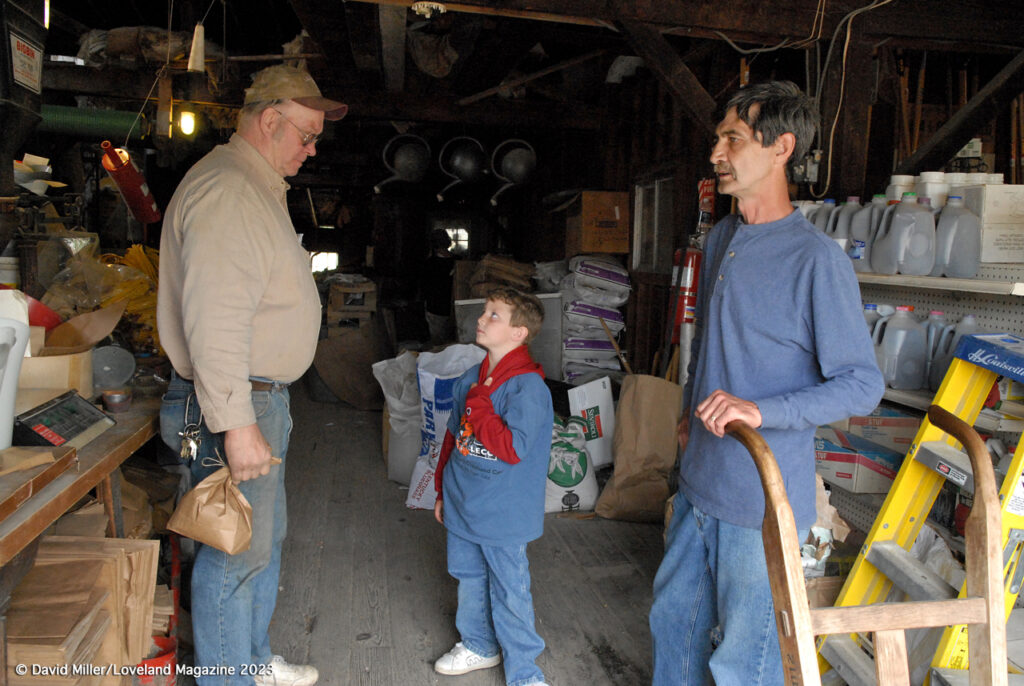
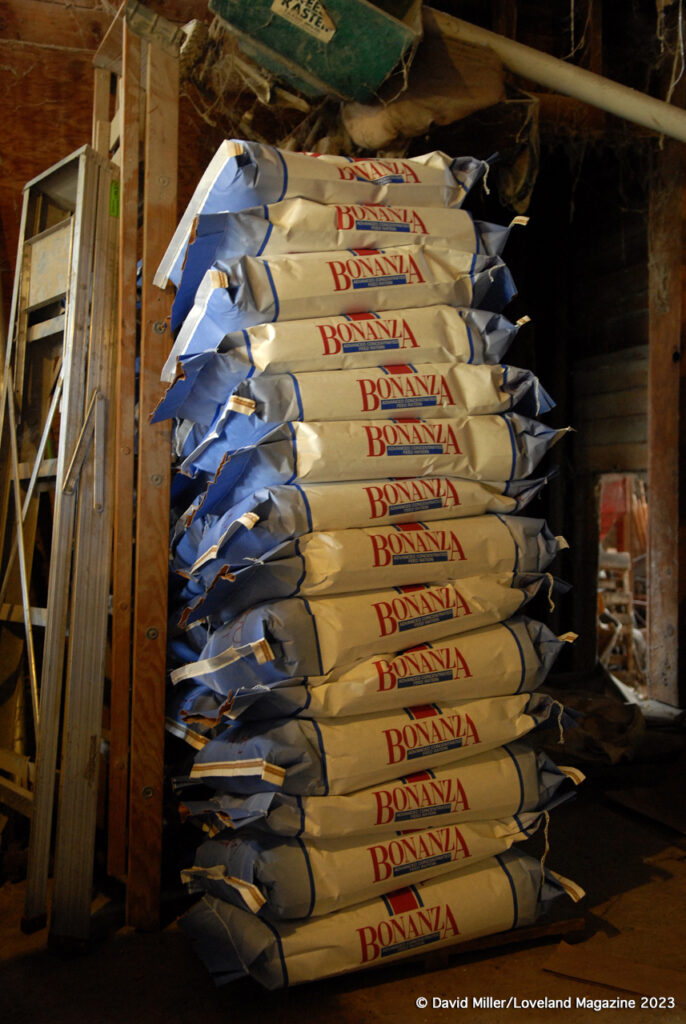
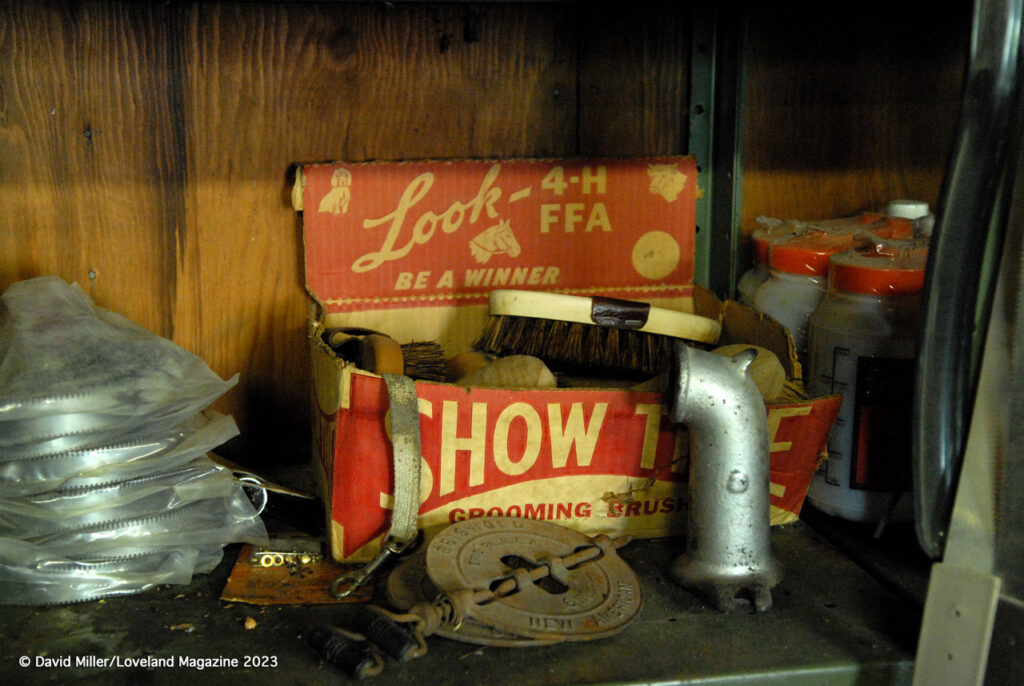
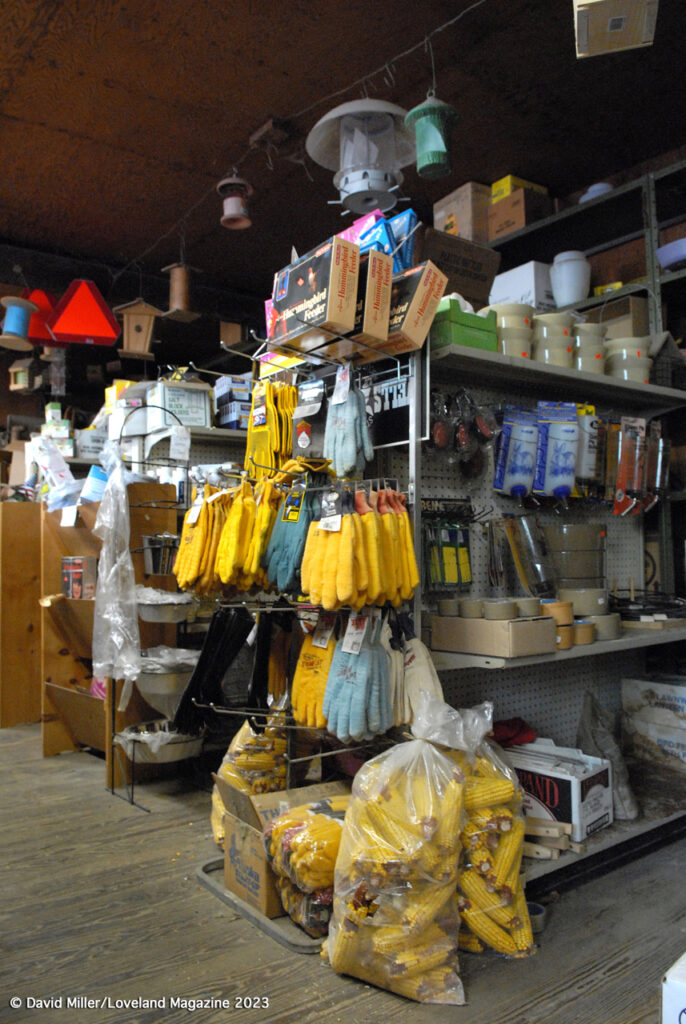
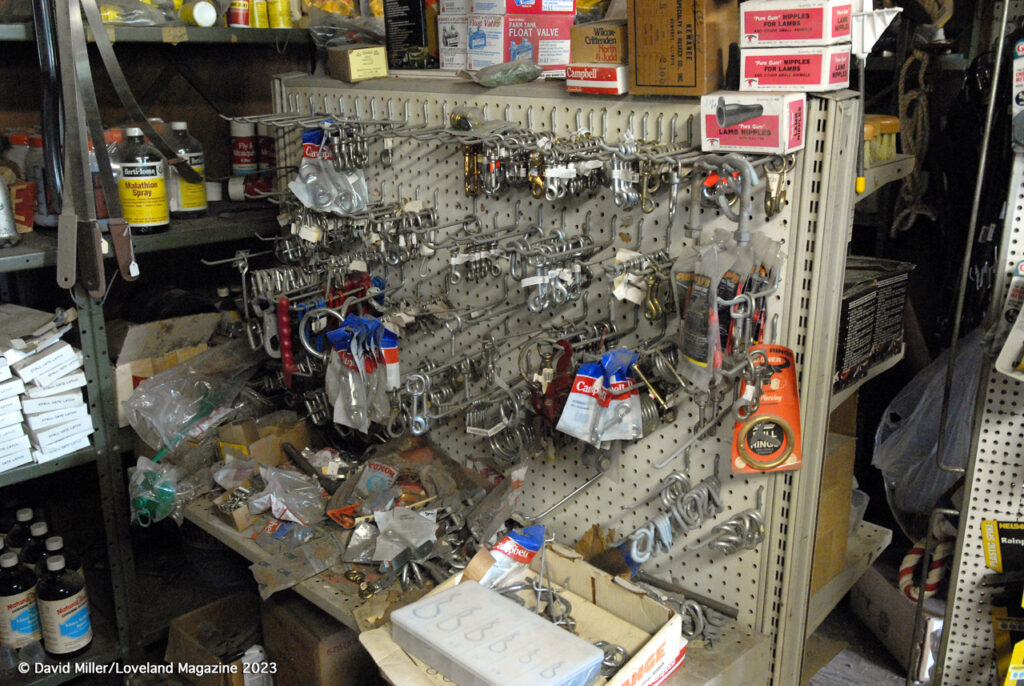
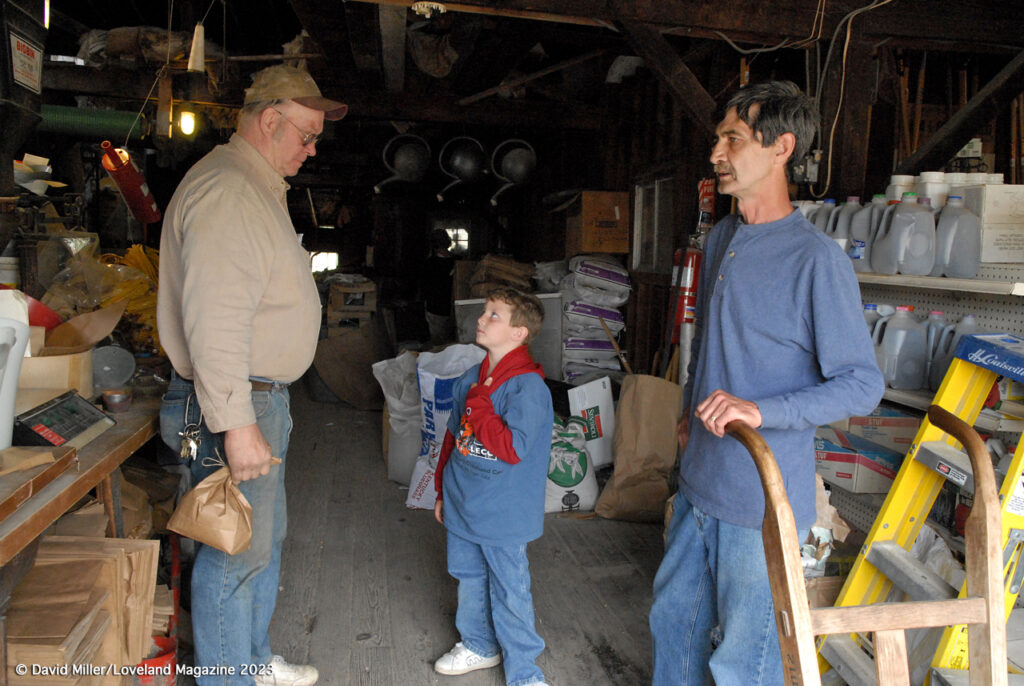
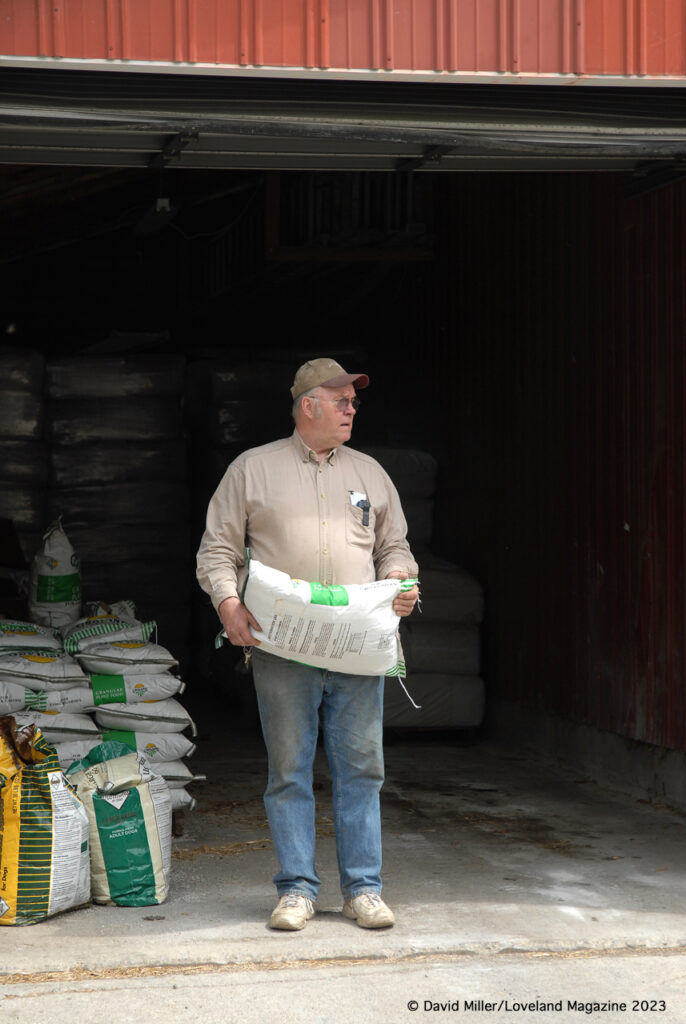
“Ron graciously allowed me to spend some days at the store in the Spring of 2008 when I learned the store was going to close and probably be demolished. I asked him if I could explore from floor to ceiling and also the upper floor where I found the gears and belts of the machinery that ground grain, and decades of cobwebs. He also allowed me to take the photos you see of him waiting on his faithful customers. Below are the photos that have never been seen before and when the store contents were auctioned.”
_________________
Ron Rolke waiting on a customer in the Spring of 2008
RonaldRolke owned Rolke Bros Supply Co. in Historic Downtown Loveland for 31 years. The business was a fixture of Historic Downtown and was located where the Loveland Station parking lot is now.
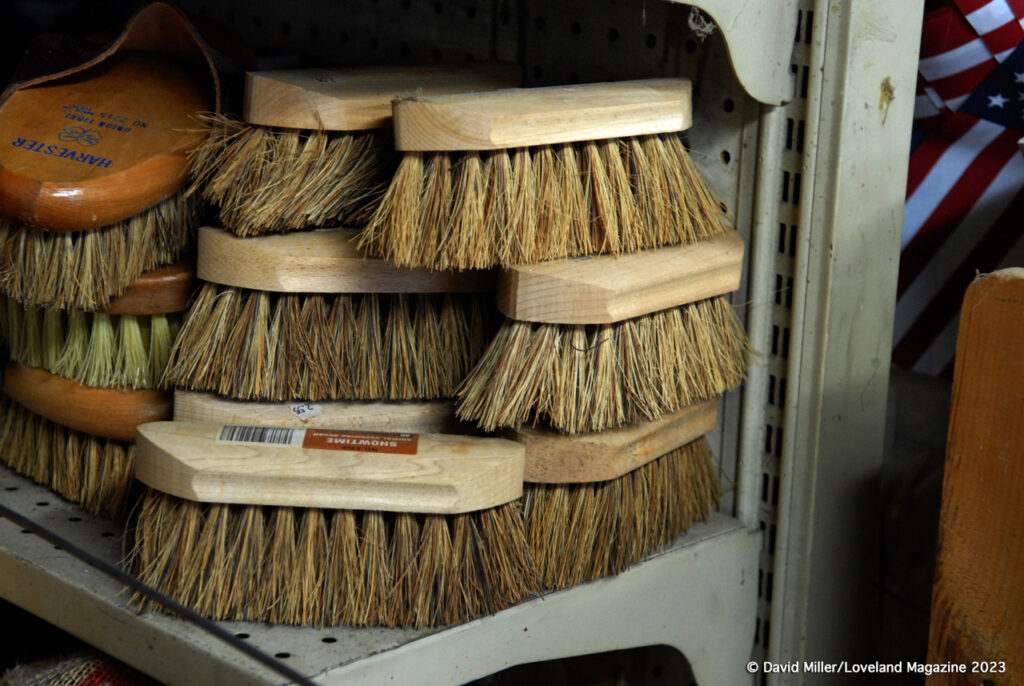
Ron bought it from his father Henry Rolke. Son Chris told Loveland Magazine, “At Rolke Bros we sold pretty much anything, salt, plants, and seeds in the spring, food for birds, dogs, cats, horses, cows, etc. We sold straw and hay throughout the year as well as fencing and pet supplies. In the early years, we sold a lot of coal to individuals and even toLoveland schools to heat their buildings. At one point we even sold baby chickens.”
Chris added, “My grandfather bought the business in 1947 and my father ran it until 2008. I had done some searching and found references to the main building having existed in the 1880s. The business survived the infamous 1959 flood as well as a major fire in 1963.
The store was originally established in 1897 as J.P. Queenan’s Coal, Feed and Grist Mill. It provided several services and products, including grinding, corn meal, coal oil, axle grease, gasoline, and many farm and garden supplies. The next owner, in about 1910, was A.L. Eddingfield, followed by “Pappy” Cornett. Henry Rolke bought the business in 1947. The business remained in the same location by the railroad station and historic depot until it closed in 2008.
Cincinnati, Ohio – The 114th Western & Southern Thanksgiving Day Race, one of the oldest and largest 10K’s in the country, is making history again. The popular family tradition for thousands of runners and walkers is adding the TQL 5K – the perfect distance for just about anyone and changing the 10K course to run entirely in the city of Cincinnati. Both events will finish on the field at TQL Stadium.
Opportunities for Ohioans with Disabilities (OOD) will help students with disabilities invest in their futures and pursue their passions. The OOD Education Support Funds are a financial investment in students with disabilities on their educational journey.
Why does continued education matter? According to OOD there is “overwhelming evidence that individuals with a degree, certification, apprenticeship, or other credentials have more career options and greater lifetime earning potential than those without.”
Overview
All eligible college and nontraditional students with disabilities will receive up to $7,000 while participating in OOD services, to be used for tuition or educational expenses during the 2023 fall term.
This includes students with physical, hearing, vision, learning, mental health, and sensory disabilities who are participating in colleges, trade schools, apprenticeships, and credentialing programs.
These are funds only for individuals with disabilities receiving OOD services that are in addition to any scholarship funds students may be receiving.
A team member will reach out to schedule an in-person or online appointment with you to finalize your application and answer any questions.
Eligibility
After completing the application process, OOD will review everything to ensure you qualify for OOD services. Then you’ll get a call from OOD to see if you’re eligible.
To take advantage of the OOD Education Support Funds, individuals must be 1) eligible for vocational rehabilitation services and 2) participating in a college, trade school, apprenticeship, or other credentialing program.
Planning
Once approved for OOD services, a vocational rehabilitation counselor can work with you to take advantage of all OOD has to offer students with disabilities.
OOD helps students with disabilities explore potential careers, benefit from assistive technology, learn how to build effective resumes, prepare for interviews, find a job that fits their interests and talents, and other related assistance.
OOD’s business relations team also connects students to internship and permanent employment opportunities.
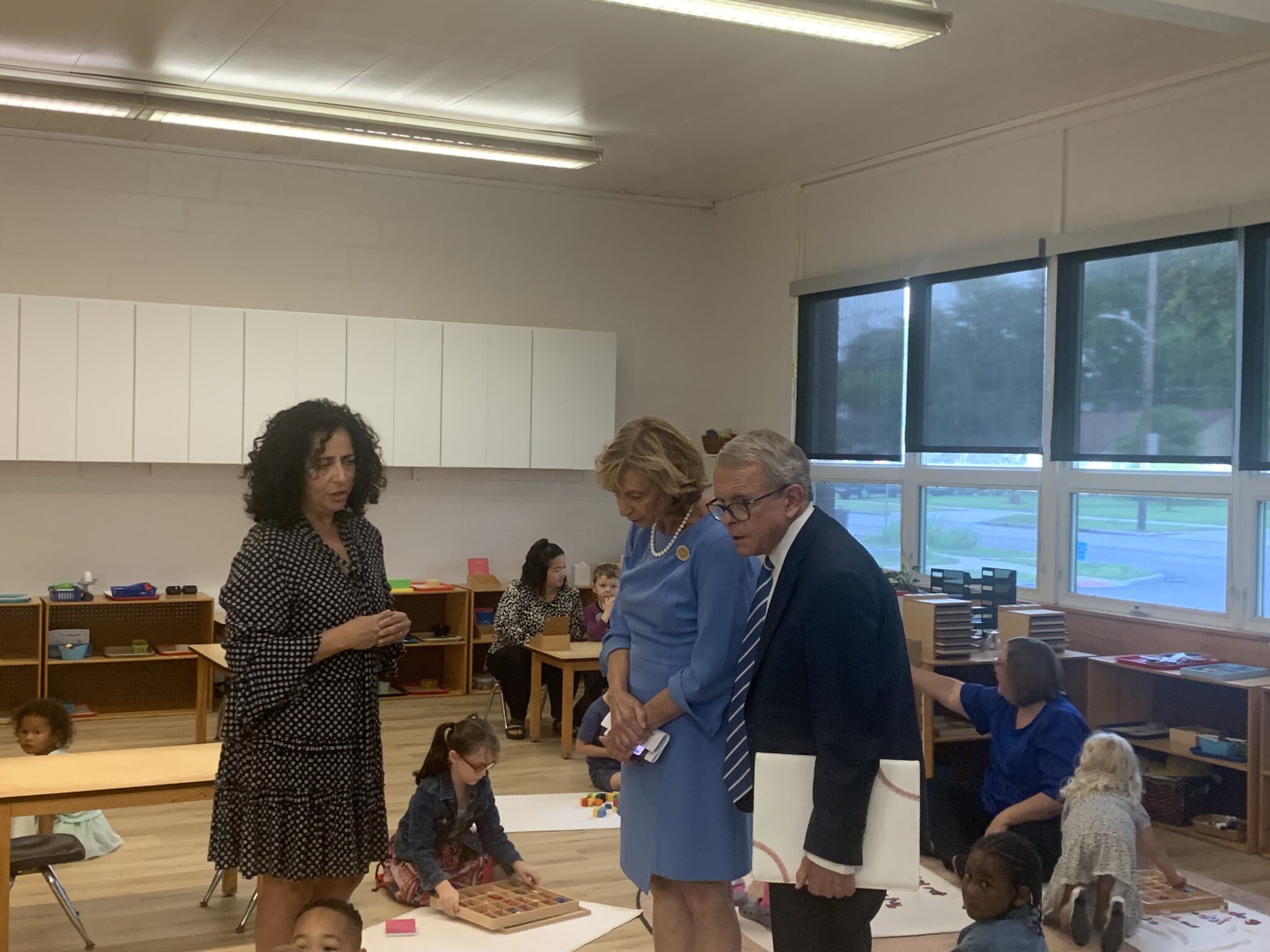
Rekha Kohli, director of student and family services at Columbus Montessori Education Center, talks with Ohio Gov. Mike DeWine and First Lady Fran DeWine during a classroom visit about the science of reading on Aug. 10. (Photo by Megan Henry, Ohio Capital Journal.)
A chunk of Ohio’s two-year operating budget is going toward implementing the science of reading — $86 million for educator professional development, $64 million for curriculum and instructional materials, and $18 million for literacy coaches.
Students arranged red and blue letters to spell various words such as “lip,” “twin,” and “keys.”
Ohio Gov. Mike DeWine and first lady Fran DeWine observed about two dozen children, ages 3-6, spelling words at Columbus Montessori Education Center Thursday morning.
The schools aligns with the science of reading, which is based on decades of research that shows how the human brain learns to read and incorporates phonemic awareness, phonics, fluency, vocabulary, and comprehension.
Soon all Ohio schools will align with the science of reading as a chunk of Ohio’s two-year operating budget goes towards implementation — $86 million for educator professional development, $64 million for curriculum and instructional materials, and $18 million for literacy coaches.
“There are many instructional methods out there, but the proven best way to teach reading is through the science of reading instruction,” DeWine said. “Reading is certainly the key that unlocks the door to so many, many things.”
DeWine said Ohio has committed $26 million in federal COVID related funding to pay for various materials and literacy coaches for non-public schools to align with the science of reading.
“Every student in the state should have the ability to follow the science of reading,” he said. “We want to make sure that no matter where a student goes to school, they have the best opportunity to learn to read.”
Next steps of implementation
Photo by Megan Henry, Ohio Capital Journal.
It’s not clear what each Ohio school district currently uses for their reading curriculum, so the Ohio Department of Education will soon be sending out a survey to school districts to gather information that information, said Chris Woolard, interim superintendent of public instruction.
“Any Ohio school that is not already using a curriculum that is aligned with this proven method will begin aligning to it this school year,” DeWine said.
ODE will also come up with a list of curriculum and instructional materials that line up with the science of reading. Under the budget, Ohio schools have to start using those learning materials by the 2024-25 school year.
The budget funds 100 literacy coaches who will help public schools with the lowest level of proficiency in literacy based on their performance in the state’s English language arts assessment. While the coaches are going to be under the direction of ODE, they won’t be employed by the department.
“I don’t know that 100 is enough, candidly,” DeWine said. “From what we’ve seen as we’ve traveled around the state, coaches are just vitally important in the area of literacy.”
Teacher prep programs
The science of reading budget goes beyond K-12 schools. It also requires the Ohio Department of Higher Education Chancellor to create an audit process that documents how every educator training program aligns with teaching the science of reading instruction. The audit must be completed with summaries publicly released by March 31.
The Chancellor will also be able to rescind the approval of educator training programs that don’t align with teaching the science of reading instruction a year after the initial audit, and programs would be evaluated every four years.
“The challenge is many teachers were not taught this way through no fault of their own they were not taught that way. This is a big chance for many teachers, classrooms and schools. It’s not going to be done overnight,” DeWine said.
COLUMBUS, Ohio — APRIL 06: Second grade teacher Bernadette Monroe talks to her students during a visit by Ohio Governor Mike DeWine, Principal Miracle Reynolds (left), and Interim Superintendent/CEO of Columbus City Schools, Dr. Angela Chapman, to observe the implementation of the Science of Reading program, April 6, 2023, at Southwood Elementary School in Columbus, Ohio. (Photo by Graham Stokes for Ohio Capital Journal. Republish photo only with original article.)
During those tours, a conversation with a particular high school student stood out to him the most.
“The student basically said, ‘They gave up on me. I didn’t think I could ever read, but the interventional specialist started working with me and started using the science of reading and I can now read’,” DeWine said.
“It’s proven that (the science of reading) works and that it produces better readers. It’s literally like a road map to reading,” Arnita Washington, a kindergarten teacher at Warrensville Heights Elementary in Cuyahoga County said in the video.
Students said during the video they feel confident to break down new words.
“Your brain is putting this into your working memory, so you can apply this later when you come to words that you don’t know,” Ohio Department of Education Literacy Chief Melissa Weber-Mayrer said during the video.
Megan Henry is a reporter for the Ohio Capital Journal and has spent the past five years reporting in Ohio on various topics including education, healthcare, business and crime. She previously worked at The Columbus Dispatch, part of the USA Today Network.
After two former Republican officials in June were sentenced for their roles in a massive racketeering conspiracy, U.S. Attorney Kenneth Parker said the investigation was continuing. At least two signs emerged last week that the proceedings might be intensifying.
Former Ohio House Speaker Larry Householder was sentenced to 20 years in federal prison on June 29 and former state GOP Chairman Matt Borges was sentenced to five years a day later. Both played roles in a scandal in which Akron-based FirstEnergy and other utilities paid more than $61 million to pass a $1.3 billion ratepayer bailout that was mostly intended for a subsidiary that FirstEnergy was spinning off that owned two Northern Ohio nuclear plants.
In addition to Householder and Borges, two others who were arrested in July 2020 have pleaded guilty and a third died by suicide.
But on March 10, just after a jury convicted Householder and Borges, a reporter asked Parker an obvious question: What about the people who paid the bribes? Would they be charged? Parker would only say that the investigation was continuing.
Attorneys for the men who were FirstEnergy’s top executives at the time of the conspiracy — former CEO Chuck Jones and former Vice President Michael Dowling — have already said in court filings that they believe federal investigators are looking at their clients.
This month brought two more pieces of evidence that federal investigators are considering further prosecutions in the bribery and money laundering scandal.
On Aug. 4, Hilary M. Williams, who is representing FirstEnergy, submitted a filing in a massive class-action case against the company over the bailout scandal. She informed the scores of lawyers for the pension and investment funds suing the company that they’re not the only ones who want to see the emails and text messages the FirstEnergy executives sent as the bribery scheme was taking place.
“Counsel… we confirmed this morning that we may disclose to the parties that certain governmental authorities have requested the production of the entire contents of iPad and iPhone devices used by Mr. Jones or Mr. Dowling from January 1, 2016 through December 31, 2020,” Williams wrote. “In keeping with the protocol in this matter, those documents will be produced to all parties, and we expect to do so at approximately the same time that production is made to the requesting governmental authorities.”
She added. “Mr. Dowling and Mr. Jones used more than a dozen devices during the relevant time period, and processing and reviewing the contents of those devices requires substantial processing time and then time to review for confidentiality and privilege. We are working to complete the review as quickly as possible, and expect to make these productions on or about September 15, 2023.”
A spokeswoman for the U.S. attorney’s office didn’t comment on whether the “governmental authorities” Williams referred to worked for Parker, whose office prosecuted Householder and Borges.
However, Parker last week sent a letter to the Public Utility Commission of Ohio asking the regulator to further postpone its investigation into the racketeering scandal.
“The PUCO proceedings involve issues related to the U.S. Department of Justice of the United States’ investigation, and the United States believes that continued discovery in the PUCO proceedings may directly interfere with or impede the United States’ ongoing investigation,” the letter said. “For that reason, the United States respectfully requests that PUCO stay the PUCO proceedings for a period of six months from the date of this letter. The United States reserves the right to request that the stay be extended beyond this time.”
Among those the feds may be investigating are Jones, Dowling and Sam Randazzo, whom Gov. Mike DeWine nominated to chair the PUCO in early 2019.
In a deferred prosecution agreement, FirstEnergy said it paid Randazzo a $4.3 million bribe just before his nomination in exchange for favors the ostensible regulator did for the company. Randazzo denies wrongdoing, but in the Householder trial, witnesses testified that Randazzo played a key role in drafting the corrupt bailout legislation.
Plaintiffs in the class-action suit earlier this month filed texts and emails between Jones, Dowling and Randazzo. They indicate that the three met in Randazzo’s Columbus condo in December 2018 and arranged to pay the soon-to-be regulator $4.3 million and made it clear that they expected something in return. They also appear to indicate that in addition to his work on the the bailout, Randazzo helped exempt FirstEnergy from a 2024 rate review it had been required to undergo.
The class-action plaintiffs are accusing FirstEnergy of violating securities law by concealing its illegal conduct from investors. Last week, they filed a transcript of an earnings call from July 23, 2020 — days after Householder, Borges and three others were arrested in the racketeering conspiracy. In it, Jones appeared to mislead analysts about his and his company’s role in it.
“I believe that FirstEnergy acted properly in this matter, and we intend to cooperate fully with the investigation to, among other things, ensure our company and our role in supporting House Bill 6 is understood as accurately as possible,” said Jones, who would be fired months later. “In the meantime, we wanted to share our preliminary perspective on this issue and reinforce the values with which we operate our company.”
Jones also claimed that he and his subordinates followed “the highest standards of conduct.”
“This is a serious and disturbing situation,” he said. “Ethical behavior and upholding the highest standards of conduct are foundational values for the entire FirstEnergy family and me personally. These high standards have fostered the trust of our employees, our customers and the financial community. We strive to apply these standards in all business dealings including our participation in the political process.”
Jones sat for a sworn deposition in the class-action case in July. Last week, U.S. Magistrate Judge Kimberly Jolson ordered Dowling to sit for one in October.
MARTY SCHLADEN
Marty Schladen has been a reporter for decades, working in Indiana, Texas and other places before returning to his native Ohio to work at The Columbus Dispatch in 2017. He’s won state and national journalism awards for investigations into utility regulation, public corruption, the environment, prescription drug spending and other matters.
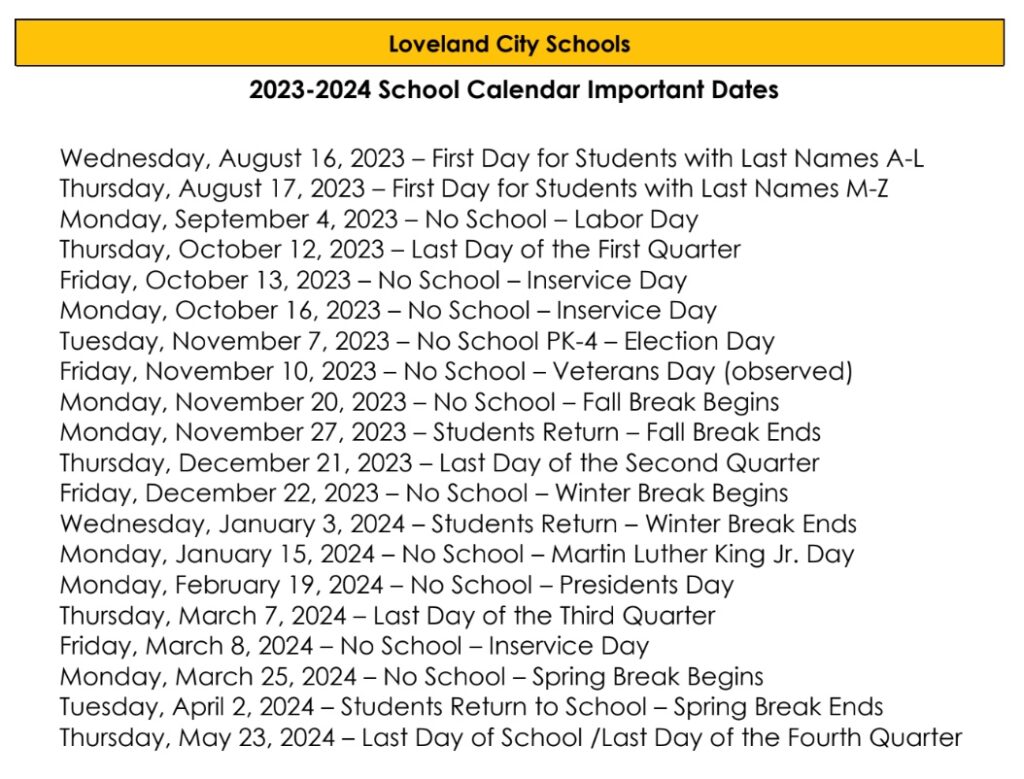
Loveland, Ohio – In his Superintendent’s Message sent out Sunday evening Mike Broadwater provided the dates students return to school, however, he also provided “urgent” information about possible skipped bus routes because of the District’s continuing bus driver shortage.
“There is an urgent need for bus drivers for our district. Without additional drivers, we may be forced to skip some routes on some days because we are critically short-staffed. We are working to avoid this, but please create a backup plan for how your family would handle transportation in the event we are forced to limit bus service due to the driver shortage.
“Loveland bus drivers receive paid training, health insurance, and retirement benefits. Follow this link to apply online, or call our Transportation Department at 513-683-3103. Please spread the word to your friends and neighbors about this great opportunity to help our Loveland City School District community.”
The school buildings will have staggered start times again this year.
Students with last name A-L will have their first day on Wednesday, August 16
Students with last names M-Z will have their first day on Thursday, August 17
All students together on Friday, August 18, 2023.
The staggered start allows students and instructors to begin the year with more one-on-one time with each other to set up technology and establish new routines.
School Important Dates
Apply Now for School Meal Program
All families are encouraged to see if they qualify for free or reduced school meals by filling out the application on PaySchools Central. Any family eligible for reduced-price meals will now receive free meals, thanks to additional funding provided by the State of Ohio. The application also helps families qualify for free or reduced-cost school fees.
Loveland, Ohio – Join Little Miami River Chamber Alliance this summer for FREE Thursday evening Summer Concerts! These events are free to the public and will be held on the third Thursday of the summer months on the patio of Hometown Cafe along the bike trail. Bring a chair and grab a drink from a local establishment (DORA friendly!) and enjoy some tunes this summer in Loveland!
Loveland, Ohio – The sixth annual Loveland Art Festival is being held on Saturday, September 2 from 11am until 4pm at Whistle Stop Clay Works, 119 Harrison Avenue in Loveland, Ohio. The show, formerly called the Pottery Affaire, highlights local artists who will be offering handmade pottery, fiber art, photographs, jewelry, paintings, wood items, mixed media, fresh flowers, and much more.The art show is a wonderful opportunity to support local artists and buy unique, handcrafted work. The family friendly event will have Sammy’s Craft Burgers and Beer to keep shoppers fueled and hydrated and live music by Ellen Mershon.
“It’s going to be another amazing show.There will be nearly sixty artists showing their work.The Loveland Art Festival offers tremendous variety and selection, so you’re sure to find something that just right for you or someone on your shopping list,” commented Bonnie McNett, show organizer. “The setting is just perfect with lots of expansive shade trees and the beautiful O’Bannon Creek ambling by,” she added.
[pdf-embedder url=”https://lovelandmagazine.com/wp-content/uploads/2023/08/Loveland-Art-Festival-Tri-Fold.pdf” title=”Loveland Art Festival Tri-Fold”]The show will be supporting two local non-profits: Love Our Land and The Grail.They will have educational material and 100% of sales from their booth will go directly to their organizations. In addition, the show will have a booth featuring high school art students who will be displaying, talking about and selling their work.The Loveland Art Festival has partnered with Loveland High School for three years and is pleased to facilitate a real world experience for art students looking to sell their work.
The Loveland Art Festival is being held at Whistle Stop Clay Works, 119 Harrison Avenue just north of historic, downtown Loveland on Saturday, September 2nd from 11am until 4pm.For further information visit lovelandartfestival.com or call (513) 683-2529.
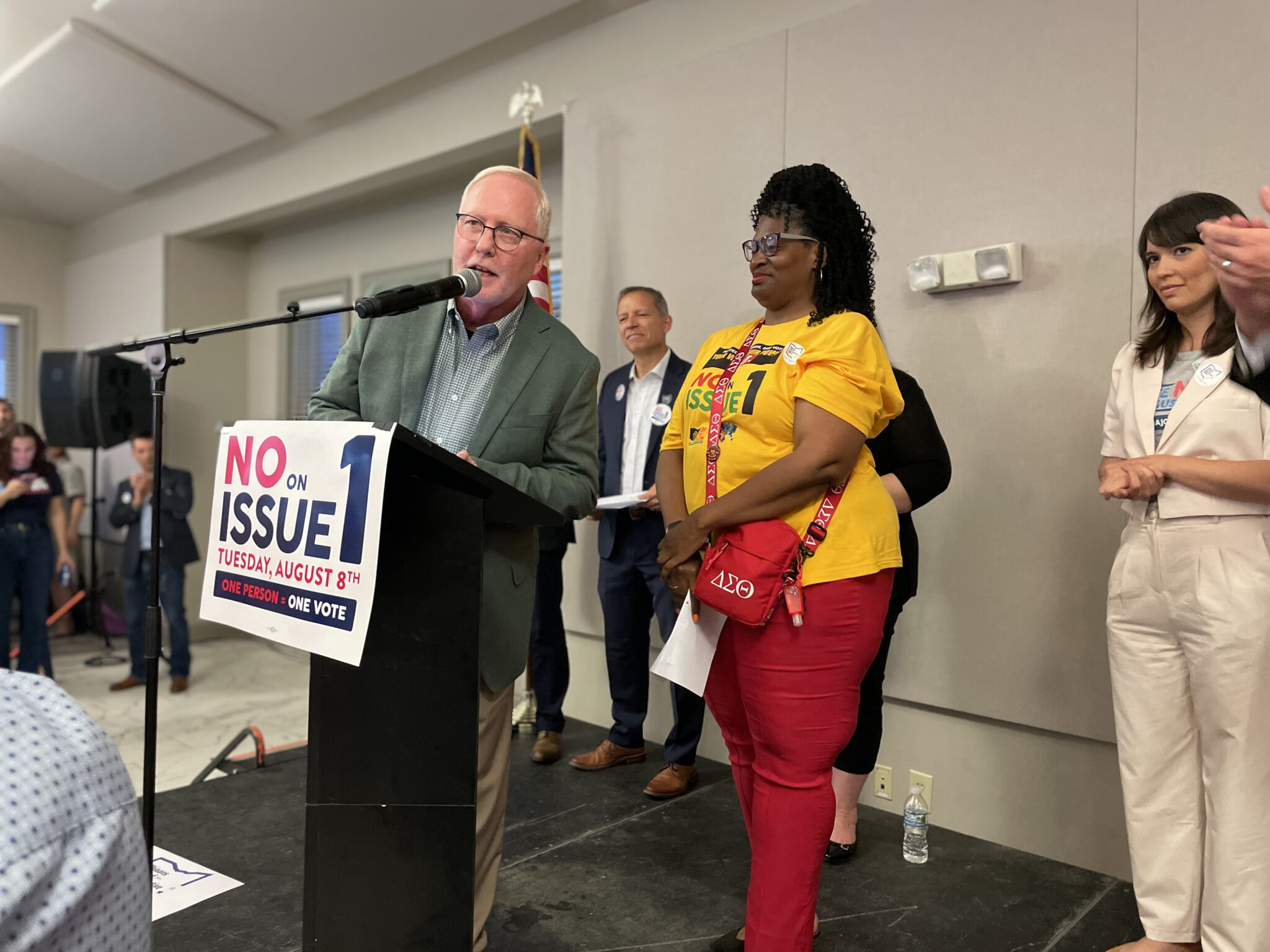
One Person One Vote spokesman Dennis Willard introducing Deidra Reese from Ohio Unity Coalition at the ‘No’ campaign party. (Photo by Nick Evans for Ohio Capital Journal)
The Republican-backed effort to make amending the state constitution more difficult lost by 14 points according to unofficial results
The Republican-led effort to make amending Ohio’s constitution more difficult has failed.
As of 11:45 p.m., unofficial results for the Aug. 8 special election show voters rejected Issue 1 57% to 43%. The Associated Press called the race at 9 p.m. While precincts were still reporting late into the night and absentee ballots will continue to roll in, the 13 point margin offered a resounding victory to a broad coalition of Issue 1’s opponents.
“The majority still rules in Ohio,” One Person One Vote spokesman Dennis Willard said from the podium at the ‘No’ campaign’s watch party.
Deidra Reese from Ohio Unity Coalition put it differently.
“I kept saying to my friends that we were going to beat the brakes off ‘em,” she said. “And that’s what we did, y’all.”
In addition to imposing a higher threshold for adoption, the measure would’ve made it much harder to put amendments on the ballot in the first place. Organizers would have faced minimum signature requirements in all 88 counties instead of the current 44 county benchmark.
Those vast implications and supporters’ transparent intention to undermine an upcoming abortion rights amendment scrambled the map. Although statehouse Republicans were able to lean on substantial supermajorities to place Issue 1 on the ballot, their effort played out in fits and starts.
Then Speaker Jason Stephens slow-walked the proposal past the deadline for May’s primary election, but supporters weren’t done. They aimed instead for August and proposed legislation undoing a prohibition on such elections they’d approved just months earlier. That legislation eventually died in committee, but lawmakers decided to schedule an August election anyway by writing it into their resolution.
In a split decision the Ohio Supreme Court allowed it to go forward.
The saga tested loyalties among traditional conservative allies. Some groups sat out — remaining neutral or even voicing opposition. Others held their noses and grasped for any justification other than fighting reproductive rights.
It tested party loyalties as well. Supporters’ claims that a higher threshold would “protect” Ohio’s constitution, weren’t able to overcome the knee-jerk reaction against its anti-majoritarian changes.
The No party
As early returns rolled in, people milled around a firefighters union banquet hall in Columbus. They balanced paper plates loaded with party cut pizza and salad, awkwardly sneaking in bites between greetings. There was an excited hum as they repeatedly updated election trackers on their phones. About an hour after polls closed, the One Person One Vote coalition declared victory.
Willard said voters saw Issue 1 for what it was.
“A deceptive power grab, designed to silence our voices and diminish our voting power,” he said. “We defeated Issue 1 because an enormous coalition that spans ideological divides came together to defend democracy.”
Representatives from that coalition — firefighters, organized labor, advocates for reproductive rights, and minority voters — joined Willard on the podium. Ohio Education Association president Scott DiMauro called it the “biggest baddest broadest most diverse nonpartisan grassroots coalition.”
“More than 200 organizations said no way are we letting Issue 1 pass,” DiMauro told the crowd. “They didn’t just say no, they said…” The crowd roared out the “hell no” DiMauro was looking for.
Dr. Marcela Azevedo, co-founder of Ohio Physicians for Reproductive Rights. (Photo by Nick Evans for Ohio Capital Journal)
The AFL-CIO’s Tim Burga called out the “hypocrisy and dishonesty” behind the proposal. Dr. Marcela Azevedo — Issue 1’s chief target as part of the group that put an abortion rights measure on the ballot — praised the “overwhelming” enthusiasm among opponents.
The Ohio Physicians for Reproductive Rights leader agued, “The unprecedented turnout truly demonstrates that Ohioans are passionate about protecting their own rights, and also protecting their ability to self-govern.”
Looking forward, Ohio Democratic Party chair Liz Walters crystalized what the outcome means for voters.
“This fall, Ohioans will have a chance to stand up about reproductive rights in the state,” she said, referencing the abortion rights amendment appearing on November’s ballot.
“They’ll have a chance to tell these same out of touch politicians that health care choices belong to families, not to politicians,” she added.
The Yes campaign
The mood was subdued at the Ohio GOP Protect our Constitution Vote Yes watch event hosted by Ohio Senate President Matt Huffman, R-Lima.
“I’m personally very disappointed,” he said. “I think it’s a question that was worth asking of the voters, not only because of the two issues that are on the ballot in November, but the six to 10 that are planned over the next couple of years. … The question really is, are we going to allow our constitution to be amended on a regular basis.”
Huffman didn’t hold back on spreading the blame.
“One thing that hurt us in the election was the length of time of the campaign,” he said.
Huffman said they would have had a better chance of passing the amendment had it been on the May ballot.
“Until May 10, we didn’t know there was a campaign,” Huffman said. “So it took us a long time to put the campaign together to execute the campaign.”
Ohio Senate President Matt Huffman, R-Lima, and Ohio Rep. Jim Hoops, R-Napoleon, speak to the media about the results of the August special election on Aug. 8. (Photo by Megan Henry for Ohio Capital Journal.)
He also pointed the finger at Ohio Republicans who opposed Issue 1 — including former Govs. John Kasich and Bob Taft and former Ohio Republican Attorney General Betty Montgomery.
“There were some key folks on our side of the aisle, Republicans, especially who actively oppose this, some pretty vociferously,” Huffman said.
He said the Ohio GOP will likely try to make it harder to amend the constitution again.
“But perhaps not in the same kind of atmosphere that we have had over the past 10 or 12 months,” Huffman said.
Ohio Representative Jim Hoops, R-Napoleon, said Ohio’s voting maps showed the urban and rural counties were divided over Issue 1.
“What we’re looking at here in the state are issues that we need to bring people together instead of being divisive,” he said. “And I think, you know, as we move forward, those are the kinds of things we have to look at.”
Despite Tuesday’s election results, Ohio Right to Life President Mike Gonidakis said he feels great about the November election.
“When you have weed and you have abortion on the ballot in November, we’re going to solidify our conservative base here in Ohio and vote no on both of them this November,” he said.
Nick Evans has spent the past seven years reporting for NPR member stations in Florida and Ohio. He got his start in Tallahassee, covering issues like redistricting, same sex marriage and medical marijuana. Since arriving in Columbus in 2018, he has covered everything from city council to football. His work on Ohio politics and local policing have been featured numerous times on NPR.
Megan Henry is a reporter for the Ohio Capital Journal and has spent the past five years reporting in Ohio on various topics including education, healthcare, business and crime. She previously worked at The Columbus Dispatch, part of the USA Today Network.
Loveland, Ohio – Lend a hand getting the Loveland Learning Garden ready for the new school year on any date below. No registration is required – just show up! Contact info@lovelandlearninggarden.org with questions. Thunderstorm cancels.
Aug 9th 6:30-8pm
Aug 12th 9-11am
Aug 19th 9-11am
Aug 26th 9-11am
Want to teach kids outside?
Seeking Nature Educators to teach daytime or afterschool lessons for 1st-4th graders. Lesson plans provided for delivery in our garden or nature trail. Flexible scheduling.
The gardens are on the campus of the Loveland Primary and Elementary schools at 600 Loveland-Madeira Rd.
Our 20-week school day program is delivered in the spring and fall. It is planned in collaboration with 1st-4th grade teachers to ensure alignment with subjects students are learning in class. Teachers are given online access to the seasonal schedule and voluntarily sign up for topics relevant to their class plans. Students spend time in the garden or nature trail where Nature Educators deliver the session and inspire their imaginations.
Loveland Learning Garden also runs an after-school Outdoor Adventures program, host scout troops and delivers youth-oriented events.


![Ronald Carl Rolke passes at the age of 81 [Historical Photo Album Rolke Bros. Supply]](https://lovelandmagazine.com/wp-content/uploads/2023/08/ron-rolke-loveland-magazine.jpg)
 Chris added, “My grandfather bought the business in 1947 and my father ran it until 2008. I had done some searching and found references to the main building having existed in the 1880s. The business survived the infamous 1959 flood as well as a major fire in 1963.