Author: Loveland Magazine

  • Air Quality Alert has been declared for Loveland on Friday

    Air Quality Alert has been declared for Loveland on Friday

    Loveland, Ohio – The Southwest Ohio Air Quality Agency expects to see levels of ozone in the “unhealthy for sensitive groups” range on the Air Quality Index (AQI). 

    Friday, Aug 4: 108 AQI Unhealthy for Sensitive Groups Ozone


    This level of Ozone can be harmful to children, seniors, adults who are active outdoors (such as manual laborers), and people with heart disease, lung disease (such as asthma, emphysema, and bronchitis), or diabetes.

    On Air Quality Alert days, everyone can help reduce ozone formation by taking the following actions:

    • Take the bus, carpool, bike, or walk instead of drive.
    • Refuel your vehicle after 8 p.m.; do not top off when refueling and tighten the gas cap.
    • Do not idle your vehicle; exhaust contributes considerably to ozone formation.
    • Combine trips or eliminating unnecessary vehicle trips.
    • Keep your vehicle maintained with properly inflated tires and timely oil changes.
    • Avoid use of gasoline-powered lawn equipment on Air Quality Alert days.
    • Avoid use of oil-based paints and stains on Air Quality Alert days.
    • Never burn leaves or other yard trimmings.
    • Suspend use of fire pits, campfires and charcoal grills on Air Quality Alert days.
    • Conserve electricity by turning out lights and unplugging unused appliances and electronics.
  • Loveland Art Festival on September 2

    Loveland Art Festival on September 2

    Loveland, Ohio – Save the date for the Loveland Art Festival that takes place on September 2nd.

    11 AM until 4 PM

    ​119 Harrison Ave, Loveland, OH 45140

    Visit the “Artists” page to learn about each artist – and all the great items that will be available for purchase. 


  • Former state rep, Hamilton County resident sue to keep abortion rights amendment from November ballot

    Former state rep, Hamilton County resident sue to keep abortion rights amendment from November ballot

    Getty Stock Image

    BY:  – Ohio Capital Journal

    A lawsuit has been filed with the Ohio Supreme Court in an attempt to block a proposed abortion rights amendment from going to voters in November.

    Days after the Ohio Secretary of State verified that the campaign to get a reproductive health amendment on the ballot had collected enough valid Ohio voter signatures to be sent to voters, former Republican state Rep. Thomas Brinkman is at the top of a lawsuit to keep that from happening.

    Brinkman is joined by Hamilton County resident Jennifer Giroux, a candidate for House of Representatives’ 27th district and owner of a Catholic shop in Madeira.

    The main arguments in the lawsuit against Secretary of State Frank LaRose, the state and the coalition of groups who created the proposed amendment claim that the petition proposal “failed to comply with all of the statutory requirements for an initiative petition,” including listing existing laws that would be changed or removed if the constitutional amendment is approved by voters.

    The proposed constitutional amendment would codify abortion in the state, and allow pregnancy decisions to be between the pregnant person and a physician, and viability to be determined by medical experts.

    “Even though certain existing statutory provisions would be repealed if the proposed amendment to the Ohio Constitution … is adopted, the initiative petition failed to include the text of such statutory provisions and, thus, the initiative petition violates requirements established by law and must be invalidated,” attorney Curt Hartman wrote in the lawsuit.

    This is the second such lawsuit Hartman has filed regarding the abortion amendment. The first time, he sued the Ohio Ballot Board on behalf of two members of Cincinnati Right to Life, saying the board did not deliberate enough about the issue before approving the measure, opening the door for signature collection.

    In that case, the Ohio Supreme Court unanimously ruled the board had not abused its discretion or disregarded law in approving the petition, and that signature collection could go forward.

    On Saturday, the Ohio Supreme Court set a deadline for 4 p.m. Monday to receive the first filings in the case, and an Aug. 7 deadline for all documentation from both sides.


    Susan Tebben
    SUSAN TEBBEN

    Susan Tebben is an award-winning journalist with a decade of experience covering Ohio news, including courts and crime, Appalachian social issues, government, education, diversity and culture. She has worked for The Newark Advocate, The Glasgow (KY) Daily Times, The Athens Messenger, and WOUB Public Media. She has also had work featured on National Public Radio.

    MORE FROM AUTHOR

  • Parents have no right to allow their children’s gender transition, Republicans say

    Parents have no right to allow their children’s gender transition, Republicans say

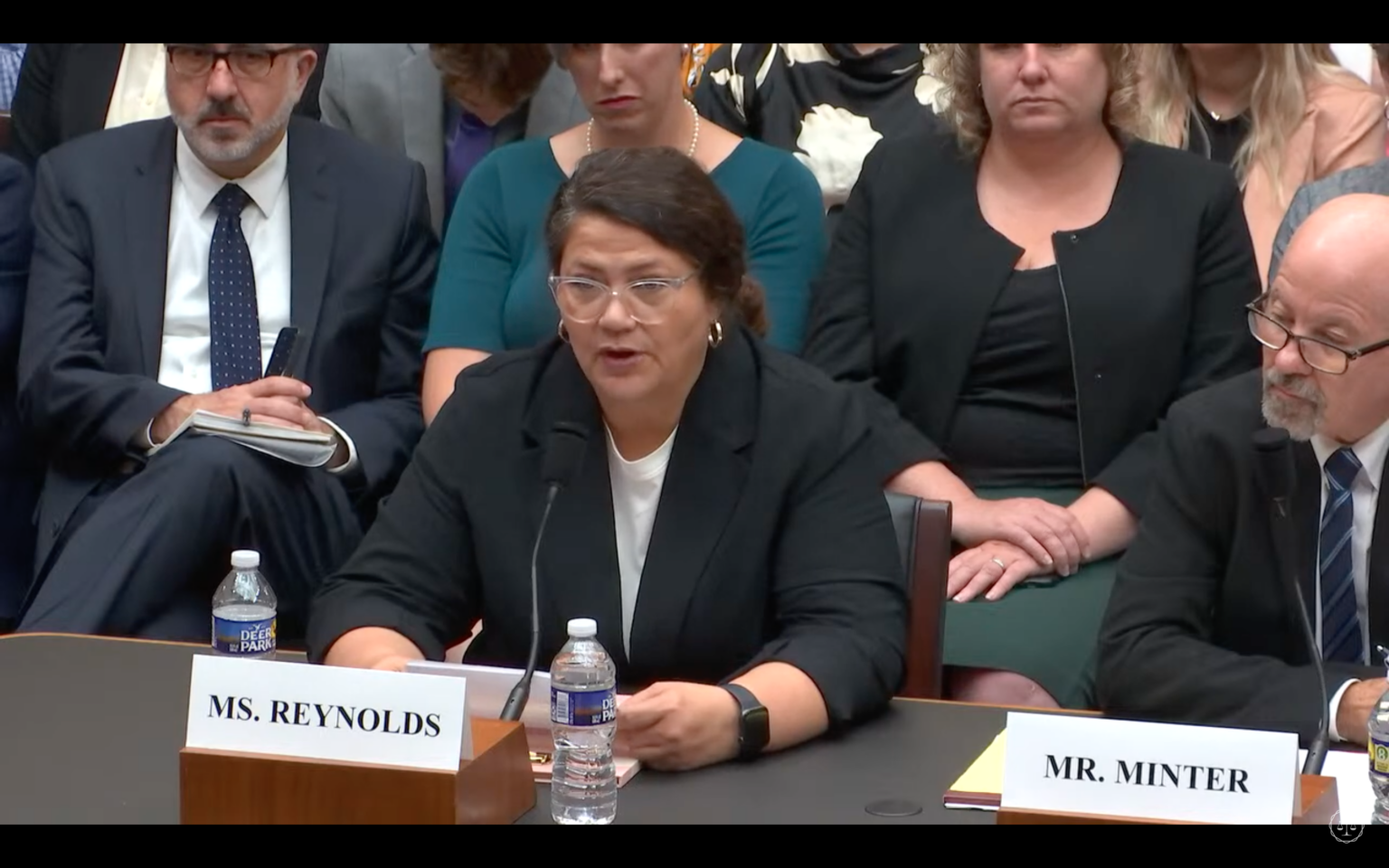
    Myriam Reynolds of Texas, the mother of a transgender son, said before he received care, he was unhappy and she has “no doubt that the health care my son accessed was life-saving.” (Screenshot from committee webcast)


    WASHINGTON — U.S. House Republicans on a panel for limited federal government on Thursday argued that parents should not be allowed to let their transgender children have access to gender-affirming care.

    “A parent has no right to sexually transition a young child,” the chair of the House Judiciary Subcommittee on the Constitution and Limited Government, Rep. Mike Johnson of Louisiana, said at a hearing on transgender youth. “Our American legal system recognizes the important public interest in protecting children from abuse and physical harm. No parent has a constitutional right to injure their children.”

    Johnson, and several other Republicans, floated the idea that the federal government should get involved, but did not offer specifics on potential legislation. They argued that gender-affirming surgery should not be allowed for transgender minors. That type of surgery is rarely performed on patients under 18.

    In Johnson’s home state, the Louisiana Legislature in early July voted to override a veto from Gov. John Bel Edwards, allowing a ban on gender-affirming health care for transgender youth to become law.

    Thursday’s hearing reflects a broader trend. At least 21 Republican-led states have passed laws banning or restricting gender-affirming care for minors, according to the Movement Advancement Project, an organization that tracks LGBTQ+ state policies.

    The wave of legislation has had a chilling effect on health care providers, who are wary of providing other care to transgender youth, such as mental health and other medical care.

    Gender-affirming care can be social affirmations such as adopting a hairstyle or clothes that align with a transgender youth’s gender identity, or the use of puberty blockers and hormone therapy. Typically, in adulthood it can be gender-affirming surgery.

    “When our Republican colleagues allege that gender-affirming care raises particular dangers or due process issues, that is fearmongering at its worst,” the top Democrat on the panel, Rep. Mary Gay Scanlon of Pennsylvania, said. “Picking on already vulnerable kids in order to stir up chaos that they hope to ride to success at the ballot box.”

    Democrats said the hearing is a pattern of GOP lawmakers attacking transgender kids and their families.

    Scanlon said that barring parents from making those decisions would be in violation of their parental rights. Republicans passed legislation for a federal “Parents Bill of Rights” in March pertaining to access to education-related materials.  

    State laws

    Several federal courts have either blocked or struck down state laws banning gender-affirming care for transgender youth, such as in Alabama, Arkansas, Florida and Indiana.

    The top Democrat on the House Judiciary Committee, Rep. Jerry Nadler of New York, asked one of the Democratic witnesses, Shannon Minter, an attorney, what the federal courts have concluded about states moving to pass bans on gender-affirming care.

    Minter, who is the legal director of the National Center for Lesbian Rights and is also transgender, said the federal courts have found that those state laws “severely burden parents’ fundamental rights to make medical decisions for their own children.”

    “They’re blatantly discriminatory,” he said. “They violate the guarantee of equal protection because they do something that has just never been done before in this country, which is single out a particular group of people, transgender young people, in order to deny them medical care.”

    Despite the federal court cases, Johnson argued that states have the right to regulate gender-affirming care, such as puberty blockers.

    Puberty blockers were first approved by the Food and Drug Administration in 1993 to temporarily pause puberty in children who were going through it too early. When used in gender-affirming care for transgender youth, those adolescents can choose to start hormone therapy, in which they receive either estrogen or testosterone treatments, whichever one that aligns with their gender identity.

    “We’re limited government conservatives, right,” Johnson said. “We obviously recognize that parents have a natural and fundamental right to the bringing up of their children to make decisions with regard to their care and custody and control. But at the same time, our legal system in this country, our law does not allow a parent to physically or mentally abuse or harm a child.”

    May Mailman a senior legal fellow at the Independent Woman’s Law Center, a conservative advocacy organization, said states should be able to regulate who can have access to transgender health care.

    “Unfortunately, I think you’re seeing this movement that states should not be able to regulate the practice of medicine and somehow federal judges should,” she said.

    Life-saving care

    One of the Democratic witnesses, Myriam Reynolds, is the mother of a transgender son. She said before he received care, he was unhappy and she has “no doubt that the health care my son accessed was life-saving.”

    Reynolds said any health care provided to her son was through slow and careful decisions that were approved by her and her husband and that their son always had the opportunity to stop if he wanted to. He received puberty blockers as well as counseling.

    “When my child came out, as transgender, there was not the hysteria that there is now about this,” she said. “To be looked at as a child abuser, or you know an indoctrinate or something like that, it feels very hateful and divisive.”

    Texas Republican Rep. Wesley Hunt said that instead of parents jumping to gender-affirming care when a child tells them they have gender dysphoria, meaning their gender identity differs from the sex they were assigned at birth, they should instead question “the root cause of that feeling.”

    He compared that decision to his toddlers, whom if they could “have their way, they would have ice cream for breakfast, lunch and dinner and for every single meal in between. Oh, the wisdom of children.”

    “In a sane country, we know that children aren’t mature enough to make adult decisions that will impact the rest of their lives, that’s why we have parents,” he said. “Children cry for ice cream, but as parents, we have the wisdom to know that ice cream is not in their best interests, particularly their long-term interest.”

    He said that in 2024, Republicans will have an opportunity to “stop all this foolishness.”

    Florida Republican Rep. Matt Gaetz, who is not a member of the panel, took aim at a recently passed law in Washington that protects transgender youth seeking gender-affirming care who are estranged from their parents.

    “I am against transitioning children against the will of their parents,” he said.

    Title IX

    Several of the Republican witnesses criticized the Department of Education’s new rule that updates Title IX to allow transgender youth who attend public schools from competing in sports that align with their gender identity.

    The rule came as states with Republican state legislatures have passed laws banning transgender students from competing in sports that align with their gender identity.

    One of the witnesses, Paula Scanlan, is a former NCAA athlete who swam at the University of Pennsylvania and shared a locker room with Lia Thomas, the first openly trans woman to compete in the NCAA women’s division. Scanlan said she opposed the Biden administration’s changes to Title IX and that transgender women should not be allowed to compete in sports that align with their gender identity.

    House Republicans recently passed legislation to ban transgender girls from competing in the sports that align with their gender identity, a move that mirrors legislation passed by Republican-controlled state legislatures.

    Mailman, with the Independent Woman’s Law Center, said that gender ideology has destroyed “women and girls, by dissolving legal protections for women in athletics.”

    Reynolds said as soon as her son came out as transgender, he stopped playing sports because of the rhetoric about transgender athletes competing in sports that align with their gender identity.

    “That left a big hole in his life,” she said.


    Ariana Figueroa
    ARIANA FIGUEROA

    Ariana covers the nation’s capital for States Newsroom. Her areas of coverage include politics and policy, lobbying, elections and campaign finance.

    MORE FROM AUTHOR

  • Additional disconnection protections for natural gas and electric

    Additional disconnection protections for natural gas and electric

    The Public Utilities Commission of Ohio has ordered Ohio’s investor-owned electric and natural gas utilities to suspend disconnections of customers for nonpayment if the customer has a pending application for various energy assistance programs.

    Specifically, utilities will be prohibited from disconnecting for nonpayment for 30 days after a customer has applied for Winter and Summer Crisis programs, Home Energy Assistance Programs (HEAP), or the Percentage of Income Payment Plan (PIPP). This is an addition to the existing consumer protections surrounding utility disconnections for nonpayment.

    “Today’s order will help to ensure that Ohio’s most vulnerable are not disconnected from vital utility services while they seek assistance,” stated PUCO Chair Jenifer French.

    Link: Apply for Ohio energy assistance programs

  • Stepping Stones to Host 19th Annual Viva La Bloom Fundraiser

    Stepping Stones to Host 19th Annual Viva La Bloom Fundraiser

    Milford, Ohio – Stepping Stones will host the 2023 Viva La Bloom fundraiser with a new theme and location on Saturday, September 9th at the Little Miami Event Center in Milford. Event chair Nancy Aichholz invites you to a fun, “Vegas” themed night full of games, entertainment, a fabulous silent auction, and dinner by Cincinnati’s best food trucks. Try your luck at one of our casino-style games throughout the night for a chance to win the Grand Prize.

    Nancy Aichholz will host the 19th Annual Bloom for Stepping Stones.

    Bloom benefits Stepping Stones’ mission to build pathways to independence and promote inclusion for people with developmental and physical disabilities. Show your support for the community by buying tickets or becoming a sponsor.

    “We are excited to celebrate Bloom in a new location with a new theme this year,” said Nancy Aichholz, event chair. “The funds raised from Bloom go a long way to support Stepping Stones’ impactful programming and we hope that you will join us.”

    Gail and Fred Fischer (NKY) attend Bloom last year. (Provided Photo)

    Event tickets are $150 per person. The Little Miami Event Center is located at 310 Mill St. in Milford, Ohio. To purchase tickets, visit CincyBloom.org. Volunteers are needed for the event. Visit Bit.ly/BloomVolunteers to sign up. For more information, contact Sara Schaser at 513-965-5103 or email Sara.Schaser@SteppingStonesOhio.org.

    Who: Stepping Stones

    What: Viva La Bloom

    When: Saturday, September 9, 2023 at 7 p.m.

    Where: Little Miami Event Center

    Why: To raise money for year-round programs benefiting children, teens and adults with disabilities.

    Stepping Stones is an impact agency that serves individuals with disabilities in day and overnight programs that increase independence and promote inclusion. Founded in 1963, the agency provides educational, recreational and social programs at locations in Batavia, Indian Hill, Norwood and Western Hills. For more information, visit www.SteppingStonesOhio.org.

  • Support Gathering For Survivors Of Suicide Loss

    Support Gathering For Survivors Of Suicide Loss

    Fall Session: Thursdays, SEPT 14, OCT 12, NOV 9 & DEC 14

    Winter Session: Thursdays, JAN 11, FEB 8, MAR 14, & APR 11

    Spring Session: Thursdays, MAY 9, JUN 13, JUL11 & AUG 8

    6:30-8:30 PM, Miami Township Community Center, $20 per person (per session)

    Pre-registration required. Drop-ins welcome. $7 per class

    Miami Township, Ohio – Join Kim Lockwood in this monthly support gathering created for people who are coping with the devastating loss to suicide. Lockwood has traveled this path and wants to provide hope and offer support as you go through your journey.

    This is a peer lead class, there is no licensed therapist affiliated with this program. Jim Petry, Lieutenant, Miami Township Fire & EMS, is a liaison for this class and the instructor for the Suicide Prevention Class.

    Children 16 and older are welcome to come with adult supervision.

    MORE INFO

    6101 Meijer Drive • Miami Township OH • 45150 (513) 248.3725

  • “No shooting death is just a number,” Ohioans call for common gun sense

    “No shooting death is just a number,” Ohioans call for common gun sense

     Ohio House Minority Leader Allison Russo, D-Upper Arlington, spoke about the need for common-sense gun legislation during a press conference outside the Ohio Statehouse on July 27. (Photo by Megan Henry, Ohio Capital Journal.)

    A recent Suffolk University/USA Today poll shows 92% of Ohioans want mandatory background checks for firearm purchases — including 99% Democrats and 88% Republicans.

    BY:  – Ohio Capital Journal

    Ohioans across the political spectrum want common sense guns laws.

    A recent Suffolk University/USA Today poll shows 92% of Ohioans want mandatory background checks for firearm purchases — including 99% Democrats and 88% Republicans.

    But instead, the Republican-controlled Statehouse has loosened gun laws.

    “Let’s call a spade a spade,” said Ohio House Minority Leader Allison Russo, D-Upper Arlington. “Ohio has some of the worst pro-gun crime and anti-cop-laws in the country. And nothing has been done about it.”

    Russo and State Sen. Hearcel Craig, D-Columbus, joined Columbus city leaders in calling for common sense gun laws during a press conference in front of the Ohio Statehouse Thursday.

    “No shooting death is just a number,” said Columbus Mayor Andrew J. Ginther. “It represents a father, a mother, brother, sister, a friend, a neighbor. And each one causes ever widening ripples of unspeakable grief, pain, and loss. … We need our state legislators to use every lever at their disposal to get the guns off our streets and bring down the violence.”

    Common sense gun laws are not a knock against those who use weapons in appropriate ways, Craig said.

    “This is about why do you have an automatic weapon to go deer hunting to shoot 30 bullets at a time?” he asked.

    Gun violence is the leading cause of death for children in the United States.

    “That should outrage every single citizen in this state,” Russo said. “These children deserve better. They deserve more from us. They deserve to be able to grow up in this state and have a thriving future.”

    Firearms accounted for nearly a fifth of childhood deaths (ages 1-18) and nearly 3,600 children died in gun-related incidents in 2021, according to the Centers for Disease Control and Prevention Wonder database.

    Kids worry about being gunned down when they go to school and play in the park, said Jene Patrick, with the nonprofit group Mothers of Murdered Columbus Children.

    “Common sense gun laws allow our children to go to school and feel safe,” Patrick said. “It allows our children to go to playgrounds and ride our bikes throughout the neighborhood and feel comfortable.”

    Poll results

    About three-fourths of Ohioans want laws mandating safe storage of guns and red flag laws that would allow family members or police to remove firearms from people they fear will harm themselves or others, according to the survey.

    Ninety-two percent of Democrats and 65% Republicans are in support of safe storage gun laws.

    When it came to red flag laws, 92% of Democrats and 59% of Republicans were in favor.

    Eighty-eight percent of Ohioans want mandatory training for concealed carry licenses  — including 96% Democrats and 83% Republicans, according to the survey.

    The Suffolk University/USA Today poll surveyed 500 registered Ohio voters earlier this month over the phone. Their margin of error is +/- 4.4 percentage points.

    Ohio legislation

    Ohio Gov. Mike DeWine signed a bill into law last year that got rid of all training, background check and permitting requirements to carry a concealed weapon.

    “The laws they pushed through allow practically anyone to own a gun with zero training,” Ginther said. “That kind of Wild Wild West mentality has no chance of making our families or our officers safer. We need the state and federal governments to step up to help us keep illegal guns off our streets.”

     (Photo by Ethan Miller/Getty Images) 

    A law went into effect in 2021 that no longer requires people to retreat before they can justifiably hurt or kill someone with a gun in self-defense.

    DeWine also signed a bill into law that gives local boards of education the authority to decide whether to allow their teachers and school workers to carry firearms.

    Twenty-two Ohio school districts and one Christian school have staff members who are either authorized or in the training process to carry weapons on school grounds as of March 31.

    State Rep. Al Cutrona, R-Canfield, introduced a bill a couple months ago that would exempt guns and ammunition from sales tax in Ohio.

    Some common sense legislation has been introduced, but hasn’t made it very far.

    State Reps. Jessica Miranda, D-Forest Park, and Darnell T. Brewer, D-Cleveland, introduced a bill in May that would prohibit a person from not properly securing a firearm with the goal of eliminating shootings involving minors by 2032.

    Republican State Sen. Matt Dolan introduced a bill last General Assembly that would have enacted red flag laws, which protect the public and the gun owner by temporarily removing a firearm from someone deemed by a judge to be suffering from a severe mental health condition. The bill never made it out of committee.

    “All we’ve seen come out of this extremist gerrymandered Statehouse are laws that encourage more gun crimes,” Russo said.

    Dayton mass shooting

     DAYTON, OH – AUGUST 4: Law enforcement officials investigate the scene where a gunman opened fire on a crowd of people over night on Fifth Avenue in the Oregon District on August 4, 2019 in Dayton, Ohio. In the second mass shooting in the U.S. within 24 hours a gunman left nine dead and another 27 wounded after only a minute of shooting. (Photo by Matthew Hatcher/Getty Images) 

    After a 2019 mass shooting in Dayton killed nine people, chants of “do something” drowned out Gov. Mike DeWine’s speech during a vigil for the victims.

    “Even after the calls to do something after a mass shooting — killing our neighbors in Dayton — they’ve turned a blind eye to reality, fact and reason, and passed the most dangerous and reckless gun laws in the history of the state,” Ginther said.

    Craig echoed that sentiment.

    “Four years after they asked us to do something, and yet the question remains — What have we done?” he asked.

    Craig said there have been more than 2,500 mass shootings in the past four years, 101 in Ohio and 21 in Columbus.

    “Today it’s about us linking hands and saying very clearly to the legislature … if you can’t do it, then get out of the way so that the municipalities, those that are on the ground, can make decisions about our children and their lives,” Craig asked.

    Columbus and gun violence

    Columbus has had 88 homicides so far this year and 78 of them involved a gun, Ginther said. The state’s capital has also had 15 domestic violence related deaths.

    2021 was the city’s deadliest year on record with 205 homicides. Ginther declared gun violence a public health crisis in Columbus in February 2022 and Columbus City Council passed new gun-control legislation at the end of last year.

    “I wake up every morning in my community, hearing gunfire,” Craig said. “This is real, and it’s palatable, we ought to be doing something.”

    Jene Patrick remembers opening up Facebook and learning 32-year-old Carrington Willis was killed in a shooting in September 2020. She followed Willis on Facebook and remembered watching him read a book to his daughter’s preschool class on Facebook days before he died.

    “We are calling out to our legislators to pass common sense gun safe laws,” said Patrick. “It’s bigger than being Republicans or Democrats. It’s bigger than politics.”

    The Columbus Division of Police recovered more than 3,330 firearms last year, the most ever collected, Ginther said. CPD is on track to recover even more guns this year — having already recovered more than 1,900 guns so far this year, he said.

    “All of this demonstrates just how deadly and detrimental gun violence is to the safety and security of our communities,” said Ginther.


    Follow OCJ Reporter Megan Henry on Twitter.

    Megan Henry
    MEGAN HENRY

    Megan Henry is a reporter for the Ohio Capital Journal and has spent the past five years reporting in Ohio on various topics including education, healthcare, business and crime. She previously worked at The Columbus Dispatch, part of the USA Today Network.

    MORE FROM AUTHOR

  • Ohio sales tax holiday begins 1st Friday in August

    Ohio sales tax holiday begins 1st Friday in August

    Loveland, Ohio – the Ohio sales tax holiday is on the first Friday, Saturday, and Sunday of August.

    During the holiday, the following items are exempt from sales and use tax:

    • An item of clothing priced at $75 or less;
    • An item of school supplies priced at $20 or less; and
    • An item of school instructional material priced at $20 or less.

    Go HERE for all the details.

  • Ohio abortion rights amendment a go for November ballot

    Ohio abortion rights amendment a go for November ballot

    495,938 valid signatures certified to bring proposal to Ohio voters

    BY:  – Ohio Capital Journal

    An abortion rights amendment proposed for the Ohio Constitution was certified on Tuesday to go forward for consideration by voters in November as nearly 500,000 signatures in support were verified by the Secretary of State’s office.

    In a letter to the campaign that collected signatures to put the ballot measure to Ohioans this year, Secretary of State Frank LaRose said 495,938 valid signatures were recorded, and a total of 55 counties fulfilled the percentage requirements for verification.

    “Therefore, in the absence of judicial direction to the contrary, I will direct the boards of election to place the proposed amendment on the November 7, 2023, general election ballot,” LaRose wrote.

    When advocates turned their boxes of signatures in to the secretary of state’s office on the July 5 deadline, they reported more than 700,000 signatures were submitted to be verified statewide.

    Despite the lower number, the final tally is well above Ohio’s legal requirements to put an amendment proposal on the ballot.

    Based on current law, abortion rights advocates needed to collect 413,487 signatures in 44 of 88 counties, a number based on election results from the last governor’s race.

    Ohioans United for Reproductive Rights (OURR), a coalition of groups supporting the the codification of abortion rights in the state constitution, celebrated the news, but also set their sights on another hurdle at the ballot: Issue 1, hitting voters next month in the August 8 primary.

    Issue 1 would make it harder for Ohio voters to amend the constitution by raising the threshold from a simple majority to 60%. If passed, Issue 1 would require the abortion ballot measure to meet that threshold.

    It would also require proposals made after January 1, 2024, to meet signature requirements in all 88 counties instead of the current requirement of 44 counties.

    “Now that the petition drive is complete, we’re eager to continue the campaign to enshrine those rights in Ohio’s constitution and ensure that Ohioans will never again be subject to draconian reproductive health care policies imposed by extremists,” wrote Lauren Blauvelt and Dr. Lauren Beene, executive committee members for the OURR, in a statement.

    “This is a major step for Ohio, but it’s bigger than just one state,” said Kimberly Inez McGuire, executive director for Unite for Reproductive and Gender Equity. “This is about reversing the tide of abortion bans and securing a better future for us all.”

    GOP leaders including LaRose have admitted Issue 1 supporters are motivated by their desire to stop the abortion rights amendment.

    The campaign standing in opposition to the abortion amendment, Protect Women Ohio, and anti-abortion lobby Ohio Right to Life, decried the new development, pushing ahead with their efforts to block the amendment from passage.

    Peter Range, CEO of Ohio Right to Life, called the amendment “anti-life,” and said it is “even more imperative that every pro-life Ohioan votes yes on Issue 1 this August to ensure that our constitution, our preborn and our families are protected,” according to a statement sent by the group.

    Protect Women Ohio said they have spent “an initial” $8 million on TV, radio and digital ads in support of Issue 1, and against the November abortion amendment.

    With the amendment now allowed to go to the ballot, the Ohio Ballot Board chaired by LaRose will draft the language voters will read about the measure on their ballots.

    Recent polls show 57.6% of Ohioans support the abortion rights amendment, while 32.4% oppose it and 10% are undecided. On the Aug. 8 Issue 1 effort to change the threshold for passage of amendments from 50% to 60%, another recent poll showed 57.2% of Ohioans oppose Issue 1, while 26% support it, and 17% are undecided.


    Susan Tebben
    SUSAN TEBBEN

    Susan Tebben is an award-winning journalist with a decade of experience covering Ohio news, including courts and crime, Appalachian social issues, government, education, diversity and culture. She has worked for The Newark Advocate, The Glasgow (KY) Daily Times, The Athens Messenger, and WOUB Public Media. She has also had work featured on National Public Radio.

    MORE FROM AUTHOR

    ____________________

    Related Loveland Magazine Interview: