Author: Loveland Magazine

  • ODH Director Encourages Precautions In Extreme Heat

    ODH Director Encourages Precautions In Extreme Heat

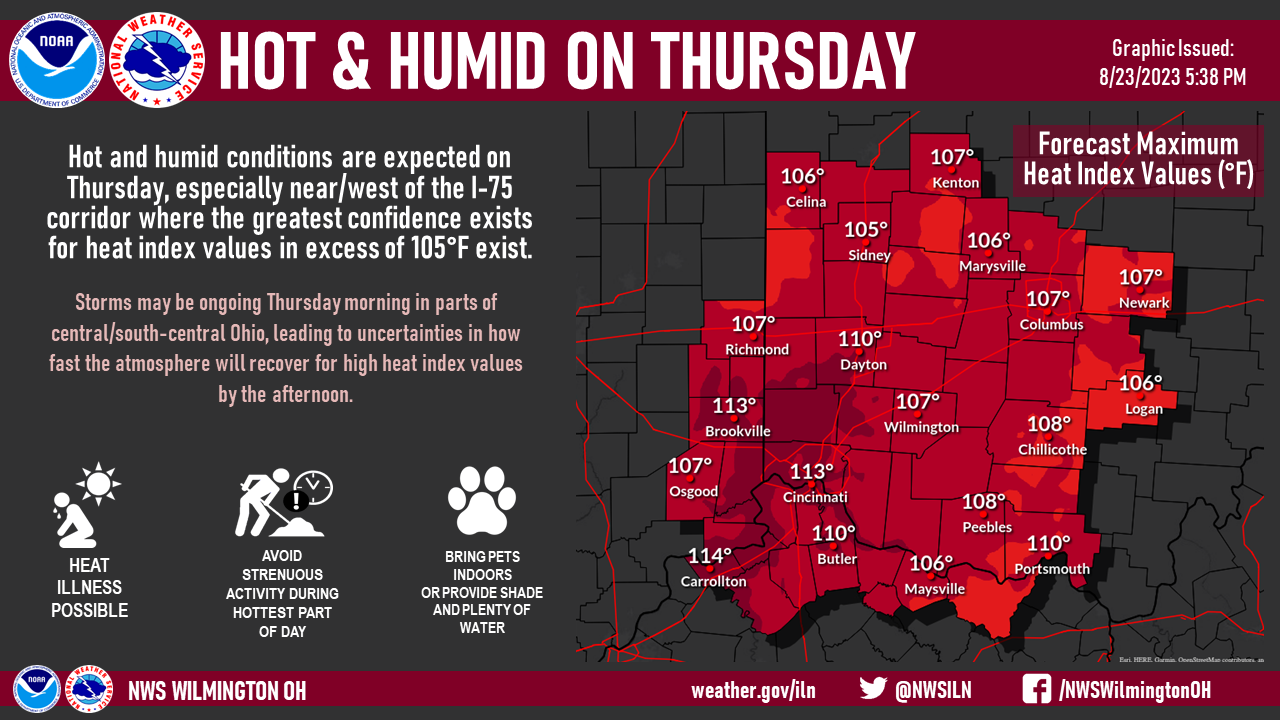
    Loveland, Ohio – The National Weather Service has issued excessive heat warnings and heat advisories for Ohio for Thursday and into Friday, and Ohio Department of Health Director Bruce Vanderhoff, MD, MBA, is asking Ohioans to take precautions and recognize the signs of heat-related illnesses.

    According to the Centers of Disease Control and Prevention (CDC), every year, an average of more than 600 people die nationwide from heat-related causes.

    “The heat indexes expected in Ohio can truly be dangerous, and I encourage you to take these precautions seriously,” Dr. Vanderhoff said. “In particular, please remember to look out for those who are more vulnerable, such as young children and the elderly.”

    Here are tips from the Department to follow during periods of high temperatures and high humidity:

    Drink Cool Fluids

    • Help your body sweat and cool down by staying well hydrated with water. Don’t wait until you are thirsty to start drinking water.
    • Adults should drink eight 8-ounce glasses of water each day. Monitor your body – you may need to drink more on hot and humid days.
    • Avoid fluids that contain alcohol or caffeine, because they can add to dehydration and increase the effects of heat illness.

    Monitor or Limit Outdoor Activities

    • Plan outdoor activities for the early morning or evening when the sun is less direct.
    • Wear loose-fitting, light-colored clothing.
    • A wide-brimmed hat protects against sunburn and helps keep the body cooler.
    • Move to the shade or into an air-conditioned building at the first signs of heat illness.
    • Very young children may become preoccupied with outdoor play and not realize that they are getting overheated. Adults should require frequent breaks and bring them indoors for a cool drink.
    • Children or youth involved in team sports should be closely monitored for signs of heat stress. Consideration should be given to shifting practices and games to cooler times of the day.

    It is also very important to know the signs of heat stroke and heat exhaustion.

    • Heat exhaustion is characterized by heavy sweating; cold, pale, and clammy skin; fast, weak pulse; muscle cramps; tiredness or weakness; a headache; and nausea.
    • Move the exhausted individual to a cool place, loosen their clothing, and have them sip water. If possible, put cool, wet clothes on the person or take a cool bath.
    • If the exhausted individual begins throwing up, or if symptoms get worse or last for over an hour – call 911.
    • Heat stroke is a potentially life-threatening condition, characterized by a body temperature of 103 degrees or higher; red, hot and dry skin with no sweating; rapid pulse; headache; dizziness; nausea; confusion; unconsciousness; and gray skin color.
    • People experiencing heat stroke need immediate medical assistance – call 911.
    • Before help arrives, begin cooling the exhausted individual by any means possible, such as spray from a garden hose or by placing the person in a cool tub of water.

    For more information on heat-related illnesses, visit the Centers for Disease Control Prevention’s website here.

  • Heat Index of 113 and Air Quality Warning for Thursday

    Heat Index of 113 and Air Quality Warning for Thursday


    EXCESSIVE HEAT WARNING IN EFFECT FROM NOON UNTIL 9 PM THURSDAY

    PRECAUTIONARY/PREPAREDNESS ACTIONS FROM THE NATIONAL WEATHER SERVICE IN WILMINGTON

    Drink plenty of fluids, stay in an air-conditioned room, stay out of the sun, and check up on relatives and neighbors. Young children and pets should never be left unattended in vehicles under any circumstances.

    Take extra precautions if you work or spend time outside. When possible reschedule strenuous activities to early morning or evening. Know the signs and symptoms of heat exhaustion and heat stroke. Wear lightweight and loose-fitting clothing when possible. To reduce risk during outdoor work, the Occupational Safety and Health Administration recommends scheduling frequent rest breaks in shaded or air-conditioned environments.

    Anyone overcome by heat should be moved to a cool and shaded location.

    Heat stroke is an emergency! Call 911

    _______________________

    Loveland, Ohio – The Southwest Ohio Air Quality Agency has announced an Air Quality Alert for the Loveland Area.

    The air quality index is predicted to be 105 on Thursday which is “Unhealthy for Sensitive Groups”.


    Active children and adults, and people with respiratory diseases, such as asthma, should be avoiding all outdoor exertion; everyone else, especially children, should limit outdoor exertion.


    Do Your Share! Take these precautions:

    • Take the bus, carpool, bike or walk instead of driving
    • Refuel your vehicle after 8 p.m.; do not top off when refueling and tighten the gas cap
    • Avoid idling your vehicle
    • Combine trips or eliminate unnecessary vehicle trips
    • Keep your vehicle maintained with properly inflated tires and timely oil changes
    • Avoid use of gasoline-powered lawn equipment on Air Quality Alert days
    • Avoid use of oil-based paints and stains on Air Quality Alert days
    • Never burn leaves or other yard trimmings
    • Always burn clean, seasoned wood in outdoor fire pits, fireplaces and wood stoves
    • Do not use fire pits or fireplaces for non-essential home heating on Air Quality Alert days
    • Conserve electricity

  • Polluted air returns Wednesday

    Polluted air returns Wednesday

    Loveland, Ohio – The Southwest Ohio Air Quality Agency has announced an Air Quality Alert for the Loveland Area.
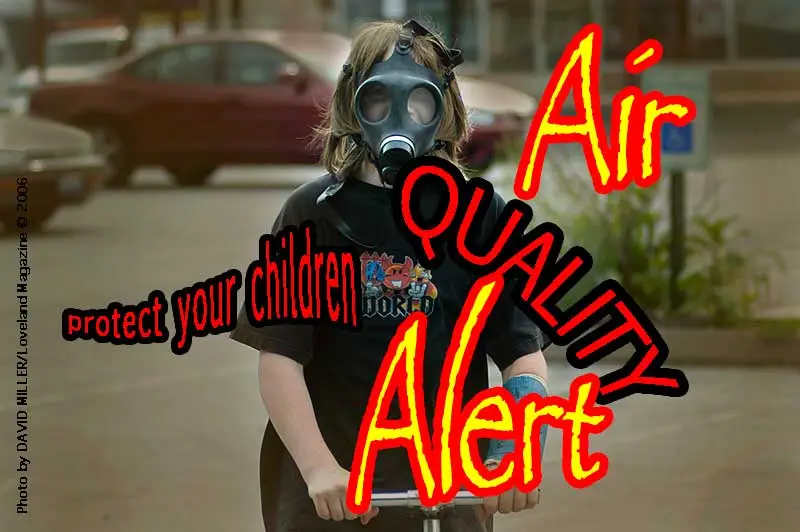
    The air quality index is predicted to be 105 on Wednesday which is “Unhealthy for Sensitive Groups”.


    Active children and adults, and people with respiratory diseases, such as asthma, should be avoiding all outdoor exertion; everyone else, especially children, should limit outdoor exertion.

    You can track the air quality in real-time by clicking the image below.

    Do Your Share! Take these precautions:

    • Take the bus, carpool, bike or walk instead of driving
    • Refuel your vehicle after 8 p.m.; do not top off when refueling and tighten the gas cap
    • Avoid idling your vehicle
    • Combine trips or eliminate unnecessary vehicle trips
    • Keep your vehicle maintained with properly inflated tires and timely oil changes
    • Avoid use of gasoline-powered lawn equipment on Air Quality Alert days
    • Avoid use of oil-based paints and stains on Air Quality Alert days
    • Never burn leaves or other yard trimmings
    • Always burn clean, seasoned wood in outdoor fire pits, fireplaces and wood stoves
    • Do not use fire pits or fireplaces for non-essential home heating on Air Quality Alert days
    • Conserve electricity

  • Abortion amendment ballot language submitted, Ballot Board set to meet Thursday

    Abortion amendment ballot language submitted, Ballot Board set to meet Thursday

    Abortion rights groups request full text on November ballots

    BY:  – Ohio Capital Journal

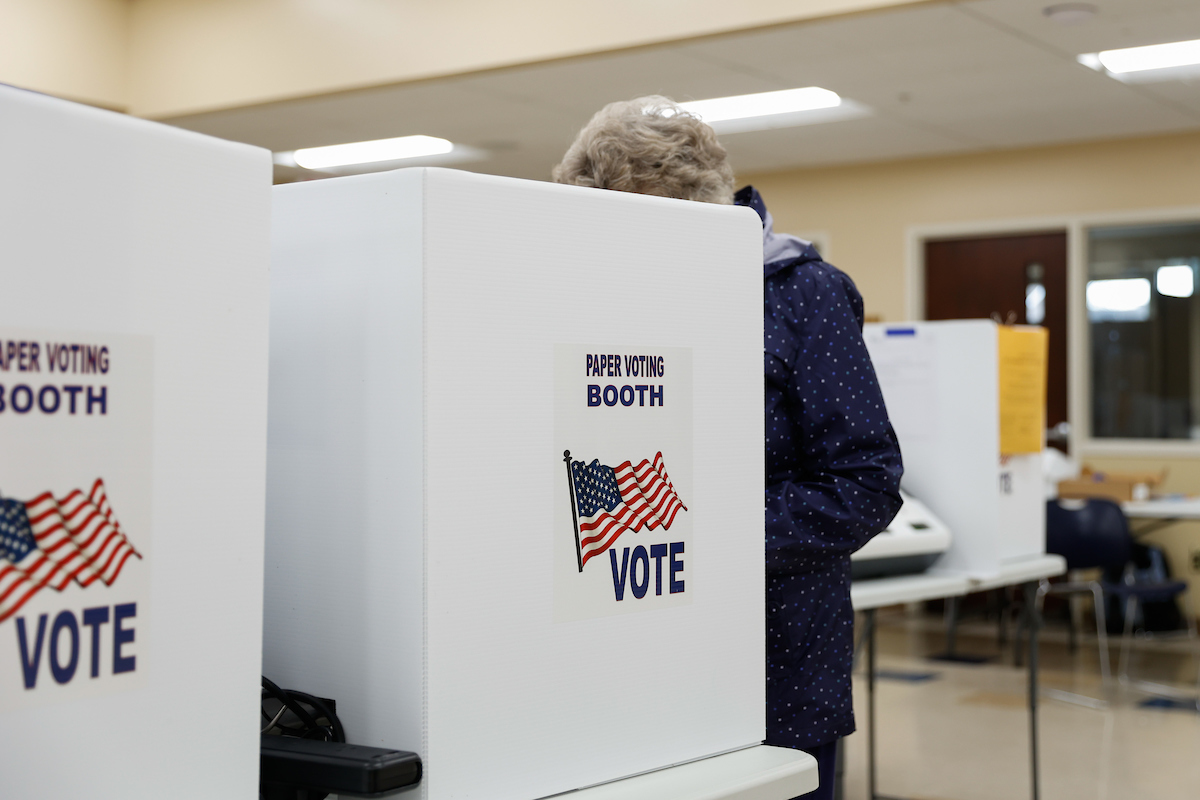
    Gearing up for an Ohio Ballot Board meeting where constitutional amendment language regarding reproductive health will be considered, groups pushing for the measure want to see the entire text of the amendment on November ballots.

    In a letter received by the Ohio Secretary of State on Monday, attorney Donald McTigue represented petitioners for the constitutional amendment in asking the board to use full text of the proposed amendment or a condensed version, so that voters can read the entire thing on their ballots in the general election this year.

    “By using the full text, voters will see for themselves the language they are being asked to approve and can make a free and independent decision on this fundamental question,” McTigue wrote.

    The abortion rights groups also argued that, in using the full text, “there can be no dispute about whether legal standards have been satisfied or whether the condensed text misleads, deceives or defrauds voters,” according to the letter.

    The ballot measure’s title, as submitted by the groups for approval by the ballot board, is “To Establish the Right to Reproductive Freedom with Protections for Health and Safety.”

    Because of the rejection of Issue 1 earlier this month at the polls, which would have raised the threshold to approve a constitutional amendment, a simple majority is needed to pass the measure.

    In the language of the amendment, it specifies that “every individual has a right to make and carry out one’s own reproductive decisions, including but not limited to” contraception, fertility treatments, pregnancy, miscarriage care and abortion.

    It prohibits the state from doing anything to “directly or indirectly burden, penalize, prohibit, interfere with or discriminate against” the exercise of the rights in the amendment, or those who assist in the exercise of the rights.

    The amendment makes exceptions in terms of abortion, in which it would be “prohibited after fetal viability.”

    “But in no case may such an abortion be prohibited if in the professional judgment of the pregnant patient’s treating physician it is necessary to protect the pregnant patient’s life or health,” the amendment states.

    “Any attempt to alter wording away from the text of the amendment should be seen for what it is: an attempt to confuse and mislead voters,” said Lauren Blauvelt, of Ohioans United for Reproductive Rights, in a statement announcing the submission of the ballot language.

    Opposition groups have claimed the amendment would impact parental rights and allow “late-term abortion,” neither of which are included in the language submitted to the ballot board. “Late-term abortion” is not considered a legitimate medical term.

    Two different lawsuits attempting to keep the amendment from going before voters have been rejected by the Ohio Supreme Court.

    Most recently, a former state legislator and a Catholic Ohio resident asked that the measure be blocked because it was unclear what laws it sought to change. A separate previous lawsuit argued the Ohio Ballot Board abused its power by improperly considering, and thus moving the ballot measure forward so that signatures could be collected in support of it.

    That signature collection amounted to nearly 500,000 valid Ohio voter signatures, which allowed the measure to head to the ballot.

    Another abortion-related lawsuit is still in the process of making it through the state’s highest court. That lawsuit was filed by Ohio Attorney General Dave Yost, challenging a Hamilton County court’s right to pause a six-week abortion ban implemented almost immediately after the Dobbs decision overturned Roe v. Wade.

    That law was passed in 2019, but has since been entangled in court cases. It bans abortion after six weeks gestation and was in place for several months following the Dobbs decision before being halted by the courts.

    The Ohio Ballot Board is scheduled to consider and vote on the language on Thursday, where they will also consider language regarding a proposed statute for recreational marijuana.


    Susan Tebben
    SUSAN TEBBEN

    Susan Tebben is an award-winning journalist with a decade of experience covering Ohio news, including courts and crime, Appalachian social issues, government, education, diversity and culture. She has worked for The Newark Advocate, The Glasgow (KY) Daily Times, The Athens Messenger, and WOUB Public Media. She has also had work featured on National Public Radio.

    MORE FROM AUTHOR

    ___________________
    [pdf-embedder url=”https://lovelandmagazine.com/wp-content/uploads/2023/08/The-Right-to-Reproductive-Freedom-with-Protections-for-Health-and-Safety.pdf”]
  • Loveland Athletic Boosters Homecoming Parade is September 21

    Loveland Athletic Boosters Homecoming Parade is September 21

    Loveland, Ohio – This year’s Homecoming Parade will be Thursday, September 21 at 6:30 PM. The Homecoming game will be Friday, September 22 against Walnut Hills. The parade starts at the Moose Lodge Hall on East Loveland Avenue and proceeds to West Loveland Avenue, to Rich Road, and ends at Loveland High School at #1 Tiger Trail.

    The annual Powder Puff football game will be held in Tiger Stadium immediately following the parade.

    If you want to participate in the parade click HERE or contact:

    Tori Morrison, the LAB Parade Coordinator.

    Email

  • Polluted air continues into Monday

    Polluted air continues into Monday

    Loveland, Ohio – The Southwest Ohio Air Quality Agency has announced an Air Quality Alert for the Loveland Area, including Butler, Clermont, Hamilton and Warren counties in Ohio and Boone, Campbell and Kenton counties in Kentucky.

    The air quality index is predicted to be 105 on Monday which is “Unhealthy for Sensitive Groups”.


    Active children and adults, and people with respiratory diseases, such as asthma, should be avoiding all outdoor exertion; everyone else, especially children, should limit outdoor exertion.

    You can track the air quality in real-time by clicking the image below.

    Do Your Share! Take these precautions:

    • Take the bus, carpool, bike or walk instead of driving
    • Refuel your vehicle after 8 p.m.; do not top off when refueling and tighten the gas cap
    • Avoid idling your vehicle
    • Combine trips or eliminate unnecessary vehicle trips
    • Keep your vehicle maintained with properly inflated tires and timely oil changes
    • Avoid use of gasoline-powered lawn equipment on Air Quality Alert days
    • Avoid use of oil-based paints and stains on Air Quality Alert days
    • Never burn leaves or other yard trimmings
    • Always burn clean, seasoned wood in outdoor fire pits, fireplaces and wood stoves
    • Do not use fire pits or fireplaces for non-essential home heating on Air Quality Alert days
    • Conserve electricity

  • Ohio lawmakers behind bill tying homestead exemption to inflation looking for more changes

    Ohio lawmakers behind bill tying homestead exemption to inflation looking for more changes

     Getty Images

    BY:  – Ohio Capital Journal

    Two Republican Ohio lawmakers are touting the inclusion of homestead tax exemption changes in this year’s budget and promising to work on future tweaks as well. Reps. Thomas Hall, R-Madison Township, and Steve Demetriou, R-Bainbridge Township, joined a pair of county auditors Wednesday to explain how the exemption will respond to inflation going forward.

    Hall and Demetriou initially filed those changes as House Bill 57. The measure passed the House easily, and budget negotiators were able to incorporate the bulk of that proposal in the final spending plan. But HB 57 hasn’t gone away, and the sponsors argue it could be a vehicle for further changes in the Senate.

    They also pointed to a new Joint Committee on Property Tax Review and Reform created in the budget. That panel will hold hearings and deliver a report with recommendations by the end of this year.

    Homestead changes

    Ohio’s homestead exemption cuts property tax bills for low-income seniors and disabled residents by reducing the amount of their home’s value that’s subject to property taxes. The standard exemption reduces taxable value by $25,000, and disabled veterans get an exemption of $50,000.

    So for example, a resident claiming the exemption who owns a $100,000 home would pay taxes as if their home was worth $75,000 or $50,000 respectively.

    Lorain County auditor Craig Snodgrass explained, “currently it saves a lot of our seniors about $400 to $500 a year in taxes.”

    While those savings are important, fellow auditor David Thomas from Ashtabula County noted they haven’t exactly kept up with Ohioans’ bills.

    “I was in middle school in 2007,” he said, “and that’s the last time we’ve seen an increase.”

    The changes included in the budget will tie those $25,000 and $50,000 exemptions to inflation. In successive years the dollar amount will likely climb to keep pace with rising costs.

    But those changes would mean less money flowing to local governments for services like school and libraries. To make up for it, lawmakers plan to reimburse the lost revenue. State economists estimate that would cost $11 million in the 2024 fiscal year and grow to $28 million in 2025. Because of the timing of the bill’s passage, only half a year of expenses is reflected in fiscal projections.

    “This legislation by no means is the end all, be all, fix all, for homestead or for seniors or disabled veterans,” Hall explained. “But I assure you this is the first step.”

    Further changes?

    In addition to indexing the homestead exemption to inflation, the state budget stands up a committee to propose further changes to Ohio’s property tax system. The ten-member panel includes five members from each chamber, with the majority appointing three and the minority the remaining two.

    “If you leave and don’t hear anything else, this is just the first step,” Hall insisted. “We hope to continue the reform efforts. We hope to have more conversation about property tax, and we hope the committee produces a really good list of property tax reforms we can actually enact and move forward with.”

    Outside of that committee Demetriou added “House Bill 57’s now in the Senate.”

    “So as it moves through that process in the Senate,” he explained, “our hope is that we can make it even better outside of the language that got into this past operating budget, and that we can enhance and maybe tackle some things.”

    One example he mentioned was raising the personal income ceilings, particularly for those on a pension. Another idea would create tiers to include vets that aren’t totally disabled.

    Follow OCJ Reporter Nick Evans on Twitter.


    Nick Evans
    NICK EVANS

    Nick Evans has spent the past seven years reporting for NPR member stations in Florida and Ohio. He got his start in Tallahassee, covering issues like redistricting, same sex marriage and medical marijuana. Since arriving in Columbus in 2018, he has covered everything from city council to football. His work on Ohio politics and local policing have been featured numerous times on NPR.

    MORE FROM AUTHOR

  • Dirty Air Alert issued for Sunday

    Dirty Air Alert issued for Sunday

    Loveland, Ohio – The Southwest Ohio Air Quality Agency has announced an Air Quality Alert for the Loveland Area, including Butler, Clermont, Hamilton and Warren counties in Ohio and Boone, Campbell and Kenton counties in Kentucky.

    The air quality index is predicted to be 105 on Wednesday which is “Unhealthy for Sensitive Groups”.


    Active children and adults, and people with respiratory diseases, such as asthma, should be avoiding all outdoor exertion; everyone else, especially children, should limit outdoor exertion.

    You can track the air quality in real-time by clicking the image below.

    Do Your Share! Take these precautions:

    • Take the bus, carpool, bike or walk instead of driving
    • Refuel your vehicle after 8 p.m.; do not top off when refueling and tighten the gas cap
    • Avoid idling your vehicle
    • Combine trips or eliminate unnecessary vehicle trips
    • Keep your vehicle maintained with properly inflated tires and timely oil changes
    • Avoid use of gasoline-powered lawn equipment on Air Quality Alert days
    • Avoid use of oil-based paints and stains on Air Quality Alert days
    • Never burn leaves or other yard trimmings
    • Always burn clean, seasoned wood in outdoor fire pits, fireplaces and wood stoves
    • Do not use fire pits or fireplaces for non-essential home heating on Air Quality Alert days
    • Conserve electricity

  • Proposed recreational marijuana law is headed to the November ballot in Ohio

    Proposed recreational marijuana law is headed to the November ballot in Ohio

    BY:  – Ohio Capital Journal

    A proposed recreational marijuana law will be on Ohio’s November ballot after all.

    The Secretary of State’s office verified 4,405 additional valid petition signatures — bringing the grand total to 127,772, Secretary of State Frank LaRose said Wednesday in a letter to the campaign. 124,046 signatures were needed.

    The Coalition to Regulate Marijuana like Alcohol’s statute initiative would legalize and regulate cultivation, manufacturing, testing and sale of marijuana to Ohioans 21 and up. It would also legalize home grow for Ohioans 21 and up with a limit of six plants per person and 12 plants per residence, and impose a 10% tax at the point of sale for each transaction.

    “We are grateful to the thousands of Ohioans who helped us get to this point and are excited to bring our proposal to regulate marijuana like alcohol before Ohio voters this coming Election Day,” spokesperson Tom Haren said.

    This comes after the coalition initially came up just short of collecting enough valid signatures. The coalition submitted 223,176 signatures in July, but only 123,367 were found to be valid signatures. They recently submitted 6,545 additional signatures after the 10-day cure period.

    Hamilton County submitted the most valid signatures with 1,914. Next was Franklin County with 711 and Montgomery County with 626.

    Twenty-three states and Washington D.C. have legalized the recreational use and sale of cannabis.

    The proposed marijuana statute will be on Nov. 7’s ballot alongside the reproductive rights amendment.

    Follow OCJ Reporter Megan Henry on Twitter.


    Megan Henry
    MEGAN HENRY

    Megan Henry is a reporter for the Ohio Capital Journal and has spent the past five years reporting in Ohio on various topics including education, healthcare, business and crime. She previously worked at The Columbus Dispatch, part of the USA Today Network.

    MORE FROM AUTHOR

  • Fulton grand jury indicts Trump, members of his inner circle

    Fulton grand jury indicts Trump, members of his inner circle

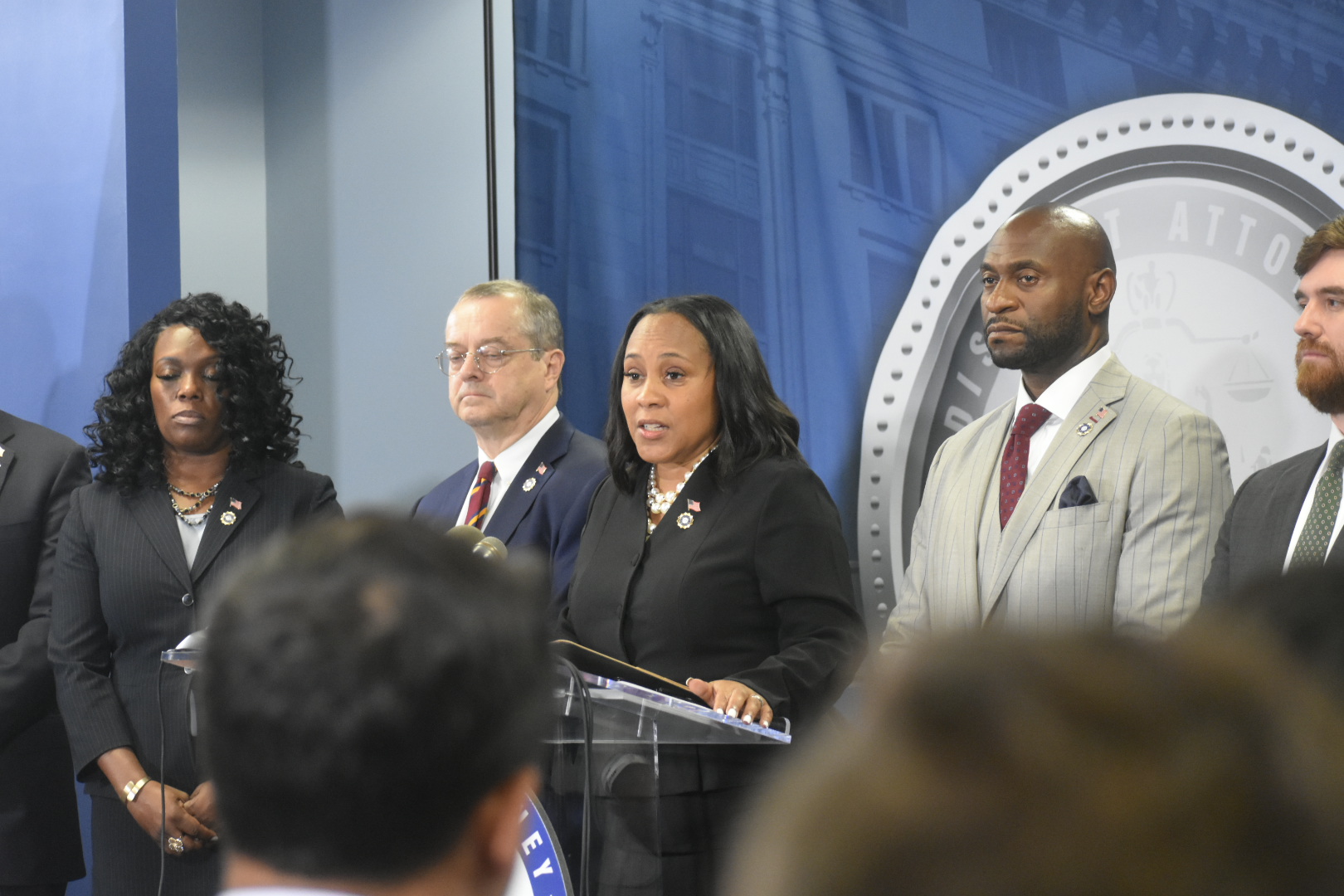
    Fulton County District Attorney Fani Willis discusses the indictments against former President Donald Trump and 18 others on Monday, Aug. 14, 2023. (Photo by Ross Williams/Georgia Recorder, States Newsroom.)

    BY:  AND  – Ohio Capital Journal

    Former President Donald Trump and several members of his inner circle were indicted Monday in Fulton County Georgia’s sweeping investigation into 2020 election interference.

    Fulton County District Attorney Fani Willis held a press conference late Monday night to briefly discuss the grand jury’s felony conspiracy and racketeering charges being levied against the 2024 Republican presidential frontrunner and other allies that include his former chief-of-staff Mark Meadows, his personal attorney Rudy Giuliani and ex-Georgia Republican Party Chairman David Shafer.

    Nineteen people were indicted on 41 charges after the grand jury’s vote to hand up indictments and Fulton Judge Robert McBurney’s unsealing of the charges Monday evening.

    “All elections in our nation are administered by the states, which are given the responsibility of ensuring a fair process and an accurate counting of the votes,” Willis said late Monday evening. “That includes elections for presidential electors, Congress state officials and local offices. The state’s role in this process is essential to the functioning of our democracy.”

    “The indictment alleges that rather than abide by Georgia’s legal process for election challenges, the defendants engaged in a criminal racketeering enterprise to overturn Georgia’s presidential election result,” Willis said.

    It is the fourth time the former president has been indicted this year, and it is the second indictment directly tied to Trump’s attempts to stay in power after losing his bid for reelection.

    The defendants will have until noon on Friday, Aug. 25 to turn themselves in, Willis said.

    Read the 98-page indictment below.

    “I remind everyone here that an indictment is only a series of allegations based on a grand jury determination of probable cause to support the charges. It is now the duty of my office to prove these charges in the indictment beyond a reasonable doubt at trial,” Willis said.

    Willis said she plans to push for a trial to be held within the next six months, but acknowledged that will be up to the judge.

    Felony charges of false statements, forgery, racketeering and election fraud, solicitation of a government employee have also been filed against in the case that’s been more than a year in the making.

    The sweeping probe centers on Trump and a number of his supporters who lodged unfounded claims that widespread election fraud cost him the 2020 election in Georgia by nearly 12,000 votes. In early 2022, Willis launched the investigation after a recording of a phone call where Trump asked Republican Secretary of State Brad Raffensperger to “find” enough votes was released to the public.

    Willis, an Atlanta Democrat, has been accused of political bias by Trump and his attorneys who argue she has held fundraisers for candidates of her party in the past.

    And on Monday, Reuters reported that a document outlining charges against Trump appeared briefly on the Fulton County court’s website. A Fulton County courts spokesperson issued a statement Monday in response to a “fictitious document that has been circulated online and reported by various media outlets.”

    Trump’s Georgia-based attorneys blasted the brief appearance of the document in a statement, calling it part of a pattern that has “plagued this case from its very inception.”

    “This was not a simple administrative mistake,” Drew Findling and Jennifer Little said in a joint statement. “A proposed indictment should only be in the hands of the District Attorney’s Office, yet it somehow made its way to the clerk’s office and was assigned a case number and a judge before the grand jury even deliberated.”

    Trump also took to his social media site, Truth Social, to bemoan the indictment, calling Willis a “rabid partisan” and accusing her of timing the indictment to “maximally interfere” in next year’s presidential race. Willis brushed off the criticism when asked about the president’s comments.

    “I make decisions in this office based on the facts and the law. The law is completely nonpartisan,” Willis said.

    The group of 16 fake electors who met at the Georgia Capitol in December 2020 includes current and former state and local GOP officials, ex-Coffee County GOP Chairwoman Cathy Latham, and newly elected state Sen. Shawn Still.

    Giuliani pressed Georgia Republicans to set themselves up as alternate electors to counter state Democrat electors casting votes for Joe Biden after GOP election officials confirmed the current president as the winner of Georgia’s 2020 presidential election. The plan at first was for the “fake electors” to serve as a placeholder should the former president prevail in court challenges to Georgia’s results. But when Trump’s court challenges were all either dismissed or withdrawn, the alternate electors still signed paperwork swearing they were legitimate delegates.

    An eventful day

    Even before the prospect of a Monday grand jury decision, a throng of national and local press had assembled outside the Fulton County courthouse Monday morning where they tried to catch the witnesses as they left to quiz them on the process.

    The relative calm outside the courthouse was disrupted at one point Monday when opponents of a controversial public safety training center attempted to march through the area around the courthouse that has been closed off for the indictments. Among the group’s chants: “Donald Trump. Andre Dickens. I don’t know the f—— difference.”

    But inside the courthouse the grand jury proceeding moved at a faster pace than expected, and by late Monday afternoon, an indictment seemed possible. At least two witnesses – former Republican Lt. Gov. Geoff Duncan and Atlanta journalist George Chidi – who were originally set to testify Tuesday were moved up to Monday.

    Duncan, who did not seek reelection last year, brushed aside specific questions about his grand jury testimony Monday but he spoke generally about how he viewed his participation in the process. And politically, he described this moment in time as a potential “pivot point” for Republicans.

    “I think it’s important to tell the truth,” Duncan told reporters afterwards. “And to respond to the constitutional duties of answering the questions of the grand jury. It’s important for us as a country to finally figure out exactly what happened, and let Americans decide. Instead of misinformation and tweets, let America decide what’s next for us.”

    Other witnesses include state Sen. Jen Jordan and state Rep. Bee Nguyen, two Democrats who were part of the December 2020 legislative meetings where Rudy Giuliani pushed a false narrative in hopes of getting the General Assembly to intervene.

    Nguyen confirmed in a statement Monday that she had testified before the grand jury.

    “No individual is above the law, and I will continue to fully cooperate with any legal proceedings seeking the truth and protecting our democracy,” Nguyen said. “I believe that every individual who wrongfully and illegally tried to overturn our valid elections should be held accountable so that we can have, as John Adams said, ‘a government of laws, and not of men.’”

    Chidi, who testified before the special purpose grand jury, said late Monday that he was dismissed without testifying Monday. He called it a victory for journalists.

    The independent Atlanta reporter walked into the fake electors’ meeting at the state Capitol after noticing someone who would have likely served as a GOP elector had Trump won Georgia. He said he was intrigued when the person acted strangely toward him, so he started streaming on Facebook live and followed the man into the meeting room before quickly being ushered out.

    When he asked what kind of meeting it was, a woman said they were having an “education” meeting, he said.

    “Plainly, they were not having an education meeting. So, up until five minutes ago, the district attorney believed that that observation was relevant to these legal proceedings,” Chidi told a group of reporters who swarmed around him as he left the courthouse. “And perhaps it still is, but the jury may have enough information without me to make a decision.”

    [pdf-embedder url=”https://lovelandmagazine.com/wp-content/uploads/2023/08/CRIMINAL-INDICTMENT.pdf”]______________________

    Stanley Dunlap
    STANLEY DUNLAP

    Stanley Dunlap has covered government and politics for news outlets in Georgia and Tennessee for the past decade. At The (Macon) Telegraph he told readers about Macon-Bibb County’s challenges implementing its recent consolidation, with a focus on ways the state Legislature determines the fate of local communities. He used open records requests to break a story of a $400 million pension sweetheart deal a county manager steered to a friendly consultant. The Georgia Associated Press Managing Editors named Stanley a finalist for best deadline reporting for his story on the death of Gregg Allman and best beat reporting for explanatory articles on the 2018 Macon-Bibb County budget deliberations. The Tennessee Press Association honored him for his reporting on the disappearance of Holly Bobo, which became a sensational murder case that generated national headlines.

    MORE FROM AUTHOR

    Jill Nolin
    JILL NOLIN

    Jill Nolin has spent nearly 15 years reporting on state and local government in four states, focusing on policy and political stories and tracking public spending. She has spent the last five years chasing stories in the halls of Georgia’s Gold Dome, earning recognition for her work showing the impact of rising opioid addiction on the state’s rural communities. She is a graduate of Troy University.

    MORE FROM AUTHOR