Author: Loveland Magazine

  • Hamilton County Public Health Achieves National Reaccreditation

    Hamilton County Public Health Achieves National Reaccreditation

    Loveland, Ohio – Hamilton County Public Health (HCPH) has announced it has successfully completed a review process to maintain national accreditation status through the Public Health Accreditation Board (PHAB). In maintaining its accreditation status for another five years, “HCPH has demonstrated that it meets PHAB’s quality standards and measures and has the capacity to continue to evolve, improve and advance to continue improving the health of the residents of Hamilton County.”

    According to a release by the HCPH, “Public health accreditation is a rigorous, multi-year process that represents the measurement of health department performance against a set of nationally recognized, practice-focused and evidence-based standards; the issuance of recognition of achievement of accreditation within a specified time frame by a nationally recognized entity; and the continual development, revision, and distribution of public health standards.”

    “We are proud of the ‘accredited’ designation,” says Hamilton County Health Commissioner Greg Kesterman.  “This recognizes the work this agency performs every day, as well as its ability to adapt and change based on community needs. While we’re certainly proud of this accomplishment, PHAB does not allow complacency, as the accreditation process is one of continuous quality improvement,” Kesterman adds.

  • Tiger Women Basketball and Volleyball hosting 7th annual Mattress Sale

    Tiger Women Basketball and Volleyball hosting 7th annual Mattress Sale

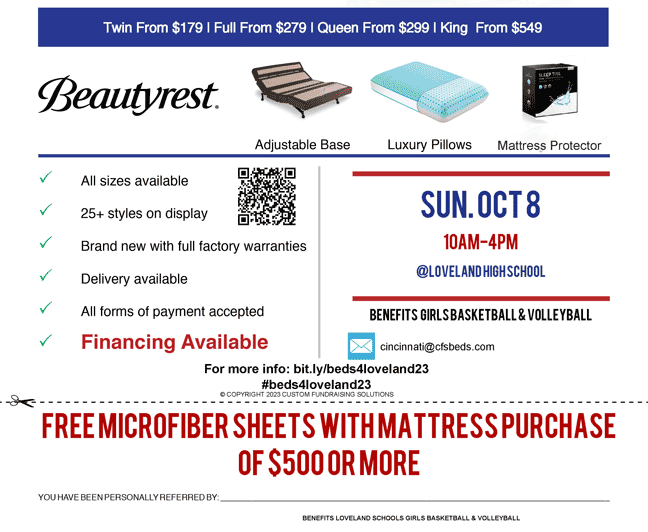
    Loveland, Ohio – If you are looking to replace a bed in your home, now is the time. Loveland Schools Women’s Basketball and Volleyball are excited to announce they will be hosting the 7th Annual one-day Mattress Fundraiser on Sunday, October 8th, from 10 AM until 4 PM. For one day only, Loveland High School will be transformed into a mattress showroom.

    There will be 30 different mattress styles on display in all sizes for customers to try, priced below retail. Adjustable power bases, luxury pillows, foundations, mattress protectors, and premium sheets will be available as well. The brands including Simmons Beautyrest, Southerland, Therapedic, and Tranquility Sleep Systems come with full factory warranties and are made to order.

    Mattresses are available 2-3 weeks after the fundraiser. Delivery is available. 

    Best of all, the Loveland Schools Women’s Basketball and Volleyball Teams benefit from every purchase. 

    The company, Custom Fundraising Solutions (CFS) first introduced The Mattress Fundraiser to the Cleveland, Ohio market in 2005. The company has nearly 100 locations and works with over 3,000 schools nationwide. The unique business model helps schools and other organizations raise thousands of dollars in just one day, and to date, the company has given back over $50 million.

    What: 7th Annual Loveland Women’s Basketball and Volleyball Mattress Fundraiser

    Where: Loveland High School (#1 Tiger Trail)

    When: Sunday, October 8th, 10 AM until 4 PM

    Link: bit.ly/beds4loveland23

    About Custom Fundraising Solutions

    Since 2005, Custom Fundraising Solutions has been helping Girls Basketball and Volleyballs raise money using an unconventional approach, “The Mattress Fundraiser”. The concept is designed to help groups raise thousands of dollars in a one-day sale, and provide the community a product they need, for a great value. CFS has nearly 100 locations nationwide and has given back more than $50 million dollars. To learn more, visit www.cfsbeds.com.

  • Ohio utilities’ efficiency programs among the worst in wake of corrupt utility law, report says

    Ohio utilities’ efficiency programs among the worst in wake of corrupt utility law, report says

    Getty Images

    BY:  – Ohio Capital Journal

    House Bill 6 wasn’t only a bad law because it involved $61 million in bribes in exchange for a $1.3 billion utility bailout.

    Most of the bailout payments have been repealed, but somehow the law — the product of perhaps the biggest corruption scandal in Ohio history — remains on the books. And after it eliminated most efficiency programs, Ohio utilities have gone from above average to among the worst in the country, according to an analysis that was released last week.

    One of them, Columbus-based AEP, acknowledged that in the absence of the efficiency programs, acknowledged that the elimination of the programs has limited what it can offer customers to save electricity.

    The American Council for an Energy Efficient Economy, a Washington, D.C.-based non-profit, publishes an efficiency scorecard of the nation’s 53 largest electric utilities once every three years.

    It found that in 2018 — a year before the corrupt bailout was passed — Duke Ohio had the 18th-best score for efficiency programs. AEP Ohio had the 21st-best programs, according to the scorecard. Edison Ohio came in at 34th.

    But the scorecard published last week looked at data related to efficiency programs in 2021 — a year after HB 6 took effect. It found that AEP and Duke tied for 49th out of 53.

    In an email, AEP spokesman Scott Blake said “House Bill 6 ended energy efficiency requirements, which hampers our ability to offer programs to customers. AEP Ohio had implemented many successful energy efficiency programs prior to this change in state law. Our customers have expressed interest in energy efficiency, and we have proposed to offer a new menu of voluntary programs in our Electric Security Plan currently under consideration by the Public Utilities Commission of Ohio. They would need to approve those programs in order for us to offer them to customers.”

    Edison Ohio is a subsidiary of Akron-based FirstEnergy, which paid more than $60 million to finance the corrupt bailout law that gutted efficiency standards. It finished dead last in the most recent efficiency score.

    The 2019 law was ramrodded by former House Speaker Larry Householder, R-Glenford. The vast majority of the money it required from ratepayers went to prop up two failing nuclear plants in Northern Ohio. FirstEnergy wanted to prop them up so it could sell them and avoid liability for cleaning up the sites when they’re shut down.

    With global temperatures increasing at an alarming rate, HB 6 makes warming worse in at least two ways.

    It forces Ohio ratepayers to spend hundreds of millions propping up two aging coal plants — including one that isn’t even in Ohio. And it gutted energy-efficiency and renewable standards that utilities formerly had to adhere to.

    The efficiency standards were built into consumers’ bills to incentivize the use of technologies that save electricity and thus obviate the need for more carbon-spewing generation. For example, they enabled Ohio utilities to offer discounts on fluorescent light bulbs when they were relatively expensive, but much longer-lasting and efficient than incandescent bulbs.

    The idea was that with greater demand, manufacturers would scale up production and make them more cheaply. That approach helped to allow the federal government to completely phase out the sale of incandescent bulbs this year.

    The way efficiency standards worked, regulators set goals and offered “shared savings” to utilities and consumers once those goals were met. Rob Kelter, a senior attorney with the Environmental Law and Policy Center, conceded in an interview last month that the efficiency incentives weren’t perfect.

    “I think there were some legitimate concerns that legislators raised about the value of efficiency and whether the programs were well-run,” he said. “But the programs were always pretty good and they delivered good value to customers.Were we too generous with the incentives for utilities? Yeah. A little bit.”

    For example, Kelter said, when they were collecting money from incentives for fluorescent bulbs, utilities were slow to move to the next technology, LED bulbs, because they had a sure thing in fluorescents.

    Regardless of the programs’ merits, some Ohio officials have long opposed efficiency standards.

    Sam Randazzo — whom Gov. Mike DeWine in 2019 nominated to chair the Public Utilities Commission — had previously worked as a utility lobbyist to repeal efficiency and renewable standards.

    In a deferred prosecution agreement with the federal government, FirstEnergy said it bribed Randazzo $4.3 million to do its bidding as he was poised to become the state’s top regulator. The FBI searched his Columbus condominium a few months after the July 2020 arrests of Householder and four others in the HB 6 conspiracy, but Randazzo hasn’t been charged.

    During Householder’s federal court trial earlier this year, witnesses testified that even though he was supposed to be regulating utilities, Randazzo helped draft HB 6, the corrupt bailout legislation. Perhaps predictably, it eliminated efficiency and renewable standards and prompted the news organization Vox to call it “the worst energy bill of the 21st century.”

    One reason Randazzo and the HB 6 conspirators might have been so eager to eliminate the efficiency and renewable programs was to use the resulting savings as what government insiders call a “pay for.” The bailout that was going to FirstEnergy — and to a much lesser extent AEP and other utilities — was going to show up on ratepayers’ bills. So those pushing the legislation looked for other things to cut to pay for the new charges.

    On the witness stand, Householder, who was later sentenced to 20 years in prison, said he “wanted to do away with costly mandates.” He and other HB 6 supporters claimed that eliminating efficiency and renewable standards would save consumers more than $1 billion.

    But federal prosecutors smashed those claims, showing that the supporters’ math didn’t take the full cost of HB 6 into account. Householder and the others also failed to mention that through efficiency programs, ratepayers stood to save by using less electricity.

    The efficiency scorecard that found such precipitous drops among Ohio utilities in the wake of HB 6 scores them according to numerous metrics. But more than half of the available points are from three straightforward ones: net annual and lifetime electricity savings, and peak demand reduction.

    The latter measure is important because when electricity demand reaches a peak, system operators often have to fire up gas-powered generation facilities to meet it. By contrast, when customers use electricity during off-peak times, they’re pulling power that’s already on the grid.

    Mike Specian, lead author of the efficiency scorecard, praised the three big Ohio utilities for some of their offerings — including discounts to customers who use power at off-peak times.

    However, Specian said in an email, “the cancelation of utilities’ efficiency programs (in HB 6) had an adverse impact on nearly every other aspect of utility performance that we evaluated, including for low-income customers.”

    Duke didn’t respond to questions for this story.

    Lauren Siburkis, a FirstEnergy spokeswoman, said in an email that she isn’t “able to comment on the (efficiency) report itself.” But she said her company has numerous efficiency programs that it voluntarily offers customers.

    They include $100 rebates for energy-efficient appliances such as refrigerators, freezers and clothes dryers. The company also incentivizes efficiency among commercial and industrial customers through its commercial lighting program, Siburkis said.

    Blake, of AEP, said a bill is moving through the legislature that would allow ratepayers to voluntarily participate in efficiency programs.

    “The legislature is considering House Bill 79, a bipartisan effort sponsored by Bill Seitz and Bride Rose Sweeney, that would allow AEP Ohio and other utilities to offer energy efficiency programs while giving customers the option to participate,” Blake said.


    Marty Schladen
    MARTY SCHLADEN

    Marty Schladen has been a reporter for decades, working in Indiana, Texas and other places before returning to his native Ohio to work at The Columbus Dispatch in 2017. He’s won state and national journalism awards for investigations into utility regulation, public corruption, the environment, prescription drug spending and other matters.

    MORE FROM AUTHOR

  • Nurse’s Notes: Preventative Healthcare

    Nurse’s Notes: Preventative Healthcare

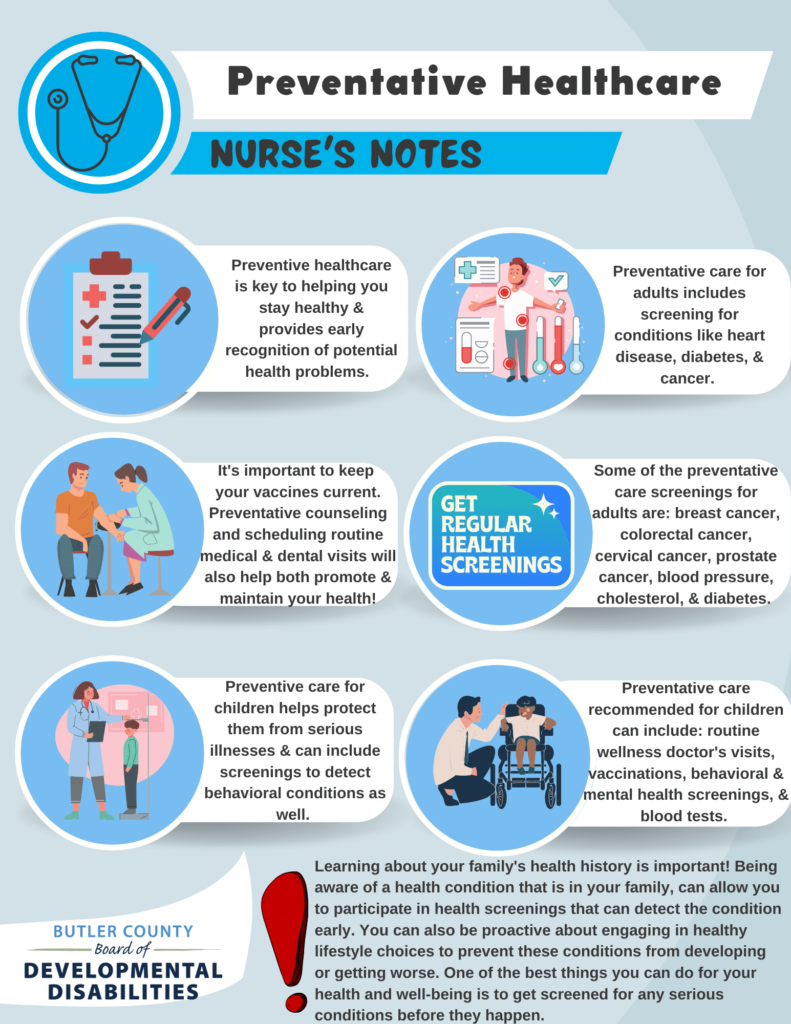
    Every month, the staff nurses at the Butler County Board of Developmental Disabilities share important health updates. This month, their nurses are talking about preventative healthcare!

    Preventive healthcare is key to helping you stay healthy and provides early recognition of potential health problems. Seeking preventative healthcare can help you live a longer, healthier life!

    Preventative care for adults typically includes screening for conditions like heart disease, diabetes, and cancer. This also includes counseling and receiving appropriate patient teaching on healthy eating and life habits.

    What are some of the screenings recommended for adults? (Please note that these screenings are recommended based on age and family history).

    • Screenings for breast cancer, colorectal cancer, cervical cancer, and prostate cancer: These types of cancers are affecting men and women the most and early detection can stop or slow the spread and allow early treatment.
    • Screenings for blood pressure, cholesterol, and diabetes: These screenings can detect common conditions that can be treated with basic lifestyle changes and or medications. If left untreated or diagnosed, they can lead to serious diseases and early death.
    • Immunizations: Not only children need vaccines, but adults should also stay on top of their vaccines as well.  Annual flu shots, COVID-19 vaccines and any necessary boosters can help you prevent illness and diseases. Visit the CDC for guidelines on vaccines.
    • Preventative Counseling: Preventative counseling and patient teaching is useful to help us make ongoing positive health related changes to promote a healthy lifestyle.
    • Scheduling routine medical and dental visits:  Annual physicals and routine dental care is valuable to maintain general health and ensure necessary recommended screenings are performed.

    Preventive care for children helps protect them from serious illnesses and can include screenings to detect behavioral conditions as well. Preventive healthcare can help children stay healthy when they’re young and promote healthy decision making as they grow older.

    What preventative care is recommended for children?

    • Well-child visits: Routine visits every few months when your child is an infant, and yearly after that.  Routine immunizations and screenings are also conducted during these visits.
    • Vaccinations: Vaccinations for children protect them from serious diseases now and in the future.
    • Behavioral and mental health screenings: Pediatricians routinely screen children for conditions like autism, depression, and developmental delays.
    • Blood tests: Various blood test screenings can be conducted throughout childhood to detect various diseases.

    Why is knowing your family history important?

    Learning that you have a family history of a serious health condition can be discouraging and stressful, but knowledge is power. When you are aware of a health condition that is in your family, you can participate in health screenings that can detect the condition early, so that treatment is more effective and can be started early on. You can also be proactive about engaging in healthy lifestyle choices to prevent these conditions from developing or getting worse.

    One of the best things you can do for your health and well-being is to get screened for any serious conditions before they happen. That’s what preventive health is about, and why medical experts recommend that all adults and children participate in routine tests, screenings, and immunizations.

    If you have any questions about preventive care and what screenings you or your children should get, be sure to talk with your doctor or healthcare professional. Check to see if you are up to date on your preventative care! 

    The Butler County Board of Developmental Disabilities supports over 3,700 people to live, work, and learn successfully in their community. Supports and services are available life-long through contracts with partner agencies or directly provided by our Board.
    Please visit the website of the Butler County Board of Developmental Disabilities often for more great information about the services that they provide, many of which go beyond the walls of their facilities and take place in the greater community.

    Look for, and subscribe to their newsletters!

  • Loveland High School Named to “Best Schools” List by US News and World Report

    Loveland High School Named to “Best Schools” List by US News and World Report

    Loveland, Ohio – Loveland High School has been named to the “Best Schools” list by US News and World Report. Loveland High School (LHS) is ranked #35 among Ohio High Schools and #11 within the Cincinnati Metro Area.

    “Congratulations to our students and their families – because every accolade for our district starts with hard work and dedication at home. Thank you to our fantastic staff, who do their best every day to help students succeed,” Superintendent Mike Broadwater said.

    You can learn more about how US News and World Report determines their rankings by following this link.

    “We worked with our community to establish our #beLOVEland Strategic Vision, and Student Success is the #1 goal. The support of our community makes Loveland a special place, and recognition like this is only possible because of that continuing support,” Broadwater said.

    Loveland High School moved up from last year when US News and World Report ranked LHS #45 in Ohio and #12 in the Cincinnati Metro Area.

  • Biden administration chooses first 10 drugs for Medicare price negotiations

    Biden administration chooses first 10 drugs for Medicare price negotiations

    BY:  Ohio Capital Journal

    WASHINGTON — Medicare can now negotiate lower prices for 10 common high-price drugs, cutting out-of-pocket costs for an estimated 9 million seniors and saving taxpayers billions, the Biden administration said Tuesday.

    Medicare will begin this year to negotiate with the manufacturers of popular medications used to treat blood clots, diabetes, heart disease, rheumatoid arthritis, chronic kidney disease, psoriasis, blood cancers, Crohn’s disease, and ulcerative colitis.

    Enrollees will begin to see lower prices in 2026.

    The prescription drug negotiations are a result of last year’s Inflation Reduction Act, a massive spending package that contained measures to reduce prescription drug prices, subsidize climate change reduction technology and adjust the corporate tax rate.

    “For far too long, Americans have paid more for prescription drugs than any major economy. And while the pharmaceutical industry makes record profits, millions of Americans are forced to choose between paying for medications they need to live or paying for food, rent, and other basic necessities. Those days are ending,” President Joe Biden said in a statement Tuesday.

    About 9 million enrollees in Medicare’s Part D prescription drug coverage program spent $3.4 billion out of pocket in 2022 on the 10 drugs selected for negotiation, according to a report released Tuesday by the U.S. Department of Health and Human Services.

    The 10 drugs are: Eliquis, Enbrel, Entresto, Farxiga, Imbruvica, Januvia, Jardiance, multiple Fiasp and NovoLog insulin products, Stelara and Xarelto.

    Democrats hailed the announcement of the selected drugs. The party held majorities in both the House and Senate when Congress passed the Inflation Reduction Act along party lines in August 2022.

    “For years politicians promised to take on the big drug companies and empower Medicare to negotiate lower drug prices for consumers. With the Inflation Reduction Act Democrats have delivered. Soon millions of Americans will see lower prices on some of the most expensive and widely used prescription drugs,” Senate Majority Leader Chuck Schumer of New York said in a statement Tuesday.

    Sen. Jon Tester, a Montana Democrat, said in a statement that his constituents “should never have to make the choice between life-saving medication or putting food on the table.”

    “I am proud to have stood tough against large pharmaceutical corporations and successfully demand that they stop unnecessarily jacking up prices on folks across the state. Montanans sent me to Washington to deliver results, and I will continue to take on anyone to lower costs,” he said.

    Of the nearly 66 million Americans enrolled in Medicare, 52 million are enrolled in the Part D prescription drug coverage plan, according to the Centers for Medicare and Medicaid Services enrollment dashboard.

    The Inflation Reduction Act also made common adult vaccines, including shingles and TDAP, free for certain Medicare enrollees. Monthly insulin costs for Medicare enrollees were also reduced to $35 for Part D beneficiaries as part of the IRA, and beginning in 2025 annual out-of-pocket prescription drug costs will be capped at $2,000.

    The law’s prescription drug provisions, including the government’s new ability to negotiate what it pays for certain drugs, is expected to reduce the federal deficit by $129 billion by 2031, according to a Congressional Budget Office analysis.

    The government will choose 15 additional Part D-covered drugs in 2025 to negotiate lower prices beginning in 2027. Several more Part D and Part B drugs will be phased in for negotiations through 2029.


    Ashley Murray
    ASHLEY MURRAY

    Ashley Murray covers the nation’s capital as a senior reporter for States Newsroom. Her coverage areas include domestic policy and appropriations.

    MORE FROM AUTHOR

  • They’re going to “Pink Out” Loveland vs. Milford on September 14th!

    They’re going to “Pink Out” Loveland vs. Milford on September 14th!

    Tigers and Eagles VS BREAST CANCER

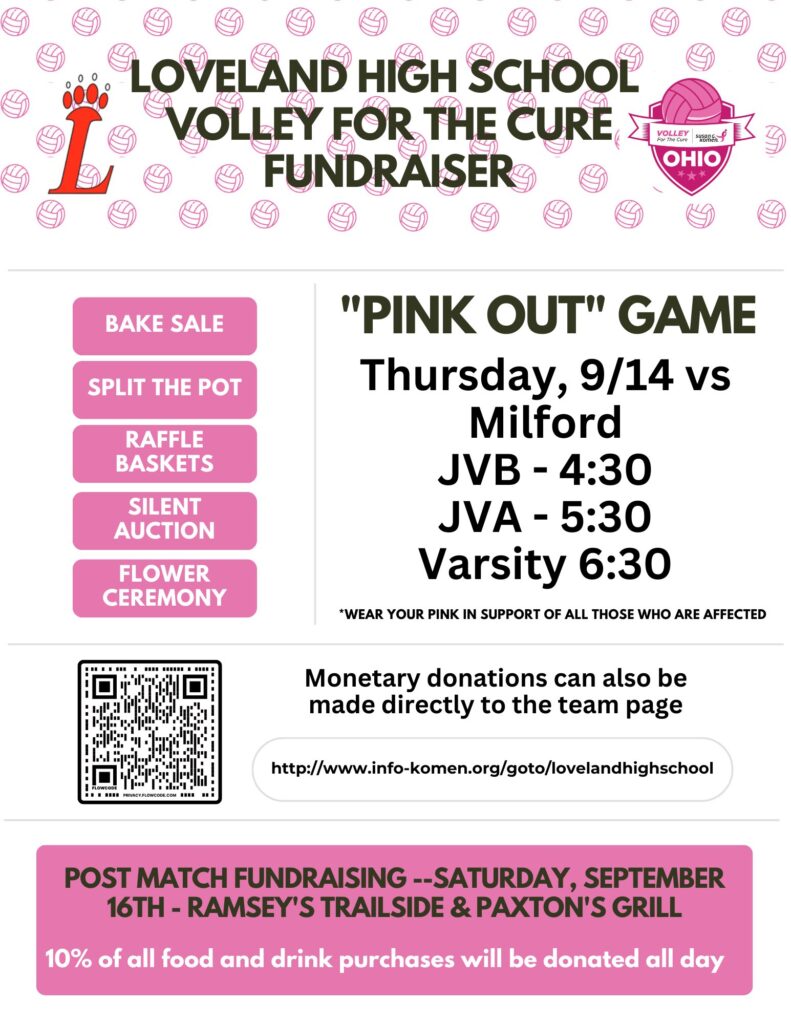
    Loveland, Ohio – Please be there to support “Tigers For A Cure” on September 14th! The Loveland Tigers and Milford Eagles are supporting the Susan G. Komen Foundation in the Tiger gym from 4:30 until 9 PM.

    It’s not Loveland versus Milford – it’s the Tigers and the Eagles, set by set, dig by digging, “together” to end breast cancer!

    Follow Loveland Tigers Volleyball to learn more about helping with the event and supporting cures for breast cancer.

    Thursday, September 14

    JV-B: 4:30 PM

    JV-A: 5:30 PM

    Varsity: 6:30 PM

    Post-Match fun in Historic Downtown Loveland on the Loveland Bike Trail at Paxton’s Grill and Ramsey’s Trailside.

    Can’t attend?

    DONATE NOW

  • Pregnant workers have new protections. Here’s what to expect from your boss

    Pregnant workers have new protections. Here’s what to expect from your boss

    BY:  – Ohio Capital Journal

    Almost two months after workplace accommodations for pregnant workers became law, the rules surrounding what employers can and cannot do have yet to be finalized — but that doesn’t mean the protections are not in place.

    The Equal Employment Opportunity Commission’s proposed regulations are expected to offer more clarity once finalized, but workers can still access their rights under the new Pregnant Workers Fairness Act and employers are still required to understand the law and follow it.

    Here’s what you need to know about why workers say the law was needed, what workers’ rights are under the law and employers’ obligations to employees.

    Why the law was needed

    Other federal laws cover the rights of pregnant workers but advocates have long argued that many of them are too narrow to address the situations pregnant workers face when they seek accommodations. The Americans with Disabilities Act, for instance, does not consider pregnancy to be a disability but pregnancy-related complications, such as preeclampsia, do qualify. Under the ADA, a pregnant worker can’t seek out an accommodation in the hope of preventing dangerous pregnancy-related complications.

    The Pregnancy Discrimination Act, passed in 1978, prohibits discrimination against pregnant employees but it’s difficult in practice for workers to receive accommodations under the law, because it requires finding another worker who received accommodations like the ones they’re seeking. This can be a challenging and time-consuming process because workers may not be aware of what kinds of accommodations their coworkers are seeking or may not have access to this information in the way their employer does.

    Despite those laws, 23% of mothers said in a survey last year that they had weighed whether or not to leave their job because their workplace lacked reasonable accommodations or they were worried about pregnancy discrimination.

    The Pregnant Workers Fairness Act, which passed in December, has been in the works for a decade. In the intervening years, states began taking their own action. As of April, 30 states — including Alaska, Colorado, Minnesota, and Tennessee — as well as the District of Columbia, and four localities, had similar laws to the Pregnant Workers Fairness Act, some of which may offer stronger protections in certain situations than the PWFA, according to A Better Balance, a worker advocacy nonprofit. Twenty states did not have state protections like these at the time of its state analysis, including Alabama, Missouri, Pennsylvania, Wisconsin, and Michigan. The nonprofit has a comprehensive list of state policies on pregnant workers’ rights.

    What are your employee rights

    Congress and federal agencies, employment agencies, labor organizations, private employers with 15 or more workers, and state and local governments with 15 or more workers are subject to the law, according to the EEOC.

    While the rules haven’t been finalized, if you think your rights have been violated, you can already take action. On June 27, the EEOC began allowing workers to file charges under the law for violations that occurred on that day or later. Workers need to take this step before they can file a lawsuit against their employer. The law protects employees and job applicants who need accommodations because of pregnancy, childbirth, or conditions related to pregnancy and childbirth. Under the PWFA, pregnant workers should be able to make requests for reasonable accommodations, such as closer parking, uniforms in their size, and additional rest time.

    The PWFA is similar in many ways to the Americans with Disabilities Act. It does not require an employer to provide an accommodation if doing so would bring it “undue hardship,” or in other words, it would come at great difficulty or expense to the employer.

    But the law is also a bit different than the ADA. Unlike the ADA, where the employee has to be able to do the essential functions of their job or they no longer qualify for accommodations, the PWFA says that workers do not always have to be able to perform an essential function temporarily because of their pregnancy. It is expected that they will be able to resume those duties in the near future.

    The EEOC’a proposed rules define the “near future,” or when workers will be able to perform essential functions of their job after being temporarily unable to do so, as generally going up to 40 weeks. This does not mean workers will always have 40 weeks but that needing 40 weeks doesn’t disqualify an employee for the accommodations. The regulations also say that if there are multiple options for effective accommodations, the employer should favor the worker’s preferred accommodation.

    Liz Morris, deputy director for the Center for WorkLife Law, said applicants and new employees who want to work remotely because of their pregnancy will also be covered in the PWFA. Applicants can request accommodations during the hiring process itself, such as making modifications to a physical test. If a pregnant applicant anticipates that they will need adjustments from an employer because of their pregnancy, the applicant can agree to a general policy without accommodations and then request them once they are employed.

    The EEOC regulations also get into detail about pregnancy-related medical conditions that apply to workers under the PWFA, A Better Balance Vice President Elizabeth Gedmark said.

    “…The proposed rule discusses pregnancy-related issues ranging from preterm labor to anxiety and depression while also making clear that limitations can also be ‘modest, minor, and/or episodic,’” she told States Newsroom over email.

    Lactation, potential pregnancy, miscarriage, infertility and fertility treatments, and having an abortion are also listed in the regulation. An employee who needs to take leave because of a limitation due to a condition related to pregnancy and childbirth should qualify for that leave under the PWFA, according to the proposed rules. The EEOC gives miscarriage and childbirth as examples of reasons for workers to take different forms of leave. The same definition of “near future” also applies. I

    A Better Balance provides sample letters for employees to use when requesting work accommodations related to pregnancy.

    What employers need to know

    The rules are going through a public comment period through Oct. 10, and Victor Chen, director of communications at the EEOC, told States Newsroom that employers are not required to follow the proposed rules just yet. But he added that the PWFA itself provides direction for employers. He suggested employers read the EEOC’s list of commonly asked questions and listen to its webinar. He said the EEOC “will move as quickly as possible to finalize the regulation” after the comment period closes.

    Morris said that although the regulations aren’t set in stone, “If I were an employer, I would certainly follow them for now, as they are an excellent indication of how the law will ultimately be interpreted.”

    The rules specify that employers can’t deny work to an applicant or employee because of their need for an accommodation, make a decision for a pregnant worker without any discussion on which accommodation they will receive or force them to go on leave if there is an accommodation they could take to continue working. They also can’t retaliate against workers for advocating for themselves under the law and reporting discrimination nor can they try to stop workers from enjoying their legal protections.

    Michael Fallings, the managing partner of Tully Rinckey PLLC’s Austin office, who specializes in federal employment law, said he thinks it will be useful for employers to have more information on how to fairly treat pregnant workers seeking reasonable accommodations.

    “I think it could be helpful for employers because I think some employers are in fear of litigation at times and now that you have a law in place that says what you can or cannot do, it provides some basis for the employers,” he said.

    Morris said that employers should keep in mind that they need to swiftly provide accommodations and if they can’t, they should think about interim accommodations. The proposed EEOC regulations explain that an “unnecessary delay” could result in a violation of the law.

    The future of the law and its regulations

    The law’s regulations may be tweaked during the rulemaking process and could be eventually challenged in the courts. The Alliance Defending Freedom, which has been involved in numerous lawsuits challenging abortion rights,  called the proposed regulations “federal overreach.” The ADF, a legal advocacy group, has argued that the administration doesn’t have the legal authority to include abortion in its implementation. Morris said that accommodations related to abortion are reasonable to include because the EEOC has always defined pregnancy, childbirth and related medical conditions in the courts as including abortion.

    Organizations that supported or opposed the law will also have the opportunity to suggest changes to the regulations. The U.S. Chamber of Commerce advocated for the passage of the law and will provide a public comment on parts of the rule that could be changed, the group told States Newsroom, but declined to elaborate on what should be revised.

    Morris said her organization also plans to submit a public comment on the proposed EEOC regulations. She wants to see some revisions on the issue of medical certification to make it even easier for employees to receive accommodations.

    “A shocking number of people don’t receive prenatal care because they don’t have access to it either because of financial barriers or because they live in a remote area where it’s difficult to travel to, to receive prenatal care,” she said.


    Casey Quinlan
    CASEY QUINLAN

    Casey Quinlan is an economy reporter for States Newsroom, based in Washington, D.C. For the past decade, Quinlan has reported on national politics and state politics, LGBTQ rights, abortion access, labor issues, education, Supreme Court news and more for publications including The American Independent, ThinkProgress, New Republic, Rewire News, SCOTUSblog, In These Times and Vox.

    MORE FROM AUTHOR

  • Nebraska’s Ted Carter named next president at Ohio State

    Nebraska’s Ted Carter named next president at Ohio State

    BY:  – Ohio Capital Journal

    LINCOLN, NEBRASKA — Barring a last-minute change of heart on either side, the University of Nebraska will need a new president soon.

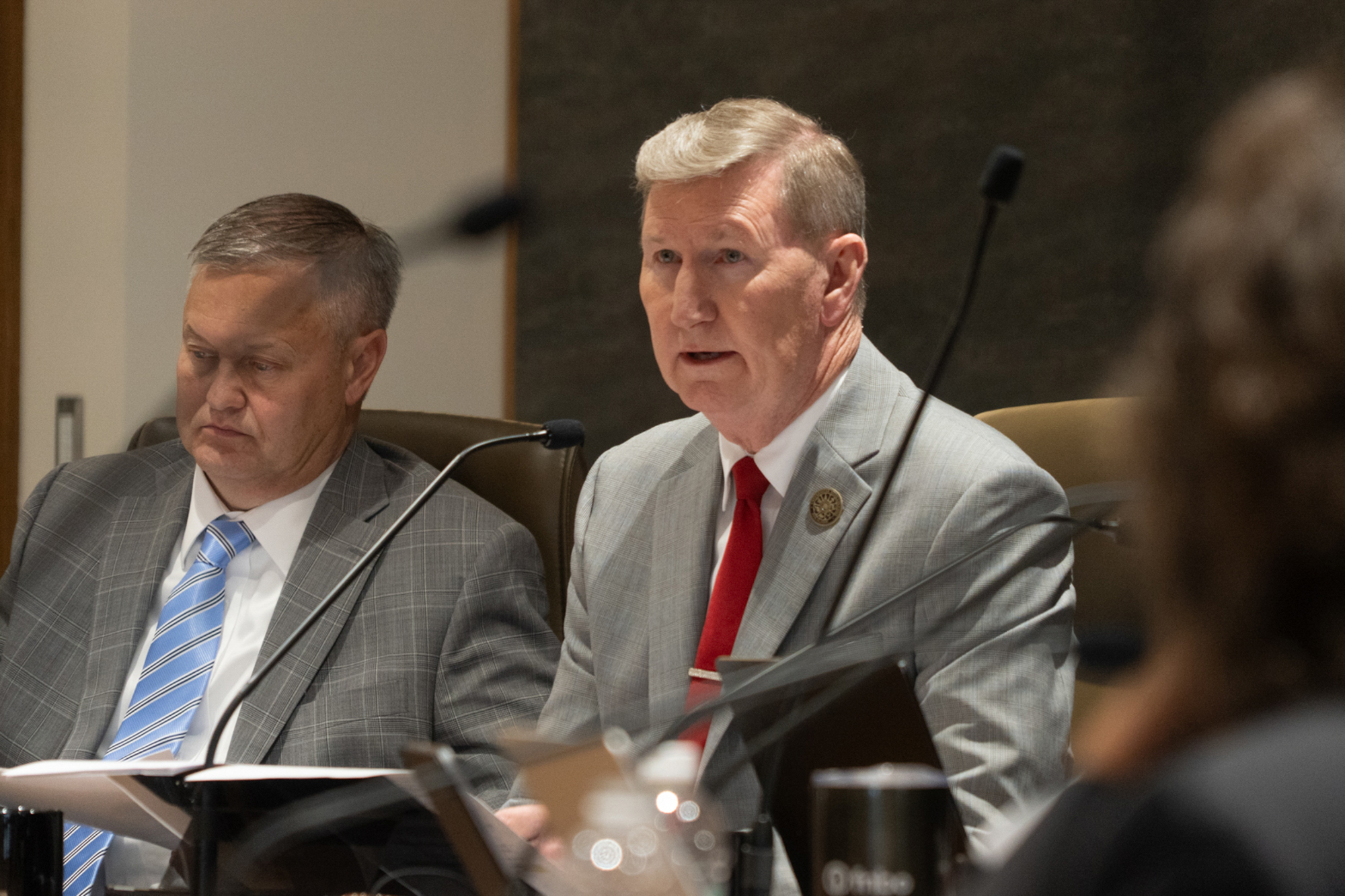
    NU system President Ted Carter, the former superintendent of the U.S. Naval Academy and a vice admiral, is expected to be named the next president at The Ohio State University in Columbus.

    UPDATE: The Ohio State Board of Trustees did name Carter as the university’s next president during their Tuesday meeting.

    Privately confirmed

    Multiple people who have been informed this week of Carter’s pending departure confirmed the hiring to the Nebraska Examiner.

    “Yes, he is gone,” one university leader said.

    “It’s true, what you heard,” an elected official said.

    “You’re not wrong,” a state official said.

    Members of the NU Board of Regents reached Tuesday either declined to comment or did not immediately return calls seeking comment. Representatives of the University of Nebraska system did not immediately return calls or messages seeking comment.

    Helped bridge political divide


    Carter just received a positive evaluation and notice for his work during the 2022-23 academic year, including notice that he would receive a $144,000 bonus.

    The regents cited his work boosting a private fundraising campaign to raise $3 billion, and his efforts to secure more state funding for NU than Gov. Jim Pillen, a former regent, proposed in his first state budget. They also mentioned increased research funding and improved retention rates for young students.

    Carter said he would donate that bonus to charity, partly because the university’s campuses in Curtis, Kearney, Lincoln and Omaha are coping with a $58 million budget shortfall, the Lincoln Journal Star reported.

    The NU president helped launch the Nebraska Promise program that helped low- and middle-income Nebraskans attend NU tuition-free. He has been working on a five-year plan to improve the university system. He also helped the campus navigate the COVID-19 pandemic.

    Carter made waves in Nebraska with his ability to persuade conservative and liberal constituencies about the value of investing state and private resources in higher education, several political observers said.

    State changing

    But the state has changed since he arrived in January 2020. A more conservative Legislature increasingly puts university spending and actions in the political crosshairs. including public spats between former Gov. Pete Ricketts and former University of Nebraska-Lincoln Chancellor Ronnie Green.

    Carter also defended academic freedom in 2021 when Pillen, then a member of the NU Board of Regents running for governor, tried to pass a resolution banning the imposition of critical race theory on NU campuses. The resolution failed.

    Carter has answered some of those changes by trading on the trust he had earned and, as his critics explained, consolidating power in the president’s office.

    The most recent example came in June, when the NU Board of Regents unanimously moved final decision-making authority over Husker athletics under Carter instead of under the UNL chancellor.


    Aaron Sanderford
    AARON SANDERFORD

    Political reporter Aaron Sanderford has tackled various news roles in his 20-plus year career. He has reported on politics, crime, courts, government and business for the Omaha World-Herald and Lincoln Journal-Star. He also worked as an assignment editor and editorial writer. He was an investigative reporter at KMTV.

    MORE FROM AUTHOR

  • Join the LIFE Empty Bowls Event

    Join the LIFE Empty Bowls Event

    Advertisement

    Loveland, Ohio – You can enjoy warm soup, fresh bread, and decadent desserts provided by local sponsors, and take home a beautiful handmade pottery bowl donated by local artists, all for only $25. Proceeds benefit the Loveland LIFE Food Pantry.

    We’d like to thank Laura Davis, her staff, and members of Core Clay for hosting two throw-a-thons to create bowls for our event. The process of creating these works of art is interesting – different base colors are used because they react with the glazes in different ways, and produce a variety of shades. The bowls created during the throw-a-thons will go through firing, glazing and firing again before complete. Join us for Empty Bowls to support LIFE pantry and take home your very own one-of a kind piece of art!

    When: Saturday, October 14th

    Two seatings are offered, 11 AM until 12:30 AM and 1 PM until 2:30 PM, while supplies last; each seating is limited to 150 people and the event is expected to sell out.

    Where:

    Prince of Peace Lutheran Church 101 South Lebanon Road, Loveland Ohio 45140

    Extras:

    You’ll also have an opportunity to win fabulous gift baskets donated by local businesses and the community by purchasing raffle tickets. If you purchase raffle tickets when you pre-register for the event, the cost is 6 tickets for $5, 12 tickets for $10, and 25 tickets for $20 (the cost goes up to $1 per ticket the day of the event). Take-home containers of soup will also be available while supplies last, for an additional cost.

    Register now to reserve your spot!

    If you are unable to attend but would like to donate to the LIFE Food Pantry, please click here

    PROUDLY SERVING HUNDREDS OF LOCAL FAMILIES EACH MONTH

    Since 1988, the Loveland Interfaith Effort (LIFE) Food Pantry has been serving the Greater Loveland community by providing food and support for those less fortunate. LIFE currently provides much-needed food to hundreds of families, stock snack shelves at the local schools for qualifying children, and even financial assistance for those in dire need.

    THIS WEEK’S PRIMARY NEEDS

    FOOD: Canned Chicken, Canned Fruit, Mixed Vegetables, Canned Carrots, Cereal, Coffee, Flour, Manwich/Sloppy Joe, Ramen, Spaghetti
     
    HOUSEHOLD & PAPER GOODS: Dish Soap, Laundry Detergent, Paper Towels

    WEEKEND BAGS: Individually Packed Cookies, Oatmeal (packets)

    SENIORS: Ensure/Boost