Author: Loveland Magazine

  • Ohio abortion rights groups merge and set sights for amendment on November ballot

    Ohio abortion rights groups merge and set sights for amendment on November ballot

    Getty Image

    BY: SUSAN TEBBEN – Ohio Capital Journal

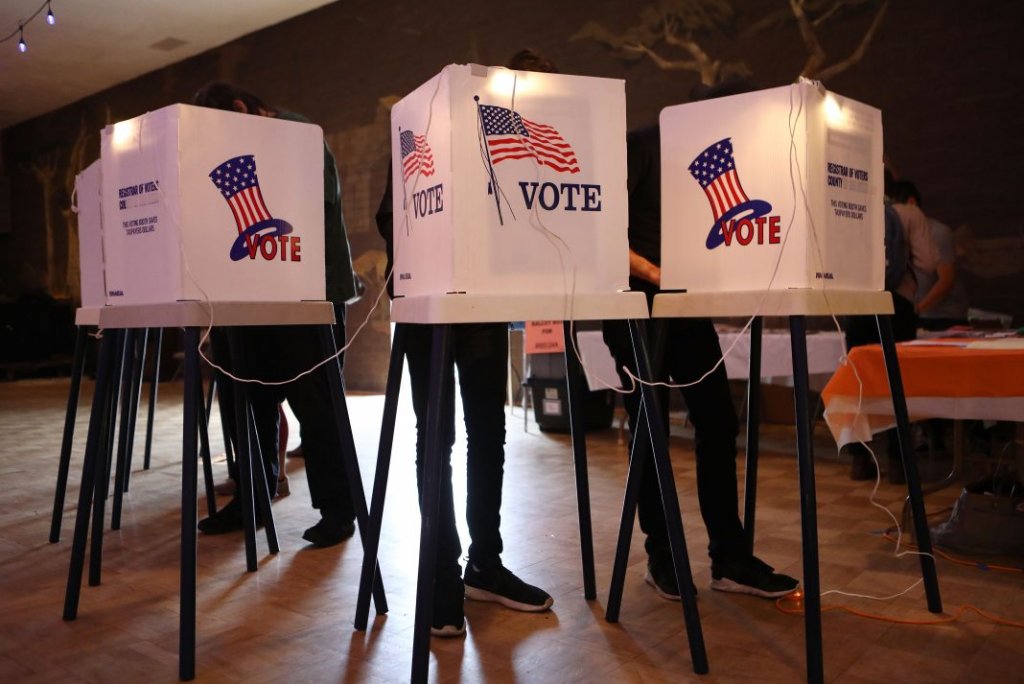
    Two groups who had already committed to separate efforts to get reproductive rights in the hands of Ohio voters have now merged and set an end goal: abortion access on the November ballot.

    Ohioans for Reproductive Freedom and Ohio Physicians for Reproductive Rights announced Thursday that they are joining together to “file language with the Ohio Attorney General to place a citizen-initiated constitutional amendment to restore and protect reproductive rights and abortion access on the November 2023 statewide general election ballot.”

    “This grassroots initiative – by and for the people of Ohio – is foundational to ensuring access to abortion and the right to bodily autonomy, not only for ourselves, but for generations to come,” said Kellie Copeland, executive director of Pro-Choice Ohio and member of Ohioans for Reproductive Freedom, said in the announcement.

    The groups said the constitutional amendment will look similar to a Michigan amendment which voters approved in November 2022.

    After the amendment is drafted and reviewed by the state Attorney General and Ohio Ballot Board, the groups plan to circulate petitions to place the issue on the ballot.

    Rumblings of a constitutional amendment have been floating for months now, spurred on by the Dobbs v. Jackson Women’s Health Organization case, in which the U.S. Supreme Court overturned decades old nationwide rights to abortion nationwide in Roe v. Wade.

    Placing the measure on the 2023 ballot was called a “moral imperative” which “offers the best prospects for success,” according to Dr. Lauren Beene, executive director of the OPRR.

    “The lives and health of Ohioans have been at risk since Roe was overturned,” Beene said in a statement. “That is why we must seize the earliest possible opportunity to ensure that doctors and patients, rather than politicians and the government, are empowered to make decisions about pregnancy, contraception and abortion.”

    The move comes as some abortion rights advocates are ramping up legal efforts to protect patients and physicians seeking abortion care or advice, along with a battle involving Ohio’s Attorney General Dave Yost to keep abortion pills from being distributed through the mail or at national pharmacies, and a new study that showed abortion clinics find it more and more difficult to comply with laws on the subject because of bureaucratic discretion.

    The ballot measure might have another issue if in-fighting within the state’s Republican caucus continues. One side of the caucus is promoting the controversial legislation that would raise the threshold to approve constitutional amendments, while House Speaker Jason Stephens didn’t list it as one of the priority bills he and his faction unveiled on Wednesday.

    Republicans on both sides of the aisle have expressed interest in legislative prohibitions to abortion since the downfall of Roe, and both sides are awaiting the resolution of a court case under which a six-week abortion ban is paused indefinitely as appeals go through.


  • After roundtable, Ohio Dems talk next steps following Norfolk Southern derailment

    After roundtable, Ohio Dems talk next steps following Norfolk Southern derailment

    BY: SUSAN TEBBEN – Ohio Capital-Journal

    Ohio Statehouse Democrats have been in discussions with environmental groups and first responders to talk about how to help East Palestine recover from the toxic chemicals leaked as a result of a Norfolk Southern train derailment.

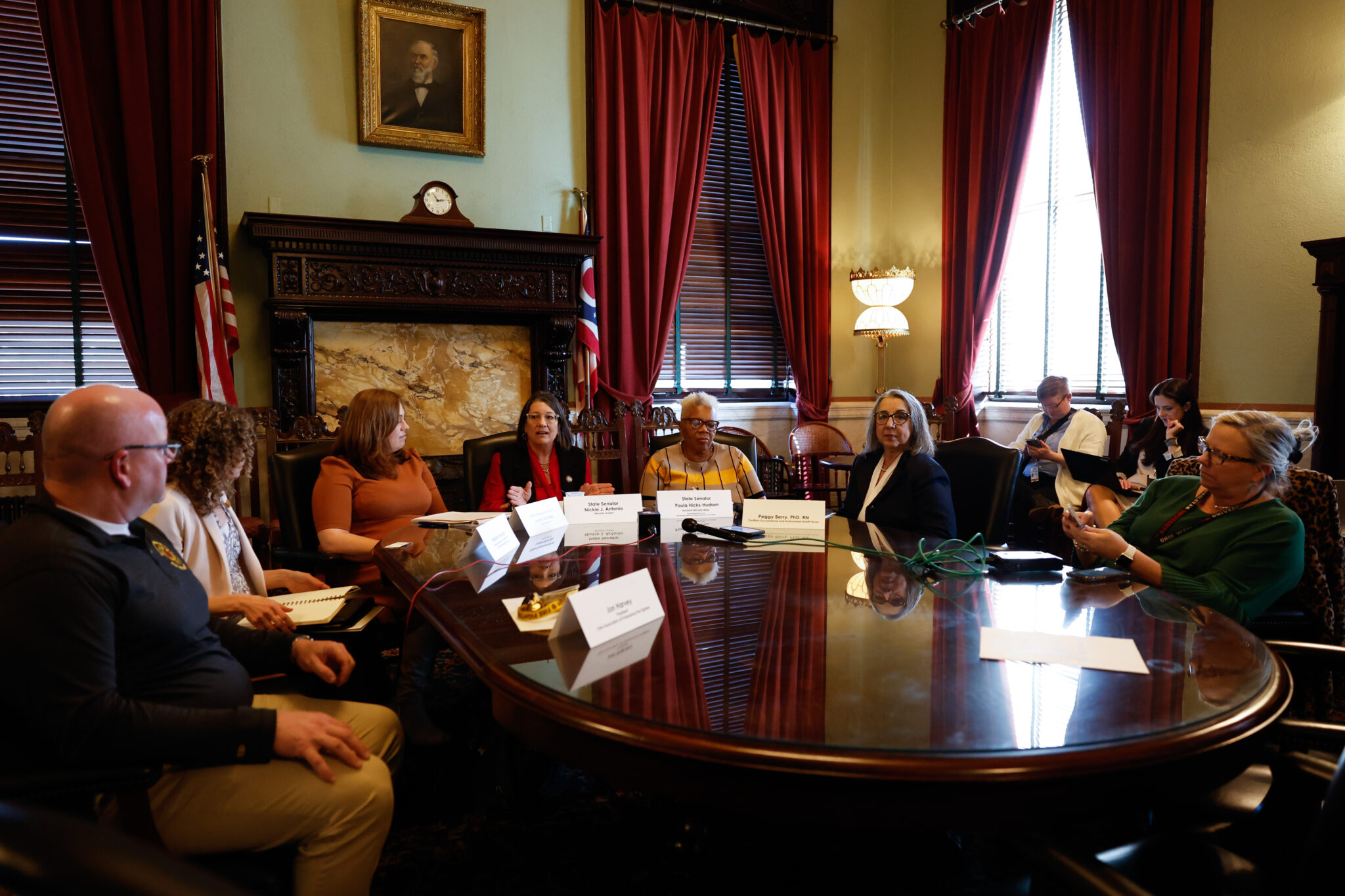
    Senate Minority Leader Nickie Antonio, D-Lakewood, joined with Assistant Minority Whip Sen. Paula Hicks-Hudson, D-Toledo, and state Rep. Lauren McNally, whose 59th House District includes East Palestine, to talk about protecting residents and bringing federal resources to the area.

    “What we’re looking at is a town and the citizens of this town that are being hit with a big question mark,” Hicks-Hudson said.

    The town was tipped into panic after a Norfolk Southern train transporting various chemicals, among them toxic vinyl chloride, derailed, spilling the chemicals and causing an areal evacuation ordered by Gov. Mike DeWine.

    Though the residents have been allowed back, the leak and the subsequent clean up methods have left many residents and state leaders wondering how the derailment happened and what the environmental effects will be for years to come.

    There have already been reports of animal deaths and sicknesses connected to the chemical spill, and alerts that not only the local water supply but the Ohio River may have been infiltrated by vinyl chloride and the other contaminants housed in the train cars.

    In a Tuesday press conference, DeWine and other state officials said the leak and fire used to burn off the chemicals killed off thousands of fish in the waterways, though vinyl chloride has not been found in downriver water samples.

    Here are resources provided via the Ohio EPA and U.S. EPA for those affected by the East Palestine train derailment:

    For smells, fumes, animals, health and other concerns:
    Taggart Road Incident Hotline: (234) 542-6474

    To request in-home air testing (for residences within the 1-mile evacuation zone):
    Residential Re-Entry Request Hotline: (330) 849-3919

    Private water well questions:
    Columbiana County Health Department: (330) 424-0272

    Any other Ohio EPA-related calls about the incident can be directed to the Public Interest Center’s Lisa Cochran or Mary McCarron:(614) 644-2160

    One week on from the lifting of the evacuation order, Democrats say they are looking to work with Republicans on legislative fixes to the faults spotlighted by the derailment. To prepare themselves, Antonio, Hicks-Hudson, and particularly McNally met with first responders and environmentalists to talk about how to respond to the incident, and how to prevent it from happening again.

    “It’s not just East Palestine and it’s not just the residents, it’s the businesses, it’s the entire Mahoning Valley,” McNally said. “It goes to show you how huge this catastrophe has affected a very tiny town.”

    One of the people the Democrats met with was Jon Harvey, president of the Ohio Association of Professional Firefighters, who pushed for a statewide incident management system that would bring together decision makers in one spot in a quicker amount of time.

    “One of the issues that you have is the different jurisdictions that come in and the type of decisions they can make,” Harvey said.

    Legislators and experts alike want to see a state of emergency declaration open up federal resources to the area to help residents with things like the cost of bottled water and longterm health monitoring. Melanie Houston, managing director of water policy for the Ohio Environmental Council, said the state should also own the authority the Ohio EPA and the US EPA have to hold Norfolk Southern accountable.

    “They can do things like issue penalties and put companies like Norfolk Southern under orders,” Houston said, meaning mandatory measures that the companies must complete. “We want to see the Ohio EPA and the US EPA lean into those authorities.”

    A disaster declaration is something Antonio said she knows DeWine is also looking into, and it “sounds like something that we may advocate for.”

  • Former associate testifies that ex-Ohio GOP Chair Borges paid to spy on bailout repeal effort

    Former associate testifies that ex-Ohio GOP Chair Borges paid to spy on bailout repeal effort

    BY: MARTY SCHLADEN – Ohio Capital Journal

    CINCINNATI — Former Ohio Republican Party Chairman Matt Borges paid $15,000 off the books in 2019, a witness testified Tuesday. It was in an attempt to gather inside information about the campaign to repeal a $1.3 billion utility subsidy that had just been passed by the legislature, a Borges associate said.

    In addition, the chairman of the company that benefited most from the subsidy in an email referred to the scheme as a “black op” and said he was prepared “to do whatever it takes” to defeat the repeal effort, the witness, Juan Cespedes, said. Coincidentally, the chairman, John Kiani, started his career at Enron, a Houston Energy company that collapsed under a wave of unmet contracts and accounting scandals in 2001.

    It was the 11th day in the federal court trial of Borges and former Ohio House Speaker Larry Householder, R-Glenford. Borges is accused of assisting Householder and others in a scheme to use $61 million from Akron-based FirstEnergy to make Householder speaker and pass the massive bailout.

    The bulk of the bailout was intended to benefit money-losing nuclear and coal plants owned by FirstEnergy subsidiary FirstEnergy Solutions. It was going through bankruptcy proceedings and executives with the parent company and the subsidiary desperately wanted the bailout to complete the bankruptcy, spin off FirstEnergy Solutions and possibly sell the nuclear plants.

    Gov. Mike DeWine signed the bailout the same day it passed in 2019, but a repeal effort started amid reports that it was “the worst energy bill of the 21st century.” Not only did it prop up 70-year-old coal plants under the guise of being a “Clean Air Program,” it also gutted the state’s renewable energy standards.

    Borges was part of a team of lobbyists who worked to pass and protect the bailout, House Bill 6. And, because of his long experience in Ohio politics, he was asked to make use of some of his relationships in the effort, Cespedes, another member of the team, testified.

    Cespedes was also charged with racketeering, but he pleaded guilty and is cooperating with prosecutors.

    The off-the-books payment

    One of the primary acts Borges is charged with has to do with a $15,000 payment he made during the repeal effort to Tyler Fehrman, who was helping manage the campaign to gather enough valid signatures to get the repeal on the ballot. 

    Inside information was valuable to the pro-H.B. 6 team because it enabled them to gauge the strategy and likelihood of success of the repeal effort.

    Cespedes testified that he tried to keep the plan to recruit Fehrman from Kiani, the FirstEnergy Solutions chairman whose company financed a big portion of the fight against the repeal. Kiani was a hard-charging executive and Cespedes believed that once he learned of the spying effort, he would press the operatives relentlessly. 

    However, Cespedes said, Borges told Kiani about it, and it seems Cespedes’s worries were well founded.

    In an Aug. 31, 2019 text, Kiani asked “what happened to the black ops?” in a reference that Cespedes said was to the spying effort. Then, in a Sept. 2, 2019 text, Cespedes told Borges that Kiani, “reiterated to do whatever it takes to get this information.”

    It appears that Fehrman was paid, but it’s unclear what he was paid for.

    In taped conversations played earlier in the trial, Borges discussed paying Fehrman, but he claimed to Fehrman that it was for work Fehrman might do some time in the future. But Borges made other statements that seemed to show that he knew the two were doing something wrong.

    “It would be bad for both of us if the story came out,” he told Fehrman in a recording that Fehrman made with the help of the FBI. “But it would be worse for you.”

    On Tuesday, Cespedes testified that he roughed out a budget at the time of the repeal campaign. He made an entry in it to pay $25,000 to an “employee.” Cespedes said the money was intended for Fehrman.

    Asked why he used “employee” to label the entry, Cespedes said, “I wasn’t going to write ‘bribe.’ I wasn’t going to write anything nefarious.”

    Prosecutors displayed a photograph of what they said was a contemporaneous budget that Borges roughed out in a notebook that Cespedes had photographed. Cespedes testified that when he asked Borges why a payment to Fehrman wasn’t in it, Borges “simply said it wasn’t something he wanted to write down.”

    Cespedes testified that Fehrman later went quiet on Borges and Cespedes assumed that their deal had fallen through. But after the repeal campaign had failed, an accounting showed that the $15,000 had been paid, Cespedes said. 

    When he asked Borges about it, “He said, ‘I just wanted to keep him quiet,’” Cespedes testified.

    Earlier in the HB 6 fight, Borges and Cespedes were struck by Kiani’s connections to Enron, which ceased to exist after one of the biggest corporate scandals to that point in American history.

    “The shocking thing last night was learning that Kiani came from Enron,” Borges said in a text.

    Kiani went from there to work as a hedge fund manager and then he made his way onto the FirstEnergy Services board as an activist investor. Cespedes testified that a Kiani aide told him that Kiani would make $100 million from the sale of FirstEnergy Solutions’ nuclear plants. 

    Regardless of whether that’s accurate, Kiani clearly was willing to spend lots of corporate money to win subsidies for them. To fund a statewide, eight-week media campaign for the bailout, bankrupt FirstEnergy Solutions approved a $15 million budget, Cespedes testified.

    That amount would grow after the bill passed and the repeal fight got underway.

    Kiani continues to be executive chairman of Energy Harbor, the new name for FirstEnergy Solutions after it emerged from bankruptcy. His company bio credits him with “the successful operational and financial turnaround of Energy Harbor into a leading, carbon free power infrastructure and energy supply company.”

  • Attorneys general from 23 GOP-led states including Ohio back suit seeking to block abortion pill

    Attorneys general from 23 GOP-led states including Ohio back suit seeking to block abortion pill

    BY: JENNIFER SHUTT – Ohio Capital Journal

    Attorneys general representing nearly two dozen Republican states are backing a lawsuit that would remove the abortion pill from throughout the United States after more than two decades, eliminating the option even in states where abortion access remains legal.

    The state of Missouri filed its own brief in the case Friday while Mississippi Attorney General Lynn Fitch filed a brief on behalf of her state as well as Alabama, Alaska, Arkansas, Florida, Georgia, Idaho, Indiana, Iowa, Kansas, Kentucky, Louisiana, Montana, Nebraska, Ohio, Oklahoma, South Carolina, South Dakota, Tennessee, Texas, Utah and Wyoming.

    “The serious nature of the FDA’s unlawful actions, and the agency’s decision to invite lawbreaking by private parties and government actors across the country, favors broad relief,” the 22 Republican attorneys general wrote in the multi-state brief.

    “The FDA and the Administration as a whole have no intention to respect the Constitution, the Supreme Court, or the democratic process when it comes to abortion. This Court’s decisive action is warranted,” they added.

    The case, Alliance for Hippocratic Medicine v. U.S. Food and Drug Administration, was originally filed in the U.S. District Court for the North District of Texas in mid-November by Alliance Defending Freedom, an anti-abortion legal organization.

    The lawsuit argues, on behalf of four anti-abortion medical organizations and four anti-abortion physicians, that the U.S. Food and Drug Administration exceeded its authority when it approved mifepristone to end pregnancies in 2000.

    The prescription medication was originally approved for up to seven weeks into a pregnancy but is now approved for up to 10. It is used as part of a two-drug regimen that includes misoprostol as the second pharmaceutical.

    The abortion pill, mifepristone, is legal at the federal level, though several GOP states have laws in place that restrict abortion to less than 10 weeks, setting up a dispute between state law and the federal government’s jurisdiction to approve pharmaceuticals.

    If the judge doesn’t pull the abortion pill entirely, the anti-abortion organizations’ lawsuit argues to move the dosage and prescribing process back to how it worked before 2016, when the FDA made changes to its approval.

    DOJ says suit ‘unprecedented’

    The U.S. Justice Department argued in its court filing the anti-abortion groups’ lawsuit “is extraordinary and unprecedented.”

    “Plaintiffs have pointed to no case, and the government has been unable to locate any example, where a court has second-guessed FDA’s safety and efficacy determination and ordered a widely available FDA-approved drug to be removed from the market — much less an example that includes a two-decade delay,” wrote attorneys for the U.S. Justice Department.

    The Republican attorneys general said in their Friday briefs that “while the FDA is authorized to evaluate new drugs for safety and effectiveness, States are primarily responsible for protecting the health and welfare of their citizens.”

    “Many States, including several amici here, have thus enacted laws to regulate abortion-inducing drugs and account for their dangers,” they wrote.

    “Such laws can include in-person examination and dispensing requirements, qualification requirements for prescribers, mandates for informed consent, bans on distribution by mailing, or some combination of these and other safety limitations.”

    The 22 attorneys general argued in their brief that the FDA’s approval of the abortion bill has two legal flaws.

    The first is that it “defies the agency’s own regulations” since the section the FDA first approved the drug under, Subpart H, “does not permit the agency to greenlight elective abortions on a wide scale.”

    The second, they wrote, is that allowing abortion medication to be sent via the mail is in direct contrast to a federal law that prohibits “using the mail to send or receive abortion-inducing drugs such as mifepristone.”

    Missouri Attorney General Andrew Bailey, in a separate brief, wrote that he agreed with the arguments made in the original lawsuit and by his fellow Republican attorneys general, but that he wanted to highlight facts “recently uncovered in litigation.”

    Missouri’s brief alleges that medication abortions, which have been used for more than two decades, “are much riskier than surgical abortions” and that “there is a lack of substantial information that the drugs will have the effect they purport.”

    Accessing abortions

    Dr. Jamila Perritt, president & CEO for Physicians for Reproductive Health, said during a press briefing this week on the court case that abortion medication is safe and effective, and that “when abortion is more difficult to access, we know that this means abortion gets pushed later and later into pregnancy as folks try to navigate these barriers.”

    If the judge in the case were to pull mifepristone, Perritt said, people in states where abortion is still legal would be able to access abortion using misoprostol alone since “there are approved regimens of managing medication abortion using only misoprostol.”

    Perritt added that “while it is equally safe … dosage and timing to completion of the abortion varies if mifepristone is not added to the equation.”

    Patients in legal states would also still have access to procedural abortion, Perritt noted.

    Reproductive health experts have said the suit is based on flawed evidence, selected studies and anecdotes.

    Dr. Iffath Abbasi Hoskins, president of the American College of Obstetricians and Gynecologists, said in a written statement in January that “restricting access to mifepristone interferes with the ability of obstetrician–gynecologists and other clinicians to deliver the highest-quality evidence-based care for their patients.”

    “Since 2020, continued usage of mifepristone for abortion care without the in-person dispensing requirement has been shown to be safe and effective,” she wrote when the FDA announced it would allow commercial pharmacies to fill prescriptions for mifepristone.

    The judge in the lawsuit, Trump appointee Matthew Joseph Kacsmaryk, could rule on whether to pull mifepristone from the market as soon as this month.

    Any ruling is likely to be appealed to the conservative-leaning 5th U.S. Circuit Court of Appeals and could eventually find itself in the U.S. Supreme Court.

  • FirstEnergy exec tried to keep DeWine aide’s name off of $10M transaction

    FirstEnergy exec tried to keep DeWine aide’s name off of $10M transaction

    BY: MARTY SCHLADEN – Ohio Capital Journal

    In October 2019, as a battle raged over an attempt to repeal a $1.3 billion utility bailout, a FirstEnergy executive worked to keep the name of a senior aide to Gov. Mike DeWine off of a $10 million infusion of corporate cash into the fight. 

    The executive, Vice President Michael Dowling, did so even after an assistant told him it would violate IRS rules to not list the DeWine aide on the transaction, according to text messages presented Tuesday in the federal corruption trial of former Ohio House Speaker Larry Householder and lobbyist Matthew Borges. The men are accused of racketeering in a scheme to use $61 million from FirstEnergy in exchange for the massive bailout, most of which went to prop up the company’s failing nuclear and coal plants in order to make them attractive to buyers.

    DeWine has denied involvement in the arrangement even though he met with FirstEnergy executives and visited one of its nuclear plants in 2018 as he was seeking the governorship and FirstEnergy was lavishly funding Householder’s effort to elect sympathetic Republicans who would then vote to make him speaker. For his part, DeWine received $23,000 from the Akron-based utility for his campaign and his inaugural celebration, according to Ohio Citizen Action. He vowed to donate the money to charity following revelations of the scandal.

    The governor appointed as chairman of the Public Utility Commission of Ohio a former FirstEnergy consultant who was paid $4.3 million by the utility just before taking his seat on the commission. Even though he was supposed to be regulating the utility, the official, Sam Randazzo, played a role in writing the bailout legislation, according to documents released by the Ohio House. 

    In early 2019, DeWine also appointed FirstEnergy lobbyist Dan McCarthy to be his legislative affairs director, meaning McCarthy was in charge of representing DeWine’s interests before the General Assembly.

    In early 2017, while McCarthy was still working for FirstEnergy, Householder and his son, along with FirstEnergy CEO Chuck Jones and others, flew corporate jets to Washington, D.C. for fancy dinners and Donald Trump’s inaugural. 

    Just after that, McCarthy formed a 501(c)(4) group called Partners for Progress. Also known as a “dark money” group, it received $5 million from FirstEnergy within a few weeks of when McCarthy founded it.

    In an affidavit supporting Householder’s arrest, FBI Special Agent Blane Wetzel said Partners for Progress was “designed to conceal the nature, source, ownership, and control of the payments” from FirstEnergy and associated companies. Through the rest of 2018, McCarthy continued as president of Partners for Progress as it pumped FirstEnergy money into a Householder-controlled dark money group and funded the effort to make Householder speaker.

    The following year, McCarthy resigned that role to work for DeWine in the legislature as Householder shepherded the bailout legislation, House Bill 6. When a final version passed in July 2019, DeWine signed it the same day.

    But opponents quickly started a campaign to circulate petitions to put a repeal on the ballot. That prompted FirstEnergy to pump even greater sums into a “decline to sign” campaign aimed at thwarting the petitions.

    It funded xenophobic mailers and broadcast ads claiming without evidence that the repeal effort was a Chinese plot.

    “Who is knocking at your door?” began a mailer read in court Tuesday. “Foreign enemies have infiltrated our energy grid,” it added and said, ominously, that circulators of repeal petitions “are asking for your information.”

    In October 2019, executives with FirstEnergy and its generation-owning subsidiary seemed panicked that the repeal effort might succeed and they were planning to pump $10 million more into the effort to stop it — through Partners for Progress, the dark money group started by McCarthy, who was now a DeWine aide.

    Dowling, the FirstEnergy vice president, seemed to think it wouldn’t be a good look for the name of a DeWine official to show up on paperwork accompanying the huge transaction.

    “Please make sure Dan McCarthy’s name is not on the filing,” Dowling said in a text message to Partners for Progress Treasurer Michael Vanburen that was presented in court Tuesday.

    Vanburen replied that even though McCarthy was no longer president of the dark money group, IRS rules required that his name be on the filing. Dowling didn’t accept that.

    “There must be a creative way to handle this,” he said. “It’s important that (McCarthy’s) name not be listed.”

    Asked if DeWine asked that McCarthy’s name not be used in paperwork regarding the money transfers, Press Secretary Dan Tierney in an email said, “No. Dan McCarthy resigned from Partners for Progress in December 2018. Dowling’s comments, as you have relayed them to me, do not match the timeline of McCarthy’s affiliation with Partners for Progress.”

    DeWine seems to have been in touch with FirstEnergy executives around the time of the repeal effort. Later in October 2019, FirstEnergy CEO Jones texted Vice President Dowling to say, “DeWine’s on board. I talked to him on Wednesday.”

    According to Jones, they talked about whether the repeal HB 6 effort would gather enough valid signatures to get the measure on the ballot.

    “He said their valid rate was less than 30%,” Jones said of DeWine.

    For his part, Tierney said, “The Governor does not have any recollection of such a conversation.”

    In a later text conversation, Jones said he’d received similar assurances from Secretary of State Frank LaRose.

    After arrests were made in the House Bill 6 scandal, DeWine staunchly defended McCarthy and kept him in his administration for more than a year, until Sept. 24, 2021.

    “As far as I know, Dan McCarthy has been well-respected for many, many years, long before he started working for me as our legislative director and I have faith in his integrity,” DeWine said in early 2021 as questions about the role McCarthy’s dark money group played in the bribery and money laundering scandal continued.

    In another trial-related matter, U.S. District Judge Timothy Black on Tuesday said that he had released a second juror, this time for testing positive for COVID. An earlier juror had been released for refusing to wear a mask.

    That brings the number of alternate jurors to two for a trial that is expected to last into early March.

  • Corruption trial texts: OH AG Yost didn’t speak out against bailout because of utility support

    Corruption trial texts: OH AG Yost didn’t speak out against bailout because of utility support

    BY: MARTY SCHLADEN – Ohio Capital Journal

    CINCINNATI — In June of 2019, Ohio Attorney General Dave Yost thought a proposed utility bailout was a bad law, but he didn’t publicly oppose it because of support he’d received from the bailout’s primary beneficiary, FirstEnergy, according to lobbyists’ text messages displayed in court on Friday.

    Prosecutors displayed the messages as part of the racketeering trial of former House Speaker Larry Householder and Matt Borges, a former Ohio Republican Party Chairman who was acting as a lobbyist at the time the utility bailout was debated and passed. They are accused in a scheme to use $61 million to make Householder speaker in 2019 so he could pass and protect a $1.3 billion bailout that mostly went to protect FirstEnergy’s failing nuclear and coal plants.

    At the time of the men’s July 2020 arrest, federal prosecutors said it was likely the biggest bribery and money laundering scheme in Ohio history. Two months later, as he announced a civil suit against FirstEnergy, Yost echoed those sentiments.

    “Corruption doesn’t happen on an industrial scale like this without cash,” he said in a press conference. “And it’s incredibly important at this moment in our state’s history to send a message that the Ohio political system, the Ohio law-making system, the regulatory environment is not for sale. If you shut off the money spigot, the corruption withers.”

    But behind the scenes 15 months earlier — according to text messages between Borges and lobbyist Juan Cespedes — Yost was pulling his punches on the bailout. Borges said Yost was doing so partly because of $24,000 he received from FirstEnergy and Borges in the cycle leading up to the 2018 election and the subsequent legislative session during which the bailout was passed. 

    Cespedes has pleaded guilty in the scandal and is expected to testify soon in the Householder trial.

    After the scandal broke, Yost announced that he would donate his FirstEnergy-related contributions to charity. 

    But according to Borges, who had run earlier campaigns for Yost, the FirstEnergy money spigot helped guide the attorney general’s conduct as the bailout was making its way through the legislature. Text messages indicate that Borges was assigned to try to enlist Yost’s help with the bailout.

    The legislation, House Bill 6, passed the Ohio House on May 29, 2019, and by the time of the June 26, 2019, text conversation between Borges and Cespedes, opposition to the bailout was growing as it was being debated in the Senate.

    One source of opposition was from outside groups that were planning a ballot initiative to repeal HB 6 if it passed. Borges and Cespedes discussed trying to make it exempt from repeal by treating it as a revenue bill and calling it a tax — based on a $1 subsidy built into the measure. 

    Cespedes asked Borges what the attorney general thought.

    “He’s sympathetic, but he wants to go back and look at the law,” Borges replied.

    As they discussed the matter further, Borges said “Don’t repeat this,” but Yost believed the bailout was a bad law.

    Yost “‘would be out front (in opposition) if not for (FirstEnergy) support and your involvement,’” Borges quoted Yost as saying.

    As attorney general, Yost also would have to approve any repeal language before it went on the ballot. The AG also wanted to help with that if he could, Borges said.

    “If there’s any way the law will allow him to reject the language, he will do it,” Borges texted.

    Yost has been subpoenaed in the case, and his spokeswoman on Friday declined to comment on the text messages.

    “He was subpoenaed to potentially be a witness in this case,” the spokeswoman, Bethany McCorkle, said in an email. “At this time it is inappropriate for him to comment.”

  • Angling for appeal? Householder attorneys go after judge in corruption trial

    Angling for appeal? Householder attorneys go after judge in corruption trial

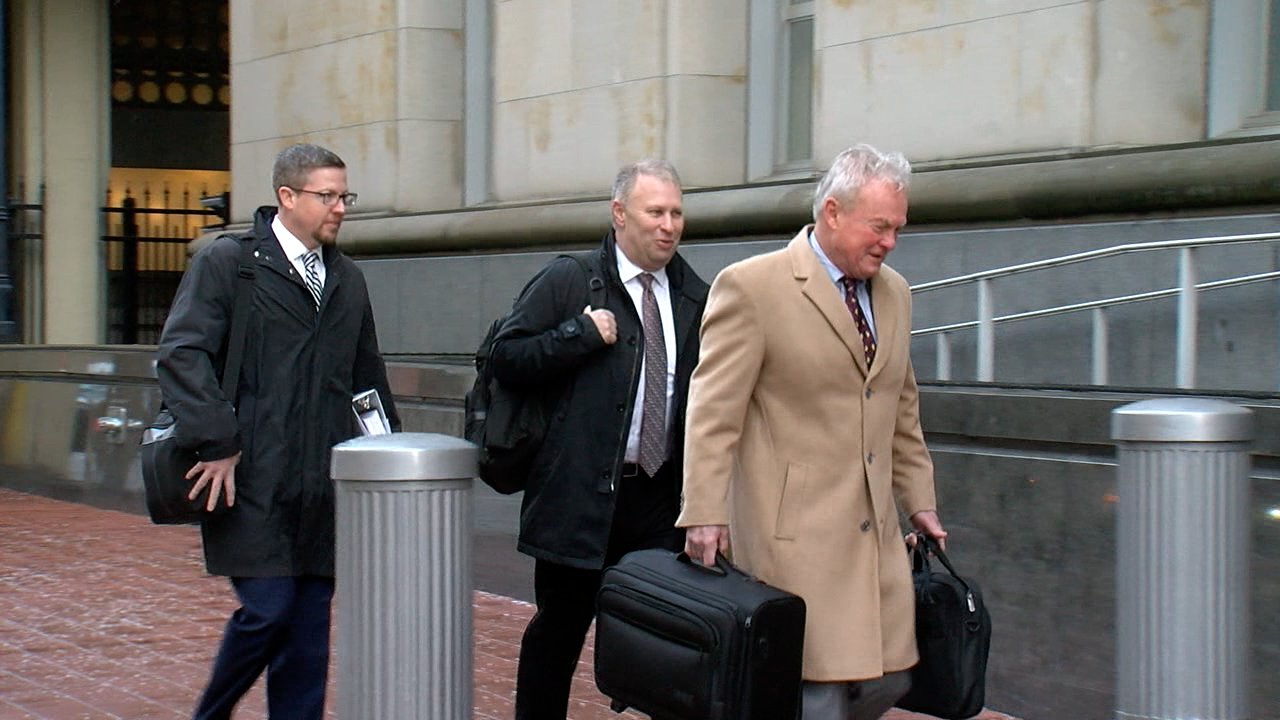
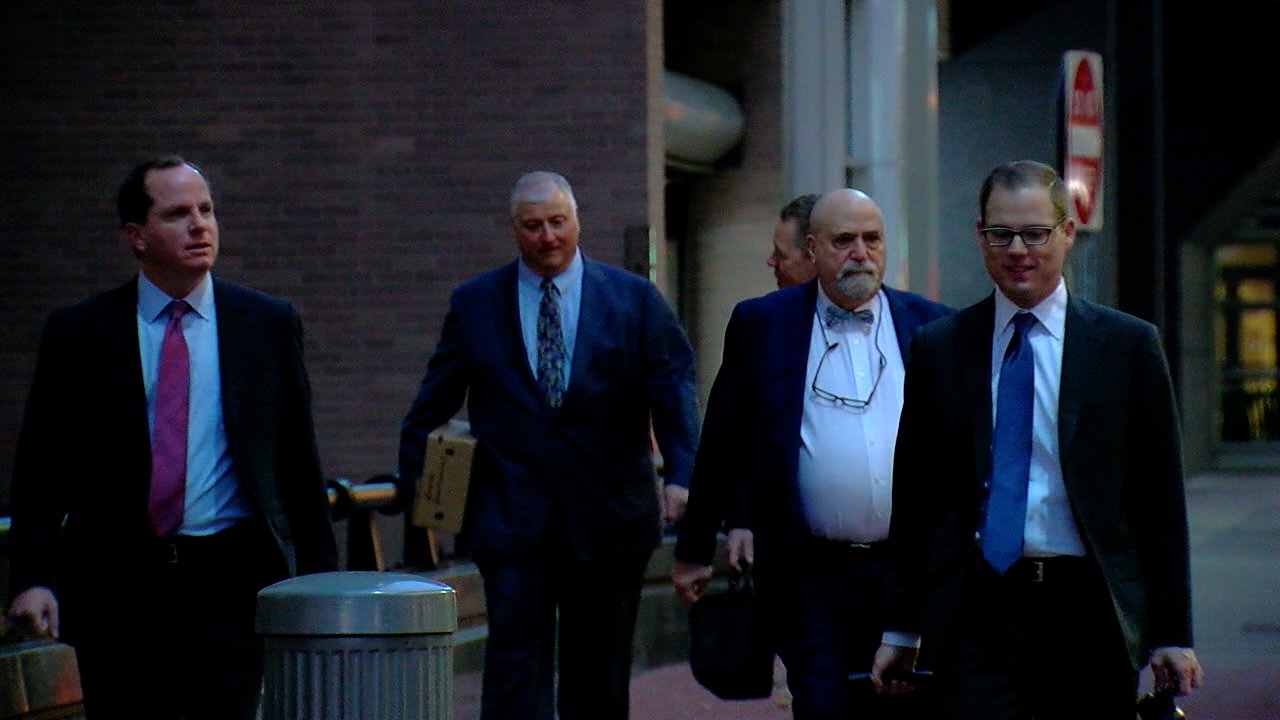
    Former Ohio House Speaker Larry Householder, a Perry County Republican, second from left, with attorneys outside of his racketeering trial. Photo courtesy of WEWS.

    BY: MARTY SCHLADEN – Ohio Capital Journal

    CINCINNATI — There has been speculation since the start of a massive public corruption trial that lawyers for the main defendant — former Ohio House Speaker Larry Householder — were banking on getting any conviction tossed out on appeal.

    There might have been evidence of that on Tuesday when one of the attorneys took the rare step of accusing the judge in the case of bias against his client. The attorney also suggested that the judge harbored a political grudge against Householder going back more than 22 years.

    Testimony resumed Tuesday in the case after repeated delays — first because of weather and then because a juror tested positive for covid. 

    When it did, federal prosecutors continued presenting extensive evidence to support allegations that Ohio utilities paid $61 million into Householder-controlled 501(c)(4) dark money groups and Householder used the money to elect friendly Republicans to make himself speaker in early 2019. Householder is accused of pushing through a $1.3 billion ratepayer bailout that primarily benefited his primary benefactor — Akron-based FirstEnergy — in return.

    Prosecutors have said it was likely the largest bribery and money-laundering scheme in Ohio history.

    Federal prosecutors are known to usually file charges only when they’re almost certain to get a conviction. That’s perhaps even more true when the case is against an elected official.

    And over the course of testimony so far, Assistant U.S. Attorney Emily Glatfelter has introduced reams of evidence in the form of emails and text messages, as well as transcripts of wiretaps and witness testimony — including that of co-defendants who have pleaded guilty.

    Householder’s attorneys have argued that their client raising money and electing candidates who would support his speaker’s bid was just politics as usual. They also argue that Householder only wanted to prop up failing nuclear and coal plants because he wanted to save jobs and protect the tax bases of the communities where they were located.

    Householder also is alleged to have pocketed $500,000 in utility money himself, but his lawyers say those were loans he fully intended to repay.

    However, the attorneys’ conduct on Tuesday might indicate that they’re looking past the jury trial.

    Before the jury entered the courtroom, Householder attorney Mark Marein rose to complain to U.S. District Judge Timothy Black  — about the conduct of Black himself.

    “We all collectively believe that the court holds animosity toward us,” Marein said, referring to Householder’s legal team. He added, “I question whether (Judge Black) should be presiding over this.”

    Black scolded Householder’s lawyers last week for muttering and making faces during Glatfelter’s opening statement. Among his criticisms, Black called the conduct “bush league.”

    The judge also dismissed a juror who refused to wear a mask in court. That prompted speculation that Householder’s lawyers were displeased because such a juror might be more sympathetic to their client, a pro-Trump Republican.

    But Marein gave a wholly different reason for suspecting that the judge was biased against Householder. He said that Black might be holding a grudge from 2000, when Black ran for the Ohio Supreme Court and Householder worked against the candidacy. 

    Both Marein and Black acknowledged that Marein was making the statements simply to get them into the record — presumably so they would be there in the event of an appeal. 

    There is some precedent for overturning public corruption convictions over complaints of judicial bias and prosecutorial misconduct. 

    In 2009, the conviction of former Alaska Senator Ted Stevens was thrown out after the FBI was found to have withheld exculpatory evidence and other misconduct. And in 2016, the U.S. Supreme Court unanimously overturned the conviction of former Virginia Gov. Bob McDonnell, ruling that the trial court judge allowed prosecutors to use an overly broad definition of bribery.

    But accusing a judge of bias in the middle of a trial has risks. Lawyers have said that if one genuinely believes a judge is biased, accusing that person of it in open court could simply make things worse. And in some instances, such accusations have resulted in professional sanctions against the lawyers making them.

    There were a few other developments of interest Tuesday:

    • Prosecutors played a recording of a wiretapped phone conversation between Householder and political operative Neil Clark in December 2017. Clark was also charged in the corruption scandal, but later died by suicide. In a laughing, profanity-strewn passage, the two talked about how Republicans legislators in 2010 drew a portion of Columbus into former U.S. Rep. Pat Tiberi’s district. “Tiberi wanted a safer district,” Householder said, later adding, “He doesn’t like me because he thinks I f*****d with him.” The maps drawn in 2011 were said to have some of the most gerrymandered in the country. Last year, a Republican-controlled panel repeatedly refused orders from the state Supreme Court to draw them more evenly.
    • Householder allies and FirstEnergy officials in August 2017 discussed a third tranche of $250,000 from the company to a Householder-controlled dark-money group at the posh Greenbrier resort in West Virginia, where that state’s Coal Association was holding its annual meeting. The money flowed soon thereafter. That meeting follows a round of swanky dinners in Washington, D.C., involving Householder and FirstEnergy officials the previous January during former President Donald Trump’s inauguration. Two dark-money groups were set up within weeks and one quickly received the first $250,000 from FirstEnergy, even though was hemorrhaging money.

    The trial resumes Wednesday. It’s expected to last into March.

  • Fate of former Ohio House speaker could hinge on whether he took an “official act”

    Fate of former Ohio House speaker could hinge on whether he took an “official act”

    Larry Householder addresses reporters after lawmakers voted to expel him from the General Assembly. He has pleaded not guilty to a racketeering charge and awaits trial. Photo by Jake Zuckerman, OCJ.

    BY: MARTY SCHLADEN – Ohio Capital Journal

    It appears that federal prosecutors have a mountain of evidence they want to present to the jury in their racketeering case against former Ohio House Speaker Larry Householder and former Ohio GOP Chairman Matt Borges. 

    They have emails, text messages, wiretap transcripts, and the testimony of undercover agents and confidential informants. They have so much material that U.S. District Judge Timothy Black said prosecutors and defense attorneys labored mightily before the trial even started to agree on what could be presented to the jury. The process was meant to avoid bogging down what’s already expected to be a six-week ordeal.

    But all that evidence could miss the mark if none of it shows that Householder undertook an “official act” in exchange for all the millions Akron-based FirstEnergy funneled into 501(c)(4) dark money groups to support the effort to elect friendly Republicans who would vote to make Householder speaker. The U.S. Supreme Court overturned a public corruption conviction on that basis just six years ago.

    Householder is accused of masterminding a conspiracy to use $61 million from FirstEnergy and other utilities to make himself speaker and in return ramming through a $1.3 billion ratepayer bailout of failing nuclear and coal plants. His trial began last week, but after two days of testimony it was delayed — first because of weather and then because a juror was diagnosed with COVID.

    But last week, FBI Special Agent Blane Wetzel testified about conduct that made both Householder and FirstEnergy look pretty bad.

    Householder is accused of using about $500,000 from the dark money groups to pay off credit card debt, settle a lawsuit, and repair a Florida home. Meanwhile, FirstEnergy was losing so much money on its nuclear and coal plants that in 2016 it started the process that would send the subsidiary that owned them into bankruptcy.

    But even as the company and Householder were swimming in red ink, he and the company’s CEO flew to Washington, D.C., on private jets in January 2017 for three days of dinners and drinks at some of the city’s swankiest bars and restaurants, Wetzel said. 

    Within two weeks, FirstEnergy money was flowing into Householder-controlled dark-money accounts. In November of 2018, enough Householder-friendly Republicans were elected — many with the help of money from those accounts — to make him speaker the following January. Less than six months later, on May 28, 2019, the House passed its first version of the billion-dollar bailout, House Bill 6. The body passed a final version on July 23, 2019 and Gov. Mike DeWine signed it the same day.

    When former U.S. Attorney David M. DeVillers announced Householder’s arrest almost exactly a year later, he called the scheme with FirstEnergy “likely the largest bribery and money-laundering scheme ever in the state of Ohio.”

    But did Householder undertake an official act in exchange for money corruptly received from FirstEnergy and other Ohio utilities? The answer might not be as straightforward as you think.

    For their part, Householder’s attorneys are arguing that their client was merely raising money like any effective politician would and that he only wanted to subsidize the power plants to save Ohio jobs and the tax bases of school districts.

    In addition, the Supreme Court in 2016 threw out the conviction of former Virginia Gov. Bob McDonnell even though he and his wife took more than $170,000 worth of loans and gifts from a businessman in exchange for hosting him at functions, recommending his product to state agencies, and trying to persuade state universities to study it.

    At issue was whether any of those were “official acts.”

    In that case, Jonnie Williams, CEO of Star Scientific, supported the Virginia Republican’s successful 2009 campaign. Once in office, the gifts really started to flow — including $20,000 worth of designer clothing for McDonnell’s wife, Maureen McDonnell, and a Rolex watch that Maureen gave Bob for Christmas.

    Williams was peddling a compound found in tobacco as a nutritional supplement called Anatabloc. In 2011, the McDonnells hosted an event at the Governor’s Mansion that Williams testified was intended to launch the product. He wanted scientists at the state’s universities to research it, but neither he nor the McDonnells could interest them in the supplement.

    The governor also told the state secretary of administration and the director of the Virginia Department of Human Resources that it would be a good idea for all state employees to take Anatabloc like he was. The officials apparently didn’t take the hint. 

    Investigators caught wind of the McDonnells’ arrangement with Williams and charged them with numerous crimes related to bribery.

    In 2014, they were convicted in federal court and Bob and Maureen were sentenced to two and one year in prison, respectively. They appealed, but the 4th U.S. Circuit Court of Appeals in Richmond upheld the conviction.

    However, when the case made it north to the U.S. Supreme Court, in Washington, D.C., it was overturned. Unanimously.

    Chief Justice John Roberts, the author of the ruling, said that the court took up the case expressly “to clarify the meaning of ‘official act.’” 

    In his trial, “Governor McDonnell had requested the court to further instruct the jury that the ‘fact that an activity is a routine activity, or a ‘settled practice,’ of an office-holder does not alone make it an ‘official act,’ and that ‘merely arranging a meeting, attending an event, hosting a reception, or making a speech are not, standing alone, ‘official acts,’ even if they are settled practices of the official,’ because they ‘are not decisions on matters pending before the government.’” Roberts wrote.

    Instead, McDonnell’s lawyers argued, an official act must be intended to “influence a specific official decision the government actually makes — such as awarding a contract, hiring a government employee, issuing a license, passing a law, or implementing a regulation.”

    In overturning the convictions, the high court agreed, ruling that the McDonnells could still be prosecuted, but the “Government must identify a ‘question, matter, cause, suit, proceeding or controversy’ that ‘may at any time be pending’ or ‘may by law be brought’ before a public official. Second, the Government must prove that the public official made a decision or took an action ‘on’ that question, matter, cause, suit, proceeding, or controversy, or agreed to do so.”

    How much comfort Householder should take from the ruling is uncertain, however. Roberts ended the ruling with what seems to be a warning to politicians thinking of doing shady stuff.

    “There is no doubt that this case is distasteful; it may be worse than that,” he wrote. “But our concern is not with tawdry tales of Ferraris, Rolexes, and ball gowns. It is instead with the broader legal implications of the Government’s boundless interpretation of the federal bribery statute. A more limited interpretation of the term ‘official act’ leaves ample room for prosecuting corruption, while comporting with the text of the statute and the precedent of this Court.”

  • Awaiting budget proposal, child advocates hope for more

    Awaiting budget proposal, child advocates hope for more

    Getty Images

    BY: SUSAN TEBBEN – Ohio Capital Journal

    As policymakers await the newest budget priorities to be laid out by Gov. Mike DeWine, advocates for the state’s children are hoping comprehensive child well-being will be at the top of the list.

    The Ohio Children’s Budget Coalition released their policy agenda for the 2024-2025 state budget, which they hope will include whole-child services to address housing, health, child care, economic stability, and adoption of the Fair School Funding Plan, which was only approved for two years of the six-year phase-in so far.

    “Children do not come in pieces, and neither should the policies and investments that crucially provide and pave the way for them to grow and flourish into successful adulthood,” said Katherine Ungar, senior policy associate with the Children’s Defense Fund-Ohio.

    Recommendations by the OCBC also targeted structural racism, the effects of which “negatively impact child outcomes,” according to the announcement of budget priorities.

    “The budget is a moral document that reflects our state’s priorities,” OCBC co-leader and Children’s Defense Fund-Ohio policy associate Matthew Tippit said in a statement.

    The policy report also laid out challenges to combatting the teacher shortage the state has suffered from for several years, with the Bureau of Labor Statistics stating 21,000 fewer teachers were employed in K-12 public school in the state from September 2021 to September 2019.

    The state has faced recruitment and retention issues, which the coalition attributes to “mounting pressures related to the COVID-19 pandemic, under-resourced schools, politicization of education and lack of respect for educators and the education profession.”

    “While a mass exodus of experienced educators from the teaching profession has not yet materialized, it is cause for significant concern when so many are expressing deep frustrations over what they believe is a lack of support and respect for the work they do with students,” the report stated.

     Groundwork Ohio

    The policy recommendations also come on the heels of a recent early childhood dashboard released by the advocacy group Groundwork Ohio. The dashboard has been in the works since 2021 to “help inform policy makers about the realities facing Ohio families with young children.”

    Groundwork Ohio president and CEO Shannon Jones said the dashboard “tells us where to focus on making positive change for infants, toddlers and preschoolers.”

    The report found that one in five Ohio infants don’t have access to child care or early learning and six in 10 children aren’t ready to attend school based on kindergarten readiness, fourth-grade reading proficiency and eighth-grade math proficiency.

    Racial issues appeared as part of Groundwork Ohio’s analysis, with the group finding that infant mortality rates are still above the U.S. average in Ohio “with a large and appalling racial disparity.”

    “While there are many ways we can begin to improve outcomes for young children, focusing state efforts on its very youngest citizens is an urgent moral imperative as well as a wise state investment,” according to the report.

    The organization was encouraged by state performance in areas like eighth grade math proficiency and improved homeless students and housing cost burdens.

    Early investments are needed to benefit Ohio children throughout their lives, the dashboard concluded as state performance compared to the rest of the country was worse in categories such as early intervention service access and young child poverty.

    Large disparities were found particularly in Black, Hispanic and Native American/American Indian children living below the poverty level.

    The state has also worsened in terms of kindergarten literacy, chronic absenteeism and special needs preschools, according to the dashboard.

  • Teachers would get $60K minimum salary under bill in Congress making grants to states

    Teachers would get $60K minimum salary under bill in Congress making grants to states

    Getty Images

    BY: ADAM GOLDSTEIN – Ohio Capital Journal

    WASHINGTON – A panel of policymakers and educators, including author Dave Eggers and former U.S. Secretary of Education Arne Duncan, gathered at the U.S. Capitol on Wednesday to promote the American Teacher Act.

    The bill, if passed, would authorize the federal government to create four-year grants for states to enact and enforce minimum school teacher salary requirements of $60,000 or more. The program would start in fiscal 2024. It would not mandate teacher raises.

    “We’re here today to advocate for our teachers, our educators, our saving grace that rescues families and our children every day,” said Rep. Frederica Wilson, D-Florida, sponsor of the bill and a former school teacher. “We want our teachers to be paid a livable wage. A wage that is fair, a wage that is commensurate with today’s economy.”

    Rep. Wilson introduced the American Teacher Act in the House of Representatives on Dec. 14, and is expected to re-introduce it in this Congress, though it’s likely to run into opposition from Republicans who control the chamber.

    The legislation states that 15% of the four-year federal grants could support state-level educational agencies, while the remaining 85% must go directly to a state’s local school districts.

    The bill includes a cost-of-living adjustment that would peg teacher salaries to inflation, along with a clause allowing for a national awareness campaign on the importance and work of teachers.

    Phelton Moss, a senior policy adviser to Wilson, said that the bill also incorporates a maintenance-of-effort provision that requires states not to pull back on their commitment to a $60,000 minimum salary, if they are to keep their funding. Additional language inside the bill would ensure states prioritize Title I schools and districts in distributing funds.

    In the 2020-2021 school year, public school teachers made $61,600 while working 52 hours per week, on average. Yet there is significant variation in teacher salary between states.

    Mississippi, the lowest-paying state for teachers in the 2020-2021 school year, paid an average of $46,862, according to the National Education Association. Meanwhile, in New York, the average teacher salary sat at $90,222.

    ‘Heroes’ struggle to stay afloat

    Wilson commended the dedication of school teachers during the COVID-19 pandemic, who taught online or went door-to-door to instruct students who lacked access to technology.

    ”It was during this time that the world finally saw what we’d known for years, that teachers are heroes,” she said. “They deserve a livable, competitive salary that accurately reflects the importance of their role in society.”

    Wilson said that 1 in 5 teachers across the country currently works a second job to supplement their income, and over 9,000 districts across the country pay teachers less than $40,000 per year.

    She said this lack of adequate pay is largely contributing to some reports of a teacher shortage affecting school districts.

    “We should be embarrassed,” Wilson said. “The teacher shortage is among the most pressing threats to education access today. And we must address it. Our classrooms are at stake, our children are at stake, and the future of our country is at stake.”

    Ellen Sherratt of the Teacher Salary Project said that over her 20 years of experience as an economist analyzing teacher salaries and shortages, the pay gap and morale of teachers is the worst it has ever been.

    Last fall, the Economic Policy Institute performed an analysis of teacher pay trends from 1970 to 2021, and found that teachers earn 23.5% less on average compared to their peers of similar educational backgrounds.

    Sherratt also said that 62% of parents surveyed in a PDK poll on public schools last year said they did not want their child to go into teaching, with low pay the top-listed reason.

    Rodney Robinson, the 2019 National Teacher of the Year, estimated that roughly 50% of the Ubers and Lyfts he takes during the week are driven by schoolteachers. The Richmond, Virginia resident added that one of these Uber drivers was a former teacher in Alabama. The driver was studying to be a principal, and had to quit his job as a teacher to pay for school.

    “We really need to re-examine what we are doing as a country,” Robinson said. “If teachers — who are our most prized possessions, who raise the next generation — have to quit or take on another job just to make ends meet.”

    Nicholas Ferroni, a history teacher at Union High School in Union, New Jersey, added that teaching is one of the few jobs in which people can have the greatest impact on the greatest number of people. Ferroni lamented the fact that teachers have to use GoFundMe to “beg for supplies.”

    “I’m just here because I don’t want to marry rich, become an administrator, or switch jobs,” Ferroni said. “I do want to stay in the classroom.”

    Teachers and students’ futures

    Duncan, the former education secretary, said the impacts of a good teacher are not just test scores and graduation rates, but financial security. He said that an economic analysis from Raj Chetty showed that one good middle-school teacher raised the lifetime earnings of a given class by $250,000.

    “So you think about putting two good teachers back-to-back, or three good teachers back-to-back,” Duncan said. “What does that do for young people in perpetuity?”

    Duncan also spoke to the institutional barriers to socioeconomic equity that high-quality education can surmount.

    “No kid grows up wanting to be poor,” Duncan said. “The only way I know how to break the cycles of poverty and create upward mobility is to create opportunity. Getting great teachers where we need them most is critically important.”

    Robinson said the bill could reduce barriers for people of color in entering the profession, and eroding the national achievement gap.

    “People don’t understand the extra burden for people of color to take on more student loan debt,” Robinson said. “We know having educators of color, teachers that look like their students, is the most important thing to lowering that achievement gap and increasing graduation rates.”

    “By increasing teacher salaries, we can make a dedication to increasing diversity in the teacher workforce.”

    Blowback predicted 

    Moss said that there are still details yet to be finalized in the teacher salary bill, including the concrete definition of “teacher” and provisions for veteran educators.

    Robinson added that he sees this bill inevitably facing resistance, yet that blowback should not deter its supporters.

    “You know, pious D.C.,” Robinson said. “‘How are we gonna pay for this? How are we gonna do this?’”

    “How can we afford not to pay for this? This is an issue of national security.”

    Duncan challenged claims from some teachers that the American Teachers Act represents federal overreach. “Education is the ultimate bipartisan issue,” Duncan said. “This is nation-building. Our teacher workforce in our country is the best offense for our nation.”

    Robinson added that the bill will put pressure on states to raise and maintain wages even after the grant is over, as they face competition from other states paying teachers more, who leave to work in a higher-paying community.

    Eggers praises his teachers 

    After the roundtable, Eggers talked about the “uninterrupted string of extraordinary teachers” in his education during an interview with States Newsroom. The author said that he still sends his books in manuscript form to a former high school English teacher, Peter Ferry, who is one of his first readers.

    “Every single study that has ever tested what’s the most important thing in a student’s education —  it’s not the color of the paint on the walls, or the facilities,” Eggers said. “The very most important thing is the teachers. It’s a school. It has to be teachers first.”

    The author emphasized that if the pay schedule for teachers rises, talent will enter and stay in the profession, and the nation will grow to recognize the value of what teachers bring to the table.

    “We know there’s a crisis,” Eggers said. “ We have hundreds of thousands of empty classrooms.  We have schools that only have one or two qualified teachers. This is maybe the most urgent moment in the last 150 years. And so there isn’t any other option. We have to start somewhere.”