
Author: Loveland Magazine

  • City of Loveland Water Increase Raises our Eyebrows

    City of Loveland Water Increase Raises our Eyebrows

    by Cassie Mattia and David Miller

    When we first heard about the City of Loveland raising water rates only one of our brows raised, but on closer examination, real-life experiences, and asking questions of Loveland’s City Council Members we went full brow.

    Below you will find the questions we asked all seven council members in an email on December 29. Two elected officials, Kip Ping and Andy Bateman, out of the seven responded. We decided to re-send our questions to the remaining five council members, Mayor Kathy Baily, Vice-Mayor Ted Phelps, Kent Blair, Neal Oury, and John Hart, on January 11 to ensure they received them and we received no responses, not even an acknowledgment that they received our questions. All seven members voted for the new water fee.


    For publication:
    
    You recently voted for a flat rate increase for water customers. Loveland Magazine is following up on a recent story we published about the increase (Early holiday presents for Loveland homeowners – It’s coal under the tree). Would you kindly respond to these questions/propositions?
    
    It seems you determined the amount you wanted to collect for the infrastructure repairs was $450,000 in year one and to achieve your goal you simply divided that number by the number of units you could bill and are charging a flat rate to all.
    
    The flat rate appears to apply equally to single-family homes, each apartment in a complex, and commercial and industrial users.
    
    The total you determined to need in year one is $450.00.00 and that was divided by 5,000 (estimated number of units).
    
    $450,000 ÷ 5,000 = $90/year
    
    $90 ÷ 12 = $7.50/month/unit
    
    Correct?
    
    It also seems you already know the actual number of gallons of water each unit consumes each month or year. Would not a rather easy math calculation determine each unit's impact on the distribution system based on actual usage?
    
    Why was the rate increase/unit not based on actual gallons consumed?
    
    There seems to have been no consideration based on income, disability of a user, being a senior citizen, or being a retiree on a fixed income.
    
    There seems to have been no consideration based on an individual's commendable water conservation efforts.
    
    You have implemented a proportional rate increase — one that takes the same amount from all income groups regardless of their ability to pay. It is a regressive rate — a rate that takes a larger percentage from low-income groups than from high-income groups.
    
    Why was a progressive rate not used that would charge more for high-income groups than for low-income groups?
    
    Thank you in advance for responding with your thoughts and answers.
    
    Best regards,
    
    David Miller and Cassie Mattia
    

    Cassie Mattia Responds

    I have now been a resident in Downtown Loveland at the Loveland Station Apartments for 5 years. To be quite honest, the inflation I have seen citywide and nationally has been shocking.

    The city of Loveland announcing a water increase was just the icing on the cake after being alerted that I would have another rent increase as well. My boyfriend and I have worked very hard to get to the point we are at in our lives financially and in our careers, but with all the increases in the city of Loveland, I have had to take on the burden of once again working multiple jobs just to afford to live comfortably in Loveland.

    I never would have thought after securing my dream job as the Public Relations Coordinator at the Butler County Board of Developmental Disabilities that I would ever have to go back to working multiple jobs, but that is now a reality I have to accept.

    When will enough be enough for my generation? When will we have to stop living paycheck to paycheck even though we were told growing up that getting a college degree would prevent us from experiencing that? When will we be able to buy a home and stop getting hit with rent and utility inflation? I will admit I am one of those people that is money motivated so I am always striving to see how much more I can build my savings, but I think one of the biggest reasons I am that way is that I don’t want live paycheck to paycheck. I want to build a great life for my family, but at age 33 with a great financially stable career that I have worked oh so hard for, why should I still have to live to work? 

    Council members, Kip Ping and Andy Bateman took the time to respond to our questions about the city of Loveland water rate increase, which David and I both greatly appreciate.
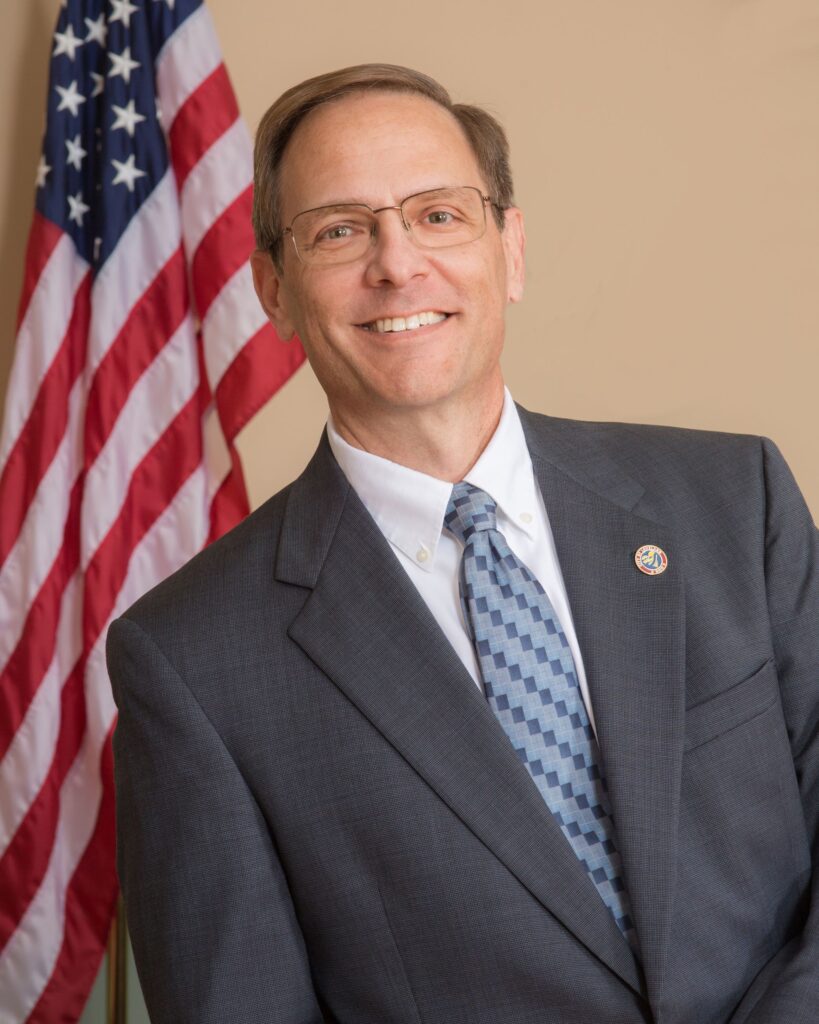

    Councilman Kip Ping
    Good afternoon David and Cassie,
    
    Thank you for your inquiry. This is an important issue as it is vital that we plan for the future maintenance of our water system rather than waiting until we are in a crisis such as we have seen recently with some other cities. In the past there has been a practice in Loveland of borrowing money to repair the water infrastructure. We are fortunate that much of our water system is newer, so this has not necessarily been an inappropriate approach, but as the system ages it makes less and less sense to continue this way. Even if nothing else were at issue, letting the debt service get out of hand is not a direction we want to take. The new fee will allow a more proactive response which will eventually draw down that debt service and put Loveland in a better position in the long term. While we know of no imminent issues with the system, we do know that each year it gets a little older and prudent planning demands that we address this before it becomes a critical issue. With this in mind, Council made what I think was the correct move in putting this fee in place, all the while knowing that it would not be a popular thing to do.
    
    I agree that the current fee does nothing to promote conservation or reward it, however, the current billing model already does that via the charge for both water and sewer in the usage part of the equation. The new fee is limited to use for maintenance of the actual lines, and conserving water does not affect the cost burden that must be considered for this. We must pay the same for a mile of pipe regardless of how much water goes through it. The system thus becomes more expensive per gallon as water use is decreased.  Keeping these charges separate allows rates to reflect usage costs and the fee to reflect the maintenance cost.
    
    I appreciate your concern for those of modest means and agree that we need to be thoughtful about the impact of this fee on them. Your desire to use a usage based rate to protect these people, though, seems to be built on the presumption that the groups you mention would by necessity have low usage.  I’m not convinced that is the case. I am personally aware of a family on a fixed income who uses more water than my wife and I, though we have substantially more means than they. Putting this in as a usage fee would result in them having a higher bill than my wife and I on top of the already higher consumption fee they pay. This would be the opposite outcome of what you are trying to achieve with the usage method. I am not arguing that this one specific example can be extrapolated to the entire community and would be valid in every case, however, I am arguing that your presumption that water usage is directly proportional to income is not valid in all cases either. Any comparison of empty-nesters in our more affluent neighborhoods like Sentry Hill versus families in less affluent areas like the Heights would likely show that usage is not going to substantially change the extra cost on the bill.
    
    Another aspect of this issue is that of access to usage. Utilities are different than other forms of consumption because of the way the good is distributed. History on these issues has shown that because of this difference there have been some unique problems with regard to fairness. Electric utilities, for example, wanted to charge the farmer more than the city dweller because he used less electricity but required more infrastructure to get the electricity to his farm. This would have resulted in rural consumers being charged more in fees for less in consumption (assuming they could afford the fees). The government by prohibiting this practice dictated to the utilities that having users spread equally the cost of the delivery system was more fair than basing the fee on the cost to the system to each user even though it meant urban users paid more than rural users relative to the demands on the system. Again, I am not arguing that this is applicable to all or even the majority of our water system users, but it does show that there are many factors in the equation when one considers the notion of fairness.
    
    As with any collection of public funds, there will be some that fair more poorly than others. Regardless of the system used, there will be exceptions that we can find and argue as unfair to certain people. Our effort can therefore only be to minimize those situations to the extent possible.  While we may not have chosen the system you feel is best, I assure you that thought was given to the fairness of this fee and how to minimize its impact on the system’s users.  That said, as the subject of taxes and fees is one that is of upmost importance to all taxpayers, I have copied City Manager Kennedy on this email and will follow up with him next week to see if there is any data available that has been inadvertently overlooked and would support your assertion that usage is proportional to income. In the absence of data showing that correlation, I do not foresee changing the fee structure.
    
    Sincerely,
    Kip Ping

    Cassie Mattia’s Response Continues…

    Mr. Ping made some very great points in his email and I of course can understand the thought process behind implementing the water increase citywide. I will admit I am not as educated as Mr. Ping is in regards to the city’s water infrastructure and what the future could hold as the city’s water system “ages,” but I will say that I am a little confused as to why homeowners in Loveland are experiencing on average a 3% increase ($1.50 per month) in their water rate while all those living in apartments within the Downtown Loveland area were informed that there would be a gradual increase over the next few years and the increase in 2023 would start at $7.50 per month tagged onto our bills. We were told the increase would eventually amount to an extra $10 on our bills.

    This is not only confusing to those that received this notice but also makes no sense considering someone owning a home would obviously consume more water than a person living in an apartment. The city’s press release vs. what we apartment renters received contradicts one another.

    As a Loveland community member, I would love some answers as to why as a renter I’m being penalized not only with another huge rent increase but now a substantial water increase. Within my apartment, I use very minimal utilities in general, but with this $7.50 increase and what my water bill typically sits at, that will put my water at a 5% increase. I am confused as to why this increase is different for renters in the city. We are already paying on average $1,800 for rent (side note we can’t buy a home due to astronomical interest rates and down payments, especially in this area) and up to a 10% increase in other vital bills that have to do with being a renter. We are also A VERY LARGE part of Loveland’s economy and community. I need answers.

    Mr. Ping did bring up an excellent point in regard to “access to usage.” He said, ” Electric utilities, for example, wanted to charge the farmer more than the city dweller because he used less electricity but required more infrastructure to get the electricity to his farm. This would have resulted in rural consumers being charged more in fees for less in consumption (assuming they could afford the fees). The government by prohibiting this practice dictated to the utilities that having users spread equally the cost of the delivery system was fairer than basing the fee on the cost of the system to each user even though it meant urban users paid more than rural users relative to the demands on the system.”

    With that said, it makes even less sense as to why apartment renters in Loveland are experiencing such a severe increase compared to homeowners when it comes to water rates.

    As I mentioned previously, I am absolutely not an expert on city utilities and the ins and outs of the water infrastructure. I am simply a concerned Loveland citizen that will always speak up when things seem in disarray within our community! I can only hope that those in positions of power locally and nationally will begin to look at the issues brought forth by those brutally affected by greed and inflation and begin making decisions that benefit my generation. We will not survive without the support of our local and national governments.


    Council Member Andy Bateman’s response:

    Councilman Andy Bateman
    David,
    
    First, I stand by City Manager David Kennedy’s explanation of the water main replacement fee, during his presentation to council, and in the Nov 29, 2022 press release. Second, I implicitly rely on staff expertise regarding the methodology used to determine the proposal.
    
    Prior to the Ordinance 2022-115, the city’s water maintenance program; too reliant on loans and grants, more reactive than proactive, had, in the view of many on city staff and committees, become unsustainable. Collecting a maximum of $114 annually from each account ensures a dedicated source of revenue to apply toward ongoing replacement of 76 miles of water main. Rather than wait for funding stars to align, or allocate fund dollars to debt service, the WMR fee gives staff an opportunity to be strategic and comprehensive in their planned replacement over the long term. 
    
    Serious considerations of various socio-economic factors within the service population veers into the semantics of fairness and equity and given the history of deferred maintenance of the city’s water system, I feel that a proposed solution was overdue, and voted in favor of the legislation.
    
    This is not to say that I am completely unfeeling toward those in a position in which this fee holds a greater financial impact. Certainly, in this inflated economy, the cost of everything gives us all pause. But without this fee structure in place, the city’s water customers could be subject to water rate increases, variable month to month, to fund more immediate water main replacements, acting as a funding band-aid for one council to pass to another down the line as we have been doing. 
    
    This council voted for more sustainable infrastructure which delivers its most basic and fundamental services. With that action comes a request that each customer pays its share toward preventative maintenance of that system, and in essentially creating a layer of protection for the future of Loveland’s municipal water service.
    
    Thank you for reaching out and I am available if you have any follow-up questions.
    
    Sincerely,
    Andy Bateman

    David Miller Responds

    I reject out hand Mr. Bateman’s assertion that our concerns are mere, “semantics of fairness and equity.”

    I reemphasize my initial concerns.

    There seems to have been no consideration based on income, disability of a user, being a senior citizen, or being a retiree on a fixed income. There seems to have been no consideration based on an individual’s commendable water conservation efforts. City Council has implemented a proportional rate increase — one that takes the same amount from all income groups and water users regardless of their ability to pay. It is a regressive rate that takes a more significant percentage from low-income groups and low water users than from high-consuming individuals or corporations. Why was a progressive rate not used that would charge more for high-income individuals and corporate users than for low-income individuals and those who consume less water?

    Within this period, any member of our Council should have foreseen that the Loveland Board of Education was heading back to the ballot with a new tax request and indeed they have voted to place a 4.9 mill operating levy on this May’s ballot. The residents of Loveland will be asked to raise their tax rate for the District to receive more dollars for operating expenses and the only way to do so is to ask residents to tax themselves. I believe this action by Loveland Council will subtract from the possible “Yes” votes who would otherwise allow the school children to have more dollars spent on their education.

    With disregard for seniors on a fixed income and amid the recent uproar and now three consecutive defeats of Loveland City School District levies over those concerns, our City Council has pulled out the proverbial rug from under the feet of our children.

    Concerns over inflation, rising home ownership costs, and seniors being forced from their Loveland homes have been the most cited reasons for the school not receiving the added operating funds they requested from voters.

    The flat-rate, permanent water fee will increase the cost to own a home in Loveland by $90/year immediately, and $114/year beginning in 2025.

    There is a genuine disconnect between City Hall and the Loveland Schools, the needs of our children, senior citizens, the disabled, those on fixed incomes, millennials, and gen Z.

    Even forgetting the concern of the inequity of the water fee, voters don’t forget these things when going to the polls with a yes or no choice of raising their taxes.
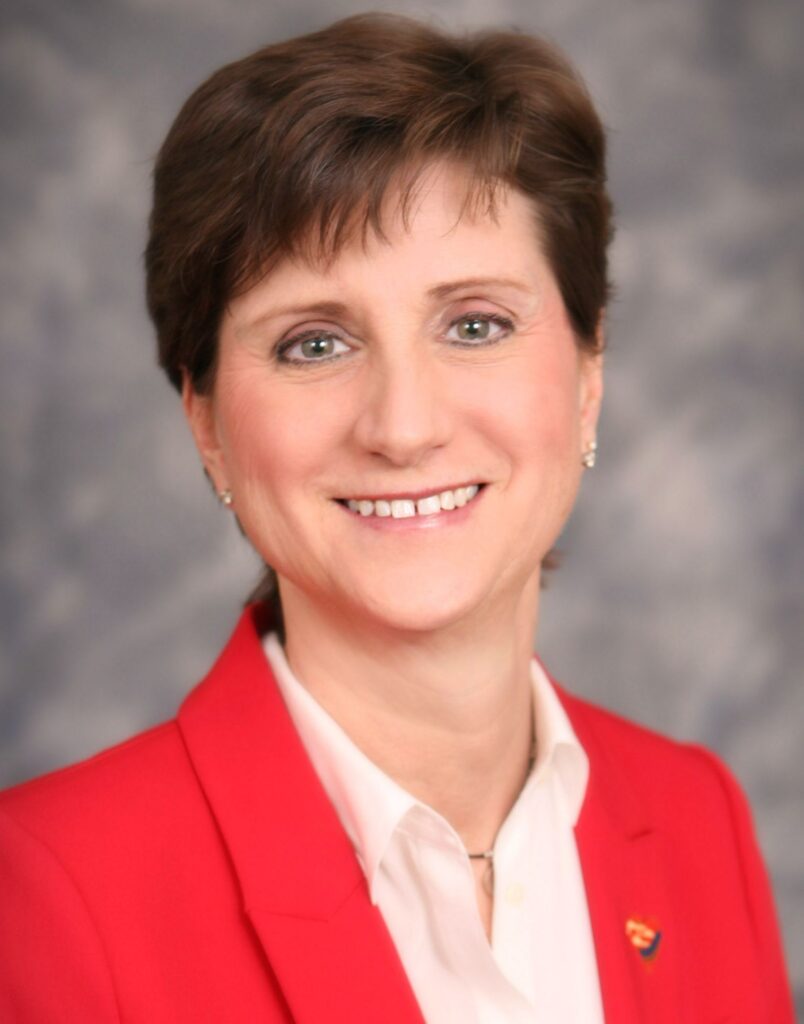
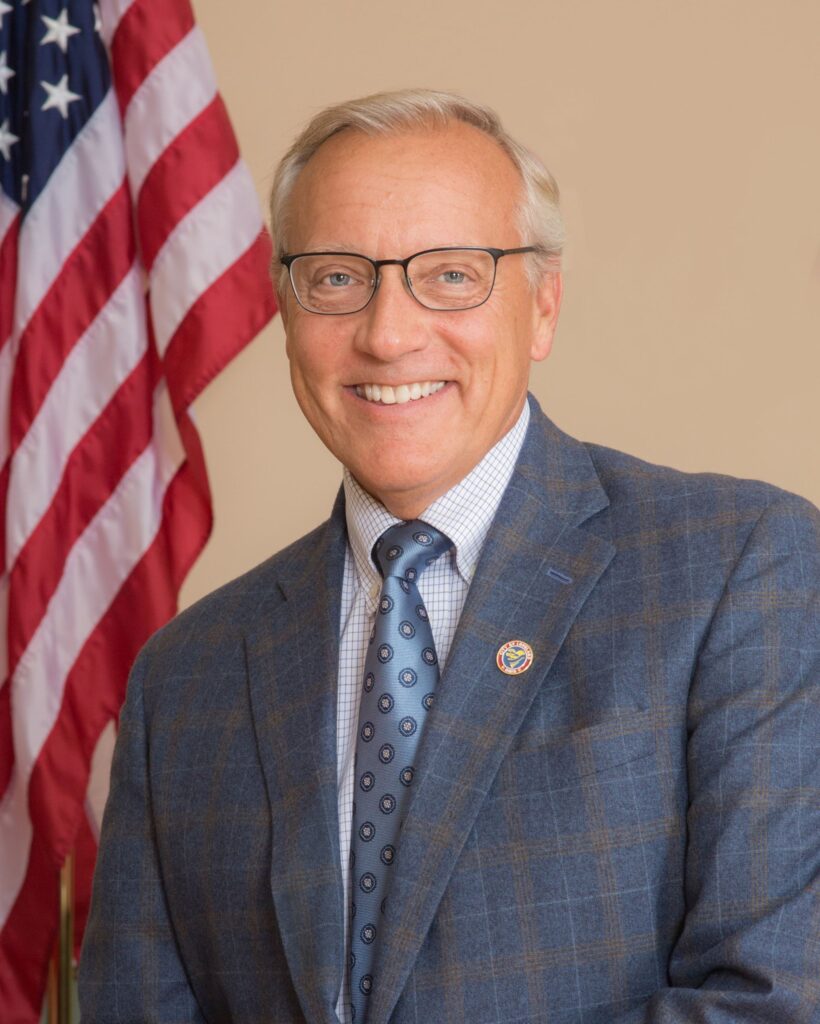
    Mayor Kathy Baily – No response
    Vice-Mayor Ted Phelps – No Response
    Councilman Kent Blair – No response
    Councilman John Hart – No Response
    Councilman Neal Oury – No Response
  • Householder denies D.C. dinners, tying donations to legislation

    Householder denies D.C. dinners, tying donations to legislation

    BY: MARTY SCHLADEN – Ohio Capital Journal

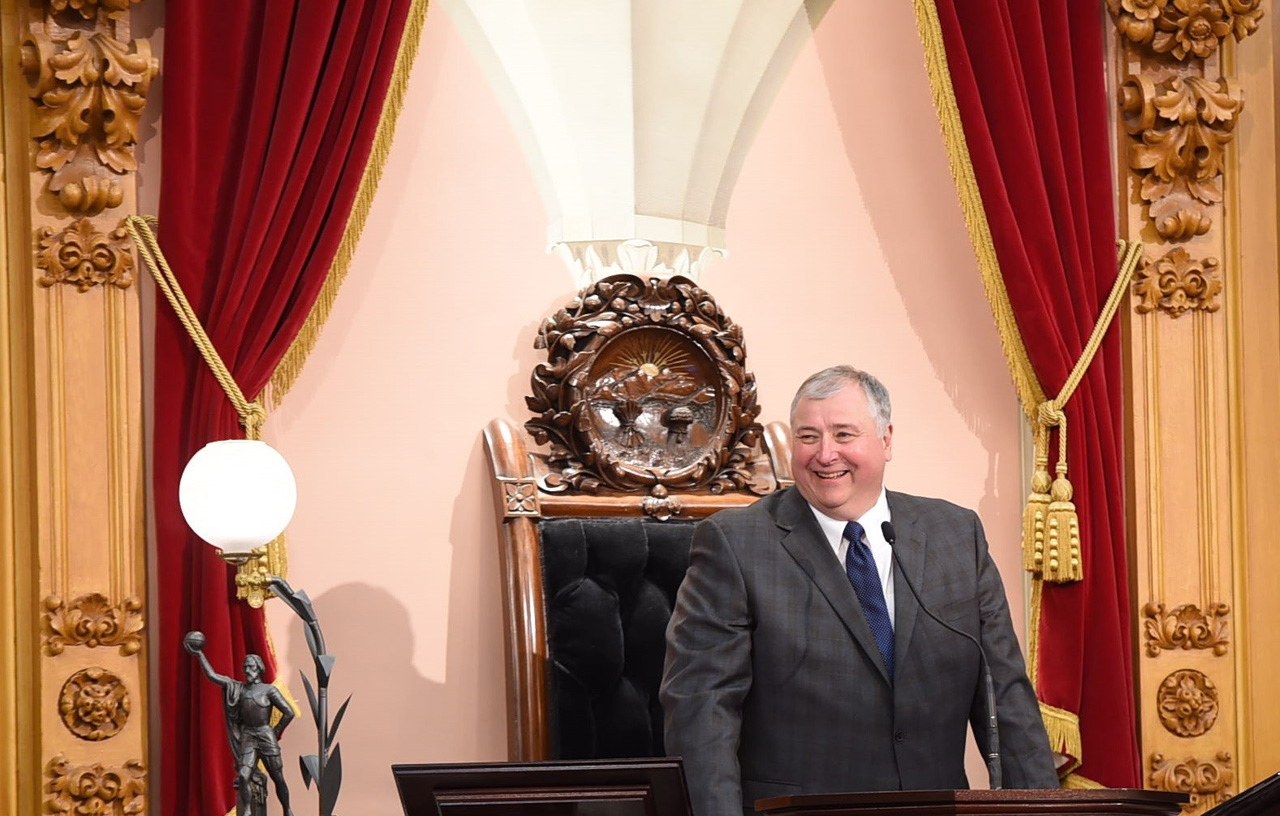
    Former House Speaker Larry Householder, R-Glenford. Source: Ohio General Assembly.

    CINCINNATI — Former Ohio House Speaker Larry Householder on Wednesday claimed that he never promised any legislative action to FirstEnergy in exchange for the tens of millions the company paid into a 501(c)(4) dark money group he controlled.

    He also denied attending dinners in Washington, D.C., during Donald Trump’s inauguration during which other witnesses said he met with top FirstEnergy executives. 

    And the former speaker denied that he demanded unquestioning loyalty from lawmakers whose elections he worked for. Instead, he said, he wanted them to be independent thinkers.

    After sitting through federal court testimony since Jan. 23, Householder on Wednesday took the witness stand in his own defense. That’s considered by many lawyers to be a risky strategy because he will be subject to cross examination by prosecutors who are eager to catch the former speaker in a lie.

    Householder, a Republican from Glenford, and former Ohio GOP chair Matt Borges are being tried on accusations of racketeering in a case that federal prosecutors have said is likely the biggest bribery and money laundering scandal in Ohio history. 

    Householder is accused of masterminding a scheme to use $61 million in utility money to elect House members who would vote to make him speaker at the beginning of 2019. He led the effort to pass a $1.3 billion ratepayer bailout of failing nuclear and coal plants the following July and then protected it from a repeal campaign that failed in October 2019. Prosecutors say the bailout was explicitly tied to FirstEnergy’s contributions.

    On the stand, Householder introduced himself as a guy from Appalachia who had worked for years to protect Ohio’s energy independence. But he also made a number of statements prosecutors are likely to challenge.

    One is that as it neared passage, the bailout law, House Bill 6, became the object of “misinformation” in commercials that he said were financed by the American Petroleum Institute. The nuclear reactors the law would subsidize couldn’t compete with natural gas, which Householder said the petroleum institute supported instead of nuclear power.

    However, in his testimony, Householder didn’t point to anything specific that the group had misstated. Similarly, he complained of misinformation in a Cleveland Plain Dealer editorial, but he didn’t point to anything specific, nor did he say whether he asked for a correction.

    At the same time, the former speaker seemed guilty of some misinformation of his own.

    Householder said one of the chief goals of House Bill 6 — dubbed the “Ohio Clean Air Program” — was to lower carbon emissions. But the bill provided hundreds of millions in subsidies to coal-burning plants owned by FirstEnergy subsidiary FirstEnergy Solutions and other Ohio utilities.

    Householder’s claimed concern for carbon emissions also seems to clash with earlier statements he made on the stand. He testified that he was president of a group that owned an Alabama coal mine and that during an earlier stint in the Ohio House, he worked to subsidize coal production.

    Householder also tried to soften his image after three former House Republicans portrayed the former speaker as a heavy-handed autocrat who demanded loyalty at all times. He pointed out that even though they didn’t vote to make him speaker and they voted against HB 6, he didn’t remove Reps. Laura Lanese and Dave Greenspan from their leadership positions.

    In secret FBI recordings played earlier in the trial, lobbyist Neil Clark described Householder as ruthless and said he told Greenspan that because the lawmaker had opposed HB 6, Householder would never allow legislation Greenspan wanted to move forward. What Householder wanted, witnesses testified, were “casket carriers” — people so loyal that they would stay with him until he died and then lower his casket into the ground.

    But Householder on Tuesday said he didn’t want blind loyalty, he wanted independence. As for wanting casket carriers, that meant “I didn’t want enemies. I wanted friends,” Householder testified.

    Householder also disputed some of the basic factual allegations that had been made against him. 

    He denied testimony from former aide Jeffrey Longstreth that in an Oct. 10, 2018 meeting, lobbyist Robert Klaffky slid a $400,000 check from FirstEnergy Services across a conference table and under Householder’s hand. It was a FirstEnergy Services employee who gave him the check and there was no conference table to slide it across, Householder said.

    Even if that’s true, it’s hard to square that account with other parts of Householder’s testimony.

    At issue in the case is whether Householder pushed the bailout legislation in exchange for all the millions he received from FirstEnergy. He said he had little involvement in Generation Now, the main 501(c)(4) dark money group the company paid into and which supported Householder-friendly candidates and ferociously attacked their opponents.

    Householder said his understanding was that Generation Now was “a vehicle that would educate the public on issues that were important to Ohio.”

    But on Wednesday, Householder said he accepted a $400,000 check from FirstEnergy Solutions that was made out to Generation Now, which was created and controlled by Longstreth, his underling. The former speaker conceded that it was a huge contribution — and the jury might find it hard to credit that he played such a passive role in the group’s activities.

    Householder also denied Longstreth’s account of a dinner during Trump’s 2017 inaugural. Longstreth testified that he sat at one end of a long table in a crowded steakhouse with FirstEnergy Vice President Michael Dowling, while Householder sat at the other with CEO Chuck Jones. Longstreth said he couldn’t hear the conversation at the other end of the table, but he did hear Dowling instruct him to set up an organization that could accept “undisclosed and unlimited contributions” from FirstEnergy and its subsidiary. 

    Householder testified that he went to the inaugural with his wife and several of his sons and only briefly saw Jones and Dowling, but didn’t dine with them. Instead, he and his family went to the inauguration, the parade that followed and attended functions where they were photographed with such luminaries as former Indiana University basketball coach Bob Knight, Householder said.

    However, Householder said he and one of his sons flew to D.C. and back on a FirstEnergy jet. 

    The former speaker testified that on March 29, 2019 — more than two months later — he wrote a check for $2,647 reimbursing the company for the flight. But he didn’t say why it took him that long to make the payment or what prompted him to do so.

    In addition, paying for flights on private jets crashed pretty hard against another bit of Householder’s testimony Wednesday — that he is very frugal.

    “Anybody who’s been around me knows I’m cheap,” Householder said. “I drive a 2001 GMC Sonoma and I don’t like to spend money.”

  • Ohio Senate passes education department overhaul

    Ohio Senate passes education department overhaul

    BY: SUSAN TEBBEN – Ohio Capital Journal

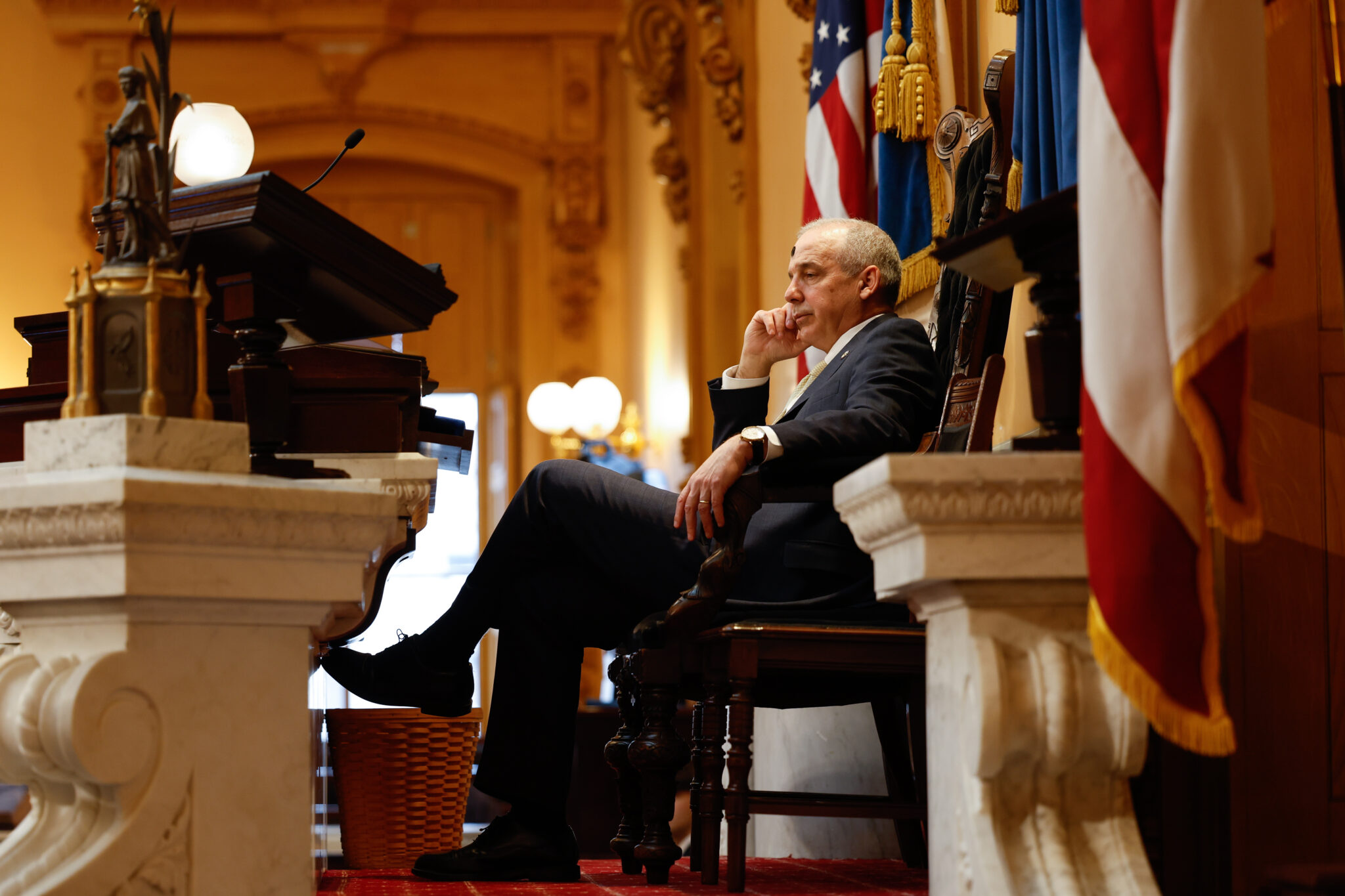
    The Ohio Senate passed a bill to overhaul the administration of the state’s education system in a Wednesday vote along party lines.

    The 26-7 party-line vote on Senate Bill 1 came with fierce urgency from GOP supporters that the chances must be completed to improve the way in which education is led in the state.

     State Sen. Andrew Brenner, R-Powell. Official photo.

    Senate Education Committee chair Sen. Andrew Brenner, R-Delaware, complimented the State Board of Education members for being hardworking people with good intentions for the state education system.

    “Yet the structure they find themselves in is sluggish and incapable of getting through the bureaucracies,” Brenner said on the Senate floor.

    Democratic opposition questioned the motives, but also the speed at which the measure was pushed through the chamber, claiming the true intent of the bill hasn’t yet been teased out.

    Senate Education Committee ranking member Sen. Catherine Ingram, D-Cincinnati, said spotlighting districts at the bottom of state report cards or test scores only points to a greater problem not addressed by SB 1.

    “When you continue to point to the lowest achieving districts, unfortunately you are continuing to point to those children who have been left behind all along,” Ingram said.

    After multiple hearings in the last General Assembly and in the current one that included hours of testimony against the bill, Ingram said she fears the desires of the public, and elected school boards in each district, will be overlooked if the bill becomes law.

    “We continue to talk about how we listen to the people,” Ingram said. “I don’t buy it.”

    If SB 1 moves on to be passed by the GOP-majority House, it will change the Ohio Department of Education to the Department of Education and Workforce, and create a new leadership position not under the purview of the Ohio State Board of Education, but under the governor’s cabinet.

    Two deputy directors, one for primary and secondary education and another for workforce, would also be created under the bill.

    If passed, the transfer of duties to the new leadership would happen six months after the bill’s passage.

    The bill would reduce the Ohio State Board of Education’s powers to include hiring a new superintendent of public instruction and dealing with district-level territorial and licensure issues.

    In the Senate Education Committee, several amendments were made, for the most part by Republican legislators.

    Amendments added to the bill before it’s full Senate passage changed the implementation date of the proposed law, taking it from June 30, 2023, to 90 days after full General Assembly passage.

    The committee also adopted an amendment that would allow the superintendent of public instruction to serve as an advisor to the heads of the new department, which was originally a requirement in the bill.

    A Democratic amendment adopted requires the Senate Education Committee to hold at least one in-person meeting before approving a director or deputy director for DEW.

    Scott DiMauro, of the Ohio Education Association, agreed that the bill’s true aim is unclear at this point.

    “I’m still not seeing exactly how restructuring the department get to what are ultimately policy decisions and support decisions,” DiMauro said. “It raises questions about what the impact of this will be.”

    DiMauro said he hopes the House consideration will include changes to ensure a voice for educators and the public.

    “I hope that whatever happens with this whole issue of any kind of restructuring … wherever Senate Bill 1 ends up, that lawmakers are not losing sight of a larger purpose,” he said.

    The bill came back to the Senate hastily after the lame-duck effort last year was rejected at the last minute. Senate President Matt Huffman pledged after the effort went down to bring it back as quickly as possible.

    When asked what he sees as the direct impact of SB 1, Huffman said it would “allow greater opportunity for reforms” and the “ability to act on specific problems.”

    “When I have district meetings, and folks ask me questions and I can’t get the current answer,” Huffman said. “I know that I’m going to be able to get a better answer now.”

    SB 1 now moves to the House for committee consideration.

  • A behind-the-scenes look at how Ohio enacted the most restrictive voter photo ID law in America

    A behind-the-scenes look at how Ohio enacted the most restrictive voter photo ID law in America

    Lawmakers ignored a variety more moderate restrictions proposed by secretary of state and law firm

    BY: ZURIE POPE – Ohio Capital Journal

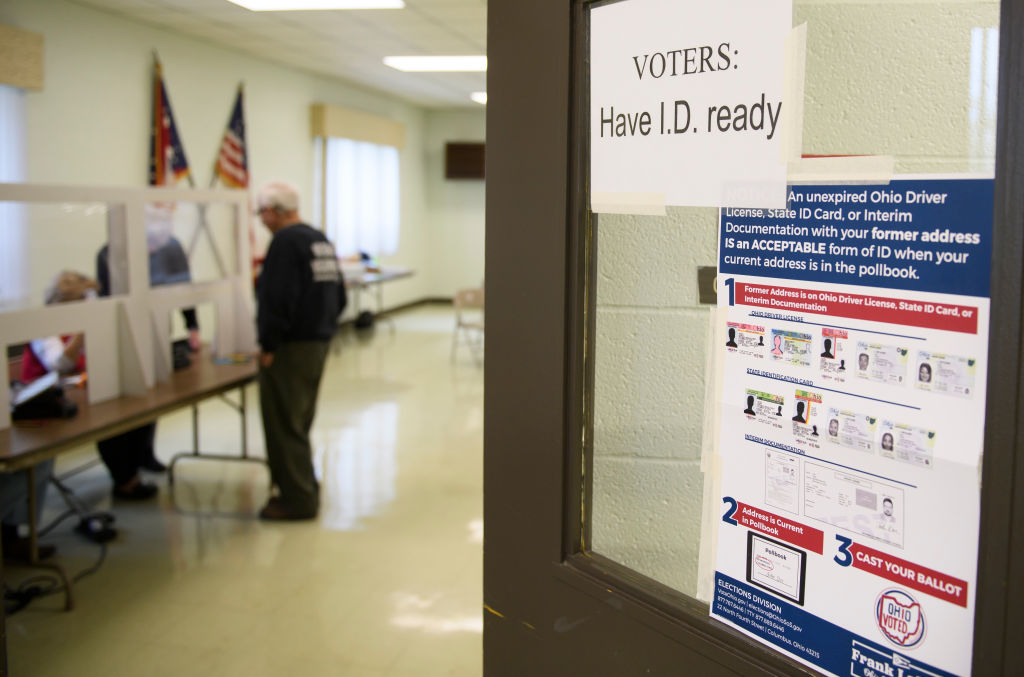
    Ohio Gov. Mike DeWine signed House Bill 458 on Jan. 6, enacting what’s been called one of the most restrictive voter-ID laws in the country. 

    Public records obtained by the Ohio Capital Journal show how the law moved through the process, with lawmakers often ignoring moderation suggestions proposed by the Ohio Secretary of State’s Office and a law firm that lobbied on the law.

    Taking elements from two election bills previously introduced in the Statehouse — House Bill 294, and Senate Bill 320 — House Bill 458 instituted sweeping changes to how elections are administered in Ohio. 

    Alterations include mandating the use of photo IDs, passports, or driver’s licenses to vote, and limiting counties to one ballot drop box. The law also mandated citizenship status on IDs and excludes county-issued veterans’ identification and college IDs from the list one can use to vote.

    Such restrictions received significant backlash, with Democratic law firm the Elias Law Group filing a lawsuit the day the law was passed.

    Regardless, Ohio’s Republican leaders insist the new voting restrictions were necessary, despite no evidence of significant voter fraud, by impersonation or otherwise. Total possible voter fraud in the 2020 election was a microscopic 0.0005%.

    Nevertheless, DeWine said the new restrictions were needed to combat concerns about voter fraud, which have been pushed politically by his own party without evidence.

    “Election integrity is a significant concern to Americans on both sides of the aisle across the country,” DeWine claimed in a statement.

    DeWine also touted what he sees as moderation of the law’s voting restrictions, congratulating the general assembly for “working with my Administration on changes to House Bill 458 to ensure that more restrictive proposals were not included in the final bill.” 

    Ohio Secretary of State Frank LaRose’s Press Secretary Rob Nichols similarly touted the DeWine administration’s involvement in the process. 

    “While no legislation is ever perfect, the House and Senate leaders listened to many of our concerns and made some improvements to the bill,” Nichols wrote in an email responding to OCJ when asked the extent of SOS’s work on election reform. “Overall, the legislature approved some much-needed reforms that will benefit both voters and elections officials, while continuing to make Ohio one of the most honest and accessible voting states in the nation.”

    But documents obtained by the Ohio Capital Journal through a public records request reveal a complex web of bureaucrats, lawmakers, lobbyists, and outside powerbrokers, united in their efforts to pass the new voting restrictions, including the Ohio Secretary of State’s Office.

    Records show that the Secretary of State’s Office supported most of the House GOP’s voting restrictions, haggling out various details. In some cases where the office pushed for more moderation, their recommendations were not followed by lawmakers. 

    Regardless, LaRose has been publicly supportive of the law as passed.

    Ohio Secretary of State input

     Ohio Secretary of State Frank LaRose. Official photo.

    On Dec. 9, 2022, Frank LaRose’s Chief of Staff Jason Mauk submitted a memo to Senate GOP legal Counsel Frank Strigari, outlining the secretary’s issues with HB 458. 

    Since Dewine signed the law, military families have voiced opposition to it, saying the mail-in ballot rules curtail the ability of service members to vote. 

    Mauk appears to have foreseen the blowback that the law’s rigid deadline for mail-in ballots would cause, especially among the armed services, and warned against it. 

    “We have concerns with restricting the return of such ballots by election day,” Mauk wrote. “This provision has the potential to disenfranchise voters, particularly those living and serving overseas.” 

    Mauk asked the Senate to “allow for ballots to be returned by the postal service for at least five days after election day.” 

    Eventually, lawmakers settled on a four-day cutoff. 

    Asked if his colleagues in the secretary’s office were concerned that the four day cutoff — below the deadline recommended by Mauk — might endanger voters, press secretary Rob Nichols indicated it could have been worse.

    “They wanted zero,” Nichols said. “We said that might disenfranchise voters, asked for at least a five day return deadline, and they cut it down to four.” 

    Asked again if the four-day cutoff would harm voters, Nichols replied, “We enforce the laws; we don’t make them.” 

    Asked for comment, Ohio House Republican Majority Leader Bill Seitz responded in an email, “I do not think there will be any impact on service members being disenfranchised by our new law.”

    In communications, Mauk from the Secretary of State’s Office also argued counties should be allowed to have multiple ballot drop boxes on site, writing they “respectfully ask the Senate to allow up to three drop boxes on board office property.” 

    He also fought against immediate disclosure of drop box surveillance. 

    “This office has serious concerns about the burden placed on the county boards of elections in requiring immediate disclosure of drop-box video surveillance records,” Mauk wrote. “The immediacy of this requirement is problematic.”

    Nevertheless, the provision remained in the final bill and drop boxes were limited to one.

    Likewise, Mauk recommended creating a “secure, electronic method of verifying voter registration data,” using information from the Bureau of Motor Vehicles. 

    One of the benefits from this system, Mauk claimed, is that it could deter non-citizens from voting. 

    “It also helps to ensure non-citizens are not able to submit a voter registration accidentally, or intentionally,” he wrote.

    The final bill mandates all driver licenses and state IDs held by a non-citizen “include a notation designating that the licensee or cardholder is a noncitizen,” which civil rights advocates believe may endanger immigrants. 

    Byers Minton & Associates

    Another aspect of the election law process made clear by the records is the involvement of the Columbus law firm Byers, Minton & Associates.

    Byers Minton is one of Ohio’s largest lobbying firms, with clientele ranging from Apple to the Cleveland Browns, and the Girl Scouts. Byers Minton’s public position on election reform is rarely mentioned on its website, social media, or other communications.

    The firm’s weekly update on events at the Statehouse failed to mention HB 458, instead prioritizing DeWine signing a spending bill. The election bills are referenced once, at the bottom of a list including everything passed by the Statehouse during its lame duck session.  

    But behind the scenes, records show an apparently close relationship between Byers Minton’s lawyers and the lawmakers producing the election legislation. 

    Founder Bill Byers was involved at the earliest stages of the eventual law’s development. Records show Byers helped arrange favorable testimony, though some of his suggestions for election law changes, such as automated voter registration, were not followed by lawmakers.

     Republican Ohio House Majority Leader Bill Seitz. Official photo.

    For the original bill, House Bill 294, Byers helped arrange witness testimony from former Kentucky Secretary of State Trey Grayson to speak on its behalf.

    “Please find a witness slip and proponent testimony for Trey Grayson on HB294,” Byers wrote in an email June 9, 2021, to one of Seitz’s policy advisers. “Please let me know if there’s anything else you need.”

    One month earlier, Byers was included in an email from Seitz’s legislative aide going over the bill analysis for 294. “Let us know if you have any questions/comments,” the aide wrote.

    Byers would also be included in a thread on the final draft of HB 294 from Oct. 5 of last year, featuring multiple revisions.  

    Asked about this, another legislative aide for Seitz said Byers’ actions were within the purview of Byers Minton’s regular duties. 

    “Bill Byers lobbied on behalf of the Secure Elections Project,” wrote the legislative aide in a response email to OCJ. “Byers simply offered valuable input on the bill on behalf of his client.”  

    Byer’s interest in election law would later extend to SB 320, the other predecessor bill to the one that was eventually passed, which was introduced by Republican state Sen. Teresa Gavarone.

    On Oct. 13, 2022, Byers sent an email to a Gavarone staffer as a “follow up to our discussion.” 

    In it, Byers argues for the cost-saving potential of automated voter registration and verification, and the wastefulness of provisional ballots. 

    “Processing provisional ballots imposes significant costs on county election officials,” Byers said. 

    Byers also portrayed decreasing the amount of provisional ballots as a financial windfall.

    “Reducing the number of provisional ballots cast in the 2016 and 2018 election cycles, would have resulted in an additional $830,721 in savings to county BOEs,” Byes said.

    According to the Massachusetts Institute of Technology’s Election Lab, 1.7 million provisional ballots were counted in 2016 nationally, and accounted for 1.2% of all votes in the 2018 midterm election.   

    “Thank you!,” the aid replied to Byers.  

    Six days later, the aide emailed Byers once more, saying Gavarone “would like to meet with you to get more Info,” and requested “Frank(LaRose)’s attendance during that meeting with us.” 

    Asked to discuss the details of these meetings, no one from Gavarone’s offices responded.

    As for Byers Minton, asked for comment, Andrew Minton replied, “My firm does not give comment to the press on any issue or for any reason.”

    Cincinnati NAACP President Joe Mallory submitted testimony against House Bill 294, writing it “creates unnecessary boundaries to the vote.” 

    Speaking about the election reform bills as a whole, Mallory was livid when asked for comment.  

    “These anti voter policy changes are not about improving the election process, it’s about erecting barriers and decreasing access,” Mallory said. “What we have is a super majority rushing anti voter bills through a lame duck session. They are perpetuating a fraud on Ohio voters and the democratic process, with the false narrative of Election security and modernization. It is disingenuous.”

  • Citing a hazy memory, former rep seems to distance himself from scandal

    Citing a hazy memory, former rep seems to distance himself from scandal

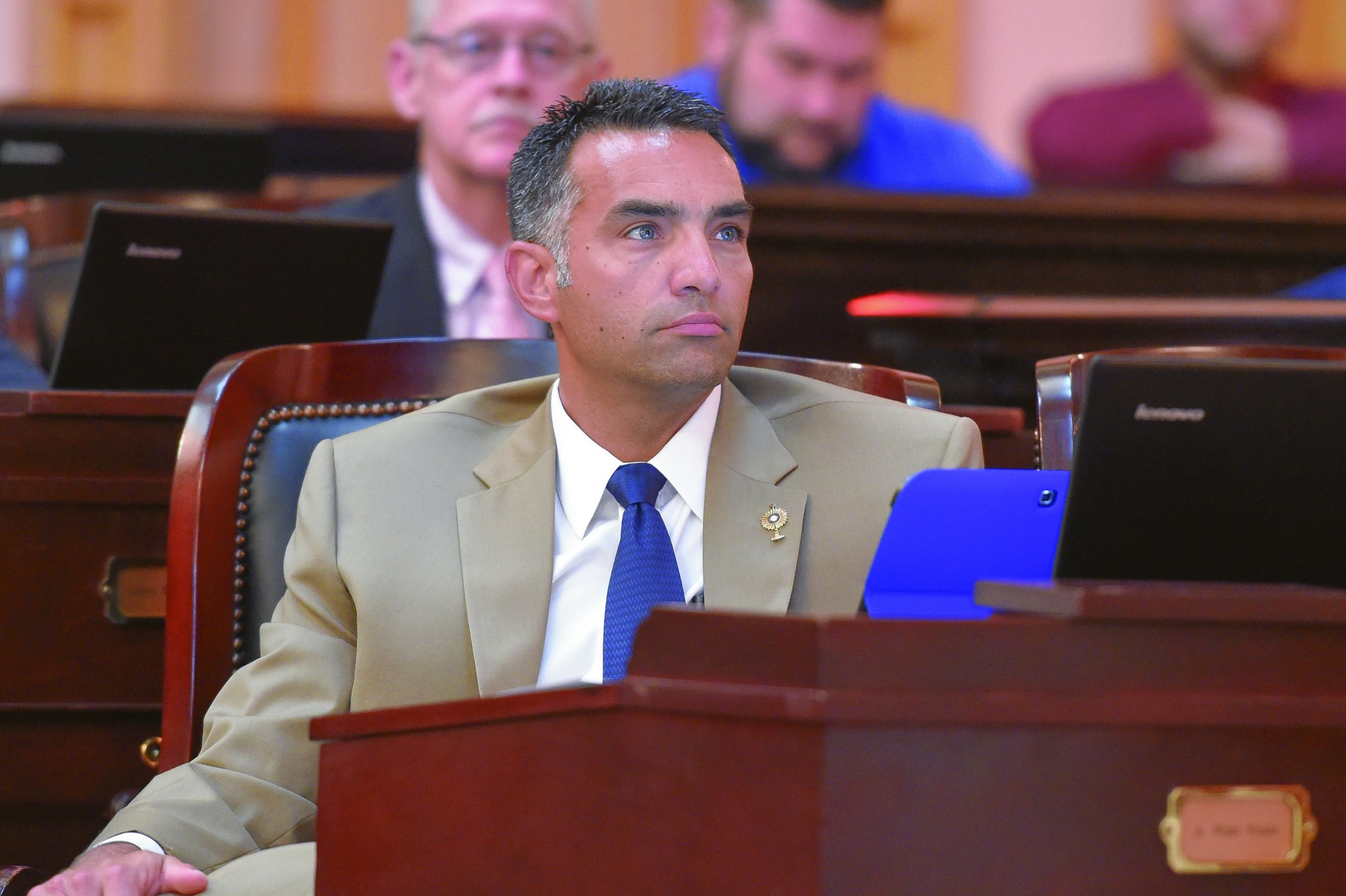
    State Rep. Nino Vitale, R-Urbana. Photo from Ohio House website.

    Vitale was said to be a big supporter of Householder now charged with racketeering

    BY: MARTY SCHLADEN – Ohio Capital Journal

    CINCINNATI — Former state Rep. Nino Vitale on Tuesday testified that he didn’t have much of a memory for — nor was he much interested in — raising money or campaigning for office. At several points, the Republican from Urbana even said he didn’t remember what year he was first elected to the legislature (it was 2014.)

    But on cross examination, federal prosecutors showed him records and written communications indicating that Vitale was regarded as an enthusiastic member of “Team Householder” who, as part of the team, received thousands in campaign funds and other assistance that originated with Akron-based FirstEnergy.

    As former Speaker Larry Householder’s appointee to chair the Energy and Natural Resources Committee, Vitale in 2019 helped to pass a $1.3 billion bailout that primarily benefited FirstEnergy. When they announced arrests in the summer of 2020, federal prosecutors said the bailout was at the center of what was likely the largest bribery and money-laundering scandal in Ohio history.

    Vitale was called by Householder’s lawyers in the trial, which started on Jan. 23. Householder and former Ohio Republican Party Chairman Matt Borges are charged with racketeering in an alleged scheme to use $61 million in utility money to elect friendly lawmakers who would make Householder speaker and then bail out FirstEnergy’s failing nuclear and coal plants.

    Vitale has long been known for controversial political gestures — including refusing to wear a mask at the height of the coronavirus pandemic because human faces are “the likeness of God.“

    But on Tuesday, Vitale portrayed himself as a reluctant politician. In a possible nod to how uncompetitive his district was, the former lawmaker said he didn’t have to do much to get reelected.

    “The whole marketing side of things wasn’t big on my radar because my district elected me overwhelmingly and frequently,” Vitale said.

    Householder’s attorneys seemed to call Vitale and other Householder supporters in the House to testify so they could say they believed the bailout law was good public policy. But U.S. District Judge Timothy Black limited such testimony, saying the proceeding wasn’t a referendum on the merits of House Bill 6.

    Vitale also said he never felt pressured to support Householder for speaker or to support the bailout. 

    But Assistant U.S. Attorney Megan Gaffney Painter then posed a series of questions that seemed to be intended to show that Householder made Vitale chairman of the Energy and Natural Resources Committee not because Vitale had any particular qualifications, but because he was an enthusiastic member of Team Householder who would do the speaker’s bidding.

    Vitale tried to refute that characterization.

    When Painter tried to get him to agree that he had little in his background to school him in large-scale electricity generation or the management of the state’s natural resources, Vitale wouldn’t. 

    “I know quite a lot about those topics, actually,” he testified.

    Vitale said he works for his wife’s family’s company, which makes parts for truck brakes. It has an electricity substation and it sits on 30 acres, and those factors gave him expertise on the power grid and the environment, Vitale said.

    When Painter proposed that Vitale had no academic credentials that would make him expert in those areas, Vitale disagreed again, saying his business degree provided him with such knowledge.

    “In a business degree, part of what you study is energy inputs to a business,” Vitale said.

    The former lawmaker also claimed that he wasn’t very familiar with FirstEnergy and had to be convinced to support the bailout bill. Then Painter displayed a text message from FirstEnergy Vice President Michael Dowling to CEO Chuck Jones on Feb. 17, 2019 — before the bill was introduced. Earlier testimony showed that the executives believed the bailout was critical to their company, and Jones had asked Dowling who was going to chair the House Energy and Natural Resources Committee.

    “Nino Vitale from Springfield will chair,” Dowling responded. “Good friend and bigtime (Householder) supporter.”

    Confronted with the message, Vitale said he’d only met Dowling a few times.

    Vitale also disputed that it was Householder who first broached the idea of Vitale being chairman.

    “I asked him,” Vitale said.

    Then Painter played a voicemail message that Vitale left for Householder in January 2019, just after Householder had been made speaker. In it, Vitale said he had talked the matter over with his family.

    “I’m in if that’s what you want me to do,” Vitale said.

    As Painter tried to move on to another question, Vitale insisted that chairing the Energy and Natural Resources Committee was originally his idea.

    And to refute Vitale’s claims that he was half-hearted about fundraising and political marketing, Painter displayed an October 4, 2017 text message Vitale sent to Jeffrey Longstreth, Householder’s right-hand man in making him speaker and then passing the bailout. It certainly seemed to link FirstEnergy’s policy agenda to Vitale’s desire for corporate contributions.

    FirstEnergy lobbyist “Ty Pine wants to meet with me on a legislative matter and I want to meet with him on a contribution matter,” Vitale said in his message.

    After more than a month, testimony in the trial is entering the homestretch. Householder’s final witnesses — including Householder himself — are expected to testify Wednesday and Thursday. Then it will be Borges’ turn to call any witnesses he may have.

    After that, the prosecution and the defense teams will make closing statements, Judge Black will instruct the jury and then it will deliberate.

  • Ohio utility regulator front and center in massive bailout scandal

    Ohio utility regulator front and center in massive bailout scandal

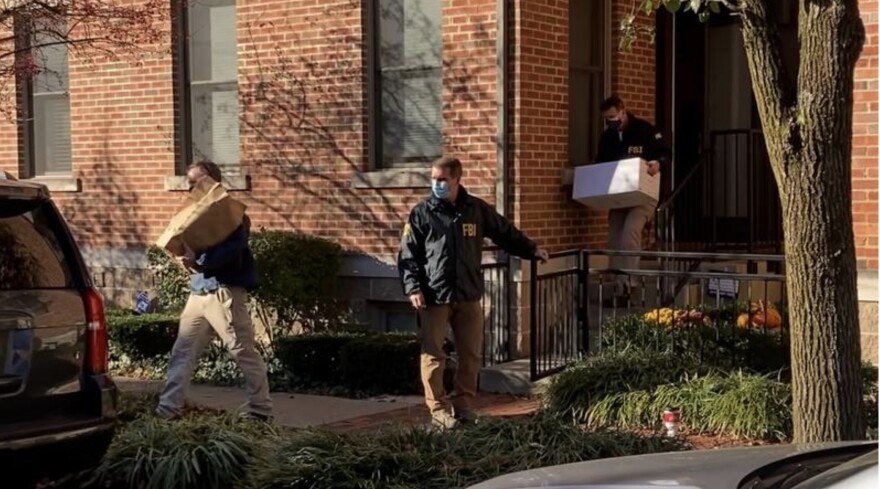
    FBI agents remove boxes of materials from PUCO Chairman Sam Randazzo’s condo in Columbus Nov. 17, 2020. Photo courtesy of Daniel Konik/Statehouse News Bureau.

    BY: MARTY SCHLADEN – Ohio Capital Journal

    CINCINNATI — Ohio’s utility regulator is at the center of a massive bribery and money laundering scandal that has been the focus of a trial here since late last month. In 2019, its chairman and a very recent senior official played a central role in writing corrupt bailout legislation that would give more than $1 billion in subsidies to companies the Public Utilities Commission of Ohio was supposed to be regulating.

    But did their role in the process violate any PUCO rules? The answer is unclear.

    When it comes to being a consumer watchdog, the PUCO doesn’t have the best track record. 

    Since 2008, it has granted more than $1 billion in electric rate increases that were later declared illegal by the Ohio Supreme Court. But, thanks to the way the increases — or “riders” — were written, there’s no way to force utilities to return those ill-gotten gains to ratepayers.

    In at least one of those instances, a regulator might have known the rate hike was illegal when he voted to grant it.

    In June of 2019 — as Akron-based FirstEnergy was funneling millions through dark-money groups to pass the bailout that is the subject of the trial here — the Supreme Court struck down an increase that had already paid the company a non-refundable $460 million. Asim Haque, who months earlier was chairman of the PUCO, sent a FirstEnergy executive a text suggesting that Haque knew the increase was illegal when he voted for it. Haque then said he was just kidding.

    Then, just last month, the PUCO approved an increase of more than 50% in fixed rates for Columbia Gas without making the company go through a formal process to show that it needs the money. That means that after five years throughout much of Ohio, it likely will cost nearly $60 a month just to have gas service  — regardless of whether you live in a 500 square-foot apartment or if you live in a mansion on a five-acre lot. Any payments for gas itself will be in addition to that amount.

    It doesn’t appear that Columbia owner NiSource needed the money. Last year, before the PUCO allowed the rate hike, NiSource’s profits came in $217 million — or 41% — higher than expected. Then, a month after the increase was granted, NiSource announced it was increasing its profit forecast for 2023.

    In a press release, the company boasted of “strong regulatory execution” — including by winning the fixed-rate increase from the PUCO.

    And then there’s House Bill 6, the 2019 law that is the subject of the trial in federal court here that has been ongoing since Jan. 23.

    Former Ohio House Speaker Larry Householder and former Ohio Republican Party Chairman Matt Borges are on trial for their participation in what prosecutors say is likely the biggest bribery and money laundering scandal in Ohio history. They allege that $61 million that mostly came from FirstEnergy was used to make Householder speaker in 2019, and then to pass and protect the $1.3 billion bailout. Most of that money was intended to prop up FirstEnergy’s failing nuclear and coal plants.

    No current or former PUCO employees have been charged in the scandal. But, to put it charitably, the conduct of at least two of them was puzzling — given that the agency’s mission is to protect ratepayers who don’t have a choice about buying the utilities’ products.

    In January 2019, Householder won the speakership and was beginning his push for a FirstEnergy bailout. At the same time,  FirstEnergy lobbyist Ty Pine sent PUCO senior advisor Pat Tully’s resume to Jeff Longstreth, Householder’s right-hand man, according to testimony in the trial. Within weeks, Tully had moved from his PUCO job to one as senior advisor for energy policy in the House Republican Caucus.

    Sam Randazzo, a former FirstEnergy consultant, was confirmed as Gov. Mike DeWine’s nominee to chair the utility commission in April 2019. When he nominated Randazzo, DeWine brushed off warnings that his nominee had “opaque and undisclosed” ties to FirstEnergy.

    In the Householder trial, Tully testified that while Randazzo was still a nominee, he met with Tully, Householder and Rep. Nino Vitale R-Urbana. From there, Tully worked with Randazzo to help draft the utility bailout, HB 6, and to reconcile it with draft legislation submitted by FirstEnergy. The bill secured final passage in July 2019 — months after Randazzo had taken the helm at the utility commission.

    In other words, Ohio’s top utility regulator helped write a law that gave a billion-dollar bailout to a company he was supposed to be regulating on the ratepayers’ behalf. And he was heading an agency that over the previous decade had awarded electric utilities more than $1 billion in illegal, non-refundable rate hikes.

    Randazzo would later resign after the FBI in 2020 raided his Columbus condo. And in a deferred prosecution agreement, FirstEnergy admitted that it paid him $4.3 million just before he became PUCO chairman.

    But does the PUCO have any rules against the role Randazzo played in drafting HB 6? 

    Asked if the agency had a policy prohibiting a commissioner from helping write legislation affecting a utility he or she is supposed to be regulating, spokesman Matt Schilling initially seemed to say that it did not.

    “The PUCO is a state agency and will always be responsive to requests for information or technical assistance to the Ohio General Assembly on matters related to utilities and commercial transportation,” Schilling said in an email last week.

    But in answer to a follow-up, Schilling seemed to say something different. He was asked if that means PUCO believes there was nothing inherently improper about its chairman helping to draft legislation creating subsidies for utilities the agency regulates.

    “No, I never stated anything like that,” Schilling replied. “The PUCO does not comment on ongoing proceedings or court cases.”

    So what about commission employees doing as Tully did when he had a FirstEnergy lobbyist passing out his resume? After all, you might pull punches as a regulator if you’re hoping to land a job with one of the companies you’re supposed to be regulating.

    Schilling’s response might not be very reassuring. He cited a law that “prohibits Commission employees from seeking employment with utilities regulated by the Commission.”

    But Schilling also sent along agency guidance that contains a pretty big loophole.

    “Although this law prohibits Commission employees from soliciting Commission-regulated utilities for employment, it does not prevent employees from considering employment opportunities with these utilities in instances in which the utility approaches the employee,” it said.

    It seems that, after the fact, it might be difficult for the PUCO to figure out who approached whom when an employee jumps ship for a well-paid utility job. And its protections against conflicts of interest during the hiring process don’t seem ironclad.

    “However, if you are contacted by a utility concerning a possible job offer, you must immediately advise your supervisor of the contact so that your supervisor can limit your duties to matters which do not involve the utility in question while any discussions are taking place,” the guidance said.

    In Tully’s case, he didn’t end up directly on FirstEnergy’s payroll. But he did help write a law that the company paid more than $60 million for.

  • Defense lawyer boils over in Ohio utility bailout and political bribery racketeering trial

    Defense lawyer boils over in Ohio utility bailout and political bribery racketeering trial

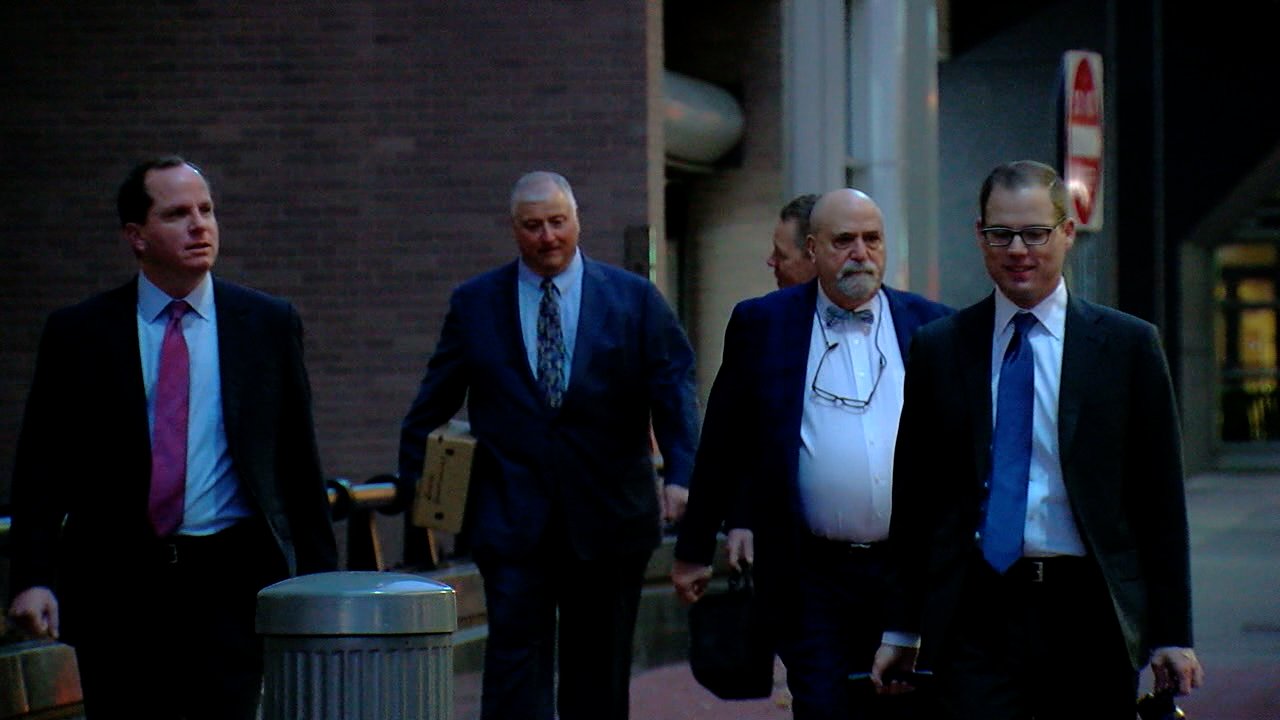
    Former Ohio House Speaker Larry Householder, a Perry County Republican, second from left, with attorneys outside of his racketeering trial. Photo courtesy of WEWS.

    BY: MARTY SCHLADEN – Ohio Capital Journal

    CINCINNATI — The defense of former Ohio House Speaker Larry Householder erupted Thursday in Householder’s epic corruption trial.

    Defense attorney Mark Marein of Cleveland suggested it was because of U.S. District Judge Timothy Black’s unfairness. But it came after a day in which the defense team’s attempts to undermine prosecution witnesses’ credibility might have come to naught.

    The sparks flew in the fourth week of the trial. Householder and former Ohio Republican Party Chairman Matt Borges are accused of racketeering in a scheme to use $61 million in utility money to make Householder speaker and pass a $1.3 billion bailout that mostly benefited Akron-based FirstEnergy, the primary contributor.

    Earlier on Thursday, defense attorney Steven Bradley cross examined Jeffrey Longstreth, who operated as Householder’s right-hand man through his bid for the speakership and the 2019 passage and defense of the bailout law, House Bill 6.

    Longstreth was arrested along with Householder, Borges, and two others in July 2020. He is now cooperating with prosecutors in exchange for a sentencing recommendation of less than six months.

    The dinners

    During direct examination Wednesday, Longstreth described fancy dinners with Householder and FirstEnergy’s top executives during Donald Trump’s inauguration in 2017 in Washington, D.C. 

    At one, Longstreth described being at one end of a long table with FirstEnergy Vice President Michael Dowling in a noisy steakhouse, while Householder sat with company CEO Chuck Jones at the other. Longstreth said he couldn’t hear the conversation at the other end of the table, but at his end Dowling told him FirstEnergy needed help and it wanted to help Householder become speaker.

    Dowling instructed Longstreth to set up an organization to receive FirstEnergy’s millions, Longstreth said. 

    “He said (the money) needed to be undisclosed and unlimited contributions,”  Longstreth testified on Wednesday.

    Apparently seeking to impeach Longstreth’s memory, Bradley on Thursday showed the jury an itinerary indicating that Jones took the FirstEnergy corporate jet to D.C. the morning after the steakhouse dinner. He also produced a credit card receipt showing that Jones attended a dinner at a different restaurant the following night than where a second, more-intimate dinner was described by Longstreth on Wednesday.

    But Assistant U.S. Attorney Emily Glatfelter asked Longstreth if itineraries change. He agreed they often do.

    She then produced credit card receipts and car records that indicated Jones may well have been in D.C and could have attended the first dinner as Longstreth described. She also showed that on the following night, the dinner Bradley said Jones attended ended about 30 minutes before the one Longstreth said he attended began.

    Longstreth testified that it was common at presidential inaugurations to attend multiple receptions and dinners in the same evening. Apparently that’s a major purpose of the quadrennial gatherings: To stay in $600 hotels, eat multiple $200 dinners, and figure out how to split up the taxpayers’ —or  ratepayer’s — money.

    Whistleblower former state Rep. Dave Greenspan

     Former State Rep. Dave Greenspan, R-Westlake. Official photo.

    After Longstreth left the stand, the prosecution called former state Rep. Dave Greenspan, R-Westlake. He said he never voted to make Householder speaker and he never supported House Bill 6. 

    “I didn’t believe in corporate bailouts,” Greenspan said, explaining that this one was especially hard to support because FirstEnergy hadn’t shown that it needed the money and the bill put no restrictions on how it was spent. “There was nothing in the bill that required FirstEnergy to do anything.”

    As a sign of how unpopular the bill was, 17 Republicans voted against it when it passed the House in April 2019. And it’s an important reminder that it would never have become law without the support of Ohio House Democrats.

    Greenspan described the intense pressure he was under from Householder and lobbyist Neil Clark to vote for the bill. He was so disturbed by it that he contacted a member of the U.S. Marshal’s Service, who put him in touch with the FBI.

    During cross examination, Marein, another of Householder’s attorneys, seemed dumbfounded that Greenspan contacted the FBI, which he referred to as the “Federal Bureau of Investigation” in a tone that in many places would pass for shouting.

    Then, as he tried to read lengthy passages of Greenspan’s grand jury testimony, Judge Black repeatedly cut the attorney off and told him to ask a question.

    Another attack at the judge

    On Feb. 1, Marein undertook a risky gambit by accusing the judge of bias, saying that Black had it in for his client because Householder opposed Black’s run for Ohio Supreme Court 22 years ago. After the jury filed out Thursday afternoon, Marein doubled down.

    He started off so loudly that Black admonished Marein to show the same respect for him that Black believed he’d shown Marein.

    A little more quietly, Marein said, “You’re really tying our hands. Overruling our objections. Quite frankly, I don’t know what’s going on.”

    Then he added, “Is there something personal against Mr. Householder?”

    When Marein finished, Black asked, “Is that all?”

    Marein said yes, Black banged his gavel and said, “We’re in recess.”

  • Loveland grad Sam Smith named Director of Photography on high-profile short film

    Loveland grad Sam Smith named Director of Photography on high-profile short film

    Samuel Smith operates a camera out of the back of a truck in San Diego, California. (Photo by Savannah Braswell)

    Since leaving Loveland in 2018 for the prestigious New York University, Sam Smith has been cinematographer on numerous projects including Crimson Ties, directed by Francesca Scorcese.

    A slash of Edward Hopper-esque smoggy evening light outlines a working-class mother, hunched over a sewing machine. A split composition: out of focus in the background of her 1956 New York tenement apartment, her children hug their father.

    Bobby, 11, donning a school uniform, stands over the camera with a note in her hand. A low angle, wide-lens shot might indicate confidence. But not here. The note fills the frame and holds the power. Her body looks awkward and distorted—her hands are too big, torso too long, head too small.

    These are two images from Heartbreak on Murray Hill, a short film to be photographed by Loveland local Samuel Wright Smith. The movie is the true story of the director’s (Malcolm Quinn Silver-Van Meter) grandmother’s childhood breakup in 1956 immigrant NYC. Samuel Smith will act as the eyes of the film, sculpting light, movement and framing.

    For as long as he can remember, Samuel Wright Smith has had a camera glued to his face. When he first found himself in the tight-knit Cincinnati film scene, he was only 14. Smith spoke about his roots:

    “Making a film takes a village. I am indebted to organizations like The Cinedepenent Festival, The Underground Academy, Loveland Magazine, the Overture Awards/Artswave, and the many Cincy mentors and patrons of the arts. Cincinnati offered the impetus to realize my dreams. It feels fitting that my biggest project yet is about community.” 

    Since leaving Loveland in 2018 for the prestigious New York University Tisch School of the Arts, Smith has been cinematographer on numerous projects including Crimson Ties, directed by Francesca Scorcese, which premiered at Tribeca. In 2020, at only age 19, he published a photo book titled Abandoned Cincinnati through Fonthill Publishing.

    Samuel Wright Smith is the author of Abandoned Cincinnati, a 2019 photo/commentary book available in Cincinnati bookstores and online through Amazon. The book explores the history, beauty, and implications of Cincinnati’s vacant structures.

    Recently, Smith shot a feature film with the Secoya indigenous community in the Ecuadorian rainforest. His work has garnered attention at other major festivals including Nashville Film Festival and Beverly Hills Film Festival. 

    For Heartbreak on Murray Hill, the crew will build a replica 1956 tenement apartment. Smith describes the style as “warm realism”. Pulling inspiration from American Realist painters, he intends to create a style that is bold, believable, and magical.

    Heartbreak on Murray Hill is the story of 11-year-old Bobby and her first breakup in 1950s NYC. It is based on a true story.

    Heartbreak is set to be one of NYU’s most ambitious thesis films ever. Seeking an indie budget of $150k, the film is fiscally sponsored and donations are tax-deductible.

    “Writing and photographing for Loveland Magazine in high school opened my eyes to the possibility of meaningful work through the lens of a camera. I owe so much of where I am to David Miller, the LM publisher. So many peers, teachers and community organizers in the Loveland community gave me the push to pursue my dreams. I can’t believe that this is my life now. Living off of art seemed impossible once. But thanks to community: here I am,” said Smith.

    “Sam started as a Loveland Magazine Intern while he was still attending Loveland High School and soon was paid for his skillful work. I was still able to hire Sam a few times for special projects after he went to NYC to study. Since the day we were first introduced his photographic eye and writing has always seemed magical,” said Loveland Magazine Managing Editor, David Miller. “I cannot wait to see this new film and really wish the team success in securing the funding they need and do hope the Loveland and Cincinnati community will support Sam’s career.”

    DONATE and SUPPORT the Production of Heartbreak on Murray Hill

    Learn more about Heartbreak on Murray Hill and meet the team

    Learn about Director Malcolm Quinn Silver-Van Meter

    Director Malcolm Quinn Silver-Van Meter

    Find Samuel Wright Smith’s work here

    Watch this promotion for the film Capulí, which Smith recently shot in the Secoya indigenous community in the Ecuadorian rainforest

  • Corruption trial witness: Householder called them “loans” but wouldn’t sign documents

    Corruption trial witness: Householder called them “loans” but wouldn’t sign documents

    Former Ohio House speaker Larry Householder arrives for day two of his racketeering trial. Photo by Morgan Trau, WEWS.

    Former House speaker received $500K in bailout scandal and called them loans, but never paid any of it back

    BY: MARTY SCHLADEN – Ohio Capital Journal

    CINCINNATI — In Washington, D.C. during Donald Trump’s January 2017 inauguration, then-Ohio Rep. Larry Householder had a dinner meeting with the top executives with Akron-based FirstEnergy. The executives stressed their likely need for a state bailout — and their need for a way to make unlimited, untraceable contributions to Householder’s bid for speaker, Householder’s top lieutenant testified Wednesday.

    By late 2019, scores of millions in FirstEnergy dollars had passed through the 501(c)(4) “dark money” account that had been set up at the executives’ request. Householder had won the speaker’s gavel. And the state had passed a $1.3 bailout that mostly benefited a FirstEnergy subsidiary. 

    In addition, Householder had gotten more than $500,000 for personal expenses that had originated with the utility. The speaker agreed to call them “loans,” but he never quite got around to signing legal documents that were prepared — much less to paying back any of the money, the witness, Jeffrey Longstreth, testified Wednesday.

    If true, it and other events described Wednesday illustrate widespread ratepayer-financed malfeasance that threatened to make Householder speaker in alliance with Ohio utilities almost indefinitely.

    Four weeks into the blockbuster corruption trial, Longstreth’s testimony could prove crucial. Because he set up the dark money group and handled much of Householder’s political business, Longstreth is likely to have had one of the best views into whether the former speaker enriched himself in exchange for championing the bailout.

    Showing that Householder personally enriched himself as he rammed through an unpopular corporate bailout could go a long way to convincing the jury that the former speaker participated in an illegal conspiracy. 

    He and former Ohio Republican Party Chairman Matt Borges are being tried on charges of racketeering. Federal prosecutors have said the $61 million in utility money that was used to pass the billion-dollar bailout is likely the largest bribery and money laundering scandal in Ohio history.

    Longstreth, who functioned as Householder’s political strategist and general fixer, has pleaded guilty and is cooperating with prosecutors in exchange for a favorable sentencing recommendation. On Wednesday, he explained to jurors that by the time of the dinner meeting during Trump’s inauguration, it was clear to him that Householder was well familiar with then-FirstEnergy CEO Chuck Jones and what Jones wanted for his company.

    Meetings with FirstEnergy executives

    In late 2016, as Householder captured a House seat that he held in the early 2000s, FirstEnergy was drowning in debt from its money-losing nuclear and coal plants. The company was laying the groundwork to send the subsidiary that owned the plants into bankruptcy, and executives calculated that state or federal subsidies would make it attractive to buyers.

    In December 2016, the newly elected Householder hired Longstreth to spearhead his plan to elect enough sympathetic Republicans in 2018 that they would make Householder speaker at the start of 2019.

    A month later, Householder and Longstreth were in D.C. for Trump’s inaugural — and to meet with Jones and FirstEnergy Vice President Michael Dowling. At one steakhouse dinner, Longstreth was seated at the end of a long table with Dowling, and Jones and Householder were seated at the other.

    Dowling “said they were going to get going, get your organization set up,” Longstreth testified, explaining that he understood “organization” to mean a limited liability corporation or a dark money group that could receive FirstEnergy money. “He said (the money) needed to be undisclosed and unlimited contributions.”

    The next night, the dinner at another D.C. steakhouse was more intimate, with just Householder, Jones, Dowling, Longstreth and maybe one other in attendance. Jones, the FirstEnergy CEO, explained the company’s financial woes and that they were working on a federal solution to them.

    “They said, ‘If not, we’re going to need something on the state level,’” Longstreth quoted Jones as saying.

    He added that Householder mostly sat quietly through that part of the discussion because he “already knew everything that was being said, it seemed to me.”

    Longstreth said he didn’t know about all of Householder’s previous dealings with Jones, but said the men were well enough acquainted that they attended a World Series game together in Cleveland the previous October.

    The political strategist testified that it was clear to him that FirstEnergy’s enormous contributions were expressly in exchange for a bailout.

    “I knew their donations were (predicated) on the expectation that something like House Bill 6 would happen,” Longstreth said.

    Money for Householder

    Householder didn’t just get money from FirstEnergy to advance his political ambitions, Longstreth said.

    In spring of 2017, Householder called Longstreth into his office to complain of financial problems. He was head of a group of investors in an Alabama coal mine that had defaulted on a loan, he was having problems with his Perry County farm and he had a house in Florida that was badly in need of repair.

    Longstreth said Householder told him that he needed to solve some of those problems or he’d be forced to drop his bid for speaker. And, he said, because Householder was his only client, that would be a big problem for Longstreth, too.

    Using money out of an account that was funded by the dark money group that FirstEnergy paid into, Longstreth said he paid lawyers, settled the Alabama lawsuit and financed the repair of Householder’s Naples, Fla., home.

    Longstreth had a loan agreement drawn up, but Householder never signed the papers, he said.

    “We had multiple discussions, but it was a kick-the-can-down-the-road type of scenario,” Longstreth said.

    In late 2019 when the issue came up, Householder “asked me in the course of our conversation, ‘Are you whole?’” Longstreth said, explaining that he interpreted the question to mean that Householder wanted to know if somebody other than Longstreth had ultimately paid Householder’s debts. 

    “It was one of those hair-on-the-back-of-your-neck situations,” Longstreth said, adding they both knew the arrangement the speaker was suggesting was illegal. 

    At another meeting at the Buckeye Lake AMVETS post, Householder requested help with credit card bills, Longstreth said. Earlier in the trial, prosecutors displayed bank records showing that the debt was about $20,000.

    Longstreth said he stressed to Householder that they needed to stay on the right side of the law. 

    “I said it had to be something we can do legally because you can’t get something for nothing,” Longstreth said.

    Testimony on widespread corruption

    Wednesday’s testimony about Householder’s loans was against a backdrop of widespread corruption that threatened to become endemic.

    Before Longstreth took the stand, Pat Tully testified that within weeks he moved from a senior position at the state’s utility regulator, the Public Utilities Commission of Ohio, to being a senior advisor to the House Republican Caucus. In early 2019, Tully said, Householder met with him, Rep. Nino Vitale, R-Urbana, and Sam Randazzo, Gov. Mike DeWine’s nominee to chair the PUCO — and who around that time received a $4.3 million payment from FirstEnergy.

    Tully described how he worked with Randazzo to help draft the utility bailout, House Bill 6, and to reconcile it with draft legislation submitted by FirstEnergy. He wasn’t asked about the propriety of a current and very recent regulator writing a law in which one of the state’s largest utilities had such an obvious interest.

    In Longstreth’s testimony, he said that after HB 6 passed in 2020, he and Householder mounted an effort that could make him speaker for the foreseeable future in a kind of permanent alliance with Ohio’s big utilities.

    Earlier in the trial, prosecutors played recordings of Householder ally Neil Clark saying that thanks to dark money, utilities like FirstEnergy could contribute vast sums to politicians and keep their origin secret. In that way, Clark said, supposedly regulated utilities could exercise huge influence behind the scenes.

    Ohio law currently limits lawmakers to eight years in either house, but they’re free to run for the other chamber after that — and can do so as long as they like. So Householder’s speakership would at least have been interrupted in 2024.

    But Longstreth found that the idea of passing a law limiting lifetime service to 16 years polled well. And it had a huge silver lining for Householder — it would reset the clock so the speaker was free to stay in the House and be its leader for the next 16 years if he could keep getting the votes.

    Longstreth estimated that it would cost $15 million to $20 million to buy ads selling the idea to voters. For the money, Householder and Longstreth decided to turn to utilities FirstEnergy and AEP, both of which reaped millions from the bailout. Their interest in keeping Householder in the speaker’s chair was clear, Longstreth said.

    “It kind of went without saying that they would support anything that was good for the speaker because anything that was good for the speaker was good for them,” Longstreth said.

    After meetings with top executives with both companies in February 2020, Householder secured pledges of support from each, Longstreth said. Then reality intervened.

    “COVID started in March and then we were arrested in July,” Longstreth said.

  • Study shows uninsured children could increase with loss of pandemic-era coverage

    Study shows uninsured children could increase with loss of pandemic-era coverage

    Getty Images.

    “As we begin the process of redetermining eligibility for the first time in three years, we must pay particular attention to children’s needs to minimize the number of children who lose coverage.”

    Kelly Vyzral

    BY: SUSAN TEBBEN – Ohio Capital Journal

    A new study warns of a sharp rise in uninsured children in Ohio and across the country if pandemic-era coverage is allowed to fade away.

    The Georgetown University Health Policy Institute’s Center for Children and Families studied the impact of the Children’s Health Insurance Program (CHIP) and Medicaid on bringing down state’s uninsured rate, finding that it “proved to be a critical lifeline for more than half of the nation’s children during the pandemic.”

    Now that a March 2020 provision increasing the federal contribution to state Medicaid programs while requiring states to maintain continuous coverage for Medicaid patients during the COVID-19 public health emergency will be going away, the number of children falling under those protections will also be decreasing.

    “These children are at grave risk of losing coverage inappropriately in states that do not handle the renewal process with the utmost care,” the study stated.

    Because of a loss of income eligibility and “bureaucratic snafus,” the study estimates up to 6.7 million children in the U.S. will lose coverage because of the “unwinding” of pandemic-era programs, scheduled to happen on April 1.

    “The uninsured rate for children could easily more than double if states have inadequate staffing levels and overwhelmed call centers and do not take the time and care needed to properly conduct eligibility checks after the federal protections lift,” the study stated.

    From February 2020 to August 2022, Ohio saw a 26.7% increase in Medicaid and CHIP enrollment, ranking them 29th in the nation based on data from the Centers for Medicare & Medicaid Services. The share of enrollment made up by children in Ohio was 25.6%.

    “As we begin the process of redetermining eligibility for the first time in three years, we must pay particular attention to children’s needs to minimize the number of children who lose coverage,” Kelly Vyzral, senior health policy associate for the Children’s Defense Fund-Ohio, said in response to the study.

    The Children’s Defense Fund-Ohio said nearly half of children in Ohio are covered by Medicaid and other public health insurance programs. The study showed 54% of all American children are covered by Medicaid of CHIP.

    Ohio already has the 12-month continuous Medicaid and CHIP child eligibility for those under age 19 recommended by the study to mitigate losses and gaps in coverage.

    Continuous eligibility protects parents who see an increase in income during a 12-month period from losing child Medicaid or CHIP coverage.

    Ohioans should verify contact information with local benefits offices or through the Medicaid patient portal to avoid cancellation of child insurance, Vyzral said.

    Ohio must complete Medicaid eligibility checks by May 2024.