Author: Ohio Capital Journal

  • Child care still unaffordable, inaccessible for many in Ohio

    Child care still unaffordable, inaccessible for many in Ohio

    Getty Images

    BY:  Ohio Capital Journal

    Ohio parents are working hard, sometimes at multiple jobs, but most still can’t afford child care, that is if there are child care options at all where they live.

    A new report from child care advocacy group Groundwork Ohio showed the scarcity of child care and the struggles parents had even when they could obtain child care, because the cost of that care can be prohibitive.

    The Family Voices Project Report surveyed 755 parents and caregivers between April and May of this year, all of whom had at least one child under the age of six. The 755 parents and caregivers represented 932 Ohio children.

    Demographics in the study included 75% women, with a majority of families surveyed (66%) identifying as white. In terms of family structure, 75% of those taking the study were two-parent households, and the biggest poverty level represented (43%) lived at less than 200% of the federal poverty line.

    Surveying the parents, the study focused on policy pillars of early learning and child care; health care access and quality; early childhood trauma prevention; and economic stability.

    The study found that child care subsidies “are a critical support for working families, but access is limited.”

    One in three Ohioans surveyed reported “difficulty finding child care,” and almost 60% said their current child care situation wasn’t affordable.

    “Over half of the respondents whose children were not enrolled in child care cited the expense of child care as the reason,” according to the study.

    While almost the same amount said they were reliant on the state’s Publicly Funded Child Care assistance, 40% of those struggled to find a facility that accepted it.

    The study further showed problems with the PFCC program, even for those who have already applied and been deemed eligible. A quarter of the survey participants who receive a child care subsidy “reported that their copayment was not affordable.”

    That’s when you even get the subsidies: 24% of survey-takers who applied for the program said it took more than three months to start receiving PFCC funding after applying.

    Many of those surveyed have had to change work schedules or cut back hours because of struggles to arrange child care.

    And while nearly all parents reported having a support system like partners, friends or parents, one in three parents had “high levels of stress” and 65% said they “could benefit from additional resources and support for parenting.”

    Public assistance programs were part of the parenting process for those in the study, with 27% enrolled in Medicaid, 16% a part of the Supplemental Nutrition Assistance Program (SNAP) and 13% in the Special Supplemental Nutrition Program for Women, Infants and Children (WIC).

    The biggest group of study participants (26%) were from central Ohio, followed by Northeast Ohio (20%), Appalachia (18%), Southwest Ohio (15%) and Northwest Ohio (8%).

    While the majority of participants in the study were two-parent households, those in single-parent households were represented, and reported working more than one job to make ends meet, 10% more than two-parent households.

    Working multiple jobs and struggling to find (and keep) child care has its ripple effects on child health, as shown in the study.

    Children in households with incomes between 200% and 400% of the federal poverty line were “least likely to have a regular source” of health care, according to the study, and children sometimes can’t make it to well-child visits even when they have regular care, due to a parent’s work schedule or the cost of care.

    “Parents with higher incomes (above 400% FPL) had fewer access issues; however, 15% reported not being able to access timely care for a sick child and 18% reported challenges with timely access to a specialist,” the study found.

    The legislature seems to have taken notice as advocates sounded the alarm on a “crisis” regarding child care costs, availability, and workforce for the field. Several bills, many sponsored by GOP lawmakers have been handed to committees during the current General Assembly. Though the bills won’t see further action until November since lawmakers are on summer break, Republican-led bills will have an easier chance in the GOP supermajority legislature.


    Susan Tebben
    SUSAN TEBBEN

    Susan Tebben is an award-winning journalist with a decade of experience covering Ohio news, including courts and crime, Appalachian social issues, government, education, diversity and culture. She has worked for The Newark Advocate, The Glasgow (KY) Daily Times, The Athens Messenger, and WOUB Public Media. She has also had work featured on National Public Radio.

    Ohio Capital Journal is part of States Newsroom, the nation’s largest state-focused nonprofit news organization.

    MORE FROM AUTHOR

  • Ohio traffic deaths up compared to ten years ago despite recent declines

    Ohio traffic deaths up compared to ten years ago despite recent declines

    Photo by Chip Somodevilla/Getty Images

    The pattern tracks with a national trend of fatalities declining from COVID-19 peak amid a broader upward trajectory

    BY:  Ohio Capital Journal

    The July 4 weekend means Ohio’s roads will be packed with holiday travelers. AAA projects almost 61 million will hit the road and another 10 million have other travel plans. A recent report digging through a decade of traffic fatality data offers a reminder to be patient behind the wheel.

    The Roadway Information Program, or TRIP, study has some good news and some bad. The transportation research nonprofit found that in the 10 years between 2013 and 2023, traffic fatalities have jumped substantially nationwide. But zeroing in on the past three, deaths have begun to decline from their peak during the COVID-19 pandemic.

    In a press release, TRIP executive director Dave Kearby argued, “While it is good news that the number of traffic fatalities is trending downward in recent years, the sharp increase in traffic fatalities over the past decade must be addressed.”

    In Ohio specifically, the number of fatalities has increased by 26% over the past decade, rising from 989 in 2013 to 1,242 in 2023. Those 2023 figures are 8% lower than the state’s peak in 2021. Applying the raw numbers to travel patterns, Ohio’s fatality rate per 100 million vehicle miles of travel amounts to an increase of 23% over the past ten years and a decline of 10% over the past three years.

    Causes

    TRIP’s report is based on data from the National Highway Traffic Safety Administration, and researchers highlighted a handful of behaviors driving traffic deaths.

    Over the past five years, speeding related crashes rose by 21% around the U.S. and accounted for more than a quarter of traffic deaths in 2023. Between 2018 and 2022, alcohol-involved crashes rose by 29%, and fatalities from distracted driving increased by 16%. The study’s authors are quick to note while cellphone use is often cited as an example of distracted driving, it’s not the only culprit — eating, talking, and adjusting controls can all take attention away from the road.

    The study’s authors note in 2023, pedestrian and bicyclist fatalities in the U.S. made up about a fifth of the total. Motorcyclists, which account for less than 1% of annual travel in the country, represent 16% of its traffic fatalities. Motorcycle deaths have also seen a marked increase recently as the share of those riding without helmets has climbed.

    All of those data points relate to national trends, but one area where researchers provided state level data is work zone fatalities. Ohio ranks tenth among states, with 106 fatalities over the past five years.

    Jake Nelson, who heads up AAA’s traffic safety advocacy, argued, “Despite a drop in U.S. crash fatalities, we know that drivers continue to engage in dangerous behaviors like speeding or driving under the influence.”

    “The funds to improve our nation’s transportation system are available, which means there is no excuse not to improve the safety of our roadways,” Nelson continued. “We must also push for real change in communities where deaths are the highest and ensure that funds are directed to those areas where they are most needed.”

    Dollars and cents

    The study also applies NHTSA’s traffic cost methodology to determine how much major crashes and fatalities cost us.  NHTSA splits costs into two buckets. Tangible economic costs cover expenses like medical care, property damage and emergency services. Quality of life costs have to do with longer term impacts like ongoing physical impairments, chronic pain and loss of lifespan.

    At the national level, TRIP estimates 2023 crashes tallied $460 billion in tangible economic costs, and almost 1.4 trillion more in quality-of-life costs. In Ohio, researchers put the figures at $15.5 billion and $47.1 billion respectively.

    Meanwhile, TRIP applauds U.S. Department of Transportation investments in safety through legislation like the 2021 Infrastructure Investment and Jobs Act. That measure put $454 billion toward highway and transit improvements over a five-year period.

    TRIP executive director Kearby argued, “making a commitment to eliminating fatal and serious injuries on the nation’s roadways will require robust investment and coordinated activities by transportation and safety-related agencies in providing the needed layers of protection for the nation’s motorists, pedestrians and bicyclists, including safe road users, safe roads, safe vehicles, safe speeds and high-quality post-crash care.”

    Tuesday, Gov. Mike DeWine announced several projects receiving funding through the Ohio Department of Transportation’s Safe Routes to School program. In all, those infrastructure improvements will cost about $8 million. Two of the projects also qualified for funding through a program included in the federal infrastructure bill.

    “Creating the opportunity for children to walk and bike to school is so important, and this funding will help communities ensure that these routes are as safe as possible,” DeWine said in a press release. “Motorists should also do their part by paying attention, especially in and around schools.”

    Improvements to sidewalks, crosswalk and signage in Fostoria and Akron will receive $425,000 from the federal legislation.


    Nick Evans
    NICK EVANS

    Nick Evans has spent the past seven years reporting for NPR member stations in Florida and Ohio. He got his start in Tallahassee, covering issues like redistricting, same sex marriage and medical marijuana. Since arriving in Columbus in 2018, he has covered everything from city council to football. His work on Ohio politics and local policing have been featured numerous times on NPR.

    Ohio Capital Journal is part of States Newsroom, the nation’s largest state-focused nonprofit news organization.

    MORE FROM AUTHOR

  • Economic benefits of eliminating Ohio income tax questioned

    Economic benefits of eliminating Ohio income tax questioned

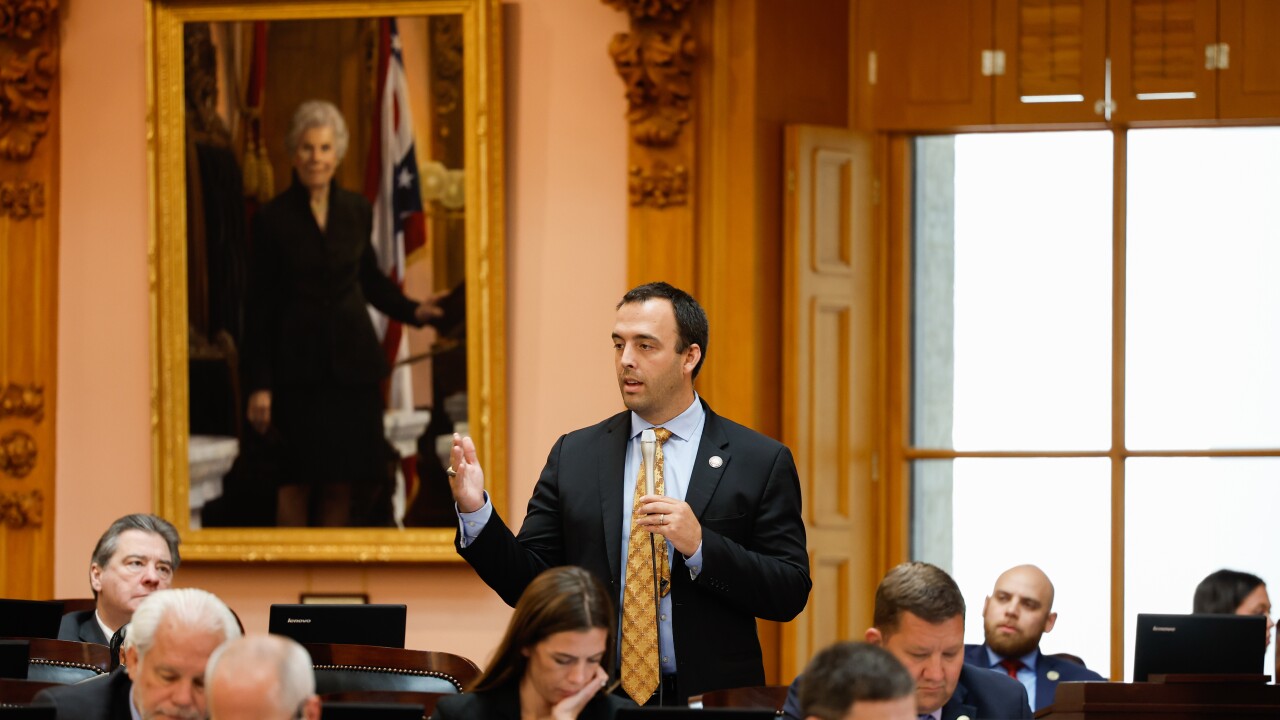
    State Rep. Adam Mathews, R-Lebanon, speaks during an Ohio House session at the Statehouse in Columbus, Ohio. (Photo by Graham Stokes for Ohio Capital Journal. Republish photo only with original article.)

    BY:  Ohio Capital Journal

    Some Ohio lawmakers have proposed eliminating the state income tax, saying it would strengthen the economy. But a majority of economists surveyed on the matter disagree.

    Republican lawmakers in both houses of the General Assembly filed a bill that would eliminate the income tax and the commercial activities tax by 2030 on the rationale that it would stimulate the economy.

    “Ohio is ready to reclaim our role as the economic engine of the Midwest,” state Rep. Adam Mathews of Lebanon said in a January statement. “This step ensures Ohio is a destination for businesses to grow and attract people who want to work and live here, raise a family, and truly thrive.”

    Politicians — particularly those on the right — have long claimed that tax cuts have a stimulative effect on the economy.

    But some economists have said it’s not that simple. The structure of the cuts is critical, and they have to be paid for with accompanying spending cuts, they say.

    In addition, income tax cuts tend to be regressive, meaning they most benefit the wealthy in ways that don’t trickle down effectively to lower-income families. The 2017 Trump tax cuts blew up the deficit while primarily benefiting the richest Americans, according to many analyses.

    In Ohio, the state is already foregoing $1 billion a year in taxes on limited liability companies in a way that mostly benefits the wealthy. It was sold on promises that the cut would stimulate economic growth.

    However, the LLC tax cut has been in place for a decade and the Federal Reserve Bank of Cleveland in March reported that Ohio’s economic growth between the fourth quarter of 2021 and the third quarter of 2023 was the fifth-worst of any state.

    In a survey released this week, a panel of 19 Ohio economists was mostly dubious that eliminating the Ohio income tax would help the state economy. Asked if they agreed that such elimination would stimulate growth, 11 disagreed, three agreed and four said they were uncertain. And all but one said eliminating the Ohio income tax would make it difficult to balance the state budget.

    In the comment section of the survey, Jonathan Andreas of Bluffton University said that eliminating the income tax would cut down on bureaucracy.

    “Although the federal income tax is a pretty efficient and very progressive way to generate revenues, state income taxes like Ohio’s are relatively regressive and Ohio’s is particularly burdensome relative to the smaller amount of revenue given that Ohio has three income tax authorities: state, school district, and local!” he wrote. “That is an absurd amount of bureaucracy for a much smaller amount of tax revenues than the feds get. I’d prefer that we just pay one income tax to the feds and have states generate revenues primarily through higher land taxes which are more efficient and about as progressive.”

    But another economist, Will Georgic of Ohio Wesleyan University, said the Ohio proposal smacks of one tried in 2012 and 2013 in Kansas by former Gov. Sam Brownback. It failed to deliver the promised growth and it nearly bankrupted the state.

    “I think that Ohio is more like Kansas than its lawmakers want to admit (and certainly more like Kansas than we are like Florida, Washington, Nevada, or Texas),” Georgic wrote, referring to states without income taxes. “This experiment did not go well for Kansas.”


    Marty Schladen
    MARTY SCHLADEN

    Marty Schladen has been a reporter for decades, working in Indiana, Texas and other places before returning to his native Ohio to work at The Columbus Dispatch in 2017. He’s won state and national journalism awards for investigations into utility regulation, public corruption, the environment, prescription drug spending and other matters.

    Ohio Capital Journal is part of States Newsroom, the nation’s largest state-focused nonprofit news organization.

    MORE FROM AUTHOR

  • Ohio’s transgender bathroom ban bill could face legal challenges if it passed, attorney says

    Ohio’s transgender bathroom ban bill could face legal challenges if it passed, attorney says

    Getty Images.

    Bathroom ban laws have been challenged in Florida, Oklahoma, Idaho and Tennessee.

    Jean Schmidt (R) who represents Ohio House District 62 is a co-sponsor of HB 183.
    Jennifer Gross (R) who represents Ohio District 45 is a co-sponsor of HB 183.
    Thomas Hall (R) who represents Ohio District 46 is a co-sponsor of HB 183.

    Bill Seitz (R) who represents Ohio District 30 is a co-sponsor of HB 183.

    Adam C. Bird (R) who represents Ohio District 63 is a Primary Sponsor of HB 183.

    BY:  Ohio Capital Journal

    The Ohio House recently passed a transgender bathroom and locker room ban bill, but states that have passed similar bills have gone on to face legal challenges.

    Arkansas, Idaho, IowaKentuckyOklahoma, Tennessee, AlabamaLouisianaMississippiNorth Dakota, Florida, and Utah all have laws on the books that ban transgender people from using the bathroom that aligns with their gender identity in schools.

    These laws have been challenged in Florida, Oklahoma, Idaho, and Tennessee. The U.S. Court of Appeals for the 9th Circuit blocked Idaho’s law in the fall.

    Ohio’s bill would require K-12 schools and universities to mandate that students only be able to use the bathroom or locker room that matches their gender assigned at birth. It would not prohibit a school from having single-occupancy facilities and it would not apply to someone helping a person with a disability or a child younger than 10 years old being assisted by a parent, guardian, or family member.

    The bathroom ban bill, which was tucked into Senate Bill 104 at the end of a marathon House session, heads back to the Ohio Senate for concurrence. The lawmakers are currently on summer break, so that won’t happen anytime soon.

    Ohio Gov. Mike DeWine has indicated he would sign the bill if it came to his desk.

    “As it stands now, I would sign the bill,” he told reporters on Friday.

    Lawsuits would be filed if Ohio passes the bill, said Cleveland attorney Robert Chaloupka.

    “There’s good reason to believe that if the (Ohio) Attorney General decides to defend this case, they’re going to lose, which means we’re spending taxpayer money on something that we have a good sense of how it’s going to go,” he said.

    Chaloupka sees lots of legal challenges with Ohio’s bill.

    “My most critical point about this is who’s going to police this?” Chaloupka asked.

    He thinks this would be especially challenging in a university setting where there are non-traditional students.

    “You’re going to regulate where a 75 year olds trans individual goes to the bathroom?” Chaloupka said.

    The Supreme Court declined to weigh in earlier this year on whether schools can ban transgender students from using a restroom that reflects their gender identity. That denial left in place a U.S. Court of Appeals for the 7th Circuit decision that allowed a transgender middle school Indiana boy to use the boys’ restroom.

    The American Medical Association officially opposes policies preventing transgender individuals from accessing basic human services and public facilities consistent with gender identity.

    “Banning transgender students from freely and safely accessing public places, like bathrooms and changing rooms, sends the message that transgender children do not belong,” Ash Orr, spokesperson for the National Center for Transgender Equality, said in an email. “Everybody should be able to safely access public places without fear of persecution or harassment.”

    Utah’s bathroom ban law — which went into effect in May— applies to K-12 schools and all government-owned buildings.

    “Using the bathroom is a human function that everybody needs to be able to do, and bathrooms can tend to feel like vulnerable spaces, so I think the real concern is that people will feel uncomfortable in a bathroom setting and choose not to use the bathroom at all, which obviously can lead to health issues,” said Equality Utah’s Policy Director Marina Lowe.

    What happened in North Carolina?

    North Carolina was the first state to limit bathroom access to transgender people in 2016 when they enacted a law that banned transgender people from using the restroom that matched their gender identity in most public spaces.

    The backlash was swift and ended up costing the state hundreds of millions of dollars. The NBA moved its 2017 All-Star game from Charlotte to New Orleans. The ACC’s 2016 championship football game was moved from Charlotte to Orlando. Pearl Jam, Bruce Springsteen and Ringo Starr canceled their North Carolina shows.

    North Carolina’s law was repealed in 2017 and ultimately settled in federal court in 2019.

    Follow OCJ Reporter Megan Henry on Twitter.


    Megan Henry
    MEGAN HENRY

    Megan Henry is a reporter for the Ohio Capital Journal and has spent the past five years reporting in Ohio on various topics including education, healthcare, business and crime. She previously worked at The Columbus Dispatch, part of the USA Today Network.

    Ohio Capital Journal is part of States Newsroom, the nation’s largest state-focused nonprofit news organization.

    MORE FROM AUTHOR

  • Ohio redistricting reform group submits more than 731,000 signatures, sets sights on November

    Ohio redistricting reform group submits more than 731,000 signatures, sets sights on November

    BY:  Ohio Capital Journal

    Reporting more than 731,000 signatures submitted to the Ohio Secretary of State’s Office, Citizens Not Politicians said it cleared a massive hurdle in their plan to reform the state’s redistricting process by replacing politicians with a citizen commission.

    The group hoping to get a citizen-led redistricting commission inserted as an amendment to the Ohio Constitution was required to collect 413,487 signatures by July 3 in order to qualify for the Nov. 5 general election. That number accounts for 10% of the total votes cast in the last gubernatorial election, a threshold state law requires for ballot initiatives.

    Ohio also requires petitions to receive at least 5% of the vote in at least 44 counties. Citizens Not Politicians said it did this in 57 counties, while also collecting signatures in all 88 counties in the state.

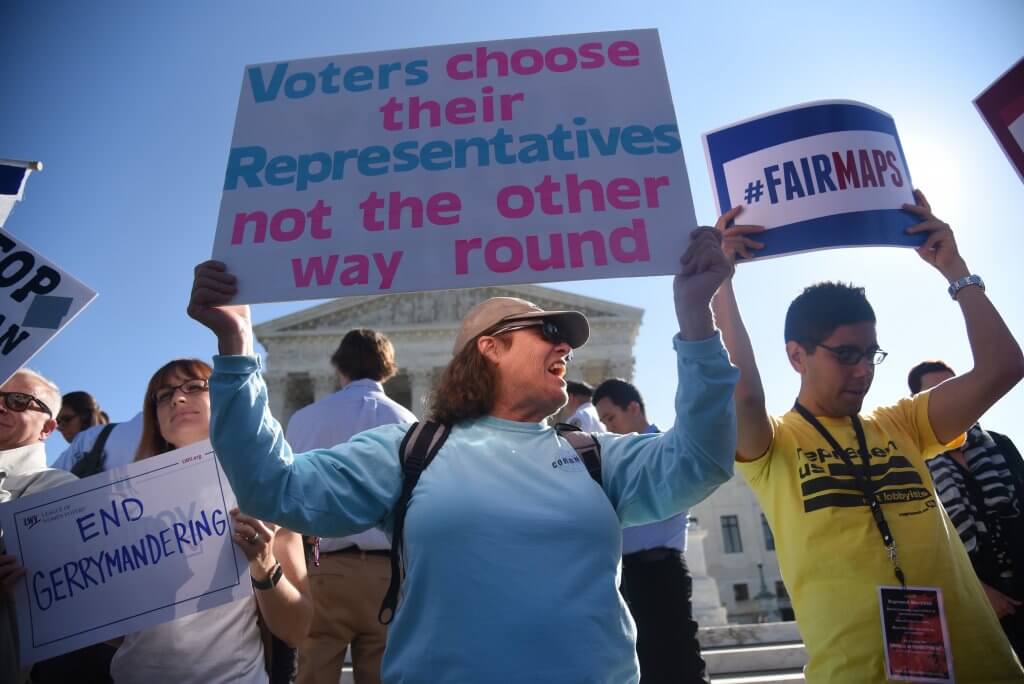
    During a rally celebrating the submission of the signatures on Monday, retired Republican Ohio Supreme Court Chief Justice Maureen O’Connor told a crowd of hundreds in the Statehouse atrium that the initiative received the third highest signature total the state has seen in more than a century. She said it was “one of the most widely supported citizen-initiated constitutional amendments in Ohio’s history.”

    “Ladies and gentlemen, let me let you in on a little secret,” she told supporters who attended the rally. “This amendment will pass. We will prevail.”

    The signatures will now be verified by the Secretary of State’s Office, to filter out possible duplicate or invalid voter signatures, before a final count will be released.

    O’Connor joined in on the redistricting reform process after being chief justice of a supreme court that rejected six different maps adopted by the Ohio Redistricting Commission, a commission made up of elected officials.

    The current seven-member Ohio Redistricting Commission includes the Ohio House Speaker and Ohio Senate President, along with the governor, secretary of state, auditor of state, and two minority party legislative leaders. If approved by the voters, the amendment would replace the politician commission with the Ohio Citizens Redistricting Commission, which would have 15 members, five matching the political party of the governor at the time, five from the party of the gubernatorial candidate who received the second-most votes in the most recent election, and five unaffiliated members.

    The most recent map adopted by the current redistricting commission was cleared by the state’s highest court after O’Connor left due to age limits, and the head chair was taken up by Republican Chief Justice Sharon Kennedy.

    Ohio’s congressional map passed by the commission was also ruled unconstitutional, but challengers to the map chose to step back from legal fights to focus on redistricting reform.

    The rally and the reason for it brought out all sorts, from education and nurses association members to bricklayers and religious leaders.

    Maria Montanez is a part of the Ohio Organizing Collaborative’s Building Freedom Ohio, which works with residents who have been a part of the criminal justice system.

    Montanez said she is a convicted felon, but one who served her time while also obtaining a Bachelor’s degree in business administration.

    “When I got out of prison, I wasn’t given a fair chance,” Montanez said. “Even though I came out with an accolade and prepared myself to be a productive citizen within the community, I’m still looked at as a felon.”

    She wants to see changes to collateral sanctions in Ohio, and thinks making changes to voting rules and making voting districts representative can help make that happen.

    “There’s plenty of people that look like me, feel like me and are living the same civil debt that I am living today,” she said.

    For Cleveland-area school nurse David Spanos, changing the way redistricting is done could help bring more funding to public schools, and lift fair partisan representation into reality, rather than map manipulations meant to help incumbents hold on to power.

    “I don’t think Ohio would be a Republican state if it weren’t for gerrymandering,” Spanos said.

    Cincinnati resident and salon owner Desirae Futel works hard to help her customers learn where and when to vote, and what their voice means when it comes to change in politics.

    “Gerrymandering has long silenced communities like mine, but today, we stand to change that,” she told the crowd.

    With the signatures now submitted, the campaign to get voters to the ballot in support of the measure begins. That strategy includes battling against those who oppose the new redistricting plan, according to O’Connor.

    “They’re going to scheme and spread disinformation, and try and muddy the waters and confuse the voters,” she said.

    But if the motivation encapsulated in the Statehouse atrium spreads to the rest of Ohio voters, Montanez said the votes will go their way.

    “It’s in the numbers that we move this, it’s in the capacity, it’s not just one person,” she said.


    Susan Tebben
    SUSAN TEBBEN

    Susan Tebben is an award-winning journalist with a decade of experience covering Ohio news, including courts and crime, Appalachian social issues, government, education, diversity and culture. She has worked for The Newark Advocate, The Glasgow (KY) Daily Times, The Athens Messenger, and WOUB Public Media. She has also had work featured on National Public Radio.

    Ohio Capital Journal is part of States Newsroom, the nation’s largest state-focused nonprofit news organization.

    MORE FROM AUTHOR

  • “Absurd and unnecessary,” Transgender Ohioans, allies react to House passage of bathroom ban bill

    “Absurd and unnecessary,” Transgender Ohioans, allies react to House passage of bathroom ban bill

    Getty Image

    The bill would require Ohio K-12 schools and colleges to mandate that students would only be able to use the bathroom or locker room that matches up with their gender assigned at birth.

    Jean Schmidt (R) who represents Ohio House District 62 is a co-sponsor of HB 183.
    Jennifer Gross (R) who represents Ohio District 45 is a co-sponsor of HB 183.
    Thomas Hall (R) who represents Ohio District 46 is a co-sponsor of HB 183.

    Bill Seitz (R) who represents Ohio District 30 is a co-sponsor of HB 183.

    Adam C. Bird (R) who represents Ohio District 63 is a Primary Sponsor of HB 183.

    BY:  – Ohio Capital Journal

    Transgender Ohioans and allies are outraged the Ohio House passed a bathroom ban bill at the 11th hour of a marathon session Wednesday night before going on summer break.

    The bill would require Ohio K-12 schools and universities to mandate that students only be able to use the bathroom or locker room that matches their gender assigned at birth.

    “Hate mongers in Columbus want to see trans and gender nonconforming Ohioans stripped of their right to exist in public spaces. They can make our lives harder, but they can’t make us not a part of this state,” TransOhio Executive Director Dara Adkison said in a statement.

    Sam Shim, the parent of two transgender high school students, said his biggest concern with the bathroom ban bill is how lawmakers don’t seem to be focused on students.

    “It seems like it’s a political stunt designed to help with their messaging when they go back out on the campaign trail,” Shim said. “My kids should be able to go to the bathroom without worrying about being accosted.”

    Honesty for Ohio Education said this bill would harm transgender students and families.

    “We are deeply disturbed that extremists in the state legislature prioritized the passing of this transphobic and hateful legislation over anything that would help Ohioans,” Christina Collins, Executive Director at Honesty For Ohio Education, said in a statement.

    Trans Allies of Ohio echoed comments House Minority Leader Allison Russo, D-Upper Arlington, said Wednesday night on the House floor.

    “We have school districts that can’t afford busses or find teachers, colleges that are losing students and closing their doors, and over 505,000 Ohio children going hungry every day,” Trans Allies of Ohio said in a statement. “But attacking less than 1% of the population has become a priority.”

    “HB 183 is absurd and unnecessary, and the passage of this bill through the Ohio House in the late hours of the night is nothing short of targeting and bullying behavior. Our legislators make it hard to feel proud of being an Ohioan,” Jennifer Kuhn, spokesperson for Kaleidoscope Youth Center, said in an email.

    Equality Ohio said the bill undermines the dignity and rights of transgender and gender diverse Ohioans.

    “Across races, backgrounds, and genders, we all deserve the dignity of safely existing in public life and using the most basic of public accommodations,” Morgan Zickes, Equality Ohio’s public policy manager, said in a statement. “We saw extremists in the General Assembly resort to eleventh-hour back door legislative efforts to ensure that transgender and gender expansive Ohioans are stripped of this fundamental decency.”

    Ten states have laws that limit bathroom access that correspond with gender identity in K-12 schools, according to the UCLA Williams Institute 2024 report on the impact of anti-transgender legislation on youth. An estimated 34,800 transgender students ages 13-17 live in those states.

    However, those laws have been challenged in Florida, Oklahoma, Idaho and Tennessee.

    How did the bill pass?

    The bathroom ban bill (House Bill 183) was favorably voted out of the House Higher Education Committee in April, but wasn’t on the agenda for Wednesday’s House session — the last one before lawmakers went on summer break.

    House Republicans used Senate Bill 104, which revises the College Credit Plus Program, as the vehicle to pass the transgender bathroom ban.

    Rep. Adam Bird, R-New Richmond, one of the sponsors of H.B. 183, introduced the amendment that ended up weaving his bill into S.B. 104. Because of the changes, the bill now goes back to the Senate to concur.

    TransOhio called adding H.B. 183 to S.B. 104 an “underhanded move” that  “undermines the legislative process.”

    Since the lawmakers are on summer break, the bill likely won’t go before the Senate until the fall.

    “When the Senate returns from summer recess we urge everyone to pressure the Senate to not concur, and for the Governor to veto,” Adkison said in a statement. “HB 183 is not law today, nor should it ever become so.”

    Transgender bills in Ohio

    There are a handful of transgender bills at various spots on the way to becoming a law.

    Ohio’s gender-affirming care ban for trans youth (House Bill 68) is the closest to becoming law, but is currently tied up in court. A Franklin County judge placed a temporary restraining order on the bill that will be in effect until the conclusion of a July hearing.

    House Bill 8 has also seen movement in the General Assembly lately and it would force educators to out a student’s sexuality to their parents, require public schools to inform parents about sexuality content materials ahead of time and give them the option to request alternative instructions.

    H.B. 8 passed the House last year and just had a fourth hearing in the Senate Education Committee.

    Follow OCJ Reporter Megan Henry on X.


    Megan Henry
    MEGAN HENRY

    Megan Henry is a reporter for the Ohio Capital Journal and has spent the past five years reporting in Ohio on various topics including education, healthcare, business and crime. She previously worked at The Columbus Dispatch, part of the USA Today Network.

    Ohio Capital Journal is part of States Newsroom, the nation’s largest state-focused nonprofit news organization.

    MORE FROM AUTHOR

  • Ohio House passes transgender bathroom and locker room ban for K-12 schools and colleges

    Ohio House passes transgender bathroom and locker room ban for K-12 schools and colleges

    Getty Image

    House Bill 183 was added to Senate Bill 104 as an amendment on the House floor late Wednesday night, then S.B. 104 passed as amended with a 60-31 vote.

    BY:  – Ohio Capital Journal

    The Ohio House passed a bill late Wednesday night amid its last session before going on summer break that would ban transgender students from using the bathroom and locker rooms that match up with their gender identity.

    House Bill 183 was added to Senate Bill 104 as an amendment on the House floor Wednesday night, then S.B. 104 passed as amended with a 60-31 vote. All House Democrats who were present voted against the bill. Republicans Jamie Callender and Gayle Manning also voted against the bill.

    State Sen. Jerry Cirino, R-Kirtland, introduced Senate Bill 104, which revises the College Credit Plus Program.

    The bill heads back to the Senate to concur, but the lawmakers are now on summer break.

    What is in H.B. 183?

    State Reps. Beth Lear, R-Galena, and Adam Bird, R-New Richmond, introduced H.B. 183, which would make Ohio K-12 schools and colleges mandate that students can only use the bathroom or locker room that aligns with their gender assigned at birth.

    “Boys and girls should not be in locker rooms together,” Lear said. “They should not be in bathrooms together and they should not be sharing overnight accommodations.”

    Bird said school superintendents from around the state came to him saying they need this bill.

    “Superintendents and school boards, they need clarity on this issue,” Bird said. “…We want to protect women and girls from assault, from intimidation.”

    The bill would not prohibit a school from having single-occupancy facilities and it would not apply to someone helping a person with a disability or a child younger than 10 years old being assisted by a parent, guardian, or family member.

    The American Medical Association officially opposes policies preventing transgender individuals from accessing basic human services and public facilities consistent with gender identity.

    Thirty percent of LGBTQ+ students said they were prevented from using the bathroom that aligned with their gender, and 26% were stopped from using the locker room that aligned with their gender, according to Ohio’s 2021 state snapshot by GLSEN, which examines the school experiences of LGBTQ middle and high school students.

    When looking specifically at transgender and nonbinary students, 42% were prevented from using the bathroom that aligned with their gender and 36% couldn’t use the locker room that aligned with their gender, according to the Ohio GLSEN report.

    More than 100 people testified against the bill in the House Higher Education Committee.

    Debate on the House floor

    There was about 30 minutes of debate over the bathroom ban amendment before it was voted favorably out of the House.

    Democrats opposing the bill said it is an attack on Ohio’s most marginalized students.

    “I didn’t anticipate that we would be using the power of the state to bully transgender children and individuals today,” State Rep. Beth Liston, D-Dublin, said. “I will reiterate my concern that we continue to focus on children’s genitals rather than their education. As far as protecting girls and women, I will tell you as a woman, I do not want nor need your protection.”

    State Rep. Beryl Brown Piccolantonio, D-Gahanna, said she testified against this bill back when she was the president of the Gahanna-Jefferson School Board, before she was sworn in as a legislator.

    “Most egregiously, this bill needlessly targets some of our most marginalized students,” she said. “And worse than that, it targets a basic human function for which every single one of us deserves privacy. This is not what any of the children need.”

    House Minority Leader Allison Russo, D-Upper Arlington, shared her frustration with Republican lawmakers for spending time on the bathroom bill when there are other pressing issues in schools such as the teacher shortage or busing issues.

    “Here we are, again, I think focusing on the wrong things,” she said. “There’s so many things that need to be done in our school districts and for schools and for our students. But this body continues, over and over again, to focus on the small group of children and target and bully children. … This is what we’re spending our time and energy on. I’m sorry, but don’t tell me your school districts are coming to you begging for this. Baloney.”

    Russo has three school-aged children.

    “No one has talked to me about this,” she said. “This is a made up problem.”

    Republicans argued the bill makes sense.

    State Rep. Jena Powell, R-Arcanum, said the bathroom bill amendment is probably the most straightforward piece of legislation lawmakers will vote on for the next few years.

    “This is easy,” she said. “This is simple. This should not be complicated.”

    Follow OCJ Reporter Megan Henry on Twitter.


    Megan Henry
    MEGAN HENRY

    Megan Henry is a reporter for the Ohio Capital Journal and has spent the past five years reporting in Ohio on various topics including education, healthcare, business and crime. She previously worked at The Columbus Dispatch, part of the USA Today Network.

    Ohio Capital Journal is part of States Newsroom, the nation’s largest state-focused nonprofit news organization.

    MORE FROM AUTHOR
  • A new federal program will give eligible students $120 to buy groceries this summer

    A new federal program will give eligible students $120 to buy groceries this summer

    Students getting their l lunch at a primary school. Photo by Amanda Mills/Centers for Disease Control and Prevention.

    Summer Electronic Benefits Transfer (S-EBT) —also known as SUN Bucks — is a new grocery benefit program through the U.S. Department of Agriculture that will give eligible families $120 per student to buy groceries during the summer.

    BY:  – Ohio Capital Journal

    Summer can be the hungriest time of the year for students who rely on free or reduced school meals and a new federal program is trying to help those families.

    Summer Electronic Benefits Transfer (S-EBT) — also known as SUN Bucks — is a new grocery benefit program through the U.S. Department of Agriculture that will give families $120 per eligible student to buy groceries during the summer.

    Ohio is one of more than 30 states that has opted into the SUN Bucks program.

    “We have a lot of Ohio children who rely on their school meals for their breakfasts and lunches, and in the summertime sometimes it’s very difficult for households to be able to provide meals,” said Brigette Hires, director of nutrition for the Ohio Department of Education and Workforce. “This new Summer EBT has really helped to just have another safety net for households in the summertime to be able to provide nutritious meals for their families.”

    The SUN Bucks program is estimated to help 840,000 Ohio students afford groceries during the summer and is the first new permanent federal nutrition program in more than 50 years.

    “This program gives direct resources to families to be able to go to the store, and pick out the foods that are best for them and their families,” said Hope Lane-Gavin, director of nutrition policy and programs for the Ohio Association of Foodbanks.

    Children should receive their one-time SUN Bucks payment of $120 by July 31. SUN Bucks will be added to current Ohio Direction Cards or will be mailed on a new card to eligible children.

    “The distribution is happening a little bit later in the summer time than it will in subsequent summers,” Hires said. “It’s mostly just because in standing up a brand new program, there’s a lot of different processes that have to be put into place.”

    Going forward, she anticipates the benefits will be distributed closer to the beginning of summer.

    Eligible families who do not receive the Summer EBT benefits by July 31 should contact the Ohio Department of Job and Family Services at 1-866-244-0071.

    Students who are eligible for SUN Bucks can also participate in other nutrition programs such summer meal sites or local food pantries.

    “The programs are meant to work together to really help households provide nutritious meals for their children,” Hires said.

    SUN Bucks allows families to decide what food they want to buy which comes in handy when being mindful of different cultures, food allergies and picky eaters.

    “Kids are really picky,” Lane-Gavin said. “That’s the reality. Kids are picky, and that’s okay. They still need to eat.”

    Who is eligible for SUN Bucks?

    Many Ohio families will be automatically enrolled while others will need to apply at sebt.ohio.gov.

    Eligible children who fall under these categories will automatically receive SUN Bucks and do not need to fill out an application:

    • Children whose family receives SNAP or Ohio Works First benefits.
    • Children receiving Medicaid that met the free and reduced-price lunch threshold during the previous school year.
    • Children who were individually approved to receive free or reduced-price school meals through the National School Lunch Program (NSLP) last school year.

    These children may be eligible, but need to apply:

    • Migrant children.
    • Children who are experiencing homelessness.
    • Children in families earning less than 185% of the federal poverty line based on their monthly income ($4,810 per month for a family of four).
    • Children who receive free or reduced-price school meals but did not fill out a NSLP application.

    Follow OCJ Reporter Megan Henry on X.

    Follow OCJ Reporter Megan Henry on X.

    _____________

    Megan Henry
    MEGAN HENRY

    Megan Henry is a reporter for the Ohio Capital Journal and has spent the past five years reporting in Ohio on various topics including education, healthcare, business and crime. She previously worked at The Columbus Dispatch, part of the USA Today Network.

    Ohio Capital Journal is part of States Newsroom, the nation’s largest state-focused nonprofit news organization.

    MORE FROM AUTHOR

  • The business case for rejecting Ohio gerrymandering

    The business case for rejecting Ohio gerrymandering

    COMMENTARY

    Steven H. Steinglass is Dean Emeritus and Professor Emeritus at the College of Law of Cleveland State University.

    by Steven H. Steinglass

    This article delves into the history of redistricting of the Ohio General Assembly and presents the business case for rejecting partisan gerrymandering. It also identifies the Citizens Not Politicians amendment, which its supporters believe will end partisan gerrymandering by assigning redistricting to an independent 15-person commission composed of five Democrats, 5 Republicans, and five independents.

    The Focus on State-Level Gerrymandering

    Partisan gerrymandering at the state results in the election of highly partisan super-majorities within the General Assembly. I focus on the state legislature, not Congress, because of the outsized impact of what happens in Columbus on all Ohioans. And with the July 3, 2024, deadline approaching for the submitting of the 413,487 valid signatures to place the Citizens Not Politicians amendment on the ballot, those contemplating signing the petition for the amendment (or ultimately voting on it) should be aware of the threats posed by partisan gerrymandering.

    The History of Redistricting in Ohio

    The seeds for partisan gerrymandering in Ohio were planted in our first constitution, the Constitution of 1802, which brought us into the Union as the 17th state. That constitution established a system of legislative supremacy and gave the General Assembly unlimited power to draw district lines for both the General Assembly and the U.S. House of Representatives. The only standard was that state legislative lines were to be based on “the number of white male inhabitants above twenty-one years of age” in each county.

    Reform of the Ohio Constitution was the major political issue in Ohio in the late 1840s, and it took a gerrymandering crisis in Hamilton County to break the legislative deadlock and put a constitutional call on the ballot.

    The voters approved the call for a constitutional convention, and the resulting Ohio Constitution of 1851 curtailed many of the powers of the General Assembly. This included removing the General Assembly completely from the process of state legislative redistricting. In its place, this power was given to three statewide officers — the governor, the secretary of state, and the State Auditor.

    In 1903, Ohio abandoned its commitment to population equality with the adoption of the notorious Hanna Amendment to the Ohio Constitution. This amendment guaranteed every county at least one representative in the Ohio House of Representative, leading to significant population inequality and rural dominance.

    The iconic 1912 Ohio Constitutional Convention did not address redistricting, but it created the constitutional initiative, a tool for a future generation to tackle such issues.

    Substantial changes have occurred since 1802 regarding who is responsible for redistricting. But after losing its role in redistricting in the 1851 Constitution, the General Assembly gradually clawed back its power, leading to the current legislator-dominated Ohio Redistricting Commission.

    The Impact of “One Person, One Vote”

    In the 1960s, the U.S. Supreme Court revolutionized redistricting by embracing the principle of “one person one vote” for both state legislatures and Congress. This led to efforts to amend the Ohio Constitution, resulting in the 1967 amendment that repealed the Hanna Amendment and required that districts be equal in population as well as compact and contiguous. Despite these reforms, the General Assembly regained some of its lost power by adding two legislators to the redistricting commission.

    How Partisan Gerrymandering Produces Super-Majorities

    Partisan gerrymandering involves the drawing of legislative district lines to protect incumbents, to seek partisan advantage, or — in most instances — both.

    Practitioners of partisan gerrymandering use “cracking” and “packing” to skew electoral results, diluting the opposing party’s power by spreading their voters across multiple districts (cracking) or concentrating them in a few districts (packing). These tactics, combined with the magic of advanced computer modeling, can result in a state with a 55-45% partisan split in the voting population having a legislature composed of 60-67% of the dominant party.  If this sounds familiar, it essentially describes what has happened in Ohio.

    How Partisan Gerrymandering Hobbles State Government

    Partisan gerrymandering typically results in the election of the most extreme members of the majority political party. In primaries, candidates have little incentive to move to the center, resulting in partisan super-majorities that can ignore the constitutional guardrails that our state constitution places on the General Assembly. Specifically, this leads to:

    • The emasculation of the governor’s veto power as partisan gerrymandering makes it too easy for the General Assembly to reach the three-fifths majority in each House necessary to override a veto;
    • The unchecked power to put proposed constitutional amendments on the ballot, which requires a three-fifths vote in each House of the General Assembly; and
    • The power to include emergency provisions in legislation with a two-thirds vote of the vote in each House of the General Assembly, allowing laws to take effect immediately and preventing the voters from using the referendum to challenge adopted statutes.

    The Substantive Impact of Partisan Gerrymandering

    A strong case can be made that partisan gerrymandering in Ohio has contributed to or will contribute to:

    • The erosion of municipal home rule;
    • The abdication of the state’s constitutional responsibility to fund “a thorough and efficient system of common schools;”
    • The decline in  the quality of higher education;
    • The denial of a respectable minimum wage for Ohio workers;
    • The fouling of our environment;
    • The undermining of our new reproductive rights amendment;
    • The vilification of the LGBTQ community;
    • The weakening of our system of public health system; and
    • The desirability of our state as a venue for conferences and a destination for tourists.

    Cumulatively, partisan gerrymandering threatens Ohio’s business climate, risking its reputation as a business-friendly state.

    Redistricting in the 1960s and the Persistence of Gerrymandering

    Although embracing the principle of “one person one vote” in its decisions in the 1960s, the U.S. Supreme Court did not address partisan gerrymandering. Nor did the 1967 Ohio amendment. And every decade since its adoption has been marked by redistricting controversies with both Democrats and Republicans seeking partisan advantage at various times.

    And in 2011, the Ohio Supreme Court washed its hands of the issue, holding that “[t]he Ohio Constitution does not mandate political neutrality in the reapportionment of house and senate districts…”

    Recent Reform Efforts

    In the 21st century, partisan gerrymandering has been the subject of reform efforts through ballot measures.

    In 2005 and 2012, good government groups proposed amendments to create an independent redistricting commission and to bar partisan gerrymandering. But there was no broad understanding of the pernicious effect of partisan gerrymandering and thus no groundswell of support for ending it. Significantly, the opponents were able to control the message and skillfully employed the traditional tool of ballot measure opponents: obfuscation — a fancy word for misleading advertising. And the voters rejected these proposals by wide margins.

    Unfortunately, the U.S. Supreme Court, which had once been seen as the place where partisan gerrymandering would die, declined to get involved. Though the Court had barred racial gerrymandering in 1960 five years before the adoption of the historic 1965 federal Voting Rights Act, in 2019 it refused to address the constitutionality of partisan gerrymandering, thus leaving the issue to the states.

    Meanwhile, partisan gerrymandering was the target of two Ohio constitutional amendments proposed by strong bipartisan majorities in the General Assembly less than a decade ago.

    In 2015, Ohio voters approved an amendment to alter redistricting of the General Assembly, and in 2018, the voters approved a separate amendment to alter redistricting of Congress. Both amendments, which were sold to the voters as ending partisan gerrymandering, were approved by more than 70% of Ohio voters. Both included detailed standards to govern redistricting by, among other things, barring the drawing of district lines that favor or disfavor a political party. Neither amendment created an independent redistricting commission.

    2022 and the Failure of the Rule of Law

    In retrospect, we  now know that these amendments had two fatal flaws.  First, in providing that a redistricting plan adopted by a bipartisan majority would last 10 years, the proponents assumed that the prospect of having to redistrict more than once in a decade would be an incentive to bring the parties together. Second, the amendments appeared to deny the Ohio Supreme Court the power to prepare its own plan in the event of an impasse.

    The proponents were wrong on both counts. In late 2021, the Ohio Redistricting Commission adopted by partisan votes four-year redistricting plans for the General Assembly.

    On January 12, 2022, the Ohio Supreme Court in a 4-3 bipartisan decision written by Justice Melody Stewart held the state redistricting plan was unconstitutional,

    All that seemed like good news to those who wanted to eliminate partisan gerrymandering, but one member of the majority — former Chief Justice Maureen O’Connor — in a prescient concurring opinion in the first state redistricting case saw the handwriting on the wall. In effect, she told us that this was not going to work, and she argued that Ohio should look to the model of other states that had created independent redistricting commissions.

    And Justice O’Connor got it right.

    Despite five rulings in 2022 by the Ohio Supreme Court holding that state redistricting plans violated the Ohio Constitution, the court effectively concluded that it lacked the power to enforce its judgments. And the rule of law took a serious hit when a majority of the members of the Ohio Redistricting Commission refused to abandon their unconstitutional redistricting plans.

    2024 — Unique Challenges and The Business Community

    So here we are in 2024, and the question before us is: what is different?

    Today there is a broader understanding of the impact that partisan gerrymandering has on the functioning of our representative democracy, on the business climate of our state, and on the quality of life in Ohio.

    Ohioans, however, have the tool — the constitutional initiative — to address partisan gerrymandering. Adopted in 1912 to provide a way around an unresponsive legislature, the initiative is not a substitute for representative democracy; rather, it is a supplement. It permits the citizenry to have a voice when they believe that the General Assembly has become an obstacle to the common-sense resolution of the challenges that our state faces.

    And there is an important ally in this effort — prominent members of the business community.

    In the past, the business community has played an important role in campaigns on state ballot issues. Often this has been in opposing initiated amendments that it viewed as flawed. For example, think about business opposition in 2015 to the proposal to grant a marijuana monopoly to a group of investors.

    The business community has also played an important supportive role on ballot issues that enabled economic development, and no better example is the adoption of Governor Bob Taft’s ground-breaking Third Frontier program.

    To date, the major business organizations in the state have not taken positions on the proposed Citizens Not Politicians amendment, but in the past two years, a relatively new organization, the Leadership Now Project, has added a business voice to the effort to protect the Ohio Constitution and support representative democracy. Leadership Now opposed the infamous August 2023 ballot measure that would have undercut majority rule by imposing a 60% threshold on proposed constitutional amendments.

    And Leadership Now, which is composed of prominent business and thought leaders throughout the state, is strongly supporting the proposed Citizens Not Politicians amendment and the use of a truly independent redistricting commission to draw state legislative district lines and to eliminate partisan gerrymandering.

    Conclusion

    Partisan gerrymandering poses a serious threat to Ohio’s democratic processes and business climate. The proponents of the Citizens Not Politicians amendment believe that Ohioans can ensure fair representation and foster a more stable and attractive state for businesses and residents alike. And they view the business community’s support as being an important part of the effort to drive the necessary change for a fair and prosperous Ohio.


    Steven H. Steinglass
    STEVEN H. STEINGLASS

    Steven H. Steinglass is Dean Emeritus and Professor Emeritus at the College of Law of Cleveland State University. His teaching areas include Civil Procedure, Federal Jurisdiction, Section 1983 Litigation, State Constitutional Law, and Ohio Constitutional History. He is also the author of, “The Ohio State Constitution,” (Oxford Univ. Press 2022) (2nd ed.) (with Gino J. Scarselli), which was published in 2004 by Greenwood Publishing (and now published by Oxford University Press as part of its state constitutional law series). From March 2013 to June 2017, Professor Steinglass served as Senior Policy Advisor for the Ohio Constitutional Modernization Commission. Beginning in 2019, Professor Steinglass was the Course Planner for the annual Ohio State Bar Association program on The Importance of the Ohio Constitution.

    MORE FROM AUTHOR
  • Harsh penalties and gag orders: Lawmakers discuss plans for long-shot constitutional convention

    Harsh penalties and gag orders: Lawmakers discuss plans for long-shot constitutional convention

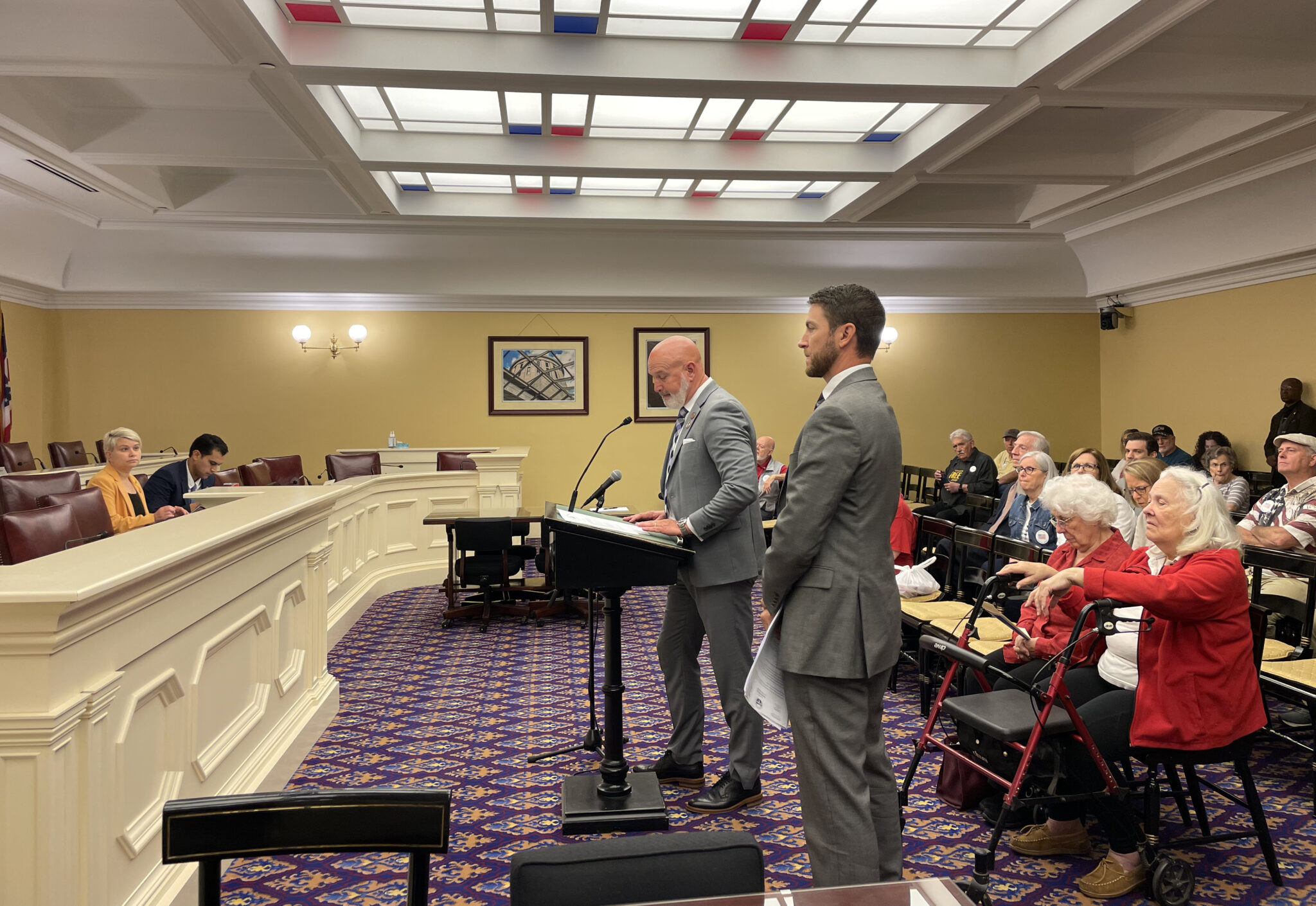
    Reps. Bernie Willis, R-Springfield (speaking), and Riordan McClain, R-Upper Sandusky, introducing legislation. (Photo by Nick Evans for Ohio Capital Journal.)

    BY:  Ohio Capital Journal

    This week state lawmakers introduced a measure setting the guidelines for a hypothetical future constitutional convention.

    The obscure process laid out in Article V of the U.S. Constitution has been embraced in recent years by activists to impose congressional term limits, balanced budget requirements or place new limits on money in politics. But there are precious few details in the Constitution about how it would operate.

    Among the guardrails lawmakers proposed, delegates could face recall for speaking publicly about internal business. If they took up proposals deemed out of bounds, they could face a felony.

    Additionally, federal officeholders or appointees and statewide officeholders would be barred from serving as delegates. State representatives or senators, however, would still be eligible. Although the bill directs lawmakers to select an odd number of delegates, there’s no mention of minority party representation.

    The convention route is attractive to supporters because organizers can largely sidestep Congress, stacking up resolutions in state legislatures until they reach the required 2/3 threshold of 34 states. From there, convention backers are already a long way toward the 3/4 threshold (38 states) necessary to ratify an amendment.

    The problem, government watchdogs argue, is that once you call a convention, all bets are off. While the U.S. Constitution lays out the benchmarks for ratification, it’s unclear on the rules for the convention itself.

    Some argue the convention could have a limited “call” laid out in the states’ resolutions. It’s not clear, however, what would come of a so-called “runaway” convention that takes on matters outside that scope. In committee Wednesday, Ohio’s House Government Oversight Chairman Rep. Bob Peterson, R-Selina, said the very first constitutional convention might fit that definition.

    “Thank God and thank goodness,” he added, “because they did great work.”

    Catherine Turcer from Common Cause Ohio acknowledged there’s “something really inspiring” about picking up the pen the founders put down.

    “It’s also, you know, terrifying,” she said, “when you think about it as an opportunity to open up absolutely every single issue.”

    “We’re in such a contentious, just an incredibly contentious time for this kind of robust discussion,” she added.

    Article V efforts

    State Reps. Riordan McClain, R-Upper Sandusky, and Bernie Willis, R-Springfield, have sponsored House Joint Resolution 3, which calls for a convention of the states. Their resolution, which has already had several hearings, includes explicit provisions aiming to limit the scope of delegates’ work.

    Delegates are restricted to “proposing amendments that impose fiscal restraints on the federal government, limit the power and jurisdiction of the federal government, and limit the terms of office for its officials and Members of Congress,” according to the resolution.

    The measure also carries language specifying Ohio’s call can only be combined with others drafted toward the “substantially same purpose,” and to rescind the application after the fact if the eventual convention considers changes to the Bill of Rights.

    It’s not a carbon copy of the model resolution provided by Convention of States Action, but it would fit under the heading of “substantially same.” The organization has the backing of effectively every leading light in the conservative movement, and it has successfully lobbied for convention resolutions in 19 states.

    It’s not the only effort to organize an Article V convention, however. The group Wolf-PAC, founded by Cenk Uygur, is promoting campaign finance reform in the wake of Citizens United. Wolf-PAC has passed resolutions in four states.

    Although both groups insist it’s possible to limit the scope of a convention, it’s also uncharted territory. Wolf-PAC points to peer-reviewed studies and opinions from U.S. Justice Department officials. But because it has never been done before, there’s no judicial precedent.

    “The convention could make its own rules and set its own agendas,” Turcer explained. “And it is true that, whether it’s the state legislature or Congress, they might try to limit the convention. But there’s no way to assure that the members of the convention would actually obey those rules.”

    “It’s its own entity,” she added.

    Convention of States notes that the biggest safeguard is the ratification process itself. Whatever the convention comes up with still needs the backing of 38 states, whether within its original scope or outside of it.

    “That means if only 13 states vote no, the answer is no. It doesn’t get much safer than that!” the Convention of States website insists.

    Still, there’s no denying some measure of uncertainty. No matter how narrowly convention backers draft their resolutions, even they acknowledge they have no say in the text of the eventual amendment.

    Congressional Research Service study from 2016 noted calling a convention to vote on a specifically worded amendment is one way Congress could argue states’ applications were “defective and invalid.”

    Because the Constitution gives Congress or a convention the right to “propose” amendments, calling a convention simply for an up or down vote misconstrues its function. Its role is to deliberate and propose, not to approve or disapprove.

    Limiting efforts

    On Wednesday, McClain and Willis introduced their bill establishing the process for selecting delegates and policing their behavior as part of the convention.

    “We want to be clear on the process both before and during a convention,” McClain said, “to make sure that the runaway (convention) does not happen, the delegates do not disobey their oath and their responsibility to this great state.”

    The sponsors envision an Advisory Committee, responsible for keeping tabs on the delegation and recalling members who violate rules. It would be made up of three members of the General Assembly. The House Speaker and Senate president would get one designee each and the third would be a joint selection approved by a majority in each chamber.

    Among the violations that could get a delegate recalled: expressing disagreement publicly once the delegation has taken a formal position, or speaking with the media at all if they aren’t the member designated handle communications.

    “I believe the whole intent there is to have one voice for Ohio,” Willis explained. “And that that group of delegates are charged with producing that one message because there is only going to be one vote.”

    State Rep. Richard Brown, D-Canal Winchester, criticized the bill for not requiring representation from both political parties in the convention delegation or the advisory committee.

    “Because like it or not,” he said, “we do have to parties in this state.”

    McClain insisted, “I don’t see this as a partisan issue, frankly.”

    He argued with the supermajorities required for passage, “to get anything through a convention of these United States it cannot fall on party line.”

    Speaking after the hearing, McClain framed the legislation as a work in progress. He chalked up the decision to cut out statewide and federal officials, but not general assembly members, to delegates not being “considered a statewide position.”

    But he acknowledged, “I’ve have had some conversations with members about looking at that provision, if we should exclude state lawmakers as well. So, I don’t know what the conversations will come (to), but this is the starting point for the for the bill.”

    He also referenced hearing feedback on the minimum number of years required as a U.S. citizen and a resident of Ohio as well as how to handle dual citizens.

    “Ultimately it’s about getting the right people there that are going to truly represent the voice of what Ohio wants,” he said.

    Bigger penalties

    While the bill threatens recall for delegates who speak out of turn, it proposes far harsher penalties for those who act outside the joint resolution’s scope.

    Any member who votes for or promotes a convention voting process other than one vote per state, votes for an amendment altering the Bill of Rights, the Civil War Amendments or several others, votes for an amendment beyond the joint resolution’s call, would be guilty of a third-degree felony. Accepting gifts from anyone other than a family member worth more than $200 combined gets the same treatment.

    “I get where you all were going in the sense of trying to make sure that things were protected in all of that,” Rep. Latyna Humphrey, D-Columbus, said. “But do you think that the penalty might be a little too high?

    “F3 is real high,” she added. “It’s very high.”

    “I think that the stakes are high,” McClain responded. “We want to say that the oath that you swear to do your duty means something, and that if you deviate from that it’s gonna be significant.”

    Turcer is left shaking her head. To her, the bill’s heavy-handed punitive measures only underscore the risk of pursuing a convention.

    “It’s as if the sponsor buys the premise that you could have a runaway convention and wants to come up with rules to rein it in,” she said, “without thinking really big picture that, you know, Ohio is not the center of the universe. It’s not an island, we’re one state, and the convention sets its own rules.”

    “So, there’s a clear understanding that there need to be rules,” she added, “without understanding that you don’t get to choose.”

    If past is prologue…

    Ironically, in making the case for delegates restricting their focus to a limited call, McClain brought up Ohio’s recent special session. The governor called lawmakers back to the statehouse for the express purpose of ensuring Joe Biden got on the ballot and prohibiting campaign spending by foreign nationals, and they did.

    “I see that much akin to what the convention is called for,” McClain said, “and the conversations that would happen at a convention with members to say that this this topic was not for what we were called, we cannot go down that path without experiencing issues both legally and otherwise.”

    The problem is, at least in the eyes of two long-serving Republican House lawmakers, the Ohio Senate did exceed the governor’s narrow mandate. Rather than starting from scratch, the Senate tacked the governor’s demands onto an unrelated bill changing how statewide issues are numbered.

    In a joint statement, Reps. Scott Oelslager, R-North Canton, and Bill Seitz, R-Cincinnati, called that “unprecedented because it includes provisions that are extraneous to the Governor’s call for a special session.”

    “The way the Senate is conducting business is constitutionally and procedurally questionable,” they continued, “and it presents undue litigation risk that can be wholly avoided by reaching agreement between the chambers on a correctly numbered bill.”

    In the end, the Senate abandoned its approach and accepted the legislation that passed in the House. But the episode highlights lawmakers’ tendency to take on outside issues at least as much as it demonstrates their ability to rein in those impulses. In the committee hearing, Chairman Peterson reminded McClain and Willis of these “differences of opinion” and asked if their bill adequately addressed the issue.

    “I would say that this is at least a step forward,” Willis argued. “If it is the ultimate solution, I don’t think we know.”

    Follow OCJ Reporter Nick Evans on Twitter.


    Nick Evans
    NICK EVANS

    Nick Evans has spent the past seven years reporting for NPR member stations in Florida and Ohio. He got his start in Tallahassee, covering issues like redistricting, same sex marriage and medical marijuana. Since arriving in Columbus in 2018, he has covered everything from city council to football. His work on Ohio politics and local policing have been featured numerous times on NPR.

    Ohio Capital Journal is part of States Newsroom, the nation’s largest state-focused nonprofit news organization.

    MORE FROM AUTHOR