Author: Ohio Capital Journal

  • Moreno blasted rivals over scandal. Now he’s welcoming a big player’s support

    Moreno blasted rivals over scandal. Now he’s welcoming a big player’s support

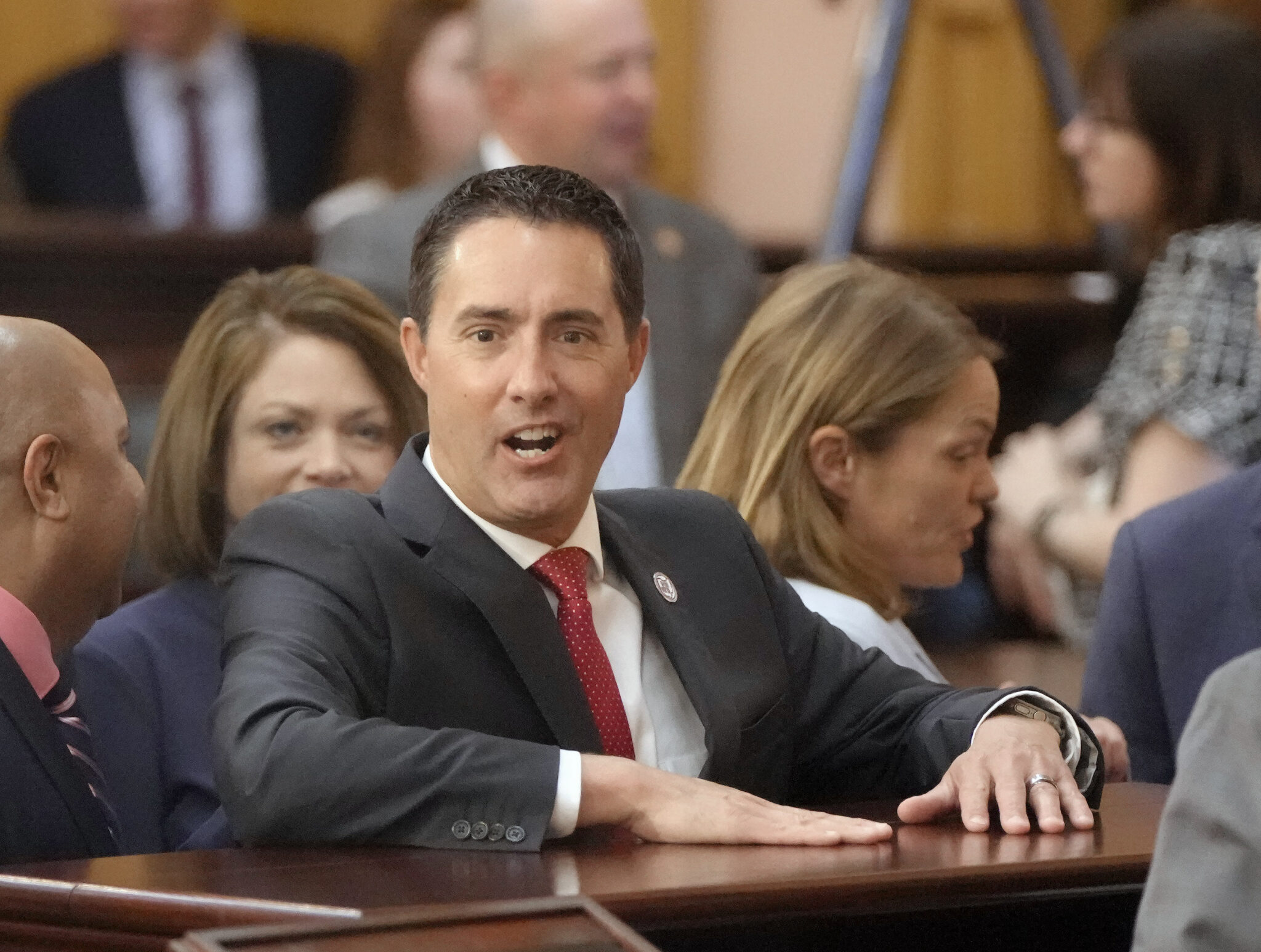
    (From left) Sec. of State Frank LaRose, Bernie Moreno, and state Sen. Matt Dolan, R-Chagrin Falls, on the debate stage before the March primary. (Debate pool photo courtesy of WCMH-TV.)

    BY:  U.S. Sen. Sherrod Brown

    During the GOP U.S. Senate primary, Cleveland businessman Bernie Moreno went after his opponents over their connections to the biggest bribery and money-laundering scandal in Ohio history.

    But now he’s welcoming the support of a man who brokered what was perhaps the key relationship in a scheme in which Akron-based FirstEnergy paid $61 million to purchase a $1.3 billion bailout that fell on the backs of ratepayers — which is to say everyday Ohioans.

    The supporter, Cleveland businessman Tony George, invited a now-convicted lawmaker to travel on FirstEnergy’s private jet to Donald Trump’s 2017 inaugural, and booked the lawmaker and FirstEnergy executives into the same hotel for days of events during which federal prosecutors say the conspiracy began. George was still communicating with the central players in 2020, when the FBI started making arrests.

    When asked to comment on the seeming hypocrisy, Moreno’s campaign didn’t respond directly. It instead attacked his Democratic opponent, incumbent Sen. Sherrod Brown.

    Crooked bailout

    A political newcomer, Moreno in March sailed past his more-experienced opponents buoyed by the endorsement of former President Donald Trump.

    Moreno was once a harsh Trump critic, calling him a “lunatic” and a “maniac.” But as with Ohio Sen. — and vice-presidential hopeful — J.D. Vance, Moreno got into politics and turned into an ardent supporter of Trump, who is now a convicted felon.

    Moreno might have experienced a similar conversion when it comes to 2019’s corrupt bailout law, House Bill 6.

    In a Spectrum News 1 debate on Feb. 19, Moreno went after his Republican opponents, State Sen. Matt Dolan and Secretary of State Frank LaRose.

    Dolan in 2019 voted for HB 6, but then later said he supported a full repeal.

    LaRose, Ohio’s top elections official, provided “private” information to FirstEnergy CEO Chuck Jones during a brutal-but-successful war to stop a repeal of the bailout, according to text messages from Jones that were presented during a criminal trial last year. LaRose at first refused to comment on the messages. Then last July, he said he didn’t recall conversations with Jones and others involved in the scandal.

    As a result of the bailout conspiracy, former House Speaker Larry Householder, R-Glenford, last year received a 20-year prison sentence and former Ohio Republican Party Chairman Matt Borges was sentenced to five years. Jones and former FirstEnergy Vice President Michael Dowling were charged by state authorities earlier this year.

    About 19-and-a-half minutes into February’s GOP Senate debate, LaRose attacked Moreno over what LaRose said was Moreno’s support for government subsidies of wind and solar energy. Moreno swung back with HB 6, the corrupt bailout law.

    “I was against HB 6,” Moreno said. “These guys weren’t. They’re going to have to answer for their involvement in that scandal to a different audience than the one that’s here tonight.”

    Moreno took another swing at Dolan on April 30, when he took to X to say.

    @dolan4ohio was the most helpful member to pass the CROOKED and CORRUPT FirstEnergy Bailout Bill! Matt is a GUARDIAN for the Left Woke Mob and the Swamp but not the people of Ohio,” he said.

    Support from “Individual B”

    That last sentence was an apparent swipe at the Dolan family’s ownership of Cleveland’s baseball team. In 2021 it changed its name from the Indians to the Guardians in response to Native American protests — to the fury of some of its fans.

    But as for Moreno’s problems with figures who were involved in the bailout scandal, they appear to extend only to his political opponents — not his supporters.

    On May 16, his campaign held a Bourbon With Bernie fundraiser in Mentor. Cleveland businessman Tony George was a host, a privilege for which George paid $2,500.

    In addition to being a Moreno supporter, George has had a long and lucrative relationship with FirstEnergy. Entities linked to George received nearly $11 million from FirstEnergy over the years, according to a state audit.

    Unlike FirstEnergy’s two top executives, Gov. Mike DeWine’s nominee to the Public Utilities Commission, Householder, Borges and three others, George has not been charged in the conspiracy, and there’s been no public indication that state or federal authorities plan to.

    But George’s role was substantial enough that he was called “Individual B” in FirstEnergy’s deferred prosecution agreement — a document in which the utility copped to its culpability for the bribery scandal, along with paying out $230 million. It lays out Individual B’s close relationship with FirstEnergy’s top executive and to Householder from the fall of 2016, when Householder was plotting his return to the House and then to regain the speaker’s gavel.

    During his trial, Householder implausibly testified that during the 2016 World Series, he randomly wandered into the FirstEnergy luxury box at Cleveland’s Progressive Field. Raising doubts that his visit was just happenstance, the deferred prosecution agreement includes a message from Jones, the FirstEnergy CEO, to George on Nov. 5, 2016 — just three days after Game 7 of the World Series.

    “Pass on to (Householder),” Jones said. “When we were talking on (Wednesday) I told him there was gonna be a sense of urgency (for a bailout) but couldn’t tell him all the details. If we don’t move on some type of supplant (sic) in (the) first half of 2017 it will be too late. These (nuclear) plants will be shut, sold, or bankrupt. I don’t have any contact info for him.”

    George responded, “He’s more than ready to craft something,” federal prosecutors said in closing arguments in Householder’s trial.

    Expensive junket

    The following January, George invited Householder — and flew with him, Householder’s son and FirstEnergy Vice President Michael Dowling — on the FirstEnergy jet to the Trump inaugural. George also booked Householder and then-CEO Jones into the same DC hotel.

    What followed were days of swanky steak dinners and other events during which prosecutors said the bailout scheme was hatched.

    FirstEnergy’s deferred prosecution agreement, or DPA, says that George continued as a conduit between Householder and Jones until 2020, when Householder was arrested.

    Before the feds brought the hammer down, Jones, George and Householder were plotting to change the Ohio Constitution so Householder could continue as speaker for another 16 years. That would have allowed them to continue to increase electricity rates and use the resulting dark money to dominate Ohio government in ways not calculated to benefit ratepayers, or the public at large.

    The DPA includes messages between Jones and George on Feb. 28, 2020. Jones referred to Householder as “an expensive friend,” but said it would be valuable to keep him in his position of power because, as Householder said, he could “get a lot done in 16 years.”

    George agreed, saying, “Probably more than 5 previous Speakers combined.”

    Then, George added, “He will make Ohio great again.”

    Response

    The Moreno campaign this week declined to answer questions about these matters on the record.

    It was asked whether Moreno was aware of George’s involvement in the HB 6 affair when Moreno accepted George’s support. It was also asked if Moreno would return George’s money and decline support in the future.

    Communications Director Reagan McCarthy responded by asking in an email, “When is Sherrod Brown going to return the donations made to his campaign over the years including when FirstEnergy admitted it was bribing public officials?”

    In fact, Brown donated the $21,000 he’d received from FirstEnergy over the years to Ohio food banks within 10 days of Householder’s 2020 arrest, according to Federal Election Commission records provided by the Brown campaign.

    “While Bernie continues to actively fundraise with key players of the FirstEnergy bribery scandal, days after the FirstEnergy scandal was revealed, the Friends of Sherrod Brown campaign donated FirstEnergy contributions to local food banks across the state,” a spokesperson said in an email.


    Marty Schladen
    MARTY SCHLADEN

    Marty Schladen has been a reporter for decades, working in Indiana, Texas and other places before returning to his native Ohio to work at The Columbus Dispatch in 2017. He’s won state and national journalism awards for investigations into utility regulation, public corruption, the environment, prescription drug spending and other matters.

    Ohio Capital Journal is part of States Newsroom, the nation’s largest state-focused nonprofit news organization.

    MORE FROM AUTHOR

  • U.S. Supreme Court rejects attempt to limit access to abortion pill

    U.S. Supreme Court rejects attempt to limit access to abortion pill

    BY:  Ohio Capital Journal

    WASHINGTON — The U.S. Supreme Court ruled in a much-anticipated decision Thursday that mifepristone, one of two pharmaceuticals used in medication abortion, can remain available under current prescribing guidelines.

    The high court unanimously rejected attempts by anti-abortion groups to roll back access to what was in place more than eight years ago, writing that they lacked standing to bring the case.

    Those limits would have made it more difficult for patients to get a prescription for mifepristone, which the Food and Drug Administration has approved for up to 10 weeks gestation and is used in about 63% of U.S. abortions.

    Erin Morrow Hawley, senior counsel at Alliance Defending Freedom, who argued the case in front of the court on behalf of the legal organization, doesn’t believe this is the end of efforts to challenge access to mifepristone.

    She said on a call shortly after the ruling was released the three states that intervened in a lower court — Idaho, Kansas and Missouri — could still advance their arguments against mifepristone and potentially hold standing, the legal right to bring a case.

    “I would expect the litigation to continue with those three states,” Hawley said.

    Kavanaugh writes opinion

    Justice Brett Kavanaugh wrote the opinion in the united ruling from the Supreme Court, with Justice Clarence Thomas writing a concurring opinion.

    “Plaintiffs are pro-life, oppose elective abortion, and have sincere legal, moral, ideological, and policy objections to mifepristone being prescribed and used by others,” Kavanaugh wrote.

    The four anti-abortion medical organizations and four anti-abortion doctors who originally brought the lawsuit against mifepristone have protections in place to guard against being forced to participate in abortions against their moral objections, he noted.

    “Not only as a matter of law but also as a matter of fact, the federal conscience laws have protected pro-life doctors ever since FDA approved mifepristone in 2000,” Kavanaugh wrote. “The plaintiffs have not identified any instances where a doctor was required, notwithstanding conscience objections, to perform an abortion or to provide other abortion-related treatment that violated the doctor’s conscience.”

    “Nor is there any evidence in the record here of hospitals overriding or failing to accommodate doctors’ conscience objections,” he added.

    Alliance Defending Freedom has not “identified any instances where a doctor was required, notwithstanding conscience objections, to perform an abortion or to provide other abortion-related treatment that violated the doctor’s conscience since mifepristone’s 2000 approval,” the opinion said.

    Kavanaugh might have also included hints on how the court will rule later this session on a separate abortion access case that addresses the Emergency Medical Treatment & Labor Act, known as EMTALA.

    “EMTALA does not require doctors to perform abortions or provide abortion-related medical treatment over their conscience objections because EMTALA does not impose obligations on individual doctors,” Kavanaugh wrote.

    Thomas agrees but questions who can sue

    Thomas wrote a concurring opinion in the case, saying that he agreed with the court’s unanimous decision, which he did join, but brought up concerns with how a certain type of standing is used by the Court.

    “Applying these precedents, the Court explains that the doctors cannot establish third-party standing to sue for violations of their patients’ rights without showing an injury of their own,” Thomas wrote.

    “But, there is a far simpler reason to reject this theory: Our third-party standing doctrine is mistaken,” Thomas added. “As I have previously explained, a plaintiff cannot establish an Article III case or controversy by asserting another person’s rights.”

    Reaction pours in

    Politicians, anti-abortion groups and reproductive rights organizations all reacted to the ruling within hours of its release, often pointing to November’s elections as a potential next step.

    President Joe Biden released a written statement saying the “decision does not change the fact that the fight for reproductive freedom continues.”

    “It does not change the fact that the Supreme Court overturned Roe v. Wade two years ago, and women lost a fundamental freedom,” Biden added. “It does not change the fact that the right for a woman to get the treatment she needs is imperiled if not impossible in many states.”

    Former President Donald Trump, the Republican Party’s presumptive nominee, was in meetings most of Thursday with U.S. House Republicans and then separately with Republican U.S. Senators.

    Neither Trump nor his campaign released a statement by early Thursday afternoon addressing the Supreme Court’s ruling.

    Louisiana Republican Sen. Bill Cassidy, ranking member on the Health, Education, Labor and Pensions Committee, wrote in a statement that the justice didn’t actually address the merits of the case.

    “The Court did not weigh in on the merits of the case, but the fact remains this is a high risk drug that ends the life of an unborn child,” Cassidy wrote. “I urge FDA to follow the law and reinstate important safeguards.”

    President of the American College of Obstetricians and Gynecologists Stella Dantas related a statement saying the ruling “provides us with long-awaited relief.”

    “We now know that patients and clinicians across the country will continue to have access to mifepristone for medication abortion and miscarriage management,” Dantas wrote. “Decades of clinical research have proven mifepristone to be safe and effective, and its strong track record of millions of patient uses confirms that data.”

    Hawley from Alliance Defending Freedom wrote in a written statement the organization was “disappointed that the Supreme Court did not reach the merits of the FDA’s lawless removal of commonsense safety standards for abortion drugs.”

    “While we’re disappointed with the court’s decision, we will continue to advocate for women and work to restore commonsense safeguards for abortion drugs—like an initial office visit to screen for ectopic pregnancies,” Hawley wrote. “And we are grateful that three states stand ready to hold the FDA accountable for jeopardizing the health and safety of women and girls across this country.”

    Nancy Northup, president and CEO of the Center for Reproductive Rights, wrote in a statement she had “both relief and anger about this decision.”

    “Thank goodness the Supreme Court unanimously rejected this unwarranted attempt to curtail access to medication abortion, but the fact remains that this meritless case should never have gotten this far,” Northup wrote.

    “The FDA’s rulings on medication abortion have been based on irrefutable science,” Northup wrote. “Unfortunately, the attacks on abortion pills will not stop here — the anti-abortion movement sees how critical abortion pills are in this post-Roe world, and they are hell bent on cutting off access.”

    Scientific evidence argued

    The Supreme Court heard oral arguments in the case in March, during which Solicitor General Elizabeth Prelogar argued the FDA’s guidelines for prescribing mifepristone were based on reputable scientific evidence and years of real-world use.

    “Only an exceptionally small number of women suffer the kinds of serious complications that could trigger any need for emergency treatment,” Prelogar said. “It’s speculative that any of those women would seek care from the two specific doctors who asserted conscience injuries. And even if that happened, federal conscience protections would guard against the injury the doctors face.”

    Hawley of ADF told the court that conscience protections in federal law didn’t do enough to protect anti-abortion doctors from having to possibly treat patients experiencing complications from medication abortion.

    “These are emergency situations,” Hawley said. “Respondent doctors don’t necessarily know until they scrub into that operating room whether this may or may not be abortion drug harm — it could be a miscarriage, it could be an ectopic pregnancy, or it could be an elective abortion.”

    The case reached the Supreme Court within two years of ADF originally filing the lawsuit in the District Court for the Northern District of Texas, where ADF wrote the FDA “exceeded its regulatory authority” when it originally approved mifepristone in 2000.

    ADF filed the case on behalf of Alliance for Hippocratic Medicine, the American Association of Pro-Life Obstetricians and Gynecologists, American College of Pediatricians and Christian Medical & Dental Associations, as well as four doctors from California, Indiana, Michigan and Texas.

    Kacsmaryk ruling started journey to high court

    Judge Matthew Joseph Kacsmaryk essentially agreed with the anti-abortion groups, in a ruling in April 2023, where he wrote he did “not second-guess FDA’s decision-making lightly.”

    “But here, FDA acquiesced on its legitimate safety concerns — in violation of its statutory duty — based on plainly unsound reasoning and studies that did not support its conclusions,” Kacsmaryk wrote.

    The U.S. Supreme Court issued a stay at the request of the Justice Department, which put the district court’s ruling on hold until the appeal process could work itself out.

    The Justice Department also appealed the district court’s ruling to the 5th Circuit Court of Appeals in Louisiana, where a three-judge panel heard the case in May 2023.

    The panel — composed of Jennifer Walker Elrod, who was appointed by former President George W. Bush, as well as James C. Ho and Cory T. Wilson, who were both appointed by former President Donald Trump — issued its ruling in August 2023.

    The appeals court disagreed with the district court’s ruling that mifepristone’s original approval should be overturned, though it said that the FDA erred in making changes to prescribing guidelines in 2016 and 2021.

    “It failed to consider the cumulative effect of removing several important safeguards at the same time. It failed to consider whether those ‘major’ and ‘interrelated’ changes might alter the risk profile, such that the agency should continue to mandate reporting of non-fatal adverse events,” the appeals judges wrote. “And it failed to gather evidence that affirmatively showed that mifepristone could be used safely without being prescribed and dispensed in person.”

    That ruling didn’t take effect under the Supreme Court’s earlier stay.

    The Department of Justice wrote to the high court weeks later in September, urging the justices to take up an appeal of the 5th Circuit’s decision.

    “The loss of access to mifepristone would be damaging for women and healthcare providers around the Nation,” the DOJ wrote in the 42-page document. “For many patients, mifepristone is the best method to lawfully terminate their early pregnancies. They may choose mifepristone over surgical abortion because of medical necessity, a desire for privacy, or past trauma.”

    Briefs filed with court

    Dozens of abortion rights organizations and lawmakers filed so-called amicus curiae or friend of the court briefs to the Supreme Court calling on the justices to keep access to mifepristone in line with the FDA guidelines.

    A group of more than 16 medical organizations, including the American College of Obstetricians and Gynecologists and the American Medical Association, wrote that “restricting access to mifepristone will not only jeopardize health, but worsen racial and economic inequities and deprive women of the choices that are at the very core of individual autonomy and wellbeing.”

    Anti-abortion groups and lawmakers opposed to mifepristone wrote numerous briefs as well.

    Attorneys general from Alabama, Alaska, Arkansas, Florida, Georgia, Indiana, Iowa, Kentucky, Louisiana, Mississippi, Montana, Nebraska, North Dakota, Ohio, Oklahoma, South Carolina, South Dakota, Tennessee, Texas, Utah, West Virginia and Wyoming sent in a 28-page brief.

    They wrote that the availability of mifepristone undermined states’ rights, since some of their states had sought to restrict abortion below the 10 weeks approved for mifepristone use or had sought to bar access to medication abortion.

    “The FDA’s actions undermine these laws, undercut States’ efforts to enforce them, and thus erode the federalism the Constitution deems vital,” the attorneys general wrote. “Given these harms to federalism, this Court should view the FDA’s actions with skepticism.”

    During oral arguments in March, several Supreme Court justices brought up conscience protections that insulate health care workers from having to assist with or perform procedures they have a religious objection to, like abortion.

    Associate Justice Ketanji Brown Jackson said she was “worried that there is a significant mismatch in this case between the claimed injury and the remedy that’s being sought.”

    “The obvious, common-sense remedy would be to provide them with an exemption that they don’t have to participate in this procedure,” Jackson said.

    Associate Justice Neil Gorsuch said the case seemed “like a prime example of turning what could be a small lawsuit into a nationwide legislative assembly on an FDA rule, or any other federal government action.”


    Jennifer Shutt
    JENNIFER SHUTT

    Jennifer covers the nation’s capital as a senior reporter for States Newsroom. Her coverage areas include congressional policy, politics and legal challenges with a focus on health care, unemployment, housing and aid to families.

    Ohio Capital Journal is part of States Newsroom, the nation’s largest state-focused nonprofit news organization.

    MORE FROM AUTHOR

  • Another Ohio school district joins EdChoice lawsuit, despite Lt. Gov.’s attempt to dissuade

    Another Ohio school district joins EdChoice lawsuit, despite Lt. Gov.’s attempt to dissuade

    Stock image from Pixabay.

    BY:  Ohio Capital Journal

    The Upper Arlington City Schools Board of Education chose to join a lawsuit seeking to eliminate Ohio’s EdChoice private school voucher program, despite Lt. Gov. Jon Husted telling the group it would be a waste of money.

    Ohio Lt. Gov. Jon Husted threw in his two cents in a letter emailed to the school board as they considered signing on to the suit.

    In the email to the board, Husted said the “case of school vouchers was long ago litigated,” and on the basis of that U.S. Supreme Court case, the EdChoice private school voucher program was “created and structured.”

    “I know because I created it in 2005 when I served as Speaker of the Ohio House of Representatives,” he wrote.

    A spokesperson for Husted confirmed on Tuesday that the statement, which was shared by the conservative advocacy group Ohio Value Voters, was indeed written by him.

    The letter comes as a lawsuit works its way through the Franklin County Court of Common Pleas that would, if plaintiffs are successful, eliminate the private school voucher program in Ohio entirely. Public school advocates who filed the lawsuit argue state funding of the private school vouchers creates an unequal system of education that violates the state constitution’s requirements for a properly supported public education system.

    Husted’s letter

    Husted said joining the lawsuit would “serve as an attempt to deny 348 Upper Arlington families and students currently using a state voucher as their choice of education for their children, many of which are attending other schools because of autism or other special needs.”

    “If after reading this email, you choose to fund this lawsuit, you will knowingly be wasting thousands of dollars on attorney fees for a lawsuit that has no chance of succeeding in an attempt to thwart the will of students and families who pay the property taxes that fund Upper Arlington schools,” Husted wrote.

    A court case cited by Husted was Zelman v. Simmons-Harris, an Ohio case that made its way to the nation’s highest court in 2002 in an attempt to decide whether voucher programs were valid under the U.S. Constitution.

    The split (5-4) decision upheld a state law that allowed Cleveland students to attend public or private schools through the Cleveland Scholarship and Tutoring Program, which the legislature attached to the 1995 budget “as part of a test of the impact of school choice on academic performance,” according to a Case Western Reserve University breakdown of the case.

    Cleveland was the target of the program because the program built under state law was to be used on any district that required “supervision and operational management of the district by the state superintendent,” according to the ACLU of Ohio.

    Ohio’s program was the first to include religious schools, which was part of the reason the program was challenged in court.

    Husted also cited a 1999 Ohio Supreme Court case, in which the state court struck down the school voucher program, but Husted argued it was “good law,” in that the voucher program did not violate provisions of the state constitution regarding school funding.

    The state supreme court in the 1999 case, also involving the Cleveland City School District, ruled that the school voucher program that existed at that time “does not involve the state in religious indoctrination.”

    The court disagreed with one of the “priorities” set forth in Ohio law to dictate the order in which registered private schools could admit students, a priority which allowed students “whose parents are affiliated with any organization that provides financial support to the school.”

    That priority, the court ruled, “provides an incentive for parents desperate to get their child out of the Cleveland City School District to ‘modify their religious beliefs or practices’ in order to enhance their opportunity to receive a school voucher program scholarship,” and was therefore unconstitutional, according to the majority in the 1999 decision.

    The voucher program in 1999 was found to have a “secular legislative purpose, does not have the primary effect of advancing religion, and does not excessively entangle government with religion.”

    The state supreme court ended up striking down the voucher program for a different reason: a violation of the “one subject” provision of the state constitution, in which legislation can only pertain to one issue. In this case, the voucher program was tied into the state budget, which the supreme court found to be a violation of the state constitution.

    For and against

    The Upper Arlington Board of Education was split in their decision to join the lawsuit, with three of the members urging the district to push forward in order to protect the tax dollars of those who elected them, and two other members expressing concern about the time and money a lawsuit would take.

    Board member Liz George Stump disputed “myths” about the aims of the EdChoice voucher program and its expansion to help low-income students avoid underperforming districts, citing Ohio Department of Education and Workforce data in her argument in support of the lawsuit.

    Data from the ODEW show less than 8% of UA’s 2024 voucher recipients for EdChoice are considered low-income, a number that only rises to 17% statewide.

    “As we watch our state funnel this billion dollars into the voucher program, that threatens our state’s ability to meet its constitutional requirement to fully fund our system of common schools,” Stump said in a Tuesday meeting of the board. “Because that voucher money is uncapped and it is tied to the level of public school funding, and as that pot shrinks year over year, which it is, that’s less money (the school district) has to get split two places.”

    Board VP Lou Sauter and fellow member Lori Trent voted against joining the lawsuit, hoping for a different way to change the way funding is distributed and public education is supported.

    “Joining this lawsuit would be an unnecessary distraction from the hard work that we have ahead of us,” Sauter said.

    Trent acknowledged that a GOP state supermajority who generally favors the EdChoice program creates a political climate that “may not be conducive” to legislative changes, but she also said there was “way too much conflicting information out there” to support joining the litigation, like how long the suit would last and whether things would change.

    “With so many unknowns and the complexity of the the situation, I am not in support of joining the lawsuit at this time,” Trent said.

    The group that shared Husted’s letter publicly, Ohio Value Voters, praised the lieutenant governor for supporting the voucher program. The group’s president, John Stover, said in a statement that families across the state “appreciate the opportunity to have their children enrolled in the EdChoice Scholarship program.”

    The group’s website says they also support the “Parent’s Bill of Rights” legislation introduced by Ohio House Republicans to require public schools to inform parents about “sexuality content” in curriculum and which has been likened to Florida’s “Don’t Say Gay” bill.

    They have a separate website called “Protect Ohio Children,” which includes an “indoctrination site map” with the goal of “putting daylight on the darkness of critical race theory, comprehensive sex education and social emotional learning.”

    A coalition supporting the lawsuit against the private voucher program released its own statement about Husted’s letter, calling the information in it “misleading and wrong.”

    “We have worked for more than three years to build a solid case challenging the constitutionality of the harmful EdChoice private school voucher program, and we are prepared to go to trial on Nov. 4 in Franklin County Judge Jaiza Page’s courtroom,” a statement from Eric Brown, chairman of Vouchers Hurt Ohio’s steering committee read.

    The group said the issue of private school vouchers can not be considered “settled,” as Husted argued, because of the active lawsuit in Franklin County.

    Vouchers Hurt Ohio also pushed back on Husted’s claim that those on a voucher for autism or special needs would be impacted, saying the lawsuit “challenges only the universal voucher program known as EdChoice.”

    Motion for dismissal

    Most recently in the case, Ohio Attorney General Dave Yost, the state’s legal counsel, asked the judge to end the case via summary judgment,  which would end the case before it could go to trial. A summary judgment is used in a case “when the law is clear and no factual dispute is material,” according to court documents.

    In his motion for a summary judgment, Yost argued that the challengers of the voucher program “have not shown any constitutional violation that harms them” and that the state supreme court “has already upheld vouchers and the broader school-choice principle that per-pupil funding may follow students to various types of schools.”

    “Plaintiffs’ claims are a repackaging and hybrid of claims under the previous voucher cases, the charter-school case, and the DeRolph school-funding case,” the motion by Yost states.

    The DeRolph case is a reference to the multiple Ohio Supreme Court decisions in which the court found the state did not properly fund its public school education system.

    If challengers want to change the policies on education in Ohio, Yost argues “they need to ask the People’s elected, democratic representatives in the General Assembly – not the courts – to do that.”

    “Ohio’s Constitution allows educational choice, and this Court should tell Ohio’s parents and students that it will not take their choices away,” Yost concluded.


    Susan Tebben
    SUSAN TEBBEN

    Susan Tebben is an award-winning journalist with a decade of experience covering Ohio news, including courts and crime, Appalachian social issues, government, education, diversity and culture. She has worked for The Newark Advocate, The Glasgow (KY) Daily Times, The Athens Messenger, and WOUB Public Media. She has also had work featured on National Public Radio.

    Ohio Capital Journal is part of States Newsroom, the nation’s largest state-focused nonprofit news organization.

    MORE FROM AUTHOR

  • Ohio’s leaders blocked (some) foreign money from issue campaigns. Advocates call it a dog-whistle

    Ohio’s leaders blocked (some) foreign money from issue campaigns. Advocates call it a dog-whistle

    Ohio Capital Journal

    Ohio’s Republican leadership last month refused to put Joe Biden on the presidential ballot unless the legislature adopted another measure that they claimed would protect against foreign money playing a role in the process by which citizens can initiate laws.

    But while some surely were concerned about malign foreigners improperly influencing state policy, some of them seemed to be playing on the same trumped-up fear of foreigners that they do in other contexts.

    When earlier problems arose with putting presidential candidates of both parties on the ballot, the legislature passed a “clean” bill fixing the problem as a routine matter.

    Moreover, with this latest law, Ohio lawmakers did nothing to bring transparency to dark money, which is flooding the state and can come from any source. It can be from foreigners, organized crime or interested parties — all unbeknownst to the electorate whose laws are being impacted. Such dark money played an indispensable role in the largest bribery scandal in Ohio — a scandal in which many of those same Ohio leaders played a part.

    In addition, critics said the move was really intended to make it more difficult for citizens to impose popular measures that the state’s gerrymandered supermajority opposes, such as protecting abortion rights and ending gerrymandering. As part of that, they said, it gives the state attorney general — who since 2011 has been a Republican — greatly enhanced powers to harass citizen-led attempts to change the law.

    Xenophobia

    Advocates for immigrants and others say that in pushing their “ban” on foreign money, some Republican leaders are playing on the anti-foreigner, anti-immigrant paranoia that Donald Trump has relentlessly whipped up since announcing his candidacy to be president in 2015.

    The new legislation not only bans contributions from foreign nationals, it also bans them from lawful permanent residents, or “green card” holders. That’s despite the fact that federal law allows such people to make contributions, and Bill Seitz, an attorney and a Republican member of the Ohio House, warned his colleagues that the prohibition could sink the entire measure in court.

    To an immigrant advocate, the dog whistle was easily audible.

    “They know what they’re doing, the people who are sponsoring these amendments,” said Lynn Tramonte, director of the Ohio Immigrant Alliance. “They’re making this about people who were born in other countries and adding on new categories of immigrants to be banned from donating money. The legislator who introduced that amendment knows that that makes it open to legal challenge. That was very clear. Both sides — Republicans and Democrats — expect that law to be challenged in court. So it was clearly not about the policy. It was about getting those headlines.”

    Some of the amendment’s staunchest supporters haven’t been shy about using such tactics.

    Secretary of State Frank LaRose was the first to flag the fact that the Democratic National Convention was too late to get Biden on the ballot under Ohio law. But instead of calling for a clean bill that would only fix that as the legislature had done in the past, LaRose had other demands.

    “Ohioans deserve confidence in the integrity of our elections, knowing that they aren’t being bought by foreign bullies or billionaires,” LaRose said in a May press release. “I hope the House does the right thing and takes action soon to close this loophole before it’s exploited again.”

    Other motives

    LaRose was referring to a Swiss billionaire who had made big contributions to the Tides Foundation, a U.S. group that helped finance Ohio voter efforts last year.

    One trounced an August attempt by LaRose and his allies to make it nearly impossible for citizens to initiate amendments to the Ohio Constitution. Then, in November, voters passed an amendment protecting abortion rights by a 14-point margin. LaRose had earlier told an audience of partisans that the August effort was 100% about stopping the abortion-rights measure in November.

    It’s not the only time LaRose, the state’s top elections official, has pressed a fear of foreigners into the service of what appear to be ulterior motives.

    For example, he’s conducted frequent voter purges, supposedly in the service of election integrity. Last year, he tried to make a splash by announcing that he had referred 641 cases of possible voter fraud to authorities.

    Sounds like a lot, but that’s only 0.0044% of the total votes cast. And when the Capital Journal did a follow-up investigation, less than 3% of those resulted in charges.

    In other words, just 0.000132% of the total number of votes cast since LaRose took office in 2019 might end in convictions. Yet LaRose last month announced yet another voter purge, claiming the threat of foreigners casting illegal ballots was why it was needed.

    “Ohioans overwhelmingly passed an amendment to our state Constitution which makes it clear that only U.S. citizens can vote in our elections,” LaRose said in a May 14 press release. “It is my duty under the law to uphold the Constitution, and the legislature has explicitly tasked me with ensuring that only eligible citizens can register and vote.”

    Spreading fear

    Elizabeth Neumann was deputy chief of staff of the U.S. Department of Homeland Security during the Trump administration.

    During a virtual press conference sponsored by the National Immigration Forum last week, she described how the “great replacement theory” — the idea that there’s a plot to replace white people, especially in positions of power — has led to numerous racist massacres. She said that whipping up fears of illegal voting is a softer version of the same theory that shooters invoked as they massacred people in Christchurch, New Zealand, a Walmart in El Paso, a Pittsburgh synagogue, and a Buffalo grocery store.

    “There’s a lot of conversation about how migrants are actually voting and this goes into that softer great-replacement theory and we anticipate that will continue to be a challenge this election year,” said Neumann, who is now chief strategy officer for Moonshot, which works to end online harms such as violent extremism and child trafficking.

    Tramonte, of the immigrant alliance, said the real aim of claims of illegal voting and purges and prosecutions is to scare marginal populations away from the polls. She said she helped conduct a focus group before last November’s election.

    “I heard from people who were citizens who said they were afraid to vote because they were afraid of being attacked,” she said. “They had a plan to go early in the morning and make sure they could get their vote cast because they wanted to make sure their voices were heard, but they were afraid.”

    In addition to not effectively addressing the problem of mystery money in our politics and making it harder and more frightening to participate in the process, there could be a darker consequence of the rhetoric around the bill Republicans demanded in exchange for putting a sitting president on the Ohio ballot.

    In an interview, Moonshot analyst Yuri Neves said that political leaders are invoking conspiracy theories when they insinuate that green card holders have a diabolical agenda or that masses of undocumented immigrants are voting illegally.

    “It suggests some coordinated plan by nefarious actors,” he said. “Depending on who you talk to, it’s globalists, Jews, etc. When we say it’s a conspiracy theory, it’s not just demographic changes happening as there always are. It’s that it’s some malevolent actors behind it. And that’s where it gets quite dangerous.”


    Marty Schladen
    MARTY SCHLADEN

    Marty Schladen has been a reporter for decades, working in Indiana, Texas and other places before returning to his native Ohio to work at The Columbus Dispatch in 2017. He’s won state and national journalism awards for investigations into utility regulation, public corruption, the environment, prescription drug spending and other matters.

    Ohio Capital Journal is part of States Newsroom, the nation’s largest state-focused nonprofit news organization.

    MORE FROM AUTHOR


  • 71% of Ohio eighth graders not proficient in math, according to a new report

    71% of Ohio eighth graders not proficient in math, according to a new report

    Ohio fared slightly better than the rest of the country — 74% of American eighth graders not proficient in math, according to the latest Annie E. Casey Foundation Kids Count Data Book

    BY:  Ohio Capital Journal

    Almost three-fourths of Ohio eighth graders were not proficient in math and nearly two-thirds of Ohio fourth graders were not proficient in reading in 2022, according to a new study.

    Seventy-one percent of Ohio eighth graders were not proficient in math — a number that has only gotten worse over time, according to the latest Annie E. Casey Foundation Kids Count Data Book. Back in 2019, 62% of Ohio eighth graders were not proficient in math.

    “It’s super important to reach those benchmarks because it’s what’s at least been shown to be where we want our students to be that helps set them up to be successful in later grades and later in life,” said Matthew Tippit, policy associate at Children’s Defense Fund-Ohio.

    Ohio fared slightly better than the rest of the country — 74% of American eighth graders were not proficient in math, according to the report.

    Sixty-five percent of Ohio fourth graders were not proficient in reading in 2022, a percent point worse when compared to 2019. Nationally, 68% of fourth graders were not proficient in reading.

    Ohio public schools are preparing to implement the science of reading which is based on decades of research that shows how the human brain learns to read and incorporates phonemic awareness, phonics, fluency, vocabulary, and comprehension.

    The state’s two-year budget, which was signed into law last year, included $168 million science of reading provisions.

    A little more than half (57%) of Ohioans three and four-year-olds were not in school during 2018-2022, according to the report.

    Thirty percent of all students nationally (14.7 million) were chronically absent from school, which typically means missing at least 10% of school days in a year.

    “The COVID-19 pandemic wrought serious academic damage as it closed schools and separated students from their physical learning environment,” Annie E. Casey Foundation President and CEO Lisa Hamilton said in the report. “Unprecedented drops in fourth grade reading and eighth grade math proficiency among students in the United States between 2019 and 2022 amounted to decades of lost progress.”

    The stakes for catching up on the COVID-19 learning loss are high. Up to $31 trillion in the U.S. economic activity is dependent on addressing unfinished pandemic-era backsliding, according to a February report from the Hoover Institution, a public policy think tank at Stanford University.

    Students who don’t go beyond lower math levels could be 50% more likely to be unemployed after high school, according to a 2013 report published in the Federal Reserve Bank of Cleveland’s Economic Commentary.

    Overall, Ohio ranked 28th in the nation based on 16 indicators and ranked 18th in the education category.

    Poverty

    Almost half a million Ohio children were living in poverty in 2022, according to the report. The 446,000 children living in poverty made up 18% of Ohio’s kids. 10% of Ohio children representing 264,000 kids lived in high-poverty areas in 2022.

    Sixteen percent of American children totaling 11,583,000 kids were living in poverty in 2022, according to the study.

    “That’s so concerning to me just because of what we know that living in poverty can do to all other factors of life,” Tippit said. “We know that health indicators tend to be lower. We know that education outcomes are worse. We know that long term, you’re more likely to stay at that level of income as your family.”

    About 40% of Ohio children have experienced one or more adverse childhood experience such as family economic hardships, their parents being divorced or a parent spending time in jail, according to the report.

    Ohio House Bill 352 would create the 26-member Adverse Childhood Experiences Study Commission which would recommend legislative strategies to the General Assembly.

    State Reps. Rachel B. Baker, D-Cincinnati, and Sara Carruthers, R-Hamilton, introduced the bipartisan bill which passed last month in the House.

    Follow OCJ Reporter Megan Henry on X.


    Megan Henry
    MEGAN HENRY

    Megan Henry is a reporter for the Ohio Capital Journal and has spent the past five years reporting in Ohio on various topics including education, healthcare, business and crime. She previously worked at The Columbus Dispatch, part of the USA Today Network.

    Ohio Capital Journal is part of States Newsroom, the nation’s largest state-focused nonprofit news organization.

    MORE FROM AUTHOR

  • Secretary of State Frank LaRose could purge more than 150,000 Ohio inactive voters before election

    Secretary of State Frank LaRose could purge more than 150,000 Ohio inactive voters before election

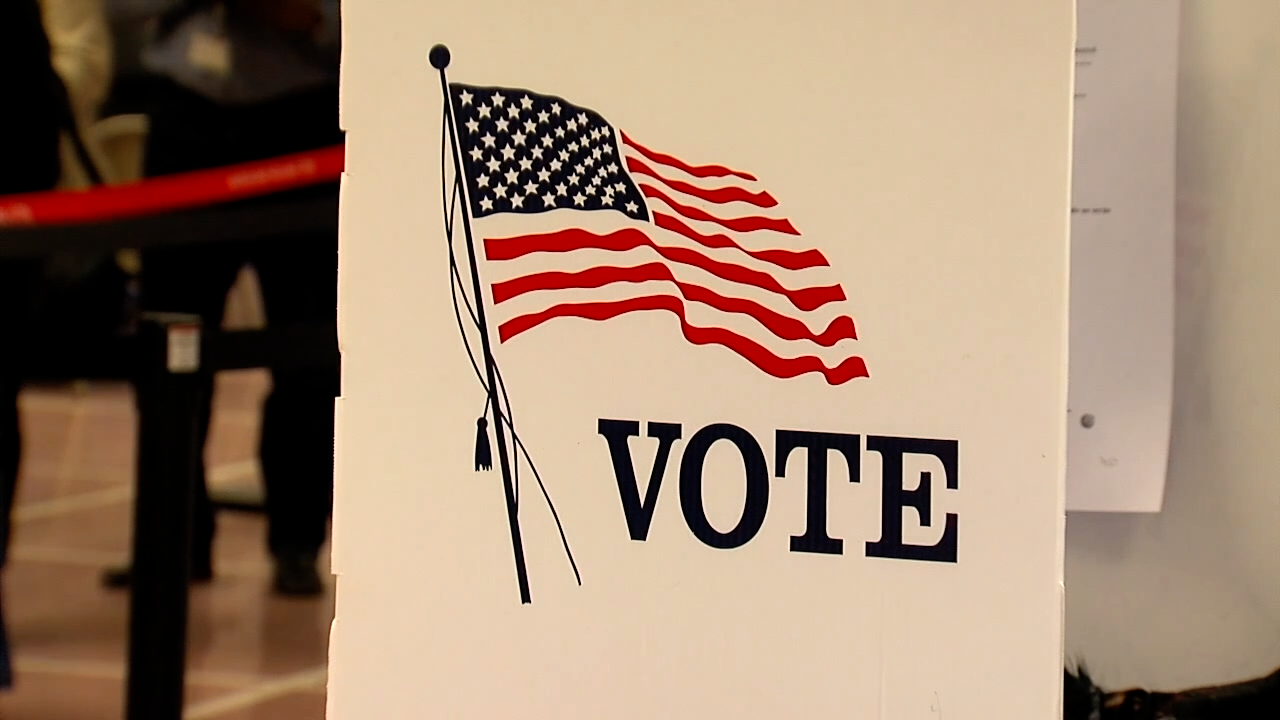
    Photo of a voting booth by WEWS.

    BY:  Ohio Capital Journal

    More than 150,000 Ohio voters could potentially not be eligible to vote in the upcoming Presidential election.

    Ohio Secretary of State Frank LaRose recently published a list of 158,857 inactive voter registrations who are eligible to be removed from the Statewide Voter Registration Database — meaning they would be purged from voter rolls.

    “These registrations are eligible for removal under the law because records show they’re no longer residing or active at the registered address for at least the last four consecutive years,” LaRose said in a statement.

    Why are voters inactive?

    A registered voter could be on the list if they filled out a change-of-address form with the U.S. Postal Service signaling they have moved or they have not voted at their registered address in the past four years after being marked for removal by a county’s voter registration system.

    All 88 county boards of elections were required to collect and submit this data to LaRose’s office earlier this year. The voter purge is part of Ohio’s process of updating its rolls and removing voters who have moved out-of-state or died.

    County boards of elections must complete their voter purge by July 22, so people on the inactive voter list have until then to take action.

    What can inactive voters do to get off the list?

    In order to not be removed from the rolls and still be able to vote in the November election, an inactive voter can —

    • Confirm or update their voter registration at VoteOhio.gov, by mail or in-person at their local county board of elections.
    • Update or confirm their address with their county board of elections.
    • Submit an absentee ballot application.
    • Sign a candidate or issue petition that is verified by a board of elections.

    The deadline to register to vote in the Nov. 5 election is Oct. 7.

    A voter whose registration has been purged can regain their ability to vote by reregistering on the Secretary’s registration website or by visiting their county board of elections.

    Follow OCJ Reporter Megan Henry on X.


    Megan Henry
    MEGAN HENRY

    Megan Henry is a reporter for the Ohio Capital Journal and has spent the past five years reporting in Ohio on various topics including education, healthcare, business and crime. She previously worked at The Columbus Dispatch, part of the USA Today Network.

    Ohio Capital Journal is part of States Newsroom, the nation’s largest state-focused nonprofit news organization.

    MORE FROM AUTHOR

  • Ohioan who serves as US League of Women Voters co-CEO says voting is the baseline for democracy

    Ohioan who serves as US League of Women Voters co-CEO says voting is the baseline for democracy

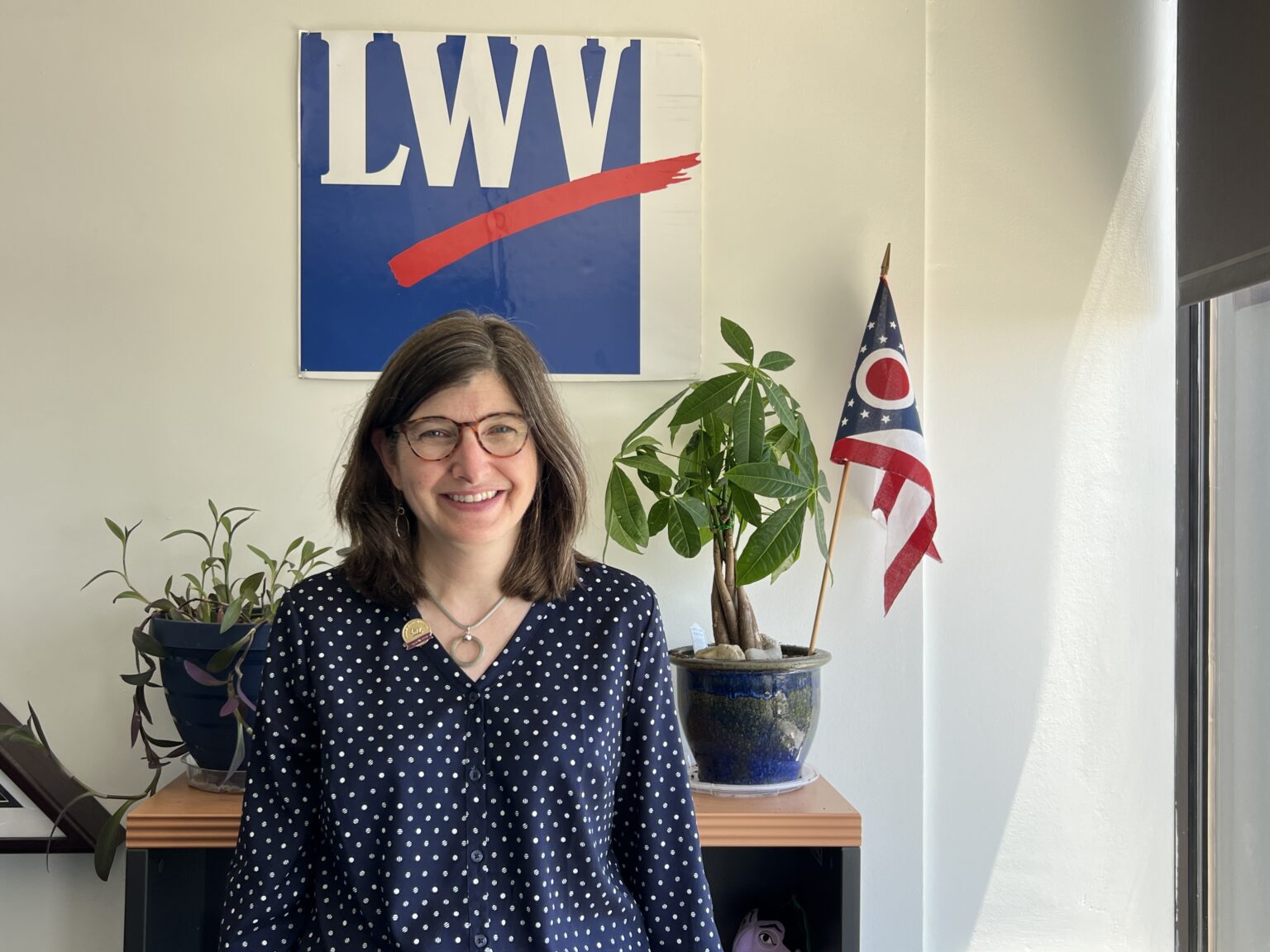
    Kelly McFarland Stratman, interim co-CEO and chief of staff for the League of Women Voters of the U.S., pictured in the offices of the LWV of Ohio. (Photo by Susan Tebben / Ohio Capital Journal)

    by Susan Tebben – Ohio Capital Journal

    Twenty years ago, Kelly McFarland Stratman was among the Ohioans working on reform to the state’s redistricting process as a member of the League of Women Voters. Now she’s the co-CEO of the national group.

    In a way, things haven’t changed for her.

    Since leaving her kindergarten teaching job, McFarland Stratman has stood as executive director of the Ohio chapter and made her way up to chain to her current role: chief of staff and interim co-CEO of the League of Women Voters of the United States.

    The 104-year-old organization has held a reputation of non-partisanship and focus on voter education that appealed to McFarland Stratman then, and continues to be at the center of her drive with the organization.

    “The mission of the league could not be more critical or more needed,” she told the Capital Journal in an interview amid a return visit to the state that started it all for her. “Our democracy is a gift and it is something that is fragile, and it requires care and attention.”

    McFarland Stratman was in Ohio to update local chapters on the work of the national group. While she heads the national arm of the organization, the co-leader recognizes that the storied history of the advocacy group wouldn’t be present without the state-level and community-level factions.

    “We are really run by our volunteers, who are giving their time and their talent and their energy and their passion to the important work that has to be done,” she said.

    The divisiveness that is present in the country may seem to make it difficult to hold fast to the nonpartisanship the league strives for, but working with every league chapter and encouraging comprehensive conversations among all the groups before the national organization makes a “measured opinion” is one of the guardrails McFarland Stratman says keeps the LWV out of the depths of divisiveness.

    “I feel like I learn everyday from our leaders across the country,” she said.

    The idea that the league was borne out of the women’s suffrage movement means the vitality of women in the democratic process certainly drives the organization as well.

    “We believe in the power of women to create a more perfect democracy,” McFarland Stratman said. “The way that women work, having their voice at the table is just critically important; it is not at enough tables, not enough voices certainly when they are at the table.”

    Ohio’s chapters of the League of Women Voters have been active in voting rights campaigns, in election protection at polling locations on election day and, of course, in keeping tabs on the redistricting process that overtook the last two years in the state.

    That process saw six Ohio Statehouse map proposals, only one of which was deemed constitutional by the Ohio Supreme Court, and two congressional maps, neither of which passed court muster.

    During that process, the LWV of Ohio participated in lawsuits along with public hearings and outcry against the process that was then led by elected officials as part of the Ohio Redistricting Commission.

    Issues like redistricting, whether or not voters should be required to bring IDs to polling locations and votes on ballot initiatives are all watched by the LWV, and McFarland Stratman said the changing democratic landscape involves adaptation.

    “Each state has to fight their own fight in terms of preserving those really foundational rights,” the co-CEO said. “It means we are fighting 50 battles, or, I’ll say 51, because we are still fighting for D.C. statehood.”

    But the fact that the LWV is still, after 80 years, counting Washington, D.C., statehood as one of their fervent goals, shows McFarland Stratman that holding firm to original values and having faith in the motivations that keep the league going can only help them, and the country, ride out the wave of unpredictability that is American politics.

    “Whole generations have been impacted by (a lack of statehood in D.C.), but we have to keep fighting because it is the right thing to do,” she said.

    In an organization with more than a century of existence, fighting for longterm goals isn’t unfamiliar to the LWV. The current political environment, where McFarland Stratman said “some of the things that we have … come to expect or assume, maybe are things we can’t expect or assume anymore,” means pushing forward with things like voter education and engagement seems all the more important.

    Reassuring voters about the power of the vote remains a big issue, and McFarland Stratman said voting is “the baseline for folks to enter into the process,” but shouldn’t be the end of the line.

    “This should not be that people go off to office and that’s the end of the story, we have to stay engaged in the process even after the election,” she said.

    For the LWV, that involves not only creating resources to help voters know where to vote and how to vote, but also encouraging voters to pay attention to those issues and races that may not be at the top of the headlines.

    “We tend to put all of the attention at the top of the ticket, but the lower-ticket races or some of the lower-ticket issues even – the school bonds and other things – those are things that affect people’s lives daily, maybe even more so than some of the other issues,” McFarland Stratman said.

    And while redistricting in Ohio may have disenfranchised voters to the idea of representation in elections, the potential of a citizen-led process should be encouraging and galvanizing for residents, according to McFarland Stratman.

    “Whoever’s in power, we want to make sure that citizens are at the table to make sure the redistricting process happens,” she said.

    The U.S. Census Bureau is once again starting the process of collecting data for 2030, when the redistricting process will begin anew across the country, which means the league has eyes toward 2030, and every legal case on redistricting that comes in the meantime.

    Creating a new system to bring the power further into voters’ hands is a big part of the league’s plans, as they recently launched a digital campaign to abolish the Electoral College.

    “We know that’s a longterm goal, but again, that’s a systemic problem that’s got to be addressed so that we can really get to the democracy we want to have for everyone,” McFarland Stratman said.

    As another election approaches, Ohio residents can focus on shorter-term goals, like researching candidates, considering being a poll worker on Election Day, and teaching a new generation about the right to vote by bringing them to the polls.

    “I think it is critically important that people do use their power, use their voice and vote,” McFarland Stratman said. “The fight continues.”


    Susan Tebben
    SUSAN TEBBEN

    Susan Tebben is an award-winning journalist with a decade of experience covering Ohio news, including courts and crime, Appalachian social issues, government, education, diversity and culture. She has worked for The Newark Advocate, The Glasgow (KY) Daily Times, The Athens Messenger, and WOUB Public Media. She has also had work featured on National Public Radio.

    Ohio Capital Journal is part of States Newsroom, the nation’s largest state-focused nonprofit news organization.

    MORE FROM AUTHOR

  • Free direct filing of federal taxes may be offered soon throughout the U.S.

    Free direct filing of federal taxes may be offered soon throughout the U.S.

    BY:  Ohio Capital Journal

    WASHINGTON — Taxpayers across the United States could be guaranteed a free public option to file federal tax returns online as the Internal Revenue Service announced plans Thursday to make its Direct File program permanent.

    The pilot program offered in 12 states from March to April drew roughly 140,000 accepted returns this filing season and saved participants $5.6 million in tax preparation costs and helped filers receive $90 million in refunds, according to the IRS.

    The states involved in this year’s pilot included Arizona, California, Florida, Massachusetts, Nevada, New Hampshire, New York, South Dakota, Tennessee, Texas, Washington and Wyoming.

    The agency is now inviting all 50 states to participate and will accommodate however many sign on, Treasury Secretary Janet Yellen and IRS Commissioner Danny Werfel told reporters on a call Thursday morning.

    “We heard directly from hundreds of organizations across the country, more than 100 members of Congress, individual direct file users and those that are interested in using direct file. The clear message is that many taxpayers across the nation want the IRS to provide options for filing electronically at no cost,” Werfel said.

    Yellen touted results of a user survey that showed 90% of participants rate their experience as excellent or above average.

    “They appreciated that it allowed them to quickly fix mistakes and there were no fees or upsells. The success of the Direct File pilot means there’s now strong demand for direct file from taxpayers across the country,” Yellen said.

    The average American spends $270 and 13 hours filing their taxes, according to the agency’s Taxpayer Burden Survey.

    The program ‘delivered’

    The left-leaning Economic Security Project, which advocates for tax credits for low-income and middle class households, praised the IRS decision to make permanent the program that “delivered on the promise of free and simplified tax filing for taxpayers.”

    “It was evident that taxpayers saw the value of Direct File, both in making their lives easier and demonstrating what great government customer service looks like,” Adam Ruben, the organization’s vice president of campaigns and political strategy, said in a statement Thursday.

    “We are already working with our partners in states across the nation to support the expansion of Direct File next year so more taxpayers can take advantage of free and simplified tax filing in the next tax season,” he said.

    Democratic Sen. Ron Wyden of Oregon, the top tax writer of the upper chamber, praised the IRS announcement in a statement Thursday as “tremendous news for taxpayers all over the country who are tired of getting ripped off by the big tax prep companies that routinely upcharge for unnecessary services, oversell the quality of their products and offer crummy customer service.”

    Werfel said the IRS cannot provide an estimated cost of expanding the program because the agency has yet to learn how many states will jump on board.

    The cost to run the program this year totaled $31.8 million, breaking down to $24.6 million in IRS costs, and $7.2 million in U.S. Digital Service costs to create the online platform, Werfel said.

    Among the tens of billions of dollars Congress authorized for the IRS in its 2022 budget reconciliation law, otherwise known as the Inflation Reduction Act, $15 million was earmarked for exploring a way for the public to electronically file federal returns for free directly to the government, rather than through a third party.

    This year’s pilot program was only available to taxpayers with basic tax situations, including W-2 income or simple credits and deductions, like the child tax credit or student loan interest.

    “Our goal is to gradually expand the scope of Direct File to support most common tax situations, focusing in particular on tax situations that impact working families,” Werfel said.

    When asked on the call whether the success of the program depends on who is in the Oval Office next year, Werfel responded, “I truly believe that the vision that the IRS has for the future tax administration is a nonpartisan one.”

    Opposition from GOP

    The free public program was met with fierce opposition from congressional Republicans and GOP state officials who criticized it as redundant, “unconstitutional” and a threat to state tax revenue.

    Many cited the already established IRS Free File program, a regularly evolving partnership between the federal agency and private tax prep software companies that provide a free federal return filing option.

    That 22-year-old program has been riddled with issues, including low participation and “confusion and complexity” that led millions of eligible taxpayers to actually pay the commercial partners who were supposed to offer the free service, according to a 2019 Treasury Inspector General for Tax Administration report.

    A 2019 ProPublica investigation revealed deliberate tactics by Free File participant Intuit, maker of TurboTax, to cloud access to the free option.

    Nearly two dozen state auditors, comptrollers and treasurers from 18 states urged the IRS to “shut down” the new Direct File pilot program because users could be confused about having to file a state return separately, therefore resulting in a loss in state revenue.

    This argument is based on the fact that many commercial tax prep software companies and private tax preparers automatically prompt taxpayers to complete their state returns after filing the federal one.

    The state officials who signed on to the March 25 letter to the IRS hailed from Alaska, Florida, Idaho, Indiana, Iowa, Kansas, Kentucky, Louisiana, Mississippi, Nebraska, North Carolina, Ohio, Oklahoma, South Carolina, South Dakota, Utah, West Virginia and Wyoming.

    Two of the Direct File pilot program states — Arizona and New York — worked with the nonprofit Code for America to integrate a free state tax return filing option in concert with Direct File. The nonprofit reported that of the state returns filed through its tool, 98% were accepted.

    Several state governments already offer free public electronic filing for state income tax returns that users must access separately through dedicated state websites, including AlabamaKansasKentucky and Pennsylvania, which offer the service regardless of income level. Some states, like California and Iowa, have income thresholds for free filing.


    Ashley Murray
    ASHLEY MURRAY

    Ashley Murray covers the nation’s capital as a senior reporter for States Newsroom. Her coverage areas include domestic policy and appropriations.

    Ohio Capital Journal is part of States Newsroom, the nation’s largest state-focused nonprofit news organization.

    MORE FROM AUTHOR

  • Donald Trump is a convicted felon. Some Ohio leaders react with fury, others silence

    Donald Trump is a convicted felon. Some Ohio leaders react with fury, others silence

    BY  Ohio Capital Journal

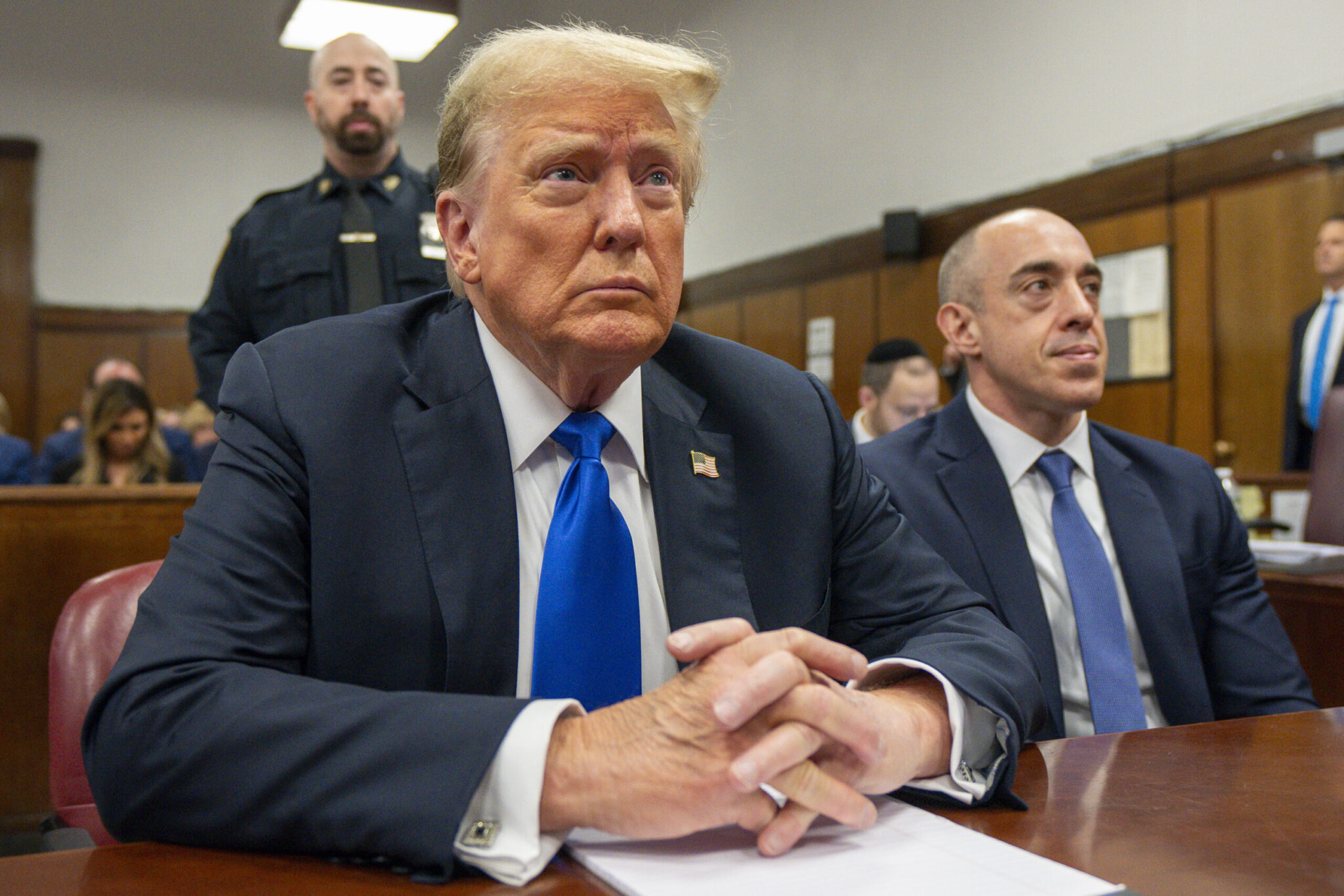
    A Manhattan jury made history Thursday when it convicted Donald Trump of 34 felonies. They relate to how he paid a porn star to stay quiet just before the 2016 election — and his actions cast doubt on Trump’s legitimacy during his one term as president.

    Despite now being a felon, Trump is for the third time the GOP nominee. Most of Ohio’s Republican leaders reacted with outrage to his conviction, while the governor didn’t have much to say, and the one statewide Democrat said the jury had spoken.

    Sen. J.D. Vance is on the shortlist to be Trump’s vice presidential pick and he took to the airwaves to call Trump’s prosecution political, and to say a lot of other stuff as well. On X Thursday, Vance falsely accused the Democratic Party of inventing a crime just to prosecute Trump and he made reference to a conspiracy theory with anti-semitic overtones.

    “This decision is a disgrace to the rule of law and our Constitution,” Vance wrote. “Dems invented a felony to ‘get Trump,’ with the help of a Soros funded prosecutor and a Biden donor Judge, who rigged the entire case to get this outcome. This isn’t justice, it’s election interference.”

    Actually, as the jury found, it was Trump who committed election interference. And legal experts pointed out that Trump’s lawyers helped pick the jury, put on witnesses and had input in the jury’s instructions. Trump himself could have taken the witness stand, but chose not to.

    Speaking from the White House Friday, President Joe Biden criticized Trump supporters for claiming that the justice system was rigged against Trump without providing any concrete evidence.

    “It’s reckless, it’s dangerous, it’s irresponsible for anyone to say this was rigged just because they don’t like the verdict,” Biden said.

    Ohio Attorney General Dave Yost, a likely contender for the GOP nomination to be governor in 2026, also slammed the proceedings that ended in Trump’s conviction.

    “This verdict is likely to be overturned. It is not the first unjust verdict, and it is why we have courts of appeals,” he said on X. “The aptly named (Manhattan District Attorney) Alvin Bragg picked his defendant and campaigned on prosecuting him — disreputable and unethical conduct that tarnished the justice system.”

    When it comes to courts of appeal, Yost has had his own difficulties. A panel of the 6th U.S. Circuit Court of Appeals on Wednesday ruled that Yost was improperly blocking signature gathering for a proposed amendment to the state Constitution that would reduce immunities the state has have from being sued. Yost on Thursday said he’d seek a ruling from the entire court.

    Some of the AG’s critics have accused him of stalling.

    He refused to approve a summary of the ballot language, which supporters need if they’re to gather 420,000 verified signatures from registered voters in time for the measure to make the November ballot. Yost is refusing to answer questions about a similar maneuver in 2019 that helped kill a voter-initiated repeal of a law at the center of the biggest bribery scandal in Ohio history.

    Lt. Gov. Jon Husted is likely to vie with Yost for the gubernatorial nomination. Like many other Ohio Republicans, he, too, said he was outraged over Trump’s conviction for having an extramarital tryst with a porn star, paying to silence her in order to improperly influence an election and then falsifying business records to cover it all up.

    “This quote from President Trump is ultimately the truth of the matter: ‘The real verdict is gonna be Nov. 5, by the people,’” Husted said on X. He then reposted that while saying further, “If you are mad about it, do something about it by donating, volunteering and voting.”

    Ever merciless, some commenters reminded the lieutenant governor that he was roundly booed at a 2020 Trump rally in Vandalia as he encouraged attendees to wear masks at the height of the coronavirus pandemic. Trump played a lead role in politicizing mask wearing and downplaying a scourge that has killed nearly 1.2 million Americans.

    Ohio’s top elections official also rushed onto social media to defend a newly minted felon who tried to overturn the results of the 2020 election and thereby steal the votes of 81 million Americans.

    “Partisan prosecutor,” Secretary of State Frank LaRose said on X. “Activist judge. Sham trial. Bogus verdict. It’s a sad day in America when a political party is so afraid of losing its grip on power that they’re willing to abuse justice to game an election. This will not stand.”

    LaRose is a key player in Ohio’s epic gerrymanderingquestionable voter purges and restriction of voting access, so it’s interesting that he’d accuse others of desperately clinging to power.

    One wag also pointed out that a jury had just found that Trump falsified numerous business records to further his conspiracy and that as Secretary of State, LaRose is in charge of Ohio’s business records. It’s unclear what — if anything — LaRose would have done if the former president faked them here in the Buckeye State.

    Cleveland businessman Bernie Moreno, who is challenging Democrat Sherrod Brown for Ohio’s other Senate seat, was also vociferous in his support of the only ex-president to also bear the title “felon.”

    “Today is a dark day for American democracy,” Moreno said on X. “Joe Biden and his leftwing allies engaged in election interference to prosecute their top political opponent on bogus charges. This verdict is representative of a banana republic, not a democracy. Sherrod Brown and DC Democrats should be ashamed of this weaponization of our justice system.”

    His statement ignores the fact that the Biden Justice Department declined to prosecute Trump on the charges of which the New York jurors found him guilty. It also ignores the fact that the Biden Justice Department is prosecuting the president’s own son and a sitting Democratic senator.

    Brown, his Democratic opponent, is facing a hard reelection in a Republican-leaning state. When asked to comment on Trump’s conviction Friday, Sen. Brown stuck to general principals.

    “I’m not a lawyer or a judge but I’ve said from the beginning that no one is above the law,” he said in an email. “Ultimately this is up to the legal system to sort out and for the American people to decide in November.”

    Gov. Mike DeWine’s office didn’t immediately respond to a request for comment. He’s a Republican who got on Trump’s bad side early in the pandemic, when DeWine implemented health orders that were recommended by experts.


    Marty Schladen
    MARTY SCHLADEN

    Marty Schladen has been a reporter for decades, working in Indiana, Texas and other places before returning to his native Ohio to work at The Columbus Dispatch in 2017. He’s won state and national journalism awards for investigations into utility regulation, public corruption, the environment, prescription drug spending and other matters.

    Ohio Capital Journal is part of States Newsroom, the nation’s largest state-focused nonprofit news organization.

    MORE FROM AUTHOR

  • Trump found guilty on 34 felony counts in NY hush money trial

    Trump found guilty on 34 felony counts in NY hush money trial

    BY:  Ohio Capital Journal

    WASHINGTON — Jurors in New York state court on Thursday found Donald Trump guilty on all 34 felony counts of falsifying business records to cover up hush money payments to a porn star ultimately to influence the outcome of the 2016 presidential election.

    The first-ever criminal trial of a former U.S. president wrapped up in Manhattan, marking an extraordinary moment in American history not only for a former leader, but for one who is seeking to again hold the Oval Office. Trump, the Republican Party’s presumed 2024 presidential nominee, is now a convicted felon.

    The jury deliberated for more than 11 hours, beginning Wednesday just before 11:30 a.m. Eastern and delivering the verdict to Justice Juan Merchan just after 5 p.m. Thursday, according to reporters at the courthouse.

    New York does not allow recording in the courtroom but provides public transcripts of the proceedings. States Newsroom covered the trial in person on May 20.

    Trump now faces penalties ranging from probation to up to four years in prison for each charge of falsifying business records in the first degree. It is unclear when Merchan will sentence Trump.

    New York state prosecutors charged 34 felonies against the former president for each of the 11 invoices, 11 checks, and 12 ledger entries tied to reimbursing his former personal lawyer Michael Cohen.

    Cohen, often referred to as Trump’s former “fixer,” said during trial testimony that he wired $130,000 to adult film star and director Stormy Daniels days before the 2016 election to silence her about an alleged sexual encounter with Trump.

    Three criminal cases, two federal and one in Georgia, also still hang in the balance for Trump, but the likelihood of another trial happening before November’s election is slim.

    This developing story will be updated.


    Ashley Murray
    ASHLEY MURRAY

    Ashley Murray covers the nation’s capital as a senior reporter for States Newsroom. Her coverage areas include domestic policy and appropriations.

    Ohio Capital Journal is part of States Newsroom, the nation’s largest state-focused nonprofit news organization.

    MORE FROM AUTHOR