Author: Ohio Capital Journal

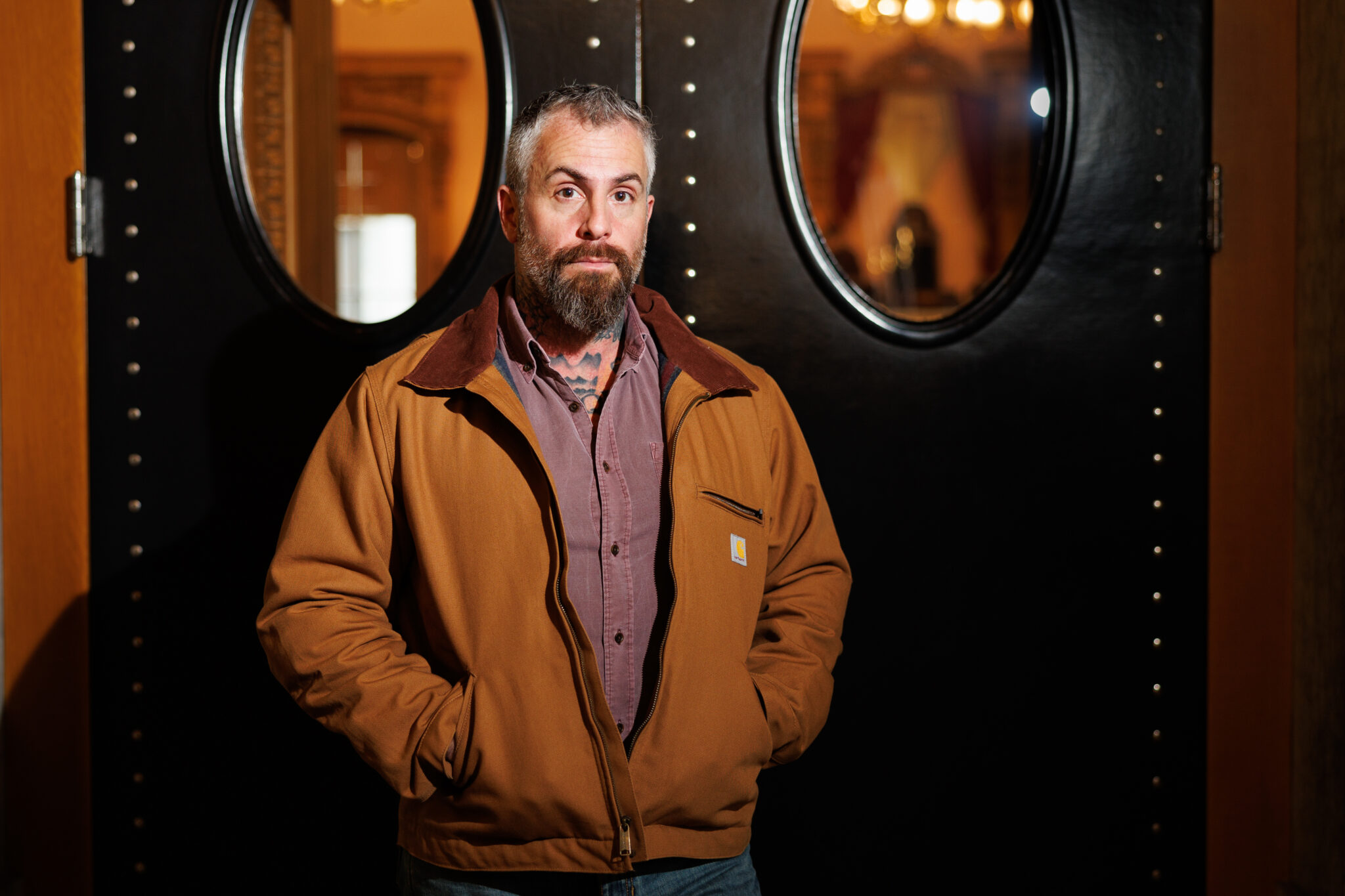
  • January 6 Police Officer Michael Fanone warns November election could bring more violence

    January 6 Police Officer Michael Fanone warns November election could bring more violence

    The 20-year Metro DC police veteran argues violence didn’t stop after January 6, and voters should prioritize candidates who respect rule of law

    BY:  Ohio Capital Journal

    A new feature of the Trump rally traveling road show has the former president walking out on stage and intoning the pledge of allegiance. At the end of phrases, he pauses. On the big screens rally-goers see footage of January 6 defendants singing the national anthem in jail.

    “You see the spirit from the hostages,” Trump told the crowd at a rally in Dayton last month. “And that’s what they are, is hostages. They’ve been treated terribly and very unfairly, and you know that. Everybody knows that.”

    He went on to promise, if reelected, on his first day in office, he’d take action to help those “unbelievable patriots.”

    It all makes Michael Fanone a bit sick.

    “I recognize that, very similar to like when he told the Proud Boys to ‘stand by,’ he’s keeping this violent element of supporters in his camp, so to speak,” he said. “And I think he fully intends to unleash them on the rest of us if he loses the 2024 election.”

    “Or if he wins, to be completely honest with you,” Fanone added.

    The former Washington Metropolitan Police officer served in uniform for 20 years, and on Jan. 6, 2021, he was one of the officers defending the U.S. Capitol building.

    He wasn’t supposed to be there.

    A vice investigator, Fanone had been planning to conduct an undercover drug buy that day, but when he heard distress calls from the riot, he rushed to the Capitol instead. As the violence unfolded, he was dragged into the crowd, beaten and tased. Fanone suffered a heart attack. One of the hardest things for him reconcile was the sense of helplessness.

    “For a cop, you know, somebody that aspires to be in control of each and every situation that we encounter, that is probably like the worst possible feeling,” he explained. “I felt weak. I felt vulnerable.”

    “If it wasn’t for the fact that some people in the crowd intervened on my behalf,” he added, “You know, to literally have to depend on the people that were attacking me — that was a difficult, difficult pill to swallow.”

    Fanone retired from the Metropolitan police at the end of 2021. Since then he’s written a book, and he appears on CNN. Now, he’s putting his time into making sure Americans understand what happened on January 6, and that they think about it when they head into the voting booth.

    “In the hopes of avoiding another January 6, another event of that magnitude,” he said, “I want to make sure that people are well informed, so that when they go to the ballot box they choose leaders — from either political party — that are committed to the peaceful transfer of power, to respecting the rule of law and abiding by our Constitution.”

     Ohio U.S. Rep. Jim Jordan, R-Urbana. Photo by Chip Somodevilla/Getty Images. 

    Shifting perceptions, conspiracy theorizing

    Opinions about the January 6 riot have changed dramatically among Republicans in the years since. After insisting “what happened today is wrong and not what America is about,” shortly after rioters dispersed, Ohio Republican U.S. Rep. Jim Jordan has since taken to downplaying or deflecting the incident. The January 6 commission was a distraction, he argued, when Americans “can’t afford to fill up their gas tank, buy groceries, or take a summer vacation with their family.” At other points he argued the real purpose of the commission was to “stigmatize conservative voices” or “abolish the electoral college.


    Fanone went so far as to label Jordan an “insurrectionist” member of congress.

    “(He) was very instrumental in the orchestrating of the electoral scheme,” Fanone described, “and spreading the lies and misinformation that inspired his own supporters and the supporters of the former president to commit crimes.”

    While Jordan never testified before the January 6 commission, from other evidence it collected the panel concluded he was “a significant player” in the scheme to overturn the 2020 election. According to the report, Jordan participated in several strategy meetings following the election in which members discussed encouraging Trump supporters to march on the capitol. In a text message, he proposed Vice President Mike Pence “call out all the electoral votes that he believes are unconstitutional as no electoral votes at all.”

    Also from Ohio, former Presidential candidate Vivek Ramaswamy has been even more provocative about the riot. This year on its anniversary, he posted a thread of conspiracy theories, blaming the incident on lack of coverage of Hunter Biden’s laptop, or the incitement of undercover FBI agents or a plot by capitol police to “entrap” demonstrators in a “peaceful crowd.”

     VANDALIA, OHIO -Former U.S. President Donald Trump and Ohio Republican U.S. Senator JD Vance. (Photo by Drew Angerer/Getty Images.) 

    Fanone dismissed Ramaswamy’s statements as “pandering” and turned his attention to Ohio Republican U.S. Sen. J.D. Vance, who he said has “shown a level of sympathy to those that stormed the Capitol on January 6, that I think is highly inappropriate for someone serving this country.”

    One year after the riot, Vance posted a link to Patriot Freedom Project, a nonprofit raising money for January 6 defendants’ legal bills.

    “These people are political prisoners,” Vance insisted, “and their captivity is an assault on democracy.”

    “Listen, I struggle every day with finding any degree of compassion or empathy for the people that attacked me and my colleagues at the Capitol on January 6,” Fanone said. “but I do recognize the fact that they were manipulated and lied to.”

    “It doesn’t excuse the behavior,” he added, “but it certainly, in my mind, means that there are more people to be held accountable than just those that that were present at the Capitol on January 6.”

    Looking toward November

    Fanone worries about this year’s election, he argued, “because the violence has never stopped.”

    Reuters investigation indicated political violence in the U.S. is at its highest level since the 1970s, although the authors note unlike today, the violence then was primarily directed at property, not people. Most of the incidents were smaller scale — lone assailants or clashes between rival groups at local protests, but they note at least 39 people have been killed as a result.

    It’s unclear whether that violence will result in another incident like January 6, but Fanone warns if it does, that event will likely be much worse.

    “Groups who may have toyed with the idea of coming armed to the Capitol, but did not, in the future, in order to be effective, they would feel that the use of firearms was necessary,” Fanone said.

    He argued the way to diffuse that violence is to elect people who reject violence and respect the peaceful transfer of power.

    “If your candidate — your political party’s candidate — can’t do that,” he said, “I think you have an obligation as an American to vote for the candidate that will.”

    Fanone has already taken that journey. He voted for Donald Trump in 2016, but soured on the president after he fired FBI director James Comey.

    “I have conversations with people often who describe themselves as a lifelong Republican or a lifelong Democrat,” he said, “I tell people, I’m not anything other than a lifelong American.”

    Still, he acknowledged if someone wants to speak with him at all, they’re likely open-minded. “We’re talking about a small slice of America,” he said. When it comes to the “harder conversations,” he said, a win is convincing someone that the January 6 riot actually happened, it was bad and it was carried out by Trump’s supporters.

    “Unfortunately,” Fanone said, “there’s a lot of people that knowing all of that would still, and will still, support Donald Trump and vote for him in the upcoming election.”

    Follow OCJ Reporter Nick Evans on Twitter.


    Nick Evans
    NICK EVANS

    Nick Evans has spent the past seven years reporting for NPR member stations in Florida and Ohio. He got his start in Tallahassee, covering issues like redistricting, same sex marriage and medical marijuana. Since arriving in Columbus in 2018, he has covered everything from city council to football. His work on Ohio politics and local policing have been featured numerous times on NPR.

    Ohio Capital Journal is part of States Newsroom, the nation’s largest state-focused nonprofit news organization.

    MORE FROM AUTHOR

  • Ohio Lt. Gov. Husted won’t say if he knew about $1M dark-money contribution

    Ohio Lt. Gov. Husted won’t say if he knew about $1M dark-money contribution

    Donation came from utility behind massive bribery scandal

    BY:  – Ohio Capital Journal

    Ohio Lt. Gov. Jon Husted is refusing to say whether he was aware of a $1 million contribution in 2017 to a political group that was supporting his bid for governor. Instead, his office is only reiterating that the group wasn’t affiliated with the Husted campaign.

    The massive donation came from Akron-based FirstEnergy, which over the next two years ponied up more than $60 million in bribes in exchange for a $1.3 billion ratepayer bailout — a law that Gov. Mike DeWine signed just hours after it passed.

    The donation was discovered among a trove of documents that a group of news organizations including the Capital Journal requested from the Office of Ohio Consumers’ Counsel.

    As reported last week by the Energy News Network and Floodlight, the documents also contained emails indicating that Husted was lobbying DeWine to support the bailout. The lobbying came just 11 days after Husted abandoned his gubernatorial bid and joined DeWine’s ticket on Dec. 1, 2017.

    “Jon Husted called me to say he was meeting with DeWine on our issue to try and get him aligned to help keep the plants open,” a Dec. 12, 2017 email by FirstEnergy lobbyist Joel Bailey said.

    The plants were money-losing nuclear and coal plants that FirstEnergy wanted to prop up with the bailout and then spin off.

    FirstEnergy in 2021 signed a deferred prosecution agreement in which it admitted to paying bribes to elect a friendly Republican majority to the state House, which would elect a friendly speaker who would pass and protect the corrupt bailout.

    The company also admitted to paying a $4.3 million bribe to Sam Randazzo, DeWine’s pick to chair the Public Utilities Commission of Ohio, who died by suicide last week. A state indictment said that FirstEnergy executives arranged the bribe with Randazzo the same night they discussed his suitability as a regulator at a dinner meeting with Gov.-elect DeWine and Lt. Gov.-elect Husted on Dec. 18, 2018.

    The ensuing scandal has landed former House Speaker Larry Householder, R-Glenford, in federal prison for 20 years, and former Ohio GOP Chair Matt Borges for five. Two others have pleaded guilty and await sentencing. Another defendant, lobbyist Neil Clark, also died by suicide — clad in a “DeWine for Governor” T-shirt.

    DeWine and Husted haven’t been charged in case, and they adamantly deny wrongdoing.

    However, they haven’t publicly discussed just what they knew about Randazzo’s long-standing relationship with FirstEnergy, or what they knew about the torrent of dark money flooding from FirstEnergy into Capitol Square to pass and protect the bailout. They also haven’t discussed what senior administration officials with close ties to FirstEnergy might have known.

    Among the documents turned over once FirstEnergy made its agreement with federal prosecutors was a spreadsheet listing 501(c)(4) political contributions the company made in 2017.

    Such donations are called “dark money” because recipients don’t have to disclose their sources. By law, dark-money contributions can’t go directly to candidates, but they can go to groups that support them, but aren’t supposed to directly coordinate with them.

    The FirstEnergy spreadsheet is only now becoming public because the FBI investigated the scandal and the U.S. Department of Justice brought a prosecution. During the battle over the bailout law in 2019, there were suspicions that FirstEnergy was bankrolling the effort, but the press and public couldn’t know because the money was being funneled through dark-money groups — without which U.S. Attorney David DeVillers said the conspiracy would have been impossible.

    Now that FirstEnergy’s 2017 donation to a Husted-aligned group is known, it raises new questions.

    Special interests sometimes piously claim that they spend millions on politics solely in the interests of “good government.” But as was shown in Householder’s lengthy trial last year, corporate political donations are often — if not usually — intended to buy influence with people in government.

    In order for that to happen, a government official would have to know that a special interest had contributed on his or her behalf. But Husted — who is eyeing a 2026 gubernatorial run — won’t say whether he knew that FirstEnergy in 2017 gave a million bucks to a group supporting his earlier bid.

    His spokeswoman, Hayley Carducci, was asked if Husted knew of the contribution and if he did, when he learned of it. She was also asked if Husted persuaded DeWine to support the FirstEnergy bailout; what Husted knew about Randazzo’s links to FirstEnergy when he was picked to regulate the company; and whether he knew that FirstEnergy was flooding Cap Square with dark money in its effort to pass and preserve the bailout.

    In an email, Carducci repeated her earlier statement: “The Husted campaign never received this donation and is not affiliated with any of these groups.”

    She added, “As for your other questions, we will not be commenting.”


    Marty Schladen
    MARTY SCHLADEN

    Marty Schladen has been a reporter for decades, working in Indiana, Texas and other places before returning to his native Ohio to work at The Columbus Dispatch in 2017. He’s won state and national journalism awards for investigations into utility regulation, public corruption, the environment, prescription drug spending and other matters.

    Ohio Capital Journal is part of States Newsroom, the nation’s largest state-focused nonprofit news organization.

    MORE FROM AUTHOR

  • Transgender student bathroom ban bill passes out of Ohio House Higher Education Committee

    Transgender student bathroom ban bill passes out of Ohio House Higher Education Committee

    Getty Image

    House Bill 183 would require Ohio K-12 schools and colleges to mandate that students could only use the bathroom or locker room that matches their sex assigned at birth.

    Local Cosponsors are:

    Jean Schmidt, District 62 (R)
    Jennifer Gross, District 45 (R)
    Thomas Hall, District 46 (R)
    Bill Seitz, District, 30 (R)
    BY:  Ohio Capital Journal

    A bill that would ban transgender students from using the bathroom and locker room that matches up with their gender identity passed out of the Ohio House Higher Education Committee Wednesday by a 10-5 party line vote.

    State Reps. Beth Lear, R-Galena, and Adam Bird, R-New Richmond, introduced House Bill 183 which would require Ohio K-12 schools and colleges to mandate that students could only use the bathroom or locker room that matches their sex assigned at birth. It would also prohibit schools from allowing students to share overnight accommodations with the opposite sex.

    HB 183 now awaits further consideration in the House, which is next scheduled to be in session April 24.

    Parents, grandparents, and school superintendents asked Bird for this bill, he said.

    The American Medical Association officially opposes policies preventing transgender individuals from accessing basic human services and public facilities consistent with gender identity.

    HB 183 would not prohibit a school from having single-occupancy facilities and it would not apply to someone helping a person with a disability or a child younger than 10 years old being assisted by a parent, guardian, or family member.

    State Rep. Gayle Manning, R- North Ridgeville, thought about bringing an amendment to the committee that would have carved colleges and universities out of the bill, but she decided against it.

    “I’m hopeful we will continue to have these discussions on the removal of higher ed,” she said. “The reason being, we’re talking about adults. Universities are similar to a city with the number of students that they have. Frivolous lawsuits that will increase the cost of tuition eventually and the cost of our families.”

    Manning voted in favor of the bill even though she hopes lawmakers can continue conversations to “find a better solution.”

    Bird opposes taking the higher education component out of the bill.

    “The reason I oppose that is because we have college credit plus in Ohio,” he said. “We seventh graders going to college, kids in high school going to colleges and in that college environment, we got to make sure they are protected.”

    State Rep. Joe Miller, D-Amherst, vocalized his disdain for the bill before the committee voted.

    “Here we are again … taking away school districts and colleges’ ability and their leadership to make decisions that are best for providing safe, equitable access for all Ohio students,” Miller said. “I hope that this doesn’t see the floor and doesn’t see the governor’s desk.”

    More than 100 people submitted opponent testimony on HB 183 and more than 30 people submitted proponent testimony.

    “We do love and care about all kids,” Bird said when asked about all the backlash the bill has received. “Me and my Republican colleagues have heard from constituents all across the state. They may not have been loud. They may not have been vocal. They may not have come with a sign to the Statehouse, but we are here representing the vast majority of Ohioans who want protections.”

    Trans advocates speak out against HB 183

    Transgender advocates hosted a press conference following the House Higher Education Committee to voice their opposition to HB 183.

    Trans Ohio Board Member Carson Hartlage said HB 183 is harmful to all students, including cisgender students.

    “Most trans non binary and gender non conforming students only begin using restrooms that align with their gender identities after they’ve experienced some form of trauma when using a restroom that aligns with their sex assigned at birth,” Hartlage said.

    Thirty percent of LGBTQ+ students said they were prevented from using the bathroom that aligned with their gender, and 26% were stopped from using the locker room that aligned with their gender, according to Ohio’s 2021 state snapshot by GLSEN, which examines the school experiences of LGBTQ middle and high school students.

    When looking specifically at transgender and nonbinary students, 42% were prevented from using the bathroom that aligned with their gender and 36% couldn’t use the locker room that aligned with their gender, according to the Ohio GLSEN report.

    Ohio’s first openly transgender public official and member of the Gahanna-Jefferson Public Schools’ Board of Education Dion Manley shared his concerns.

    “As a trans man is I’ve been going into men’s restrooms for 25 years without incident,” Manley said. “I go visit the schools on a regular basis. So these legislators want me to go into a girls restroom in the elementary school, middle school, and high school.”

    Mallory Golski, civic engagement and advocacy manager at Kaleidoscope Youth Center, said how Ohio was recently at the center of history in a positive way with Monday’s eclipse.

    “We’re here reflecting on how we’re at the epicenter of another piece of history,” she said. “And unfortunately, we’re at the wrong place at the wrong time. Unlike the fleeting blackout of the total solar eclipse, the history I’m talking about here today at the statehouse leaves transgender youth in the dark.”

    Jeanne Ogden’s daughter would be directly impacted by this bill. Her daughter’s college classroom building does not have single-use restrooms in the building, forcing her daughter to go across the street to use the restroom.

    “These kids getting bullied and yes, their mental health is suffering,” said Ogden, the executive director of Trans Allies of Ohio. “Trans people are tired. Parents are exhausted.”

    Follow OCJ Reporter Megan Henry on Twitter.

    _______________

    Megan Henry
    MEGAN HENRY

    Megan Henry is a reporter for the Ohio Capital Journal and has spent the past five years reporting in Ohio on various topics including education, healthcare, business and crime. She previously worked at The Columbus Dispatch, part of the USA Today Network.

    Ohio Capital Journal is part of States Newsroom, the nation’s largest state-focused nonprofit news organization.

    MORE FROM AUTHOR

  • “The future is not our own.” Ohio Gov. Mike DeWine centers children in State of the State address

    “The future is not our own.” Ohio Gov. Mike DeWine centers children in State of the State address

    BY:  Ohio Capital Journal

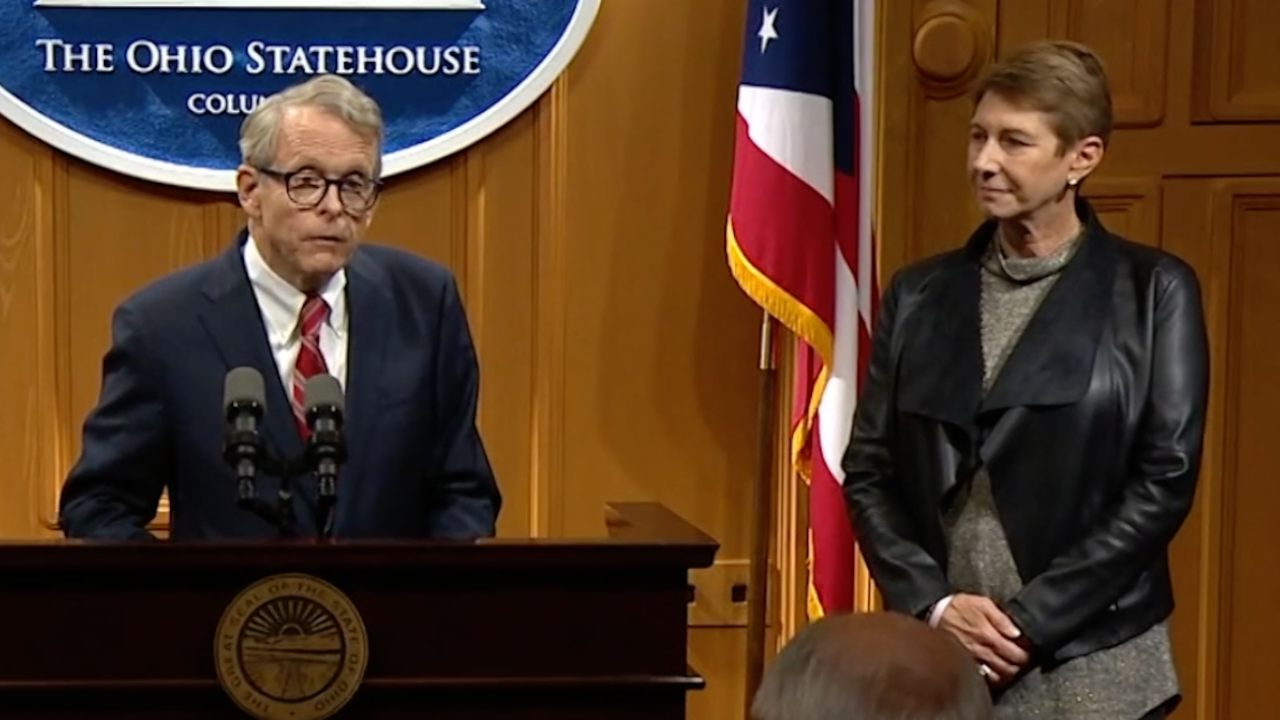
    Ohio Gov. Mike DeWine put children at the center of his 2024 State of the State address Wednesday afternoon. He took credit for recent policies to improve reading and offered a few new ideas, too — increase access to child care, improve education outcomes, and bolster health and vision care.

    But perhaps most impactful for families, he argued schools need to limit access smartphones in classrooms.

    “A number of Ohio schools have made the decision to eliminate smartphone use during the school day,” DeWine argued, “and I believe clearly that is the right decision.”

    DeWine threw his support behind legislation sponsored by state Sen. Andrew Brenner, R-Delaware, that would require districts to enact a policy minimizing access to phones in the classroom.

    “I fully support this measure and encourage the General Assembly to take up this legislation and pass it quickly.”

    DeWine also acknowledged the headwinds his administration has faced when it comes to kids and phones. A provision in Ohio’s budget would’ve required social media companies to get parental consent for users under 16. A federal judge has blocked that law, and DeWine urged lawmakers to use that ruling to come up with a replacement.

    Lawmakers from both sides of the aisle seemed skeptical.

    Safety and smoking

    DeWine took aim at weed and tobacco through the lens of child safety. Delta-8 hemp is unregulated and too readily available, he said. Current marijuana law means kids will smell smoke “on their way to ball practice” or in public parks.

    “That’s not what people voted for,” DeWine argued, “But make no mistake about it. That is what so current law allows and will continue to allow until we do something about it.”

    After lawmakers overrode his veto of legislation preempting local flavored tobacco bans, DeWine pushed them to pass a new law.

    “Now I understand the desire for uniformity statewide, I understand that, I do” he said. “And so I asked you to pass a uniform state law banning flavored vaping and flavored cigarettes, it will save lives.”

    To address youth gun violence, DeWine touted highway patrol teams ready to “surge” into high crime areas if local officials ask.

    In response to a Dispatch investigation, DeWine promised a new Juvenile Justice Working Group would soon release recommendations. He urged lawmakers to be ready to pass legislation in support of their suggestions. The governor also called on the General Assembly to make not wearing a seat belt a primary offense.

     COLUMBUS, Ohio — APRIL 06: Ohio Governor Mike DeWine with Principal Miracle Reynolds (left), and Interim Superintendent/CEO of Columbus City Schools, Dr. Angela Chapman, observe the implementation of the Science of Reading program in the third grade classroom taught by RobinThalgott, April 6, 2023, at Southwood Elementary School in Columbus, Ohio. (Photo by Graham Stokes for Ohio Capital Journal. Republish photo only with original article.) 

    From birth to Pre-K

    DeWine argued the two biggest drivers of infant mortality in Ohio are babies born too early and not sleeping safely. He praised the state’s home visit program and announced an 11-county pilot program he’s calling “Family Connects.” Every new mom will be eligible for a home visit about three weeks after delivery.

    “These visiting nurses can guide families to clinical or community supports,” DeWine said, “recognize when a mom and baby may need additional help as a result of exhaustion or trouble with breastfeeding; and remind or teach new moms about how a baby can sleep safely.”

    The governor also proposed offering vouchers for child care. Families making up to 200% of the federal poverty level would be eligible for the Childcare Choice Voucher. A private school voucher program is already in place for K-12 students. But that scholarship is far larger, applying to families making up 450% of the federal poverty line, with smaller vouchers available to those making more.

    Linking school and health care

    DeWine also proposed several initiatives to improve education, while also leveraging schools as a way to provide greater access to health care.

    The governor argued Ohio’s approach to education must be “all of the above.” He touted recent investments in career tech centers and called on the General Assembly to “commit” to ensuring those facilities have enough space. “So that no child who wants career tech,” DeWine said, “is ever shut out of that because there is simply not enough room for them.”

    DeWine also pushed lawmakers to revise existing high school graduation planning to include career planning as well. At the same time he urged universities to begin tracking how many graduates have a degree within six months and whether it’s related to their field of study.

    Starting in kindergarten, Ohio students get vision screenings, but DeWine contends “the vast majority” who fail those screenings don’t get follow up care to see if they need glasses. DeWine announced a Children’s Vision Strike Force which will extend local vision programs statewide.

    The governor also argued schools are a great way to connect students to primary care. He highlighted a clinic staffed by Nationwide Children’s Hospital at East High School in Columbus as a model. The governor didn’t propose new funding but said state agencies would work with schools and districts to see how existing dollars could be applied to the effort.

    Another health effort DeWine is calling the Outcomes Acceleration for Kids Learning Network, or OAK, will work with Medicaid plans to emphasize asthma and sickle cell care so kids miss less school. The effort, as DeWine envisions it, will also prioritize regular checkups and follow-up care after a mental health crisis.

     Ohio House Speaker Rep. Jason Stephens (R-Kitts Hill). (Photo by Graham Stokes for Ohio Capital Journal. Republish photo only with original story.) 

    Responses

    Once the governor was done speaking and the handshaking and backslapping had died down, legislative leaders retreated to smaller rooms and smaller lecterns. They thanked the governor for his ideas and emphasized “how much they agree on,” before politely rejecting much of what he suggested.

    House Speaker Jason Stephens was pleased to hear DeWine talking about policies to help babies and young mothers. But rather than embrace the governor’s idea, Stephens pointed to existing legislation that would make several changes for early childhood development.

    “(It) will work in concert with the governor’s goal is to serve a strong foundation for babies that are moms throughout the state by investing in their futures.”

    Stephens sounded open to new restrictions on Delta-8 hemp, but for marijuana he argued state rules have already addressed the most problems while acknowledging “there will always be tweaking of the marijuana law as we move into the future.” The governor’s proposal about seat belts and a flavored tobacco ban, though? That’s a question of “personal responsibility” Stephens said.

    As for whether the General Assembly has a role in limiting smartphones in school, he mustered a “maybe.”

    “But you know, this is what’s great about Ohio,” Stephens said, “is our local school districts have the ability to make those types of decisions themselves and in my opinion, they have the responsibility.”

    Across the aisle the reaction was similar.

    Although Democratic House Minority Leader Allison Russo acknowledged, as a parent, smartphones in class are a concern, that doesn’t mean it’s the General Assembly’s concern.

    “(I) look to our schools to be the real experts here,” Russo said. “I’m not sure that there is a one size fits all, for every district, every student, every setting.”

    Russo praised the governor’s child care voucher proposal, but with a caveat.

    “We have that money available to us,” she argued, “from direct funding from the Biden administration and the federal government, but we as a state have underspent and under-utilized in this space and we’re now making up for the damage.”

    On the same topic, Senate Minority Leader Nickie Antonio questioned why the governor set eligibility at 200% of the federal poverty line.

    “If the majority could raise the eligibility threshold for the wealthy with school vouchers to 450% of the federal poverty level,” she argued, “certainly we could qualify families with low and middle income and increase their eligibility for child care — we should do that.”

    Follow OCJ Reporter Nick Evans on Twitter.

    Nick Evans
    NICK EVANS

    Nick Evans has spent the past seven years reporting for NPR member stations in Florida and Ohio. He got his start in Tallahassee, covering issues like redistricting, same sex marriage and medical marijuana. Since arriving in Columbus in 2018, he has covered everything from city council to football. His work on Ohio politics and local policing have been featured numerous times on NPR.

    Ohio Capital Journal is part of States Newsroom, the nation’s largest state-focused nonprofit news organization.

    MORE FROM AUTHOR

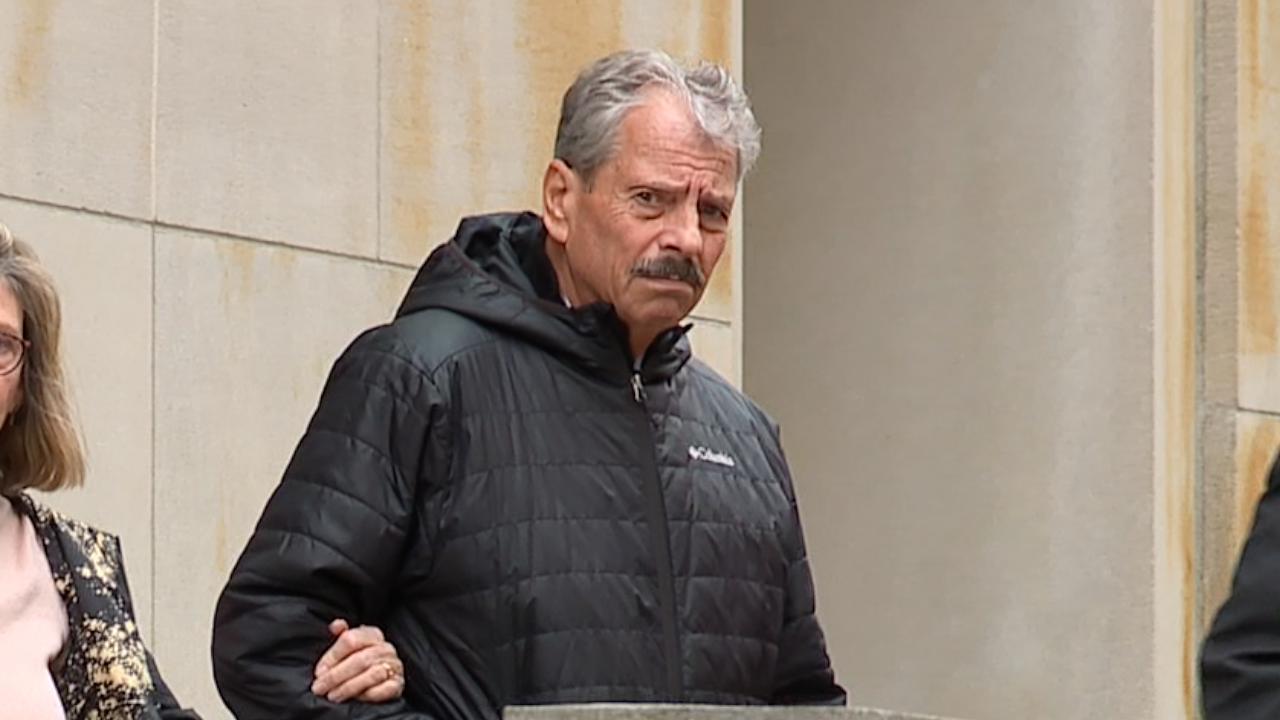
  • Indicted former Ohio utility chair Sam Randazzo reported dead by suicide

    Indicted former Ohio utility chair Sam Randazzo reported dead by suicide

     Former Public Utilities of Ohio Chair Sam Randazzo at court. (Photo by WEWS.)

    BY:  – Ohio Capital Journal

    Sam Randazzo, Gov. Mike DeWine’s first pick to chair the Public Utilities Commission of Ohio, has died by suicide, the Columbus Dispatch is reporting.

    Randazzo’s body was found Tuesday in a Franklin County warehouse he owned, the paper reported. A spokesman for Franklin County Coroner Nathaniel Overmire couldn’t immediately be reached.

    Randazzo — a 74-year-old energy consultant turned regulator — was charged both in state and federal court over his role in a massive utility scandal that broke in July 2020, along with other alleged misdeeds. In the bribery scandal, Akron-based FirstEnergy paid more than $60 million in bribes between 2017 and 2020 in exchange for a $1.3 billion ratepayer bailout.

    DeWine picked Randazzo to be the state’s top regulator after a decade of shady dealings between Randazzo and FirstEnergy, his state indictment says. They include secretly being a paid consultant for FirstEnergy while also serving as general counsel to industrial energy users who were trying to get a better deal from FirstEnergy, the document says.

    Randazzo also secretly skimmed millions from settlements FirstEnergy paid the big users to get them to go along with rate hikes for everybody else, the indictment says.

    Just before DeWine nominated Randazzo to chair the PUCO in early 2019, FirstEnergy’s top executives paid him $4.3 million — a payment that FirstEnergy later conceded was a bribe.

    DeWine’s chief of staff reportedly knew about the payment before Randazzo was nominated, but it’s unclear how much she, DeWine, and others in the administration knew about the more than $10 million Randazzo was paid by FirstEnergy over the years. She was slated to testify at the former regulator’s state trial.

    As PUCO chairman, Randazzo helped draft the bailout legislation and did a number of other lucrative favors for FirstEnergy, court documents and testimony have shown.

    After a lengthy federal trial last year, former House Speaker Larry Householder, R-Glenford, was sentenced to 20 years in prison for his role in the scandal. Former Ohio GOP Chairman Matt Borges was sentenced to five years for his.

    Two others pleaded guilty and await sentencing. Another defendant, lobbyist Neil Clark, died by suicide.


    Marty Schladen
    MARTY SCHLADEN

    Marty Schladen has been a reporter for decades, working in Indiana, Texas and other places before returning to his native Ohio to work at The Columbus Dispatch in 2017. He’s won state and national journalism awards for investigations into utility regulation, public corruption, the environment, prescription drug spending and other matters.

    Ohio Capital Journal is part of States Newsroom, the nation’s largest state-focused nonprofit news organization.

    MORE FROM AUTHOR

  • Raise the Wage Ohio is trying to get a minimum wage constitutional amendment on the ballot

    Raise the Wage Ohio is trying to get a minimum wage constitutional amendment on the ballot

    Protestors rally against subminimum wages. (Photo by Noam Galai/Getty Images for One Fair Wage)

    BY:  Ohio Capital Journal

    Ohioans could have a chance vote to raise the minimum wage to $15 an hour by 2026.

    Raise the Wage Ohio is collecting signatures to put a proposed constitutional amendment on this year’s ballot that would raise the minimum wage to $12.75 an hour starting Jan. 1, 2025, and then it would go up to $15 an hour starting on Jan. 1, 2026. It would also get rid of Ohio’s tipped wage.

    Ohio’s current minimum wage is $10.45 an hour for non-tipped employees and $5.25 for tipped employees.

    “We’re going to be raising wages for 1.4 million Ohioans immediately,” said Mariah Ross, the executive director of One Fair Wage. “Minimum wage will give everyone a bump. It will make it a livable wage.”

    They need to collect more than 413,000 signatures by July and they currently have more then 350,000 signatures, she said.

    “The basic necessities that will be covered by $15 an hour minimum wage just include very basic things like food, housing, transportation, … child care, health care,” she said. “It’s very basic things.”

    Full-workers in Ohio need to earn $19.09 per hour to afford a 2-bedroom apartment, according to the National Low Income Housing Coalition (NLIHC) and the Coalition on Homelessness and Housing in Ohio (COHHIO).

    But Ohio’s restaurant industry opposes raising the minimum wage — arguing it would hurt tipped workers.

    “(Servers and bartenders) are very concerned that their income would go down as a result of all this,” said John Barker, President & CEO of the Ohio Restaurant & Hospitality Alliance.

    Ross disagrees, saying raising the minimum wage will only help tipped workers.

    “They’d make more money,” she said. “We’re not trying to take away tips.”

    Under the ballot initiative, Ross said restaurants would have until 2029 to pay all their employees the state minimum wage to give them more time to accommodate the change.

    “They have approximately four years to adjust their plans and do incremental increases to get whatever the minimum wage will be in 2029,” Ross said. “This is a time to adjust because we’re not here to hurt small businesses. We’re here to help small businesses. … For a restaurant to say that I can’t afford to pay my workers that, that is just unacceptable.”

    Many restaurant servers who rely on tips have been harassed, she said.

    “When you have to rely on your customers or consumers for your livelihood, you can’t really speak out against this harassment or these injustices,” she said.“Without the workers there would not be a business, so we have both a moral obligation but also an obligation as Ohioans to support our economy and for the long term for the restaurant industry. It’s better to pay livable wages.”

    More than 90% of the servers and bartenders the Ohio Restaurant & Hospitality Alliance have talked don’t support raising the minimum wage, Barker said.

    An employer in Ohio can pay tipped employees half the starting wage, so tipped employees are guaranteed to receive the full minimum wage, but most earn a lot more through tipping.

    The national median income for tipped servers is $27 an hour and Ohio’s income for tipped servers typically ranges from $19 an hour all the way up to $41 an hour, Barker said.

    “They’re very concerned about what this would do to them because it defies logic that if all these wages that the restaurants have to pay go up so significantly, the restaurants have to bear that and that has to get passed on to consumers,” he said.

    That means consumers would likely see one of two things — higher menu prices or a service charge on their bill that goes back to the restaurant, Barker said.

    “We just don’t believe that people are going to tip generously on top of all that because we’ve already seen massive inflation in food,” he said. “It’s going to be difficult to continue to raise prices.”

    Food costs have gone up by 25% in the past couple of years while the restaurant industry continues to recover from the pandemic, Barker said.

    “It’s such a very difficult time for the industry,” he said.

    If this passed, restaurant operators could cut their workforce and reduce employee benefits, according to Ohio Restaurant & Hospitality Alliance.

    2006 constitutional amendment

    Ohioans passed a citizen initiated constitutional amendment in 2006 that raised the state minimum wage to $6.85 per hour. It has raised the minimum wage each year after that based on the consumer price index.

    Ross said this year’s ballot initiative would update the 2006 constitutional amendment.

    “The cost of living has outpaced that incremental increase that we got in 2006,” she said.

    Ohio’s minimum wage for non-tipped employees went up 35 cents and 20 cents for tipped workers this year.

    “Even with these incremental increases, it hasn’t been enough because of the rapid cost of living increases that have been exacerbated by COVID-19, so we need a bump,” Ross said.

    Minimum wage in other states

    California’s mandatory $20 an hour minimum wage for fast-food workers recently took effect.

    Washington D.C. overwhelmingly voted to gradually get rid of the special minimum wage for tipped employees in the 2022 election and it went into effect on Feb. 23, 2023. The tipped wage will be eliminated in D.C. by July 2027.

    But full service D.C. restaurants cut 3,700 jobs from May 2023 to January 2024, and a poll of nearly 1,000 D.C.-area adults showed more than half were dining out less because of higher prices and were more reluctant to tip, according to the National Restaurant Association.

    Follow OCJ Reporter Megan Henry on X.


    Megan Henry
    MEGAN HENRY

    Megan Henry is a reporter for the Ohio Capital Journal and has spent the past five years reporting in Ohio on various topics including education, healthcare, business and crime. She previously worked at The Columbus Dispatch, part of the USA Today Network.

    Ohio Capital Journal is part of States Newsroom, the nation’s largest state-focused nonprofit news organization.

    MORE FROM AUTHOR

  • Further questions about DeWine administration’s involvement in Ohio bribery scandal

    Further questions about DeWine administration’s involvement in Ohio bribery scandal

    File photo of Ohio Gov. Mike DeWine and advisor Laurel Dawson at a press conference. (Photo from WEWS.)

    New court filing gives new details about aide, husband

    BY:  

    As Gov. Mike DeWine in 2019 nominated Sam Randazzo to be Ohio’s top utility regulator, Randazzo went to great lengths to hide a decade-long relationship with FirstEnergy that had paid him more than $10 million. Those payments included $4.3 million just as DeWine was picking Randazzo, according to court documents filed last week.

    Yet DeWine Press Secretary Dan Tierney in February said it “was well known that Randazzo was a paid consultant for FirstEnergy.” On Tuesday, Tierney modified that statement to say “it was well known to our staff that Mr. Randazzo was an energy consultant, and it was well-known to them and many people that Mr. Randazzo was a consultant employed by First Energy.”

    DeWine’s appointee to chair the Public Utilities Commission of Ohio, Randazzo went on to help write and lobby for a $1.3 billion bailout that Akron-based FirstEnergy paid more than $60 million in bribes to pass, according to a federal jury and the indictments of Randazzo and two former FirstEnergy executives.

    The scandal broke into the open in July 2020, when the FBI arrested former House Speaker Larry Householder, R-Glenford, and four others. Householder and former Ohio GOP Chairman Matt Borges were convicted, two others pleaded guilty, and lobbyist Neil Clark died by suicide.

    DeWine, who signed the bailout law, and his staff haven’t been accused of illegal activity in the case. But with the administration’s many connections to FirstEnergy, questions continue to linger about exactly what DeWine and his team knew about the conspiracy and what they did with that knowledge.

    A big question relates to the period when the governor was picking Randazzo to be the state’s top utility regulator. Did DeWine or top members of his staff know that Randazzo had a long, lucrative relationship with FirstEnergy, one of the biggest utilities he’d be regulating?

    A state indictment of Randazzo said that he had a shady relationship with FirstEnergy stretching back to 2010. It included hiding his work for FirstEnergy from industrial energy users Randazzo served as general counsel as he secretly skimmed from settlement payments FirstEnergy made to the industrial users, the indictment said.

    Big money, big favors

    On Dec. 18, 2018, Gov.-elect DeWine and Lt. Gov.-elect Jon Husted had dinner at the Columbus Athletic Club with FirstEnergy CEO Chuck Jones and Vice President Michael Dowling.

    The executives would be indicted along with Randazzo in February 2024. At the dinner, the men discussed with DeWine and Husted whether to make Randazzo the chief regulator of the executives’ company, the indictment said.

    The executives drove from the dinner to Randazzo’s German Village condo for another discussion. The same evening, Randazzo texted Dowling a column of figures ending with “Total 4,333,333.”

    The indictment said that within weeks, the executives paid Randazzo that amount without an invoice and over a company lawyer’s objections. DeWine nominated him to chair the PUCO a few weeks after that.

    Over the next 18 months, Randazzo labored to draft, pass, and protect the company’s massive bailout and did a number of additional, highly lucrative favors besides, the indictment said. It all ended with his resignation after the FBI searched his condo four months after Householder and the others were arrested.

    But what DeWine and his staff knew about Randazzo’s relationship with FirstEnergy as they were considering whether to make him its regulator appears to be a matter of dispute.

    “In January 2019, FirstEnergy agreed to pay out in full Randazzo’s consulting services contract just before he was nominated to run the PUCO,” a bill of particulars that was filed last week to accompany the indictment says. “It was not a gift: Randazzo would work hard for FirstEnergy from inside the government. He did not disclose his relationship, going so far as to lie about it in testimony to the General Assembly and failing to disclose to the Ohio Ethics Commission the massive sums of money he’d received from the company he would soon regulate.”

    Who knew?

    Randazzo’s indictment says Randazzo did, however, “tell the Governor-elect through his incoming Chief of Staff that he had received $4.3 million from FirstEnergy, which he claimed was final payment of a ‘consulting agreement.’” It added that Randazzo didn’t disclose the other millions he made as a FirstEnergy consultant or his work lobbying for the electricity giant.

    Tierney, DeWine’s press secretary, on Tuesday said that Randazzo’s consulting work for FirstEnergy was well known — at least inside the administration.

    “I note our office is not a party to the prosecution, so we cannot vouch for any claims made by the prosecution or defense in these cases,” he said in an email. “Speaking for the staff of the Governor’s office, it was well known to our staff that Mr. Randazzo was an energy consultant, and it was well-known to them and many people that Mr. Randazzo was a consultant employed by FirstEnergy.”

    However, FirstEnergy’s top brass feared public knowledge of their relationship could scuttle his nomination. On Jan. 30, 2019, Dowling, the FirstEnergy vice president, sent a panicked text to CEO Jones. It said Randazzo was going to pull out of the PUCO nomination process because the press found the name of one of his shell companies on a bankruptcy filing by a subsidiary FirstEnergy was seeking to bail out.

    When Randazzo’s nomination got back on track, the executives expressed relief.

    “A bullet grazed the temple,” Dowling told Jones, according to one of the texts filed as part of a civil suit over the scandal.

    “Forced DeWine/Husted to perform battlefield triage,” Jones responded, referring to Lt. Gov. Jon Husted. “It’s a rough game.”

    So while administration insiders might have known about the Randazzo-FirstEnergy relationship, it clearly wasn’t common knowledge to the public who would have to pay the utility’s inflated bills. Tierney didn’t answer why, if DeWine knew that Randazzo was a FirstEnergy consultant, he didn’t disclose that to the public the PUCO is supposed to protect from monopoly utilities.

    Inside connections

    While Tierney said he couldn’t vouch for the information in the indictments or other court filings, he said it would have been extraordinary to ask Randazzo whether he had been paid money by Ohio utilities as the administration was vetting him for the position as their chief regulator.

    “…it would have been unusual to review past employment compensation with the Governor as part of cabinet director vetting,” Tierney said.

    As for the chief of staff who did the vetting — Laurel Dawson — she had a FirstEnergy connection of her own. Her husband, Mike Dawson, was a FirstEnergy lobbyist whom the indictment said had received a $10,000 loan from Randazzo a few years earlier.

    It’s unclear whether the loan was repaid or whether Laurel Dawson reported it to DeWine. The DeWine aide isn’t speaking publicly.

    It’s also unclear whether Laurel Dawson told the governor that her husband participated in an early 2020 text conversation with Randazzo and Dowling. The conversation was included in the bill of particulars filed last week.

    The three jokingly discussed rate cases and decoupling — two matters for which prosecutors say Randazzo had by then received multi-million-dollar bribes from FirstEnergy in exchange for doing even more valuable favors for the company.

    State prosecutors say that for Randazzo, engaging in the exchange amounted to an improper ex parte conversation. It might have been of interest to DeWine to know that his chief of staff’s lobbyist husband was having such talks with the governor’s PUCO chairman.

    According to a witness list reported on Tuesday by the Toledo Blade, prosecutors plan to call both Dawsons to testify at the trial of Randazzo, Dowling and Jones.

    Pretending?

    Despite the questions surrounding what Laurel Dawson knew about Randazzo and FirstEnergy — and about what she told her boss — she remains on his staff as an advisor, making $182,000 last year.

    “The Governor has previously stated on the record at media briefings he has full faith in Ms. Dawson,” Tierney said.

    But what did he know?

    The indictment of DeWine’s PUCO chairman and the energy executives has an image of notes that Dowling made in late 2018 as FirstEnergy lobbyist Josh Rubin coached him up on how to talk to Gov.-elect DeWine. They warn the FirstEnergy executives not to tell him that they planned to go meet Randazzo just after discussing his appointment at dinner with DeWine and Husted.

    Rubin added that DeWine could be cagey.

    “Sometimes he knows what you’re talking about,” Dowling wrote in his notes. “Sometimes he doesn’t. Sometimes he does and pretends he doesn’t.”

    Tierney was asked if DeWine now is feigning ignorance of the dealings between his administration, his nominee to head the PUCO and FirstEnergy. Tierney replied by saying that some of the players in the scandal have shown a tendency to make questionable statements.

    “Throughout the (utility scandal) prosecutions, third parties have made claims which have been self-serving and ultimately not true,” he said. “I will note, however, the state prosecution alleges the defendants deliberately withheld relevant information from the Governor, Lt. Governor, and other government officials.”


    Marty Schladen
    MARTY SCHLADEN

    Marty Schladen has been a reporter for decades, working in Indiana, Texas and other places before returning to his native Ohio to work at The Columbus Dispatch in 2017. He’s won state and national journalism awards for investigations into utility regulation, public corruption, the environment, prescription drug spending and other matters.

    Ohio Capital Journal is part of States Newsroom, the nation’s largest state-focused nonprofit news organization.

    MORE FROM AUTHOR


  • Ohio Controlling Board approves purchase of modular shoot houses to train armed school districts

    Ohio Controlling Board approves purchase of modular shoot houses to train armed school districts

    BY:  Ohio Capital Journal

    The Ohio Controlling Board has approved a $78,028 purchase to buy two mobile modular shoot houses to help train school districts with armed staff.

    The Ohio Department of Public Safety made the request to the Controlling Board, which was approved during Monday’s meeting.

    The mobile modular shoot houses are from North Carolina-based Kontek Industries will “provide live fire and scenario-based training,” according to the Controlling Board agenda.

    The modular homes can be moved anywhere and feature “realistic-based training, rapid deployment, reconfigurable rooms, hallways and doors, weatherproof design and can build exact replicas of buildings,” according to the agenda.

    Ohio has 67 schools and school districts in 36 Ohio counties that have armed staff members. The law allowing local boards of education to decide whether to allow teachers and school staff went into effect in September 2022.

    The Capital Journal talked to four school districts with armed staff last year and they all said police response time to rural schools factored into their decision to arm staff.

    Ohio school staff were armed before the 2022 law went into effect, but an Ohio Supreme Court ruling in 2021 required school employees to undergo 700 hours of training to be armed at school. The 2022 law lowered the required training hours for armed personnel from 700 hours to at least 24. School boards have the authority to require more hours.

    This created the Ohio School Safety Center within the Ohio Department of Public Safety and school districts who want their staff to be armed are required to send their training plans for approval once their school board has approved the request to arm their staff.

    Follow OCJ Reporter Megan Henry on X.


    Megan Henry
    MEGAN HENRY

    Megan Henry is a reporter for the Ohio Capital Journal and has spent the past five years reporting in Ohio on various topics including education, healthcare, business and crime. She previously worked at The Columbus Dispatch, part of the USA Today Network.

    Ohio Capital Journal is part of States Newsroom, the nation’s largest state-focused nonprofit news organization.

    MORE FROM AUTHOR

  • Ohio Minority Leaders Nickie Antonio and Allison Russo are navigating a Republican supermajority

    Ohio Minority Leaders Nickie Antonio and Allison Russo are navigating a Republican supermajority

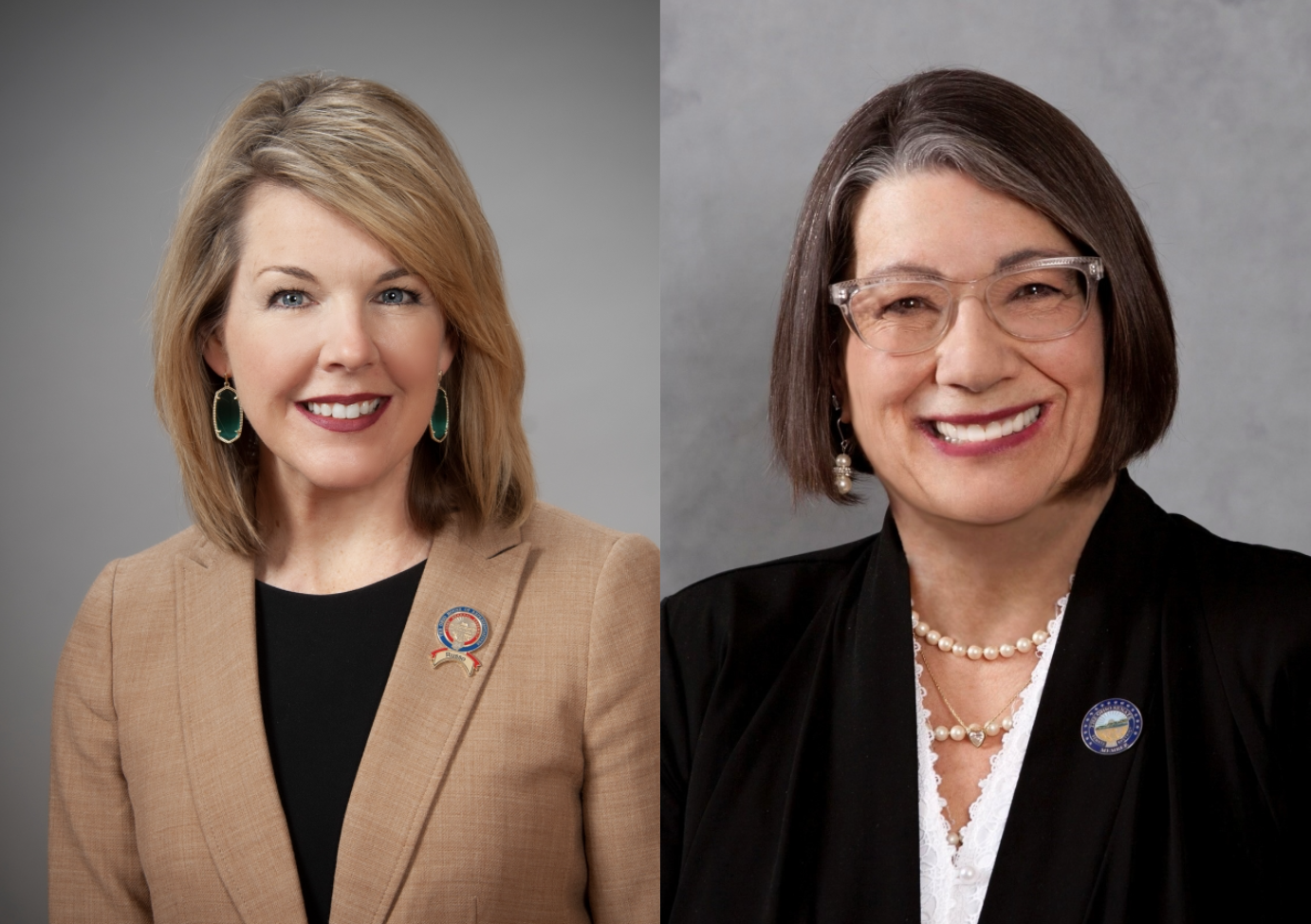
    Ohio House Democratic Leader Allison Russo, left, and Ohio Senate Democratic Leader Nickie Antonio, right. (Official photos from the Ohio Statehouse website.)

    Ohio Senate Minority Leader Nickie Antonio became leader in 2023 and Ohio House Minority Leader Allison Russo became leader in 2022.

    BY:  Ohio Capital Journal

    For the first time since 2008, two women are serving as the minority leaders of their caucuses in the Ohio Statehouse.

    Ohio Senate Minority Leader Nickie Antonio, D-Lakewood, became leader in 2023 and Ohio House Minority Leader Allison Russo, D-Upper Arlington, became leader in 2022.

    “I couldn’t be more proud to have two women leading the caucuses, but more importantly, beyond their gender, they’re just both really talented legislators and leaders,” said Ohio Democratic Chair Liz Walters. “They have different, but I think equally effective leadership styles that allow them to keep their caucuses together, and make sure the needs of all their members are met.”

    The last time two women served as minority leaders was during the 127th General Assembly (2007-2008) when then-state Representative Joyce Beatty and state Senator Teresa Fedor were the minority leaders.

    Antonio and Russo are navigating a Republican supermajority.

    “I think they really work well and balance each other, which goes a long way towards making the Democrats as a whole very effective,” Walters said. “When they work together, right across chambers, it helps overcome a lot more of the obstacles and make them a more formidable force.”

    But neither of them initially had political aspirations.

    Antonio’s path to Senate Minority Leader

    Antonio, 68, first got involved in politics at the local level when she advocated for a skatepark in Lakewood for her daughter. She went to city council, but was disappointed the council members didn’t seem to be paying attention to her.

    “I could do that job,” she remembered saying when she got home that night.

     COLUMBUS, Ohio — MAY 31: Senate Minority Leader Nickie Antonio, D-Lakewood, talks to reporters after the Ohio Senate session, May 31, 2023, at the Statehouse in Columbus, Ohio. (Photo by Graham Stokes for Ohio Capital Journal) 

    But she ultimately decided to run for office in 2004 after Ohio passed a constitutional amendment defining marriage as between a man and a woman.

    That caused many of their friends to move out of state, but Antonio and her now wife Jean committed to staying in Ohio to make it better.

    “We felt like LGBT folks were being attacked,” she said. “Certainly we were being marginalized and told that we were less than.”

    There was an opening on Lakewood City Council in 2005, so she ran and ended up serving two terms. Then the House seat for her district opened up in 2010 so she ran and got elected — making her the first openly gay person to be elected to the Ohio General Assembly.

    “A lot of people didn’t really know how to talk about it,” she recalled when she was elected in 2010.

    She married her long-time partner Jean in 2015 after the Supreme Court legalized same-sex marriage.

    Antonio served for eight years in the Ohio House of Representatives before being elected to the Ohio Senate in 2018, where she once again made history by being the first openly gay person to be elected Senate Minority Leader.

    “One of the things I appreciate most is her tenure as a public servant,” Walters said.

    People will often pull Antonio aside and tell her about a family member who is part of the LGBTQ community.

    “I’m happy that I’m able to have those conversations with folks because I think every conversation that’s had opens the door for some understanding and … I really do believe it makes a change in the long run,” she said.

    Ohio GOP lawmakers have introduced a slew of anti-LGBTQ legislation this General Assembly and Antonio will often speak up against those bills on the Senate floor. Notable among them is House Bill 68, which bans transgender minors from receiving gender-affirming medical care. Ohio Gov. Mike DeWine vetoed the bill, but the House and the Senate overturned it. The law is set to take effect on April 23, but the ACLU of Ohio will file a lawsuit in an attempt to stop the ban on gender-affirming care.

    “I’m definitely where I am supposed to be and doing what I’m supposed to be doing,” she said. “It’s really important to me in the room where it happens. And as the minority leader, I am in the room where it happens.”

    Some highlights of her career so far include working on bills that helped closed the loophole for people who are adopted to get original information, cut down on the response time for people experiencing a stroke and allowing pharmacies to give vaccines.

    Before launching her political career, she taught students with behavioral problems and learning disorders for 10 years in Cleveland.

    “I loved those kids and I always tell people that I learned everything I needed to know about the legislature and dealing with my colleagues in the legislature from troubled youth because you have to have a sense of humor, never show fear, really like people and make it part of your mission to find some kernel of commonality to start with to be able to communicate with them,” she said.

    Russo’s path to House Minority Leader

    Russo, 47, never intended to be in politics. She grew up in Mississippi and moved around quite a bit with her husband who was active duty military before deciding to put roots down in Ohio to be close to her in-laws.

    She worked in health policy for more than twenty years, but a couple key moments lead to her to run for office.

     COLUMBUS, Ohio — SEPTEMBER 20: House Minority Leader Allison Russo, D-Upper Arlington, speaks at the Ohio Redistricting Commission meeting, September 20, 2023, in the Lobby Hearing Room at the James A. Rhodes Office Tower in Columbus, Ohio. (Photo by Graham Stokes for Ohio Capital Journal) 

    The first was the 2016 Presidential Election where Donald Trump defeated Hillary Clinton.

    “2016 got those of us who had always been very active voters off the sidelines and into the arena in a way that probably no other election has,” she said.

    The following year, there were efforts to repeal the Affordable Care Act and freeze Medicaid expansion enrollments in Ohio, so she worked with folks doing advocacy work at the state and federal level. People encouraged her to pursue politics, but she brushed that aside since she was enjoying her career and her youngest child was less than a year old.

    But she ultimately decided to throw her hat in the ring when the House seat in her district opened for the 2018 election.

    “I thought, well, it’s now or never,” she said. “I knew absolutely nothing about running a campaign.”

    Russo, a mother of three, often had her children with her when she was campaigning and knocking on doors. She ended up not only winning the election, but flipping the district seat blue.

    She ran for Congress in 2021, but lost to U.S. Rep. Mike Carey 58% to 42%. The next year, she was elected House Minority Leader.

    Walters said Russo has “an aptitude and innate ability to lead her caucus and maneuver, playing chess every day rather than checkers.”

    As minority leader, Russo tells the members of her caucus they need to cultivate relationships and find common ground in order to be successful.

    “In a super minority, you are constantly having to figure out how to navigate this place, so that you can be effective and it’s not always in big ways, like you pass a big massive piece of legislation,” Russo said. “It can be in little ways— you get part of your legislation into a bill, you make bills better, you get things into the budget, you have wins there.”

    But sometimes finding common ground can be tricky.

    “You also don’t want to sacrifice your values,” she said. “You also want to be fearless in calling (things) out when needed. Don’t pull your punches.”

    Russo feels fortunate to live about 15 minutes away from the Statehouse, so she can run home to take one of her kids (ages 17, 14 and 7) to practice and then come back, if needed, for an event at the Statehouse later that night.

    “I realize that’s a luxury,” she said. “In some ways, it’s my proximity to the Statehouse that allows me to do this job with three kids at home and I know that that’s not normal for most people who are in these roles.”

    Advice for future women politicians

    Russo’s advice for women looking to get into politics is to not wait around for approval to run for office.

    “As women, we’re looking for someone to give us permission to take on these leadership roles or to run for office or whatever — you do not need that,” she said.

    Antonio’s suggestion to women who are in politics or who want to go into politics is to not take anything personal.

    “There are definitely things that make you feel like you get a gut punch some days,” she said.

    Something that can turn women away from politics is the lack of privacy, Russo said

    “Politics is an industry that’s tough for anyone, but it can be especially tough for women,” Walters said. “It’s a field that’s traditionally dominated by men with lots of strong opinions and feelings. … Leaders Russo and Antonio work twice as hard as their counterparts while overcoming unique obstacles. Even though they shouldn’t have to.”

    What’s next for Antonio and Russo?

    Antonio is term-limited and she’s not sure what she’ll do after her time in the Statehouse is up.

    “What I do know is I do not intend to go back to the House,” she said.

    Russo will be up for re-election for a fourth term this November. If she wins, she’ll be term-limited in the House. So what’s next after her time in the House is up?

    “To be determined,” she said. “There’s a lot of this that’s out of my control. And then a lot of this is about timing, and often many unknown factors.”

    And as for a potential run for Ohio Governor in 2026?

    “I know there’s been a lot of chatter in that space,” she said. “Let’s get through 2024 first and we’ll see what happens.”

    Follow OCJ Reporter Megan Henry on X.


    Megan Henry
    MEGAN HENRY

    Megan Henry is a reporter for the Ohio Capital Journal and has spent the past five years reporting in Ohio on various topics including education, healthcare, business and crime. She previously worked at The Columbus Dispatch, part of the USA Today Network.

    Ohio Capital Journal is part of States Newsroom, the nation’s largest state-focused nonprofit news organization.

    MORE FROM AUTHOR

  • More than 91,000 have applied for Ohio private school voucher expansion

    More than 91,000 have applied for Ohio private school voucher expansion

    Getty Images.

    87,312 scholarships have been awarded as of March 18 — amounting to $394 million in allocated funding, according to the Ohio Department of Education and Workforce.

    BY:  Ohio Capital Journal

    There have been more than 91,100 applications for Ohio’s private school voucher expansion program so far this school year — a dramatic increase compared to previous years.

    Out of 91,157 voucher expansion applications, 87,312 scholarships have been awarded as of March 18 — amounting to $394,015,641 in allocated funding, according to the Ohio Department of Education and Workforce. Applications are continuing to be accepted through the end of the fiscal year.

    There were 26,390 voucher expansion applications submitted in 2023 with 24,323 scholarships awarded, and 25,011 applications submitted and 21,873 scholarships awarded in 2022.

    Ohio lawmakers expanded private school voucher eligibility to 450% of the poverty line — or a household income of $135,000 or less for a family of four — in the state budget that was signed into law last summer. Families above the $135,000 threshold can still be eligible for at least 10% of the maximum scholarship.

    K-8 students can receive a $6,165 scholarship and high schoolers can receive a $8,407 scholarship in state funding under the expansion. 63,798 K-8 students were awarded a voucher scholarship and 20,495 high school students were awarded a scholarship, according to ODEW.

    When it comes to traditional EdChoice private school vouchers for this year, 43,330 families submitted applications and 42,477 were awarded scholarships — $270,987,877 in allocated funding, as of March 18, according to ODEW. 40,629 students were awarded traditional voucher scholarships in 2023 and 38,543 received traditional voucher scholarships in 2022.

    Ohioans are divided on this issue. Private school families who use the vouchers are obviously fans, but public school advocates oppose it.

    “Our number one concern about the expansion of school vouchers is that it means significant resources are going to private schools at the expense of the nearly 90% of Ohio kids who are attending our public schools,” said Ohio Education Association President Scott DiMauro.

    Ohio Lt. Gov. Jon Husted, who was the Ohio House speaker when the private school voucher program called EdChoice passed in 2005, recently visited St. Mary’s School in the Catholic Diocese of Columbus as part of a statewide tour of private schools.

    “It’s fantastic because more kids are getting the opportunity to get a great education and a school of their choice,” Husted said during his stop.

    St Mary’s School

    Eighth grader Sorcha Sweeney has attended St. Mary’s in Columbus’ German Village neighborhood since she was in preschool and is on an EdChoice scholarship.

    “I’ve never really been interested in going anywhere else,” she said during a recent roundtable discussion during Husted’s visit to the school.

    She will receive a full scholarship to attend Bishop Hartley High School next school year.

    “I wouldn’t have ever been able to afford (St. Mary’s),” Sorcha mom’s Megan Sweeney said. “Without a scholarship, it just wouldn’t be possible. … Without a private education, she wouldn’t be anywhere close to where she is.”

    St. Mary’s tuition for preschool through eighth grade costs $7,750 and 97% of St. Mary’s families use EdChoice Scholarships, said principal Gina Stull. Between 60-70% of students couldn’t afford the tuition without the scholarships, she said.

    The school currently enrolls about 400 students and expects to have 500 students next year and a waitlist, Stull said.

    “Through those initiatives, EdChoice has been a conduit for the big word of evangelization — trying to spread God’s love,” said St. Mary’s Pastor Vince Nguyen. “… With the EdChoice voucher program we have tried to love every single kid, catholic or not catholic, that comes through our doors here at St. Mary’s School.”

    Despite the explosion of private school vouchers in Ohio, DiMauro said there has been little impact on Ohio’s public school enrollment.

    “The evidence is very clear that the vast majority of those vouchers are going to students who are already attending private schools,” DiMauro said. “… It is about subsidizing private schools.”

    Husted said the vouchers have “accountability and oversight” safeguards in place so something like the Electronic Classroom of Tomorrow online charter school scandal from 2018 will never happen again.

    ECOT was forced to shut down after the Ohio Department of Education said Ohio’s first online charter school needed to repay much of its state aid for the 2015-16 and 2016-17 school years after the school inflated enrollment numbers. ECOT still owed the state $117 million in 2022.

    “I actually just spoke with (Ohio Department of Education and Workforce) Director (Steve) Dackin about this the other day, and I asked him whether he felt the safeguards are in place to make sure something like that didn’t happen again and he reassured me he thought there were,” Husted said.

    Follow OCJ Reporter Megan Henry on X.


    Megan Henry
    MEGAN HENRY

    Megan Henry is a reporter for the Ohio Capital Journal and has spent the past five years reporting in Ohio on various topics including education, healthcare, business and crime. She previously worked at The Columbus Dispatch, part of the USA Today Network.

    Ohio Capital Journal is part of States Newsroom, the nation’s largest state-focused nonprofit news organization.

    MORE FROM AUTHOR