Author: Ohio Capital Journal

  • U.S. House Republican cuts to Medicaid, food assistance would impact hundreds of thousands in Ohio

    U.S. House Republican cuts to Medicaid, food assistance would impact hundreds of thousands in Ohio

    U.S. Speaker of the House Mike Johnson, R-La., speaks to reporters as he leaves a news conference following a House Republican Conference meeting at the U.S. Capitol on April 8, 2025, in Washington, D.C. (Photo by Andrew Harnik/Getty Images)

    By:  Ohio Capital Journal

    The U.S. House Republican budget bill could spell significant losses for low-income families in Ohio, specifically those in need of food assistance and those on Medicaid.

    Advocates for Medicaid and anti-hunger leaders have said reductions and eliminations connected to the two programs would negatively affect Ohioans as a whole, as well as the state’s economy and spending power.

    Only one Republican U.S. representative from Ohio voted against the congressional budget bill, passed early Thursday with a vote of 215-214. U.S. Rep. Warren Davidson, posted on X, formerly Twitter, Thursday morning that he supported “many things in the bill,” but that “deficits do matter and this bill grows them now.”

    “The only Congress we can control is the one we’re in,” he wrote, alongside a bar graph showing the Congressional Budget Office’s analysis of the bill’s deficit effect. “Consequently, I cannot support this big deficit plan.”

    U.S. Rep. Joyce Beatty, D-Ohio, stood with all other Democrats in voting against the bill, saying in a statement after the vote that the bill is “a cruel and catastrophic budget that rips health care, food and opportunity from Ohioans and millions of other Americans just to bankroll bigger and better tax breaks for billionaires.”

    Medicaid

    Beatty’s statement said the bill, which now moves to the U.S. Senate, includes “the largest cut to Medicaid in American history,” at $698 billion, and $267 billion from the Supplemental Nutrition Assistance Program (SNAP) over the next decade.

    “In Ohio, that means potentially substantial new costs shifted onto our state, and fewer hospitals, fewer nursing homes, fewer services for our most vulnerable neighbors,” according to Beatty. “It’s not just bad math – it’s moral failure.”

    Ohio would see direct impact from the bill in its own state operating budget, currently being drafted by the General Assembly.

    The Ohio House’s version of the bill kept a provision proposed by Republican Gov. Mike DeWine in his executive budget to eliminate the state’s Medicaid expansion group if the federal government reduced the contribution it makes to the program.

    Currently, the federal government pays 90% of the Medicaid funding in Ohio, with the state covering the other 10%.

    In the Ohio House’s version of the budget bill, Ohio would eliminate Group VIII — another name for the Medicaid expansion group that covers more than 700,000 Ohioans who live above the income requirements for traditional Medicaid but are still in need of assistance — if the federal government’s share of the funding dips below 90%.

    GET THE MORNING HEADLINES.


    Medicaid advocates and experts have said losing this expansion group would cause Ohio’s uninsured rate to go up, and those dropped from the program to seek self-pay medical options, or skip care all together, causing the health of the state to suffer.

    According to Ohio child advocacy group Groundwork Ohio, nearly 48% of Ohio children younger than six rely on Medicaid for health coverage, and the program covers about 50% of all births in the state.

    The Center for Community Solutions found in a recent study that Medicaid covers 2 in 5 children in the state, as well as 1 in 5 working-age adults, and 1 in 10 adults aged 65 and older. The largest group covered in Ohio’s Medicaid program, 53.2% of cases, is families and children.

    SNAP funding

    The national Food Research & Action Center said the cuts would represent a nearly 30% reduction in SNAP funding, and would increase each state’s share of spending for the food assistance.

    “The bottom line is this bill would end up costing America,” wrote Crystal FitzSimons, president of FRAC, in a statement. “Rural communities would be disproportionately impacted. We would see higher rates of hunger and poverty, increased health care costs, reduced academic outcomes, less productivity and an economy that will be hit hard.”

    The Congressional Budget Office said the cuts, particularly to Medicaid and SNAP, would create a 2% decrease in household income nationwide in 2027 for the 10% of Americans in the lowest income brackets, going to 4% by 2033. Households in the highest income brackets, however, could see raises.

    The loss of SNAP funding, along with Medicaid, would reduce access to services that “are vital for everyday Ohioans in every Congressional district,” according to Joree Novotny, executive director of the Ohio Association of Foodbanks.

    Novotny said the current proposal would shift nearly $500 million in SNAP costs per year onto the state of Ohio.

    “That’s about the same as all the state general revenue spent to operate the entire Ohio Department of Job and Family Services each year,” Novotny said.

    The food banks and other anti-hunger advocates are already asking the state to support bipartisan legislation that would create supplemental benefits for SNAP participants in Ohio.

    Ohio House Bill 178, which has received two hearings in the House Community Revitalization Committee, would require the Ohio Department of Job and Family Services to provide “supplemental benefits to households receiving (SNAP) benefits if the household includes a member who is 60 years of age or older and receives a monthly SNAP benefit that is less than $50.”

    The supplements would cost the state $12.5 million in fiscal year 2026, and $21.4 million in 2027, according to a fiscal analysis of the bill.

    In supporting the bill, Hope Lane-Gavin, director of nutrition policy and programs for the state association of food banks said the average SNAP benefit in Ohio is $171 per month per person, or less than $6 per person per day.

    The federal minimum SNAP benefit is $23 per month, according to Lane-Gavin. There are about 70,000 households with adults 60 or older as the head of them in which the household receives less than $50 per month.

    “Access to SNAP benefits can reduce food insecurity, increase medication adherence and contribute to health care savings,” she told the committee.

    If SNAP funding changes drastically, food banks will not be able to fill the gap, even as they served more than 230 million meals in 2024, according to Novotny. The language in the budget would force state governments including Ohio’s to “make impossible choices.”

    “This cost shift wouldn’t just hurt families, it would impact local grocery stores, farmers and food suppliers, threatening jobs and access to fresh food in communities across Ohio,” Novotny said.

    Susan Tebben
    Susan Tebben

    Susan Tebben is an award-winning journalist with a decade of experience covering Ohio news, including courts and crime, Appalachian social issues, government, education, diversity and culture. She has worked for The Newark Advocate, The Glasgow (KY) Daily Times, The Athens Messenger, and WOUB Public Media. She has also had work featured on National Public Radio.

    Ohio Capital Journal is part of States Newsroom, the nation’s largest state-focused nonprofit news organization.

    MORE FROM AUTHOR

  • Ohio Senate Democrats hope to fully fund public schools, not fund Browns stadium in state budget

    Ohio Senate Democrats hope to fully fund public schools, not fund Browns stadium in state budget

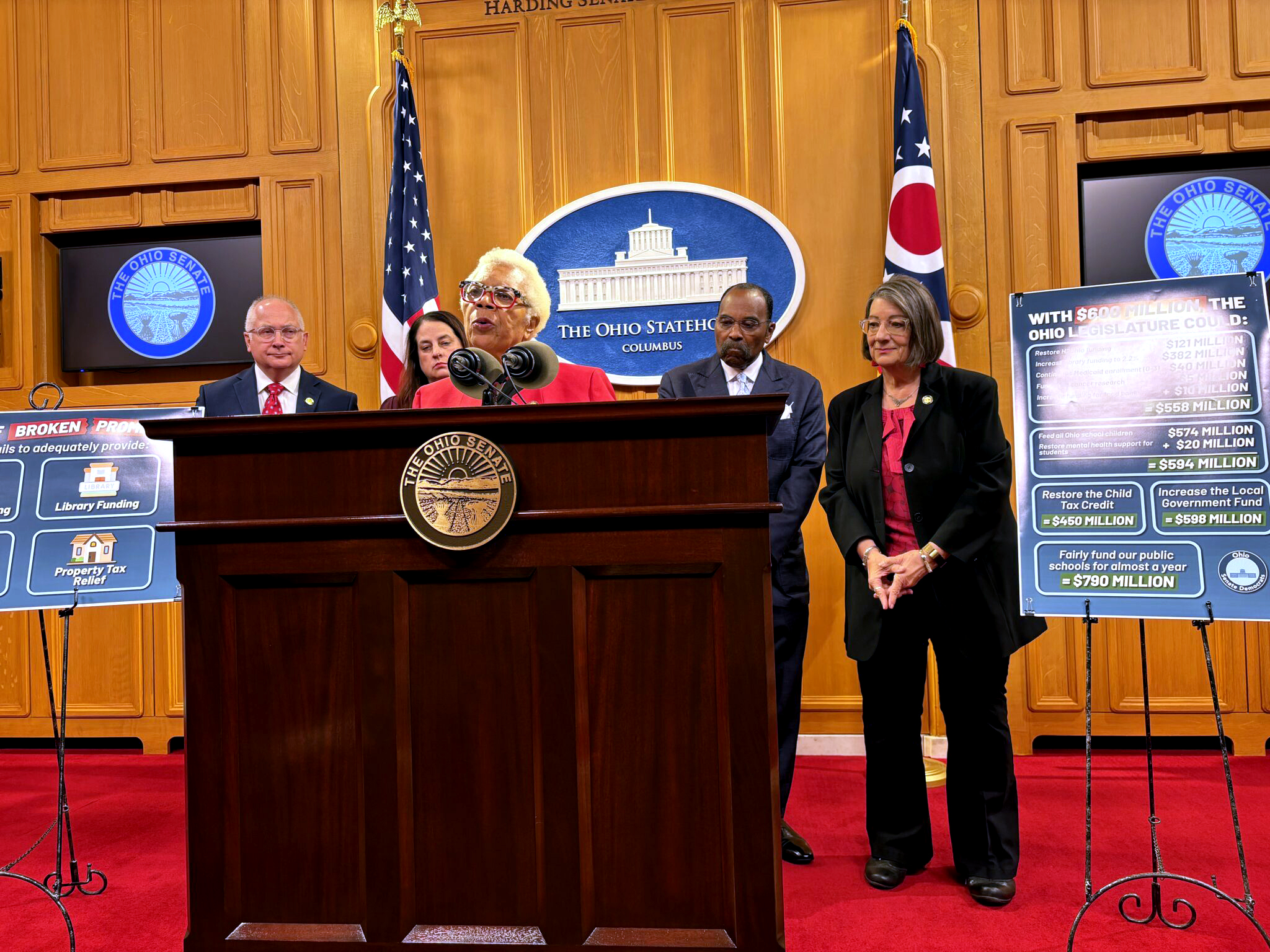
    Ohio state Sen. Paula Hicks-Hudson, D-Toledo, and other members of the Senate Democratic Caucus discuss the amendments they submitted to the state’s two-year operating budget. (Photo by Megan Henry, Ohio Capital Journal).

    By: Ohio Capital Journal

    Ohio Senate Democrats have submitted 423 amendments to the two-year state operating budget — including one removing the $600 million bond package for a new Cleveland Browns stadium in Brook Park, and one to fully fund public schools.

    The Ohio House passed their version of the budget last month and the Senate is currently working on the budget, which Ohio Gov. Mike DeWine must sign into law by June 30.

    GET THE MORNING HEADLINES.


    “This budget steals from our children by defunding public schools, transfers money for health care and libraries to rich benefactors, all the while failing to address the needs of hard working everyday Ohioans,” Senate Minority Leader Nickie J. Antonio, D-Lakewood, said Tuesday during a press conference.

    “This Republican budget prioritizes partisan agendas and handouts to the wealthy and well-connected, also through vouchers, tax breaks, and a stadium giveaway to the tune of more than half a billion dollars, all paid for by the working class,” she said.

    The Senate Democrats had a few different ideas for how $600 million can be spent — a direct shot at how the Ohio House Republicans added a bond package for a new Cleveland Browns stadium for that same amount in their version of the budget.

    Republicans hold a 24-9 supermajority in the Ohio Senate, giving Democrats very little power to enact any of their priorities. Nevertheless, Democratic lawmakers laid out their vision of what the state could be doing differently.

    The Ohio legislature could restore H2Ohio funding for $121 million, increase library funding to 2.2% for $382 million, offer continuous Medicaid expansion enrollment for $40 million, fund child cancer research for $5 million, and increase funding for food banks for $10 million (which totals to $558 million), Antonio said.

    Or lawmakers could feed all Ohio school children for $574 million and restore mental health support for students for $20 million, Antonio said.

    The legislature could restore the Child Tax Credit for $450 million, increase the Local Government Fund by $598 million, and fairly fund public schools for almost a year for $790 million, Antonio said.

    “If I were queen of the world, all these things would be part of our general fund budget,” she said.

    If $600 million is bonded out for a sports franchise, “Ohioans are still on the hook for that money in the long run,” Antonio said.

    DeWine originally proposed doubling the tax on sports betting from 20% to 40% with proceeds going to fund professional sports stadiums and Ohio youth sports.

    “I thought what the governor proposed originally was actually a better way to go because the funds were coming from outside entities,” Antonio said. “It has the whole state in mind, not just one group in one part of the state.”

    She said she would “be much more supportive” of an amendment along those lines.

    School funding

    To fully fund public schools based on statistics from the Fair School Funding Plan from 2021, schools would need an additional $666 million in funding (more now with inflation), but the proposed budget only gives them about $226 million.

    “It breaks the promise we’ve made for our children in public schools by abandoning fully funding the Fair School Funding Plan,” Antonio said.

    The Cupp-Paterson Fair School Funding Plan from 2021 was supposed to take six years and was meant to change how public dollars are provided to K-12 schools by giving additional support to local districts so they can rely less on property taxes.

    The first two years were partially fully funded and the second two years were fully funded. There are two more years left.

    “Our caucus has submitted amendments that would fully fund the fair school funding plan,”  Antonio said.

    The Senate Democratic amendments would also increase the state minimum teacher salary from $35,000 to $50,000, she said.

    Additional amendments

    Ohio Senate Democrats added an amendment to restore DeWine’s proposed $1,000 child care tax credit and another that would remove the language the Ohio House added to the budget that would make changes to the Ohio Housing Trust Fund.

    The Housing Trust is funded by a portion of the fees collected by county recorders, with half of the fees staying with the county and the other half going back to the fund — which requires at least 50% of the funds be spent in non-urban areas.

    The House budget proposal would remove the requirement for county recorders to send the state Department of Development money to reallocate the funds — something housing advocates say make it less effective across the state.

    “Rural areas would also be most impacted by the potential blocks of housing services as well, but all Ohio communities will see service disruption and increases in homelessness and decrease in access to affordable housing,” said Ohio state Sen. Paula Hicks-Hudson, D-Toledo.

    Ohioans deserve better from the state budget, Antonio said.

    “I think a whole lot of everyday Ohioans are going to be very surprised and have a whole lot of buyer’s remorse when they find out what it is that these people are doing on their behalf,”  Antonio said when asked about the Republican supermajority in the Statehouse.

    Follow Capital Journal Reporter Megan Henry on Bluesky.

    Megan Henry
    Megan Henry

    Megan Henry is a reporter for the Ohio Capital Journal and has spent the past five years reporting in Ohio on various topics including education, healthcare, business and crime. She previously worked at The Columbus Dispatch, part of the USA Today Network.

    Ohio Capital Journal is part of States Newsroom, the nation’s largest state-focused nonprofit news organization.

    MORE FROM AUTHOR

  • Joe Biden diagnosed with a ‘more aggressive form’ of prostate cancer

    Joe Biden diagnosed with a ‘more aggressive form’ of prostate cancer

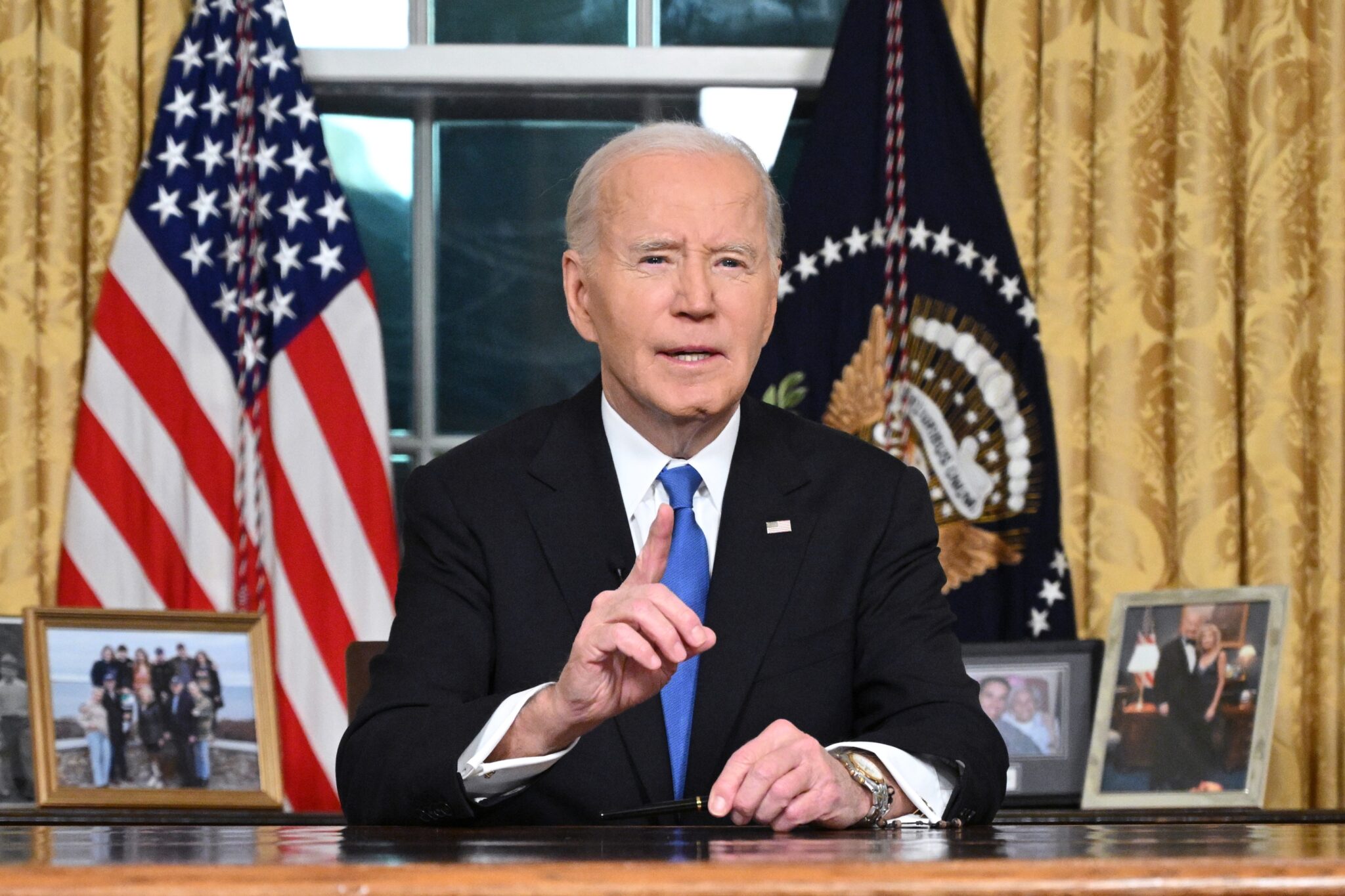
     President Joe Biden delivers his farewell address to the nation from the Oval Office of the White House on Jan. 15, 2025, in Washington, D.C. (Photo by Mandel Ngan – Pool/Getty Images)

    By:  Ohio Capital Journal

    WASHINGTON — Former President Joe Biden has been diagnosed with “a more aggressive form” of prostate cancer, according to a statement from his office on Sunday.

    The statement said Biden, 82, last week was seen for a new finding of a prostate nodule after experiencing increasing urinary symptoms. “On Friday, he was diagnosed with prostate cancer, characterized by a Gleason score of 9 (Grade group 5) with metastasis to the bone,” the statement said.

    “While this represents a more aggressive form of the disease, the cancer appears to be hormone-sensitive which allows for effective management,” it continued. “The President and his family are reviewing treatment options with his physicians.”

    The New York Times had reported on May 12 that a few days earlier, a “small nodule” was discovered on Biden’s prostate that required “further evaluation,” according to a spokesman.

    According to the National Cancer Institute, prostate cancer is slow-growing, the second leading cause of cancer death among men in the United States and the most common cancer.

    ‘Joe is a fighter’

    Statements of support immediately began pouring in on Sunday as word spread of the diagnosis.

    “Doug and I are saddened to learn of President Biden’s prostate cancer diagnosis,” his former vice president and the 2024 Democratic nominee, Kamala Harris, said on X. “We are keeping him, Dr. Biden, and their entire family in our hearts and prayers during this time. Joe is a fighter — and I know he will face this challenge with the same strength, resilience, and optimism that have always defined his life and leadership. We are hopeful for a full and speedy recovery.”

    “Melania and I are saddened to hear about Joe Biden’s recent medical diagnosis,” President Donald Trump wrote on social media. “We extend our warmest and best wishes to Jill and the family, and we wish Joe a fast and successful recovery.

    Minnesota Gov. Tim Walz, a Democrat who was the party’s vice presidential candidate after Biden dropped out of the race and  Harris took his place at the top of the ticket, said on X that Biden was “a truly decent man and a friend.”

    “Gwen and I are praying for President Biden and his family,” he wrote.

    “I am saddened to hear of President Biden’s cancer diagnosis and am wishing him and his family well as he begins treatment,” Maine Republican Sen. Susan Collins wrote on X.

    Pete Buttigieg, the former South Bend, Indiana, mayor who served as Biden’s Transportation secretary after running against Biden, Harris and others in the 2020 Democratic presidential primary, said Biden “is a man of deep faith and extraordinary resilience.”

    “Chasten and I are keeping him, and the entire Biden family, in our prayers for strength and healing,” Buttigieg wrote on X.

    “Joe has been a fighter his whole life. He will prevail. Sending Dr. Jill Biden and their family my absolute support,” Democratic Sen. John Fetterman of Pennsylvania posted on X.

    “This is very sad news. Praying for his recovery,” GOP Florida Rep. Anna Paulina Luna said on X. “We are rooting for President Biden in this fight!” former Florida U.S. Rep. Matt Gaetz wrote, reposting Luna’s post.

    Age a factor in presidential race

    Biden’s doctors said he was fit and healthy enough to be president after evaluations in February, 2024.

    “President Biden is a healthy, active, robust 81-year-old male, who remains fit to successfully execute the duties of the Presidency,” Dr. Kevin C. O’Connor wrote.

    But by that summer, Biden’s deteriorating state  — though not connected to the diagnosis disclosed Sunday — would force him out of his reelection bid.

    Biden dropped out of the race for the presidency on July 21, 2024, creating an unprecedented vacancy atop the Democratic ticket one month before he was scheduled to officially accept his party’s nomination. He endorsed Harris to take his place as the Democratic nominee, and she was nominated by Democrats but lost the election to Trump.

    Biden’s withdrawal came after a weeks-long pressure campaign from party insiders following a disastrous June 27, 2024, debate performance against GOP candidate Trump and rising criticism that he could not mount a winning campaign against the man he had defeated in 2020. Biden appeared frail and confused at several points during the debate, leading to worries he was no longer up to the task of governing.

    After leaving the White House on Jan. 20, Biden kept a low profile and did not make public remarks until April 15, when he criticized the current administration for cutting thousands of employees at the Social Security Administration and rebutted those who have questioned the program’s relevance.

    “In fewer than 100 days, this new administration has done so much damage and so much destruction. It’s kind of breathtaking it could happen that soon,” Biden said. “They’ve taken a hatchet to the Social Security Administration, pushing 7,000 employees — 7,000 — out the door in that time, including the most seasoned career officials.”

    Book publication

    In more recent days, the publication of a book by two political reporters, CNN’s Jake Tapper and Alex Thompson of Axios, sparked controversy by its claims that those in Biden’s inner circle worked to keep his cognitive decline from public view.

    Titled “Original Sin,” the book — based on interviews with what the authors said were more than 200 people, mostly Democratic insiders —  included new details about the presidency, such as Biden apparently failing to recognize movie star George Clooney at a fundraiser in June 2024 in Los Angeles. Biden’s decline was such in 2023 and 2024 that use of a wheelchair was discussed, if he was reelected, the book reported.

    Just Friday, the White House released audio of an interview of Biden by Department of Justice special counsel Robert Hur who issued a lengthy report concluding that while President Joe Biden “willfully retained” classified materials following his time as vice president, he would not be charged with a crime.

    Hur wrote in the 388-page February 2024 report that prosecutors considered “that, at trial, Mr. Biden would likely present himself to a jury, as he did during our interview of him, as a sympathetic, well-meaning, elderly man with a poor memory.”

    Jacob Fischler contributed to this report.

    Jane Norman
    Jane Norman

    As the Washington Bureau Chief of States Newsroom, Jane directs national coverage, managing staff and freelance reporters in the nation’s capital and assigning and editing state-specific daily and enterprise stories. Jane is a veteran of more than three decades in journalism.

    Ohio Capital Journal is part of States Newsroom, the nation’s largest state-focused nonprofit news organization.

    MORE FROM AUTHOR

  • Ohio private college presidents ask to get rid of proposed changes to Governor’s Merit Scholarship

    Ohio private college presidents ask to get rid of proposed changes to Governor’s Merit Scholarship

    Getty Images

    By:  Ohio Capital Journel

    Ohio private college presidents slammed proposed requirements for participating in the Governor’s Merit Scholarship that were added to the House’s version of the two-year operating budget during testimony in the Senate Higher Education Committee.

    The committee had four hearings on the budget, which Senate lawmakers are currently working on. The Ohio House passed the budget last month and Ohio Gov. Mike DeWine must sign the budget by June 30.

    GET THE MORNING HEADLINES.


    Todd Jones, president and general counsel of the Association of Independent Colleges and Universities of Ohio (AICUO), spoke out against provisions the Ohio House added to the budget regarding new requirements for private colleges if they want to continue to participate in the Governor’s Merit Scholarship, which gives the top 5% of each high school graduating class a $5,000 scholarship each year to go to an Ohio college or university.

    Under the new changes made in the House, private colleges would also have to accept the top 10% of Ohio’s graduating class and comply with parts of Senate Bill 1 — Ohio’s new higher education law that bans diversity and inclusion efforts and regulates classroom discussion, among other things.

    “I want to be clear that our concerns are not about DEI and SB 1,” Jones said. “Our concerns are about the very nature of our institutions and what it means to be a private, nonprofit institution. … When the state dictates our missions, board structures, curriculum, hiring practices, workloads, and public engagement, the autonomy that defines nonprofit institutions disappears.”

    Tiffin University President Lillian Schumacher said the S.B. 1 mandates would increase operational costs without improving educational outcomes.

    “For many institutions, these new burdens could lead to closures, reduced financial aid, higher tuition, and a reduction in critical educational services for students,” she said in her testimony.

    Forcing private colleges and universities to accept the top 10% of Ohio’s graduating class would create challenges for those institutions, Chancellor of the Ohio Department of Higher Education Mike Duffey said.

    “Public universities have the infrastructure with branch campuses, large-scale facilities, and state funding to absorb enrollment increases,” Jones said. “Independent institutions operate on much smaller scales.”

    Eight AICUO institutions function out of a single academic building, he said.

    “Imposing this mandate without providing financial or logistical support places an impractical burden on private colleges,” Jones said.

    Being able to welcome an additional influx of students depends on various factors including the students’ major, housing and financial needs, University of Findlay President Kathy Fell said.

    “I know we all agree that students will not benefit from this opportunity if approbate supports and resources for success are not available,” she said in her testimony.

    Aultman College President Jean Paddock said the 10% acceptance mandate would not be possible in healthcare programs that are limited to a capped number of seats.

    “With a nursing shortage well documented, sending our best and brightest who want to enter the healthcare field to other states is the opposite of what we want,” Paddock said in her testimony.

    The Governor’s Merit Scholarship was enacted through the last state budget two years ago and 76% of the state’s 6,250 eligible students from the class of 2024 accepted the scholarship. The acceptance rate was 100% in Hocking, Holmes, Putnam, Adams, Monroe, Noble, and Vinton counties, Duffey said.

    In the second year of the scholarship, 87% of Ohio students accepted the scholarship and 11 rural counties had a 100% acceptance rate, Duffey said.

    Ohio Sen. Jane Timken, R-Jackson Township, said she has received several inquiries from private colleges and universities with concerns about the Governor’s Merit Scholarship requirements being linked to compliance with parts of S.B. 1.

    “Clearly we would lose some students if they weren’t able to access those funds,” Duffey said.

    The budget currently allocates $47 million for fiscal year 2026 and $70 million for fiscal year 2027 for the Governor’s Merit Scholarship.

    Follow Capital Journal Reporter Megan Henry on Bluesky.

    EDITOR’S NOTE:

    These Loveland High School seniors earned a Governor’s Merit Scholarship. Only the top 5% of Ohio high school students are eligible for this scholarship, worth up to $5,000 toward tuition at an Ohio college or university.

    • Olivia Bast
    • McKenzie Dunlap
    • Chloe Finkler
    • Luis Garcia Saucedo
    • Daniel Gomez Carrillo
    • Jacob Hentz
    • Alyse Knapschaefer
    • Mackenzie Liu
    • Carter Lucas
    • CJ Margraf
    • Isaiah Marx
    • Jonas Moore
    • Tyler Roberts
    • Benjamin Tibbs
    • Sophia Yurovski

    Megan Henry
    Megan Henry

    Megan Henry is a reporter for the Ohio Capital Journal and has spent the past five years reporting in Ohio on various topics including education, healthcare, business and crime. She previously worked at The Columbus Dispatch, part of the USA Today Network.

    Ohio Capital Journal is part of States Newsroom, the nation’s largest state-focused nonprofit news organization.

    MORE FROM AUTHOR

  • Ohio property tax repeal campaign preparing to collect signatures

    Ohio property tax repeal campaign preparing to collect signatures

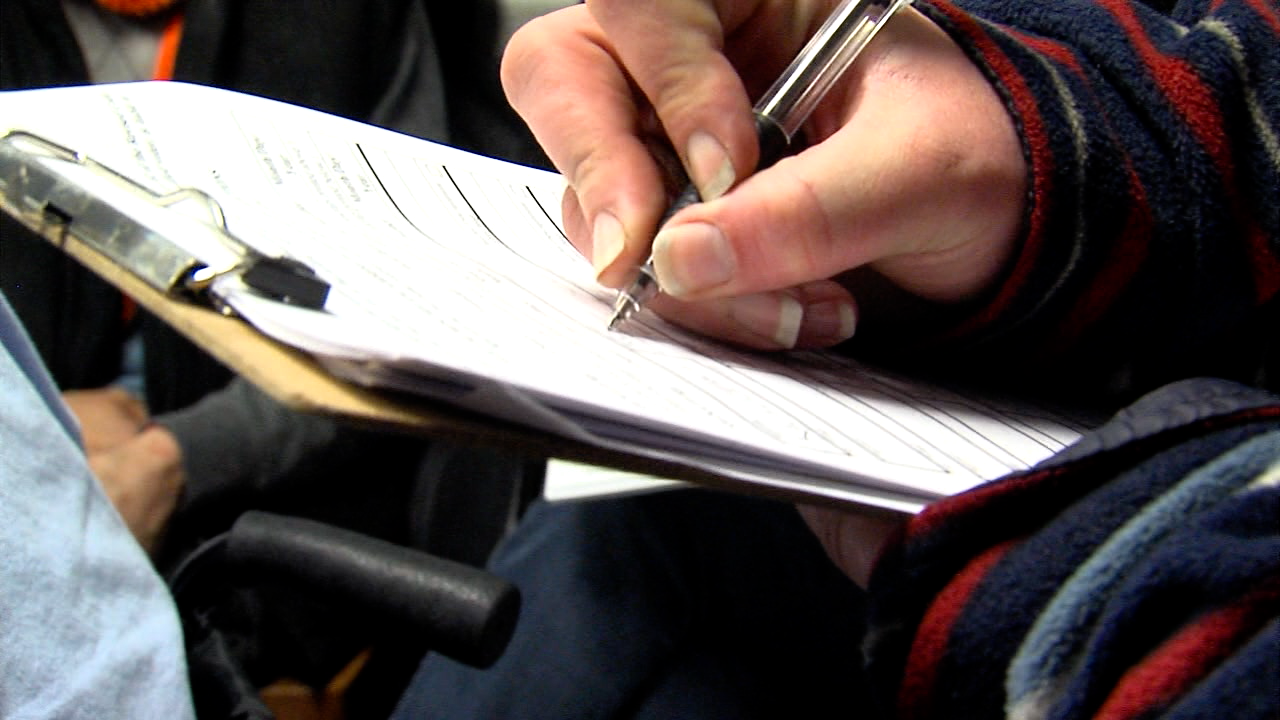
    Ballot petition signature collection. Photo by WEWS.

    By:  Ohio Capital Journal

    In a short meeting, the Ohio Ballot Board signed off on a proposed constitutional amendment abolishing property taxes in the state. The only question before the board was whether the proposal contains one or multiple amendments.

    Supporters contend lawmakers have been unwilling or unable to make significant enough changes as property taxes climb. But critics warn eliminating that revenue stream could cripple important services like schools and first responders.

    Campaign reaction

    GET THE MORNING HEADLINES.


    The day after the ballot board meeting, Beth Blackmarr described her mood as ‘busy.’

    “Busy, busy, busy,” she said, “I mean, here we go — we’ve got to hit the ground running.”

    Blackmarr is part of the organization Citizens for Property Tax Reform which is leading the repeal campaign. With the ballot board’s decision, the group is now able to start gathering signatures to appear on the ballot.

    To go before voters, they’ll need 10% of the electoral turnout from the last governor’s race (just shy of 415,000). Additionally, in 44 of Ohio’s counties, they’ll need signatures from at least 5% of the governor’s race turnout. In practice, campaigns turn in hundreds of thousands more signatures than necessary to make up for any rejections.

    Blackmarr said they want to start collecting “as soon as humanly possible,” and work could begin as early as next week. Asked whether they’d work with paid circulators, she just laughed.

    “Many of us are youthful at heart, but senior citizens that are just really working out of our pockets,” she said. “There’s no big money backing this at all. It’s all volunteer.”

    The merits

    Blackmarr argued Ohio’s current property tax system is broken. She points to other states like New Jersey and Texas that have far more generous initiatives to keep seniors, vets and the disabled in their homes.

    “You can’t have senior citizens who have paid for their homes — fully paid for — having to move out because they can’t afford property tax,” she insisted.

    Blackmarr contends those kinds of protections are low-hanging fruit. Lawmakers have had continual warnings and “ample opportunity” to act. Instead, she argued, they’ve dithered with changes at the margins.

    “I suspect it’s because they built a wobbly tower of property tax law over these decades,” she said, “and they’re afraid to pull one of the blocks out, because they’re afraid the whole thing’s gonna come tumbling down.”

    That ‘tumbling down’ is exactly the concern many critics voice about the plan. The most recent annual report from the Ohio Department of Taxation puts 2023 property tax collections at about $18.5 billion. That’s an enormous amount of funding to just disappear. It’s roughly double the amount reported for state income taxes, and a billion more than Ohio’s sales and use tax.

    Spread evenly, it would cost every single Ohioan more than $1,500 to make up that gap in funding.

    Blackmarr argued repeal will just force lawmakers “to come up with an alternative.” But that’s a big ask — particularly for Republicans allergic to tax increases.

    Still she’s right about dramatic increases in property taxes. The same Department of Taxation report shows assessed values climbing almost 40% in five years while tax collections have risen more than 21%.

    Legislature’s role

    In a statement following the ballot board decision, House minority leader Allison Russo said the proposal “clearly demonstrates frustration by Ohioans on this issue” and blamed lawmakers for failing to act.

    “However, this particular initiative concerns me because while it eliminates the property tax, it doesn’t explain how we’ll replace the funds that support police, fire departments, public education, and other critical services,” she said.

    Russo argued Democrats have signed on to bipartisan legislation providing direct relief but Republican leaders haven’t prioritized those bills.

    Blackmarr acknowledged that as their campaign gains steam, pressure will grow on lawmakers to pass legislation or propose their own ballot measure to undercut their efforts.

    “At the end of the day it goes to the voters,” she said.  “They have to make the decision for themselves.”

    And if lawmakers’ intervention means voters have to choose between competing visions, that’s just fine with Blackmarr.

    “Wouldn’t that be nice, you know?” she said.

    Follow Ohio Capital Journal Reporter Nick Evans on X or on Bluesky.


    Nick Evans
    Nick Evans

    Nick Evans has spent the past seven years reporting for NPR member stations in Florida and Ohio. He got his start in Tallahassee, covering issues like redistricting, same sex marriage and medical marijuana. Since arriving in Columbus in 2018, he has covered everything from city council to football. His work on Ohio politics and local policing have been featured numerous times on NPR.

    Ohio Capital Journal is part of States Newsroom, the nation’s largest state-focused nonprofit news organization.

    MORE FROM AUTHOR

  • Ohio lawmakers introduce bipartisan bill that would help college students combat food insecurity

    Ohio lawmakers introduce bipartisan bill that would help college students combat food insecurity

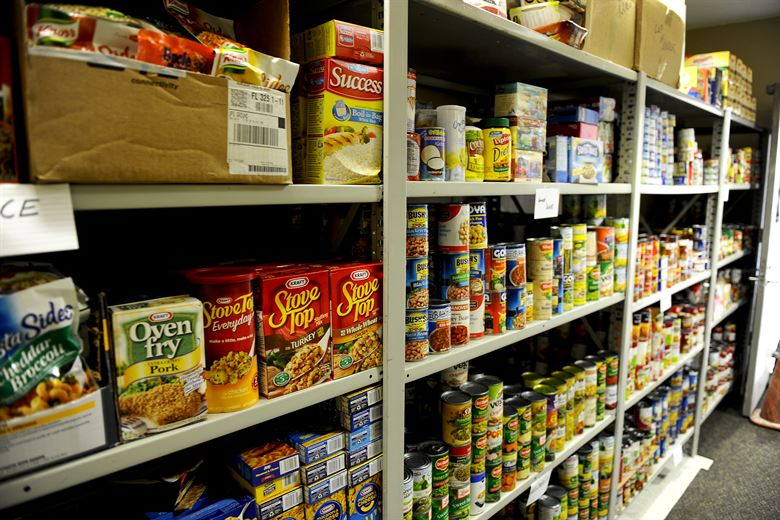
    Stock image of a food pantry courtesy Hurlburt Field.

    Ohio House Reps. Sean Patrick Brennan, D-Parma, and Jim Hoops, R-Napoleon, introduced Enact the Hunger Free Campus Act earlier this year.

    By: Ohio Capital Journal

    A proposed bipartisan bill would help Ohio college students struggling with food insecurity.

    Ohio House Reps. Sean Patrick Brennan, D-Parma, and Jim Hoops, R-Napoleon, introduced Enact the Hunger Free Campus Act earlier this year and it had sponsor testimony Tuesday in the Ohio House Workforce and Higher Education Committee meeting.

    Ohio House Bill 157 would require the Chancellor of Higher Education to create the Hunger-Free Campus Grant Program and award hunger-free campus grants which could, for example, create an on-campus food pantry or a partnership with a local bank, provide students information about SNAP, have an emergency assistance grant available to students, or have a student meal plan credit donation program.

    GET THE MORNING HEADLINES.


    “A Hunger Free Campus program addresses these challenges directly by providing accessible resources and support systems tailored to meet students’ nutritional needs free from stigma,” Brennan said. “Such initiatives ensure that no student has to choose between paying the electric bill or buying textbooks or groceries, allowing them to concentrate fully on their education.”

    H.B. 157 would appropriate $625,000 for fiscal year 2026 and 2027 for the program.

    Some universities across the state have a food pantry on campus for students, but how they operate varies, Brennan said.

    “There is not consistency on where the pantries live, the size, what is offered, what department they are under, and what you have to prove in order to utilize them,” he said. “Sometimes it’s a single staff member going to the local grocer on their day off to buy things for the pantry.”

    Food insecurity is often an overlooked issue that affects many college students, Brennan said.

    “Rising costs are making it tougher for students to find sustainable and affordable food options, especially for the growing number of non-traditional students with children,” he said.

    Food insecurity is an issue that goes beyond hunger, Brennan said.

    About 23% of college students experienced food insecurity in 2020 and 59% of food-insecure students potentially eligible for SNAP did not report receiving benefits, according to a report released last summer by the U.S. Government Accountability Office.

    A survey conducted last year at Ohio State University showed that nearly one out of every three Ohio State students is food insecure, according to the student newspaper The Lantern.

    Food insecurity means a household has limited or uncertain access to enough food to meet their needs, according to the U.S. Department of Agriculture.

    “It affects students’ academic performance, mental health, and overall well-being,” Brennan said. “When students are unsure where their next meal will come from, they struggle to focus in class, perform poorly on exams, and are more likely to drop out.”

    Similar legislation has passed in California, Washington, Oklahoma, Illinois, Louisiana, Minnesota, Pennsylvania, Maryland, and Massachusetts.

    “This bill will place Ohio at the forefront of tackling food insecurity in America and serve once again as a beacon by which more states will soon emulate,” Hoops said.

    Brennan introduced a similar bill in the previous general assembly, but it only had sponsor testimony.

    Members of the committee had positive things to say about H.B. 157.

    “I remember working in college full-time, but still it was difficult to afford food alongside my medicine, and so this is, no doubt, hopefully passes and will support a lot of students,” said state Rep. Munira Abdullahi, D-Columbus.

    State Rep. Beryl Brown Piccolantonio, D-Gahanna, asked Brennan and Hoops about the importance of students being nourished in order to learn.

    “If you don’t have a full belly, the last thing you’re thinking about is loading the three branches of government,” Brennan said. “The same would be true for anyone, for that matter, whether you’re an elementary school kid, a middle school, a high school, or in our higher ed classrooms.”

    State Rep. Kevin Ritter, R-Marietta, asked where the line is?

    “Just because we can do it, should we do it?” he asked.

    Brennan responded by saying he views this bill as an investment in young people.

    “When we invest in people that are hard-working and want to move ahead and climb that socioeconomic ladder, it’s going to save us in the long run,” he said.

    Follow Capital Journal Reporter Megan Henry on Bluesky.


    Megan Henry
    Megan Henry

    Megan Henry is a reporter for the Ohio Capital Journal and has spent the past five years reporting in Ohio on various topics including education, healthcare, business and crime. She previously worked at The Columbus Dispatch, part of the USA Today Network.

    Ohio Capital Journal is part of States Newsroom, the nation’s largest state-focused nonprofit news organization.

    MORE FROM AUTHOR

  • Backers urge Ohio lawmakers to pass AI restrictions

    Backers urge Ohio lawmakers to pass AI restrictions

    State Sen. Louis Blessing, III, R-Colerain Township (Photo by Graham Stokes for Ohio Capital Journal. Republish photo only with original article.)

    The measure focuses on prohibiting deepfake child pornography but also require watermarks and punishes AI identity fraud

    By:  Ohio Capital Journal

    Ohio senators heard from supporters Wednesday of a proposal establishing guardrails around media produced with artificial intelligence. The proposal would prohibit the use of AI to create deepfake porn — particularly involving minors. But with provisions requiring watermarks and punishing identity fraud, the bill’s impact could extend far beyond the creation of pornography.

    Senate bill 163

    The bill’s sponsors, state Sens. Louis Blessing, R-Colerain Twp., and Terry Johnson, R-McDermott, argue the restrictions will “prevent potentially harmful uses” of an emerging technology while protecting Ohioans “safety and privacy.”

    GET THE MORNING HEADLINES.


    The bill goes after AI-generated child porn by expanding the definition of obscenity to include an “artificially generated depiction.” Blessing explained “current laws against child sexual abuse material require an actual real photo of a child to be able to prosecute someone.”

    “With AI not being a real photo,” he added, “this leads to issues of prosecuting someone generating these photos. Senate bill 163 will give attorneys the ability to prosecute these people.”

    The sponsors argue AI can also be used to engage in fraud for financial, political and reputational purposes. So, the proposal extends identity fraud statutes to include a “replica” of an individual’s voice or likeness. It prohibits the use of a replica persona to defraud, damage a person’s reputation, or depict a person in a state of nudity or engaged in a sexual act.

    Beyond its prohibitions, the bill aims to get ahead of deceptive uses by requiring any media created with artificial intelligence to include a watermark identifying it as such. Removal of a watermark is subject to a civil lawsuit for damages, and anyone who removes a watermark faces the presumption that they caused the alleged harm.

    Proponents’ testimony

    Ohio Attorney General Dave Yost praised the measure’s “three-pronged approach.” He argued the watermark requirement “would provide a minimum level of transparency and notice” when an individual encounters AI-generated content.

    Speaking about the bill’s identity fraud provisions, Yost brought up a case from his time as state auditor. A scammer successfully mimicked a school district’s email system and then sent a fake funds transfer request to the accounts payable department posing as the district’s financial controller. Best practice, Yost said, would be to call the sender for confirmation.

    “But now, in the era of deepfakes with audio,” Yost explained, “you can send that fake email, call up (accounts payable) using the controller’s voice and say, ‘Hey, I just sent you an email asking you to do a wire transfer. This is really important. We need to move it. I wanted to follow up with phone calls so you didn’t have any questions.’”

    As for the restrictions on child sexual abuse material, Yost urged lawmakers ensure “these powerful tools are not used for evil,” and added that “these are the kinds of things that keep me up at night.”

    Sen. Kent Smith, D-Euclid, pressed Yost on how useful state legislation can be when it comes to addressing a “borderless” crime.

    Yost acknowledged he’d prefer to see federals laws and even international treaties governing the use of AI-generated images. But “possession or use within Ohio can still be proscribed by this body and it ought to be.” He added that one way to push Congress to act is for states to pass an array of legislation.

    Lou Tobin, speaking on behalf of the Ohio Prosecuting Attorneys Association, noted many states have passed bills to prohibit AI-generated child sexual abuse material or CSAM.

    “As of last month,” he said, “Thirty-eight states, including every state surrounding Ohio, have enacted laws that criminalize the creation, possession and distribution of artificially generated CSAM.”

    But while many states have taken action, it’s not clear those laws will hold up in court.

    “I think a federal district court has found one of these statutes to be in violation of the Ashcroft decision,” Tobin told lawmakers. “The Ashcroft decision was a U.S. Supreme Court decision from the early 2000s that said you could not criminalize artificially generated images of child pornography because there wasn’t a real victim.”

    In February, a federal judge in Wisconsin threw out one charge related to possession of “virtual child pornography,” but allowed three others to go forward. Prosecutors in that case have appealed the decision to dismiss the charge.

    Tobin explained his office and the AG’s worked with state lawmakers to narrowly tailor S.B. 163 bill to avoid problems with the First Amendment. Regardless of how the case in Wisconsin or others play out, Tobin agued, “We think that’s a fight worth having.”

    Follow Ohio Capital Journal Reporter Nick Evans on X or on Bluesky.


    Nick Evans
    Nick Evans

    Nick Evans has spent the past seven years reporting for NPR member stations in Florida and Ohio. He got his start in Tallahassee, covering issues like redistricting, same sex marriage and medical marijuana. Since arriving in Columbus in 2018, he has covered everything from city council to football. His work on Ohio politics and local policing have been featured numerous times on NPR.

    Ohio Capital Journal is part of States Newsroom, the nation’s largest state-focused nonprofit news organization.

    MORE FROM AUTHOR

  • Opponents speak out for more than three hours against making changes to Ohio’s marijuana law

    Opponents speak out for more than three hours against making changes to Ohio’s marijuana law

    Stock photo from Getty Images.

    House Bill 160 would reduce the THC levels in marijuana extracts from a maximum of 90% down to a maximum of 70%, cap the number of marijuana dispensaries to 350, and reallocate the bulk of marijuana revenue to the state’s General Revenue Fund.

    By:  Ohio Capital Journal

    More than 20 people spoke out against a bill that would change Ohio’s marijuana law.

    Thirty-five people submitted opponent testimony against Ohio House Bill 160, which would reduce THC levels and redirect most of the tax revenue. State Rep. Brian Stewart, R-Ashville, introduced the bill two months ago and opponents testified against the bill for more than three hours during Wednesday’s House Judiciary Committee meeting.

    “H.B. 160 imposes a litany of negative changes on cannabis users, consumers, growers, and professionals to dismantle key parts of current Ohio law enacted by your constituents,” said Gary Daniels, ACLU of Ohio’s legislative director. “At worst, these changes can be interpreted as purposeful, designed to kneecap Issue 2. At the least, these changes fundamentally handicap the purchase, use, transportation, and sale of cannabis in the state.”

    GET THE MORNING HEADLINES.


    Ohioans passed a citizen-initiated law to legalize recreational marijuana in 2023 with 57% of the vote, and sales started in August 2024. Ohio lawmakers can change the law since it passed as a citizen initiative. The state’s total recreational marijuana sales were $479,219,877 as of April 26, according to the Ohio Department of Commerce Division of Cannabis Control.

    H.B. 160 would reduce the THC levels in marijuana extracts from a maximum of 90% down to a maximum of 70%, cap the number of marijuana dispensaries at 350, and reallocate the bulk of marijuana tax revenue to the state’s General Revenue Fund. It would ban using marijuana in public spaces and offer expungement for prior convictions for marijuana related offenses.

    “I think this bill represents the most thoughtful of the approaches we’ve seen from legislators,” said state Rep. Jamie Callender, R-Concord. “If we could find some common ground, I think the sponsor has mentioned that he wants to have a fairly stripped down bill.”

    H.B. 160 would repeal the Cannabis Social Equity and Jobs Program, which was enacted through the passage of Issue 2. The bill also has an intoxicating hemp provision that would require every THC product to only be sold at Ohio’s regulated marijuana dispensaries.

    During the committee meeting, Callender held up an intoxicating hemp product he recently purchased with the Hawaiian Punch logo on it.

     State Rep. Jamie Callender, R-Concord, holds up an intoxicating hemp product during the Ohio House Judiciary Committee meeting on May 7, 2025. (Screenshot). 

    “This is to show that there is some common ground,” Callender said. “1,000 milligrams of THC, 96.1% THC.  … No ID required to purchase, no ID required to go into the location. … We don’t want children having access. We don’t want false labeling.”

    The bill would also make it illegal to purchase marijuana in another state and bring it back to Ohio.

    “But Ohioans can still return home from their favorite out-of-state microbrewery with a can, six pack, or entire keg of beer,” Daniels.

    Many of the opponents were not shy about pointing this out.

    “The Issue 2 campaign was called Regulate Cannabis Like Alcohol,”said Karen O’Keefe, Marijuana Policy Project’s director of state policies. “Yet H.B. 160’s unnecessary and onerous restrictions on cannabis in no way resemble how alcohol is regulated. … Would you ban possessing bourbon purchased in Kentucky?”

    Opponents questioned where they would be legally allowed to use marijuana if the bill passed.

    “If people can’t consume at home-and sharing at a friend’s house becomes illegal, where are they supposed to consume safely?” asked Anthony D. Riley, founder of Ohio Cannabis Live and the Ohio Cannabis Expo.

    Those opposed to the intoxicating hemp provisions are worried about the ramifications of limiting sales to only marijuana dispensaries.

    “We have concerns that the language in S.B. 160 would ban most types of legal hemp products from retail sales, reducing access for consumers,” said Ohio Grocers Association President Kristin Mullins.

    Instead, she wants lawmakers to incorporate regulatory oversight such as age-restricting products and product labeling.

    Ohio Senate marijuana bill

    The Ohio Senate passed their own version of a bill that would overhaul the state’s marijuana law back in February — shortly before the House introduced their bill.

    There are some similarities between the bills such as lowering THC levels, requiring marijuana only be used in a private residence, and capping dispensaries at 350.

    One of the biggest differences with Senate Bill 56 is limiting Ohio’s home grow from 12 plants down to six. The bill would also combine the state’s medical and recreational marijuana programs under the Division of Cannabis Control.

    S.B. 56 has yet to have a hearing over in the House.

    Follow Capital Journal Reporter Megan Henry on Bluesky.


    Megan Henry
    Megan Henry

    Megan Henry is a reporter for the Ohio Capital Journal and has spent the past five years reporting in Ohio on various topics including education, healthcare, business and crime. She previously worked at The Columbus Dispatch, part of the USA Today Network.

    Ohio Capital Journal is part of States Newsroom, the nation’s largest state-focused nonprofit news organization.

    MORE FROM AUTHOR

  • Study: Ohio among hardest hit if Congress, Trump cut Medicaid

    Study: Ohio among hardest hit if Congress, Trump cut Medicaid

    A poll released Thursday, May 1 showed 76% of Americans oppose cuts to Medicaid. (Photo via Getty Images)

    By:  Ohio Capital Journal

    Ohio is among five states whose economies will be most harmed if huge proposed Medicaid cuts become reality, the Commonwealth Fund said in an explainer this week.

    Medicaid, the federal-state health insurer for low-income Americans, covers nearly 3 million Ohioans. That’s about a quarter of the state’s population.

    Particularly in states such as Ohio, Medicaid covers large numbers of working people. That’s because in 2014 the state opted to expand eligibility to people making 138% or less of federal poverty guidelines. For a family of four, that’s $43,000 a year.

    GET THE MORNING HEADLINES.


    About 770,000 Ohioans are covered by expanded Medicaid — a group for which rates of uninsurance have dropped by 62% since 2012, according to the Health Policy Institute of Ohio.

    A draft budget making its way through the U.S. House of Representatives would cut federal spending — the primary source of Medicaid money — by $880 billion over 10 years. KFF reported that such a move would require a 29% increase in state spending to maintain the same level of coverage.

    The federal government currently covers 90% of the cost of Ohio’s expended Medicaid. In his draft of the state budget, Gov. Mike DeWine included a provision saying that if the feds cut that, the state would end coverage of the 770,000 Ohioans in the expansion group.

    In the report it released this week, the Commonwealth Fund said such cuts would harm state economies, with Ohio’s high among them. It said “the country’s gross domestic product (GDP) would decrease by $95 billion and tax revenue would decrease by $7 billion. The states likely to face the most significant economic losses include California, New York, Texas, Pennsylvania, and Ohio.”

    One reason for the losses, the explainer said, is that each dollar in Medicaid spending creates a greater value to the overall economy.

    “Medicaid investment is shown to have a “multiplier effect,” meaning that every dollar spent generates over a dollar’s worth of economic activity,” it said. “Medicaid drives employment in the health care sector; generates state and local tax revenue; and saves money for enrollees, allowing them to spend more on items other than health care.”

    Medicaid spending also bolsters the economy by making more people healthy enough to work. Research in Ohio and across the country has shown that workforce participation is greater in states that expanded Medicaid, the Georgetown University McCourt School of Public Policy reported in 2023.

    The economic benefits of Medicaid spending are manifold, the Commonwealth Fund report said.

    “Medicaid coverage helps lift enrollees out of poverty — more effectively, in fact, than federal tax credits,” it said. “In states that have expanded Medicaid, enrollees have benefited from reductions in income inequalityevictions, and bankruptcies, as well as improvements in credit scores. One study found that less than two years after Michigan expanded Medicaid, the average amount of medical bills in collections for enrollees had dropped by over $500, enrollees were 11% less likely to be evicted, and they were 13% less likely to overdraw their credit cards than before expansion.”


    Marty Schladen
    Marty Schladen

    Marty Schladen has been a reporter for decades, working in Indiana, Texas and other places before returning to his native Ohio to work at The Columbus Dispatch in 2017. He’s won state and national journalism awards for investigations into utility regulation, public corruption, the environment, prescription drug spending and other matters.

    Ohio Capital Journal is part of States Newsroom, the nation’s largest state-focused nonprofit news organization.

    MORE FROM AUTHOR

  • Ohio House lawmakers introduce companion bill that would ban DEI in K-12 schools

    Ohio House lawmakers introduce companion bill that would ban DEI in K-12 schools

     (Photo by Michael Loccisano/Getty Images)

    By:  Ohio Capital Journal

    Ohio House Republicans are trying to ban diversity and inclusion in K-12 schools.

    House Reps. Beth Lear, R-Galena, and Josh Williams, R-Sylvania Township, recently introduced House Bill 155. This is a companion bill to Ohio Senate Bill 113, which has had two hearings so far in the Senate Education Committee.

    GET THE MORNING HEADLINES.


    Both bills would require every local board of education in the state to adopt a policy that would end any current diversity and inclusion offices or departments and ban any diversity, equity, and inclusion orientation or training. It would also prevent the creation of any new such offices or departments and using DEI in job descriptions.

    Lear and Williams recently gave sponsor testimony on their bill to the Ohio House Education Committee.

    “The increasing incorporation of DEI programs has shifted the focus from educational fundamentals to ideological indoctrination,” Lear said. “These initiatives prioritize identity over ability, promote racial preferences over fairness, and undermine the principle of equal opportunity for all students.”

    The pair of Republican lawmakers argued banning DEI would cause less division among students.

    “Through legislation like this, we hope to cultivate an educational environment that promotes unity and harmony among students, focusing on our commonalities rather than differences,” Williams said. “By treating all of our students and staff the same, we can allow our educators to focus on core academic subjects and ensure high-quality outcomes for every student in Ohio.”

    Education committee members — on both sides of the aisle — peppered the lawmakers with questions for about 40 minutes.

    “DEI is toxic,” said state Rep. Kevin Ritter, R-Marietta. “The sooner it’s out of our schools, the better. With that in mind, prohibition without consequences is meaningless.”

    Lear said they plan on adding enforcement measures to the bill in the coming weeks through an amendment.

    Some of the Democratic lawmakers pointed out how the bill doesn’t define DEI.

    “How is a school supposed to figure out what that means?” state Rep. Phil Robinson, Jr., D-Solon, asked.

    Williams said he wouldn’t give a narrow definition of DEI.

    “The easiest way to answer that is to teach the subjects you are supposed to teach,” Williams said when Robinson pressed him on the question. “You don’t need to infuse DEI into the curriculum.”

    State Rep. Sean Brennan, D-Parma, continued to ask for a definition of DEI.

    “If we don’t define what DEI is, how can we expect teachers to not mistakenly break the law?” he asked.

    Williams said it would ultimately be up to the individual school boards to come up with a policy.

    “We’re not trying to make a cookie-cutter system,” he said.

    This bill comes as two federal lawsuits by the ACLU and the National Education Association are challenging the Trump administration’s attempt to ban DEI programs in K-12 schools.

    “How do you craft legislation when it’s a little bit unclear right now from the federal government where things stand?” asked state Rep. Beryl Brown Piccolantonio, D-Gahanna.

    Williams, who is a lawyer, said he knows lawsuits can take a while and is “not willing to allow school districts to continue to indoctrinate children for the next four to six years while those lawsuits pend, just because somebody wanted to file a lawsuit.”

    Follow Capital Journal Reporter Megan Henry on Bluesky.


    Megan Henry
    Megan Henry

    Megan Henry is a reporter for the Ohio Capital Journal and has spent the past five years reporting in Ohio on various topics including education, healthcare, business and crime. She previously worked at The Columbus Dispatch, part of the USA Today Network.

    Ohio Capital Journal is part of States Newsroom, the nation’s largest state-focused nonprofit news organization.

    MORE FROM AUTHOR