Loveland, Ohio – In 2018, the City contracted with Yard and Company to prepare and create a Downtown Master Plan.
The Planning and Zoning Commission met on August 20 to hear Yard and Company present their final plan.
During the presentation, it was not clear that Yard and Company were yet aware of City plans for a parking garage and new entrance into the downtown from St. Rt. 48, or that the school district has an option to purchase 110 acres of Grailville property for a new school campus.
The Commission voted unanimously to approve and adopt the plan and send it along to City Council for their consideration.
Loveland, Ohio– There will be 3 elected to a 4-year term of Loveland City Council on November 5, and as of Monday evening 3 have submitted sufficient signatures on Nominating petitions to be placed on the ballot. Current Mayor Kathy Bailey, incumbent Kent Blair, and on his second try, Andy Bateman, have all have qualified.
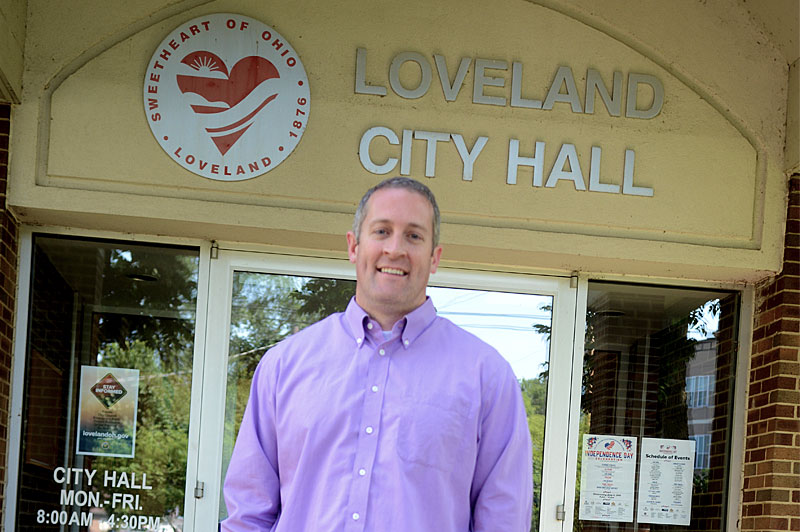
Andy Bateman
Bateman told Loveland Magazine last week that he had submitted sufficient signatures to the Hamilton County Board of Elections (BOE) and that the signatures have been validated. He ran a distant 5th is his first try to be on City Council in the 2017 election.
All three are guaranteed victory if no one else files to run.
Current Councilwoman Angie Settell’s term ends this December.
Blair is 2-year incumbent
Blair is running for the seat he was appointed to when former Mayor Mark Fitzgerald quit office on August 14, 2017 after petitions were circulated putting his recall and his council seat on the ballot. The petition recall effort could have resulted in a head-to-head race, Fitzgerald vs. Neal Oury who circulated the petitions.
Up until August 18, of 2017, Blair was one of nine candidates on the ballot for four City Council seats. Blair removed his name from consideration so he would not take votes away from Rob Weisgerber, Ted Phelps, Neal Oury, or Tim Butler. It was a pre-arranged deal, under a possible scenario if Fitzgerald’s seat was not going to be on the ballot. After a ruling by the City Attorney, Mayor Bailey was allowed to appoint Blair to the seat that was still open in January of 2018.
Weisgerber, Phelps, Oury, and Butler were elected in 2017.
Word on the street is that former Councilwoman Pam Gross has picked up petitions from the BOE, however, that would not necessarily mean that Gross is running. She may or not circulate petitions, or she may have picked up the petitions for someone else who is interested in being on Council. Gross also ran in 2017 to keep her seat however was roundly defeated for re-election, finishing behind Bateman.
Loveland School Board race
No one has yet filed petitions to be a member of the Loveland Board of Education. There are 2 open seats for 4-year terms. Current Board Vice-President Kathy Lorenz is, however, gathering signatures. Word on the street is that current Board President Art Jarvis is also collecting signatures.
The deadline for candidates to file nominating petitions to the BOE, either in the City Council Race or for a School Board seat is Aug 7.
Loveland City Council will ask voters to approve a revised Charter on November 5 and the Loveland Board of Education is expected to place a Bond Issue on the ballot.
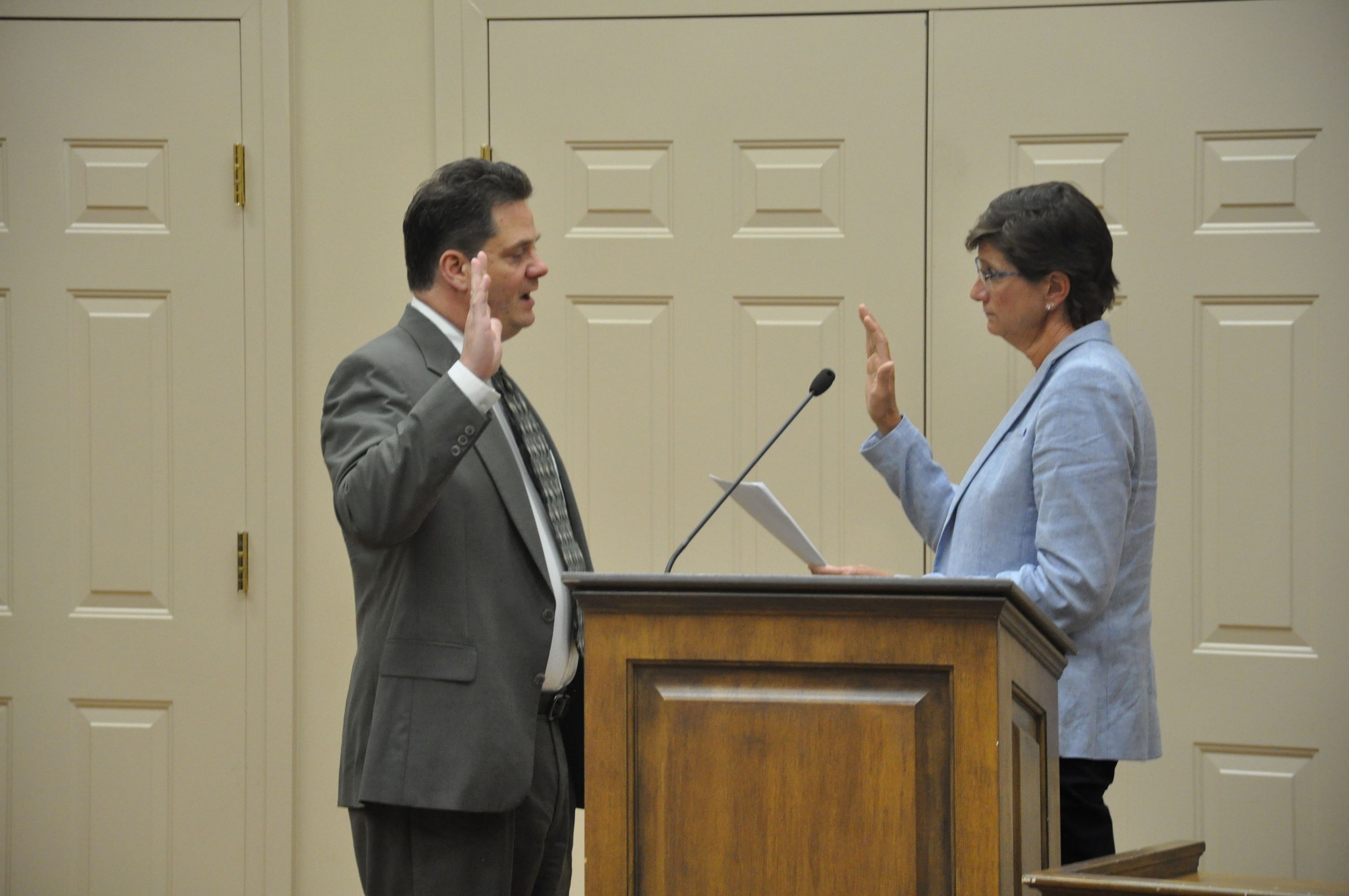
Loveland, Ohio – Alex Burnett was sworn into office on Tuesday, June 11 at City Hall during the council meeting. Chief Sean Rahe introduced Burnett and Mayor Kathy Bailey administered the oath.
Brunett’s bio provided by the City:
Chief Rahe introduced Officer Burnett by stating that he immigrated to the United States from Russia in 2001. Officer Burnett joined the United States Marines thereafter and was deployed to Iraq in 2004. After a seven-month deployment he was assigned to a reconnaissance training where he was deployed to Iraq a second time with a scout team. After four years of service, Alex was honorably discharged from the Marine Corps. Alex put himself through the police academy and was hired by the Ohio State Highway Patrol where he served for the past seven years.
What is ?
Did you know that you can watch this movie on the Loveland Magazine Youtube Channel in high definition on your television in your living room? It’s where we have published all of our videos since 2014!
Most TV’s have the YouTube app built-in. Go to the app and search for Loveland Magazine TV. Bookmark us so you can easily return to see new videos! Thanks for watching!
Loveland, Ohio – On February 26, City Engineer, Cindy Klopfenstein, said that during the first nine months of 2018, the City experienced 33 reported vehicle crashes into the low clearance, train trestle on Karl Brown Way in Historic Downtown Loveland.* To reduce the number of wrecks and traffic congestion they cause, the City hired Choice One Engineering to complete a safety study of the area.
Based on the study, Klopfenstein reported on her evaluation of the findings. This LOVELAND MAGAZINE TV video is Klopfenstein’s report to City Council.
* From the minutes of the Council meeting: “City Engineer, Cindy Klopfenstein, noted that during the first nine months of 2018, the City experienced 33 reported crashes at the train trestle on Karl Brown Way.” We should have paid more attention to what the City Engineer actually said, rather than what the minutes reported she said. Klopfenstein says in the video, that the 33 crashes occurred from 2016 through the first 9 months of 2018, not just the first 9 months of 2018.
Loveland City Council will hold a special meeting on Wednesday, October 17, 2018, at 7:00 p.m. at City Hall, located at 120 W. Loveland Avenue.The purpose of the meeting is to consider the following legislation:
Ordinance authorizing the City’s participation in financing special energy improvement projects in cooperation with the Suburban Communities Energy Special Improvement District; authorizing the execution of documents to effectuate such financing; and declaring an emergency
Ordinance determining to proceed with the acquisition, construction, and improvement of certain public improvements in the City of Loveland, Ohio in cooperation with the Suburban Communities Energy Special Improvement District and declaring an emergency
Ordinance levying Special Assessments for the purpose of acquiring, constructing and improving certain public improvements in the City of Loveland, Ohio in cooperation with the Suburban Communities Energy Special Improvements District, and declaring an emergency
An executive session pursuant to Ohio Revised Code 121.22 (G)(1) to discuss the terms and conditions of employment, hiring, or discipline of a public employee.
And any other business as may properly come before the municipal body at the meeting may be considered and acted on.
Loveland, Ohio – Peter Rancatore, Jr. resigned as Loveland’s Finance Director after 68 days on the job.
Rancatore’s first day on the job was June 8, 2018, and he submitted a letter of resignation on August 14 saying his last day on the job would be September 3. Council voted to accept his resignation and a separation agreement at their regular meeting on August 14.
Rancatore said, in part, in the letter to Mayor Kathy Bailey:
Thank you for the opportunity to serve the City Of Loveland. Loveland is an outstanding community with friendly people, excellent leadership, and a great workforce. I have enjoyed my service here immensely and will forever remember the people and their pride in the community. Unfortunately, I have decided to end my employment here to pursue opportunities closer to my family, effective as of the end of the close of business on September 3rd, 2018.
Rancatore formerly served as the Finance Commissioner for the City of Toledo in addition to serving as the Chief Deputy Auditor of Lucas County, Ohio.
Peter Rancatore Jr. took his oath of office, administered by Mayor Kathy Bailey, on June 12, 2018. – Photo by City of Loveland.
Rancatore was hired after previous Finance Director, Kelly Flanigan took the job of Finance Director at Miami Township, Clermont County this past February.
I have been fortunate to receive an opportunity to be part of the great Loveland City team as the new Assistant City Manager. My wife, Shuree, and I are from Layton, Utah. We have three children: Joshua, 14, Marissa, 9, and Tyson, 5. We enjoy the outdoors, motorcycles, and sports of all kinds.
I enjoy being active in the community where I have coached soccer, basketball, and served as a Scout Leader for the Boy Scouts of America.
Although we are from Utah, the majority of my family resides in Pennsylvania, Virginia, with a sister-in-law in Mason, Ohio. Consequently, I am a Penn State Nittany Lion, University of Virginia Cavalier, and of course a Utah Ute. As part of my formal education I received a Bachelor’s Degree in Criminal Justice from Utah Valley University and a Graduate Degree in Public Administration from the University of Utah. I have 12 years experience in the field of public administration, including my previous capacity where I served as the City Manager.
My background is in public policy, land use, utility billing, capital asset management, planning and zoning, budget and finance, and human resource administration.
I have been an active participant in the Utah League of Cities and Towns organization (similar to the Ohio Municipal League), serving as a member of the Legislative Policy Committee and the Land Use Task Force Committee for three legislative sessions. While on those committees I worked with local officials, lobbyists, and legislators to combat against the scrutiny and continued efforts of federal, state, and third-party organizations in restricting the local government control of municipalities.
As part of my professional development, I am a member of the International City Managers Association where I am working towards receiving my Credentialed Manager accreditation. My ambitions also include becoming a certified planner through the American Planners Association.
I am very fortunate to be a part of the City’s team. This is an exciting time for the City as it continues to experience growth and redevelopment. I am grateful to be brought on as a part of this wonderful team that the City Council and City Manager Mr. Kennedy have created. I am both eager and anxious to get started and to develop my relationship with you as well as the wonderful members of this community.
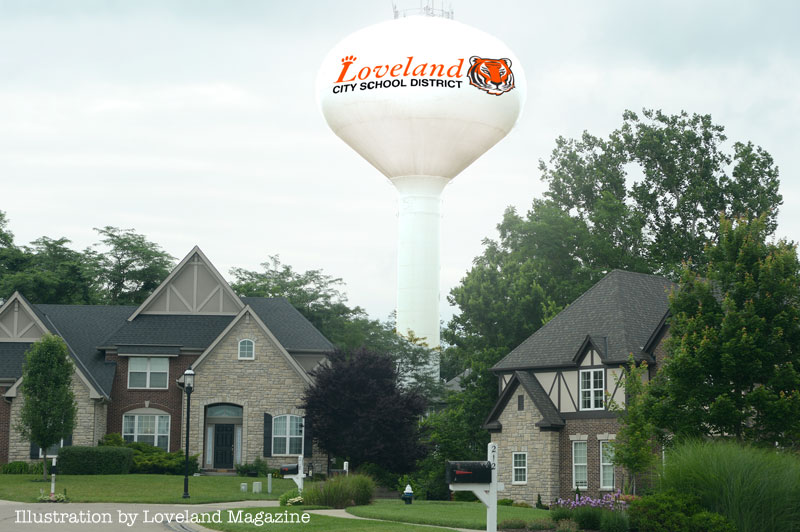
Loveland, Ohio – The Loveland Athletic Boosters, via President Jeff Williams has verbally agreed to fund $12,200.00 for the painting of the school logo on the elevated water storage tanks located in the Loveland Commerce Park and the White Pillars subdivision. The proposal is on the Tuesday, June 26 Council meeting agenda.
The City of Loveland logo
The tanks at the Commerce Park and White Pillars will soon undergo routine maintenance and an exterior overcoat. As part of the project, the new City logo may be painted on one side of each tank with the Loveland City School District logo on the opposite side.
RP Diamond is the exclusive retailer of LOVELAND HIGH SCHOOL SPIRIT WEAR Welcome to RP Diamond Printing & Embroidery located at 370 Loveland Madeira Road.
EDITOR’S NOTE: In reaction to this editorial, City Council voted on Tuesday, April 24 to have a public hearing on this proposal during the City Council meeting of May 9.
It’s past time City Hall start a dialogue with those most affected
by David Miller, Publisher
Come take a walk with me while I tell you a story
It’s just my opinion, but I believe City Hall should start talking to people about this before it gets so far along people will need 1.6 million dollars worth of arguments against it. Once City Hall gets the funding for what they will describe as “Free Money” it will be extremely hard to turn council members to “No” votes. Residents should be given a fighting chance.
As the equivalent of a one-lane asphalt road that will cozy within feet of the front doors of homes and businesses in the West Loveland Historic District and along Loveland Madeira Road, and City Hall moves closer to securing funding, property, and homeowners have yet been asked their opinion. Almost all do not yet know the proposal has already been partially funded by Hamilton County and the Ohio, Kentucky, Indiana Council of Governments has committed their resources to finding 80 percent of the $1,623,000 and growing price tag for construction.
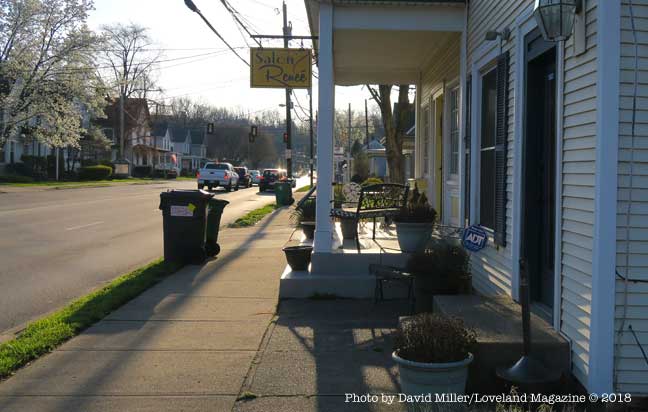
This is a view of the North side of West Loveland Avenue where construction of a 12′ wide swath of asphalt would require the removal of the front porch of this business. The entry to the basement of this business is through the porch floor.
Some front porches would have to be removed to accommodate the 12’ wide asphalt bicycle road. The road will be reduced to 10’ wide only where construction proves difficult.
As the City Hall proposal gets yet more expensive and closer to fruition there is still no initiative from the Council table to ask the thoughts and suggestions of citizens, home-owners, affected businesses, property owners, or pertinent City Commissions and Committees.
As the City Hall proposal gets yet more expensive and closer to fruition there is still no initiative from the Council table to ask the thoughts and suggestions of citizens, home-owners, affected businesses, property owners, or pertinent City Commissions and Committees.
One property and business owner along the proposed route wrote to City Hall. Paul Elliott said, “I am under the impression that such a proposal ‘has legs’, and city officials are even seeking funding sources. First, as a taxpaying resident and longtime business/property owner on West Loveland Avenue, I am disappointed that no city official has approached either the public in general nor us property owners who may be affected by such a bike corridor.”
The project, called the Loveland Connector Trail, will be approximately 1.4 miles long and will begin at the Deer Ridge II Apartments being built next to New Hope Baptist Church. It will continue along Loveland Madeira Road to Main Street, to the southern part of Wall Street, then to West Loveland Avenue, crossing over the Little Miami River at the Col. Paxton Bridge ending in Historic Downtown.
“I am disappointed that no city official has approached either the public in general nor us property owners who may be affected by such a bike corridor.” – Resident and affected business owner, Paul Elliott.
The goal and impetus for the project are to reduce congested parking in the Downtown Historic District by encouraging Loveland Bike Trail users to park somewhere along the new bike road and ride their bikes into Historic Downtown.
City Manager, Dave Kennedy announced in February that he was confident he will find 80% of the $1,623,000 cost from the Federal Government. He has since announced changes that will raise the price tag an undetermined amount.
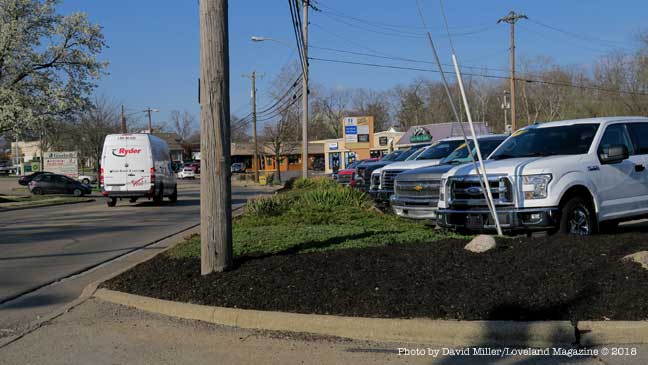
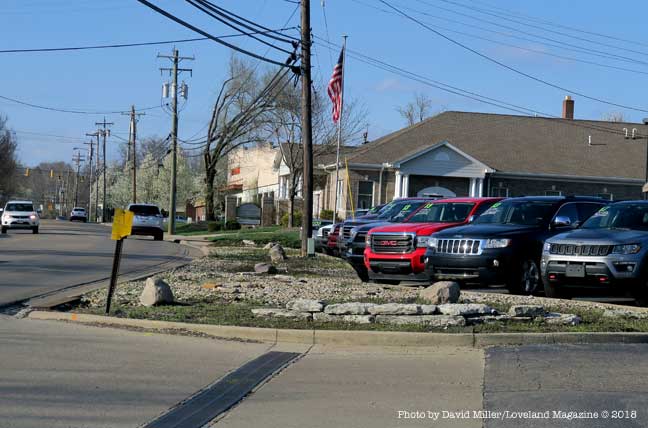
A view of an automobile dealership that has softened their business frontage. Something will have to give way for the proposed 12′ asphalt bike road.
The study does not contain any data on the potential number of users, nor potential customers to Loveland Madeira Road businesses. The study also does not address any repercussions on the residential neighborhood of Main Street or the Business/Residential neighborhood on West Loveland Avenue. For instance, it does not address future maintenance or whether property owners will be responsible for snow and ice removal on a path that replaces their current sidewalks. It’s right to ask when residents are left without sidewalks, “When will the bike road be cleared of snow? Who will do it, with what type of equipment, and when will it happen?”
A close look at what is described as a “Detailed Cost Estimate” appears to be grossly underestimated in terms of things that are absent consideration such as acquiring private property, relocating business signs, and replacing private parking,
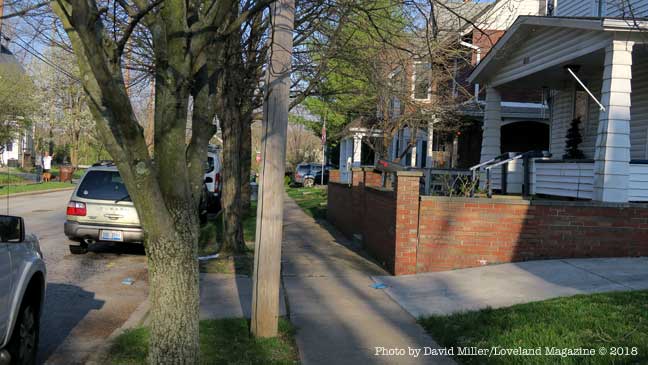
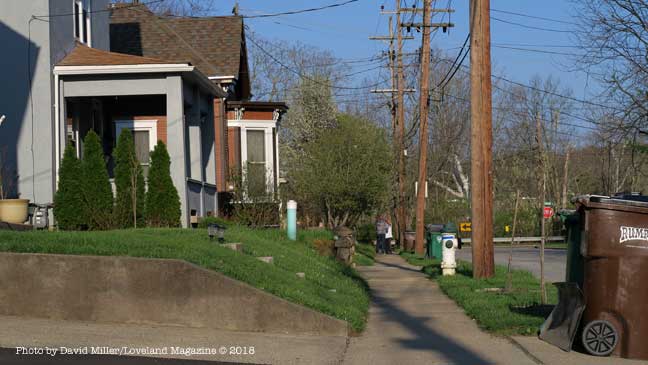
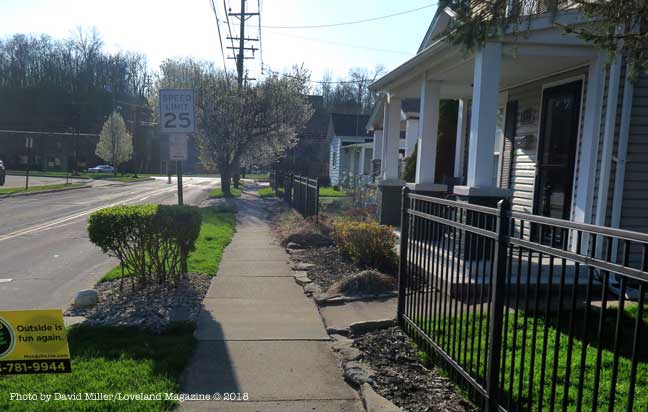
Light colored 4′ tree-shaded concrete sidewalks where children can walk without shoes, and people walk their dogs will be replaced with a 12’ barren swath of black, heat-absorbing asphalt the width of a one-lane road just feet from homes.
Light colored 4′ tree-shaded concrete sidewalks where children can walk without shoes, and people walk their dogs will be replaced with a 12’ barren swath of black, heat-absorbing asphalt the width of a one-lane road just feet from homes where owners will pay higher air-conditioning costs.
There has been no recommendation to forward the proposal to the Planning and Zoning Commission, Tree and Environment Committee, Beautification Committee, or Safety Service & Street Improvement Committee for review. No public hearings are scheduled. None have been suggested.
Phelps and City Manager Dave Kennedy have attended workshop/training on a Federal grant program along with a meeting with OKI officials to discuss the city’s project in more detail. While the updated cost estimate is being secured, the grant application is being reviewed and various needed documents are prepared. They plan to ask City Council in May to move forward seeking funding.
Phelps said that people who are using the bike trail are using too many of the downtown parking spots and using them for too long a period of time. “This is going to give them another place to get on the trail, better parking, easier on and off.” He believes the bike road will bring in new customers to Loveland Madeira Road businesses when they park nearby but head into Historic Downtown. The study does not contain any data on the potential number of users, nor potential customers to Loveland Madeira Road businesses. The study also does not address any potential negative repercussions on the residential neighborhood of Main Street or the Business/Residential neighborhood on West Loveland Avenue.
Some “Progressives” may love the idea, some may like it but believe it ill-considered given the impact on individuals who live or have invested in the impacted area. Some money conservatives may believe it an economic boon to both the Historic District and Loveland Madeira Road. Some money crunchers may ask, where is the cost-benefit analysis and just how many people will actually use it and spend money along Loveland Madeira Road. Some may ask if all costs factors have been included in the early estimate and if the price tag goes north after a grant is awarded – who will get stuck.
Elliott said his email to City Hall, that included the City Manager, Mayor and Council, the Planning and Zoning Commission, the Recreation Commission, and the Streets and Public Safety Committee was his attempt to open a dialogue between the decision makers, and those “of us” who will be financially and personally affected.
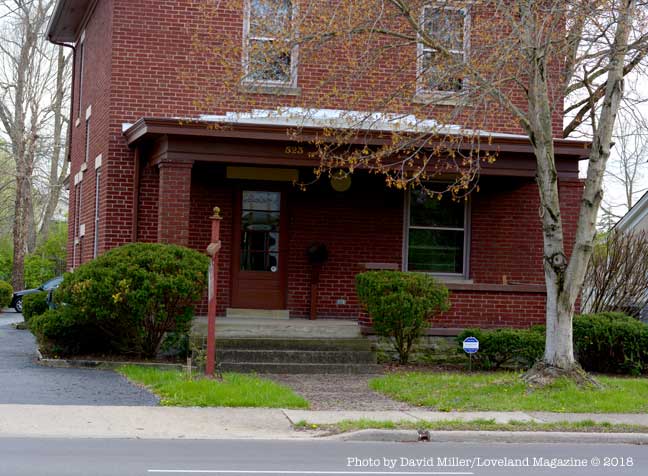
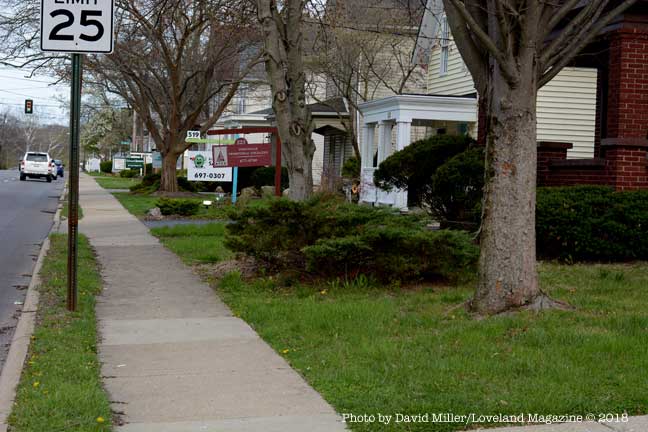
Resident and business owner Paul Elliott bought this business building on West Loveland Avenue in 1997. He has asked City Hall how the proposed connector path will affect the front yard of his property.This is a view of business and residential properties on the South side of West Loveland Avenue. Although the proposal isn’t clear, presumably this 4′ concrete sidewalk will be replaced by a 12′ wide swath of asphalt, equivalent to a one-lane road. These street trees will with be cut down or have their roots severely damaged by the excavation. It is not clear whether the grassy strip will remain.
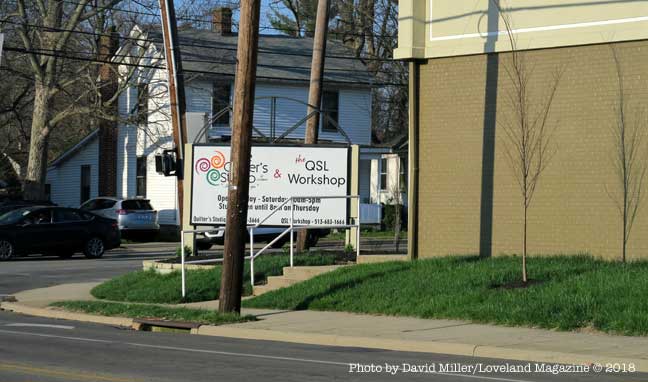
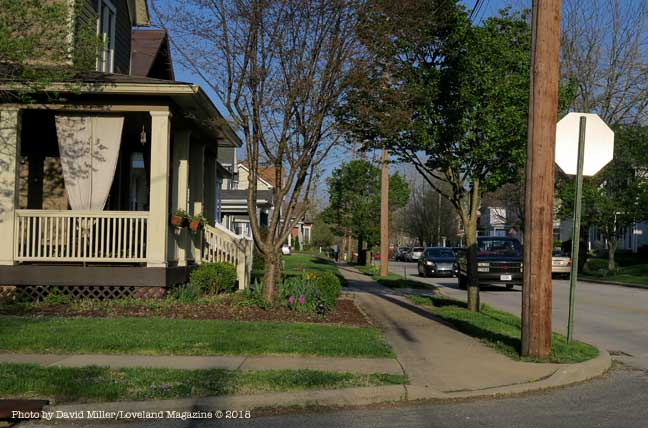
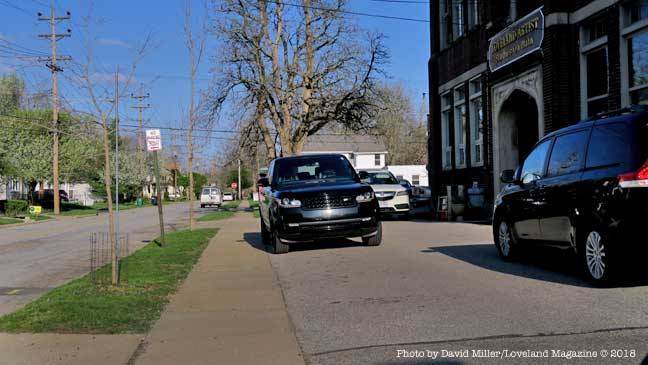
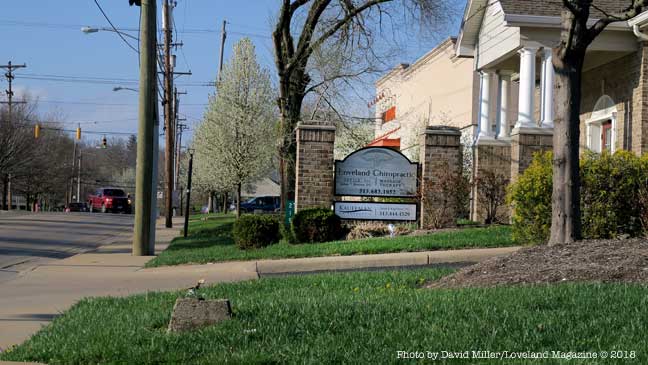
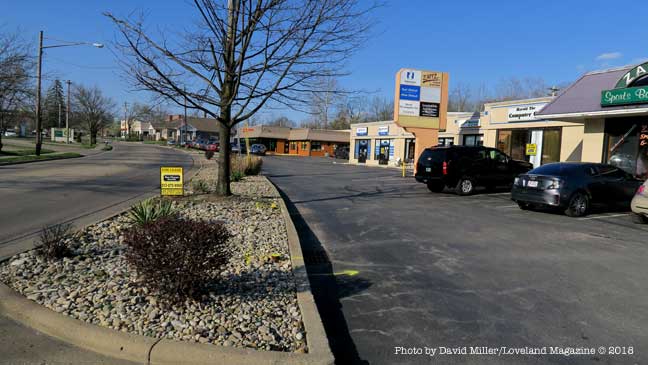
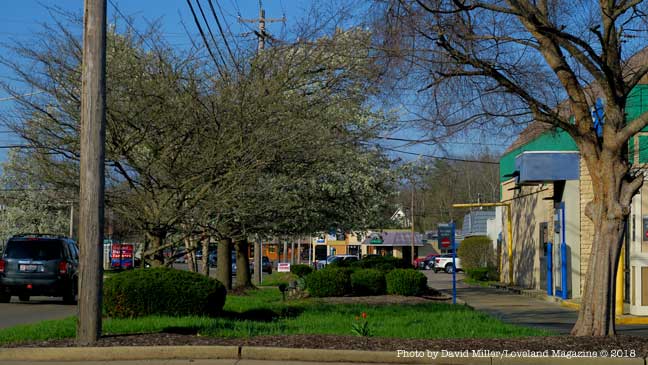
Another view of the beauty salon on the North side of West Loveland Avenue where construction of a 12′ wide swath of asphalt would require the removal of the front porch of this business. The entry to the basement of this business is through the porch floor.If the 12′ wide bike road wraps around this building this sign and landscaping will have to go. The sign may need to be replaced with two signs to satisfy the business owner, yet there is no apparent budget item for moving or replacing business signs in the proposal.Depending whether the 12′ bike road goes down this side of Main Street, these street trees may be removed. These utility poles if moved to the left would might result in fatal topping of the trees. If the poles remain in place it puts the asphalt even closer to the house. If the road goes on top of the tree roots the trees will shortly die. The owners will pay higher air-conditioning cost without their shade trees. If the trees die because of the location of the bike road, the home owner will then be required to pay to have the tree removed. Will the homeowner’s brick wall survive the project?This is another problem area on Main Street where homeowners will lose a good portion of their already small front yard.The 12′ bike road could cut across the front yard of this Main Street home taking out a tree and landscaping.Another front porch, this one on Main Street may stand in the way of the 12′ wide asphalt bike road or end up only inches away.If the 12′ wide asphalt bike road goes down this side of Main Street it will leave the Artists Studios on Main without street trees and much needed parking.The landscaping, street trees, utility polls, and sign at this business on Loveland Madeira Road appear to be in the path of the 12′ wide bike road.This landscaping area that softens the appearance of this automobile dealership on Loveland Madeira Road will be replaced with a 12″ asphalt bike road.This is more of the landscaping along Loveland Madeira Road that will be removed (or most of the parking lot) to make room for a 12′ asphalt bike road.
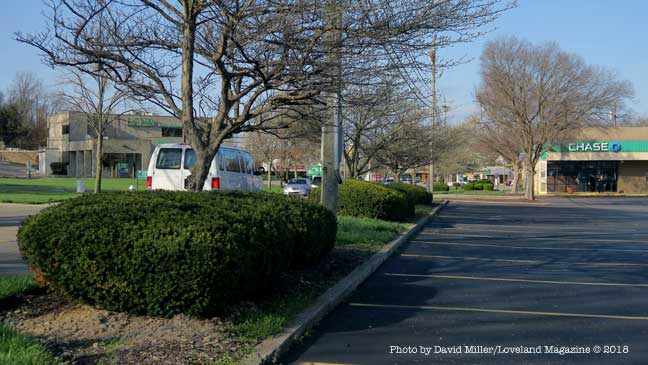
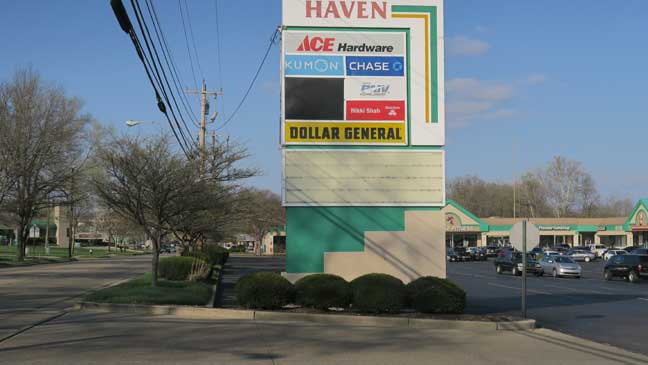
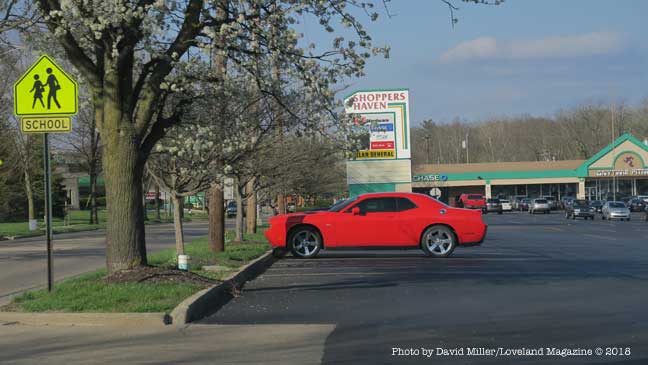
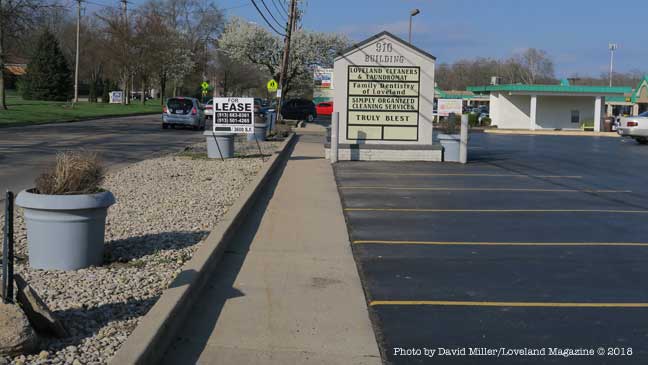
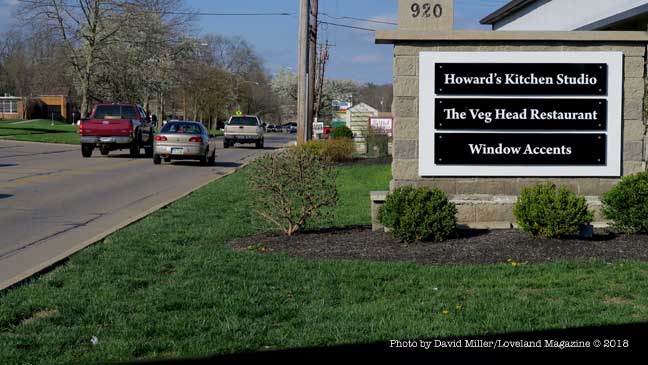
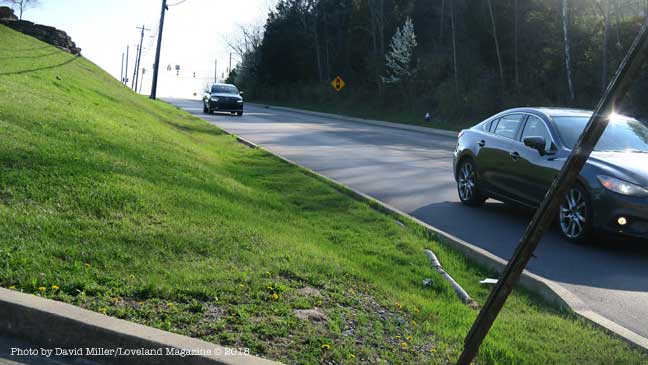
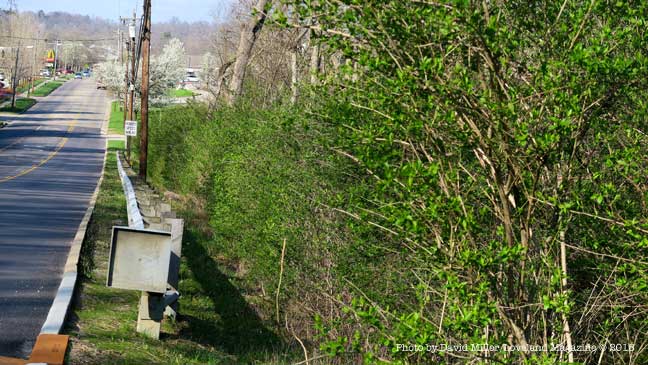
This is the only green space at the Chase Bank on Loveland Madeira Road. There will be a 12′ asphalt bike road running down the middle of it.If a proposed 12′ wide asphalt bike road goes past Shoppers Haven shopping center these street trees may be removed, utility lines moved, parking spaces removed, or all three. Private property may have to be acquired through “willing seller – willing buyer” agreements or “taking” by eminent domain and associated legal costs. In the end, these parking spaces used by local businesses and the schools may be eliminated for the prospect of freeing up parking spaces a mile away in Historic Downtown.There does not appear to be a budget item for moving this business sign out of the path of the proposed 12′ wide asphalt bike road, nor is there any discussion of whether the owner and the businesses would want their sign moved further away from the visibility of automobiles on Loveland Madeira Road.If a proposed 12′ wide asphalt bike road goes past Shoppers Haven shopping center these street trees may be removed, utility lines moved, parking spaces removed, or all three. Private property may have to be acquired through “willing seller – willing buyer” agreements or “taking” by eminent domain and associated legal costs. In the end, these parking spaces used by local businesses and the schools may be eliminated for the prospect of freeing up parking spaces one mile away in Historic Downtown.Will the landscaping and street buffer, the business sign and the parking at the 910 Building be sacrificed to free up an un-estimated number of parking spaces for the businesses one mile away in Historic Downtown?Another Loveland Madeira Road business sign in the way of a proposed 12′ asphalt bike road. Is this sign still going to have the same visibility if it is relocated? Is there enough room to just push it closer to the building or will it need to be re-engineered, and reconstructed smaller?This is the hillside in front of New Hope Baptist Church where City Hall wants to build a 12′ wide asphalt bike road. Its there money in the estimate of cost to build a retaining wall or will the hill just get steeper?This is Loveland Madeira Road looking North from New Hope Baptist Church toward Kroger. The guard rail protects motorists from a steep immediate drop into a very deep ravine. The 350′ long stretch quickly drops 50′ below the grade of the road. It is not clear if the budget estimate has taken into consideration the expense of building a 12′ wide bike road at the edge of this ravine.
The council seat of former mayor Mark Fitzgerald will remain vacant after newly elected members take office on Monday, December 4. They will appoint a new mayor who can then nominate someone for the remaining two-years of Fitzgerald’s term.
Eight people ran for election to the council on November 7 for four open seats and Andy Bateman received the 5th most number of votes. Have the voters spoken? Should Bateman get a seat on City Council?








![[Video] Alex Burnett takes Loveland Police Department oath](https://lovelandmagazine.com/wp-content/uploads/2019/06/maxresdefault-13.jpg)








 EDITOR’S NOTE: This story has been up-dated with important follow-up information:

 by David Miller, Publisher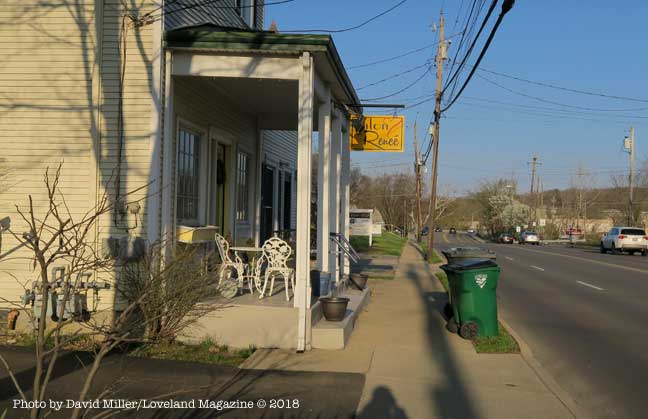
![[POLL] Should Andy Bateman be appointed to City Council?](https://lovelandmagazine.com/wp-content/uploads/2017/11/andy-batenam-appointment.jpg)