Tag: COVID-19 pandemic

  • The family court judge who threatened a mother with contempt of court for getting her child a COVID-19 test

    The family court judge who threatened a mother with contempt of court for getting her child a COVID-19 test

    By Marshall Allen and Rachel Dissell | December 18, 2020

    OHIO JUVENILE COURT JUDGE TIMOTHY GRENDELL THOUGHT CORONAVIRUS PRECAUTIONS WERE OVERBLOWN, AND MADE SURE PEOPLE KNEW IT. IN ONE CASE HE FORBADE A MOTHER FROM GETTING HER CHILDREN TESTED FOR COVID-19. THEN, ONE OF THEM HAD TO GO TO THE EMERGENCY ROOM.

    Ohio juvenile court Judge Timothy Grendell has been outspoken about his belief that the COVID-19 pandemic is overblown. 

    At a protest rally in May, just steps away from where he presides over family court, Grendell proclaimed that public health restrictions to contain the pandemic were unconstitutional and “we should be allowed to get back to our lives.” The following month, he testified to state lawmakers in Columbus that health authorities and a “drumbeat” of media coverage had “created an atmosphere of fear” surrounding the virus.

    But Grendell hasn’t confined his views to the public square. A few weeks after he testified to lawmakers, he referred to the pandemic as a “panic-ademic” in the midst of a custody proceeding in his courtroom in Geauga County, outside Cleveland. And he has claimed that 15 mothers in his court have used the virus as an excuse in custody cases to “mess with” their exes’ parenting time.

    Then, on Oct. 2, Grendell made an order that legal experts call unheard of, and medical experts say could cause harm. The judge banned two parents, who were wrangling over custody of their young boys, from having the “children undergo COVID-19 testing” without his approval, according to the court record.

    A doctor subsequently ordered a coronavirus test for one of the boys before admitting him to a children’s hospital for severe breathing problems. When Grendell found out, he threatened to find the mother in contempt of court, a move that could lead to her being thrown in jail. 

    Legally, judges have wide discretion to resolve disputes between parents. Some courts have issued standing orders that general concerns about COVID-19 should not disrupt established parenting schedules. But medical experts told ProPublica that a COVID-19 test is often essential for health care providers to protect themselves and to decide on the best course of treatment for a patient.

    “We are unable to provide the right kind of care without it,” said Dr. Robert Wachter, chair of the department of medicine at the University of California, San Francisco. “It’s basically blindfolding us or asking us to take care of someone with an arm tied behind our back.”

    Judges around the country have received media attention for their rulings related to the pandemic. ProPublica reported in July that a Michigan judge sent a 15-year-old girl to juvenile detention, ruling she violated her probation by failing to complete her homework while remote learning. The Michigan Court of Appeals ordered her immediate release later that month.

    In April, a judge in South Florida temporarily took custody away from a doctor because she treated patients with COVID-19, the Miami Herald reported. In Iowa, a judge sentenced a mother to 10 days in jail for refusing to follow a child visitation ruling due to COVID-19 concerns, according to the Sioux City Journal. And another judge in South Florida required a mom to wear a mask if she wanted to see her child, wrote the South Florida Sun Sentinel

    The conflict between public health precautions and individual freedoms has been extreme in Ohio, which was among the first states to issue sweeping health orders to prevent the spread of the coronavirus. Rising discontent with the orders this spring led angry citizens to march on the Ohio Statehouse, chanting “Open Ohio” and breaking several windows. Protesters showed up at the suburban Columbus home of Amy Acton, then the director of the Ohio Department of Health. Some carried rifles. One woman carried a sign with an anti-Semitic message aimed at Acton, who is Jewish. Acton later resigned and some conservative lawmakers turned their attention to Gov. Mike DeWine, a Republican, with some demanding his impeachment and his arrest, to no avail. 

    Grendell’s wife, Diane, an Ohio state representative and former appellate judge, introduced legislation to terminate the state COVID-19 emergency public health orders.

    Infection numbers were low early on in Ohio, but since October the seven-day average of new daily COVID-19 cases has spiked tenfold, to about 10,000 on Dec. 13. Daily deaths and hospitalizations also have jumped to record highs. 

    Timothy Grendell, a Republican former legislator who has been on the bench for more than a decade, has long been a polarizing figure in Ohio political and legal circles. That reputation extends to his courtroom. ProPublica has spoken to mothers and grandmothers in four additional cases who said Grendell has been unfair to them. Some said they have filed complaints against him. Investigations are confidential until concluded; Grendell has not been disciplined by the Office of Disciplinary Counsel of the Supreme Court of Ohio.

    In May, Grendell sent Stacy Hartman’s two teenage sons to juvenile detention after they refused a court-ordered visit with their father. The judge also threatened to hold Hartman in contempt of court and jail her if she didn’t take them to the visit, according to a court transcript. Hartman told ProPublica that she begged that her two boys not be locked up during a pandemic. After the local ABC television affiliate reported on the story, Hartman said mothers and some grandmothers started to call her with stories about their cases in Grendell’s courtroom. Each of the cases was different. But Hartman was struck by one similarity: “Everybody is scared about what he is going to do.”

    The judge also has been embroiled in public spats, sometimes with other elected or political officials. In one high-profile example, in 2014, he threatened to hold the chairwoman of the Geauga County Republican Party in contempt of court after he learned she had privately characterized him as a “narcissist and mentally ill.” The matter was dropped.

    Several family law attorneys told ProPublica that they refuse to take cases in Grendell’s court because they do not believe he treats parties in cases fairly. They asked to speak on the condition of anonymity because they did not want to risk the judge filing a complaint against their licenses. 

    Grendell declined ProPublica’s request to be interviewed for this story. In his most recent judgment entry, on Dec. 9, he said the mother at the center of the COVID-19 testing case had failed to return the children on several occasions, “using COVID-19 or her concerns about the children and COVID-19 as the reason for not complying with the Court’s orders.”

    Through his court administrator, Grendell said that he was prohibited from commenting on pending cases, or about broader accusations related to his conduct. He said his decisions are “always in the best interest of the children” and “based on sound law and the actual facts in the case.” Grendell reiterated that he has seen situations where one parent repeatedly misuses COVID-19 testing and quarantining to prevent the other parent from spending court-ordered time with children. 

    “The court is fully cognizant of the seriousness of COVID and understands the need for all members of the public to be careful and to engage in the necessary and recommended safeguards,” Grendell said.

    Amplifying a Dispute

    The pandemic had exacerbated an already tense parenting arrangement between Richard Sherrick and Kimberly Page, who were never married but have two boys who are 6 and 4. The two have lobbed accusations and counteraccusations against each other. Page felt ongoing anxiety about her health and the health of the boys. Medical records she provided to ProPublica document the boys’ chronic conditions, including asthma, autism and other ailments. The boys’ Cleveland Clinic pediatrician had deemed them high risk if they became exposed to the coronavirus. 

    On four occasions since April, Page said, the boys were quarantined or they had to be taken to the doctor or hospital for treatment, which delayed their return to Sherrick. The delays were typically brief, she said. She said that she communicated with her ex each time, and that there have been times in the past when he had delayed returning them to her. 

    Sherrick and his attorney, Robert Zulandt, did not return multiple requests from ProPublica to comment. In court, Sherrick has accused Page of using visits to doctors and hospitals as an excuse to keep the boys longer than her allotted parenting time. He also has alleged that his ex is obsessive to the point that it creates fear and anxiety for the children and that she has had the children overtreated and tested for COVID-19 and other illnesses. She has disputed those characterizations.

    After Grendell issued his ruling prohibiting a COVID-19 test without his permission, Page contacted Geauga County Health Commissioner Tom Quade to talk about it. Quade told ProPublica that he reached out to his agency’s lawyer but ultimately decided not to get involved because the order didn’t apply to his agency, which does not provide COVID testing. 

    Quade said he did not have all the details about the judge’s order, but it seemed consistent with Grendell’s “this is a big nothingburger” feeling about COVID-19. In their mostly rural county of about 90,000 people, the judge and his wife have repeatedly made public comments that minimize the health threat of the pandemic, he said.
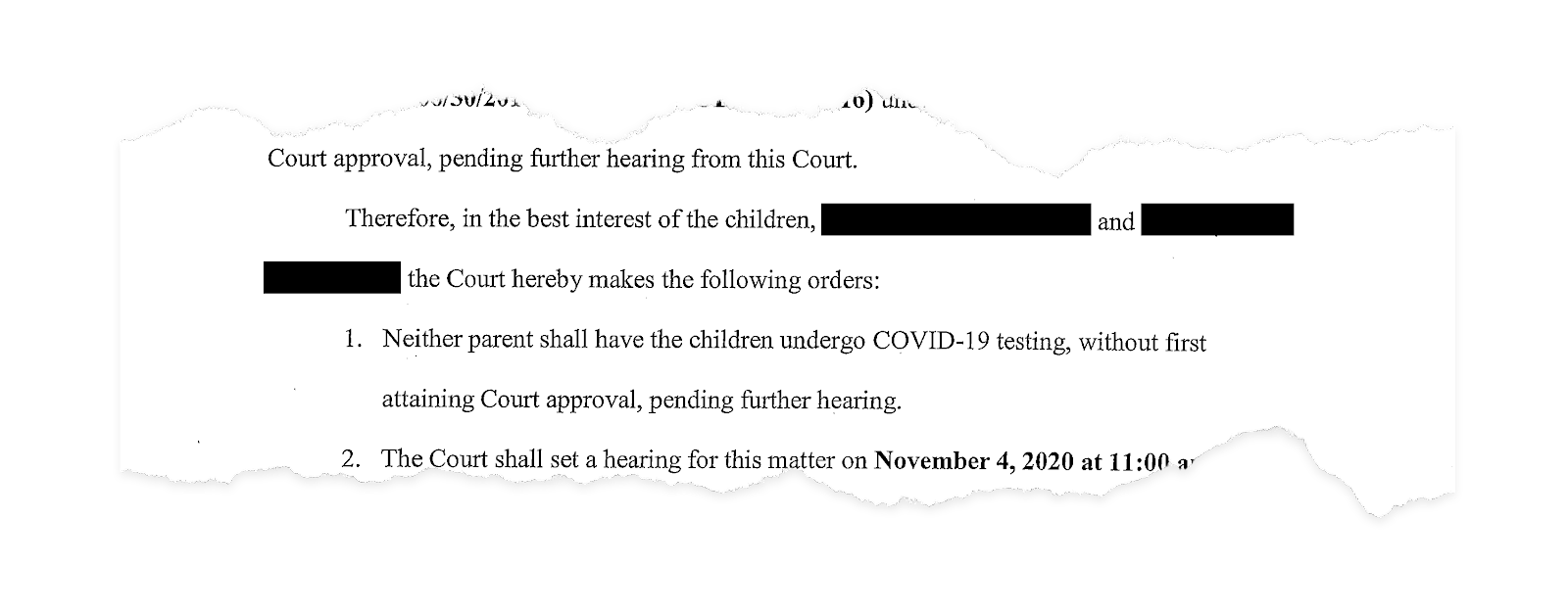
    The judge’s order banning the two parents from having their sons tested for COVID-19 without court approval.

    Family court judges like Grendell have wide discretion to make decisions in the best interests of children in the middle of custody or abuse cases, experts say. 

    There are times a judge could issue orders that either require medical treatment or forbid it, like if a child had terminal cancer and the parents disagreed about treatment, said Sharona Hoffman, co-director of the Law-Medicine Center at Case Western Reserve University. But those types of decisions are generally made after a judge hears evidence from both sides on the issues, Hoffman said. In this case, Grendell made the order on his own motion, without a specific request from either parent to ban the test.

    “There is no downside to getting a COVID test,” Hoffman said.

    The danger of the judge’s order, if followed, is that it might lead to one of the boys not getting medical treatment he needs, said Michelle Mello, a health law and policy professor at Stanford University. What’s striking from a medical-legal perspective, Mello said, is that the child’s test was given during a hospital visit. “It’s standard of care,” Mello said. “Nobody gets into a hospital and around other patients without a COVID test. There’s a public health reason.”

    Page said her attorneys warned her against taking her child to the hospital on Nov. 2 for fear of violating the judge’s order. But her son’s breathing was so labored that she and her new husband, a doctor, believed he had to go to Akron Children’s Hospital. The child was administered a COVID-19 test before being admitted and treated during an overnight stay. The test was negative. 

    The hospital declined to comment about the case, but said in a statement that it performs COVID-19 tests when they are deemed medically necessary and on patients who are admitted with respiratory symptoms. 

    Saying Page had failed to return the children on time, Sherrick filed an emergency motion with the judge for custody of the children. The next day, Grendell suspended Page’s custody and sent his constable to the hospital to retrieve the child and hand him off to his father. The child’s younger brother was picked up from the home of Sherrick’s mother.

    About a week later, Grendell ordered Page to appear before him “to show cause why you should not be held in Contempt of Court for failing to abide by parenting time … and for failing to abide by the order prohibiting COVID-19 testing, unless approved by the Court first.”

    On Nov. 20, Grendell issued a new interim order that the children could be tested if they had symptoms and if their pediatrician recommended it. That same day the court ordered supervised visitation. Page has disagreed about the parameters suggested for visitation, so she still has not seen her children. 

    Page’s attorney said she could still be held in contempt of court, for violating the original order not to have the children tested for COVID-19.  Hearings in the case have been delayed until January. 

    “Panic-ademic”

    Grendell’s no-testing order wasn’t the first time COVID-19 had been a point of contention in the case.  

    Page accused Sherrick of failing to provide adequate medical care for the boys, and her parenting time included multiple visits to doctors and emergency rooms. Page’s medical records show they have undergone five tests for COVID-19 between them.

    In a June 29 hearing, Grendell dismissed the virus as a relevant factor: “There is zero evidence that COVID is a danger to 6-year-olds — zip,” Grendell said, according to the court reporter’s transcript of the hearing. 

    Page had a fever the day before the hearing, a possible symptom of COVID-19, so she sat in her car. Grendell accused her and other mothers — at least 15 total, he said — of improperly using the virus as “a reason to mess with” the parenting time of fathers. “So this is like the cause du jour,” Grendell said. “Hey, you know, I want to mess with the ex or with the dads, since most of these people never married, and COVID-19 gives me an excuse to mess with his parenting schedule.” 

    Earlier in the pandemic, the COVID-19 “fear factor” made sense, Grendell continued. But now that it was “almost July 1st, it’s not doing much for me,” he said. 

    Before COVID-19, people brought home colds and diseases every day, he said, branding the pandemic a “panic-ademic.”
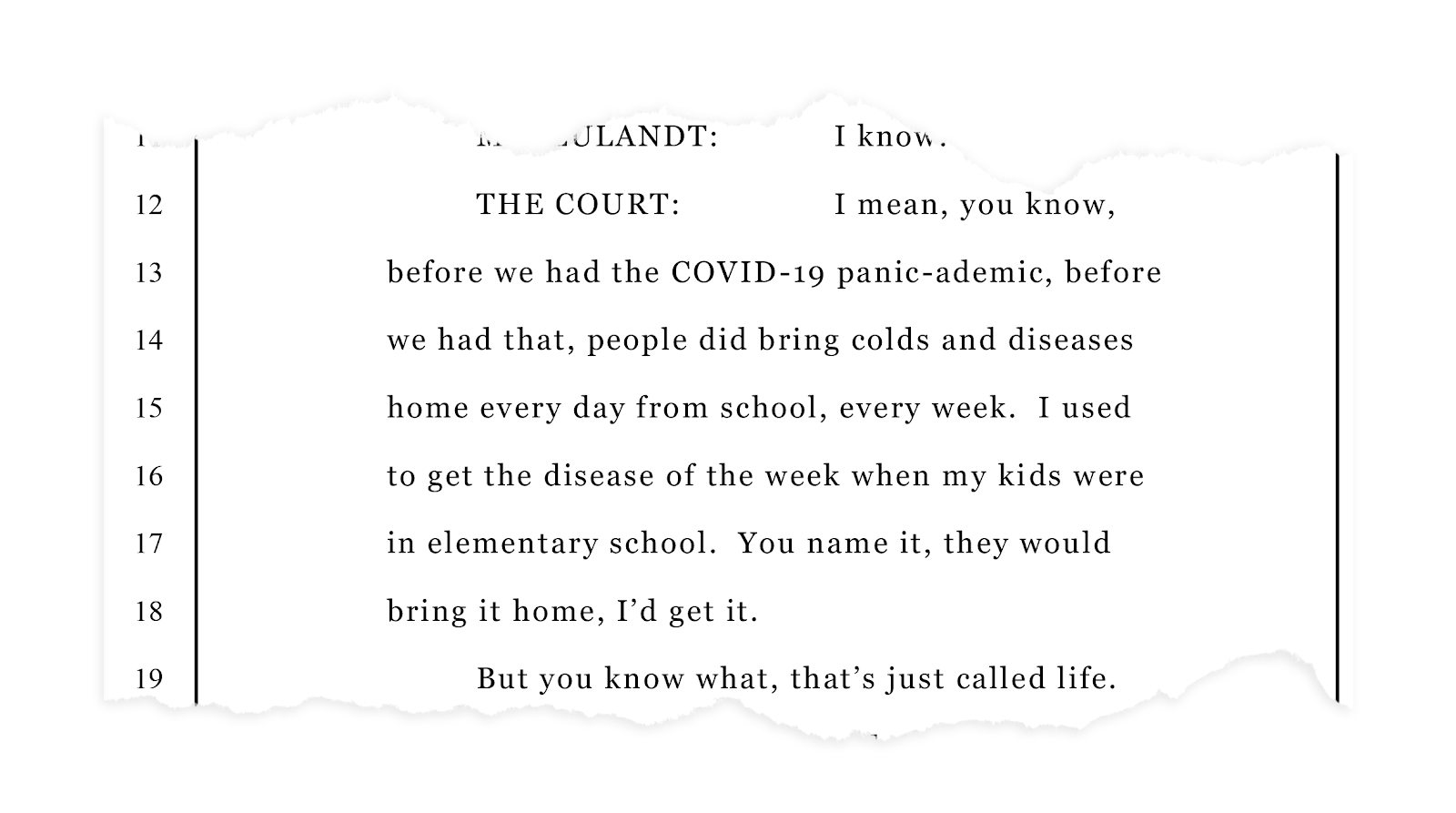
    The transcript from a June 29 hearing shows Grendell expressing views on the pandemic in court.

    Near the conclusion of the hearing, Grendell issued a threat: “I’m going to make this crystal clear,” he said. “The next person who doesn’t follow the orders is going to see a contempt citation coming their way.”

    Friction between Page and Sherrick continued. She thought it was too risky for her elder son to attend school in person. He wanted her to stop scheduling so many medical appointments for the children, which delayed their return to him. On Sept. 23, Page went to Sherrick’s home and picked up the child to take him to the hospital, according to a court filing, and was late returning him to Sherrick. Sherrick filed a handwritten motion the next day, claiming Page had a pattern of not returning the boys, and asking for custody. 

    Grendell then personally called Page’s cellphone, and left a voicemail, saying Sherrick said the child needed to be returned, and instructing her to call him. “I certainly would like an explanation, and I don’t believe COVID at this time period is a legitimate one,” he said on her voicemail, which was provided to her attorneys and ProPublica. It is highly unusual for a judge to call a litigant in a proceeding directly. Grendell did not return ProPublica’s request to comment about the voicemail. 

    Grendell’s order prohibiting testing for COVID-19 came about a week later. The evidence in the dispute still has not been heard in court.

    “He Knows He Makes the Rules”

    Page said she reached a breaking point after losing custody of her children and being accused of contempt of court. One set of attorneys warned her not to speak publicly about her case and withdrew from representing her after she ignored their advice. 

    As a mother, Page said she felt she had to speak out because attorneys have been reluctant to challenge Grendell and without that, she can’t see the case getting resolved fairly. “This judge needs to be held accountable to somebody other than our family,” Page said. 

    Page’s new attorney, Lee Potts, said when he took over the case he understood it was complicated. But the blanket order prohibiting COVID-19 testing seemed to “come out of nowhere.”

    Since Grendell himself made the motion, it made Potts wonder: “Who is telling you this stuff? How are you getting this information?”

    Though Sherrick did not respond to requests for comment, his mother, Bonnie Sherrick, lamented the effect the case is having on her grandchildren. She said that her son, as well as Page and Grendell, have all contributed to the problems, but that there’s no reason Page should be penalized for properly managing the medical conditions of the children. “She has been a good mother,” Sherrick said of Page. 

    Nobody seems to be able to stop Grendell, Bonnie Sherrick said of the judge. “He knows he makes the rules.”

    Have you had issues related to COVID-19 affecting your court case? Please share your story with ProPublica by emailing tips@propublica.org. Here’s how to send tips and documents to ProPublica securely.

  • A Loveland Private Donor pays it Forward!

    A Loveland Private Donor pays it Forward!

    by Cassie Mattia

    Loveland, Ohio – The Holiday season is here which means giving back is at its peak here in the Sweetheart of Ohio!

    Recently Editor in Chief David Miller spoke with Loveland’s City Manager David Kennedy and Lisa Craig, the City of Loveland’s Utility Billing Clerk, in which they informed Miller that an anonymous donor settled 28 past due water bills. The total donation was nearly $7,000! Although the donor wanted to remain anonymous, the donor himself asked if we would share this information in hopes that other “copycats might do something similar.” The donor said in an email, “The more people that can help, the better.”

    Kennedy said that in his 36 years of government employment he had never experienced anyone doing something so generous.

    Loveland City Manager Dave Kennedy

    Kennedy told Miller in a phone conversation that Craig worked with the private donor all week to help identify those community members that had been heavily impacted by the COVID-19 pandemic.

    “He’s overpaying each account by $100, so each of them are going into the new year with a credit of $100,” Kennedy explained to Miller, “He wanted to remain anonymous, but he thought if there was a way to get the word out, maybe other people would help. It ended up being 28 accounts that he picked to help these people out. The private donor worked hand and hand with Lisa Craig, herself a long-time Loveland resident, and our utility billing clerk to do this. She could not have been more impressed with what this person did.”

    Craig was also very much touched by this anonymous donor’s generosity.

    ‘He was looking for people impacted by the pandemic that were really trying to make the effort to set up payment plans with us,” Craig said, “When he first called he said that he had heard something on the news about someone doing this in another community. He and his wife were inspired to do something for people living in Loveland. They wished to remain anonymous, but was hoping that going public with the story without disclosing his name would inspire someone else to help out.”

    Inspired and want to do your own holiday good deed?!

    Craig told us that all anonymous donations sent to them would be applied to where they felt it would be needed the most! Craig also informed us that anyone who sent a check would remain anonymous.

    So where can you send your anonymous donation?

    “I hate to put out a number, but I know there are people really struggling to make it,” Craig said, “We really don’t want to shut anyone’s water off. Especially this time of year. Any time of year is hard. But this time of year, and with the struggles of twenty-twenty…need I say much more!”  

    Anyone wishing to be a copycat donor can reach out to Lisa Craig at 513-707-1451 or email Lisa Craig at lcraig@lovelandoh.gov. Lisa may be able to take your donation “on-line” with a credit card.

    You may also send a check to City Hall. Please address to “City of Loveland, 120 West Loveland Avenue, Loveland, Ohio, 45140.”

    If you would like to reach out to City Manager Dave Kennedy you can do so by phone at 513-707-1454 or email at dkennedy@lovelandoh.gov.

    City Hall office hours are Mon-Fri 8 A.M. to 4:30 P.M.

  • Huge Ohio Rivalry College Football Games Scheduled for Saturday are Canceled

    Huge Ohio Rivalry College Football Games Scheduled for Saturday are Canceled

    Cassie Mattia is the Associate Editor of Loveland Magazine and lives in Historic Downtown Loveland

    by Cassie Mattia

    Loveland, Ohio – Many college football fans across Ohio are devastated due to the announcement that was delivered by the American Athletic Conference and the Michigan Athletic Department on Tuesday that both the OSU vs. Michigan game and the Cincinnati vs. Tulsa game are officially canceled.

    Both rivalry games were scheduled for Saturday, December 12th, but because of the rise in positive COVID-19 cases in Cincinnati and in Michigan, it was advised by UC’s conference Medical Advisory Group and Michigan’s health experts that they cancel the games. The UC vs. Tulsa game will not be rescheduled but both teams are scheduled to play again on Saturday, December 19th in the AAC Championship Game.
     
    Both UC’s and Michigan’s Athletic Directors spoke about the spike in positive COVID-19 cases in their student-athletes and around campus.

    “Like so much of our country, the Bearcats football program has dealt with rising cases of COVID-19 over the last several weeks,” UC’s AD John Cunningham said in a press release, “Since returning from Orlando on Nov. 21, 2020, we had an increased number of positives among our student-athletes, coaches and staff. Thankfully, we have had very few symptomatic cases and those who did show symptoms appear to be doing well. This week, UC began a slow, measured return to activities, fully aware of the importance of monitoring our student-athletes who are returning after time away from practice. If we are selected to host the AAC Championship game on Dec. 19, we have requested a variance with the state of Ohio to allow a limited number of fans in the stadium. We look forward to continuing our season on Saturday, Dec. 19.”

    Michigan’s Athletic Director Ward Manuel said, “The number of positive tests has continued to trend in an upward direction over the last seven days. We have not been cleared to participate in practice at this time. Unfortunately, we will not be able to field a team due to COVID-19 positives and the associated quarantining required of close-contact individuals. This decision is disappointing for our team and coaches but their health and safety are paramount, and it will always come first in our decision-making.”

    The Wolverines will continue daily testing in hopes that they will be cleared to be apart of the Big Ten Champions Week, which will be held December 18th-19th.

    Due to the OSU vs. Michigan game cancellation, the Buckeyes are now facing their third game cancellation this season resulting in the team being ineligible for the Big Ten Champions Title. This particular rule was established before the season began.

    Thankfully for both UC and OSU fans, both teams are still ranked in the Associated Press Top 10. Below are the rankings as of December 9th.

    COLLEGE FOOTBALL RANKINGS: ASSOCIATED PRESS TOP 10 (12-9-2020)

    1. Alabama (9-0)

    2. Notre Dame (10-0)

    3. Clemson (9-1)

    4. Ohio State (5-0)

    5. Texas A&M (7-1)

    6. Florida (8-1)

    7. Iowa State (8-2)

    8. Cincinnati (8-0)

    9. Georgia (6-2)

    10. Miami (8-1)

    11. Oklahoma (7-2)

    12. Indiana (6-1)

    13. Coastal Carolina (10-0)

    14. Northwestern (5-1)

    15. USC (3-0)

    For more of your latest Ohio and Loveland sports updates stay tuned to the Sports 411 With Me, Cassie Mattia!

  • In Ohio, 32.7% of parents work in remote-friendly jobs

    In Ohio, 32.7% of parents work in remote-friendly jobs

    The COVID-19 pandemic has resulted in a major shift towards remote work. While working from home has its benefits for certain individuals, including no commute time, a better work-life balance, and increased productivity, it can be hard for parents—especially mothers—to work from home while juggling family responsibilities. Additionally, not all occupations are conducive to remote work. A recent study by University of Chicago researchers shows that 37 percent of jobs in the U.S. are able to be performed entirely at home, but this varies substantially across cities. When considering working parents, Census Bureau data combined with data from the aforementioned study show that about 34 percent hold remote-friendly jobs.

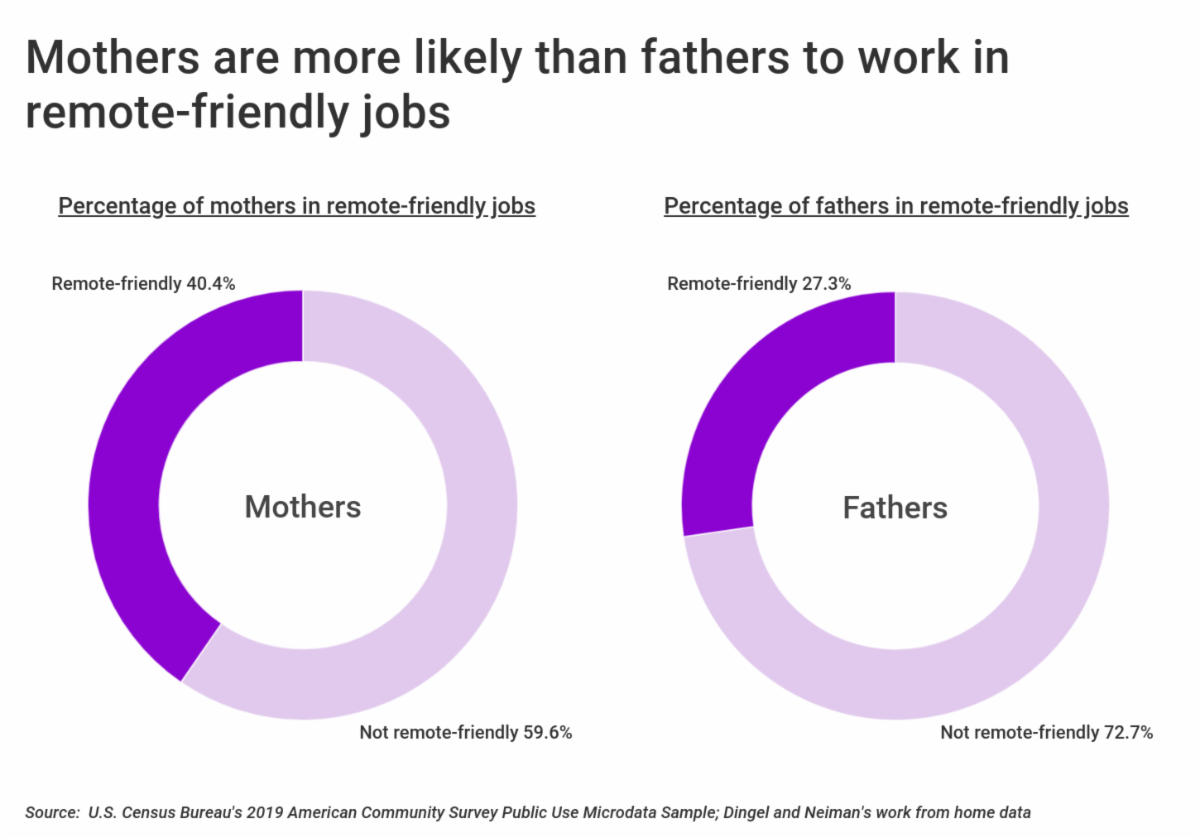
    According to occupational data from the U.S. Census Bureau, working mothers are more likely than working fathers to work in remote-friendly jobs. Over 40 percent of working mothers work in remote-friendly jobs compared to just 27 percent of working fathers. However, several studies show that working from home is harder for moms than it is for dads. As schools and day care centers closed during the pandemic, the gender gap in household chores and child care has widened. Research indicates that women working from home are more likely to take on a disproportionate share of housework and child care, while men are more likely to report an increase in productivity.

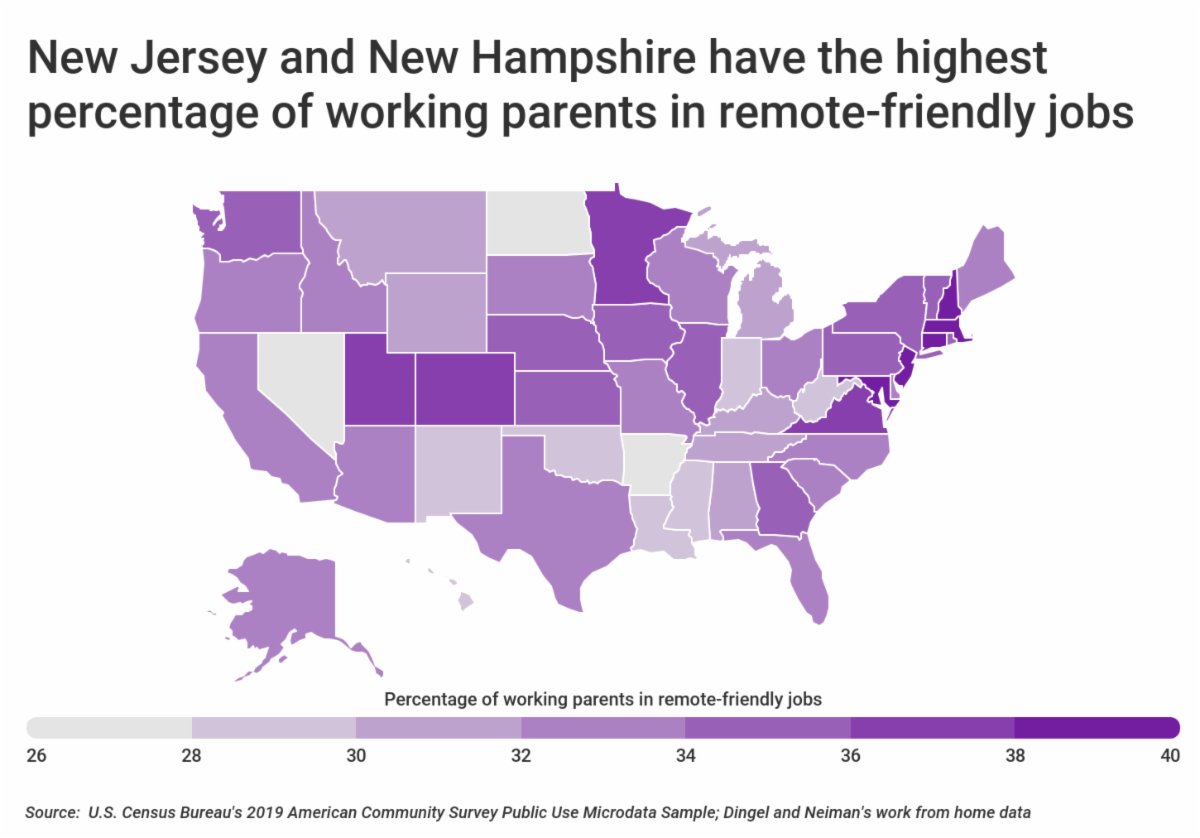
    Due to differences in local economies, there is significant variation in the share of jobs that can be performed at home across cities and states. For instance, places that rely heavily on agriculture, manufacturing, retail, and hospitality tend to have fewer jobs that can be performed at home, while areas with more business and professional jobs tend to have a large share of jobs that can be done remotely. At the state level, the Northeast tends to have more working parents in remote-friendly jobs with New Jersey and New Hampshire boasting the highest shares at 40.1 and 38.6 percent, respectively. At the opposite end of the spectrum, North Dakota and Nevada have the lowest shares of working parents in remote-friendly jobs, at 27.4 and 25.9 percent, respectively.

    To find the states with the most parents working from home, researchers at RetailMeNot analyzed the latest data from the U.S. Census Bureau as well as data from a University of Chicago study on remote-friendly occupations. The researchers ranked states according to the percentage of working parents in remote-friendly jobs. Researchers also calculated the percentage of working fathers and mothers in remote-friendly jobs and the percentage of fathers and mothers who work (either full-time or part-time).

    The analysis found that in Ohio, 32.7% of working parents have remote-friendly jobs. Here is a summary of the data for Ohio:

    • Percentage of working parents in remote-friendly jobs: 32.7%
    • Percentage of working fathers in remote-friendly jobs: 26.3%
    • Percentage of working mothers in remote-friendly jobs: 39.3%
    • Percentage of fathers who work: 91.5%
    • Percentage of mothers who work: 74.2%

    For reference, here are the statistics for the entire United States:

    • Percentage of working parents in remote-friendly jobs: 33.6%
    • Percentage of working fathers in remote-friendly jobs: 27.3%
    • Percentage of working mothers in remote-friendly jobs: 40.4%
    • Percentage of fathers who work: 92.1%
    • Percentage of mothers who work: 72.4%

    For more information, a detailed methodology, and complete results, you can find the original report on RetailMeNot’s website: https://www.retailmenot.com/blog/cities-with-most-parents-working-from-home.html

  • Ohio Education Association urges statewide suspension of in-person classes

    Ohio Education Association urges statewide suspension of in-person classes

    By Susan Tebben and the Ohio Capital Journal

    The state’s largest public schools union is asking that all public schools suspend in-person instruction until mid-January “in light of the alarming explosion in community spread of the coronavirus in recent weeks.”

    The Ohio Education Association said in a statement that they plan on calling “state leaders and school districts” to discuss a new plan they have related to the COVID-19 pandemic.

    As part of the plan, the OEA wants all districts to go back to remote learning until Jan. 11, including a 14-day quarantine after Christmas.

    As part of the plan, the OEA wants all districts to go back to remote learning until Jan. 11, including a 14-day quarantine after Christmas.

    “This reset period, whether schools delay instruction educate student in a fully remote model, is critical not only to ensure student and staff safety, but also to give schools time to refine their delivery model and make other necessary adjustments to execute their instructional plan so students can receive the best education possible in the face of all the challenges the pandemic presents,” said Scott DiMauro, president of the OEA, in the statement.

    Currently, student cases in schools have surpassed 20,000 in the state, according to data from the Ohio Department of Health. As of Monday, children accounted for 37,623 reported COVID-19 cases in the state, or 8% of all cases. A total of 434 children have been hospitalized with COVID-19 and three children have died, according to state data.

    Scott DiMauro, president of the OEA

    Franklin County reported the most cases in children, with 5,432, followed by Hamilton (3,256), Cuyahoga (3,210) and Montgomery (2,231).

    Franklin County reported the most cases in children followed by Hamilton County

    The OEA board of directors adopted the recommended steps on Dec. 3. Along with the pushing districts to go online, the OEA’s plan would require approval of their “instructional model and staff safety plan” from the local board of health before reopening.

    “Schools that are unable to obtain sign-off must be required to operate fully remote and shall not hold extracurricular activities,” according to the plan.

    The Ohio Department of Education said the decision to hold classes in person or remotely “remains a local decision.”

    The ODE recently released “considerations for schools and districts in purple counties” on the state’s Public Health Advisory System. The map showed a total of seven purple counties as of Monday.

    “Ohio’s education system must continue to be flexible and responsive to ensure the health and safety of all students, teachers and employees,” the department said in it’s directive for districts in purple counties.

    The other two steps in the OEA recommendations are for state and local governments rather than school districts.

    The plan calls on governmental bodies to “do whatever is necessary to slow the spread of this disease and diminish its impact on the delivery of instruction.”

    “OEA fully supports maintaining the authority of the Governor and Ohio Department of Health to implement and enforce efforts to contain community spread, including but not limited to expanding contact tracing and testing programs and strict enforcement mask orders, limits on large gatherings, and closure of non-essential businesses and services that are known to increase the risk of community spread of the virus,” the OEA board of directors stated.

    The union also pushed for the funding of a new federal coronavirus relief bill, something Gov. Mike DeWine also did at a Monday press conference.

    14 new positive cases of COVID-19 in Loveland schools

    Loveland Magazine –  Dec 7, 2020

  • OHSAA Releases Individual Winter Sport COVID-19 Recommendations and Modifications

    OHSAA Releases Individual Winter Sport COVID-19 Recommendations and Modifications

    by Cassie Mattia

    Cassie Mattia is the Associate Editor of Loveland Magazine and lives in Historic Downtown

    Columbus, Ohio – High school winter sports are a go in the state of Ohio! On November 20th the Ohio High School Athletic Association (OHSAA) sent out a memo to schools confirming that the up and coming winter sports season would begin as scheduled.

    The OHSAA memo read, “While individual school districts can pause sports at any time due to the COVID-19 pandemic, the OHSAA does not intend to alter the statewide season dates. The decision came after discussions with the Governor’s Office, the OHSAA Board of Directors, OHSAA staff, and many school administrators, along with the results of a recent survey of OHSAA member school administrators. Of 1,464 survey responses, 826 respondents (56 percent) voted to begin winter sports as previously scheduled.”

    According to the survey, 33 percent of Ohio’s school administrators wanted to post-pone winter sports until early January, while 11 percent voted to post-pone winter sports indefinitely until Ohio’s COVID-19 conditions got significantly better.

    The OHSAA made sure to mention the Governor’s Curfew Order in the memo as well stating, “the Governor’s 10:00 p.m. Ohio curfew order does not mean that teams and fans must be home from their competitions by 10:00 p.m., but venues must be vacated by 10:00 p.m. The OHSAA encourages schools and conferences to alter start times if needed so that competitions end in time to close the facility by 10:00 p.m.

    OHSAA has made it very clear since the beginning of the COVID-19 pandemic that their number one priority is the safety of the student-athletes, coaches, and fans. In order to continue interscholastic competition during the winter sports season OHSAA developed “sport-specific requirements, recommendations, and modifications.” Below are the links to each winter sports requirements, recommendations, and modifications provided by OHSAA.

    Basketball: http://bit.ly/BKRecs

    Bowling: http://bit.ly/BORecs

    Gymnastics:  http://bit.ly/GYMRecs

    Ice Hockey: http://bit.ly/IHRecs

    Swimming & Diving: http://bit.ly/SDRecs

    Wrestling: http://bit.ly/WRRecs

    Swimming & Diving: http://bit.ly/SDRecs

    Although Ohio’s High school winter sports seasons are allowed to continue as planned, for the time being, OHSAA was sure to include in the memo Friday mandates, spectator capacity, and recommended best practices per the Ohio Department of Health Director’s Sports Order (https://bit.ly/2RWa1jh). OHSAA’s memo read, “It is especially important that requirements for facial coverings, social distancing, and frequent hand washing be followed and that facility hosts disinfect and clean competition and high contact areas frequently. Also note that the Order has a limit on spectator capacity, which is the lesser of 15 percent of fixed, permanent seats or 300.

    If you would like to read the Health Department’s Responsible Restart Ohio Guidance Document for Sports click the following link: https://coronavirus.ohio.gov/static/responsible/Youth-Collegiate-Amateur-Club-Pro-Sports.pdf.

    If you would like to read the Health Department’s Responsible Restart Ohio Guidance Document for Sports Venues click the following link: https://coronavirus.ohio.gov/static/responsible/Sports-Venues.pdf

    For the latest OHSAA COVID-19 sports updates stay tuned to the Sports 411 with me, Cassie Mattia!

  • Join the new child abuse awareness campaign – Safe and Sound @ Home Cincinnati

    Join the new child abuse awareness campaign – Safe and Sound @ Home Cincinnati

    Hamilton County Job & Family Services has been working for several months with people from Cincinnati Children’s Hospital Medical Center and Cincinnati Public Schools on some new ways to bring attention to the stress a lot of families are feeling these days – and to some things everyone can do to help. The new campaign is called Safe and Sound @ Home Cincinnati.

    Please take a look at these new public service announcement videos – there’s a 30-second version and a 60-second one – and share them.

    During a press conference announcing the collaboration, Interim Director Tim McCartney had this to say: 

    “Child abuse is already under-reported in normal times. During the shutdown, Children’s Services saw a 40% drop in calls about abuse and neglect. While reporting has increased since then, calls are still down from normal levels. Given the stress, anxiety and hardships surrounding the pandemic, we want to offer a collaborative approach to families by letting them know that we are here for them.” 

    To read more about the announcement, below is the text of a press release sent out announcing the work:

    With the school year underway, parents are facing many challenges. It is natural for them to feel stress. Maintaining routines, having fun and using positive language can be helpful. For parents who start to feel anxious, taking a deep breath and talking to trusted family members or friends are great first steps. But if the situation becomes overwhelming, there are resources to help.

    To better protect vulnerable children and families during the COVID-19 pandemic, Cincinnati Children’s Hospital Medical Center, Hamilton County Job & Family Services and Cincinnati Public Schools are collaborating on a new campaign called Safe and Sound @ Home Cincinnati. The goal is to raise awareness about parenting support and resources available to those in the community who may be struggling.

    Support systems are available that can provide help with a variety of services, including food, medical assistance, childcare, housing, utilities, employment, cash and legal aid. However, experts have found some parents have difficulty asking for public benefits.

    “Many people find themselves asking for help for the first time ever, and it can feel confusing and uncomfortable,” said Carley Riley, MD, attending physician in the division of Critical Care Medicine at Cincinnati Children’s. “There is no right or wrong way to feel when navigating your way through public assistance. We want to stress there’s no shame in asking for help. Taking care of your family is courageous. It shows strength and resilience.”

    Resource guides on who to call for help have been available for the last several months at Cincinnati Public Schools food distribution sites. Public service announcements for Safe and Sound @ Home Cincinnati have also been released recently.

    “This collaboration further solidifies the investment we all have in the health and well-being of children,” said Carrie Bunger, PhD, Director of Positive School Culture & Safety at Cincinnati Public Schools. “By working together to support vulnerable families, we can increase the community safety net—especially for those at risk during these challenging times.”

    CCHMC also keeps a comprehensive list of resources available for parents and children.


    Local Help for Parents and Children

    To better protect vulnerable children and families during the COVID-19 pandemic, Cincinnati Children’s, Hamilton County Job & Family Services and Cincinnati Public Schools are collaborating on a campaign called Safe and Sound @ Home Cincinnati. The goal is to raise awareness about parenting support and resources available to those in the community who may be struggling.

    • Child abuse and domestic violence are under-reported in normal times. During these stressful times, children and their caregivers are at greater risk. 

    Steps to Take | Spanish

    • There are places in the Cincinnati area that provide help with food or medical assistance, child care, housing and utilities, cash and employment and legal aid.

    Look for Help | Spanish

    • It’s natural for parents to feel stress, anxiety and worry right now. 

    Get Parenting Tips | Spanish


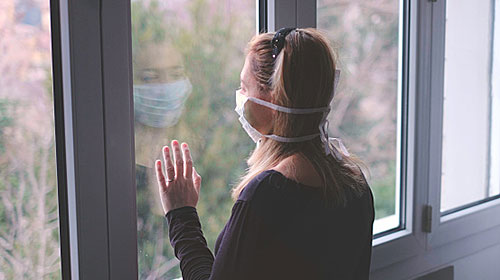
    Take care of your mental health during COVID-19 quarantine.

    Coping with COVID-19


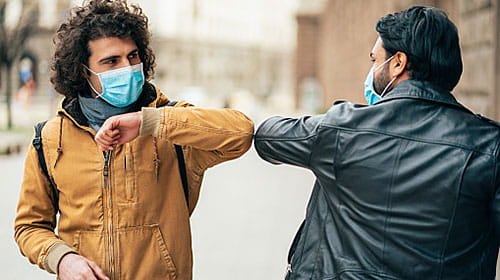
    Social distance greeting during COVID-19.

    Practicing Self-Care

    • Keeping Your Distance to Stay Safe: A guide from the American Psychological Association (APA) to engaging in physical distancing during the COVID-19 pandemic.
    • Coping with Stressful News: Seven crucial research findings that can help people deal with COVID-19, from the American Psychological Association, a translation of psychological science on coping with stressful news, and how that can help people to deal with COVID-19.
    • Sleep Hygiene: Tips and tricks for getting quality sleep from the Centre for Clinical Interventions.

    Practice self-nurturing during COVID-19.

    Taking Care of Your Mental Health: Coping with Anxiety & Depression


    Tips for parenting during COVID-19 to help family's mental health.

    Parenting during the Pandemic


    Where to call for a coronavirus emergency.

    Hotlines / Emergency

  • $25 million grant program for charitable organizations

    $25 million grant program for charitable organizations

    The state has announced a $25 million grant program to distribute federal CARES (Coronavirus Aid, Relief and Economic Security) Act monies to charitable organizations. Applications for the program, which will be administered through the Ohio Department of Job and Family Services, must be submitted prior to Nov. 27.  

    The discretionary grants will be distributed to 501(c)(3) organizations that serve low-income Ohioans and have been negatively impacted by the COVID-19 pandemic.

    In addition to the types of services provided by the applicant organizations, consideration will also be given to unemployment charges paid by the charity, as well as other criteria. Grantees will be notified of their approval or denial by Dec. 11 and will receive funds by Dec. 21.  

    For additional details and restrictions about the program, go to https://jfs.ohio.gov/nonprofitgrants/.  

    Would you like to receive important information like this more quickly? In addition to our Nonprofit Newsletter, charitable leaders can register to receive News and Updates which will generate email notices for timely information posted on the Charitable Section’s website. To receive these types of Alerts, go to https://Charitable.OhioAGO.gov/Announcements and subscribe at the bottom of the page.  

    Office of Ohio Attorney General Dave Yost
    CharitableRegistration@OhioAttorneyGeneral.gov | 800-282-0515

  • Trump swipe at DeWine follows year of campaign support, and COVID-19 praise

    Trump swipe at DeWine follows year of campaign support, and COVID-19 praise

    President Donald Trump meeting with governors, including Ohio Gov. Mike DeWine. Photo by Mark Wilson/Getty Images.


    By Tyler Buchanan

    A year of Gov. Mike DeWine defending the president’s pandemic response and supporting his reelection effort was undone by a brief acknowledgment of reality on cable TV.

    To President Donald Trump, one comment is all it takes for someone to go from political ally to persona non grata.

    On Sunday, DeWine said on CNN that Trump has a right to legally challenge the 2020 election result, but should begin working toward a transition for President-elect Joe Biden. That clip was aired Monday morning on Fox News, a network Trump frequently watches at the White House, leading the president to target DeWine’s own reelection hopes in 2022:

    This tweet to the president’s 89 million followers bookends a year in which DeWine has consistently praised Trump and frequently dodged questions related to the president’s handling of the pandemic.

    DeWine’s office issued this statement in response to the president’s tweet: “I have always had a great working relationship with the President. I am proud to have served as President Trump’s Campaign Co-Chairman in Ohio where we won by the largest margin of any swing state in the country. And I intend to run a winning campaign for governor in 2022.”

    DeWine served as an honorary co-chair to Trump’s campaign in Ohio and recorded a video in support of Trump for the 2020 Republican National Convention. His lieutenant governor, Jon Husted, spoke at a Trump rally in September in favor of the president’s reelection — though the crowd of Trump supporters booed Husted for promoting mask-wearing to prevent COVID-19 spread. 

    While DeWine has emphasized the need for masks and social distancing, Trump has often undercut this public health message by hosting large campaign rallies and downplaying the effectiveness of face coverings.

    DeWine has sidestepped questions from reporters about these contradicting messages, instead choosing to praise the White House for its conference calls with governors and for its work in helping develop a vaccine. 

    The Trump tweet came anyway. 

    The president’s suggestion of a Republican primary comes as DeWine faces increasingly sharp attacks from seemingly all sides regarding his handling of the COVID-19 pandemic. Democratic leaders, who have generally been supportive of the Republican governor and the Ohio Department of Health, want him to take more aggressive steps to slow the spread as Ohio sees record numbers of infections and hospitalizations.

    Republican legislators have dialed up their own criticism of their party’s leader, insisting DeWine should refrain from issuing any further health orders such as business shutdowns.

    DeWine earned very high marks from the general public early in the pandemic for his aggressive response in partnership with then-Ohio Department of Health Director Dr. Amy Acton. That support led to widespread cooperation in the early weeks as the two enacted business closures and a stay-at-home order.

    Support for DeWine has gradually waned in the months since, though a Great Lakes poll in September found a majority of Ohioans still viewed DeWine’s coronavirus response favorably.

    Hours after Trump’s tweet, DeWine did receive a compliment from President-elect Joe Biden at a Monday afternoon press conference. Biden referred to DeWine as a leader in having “stepped up” to issue a mask mandate in Ohio.

    Outside of the electoral ramifications of Trump’s tweet, the public sentiment over the Ohio pandemic approach may impact DeWine’s ability to amass future cooperation for any health orders still to come.

    DeWine has hinted that orders pertaining to bars, restaurants and social gatherings could come as soon as this week. 

    The governor spent early Monday in West Virginia speaking to TV stations which broadcast to the southern and eastern portions of Ohio. DeWine has offered region-specific messages to Ohioans about the virus spike and how residents can slow the spread in their areas.

    With this year’s election now over, some Ohio Republicans have begun turning their attention to 2022. Among them is Jim Renacci, a former Congressman from Medina County and fervent Trump supporter who ran for governor against DeWine in 2017. Renacci quit the Republican primary to instead campaign for U.S. Senate against Democratic incumbent Sherrod Brown, who defeated Renacci in the 2018 General Election.

    State Rep. Jena Powell, R-Arcanum, has offered a similar view.

    “The solution today is taking away (DeWine’s) emergency powers,” Powell wrote on Facebook after the governor’s statewide address on Nov. 11. “The solution in two years is to not re-elect Mike DeWine.”

    Powell shared Trump’s tweet in agreement.

    “Even President Donald J. Trump knows Governor Mike DeWine is doing a terrible job,” she posted. “Ohio needs conservative leadership that actually represent the people first.”

    Some Ohio Democrats see the Trump tweet as a political lesson.

    U.S. Sen. Rob Portman, R-Ohio, is another Republican facing reelection in 2022. He has not yet acknowledged the presidential election result.

  • Ohio Health Chief: The COVID-19 pandemic is becoming more dire for Ohio

    Ohio Health Chief: The COVID-19 pandemic is becoming more dire for Ohio

    In an announcement today, Ohio Department of Health Chief Medical Officer Dr. Bruce Vanderhoff and Mike Abrams, president and CEO, Ohio Hospital Association said:

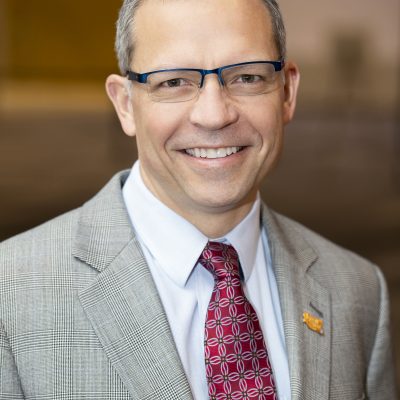
    Ohio Department of Health Chief Medical Officer Dr. Bruce Vanderhoff

    “In Ohio, we are seeing an unprecedented spike in hospital utilization and it is impacting all areas of the state. While we are better prepared with personal protective equipment and physical capacity, what we are seeing now is an increasing demand on our staffing,” said Dr. Vanderhoff. “If we don’t control the spread of this virus, we won’t be able to care for those who are acutely ill without postponing important, but less urgent, care. We anticipate that this kind of shift could happen in a matter of weeks if trends don’t change.”

    “The COVID-19 pandemic is becoming more dire for Ohio as hospitalizations have escalated 350 percent in the past 50 days to 2,533 COVID patients in Ohio hospitals today,” said Mike Abrams, president and CEO, Ohio Hospital Association. “Our hospitals are capable of managing capacity needs, but we must stem the spread now. This steep climb creates a severe strain on our caregivers who are braving the frontline of this pandemic. We can stop this spread, and we call on Ohioans to join hospitals and caregivers to take action now and do the right thing to slow the spread.”