Tag: education

  • Reading Recovery lawsuit trying to prevent science of reading implementation in Ohio schools

    Reading Recovery lawsuit trying to prevent science of reading implementation in Ohio schools

    BY:  Ohio Capital Journal

    A lawsuit is trying to prevent a new law from changing how Ohio students learn how to read.

    Reading Recovery Council of North America, located in Worthington, filed a lawsuit on Oct. 3 in the Franklin County Court of Common Pleas to block the science of reading from being implemented in schools across the state.

    The science of reading is based on decades of research that shows how the human brain learns to read and incorporates phonemic awareness, phonics, fluency, vocabulary, and comprehension.

    Reading Recovery Council of North America’s reading intervention programs would be banned under the new law.

    The association has seen a decline in Ohio school district memberships since the state budget was signed into law and a major portion of its operating revenue comes from annual membership fees paid by Ohio members, according to the lawsuit.

    “The unconstitutional, improper and unlawful teaching, instructional and educational policy directives of the Ohio Legislature … directly and significantly impact RRCNA’s mission and outreach,” wrote David Yeagley, an attorney with Ulmer & Berne that filed the lawsuit.

    DeWine’s press secretary Dan Tierney said the governor is disappointed this lawsuit has been filed.

    “I truly believe there’s nothing more important than the science of reading, and making sure that every single child in the state of Ohio, as they are learning to read, has the benefit of the science,” DeWine said at a March 23 event. He has visited several schools to learn about how the science of reading method has been implemented in lessons.

    State budget

    A chunk of the state’s two-year operating budget goes towards implementing the science of reading — $86 million for educator professional development, $64 million for curriculum and instructional materials, and $18 million for literacy coaches.

    DeWine, who first began advocating for the science of reading during his state of the state address back in January, signed the state budget in July. He originally put the science of reading in his proposed state budget and it remained, with some tweaks, as it went through the budget process.

    “If permitted to take effect, it will allow the General Assembly to disguise a policy-based law in a must-pass appropriations bill,” the lawsuit said.  “The literacy curriculum statute intrudes on classroom teaching and learning programs, models, methodologies and materials.”

    The lawsuit argues the General Assembly is trying to set education policy and curriculum, infringing on the Ohio State Board of Education’s authority to oversee the Ohio education system.

    Three-cueing

    The budget bans teachers from using the “three-cueing approach” in lessons unless a district or a school receives a waiver from the education department or a student has an individualized education program that specifically includes the “three-cueing approach.”

    However, the lawsuit argues the budget fails to clearly articulate “a clear standard for assessing what teaching models or methods might be categorized under the “three-cueing” approach.”

    The budget defines the “three-cueing approach” as any model of teaching students to read based on meaning, structure and syntax, and visual cues. The three-cueing method encourages children to read words by asking three questions: Does it make sense? Does it sound right? Does it look right?

    Reading recovery is “often referred to or perceived as a “three-cueing” approach, and therefore is targeted as being anti-science of reading,” according to the lawsuit. “There are no recognized or established teaching, instructional or educational approaches that strictly and exclusively fall within either the “science of reading” or the “three-cueing approach.”

    Louisiana, Arkansas and Virginia have laws that ban curriculum that includes three-cueing.

    Other education lawsuit

    This is the second education lawsuit filed against DeWine that relates back to the budget bill. Seven members of the Ohio State Board of Education filed a lawsuit against DeWine on Sept. 19 to block the transfer of power over Ohio K-12 education from the board to the governor’s office.

    On Sept. 21,Franklin County Judge Karen Held Phipps issued a temporary restraining order that currently remains in place and is set to expire on Friday.

    The lawsuit is trying to prevent the Ohio Department of Education from transitioning to the Ohio Department of Education and Workforce, which would create a cabinet-level director position and puts the department under the governor’s office. These changes would also limit the State Board of Education’s power to teacher disciplinary and licensure cases and territory disputes.

    Follow OCJ Reporter Megan Henry on Twitter.


    Megan Henry
    MEGAN HENRY

    Megan Henry is a reporter for the Ohio Capital Journal and has spent the past five years reporting in Ohio on various topics including education, healthcare, business and crime. She previously worked at The Columbus Dispatch, part of the USA Today Network.

    MORE FROM AUTHOR

  • ‘Legacy of neglect’ showcased in Ohio schools report

    ‘Legacy of neglect’ showcased in Ohio schools report

    Stock image from Pixabay.

    BY:  – Ohio Capital Journal

    A report from an Ohio think tank examined the new budget changes and private school voucher impacts on public schools over the last year.

    Research from Policy Matters Ohio said divestments from public schools at the state level “hurt public school students everywhere – especially those in rural counties.”

    Furthering study of the impact the COVID-19 pandemic had on education, Policy Matters’ Tanisha Pruitt and Cassie Mohr said those pandemic effects combined with “Ohio’s legacy of inadequate, inequitable funding” have “weakened the role school plays as a foundational public institution.”

    Ohio was ranked 21st in a U.S. News & World Report on K-12 education and 46th in an EdWeek ranking of equitable distribution of education funding, both of which were cited as part of the 2023 report.

    “Ohio’s students deserve a world-class education, including safe and well-resourced schools that are staffed by teachers who are well trained and fairly paid,” Pruitt and Mohr wrote.

    The new report also confirmed what advocates have repeatedly noted over the years that the public school funding model has been debated — that the vast majority of Ohio students are enrolled in public schools.

    Of the nearly 2 million students enrolled in K-12 education in Ohio, 88.6% are in public schools, and 8.8% are in private schools, while 2.7% are home-schooled.

    Private school vouchers saw a significant change in Ohio’s most recent two-year budget this summer, when legislators opened the state-paid subsidies to 450% of the federal poverty level, nearly universal eligibility.

    But also included in the budget was another phase-in of the Fair School Funding Plan, a six-year effort to dive into the real cost of funding public school students, and fund the schools on an individual basis based on their needs.

    “When fully implemented, the six-year FSFP will correct the over-reliance on local property taxes, eliminate funding caps on districts, and base funding on per-pupil cost estimates that more accurately reflect what it takes to educate a diverse student population,” the report stated.

    Policy Matters’ report focused largely on public schools, where they found a student population that is “somewhat more racially diverse than the state overall” with a makeup that is 16.4% Black versus the 13.3% population in the state overall, and serving a large population of more than 800,000 who are considered economically disadvantaged.

    Pruitt and Mohr remained skeptical of the ultimate success of the FSFP, however, as legislators have “only incrementally moved funding through the formula.”

    “If legislators follow through on their promise to fully realize the FSFP by 2026, they will be helping every public school in the state to be equitably funded, and helping ensure that we live in a state where every child has what they need to succeed in school and after graduation,” the report stated.

    Senate President Matt Huffman has commented in the past that he wouldn’t support funding more than two years at a time, to avoid saddling future General Assemblies with budget items with which they may not agree.

    Teachers

     Source: Policy Matters Ohio 

    The constraints of COVID had their effect on teachers as well, but even outside of the pandemic education methods, educators still face pressures, according to the 2023 report.

    “Teachers recently have experienced a rash of targeted political campaigns to stoke division by denying the identities of trans and nonbinary students, as well as censoring what teachers are allowed to teach in the classroom,” Pruitt and Mohr wrote.

    Beyond that, compensation levels have not kept up over the years, with the Ohio Department of Education showing an average annual salary of $69,130 for an Ohio teacher in the 2022-2023 school year. That amounts to a decrease of more than 6% from the 2018-2019 school year, according to the new Policy Matters research.

    “These factors contribute to one of the most significant problems facing Ohio schools today: too many have too few teachers to give our kids the education they deserve,” according to Pruitt and Mohr.

    The state has also seen a dip in newly licensed teachers as well, with more than 9,000 teachers leaving their jobs in 2021, but only 5,388 earning a new license.

    “Recruitment declines can be attributed to low pay, poor working conditions and other economic factors,” researchers found. New teachers are paid less, and face mounting student loans on top of a salary that is often less than fellow graduates in other professions, they said.

    But licensure was addressed in the budget, with a clause allowing substitutes to have one-year temporary substitute teaching license which could increase the number of subs, and some members of the military could obtain a “military educator license.”

    “While these changes have the potential to boost our educators workforce, they weaken teacher training requirements, which could negatively affect the quality of classroom education, especially in high-poverty schools that already grapple with recruiting and retaining highly qualified educators,” Policy Matters researchers argued.

    The state needs to improve the recruitment methods, according to the report. It could use models like the one pursued by Cincinnati Public Schools superintendent Iranetta Wright, who pledged to recruit more teachers who matched the demographics of her school, but also keep teachers from being saddled with debt by increasing funding for grant programs and teacher residency programs.

    State testing

    For the teachers who are in schools, state testing can be a significant part of the school year, and despite their best efforts, inequities can shine through in even the standardized assessments for subjects like math and reading.

    A 2022 National Assessment of Educational Progress showed fourth and eighth graders in the state “were not statistically different from the national average,” according to Pruitt and Mohr, and Ohio was ranked 21st in a U.S. News & World Report ranking on pre-K-12 education.

    “However, these statewide metrics can mask a high degree of variability among districts, schools and student populations, with predictable disparities,” Policy Matters stated in their 2023 report.

    Disparities among English Language Arts and math scores, for example, don’t have a single cause, researchers found, but “inequities in school funding track closely with gaps in academic achievement.”

     Source: Policy Matters Ohio 

    An analysis of test scores and categories from the Ohio Department of Education showed disparities among student races, but also showed a universal trend that economically disadvantaged students “are more likely to live in school districts with concentrations of poverty – including in rural and Appalachian counties – where property-value-based school funding shortchanges them,” the researchers found.

    In terms of kindergarten readiness, COVID had a negative impact, and in the 2022-23 school year, Ohio’s kindergarten-bound students showed the lowest rate of readiness since 2014, when the state began using a Kindergarten Readiness Assessment.

    “A dropoff in kindergarten readiness was likely inevitable after COVID; Ohio needs to make significant investments in early childhood education to begin recovery,” Pruitt and Mohr said in their analysis.

    The researchers criticized legislative priorities like restructuring the Ohio Department of Education, something that is now being fought over in court. But other curricular level efforts, like one to change the social studies lessons in schools and another that would bar teachers from teaching “any oral or written instruction, presentation, image or description of sexual concepts or gender ideology,” don’t fall under improvements, according to Pruitt and Mohr’s analysis.

    The recommendations they do hope will be implemented include the full implementation of the Fair School Funding Plan, elimination of the private school vouchers at universal eligibility levels, better pay for teachers and the creation of a “pathway to becoming an educator” that helps recruit teachers of diverse backgrounds.

    “More funding should be dedicated to attracting new educators, especially from underrepresented populations, while ensuring the teachers coming out of these programs are fully qualified and prepared to give our kids the best education possible,” the researchers concluded.


    Susan Tebben
    SUSAN TEBBEN

    Susan Tebben is an award-winning journalist with a decade of experience covering Ohio news, including courts and crime, Appalachian social issues, government, education, diversity and culture. She has worked for The Newark Advocate, The Glasgow (KY) Daily Times, The Athens Messenger, and WOUB Public Media. She has also had work featured on National Public Radio.

    MORE FROM AUTHOR

  • [VIDEO INTERVIEW] Ben’s Way a new initiative of the Ben Morrison Fund

    [VIDEO INTERVIEW] Ben’s Way a new initiative of the Ben Morrison Fund

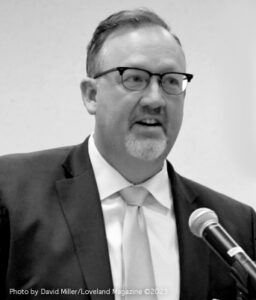
    David Miller is the Managing Editor of Loveland Magazine

    Listen to the emotional account as Tori Morrison tells you how she finally summed up the emotional courage to meet the man who received Ben’s liver and kidneys

    by David Miller

    On September 22, Tori Morrison and Kate Jackson came to the LOVELAND MAGAZINE TV studio at the Simpson Farmhouse to talk about a new initiative of the Ben Morrison Fund. Morrison is the President and Treasurer of the Fund and Jackson is a member of the Board.

    The fund was established after Morrison lost her son Ben and his battle with his hidden mental health problems. Ben took his life by suicide in 2021. To honor Ben and help erase the stigma of pain and struggles with mental health, the fund was established to fight for others and fight against that stigma to help make sure no one feels alone.

    __________________

    “Ben’s continuing legacy will not be one of loss, but as a lifesaver through organ donation, as a loyal friend and stalwart teammate and a man of deep compassion for others.  His legacy will go on through the Ben Morrison Fund and through those of us who serve that cause and carry him with us to take care to light the way out of darkness for others and spark hope to always continue your story.”

    __________________

    The Ben Morrison Memorial Fund is committed to providing scholarships to graduating seniors from Loveland High School. They are dedicated to erasing the stigma of mental health struggles, opening conversations, and offering lifelines to help save the lives of young people in crisis.

    The Ben Morrison Memorial Fund is a 501(c)(3) nonprofit organization.

    In this interview, my guests will tell you about Ben and the life of giving and kindness he led, most of it not obvious to his mother Tori. She tells how “onery” Ben could be, typical of teenagers not allowing parents to know their true selves.

    Tori tells you that when Ben got his driver’s license she encouraged him to sign up to be an organ donor and asked him if he would. Ben would never answer her, his cantankerous nature was a tease. Tori and Ben’s father never knew he had signed the form until in the hospital after Ben took his life they asked them if it would be OK to harvest some of Ben’s organs. Realizing then that to their surprise Ben wanted that too, without hesitation they agreed.

    Listen as Tori reveals for the first time how the donor process works and how she became emotionally strong enough to agree to meet the man who received Ben’s liver and kidneys.

    Tori has now determined, because of the suggestion by Kate, that the current Loveland High School students don’t know what attributes Ben had that so enamored his class and teammates to him, and Ben’s Way would be a good vehicle to keep his legacy alive.

    • Ben spoke up for others.

    • He was unselfish.

    • A leader, and protector.

    • A young person who led by example and modeled hard work and resilience.

    • Ben treated others with acceptance, kindness, and encouragement.

    These attributes were revealed to them through the applications and actual words of the students who applied for the 21 scholarships the fund has awarded. Kate tells a story about being inspired after witnessing a young student one day that reminded her of Ben in the kind way he was treating a “special needs” child. Kate says, “Well number one, this is something Ben would do, and number two, this child should be recognized for doing something so positive in a world that’s not always so positive.” The child had done something, Ben’s way.

    Watch Tori and Kate tell you how Ben’s Way will transform life and lives at Loveland High School.

    __________________

    Ben may have been one of those unrecognized/uncounted victims of the COVID-19 Pandemic

    Covid was hard for Ben, as for all those seniors. He didn’t get his final lacrosse season, prom, graduation, or grad parties, and life changed in so many ways.  He didn’t know what his next chapter should be. But later that year, he decided to become a Firefighter and go to community college. He didn’t get to start those chapters. For some reason we will never know, maybe a bad day, a moment of self-doubt, an offhand comment that cut too deep, some inner turmoil or unspoken conflict, our Ben, a boy who never expressed depression nor showed signs of any form of struggle with mental illness, was suddenly and without explanation gone from our lives forever.

    __________________

    Kate Jackson was a football “Team Mom” and her son was a teammate of Ben when they played for Loveland High School. Ben also competed in lacrosse. Jackson said, “Ben was an important part of my son’s life and an important part of my life and Tori became likewise an important part of my life.”

    ______________

    Become a Ben’s Way Sponsor

    As a sponsor of Ben’s Way, you will help us bring this initiative to more schools. Students that are chosen will receive a $25 gift card.

    if you would like to sponsor Ben’s Way at a school, or you would like to bring Ben’s Way to your school, please send an email to BensWayInitiative@gmail.com

    On Saturday, September 29 Cappy’s Wine and Spirits is hosting a fundraiser for the Ben Morrison Fund featuring the Chuckies in Love band playing the “ultimate throwback tunes, bringing you the iconic sounds of the 70s & 80s”.

    Watch Chuckies in Love…

    Become a Ben’s Way Sponsor

    As a sponsor of Ben’s Way, you will help us bring this initiative to more schools. Students that are chosen will receive a $25 gift card.

    if you would like to sponsor Ben’s Way at a school, or you would like to bring Ben’s Way to your school, please send an email to BensWayInitiative@gmail.com

    Follow the Ben Morrison Memorial Fund on Facebook

  • [VIDEO] 2013 Loveland High School State Football Champions recognized during Homecoming Game

    [VIDEO] 2013 Loveland High School State Football Champions recognized during Homecoming Game

    Loveland, Ohio – The 2013 Loveland High School State Football Champions were recognized on the field between the 1st and 2nd quarters of the Homecoming game on Friday.

    This is how on December 6, 2013 Loveland Football won the Div. II State Title

    Loveland High School sophomore, Drew Plit was 5 for 5 passing for the game, with two touchdown throws in the first half, one to freshman,Tre Heath for 22 yards and one to Jake Elfers for 12 – in the 41-23 Division II State Championship victory over Glenville on Dec. 6.
  • [Video] Dr. Kathryn Lorenz recognized during Homecoming pre-game

    [Video] Dr. Kathryn Lorenz recognized during Homecoming pre-game

    Loveland, Ohio – During the pre-game festivities of the Loveland High School Homecoming Game last Friday, Dr. Kathryn Lorenz, the President of the Loveland City School District was recognized for her service to the schools for the past 32 years.

    Lorenz was also the Grand Marshall of the Homecoming Parade.

    Your Loveland High School Homing Parade Highlights

  • Your Loveland High School Homing Parade Highlights

    Your Loveland High School Homing Parade Highlights

    Loveland, Ohio – This LOVELAND MAGAZINE TV video is the highlights of the Loveland High School Homecoming Parade held on September, 21.

  • Loveland Athletic Boosters Homecoming Parade is September 21

    Loveland Athletic Boosters Homecoming Parade is September 21

    Loveland, Ohio – This year’s Homecoming Parade will be Thursday, September 21 at 6:30 PM. The Homecoming game will be Friday, September 22 against Walnut Hills. The parade starts at the Moose Lodge Hall on East Loveland Avenue and proceeds to West Loveland Avenue, to Rich Road, and ends at Loveland High School at #1 Tiger Trail.

    The annual Powder Puff football game will be held in Tiger Stadium immediately following the parade.

    If you want to participate in the parade click HERE or contact:

    Tori Morrison, the LAB Parade Coordinator.

    Email

  • Loveland City School District Earns Five-Star Report Card Rating

    Loveland City School District Earns Five-Star Report Card Rating

    Loveland, Ohio – The Loveland City School District has earned a Five Star Overall Rating on the 2022-2023 Ohio School Report Card.

    Mike Broadwater

    “A Five-Star Ohio School Report Card is a sign that Loveland is a high-quality school district providing an excellent education for our students. This accomplishment would not be possible without the hard work of our students, their families, and our staff,” Superintendent Mike Broadwater said.

    Loveland is one of only 11 public school districts in the Cincinnati region of Hamilton, Butler, Warren, and Clermont Counties to receive an Overall Rating of Five Stars on the Ohio School Report Card.

    In addition to the Overall Rating, the Ohio School Report Card measures five components: Achievement, Progress, Gap Closing, Graduation, and Early Literacy. Loveland City School District earned five stars in every category except Early Literacy, where the district earned four stars. With five stars in every category except one, Loveland’s component ratings place the district in the top 6.6% of Ohio’s public school districts.

    “We were incredibly close to achieving five stars in every category. The Early Literacy component of the Ohio School Report Card required an 88% score to achieve a five-star rating, and our final score was 86.6%. We are always looking for ways to improve serving our students, and early literacy will remain an area of focus,” Assistant Superintendent of Teaching and Learning Dr. Stace Puerta said.

    “Our #beLOVEland Strategic Vision defines student success as pursuing academic excellence and creating career-ready, lifelong learners. The Ohio School Report Card results demonstrate that we are reaching that goal by exceeding state standards in every category,” Broadwater said.

    You can view the Loveland City School District’s Ohio School Report Card results by following this link.


  • Guest Column: Deep concerns about vacant School Board replacement process

    Guest Column: Deep concerns about vacant School Board replacement process

    Eileen Washburn (Loveland Schools Photo)

    By Eileen Washburn

    Dear Members of the Loveland City School District Community,

    I write to you today as an individual member of the Loveland City School District School Board to share my deep concerns about the recent appointment process to fill a vacant school board seat. While I represent just one voice among our board members, it is vital for me to articulate my perspective on this issue as it pertains to the core principles of fairness, impartiality, and the integrity of the democratic processes that underlie our educational institution. (Hamilton County Probate Judge Ralph Winkler appoints Linda Cecil to vacant School Board seat)

    The situation at hand stemmed from the school board’s appointment of Dr. Brad Goldie to the vacant school board seat. Unfortunately, due to an unforeseen glitch in the process, Mr. Goldie was unable to assume the position, and by state law, the seat appointment was redirected to probate court. I want to emphasize that Mr. Goldie is eminently qualified, having dedicated countless hours to improving the financial health of our district. Furthermore, he is not a candidate in the upcoming November election, distinguishing him from other applicants.

    Recognizing the significance of this matter, our School Board took the proactive step of sending a detailed letter to Hamilton County Probate Judge Ralph Winkler, outlining the background, circumstances, and our earnest intent in making this appointment. Regrettably, it appears that our intent, as representatives elected by district voters, was not taken into consideration by Judge Winkler.

    It is crucial that the appointment of a school board member be conducted in a manner that prioritizes qualifications, experience, and a steadfast dedication to our students and their families. As stewards of our educational system, the decisions we make have a profound impact on the educational experiences of our children. Thus, our foremost duty is to ensure that these decisions are guided by the best interests of our students.

    One of the fundamental tenets that govern our actions is impartiality, particularly during an election season, to safeguard our board from undue political influences. This commitment to impartiality is vital to maintaining the integrity of our educational institution.

    In response to concerns, Judge Winkler has conveyed in email correspondence that he made the best decision possible under the constraints of the law. However, it is worth noting that he did not engage in conversations with the applicants, their references, or any current board members, raising questions about the comprehensiveness of the decision-making process.

    As individual school board members, we take immense pride in serving in non-partisan positions and remain dedicated to focusing exclusively on the educational needs of our students, free from political biases or external influences.

    I want to assure our community that my commitment to delivering an exceptional education to our students remains unwavering. I will continue to work tirelessly to uphold the values that have made our school district a source of pride for our community.

    Sincerely,

    Eileen Washburn
    Loveland City School District Individual School Board Member

  • Hamilton County Probate Judge Ralph Winkler appoints Linda Cecil to vacant School Board seat

    Hamilton County Probate Judge Ralph Winkler appoints Linda Cecil to vacant School Board seat

    Hamilton County Probate Judge Ralph Winkler

    Loveland, Ohio – After Hamilton County Probate Judge Ralph Winkler accepted applications and letters of recommendation for appointment to the unexpired term of Kevin Dougherty on the Loveland City School Board, he announced the appointment of Linda Cecil.

    The term Cecil will fill runs through the end of the current calendar year, 2023, and she is running for a full school board term in November.

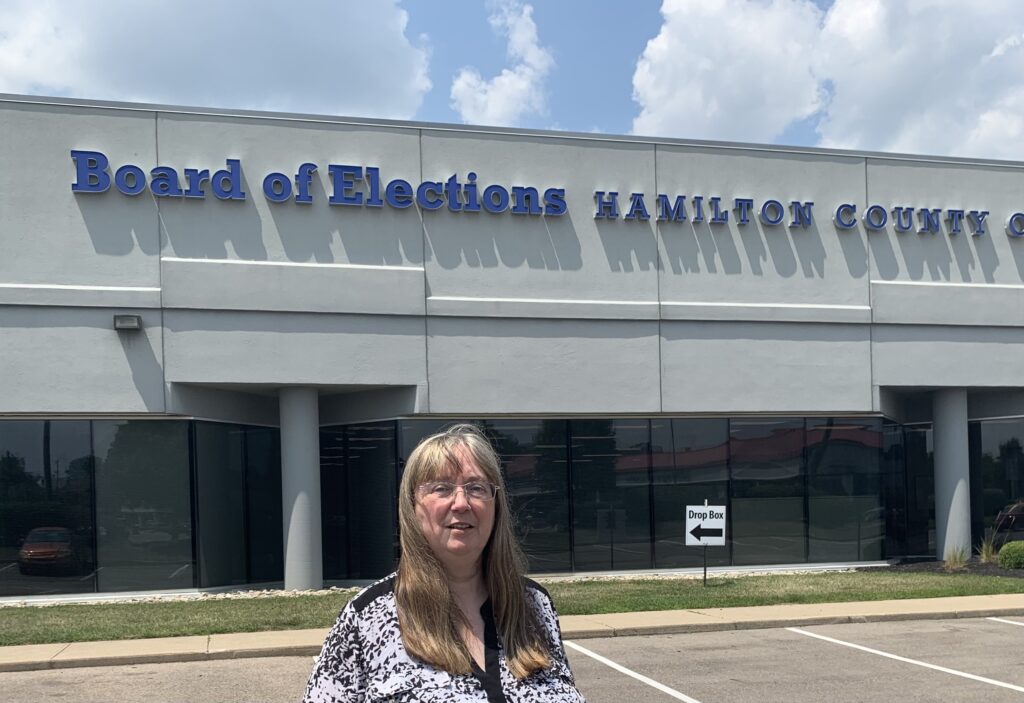
    Linda Cecil lives in Pheasant Hills on the Lake (Provided Photo)

    The Loveland School Board has been functioning with only four members since Kevin Dougherty resigned effective June 30. As previously reported the board of education appointed Dr. Brad Goldie on July 17 to the unexpired term but later had to rescind their vote because they discovered the doors to the building were locked during their vote and the meeting was therefore a violation of Ohio Open Meeting laws. After discovering the error and rescinding their vote for Goldie, the time to make another vote had expired. When that happened, Ohio law required a Probate Judge to make the appointment.

    [pdf-embedder url=”https://lovelandmagazine.com/wp-content/uploads/2023/09/LCSB-Appointment-Entry.pdf” title=”LCSB Appointment Entry”]