Tag: government

  • Historic Downtown Loveland sliced and diced at West Loveland for 3 days in June

    Historic Downtown Loveland sliced and diced at West Loveland for 3 days in June

    by David Miller

    Loveland, Ohio – Pregnant or with kidney stones, the railroad crossing in Historic Downtown Loveland has been a pain for much too long. Repairs won’t come smoothly however and you might want to plan your due date to avoid June 11 through the 13th if you planned to go through downtown.

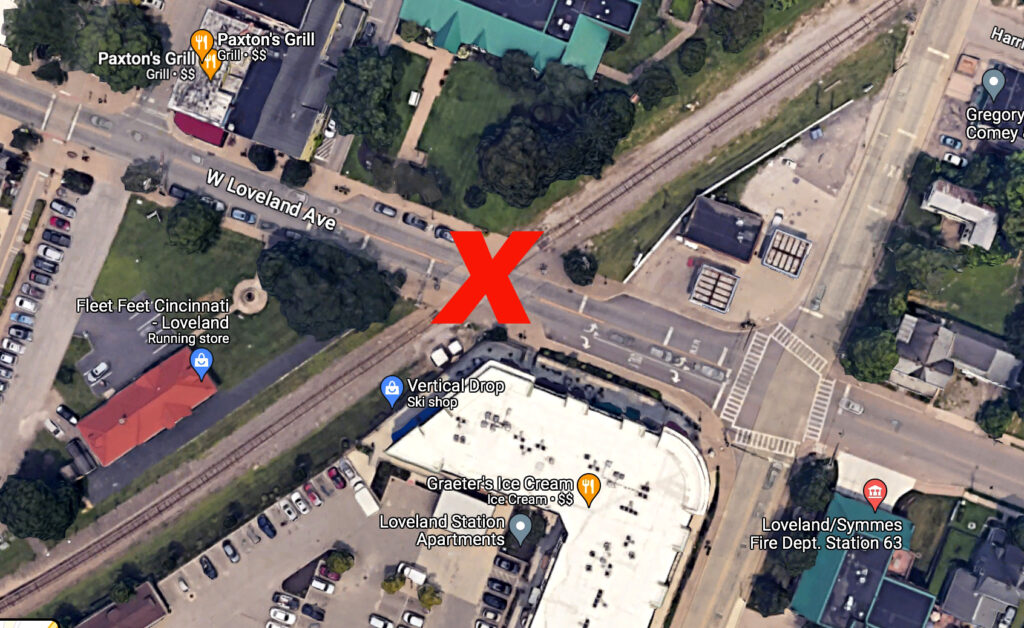
    The West Loveland Avenue railroad crossing will be repaired from Sunday, June 11 through Tuesday, June 13, and there will be a complete road closure to repair the sunken pavement.

    City Hall says that “responsive” to the observation of deterioration of the pavement surface at the rail crossing, the City has been working with representatives of the Genesee & Wyoming Inc. Railroad to develop and implement a repair plan.

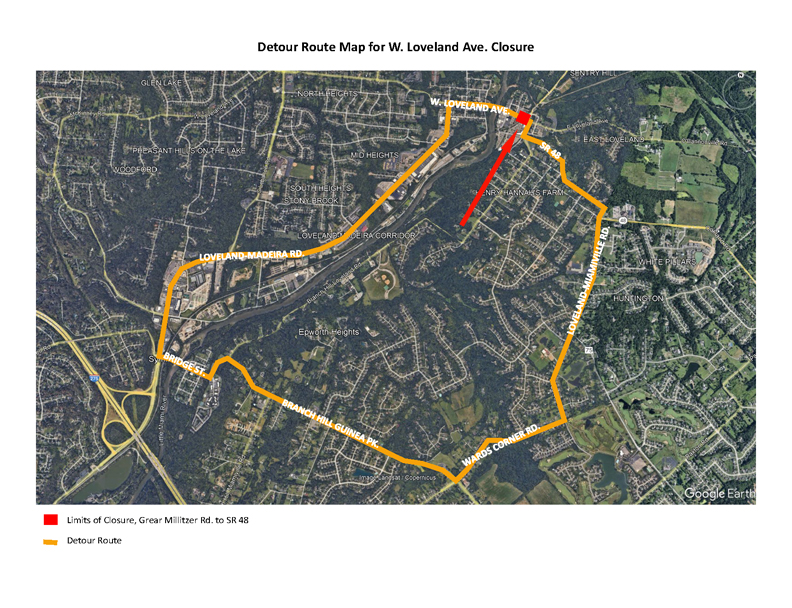
    During the construction period, West Loveland Avenue will be closed from Grear Millitzer Place, near City Hall and Plaid Room Records, to the State Route 48 and Second Street intersection at Graeters’s Ice Cream.

    City Hall says that motorists will be instructed to use the following detour routes, which have been approved by city and township authorities. Locals will not be following their advice, however; and will go to the Karl Brown Way underpass instead, where there is an 8′ clearance for trucks and vans. Only heaven can help us if vehicles get stuck inside the underpass.

    No matter, there will be 3-days of gridlock in June. Locals may talk about the “3 days of June ’23” for decades.

    TO TRAVEL WESTBOUND:

    • State Route 48 to Loveland-Miamiville Road to Wards Corner Road to Branch Hill Guinea Pike to Bridge Street to Loveland-Madeira Road to West Loveland Avenue.

    TO TRAVEL EASTBOUND:

    • West Loveland Avenue to Loveland-Madeira Road to Bridge Street to Branch Hill Guinea Pike to Wards Corner Road to Loveland-Miamiville Road to State Route 48 to West Loveland Avenue.

  • Child care advocates, chamber of commerce urge reconsideration of budget

    Child care advocates, chamber of commerce urge reconsideration of budget

    Photo courtesy Wikimedia Commons.

    BY:  Ohio Capital Journal

    Policy and business advocates alike are hoping the Ohio legislature will reconsider changes to the state budget with regard to the child care workforce and scholarships.

    The House revised the budget bill last week, eliminating $150 million in American Rescue Plan funds that were a part of the governor’s executive budget proposal to establish a child care scholarship for “critical occupations and other direct service professionals,” according to the budget analysis by the Legislative Service Commission.

    The scholarships would have been awarded to those with household incomes at or below 200% of the federal poverty level.

    Even the Ohio Chamber of Commerce jumped on board with support for scholarships in testimony on the state budget last week. The chamber’s senior vice president, former Republican legislator Rick Carfagna, called child care “one of the biggest workforce dynamics of late.”

    “The Ohio Chamber urges this committee to reconsider funding for child care scholarships and to increase infant and toddler child care capacity in communities throughout the state,” Carfagna said in his testimony.

    According to the chamber, more than half of rural Ohioans and 39% of all Ohioans live in a “child care desert,” defined as an area where more than 50 children younger than 5 have no child care providers or any area where there are three times as many children as licensed child care slots.

    Carfagna said the chamber supported increasing the poverty level eligibility for publicly funded childcare, which would be raised to 160% under the budget, as an expansion that would strengthen Ohio’s employee base.

    “However, we caution of the access bottlenecks in place as Ohio still lacks a corresponding increase in provider workforce to accommodate the FPL increase and follow proper ratios,” Carfagna testified.

    The ARPA funding would have also been directed toward efforts to “increase access to licensed child care programs for infants and toddlers and streamline administrative efficiency of the child care program,” the governor’s proposal stated.

    “If lawmakers don’t support child care professionals, child care providers will continue to struggle to recruit and retain staff and Ohio will remain unable to meet the child care needs of our families,” said Policy Matters Ohio executive director Hannah Halbert after the substitute budget bill was announced.

    The Cleveland based preschool and child care advocacy group PRE4CLE sees the $150 million funding as a vital step in not only bringing in needed child care workers, but keeping them around.

    “We have many child care centers with classrooms that can’t open (because of staffing shortages),” said Katie Kelly, PRE4CLE executive director. “There are waiting lists in the hundreds of families for centers … it’s causing incredible disruptions for families.”

    For families, that could mean not taking jobs due to a lack of child care, something that has an outsized impact on women, according to Kelly.

    For children, it could mean slower development and longterm impacts on their education.

    “Children who have access to quality child care … have a much greater chance of starting kindergarten ready to succeed,” Kelly told the OCJ.

    Not only do advocates like Kelly hope to see the return of the $150 million child care investment in Ohio’s budget, but also another $75 million to support grants that would help the state’s child care workforce, “which faces an ongoing crisis that makes it hard to hire and retain child care workers.”

    _________________________

    Susan Tebben is an award-winning journalist with a decade of experience covering Ohio news, including courts and crime, Appalachian social issues, government, education, diversity and culture. She has worked for The Newark Advocate, The Glasgow (KY) Daily Times, The Athens Messenger, and WOUB Public Media. She has also had work featured on National Public Radio.

    MORE FROM AUTHOR

  • In GOP flip, August special election will return

    In GOP flip, August special election will return

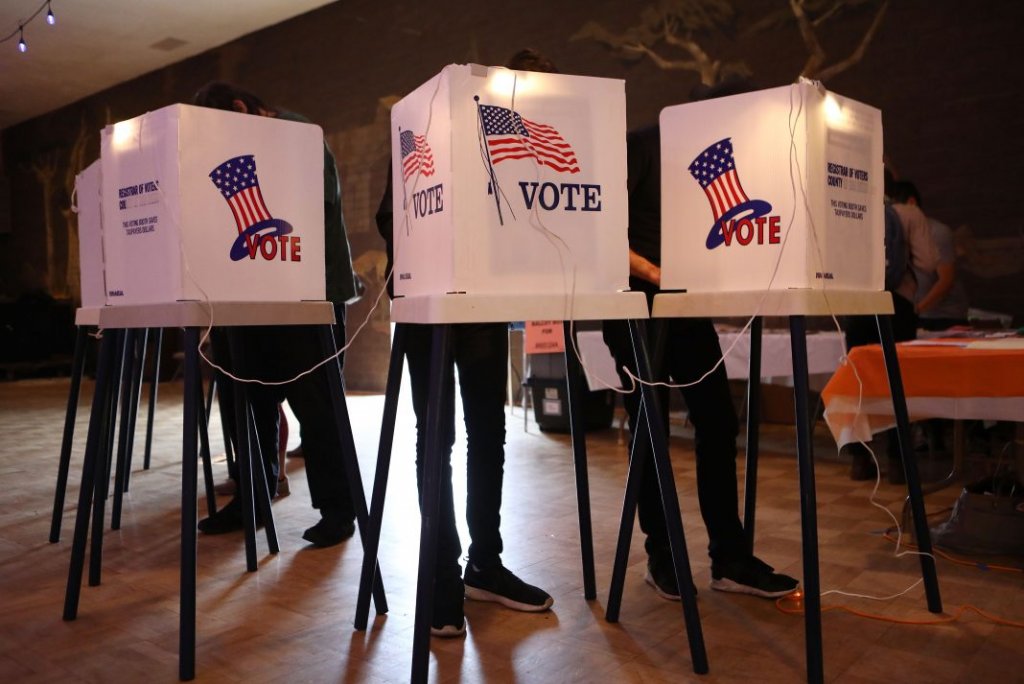
    Voters casting ballots. | Mario Tama/Getty Images

    Bill, along with SJR 2 constitutional amendment bill, directly impact abortion rights ballot initiative

    BY:  – Ohio Capital Journal

    Less than half a year after proclaiming August elections to be too expensive for the turnout they attract, the Senate Republican majority expanded the use of a special election this year, complete with $20 million in funding.

    “This is legislative whiplash, and we do it really well here in Columbus,” said state Sen. Kent Smith, D-Euclid.

    In a mostly party-line vote, Senate Bill 92 was passed Wednesday by the body. The only Republican to vote against SB 92 was state Sen. Nathan Manning, R-North Ridgeville.

    The vote came immediately after the state senate also passed an increase in the threshold for passing a constitutional amendment from 50% to 60% along party lines.

    The threshold bill, SJR 2, is a companion bill to HJR 1, which has been making its way through the Ohio House, but has yet to come up for a floor vote. The House resolution passed its committee after three hours of testimony on Wednesday, most of which spoke in opposition to the bill.

    Both bills could lead to a ballot measure where voters would approve or deny a constitutional amendment to raise that threshold.

    With the approval of SB 92, August special elections will now be held “for consideration of a General Assembly proposed constitutional amendment,” to fill a congressional vacancy or hold a special primary for congressional party candidates.

    The bill also appropriates $20 million to conduct “a one-time August special election on August 8, 2023,” a funding influx made while the bill was in committee.

    That August election would be to send a constitutional voter threshold to the ballot for voters to approve an legislature-initiated amendment to raise the threshold from 50% to 60%.

    Republicans pushed back on comparisons between previous August elections, including last year’s that saw an abysmal 8% turnout, with the argument that this time around, voters will care.

    “With this being a bonafide, statewide question, and with it being an important question … I would say the turnout is going to be markedly higher in this August election,” McColley told his colleagues on the Senate floor.

    The legislative measures seem to be direct hits at a potential constitutional amendment that would codify abortion rights if it makes it to the ballot box and is approved by voters in November. Abortion rights advocates are currently collecting the needed signatures. State law currently requires more than 400,000 in 44 of the 88 states.

    One of the pro-abortion rights groups helping with the ballot measure, Pro-Choice Ohio, called the passage of SB 92 “both expected and incredibly disappointing” in a post on Twitter.

    Last year, after redistricting confusion rocked the legislature, Republicans all-but eliminated the August election in a move that they said would save the state money and get rid of an unneeded annual election date that historically had low voter turnout.

    In August of last year, the special primary election included statehouse races because the redistricting maps were rejected by the Ohio Supreme Court before they could be included in the May election. A U.S. District Court then intervened in the legal snarl that swept up the redistricting process, and allowed the state to use a map previously deemed unconstitutional by the Ohio Supreme Court as the map for the August primary.

    That map is still in effect currently.

    Speaking in opposition for SB 92, state Sen. William DeMora, D-Columbus, quoted Ohio Secretary of State Frank LaRose who spoke in support of reducing August special election usage last year, when he said they “aren’t good for taxpayers, election officials, voters or the civic health of our state.”

    “(SB 92) is so bad that (LaRose) Secretary LaRose couldn’t even find the time to come and testify about it in committee,” DeMora said.

    State Sen. Theresa Gavarone, R-Bowling Green, said claims that the August special elections were eliminated last year was an exaggerated claim.

    “We’re not reinventing the wheel on this legislation,” Gavarone said, pointing out that certain occasions allowed for an August special election.

    SB 92 now moves to the House for consideration.

    _____________________

    Susan Tebben is an award-winning journalist with a decade of experience covering Ohio news, including courts and crime, Appalachian social issues, government, education, diversity and culture. She has worked for The Newark Advocate, The Glasgow (KY) Daily Times, The Athens Messenger, and WOUB Public Media. She has also had work featured on National Public Radio.

    MORE FROM AUTHOR

  • Town Hall called to discuss 4.9 mill Loveland operating levy

    Town Hall called to discuss 4.9 mill Loveland operating levy

    Superintendent Mike Broadwater (Loveland Magazine file photo)

    Loveland, Ohio – The Loveland City School District will hold a Town Hall Meeting on Tuesday, April 25, at 6 PM in the Media Center at Loveland Intermediate School. In his April 19 “Schools Update” Superintendent Mike Broadwater said, “The purpose of this Town Hall is to provide a forum for our Loveland City Schools community to ask questions about the upcoming 4.9 mill operating levy on the ballot on May 2.”

    The Town Hall will include the Superintendent, Treasurer Rob Giuffre’ and two members of the Board of Education. It will not be an official meeting of the Board. The Superintendent’s newsletter did not specify which board members will participate in the discussions.

    If you cannot attend, you can watch a live stream by following this link.

    Only in-person attendees can participate with questions or comments. After the meeting, the live stream recording will be available on the Board of Education YouTube channel.

    During the Town Hall, Broadwater said, “We will work to take questions or comments from as many participants as possible to foster conversation around these important issues.”

  • CDC simplifies COVID-19 vaccine recommendations, allows older adults and immunocompromised adults to get second dose of the updated vaccine

    CDC simplifies COVID-19 vaccine recommendations, allows older adults and immunocompromised adults to get second dose of the updated vaccine

    Following FDA regulatory action, the CDC has taken steps to simplify COVID-19 vaccine recommendations and allow more flexibility for people at higher risk who want the option of added protection from additional COVID-19 vaccine doses.

    CDC’s Advisory Committee on Immunization Practices (ACIP) met today to discuss these COVID-19 vaccine recommendation changes, and the associated implications and implementation. Although there was no vote at this meeting, ACIP members expressed their support for these recommendations.

    These changes include:

    • CDC’s new recommendations allow an additional updated (bivalent) vaccine dose for adults ages 65 years and older and additional doses for people who are immunocompromised. This allows more flexibility for healthcare providers to administer additional doses to immunocompromised patients as needed.
    • Monovalent (original) COVID-19 mRNA COVID-19 vaccines will no longer be recommended for use in the United States.
    • CDC recommends that everyone ages 6 years and older receive an updated (bivalent) mRNA COVID-19 vaccine, regardless of whether they previously completed their (monovalent) primary series.
    • Individuals ages 6 years and older who have already received an updated mRNA vaccine do not need to take any action unless they are 65 years or older or immunocompromised.
    • For young children, multiple doses continue to be recommended and will vary by age, vaccine, and which vaccines were previously received.

    Alternatives to mRNA COVID-19 vaccines remain available for people who cannot or will not receive an mRNA vaccine. CDC’s recommendations for use of (monovalent) Novavax or Johnson & Johnson’s Janssen COVID-19 vaccines were not affected by the changes made today.

    CDC and ACIP will continue to monitor COVID-19 disease levels and vaccine effectiveness in the months ahead and are anticipated to have additional discussions around potential updates this fall.

  • 227 Ohio-based Organizations Denied Opportunity to Voice Opposition of Minority Rule Bill

    227 Ohio-based Organizations Denied Opportunity to Voice Opposition of Minority Rule Bill

    GettyImages
    Columbus, Ohio –  In a narrow 7-6 vote, the Ohio House Constitutional Resolutions Committee passed a resolution allowing HJR 1 — a bill that seeks to increase the ballot threshold for amending the constitution from a simple majority to 60% — to a floor vote.
    Following the resolution’s passage, a denial of 111 years of direct democracy right, Catherine Turcer, executive director of Common Cause Ohio, made the following statement representing a coalition of 227 organizations in opposition to a 60 percent threshold and an August special election for special interests.
    “Since 1912, Ohioans from across the political spectrum have utilized the right to amend our Constitution via the petition process. Direct democracy gives voters the ability to make a real impact and has helped engage Ohioans in the political process. There is no justifiable reason, after over 100 years, to make this already challenging process even harder.
    “Today, a sham committee shut down public testimony in opposition. This is not what democracy should look like. Extreme lawmakers turned away over 100 Ohioans who took time from their day to show up and testify in opposition. Committee Chair Phil Plummer clearly did not want to hear from voters. He and an ultra-slim margin of his anti-voter colleagues had already made up their minds, and they bullied this bad idea out of committee.
    “We have a growing coalition of 227 organizations representing hundreds of thousands of voters who will not compromise the sacred principle of one person, one vote. In Ohio and this country, a simple majority means 50 plus one equals democracy. We will not allow this undemocratic, unfair, unnecessary, and unpopular attack on voting rights and freedom to stand.”
    Additionally, the Ohio Senate passed Senate Joint Resolution 2 this afternoon, which also changes the threshold for passage of amendments to the Ohio Constitution to 60 percent. Similar to HJR 1, this measure makes the citizen initiative process more difficult by requiring 5% of the gubernatorial vote in all 88 counties. These proposals also remove the “cure period” for collecting additional signatures if a campaign falls short.
  • Economists: Ohio flat-tax would worsen inequality

    Economists: Ohio flat-tax would worsen inequality

    A concept of income disparity from Getty Images.

    BY:  Ohio Capital Journal

    An overwhelming majority of a panel of Ohio economists believes that a flat-tax proposal pending in the Ohio House would worsen economic inequality, according to a survey that was published Monday.

    Most of the 22 who responded also didn’t think that the proposal would spur economic growth.

    Inequality is a serious problem in the Buckeye State, where 30% of the population is covered by Medicaid, the federal-state health program for the poor, and where 40% of all births are also covered by the program.

    Meanwhile, Republican members of the state House of Representatives are pushing a measure that would require everyone to pay state income tax at the same rate regardless of their income. It’s more fair, the pitch goes, because people making more money would pay proportionately more in income taxes than those making less.

    But critics point out that taxes on income are far from the only way people pay to support state and local government. And other taxes — such as those on sales and gasoline — are charged without regard to whether an Ohioan makes $2.7 million a year or $27,000.

    When one takes all of those taxes into consideration, poorer Ohioans pay out nearly twice as much of their income in state and local taxes as the richest, the Institute on Taxation and Economic Policy reported.

    In 2018, the poorest 20% paid 12.3% of their income in such taxes as the richest 1%, who paid just 6.5%, the institute reported.

    The economists surveyed by Scioto Analysis agreed with that assessment. Adamantly.

    Eighteen of the 22 who responded said that the 2.5% flat income tax proposed in House Bill 1 would exacerbate inequality. Only one disagreed and the other three were uncertain.

    “A flat tax is a regressive tax in which low-income taxpayers carry a disproportionate share of the tax burden,” independent economist Kay Strong wrote in the comments section of the survey. “Further squeezing those least able to cover daily living expenses qualifies as truly draconian.”

    To some, the matter was self-evident.

    “This will so obviously increase inequality that it’s not even worth debating,” wrote Paul Holmes of Ashland University.

    A few other economists resorted to snark.

    “Giving $11,000 to high-income earners and $3 to low-income earners is an efficient way to increase inequality,” wrote Michael Myler of the University of Mount Union.

    In addition to falling more heavily on poorer Ohioans, an analysis by Policy Matters Ohio indicated that HB 1 would punch big holes in funding for local government, libraries, and schools. The loss of such services will also worsen economic inequality, some of the economists said.

    “The benefits will flow to higher income individuals but the spending cuts will hurt lower income individuals,” Bob Gitter of Ohio Wesleyan University said.

    There was less certainty about whether the flat tax would help grow the economy, but 12 of the 22 economists said it wouldn’t. Eight were uncertain and just two said they believed it would help expand the state economy.

    “Public services and goods are an important part of the necessary infrastructure to grow an economy,” Rachel Wilson of Wittenberg University said. “Cutting state income taxes will reduce the public infrastructure. Our current tax rate is very competitive with other states and doesn’t need to be reduced.”

    Conversely, David Brasington of the University of Cincinnati said the flat tax would force local governments to be more efficient and thus spur economic growth.

    “It will make local public services rely more on local taxation, and attract people and new businesses to the best-run municipalities,” he said.

    _______________________________

    MARTY SCHLADEN

    Marty Schladen has been a reporter for decades, working in Indiana, Texas and other places before returning to his native Ohio to work at The Columbus Dispatch in 2017. He’s won state and national journalism awards for investigations into utility regulation, public corruption, the environment, prescription drug spending and other matters.

    MORE FROM AUTHOR

  • Hamilton County Small Business Day at Sharonville Convention Center

    Hamilton County Small Business Day at Sharonville Convention Center

    Hamilton County Small Business Day is on Monday, May 22 from 10 AM until 2 PM at the Sharonville Convention Center.

    Hamilton County will be officially launching the Hamilton County Office of Small Business and brand new Small Business Relief Grants.

    This event introduces small business owners and aspiring entrepreneurs to all the Hamilton County Office of Small Business provides including grant applications, business plan development, and more. They will also have “rapid-fire” breakout sessions providing instruction on topics like loan readiness and bid preparation.

    There is a free lunch at noon with remarks by Hamilton County Commissioners and advice from successful areas small businesses.

    Register Today

    One-on-one help with:

    • Small Business Grants (Brand New Hamilton County Small Business Grants!)
    • QuickBooks/Accounting
    • Sales growth/marketing
    • IT/Computer literacy/web design
    • Legal advising
    • Small business coaching
    • Doing business with the County and other Large Organizations
    • SBE/MBE/WBE/DBE Registration & Certification Resources
    • Business loans

    Rapid-Fire Breakout Sessions (Schedule and speaker details coming soon!)

    • Grant and Loan readiness
    • Intro to Hamilton County’s Office of Small Business
    • Doing business with the County and other large organizations
    • Hamilton County Small Business Advisory Services
    • Bid preparation
    • Vendor matchmaking

  • Loveland Police Department has placed automated license plate readers throughout the city

    Loveland Police Department has placed automated license plate readers throughout the city

    by David Miller

    Loveland, Ohio – The Loveland Police Department has placed automated license plate readers throughout the city to capture the “fingerprint” of vehicles.

    According to City Hall, the police will utilize the “latest technology to detect and deter criminal activity” and are using Flock Safety Automated License Plate Readers.

    Automated License Plate Reader (Photo provided by City of Loveland)

    In a news release, City Hall says that approximately 70% of all crimes involve a vehicle. “With the readers, a vehicle fingerprint can be captured: the license plate, make, model, color, and number of times the vehicle has been seen. Alerts are sent to officers for cars wanted in connection with crimes, stolen vehicles, wanted persons, and Amber/Silver Alerts for missing persons. Investigators can use Flock data (stored for 30 days) to identify cars used in crimes.”

    The City says the devices will not be used for traffic enforcement. Alerts are sent to officers for cars wanted in connection with crimes, stolen vehicles, wanted persons, and Amber/Silver Alerts for missing persons.

    Flock Safety Automated License Plate Reading Camera (Image by Flock Safety)

    The City gives this example of how the Flock data could be used: “In 2022, a senior resident with memory issues drove away from home. The family contacted LPD to report a missing person. A search of Flock could have provided a direction of travel. The resident’s vehicle could have been entered into Flock’s database, and officers would be alerted if/when it passed by any Flock license plate reader nationwide.”

    Below is what their “Transparency Portal” says about what data will be maintained and its current usage.

    “Loveland OH PD uses Flock Safety technology to capture objective evidence without compromising on individual privacy. Loveland OH PD utilizes retroactive search to solve crimes after they’ve occurred. Additionally, Loveland OH PD utilizes real time alerting of hotlist vehicles to capture wanted criminals. In an effort to ensure proper usage and guardrails are in place, they have made the below policies and usage statistics available to the public.”

    What’s Detected: Vehicle Fingerprint
    License Plates, Vehicle Make, Vehicle Color, Last Visit Date / Time, Number Of Days Seen
    What’s Not Detected
    Facial recognition, People, Gender, Race
    Acceptable Use Policy
    Data is used for law enforcement purposes only. Data is owned by Loveland OH PD and is never sold to 3rd parties.
    Prohibited Uses
    Immigration enforcement, traffic enforcement, harrassment or intimidation, usage based solely on a protected class (i.e. race, sex, religion), Personal use
    Access Policy
    All system access requires a valid reason and is stored indefinitely.
    Hotlist Policy
    Hotlist hits are required to be human verified prior to action.
    Data retention (in days)
    30 days
    Number of owned cameras
    6
    Vehicles detected in the last 30 days
    163,191
    Searches in the last 30 days
    31
    Hotlists Alerted On
    National Crime Information Center (NCIC) which includes vehicles wanted for crimes, missing and wanted persons, AMBER & Silver Alerts
    _______________________________
  • The what to do and “Why” when under a Boil Water Advisory

    The what to do and “Why” when under a Boil Water Advisory

    by David Miller

    Loveland, Ohio – The loss of positive pressure within a distribution water pipe may allow disease-causing microorganisms from surrounding soil or groundwater to be drawn into the pipe that feeds your home or business.

    The City of Loveland recently issued a Boil Water Advisory for portions of Downtown after a water main break, however, did not simultaneously inform residents or businesses what it meant, what they needed to do, or why they should take important steps to protect their health or the health of customers and employees. Nor did the City tell anyone what risk they were taking if they used the possibly contaminated water coming from the tap.

    “With little to no in-house water treatment, a lot of local restaurants are forced to close for the duration of the advisory. The ones that choose to remain open must bear a significant cost of substitution, for example, by using bottled water. As soon as a BWA is issued, every equipment utilizing water, from the soda machine to the ice machine, needs to be thoroughly cleaned out and all pre-made product from such machines needs to be thrown away.”*

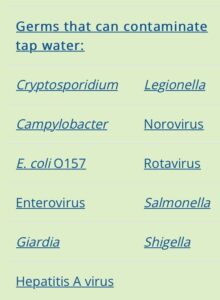
    Germs That Can Contaminate Tap Water

    “Distribution systems are usually under enough pressure so that any cracks let clean water out (at a cost to taxpayers), but prevent dirty water from getting in. When water mains break, however, system pressure drops—and those cracks allow contaminants like viruses to seep in. Water main breaks are thus a key vulnerability that promote waterborne disease.”**

    Read Background:

    Boil water advisory has been issued in Loveland

    Below is what the CDC (Centers for Disease Control) recommends when a boil water notice is issued to residents or food service facilities.

    _________________________

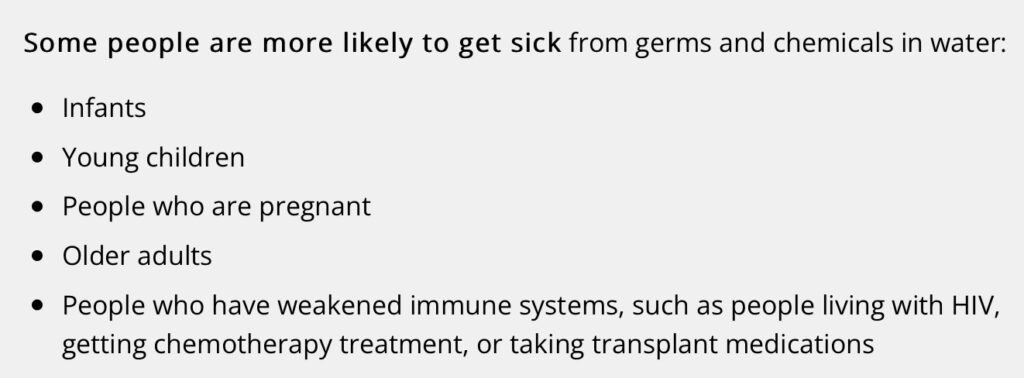
    Drinking water advisories let people know that tap water could be contaminated and make them sick. Advisories tell people, schools, hospitals, businesses, and others about the situation and how to take immediate action, if necessary. Water systems and state or local agencies issue these advisories when they have concerns about water contamination.

    Boil Water Advisory for Residences

    Water Boiling on a Gas Stove, stainless pot.

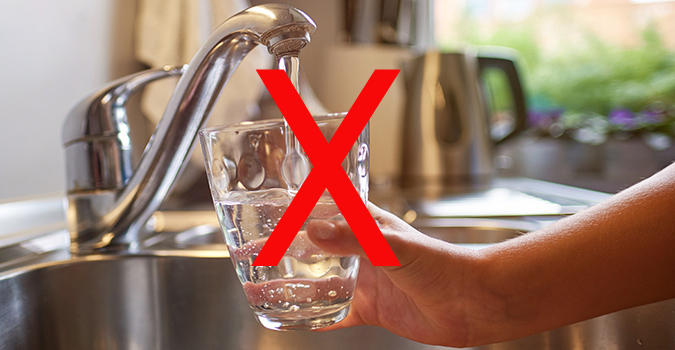
    If your local health officials issue a boil water advisory, you should use bottled water or boil tap water. This is because a boil water advisory means your community’s water has, or could have, germs that can make you sick.

    Advisories may include information about preparing food, drinks, or ice; dishwashing; and hygiene, such as brushing teeth and bathing. Boil water advisories usually include this advice:

    • Use bottled or boiled water for drinking, and to prepare and cook food.
    • If bottled water is not available, bring water to a full rolling boil for 1 minute (at elevations above 6,500 feet, boil for 3 minutes). After boiling, allow the water to cool before use.
    • Boil tap water even if it is filtered (for example, by a home water filter or a pitcher that filters water).
    • Do not use water from any appliance connected to your water line, such as ice and water from a refrigerator.
    • Breastfeeding is the best infant feeding option. If you formula feed your child, provide ready-to-use formula, if possible.

    Handwashing

    • In many cases, you can use tap water and soap to wash hands during a boil water advisory. Follow the guidance from your local public health officials.
    • Be sure to scrub your hands with soap and water for at least 20 seconds. Then, rinse them well under running water.
    • If soap and water are not available, use an alcohol-based hand sanitizer that contains at least 60% alcohol.

    Bathing and showering

    • Be careful not to swallow any water when bathing or showering.
    • Use caution when bathing babies and young children. Consider giving them a sponge bath to reduce the chance of them swallowing water.

    Brushing teeth

    • Brush teeth with boiled or bottled water. Do not use tap water that you have not boiled first.

    Washing dishes

    • If possible, use disposable plates, cups, and utensils during a boil water advisory.
    • Household dishwashers generally are safe to use if:
      • The water reaches a final rinse temperature of at least 150 degrees Fahrenheit (66°Celsius), or
      • The dishwater has a sanitizing cycle.
    • Sanitize all baby bottles.
    • To wash dishes by hand:
      • Wash and rinse the dishes as you normally would using hot water.
      • In a separate basin, add 1 teaspoon of unscented household liquid bleach for each gallon of warm water.
      • Soak the rinsed dishes in the water for at least one minute.
      • Let the dishes air dry completely before using again.

    Laundry

    • It is safe to wash clothes as usual.

    Cleaning

    • Clean washable toys and surfaces with:

    Caring for pets

    • Pets can get sick from some of the same germs as people or spread germs to people. Give pets bottled water or boiled water that has cooled.
    • If bottled water is not available, bring water to a full rolling boil for 1 minute (at elevations above 6,500 feet, boil for 3 minutes). After boiling, allow the water to cool before use.
    • Boil tap water even if it is filtered (for example, by a home water filter or a pitcher that filters water).
    • Do not use water from any appliance connected to your water line, such as ice and water from a refrigerator.

    Caring for your garden and houseplants

    • You can use tap water for household plants and gardens.
    More Information

    Guidelines for Food Service Facilities During and After a Boil Water Advisory

    During a Boil Water Advisory

    When a boil water advisory is issued that affects a food service establishment and the local health department does not indicate that food service establishments must close, the following precautions should be taken by food service facilities until they are notified by authorities that the advisory has ended.

    General

    • Post signs or copies of the water system’s health advisory.
    • Develop a plan to notify and educate employees about emergency procedures.
      Food Preparation
    • Shut off appliances that use tap water, such as ice machines, drinking fountains, produce misters, bottled water refill machines, soft drink fountains connected to the water supply, and water dipper wells.
    • Discard ice and mixed beverages made with contaminated water.
    • Use packaged ice from approved sources.
    • Use bottled water, boiled water, or water that has been disinfected with bleach for drinking, food preparation, washing produce and cooking.
    • If possible, use disposable plates, cups, and utensils. Hygiene and Cleaning
    • Wash hands with soap and tap water. When you are done washing and drying your hands, use an alcohol based hand-sanitizer and let hands air dry.
    • Commercial dishwashers generally are safe to use if the water reaches a final rinse temperature of at least 165°F–180°F, as determined by your local or state authorities.
    • If you are not able to use disposable plates, cups, and utensils and do not have a dishwasher, wash dishes by hand following these instructions:
    • Wash and rinse the dishes as you normally would using hot water.
      In a separate basin, add 1 teaspoon of unscented household bleach for each gallon of warm water.
      The bleach label should say that it contains 5–9% of sodium hypochlorite. Soak the rinsed dishes in the water for at least 1minute. Let the dishes air dry completely before using again.
    • The local health department may add requirements to protect public health during the boil water advisory, such as modifying food preparation, prohibiting menu items or closing operations. Consult with [health department contact] for specific requirements.

    After the Boil Water Advisory is lifted

    When a food service establishment is notified that the boil water advisory has been lifted and the drinking water supply is safe, the following actions need to be taken.

    • Flush pipes throughout the facility by running each faucet with cold water for [X] minutes.
    • Flush, clean, and sanitize appliances that use tap water (such as beverage dispensers, spray misters, coffee and tea urns, ice machines, glass washers, dishwashers) according to the manufacturer’s instructions.
    • Run water softeners through a regeneration cycle.
    • Flush hot water tanks.
    • Run drinking fountains continuously for [X] minutes to flush the system.
    • Replace and sanitize water filter cartridges according to the manufacturer’s instructions.
    • Take proper steps to flush ice machines by following the manufacturer’s instructions, including:
      • Throw out any remaining ice.
      • Flush the waterline to the machine inlet.
      • Close the valve on the waterline behind the machine.
      • Disconnect the waterline from the machine inlet.
      • Open the valve and run 5 gallons of water through the valve. Dispose of the water.
      • Close the valve.

    ___________________________

    * Impact of Water Main Breaks on Drinking Water for Food & Beverage Establishments

    * Negative Consequences for Public Health