Tag: government

  • City Hall calls two public hearings

    City Hall calls two public hearings

    Loveland, Ohio – City Hall has invited interested parties to attend two public hearings.

    The first is on April 25 and it is about Flood Damage Prevention Regulations. The second hearing is about new proposed Outdoor Lighting Regulations and is on May 9.

    To learn more follow these links:

    CHAPTER 554: OUTDOOR LIGHTING REGULATIONS

    Flood Damage Prevention Regulations

    Both hearings are at Loveland City Hall, 120 West Loveland Avenue at 7 PM.

  • Ohio SOS gives yet another reason to make it a lot harder for voters to amend Constitution

    Ohio SOS gives yet another reason to make it a lot harder for voters to amend Constitution

    [vc_row][vc_column][vc_column_text]

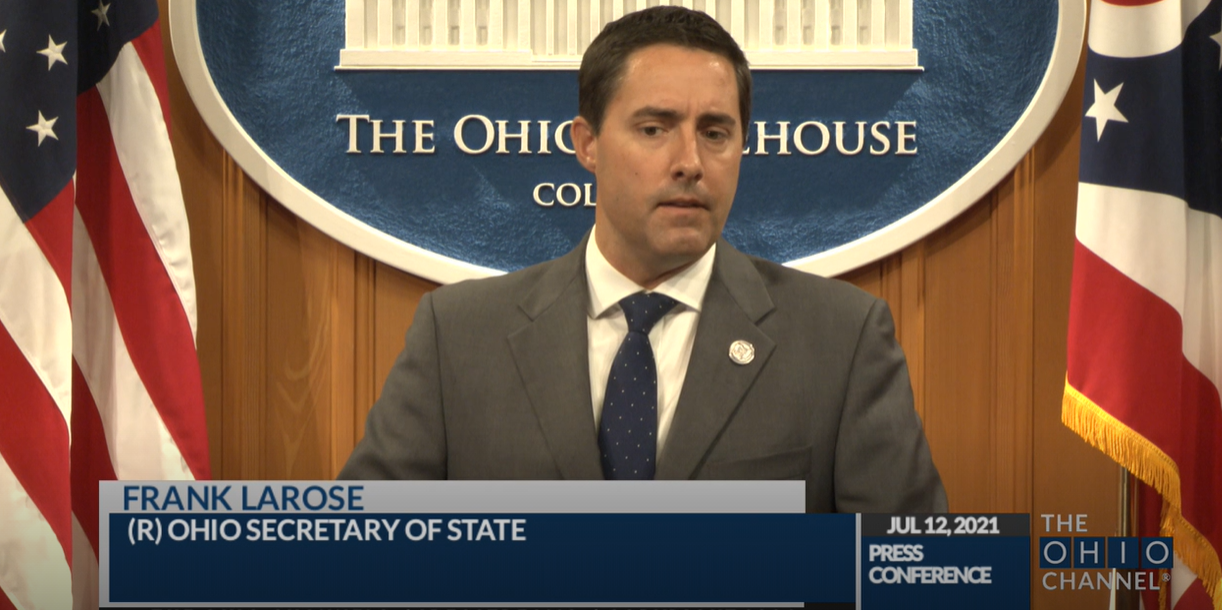
    Secretary of State Frank LaRose announces the referral of 117 cases of alleged voting and voter registration fraud stemming from the 2020 elections. Photo courtesy The Ohio Channel.

    BY:  Ohio Capital Journal

    Ohio Secretary of State Frank LaRose on Wednesday offered another rationale for making it much more difficult for voters to amend the Ohio Constitution. Now he’s saying it’s needed to fight a possible power grab like one that grew out of a massive bribery and money-laundering scandal.

    But LaRose didn’t mention in his op-ed that his name came up repeatedly in a criminal trial related to the scandal and that he appeared to be in close communication with some of its central figures.

    Nor did his office respond when asked whether LaRose ever spoke out against the corrupt utility bailout before the FBI started arresting people in July 2020.

    Slippery explanations

    The secretary of state — who is said to be eyeing a run for U.S. Senate next year — has been pushing to increase the portion of votes needed for a citizen-initiated amendment from 50% to 60%. As he and his allies have, they’ve given a shifting set of reasons for why that’s needed.

    Last November, during a lame-duck session of the legislature, LaRose and state Rep. Brian Stewart, R-Ashville, held a press conference saying that the change was necessary to prevent wanton amendments to the Ohio Constitution by monied special interests. But they didn’t point to any examples of how that had happened in the past.

    Many suspected an ulterior motive.

    LaRose sat on a Republican-dominated redistricting commission that last year ignored seven Ohio Supreme Court rulings saying that the legislative and congressional maps the commission produced violated anti-gerrymandering amendments overwhelmingly approved by Ohio voters. That prompted Maureen O’Connor, the outgoing Republican chief justice, to urge Ohioans to pass new, more-tightly written amendments this year.

    Ohio was also roiled when a highly restrictive abortion law took effect last June just after the U.S. Supreme Court overturned Roe v. Wade and horror stories poured out of abortion clinics and hospitals. An effort quickly started to get an amendment on the ballot protecting abortion rights after other protections easily passed in other states.

    But at last year’s presser, LaRose denied that his goal was to block anti-gerrymandering or abortion-rights amendments. The constitutional change he was advocating was a long-term, fundamental one that he didn’t seek to block such short-term disputes, he claimed.

    Just weeks later, however, Stewart, LaRose’s sidekick at the presser, sent a letter to his GOP colleagues in the House explaining the real reasons for making it harder for Ohioans to amend their constitution: to stop abortion-rights and anti-gerrymandering amendments that appear to be favored by strong majorities of Ohioans.


    [/vc_column_text][vc_raw_html]JTNDYmxvY2txdW90ZSUyMGNsYXNzJTNEJTIydHdpdHRlci10d2VldCUyMiUzRSUzQ3AlMjBsYW5nJTNEJTIyZW4lMjIlMjBkaXIlM0QlMjJsdHIlMjIlM0VIZXJlJTI2JTIzMzklM0JzJTIwdGhlJTIwZnVsbCUyMGxldHRlci4lMjBJdCUyMGFsc28lMjB0aWVzJTIwdGhlJTIwaXNzdWUlMjB0byUyMHJlZGlzdHJpY3RpbmclMjByZWZvcm0lMkMlMjBhbmQlMjByZXNwb25kcyUyMHRvJTIwdGhlJTIwb3JnYW5pemVkJTIwbGFib3IlMjBncm91cHMlMjB0aGF0JTIwcmFsbGllZCUyMGF0JTIwdGhlJTIwT2hpbyUyMFN0YXRlaG91c2UlMjB5ZXN0ZXJkYXkuJTIwJTNDYSUyMGhyZWYlM0QlMjJodHRwcyUzQSUyRiUyRnQuY28lMkZpbGhXTFBpV00wJTIyJTNFcGljLnR3aXR0ZXIuY29tJTJGaWxoV0xQaVdNMCUzQyUyRmElM0UlM0MlMkZwJTNFJTI2bWRhc2glM0IlMjBBbmRyZXclMjBUb2JpYXMlMjAlMjglNDBBbmRyZXdKVG9iaWFzJTI5JTIwJTNDYSUyMGhyZWYlM0QlMjJodHRwcyUzQSUyRiUyRnR3aXR0ZXIuY29tJTJGQW5kcmV3SlRvYmlhcyUyRnN0YXR1cyUyRjE2MDMxMzAzODQ3NDQ1MzQwMTYlM0ZyZWZfc3JjJTNEdHdzcmMlMjU1RXRmdyUyMiUzRURlY2VtYmVyJTIwMTQlMkMlMjAyMDIyJTNDJTJGYSUzRSUzQyUyRmJsb2NrcXVvdGUlM0UlMjAlM0NzY3JpcHQlMjBhc3luYyUyMHNyYyUzRCUyMmh0dHBzJTNBJTJGJTJGcGxhdGZvcm0udHdpdHRlci5jb20lMkZ3aWRnZXRzLmpzJTIyJTIwY2hhcnNldCUzRCUyMnV0Zi04JTIyJTNFJTNDJTJGc2NyaXB0JTNF[/vc_raw_html][vc_column_text]The attempt to rush a bill through lame duck last year failed.

    Now Stewart, LaRose and their allies are trying to pass it through Ohio’s now-unconstitutionally gerrymandered legislature. If it passes, it would put the measure requiring 60% of the vote to amend the state constitution on the ballot. And, since the vote would be under the existing rules, it would require just 50% of the vote to pass.

    Also on the pile of accusations that it’s a naked power grab is that LaRose, Stewart and their allies want to put the measure on the ballot in a low-turnout August election. They’re doing so just months after passing a bill that had LaRose’s support to eliminate such elections as costly and unnecessary — and three months before the abortion amendment is expected to hit the ballot.

    A new reason

    While he’s being accused of attempting a power grab, LaRose says he’s trying to stop them.

    On Tuesday, The Columbus Dispatch published an op-ed in which he furnished yet another reason to make it harder for voters to change the state Constitution. He cited an attempt by former House Speaker Larry Householder to pass an amendment changing the state’s term limits so Householder could stay speaker for another 16 years.

    It was part of a breathtaking scheme in which Householder and his allies took more than $61 million from Akron-based FirstEnergy and other utilities, used the money to make him speaker in January 2019, and then pass and protect a $1.3 billion ratepayer bailout that mostly went to FirstEnergy.

    Fresh off the passage of the bailout, Householder raised millions in early 2020 from FirstEnergy and AEP for his scheme that would allow him to stay longer in office. But it died with his arrest that July.

    It might seem ironic that LaRose would use a corruption scandal to gut a 1912 reform measure that was aimed at curbing corrupt, unresponsive government, but that’s what he argued. He said all it takes to change the Constitution now “is a well-funded, dishonest political campaign and a simple majority vote.”

    LaRose added that Householder planned to call his tenure-extension scheme “Ohioans for Legislative Term Limits, a deceptive name for a constitutional amendment that would more than double his term in office. It should come as no surprise that FirstEnergy Corporation, the company at the center of Householder’s racketeering scandal, agreed to bankroll the amendment campaign.”

    Significant omissions

    While he accused his opponents of “hysterical hyperbole” as he tries to make it 20% harder for voters to succeed in the already difficult process to amend the Ohio Constitution, there were some important things LaRose didn’t say in his Op-Ed.

    For starters, FirstEnergy didn’t only bankroll Householder in 2018 as the now-convicted former speaker elected a team of lieutenants who would hand him the speaker’s gavel. The utility also bankrolled LaRose to the tune of $25,000 that year as he ran for secretary of state.

    It was part of nearly $50,000 that the energy company — which signed a deferred prosecution agreement in the Householder scandal — has given LaRose, the campaign-finance tracker FollowTheMoney.org reports.

    And while LaRose is decrying the bailout now that there have been arrests and convictions, there was reason to know there was something wrong with it well before they took place.

    Insiders knew that somebody was burying Capitol Square in cash throughout the 2019 passage of House Bill 6, the corrupt utility bailout. That was especially true as FirstEnergy dumped what the FBI later determined was $36 million into a blatantly-dishonest-but-successful fight to beat back a repeal.

    Because the funds were non-disclosable 501(c)(4) dark money, it was impossible for the public to know exactly where they were coming from until the feds stepped in and used subpoenas and other special powers to find out.

    But HB 6 was such bad legislation and the campaign to stop the repeal so over-the-top that there was plenty of reason to suspect that somebody was being bought off to pass it. It was a massive corporate bailout that Householder and others were trying to officially declare a tax. Republican lawmakers who didn’t want to cast such a damaging vote described withering pressure from House leadership.

    Former friends

    LaRose’s office didn’t answer Wednesday when asked if the secretary of state ever spoke out against HB 6 before the FBI started making arrests.

    In the Cincinnati corruption trial that ran from late January to mid-March, federal prosecutors presented several communications to the jury that might indicate that LaRose was actually sympathetic to the effort to pass and protect the corrupt bailout.

    On July 23, 2019, as the repeal effort got underway, text messages flew between two prominent figures in the scandal: Matt Borges, the former Ohio Republican Party chairman who was convicted along with Householder; and Juan Cespedes, a lobbyist who pleaded guilty and cooperated with prosecutors.

    Borges told Cespedes he had received “a message from the secretary of state on the ballot-measure issue.”

    The men were hoping for help from LaRose. He’s chairman of the Ohio Ballot Board, which, along with Attorney General Dave Yost, has to approve the language of constitutional amendments before they’re circulated for the hundreds of thousands of needed voter signatures — and before they’re placed on the ballot.

    In the case of the HB 6 repeal, Yost initially sent the language back for revisions, then he and the ballot board approved it. But that wasn’t before the original 90 days opponents had to gather the signatures was whittled down to 53.

    In the end, time ran out before opponents could gather them. But at the beginning of the effort, Borges seemed to be talking to LaRose about what LaRose needed in exchange for his help.

    “LaRose is expecting us to be publicly supportive of him,” Borges said. “Apparently petitioners (for the repeal of HB 6) are going to call on him to step down from the ballot board because of ‘conflicts.’ He can be our friend in this process, so let’s be prepared to speak for him.”

    Continuing communication

    Later in the repeal fight, FirstEnergy’s two top executives discussed asking LaRose’s help with Yost. In addition to hamstringing the petition effort, supporters of the corrupt bailout wanted to have it officially declared a tax, and thus legally exempt from repeal.

    “I’ve been asked by (subsidiary FirstEnergy Solutions) to call Frank LaRose to get Frank to call Dave Yost,” Vice President Michael Dowling texted CEO Chuck Jones, according to messages put into evidence by prosecutors. “If Frank tells Yost that he believes HB 6 is a tax, Yost will come out publicly and say it, which (FirstEnergy Solutions) thinks helps with the Supreme Court. Frank is reluctant to make the call. I have a call in to Frank and I will ask him to do it.”

    LaRose may have been reluctant about making that call. But he apparently wasn’t reluctant to keep talking to the people who funded the scandal he’s now condemning and using as a reason to make it harder for voters to amend the Ohio Constitution.

    In October 2019 — shortly before the repeal effort failed — Jones sent a text to John Kiani, the chairman of the FirstEnergy subsidiary that was to receive $1 billion of the bailout. It indicated that both LaRose and Householder had been providing the FirstEnergy CEO with “private” information on the repeal effort.

    “For what it’s worth, LaRose and Householder think it’s game over,” Jones told Kiani. “But that is a private conversation unless they’ve told you the same thing. And Householder has a ‘quick fix’ anyway.”

    And then in November 2019 — just after the repeal failed — other messages indicated that LaRose wanted to cement a relationship with Kiani, the hard-charging former Enron executive whom Cespedes testified stood to make $100 million off the sale of FirstEnergy’s bailed-out nuclear and coal plants.

    Borges texted Cespedes that LaRose, “told me he wants to get to know Kiani, and I said, ‘Are you sure about that?’”

    Cespedes replied, “He will live to regret that.”[/vc_column_text][/vc_column][/vc_row]

    ____________________________________

    MARTY SCHLADEN

    Marty Schladen has been a reporter for decades, working in Indiana, Texas and other places before returning to his native Ohio to work at The Columbus Dispatch in 2017. He’s won state and national journalism awards for investigations into utility regulation, public corruption, the environment, prescription drug spending and other matters.

    MORE FROM AUTHOR

  • Ohioans can still use abortion drug mifepristone, but that could change

    Ohioans can still use abortion drug mifepristone, but that could change

    Loveland, Ohio and Columbus
    Since Roe v Wade was overturned last summer, abortion medication has been under fire as the abortion drug mifepristone is the subject of a federal lawsuit and some states are attempting to restrict access by threatening legal action against retail pharmacies and suppliers of the drug. (Adobe Stock).

    BY:  Ohio Capital Journal

    An abortion drug remains legal in Ohio at the moment, but the legality of mifepristone hangs in the balance after a Texas federal judge suspended the Food and Drug Administration’s approval of mifepristone last week.

    Trump-appointed U.S. District Judge Matthew Kacsmaryk stopped the FDA’s approval of mifepristone, the first in a two-drug regimen of mifepristone and misoprostol taken 24 to 48 hours apart to terminate a pregnancy. The FDA first approved the two-drug regimen in 2000.

    “This is a very direct and targeted attack on a very specific drug for a very specific reason,”said Planned Parenthood of Greater Ohio Public Policy Director Danielle Firsich.

    Mifepristone was used for 9,891 abortions in Ohio in 2021, according to the Ohio Department of Health. The drug was used the most in Franklin County (2,806), Summit County (2,008), and Cuyahoga County (1,643).

    Mifepristone and misoprostol

    There is an alternative regimen for patients who wish to have a medication abortion that involves just the abortion drug misoprostol.

    “It’s still a safe and effective regimen, it’s just not as patient-convenient or patient-centric as the current regimen,” said Planned Parenthood of Greater Ohio’s Chief Medical Officer Dr. Adarsh E. Krishen.

    The mifepristone and misoprostol regimen gives patients more predictability with regard to when a pregnancy is going to end, he said.

    “With the misoprostol regimen, there’s more variation in terms of the timing of when that pregnancy may end, as well as there’s prolonged bleeding after the use of the medication,” Krishen said. “If you are a person who needs to work or do other things in your life, it will be much more complicated and complex for you.”

    With the misoprostol-only regimen, bleeding can last up to one to two weeks after taking the medication, the pain lasts longer, and patients tend to be more nauseous, Krishen said.

    Bleeding stops within a few days, or sooner, with the mifepristone and misoprostol regimen, Krishen said.

    Cramping occurs with both regimens, he said.

    “If you are someone who is seeking abortion care or miscarriage … you will be able to continue to receive the same kind of care with the misoprostol only option,” Firsich said. “The only difference is the frustration, the chaos, and the confusion that decisions like these make.”

    She said decisions like these make patients more hesitant to access abortion care and not understand the rights they have to care.

    “It may make physicians more hesitant to provide certain types of care because they are afraid they may be doing something illegal or something they don’t have the authority to do now because of variations in state, local and federal laws,” Firsich said.

    The Texas federal judge is not targeting misoprostol.

    “(Misoprostol) has many other medical applications far outside of abortion care, so it would be very difficult to target misoprostol in the same way they are mifepristone,” Firsich said.

    Fifth Circuit Court of Appeals

    The United States Department of Justice filed an emergency stay motion with the Fifth Circuit Court of Appeals and is asking the 5th Circuit to respond to its request for a stay by noon on Thursday. Kacsmaryk’s ruling would take effect Friday unless the 5th Circuit puts it on hold.

    “This is notoriously the most conservative appellate court in the country,” Firsich said.

    She believes this ruling will eventually go to the United States Supreme Court.

    Within hours of the Texas ruling on Friday, U.S. District Judge Thomas Rice, ruled mifepristone should continue to be available in 17 states and the District of Columbia. Ohio is not one of those 17 states.

    What Ohio lawmakers, Ohio Right to Life is saying

    Ohio House Minority Leader Allison Russo, D-Upper Arlington, condemned the Texas federal judge’s ruling.

    “The FDA, a trusted federal agency, has determined it is safe for women to use this medication for their health care,” Russo said. “As lawmakers, we should ensure our policies reflect the expertise of trusted medical professionals.”

    State Rep. Beth Liston, D-Dublin, said mifepristone has been proven safe and effective.

    “A woman’s medical decisions should be left between herself and a medical professional. Not a judge in Texas,” said Liston, who has a medical degree.

    State Rep. Anita Somani, D-Dublin, said maternal mortality will increase by taking away access to mifepristone.

    “This ruling opens up the door to other medications like contraception becoming politicized and taken off the market. It is a dangerous precedent and hurts the FDA’s ability to do their job in a nonpolitical fashion,” said Somani, who is an OBGYN at OhioHealth.

    Firsich shares those fears and said “this could lead to an incredible dangerous slippery slope.”

    Ohio Right to Life is praising Kacsmaryk’s ruling.

    “As a young woman carrying a child, I look forward to the day when such rulings are no longer necessary—declaring whether or not human life deserves to be protected,” Ohio Right to Life’s spokesperson Elizabeth Marbach said in a statement.

    Abortion is currently legal in Ohio up to 22 weeks.

    Follow OCJ Reporter Megan Henry on Twitter.

    •••••••••••••••••••••••••••••••••••••

    MEGAN HENRY

    Megan is a reporter for the Ohio Capital Journal.

    MORE FROM AUTHOR


  • Our Loveland Story – The Colletto Family

    Our Loveland Story – The Colletto Family

    by Kim and Dan Colletto

    Loveland Schools are worth fighting for! Keeping our school district strong in turn will keep our beloved Loveland community thriving, protect our home values and make our neighborhoods enticing to outside buyers. We, as proud Lovelanders, will stand behind the #yesforloveland movement. This is our family’s story and why we are so passionate about supporting the Loveland School District.

    Our family relocated from Orlando, Florida to Cincinnati in the summer of 2016. This change was met with a lot of resistance by myself and our girls, who were 12 and 8 at the time. We were faced with leaving the community we loved and the only home our girls had ever known. Getting the move right was essential, to set our family unit up for success in our new home. Where did we start? The area school districts.

    In Orlando, our girls had grown into a young school district and a developing area, with one elementary and middle school to choose from. After 10 years in the area, our school district had grown to encompass three elementary schools, two middle schools, and a new high school.  My husband and I sat on community growth committees, held school PTA board positions, and volunteered countless hours in the classroom, at fundraisers and community events. We assisted in the effort to make our neighborhood one of the best in the Orange County School District. We knew what a successful educational community looked like and we felt it was essential to make the right choice for the future of our girls in our relocation.

    In researching the Cincinnati area, we toured every surrounding school district. The final school on our list was Loveland. We feared that the opportunities and programs would be lacking, as it was a smaller school district. Boy, were we wrong.

    In Loveland, we were greeted by enthusiastic administration and teachers who took the time to talk directly to our girls and answer their questions. We had top-notch tours and even had a sit-down meeting with the superintendent, assistant superintendent, and the person who would be our daughter’s high school counselor. The girls instantly felt like they would feel safe and welcomed in the Loveland schools. The district’s forward thinking mindset, focus on growth, and developing a well rounded, competitive student was supremely impressive.

    We knew Loveland was the right choice when we left that meeting. Not only were there educational opportunities here, including a thriving gifted program and course options such as foreign language and college prep courses, but the district had top-notch music and arts programs which were of very high importance to both our girls. Loveland was providing music programs from the elementary level up. The high school arts programs were known as some of the best in the Cincinnati area. These opportunities solidified our decision.

    We wanted to get a sense of the Loveland community as well. We explored the quaint downtown, enjoyed the local restaurants, and toured a dozen homes before we ended up buying in a beautiful, homey neighborhood where we were instantly greeted by welcoming neighbors. We had found our home and a place where we felt confident our girls would thrive and above all, be happy. And they have flourished here. Each of our girls had different needs in the classroom and they were both met with phenomenal teachers and support. They each threw themselves into drama, music, and show choir. They were exposed to and tried new things including runners club, intramural sports, student government, and volunteerism.

    Our oldest has now graduated and was set up to enter college with 32 hours of college credit classes allowing her to easily double major in two rigorous programs. The Loveland High School experience gave her the tools to enter into the world confident and prepared. Anna was exposed to a broad range of activities, including music, art, student media, Showchoir, and student leadership groups in addition to a multitude of course options from financial planning to AP and College Credit Plus opportunities. And she took advantage of it all. She had a remarkable high school experience and was set up to get into highly competitive college programs.

    Our youngest is now a junior and is in the college preparation stage. While her high school experience began during the COVID-19 pandemic, she continues to have a wonderful high school life in her classes and extracurriculars including athletics, music, and show choir. We are so thankful for her dedicated school counselors and teachers and for the arts programs that have given her hope and comfort in spite of the challenges of these last couple of years due to the pandemic and unfortunate cuts in the Loveland schools. She has grown immensely into a hard-working student, performer, athlete, and a Tiger through and through. At Loveland, Avery has learned resilience through compassionate district leaders, teachers and mentors.

    Even while navigating the challenges of failed levies, Loveland has kept excellence and the dedication to their students at the forefront. No matter what challenges the district may face, the foundation of community and excellence prevails. The opportunity for students to experience a vast, well-rounded education is there. But the reality is that many of those beloved, winning programs our children have been blessed with are now on the chopping block.

    We have hope that the community will step up and value the importance of a strong school district and how important it is to set our children up for future success.

    Our children in the younger grades should have the same opportunities to enter their years after high school prepared, motivated, and competitive. It’s up to each of us to fight for our schools and to keep Loveland thriving.

    We are Lovelanders now and we won’t give up on our schools or this community. I hope you will join in the fight to keep Loveland strong and get out and vote #yesforloveland.

    ____________________________________

    Kim and Dan Colletto live in the Miami Trails Neighborhood

  • Ohio Ballot Board fights back against abortion amendment lawsuit

    Ohio Ballot Board fights back against abortion amendment lawsuit

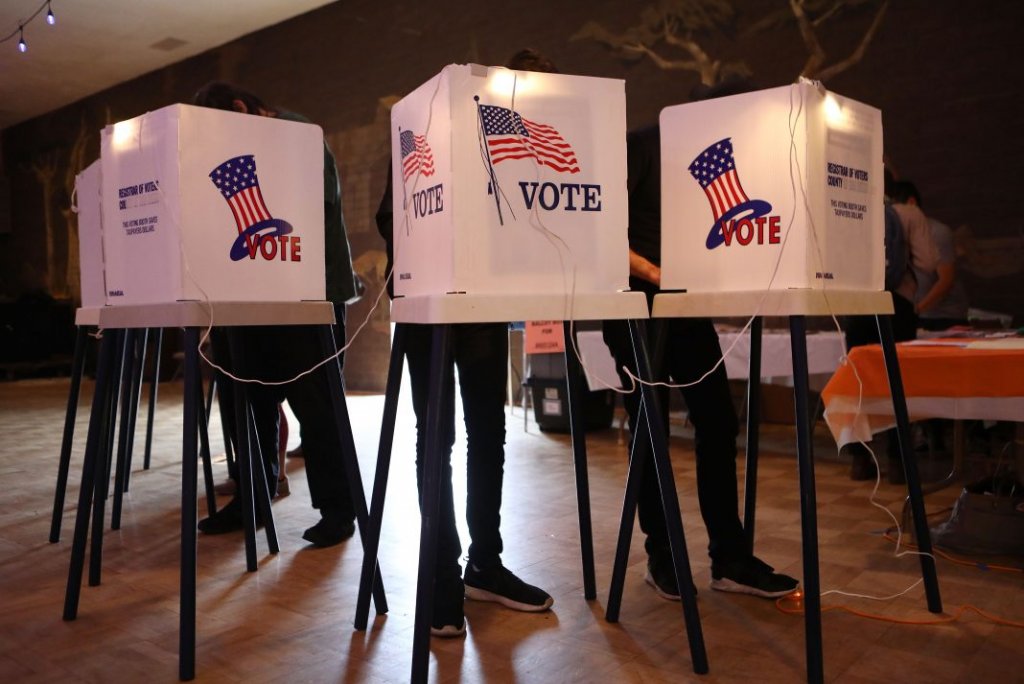
    Voters casting ballots. | Mario Tama/Getty Images

    BY:  Ohio Capital Journal

    The Ohio Ballot Board submitted its comments to the Ohio Supreme Court, pushing back against claims they abused their power in verifying a proposed abortion amendment to the state constitution.

    The Ohio Attorney General’s Office wrote a brief on behalf of the ballot board, saying its members “correctly refused to usurp the people’s power by splitting the petition … into multiple amendments.”

    The lawsuit, filed on behalf of two members of Cincinnati Right to Life, argued that the amendment contains more than one constitutional issue, therefore should be split, and should not have been unanimously approved by the ballot board.

    The ballot board’s OK allowed pro-abortion rights groups to move forward with signature collection, in which they must collect more than 400,000 valid voter signatures by July 5.

    Because the proposed amendment mentions reproductive health and abortion, attorney Curt Hartman argued the ballot measure involved two different issues, a claim pro-abortion rights groups and the Ohio Ballot Board members deny.

    “The weakness of (Right to Life members Margaret DeBlase and John Giroux’s) claim is best exemplified by their failure to argue how many proposed amendments are supposedly included within the petition and what those amendments are,” Assistant Attorney General Julie Pfeiffer wrote on behalf of the ballot board.

    The ballot board is made up of legislative members, citizens, and the Ohio Secretary of State, who chairs the board. Currently, the legislative members are state Sen. Theresa Gavarone, R-Bowling Green; state Sen. Paula Hicks-Hudson, D-Toledo; and state Rep. Elliot Forhan, D-South Euclid.

    Secretary of State Frank LaRose is the chair, and Stoutsville resident William Morgan completes the board.

    One of the arguments made in the lawsuit is that no discussion was held when the board met to consider the amendment. LaRose asked for discussion before he asked for a vote, and none happened.

    Gavarone was the only one to make a comment, speaking against the amendment, but voting yes to the move, calling it a “procedural” vote.

    “(Giroux and DeBlase) fail to show how any alleged failure by the ballot board members to conduct a fulsome discussion amongst themselves before voting to certify the proposed amendment led to a decision that was ‘unreasonable, arbitrary or unconscionable,” the AG’s office wrote in defense of the board.

    LaRose made several comments during the meeting explaining that the vote did not represent any comments on the merits of the initiative, and instructed the public not to speak on the merits, as the vote was only to decide whether the measure only involved one constitutional issue.

    In response to the lawsuit, Pfeiffer brought up Giroux, who spoke during the public comment portion of the meeting. Giroux called the amendment “intentionally unjust and misleading,” but he “did not offer any specific proposal splitting up the petition or further opine as to the number or content of the separate amendments contained therein,” the board argued to the court.

    The ballot board did not need to analyze facts in the case, Pfeiffer argued, only whether the petition contains one amendment “on the face of the document.”

    ____________________________

    Susan Tebben
    SUSAN TEBBEN

    Susan Tebben is an award-winning journalist with a decade of experience covering Ohio news, including courts and crime, Appalachian social issues, government, education, diversity and culture. She has worked for The Newark Advocate, The Glasgow (KY) Daily Times, The Athens Messenger, and WOUB Public Media. She has also had work featured on National Public Radio.

    MORE FROM AUTHOR

  • Northeast Communications center becomes member of program to protect children

    Northeast Communications center becomes member of program to protect children

    Loveland and Symmes Township, Ohio – From the moment the report of a missing child comes in, to the resolution of the case, every action taken has the potential to make the difference between a successful recovery and a tragic outcome.

    The National Center for Missing and Exploited Children (NCMEC) developed the Missing Kids Readiness Program to promote best practices for responding to calls of missing, abducted, and sexually exploited children. Emergency communications centers and law enforcement agencies are recognized for meeting essential training and policy elements demonstrating preparedness for responding to a missing child incident.

    To meet the requirements of the Program, the Northeast Communications Center (NECC) located at the Loveland Safety Center on Lebanon Road worked with NCMEC on their missing child policy to ensure it met the critical elements of the model policy for emergency communications centers. In addition, Aaron Burg, Captain of Communications, completed the required agency administrator training and ensured all Dispatchers and Training Officers completed their required training.

    “By demonstrating remarkable leadership, and making this commitment of training and preparedness, NECC is communications to its citizens and families that protecting the lives and safety of their children is a top priority,” said Symmes Township in their Spring newsletter.

    Armed with the information, knowledge, and operational resources gained through meeting the program criteria, NECC is positioned to respond more quickly, comprehensively, and effectively when a child’s life or safety may be at stake.

    NECC becomes the 8th emergency communications center in the State of Ohio and the 2nd in the Greater Cincinnati region to become a member in the Missing Kids Readiness Program.

    To learn more about NCMEC and the Missing Kids Readiness Program, click here.

    To see the full listing of all MKRP recognized agencies, click here.

    Learn more about the Northeast Communications Center (NECC) located at the Loveland Safety Center on Lebanon Road. Since 1999, the Northeast Communications Center has been providing 911 service, emergency, and non-emergency dispatching for the City of Loveland and Hamilton County District 3.

  • Snider Road Closure

    Snider Road Closure

    [vc_row][vc_column][vc_column_text]Symmes Township, Ohio – The Township has announced that beginning on Monday, April 3rd, Snider Road was to be closed for up to 120 days to repair the overpass structure which is situated just north of the I-71/I-275 interchange. The project will include replacing the concrete parapets and vandal fencing and conducting other minor bridge work.

    Traffic will be detoured by way of Kemper Road, US 22/3, Mason-Montgomery Road and Fields-Ertel Road.

    For more information, contact Kathleen Fuller at the Ohio Department of Transportation at (513) 933-6517.[/vc_column_text][/vc_column][/vc_row]

  • Think tank blasts Ohio flat tax proposal

    Think tank blasts Ohio flat tax proposal

    [vc_row][vc_column][vc_column_text]

    The Oho Statehouse, Columbus, Ohio. (Photo by Graham Stokes for the Ohio Capital Journal. Republish photo only with original story.)

    The way that the law is written would only complicate the state’s school-funding woes, take money from libraries, and increase property taxes for farmers and homeowners, it added.

    BY:  Ohio Capital Journal

    It sounds fair. If everybody paid income taxes at the same rate, the rich would pay more because of their higher incomes and the poor would pay less because they make less in the first place.

    But an Ohio proposal to enact such a “flat” state income tax ignores a host of other taxes, said a progressive public policy think tank. And the way that the law is written would only complicate the state’s school-funding woes, take money from libraries, and increase property taxes for farmers and homeowners, it added.

    “One of the myths that we have to dispel is that flat taxes make things fair,” said Guillermo Bervejillo, a state policy fellow at Policy Matters Ohio. “It’s quite the opposite. One of the things people forget when they talk about income taxes is that there’s a whole array of state taxes.”

    Bervejillo was speaking in reference to House Bill 1, which, as the bill number implies, is a top priority of the Ohio House’s Republican leadership. A spokesperson for that leadership didn’t respond to questions about the many criticisms that Policy Matters made of the bill.

    One is that many economists have long argued that so-called “flat” income taxes add to the overall tax burden shouldered by the poor and act as yet another means of lightning that of the wealthy.

    “There’s use taxes, sales taxes, excise taxes, taxes that are generally focused around consumption and use,” Bervejillo said.

     Graphic from the Center on Budget and Policy Priorities. 

    He explained that those kinds of taxes are the same for everybody, no matter her or his income. Buy a $100 pair of shoes in Ohio and you pay $5.75 in state sales tax regardless of whether you make $100 in a minute or in a whole day of work.

    “You can only buy so much toilet paper,” Bervejillo said, explaining why sales and excise taxes fall more heavily on the poor. “You can only drive so many miles.”

    The cumulative impact of those taxes is that the poor pay much more as a percentage of their income in state and local taxes than do the rich.

    “On average, the lowest-income 20% of taxpayers face a state and local tax rate more than 50% higher than the top 1% of households,” the Institute on Taxation and Economic Policy said in a report, Who Pays? “The nationwide average effective state and local tax rate is 11.4% for the lowest-income 20% of individuals and families, 9.9% for the middle 20 percent, and 7.4 percent for the top 1%.”

    Federal and state income taxes are the few exceptions that were originally structured to be “progressive.” In other words, they were intended to fall most heavily on those with the greatest ability to pay.

    And it’s true that if you take those and all other taxes into account, the richest Americans pay a bigger portion of their incomes out in taxes than poorer Americans. But the spread isn’t very wide.

    In 2019, the poorest 20% of Americans paid 20.2% of their incomes in taxes, while the richest 1% paid 33.7%, the Institute on Taxation and Economic Policy reported.

    But in Ohio if you take just state and local taxes into account, the script is flipped. In 2018, the poorest 20% paid almost twice as much of their income in such taxes — 12.3% — as the richest 1%, who paid just 6.5% of their lavish incomes in state and local taxes, the institute reported.

    And if Ohio were to enact a flat income tax, it would come on the heels of other measures in which the state has foregone large sources of revenue largely to the benefit of the wealthy.

    Ohio is giving up about $1 billion a year on a tax break for limited liability corporations. It was sold as a way to incentivize mom-and-pop businesses, but a 2017 analysis by the Ohio Legislative Service Commission found that as much as $450 million of that annual benefit was going to the highest 0.5% of Ohio wage earners.

    Meanwhile, there’s been no evidence that the cut improved Ohio’s jobs picture. It was 39th among states for job growth in February 2003 — well before the LLC tax cut was implemented, according to data compiled by Arizona State University’s Seidman Institute. By last month, Ohio ranked 46th in year-over-year job growth.

    And former Gov. John Kasich created JobsOhio by diverting funds from the state liquor monopoly. It’s spent more than $1 billion on things like incentives for wealthy businesses to locate to Ohio, but the agency has struggled to show that those expenditures have made much of a difference to the state’s jobs picture.

    But aside from fairness, Policy Matters raised another objection to HB 1 — it’s not paid for. Working from a fiscal analysis of the bill by the Legislative Services Commission, the group found that after the initial phase-in:

    • Property taxes on farmers and homeowners would increase at least $600 million a year because of “changes in the bill and the operation of Ohio’s existing property tax limit, known as House Bill 920.”
    • Schools, libraries and local governments would lose hundreds of millions of dollars a year.
    • There would be $780 million in annual net losses to the state that are not paid for in the bill.

    Bervejillo said it’s not hard to understand why pain would spread to large swaths of Ohioans from the flat-tax proposal.

    “At the end of the day, there’s only two things you can do when you cut taxes on the wealthy,” he said. “You can either cut services — and who depends more on services than low-income people? Or you increase sales and use taxes and gas taxes and cigarette taxes that fall disproportionately on low-income and working-class Ohioans.”

    _________________________________

    Marty Schladen
    MARTY SCHLADEN

    Marty Schladen has been a reporter for decades, working in Indiana, Texas and other places before returning to his native Ohio to work at The Columbus Dispatch in 2017. He’s won state and national journalism awards for investigations into utility regulation, public corruption, the environment, prescription drug spending and other matters.

    MORE FROM AUTHOR

    [/vc_column_text][/vc_column][/vc_row]

  • Loveland’s annual road program

    Loveland’s annual road program

    [vc_row][vc_column][vc_column_text]Loveland, Ohio – Here is the list of the streets, or sections of streets that will be repaved in the city this year.

    Construction is expected to begin this spring.

    Sawcutting of curb sections to be replaced was scheduled to begin on March 31. On-street parking restrictions and minor traffic delays are expected, according to the City.

    • Apache Ct.
    • Bellwood Dr. (Sunrise to West terminus)
    • Bloomfield Ct.
    • Bridlespur
    • Cones Rd. (within City limits)
    • County Down Ln. (Brandywine to South terminus)
    • Fox Chase Dr.
    • High Country Ln.
    • Highcliff Ct.
    • Navaho Dr.
    • Oneida Dr.
    • Potomac Ct.
    • Pueblo Plc.
    • Rednor Ct.
    • Seminole Dr.
    • Shelburn Dr.
    • Silver Fox Ct.
    • Sioux Dr.
    • Sunrise Dr.
    • W. Main St. (Cherokee to West terminus).
    • Limited pavement repairs (without repaving) will also be performed on portions of Kerr Cemetery Rd.

    [/vc_column_text][/vc_column][/vc_row]

  • Loveland Bike Trail closing delayed until October

    Loveland Bike Trail closing delayed until October

    [vc_row][vc_column][vc_column_text]Loveland, Ohio – The Little Miami Chamber Alliance has announced that the closing of the Loveland Bike Trail for repairs will be delayed until October 2023.[/vc_column_text][vc_raw_html]JTNDaWZyYW1lJTIwc3JjJTNEJTIyaHR0cHMlM0ElMkYlMkZ3d3cuZmFjZWJvb2suY29tJTJGcGx1Z2lucyUyRnBvc3QucGhwJTNGaHJlZiUzRGh0dHBzJTI1M0ElMjUyRiUyNTJGd3d3LmZhY2Vib29rLmNvbSUyNTJGTE1SQ2hhbWJlckFsbGlhbmNlLm9yZyUyNTJGcG9zdHMlMjUyRnBmYmlkMDJRNUFnOFgzZnpqZW9LblFXb0VnSGdMODlHd3JFY3hXVEZvbVhhY0FUQ2E1RlZmUk1XdFZkU1QxaVg3MzZZQnpDbCUyNnNob3dfdGV4dCUzRHRydWUlMjZ3aWR0aCUzRDUwMCUyMiUyMHdpZHRoJTNEJTIyNTAwJTIyJTIwaGVpZ2h0JTNEJTIyNjUxJTIyJTIwc3R5bGUlM0QlMjJib3JkZXIlM0Fub25lJTNCb3ZlcmZsb3clM0FoaWRkZW4lMjIlMjBzY3JvbGxpbmclM0QlMjJubyUyMiUyMGZyYW1lYm9yZGVyJTNEJTIyMCUyMiUyMGFsbG93ZnVsbHNjcmVlbiUzRCUyMnRydWUlMjIlMjBhbGxvdyUzRCUyMmF1dG9wbGF5JTNCJTIwY2xpcGJvYXJkLXdyaXRlJTNCJTIwZW5jcnlwdGVkLW1lZGlhJTNCJTIwcGljdHVyZS1pbi1waWN0dXJlJTNCJTIwd2ViLXNoYXJlJTIyJTNFJTNDJTJGaWZyYW1lJTNF[/vc_raw_html][vc_column_text]Read Background

    Loveland Bike Trail’s O’Bannon Creek Bridge Closure

    [/vc_column_text][/vc_column][/vc_row]