[vc_row][vc_column][vc_column_text]Miami Township, Ohio – Barrett Paving will be resurfacing12.6miles of road,andadditionally replacing curb and gutter at needed locations. Work will be performed this summer when school is not in session to avoid conflicts with school buses. They are allowing the contractor to begin concrete work as soon as temperature and weather are appropriate.
The project also includes an asphalt rejuvenation treatment. An asphalt rejuvenator is a substance that penetrates asphalt and is designed to replace the lost maltenes, the soft fraction of the asphalt binder in the original asphalt pavement. This should restore the original qualities of viscosity and significantly extend the life of the pavement according to the Township Service Director, John Musselman.
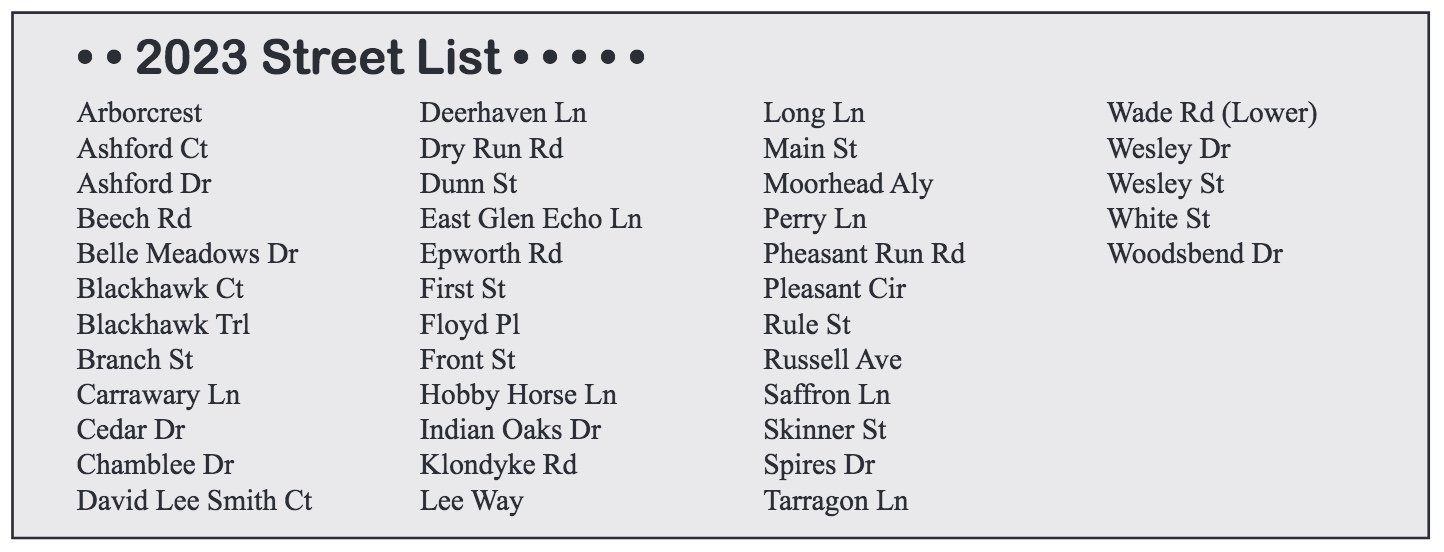
Here is the list of streets in the Township that are scheduled for resurfacing.
What does an AR-15 do to a human body? A visual examination of the deadly damage. – Washington Post
How to Make a Difference
Moms Demand Action is a grassroots movement of Americans fighting for public safety measures that can protect people from gun violence. We pass stronger gun laws and work to close the loopholes that jeopardize the safety of our families. We also work in our own communities and with business leaders to encourage a culture of responsible gun ownership. We know that gun violence is preventable, and we’re committed to doing what it takes to keep families safe.
After Jim Brady, a gun owner, Republican and President Reagan’s Press Secretary, survived a gunshot to his head, he and his wife Sarah, worked tirelessly alongside Democrats and Republicans to pass the bipartisan Brady Bill to ensure background checks were conducted on gun sales. But we cannot rest on that victory. America’s gun violence epidemic continues to worsen. Today, led by Brady President Kris Brown, we work with gun owners and non-gun owners and individuals of all identities and ideologies to create solutions! Together, there is nothing we cannot accomplish.
A movement of nearly 10 million mayors, teachers, survivors, gun owners, students, and everyday Americans.
Ultimately, our movement exists to end gun violence and save lives.
Thanks to the hard work of our volunteers across the country, we have won unprecedented victories against the gun lobby—at the ballot box, in state legislatures, and in corporate America.
Born out of a tragic school shooting, March For Our Lives is a courageous youth-led movement dedicated to promoting civic engagement, education, and direct action by youth to eliminate the epidemic of gun violence.
We aim to create safe and healthy communities and livelihoods where gun violence is obsolete.
From Tragedy To Transformation
Sandy Hook Promise is a national nonprofit organization founded and led by several family members whose loved ones were killed at Sandy Hook Elementary School on December 14, 2012. Based in Newtown, Connecticut, our intent is to honor all victims of gun violence by turning our tragedy into a moment of transformation. By empowering youth to “know the signs” and uniting all people who value the protection of children, we can take meaningful actions in schools, homes, and communities to prevent gun violence and stop the tragic loss of life.
[/vc_column_text][vc_video link=”https://www.youtube.com/watch?v=WXtFhqIhWwo”][vc_column_text]Access to an unsecured firearm in the home increases the risk of injury or death. Protect yourself and your loved ones by storing your guns securely – locked, unloaded, and away from ammunition. Learn more about safe gun storage practices at www.EndFamilyFire.org.[/vc_column_text][vc_video link=”https://youtu.be/UwZXj0rymOU” title=”Access to an unsecured firearm in the home increases the risk of injury or death. Protect yourself and your loved ones by storing your guns securely – locked, unloaded, and away from ammunition. Learn more about safe gun storage practices at www.EndFamilyFire.org.”][/vc_column][/vc_row]
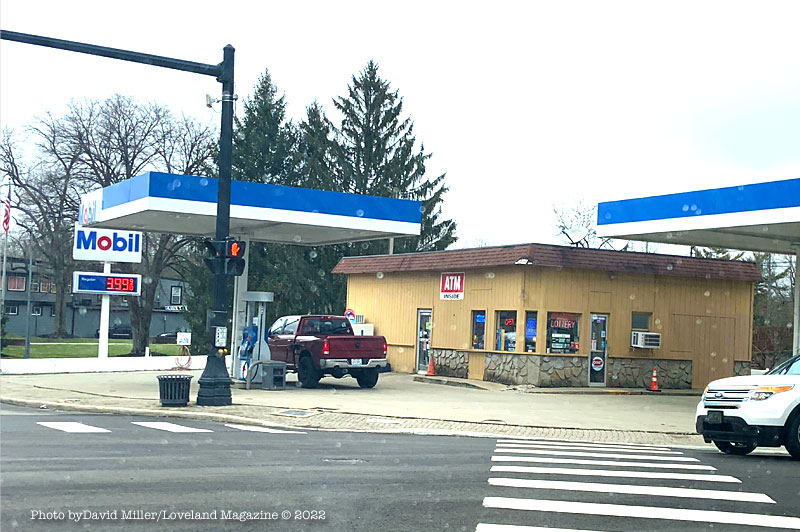
Loveland, Ohio – Last night by a unanimous “emergency” vote, City Council voted to allow City Manager Dave Kennedy to proceed with the purchase of the Mobil gas station at the corner of West Loveland and State Route 48 in Historic Downtown Loveland.
The ordinance authorizes the City Manager to execute a purchase agreement for the property located at 106 West Loveland Avenue for the construction of a turn lane and other traffic improvements.
You can read the background and details of the purchase here:
In this LOVELAND MAGAZINE TV segment, you can watch Kennedy explain why the Ordinance was declared an “emergency”, some of the financing of the project, how tax increment financing will be used, the turn lane, and a pocket park he intends to construct on the site.
We are pleased people are now researching the Pandemic and how local newspapers survived. Some didn’t. Loveland Magazine did survive, and it was pure everyday persistence, sacrifice, and a dedication to staying alive (literally), and as a local Newspaper. We were early declared “Essential Workers” however that declaration did not provide us anything as the designation was quickly ignored at every level of government when they dolled out relief dollars and the help they could have provided. We stood in line with everyone else at the chance to apply for PPE funds, etc., and at times we were at the back of the lines for eligibility. We were still standing when our own City bought new high-tech water fountains with the COVID relief funds they received. Much of what you read here though is how we did it. What this story misses is an incredible effort it took for local papers in smaller communities to find accurate specific COVID 19 data in a hometown like ours that is in three counties with each county reporting in different formats and on different days of the week.
But how did so many local news organizations – especially newspapers – manage to survive the pandemic? Weeklies beefed up their daily online news coverage, business models were blown up and existing rationales for why journalism matters became more than theoretical to rural journalists.
Their determination to survive and serve as a public health lifeline for their communities fueled an oral history project that my colleague Teri Finnemanand I conducted, interviewing 28 journalists across seven states in the middle of the country. We learned how locally owned and family-owned newspapers made it through COVID-19.
“There’ve been times that we’ve had to reach out to mayors and different cities and communities across the state … to make sure that … they knew that [journalists] were deemed essential workers,” said Ashley Wimberley, executive director of the Arkansas Press Association. That label exempted news workers from stay-at-home orders and designated them as critically needed by their communities.
Oral history grabs the first impressions of history for those living now, looking back at what just happened. It helps people understand the present and how to move forward, out of a crisis. But it also records events for scholars and citizens in the future.
“Always remember that when you’re putting those stories in your newspaper, that you are printing your community’s history,” Amy Johnson, the publisher of the Springview Herald in Nebraska, told us.
Benny Polacca of the Osage News in Oklahoma told us something similar: He encouraged journalists covering some future pandemic to “do your due diligence in order to come to some type of understanding, some type of argument, some type of focus, if you were going to be reporting or researching the time of COVID-19.”
Often, it’s journalism on the coasts that gets the attention of researchers. The New York Times, The Washington Post, the Los Angeles Times – these big news organizations are written about constantly.
By talking to journalists in North Dakota, South Dakota, Nebraska, Kansas, Oklahoma, Arkansas and Louisiana, our project pushed back against this tendency to ignore the middle of the nation and its important journalism. As a kind of new essential worker, journalists found themselves in charge of explaining complicated guidance from state and local officials about COVID-19, how schools would work and where to get help.
“I hope that, through this, that our role as journalism, they [the public] realize how important it is that the information we put out, you know, how it affects them every day,” Johnson said.
Kansas Press Association Executive Director Emily Bradbury had a message for these journalists who were working for news organizations increasingly threatened with being shut down: “I want them to know that in the midst of an emergency, in the midst of what can seem like a hopeless situation, when they look at their financials, that what they’re doing is important. And what they’re doing matters, and that no one else can do what they do, and they look out for their communities like no one else.”
Emily Bradbury, Kansas Press Association Executive Director, tells reporters that ‘what they’re doing is important. And what they’re doing matters…and they look out for their communities like no one else.’ Will Mari and Teri Finneman, Author provided photo.
Loans, side hustles and deals
Reporters and editors found new ways of paying the bills. That meant accepting government subsidies in the form of Paycheck Protection Program loans. It meant, for some, going door to door and asking readers to subscribe, or keep subscribing. It meant consolidating newspapers, putting out more online editions, or taking pay cuts.
“People just don’t understand. It costs a lot of money and time to do this, and I just wish we – there was more value or people appreciate it or understood the value and the cost of really providing this service,” said Bonita Gooch, the publisher of The Community Voice, a Black newspaper based in Wichita, Kansas.
Some publishers took on side hustles to bring in revenue, creating ad copy for local business or doing marketing work.
At The Kingfisher Times & Free Press in Oklahoma, for example, Christine Reid, the paper’s editor, created ads for a local vocational-technical school. “I’ve also tried to use that as an avenue to … generate more ads for the newspaper,” Reid said.
Local publishers did whatever it took to stay afloat. As some of our initial findings have shown, that showed both opportunity and hesitancy about change.
“We’re gonna have to rely less on advertising revenue and more on subscription revenue, and so we’ve got to make sure we’re offering a unique product that they want to pay for,” said Letti Lister, the president and publisher of the Black Hills Pioneer in Spearfish, South Dakota.
We saw tentative signs of hope, as journalists got financial and moral support from their readers during a fraught election. “If anything, it’s rallied the troops, if you will, in our community because they trust us, they know that we’re going to report the news in a timely manner and keep the public up to date,” said Amy Wobbema, publisher of the New Rockford Transcript in North Dakota. Arguably most coverage was calm and steady.
But there was still hesitancy over what newspapers had to do to adapt. Some journalists are uncomfortable with receiving government funding and would rather rely on community support.
As South Dakota Newspaper Association Executive Director Dave Bordewyk put it: “Sort of, ‘Look, contribute to our newspaper … because if you value that importance of local news and journalism, then we need your support beyond just subscribing to the newspaper or advertising, which has gone away.’”
“That’s what we hope. What I hope comes out of this is that readers can understand that, and can … have a renewed value on what that [local] publication has done for their community during this pandemic,” Bradbury told us.
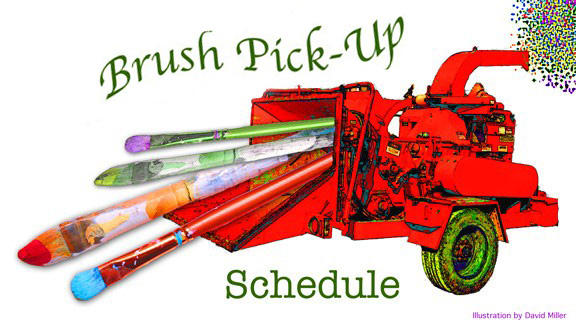
Loveland, Ohio – The 2021 fall brush pickup program will begin on Monday, November 8. Brush must be placed in the grass near the roadside no later than Sunday night, November 7.
The following are guidelines established for the brush pick-up program:
Brush must be placed at the curb or edge of the roadway. Do not place brush in the roadway, gutter, ditches, or on sidewalks. Do not block fire hydrants.
Limbs cannot exceed 10 inches in diameter at the cut section.
Limbs should be placed at the curb with the cut section facing the street and all limbs should be facing the same direction. This makes it easier and faster to handle.
No leaves, pine needles, grass clippings, or other yard waste will be collected.
Small twigs and sticks should be bundled with twine in bundles 12 inches in diameter. Twigs or sticks can also be placed in a container at the curb, but no other yard waste should be in the containers. Please, no loose piles of sticks and debris.
The 2022 spring brush pickup program will begin on Monday, March 21.
Any material not meeting these requirements cannot be collected and will be left at the curb.
Outside the regular pick-up schedule, residents are encouraged to come to City Hall to get a free voucher to drop off any yard waste to Evans Landscaping.
Wood chips will be available again this year. Anyone in the City who would like a full load of wood chips should call 513-707-6115.
Governor Mike DeWine emphasized that keeping kids in school, in-person, five days a week, remains a priority. He said, “We know that the best way to do that is to get students vaccinated. In addition to protecting kids from the severe effects of the virus, students who are vaccinated, do not have to quarantine if exposed, which means they won’t miss out on school.”
To encourage eligible children to get vaccinated, DeWine on Friday announced the Ohio Vax-2-School program, which will be open to Ohioans between the ages of 12 and 25, and will be similar to the scholarship portion of the successful Vax-a-Million program. Prizes will include 50 scholarships worth $10,000 each and five $100,000 scholarships to an Ohio college or university for career or technical education. Prizes will be announced Monday through Friday beginning the week of October 11th.
More details will be announced, including how to register, in the coming days.
Returning from summer break, the Ohio legislature could review two GOP-led pieces of legislation that would place health mandates on patients considering abortions.
One of the bills, recently introduced by state Rep. Jennifer Gross, would require physicians to dictate the results of a mandated ultrasound and also provide information about a link between breast cancer that has been disproven by multiple medical organizations.
Patients already have to meet with a physician 24 hours before an abortion, but under this bill, along with hearing about the medical risks of the procedure and the probably gestational age, a patient would be told “the possible increased risk of breast cancer that is associated with women who have undergone an abortion,” along with the “short-term and long-term risk of psychological or emotional harm” from choosing to have an abortion.
Multiple organizations, including the American Cancer Society, the American College of Gynecologists and the Susan G. Komen Breast Cancer Foundation have denied the link, citing research studies on the relationship between breast cancer and abortion.
The American Cancer Society said these research studies “have not found a cause-and-effect relationship between abortion and breast cancer.”
The Gross bill has not been assigned to a committee for consideration, but it has several sponsors, all Republican.
Meanwhile, a separate bill seeking to notify abortion patients of possible risks was introduced during the legislature’s summer break, and has been assigned to the House Health Committee.
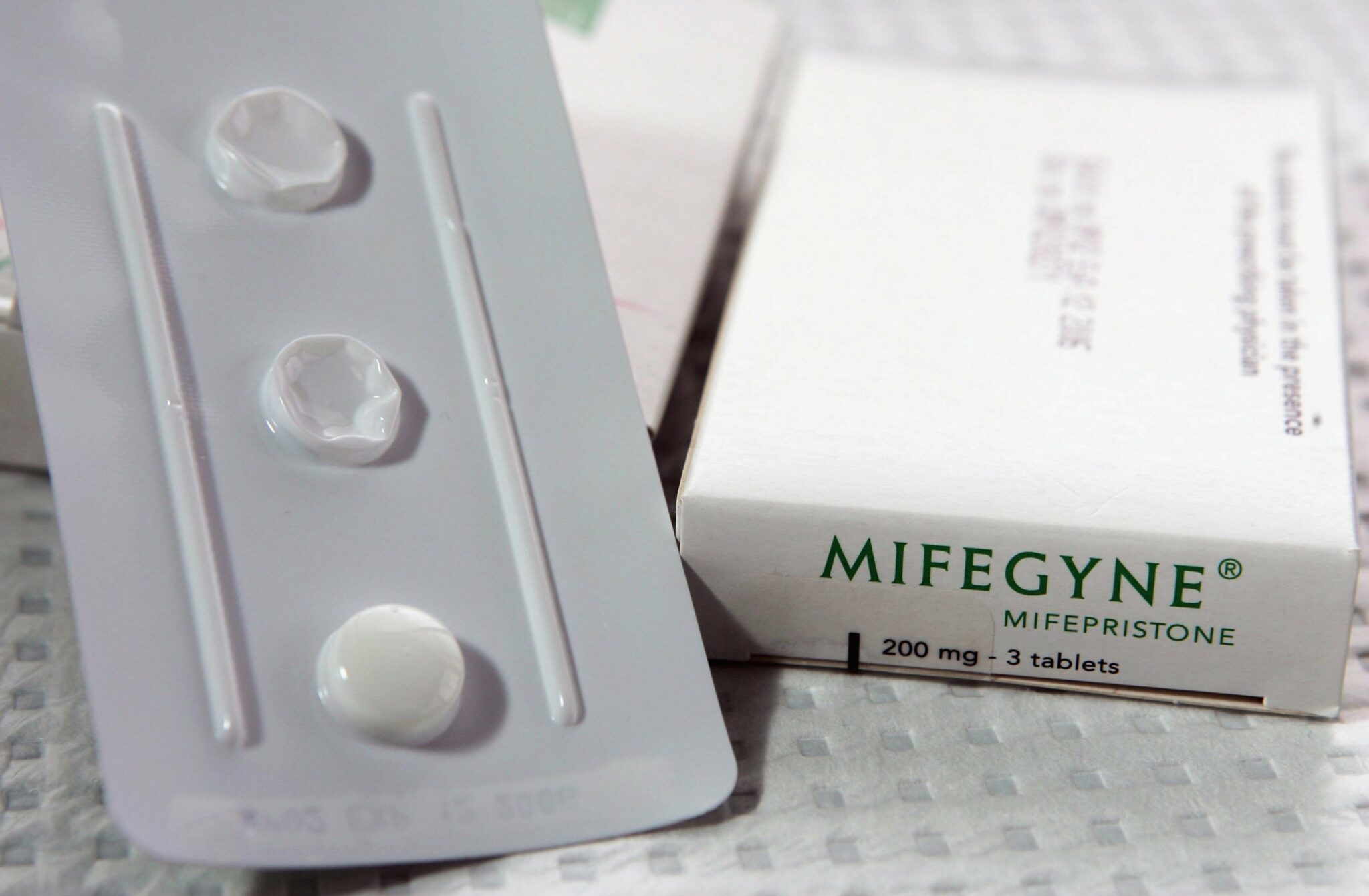
House Bill 378 was introduced in July by state Reps. Kyle Koehler, R-Springfield, and Sarah Fowler Arthur, R-Ashtabula, and specifically targets medication abortion, which is done through a two-pill regimen, rather than surgery.
The bill would require medical professionals to explain a controversial and medically unproven method of “reversing” the abortion by not taking the second of the two-pill regimen and giving additional progesterone to counteract the first pill.
The American College of Obstetricians and Gynecologists said claims about the “reversal” method “are not based in science and do not meet clinical standards.”
The bill is a reintroduction of a similar one that passed the Senate in 2019, but didn’t make it through the House.
Abortion is legal in the state of Ohio up to 20 weeks gestation.
Susan Tebben is an award-winning journalist with a decade of experience covering Ohio news, including courts and crime, Appalachian social issues, government, education, diversity and culture. She has worked for The Newark Advocate, The Glasgow Daily Times, The Athens Messenger, and WOUB Public Media. She has also had work featured on National Public Radio.
Loveland, Ohio – Beginning Tuesday, May 26, Ohio Bureau of Motor Vehicles (BMV) locations in Ohio will be permitted to reopen for certain services if these facilities can meet required safety protocols.
BMV says that services that can be accomplished online should still be done online. More details on online BMV services can be found at oplates.com.
The BMV is currently experiencing a high volume of orders and processing times are longer than usual according to a disclaimer on their web portal. “Temporary tag processing times may be longer than 10 business days.”
Due to HB 197, all temporary tags that are about to expire or are expired are still valid for 90 days after the expiration. It is not necessary to purchase a new temporary tag.
The BMV is creating a detailed list of guidelines and best practices for deputy registrars to follow. A full list of mandatory and recommended best practices will be available soon at coronavirus.ohio.gov.
Loveland, Ohio – The first week of May, Ohio Governor Mike DeWine announced budget cuts to balance the State budget.
Loveland City School District Treasurer Kevin Hawley
Due to the economic impact of COVID-19, Governor DeWine said that $775 million in reductions to Ohio’s General Revenue Fund are needed for the remainder of the Fiscal Year 2020 which ends on June 30.
DeWine said that Ohio is mandated to balance its budget each year, and in addition to identifying areas of savings, the following budget reductions will be made for the next two months:
Medicaid – $210 million
K12 Foundation Payment Reduction – $300 million
Other Education Budget Line Items – $55 million
Higher Education – $110 million
All Other Agencies – $100 million
Loveland Magazine reached out to the Loveland City School District Treasurer Kevin Hawley asking him to comment on the impact of the State cutting revenue to the District.
Thank you for reaching out. I can confirm pieces of this information. For your convenience, I have attached the list from The Ohio Department of Education (ODE) outlining the data for all districts in the state of Ohio. (K-12_Education (2)-1) The amount of the state revenue reduction is $1,010,855. The percentage you are referencing is how much the reduction in revenue is to our ODE calculated overall operating expenditures as stated on the form attached. The percentage decrease of our state revenue for this year is just below 8% and is a decrease of 2% from our overall operating revenue.
The current state funding cuts are for this fiscal year (July 2019 – June 2020) and will be deducted in the next couple months on our last three state payments. School districts receive their annual state revenue in 24 payments, twice a month. We have been instructed that these payments will be taken out equally from our second May payment and both of our payments in June to finish out the fiscal year. At this point in time there is not clarification from the state of Ohio as to whether there will be further revenue cuts for next year. The state’s budget is primarily funded through sales and income tax and those numbers are announced monthly around the 10th of every month. I have not seen the April numbers at this point in time but my guess is that this current reduction is due to those numbers being much lower than projected pre-COVID. The May and June reports on sales and income tax revenue will be very revealing for how the state’s budget may be impacted next year and ultimately how that impacts K-12 education.
The Governor has stated that there is federal funding that may benefit local school districts. At the present time, there is approximately $300k in additional money through the state from the CARES Act. Ultimately, this will help with the reductions in state funding but does not close the gap.
We were anticipating news of potential revenue cuts from the state but were unsure of the size or which fiscal year it would impact. We are always evaluating ways to make our district more efficient and find ways to save and we will continue to do that work. Having just received the specific amount of the revenue cuts Wednesday morning (May 6) we were not factoring this decrease into the budget for next year’s planning and the Board of Education has not had the opportunity to discuss any potential cuts due to this. As we work through the overall financial impact and implications of this budget reduction, recently failed levy and other factors due to COVID-19 the Board will discuss if any future budget cuts are necessary.
There are 22,131 confirmed and probable cases of COVID-19 in Ohio and 1,271 confirmed and probable COVID-19 deaths. A total of 4,140 people have been hospitalized, including 1,167 admissions to intensive care units. In-depth data can be accessed by visiting coronavirus.ohio.gov.
Video of yesterday’s State House announcements, including versions with foreign language closed captioning, can be viewed on the Ohio Channel’s YouTube page.
191 cases. (46 new possible cases in last 14 days). 36 hospitalizations. (9 new hospitalizations in last 14 days). 13 total deaths (3 in the last 14 days).
In Loveland City Council unanimously passed a resolution expanding the dates and times for the operation of the Designated Outdoor Refreshment Area (“DORA”) in downtown Loveland. The action authorized the City Manager to implement this expansion once the State relaxed the Stay at Home Order or allowed residents to leave their homes to engage in non-essential work or activities.
On Thursday, City Manager Dave Kennedy used that authority and announced that the expansion of the DORA will begin Saturday, May 9, at noon and run until 11 PM. The DORA will remain in effect 7 days a week for 60 days.
Within the DORA people can purchase alcoholic beverages in a designated cup from permitted establishments and carry the beverages outside within a defined Downtown area.
Additional picnic tables have been placed in Nisbet Park. Visitors to Historic Downtown may also bring tables or chairs to use as long as they “maintain safe distancing guidelines which will also be posted in the downtown area.”
The newly renovated restrooms in Nisbet Park are also open and will be sanitized daily by the City.
In Columbus, Ohio Governor Mike DeWine, Lt. Governor Jon Husted, and Dr. Amy Acton, MD, MPH, announced Thursday the next phase of the Responsible RestartOhio plan as it relates to restaurants, bars, and personal care services.
As part of yesterday’s announcement, Governor DeWine reminded Ohioans that COVID-19 is still “incredibly dangerous” and stressed the importance of continuing to exercise safe health habits as different sectors of the economy begin to reopen.
“Reopening Ohio is a risk, but it’s also a risk if you don’t move forward. We’re on a dangerous road that has never been traveled before in Ohio and the danger is that we relax and stop taking precautions,” said DeWine. “All of us collectively control this. I ask you to take calculated risks and make good judgments. Continue social distancing, washing your hands, and wearing face coverings. If you aren’t concerned with what happens to you, do it for others.”
RESTAURANTS/BARS
Restaurants and bars in Ohio will be permitted to reopen as follows:
Outdoor dining: May 15
Dine-in service: May 21
DeWine’s Restaurant Advisory Group created a detailed list of guidelines and best practices for restaurant and bar owners to follow. The full list of mandatory and recommended best practices can be found at coronaviurs.ohio.gov.
PERSONAL CARE SERVICES
Personal care services such as hair salons, barbershops, day spas, nail salons, and tanning facilities may reopen on May 15.
DeWine’s Personal Services Advisory Group created a detailed list of guidelines and best practices for personal care service providers to follow. The full list of mandatory and recommended best practices can be found at coronaviurs.ohio.gov.
CURRENT OHIO DATA
There are 22,131 confirmed and probable cases of COVID-19 in Ohio and 1,271 confirmed and probable COVID-19 deaths. A total of 4,140 people have been hospitalized, including 1,167 admissions to intensive care units. In-depth data can be accessed by visiting coronavirus.ohio.gov.
Video of yesterday’s announcements, including versions with foreign language closed captioning, can be viewed on the Ohio Channel’s YouTube page.


 [/vc_column_text][/vc_column][/vc_row]









 is an award-winning journalist with a decade of experience covering Ohio news, including courts and crime, Appalachian social issues, government, education, diversity and culture. She has worked for The Newark Advocate, The Glasgow Daily Times, The Athens Messenger, and WOUB Public Media. She has also had work featured on National Public Radio.