Tag: Jake Zuckerman

  • House bill would ‘null’ and ‘void’ gun laws, court rulings that lawmakers oppose

    House bill would ‘null’ and ‘void’ gun laws, court rulings that lawmakers oppose

    By Jake Zuckerman and Ohio Capital Journal

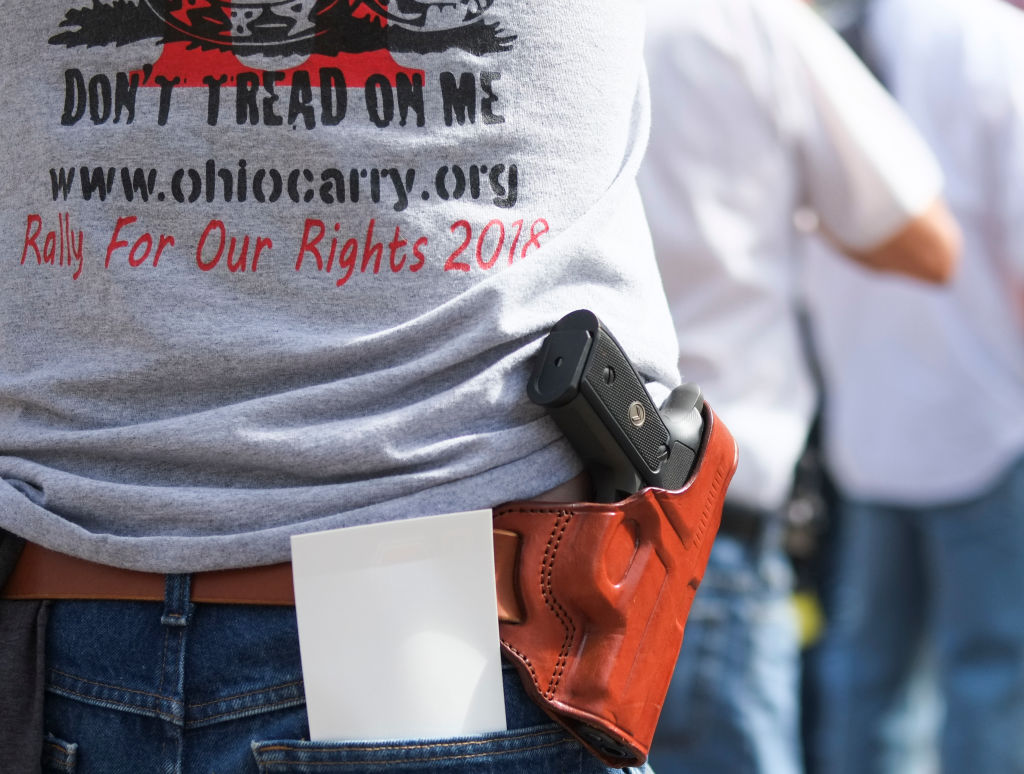
    Fourteen House Republicans signed onto legislation that would allow the state of Ohio to nix federal gun laws and court rulings that legislators deem to violate the Second Amendment to the U.S. Constitution.

    House Bill 62 would declare any federal law, executive order, administrative action, or court ruling to be “null, void, and of no effect in this state” if it infringes upon the Second Amendment.

    Legal acts that would qualify as infringements under the bill (the “Second Amendment Safe Haven Act”) include any of the following if they could “reasonably be expected to create a chilling effect.”

    • Any tax on guns, gun parts, or ammunition not common to other goods and services
    • Any registering or tracking of guns
    • Any registering or tracking of gun owners
    • Any act forbidding the possession, ownership, use or transfer of guns or ammo by law-abiding citizens
    • Any act ordering the confiscation of guns

    The bill also prohibits law enforcement from enforcing any federal laws, court rulings, or orders that would qualify as infringements under the bill. If they do, they “shall be liable to the injured party in an action at law.”

    It would prohibit a defense known as “qualified immunity,” which state employees claim as a defense for carrying out their official job duties.

    Exactly how HB 62 would play out is unclear.

    For instance, President Joe Biden last week announced planned executive actions to limit the proliferation of “ghost guns” made of homemade parts without traceable serial numbers. This would likely qualify as an infringement under HB 62, even if the U.S. Supreme Court were to rule the executive action was constitutional. Judges or law enforcement tasked with enforcing the law would be caught in a legal pickle.

    Analysts with the Legislative Service Commission, a nonpartisan arm of the legislature that reviews legislation, determined the bulk of the law “may be vulnerable to challenge” under the Supremacy Clause of the U.S. Constitution, which gives federal law precedence over state law.

    Rob Sexton, legislative director of the Buckeye Firearms Association, said the bill reflects a General Assembly trying to get out in front of what they see as a looming barrage of gun control bills coming from Biden and a Democratically controlled federal government.

    However, he offered lukewarm support of the bill and said courts would likely need to work out its contours.

    “BFA supports what they’re trying to do,” he said. “We’re not sure exactly what the best way is to achieve this, that provides real protection for gun owners form federal overreach. But we’re definitely supportive of what it is they’re trying to accomplish.”

    The bill is sponsored by GOP state Reps. Mike Loychik, of Bazetta, and Diane Grendell, of Chesterland.

    “Especially with the current climate and rhetoric at the federal level, the preservation of our second amendment is now more crucial than ever before and it is my intent to protect this right for the people of Trumbull County,” Loychik said in a news release.

    State lawmakers don’t get to pick and choose which federal laws will apply to our state, said Kristine Woodworth, volunteer with the Ohio chapter of Moms Demand Action, which advocates against gun violence.

    If the recent rash of mass shootings across the country and the daily gun deaths right here in Ohio doesn’t wake up our state and federal lawmakers to the need for common-sense gun safety, I don’t know what will.” – Kristine Woodworth, volunteer with the Ohio chapter of Moms Demand Action

    “This bill also includes provisions that threaten local law enforcement and officials with lawsuits, fines, and the loss of employment simply for doing their job.

    “The majority of people in Ohio support common-sense public safety measures like background checks because they keep guns out of the hands of dangerous people who we can all agree shouldn’t have them, like domestic abusers, people with violent criminal records, and people prohibited from owning a gun for mental health reasons. If the recent rash of mass shootings across the country and the daily gun deaths right here in Ohio doesn’t wake up our state and federal lawmakers to the need for common-sense gun safety, I don’t know what will.”

    Gun advocates in Ohio are still coming off a high from a major win in the past several General Assembly sessions and have other long-sought policy aims in the hopper.

    On Thursday, a House committee is scheduled to begin its review of separate gun legislation that would remove licensure requirements for Ohioans 21-and-older to carry a concealed weapon.

    This comes after Gov. Mike DeWine signed into law “stand your ground” legislation earlier this year that removes the requirement to reasonably seek to retreat before responding to a perceived attack with deadly force. Other wins in the past two decades include establishing a concealed carry program, weakening requirements to obtain licensure within the program, and passing a state law that prohibits cities and counties from passing gun control legislation of their own.
  • Law takes effect legalizing concealed knife carry; also allows for brass knuckles

    Law takes effect legalizing concealed knife carry; also allows for brass knuckles

    By Jake Zuckerman and Ohio Capital Journal

    Ohioans can now secretly carry knives under a new law that took effect Monday.

    Prior law prohibited anyone in the state from carrying a concealed “deadly weapon” other than a handgun. House Bill 140 codifies into the law that knives, razors, or cutting instruments not used as a weapon do not count as a “deadly weapon.”

    Similarly, the new law allows for the manufacturing, sale and possession of brass knuckles, cestuses, billy clubs, blackjacks, sandbags, switchblade knives, springblade knives, gravity knives, and similar weapons.

    The bill passed on a nearly unanimous vote in the Senate (one Democrat opposed) and roughly on party lines in the House where five Democrats joined all Republicans voting in favor.

    “This is a great day for Ohioans who no longer have to worry that they might be arrested under a dangerously vague state law for carrying a common tool, their pocket-knife, concealed in their pocket,” said Doug Ritter, an advocate and founder of Knife Rights, an advocacy group.

    A powerful state law preempts cities or municipalities from imposing any gun restrictions on Ohioans beyond state and federal law. However, no such law exists for knives.

    Six House Republicans have introduced a knife pre-emption law. To date, the bill has not yet received a committee hearing.

    Last week, a “stand your ground” law took effect in Ohio, which removes the legal requirement that a person reasonably try to retreat from a perceived attack before responding with deadly force. Such legislation has been associated with modest increases in violent crime and disparate treatment in the criminal justice system on racial lines, public health research shows.

  • After plateau, COVID-19 trickles upward in Ohio

    After plateau, COVID-19 trickles upward in Ohio

    By Jake Zuckerman and Ohio Capital Journal

    Despite an accelerating vaccination effort, COVID-19 is on an upswing in Ohio.

    There are currently 1,140 Ohioans in the hospital with COVID-19, compared to 839 on March 21.

    Similarly, in mid-March, about 1,400 Ohioans were contracting COVID-19 per day on average. By the end of the month, the figure hit 1,700, according to data from the Ohio Department of Health.

    The seven-day average test positivity rate — portion of diagnostic tests on a given day with positive results — reached 4.3% Tuesday compared to 3% in early March.

    None of these indicators are anywhere near their winter peaks. However, their ticking upward comes despite efforts to slow the coronavirus’ spread through three COVID-19 vaccines authorized for use.

    About 3.77 million Ohioans are vaccine-started as of Tuesday, according to ODH data. Roughly 2.2 million of them are fully immunized.

    Variants of the new coronavirus that first emerged in late 2019 are likely fueling the spread.

    All three ‘variants of concern’ monitored by the CDC (B.1.1.7; B.1.351; and P.1) have now been detected in Ohio, according to agency data. Two of the variants are about 50% more transmissible than the original strain, according to the CDC.

    Since March 2020, nearly 19,000 Ohioans have died from COVID-19. More than 1 million have been infected.

  • After a week of gun violence, House Republicans seek to expand concealed carry

    After a week of gun violence, House Republicans seek to expand concealed carry

    By Jake Zuckerman and Ohio Capital Journal

    Columbus, Ohio – After a spate of seven mass shootings around the U.S. in seven days, Ohio House Republicans introduced legislation that would allow Ohioans aged 21 and older to carry a concealed weapon without a license.

    House Bill 227, introduced Tuesday by Republican Reps. Thomas Brinkman and Kris Jordan and co-sponsored by 20 more, also contains other gun rights expansions including:

    • Removing the requirement that licensed gun owners “promptly” notify a police officer during a stop that they have a weapon in the car. They would only need to tell the officer about the weapon if asked.
    • Creating an expungement system for people previously convicted of concealed weapons offenses

    Under current law, Ohioans must seek licensure from their local sheriff to lawfully carry a concealed weapon. They must complete eight hours of firearms training and complete criminal background and mental competency checks.

    Only fifteen states allow residents to carry concealed weapons without permits, according to analysis from the Giffords Law Center to Prevent Gun Violence.

    Constitutional carry bills like HB 227 have been introduced in every recent legislative session. However, gun advocates see this two-year session as critical, given it’s the last assembly comprised of members representing gerrymandered districts drawn on partisan lines that favor Republicans.

    “This is the session in which we need to pass a constitutional carry bill,” said Rob Sexton, legislative affairs director of Buckeye Firearms Association, discussing the bill and redistricting in a podcast last month.

    “This is the time to get it done.”

    The bill’s introduction comes on the heels of seven mass shootings (four or more killed or wounded) in seven days in the U.S., according to a CNN report.

    Ohio House Speaker Bob Cupp, R-Lima, declined to comment on the legislation while speaking to reporters Tuesday, saying he’s “reserving judgement” until he reads the bill. However, he generally affirmed his support for the Second Amendment to the U.S. Constitution.

    The legislation is likely to face staunch opposition from gun violence prevention advocates. Research from the Journal of Empirical Legal Studies in 2019 found that “right to carry” laws are associated with a 13% to 15% higher aggregate violent crime rate 10 years after adoption.

    Should the bill advance through the legislature, Gov. Mike DeWine could be a wildcard.

    After nine died and 27 were injured in a mass shooting in Dayton, he pushed for a comparatively modest set of gun control measures like increasing gun crime penalties and expanding a current legal mechanism allowing a judge to temporarily seize weapons from people with substance abuse or mental health problems.

    Lawmakers shelved the proposal and instead passed “stand your ground” legislation last year, removing the legal requirement to retreat before using deadly force in self-defense. DeWine repeatedly raised concerns with the bill, but unexpectedly signed it in the “spirit of cooperation” with lawmakers, he said at the time.

    DeWine spokesman Dan Tierney said the governor has not yet taken a position on the legislation.

    In 2004, Gov. Bob Taft signed Ohio’s constitutional carry program into law. Ohio Republicans expanded places where license holders can carry and decreased training requirements to obtain the license on multiple occasions since then.

    In 2020, more than 169,000 Ohioans were licensed to carry a concealed weapon. More than 400 licenses were revoked for causes including felony convictions and mental incompetence, according to a report from the attorney general.

  • Inside Ohio Republicans’ 10-month war on the state health department over COVID-19

    Inside Ohio Republicans’ 10-month war on the state health department over COVID-19

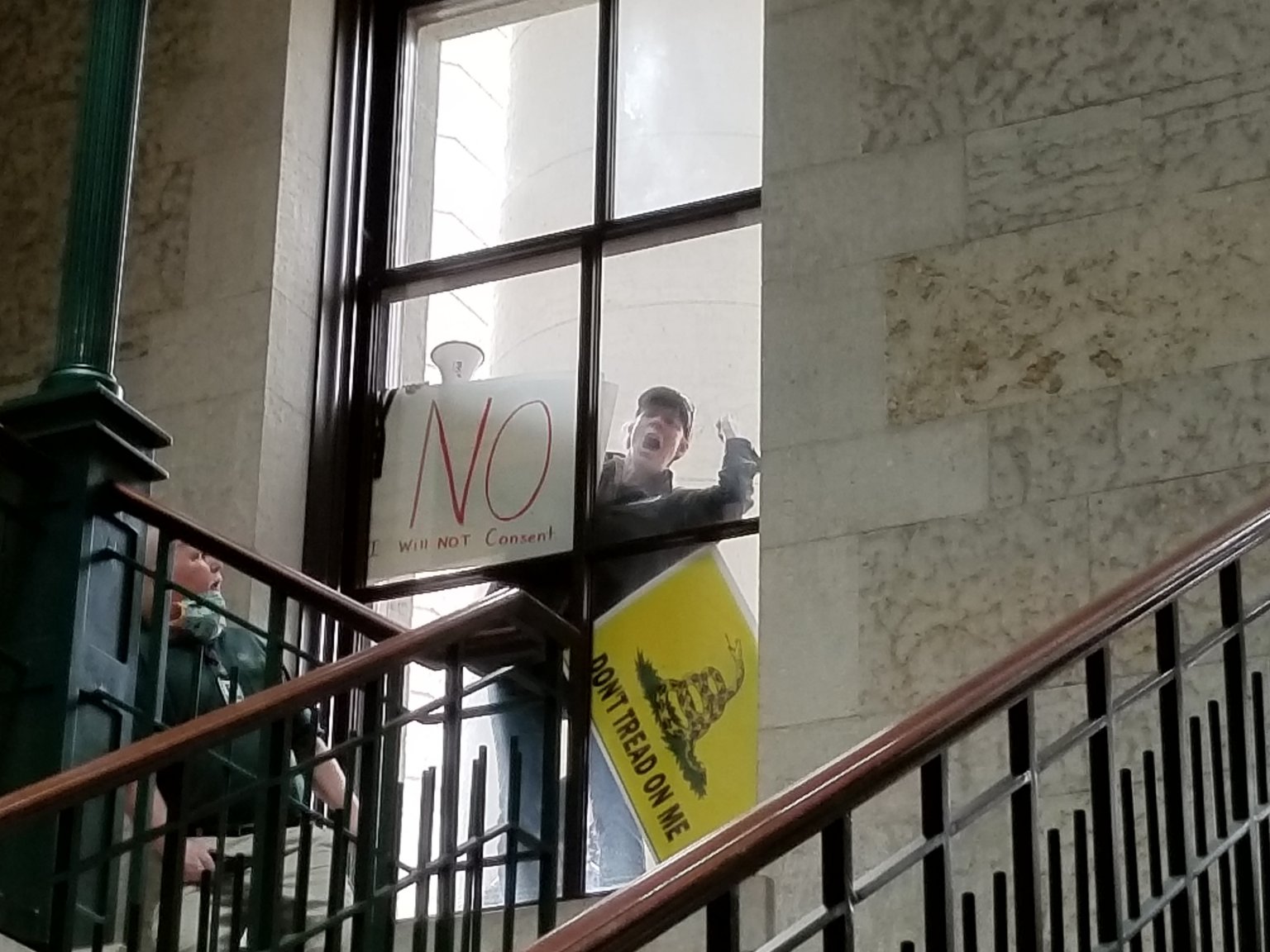
    A man protesting Ohio’s health orders at the state Capitol on May 1. Gov. Mike DeWine later repealed most of them only to start reimposing orders on Tuesday as coronavirus cases continued to surge. Capital Journal photo by Marty Schladen

    By Jake Zuckerman and Ohio Capital Journal

    Ohioans were living with the coronavirus for about two months before GOP lawmakers initiated what would be a nearly yearlong effort to squash the state health department’s ability to issue public health orders.

    The earliest version of the idea was to limit any order issued by the Ohio Department of Health to a two-week window. After that, a small panel of lawmakers would need to approve the order for it to stay in effect any further.

    “We are clearly on the downside of the curve, there is no longer a risk of overwhelming the health care system,” said now-former Rep. John Becker to the House State and Local Government Committee, setting one of the first legislative attacks on the health department in motion via Senate Bill 1.

    “I’m not sure there ever was, but that argument did make sense to me initially.”

    Ten months, three gubernatorial vetoes, and more than 520,000 Americans dead from COVID-19 later, little has changed. The Senate passed a similar version of the idea last month on a party-line vote.

    A review of emails obtained by public records requests, committee hearings, interviews and contemporaneous media reports highlight just how absent public health was from efforts to wrest power from the health department during a pandemic.

    In several instances, abortion politics, coronavirus infections among lawmakers, and overly rosy assessments of the pandemic from Republican leaders played a larger role in the legislation than the coronavirus itself.

    SB 1 died an unusual death last May when every state Senator — even the bill’s sponsors — voted it down. Its supporters gave varying explanations from the Senate floor. They said it didn’t have an emergency clause, meaning it wouldn’t take effect for 90 days; and it was clumsily drafted.

    Then-Senate President Senate President Larry Obhof, one of the most powerful Republicans in the state, later told constituents that Senators killed the bill, in part, because it could have expanded women’s access to abortion.

    “A prominent Right to Life organization pointed out that the language, as written, could allow lawsuits challenging health orders that regulate or close abortion clinics,” he said in an email obtained in a public records request.

    “Thus, the language could have been used to protect abortion clinics.”

    The concern came from a letter the Greater Columbus Right to Life sent to lawmakers. Ohio Right to Life, which operates independently of the Columbus organization, disagreed, according to its director, Michael Gonidakis. However, he tried to stay out of it.

    “We had no desire to be involved in that debate,” he said in a recent interview.

    Sen. Tim Schaffer, R-Lancaster, later wrote on Facebook that the bill would have limited the state’s ability to “shut down illegal abortion clinics.” Then-Speaker of the House Larry Householder, R-Glenford, prior to being indicted in an alleged racketeering scheme, commented on the post. He told the senator to “grow a pair” and called his rationale “bullshit.”

  • Catherine Stein: Ohio public health professor by day; a COVID-19 truther by night

    Catherine Stein: Ohio public health professor by day; a COVID-19 truther by night

    The Wolstein Research Building at Case Western Reserve University. Photo from Google Maps.

    By Jake Zuckerman and Ohio Capital Journal

    More than 500,000 Americans have died from COVID-19, but that’s not scaring Catherine Stein.

    As the pandemic’s death toll rises and the scientific consensus has crystalized regarding how COVID-19 spreads and how to prevent it, Stein, who teaches infectious disease epidemiology at Case Western Reserve University, remains defiant.

    COVID-19, she wrote in January 2021, is “not the scary killer the media and government portray it to be.”

    The Centers for Disease Control and Prevention, the World Health Organization, the American Medical Association, state health departments, and the rest have it all wrong, according to Stein.

    On blogs, research posts published by anti-vaccine political groups, and in testimony to state lawmakers, Stein insists that COVID-19 simply isn’t that bad.

    She claims that the Ohio Department of Health pads its case counts; the Ohio Hospital Association inflates hospitalization numbers it provides to ODH; health officials fear monger via flawed projection models; the death count only looks bad because of the rate of people dying of COVID-19 who have preexisting medical conditions; and other assertions downplaying COVID-19.

    Catherine Stein. Source: Case Western Reserve University

    ODH’s COVID-19 dashboard — which provides daily updates on cases, hospitalizations, infections, vaccinations, testing and more — has been “inaccurate, inconsistent, and confusing,” Stein alleged to lawmakers in June.

    Stein’s take on COVID-19, among the leading killer of Ohioans since its emergence, is unmistakably at odds with the greater public health community, nearly all of whom oppose various legislative attacks on the health department that Stein lends her expertise to support.

    Case Western Reserve University, where Stein has worked since 2004, emphasized she does not speak on behalf of the university. A spokesman declined to provide any professor from the school of medicine or public health to back Stein’s remarks up.

    She is currently conducting research funded by the National Institute of Allergy and Infectious Diseases, the National Institute of Health, and the Gates Foundation, according to the university.

    She teaches introduction to epidemiology, infectious disease epidemiology, and other courses.

    Her role as a COVID-19 skeptic raises key questions: Where does academic freedom end and counter-factualism begin? Who is an expert and who isn’t?

    What do you do with health misinformation during a pandemic in a society that cherishes and protects the freedom of speech?

    When lawmakers advanced legislation last year to give themselves the ability to strike down health orders, the Ohio State Medical Association, the Ohio Hospital Association, the state chapter of the American Academy of Pediatrics, an association representing Ohio’s health commissioners, and more all testified in opposition to the idea.

    They argued it would politicize public health and allow lawmakers — many of whom refuse to wear masks and regularly downplay the severity of the pandemic — to strike down key public health tools like mask mandates or bar and restaurant capacity limits.

    Conversely, Stein emailed several lawmakers to submit testimony in support of the bill. She argued that masks don’t work; the “emphasis on case counts is inappropriate;” and that “this continued focus on fear and likely inflated numbers is doing nothing but hurting families;” and cites research from Health Freedom Ohio, an anti-vaccine group that has refocused its advocacy on COVID-19 issues.

    “I refuse to live in fear of a virus with a >99% survival rate,” she wrote in an email to lawmakers, obtained via public records request.

    “This fear narrative must stop.”

    Email from Catherine Stein to lawmakers, obtained via public records request.

    The emails are from a personal account, though they list her as an associate professor at Case Western.

    In one, she sent a copy of the email to Thomas Renz and Robert Gargasz, two lawyers suing the health department seeking to overturn all public health orders related to the pandemic. In the last month, a federal judge deemed their lawsuit nearly “incomprehensible.” Likewise, YouTube removed footage of Renz’s legislative testimony to a panel of lawmakers for violating its policies on COVID-19 misinformation.

    Stein broke from the medical experts and testified in support of different versions of legislation written to allow lawmakers to vote down public health orders. She spoke in support of the bills alongside affiliates of HFO and the Ohio Advocates for Medical Freedom, another anti-vaccine group that has similarly refocused on COVID-19.

    Stein testified in support of a “Truth in COVID Statistics” bill this summer, which essentially would force ODH by law to publish certain data points about COVID-19 — most of which the department already publishes.

    In a January 2021 blog post published by All In Ohio, an online hotbed of anti-mask and anti-public health activism and organizing, Stein invoked a piece of misinformation that public health officials have combatted since the coronavirus was first detected — that it’s just the flu.

    “People get sick, but these statistics very much resemble influenza,” Stein said. “There have been years with even higher influenza hospitalization rates, even exceeding hospital capacity, but those didn’t get media attention or invoke shutdowns of businesses and church closures.”

    The comparison between COVID-19 and the flu is baseless. The CDC estimates that between 12,000 and 61,000 Americans die of the flu in a given year. The U.S. is nearing 500,000 COVID-19 deaths since the pandemic began.

    Similarly, no statewide public health order closed churches in Ohio, though many churches chose to do so internally.

    Even into February 2021, Stein’s view of the pandemic has hardly budged, as evidenced by testimony submitted to lawmakers last week.

    About 954,000 Ohioans have been diagnosed with COVID-19. Nearly 50,000 have been hospitalized with the disease. Nearly 17,000 have died.

    COVID-19 data comes from public and private labs, hospitals, health departments, urgent care centers and governments across the globe. More than 110 million people worldwide have contracted COVID-19, 2.44 million of whom have died, according to data from Johns Hopkins University.

    Historically, epidemiological data on pandemics are usually underestimated, not overestimated. Thus, the CDC tracks “excess deaths” — the rate of mortality above an estimated normal rate of death in a population — to gauge pandemics’ death tolls. Undiagnosed cases, provider issues, data submission issues and more can all warp official counts of cases and deaths.

    Analysis of the excess death data from the Journal of American Medicine, the University of Minnesota, and media outlets have found the COVID-19 death toll is likely an underestimation.

    Stein’s outlook on COVID-19 is on the fringe of the public health community, according to Angy El-Khatib, president of the Ohio Society for Public Health Education.

    “You can debate methods of dealing with the issue at hand, but to deny there is an issue at hand is just negligence to me,” she said.

    Beyond fighting a wily new virus and its emerging mutations, El-Khatib said, health care workers now also must combat a deluge of COVID-19 misinformation as it proliferates online. She said it’s sad to hear a public health professional is worsening things.

    “There’s no denying that the misinformation is out there, and it’s affecting and delaying our response to the pandemic,” she said.

    Dr. Cathy Slemp, a former state health officer and bureau of infectious disease director in West Virginia, reviewed Stein’s testimony and writings. She said they seem to reflect her political opinions.

    Dr. Cathy Slemp (LinkedIn photo)

    “I’d be concerned about both many of the data interpretations made and the website materials cited,” she said. “Few have been nor would they stand up to scientific peer review.”

    The university distanced itself from Stein’s comments.

    “The views Associate Professor Stein expressed regarding Senate Bill 311 neither reflect nor align with those of Case Western Reserve,” said William Lubinger, a Case spokesman, in a written statement.

    William Lubinger, a Western Reserve University spokesman (University photo)

    He said all university faculty are free to express their personal perspective as individuals.

    However, the university requires students on campus to wear masks, while Stein peddles bunk claims that masks could “adversely affect the health of the mask wearer.”

    The university says it’s working to secure vaccines for the community, while Stein moonlights as a researcher for Health Freedom Ohio, a group allied with Robert F. Kennedy’s Children’s Health Defense, one of the most prolific national anti-vaccine advocacy groups.

    Stein did not respond to multiple interview requests.

    When she reached out in May 2020 to Sen. Kristina Roegner, who sponsored Senate Bill 311, Stein was a familiar name. She testified in support of the “heartbeat bill” Roegner sponsored in 2019, which bans abortions six weeks after gestation.

    “I’m not sure you realized this, but my actual career is as an infectious disease epidemiologist,” she wrote.

    “I believe the response to COVID-19 has been absolutely wrong at the state level and I will happily testify in favor of your bill.”

  • YouTube censors Ohio House hearing video for COVID-19 misinformation

    YouTube censors Ohio House hearing video for COVID-19 misinformation

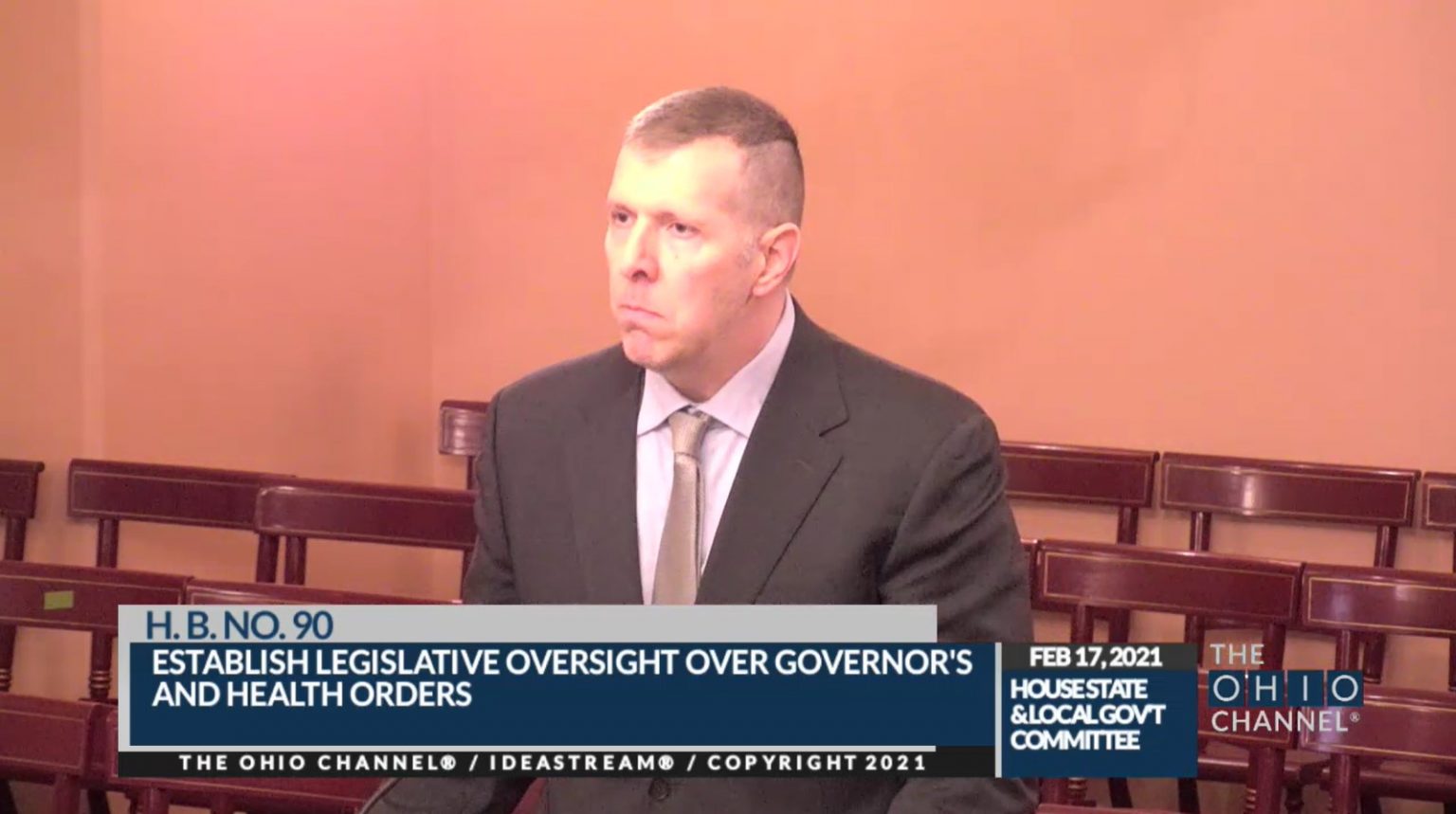
    Tom Renz speaks to the House State and Local government Committee Feb. 17. Source: Ohio Channel.

    By Jake Zuckerman and Ohio Capital Journal

    Columbus, Ohio – The opening testimony Wednesday in support of a legislative effort to allow lawmakers to vote down public health orders went far enough off the rails for YouTube to remove footage of the speaker.

    Tom Renz, an attorney for Ohio Stands Up, filed a lawsuit in federal court in September seeking to overturn any and all health orders related to the COVID-19 pandemic. A federal judge last week deemed the arguments nearly “incomprehensible” and ordered Renz to show cause for why he shouldn’t dismiss the suit for procedural errors.

    The Ohio Advocates for Medical Freedom, an anti-vaccine activism group aligned with Renz, posted to YouTube footage of Renz’s 35-minute, oftentimes rambling testimony to the House State and Local Government Committee.

    The video was soon taken down for violating YouTube’s terms of service.

    “We have clear Community Guidelines that govern what videos may stay on YouTube, which we enforce consistently, regardless of speaker,” said Ivy Choi, a spokeswoman for Google, which owns YouTube.

    “We removed this video in accordance with our COVID-19 misinformation policy, which prohibits content that claims a certain age group cannot transmit the virus. We do allow material with sufficient educational, documentary, scientific or artistic (EDSA) value.”

    The policy states videos cannot spread medical misinformation that contradicts local health authorities’ or the World Health Organization’s medical information about COVID-19.

    In his testimony, Renz baselessly claimed no Ohioans under the age of 19 have died of COVID-19. Data from the Ohio Department of Health shows 10 children in the age group have died of the disease during the pandemic.

    Similarly, Renz said children can neither contract nor spread COVID-19. He even claimed the CDC says this as well, which is untrue. CDC guidance states children can contract and spread the coronavirus.

    While it’s unclear which specific COVID-19 misinformation from Renz sparked YouTube’s decision, there’s a lot to choose from.

    Renz’s testimony was a firehose of COVID-19 conspiracy theorizing: He said unspecified entities “provide funding for people to find a COVID-19 death;” the ODH “whitewashes” its coronavirus data; that PCR testing, which public health officials consider to be a premier diagnostic, is “garbage” or “absolutely useless.”

    He claimed the lockdown orders of the spring to be “the most drastic curtailment of rights ever taken in American history.” The statement was made without acknowledgement to the enslavement of Black Americans, the mass detention of Japanese Americans to internment camps during World War II, the forced relocation of Native Americans, or any number of national atrocities through American history.

    While YouTube removed the footage, Ohio Republican lawmakers praised Renz for the testimony.

    Chairman Scott Wiggam, who has falsely proclaimed that Donald Trump won the 2020 presidential election, praised Renz for bringing “the other side of the data” to the table.

    Rep. Diane Grendell, who without evidence accused ODH of publishing “corrupted” data to a panel of state senators in November, also praised Renz.

    Footage of the hearing is still publicly available on the Ohio Channel, and OAMF has since re-uploaded it to Rumble, which has looser content guidelines.

    Renz made the statement supporting House Bill 90, which would allow lawmakers to vote down public health orders related to the pandemic. A similar version of the proposal passed the Senate earlier this week.

    The lawsuit against ODH was Renz first filing in federal court after passing the bar on his fifth attempt, according to records from the Ohio Supreme Court.

    His “about me” page for his website claims lists no prior legal experience besides serving as a clerk on the Indian Supreme Court. However, in a prior interview, he said he did not remember when he served on the court and said he did not speak Hindi.

    Renz declined to answer questions about his testimony.”

    “This should not be right and left and we should not be fighting over facts,” Renz told lawmakers. “The question I would ask to the people who are saying that I’m incorrect or lying, is who are you working for and how much are you getting paid? Because inevitably, I’m finding they typically are working for someone or getting paid somewhere.”

  • Health department epidemiologist resigns after state discovers 4000 omitted COVID-19 deaths

    Health department epidemiologist resigns after state discovers 4000 omitted COVID-19 deaths

    By Jake Zuckerman and Ohio Capital Journal

    An epidemiology investigator resigned last week and the head of the Bureau of Infectious Diseases was reassigned after the state health department discovered it undercounted Ohio’s COVID-19 death toll by about 34%.

    Karthik Kondapally resigned from the Ohio Department of Health, said Arundi Venkayya, the department’s chief communications officer, in an email last Friday.

    Likewise, Sietske de Fijter, the former chief of the Bureau of Infectious Diseases, has been reassigned to an unspecified position in the Bureau of Health Improvement and Wellness. She will also no longer serve as chief epidemiologist.

    She will be replaced at the bureau by Kristen Dickerson, who previously served as the manager for statewide health, wellness and special programs at the Bureau of Workers’ Compensation.

    Venkayya did not respond when asked whether the changes were made in connection with ODH’s announcement last week that a human error reconciling two mortality data sets led to the omission of about 4,000 deaths from COVID-19.

    She did not directly answer who will take over as the state epidemiologist.

    “These changes are very recent and we are working through the process,” Venkayya said.

    ODH Director Stephanie McCloud, herself a recent transplant from the Bureau of Workers’ Compensation, briefed reporters on the death discrepancy Thursday.

  • Along with health department, state auditor missed 4,000 COVID-19 deaths during

    Along with health department, state auditor missed 4,000 COVID-19 deaths during

    Ohio Auditor of State Keith Faber. (Official photo)

    The precise nature of Faber’s audit remains shrouded in mystery

    By Jake Zuckerman and Ohio Capital Journal

    The Ohio State Auditor’s months-long investigation into the state health department’s COVID-19 data practices failed to detect the 4,000 newly discovered COVID-19 deaths announced by the Ohio Department of Health last week.

    Auditor Keith Faber’s staff have declined to fully explain how they missed the deaths — which sprung Ohio’s death toll from about 12,000 to 16,000 — or what specifically auditors are investigating.

    Both ODH and Faber’s auditors alike missed a broad swath of pandemic mortality as Ohio, like every other U.S. state, looked for an appropriate policy response for an infectious disease that principally spreads through person-to-person interaction.

    The health department said it first identified a death data problem Feb. 2 before identifying and announcing the finding Feb. 10. Faber’s staff learned about the 4,000 newly discovered deaths that day.

    Faber spokeswoman Allie Dumski claimed last week that the federal Health Insurance Portability and Accountability Act prevented auditors from accessing one of the two databases ODH uses to track COVID-19 deaths.

    She later clarified ODH denied “full access” to the database — the Ohio Disease Reporting System (ODRS). She said auditors “would not have been able to identify this miscount” without full access to the database, i.e. the identities of COVID-19 cases.

    “As part of our audit, we requested full access to the ODRS database and ODH refused that, citing HIPAA and additional conditions of confidentiality related to the data set,” she said.

    ODH Communications Director Arundi Venkayya said the health department cooperated in full with state auditors.

    “ODH provided full access to the ODRS database in the form of a CSV file that was downloaded to ODH computers prior to the Auditor’s onsite visit,” she said.

    Faber’s staff, according to Venkayya, relayed to ODH that this format would be acceptable.

    Upon request, Venkayya also shared emails from state auditors who were seemingly pleased with the data ODH shared.

    “We have had very good cooperation in completing the data analysis component of the audit and, if we’ve not already finished, we were working on finishing up the death certificate examination,” wrote Betsy Bashore, a Faber staffer, in a Jan. 11 email about the audit.

    “As part of our audit process, we typically meet with our client agency to discuss findings to date. We had delayed this with the transition but really would like to get one scheduled as soon as possible. These usually involve leadership and department heads, particularly those people we have interacted with over the past 4 months.”

    Faber did not respond to repeated interview requests over the last week.

    Dumski, responding to the ODH emails, said auditors received anonymized data to protect individual identities. This would have prevented auditors from reconciling ODRS data with death certificate data to uncover the uncounted deaths, she said.

    ODH Director Stephanie McCloud said last week the department started missing most of the 4,000 newly discovered deaths when a November death surge took off. The error, she said, traces back to a single employee’s failure to reconcile the ODRS data with a separate set of death certificate data.

    ODH posts the ODRS data — stitched together from reports from labs, health departments, hospitals and care providers — on its website. It also regularly reconciles it with death certificate data, which is more accurate but less timely than the disease database.

    As the death surge took off, cases started getting missed by this lone employee who failed to notify his superiors, McCloud said.

    Since the news broke, an epidemiology investigator with the department resigned, and the ODH Bureau of Infectious Diseases chief was reassigned.

    The precise nature of Faber’s audit remains shrouded in mystery.

    He announced the probe in July, stating auditors would “examine case numbers of COVID-19.” Confirming the accuracy of the data, he said, will provide “valuable feedback to key policy makers and increased confidence for all Ohioans on how to best mitigate the spread and impact of this virus.”

    The news came amid rumors, amplified by conservatives in media and politics, that health departments were inflating COVID-19 data for political gain. The Ohio House went as far as to pass a “Truth in COVID-19 Statistics” bill. No evidence has been presented to suggest ODH’s data is somehow fraudulent.

    An online survey on the auditor’s website fielded documentation that would indicate an overcount of COVID-19 infections, as opposed to an undercount of deaths. The survey sought respondents who received “test results that were later reversed” or “results for tests the individual did not take.”

    Faber touted the audit at a rally for then-President Donald Trump, who regularly downplayed COVID-19 and claimed its death toll is “exaggerated,” and at a political fundraiser this summer as well.

    His office denied a public records request for survey data and supporting documentation. However, a spokeswoman said if there were any “alarming” findings, auditors would work with ODH to address the issue immediately for the benefit of public health.

    The survey closed Jan. 23. The audit is slated for release in March.

  • How ODH undershot the COVID-19 death toll by 34%

    How ODH undershot the COVID-19 death toll by 34%

    By Jake Zuckerman – and Ohio Capital Journal

    Human error, bureaucracy, and an abrupt crush of COVID-19 deaths this fall all factored into a critical accounting mistake obscuring Ohio’s full pandemic death toll, officials said Thursday.

    Ohio Department of Health Director Stephanie McCloud said the blunder traces back to a single employee who was tasked with resolving differences in death tolls between two databases the department uses to track mortality data.

    In correcting the error, Ohio’s pandemic death toll is set to leap from about 12,000 to 16,000 over the course of the next few days.

    ODH is not the only one to apparently miss the mistake. Ohio Auditor of State Keith Faber has been investigating the department’s COVID-19 data since July and promised to immediately notify the public of any “alarming” findings. ODH officials say they will continue to work with Faber.

    McCloud said a single employee was responsible for squaring real time death data from the Ohio Disease Reporting System — comprised of data from health providers, urgent care centers and public health departments that’s reflected on the state’s coronavirus website — with death certificate data, which can take up to six months after a person’s death.

    “Manual processes result in manual errors,” she said. “We are working very hard to review all of our processes, all of our quality assurance checks.”

    While the state website relied on ODRS data, a health department staffer cross-checked it against the death certificate data to add or remove cases accordingly.

    McCloud said the system worked until a death surge began in October. At that point, the unidentified employee began to fall behind.

    “The individual responsible didn’t understand how far behind he was or the gravity of that,” she said.

    While Ohio’s state government underestimated the death toll of the pandemic by about 34%, state officials rebuffed the idea they undershot the policy response on a commensurate scale.

    “This is a past issue that I don’t think affects today,” McCloud said.

    ODH Medical Director Bruce Vanderhoff agreed.

    “This is one data point among many data points we look at,” he said.

    The finding comes amid mistrust from conservative politicians, including state lawmakers all the way up to Former President Donald Trump, who have accused health officials of inflating COVID-19 infection and death counts for political gain. The criticism has festered since the spring, despite thin evidence to support the claims.

    Faber has been auditing ODH’s COVID-19 data processes since July, specifically seeking documentation that would indicate an overcount. In September, Faber denied requests for records or information on the scope of the audit.

    Faber spokeswoman Allie Dumski said in September any “alarming” findings would be publicized immediately. She did not respond to an interview request with Faber, but claimed the auditor could not have caught the death discrepancy.

    “The AOS Performance Team would not have been able to identify this miscount as HIPAA prevents auditors from accessing one of the databases that enabled this discovery,” she said.

    Staff within ODH’s Bureau of Infectious Diseases first voiced concerns about potential reporting error Feb. 2, according to McCloud. This began a process of sifting through ODH data systems and how the error occurred.

    “If there’s any solace to take in this, I was glad we were not overreporting the deaths. That through that manual verification, we had not inadvertently overreported and exaggerated the problem.”

    ODH announced the error Wednesday evening, as McCloud was addressing state lawmakers on the Ohio House Finance Committee at a budget hearing. McCloud did not bring up the issue to lawmakers, even as she discussed state data infrastructure and complications of real time data reporting, as opposed to ODH’s more standard annual or quarterly reporting.