A federal judge expressed tremendous skepticism of a lawsuit alleging “absolute tyranny” of the Ohio Department of Health’s response to the COVID-19 pandemic, deeming the plaintiff’s arguments nearly “incomprehensible.”
U.S. District Judge James G. Carr didn’t rule on ODH’s motion to dismiss the suit, which was filed by a self-described citizens group called Ohio Stands Up.
However, Carr wrote in an order Tuesday that the plaintiffs didn’t satisfy a basic rule of courtroom procedure requiring them to clearly state what their legal problem is and what they want the court to do about it.
Carr ordered plaintiffs to show cause for why he shouldn’t dismiss the lawsuit for failing to meet the basic minimum legal standard for a civil complaint.
He described Ohio Stands Up’s arguments as “a jumble of alleged facts, conclusory and speculative assertions, personal and third-party allegations, opinions, and articles of dubious provenance and admissibility.”
Ohio Stands Up, Carr wrote, created an “impenetrable thicket of often conclusory and speculative assertions, allegations, contentions, innuendo, and legal arguments and citations.”
While he did not dismiss the case, he blasted the hundreds of pages of disorganized criticism the plaintiffs leveled against ODH and ordered them to make a case for why the suit shouldn’t be dismissed.
“It’s simply not my job to try to discern from plaintiffs’ scattered, off-loaded stack of contentions and claims to envision what sort of plausible legal edifice a capable legal architect might erect,” he said.
It claims the government is disseminating misleading information to fear-monger. The suit claims the true death count of COVID-19 (as of an October filing) is 15,000 — there is no evidence suggesting this is true. It makes similarly apocryphal claims about masks and their efficacy, the origins of COVID-19, and others.
The lawsuit is the first on record for, Tom Renz, lead counsel for Ohio Stands Up. His co-counsel, Robert Gargasz, lost election in November for Lorain County prosecutor after calling for “Marxist anarchists” and “communists” to be shot and “stacked like cordwood.”
Since filing the ODH suit, Ohio Stands Up has filed another lawsuit against the U.S. Department of Health and Human Services, the CDC, and the National Center for Health Statistics. Renz, Gargasz, and N. Ana Garner, a New Mexico attorney, are representing the group.
Ohio Stands Up crowdsourced legal funds for its lawsuits. A GoFundMe page lists$120,000 in donations for the suit from 1,600 donors.
Both Renz and an Ohio Department of Health spokeswoman did not respond to inquiries.
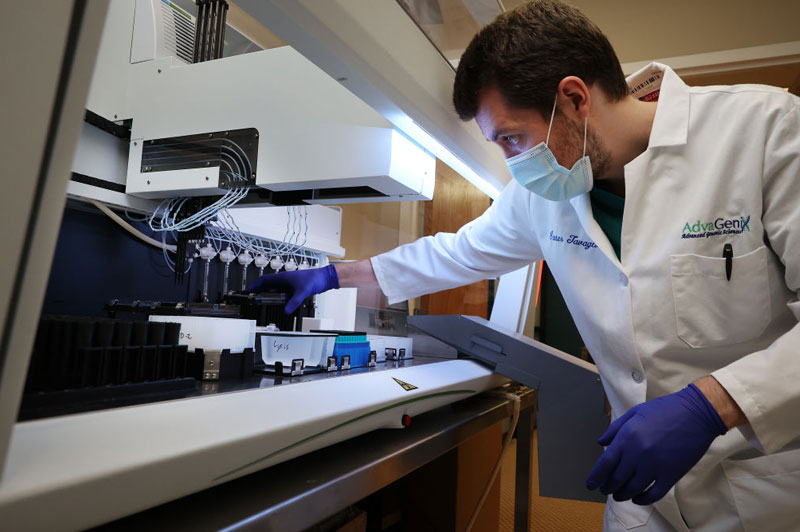
Lab Technician Carter Tavaglione loads at Janus G3 automated workstation with coronavirus test samples at Advagenix, a molecular diagnostics laboratory, on August 05, 2020 in Rockville, Maryland. Photo by Chip Somodevilla/Getty Images.
As many as 4,000 COVID-19 deaths “may have been underreported” and will be added to the state’s pandemic death toll this week, according to a Wednesday news release from the state health department.
Under the previous tally from the Ohio Department of Health, 11,856 residents died of COVID-19. The 4,000 unreported deaths will be added later this week.
“Process issues affecting the reconciliation and reporting of these deaths began in October,” ODH said in a news release. “The largest number of deaths were from November and December.”
The release contained sparse detail despite the seismic adjustment to the pandemic’s net toll.
Dan Tierney, a spokesman for Gov. Mike DeWine, said ODH discovered the issue causing the undercounting.
He said the ‘reconciliation’ issue is between two Ohio databases — one used to track infectious diseases and a separate one for death certificates — but didn’t have details.
“What the actual error was, I do not have those specifics,” he said.
The ODH release states the issue was identified by the department “during a routine employee training.”
ODH spokeswoman Melanie Amato did not respond to questions.
The news broke as ODH Director Stephanie McCloud was testifying to the House Finance Committee, which is in the process of crafting the state budget. McCloud made no mention of the discrepancy.
Reached after the hearing, Rep. Allison Russo, D-Columbus, said she wasn’t given any advance warning about the death adjustment.
She expressed frustration at the lack of a heads-up, especially given the current budget proposal contains a $25 million in public health data infrastructure.
“She had a perfect opportunity to give us a heads up that this is happening,” Russo said. “This is a 34% increase in our deaths. That’s pretty damn significant.”
Ohio Auditor of State Keith Faber has been probing ODH’s data processes since the summer. However, he was seeking documentation from people who received “results for [COVID-19] tests the individual did not take,” indicating he was looking for an inflated case count, not a depressed death count.
ODH’s release states it will continue working with Faber’s office.
Allie Dumski, a Faber spokeswoman, declined to comment and referred inquiries to ODH.
“Our audit work on the COVID reporting is ongoing and it is our policy not to discuss until it is completed and released by our office,” she said.
The Ohio Disease Reporting System, as this outlet has reported, is about two decades old and cannot be queried for information like where Ohioans are becoming infected with COVID-19. This has created a donut hole for policy makers handling time-sensitive decisions like restaurant closures or lockdowns.
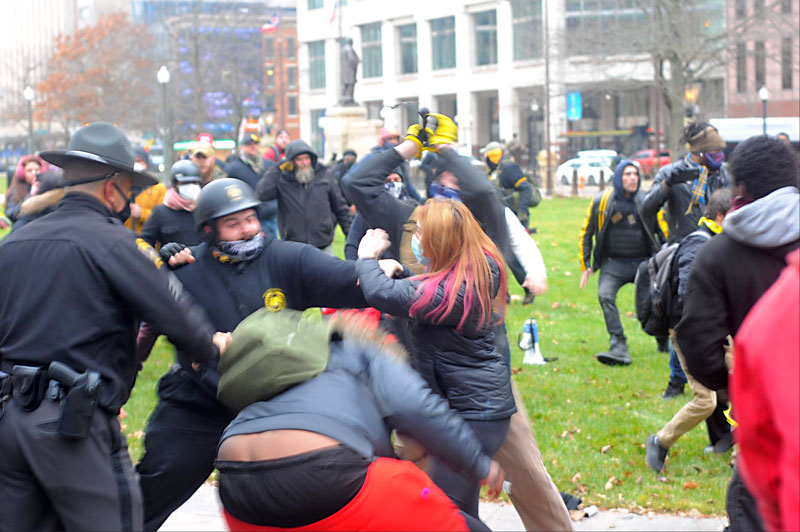
A pugilistic day of political demonstrations that included two brawls between far-right demonstrators insisting the presidential election was stolen and Black Lives Matter activists ended with no arrests last Wednesday.
At least two rounds of fisticuffed rumbles with an array of participants broke out at different points through the afternoon along with some more minor spats.
The Proud Boys, a radical conservative group with white nationalist ties known for violent confrontations with liberal demonstrators, tussled with BLM activists after hours of vitriolic name calling and antagonizing between the two.
Conservative activist Judi Phelps, a pistol holstered to her leg, yells into a microphone. (Photo by Jake Zuckerman)
Among the Proud Boys and those alongside them, firearms were everywhere. People were carrying assault style rifles, shotguns and pistols. None were seen used or brandished. One man carried a telescoping baton.
At least two people standing with BLM activists carried pistols, and one man carried a baseball bat, none of which were seen in use during the fights.
Photo by Jake Zuckerman
Members of the Ohio State Highway Patrol, which protects the Capitol building and campus, intervened at times to break up the physical altercations and try to keep the two groups separate or at least in peace.
OSHP Staff Lt. Craig Cvetan said Thursday the primary function of the officers on the scene were to make sure everybody stays safe, not necessarily make arrests.
“As you make arrests and try to start apprehending individuals, that takes away those trooper’s ability to separate those groups,” he said.
He said the officers are well aware of the arsenal of weapons around the protest.
“Ohio is an open-carry state,” he said. “Certainly, we prefer for people not to have weapons on the Statehouse grounds. It makes it easier for us.”
The first rumble broke out around 12:40 p.m. It was captured in video via a Statehouse News Bureau reporter.
The Columbus Police Department assisted in breaking up the fights. Repeated calls to the department seeking information on arrests or lack thereof were sent to a Public Information Officer who did not answer calls and could not accept voicemails.
Warning: Violent clash between pro-Trump/Proud Boys protestors and counter protestor pic.twitter.com/6i8AgyQ1FO
A separate fight with at least about 10 people engaged broke out on the Capitol lawn at roughly 3 p.m. OSHP officers broke things up and separated the two groups.
A man with a holstered pistol engages in a heated argument with a Columbus Police officer after the second brawl. (Photo by Jake Zuckerman)
Shortly thereafter, the Proud Boys groups left on buses, after which the situation quickly calmed down.
Meanwhile, in Washington D.C., a mob of insurrectionists were in the process of invading the U.S. Capitol and wreaking havoc inside. One woman was reportedly shot, and three more died due to unspecified medical emergencies.
Gov. Mike DeWine briefly mentioned the protests at the Ohio Capitol speaking to reporters Thursday. He acknowledged there’s no guarantee that Ohio’s statehouse is safe from a similar invasion. He made no mention of either the fights or the firearms that were present through the event.
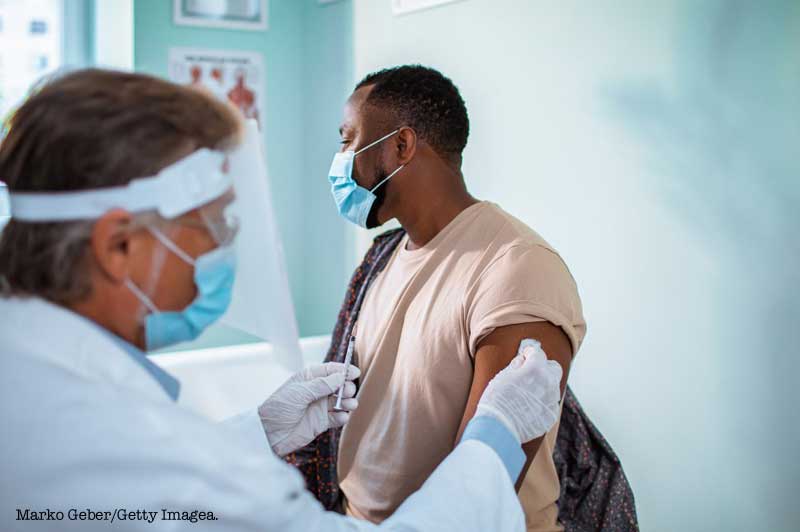
Nursing home workers are passing on their chance at early access to the COVID-19 vaccine, officials say, blowing a crosswind against a scarce supply of doses and a pandemic in a tailspin.
“I think in this case, [DeWine] is on target,” said Pete Van Runkle, executive director of an industry association representing Ohio’s long term care facilities.
“I talk to a lot of members on a regular basis. They are reporting a pretty low uptake among staff.”
Patrick Schwartz
Patrick Schwartz, a spokesman for Leading Age Ohio, an elder advocacy group, said he’s hearing mixed reports of some providers finding that 90% of staff chose to take the vaccine while others are “well below 50%.”
He attributed the shortfalls to misinformation and fear surrounding the potential for an adverse reaction to the vaccine.
“Many staff are simply ‘not yet ready,’ which will hopefully change as they see more and more colleagues vaccinated without side effects and confidence continues to build,” he said.
“By contrast, an overwhelming majority of residents seem willing to accept the vaccine, with many coming from the generation that saw polio and other deadly diseases wiped out by life-saving vaccines.”
The local Service Employees International Union surveyed its members on the issue, it said in a statement Monday.
The responses, according to SEIU 1199 President Becky Williams, indicate a trust problem between an exhausted, underpaid, underappreciated, and in many cases already-infected staff and health authorities.
She said this is a “substantial issue” that’s bigger than just the union and requires outreach and education from the state.
“Workers commented that the vaccine appeared rushed and unproven without enough data to show that it would be effective,” she said.
“Some workers are also concerned that the vaccine could cause fertility issues among women who may want to have a child. There are trust issues among frontline health care workers — some of which preceded the pandemic. These trust issues continue after so many nursing home workers have been on the frontlines of the pandemic without hazard pay and support such as needed personal protective equipment.”
Several news outlets have debunkedthisnotion of ‘fertility issues’ related to the vaccine. A quick scroll through the right Facebook group can deluge visitors with this and similar pieces of misinformation relating to the vaccine.
The Ohio Capital Journal called 13 state long-term care facilities Monday, who have each reported at least 100 COVID-19 cases among their residents, to discuss vaccination among their staffs. No administrators agreed to an interview.
Two vaccines (one from Moderna and one jointly from Pfizer and BioNTech) are currently approved for emergency use against COVID-19. They are both two-dose vaccines, taken several weeks apart.
Company data reviewed by the Food and Drug Administration shows both vaccines are about 95% effective preventing symptoms of COVID-19. While side effects (sometimes more intense than a standard flu vaccine) have been reported with both products, none of the vaccine trials have reported any serious safety concerns, according to information from Johns Hopkins University.
Before coming to market, both vaccines underwent large scale clinical trials over the course of months. They are now under review via continuous monitoring for problems and side effects from the FDA and the CDC.
The vaccine hesitancy comes as COVID-19 has infected 727,000 Ohioans, put about 39,000 in the hospital, and killed at least 9,143 since March.
At least 4,856 of those deaths occurred among residents of Ohio’s long-term care facilities.
There are several theories as to why nursing home workers would rebuff a vaccine dose, according to Tory Hogan, an Ohio State University professor who researches nursing homes and infection control.
She said some probably just don’t trust health authority; some have “been in the trenches” of the pandemic for a year now, prompting them to shrug off the unknown risk of vaccine for the better-known risk of infection; some probably just don’t want to be the guinea pigs.
“There has been so much misinformation about everything in this process,” she said.
Wood County Health Commissioner Ben Robison said he’s detected some vaccine hesitancy and refusal across all industries. However, some who deny at first are likely to come around.
“Anecdotally, we’ve heard among some of the populations we’re reaching with our vaccine, some have initially said no and then later said yes,” he said.
Some employers, especially in the health care industry, mandate the flu vaccine and other immunization. However, Van Runkle said the industry is already dealing with a widespread staffing shortage, only worsened by the pandemic.
He said most of Ohio’s nursing homes do not even mandate the flu vaccine. Mandating a COVID-19 vaccine would worsen staffing problems.
“We don’t need another reason for people not to work in our facilities,” he said.
A vaccine mandate would backfire
Hogan agreed that a vaccine mandate would backfire, and Williams, from SEIU, said education and outreach should drive universal vaccination.
The Ohio Department of Health has shipped 341,100 Moderna first-doses, as well as 9,750 Pfizer first-doses plus another 9,750 Pfizer second-doses, according to ODH spokeswoman Melanie Amato. Only about 162,942 Ohioans have started the vaccination process, which is prioritizing health care workers, first responders and nursing home staff and residents.
“We do not have visibility to how many staff members at a facility decline to be vaccinated,” said CVS Health Spokesman Charlie Rice-Minoso.
“While we aren’t provided with full staff rosters, based on feedback from our teams in the field we’re seeing more vaccine hesitancy among staff when compared with residents.”
Walgreens, another company administering the vaccines, did not respond to inquiries.
Looking at the bigger picture, Hogan said governments from the federal to local level need to do a better job understanding why some are declining vaccination. Similarly, she said they need to emphasize, as they did during the polio years, that vaccination is the patriotic thing for Americans to do.
“It takes consistently pushing the right message, the correct and accurate information,” she said. “That takes money, a federal response, all levels. We’re struggling with that a lot.”
Columbus, Ohio – Gov. Mike DeWine hired an attorney to lead the Ohio Department of Health on Thursday, a position that has remained vacant for the past five months of the pandemic.
Stephanie McCloud, who currently runs the Ohio Bureau of Workers’ Compensation, will take over a position that has been filled on only an interim basis since Dr. Amy Acton stepped down in June.
She will now oversee the quickly worsening COVID-19 pandemic, as measured by spiking case counts, rising positivity rates, a swelling active hospitalization count, and an ever-ascending death toll.
McCloud’s hire is a pivot from the physicians who previously held the post like Acton or Dr. Joan Duwve, who was set to replace Acton but quit the job in September before she officially started. DeWine has said in the past he specifically wanted a medical doctor to fill the post.
“When I was elected governor, I knew that I wanted a Director of Health with a strong public health background, someone who had a passion for public health, and someone who could talk to Ohio citizens in a candid way about health issues,” DeWine said in June.
An about page on the BWC website lists McCloud’s backgrounds in insurance administration and the law, but nothing specifically relating to public health or infectious disease control.
A 1993 state law requires the ODH director to be either a physician or a person who has had “significant experience in the public health profession.”
Dan Tierney, a DeWine spokesman, said McCloud’s work at BWC, which consists in part of evaluating claims of work-related health care claims and finding ways to prevent workplace health issues, meets the terms of the statute.
He also emphasized DeWine’s related announcement of hiring a new chief medical officer, Dr. Bruce Vanderhoff, and related moves from lower-profile COVID-19 response staff.
“There’s multiple people who need to lead on this,” he said.
McCloud has valuable experience in management but nothing as it relates to public health, according to Micah Berman, a professor of public Health Law at Ohio State University.
“To me, this is indicative of the lack of respect — or understanding — of public health as a field of expertise,” he said. “The Director of Health should have expertise in public health — not just in health care or another health related field.”
The position has proven difficult to fill since Acton left. Acton had been the public face of Ohio’s public COVID-19 response to the newly emergent coronavirus, which included delaying a primary election, closing schools and businesses, and beginning to phase in a mask mandate.
However, Acton faced tremendous public backlash. Protesters gathered and called her out by name in rallies in front of the Capitol and outside her Franklin County home. Some of them carried guns. At least two people hoisted anti-Semitic signs at both locations.
Even after she stepped down, businesses and individuals challenging various COVID-19 health orders have named Acton as a defendant and issued summons seeking to drag her back into the fights. She described to The New Yorker hearing a conservative talk radio host in Ohio say if his key adviser quit during a crisis, he’d want to punch him in the face.
In September, DeWine announced that Duwve would fill in where Acton left off. However, just hours after DeWine announced her hiring, Duwve declined the job.
Duwve cited harassment of Acton as a reason for turning it down.
Announcing Duwve’s hire, DeWine boasted of her “extensive experience in public health” in both government service and academia.
The medical community has started to shine light on increasing backlash against public health officials navigating pandemics with no fixed playbook.
An August viewpoint article with the Journal of American Medicine cited Acton and dog-whistle anti-Semitic remarks thrown her way by a state politician in its argument for more cover for health officials from political leaders.
“The present harassment of health officials for proposing or taking steps to protect communities from COVID-19 is extraordinary in its scope and nature, use of social media, and danger to the ongoing pandemic response,” it states. “It reflects misunderstanding of the pandemic, biases in human risk perception, and a general decline in public civility.”
Jake Zuckerman is a statehouse reporter. He spent three years chronicling the West Virginia Legislature for The Charleston Gazette-Mail after covering cops and courts for The Northern Virginia Daily.
This story was written by Jake Zuckerman with local news added by Loveland Magazine staff.
–
Thursday was Ohio’s worst day of the pandemic and all evidence suggests things are likely to worsen, according to interviews and new state data.
Nearly 2,200 new COVID-19 infections were reported Thursday, the state’s third record breaking day last week.
There were 1,041 Ohioans in the hospital with COVID-19 — about 100 shy of the all-time high set in late July. The COVID-19-hospitalized population has nearly doubled since mid-September.
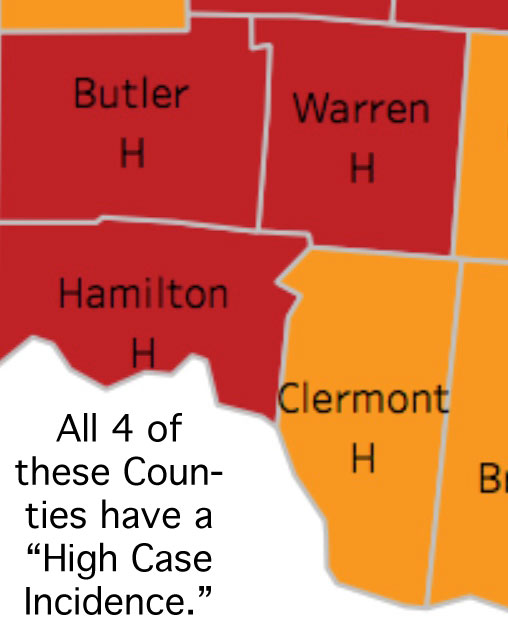
A “Public Emergency” has been declared in RED counties – with very high exposure and spread.
On Thursday, Governor DeWine released Ohio’s updated Public Health Advisory System map. New health data compiled by the Ohio Department of Health found that 29 counties currently have a very high risk of exposure and spread (Level 3): Hamilton, Butler, and Warren are among the “RED” counties.
“We’ve gone up dramatically in a relatively short period of time,” Gov. Mike DeWine said to reporters Thursday.
“What you’re seeing in today’s numbers should get our attention,” DeWine said. “There’s a red tide flowing all over the state of Ohio.”
Thirteen new counties turned red this week indicating “very high exposure and spread” on the Ohio Public Health Advisory System — a product of seven inputs like hospital visits, outpatient care visits in a county, population-adjusted infection rates and others. Twenty-nine counties are red, spanning about two-thirds of the state’s population.
“What you’re seeing in today’s numbers should get our attention,” DeWine said. “There’s a red tide flowing all over the state of Ohio.”
DeWine said some of the newly-turned red counties are slated to host community events like political rallies, pub crawls and social gatherings and that “now is really the time to rethink whether these are in the best interest of the community.”
He did not address his own administration’s decision to exempt recent rallies for President Donald Trump from the statewide mask requirement.
While DeWine said there are no plans in store for any kind of statewide stay-at-home order, he declined to promise against instituting the policy down the line.
All told, nearly 176,000 Ohioans have contracted COVID-19. Nearly 17,000 have been hospitalized, and 5,038 have died since March.
In red counties, health department staff said they continue to see spread at family gatherings like bonfires, birthday parties and barbeques.
Jennifer Hiestand, a public information officer at the Zanesville-Muskingum County Health Department, estimated 60% of people in public are wearing masks. Contact tracers have found “mini outbreaks” that are seemingly the result of people letting their guards down.
In red counties, health department staff said they continue to see spread at family gatherings like bonfires, birthday parties and barbeques.
“People just made the decisions not to social distance or not to wear a mask, those things that they probably should have,” she said.
Mahoning County Health Commissioner Ryan Tekac said he is seeing a lot of the county’s progress this summer start to erode as cold weather drives people inside.
“I think there are some concerns right now that individuals are putting their guards down,” he said.
Ohio’s recent case surge fits in with a national trend. The New York Times reports cases are trending upward in 41 states, especially in the Midwest.
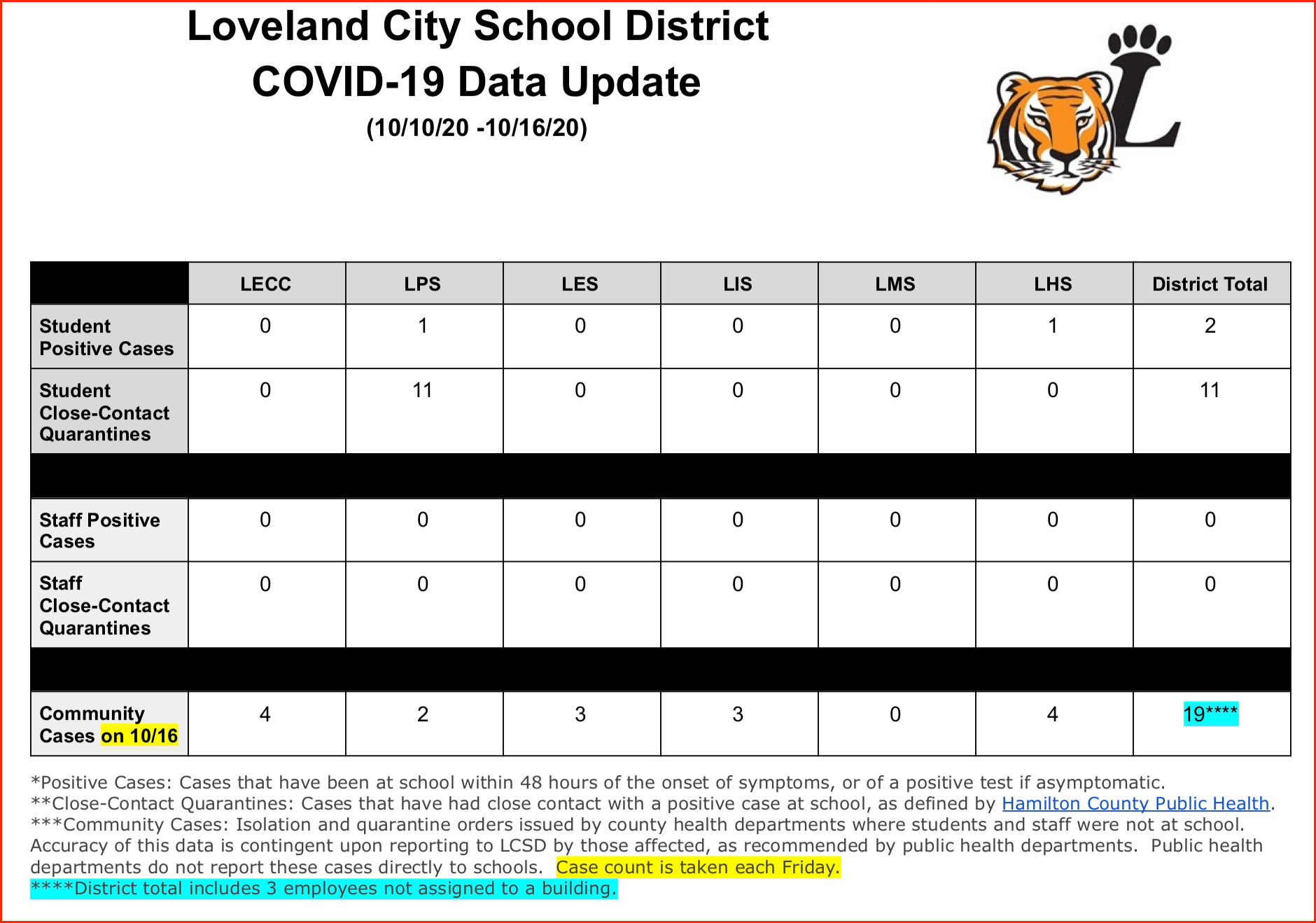
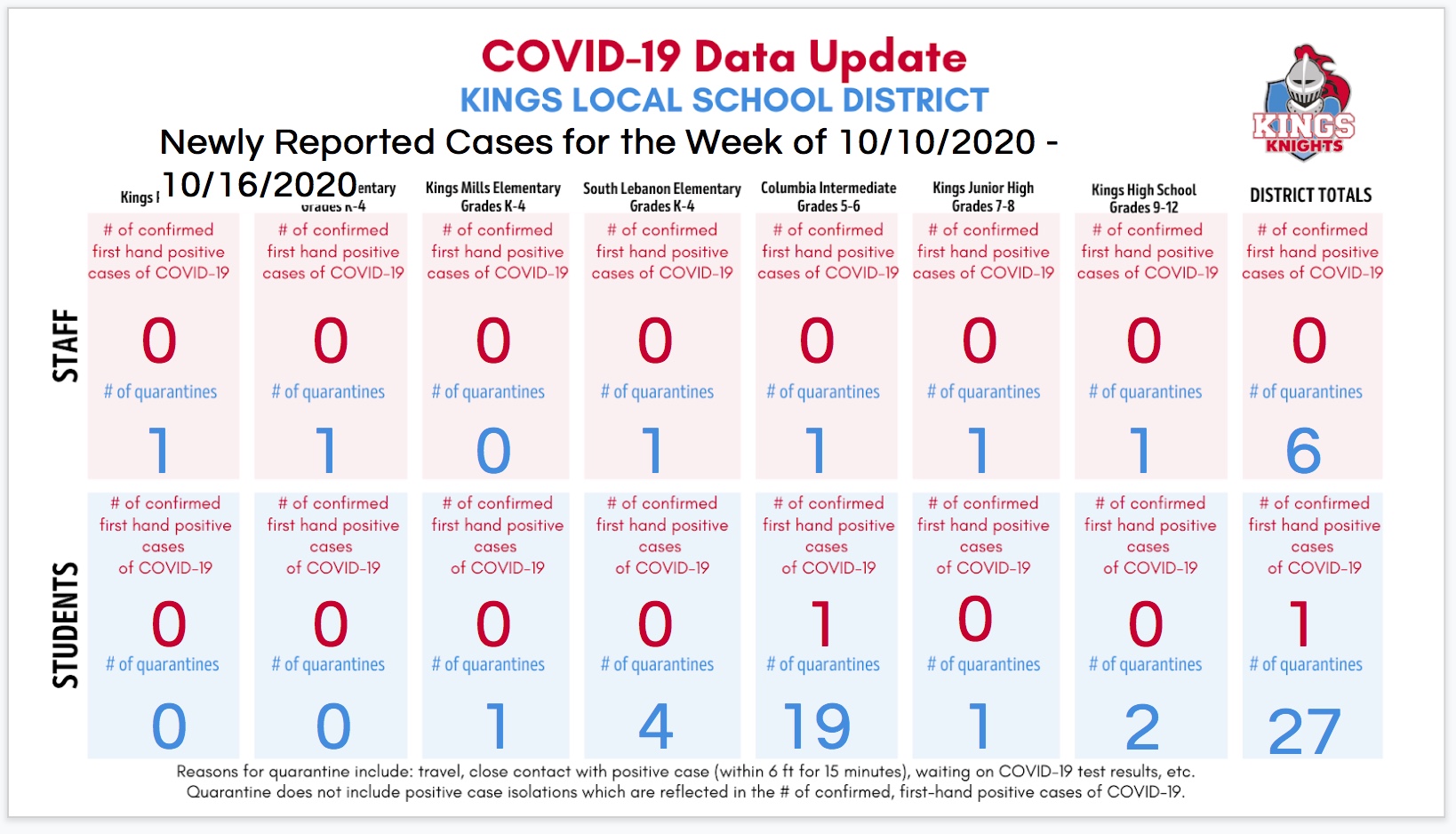
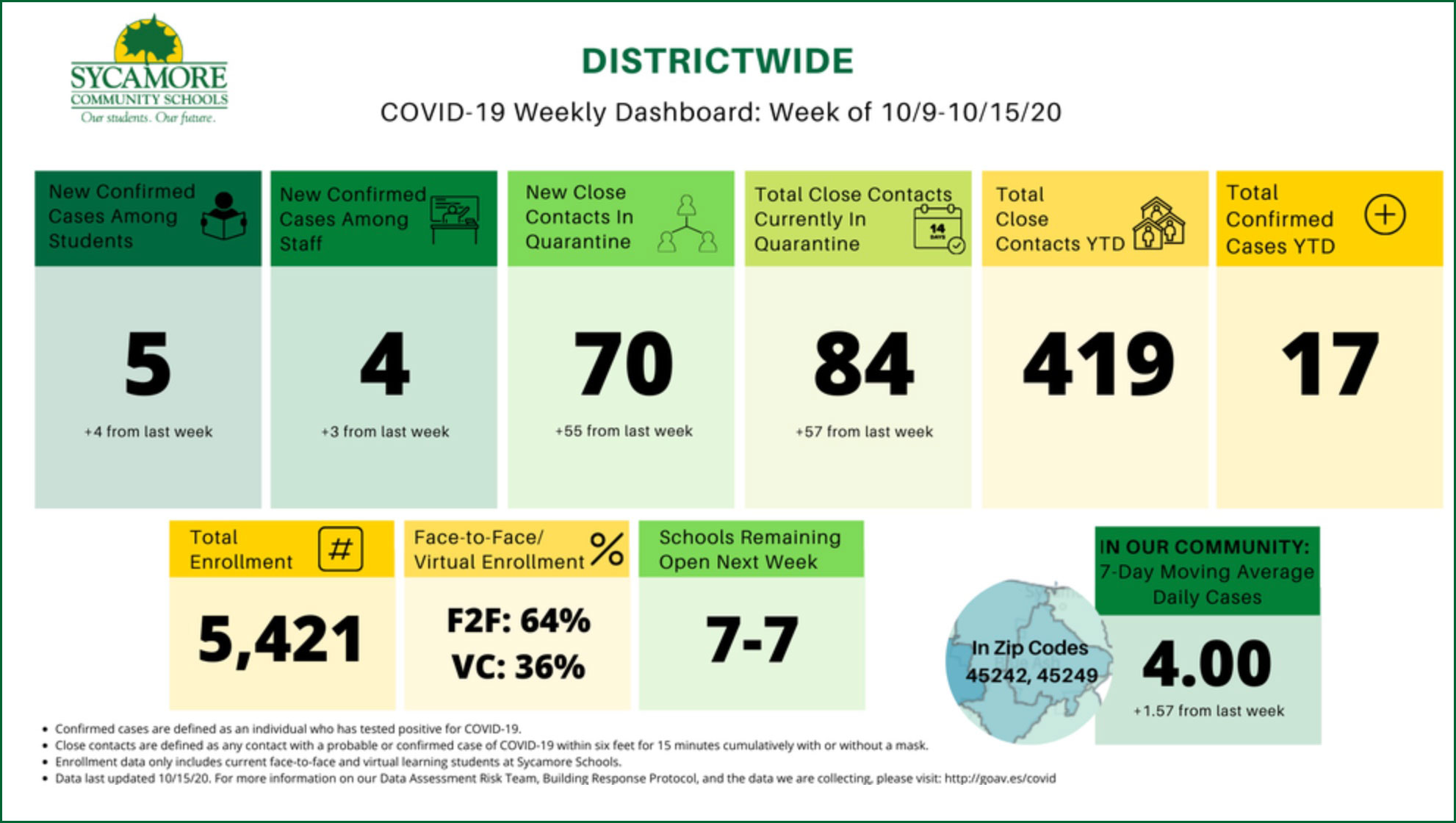
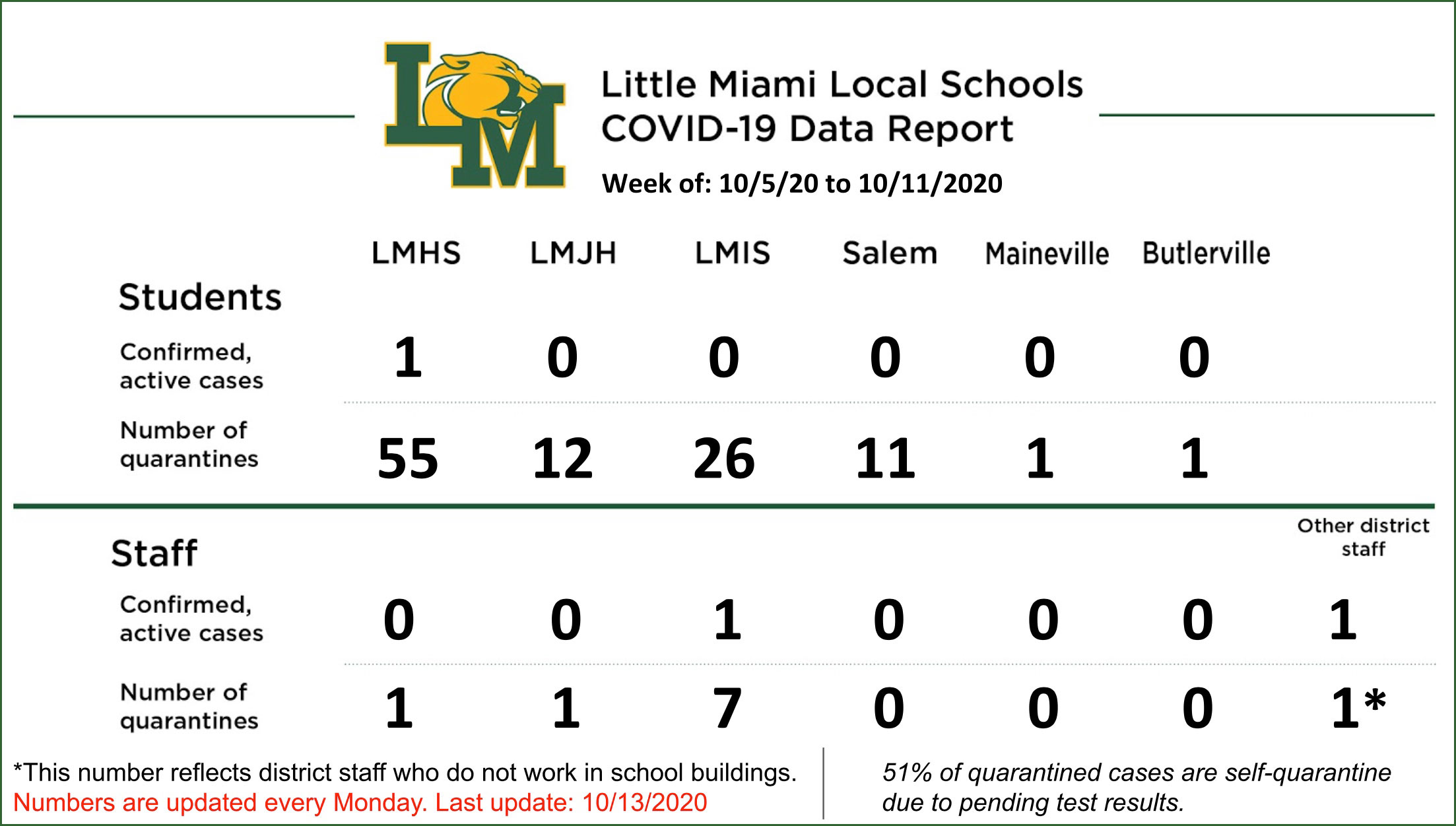
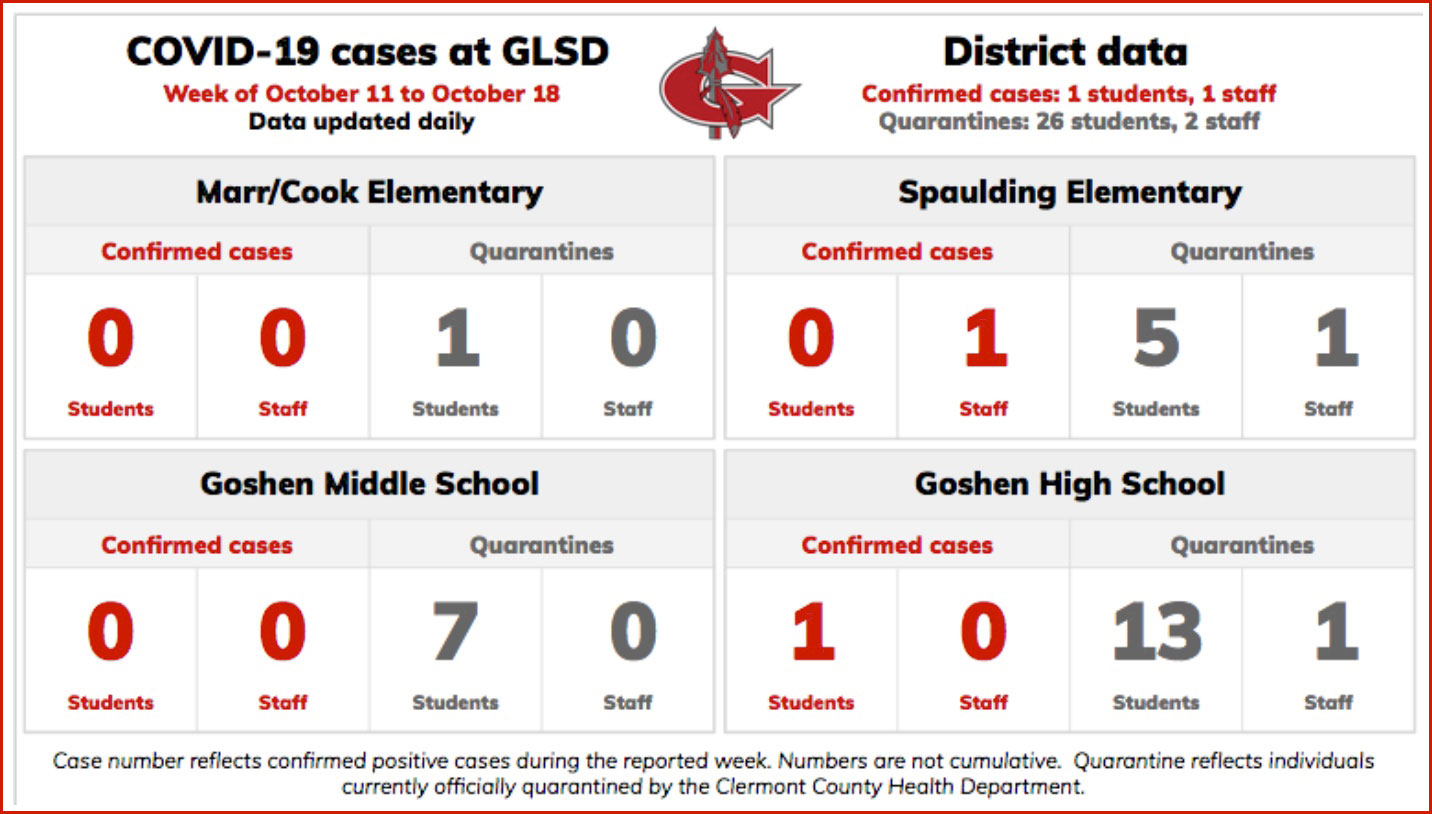
Sycamore Aves mom reminds us of the importance to stay home if you’re experiencing COVID-19 symptoms. These next few weeks will be crucial. Please do your part so we can stay in school!
Two holidays are coming up that will test Ohio’s public health discipline — Halloween and Thanksgiving.
Tekac said there’s a lot of concern, especially with Thanksgiving, about the potential for outbreaks. However, he said people know the guidance; wear masks, keep your distance, wash your hands, outside is better than inside.
He said at a certain point it comes to individuals making their own good decisions.
Dr. Anthony Fauci, the top infectious disease expert at the National Institute of Health, told CBS News it’s an “unfortunate fact” that Thanksgiving will cause a lot of spread and suggested skipping out on the tradition this year.
“I think given the fluid and dynamic nature of what’s going on right now and the spread and uptick of infections, I think people should be very careful and prudent about social gatherings,” he said.
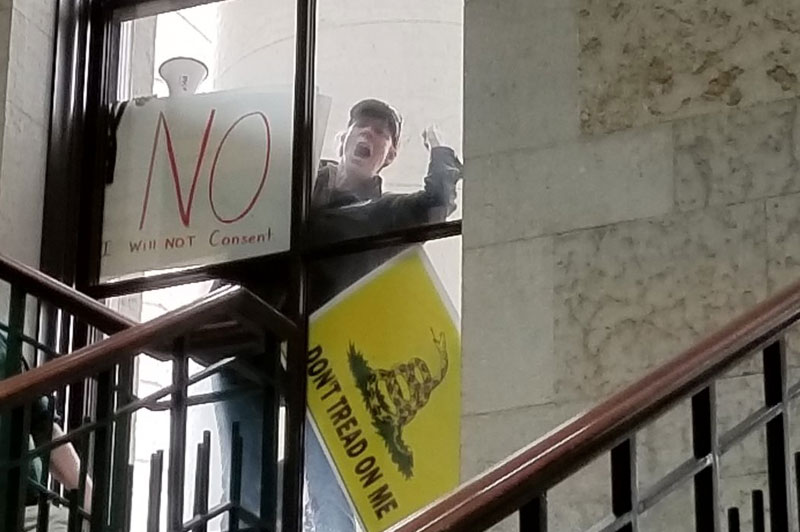
A man protesting Ohio’s health orders at the state Capitol on May 1. Gov. Mike DeWine later repealed most of them only to start reimposing orders on Tuesday as coronavirus cases continued to surge. Capital Journal photo by Marty Schladen
This summer, a cabal of a least 15 extremists meeting in Dublin, Ohio began crafting a violent plan to “storm” the Michigan state Capitol and kidnap Gov. Gretchen Whitmer, law enforcement officials say.
Jake Zuckerman is a statehouse reporter. He spent three years chronicling the West Virginia Legislature for The Charleston Gazette-Mail after covering cops and courts for The Northern Virginia Daily.
The federal allegation, unsealed Thursday morning, details plans of armed assaults on the Michigan State Police, construction of improvised explosive devices, covert meetings held in a Grand Rapids basement accessible by secret trap door, nighttime surveillance of Whitmer’s home, and quasi-military “field training exercises” to prepare for an abduction sometime before the November elections.
“When the time comes, there will be no need to try and strike fear through presence,” Brandon Caserta said Sept. 17, according to prosecutors, opting against attending an armed protest at the State Capitol. “The fear will be manifested through bullets.”
Michigan Attorney General Dana Nessel said to reporters Thursday the group crafted “elaborate plans” that posed a “serious and credible threat to public safety.”
What brought the men to two meetings in central Ohio is unclear: The suspects are all from Michigan and Delaware.
However, the charging document states one paid informant assisted the FBI and secretly recorded the meetings in Dublin on June 6 and July 18. No threats were reported against Ohio government.
At the first meeting, Michigan man Adam Fox and Delaware man Barry Croft huddled for a meeting at an undisclosed Dublin location with 13 other people, including a confidential informant.
They discussed creating a society that followed the U.S. Bill of Rights where they could be “self-sufficient.” They discussed “state governments” they believed violated the U.S. Constitution, and specifically mentioned Whitmer.
They also discussed murdering “tyrants” or “taking” a sitting governor. Fox then reached out to a “Michigan based militia group.” The charging document does not identify the group, though Nessel said affiliates of the “Wolverine Watchmen” were charged.
Fox, working with Croft, met members of the militia group several times in June, including at a Second Amendment rally in Lansing. He later described the Dublin meeting and said he would need 200 men to storm the Capitol to abduct Whitmer.
“Fox explained they would try the Governor of Michigan for ‘treason’ and he said they would execute the plan before the November 2020 elections,” the charging document states.
The alleged conspirators engaged in “field training exercises” in rural Michigan including firearms training and combat drills, and unsuccessfully attempted to construct two improvised explosive devices.
On July 18, the men again met, secretly recorded by an informant, in Ohio. They discussed attacking a Michigan State Police facility and floated the idea of shooting up Whitmer’s vacation home. They eventually settled on kidnapping.
“Snatch and grab, man,” Fox allegedly said. “Grab the fuckin’ governor. Just grab the bitch. Because at that point, we do that, dude — it’s over.”
Prosecutors detailed two episodes of “surveillance” of Whitmer’s home and determined the conspirators considered demolishing a bridge to stave off a police response. An informant provided the FBI with a map of the lake near Whitmer’s home, distance from nearest police departments and estimated response time.
By mid-September, the men successfully detonated an explosive device at a field training exercise.
“I can see several states takin’ their fuckin’ tyrants,” Fox allegedly said. “Everybody takes their tyrants.”
The allegations come amid a time of unprecedented unrest and instability in the U.S., likely a combination of a pandemic, perceived overreach when governments responded, racial unrest, economic devastation of the pandemic, and extremism proliferating on various social media platforms.
Whitmer attracted national attention during the spring and summer for a forceful response to the COVID-19 pandemic. She also drew ire from libertarian and small-government groups for what they saw as overly heavy-handed stay-at-home orders and mask mandates.
In May, hundreds of protesters, many of whom were armed, stormed the Michigan Capitol. President Donald Trump only accelerated instability, calling for Whitmer to “LIBERATE MICHIGAN.”
Political demonstrations this summer have consistently featured armed demonstrators and counter-demonstrators. In Ohio, a violent, self-described neo-Nazi wielded an anti-Semitic sign at a coronavirus protest. Another anti-Semitic sign appeared at a protest outside the home of Ohio’s health director, who is Jewish. She resigned in June.
Earlier this month, the U.S. Department of Homeland Security issued a threat assessment warning of increased extremism in the country.
“The domestic situation surrounding the COVID-19 pandemic creates an environment that could accelerate some individuals’ mobilization to targeted violence or radicalization to terrorism. Social distancing may lead to social isolation, which is associated with depression, increased anxiety, and social alienation, the assessment states.
“Similarly, work disruptions, including unexpected unemployment and layoffs, can also increase risk factors associated with radicalization to violence and willingness to engage in acts of targeted violence.”
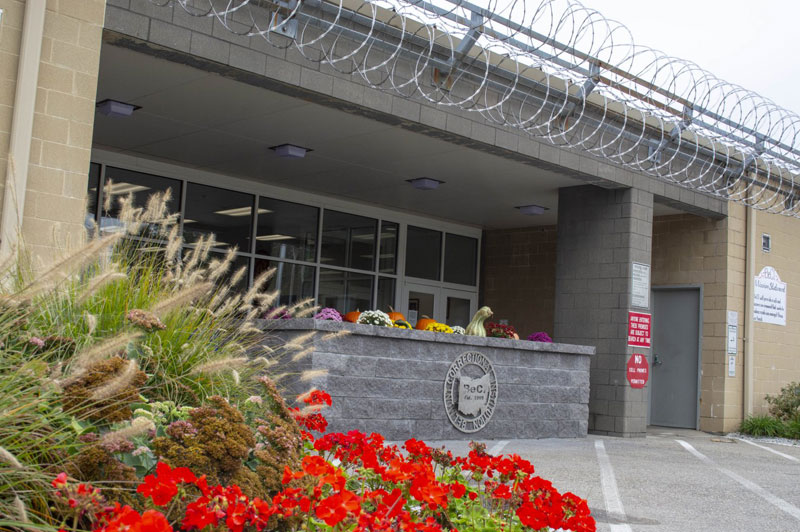
More than 100 inmates and workers in Ohio’s prison system have died from COVID-19, state data shows.
Jake Zuckerman is a statehouse reporter. He spent three years chronicling the West Virginia Legislature for The Charleston Gazette-Mail after covering cops and courts for The Northern Virginia Daily.
Five prison workers (three corrections officers and two nurses) and 96 inmates have died from the disease that has clobbered the Ohio Department of Rehabilitation and Correction since late March when it was first detected in the system.
Nearly 6,200 inmates have contracted COVID-19, the disease caused by the new coronavirus, though the figure is likely an undercount. After mass testing at Marion and Pickaway correctional institutions detected infections in 80% of inmates, ODRC shifted its strategy away from blanket testing and toward symptom-based testing.
An ODRC spokeswoman said 461 inmates with COVID-19 have been admitted to the hospital, but those people may have been admitted for other causes.
The dead inmates were 66 years old, on average.
At Marion, nearly 2,000 inmates have been infected, 12 of whom died.
At Pickaway, nearly 1,400 inmates have been infected, 35 of whom died.
The two prisons are the third and fourth largest COVID-19 clusters in the nation respectively, according to data from The New York Times.
Gary Daniels, a lobbyist for the ACLU, said there’s more than just a death toll. As more information emerges about long term damage from COVID-19, including “long haulers” who report debilitating symptoms even six months after infection, he questioned the health services ODRC is providing.
According to the CDC, coronavirus infections can cause myocarditis (heart inflammation) among other long term symptoms. While the science is still emerging, the heart damage could explain reported long-term symptoms like shortness of breath, chest pain and heart palpitations.
“How many people in Ohio prisons face this right now?” he said. “You’ve got these 100 people who have died, but that’s nowhere near the whole story.”
The ACLU has pushed for a broad decarceration that would remove people convicted for drug possession or parole violations — at least temporarily.
“It does appear to have plateaued,” Daniels said. “Whether that continues, who knows. Our concern is that after a certain amount of time, we’re going to see that population rise.”
U.S. District Judge Edmund Sargus Jr., in a ruling last month, rejected motions to dismiss the lawsuit. In a blow to the inmates, however, he also struck down a request for a preliminary injunction. He has not ruled on the issue at large.
Though it amounted to a loss for the inmates, Sargus signaled some sympathy for the conditions inside.
“This Court agrees with the other district courts across the country who have found COVID-19 to be an objectively intolerable risk of harm to prisoners when it enters a prison,” Sargus wrote.
Prisons and jails are near ideal places for the coronavirus to spread given the overcrowding, poor sanitation, and preexisting health complications inside.
In April, the Ohio Supreme Court dismissed a lawsuit from an HIV-positive inmate who sought release due to COVID-19.
“The whole of Ohio’s government needs to take serious, unprecedented steps to prevent the catastrophe of unmitigated spread of COVID-19 to the tens of thousands of prisoners in Ohio as well as to the tens of thousands of people who are prison employees along with those living in the households of prison employees,” he said.
Jake Zuckerman is a statehouse reporter. He spent three years chronicling the West Virginia Legislature for The Charleston Gazette-Mail after covering cops and courts for The Northern Virginia Daily.
It started with a funeral.
Tina Maharath, a Democratic state senator from Canal Winchester, attended a wake Aug. 9 after her brother-in-law’s funeral, who died of non-COVID-19 illness.
Two of his family members, who Maharath said tested positive for COVID-19, came to the wake. Maharath described them as skeptical of the gravity of the COVID-19 pandemic.
“Slowly, one by one, we started getting the phone calls from each one of our family members,” she said in an interview.
Maharath comes from a big family — common, she said, among Laotians. Her husband has 19 siblings, she has 16. The new coronavirus, which causes COVID-19, left from the wake to invade 11 different family households, infecting 33 family members including a 9-month-old baby.
As of Thursday, two have died: Maharath’s 44-year-old sister-in-law, who had been battling brain cancer for a year, and her sister-in-law’s father-in-law.
Five family members were hospitalized, including one who Maharath said is likely to die soon from COVID-19. The five people hospitalized are between 34- and 76-years old. They were hospitalized anywhere from two to six weeks. Mahrath’s sister-in-law was ventilated for three weeks.
All five had underlying health conditions like asthma, high blood pressure and diabetes, all common conditions in Ohio.
The familial outbreak, Maharath said, is hopefully over. But uncertainty over longevity of symptoms or long term damage is frightening.
“We’re concerned because of the five people who were hospitalized, they still have lingering symptoms too, and another sister-in-law who was pregnant, she has lingering symptoms too,” Maharath said. “I don’t have underlying conditions, I’m not pregnant. So why do I have symptoms?”
Patient groups, calling themselves “long haulers,” have insisted they’ve been experiencing COVID-19 symptoms for month. The CDC has found COVID-19 can result in prolonged illness, even among younger and healthier adults.
Six weeks out from the positive test result, Maharath said she still feels COVID-19’s symptoms. She said she feels dehydrated, experiences coughing spells, and headaches.
Her lungs, she said, take most the heat.
“I just feel weak,” she said. “My lungs feel like something is just punching them. Randomly, it feels like something is just stabbing my lungs.”
Nearly 148,000 Ohioans have contracted COVID-19 according to state data, which officials believe to be an undercount. At least 4,715 have died.
Maharath’s diagnosis drew headlines in August. On Wednesday, however, Maharath shared the story of the outbreak through her family in a floor speech opposing Senate Bill 311.
The legislation, which Senate Republicans passed, would forbid the Ohio Department of Health from issuing anything like the stay-at-home order it issued in March, which closed “non-essential” businesses in an effort to slow the spread of the recently-detected coronavirus.
However, a COVID-19 diagnosis did not prove to be a proxy vote against the legislation.
Sen. Bob Peterson, R-Washington C.H., who contracted the disease earlier this month, voted in favor.
Sen. Frank Hoagland, R-Adena, did as well. He contracted a mild case of the disease in August. According to a Herald Star report, Hoagland’s wife was hospitalized with the disease as well. Both his wife’s parents reportedly died from COVID-19.
With what they hope to be the worst of the outbreak behind them, Maharath said her family is planning funerals for the deceased. They plan stricter social distancing and mask requirements.
Along with diseases known to increase risk, the CDC lists 12 other conditions that “might” increase the risk of people who have them. These include other massively common conditions like hypertension, liver disease, pregnancy, smoking and others.
The underlying health conditions that lay a path for severe COVID-19 complications are widespread in Ohio, potentially affecting as much as half the population, according to experts, state data and government research.
Take obesity: Ohio Department of Health 2017 survey data estimates that 34% of Ohioans are obese. Similarly, more than 74,000 Ohioans were diagnosed with cancer that same year.
Dr. Peter Pronovost (Photo by University Hospitals)
“The statistics are about 60% of the public has one or more chronic diseases,” said Dr. Peter Pronovost, a University Hospitals physician. “Four in 10 have two or more diseases.”
The ubiquity of chronic disease in Ohio complicates any policy response when there’s no easy-to-draw line between people at low-risk for COVID-19 and those at higher risk levels.
It also illuminates the reality of a “herd immunity” strategy, as reportedlyoffered by an influential adviser to President Donald Trump.This would entail allowing the virus to run its course through the population unimpeded, purportedly allowing healthier people to develop antibodies at a large enough volume to break down chains of transmission.
The CDC listseight diseases known to increase risk of severe illness from COVID-19. The list, coupled with data from theOhio Annual Cancer Report, Behavioral Risk Factor Surveillance Systemannual report from 2018, and other state and federal sources, shows how deep chronic disease runs in the Buckeye state.
Cancer: 74,000 cases diagnosed in 2017
Chronic kidney disease: About 15% of U.S. adults have chronic kidney disease, per the CDC
COPD (chronic obstructive pulmonary disease): 8.3% of Ohio adults have COPD
Immunocompromised state from solid organ transplant:1,916 Ohioans received organ transplants in 2019
Obesity: 34% of Ohio adults are obese. An additional 34% are overweight
Dr. Nirav Vakharia (Photo by the Cleveland Clinic)
“When we go beyond age as a risk factor … if we’re just thinking about these chronic diseases, they’re so prevalent, it’s hard to isolate a young, healthy cohort,” said Dr. Nirav Vakharia, a physician from the Cleveland Clinic.
Health care groups in Ohio are undertaking different efforts to help residents with some of these conditions to stay at home.
LifeCare Alliance, an in-home health care agency, has seen a spike in the number of meals it has delivered to the homes of its diabetic patients since the pandemic began.
“If you have diabetes, the chances of you having a mild case of the coronavirus is much less — you’re gonna have a harder case, because your immune system just can’t fight it off,” said CEO Charles Gehring. “Patients have been scared to death by coronavirus.”
Similarly, Pronovost, the chief clinical transformation officer with University Hospitals, said the health care network recently accelerated its efforts to provide proactive care for people with chronic diseases.
He said staff is reaching out to patients to ensure they’re properly managing and controlling their diseases, like keeping insulin or blood pressure at healthy levels.
“The idea is we want to make sure chronic disease people are doing all they can to avoid being hospitalized and avoid needing to go to the [emergency room],” he said.
Early data shows the network reduced hospital admissions of certain chronic disease patients by 28%, and emergency visits by 79%, he said.
“The idea is we want to make sure chronic disease people are doing all they can to avoid being hospitalized and avoid needing to go to the [emergency room],” he said.
Along with diseases known to increase risk, the CDC lists 12 conditions that “might” increase the risk of people who have them. These include other massively common conditions like hypertension, liver disease, pregnancy, smoking and others.
As of Wednesday, COVID-19 has killed 4,176 Ohioans. The virus has infected nearly 120,000 state residents and put more than 13,500 in the hospital.
Jake Zuckerman is a statehouse reporter. He spent three years chronicling the West Virginia Legislature for The Charleston Gazette-Mail after covering cops and courts for The Northern Virginia Daily.








 Jake Zuckerman