Tag: Marty Schladen

  • Portman, fan of a big tax cut for the rich, won’t say whether he supports $2T in coronavirus relief

    Portman, fan of a big tax cut for the rich, won’t say whether he supports $2T in coronavirus relief

    The office of Ohio Sen. Rob Portman won’t say whether he’s one of the Senate Republicans unwilling to support a coronavirus-relief bill under negotiation between the Trump White House and House Speaker Nancy Pelosi.

    Ohio Sen. Rob Portman

    Senate Majority Leader Mitch McConnell, R-Kentucky, on Tuesday warned the White House not to agree to the bill because the $2 trillion price tag was too high for many in his caucus. That message comes as hopes of passing a relief bill before next year seem to be dimming.

    With a raging virus continuing to throttle the economy, Federal Reserve Chairman Jerome Powell earlier this month urged passage of a relief bill to avoid lasting damage. Many other economists have been making the same argument, while those who study poverty say legions of Americans are being added to its numbers.

    In Ohio, those who work with the poor warn of cascading homelessness and say food banks are seeing huge demand.

    After passage of the $2.2 trillion CARES Act in March, the Democratically controlled House in May passed a $3.4 trillion coronavirus relief bill that wasn’t taken up by the Republican-controlled Senate.

    It wasn’t until late July — as federal unemployment supplements were running out — that McConnell introduced his own bill. But he later admitted that he didn’t have enough votes in his own caucus to pass it.

    Earlier this month, just after a covid-infected Trump was released from the hospital, he abruptly broke off negotiations with House Democrats. Then he abruptly reversed himself again and by Tuesday he was saying he wanted a bigger package than the $2.2 trillion deal being pushed by Pelosi and the Democrats. 

    For his part, McConnell has been promoting a bill less than an fourth that size — $500 billion — that would have included an unemployment supplement and aid to schools. Democrats blocked it Wednesday, saying the bill was woefully inadequate.

    On Tuesday, McConnell gave another reason for not wanting to schedule a hearing on a larger bill: It could disrupt the breakneck schedule to confirm Supreme Court nominee Amy Coney Barrett before the Nov. 3 election, the Washington Post reported.

    Ohio’s Democratic senator, Sherrod Brown

    That brought a blast from Ohio’s Democratic senator, Sherrod Brown.

    “Once again, Mitch McConnell is telling Americans, ‘you’re on your own,’” Brown said in an email. “Millions of people are suffering right now and he would rather stall a COVID relief package to continue rushing through an illegitimate Supreme Court nomination. Workers are struggling to figure out how to pay their bills, stay in their homes, and keep their families safe while McConnell would rather focus on his power grab.”

    Portman’s staff wouldn’t answer directly when asked whether he supported a relief bill of about $2 trillion, roughly the size of that being negotiated between House Democrats and the Trump administration.

    “Rob has consistently called on both parties to come to an agreement on additional covid relief for families and small businesses — legislation that would support increased (coronavirus) testing, provide additional funding for schools and state and local communities, restart the Payment Protection Program, and provide needed liability protections,” spokeswoman Emmalee Cioffi said in an email.

    She also provided a transcript of a Sept. 10 speech Portman gave on the Senate floor in which he castigated the earlier covid-relief bill passed by House Democrats as too expensive.

    “It’s a $3.5 trillion bill,” Portman said. “And remember, we’ve already spent about $3.5 trillion making this the largest deficit in the history of our country and making our debt now, for the first time since World War II, the size of our entire economy. That concerns all of us, and it should.”

    Portman also was highly critical of Obama-era deficit spending amid a historic recession.

    But he wasn’t nearly so concerned about deficits in 2017 when he was pushing the Tax Cuts and Jobs Act at a time when the federal unemployment rate was 4.1%

    Portman claimed the $1.5 trillion tax cut — which gave massive breaks to the richest Americans — would stimulate so much economic growth that it would pay for itself, although such promises almost never have panned out in American history.

    Portman’s promise was quickly shown to be empty, and by early 2018, the tax cut was projected to add more than $1.3 trillion to the deficit over 10 years. Nor did it deliver the economic growth that Portman, Trump and McConnell promised, the Congressional Research Service reported last year.

    Just before Congress passed the tax cuts, Portman told WKSU that he’d support clawing them back if they didn’t produce the promised growth. So far, that hasn’t happened, either.


    Marty Schladen has been a reporter for decades, working in Indiana, Texas and other places before returning to his native Ohio to work at The Columbus Dispatch in 2017. He’s won state and national journalism awards for investigations into utility regulation, public corruption, the environment, prescription drug spending and other matters.
  • Power company says utility commission has no power to investigate role in bailout scandal

    Power company says utility commission has no power to investigate role in bailout scandal

    An Akron-based utility company that figures prominently in a massive nuclear bailout scandal is saying that state regulators don’t have the authority to investigate whether the company improperly financed the bailout effort.

    Over the past week, FirstEnergy Corp. has filed two documents with the Public Utilities Commission of Ohio saying that the commission and the state’s consumer representative don’t have standing to investigate whether FirstEnergy and affiliated companies improperly used ratepayer money in what has been called the largest bribery scandal in state history. 

    Marty Schladen

    Marty Schladen has been a reporter for decades, working in Indiana, Texas and other places before returning to his native Ohio to work at The Columbus Dispatch in 2017. He’s won state and national journalism awards for investigations into utility regulation, public corruption, the environment, prescription drug spending and other matters.

    Federal prosecutors say $60 million in utility money was used to pass a $1.3 billion nuclear bailout into law. But FirstEnergy says the utility commission lacks the authority to investigate whether it improperly used ratepayer funds in the affair.

    “The commission lacks any statutory basis to conduct an investigation of FirstEnergy Corp. with respect to the alleged expenditures or to order FirstEnergy Corp. to show cause that it has not violated Ohio utility law,” FirstEnegy said in a Sept. 23 filing. 

    It was in response to an order by the utility commission that it show “that the costs of any political or charitable spending in support of (the bailout bill), or the subsequent referendum effort, were not included, directly or indirectly, in any rates or charges paid by ratepayers in this state.” 

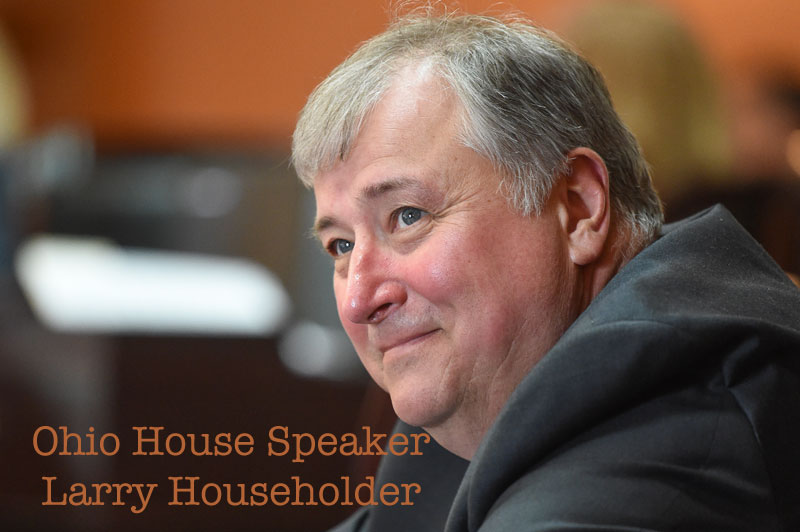
    Federal prosecutors in July charged then-House Speaker Larry Householder and four associates with using $60 million from FirstEnergy and related interests in a scheme to make Householder speaker and pass a $1.3 bailout of two failing nuclear plants owned by FirstEnergy Solutions, a successor company to FirstEnergy Corp.

    The effort was successful, although there is an effort in the legislature to repeal it before the charge hits ratepayers’ bills on Jan. 1.

    FirstEnergy and associated companies haven’t been charged, but in announcing criminal charges against Householder, U.S. Attorney David M. DeVillers stressed that the investigation was far from over. An affidavit supporting the criminal complaint also refers repeatedly to “Company A,” or FirstEnergy, and it makes reference to its CEO.

    In addition, Ohio Attorney General Dave Yost last week filed a civil suit that names FirstEnergy, a subsidiary and its successors — as well as Householder and his associates — as defendants.

    The Ohio Consumers’ Counsel, the state’s official consumer representative in utility matters, has asked for an independent investigation into whether FirstEnergy improperly used ratepayer funds in the dark-money scheme to pass House Bill 6, the bailout legislation. The agency was disappointed when the utilities commission only directed the company to show that it had not acted improperly.

    But even that is too much for FirstEnergy.

    In documents filed on Monday with the utility commission, it said it was legally entitled to a reasonable profit. The company also seemed to argue that what it did with much of its money was nobody’s business.

    “Beyond the investment necessary to provide adequate service, a public utility may spend its funds in the best interests of the utility as determined by its management.,” the company argued, later adding, “To the extent the Companies use a portion of their revenues to make political or charitable contributions, this is not improper or illegal.”

  • Community pharmacy group says CVS, other bigs are unfairly steering patients

    Community pharmacy group says CVS, other bigs are unfairly steering patients

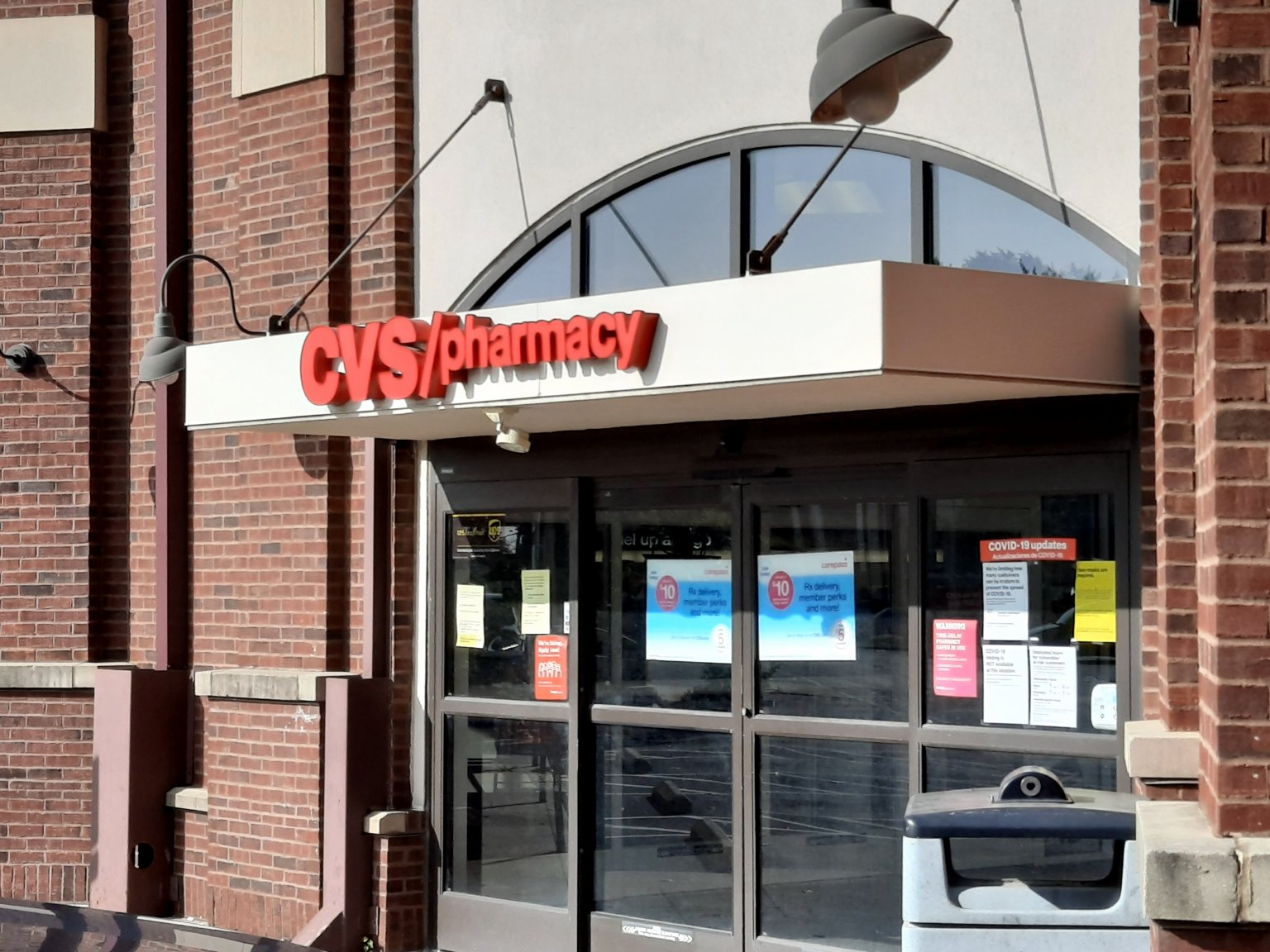
    A group representing small pharmacists says large chains, especially CVS, are moving patients’ prescriptions to their own stores without consent. CVS adamantly denies that. Photo by Marty Schladen, Ohio Capital Journal.

    A huge majority of community pharmacists have lost patients in the last six months due to unfair practices by much larger competitors, an industry group that represents small pharmacists said last week.

    They accuse CVS Health — which operates as an insurer, claims administrator and pharmacy retailer — as being the company responsible for the most abuses. CVS denies the claim.

    The National Community Pharmacy Association (NCPA) said that between Sept. 8-11, it collected 412 responses to a survey about a practice known as “patient steering.” 

    In addition to being the nation’s largest pharmacy retailer, CVS is now also the largest pharmacy benefit manager, which charges insurers, pays pharmacists, decides which drugs get favorable treatment and collects rebates from manufacturers. The company has said it maintains a strict firewall between the businesses, but critics have accused the company of using one business to advantage the others.

    For example, in the fall of 2017, Ohio community pharmacists complained Medicaid reimbursements from CVS’s pharmacy benefit manager, CVS Caremark, had dropped so low that they were having a hard time staying in business. At the same time the pharmacists they were receiving letters from from another arm of CVS acknowledging that reimbursements were low and that CVS was willing to buy out the community pharmacists.

    That made pharmacists suspicious that the part of the corporation that acquires pharmacies was using CVS Caremark’s reimbursement data to determine which independent pharmacies were most likely to be struggling and vulnerable to a buyout offer. CVS denied that.

    Some observers feared such concerns would only get worse when a federal judge last year allowed CVS to merge with Aetna, the country’s third-largest health insurer.

    Now the NCPA, the group representing small pharmacists, says things are getting worse.

    One method of patient steering is to transfer their prescriptions to another pharmacy without their knowledge, much less their consent. 

    According to the NCPA survey, 79% of community pharmacists said that had happened with one or more of their patients in the past six months. Almost 78% of respondents said some of the patients thus steered saw their prescriptions moved to CVS.

    “That’s a big red flag,” NCPA CEO B. Douglas Hoey said in a statement. “The pharmacy sector is very competitive, and most big chains have aggressive marketing schemes aimed at taking patients from rivals. CVS Health not only owns brick-and-mortar stores, but it also owns its own insurance companies, Aetna and Caremark. That information allows it to eavesdrop on when and where patients are getting their prescriptions and, as the survey reported, coerce unknowing patients into CVS stores.”

    In an email, CVS Senior Director of Corporate Communications Michael DeAngelis said the NCPA claims were patently false.

    “Our pharmacies only initiate prescription transfers when requested by a patient,” he said. “Also, CVS Caremark members have access to our broad network of more than 60,000 pharmacies, including most independent pharmacies and chain pharmacies, in addition to CVS Pharmacy. In fact, more than 40% of the pharmacies in our network are independently owned. If a plan sponsor chooses a particular network design that includes specific pharmacies, their members are notified in advance.”

    DeAngelis also panned the process behind the NCPA survey.

    “The ‘survey’ conducted by the business trade association, NCPA, of its own members has no basis in fact and is nothing but a self-serving attempt to disparage CVS Health,” he said. “Accusations that we transferred patients’ prescriptions to our own pharmacies without their knowledge or consent are simply not true.”

    One Ohio pharmacist said he doesn’t know why he’s losing patients, but he knows he’s been losing them.

    “We’re down 300 or 400 patients a month” compared to last year, said Barry Klein, owner of Klein’s Pharmacy in Cuyahoga Falls. “It’s hard to say what was the cause of it, but definitely our patient count is down.”


    Marty Schladen

    Marty Schladen has been a reporter for decades, working in Indiana, Texas and other places before returning to his native Ohio to work at The Columbus Dispatch in 2017. He’s won state and national journalism awards for investigations into utility regulation, public corruption, the environment, prescription drug spending and other matters.
  • Consumer advocate wants to know where utility got $60M from in alleged bribery scandal

    Consumer advocate wants to know where utility got $60M from in alleged bribery scandal

    cccc

    Ohio’s official utility watchdog wants to know where Akron-based FirstEnergy got the $60 million that federal prosecutors say fueled the largest bribery scandal in Ohio history.

    The Office of Ohio Consumers’ Counsel on Tuesday evening filed several motions with the Ohio Public Utilities Commission

    • A request for an investigation and a management audit of FirstEnergy.
    • A requirement that the company show that it hadn’t misused consumer money to support the passage of a nuclear bailout. 
    • And that the regulator reopen a probe into how FirstEnergy spent money intended to upgrade the electricity grid.

    In July, the U.S. Attorney’s office charged then-House Speaker, Larry Householder, R-Glenford, in an alleged scheme to funnel FirstEnergy money through 509(c)(4) “dark money” groups in a corrupt effort to elect supportive lawmakers and make Householder speaker. 

    The feds say the goal was to pass House Bill 6, a $1.3 billion bailout that went primarily to two failing nuclear power plants, but also subsidized two failing coal-powered generators. In addition, the money was used to fund a xenophobic campaign to stop a voter repeal of HB 6 and to line the pockets of Householder and his alleged conspirators, federal officials said.

    Also charged were Matt Borges, a lobbyist who was formerly chairman of the Ohio Republican Party, Neil Clark, a lobbyist who owns Grant Street Consulting, Juan Cespedes, also a lobbyist, and Householder’s aide, Jeffrey Longstreth.

    In its filing, the consumers’ counsel said it was asking the utilities commission to do its job.

    “The (Public Utilities Commission of Ohio) has the right and duty to regulate public utilities, for the protection of the public,” it said. “The PUCO should require FirstEnergy to show that money it collected from consumers, including the distribution modernization charge money, was not improperly used regarding House Bill 6 and that it did not violate any utility regulatory laws or PUCO orders regarding House Bill 6.”

    A FirstEnergy spokeswoman said her company will comment through official channels.

    “We are unable to comment on pending litigation, but we will respond to the motion by September 23 as required,” External Communications Manager Jennifer M. Young said in an email.

    In its filings, the consumers’ counsel noted that “Long before the House Bill 6 subsidies, FirstEnergy was authorized to charge its consumers nearly $7 billion for these and other FirstEnergy power plants as part of the transition to power plant competition (and a supposed end to future power plant subsidies) under Ohio’s 1999 electric deregulation law.”

    The documents also focused on $465 million FirstEnergy was allowed to collect from Ohio ratepayers in 2017 and 2018 as a “distribution modernization rider.” In other words, the charge was meant to fund improvements to the lines and poles and other equipment needed to efficiently deliver electricity in Ohio.

    The consumers’ counsel pointed to an independent audit showing that at least some of the money was used for other purposes. For example, it was placed in FirstEnergy’s “Regulated Utility Money Pool,” where its out-of-state utilities could borrow from it.

    The dividends FirstEnergy paid shareholders also took a big jump once the company started collecting more from ratepayers, supposedly to improve the power grid. The money for dividends from FirstEnergy’s Ohio utilities went from $141 million in 2016 to $350 million in 2017 — the first year of the subsidy — to $400 million in 2018.

    The Ohio Supreme Court subsequently declared the charge to be unlawful, but the money wasn’t refunded to ratepayers. 

    After the court ruling, the utilities commission shut down an investigation into the extra charge and how the money was used. But now the consumers’ counsel says it “should be reopened in light of the new information alleged in the U.S. Criminal Complaint about FirstEnergy’s use of extraordinary amounts of money in its efforts for the passage of House Bill 6.”

    After other interested parties have a chance to respond to the consumers’ counsel motions the utilities commission will decide whether to approve them.


    Marty Schladen

    Marty Schladen has been a reporter for decades, working in Indiana, Texas and other places before returning to his native Ohio to work at The Columbus Dispatch in 2017. He’s won state and national journalism awards for investigations into utility regulation, public corruption, the environment, prescription drug spending and other matters.
  • Feds release unemployment guidance, could be a long time before supplements reach Ohioans

    Feds release unemployment guidance, could be a long time before supplements reach Ohioans

    By Marty Schladen Ohio Capital Journal

    As promised, the U.S. Department of Labor last week released guidance to the states on how it will disburse money to supplement unemployment checks. But it’s far from clear when — or whether — hundreds of thousands of out-of-work Ohioans will see those funds.

    A $600-a-week federal supplement had been credited with keeping millions of unemployed Americans — and the economy — afloat, but it expired at the end of July. 

    The Democratically controlled House passed an extension of the benefit. The Republican-controlled Senate introduced a bill cutting the supplement to $200 a week, but failed to pass it.

    Then President Donald Trump on Aug. 8 signed a memorandum that would repurpose federal disaster relief funds to provide $300 a week in additional support. But it would exclude people getting less than $100 a week in state benefits — a group comprising many minimum-wage workers and service workers who get a low hourly wage and tips on top of that.

    The administration of Gov. Mike DeWine signed on to the plan on Monday, saying that additional guidance was needed from the Labor Department before any predictions could be made about when funds would be disbursed.

    The money can’t come quickly enough for many Ohioans. 

    According to the U.S. Census’ Household Pulse Survey for the week of July 9-14, nearly 1 million Ohio adults sometimes or often did not have enough to eat in the past week. In addition, more than 400,000 hadn’t paid the previous month’s rent and 360,000 homeowners hadn’t made the previous month’s mortgage payment.

    “This is before the $600 (federal unemployment supplement) expired,” Zach Schiller, research director for the think tank Policy Matters Ohio, said.

    Earlier in the week, DeWine also underscored the urgency of getting money out to unemployed Ohioans. He praised Trump for taking the actions he did and he called on Congress to get busy — something that’s unlikely to happen until early September at the soonest.

    However, state officials have to clear several hurdles before they can start distributing the federal dollars Trump has attempted to repurpose.

    For example, “States will need to develop a self-certification process in accordance with FEMA instructions for claimants to certify weekly that they are unemployed or partially unemployed due to disruptions caused by COVID-19,” the Labor Department guidance says.

    And state officials will have to reprogram antiquated, overwhelmed unemployment systems to process the benefit.

    “We are examining the DOL guidance on lost wages assistance to see what kind of system programming is needed in order to pay these unemployment benefits,” Dan Teirney, DeWine’s press secretary, said in an email. “As noted in the guidance, all states are required to develop a self-certification process for claimants based on instructions from FEMA.”

    He said that once state officials figure all that out, they’ll make beneficiaries whole, but it’s hard to know when that will be.

    “While (the Ohio Department of Jobs and Family Services) intends to pay these retroactive benefits as quickly and efficiently as possible, there are several procedural and programming steps that must take place before that can happen,” Tierney said.
    There is also a serious question about whether the Trump plan is legal. Georgetown University law professor David Super last week wrote that it is a clear violation of the Stafford Act, the federal law governing disaster assistance.

    Schiller criticized the scheme as ill-conceived at a time when so many Ohioans are in desperate need of assistance.

    “Altogether, the whole thing is kind of a half-baked measure,” he said.


    Marty Schladen

    Marty Schladen has been a reporter for decades, working in Indiana, Texas and other places before returning to his native Ohio to work at The Columbus Dispatch in 2017. He’s won state and national journalism awards for investigations into utility regulation, public corruption, the environment, prescription drug spending and other matters.
  • Ohio House speaker, four others arrested amid massive dark-money, pay-to-play allegations

    Ohio House speaker, four others arrested amid massive dark-money, pay-to-play allegations

    All are charged with racketeering

    Make no mistake – the $61 million came from Company A’s ratepayers and ultimately extorted from every residential and commercial electrical utility user in Ohio. The racketeering scheme of lies and deception corrupted Ohio citizen’s ability to overturn corrupt legislation at the ballot box. – David Miller, Loveland Magazine Publisher

    By Marty Schladen The Ohio Capital Journal and David Miller/LovelandMagazine
    ddd

    Cincinnati, Ohio – Ohio House Speaker Larry Householder, four political operatives and a dark-money group were charged Tuesday in a criminal complaint that an Ohio energy company paid them $61 million to get a $1.5 billion nuclear bailout from taxpayers.

    Read the Press Release issued by the Department of Justice

    Neil Clark, a lobbyist who owns Grant Street Consulting – Photo from Grant Street Consulting who exclaim, “Clark’s decades of experience and role in shaping Ohio’s political landscape makes him an indispensable resource to Ohio’s elected leaders, to whom he often serves as a trusted and highly sought after campaign advisor.”

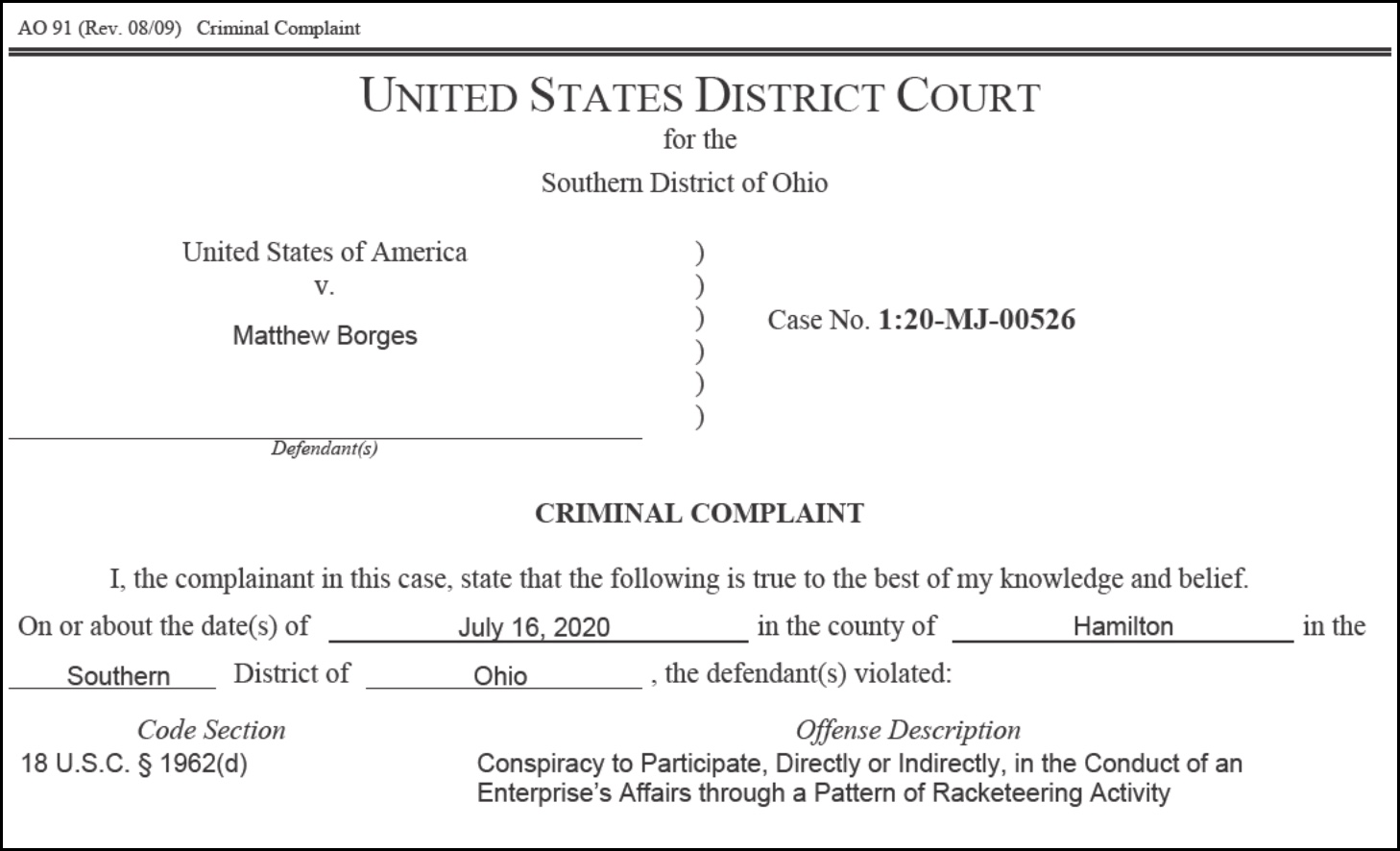
    Charged along with Householder were Matt Borges, a lobbyist who was formerly chairman of the Ohio Republican Party, Neil Clark, a lobbyist who owns Grant Street Consulting, Juan Cespedes, also a lobbyist, and Householder’s aide, Jeffrey Longstreth.

    All are charged with racketeering, which carries a prison sentence of up to 20 years.

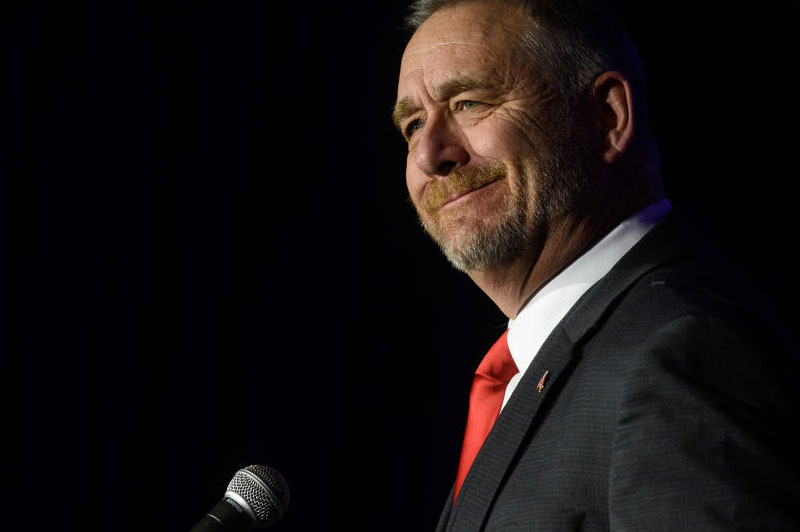
    David M. DeVillers, U.S. Attorney for the Southern District of Ohio

    The alleged conspiracy, which revolved around the bailout of two failing nuclear plants in Northern Ohio, is “likely the largest bribery and money-laundering scheme ever in the state of Ohio,” David M. DeVillers, U.S. Attorney for the Southern District of Ohio, said at a Tuesday afternoon press conference.

    Shortly after the press conference, Ohio Gov. Mike DeWine called on his fellow Republican to step down.

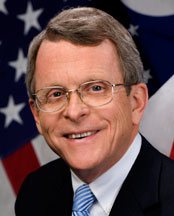
    “I am deeply concerned about the allegations of wrongdoing in the criminal complaint issued today by the U.S. Attorney’s Office,” DeWine, who last year signed the bailout into law, said in a written statement. “Every American has the presumption of innocence until proven guilty.  Because of the nature of these charges, it will be impossible for Speaker Householder to effectively lead the Ohio House of Representatives; therefore, I am calling on Speaker Householder to resign immediately. This is a sad day for Ohio.”

    Read the Criminal Complaint

    ccc

    The criminal complaint says that “Company A,” the former FirstEnergy Solutions of Akron, worked to save its failing nuclear plants by funneling $61 million into Generation Now, a 501(c)(4) “dark money” group controlled by Householder.

    On September 9, 2019, President Donald Trump nominated DeVillers for the United States Attorney in the Southern District of Ohio. The Senate confirmed the nomination in October, and DeVillers took his oath on November 1, 2019.

    “Make no mistake, this is Larry Householder’s 501(c)(4),” the U.S. attorney said.

    The money was used for three general purposes, the complaint said. First it was used to build “Team Householder” through campaign contributions and other measures that helped Householder win the speakership in 2019.

    “In exchange for payment from Company A, Householder’s enterprise helped pass House Bill 6, legislation described by an enterprise member as a billion-dollar ‘bailout’ that saved from closure two failing nuclear power plants in Ohio affiliated with company A,” the complaint said

    The money was also used for the personal benefit of Householder and the other conspirators, DeVillers said. Householder got about $500,000, he said.

    Despite the companies claims of poverty, the interests behind the bailout spent millions — much of it in the form of hard-to-trace dark money on campaign contributions, a xenophobic ad campaign and then on an aggressive effort to stymie a petition drive to repeal the bailout DeWine signed into law a year ago.

    And the money was used to fend off a petition effort to repeal HB6, going so far as to buy plane tickets for and pay $1,000 each to people circulating it to get out of town, DeVillers said.

    The federal prosecutor said that it was crucial to keep the investigation secret until Tuesday. Now it begins a new phase that might be causing some lawmakers, energy executives and some others to lose sleep.

    “We are not done with this case,” he said. “There were things we couldn’t do before. People we couldn’t interview. People we couldn’t subpoena. Documents and search warrants we couldn’t execute. 

    “As of this morning there are a lot of FBI agents knocking on a lot of doors asking a lot of questions, serving lots of subpoenas. That’s going to go on for days.”

    “It takes courage for citizens to assist law enforcement in the ways detailed in the affidavit,” U.S. Attorney David M. DeVillers said. “We are grateful to those who felt a moral duty to work together with agents in bringing to light this alleged, significant public corruption.”

    House Bill 6 is adding $1.5 billion in additional taxpayer bailouts to the $10.2 billion that Akron-based FirstEnergy Solutions and its former parent company, FirstEnergy Corp, have received from taxpayers since 1999. Most of the funds have gone to prop up the Davis-Besse and Perry nuclear power plants in Northern Ohio.

    The company that owns the plants was renamed Energy Harbor after emerging from bankruptcy earlier this year.

    Despite the companies claims of poverty, the interests behind the bailout spent millions — much of it in the form of hard-to-trace dark money on campaign contributions, a xenophobic ad campaign and then on an aggressive effort to stymie a petition drive to repeal the bailout DeWine signed into law a year ago.

    The interests behind the nuclear bailout also contributed heavily to the effort at the beginning of 2019 to elect Householder speaker. He ended up winning the support of 26 Republicans and 26 Democrats, His opponent, Ryan Smith, R-Bidwell, got the votes of 34 Republicans and 12 Democrats.

    The Ohio Republican Party didn’t respond Tuesday to requests for comment.

    The Ohio Democratic Party didn’t respond when asked about the fact that Householder wouldn’t have worn the speakership without Democratic votes. However, the party chairman, David Pepper called on Householder to step down as speaker.

    “As the U.S. attorney indicated, this investigation is ongoing, and we will wait to hear all the facts as they emerge. However, given what was revealed in today’s complaint and the taint of corruption over Ohio legislative activity, we believe Speaker Householder should step down from leadership immediately as he avails himself of his due process rights,” Pepper said in a written statement.

    House Bill 6, which passed 51-38, was quickly signed into law by Gov. Mike DeWine. Under the bill, from 2021 until 2027, every Ohio electricity customer will have to pay a new monthly surcharge that ranges from 85 cents for residential customers to $2,400 for large industrial plants. Ratepayers around the state would also have to chip in up to $1.50 monthly (and up to $1,500 per month for commercial and industrial users) to subsidize coal plants in Ohio and Indiana run by the Ohio Valley Electric Corporation.- cleveland.com

    Starting next January, ratepayers around the state would also have to chip in up to $1.50 monthly (and up to $1,500 per month for commercial and industrial users) to subsidize coal plants in Ohio and Indiana run by the Ohio Valley Electric Corporation.

    This isn’t Householder’s first encounter with federal law enforcement. 

    In 2006, the Justice Department told the FBI that it wouldn’t pursue charges against Householder. The FBI had been told two years earlier that Householder had used his post as head of the House Republican Campaign Committee to overpay some vendors in exchange for kickbacks from them.

    Nor is Householder, 61, of Glenford, the first Ohio House speaker to find himself in the FBI’s crosshairs. In 2018, Speaker Cliff Rosenberger, a Republican, resigned amid an FBI probe of his overseas travel. He has not been charged, but the investigation remains open.

    cccc

  • Ohio Republicans slammed over coronavirus enforcementBy Marty Schladen – July 13, 2020

    Ohio Republicans slammed over coronavirus enforcementBy Marty Schladen – July 13, 2020

    Columbus, OhioThe coronavirus is raging in Ohio, but the state’s Republican leaders seem disinclined to enforce rules intended to protect against it. (How does Hamilton County avoid Level 4 Alert)

    Attorney General Dave Yost won’t say whether he’ll support enforcement of new orders to wear masks in the state’s hardest-hit counties. And the official who issued them, Gov. Mike DeWine, has made several statements indicating that he doesn’t want to see anybody punished for not following measures intended to slow the spread of the deadly disease.

    Mike Samet the Public Information Officer for Hamilton County Public Health told Loveland Magazine on Friday that from an enforcement perspective, as a county agency, the Health Department is not able to issue citations. “Nobody wants to be the mask police. This is education over enforcement, he said. Samet added that he wants people to understand why masks are important now, not punish them for non-compliance.

    Ohio set a record for new cases Friday — 1,525 — after seeing them trend sharply upward over the past few weeks. The case count was nearly triple the three-week average of 531.

    Gov. Mike DeWine, has made several statements indicating that he doesn’t want to see anybody punished for not following measures intended to slow the spread of the deadly disease.

    The news comes as six other states — Alabama, Idaho, Missouri, Montana, Oregon and Texas — set new single-day records of their own on Thursday. It also was the sixth day out of the past 10 in which the United States set one-day records for new cases of the coronavirus, which now has killed more than 3,000 in Ohio and more than 130,000 nationwide.

    Also last week, a New York Times data analysis showed that the disease in the United States is taking on a disturbing racial dimension, with Blacks and Latinos around three times as likely as whites to get the new coronavirus.

    The World Health Organization and the U.S. Centers for Disease Control both have said that widespread mask wearing would reduce the spread of the disease. One study indicated that if 80% of people wore them, the spread would plummet to one twelfth what it would be if nobody did.

    Yet Yost, the state’s top law-enforcement officer, last week didn’t respond to questions about whether he supports enforcement of last week’s orders that people in Ohio’s 12 hardest-hit counties must wear masks inside public buildings.

    In late March, Yost ordered that many abortions be halted in Ohio, arguing that the move was intended to conserve healthcare resources in the face of the coronavirus pandemic.

    In June, he urged a municipal court to drop charges against a couple accused of opening their Cambridge-area restaurant in defiance of an earlier, DeWine-issued health order that it remain closed.

    Then earlier this week, Yost said that the Columbus city government doesn’t have the power to enforce mask orders in state buildings — places where many Republican lawmakers have refused to wear them.

    On Monday, a spokeswoman for Yost explained that the attorney general can’t have any official involvement in cases relating to health orders unless asked by local prosecutors. “We don’t have the authority,” the spokeswoman, Bethany McCorkle, said in a text message.

    She added, however, that Yost has worn a mask since before there was a health order and encourages others to do the same.

    The attorney general and his staff haven’t responded to subsequent questions about the order DeWine issued on Wednesday evening requiring masks in the worst-hit counties.

    David Pepper (Photo from Ballotpedia)

    Ohio Democrats are already up in arms about Republican legislative leaders’ refusal to share details about the spread of coronavirus in the Statehouse and surrounding office towers. David Pepper, the party chairman, on Friday slammed the attorney general for his apparent reluctance to support the enforcement of mask orders.

    “As far as Dave Yost is concerned, refusing to enforce health orders is just one more example that the Ohio GOP has become the party of Donald Trump, Nino Vitale and John Becker,” Pepper said in a text message. “Sadly Ohio COVID cases are spiking because of it.”

    “Even though initially it appeared that Mike DeWine was being guided by scientists and public health experts, it seems that politics and the desires of the business community are driving more of the governor’s decision making now,” party chairman David Pepper said.

    President Donald Trump has repeatedly downplayed the pandemic, floated unproven cures for it and refused to appear in public wearing a mask. Among his other statements, Ohio Rep. Nino Vitale, R-Urbana, last Tuesday took to Facebook to urge Ohioans to stop even getting tested for coronavirus. And Ohio Rep. John Becker, R-Union Township, has introduced legislation that would strip state officials of the power to enforce any health order.

    Meanwhile, in the absence of much support from his party, DeWine has said he doesn’t plan to use his authority under his mask order to arrest people for not following it.

    Ohio Governor Mike DeWine

    “We’re not talking about throwing people in jail,” DeWine said during a press conference Thursday. “This is a law to advise people what to do.”

    DeWine has enjoyed overwhelming, bipartisan support over his handling of the coronavirus. But at least for Ohio’s top Democrat, patience might be wearing thin.

    “Even though initially it appeared that Mike DeWine was being guided by scientists and public health experts, it seems that politics and the desires of the business community are driving more of the governor’s decision making now,” Pepper said. “Even with fewer cases, even West Virginia and Kentucky are being more proactive in addressing the pandemic.”


    The Ohio Capital Journal is a hard-hitting, independent, nonprofit news organization dedicated to connecting Ohioans to their state government and its impact on their lives. The Capital Journal combines Ohio state government coverage with relentless investigative journalism, deep dives into the consequences of policy, political insight and principled commentary.